# The Florida Council on Compulsive Gambling, Inc
> Download Problem Gambling Resource Packs Completely Free
> Generated by All in One SEO Pro v5.0.4, this is an llms-full.txt file, used by LLMs to index the site.
## Posts
### [Blog](https://gamblinghelp.org/blog/)
**Published:** November 10, 2017
**Author:** The Florida Council on Compulsive Gambling, Inc.
---
### [WEB LETTER: How to Empower Awareness and Action for RGEM](https://gamblinghelp.org/how-to-empower-awareness-and-action-for-rgem/)
**Published:** September 1, 2026
**Author:** The Florida Council on Compulsive Gambling, Inc.
**Content:**
Each September, [**Responsible Gaming Education Month (RGEM)**](https://gamblinghelp.org/rgem) provides an important opportunity for Florida communities, families, and industry stakeholders to increase awareness of the risks associated with gambling. It’s a time to highlight the importance of empowering players with responsible gambling tools, early recognition of warning signs, and access to reliable educational resources that help individuals make safer decisions.
### **Why Responsible Gambling Education Matters More Than Ever in 2026**
Florida’s gambling landscape continues to evolve, with expanded digital access, rapid‑fire sports wagering formats, and new promotional features that can make gambling feel more accessible and more risky than in previous years. These changes underscore the need for strong, ongoing education about how gambling works, how risk develops, and how to identify when gambling may be causing harm.
RGEM encourages everyone to understand the realities of gambling behavior, including how certain features can increase impulsivity, how losses can escalate quickly, and how stress, isolation, or financial pressure can make individuals more vulnerable to risky play.
### **Recognizing Early Warning Signs**
One of FCCG’s core messages during RGEM is that gambling problems rarely appear overnight. They often begin with subtle shifts in behavior, such as:
- Spending more time or money gambling than intended
- Chasing losses or relying on gambling to cope with stress
- Hiding gambling activity from loved ones
- Feeling anxious, irritable, or preoccupied with betting opportunities
Identifying these signs early is critical. The sooner someone recognizes a pattern, the easier it is to take steps that prevent more serious consequences.
### **FCCG’s Self‑Assessment Tools: A Private, Accessible First Step**
For individuals who may be concerned about their gambling—or who simply want to check in with themselves during RGEM—FCCG offers confidential **self‑assessment tools** on our website. These tools are designed to help Floridians evaluate their gambling behaviors, understand potential risk factors, and learn whether their habits may be moving in an unhealthy direction.
Our self‑assessments are easy to use, completely anonymous, and grounded in research‑based indicators of problem gambling. They provide immediate feedback and direct users to additional FCCG educational content tailored to their results.
**Access FCCG’s self-assessment tools for:**
- **[Gamblers](https://gamblinghelp.org/adults-impacted-by-problem-gambling)**
- **[Older Adult Gamblers](https://gamblinghelp.org/seniors-impacted-by-problem-gambling/)**
- **[Loved Ones](https://gamblinghelp.org/loved-ones-impacted-by-problem-gambling)**
- **[Youth](https://gamblinghelp.org/youth-impacted-by-problem-gambling)**
- **[College Students](https://gamblinghelp.org/college-students-impacted-by-problem-gambling/)**
### **Awareness Resources for Families, Workplaces, and Communities**
RGEM is also an ideal time for organizations and families to strengthen their understanding of gambling risks. FCCG’s website features a wide range of awareness materials, including:
- Educational articles on gambling trends and risk behaviors
- Guides for families concerned about a loved one’s gambling
- Workplace resources to help employers recognize and respond to gambling‑related impacts
- Prevention tools for youth and young adults who may be exposed to gambling through digital platforms
These resources support informed decision‑making and help Floridians understand how gambling can affect mental health, finances, relationships, and overall well‑being.
### **Building a Safer Gambling Culture in Florida**
Responsible Gaming Education Month is not just about awareness. It’s about action. FCCG encourages all Floridians to use this month to reflect on their gambling habits, explore our educational materials, and take advantage of the self‑assessment tools available on our website. By promoting informed play and early recognition, we can reduce harm, strengthen communities, and ensure that gambling remains a safe and recreational activity rather than a source of distress. FCCG remains committed to providing prevention resources, research‑based education, and accessible tools that empower individuals to make healthier choices. This September, we invite everyone to join us in supporting responsible gambling and building a safer future for Florida.
**Categories:** 888-ADMIT-IT, Problem Gambling Awareness, Responsible Gambling, Web Letters
**Tags:** #GamblingAddiction, #ProblemGambling, #ProblemGamblingAwareness, #RGEM2026
---
### [Why Understanding Gambling Disorder is Crucial During National Suicide Prevention Month](https://gamblinghelp.org/why-understanding-gambling-disorder-is-crucial-during-national-suicide-prevention-month/)
**Published:** September 17, 2026
**Author:** The Florida Council on Compulsive Gambling, Inc.
**Content:**
September is both **National Recovery Month** and **National Suicide Prevention Month**, two observances that underscore the importance of mental health, early intervention, and compassionate support for individuals facing behavioral‑health challenges. These observances provide an essential opportunity to discuss how gambling disorder fits into the broader landscape of recovery – and why awareness, education, and timely support matter.
### **Recovery is Possible, and Treatment is Available**
Gambling disorder is a recognized behavioral addiction that can affect anyone, regardless of age, background, or income. Like other addictions, it can lead to emotional distress, financial strain, relationship conflict, and significant disruptions in daily life. But importantly, gambling disorder is **treatable**, and recovery is possible.
Recovery often involves counseling, financial stabilization, rebuilding trust with loved ones, and learning healthier coping strategies. Many individuals begin this journey by simply acknowledging that gambling has become difficult to control – an insight that can be supported through FCCG’s confidential **self‑assessment tools** available on our website.
These tools help individuals privately evaluate their gambling behaviors, identify potential risk factors, and understand whether their habits may be moving toward harm. They also connect users to FCCG’s educational materials designed to support informed decision‑making and early action.
### **The Connection Between Gambling Harm and Emotional Distress**
During National Suicide Prevention Month, FCCG emphasizes the importance of recognizing how emotional distress can develop when gambling problems escalate. Financial pressure, isolation, shame, and the stress of trying to “fix” losses can contribute to feelings of hopelessness for some individuals.
Problem gambling leads to suicidal ideation and attempts more often than any other addiction, which is why it’s important to acknowledge that emotional strain can become overwhelming when gambling begins to impact mental health, relationships, or financial stability. Understanding this connection encourages earlier conversations, reduces stigma, and helps families and communities respond with empathy rather than judgment.
FCCG encourages individuals to reach out to someone they trust for emotional support. Sometimes, simply having a conversation can make all the difference!
> **If you or someone you know is experiencing thoughts of suicide, the [988 Suicide & Crisis Lifeline](https://988lifeline.org/) is available for immediate support. Calling or texting 988 connects you to trained counselors who can provide confidential help, 24/7.**
### **Reducing Stigma and Encouraging Supportive Dialogue**
Stigma remains one of the biggest barriers to recovery. Many people hesitate to talk about gambling problems, because they fear being misunderstood or judged. National Recovery Month and National Suicide Prevention Month remind us that open, compassionate dialogue saves lives, strengthens families, and helps individuals seek help earlier.
FCCG’s educational materials can be a helpful first step. Our website offers self‑assessment tools, prevention information, and guidance for both individuals and families.
**Access FCCG’s self-assessment tools for:**
- **[Gamblers](https://gamblinghelp.org/adults-impacted-by-problem-gambling)**
- **[Older Adult Gamblers](https://gamblinghelp.org/seniors-impacted-by-problem-gambling/)**
- **[Loved Ones](https://gamblinghelp.org/loved-ones-impacted-by-problem-gambling)**
- **[Youth](https://gamblinghelp.org/youth-impacted-by-problem-gambling)**
- **[College Students](https://gamblinghelp.org/college-students-impacted-by-problem-gambling/)**
### **A Path Toward Healing and Stability**
**For individuals concerned about their gambling, taking the first step can feel intimidating, but it does not have to be done alone.** FCCG’s prevention resources, educational content, and self‑assessment tools are available to help Floridians understand their behaviors, explore healthier choices, and begin building a more stable future.
This September, FCCG encourages all Floridians to use National Recovery Month and National Suicide Prevention Month as an opportunity to reflect on their mental well‑being, learn more about gambling disorder, and support those who may be struggling. By increasing awareness, reducing stigma, and promoting early action, we can help individuals move toward recovery and strengthen the health of our communities.
**Categories:** 888-ADMIT-IT, Emotional Difficulties, Mental Health, Problem Gambling Awareness, Suicide Prevention
**Tags:** #AddictionAwareness, #GamblingAddiction, #ProblemGambling, #ProblemGamblingAwareness
---
### [How to Prepare for Sports Betting Risks Before Kickoff](https://gamblinghelp.org/how-to-prepare-for-sports-betting-risks-before-kickoff/)
**Published:** September 8, 2026
**Author:** The Florida Council on Compulsive Gambling, Inc.
**Content:**
September’s fall sports kickoff brings excitement, anticipation, and the return of football season. It’s a time when fans across Florida reconnect with their favorite teams and traditions. **But it also marks one of the most active periods of the year for sports betting, and with that surge comes increased risk.** This moment is an important opportunity to help Floridians understand how quickly sports betting problems can escalate and why responsible gambling awareness is essential before the first whistle blows.
### **The Start of Football Season is a High‑Risk Period**
Sports betting activity spikes sharply in September. The combination of high‑profile games, constant media coverage, and easy access to betting platforms creates conditions where gambling behaviors can intensify faster than people expect. For those in recovery, triggers are rising.
Several factors make early‑season betting particularly risky:
- **Strong emotional investment** in teams and outcomes
- **Frequent promotional offers** that encourage more wagers
- **Micro‑bets and in‑game wagering** that allow rapid, repeated bets
- **Social pressure** from friends, coworkers, or online communities
These elements can make it harder to maintain limits or recognize when gambling is beginning to cause stress.
### **How Sports Betting Risk Develops**
Sports betting carries unique risk patterns because of its pace and emotional intensity. When losses occur – especially unexpected ones – bettors may feel compelled to “make it back” quickly. This can lead to impulsive decisions, escalating wagers, and difficulty stepping away.
Early signs that sports betting may be becoming harmful include:
- Increasing bet sizes after losses
- Feeling anxious or preoccupied with upcoming games
- Spending more time researching odds or betting opportunities
- Difficulty enjoying sports without placing a wager
- Hiding betting activity from family or friends
Recognizing these signs early is critical to preventing more serious consequences.
### **FCCG’s Self‑Assessment Tools: A Private Way to Check In**
Before the season gets underway, FCCG encourages individuals to take a moment to evaluate their gambling habits. Our confidential **self‑assessment tools**, available on the FCCG website, offer a private way to:
- Identify behaviors associated with risky gambling
- Understand how stress, excitement, or financial pressure may be influencing betting decisions
- Receive personalized feedback based on your responses
- Access additional FCCG educational content tailored to sports‑betting awareness
These tools are anonymous, take just a minute or two to complete, and designed to support informed decision‑making during high‑activity gambling periods like football season.
**Access FCCG’s self-assessment tools for:**
- **[Gamblers](https://gamblinghelp.org/adults-impacted-by-problem-gambling)**
- **[Older Adult Gamblers](https://gamblinghelp.org/seniors-impacted-by-problem-gambling/)**
- **[Loved Ones](https://gamblinghelp.org/loved-ones-impacted-by-problem-gambling)**
- **[Youth](https://gamblinghelp.org/youth-impacted-by-problem-gambling)**
- **[College Students](https://gamblinghelp.org/college-students-impacted-by-problem-gambling/)**
### **Learn More Through FCCG’s Website Resources**
FCCG provides a wide range of online resources to help Floridians understand sports‑betting risks and support responsible gambling. These include:
- **Blog articles** exploring gambling trends, seasonal risk factors, and prevention strategies
- **Information on the signs and symptoms** of gambling problems
- **Educational content** explaining how gambling affects mental health, finances, and relationships
- **Tips for families** who may be concerned about a loved one’s betting habits
All of these materials are available directly on **[gamblinghelp.org](https://gamblinghelp.org)**, offering reliable, research‑based information for anyone seeking to learn more.
### **Responsible Gambling During the Fall Sports Season**
Responsible gambling means understanding how gambling works, recognizing personal limits, and staying aware of how emotions and excitement can influence decisions. Did you know that **[Responsible Gaming Education Month (RGEM)](https://gamblinghelp.org/rgem)** also takes place in September? That wasn’t by mistake!
As football season begins, FCCG encourages Floridians to:
- Set clear budgets and time boundaries
- Avoid chasing losses
- Pay attention to emotional triggers
- Use FCCG’s self‑assessment tools to check in with themselves throughout the season
- Explore **[FCCG’s blog](https://gamblinghelp.org/blog)** and informational pages to stay informed
These steps help ensure that gambling remains an activity grounded in awareness…not stress or pressure.
### **A Season for Awareness and Prevention**
As Florida gears up for another thrilling fall sports season, FCCG remains committed to providing educational content and accessible tools that help individuals make informed choices. By increasing awareness and encouraging early action, we can reduce gambling‑related harm and support healthier communities across the state.
Before kickoff, take a moment to learn about the risks, explore FCCG’s website, and make responsible gambling part of your game plan.
**Categories:** 888-ADMIT-IT, Online Gambling, Problem Gambling Awareness, Sports Betting
**Tags:** #GamblingAddiction, #ProblemGambling, #ProblemGamblingAwareness, #SportsBetting
---
### [WEB LETTER: How Problem Gambling Impacts Whole‑Person Health — A Florida Perspective](https://gamblinghelp.org/web-letter-how-gambling-impacts-whole-person-health-a-florida-perspective/)
**Published:** August 18, 2026
**Author:** The Florida Council on Compulsive Gambling, Inc.
**Content:**
Every August, National Wellness Month encourages people to focus on habits that support physical, emotional, and mental well‑being. At the Florida Council on Compulsive Gambling (FCCG), we see firsthand how gambling problems can quietly undermine those wellness goals. While many Floridians think of gambling harm as a financial issue, the reality is far broader: **problem gambling is a health condition that affects the entire person — body, mind, and daily functioning.**
FCCG’s decades of HelpLine and program data show that individuals experiencing gambling problems often report significant stress, sleep disruption, anxiety, and physical strain connected to their gambling involvement. These health impacts frequently appear long before someone recognizes that gambling has become a problem, making wellness‑focused education especially important.
### **Gambling-Related Stress: The Hidden Driver of Health Decline**
Chronic stress is one of the most common experiences reported by individuals contacting FCCG for help. Gambling‑related stress can come from financial pressure, secrecy, relationship conflict, or the emotional roller‑coaster of wins and losses.
Persistent stress affects the body in measurable ways:
- Elevated anxiety and irritability
- Difficulty concentrating
- Increased muscle tension and headaches
- Disrupted appetite and digestive issues
- Reduced motivation for healthy routines
Over time, these stress responses can interfere with immune function, sleep quality, and overall resilience — all core components of wellness.
For Floridians wanting to understand how gambling stress develops and how to recognize early warning signs, **[FCCG provides detailed information here.](https://gamblinghelp.org/the-stages-of-gambling-addiction/)**
### **Sleep Disruption and Exhaustion**
Sleep is one of the first areas impacted when gambling becomes excessive. FCCG’s HelpLine interactions frequently include reports of:
- Staying awake late into the night gambling online
- Waking up early to check results or place bets
- Losing sleep due to worry, guilt, or financial strain
Poor sleep affects mood, decision‑making, physical health, and the ability to manage daily responsibilities. During National Wellness Month, FCCG encourages Floridians to consider whether gambling habits are interfering with rest — and to explore healthier coping strategies.
**[FCCG’s problem gambling resources](https://gamblinghelp.org/#help-seekers)** include tools and self‑help materials that support healthier routines.
### **Emotional Wellness and the Cycle of Harm**
Gambling problems often create a cycle of emotional highs and lows. Individuals may experience excitement and anticipation followed by guilt, shame, or fear. Over time, this emotional turbulence can contribute to:
- Anxiety
- Depression
- Social withdrawal
- Difficulty managing daily stressors
FCCG’s statewide data consistently shows that emotional distress is one of the strongest indicators that gambling is affecting wellness. Recognizing these feelings early can help individuals take meaningful steps toward balance and stability.
To learn more about how gambling affects emotional health and overall quality of life, **[watch our most recent HelpLine data video.](https://gamblinghelp.org/#annual-helpline-report)**
### **Wellness Month Is a Chance to Reassess Habits**
National Wellness Month is an opportunity for Floridians to pause and reflect on their routines. FCCG encourages individuals to ask themselves:
- Is gambling affecting my sleep, stress, or mood?
- Have I noticed changes in my physical or emotional health?
- Are my wellness goals being overshadowed by gambling involvement?
If the answer to any of these questions is yes, exploring FCCG’s educational materials can be a helpful first step. Our website offers self‑assessment tools, prevention information, and guidance for both individuals and families.
**Access FCCG’s self-assessment tools for:**
- **[Gamblers](https://gamblinghelp.org/adults-impacted-by-problem-gambling)**
- **[Older Adult Gamblers](https://gamblinghelp.org/seniors-impacted-by-problem-gambling/)**
- **[Loved Ones](https://gamblinghelp.org/loved-ones-impacted-by-problem-gambling)**
- **[Youth](https://gamblinghelp.org/youth-impacted-by-problem-gambling)**
- **[College Students](https://gamblinghelp.org/college-students-impacted-by-problem-gambling/)**
### **Supporting Whole‑Person Wellness in Florida**
FCCG’s mission is to help Floridians understand gambling addiction as a health issue — one that affects the entire person and deserves compassionate, comprehensive support. National Wellness Month is a reminder that caring for your health means caring for your emotional, physical, and mental well‑being together.
**Categories:** 888-ADMIT-IT, Mental Health, Problem Gambling Awareness, Web Letters
**Tags:** #GamblingAddiction, #MentalHealth, #ProblemGambling, #ProblemGamblingAwareness
---
### [See How FCCG Data Reveals Gambling‑Related Financial Harm in Florida](https://gamblinghelp.org/see-how-fccg-data-reveals-gambling-related-financial-harm-in-florida/)
**Published:** August 14, 2026
**Author:** The Florida Council on Compulsive Gambling, Inc.
**Content:**
Every year on August 14, National Financial Awareness Day encourages individuals and families to take stock of their financial habits, budgets, and long‑term goals. At the Florida Council on Compulsive Gambling (FCCG), this observance carries particular importance. Our recent multi‑year analysis of gambling trends in Florida shows that **financial distress is one of the most common and severe consequences of problem gambling — especially since the introduction of mobile sports betting in the state.**
**[FCCG’s recent *Sports Betting Impacts in Florida* report](https://gamblinghelp.org/wp-content/uploads/2026/03/888-ADMIT-IT-HelpLine-Data_Online-Sports-Betting-Impacts-in-Florida-CY-2023-through-CY-2025-03.18.2026.pdf)** documents a clear and escalating pattern: as access to online sports wagering expanded, **more Floridians began reporting significant financial harm tied directly to online gambling involvement.** These impacts are not abstract. They show up in household budgets, credit card balances, savings accounts, and daily financial decision‑making.
National Financial Awareness Day is an ideal moment to highlight what FCCG’s data reveals — and to help Floridians understand the financial warning signs that may indicate gambling is becoming a problem.
### **A Sharp Rise in Financial Distress Among Online Gamblers**
**[FCCG’s report shows that from 2023 through 2025](https://gamblinghelp.org/wp-content/uploads/2026/03/888-ADMIT-IT-HelpLine-Data_Online-Sports-Betting-Impacts-in-Florida-CY-2023-through-CY-2025-03.18.2026.pdf)**, individuals contacting FCCG for help with online gambling problems increasingly reported **serious financial consequences**, including:
- Large gambling losses
- Debt accumulation
- Borrowing money to gamble
- Using credit cards or loans to cover gambling activity
- Inability to pay bills or meet household obligations
These financial harms intensified as online sports betting became more widely used. The data reflects a clear trend: **online gambling is producing deeper and more immediate financial strain than many traditional forms of gambling.**
For Floridians who want to know exactly how problem gambling affects financial stability, **[check out our 2024 blog post for National Financial Awareness Day.](https://gamblinghelp.org/is-problem-gambling-keeping-you-from-financial-independence/)**
### **The Escalation Pattern: Losses That Grow Over Time**
One of the most concerning findings in FCCG’s report is the **progressive nature of financial harm**. Many individuals reported that losses began small but escalated rapidly due to:
- The speed and convenience of mobile betting
- The ability to wager repeatedly in short timeframes
- Chasing losses to “make up” prior bets
- Difficulty stopping once gambling became emotionally driven
This escalation often leads to a tipping point where financial problems become unavoidable — missed payments, depleted savings, strained relationships, or reliance on credit to stay afloat.
Did you know? Gambling addiction itself is a progressive disorder. **[Learn what that means here, and why it matters.](https://gamblinghelp.org/the-stages-of-gambling-addiction/)**
### **Financial Secrecy: A Key Warning Sign for Families**
FCCG’s data also shows that financial secrecy is common among individuals experiencing gambling problems. This may include:
- Hiding bank statements
- Concealing losses
- Opening new credit accounts
- Withdrawing cash without explanation
- Minimizing or denying gambling involvement
For families, these behaviors can be early indicators that gambling is affecting financial wellness. National Financial Awareness Day is a timely reminder to review household finances openly and collaboratively.
Wondering if you may be impacted by someone else’s gambling problem? **[Take our Loved Ones Self-Assessment for free to learn more about the signs.](https://gamblinghelp.org/loved-ones-impacted-by-problem-gambling/)**
### **Budgeting Challenges and Long‑Term Consequences**
When gambling becomes problematic, budgeting often becomes difficult or impossible. FCCG’s report shows that individuals struggling with online gambling frequently report:
- Difficulty maintaining monthly budgets
- Disrupted financial planning
- Reduced ability to save
- Increased reliance on credit
- Long‑term financial instability
These challenges can affect every aspect of life — from housing and transportation to employment and family responsibilities.
**[FCCG’s educational self-help literature materials](https://gamblinghelp.org/literature/)** can assist Floridians in rebuilding healthier financial routines.
### **National Financial Awareness Day Is a Chance to Reset**
FCCG encourages Floridians to use National Financial Awareness Day as an opportunity to reflect on their financial habits and identify areas that may need attention. Consider asking:
- Are gambling expenses affecting my ability to meet financial goals?
- Have I noticed changes in my spending, saving, or borrowing habits?
- Is gambling creating stress or conflict around money?
- Are financial problems becoming harder to manage?
Did any of these questions resonate with you?
### **FCCG’s Commitment to Financial Wellness in Florida**
FCCG’s mission is to help Floridians understand gambling addiction as a health and financial issue — one that affects individuals, families, and communities. Data from the 888-ADMIT-IT HelpLine makes one thing clear: **problems with online gambling are creating significant financial harm for many Floridians, and awareness is essential for prevention.**
**[Download the report to learn more.](https://gamblinghelp.org/wp-content/uploads/2026/03/888-ADMIT-IT-HelpLine-Data_Online-Sports-Betting-Impacts-in-Florida-CY-2023-through-CY-2025-03.18.2026.pdf)**
**Categories:** 888-ADMIT-IT, Financial Literacy, Personal Finance, Problem Gambling Awareness
**Tags:** #AddictionRecovery, #GamblingAddiction, #ProblemGambling, #ProblemGamblingAwareness
---
### [How to Take a Family‑Focused Approach to Health, Prevention, and Youth Gambling Awareness](https://gamblinghelp.org/how-to-take-a-family-focused-approach-to-health-prevention-and-youth-gambling-awareness/)
**Published:** August 3, 2026
**Author:** The Florida Council on Compulsive Gambling, Inc.
**Content:**
August’s National Immunization Awareness Month encourages families across Florida to prioritize preventive care — from routine vaccinations to annual check‑ups and conversations about overall well‑being. At the Florida Council on Compulsive Gambling (FCCG), we view this observance as an opportunity to highlight a broader truth: **protecting family health includes supporting emotional resilience, digital safety, and early prevention around risky behaviors such as gambling.**
As parents schedule back‑to‑school doctor visits, sports physicals, and wellness check‑ins, this moment naturally opens the door to discussing **emerging digital risks** that can affect youth health and development — including exposure to gambling‑like content online.
**[FCCG’s 2023–2025 analysis of online sports betting impacts](https://gamblinghelp.org/wp-content/uploads/2026/03/888-ADMIT-IT-HelpLine-Data_Online-Sports-Betting-Impacts-in-Florida-CY-2023-through-CY-2025-03.18.2026.pdf)** found that many adults who later struggled with gambling described early exposure to gambling‑like behaviors in adolescence. This reinforces the value of prevention conversations during routine health check‑ups.
### **Preventive Care Isn’t Just Physical — It’s Behavioral**
Immunization Awareness Month emphasizes prevention: taking steps today to protect health tomorrow. Parents already use back‑to‑school appointments to talk with healthcare providers about sleep, stress, screen time, and mental health. These same conversations can help families address **digital environments that normalize gambling behavior**, such as:
- Video games with loot boxes or chance‑based rewards
- Social casino apps marketed as “free entertainment”
- Sports content saturated with betting advertisements
- Influencer‑promoted gambling platforms
- Online communities that glamorize big wins
Youth in Florida **cannot legally gamble**, but they can still be exposed to gambling‑like experiences that shape attitudes, expectations, and risk perception. Preventive conversations help build awareness before these influences become harmful.
Parents can learn more about gambling risks and early warning signs by **[accessing our Youth Self-Assessment Tool here.](https://gamblinghelp.org/youth-impacted-by-problem-gambling/)**
### **Back‑to‑School Check‑Ups: A Natural Moment to Reset Digital Habits**
As families prepare for the school year, many revisit routines around homework, extracurricular activities, and technology use. This makes August an ideal time to evaluate digital environments that may expose youth to gambling‑related content.
Parents can benefit kids by taking the time to:
- Review games and apps for chance‑based mechanics
- Discuss how sports betting ads target young audiences
- Set healthy screen‑time boundaries
- Encourage open conversations about online experiences
- Monitor for unusual spending in digital games
These steps support emotional and behavioral wellness — key components of preventive health.
### **Stress, Peer Influence, and Youth Vulnerability**
Youth face unique pressures — academic expectations, social dynamics, and constant digital engagement. Gambling‑like activities can amplify these pressures by:
- Creating excitement cycles similar to gambling
- Encouraging impulsive decision‑making
- Normalizing risk‑taking behavior
- Introducing financial elements through in‑app purchases
Parents can use back‑to‑school health visits to reinforce coping skills, stress‑management strategies, and healthy decision‑making — all of which reduce vulnerability to risky behaviors later in life.
**[FCCG’s resources](https://gamblinghelp.org/#help-seekers)** include materials that help families strengthen these protective factors.
### **Self‑Assessment Tools: Prevention for Parents, Protection for Families**
Parents play a central role in shaping how youth understand risk. FCCG encourages adults to use our **self‑assessment tools** to evaluate whether gambling may be affecting their own stress levels, routines, or decision‑making. Children observe adult behavior closely, and adult gambling habits can influence youth perceptions of risk and normalcy.
**Access FCCG’s self-assessment tools for:**
- **[Youth](https://gamblinghelp.org/youth-impacted-by-problem-gambling)**
- **[College Students](https://gamblinghelp.org/college-students-impacted-by-problem-gambling/)**
- **[Loved Ones](https://gamblinghelp.org/loved-ones-impacted-by-problem-gambling)**
**Worried about your own gambling? Self-assessment tools are also available for:**
- **[Gamblers](https://gamblinghelp.org/adults-impacted-by-problem-gambling)**
- **[Older Adult Gamblers](https://gamblinghelp.org/seniors-impacted-by-problem-gambling/)**
These tools help adults identify early signs of harm and take preventive steps — reinforcing a healthier environment for the entire family.
### **Immunization Awareness Month Is About Protecting the Whole Family**
Preventive care extends beyond vaccines. It includes strengthening emotional health, digital safety, and behavioral awareness. As families across Florida prepare for the school year, FCCG encourages parents to use this moment to:
- Talk openly about digital gambling exposure
- Reinforce healthy decision‑making
- Review online environments for risk
- Support youth in managing stress and peer influence
- Reflect on their own habits using FCCG’s self‑assessment tools
These conversations help build resilience — a key component of long‑term health.
### **FCCG’s Commitment to Florida Families**
FCCG’s mission is to help Floridians understand gambling addiction as a health issue that affects individuals, families, and communities. National Immunization Awareness Month is a reminder that prevention begins early, and that protecting youth includes addressing emerging digital risks.
For more information about gambling impacts, prevention strategies, and statewide resources, visit: **[gamblinghelp.org.](https://gamblinghelp.org/)**
**Categories:** 888-ADMIT-IT, Problem Gambling Awareness, Video Games, Youth
**Tags:** #AddictionAwareness, #ProblemGambling, #ProblemGamblingAwareness, #ProblemGamblingPrevention
---
### [WEB LETTER: Red, White, and Bet – How to Protect Your Recovery as Sports Betting Surges Around Summer Events](https://gamblinghelp.org/red-white-and-bet-how-to-prepare-for-sports-betting-surges-around-summer-events/)
**Published:** July 3, 2026
**Author:** The Florida Council on Compulsive Gambling, Inc.
**Content:**
Summer in Florida brings a wave of major sporting events, celebrations, and increased social activity—along with a noticeable rise in sports betting visibility. As conversations around gambling expand and access through mobile platforms becomes more seamless, individuals in recovery or those concerned about their gambling habits may face added challenges during this time.
In addition to traditional sports betting, prediction markets are gaining attention, offering alternative ways to place money on event outcomes online—including sports. As options expand, staying grounded in your recovery goals and understanding emerging risks is more important than ever.
### **Increased Exposure During Major Events**
High-profile sporting events often come with a surge in betting-related content across television, social media, and everyday conversations. Even for those not actively seeking it out, exposure can be difficult to avoid.
For individuals in recovery, this increased visibility can trigger urges or thoughts about gambling. Recognizing these moments early—and having a plan in place—can help reduce the risk of returning to harmful behaviors.
### **The Impact of Normalization**
As sports betting becomes more widely accepted, it may start to feel like a routine part of being a sports fan. Friends, coworkers, or online communities may discuss betting casually, which can make it harder to maintain personal boundaries.
Recovery often involves staying mindful of what environments and conversations feel safe. It is okay to step away, change the subject, or limit exposure when something feels uncomfortable or triggering.
### **Navigating Promotions and Triggers**
Promotional offers, such as “risk-free” bets or limited-time incentives, are designed to encourage participation. For someone in recovery, these messages can be particularly challenging, as they may create a false sense of control or minimized risk.
Practical ways to manage this include:
- Unsubscribing from betting-related emails and notifications
- Blocking or limiting access to gambling apps and websites with [Self-Exclusion resources](https://gamblinghelp.org/selfexclusion/) available through the 888-ADMIT-IT® HelpLine
- Reminding yourself of personal reasons for maintaining recovery
Taking proactive steps can reduce temptation and support long-term stability. If you have any concerns at all, calling the [888-ADMIT-IT® HelpLine](https://gamblinghelp.org/helpline/) is a great way to start.
### **Prediction Markets: A Growing Concern**
Prediction markets are emerging as another avenue where individuals can place money on the outcome of events, including sports. While they may be presented differently than traditional sportsbooks, they can function in similar ways—especially in terms of financial risk and behavioral impact.
One key concern is accessibility. Prediction market platforms allow participation starting at age 18, compared to age 21 for legal sports betting in Florida. This lower age threshold increases exposure among young adults, a group already vulnerable to developing risky gambling behaviors.
Additionally, prediction markets are not regulated in the same way as gambling platforms and lack consistent consumer protections, such as self-exclusion options, spending limits, clear responsible use safeguards, and reminders that help and hope are available through the 888-ADMIT-IT® HelpLine for those who can no longer participate responsibly. This can make it more difficult for individuals to recognize risk or seek help within those platforms.
Awareness is critical. Even if a platform is labeled differently, the potential for harm can still exist—especially for those in recovery or at risk.
### **Supporting Young Adults at Risk**
Young adults in Florida are growing up in an environment where both sports betting and prediction markets are increasingly visible and accessible. Early exposure—especially without clear guardrails—can shape long-term behaviors.
Open conversations about risks, financial consequences, and emotional impacts can help counterbalance the normalization of these activities. Encouraging informed decision-making and healthy alternatives remains a key part of prevention.
### **Strategies to Protect Your Recovery**
Protecting your recovery during high-risk times like major sporting events involves intentional planning and self-awareness. Consider incorporating the following strategies:
- Set clear boundaries around sports viewing and social settings
- Identify triggers and create a plan for how to respond
- Stay connected with support systems, including friends, family, or support groups
- Replace gambling-related activities with healthier alternatives, such as hobbies, exercise, or community engagement
- Check in regularly with yourself about how you are feeling and coping
- Don’t be afraid to reach out to the [888-ADMIT-IT® HelpLine](https://gamblinghelp.org/helpline/), if pressures and concerns arise
Reaching out early can help prevent escalation!
### **Support Is Available**
The FCCG encourages anyone who may be struggling—whether related to sports betting, prediction markets, or any form of gambling—to seek support.
The **[888-ADMIT-IT® HelpLine](https://gamblinghelp.org/#contact-the-helpline)** is a free, confidential service available 24/7 via call, text, or live chat. Trained specialists provide compassionate support, information, and connections to resources throughout Florida, including support for concerns related to newer platforms like prediction markets. Recovery is an ongoing process, and changes in the gambling environment can introduce new challenges. You do not have to navigate them alone—help is available whenever you need it.
**Categories:** 888-ADMIT-IT, Holidays, Problem Gambling Awareness, Sports Betting, Web Letters
**Tags:** #AddictionAwareness, #GamblingAddiction, #ProblemGambling, #ProblemGamblingAwareness
---
### [School’s Out, Risks Are In: Summer Break and Problem Gambling Among Florida Youth](https://gamblinghelp.org/schools-out-risks-are-in-summer-break-and-problem-gambling-among-florida-youth/)
**Published:** July 20, 2026
**Author:** The Florida Council on Compulsive Gambling, Inc.
**Content:**
Summer break can bring fun, freedom, and a welcome change of pace for young people. But with more unstructured time, greater screen use, and fewer daily routines, summer can also increase the risk of problem gambling for youth and teens in Florida.
It is important for parents, caregivers, educators, and community members to understand how problem gambling can take root early—often in ways that are easy to miss. What may look like harmless entertainment, gaming, or sports betting interest can sometimes become a pathway to risky behavior, financial harm, and emotional distress.
### **Why Summer Can Increase Problem Gambling Risk**
During the school year, young people usually have more structure, supervision, and scheduled responsibilities. Summer often changes that. Late nights, more time online, and less adult oversight can create conditions where gambling-related behaviors are easier to access and harder to notice.
For some youth, this may involve sports betting content on social media, casino-style games, betting apps, gambling-themed livestreams, or competitions among friends involving money. Even when a young person is not legally gambling, repeated exposure to these activities can normalize the behavior and make it seem low-risk or harmless.
Summer can also bring boredom, loneliness, and stress. Some youth may be dealing with family financial strain, social pressure, anxiety, or lack of connection during the break. In that environment, gambling or gambling-like behavior can start to feel exciting, distracting, or even like a way to make money.
### **How Youth Gambling Often Goes Unnoticed**
Problem gambling in young people does not always look the way adults expect. It may not begin in a casino or involve obvious financial losses. Instead, it can show up through mobile games, informal betting with friends, online challenges, fantasy sports-style behavior, or constant attention to sports betting culture.
Because these activities are often woven into digital life, they can be easy to dismiss. A teen may say they are “just playing around,” “only betting a little,” or “doing what everyone else is doing.” But over time, risky habits can grow, especially when young people begin chasing losses, hiding activity, or tying their mood to winning and losing.
Youth may also be less likely to ask for help. Many do not recognize gambling as a mental health concern, and adults may not think to ask about it. That silence can allow the problem to deepen before anyone realizes support is needed.
### **Problem Gambling Warning Signs for Parents and Caregivers**
There is no single sign that proves a young person is struggling with gambling harm, but there are patterns that deserve attention. These may include:
- Spending unusual amounts of time on gaming apps or gambling-style games
- Talking frequently about odds, wins, parlays, or “easy money”
- Borrowing money or being secretive about spending
- Becoming upset, restless, or irritable after losing a bet
- Hiding phone activity, deleting apps, or avoiding questions about online behavior
- Losing interest in hobbies, school preparation, family time, or friendships
- Treating gambling as a solution to boredom, stress, or money problems
When several of these signs show up together, it may be time to start a conversation.
### **What Parents and Adults Can Do**
The good news is that prevention starts with awareness. Adults do not need to know everything about sports betting, gaming culture, or online platforms to make a difference. What matters most is paying attention, staying involved, and talking openly.
Here are a few ways to help reduce risk during summer break:
**Keep conversations open**
Talk with youth about gambling in the same way you talk about other health and safety issues. Keep the tone calm and nonjudgmental. Ask what they are seeing online, what their friends are doing, and whether betting has come up in games, sports, or social media.
**Set digital boundaries**
Summer often comes with more screen time, so it helps to create clear expectations around apps, spending, and online activity. Monitor payment methods, review downloads, and be aware of games or platforms that include betting features or simulated gambling.
**Watch for gambling-like features**
Some games blur the line between gaming and gambling. Loot boxes, skins betting, prize wheels, casino-style games, and in-game purchases tied to chance can reinforce the same patterns that make gambling risky. These features can be especially appealing to youth who are impulsive, competitive, or emotionally vulnerable.
**Provide structure and connection**
Youth are less likely to seek excitement in risky places when they have meaningful ways to spend their time. Summer jobs, camps, sports, volunteering, family routines, creative projects, and peer connection can all help reduce boredom and isolation.
**Respond early**
If something feels off, trust that instinct. It is easier to address gambling-related behavior early than after it becomes a pattern. A supportive conversation now can prevent more serious emotional, academic, and financial harm later.
### **Why This Matters in Florida**
Florida families are raising children in a fast-moving digital environment where gambling-related messages can appear in sports, entertainment, advertising, and online spaces. Summer break can intensify that exposure because youth often have more independence, more device time, and fewer routine check-ins.
That makes prevention especially important. Problem gambling is not just an adult issue, and it does not always begin when someone turns 18. Early exposure and risky habits during adolescence can shape long-term behavior and increase vulnerability later in life.
### **How FCCG Can Help**
FCCG is here for Florida families, youth, and communities. We provide prevention information, education, and confidential support for those concerned about gambling-related harm.
If you are worried about a child, teen, or young adult, reaching out for guidance can be an important first step. You do not need to wait for a crisis. Starting the conversation early can help protect a young person’s well-being and future.
### **Problem Gambling Support Starts Here**
Summer should be a time for growth, rest, and connection—not hidden harm. By staying informed and involved, parents and caregivers can help young people navigate summer break more safely and reduce the risk of problem gambling.
FCCG encourages Florida families to take youth gambling seriously, talk openly, and seek support when concerns arise.**Need help now? [**Contact FCCG’s 888-ADMIT-IT HelpLine**](https://gamblinghelp.org/#contact-the-helpline) for free, confidential support.**
**Categories:** 888-ADMIT-IT, Education, Financial Literacy, Problem Gambling Awareness, Youth
**Tags:** #AddictionAwareness, #MentalHealth, #ProblemGambling, #ProblemGamblingAwareness
---
### [Why Recognizing the Overlap Between Disability, Mental Health, and Gambling Harm is Important](https://gamblinghelp.org/why-recognizing-the-overlap-between-disability-mental-health-and-gambling-harm-is-important/)
**Published:** July 15, 2026
**Author:** The Florida Council on Compulsive Gambling, Inc.
**Content:**
July’s Disability Pride Month is an important time to honor the experiences, strengths, and rights of people with disabilities. It is also a time to recognize that disability can intersect with mental health challenges and increase vulnerability to gambling-related harm. \[1\]
At FCCG, we believe prevention and recovery work best when support is inclusive, accessible, and grounded in real-life experience.
### **Disability, Stress, and Risk**
Living with a disability can mean navigating pain, fatigue, isolation, financial strain, or barriers to care. CDC research shows that adults with disabilities report frequent mental distress 4.6 times as often as adults without disabilities, and that distress is linked with factors such as poverty, unmet health care needs, and functional limitations. \[2\] \[3\]
For some people, gambling can start as a way to cope. A person managing chronic pain may turn to online betting for distraction. Someone who feels isolated may use gambling as a substitute for connection. A person on a fixed income may be especially vulnerable to the hope of a quick win.
### **Why Gambling Can Feel Appealing**
Gambling platforms are designed to be easy to access, but that convenience can be risky for people who are already under stress. The same factors that can make gambling seem like relief, such as boredom, pain, loneliness, anxiety, or depression, can also make it harder to stop once gambling becomes a habit.
In Florida, **[FCCG’s 888-ADMIT-IT HelpLine](https://gamblinghelp.org/helpline/)** offers free, confidential, multilingual support for people affected by problem gambling, including referrals to treatment and other resources. For many Floridians, that kind of support can be the first step toward stability.
### **Accessibility Matters**
At FCCG, accessibility means meeting people where they are, in ways that work for their abilities, comfort level, and circumstances. We design our services so that reaching out for help is as easy as possible for Floridians living with disabilities, chronic health conditions, or mental health challenges.
Our 888-ADMIT-IT Problem Gambling HelpLine is available 24 hours a day, every day, and can be reached by phone, text, live chat, and email, giving people multiple ways to connect based on what feels safest and most manageable for them.
### **A Path to Help**
Imagine someone living with a disability who is dealing with chronic pain, limited social contact, and financial stress. They start gambling online late at night because it offers distraction and a brief sense of control. At first it feels harmless, but over time they notice they are spending more than they can afford and feeling more anxious afterward.
That person may need support that is both compassionate and practical. FCCG encourages Floridians to use 888-ADMIT-IT for confidential help, referrals, and **[recovery resources tailored to the individual’s needs.](https://gamblinghelp.org/#help-seekers)**
### **Support in Florida**
If gambling is becoming a coping mechanism, help is available. Florida residents can **[contact FCCG’s 888-ADMIT-IT HelpLine](https://gamblinghelp.org/#contact-the-helpline)** for free, confidential, multilingual support by phone, text, email, or live chat.
Disability Pride Month is about dignity, visibility, and belonging. It is also a chance to make sure that people with disabilities have access to support that is respectful, accessible, and effective.
**References:**
\[1\] “Blog: Celebrating Disability Pride: Honoring Our Stories and Rights.” *Disability Rights Florida*, 11 July 2025, [disabilityrightsflorida.org/blog/entry/celebrating\_disability\_pride](https://disabilityrightsflorida.org/blog/entry/celebrating_disability_pride).
\[2\] “Many Adults with Disabilities Report Frequent Mental Distress.” *Centers for Disease Control and Prevention*, Centers for Disease Control and Prevention, 8 Apr. 2025, [www.cdc.gov/disability-and-health/articles-documents/adults-with-disabilities-mental-distress.html](http://www.cdc.gov/disability-and-health/articles-documents/adults-with-disabilities-mental-distress.html).
\[3\] Cree RA, Okoro CA, Zack MM, Carbone E (2020). Frequent Mental Distress Among Adults by Disability Status, Disability Type, and Selected Characteristics – United States 2018. Morbidity and Mortality Weekly Report (MMWR).
**Categories:** 888-ADMIT-IT, Mental Health, Problem Gambling Awareness
**Tags:** #GamblingAddiction, #MentalHealth, #ProblemGambling, #ProblemGamblingAwareness
---
### [The Kentucky Derby: A Dangerous Detour for Problem Gamblers on the Path to Recovery](https://gamblinghelp.org/the-kentucky-derby-a-dangerous-detour-for-problem-gamblers-on-the-path-to-recovery/)
**Published:** May 1, 2026
**Author:** The Florida Council on Compulsive Gambling, Inc.
**Content:**
The Kentucky Derby and the rest of the Triple Crown season can be a dangerous detour for anyone working hard to stay in recovery from problem gambling, even when they “don’t bet on horses.” In 2026, the racing calendar and a booming sports-betting environment create more triggers, more access, and more pressure than ever before.
### **The Kentucky Derby and Triple Crown Return – And So Do the Triggers**
Every spring, the Triple Crown of Thoroughbred Racing commands the national spotlight: the Kentucky Derby on May 2, the Preakness Stakes on May 16, and the Belmont Stakes on June 6. This year, the races bring extra attention because the Belmont will again be run at Saratoga Race Course due to construction at Belmont Park, while the Preakness remains temporarily at Laurel Park during renovations at Pimlico. \[1\]
Wall‑to‑wall coverage, office pools, “can’t-miss” tips on social media, and nonstop ads from betting platforms can overwhelm someone who is trying to live one day at a time in recovery. Even if you have never placed a wager on horse racing, the wider gambling environment around the Derby can stir up urges to bet on everything from sports to slots to online casinos.
### **Record Kentucky Derby Betting Meets Record Access**
In recent years, betting on marquee horse races has surged to historic highs, even as overall U.S. racing handle trends downward. In 2024, bettors wagered more than 210 million dollars on the Kentucky Derby race alone and over 320 million dollars across the full Derby Day card, both new records at the time. \[2\] By 2025, total handle for Kentucky Derby Day climbed to roughly 349 million dollars, with about 234 million dollars bet on the Derby itself. \[3\]
These numbers sit within a broader landscape where horse racing handle nationwide has declined from more than 15 billion dollars in the early 2000s to roughly 11.3 billion dollars in 2024, even after accounting for high‑volume computerized bettors. This means a shrinking core of heavy gamblers and sophisticated betting systems are driving a larger share of the action, raising the stakes for people already vulnerable to gambling problems. \[4\]
### **Florida’s New Reality: Online Betting Pressures**
For Floridians, the Triple Crown season now plays out against the backdrop of legal online sports betting and increasingly aggressive digital marketing. Since the return of mobile sports betting in the state, the 888-ADMIT-IT HelpLine has documented a sharp rise in people calling about online gambling problems, with helpline contacts for online issues more than doubling after legalization.
[**Recent data shows that among Floridians reaching out for help about online sports betting**](https://gamblinghelp.org/wp-content/uploads/2026/03/888-ADMIT-IT-HelpLine-Data_Online-Sports-Betting-Impacts-in-Florida-CY-2023-through-CY-2025-03.18.2026.pdf), 13% report losing more than 200,000 dollars, and 24% report losses between 50,000 and 200,000 dollars. The average reported gambling-related debt for these online sports bettors is nearly 21,800 dollars, underscoring how quickly “just a few bets” can spiral out of control.
### **“I Don’t Bet on Horses” – Why This Still Matters**
Someone in recovery might tell themselves that the Derby is harmless because their “real problem” was something else, like slot machines, card games, or online sports parlays. It is common to rationalize by thinking, “I only had an issue with one type of gambling; betting on the Derby is different,” or “It’s a special occasion, so it’s okay to place just one bet.”
This kind of thinking is a well‑known relapse trap, similar to a person with alcohol use disorder convincing themselves they can “safely” switch from liquor to beer. In reality, gambling in any form involves risk, and for someone with a history of disordered gambling, even a single bet during Triple Crown season can reignite compulsive patterns.
### **How the Kentucky Derby Season Hooks the Brain**
Triple Crown races are designed to feel exciting, special, and time‑limited, which are all powerful triggers for those in recovery. The buildup includes storylines about long‑shot winners, “smart money,” and big score possibilities, all of which tap into the same distorted thinking that fuels problem gambling—chasing losses, believing you have an edge, or feeling “due” for a win. \[5\]
The emotional highs and lows surrounding these events—last‑second finishes, controversial calls, and viral “miracle tickets”—can also act like emotional accelerants. Combined with easy access to betting apps, offshore sites, and simulcast wagering, this emotional environment can make it much harder to stick with a recovery plan without additional support.
### **Derby Season Risk Factors for Relapse**
Several specific features of Triple Crown season can raise relapse risk for people in recovery:
- **Media saturation:** Constant coverage on TV, radio, podcasts, and social media keeps gambling top of mind for weeks.
- **Social pressure:** Friends, coworkers, and family members may organize office pools, invite you to watch parties, or pressure you to “just bet a couple of dollars.”
- **Nostalgia and ritual:** For some, horse racing has been a long‑standing tradition associated with family gatherings, drinking, or big betting days, which can trigger memories and urges.
- **Illusion of low risk:** Betting on a “once‑a‑year event” can feel safer than everyday gambling, but for people with a gambling problem, it can be the first step back toward regular, harmful play.
Recognizing these risks ahead of time can help you create a strategy to stay safe—rather than waiting until the temptation is right in front of you.
### **Practical Ways to Protect Your Recovery**
If you are in recovery from problem gambling—or worried that your gambling is getting out of control—planning ahead for Triple Crown season is essential. Consider using some or all of these protective steps:
- **Set clear boundaries now:** Decide in advance whether you will watch the races, attend Derby parties, or participate in any betting-related activities.
- **Limit exposure to ads and coverage:** Mute key betting-related keywords on social media, unsubscribe from gambling marketing emails, and change the channel when betting ads come on.
- **Lean on your support network:** Talk with a counselor, support group, sponsor, or trusted friend about your concerns before the Derby, and plan check‑ins around each race date.
- **Consider self-exclusion tools:** In Florida, you can explore options to block access to certain gambling venues or platforms, which can reduce impulsive betting opportunities.
- **Create alternative traditions:** Replace race‑day betting with new activities, like a family outing, volunteering, or a recovery meeting, so you have something positive to look forward to.
One helpful exercise is to write down two lists: what you could lose if you relapse, and what you have regained in recovery, then keep those lists where you’ll see them as Derby Day approaches. **Want free help connecting with any of the above resources or learning how they work? Call 888-ADMIT-IT!**
### **Hope, Help, and 888-ADMIT-IT**
**The most important thing to remember this Triple Crown season is that you do not have to face these pressures alone.** Over the last twenty years, the number of Floridians seeking help through the 888-ADMIT-IT HelpLine has increased each year, reflecting both growing gambling availability and a growing willingness to reach out.
**If you or someone you care about is worried about gambling or the risk of relapse, the [888-ADMIT-IT Problem Gambling HelpLine](https://gamblinghelp.org/#contact-the-helpline) is available 24 hours a day, 7 days a week, offering free, confidential, and multilingual support statewide.** Calling, texting, or chatting through 888-ADMIT-IT connects you to counseling, peer support, self‑exclusion options, financial and legal resources, and other services tailored to your specific situation—at no cost.
This Triple Crown season, you deserve more than “a lucky ticket”—you deserve safety, stability, and the chance to keep building a life you’re proud of. **Don’t let the excitement of a few famous races pull your recovery off track; help and hope are only a call, text, or chat away at 888-ADMIT-IT.**
**References:**
\[1\] US Racing Team. “Horse Racing News: 2026 Calendar, Triple Crown and International Stakes.” *US Racing*, 12 Nov. 2025, [usracing.com/news/horse-racing-news-2026-calendar-triple-crown-and-international-stakes#:~:text=2026%20Preakness%20Stakes:%20Hello%2C%20Laurel%20Park.%20While,Laurel%2C%2028%20miles%20south%20of%20Pimlico%20in](http://usracing.com/news/horse-racing-news-2026-calendar-triple-crown-and-international-stakes#:~:text=2026%20Preakness%20Stakes:%20Hello%2C%20Laurel%20Park.%20While,Laurel%2C%2028%20miles%20south%20of%20Pimlico%20in).
\[2\] Purdum, David, and Multiple Authors. “Record $210.7m Bet on 2024 Kentucky Derby.” *ESPN*, ESPN Internet Ventures, 5 May 2024, [www.espn.com/horse-racing/story/\_/id/40089867/record-2107m-bet-2024-kentucky-derby](http://www.espn.com/horse-racing/story/_/id/40089867/record-2107m-bet-2024-kentucky-derby).
\[3\] Elswyth, Megan. “Kentucky Derby Takes Record $349m Wagering Handle as Sovereignty Reigns.” *Gambling Insider*, 5 May 2025, [www.gamblinginsider.com/news/29333/kentucky-derby-takes-record-349m-wagering-handle-as-sovereignty-reigns](http://www.gamblinginsider.com/news/29333/kentucky-derby-takes-record-349m-wagering-handle-as-sovereignty-reigns).
\[4\] Finley, Bill. “Handle Drops, Purses up Slightly in 2024.” *TDN \| Thoroughbred Daily News \| Horse Racing News, Results and Video \| Thoroughbred Breeding and Auctions*, 3 Jan. 2025, [www.thoroughbreddailynews.com/handle-drops-purses-up-slightly-in-2024/](http://www.thoroughbreddailynews.com/handle-drops-purses-up-slightly-in-2024/).
\[5\] Bull, Alastair. “2024 Triple Crown Odds: How Favorites and Field Size Impact Each Race.” *TwinSpires*, 3 May 2024, [www.twinspires.com/edge/racing/2024-triple-crown-odds-how-favorites-and-field-size-impact-each-race/](http://www.twinspires.com/edge/racing/2024-triple-crown-odds-how-favorites-and-field-size-impact-each-race/).
**Categories:** 888-ADMIT-IT, Problem Gambling Awareness, Sports Betting
**Tags:** #AddictionAwareness, #GamblingAddiction, #ProblemGambling, #ProblemGamblingAwareness
---
### [What a Healthy Family Looks Like When in Recovery from Gambling Addiction](https://gamblinghelp.org/what-a-healthy-family-looks-like-when-in-recovery-from-gambling-addiction/)
**Published:** June 11, 2026
**Author:** The Florida Council on Compulsive Gambling, Inc.
**Content:**
When problem gambling affects a household, it rarely impacts just one person. Financial strain, broken trust, emotional distress, and communication breakdowns can touch every member of the family. Partners may feel betrayed, children may feel confused or neglected, and loved ones often carry stress in silence.
Recovery is not just an individual process—it’s a family one. While every situation is unique, there are common signs of what a healthier family dynamic can look like when healing from gambling-related harm.
### **From Problem Gambling Secrecy to Transparency in Recovery**
Problem gambling is often marked by secrecy—hidden debts, undisclosed accounts, or dishonesty about time and behavior. In recovery, families begin to replace secrecy with transparency.
This can include open conversations about finances, honest check-ins about progress, and a willingness to acknowledge past harm. Transparency helps rebuild trust over time, though it requires consistency and patience from everyone involved.
### **Rebuilding Trust Takes Structure and Time**
Trust is not restored through promises alone. Healthy families in recovery often establish systems that support accountability.
This might involve shared financial oversight, agreed-upon limits on access to money, or documented plans for managing expenses and debts. These structures are not about control—they are about creating stability and reducing uncertainty while trust is gradually rebuilt.
### **Clear and Healthy Boundaries in Problem Gambling Recovery**
Boundaries are essential in families impacted by problem gambling. Without them, patterns of enabling, conflict, or resentment can continue.
Healthy boundaries may include:
- Defining who manages finances and how money is accessed
- Setting expectations for honesty and communication
- Deciding what behaviors are unacceptable and what steps will follow if they occur
Importantly, boundaries also support the well-being of loved ones. They help individuals protect their emotional and financial health without taking responsibility for someone else’s recovery.
### **Improved Communication—Even When It’s Difficult**
Recovery does not eliminate conflict, but it can change how families handle it. Healthier communication includes listening without interrupting, expressing feelings without blame, and addressing issues before they escalate.
Families may still experience frustration or mistrust, especially early in recovery. What changes is the willingness to work through those challenges in more constructive ways.
### **Acknowledging the Impact of Problem Gambling on Loved Ones**
Problem gambling can have serious emotional and psychological effects on family members. Loved ones may experience anxiety, depression, anger, or a sense of instability—especially if finances or daily life have been disrupted.
A healthier family system recognizes that recovery includes everyone. Each person’s experience matters, and each may need different forms of support to move forward.
### **Seeking Information and External Resources**
Families in recovery often benefit from learning more about problem gambling and the resources available to support them. Access to accurate information can help loved ones better understand what they’re experiencing and what steps they can take.
The 888-ADMIT-IT HelpLine is a valuable resource for individuals impacted by problem gambling, including family members and friends. While HelpLine specialists are not counselors and do not provide emotional support or guidance, they do offer:
- Information about problem gambling and its impact on individuals and families
- Referrals to professional counseling services and support groups in your area
- Resources for financial assistance, community support, and hundreds of other resources
- Direction on next steps for those seeking help for themselves or a loved one
Support is available 24/7 via call, text, or live chat, making it easier to take that first step toward change. **[Learn more about loved ones’ resources available through the 888-ADMIT-IT HelpLine.](https://gamblinghelp.org/loved-ones-impacted-by-problem-gambling/)**
### **A Comprehensive Resource for Loved Ones: A Chance for Change Workbooks**
For loved ones seeking a structured, in-depth way to navigate the challenges of problem gambling, the FCCG offers the [***A Chance for Change* Recovery Workbooks Series for Loved Ones**](https://gamblinghelp.org/literature/)—available at no cost to Floridians through the 888-ADMIT-IT HelpLine. This series is one of the most comprehensive guides available for addressing the wide-ranging impacts of gambling on families.
Spanning seven focused workbooks—*Getting Started; Assessing Your State of Mind; Triggers and Relapse; Managing Finances; Legal Related Issues; Revitalizing Your Family;* and *Navigating New Terrain*—the series walks individuals step by step through understanding their experiences, rebuilding stability, and preparing for long-term recovery. Whether you are just beginning to process the impact or working toward restoring family relationships, these workbooks provide practical tools and insights to support meaningful, informed progress.
### **A Healthier Future Is Possible**
A healthy family in recovery is not defined by perfection—it’s defined by progress. It’s a family learning to communicate more openly, rebuild trust step by step, and create a more stable and supportive environment. Recovery doesn’t erase the past, but it does offer a path forward. With the right information, resources, and commitment to change, families can move toward a future that is more secure, connected, and hopeful. **[Contact the 888-ADMIT-IT HelpLine](https://gamblinghelp.org/#contact-the-helpline)** and get started today.
**Categories:** 888-ADMIT-IT, Emotional Difficulties, Problem Gambling Awareness
**Tags:** #AddictionAwareness, #GamblingAddiction, #ProblemGambling, #ProblemGamblingAwareness
---
### [Father’s Day and Men’s Health Month Call Attention to Heightened Problem Gambling Risks](https://gamblinghelp.org/fathers-day-and-mens-health-month-call-attention-to-heightened-problem-gambling-risks/)
**Published:** June 21, 2026
**Author:** The Florida Council on Compulsive Gambling, Inc.
**Content:**
**Father’s Day and Men’s Health Month in June are powerful reminders that the men and fathers in our lives deserve protection not only from physical health risks, but from hidden dangers like problem gambling — especially following the legalization of online sports betting.** In Florida, the 888-ADMIT-IT HelpLine is seeing firsthand how quickly sports wagering can spiral, and how critical it is for men and their families to reach out for help early. Data referenced throughout this blog post comes from [**FCCG’s recent “Sports Betting Impacts in Florida” HelpLine Report, which can be downloaded here.**](https://gamblinghelp.org/wp-content/uploads/2026/03/888-ADMIT-IT-HelpLine-Data_Online-Sports-Betting-Impacts-in-Florida-CY-2023-through-CY-2025-03.18.2026.pdf)
### **Men, Sports, and Higher Problem Gambling Risk**
Across addictions, being male is a well-established risk factor, and gambling is no exception. FCCG’s 888-ADMIT-IT HelpLine data show that among those engaged only in online sports wagering in 2025, an overwhelming 97% were male, underscoring how disproportionately this form of gambling is impacting men in our state. National and international research has similarly found that men are more likely to engage in higher‑risk gambling and experience gambling-related harms, reinforcing what the HelpLine is already seeing on the ground.
Online sports betting also skews younger, which further compounds the risk for men, since young adult males are already a high‑risk group for addiction. In 2025, nearly two-thirds (64%) of online sports bettors contacting 888-ADMIT-IT were age 30 or younger, compared to just 27% among gamblers of all other types. This means that many fathers, sons, brothers, and partners are encountering gambling problems at a stage of life when they are building careers, relationships, and families—multiplying the impact of each bet that goes too far.
### **What the Florida Problem Gambling HelpLine Data Reveals**
Since 2017, Florida has seen a 79% increase in “help only” contacts from in‑state residents to the 888-ADMIT-IT HelpLine, reflecting a growing need for support as gambling opportunities expand. After the legalization of online sports betting in December 2023, there has been a 138% increase in Florida help seekers citing “online gambling” of all types as the primary gambling problem compared to 2023, clearly linking expanded access with a surge in people needing help.
Within online gambling, sports betting has become the dominant issue reported by help seekers. In 2023, 242 contacts (56%) who identified online gambling as their primary problem cited sports betting specifically; by 2024 that number jumped to 650 (70%), and in 2025 it climbed again to 844 contacts, still 69% of all online gambling contacts. Even as online casino gambling contacts also grew—from 270 (29%) in 2024 to 379 (31%) in 2025—sports betting remains the leading driver of online gambling harm reported to the HelpLine, not a short-lived spike.
The financial and emotional toll is striking. More than half (57%) of online sports bettors in 2025 reported difficulty paying household bills due to gambling, and nearly all (92%) said they had gambled away savings, equity, or retirement funds. Almost half (46%) reported selling or pawning assets to fund their gambling, and more than one-third (35%) reported being homeless or staying with friends or family because of the financial strain caused by gambling. These are not “just games”—they are decisions that can upend entire households.
### Snapshot: How Problem Gambling is Affecting Florida’s Men Following Sports Betting Legalization
| **Impact area** | **Key data from 888-ADMIT-IT HelpLine** | **Who is most affected** |
|---|---|---|
| Gender | 97% of online sports bettors contacting the HelpLine in 2025 were male. | Men and boys engaged in sports betting. |
| Age | 64% of online sports bettors were 30 or younger in 2025. | Young adult men, including students and early‑career workers. |
| Bills & basics | 57% had difficulty paying household bills due to gambling in 2025. | Men supporting households and families. |
| Savings & assets | 92% gambled away savings/equity/retirement; 46% sold or pawned assets in 2025. | Men jeopardizing long‑term financial security. |
| Housing stability | 35% reported being homeless or staying with friends/family because of gambling. | Men facing housing instability tied to gambling debts. |
| Mental health | 70% reported anxiety and 67% depression in 2025. | Men struggling silently with emotional distress. |
| Suicidality | 21% of online sports bettors reported suicidal ideations or attempts in 2025. | Men in acute emotional and financial crisis. |
### **Men’s Mental Health: Hidden Harm Behind the Bets**
The mental health impacts of problem gambling often remain concealed, particularly among men who may feel pressure to “handle it” themselves or to appear in control. Florida HelpLine data show that in 2025, 70% of online sports bettors reported anxiety and 67% reported depression, illustrating how closely gambling problems are tied to emotional distress. Suicidal thoughts or attempts were reported by 21% of online sports bettors in 2025, up from 20% before legalization, a deeply concerning trend when combined with serious financial losses and relationship strain.
Gambling problems rarely exist in isolation. In 2025, 62% of online sports bettors contacting 888-ADMIT-IT reported other addictions such as alcohol, drugs, or other compulsive behaviors, reflecting complex, overlapping challenges that require integrated support. At the same time, gambling is increasingly showing up at work and school: more than half of online sports bettors—51%—reported problems at work, and nearly half (48%) reported problems at school in 2025, likely fueled by the ease of placing bets on phones and laptops during the day.
Relationships also absorb the shock. In 2025, 63% of online sports bettors reported family conflict and 42% reported family neglect, showing that children, partners, and extended family members bear substantial emotional and financial collateral damage from one person’s gambling. Significant life events—such as a big win or peer pressure—often act as tipping points: in 2025, 25% of online sports bettors said a “big win” was the event that turned their gambling into a problem, and 24% cited being influenced by others to gamble.
### **Father’s Day: Protecting Fathers, Sons, and Families**
Father’s Day is often filled with sports, gatherings, and promotions that can normalize or even glamorize heavy betting, particularly online sports wagering. For men already at higher risk of gambling problems, these cultural cues can become dangerous triggers that escalate casual betting into a serious disorder. Florida data show that gambling often begins young: in 2025, half (50%) of online sports bettors in need of help started gambling at age 20 or younger, and 77% started before age 26, meaning many fathers today began gambling long before they started their families.
When gambling problems surface, the consequences reach well beyond the individual. More than half of online sports bettors contacted 888-ADMIT-IT in 2025 because of financial crises—such as overspending, substantial recent losses, or overextended debt—situations that directly threaten family stability. Even among those with relatively high incomes (average income of online sports bettors in 2025 was $114,932), gambling-related debts and losses remained substantial, with average reported lifetime gambling losses of $146,905. These numbers help explain why so many families find themselves facing overdue bills, depleted savings, and housing instability linked to gambling.
Men’s Health Month provides an opportunity to talk about gambling the same way we talk about blood pressure, cholesterol, or mental health checkups. Asking a father, partner, or son how much time and money they are spending on gambling—especially on mobile sports betting apps—can be as important as asking about stress levels or sleep. Early conversations can open the door to early help, long before a crisis hits, and can make it clear that seeking support is a sign of responsibility, not weakness.
### **888-ADMIT-IT: Free, Confidential Help for Men and Families**
For men in Florida who are worried about their sports betting—or for loved ones worried about a father, partner, or son—the 888-ADMIT-IT Problem Gambling HelpLine is available 24 hours a day, every day, and offers free, confidential, multilingual support. The HelpLine connects callers, texters, and chat users with a wide range of resources, from counseling referrals and support groups to financial and self‑help tools, tailored to each person’s unique situation. Since 2017, contacts to the HelpLine have risen sharply—79% more Florida “help only” contacts in 2025 than in 2017—demonstrating that many people are already taking this important step toward recovery.
If you or someone you love is struggling with sports betting or any form of gambling, you can reach 888-ADMIT-IT in the way that feels safest and most convenient:
- Call 888-ADMIT-IT (236‑4848) anytime, day or night.
- Text 888-ADMIT-IT to connect discreetly via mobile phone.
- Start a live chat at GamblingHelp.org for real-time online support.
- Email <fccg@gamblinghelp.org> or use the free mobile app for additional tools and resources.
**This Father’s Day and Men’s Health Month, consider one simple step: talk openly about gambling and [share the 888-ADMIT-IT HelpLine](https://gamblinghelp.org/#contact-the-helpline) with the men in your life. Reaching out for help is a powerful way to protect health, preserve relationships, and build a safer future for Florida’s fathers, sons, and families.**
**Categories:** 888-ADMIT-IT, Problem Gambling Awareness
**Tags:** #AddictionAwareness, #GamblingAddiction, #ProblemGambling, #ProblemGamblingAwareness
---
### [WEB LETTER: Understanding the Link Between Trauma and Problem Gambling for National PTSD Awareness Month](https://gamblinghelp.org/web-letter-understanding-the-link-between-trauma-and-problem-gambling-for-national-ptsd-awareness-month/)
**Published:** June 2, 2026
**Author:** The Florida Council on Compulsive Gambling, Inc.
**Content:**
June is National PTSD Awareness Month—a time to shine a light on the lasting impact of trauma and the many ways it can affect a person’s mental health, behavior, and daily life. While PTSD is often associated with anxiety, flashbacks, and emotional distress, one lesser-discussed connection is its link to problem gambling.
For many individuals, gambling can become more than a pastime—it can turn into a coping mechanism.
### **How Trauma and Gambling Intersect**
Post-Traumatic Stress Disorder (PTSD) can develop after experiencing or witnessing a traumatic event such as military combat, abuse, accidents, natural disasters, or violence. People living with PTSD may struggle with intrusive thoughts, hypervigilance, sleep disturbances, and emotional numbness.
In an effort to manage or escape these symptoms, some individuals turn to gambling. The fast pace, distraction, and temporary emotional highs can provide a brief sense of relief or control. However, over time, this coping strategy can lead to the development of a gambling problem – and the financial stress, relationship strain, mental health challenges, and other impacts that come with it.
Research has shown that individuals with PTSD may be at a higher risk for developing gambling problems. This is especially true for populations such as veterans, first responders, and survivors of trauma—groups that may already face barriers to seeking help.
### **Why Gambling Can Feel Like Relief—But Isn’t**
Gambling can create a cycle that’s difficult to break. The anticipation and excitement may temporarily mask feelings of distress, while losses can deepen feelings of guilt, anxiety, or depression. For someone already navigating PTSD, this cycle can intensify emotional struggles rather than resolve them.
It’s important to understand: gambling does not treat trauma—it can complicate recovery.
### **Recognizing the Signs**
If you or someone you know is living with PTSD, it may be helpful to watch for signs of problem gambling, including:
- Gambling to escape stress, anxiety, or painful memories
- Chasing losses or spending more time and money than intended
- Hiding gambling behavior from loved ones
- Feeling restless, irritable, or distressed when trying to cut back
- Using gambling as a way to cope with emotional pain
Awareness is the first step toward support and recovery.
### **Help Is Available—You’re Not Alone**
If gambling is becoming a way to cope with trauma or emotional distress, help is available—and it’s free, confidential, and accessible.
The **888-ADMIT-IT HelpLine** is a vital resource for individuals and families affected by problem gambling in Florida. Available 24/7, the HelpLine offers:
❖ **[FCCG’s Online Program for Problem Gamblers (OPPG)](https://gamblinghelp.org/oppg)**
❖ **[FCCG’s Peer Connect Program](https://gamblinghelp.org/peerconnect)**
❖ **[FCCG’s *A Chance for Change* Self-Help Recovery Workbooks](https://gamblinghelp.org/literature)**
❖ **[FCCG’s Financial Debt & Budgeting Toolkit](https://gamblinghelp.org/literature)**
❖ **[FCCG’s Literature & Population-Specific Materials](https://gamblinghelp.org/population-specific-resources)**
❖ **[FCCG Website/Mobile App/Social Media Sites](https://gamblinghelp.org/fccg-website-mobile-app-social-media/)**
❖ Referrals for [**Professional Treatment/Counseling Services**](https://gamblinghelp.org/counselingservices) Offered Through the FCCG’s Network of Licensed Gambling Addiction Certified Mental Health Treatment Providers
❖ [**Self-Exclusion Forms and Policy Information**](https://gamblinghelp.org/selfexclusion) for Florida’s Land Based Gambling Operators
❖ Web Blockers, Ad Blockers, and Other [**Online Self-Exclusion Programs**](https://gamblinghelp.org/selfexclusion) and Tools for Online Gamblers
❖ [**Legal Supports**](https://gamblinghelp.org/legalresources), such as Community-Based Legal Assistance Referrals and Advocacy for Treatment as an Alternative to, or in Conjunction with Incarceration
❖ **[Hotlines and Crisis Lines](https://gamblinghelp.org/hotlines-crisis-lines/)** (Non-Gambling Specific Social Services and Emergency Assistance)
❖ [**Impaired Professional Services**](https://gamblinghelp.org/impaired-professionals-resources/)
❖ **[Mental Health and Addiction Supports](https://gamblinghelp.org/additional-resources/)**
❖ **[Population Specific Needs](https://gamblinghelp.org/population-specific-resources/)** (Older Adults, Women, Youth, College Students, Military Members/Veterans/Families)
❖ **[Online/Mobile Gambling/Video Game/Social Casino Gaming Addiction Resources](https://gamblinghelp.org/additional-resources/)**
❖ **[Employee Assistance Programs](https://gamblinghelp.org/additional-resources/)**
❖ **[Online Supports and Mobile Apps](https://gamblinghelp.org/additional-resources/)**
❖ **[Consumer Protection Referrals](https://gamblinghelp.org/additional-resources/)**
❖ Financial Programs and Supports which Address Both **[Immediate and Emergency Financial Needs](https://gamblinghelp.org/financialresources)**, such as Homelessness, Utility Bill Assistance, Asset Seizure, Foreclosure, or Bankruptcy Issues
❖ **[Non-Emergency Financial Needs](https://gamblinghelp.org/financialresources)**, such as Debt Management Programs, Debt Consolidation, and Credit Counseling Options that can assist families in getting their finances in order, while repaying debts, making restitution, and working a recovery program
❖ Plus an array of other services, pending an individual’s circumstances
Whether you’re seeking help for yourself or someone you care about, reaching out can be the first step toward healing.
### **Veterans and Active Military: A Higher-Risk Group**
Veterans, active-duty service members, and their families may face unique stressors, including exposure to trauma, frequent moves, deployments, and challenges with reintegration. These pressures can increase vulnerability to both PTSD and problem gambling, especially when gambling is used to “numb out,” cope with difficult emotions, or escape from painful memories and daily stress. When this happens, gambling can quickly move from a distraction to a serious problem that affects finances, relationships, work, and overall wellbeing.
In Florida, **[population-specific resources for military members, military families, veterans, and professionals](https://gamblinghelp.org/programs-and-materials-for-military-and-veteran-service-providers/)** are also available through the **888-ADMIT-IT HelpLine**. These include:
- **Military/Veteran Mental Health Services & Other Supports (Non-Gambling Specific):** Through the 888-ADMIT-IT HelpLine, individuals can be connected with mental health and community supports that address PTSD, depression, anxiety, and other concerns alongside gambling-related issues.
- **FCCG Website – Military Toolkit:** FCCG’s online Military Toolkit provides targeted information and tools for military members, veterans, families, and service providers, including education on warning signs, how to seek help, and how to talk about problem gambling in a military or veteran context.
- **FCCG Literature/Materials – Military/Veteran & Family Member Specific:** FCCG offers brochures, print materials, and other resources specifically designed for military and veteran gamblers, their loved ones, and professionals (including military and veteran service providers) to support understanding, early identification, and help-seeking.
All of these supports are **free, confidential, and available statewide**. Veterans, active-duty personnel, military family members, and professionals can contact **888-ADMIT-IT (888-236-4848)** to request the Military Toolkit, obtain military- and veteran-specific materials, and receive personalized help and referrals any time of day or night.
### **Moving Toward Recovery**
Recovery from trauma and problem gambling is possible—and you don’t have to navigate it alone. Addressing both PTSD and gambling behaviors together can lead to stronger, more sustainable outcomes.
This National PTSD Awareness Month, let’s continue the conversation. By increasing awareness of how trauma and gambling intersect, we can reduce stigma, encourage help-seeking, and support healthier coping strategies for those in need. If you or someone you know is struggling, **[contact the 888-ADMIT-IT HelpLine](https://gamblinghelp.org/#contact-the-helpline)** to learn more and get connected to resources today.
**Categories:** 888-ADMIT-IT, Emotional Difficulties, Problem Gambling Awareness, Veterans and Military, Web Letters
**Tags:** #AddictionAwareness, #GamblingAddiction, #ProblemGambling, #ProblemGamblingAwareness
---
### [April is National Child Abuse Prevention Month. Do You Know the Connection to Problem Gambling?](https://gamblinghelp.org/april-is-national-child-abuse-prevention-month-do-you-know-the-connection-to-problem-gambling/)
**Published:** April 21, 2026
**Author:** The Florida Council on Compulsive Gambling, Inc.
**Content:**
Every April, National Child Abuse Prevention Month calls attention to the responsibility we all share in creating safe, stable, and nurturing environments for children. **While conversations often focus on physical or emotional abuse, one critical risk factor is frequently overlooked: the impact of problem gambling within the home.** \[1\]
For thousands of Florida families, the impacts of problem gambling don’t stay at the casino, the racetrack, or the mobile device. It spills into living rooms, dinner tables, and childhoods—shaping the emotional, financial, and developmental well‑being of young people who depend on adults for safety and stability. The FCCG is using this month to shine a light on how gambling problems affect children and to remind families that help and hope are always available through the 888‑ADMIT‑IT HelpLine.
### **When Problem Gambling Affects Children, the Harm Is Real**
Children do not need to gamble themselves to be harmed by gambling. When a parent, caregiver, or other household member struggles with gambling, the ripple effects can be profound.
**1. Emotional and Psychological Stress**
Kids are highly sensitive to tension in the home. Problem gambling often leads to:
- Increased conflict between adults
- Unpredictable moods or absences
- Anxiety, fear, or confusion about family stability
Children may internalize this stress, believing they are somehow responsible for the turmoil.
**2. Financial Instability**
Gambling problems can drain household resources quickly. Children may experience:
- Food insecurity
- Housing instability or eviction
- Loss of access to extracurricular activities
- Lack of basic necessities
Financial strain is one of the strongest predictors of neglect, even when caregivers love their children deeply.
**3. Neglect and Reduced Supervision**
When gambling becomes a priority, children may be left:
- Unsupervised for long periods
- Responsible for caring for younger siblings
- Without emotional support or consistent routines
This lack of structure can affect school performance, social development, and long‑term well‑being.
**4. Exposure to Adult Problems Too Soon**
Children in gambling-impacted homes may witness:
- Arguments about money
- Debt collectors or legal issues
- Emotional withdrawal from caregivers
These experiences can shape a child’s understanding of relationships, trust, and safety.
### **Children Are Also at Risk of Developing Problem Gambling Themselves**
Research shows that children who grow up in gambling-impacted homes are significantly more likely to develop gambling problems later in life. Early exposure—whether through watching adults gamble, receiving scratch-off tickets as gifts, or playing simulated gambling games online—normalizes risky behavior.
[**FCCG’s youth prevention programs**](https://gamblinghelp.org/prevention/), including the **Smart Choices Youth Curriculum**, help schools, parents, and community organizations teach young people how to recognize gambling risks, build healthy coping skills, and avoid harmful behaviors before they start.
### **How the FCCG Supports Families and Protects Children**
The Florida Council on Compulsive Gambling provides a full continuum of support for families affected by gambling-related harm. Through the **[888‑ADMIT‑IT HelpLine](https://gamblinghelp.org/helpline/)**, anyone in Florida can access:
- **24/7 confidential emotional support**
- **Multilingual assistance**
- **Referrals to [gambling-addiction certified counselors](https://gamblinghelp.org/the-importance-of-gambling-addiction-certified-counselors/)**
- **[Financial](https://gamblinghelp.org/financialresources) and [legal](https://gamblinghelp.org/legalresources) resources**
- **Support for spouses, partners, and children**
- **Crisis intervention and safety planning**
- **Specialized [resources for youth, teens, and college students](https://gamblinghelp.org/population-specific-resources)**
Whether the concern is mild or severe, the HelpLine is a safe place to start. No judgment. No cost. Just support.
### **What Parents, Caregivers, and Community Members Can Do**
Protecting children begins with awareness and action. Here are steps anyone can take:
**1. Recognize the Signs**
If gambling is causing stress, secrecy, financial strain, or emotional distance in the home, it may be time to reach out for help.
**2. Talk to Children Honestly and Age‑Appropriately**
Kids notice more than adults realize. Open conversations can reduce fear and confusion.
**3. Seek Support Early**
You don’t need to wait for a crisis. The 888‑ADMIT‑IT HelpLine can guide families toward healthier routines and safer environments.
**4. Use FCCG’s Youth Prevention Resources**
Schools, youth programs, and parents can access free materials designed to educate and protect children from gambling-related risks.
### **This April, Let’s Protect Florida’s Children—Together**
National Child Abuse Prevention Month is a reminder that every child deserves a safe, stable, and nurturing home. When gambling becomes a problem, it can threaten that foundation—but families are never alone.
If you’re concerned about how gambling is affecting your family, or if you’re worried about a child in your life, **call 888‑ADMIT‑IT**. Support is available 24/7, confidential, multilingual, and tailored to your situation.
**Hope and healing start with one call.**
References:
\[1\] “National Child Abuse Prevention Month.” *Child Welfare Information Gateway*, Children’s Bureau, [www.childwelfare.gov/preventionmonth/](http://www.childwelfare.gov/preventionmonth/). Accessed 26 Mar. 2026.
**Categories:** 888-ADMIT-IT, Emotional Difficulties, Problem Gambling Awareness, Youth
**Tags:** #AddictionAwareness, #GamblingAddiction, #ProblemGambling, #ProblemGamblingAwareness
---
### [WEB LETTER: This National Mental Health Awareness Month, Learn Why Gambling Is More Than Just a Money Problem](https://gamblinghelp.org/web-letter-this-national-mental-health-awareness-month-learn-why-gambling-is-more-than-just-a-money-problem/)
**Published:** May 11, 2026
**Author:** The Florida Council on Compulsive Gambling, Inc.
**Content:**
Each May, National Mental Health Awareness Month invites us to take a closer look at the many ways mental health shapes our lives. While conversations often focus on depression, anxiety, and substance use, one issue is frequently overlooked: problem gambling.
Too often, gambling is seen as a financial issue—something that only becomes serious when money is lost. But the reality is much deeper. Gambling addiction is a mental health condition that can affect emotional well-being, relationships, physical health, and overall quality of life.
### **The Hidden Mental Health Impact**
Problem gambling doesn’t start with a bank account—it starts in the brain. The same reward pathways linked to substance use disorders are activated during gambling, making it difficult for individuals to stop even when negative consequences appear.
People struggling with gambling may experience:
- Anxiety and chronic stress, especially related to chasing losses or hiding behavior
- Depression and feelings of hopelessness after repeated losses
- Guilt and shame that lead to isolation from family and friends
- Sleep problems, irritability, and difficulty concentrating
- Increased risk of suicidal thoughts or behaviors
- **[And Other Impacts](https://gamblinghelp.org/how-gambling-can-become-an-addiction/)**
These mental health impacts often go unnoticed because gambling doesn’t leave visible signs like some other addictions, and many people may not realize emotional distress is connected to their gambling until the harms escalate.
### **More Than Financial Loss**
While financial harm can be significant, it’s only one part of the story. Problem gambling can also lead to strained or broken relationships, job loss or decreased work performance, legal issues, and neglect of personal responsibilities.
For many, the emotional toll outweighs the financial consequences. The cycle of hope, loss, and desperation can feel overwhelming—and difficult to break alone, especially when gambling is used as a coping strategy for stress, trauma, or other mental health concerns.
### **FCCG Executive Director Interviewed for Miami Herald Feature**
This year, the **[Miami Herald published an in-depth feature](https://www.miamiherald.com/news/local/article315001322.html)** on how the rise of app-based gambling is affecting Floridians, highlighting just how quickly online sports betting can derail someone’s life. The story follows “Jason,” a 30‑year‑old Floridian whose casual betting escalated into compulsive gambling, leaving him with tens of thousands of dollars in losses and a deep sense of shame, anxiety, and hopelessness. \[1\]
The article also cites data from the FCCG, which reported a 138% increase in Florida help contacts citing online gambling as the Primary Gambling Problem to its 888-ADMIT-IT HelpLine between 2023—when Florida’s legal online sportsbook launched—and 2025. Even more concerning, 18‑ to 25‑year‑olds now account for 41% of help contacts, underscoring how young adults are being hit hardest by the expansion of easy, app-based gambling. FCCG Executive Director Jennifer Kruse, who was among those interviewed for the article, emphasized that the costs of gambling problems extend far beyond dollars and cents, impacting families, workplaces, and communities across the state. \[1\]
By contributing data, expertise, and context for this coverage, FCCG helped ensure that the public conversation around sports betting includes the mental health realities behind the headlines. The Herald feature closes by directing readers to the 888-ADMIT-IT HelpLine, reinforcing that help and hope are available for anyone affected by problem gambling.
### **Why Awareness Matters**
Stigma remains one of the biggest barriers to getting help. Many people feel embarrassed or believe they should be able to “just stop,” while others don’t recognize gambling as a mental health issue at all.
By including gambling in broader mental health conversations, we can:
- Reduce stigma and encourage open dialogue
- Help individuals recognize warning signs earlier
- Connect more people to support and resources
- Promote healthier coping strategies in place of risky gambling
When local media, public health organizations, and community partners highlight real stories and real data—like those featured in the Miami Herald piece—it sends a powerful message: gambling addiction is real, serious, and treatable, and no one has to face it alone.
### **Help is Available in Florida: 888-ADMIT-IT**
**If you or someone you know is struggling with gambling, you’re not alone—and support is available right now.**
The **888-ADMIT-IT HelpLine** is a free, confidential, and multilingual resource available 24/7 across Florida. Trained specialists can provide:
- Support and resources for both gamblers and loved ones
- Information about problem gambling and its mental health impacts
- Referrals to counseling, self-help groups, literature, and many other resources
- Toolkits and reports for professionals
**You can call, text, live chat, or email to connect with the 888-ADMIT-IT HelpLine in the way that feels safest and most comfortable for you.** Whether you’re worried about your own gambling, concerned about someone you care about, or simply have questions, reaching out is a strong and hopeful first step.
This Mental Health Awareness Month, let’s expand the conversation. Gambling is more than just a money problem—it’s a mental health issue that deserves our attention, compassion, and action. If gambling is causing stress, affecting your relationships, or impacting your mental health, [**call 888-ADMIT-IT (888-236-4848) today to explore options for help and healing.**](https://gamblinghelp.org/#contact-the-helpline)
**References:**
\[1\] Klaver, Max. “In Florida, It’s Easier than Ever to Gamble Your Life Savings from the Couch.” *Miami Herald*, 16 Apr. 2026, [www.miamiherald.com/news/local/article315001322.html](http://www.miamiherald.com/news/local/article315001322.html "www.miamiherald.com/news/local/article315001322.html").
**Categories:** 888-ADMIT-IT, Emotional Difficulties, Mental Health, Problem Gambling Awareness, Web Letters
**Tags:** #GamblingAddiction, #MentalHealth, #ProblemGambling, #ProblemGamblingAwareness
---
### [The Silent Struggle: Problem Gambling Among Older Americans](https://gamblinghelp.org/the-silent-struggle-problem-gambling-among-older-americans/)
**Published:** May 20, 2026
**Author:** The Florida Council on Compulsive Gambling, Inc.
**Content:**
May is Older Americans Month—a time to recognize the strength, experiences, and contributions of older adults in our communities. \[1\] It is also a critical moment to shine a light on issues that can quietly undermine their health and independence, including problem gambling.
While gambling is often portrayed as harmless fun or a simple social outing, older adults are uniquely vulnerable to gambling-related harm. For many seniors, what begins as entertainment can turn into a silent struggle that affects finances, relationships, and mental health.
### **Why Older Americans Face Higher Risk**
Several age-related circumstances can increase the risk of problem gambling for older adults. Retirement can bring more unstructured time and a loss of long-held roles or routines, making gambling venues and online platforms appealing as a way to socialize, find excitement, or cope with boredom.
Other common risk factors include:
- Fixed or limited income, making any gambling losses more serious and harder to recover from.
- Social isolation or loneliness after the loss of a spouse, friends, or reduced mobility.
- Cognitive or physical changes that may affect judgment, impulse control, or the ability to track spending.
- Easy access to gambling through casinos, community trips, lottery products, and digital devices.
Because older adults may feel shame, fear of losing independence, or a desire to “avoid being a burden,” they often hide gambling problems, and warning signs can go unnoticed by family or service providers.
### **FCCG’s Population-Specific Resources for Seniors**
The Florida Council on Compulsive Gambling (FCCG) has spent many years working with the elder service community to better understand and address gambling problems among seniors. Through research, statewide collaboration, and direct service experience, FCCG has developed population-specific resources that respond to the real situations older adults and their caregivers face every day.
These senior-focused problem gambling resources for help seekers, available through the 888-ADMIT-IT HelpLine, include:
- **[Senior-Specific Self-Assessment Quiz](https://gamblinghelp.org/seniors-impacted-by-problem-gambling/)** – FCCG’s website offers a free and interactive self-assessment quiz tailored to older adults concerned about gambling.
- ***A Chance for Change* Recovery Workbook Series and Financial Supports** – Within FCCG’s A Chance for Change Recovery Workbook Series, one book in each seven-book series focuses on financial matters, offering guidance that is particularly relevant for older adults living on fixed incomes, while other books cover rebuilding relationships, tackling legal issues, mental health, avoiding relapse, and more. FCCG also offers a financial budgeting assistance program and a Financial Debt & Budgeting Toolkit (“Budget Tool”) to help problem gamblers and their loved ones develop realistic budgets, repayment plans, and accountability strategies as part of recovery.
- **Additional Senior-Specific Self-Help Literature**
- **Senior Specific Mental Health Services Hotlines** – Non-Gambling Specific
- **Senior Specific Scam/Fraud Protection Resources**
- **Seniors First Guardianship Program**
- **Senior Specific Food Banks & Meal Programs**
- **Seniors First In-Home Care Program**
- **Seniors First Medical Equipment Program**
- **Seniors First Transportation Program**
- **Senior Specific Employment Assistance Resources**
- **Senior Specific Other Alternative Self-Help Support Groups** – For Seniors & Loved Ones of Seniors
- **Senior Specific Outreach Wellness Programs & Other Alternative Activities** – for Seniors with Parkinson’s & Other Movement Disorders
![[IMAGE] Playing It Safe - Senior Toolkit](https://gamblinghelp.org/wp-content/uploads/2023/05/Playing-It-Safe-1024x683.jpg "Playing It Safe - Senior Toolkit | The Florida Council on Compulsive Gambling, Inc")
Together, these population-specific resources are designed not only for older adults themselves, but also for the people and systems that surround them—senior centers, aging-service agencies, caregivers, faith communities, healthcare providers, and more. Examples of resources for senior service providers include:
- ***A Chance for Change*: A Guide for Senior Health & Service Professionals** – The FCCG developed a guided initiative for medical school faculty, nursing institutions, clinical geriatric environments, addiction and mental health professionals, adult day cares, assisted living and retirement facilities, elder caregiver and companion companies, home health care agencies, veteran organizations, and other senior service entities, about the adverse effects of gambling on older adults and strategies for aiding this population.
- **Playing It Safe Toolkit for Older Adults** – A free educational and instructional toolkit designed to help senior service providers present information about gambling and older adults in an engaging, age-appropriate way. It includes ready-to-use lesson plans, handouts, and creative activities that explain how gambling works, how it can become risky, and what steps to take if there is a concern.
- **Angels in Disguise Caregiver Program** – This program provides caregivers and caregiver organizations with resources to identify and address problem gambling in both senior clients and staff. It includes information on policy development, practical steps for approaching conversations about gambling, and guidance on supporting an older adult who may be struggling, all tailored for caregiving environments.
- **Programs and Materials for Senior Service Providers** – FCCG offers a variety of senior-specific programs that equip aging-service professionals with tools to recognize, prevent, and respond to gambling problems in the older population they serve. These materials cover topics such as common warning signs in seniors, how to talk about gambling with clients, strategies for prevention and early intervention, and guidance for connecting individuals to appropriate help. **[Learn more.](https://gamblinghelp.org/programs-and-materials-for-senior-service-providers/)**
### **How These Resources Support Older Adults in Florida**
FCCG’s senior-focused resources aim to meet older adults where they are, in the settings and situations that matter most to them.
Examples of how these tools can be used include:
- An older adult in recovery using the *A Chance for Change* Workbooks and Budget Tool to rebuild financial stability and confidence after gambling-related debt.
- A senior center hosting a workshop using the Playing It Safe toolkit to help participants understand the difference between social gambling and problematic gambling, with simple exercises to explore time and money limits.
- A case manager at an aging services agency using FCCG’s warning-sign materials to screen for gambling concerns when a client suddenly struggles to pay bills or requests emergency financial assistance.
- A caregiver organization implementing the Angels in Disguise program to train staff on how to recognize gambling issues in clients, respond compassionately, and connect them to the 888-ADMIT-IT HelpLine.
By focusing on prevention, education, early identification, and practical support, FCCG’s population-specific resources help protect seniors’ financial security, emotional well-being, and independence.
### **The Role of the 888-ADMIT-IT HelpLine**
All of these resources connect through one central access point: the 888-ADMIT-IT Problem Gambling HelpLine. Available 24/7, confidential, and multilingual, the HelpLine can be reached by phone, text, chat, email, and social media, offering multiple ways for older adults and those who care about them to seek assistance.
When someone contacts 888-ADMIT-IT, trained specialists can:
- Provide a safe, nonjudgmental space to talk.
- Provide free resources for gambling-related problems and related issues such as financial stress, depression, or family conflict.
- Offer referrals to treatment providers, financial counseling, self-help options, and other community supports that understand older adults’ unique needs.
- Connect professionals who work with older adults to senior-specific programs like Playing It Safe, Angels in Disguise, and other population-specific materials and information.
For families, caregivers, and professionals, 888-ADMIT-IT also serves as a hub to learn more about available programs, access educational materials, and consult on difficult situations involving older adults and gambling.
### **Honoring Older Americans by Protecting Their Well-Being**
Older Americans Month emphasizes aging with dignity, connection, and purpose. Addressing problem gambling is one important way we can support those values and protect the health and independence of older adults throughout Florida.
If you are an older adult concerned about your gambling, a family member noticing changes in a loved one, or a senior-service provider seeing potential warning signs, help is available—right now:
**Call or text: 888-ADMIT-IT (236-4848)**
**Chat or learn more: [gamblinghelp.org](https://gamblinghelp.org/)**
Support is free, confidential, and tailored to the unique needs of older adults and those who care for them.
**References:**
\[1\] “Older Americans Month.” *Administration for Community Living (ACL)*, 17 Apr. 2026, [acl.gov/oam/older-americans-month](http://acl.gov/oam/older-americans-month).
**Categories:** 888-ADMIT-IT, Lifestyle, Older Adults, Problem Gambling Awareness
**Tags:** #AddictionAwareness, #GamblingAddiction, #ProblemGambling, #ProblemGamblingAwareness
---
### [How Gambling Addiction Disrupts 8 Major Life Areas](https://gamblinghelp.org/how-gambling-addiction-disrupts-8-major-life-areas/)
**Published:** April 16, 2026
**Author:** The Florida Council on Compulsive Gambling, Inc.
**Content:**
Gambling addiction rarely begins with a single catastrophic moment. Instead, it spreads quietly—one missed bill, one sleepless night, one strained conversation—until it affects nearly every part of life.
Understanding **how gambling harm shows up across major life domains** is the first step toward interrupting the cycle. Just as important is knowing that **confidential, multilingual, 24/7 supports are available through 888‑ADMIT‑IT**, Florida’s Problem Gambling HelpLine.
Below are the **eight life areas most commonly disrupted by gambling addiction**, along with **practical steps and specific 888‑ADMIT‑IT resources** that can help.
### **1. Finances: Problem Gambling’s Most Visible Warning Sign**
Financial strain is often the first red flag—maxed‑out credit cards, payday loans, hidden accounts, or chasing losses. Over time, this can escalate into eviction, repossession, or bankruptcy.
**What to Do (and How 888‑ADMIT‑IT Helps)**
- Start with a **nonjudgmental financial inventory** of income, debts, and spending.
- Get the FCCG’s free *Financial Debt & Budgeting Toolkit*, the FCCG’s *A Chance for Change* Recovery Workbooks Series, which features a book on addressing financial impacts, and other self-help literature by calling 888-ADMIT-IT.
- The HelpLine can also connect callers to **licensed financial counselors**, debt‑management programs, and consumer‑protection resources.
- For those facing severe financial distress, Specialists can provide emergency assistance options for basic needs like food, shelter, and child care.
### **2. Mental Health Impacts Common with Problem Gambling: Anxiety, Depression, and Emotional Exhaustion**
People experiencing gambling harm often report anxiety, depression, irritability, shame, and sleep disruption. The emotional load becomes overwhelming.
**What to Do (and How 888‑ADMIT‑IT Helps)**
- Use grounding techniques to interrupt urges and stress spirals.
- 888‑ADMIT‑IT can connect callers to **licensed mental health professionals** around Florida who understand gambling disorder.
- The HelpLine also provides free Literature Packets which contain the *A Chance for Change* Workbooks and supporting guides and worksheets which help manage urges and mental health impacts.
- Specialists can also help identify **co‑occurring mental health concerns** and provide appropriate referrals.
### **3. Relationships: Erosion of Trust and Communication**
Secrecy, irritability, and financial strain can damage relationships with partners, children, friends, and coworkers.
**What to Do (and How 888‑ADMIT‑IT Helps)**
- Have honest, blame‑free conversations focused on impact rather than accusation.
- Loved ones can call 888‑ADMIT‑IT for **family‑specific support**, including:
- Self-Help Support Groups (e.g., Gam‑Anon)
- Family counseling referrals with certified providers
- Educational literature on how gambling affects relationships and how to manage
- The HelpLine also offers **specialized resources for spouses and caregivers**, even if the gambler isn’t ready to seek help.
### **4. Work and Career: Declining Performance and Serious Legal Risks**
Gambling addiction can lead to absenteeism, distraction, poor performance, and strained workplace relationships. In more severe cases, desperation may lead to **embezzlement**, misuse of company funds, or other illegal acts—behaviors that carry serious legal consequences.
**What to Do (and How 888‑ADMIT‑IT Helps)**
- 888‑ADMIT‑IT can provide:
- A completely confidential outlet to discuss concerns
- **Referrals to legal resources** and employment assistance resources for those facing job‑related consequences
- Guidance on rebuilding structure, accountability, and routines
- For employers or HR professionals, the HelpLine offers **training materials** on recognizing and responding to gambling‑related impairment.
### **5. Legal Issues: When Desperation Leads to Risk**
Not everyone with a gambling problem encounters legal trouble, but for some, the pressure to “fix” losses leads to theft, fraud, or other illegal acts. Others face legal consequences related to debt, divorce, or child custody.
**What to Do (and How 888‑ADMIT‑IT Helps)**
- **The FCCG’s Legal Resources & Assistance Programs** provide supports for both problem gamblers and loved ones facing legal consequences due to a gambling problem, and for legal, criminal justice, and judicial authorities, to identify and secure viable alternatives to incarceration alone, and provide the opportunity for rehabilitation to persons committing crimes as the result of a gambling addiction.
- **[FCCG’s *A Chance for Change* Recovery Workbook series](https://gamblinghelp.org/literature)** for Gamblers, Loved Ones and Senior Gamblers, book #5, contains legal specific information related to problem gambling.
- Specialists can connect help seekers with Civil, Criminal, and Guardianship legal referral resources.
### **6. Home Life and Daily Functioning**
As gambling becomes more central, daily routines break down. Bills go unpaid, chores slip, and the emotional climate at home becomes tense or unpredictable.
**What to Do (and How 888‑ADMIT‑IT Helps)**
- Rebuild simple routines—sleep, meals, chores, and shared family time. Strategies are outlined in the FCCG’s *A Chance for Change* Recovery Workbooks.
- FCCG’s **Peer Connect Program** enables help seekers to speak to someone who was in their shoes about practical approaches to managing daily life and progressing in recovery.
- Specialists can also help identify **local emergency financial resources** for food, housing, or utilities if gambling has destabilized the home environment.
### **7. Physical Health: Stress Takes a Real Toll**
Chronic stress from gambling harm can lead to headaches, stomach issues, high blood pressure, insomnia, and fatigue. Some people turn to substances to cope, which can lead to a vicious cycle.
**What to Do (and How 888‑ADMIT‑IT Helps)**
- Prioritize sleep, hydration, and movement—small steps matter.
- The HelpLine also offers **wellness guides** and self‑help tools to support healthier coping strategies.
### **8. Social Life and Community Connection**
As gambling becomes more central, people withdraw from friends, skip events, and isolate to hide the problem. Shame fuels the cycle.
**What to Do (and How 888‑ADMIT‑IT Helps)**
- Reconnect with one safe person or activity—start small.
- 888‑ADMIT‑IT can connect callers to **Self-Help Support Groups**, including online recovery communities and local programs that rebuild social connection with over recovering individuals.
### **Three Steps You Can Take Right Now to Start Beating Problem Gambling**
**1. Talk to Someone Safe**
You don’t have to figure this out alone. **Call 888‑ADMIT‑IT** for 24/7, confidential, and multilingual support.
**2. Put One Barrier Between You and the Urge**
Examples include:
- Delaying gambling by 15 minutes
- Leaving your wallet at home
- Using self‑exclusion programs
- Turning off gambling app notifications
888‑ADMIT‑IT can walk you through **self‑exclusion programs and tools**, including for land-based gambling facilities, online gambling apps and websites, and even to limit access to cash.
**3. Explore the Full Range of Support Options**
Through 888‑ADMIT‑IT, you can access:
- **[FCCG’s Online Program for Problem Gamblers (OPPG)](https://gamblinghelp.org/oppg)**
- **[FCCG’s Peer Connect Program](https://gamblinghelp.org/peerconnect)**
- **[FCCG’s *A Chance for Change* Self-Help Recovery Workbooks](https://gamblinghelp.org/literature)**
- **[FCCG’s Financial Debt & Budgeting Toolkit](https://gamblinghelp.org/literature)**
- **[FCCG’s Literature & Population-Specific Materials](https://gamblinghelp.org/population-specific-resources)**
- **[FCCG Website/Mobile App/Social Media Sites](https://gamblinghelp.org/fccg-website-mobile-app-social-media/)**
- Referrals for [**Professional Treatment/Counseling Services**](https://gamblinghelp.org/counselingservices) Offered Through the FCCG’s Network of Licensed Gambling Addiction Certified Mental Health Treatment Providers
- [**Self-Exclusion Forms and Policy Information**](https://gamblinghelp.org/selfexclusion) for Florida’s Land Based Gambling Operators
- Web Blockers, Ad Blockers, and Other [**Online Self-Exclusion Programs**](https://gamblinghelp.org/selfexclusion) and Tools for Online Gamblers
- [**Legal Supports**](https://gamblinghelp.org/legalresources), such as Community-Based Legal Assistance Referrals and Advocacy for Treatment as an Alternative to, or in Conjunction with Incarceration
- **[Hotlines and Crisis Lines](https://gamblinghelp.org/hotlines-crisis-lines/)** (Non-Gambling Specific Social Services and Emergency Assistance)
- [**Impaired Professional Services**](https://gamblinghelp.org/impaired-professionals-resources/)
- **[Mental Health and Addiction Supports](https://gamblinghelp.org/additional-resources/)**
- **[Population Specific Needs](https://gamblinghelp.org/population-specific-resources/)** (Older Adults, Women, Youth, College Students, Military Members/Veterans/Families)
- **[Online/Mobile Gambling/Video Game/Social Casino Gaming Addiction Resources](https://gamblinghelp.org/additional-resources/)**
- **[Employee Assistance Programs](https://gamblinghelp.org/additional-resources/)**
- **[Online Supports and Mobile Apps](https://gamblinghelp.org/additional-resources/)**
- **[Consumer Protection Referrals](https://gamblinghelp.org/additional-resources/)**
- Financial Programs and Supports which Address Both **[Immediate and Emergency Financial Needs](https://gamblinghelp.org/financialresources)**, such as Homelessness, Utility Bill Assistance, Asset Seizure, Foreclosure, or Bankruptcy Issues
- **[Non-Emergency Financial Needs](https://gamblinghelp.org/financialresources)**, such as Debt Management Programs, Debt Consolidation, and Credit Counseling Options that can assist families in getting their finances in order, while repaying debts, making restitution, and working a recovery program
- Plus an array of other services, pending an individual’s circumstances
Recovery isn’t one‑size‑fits‑all. The HelpLine helps you find what fits.
### **Final Thought: Recovery from Problem Gambling is Possible, Treatment is Available, and Hope is Real**
Gambling addiction can disrupt nearly every part of life—but every one of those areas can also be rebuilt. People recover every day. Families heal. Stability returns. Life gets bigger again.
**888‑ADMIT‑IT is here 24/7 to help you take the first step. [Contact the HelpLine today.](https://gamblinghelp.org/#contact-the-helpline)**
**Categories:** 888-ADMIT-IT, Emotional Difficulties, Mental Health, Problem Gambling Awareness
**Tags:** #AddictionAwareness, #GamblingAddiction, #ProblemGambling, #ProblemGamblingAwareness
---
### [WEB LETTER: Protecting Student-Athletes from the Dangers of Problem Gambling — On & Off the Field](https://gamblinghelp.org/web-letter-protecting-student-athletes-from-the-dangers-of-problem-gambling-on-off-the-field/)
**Published:** April 6, 2026
**Author:** The Florida Council on Compulsive Gambling, Inc.
**Content:**
Every year on **April 6**, schools, families, and communities across the country celebrate **National Student‑Athlete Day**—a moment to recognize the dedication, resilience, and leadership of young athletes who balance academics, training, competition, and community involvement. These students give their all, often with little spotlight and even less downtime. But as we honor their achievements this year, it’s equally important to acknowledge a growing threat that many student athletes face—**the rising influence of sports betting and problem gambling**, both on and off the field.
### **Why Student Athletes are at a Higher Risk**
Student athletes often experience:
- **High pressure to perform**, which can lead to stress‑driven coping behaviors
- **A competitive mindset**, making risk‑taking feel natural
- **Exposure to sports culture**, where betting is increasingly normalized
- **Access to insider information**, which can create ethical and legal risks
- **Team dynamics**, where gambling can spread socially and quickly
When gambling becomes a way to manage stress, bond with teammates, or chase a “competitive edge,” it can spiral into something far more serious.
### **Even When They Don’t Gamble, Student Athletes Still Feel the Impact**
One of the most overlooked realities is that **student athletes can be harmed by problem gambling, even if they never place a bet**.
As sports betting becomes more widespread, athletes increasingly find themselves:
- **Targeted by angry bettors** who lose money on a game
- **Harassed or threatened online** after a missed play or unexpected outcome
- **Pressured by peers** who have money riding on their performance
- **Caught in uncomfortable conversations** about point spreads or prop bets
- **Exposed to integrity risks**, including attempts by others to influence their play
This creates a climate where athletes feel watched, judged, and responsible for the financial outcomes of strangers — a burden no young person should carry.
The emotional toll can be significant:
- Anxiety before games
- Fear of making mistakes
- Distrust of classmates or teammates
- Pressure to “explain” their performance
- Feeling unsafe on social media
And beyond the personal impact, widespread betting on college sports threatens **the integrity of the game itself**. When athletes are pressured, harassed, or approached by individuals with gambling interests, it undermines fair play and puts entire programs at risk.
On **National Student‑Athlete Day**, recognizing these pressures is part of truly supporting the students we celebrate.
### **The Hidden Impacts of Problem Gambling on Students**
Problem gambling doesn’t just affect finances. For student athletes, the consequences can be devastating:
- Academic decline
- Loss of scholarships
- Strained relationships
- Mental health challenges
- Violations of athletic codes of conduct
- Risk of suspension or removal from teams
And because gambling problems often develop in silence, many students don’t reach out until the consequences feel overwhelming.
### **Prevention Starts with Education**
The Florida Council on Compulsive Gambling (FCCG) has long recognized the importance of reaching young people early—**before gambling harms take root**. That’s why FCCG offers a suite of prevention programs designed specifically for adolescents, college students, and the adults who support them.
**FCCG’s Youth & College [Prevention Programs](https://gamblinghelp.org/prevention/) Include:**
- The FCCG developed its ***Smart Choices*** program, which consists of two ready-to-use lesson plans, both of which promote healthy discussion, and includes worksheets with fun activities, as well as specially designed collateral items.
- In an effort to address the issues presenting with youth involving gambling, the FCCG has developed a comprehensive Problem Gambling Prevention Program for Middle and High School Students. The Prevention Program, included in the FCCG’s ***Youth Toolkit*** for Parents and Teachers, has been approved for full-scale implementation in schools statewide by the Florida Department of Education.
- Further, the FCCG has developed its college campus-wide ***Students Advocating for Gambling Awareness (SAGA)*** program. This program offers lesson plans for educators, as well as counselors and financial advisors, and furnishes materials for student-athlete coaches, peer advocates, and administrators.
- The National Federation of State High School Associations teamed up with the NCAA and the FCCG to develop a comprehensive lesson plan for high school student athletes, called ***When Gambling Takes Control of the Game***. The program provides guidelines for coaches and educators, and is designed to educate high school student-athletes on the various forms of gambling, the addictive dangers of these activities, and the possible adverse impacts on a student athlete’s education, sport, professional career, and future.
These programs empower students with the knowledge and skills they need to recognize risky behaviors—whether in themselves, teammates, or friends.
### **When a Student (or Parent) Needs Help, 888‑ADMIT‑IT Is Here**
Even with strong prevention efforts, some students will still struggle. That’s why the **[888‑ADMIT‑IT HelpLine](https://gamblinghelp.org/#contact-the-helpline)** is a lifeline for Floridians of all ages—including student athletes.
The HelpLine is:
- **Confidential**
- **Available 24/7**
- **Multilingual**
- **Free to access**
- **Staffed by trained specialists**
Whether someone is worried about their own gambling or concerned about a teammate, friend, or child, 888‑ADMIT‑IT connects them to a full continuum of supports—from counseling referrals to financial resources, legal assistance, self‑help tools, and more.
For student athletes, this can be the difference between a crisis and a turning point.
### **Protecting Students Takes a Team Effort**
Coaches, athletic departments, parents, educators, and peers all play a role in creating a safer environment. Here’s how you can help:
- Normalize conversations about gambling risks
- Watch for changes in behavior, mood, or performance
- Encourage healthy coping strategies
- Share FCCG’s youth and college resources
- Promote the 888‑ADMIT‑IT HelpLine as a safe, judgment‑free support option
Student athletes give their all on the field. They deserve the same level of protection and support off the field.
### **A Stronger, Safer Future for Florida’s Students**
As we celebrate **National Student‑Athlete Day**, let’s honor not just their achievements, but their well‑being. By combining prevention education with accessible, compassionate help, we can safeguard the health, integrity, and future of student athletes across Florida.
If you or someone you know is struggling with gambling‑related issues, **help is always available**.
**Call 888‑ADMIT‑IT, or [visit gamblinghelp.org.](https://gamblinghelp.org/)**
**Categories:** 888-ADMIT-IT, Education, Problem Gambling Awareness, Sports Betting, Web Letters, Youth
**Tags:** #AddictionAwareness, #GamblingAddiction, #ProblemGambling, #ProblemGamblingAwareness
---
### [Shining the Light on Women and Problem Gambling for Women's History Month](https://gamblinghelp.org/shining-the-light-on-women-and-problem-gambling-for-womens-history-month/)
**Published:** March 18, 2026
**Author:** The Florida Council on Compulsive Gambling, Inc.
**Content:**
**March is Women’s History Month—and it’s also Problem Gambling Awareness Month. That powerful overlap gives us an important opportunity to examine a story that has too often gone untold: the rising and unique impact of gambling disorder on women.**
When most people picture a problem gambler, they picture a man. That outdated image has real consequences. Women who struggle with gambling disorder are frequently overlooked, underserved, and underrepresented in research, recovery spaces, and public awareness efforts—leaving thousands without the help they need and deserve. This Women’s History Month, the Florida Council on Compulsive Gambling (FCCG) is using the light of Problem Gambling Awareness Month (PGAM) to make one thing clear: women’s gambling stories belong at the center of this conversation. \[1\]
### **Women are Gambling More Than Ever**
The landscape of gambling in America has shifted dramatically with the rise of online platforms and legal sports betting, and women are a growing part of that shift. According to the American Gaming Association, 26% of sports bettors are now women—and the share of women wagering on sports increased by 51% from 2023 to 2024 alone. Research from St. Bonaventure University found that 20% of women aged 18–49 now have an online account with a sports betting service. \[2\]\[3\]
Yet even as the numbers rise, women’s experiences with problem gambling remain poorly understood. Most publicly available information still centers on women as *partners* of male problem gamblers, not as individuals experiencing gambling disorder themselves. That silence has a cost.
While online sports bettors contacting the 888-ADMIT-IT HelpLine remain predominantly male, **[a recent FCCG HelpLine report](https://gamblinghelp.org/wp-content/uploads/2026/03/888-ADMIT-IT-HelpLine-Data_Online-Sports-Betting-Impacts-in-Florida-CY-2023-through-CY-2025-03.18.2026.pdf)** reveals this pattern has shown a modest but notable shift following the legalization of sports betting in Florida. During the 2023 calendar year, prior to legalization, female sports bettors accounted for just 1% of HelpLine contacts (2 of 242). In the 2024 calendar year, following legalization, the proportion of female sports bettors increased to 3% (18 of 645), and rose further to 4% in 2025 (24 of 655).
While males continue to represent the vast majority of sports betting-related help seekers, the number of female sports bettors seeking help increased more than tenfold from the pre-legalization period to the most recent post-legalization year. This emerging shift suggests a gradual broadening of the population impacted by sports betting and will be important to monitor over time.
### **How Women’s Experiences with Gambling Differ**
While men are statistically more likely to develop gambling addiction overall, the way women experience it is meaningfully different—and in some ways, more immediately dangerous. Men tend to be drawn to skill-based, competitive gambling such as sports betting and card games, typically motivated by excitement, competition, and the desire to win.
Women, by contrast, are more likely to engage in chance-based gambling—slots, online bingo, lottery—and are far more likely to gamble as a means of **emotional escape**: a way of coping with depression, anxiety, loneliness, trauma, domestic abuse, or the relentless pressures of caregiving. As Christina Cook, founder of the peer-led recovery community The Broke Girl Society, puts it: “The majority of women gamble for escapism. They’re escaping societal pressures, they’re escaping job pressures, they’re escaping a relationship. Domestic violence, financial abuse … single motherhood.” \[1\]
### **The Hidden Addiction Hides Even Deeper for Women**
Problem gambling is already known as “the hidden addiction” because it leaves no visible physical symptoms. For women, it runs even deeper. Women tend to prefer private forms of gambling—apps, online platforms, mobile slots—meaning that even the people closest to them may not notice that a problem has developed. Research indicates that women are less likely to seek help than men, driven by stigma, shame, fear of judgment, and a cultural expectation that they project emotional stability. \[4\]
The consequences of going undetected and untreated can be severe. Problem gambling is associated with financial ruin, damaged relationships, legal problems, and career loss —but perhaps most urgently, it carries the highest suicide rate of any addiction. Research published in 2026 in the journal *Drug and Alcohol Dependence* found that women with gambling disorder actually **present a higher risk of gambling-related suicidal ideation than men**. Yet women remain dramatically underrepresented in treatment settings—a gap that demands urgent action. \[5\]
### **Barriers That Stand Between Women and Help**
Women who do recognize they have a problem face additional obstacles when seeking help. Traditional recovery spaces—including Gamblers Anonymous—have historically been male-dominated environments, which can be alienating or even re-traumatizing for women who have experienced abuse or assault. Research confirms that women who come forward to ask for help encounter **twice the number of emotional, psychological, and social barriers** compared to men. Internal barriers—denial, fear, shame, and ambivalence—routinely delay women from seeking help until they reach a crisis point. \[6\]
Reducing that distance between a woman in crisis and the help she deserves requires awareness, de-stigmatization, and access to resources designed with her in mind. That is precisely what PGAM is built to do.
### **Shine the Light: Help Is Here for Every Floridian**
This March, the FCCG is calling on all Floridians to raise awareness, stand together, and remove the stigma that prevents women—and everyone—from reaching out. As the only organization in the Sunshine State with over three decades of experience addressing problem gambling, the FCCG’s 888-ADMIT-IT HelpLine delivers 24/7, confidential, and multilingual support tailored to each caller’s unique circumstances. FCCG HelpLine Specialists are trained to provide resources catered to the individual’s specific situation—including trauma-informed referrals, peer support through the Peer Connect Program, the Online Program for Problem Gamblers (OPPG), financial and legal resources, self-help literature specific to women, and referrals to certified treatment providers.
The results speak for themselves: **93% of help seekers reported reduced gambling after reaching out**. Recovery is possible. Every woman deserves to see her story reflected in the path toward healing.
---
This Women’s History Month, don’t let stigma write the ending. Explore FCCG’s PGAM resources, free educational tools, and information about how to become a PGAM partner at the **[FCCG’s PGAM Microsite.](https://gamblinghelp.org/pgam/)**
If you or someone you care about is worried about gambling, **call the 24/7, Confidential, and Multilingual 888-ADMIT-IT HelpLine today. Help and hope are here.**
**References:**
\[1\] Honey, Minda. “What Happens When Women Take the Bet?” *Harper’s Bazaar*, 15 Jan. 2026, [www.harpersbazaar.com/culture/features/a69988971/rise-of-gambling-addiction-women/](http://www.harpersbazaar.com/culture/features/a69988971/rise-of-gambling-addiction-women/).
\[2\] Maseli, K. “Betting on Women: The Future of Gambling Is Changing.” *Learning Cycle Collective: Global Voices on DEI*, 20 Mar. 2025, [blog-en.learningcycle.co/2025/03/20/betting-on-women-the-future-of-gambling-is-changing/](http://blog-en.learningcycle.co/2025/03/20/betting-on-women-the-future-of-gambling-is-changing/).
\[3\] “St. Bonaventure/Siena Research Survey Reveals Almost 1 in 5 Americans Have an Online Sports Betting Account.” *St. Bonaventure University*, 5 Feb. 2024, [www.sbu.edu/news/news-items/2024/02/05/st.-bonaventure-siena-research-survey-reveals-almost-1-in-5-americans-have-an-online-sports-betting-account](http://www.sbu.edu/news/news-items/2024/02/05/st.-bonaventure-siena-research-survey-reveals-almost-1-in-5-americans-have-an-online-sports-betting-account).
\[4\] Kaufman, Anna, et al. “Barriers to Treatment for Female Problem Gamblers: A UK Perspective.” *Journal of Gambling Studies*, U.S. National Library of Medicine, 22 Dec. 2016, [pmc.ncbi.nlm.nih.gov/articles/PMC5579153/](http://pmc.ncbi.nlm.nih.gov/articles/PMC5579153/).
\[5\] Marionneau, Virve, et al. “Gender-specific risk factors for gambling-related suicidal ideation: Evidence from a help-seeking population” *ADDICTIVE BEHAVIORS A International Journal*, ScienceDirect, 13 Jan. 2026, [sciencedirect.com/science/article/pii/S0306460326000237](http://sciencedirect.com/science/article/pii/S0306460326000237).
\[6\] Bulcke, Gina Marie. “Identifying Barriers to Treatment among Women Gamblers.” *University of Pittsburgh*, 13 Dec. 2007, [d-scholarship.pitt.edu/concern/etds/81ea875f-2bd6-4068-9b3a-339c0c025bb5](http://d-scholarship.pitt.edu/concern/etds/81ea875f-2bd6-4068-9b3a-339c0c025bb5).
**Categories:** 888-ADMIT-IT, Emotional Difficulties, Online Gambling, Problem Gambling Awareness Month
**Tags:** #AddictionRecovery, #GamblingAddiction, #ProblemGambling, #ProblemGamblingAwareness
---
### [WEB LETTER: March is Problem Gambling Awareness Month](https://gamblinghelp.org/web-letter-march-is-problem-gambling-awareness-month/)
**Published:** March 1, 2026
**Author:** The Florida Council on Compulsive Gambling, Inc.
**Content:**
March is Problem Gambling Awareness Month (PGAM)—a national grassroots campaign observed each year to spark heightened awareness and action. Here in Florida, the Florida Council on Compulsive Gambling (FCCG) leads PGAM by bringing together voices across the community to spotlight the real impacts of problem gambling and the confidential help and hope available 24/7 through the 888-ADMIT-IT HelpLine.
### **SHINE THE LIGHT ON PROBLEM GAMBLING: Florida Finds Hope Through 888-ADMIT-IT**
March is Problem Gambling Awareness Month (PGAM). Nationally recognized for its comprehensive support, localized resources, and personalized service, the 888‑ADMIT‑IT HelpLine stands as the trusted gateway to recovery for anyone in Florida concerned about gambling.
As the only organization in the Sunshine State with over three decades of experience providing support and programming for this issue, it’s no coincidence that 93% of help seekers reported reduced gambling after reaching out.
If you’re worried about your gambling or that of a loved one, call the 24/7, Confidential, and Multilingual 888-ADMIT-IT HelpLine! [**Learn more about the 2026 PGAM campaign here.**](https://gamblinghelp.org/pgam/)
### **Raising Awareness About the Hidden Addiction**
FCCG’s PGAM campaign is designed to help Floridians better understand problem gambling, recognize the warning signs, and know that gambling addiction is treatable. This March, our objectives include raising awareness, standing with the people and partners who make prevention and support possible, and helping reduce stigma so more individuals and families feel safe reaching out.
- **Raise awareness:** Learn about problem gambling, recognize it, and help bring this public health issue to light.
- **Stand with us:** Share this blog post, our [**PGAM Microsite**](https://gamblinghelp.org/pgam), and [**our social media posts**](https://gamblinghelp.org/pgam/#social-media) throughout the month to help spread the word.
- **Remove the stigma:** Encourage help-seeking—many people are reluctant to reach out, and you can help change that.
### **March Madness Can Lead to Sports Betting Madness**
It is no coincidence that PGAM coincides with NCAA March Madness, running from March 15 to April 6, 2026. The tournament is one of the most heavily bet-on sporting events of the year, with Americans expected to legally wager billions of dollars on the men’s and women’s games this season.
While office pools and bracket challenges have normalized this behavior, the widespread popularity of betting during the tournament and ease of access through betting apps creates an incredibly high-risk environment for those at risk of or in recovery from problem gambling.
The emotional intensity and rapid succession of games can easily drive impulsive decisions, leading individuals to try and chase their losses in a vicious cycle. Furthermore, the constant barrage of sports betting advertisements and social pressure during March Madness can act as severe triggers, making the continuous support offered by the FCCG essential.
### **The Evolving Impacts of Florida Sports Betting Legalization on Problem Gambling**
As gambling becomes more accessible, FCCG emphasizes the growing need for continued community support so we can assist people who reach out for help. FCCG’s HelpLine data reflects rising demand: Florida problem gambling help contacts increased 50% since last year and 163% since 2019–2020, while online gambling help contacts increased 110% since last year and 426% since 2019–2020. [**Watch our video on the impacts and download our latest HelpLine reports here.**](https://gamblinghelp.org/pgam/#annual-helpline-report)
Importantly, FCCG reports that online gambling problem contacts rose 138% since the legalization of sports betting on December 7, 2023. The organization also notes it is fielding a record number of [**media requests**](https://gamblinghelp.org/outreach) in connection with gambling expansion and a surge in 888-ADMIT-IT HelpLine contacts—another signal that this issue is increasingly visible and urgent.
### **March 10th is National Gambling Disorder Screening Day**
Tuesday, March 10th is National Gambling Disorder Screening Day, which urges medical, mental health, and other health care professionals to serve as hosts this Screening Day by conducting a quick 3-question assessment on patients who present with various physical and emotional difficulties to determine whether further evaluation for a gambling problem may be warranted. Are you a treatment provider? [**Learn more about how you can participate.**](https://gamblinghelp.org/pgam/treatmentproviders/)
### **Need Help or Know Someone Who Does?**
The 888-ADMIT-IT HelpLine is Florida’s 24/7, confidential, and multilingual gateway to free services and support for gamblers and loved ones. You can call or text 888-ADMIT-IT (236-4848), use live chat, email [**fccg@gamblinghelp.org**](mailto:fccg@gamblinghelp.org), or [**download the free mobile app**](https://gamblinghelp.org/pgam/#mobile-app) to connect in just a tap or two.
By contacting 888-ADMIT-IT, help seekers can connect with resources such as the Online Program for Problem Gamblers (OPPG), Peer Connect, referrals to gambling addiction certified treatment providers, self-exclusion programs, self-help support groups and literature, plus financial and legal resources. If you’re worried about your gambling—or someone else’s—call the 888-ADMIT-IT HelpLine for help and hope today.
**Get Involved This PGAM** PGAM partners amplify this message across the state, from mayoral proclamations to gambling facilities raising awareness with employees and patrons. To explore FCCG’s PGAM resources, learn more about how to get involved, or access help, visit the PGAM Microsite at [**https://gamblinghelp.org/pgam/**](https://gamblinghelp.org/pgam/).
**Categories:** 888-ADMIT-IT, Problem Gambling Awareness Month, Web Letters
**Tags:** #AddictionAwareness, #AddictionRecovery, #ProblemGambling, #ProblemGamblingAwareness
---
### [Shining the Light on Teen Problem Gambling Risks for World Teen Mental Wellness Day](https://gamblinghelp.org/shining-the-light-on-teen-problem-gambling-risks-for-world-teen-mental-wellness-day/)
**Published:** March 2, 2026
**Author:** The Florida Council on Compulsive Gambling, Inc.
**Content:**
**March 2nd is World Teen Mental Wellness Day—a timely reminder that, as Problem Gambling Awareness Month kicks off, one of the most under-recognized threats to teen well-being is hiding in plain sight.**
Every March 2nd, communities around the world observe World Teen Mental Wellness Day to open conversations, reduce stigma, and connect young people with resources to support their health and well-being. This year, the date falls at the very start of **[Problem Gambling Awareness Month (PGAM)](https://gamblinghelp.org/pgam/)**—and that timing matters. As gambling becomes more accessible than ever in Florida, teens and young adults are facing gambling-related risks that most adults aren’t even aware of. The Florida Council on Compulsive Gambling (FCCG) is using this moment to shine the light on a growing public health concern: problem gambling among Florida’s youth. \[1\]
### **Problem Gambling: The Hidden Danger Growing in Plain Sight**
Problem gambling has long been called “the hidden addiction” because—unlike substance abuse—it leaves no visible physical symptoms. For teenagers, that invisibility is even more pronounced. Yet research makes the scope of the problem hard to ignore: globally, an estimated 33.7% of adolescents in North America have gambled in the past 12 months, and more than two-thirds of adult gamblers report that their exposure to gambling during adolescence was a key contributing factor to their current gambling behavior. What begins as casual participation—a bracket challenge, a friendly bet on a game—can quietly evolve into a serious problem. \[2\]
Closer to home, Florida-specific research paints a striking picture. Lifetime participation in gambling was nearly 70% among Florida residents between the ages of 13 and 17, with over 40% reporting gambling in the past year and 11.5% identifying as weekly gamblers. These are not adults. These are high schoolers—and the risk does not stop there. \[3\]
### **Why Teens Are Especially Vulnerable to Problem Gambling**
The teen brain is not fully developed until around age 25, leaving adolescents far more susceptible to impulsive decision-making and risk-taking behaviors than adults. According to the National Institute on Drug Abuse (NIDA), adolescents are especially susceptible to gambling-related harm due to heightened reward sensitivity and immature executive control and impulsivity—and the accessibility of mobile sports betting only amplifies those vulnerabilities. Exposure to sports betting advertisements and “risk-free” promotions via social media and sports media platforms further fuels irrational beliefs about winning, which research has shown to be a key driver of problem gambling among adolescents. \[4\]
The data bears this out. A 2025 report found that 5% of children aged 12–17 are now grappling with gambling issues—a number that has **quadrupled in just two years**. Teen boys are at particular risk: young males aged 25 and under are more likely to meet the criteria for problem gambling. \[5\]
### **Florida’s Legalization of Sports Betting: A Youth Crisis Accelerating**
Since the legalization of sports betting in Florida on December 7, 2023, the FCCG has observed a dramatic surge in help contacts—particularly among young people. Calls to the 888-ADMIT-IT HelpLine doubled in mid-December 2023, shortly after the launch of Hard Rock Bet, with young men making up a large share of those contacts. Post-legalization data shows that 43% of online sports bettors experiencing problems in Florida are 25 and under, and more than half (51%) of sports bettors seeking help started gambling at or before the age of 20. Overall, FCCG data shows that online gambling help contacts have increased 426% since 2019–2020.
Florida college students are also significantly more at-risk than the general adult population, with 14.5% at risk for developing gambling problems compared to 7.1% of adult residents. The FCCG’s own college gambling research found that sports betting was the number two form of gambling among problem and disordered college student gamblers—a finding that was established *before* sports betting was legalized and made available on every smartphone. \[6\]
### **The Consequences Go Far Beyond Money**
Problem gambling doesn’t just affect a teen’s wallet—it can unravel nearly every area of their life. Research shows that adolescent problem gambling is associated with poor academic achievement, school truancy, financial problems, depressive symptoms, low self-esteem, deterioration of social relationships, substance abuse, and even suicidal ideation. Adolescent problem gamblers in Florida also had significantly higher rates of alcohol, drug, and tobacco use compared to non-gambling peers. These are not isolated statistics—they reflect the cascading consequences of an addiction that often goes undetected and untreated for far too long. \[3\]
### **Awareness is the First Step—Recovery Is Possible**
World Teen Mental Wellness Day exists to remind us that no young person should face mental health challenges alone—and problem gambling is no exception. As we enter PGAM, the FCCG is calling on parents, educators, coaches, healthcare providers, and community members to become educated, speak openly, and remove the stigma that prevents teens from asking for help.
As the only organization in the Sunshine State with over three decades of experience addressing problem gambling, the FCCG’s 888-ADMIT-IT HelpLine provides 24/7, confidential, and multilingual support—including youth-specific resources and referrals designed specifically for Florida’s young gamblers and their loved ones. Free resources available through the HelpLine include youth-specific mental health and treatment services, self-exclusion programs, and educational literature for parents, youth service providers, and college faculty and staff. There is also a free **[College Student Online Assessment](https://gamblinghelp.org/college-students-impacted-by-problem-gambling/)** available on our website. The results speak for themselves: **93% of help seekers reported reduced gambling after reaching out**.
---
This World Teen Mental Wellness Day—and all March long—the FCCG invites you to shine the light on teen gambling risks. Learn more, access free educational resources and interactive games, and find out how to become a PGAM partner by visiting the **[FCCG’s PGAM Microsite.](https://gamblinghelp.org/pgam/)**
If you’re worried about a young person’s gambling, or your own, don’t wait. **Call the 24/7, Confidential, and Multilingual 888-ADMIT-IT HelpLine today. Help and hope are just one call away.**
**References:**
\[1\] “World Teen Mental Wellness Day.” *National Today*, 15 Dec. 2021, [nationaltoday.com/world-teen-mental-wellness-day/](http://nationaltoday.com/world-teen-mental-wellness-day/).
\[2\] “Youth Gambling Factsheet Updated October 8, 2025.” *National Council on Problem Gambling (NCPG)*, Oct. 2025, [www.ncpgambling.org/wp-content/uploads/2025/10/2025-Youth-Gambling-Factsheet.pdf](http://www.ncpgambling.org/wp-content/uploads/2025/10/2025-Youth-Gambling-Factsheet.pdf).
\[3\] Shapira, N. A., Ferguson, M. A., Frost-Pineda, K., & Gold, M. S. (2002). *Gambling and Problem Gambling Prevalence among Adolescents in Florida.*
\[4\] Volkow, Dr. Nora. “Gambling Disorder in the Age of Mobile Sports Betting.” *National Institutes on Drug Abuse*, U.S. Department of Health and Human Services, 14 Nov. 2025, [nida.nih.gov/about-nida/noras-blog/2025/11/gambling-disorder-in-the-age-of-mobile-sports-betting](http://nida.nih.gov/about-nida/noras-blog/2025/11/gambling-disorder-in-the-age-of-mobile-sports-betting).
\[5\] Schlott, Rikki. “NYC-Area Boys Using Bar Mitzvah Money to Gamble as Sports Betting Addiction on the Rise with Teens.” *New York Post*, 16 Oct. 2025, [nypost.com/2025/10/16/lifestyle/sports-betting-addiction-on-the-rise-with-teens-according-to-kids/](http://nypost.com/2025/10/16/lifestyle/sports-betting-addiction-on-the-rise-with-teens-according-to-kids/).
\[6\] Gupta, R. & Derevensky, J. International Center for Youth Gambling Problems and High-Risk Behaviors, McGill University and Center for Research, Evaluation, Assessment and Measurement (CREAM) Department of Africana Studies at the University of South Florida (2008). *Gambling and Problem Gambling Prevalence Among College Students in Florida.*
**Categories:** 888-ADMIT-IT, Problem Gambling Awareness Month, Youth
**Tags:** #AddictionAwareness, #GamblingAddiction, #ProblemGambling, #ProblemGamblingAwareness
---
### [WEB LETTER: Super Bowl LX and Problem Gambling – Is Watching Worth the Risk?](https://gamblinghelp.org/web-letter-super-bowl-lx-and-problem-gambling-is-watching-worth-the-risk/)
**Published:** February 6, 2026
**Author:** The Florida Council on Compulsive Gambling, Inc.
**Content:**
Super Bowl LX and similar high-profile events can surface urges that many people thought were long behind them, especially in today’s world of online sports betting and prediction markets. For some, Super Bowl Sunday isn’t the Seattle Seahawks versus the New England Patriots – it’s “me versus my gambling problem.”
### **Why Watching Comes with Risks**
Major sporting events are everywhere – on TV, social media, streaming platforms, and in group chats – which means constant exposure to scores, odds, and betting-related content. For someone who is in recovery or worried about their gambling, this wall-to-wall attention can feel less like entertainment and more like pressure.
**Common triggers around the big game can include:**
- Seeing repeated ads or promotions for live odds, bonus bets, or in‑game wagers.
- Friends or coworkers inviting you into pools, fantasy contests, or informal betting.
- Memories of past wins or losses during previous big games.
- Emotional highs and lows tied to specific plays or outcomes.
Even if a person has stepped away from gambling, these triggers can spark cravings, rationalizations like “just this once,” or a sense of missing out.
### **How the Availability of Online Mobile Sports Betting Literally Changed the Game**
With online and mobile platforms, sports betting no longer happens only at physical locations or in person with friends. Bets can be placed in seconds from a phone or tablet, at home, at a party, or even during the game itself.
**Features that can increase risk for those in recovery or at risk include:**
- **Constant access:** Wagers are available before the game, during every quarter, and even on individual plays.
- **Live betting:** Rapid-fire opportunities to bet repeatedly can make it harder to step back and regroup.
- **Personalized notifications:** Prompts about odds boosts, “can’t-miss” offers, or changing lines can disrupt efforts to stay away.
- **Easy deposits:** Stored cards, digital wallets, and one‑click deposits reduce natural pause points that might otherwise encourage second thoughts.
The availability of online sports betting has turned watching sports into a more interactive, always‑on experience, where many fans now follow odds, props, and live wagers as closely as the game itself. For someone working hard to maintain changes around gambling, this combination of immediacy, convenience, and constant stimulation can make the big game feel like a minefield.
### **Prediction Markets Add Another Layer**
Prediction markets, which allow people to stake money on outcomes like game results, player performance, or off‑field events, can mimic many of the same risk factors as more traditional sports betting. They often present participation as data‑driven “forecasting” or “information markets,” but for an at‑risk individual or someone in recovery, the experience is simply another way to place a bet.
**Potential concerns include:**
- Framing wagers as “predictions” instead of gambling, which may lower defenses.
- A wide range of markets, from final scores to micro‑events, which can encourage frequent engagement.
- Community leaderboards or social features that add pressure to stay active.
- Self-exclusion from sports betting apps doesn’t prevent access to prediction markets.
For individuals who have chosen to limit or stop gambling, prediction markets can become a new pathway back into harmful habits.
### **Protecting Recovery During Super Bowl LX**
If you are in recovery or concerned about your gambling, planning ahead for Super Bowl LX and other big events can help reduce risk and support your goals. You do not have to avoid the game entirely, but having a clear strategy makes it easier to stay aligned with your priorities.
**Consider:**
- **Defining your role:** Decide in advance whether you will watch the game, under what conditions, and what feels safe *for you*.
- **Setting digital boundaries:** Turn off or customize app notifications; unfollow or mute betting-related accounts on social media; consider uninstalling gambling apps or prediction market platforms. To learn how to self-exclude from a betting app, call 888-ADMIT-IT for assistance.
- **Choosing your environment:** Spend the game with people who respect your recovery or concerns and will not push bets, pools, or apps. Consider avoiding alcohol, which can lower your defenses.
- **Replacing rituals:** If you used to wager during big games, develop new traditions – like cooking special treats, debating which is the funniest commercial, and spending time with friends and family.
- **Having an exit plan:** Give yourself permission to step away from the TV, leave a gathering, or log off if cravings or stress start to build.
Sharing these plans with a trusted person or support network can make it easier to follow through when the excitement and pressure ramp up.
### **A Look into the Problem Gambling Impacts of Sports Betting Legalization**
The legalization of sports betting is changing what the average problem gambling help seeker looks like in Florida. Beyond the growth of online sports betting as the Primary Gambling Problem, the FCCG has been tracking significant shifts in demographics and financial, mental health, and domestic impacts through anonymized data collected via its 888-ADMIT-IT HelpLine.
**[To learn more, download the report here.](https://gamblinghelp.org/reports/)**
### **WPTV Investigation Uncovers Astronomical Rise in Mental‑Health Issues Linked to Sports Betting Legalization**
On Super Bowl Sunday, Florida is confronting a troubling trend behind the excitement. A new WPTV investigation uncovers an “astronomical” rise in mental‑health issues linked to the surge in sports betting since legalization, echoing the findings in FCCG’s latest 888-ADMIT-IT HelpLine report. Watch the video below, and [**click here to read the whole story.**](https://www.wptv.com/wptv-investigates/florida-sees-astronomical-rise-in-mental-health-issues-since-legalizing-sports-betting)
### **Worried About Your Gambling or That of a Loved One? 888-ADMIT-IT.**
If watching the big game is starting to feel like a big risk, you are not alone, and reaching out is a sign of strength. The **888-ADMIT-IT** HelpLine is available 24/7 to support anyone in Florida who is affected by gambling, whether directly or through a loved one.
**Through 888-ADMIT-IT, you can:**
- Explore how online mobile sports betting and prediction markets may be affecting you or someone you care about.
- Receive individualized referrals to **[counselors certified to treat gambling disorder](https://gamblinghelp.org/the-importance-of-gambling-addiction-certified-counselors/)**, self-help literature, support groups, and other services that fit your situation.
**If you or someone you know is worried about gambling, [call 888-ADMIT-IT (888-236-4848)](https://gamblinghelp.org/#contact-the-helpline) or [explore gamblinghelp.org](https://gamblinghelp.org/) to learn more about problem gambling and the resources that can help. Text, chat, and online options are also available. You do not have to wait for a crisis; support is available before, during, and after the big game.**
**Categories:** 888-ADMIT-IT, Problem Gambling Awareness, Sports Betting, Web Letters
**Tags:** #ProblemGambling, #ProblemGamblingAwareness, #SuperBowl, #SuperBowlLX
---
### [Black History Month and How Problem Gambling Impacts African Americans](https://gamblinghelp.org/black-history-month-and-how-problem-gambling-impacts-african-americans/)
**Published:** February 20, 2026
**Author:** The Florida Council on Compulsive Gambling, Inc.
**Content:**
Black History Month provides an important opportunity to honor the contributions and resilience of African Americans in healthcare, behavioral health, and public health, while also acknowledging the historical and ongoing inequities that affect health outcomes. In addiction and problem gambling prevention, this observance highlights the need for culturally responsive, trauma-informed, and equitable approaches to care.
African American communities may face unique risk factors related to addiction and problem gambling, including targeted marketing, economic stress, limited access to culturally relevant services, and stigma that can delay help-seeking. Prevention efforts during Black History Month emphasize early education, community-based outreach, and the normalization of conversations about mental health and behavioral addictions.
### **What the Research Shows**
A 2021 study of rural African American adolescents found that youth who gambled showed substantial levels of gambling-related problems, with risk patterns similar to or more severe than those reported in predominantly White samples, despite limited prior research on Black youth. In the rural African American adolescent sample, earlier onset of gambling, higher frequency, and engagement in higher‑risk games (e.g., cards for money, sports betting) were associated with more severe gambling problems and other risk behaviors (substance use, delinquency). \[1\]
Reviews of legalized gambling’s impact on minority communities conclude that Black and other minority populations bear a disproportionate share of gambling’s social and economic costs, including debt, family conflict, and co‑occurring mental health issues. \[2\]
Work grounded in African‑descent communities describes gambling as a “hope‑seeking” behavior – a perceived pathway out of poverty or a way to manage chronic economic exclusion – rather than simply a leisure activity. \[3\]
### **What Can Be Done**
By recognizing the role of social determinants of health, reducing stigma, and building trust through culturally informed prevention and treatment strategies, healthcare and behavioral health professionals can help support recovery, resilience, and long-term wellness—not only during Black History Month, but year-round.
Problem gambling affects individuals and families across Florida, including African American communities. While gambling harm can impact anyone, certain social, economic, and environmental factors within Florida may increase risk or create barriers to recovery.
### **Florida-Specific Risk Factors**
- **High access to gambling** – Florida has widespread lottery participation, casinos, card rooms, racetracks, and expanding sports betting exposure.
- **Targeted marketing** – Lottery and gambling advertisements are often concentrated in predominantly Black neighborhoods.
- **Economic pressure** – Housing costs, wage gaps, and financial instability can increase the appeal of gambling as a perceived financial solution.
- **Stress and trauma** – Chronic stress, discrimination, and limited access to mental health care can make gambling a coping mechanism.
### **Barriers to Seeking Help in Florida**
- **Stigma and secrecy – Problem gambling is often hidden due to shame or fear of judgment.
- **Limited awareness** – Gambling disorder is less recognized than substance use disorders.
- **Lack of culturally responsive care** – Some individuals struggle to find providers who understand cultural context and community values.
- **Mistrust of systems** – Past and present inequities may discourage engagement with formal services.
### **Impact on Individuals and Families**
- Financial hardship, debt, and housing instability
- Strained family relationships and loss of trust
- Anxiety, depression, and emotional distress
- Work, legal, or academic consequences
### **Florida Resources for Help and Recovery**
- **Florida Gambling Helpline: [888-ADMIT-IT (888-236-4848)](https://gamblinghelp.org/helpline/)**
- 24/7, confidential support
- Phone, text, chat, and online options
- [**Referrals to local treatment providers certified for gambling addiction**](https://gamblinghelp.org/counselingservices/)
- Community-based **[self-help support groups across Florida](https://gamblinghelp.org/supportgroups/)**
- **[Education and prevention programs for individuals, families, and communities](https://gamblinghelp.org/#professionals)**
Problem gambling is a treatable health condition—not a moral failing. With education, culturally informed support, and access to Florida-based resources, recovery and life balance are possible. In Florida and worried about your gambling or that of a loved one? [**Contact the 888-ADMIT-IT HelpLine!**](https://gamblinghelp.org/#contact-the-helpline)
**References:**
\[1\] Reilly, Theresa R., et al. “Relations among Gambling Behavior, Associated Problems, Game Type, and Risk Factors in a Rural, African American, Adolescent Sample – Journal of Gambling Studies.” *SpringerLink*, Springer US, 28 July 2021, link.springer.com/article/10.1007/s10899-021-10060-z.
\[2\] Miller, Quincy. “Problem Gambling among POC: How Legalized Gaming Affects Minority Populations.” *Culture.Org*, 14 May 2025, culture.org/gambling/problem-gambling-poc/.
\[3\] Haskins, Deborah G. “African-Descent Problem Gambling: Who Say’s It’s a Problem?! Incorporating an Afrocentric Paradigm for Prevention Dr. Deborah G. Haskins for the Massachusetts Center of Excellence on Problem Gambling February 16, 2023.” Massachusetts Center of Excellence on Problem Gambling, 16 Feb. 2023.
**Categories:** 888-ADMIT-IT, Problem Gambling Awareness
**Tags:** #BlackHistoryMonth, #MentalHealth, #ProblemGambling, #ProblemGamblingAwareness
---
### [Problem Gambling Side Effects: More Than Just Losing Money](https://gamblinghelp.org/problem-gambling-side-effects-more-than-just-losing-money/)
**Published:** February 11, 2026
**Author:** The Florida Council on Compulsive Gambling, Inc.
**Content:**
Problem gambling affects far more than finances. As control slips, the impact often spreads into many areas of life. The deeper the struggle becomes, the more complex these challenges can feel. Let’s explore these effects and then look at ways to restore balance and stability.
Here is a list of many of the areas that problem gambling can cause disruption in your life:
- **Financial problems** – debt, unpaid bills, borrowing money, selling possessions, and bankruptcy
- **Emotional distress** – anxiety, depression, guilt, shame, irritability, and hopelessness
- **Relationship strain** – loss of trust, conflict with family or friends, secrecy, isolation, and separation
- **Mental health challenges** – increased stress, mood swings, compulsive thinking, and even suicidal thoughts
- **Work or school difficulties** – poor performance, absenteeism, job loss, and academic failure
- **Physical health issues** – sleep problems, headaches, stomach issues, high blood pressure, and chronic fatigue
- **Legal problems** – theft, fraud, and other legal consequences related to gambling behavior
- **Loss of control** – inability to stop or cut back despite negative consequences
- **Preoccupation with gambling** – constant thoughts about gambling, money, or “chasing losses”
- **Pathological lying** – It often starts with a small white lie about lost time or money. As the disorder progresses, the lying tends to increase, eventually becoming a habit used to protect a “secret addiction.” Over time, this can happen almost automatically, without the person even consciously registering it.
If you feel like your gambling is becoming difficult to control, this list can help you better understand the seriousness of the problem. Take time to reflect on each point and how it shows up in your own life. Being honest with yourself is essential, and it may also help to invite someone you trust to walk through the list with you and offer their perspective. Each one of these can be devastating alone. Individuals suffering from gambling disorder experience many or even all of them at the same time – leading to chaos in their life and often for their loved ones as well.
**Restoring balance and stability in your life often begins with reaching out for help and support—whether from someone you trust or by contacting the** **[888-ADMIT-IT Problem Gambling HelpLine](https://gamblinghelp.org/helpline) in Florida**. Acknowledging that there is a problem can be difficult, especially given the stigma surrounding problem gambling and the shame that can follow. These barriers can feel overwhelming, but support, education, and guidance about recovery resources are key steps toward healing. Finding balance starts with the willingness to face strong cravings and continue moving forward despite them.
What parts of your life are not in balance? What could you do to get them started back in the right direction? Think about a time when you were determined, or worked very hard at something, and were successful. How were you able to accomplish that? It may mean one step forward and one step back, but don’t let that get you down. Deal with feelings and emotions as they come up, and you can be successful!
**If you’re feeling overwhelmed or even just starting to see some signs, help and hope are available. If you or someone you know is impacted by problem gambling, [call 888-ADMIT-IT (236-4848).](https://gamblinghelp.org/#contact-the-helpline)**
**Categories:** 888-ADMIT-IT, Problem Gamblers, Problem Gambling Awareness
**Tags:** #AddictionAwareness, #GamblingAddiction, #ProblemGambling, #ProblemGamblingAwareness
---
### [WEB LETTER: A Perfect Storm for Problem Gambling Recovery Comes to Miami's Hard Rock Stadium](https://gamblinghelp.org/a-perfect-storm-for-problem-gambling-recovery-comes-to-miamis-hard-rock-stadium/)
**Published:** January 16, 2026
**Author:** The Florida Council on Compulsive Gambling, Inc.
**Content:**
For anyone concerned about gambling, it’s important to be aware of the risks presented by the NCAA College Football National Championship Game coming to Hard Rock Stadium in Miami Gardens on January 19, 2026, which can create a “perfect storm” for those in recovery for a gambling problem. **This year’s biggest college football showdown is happening right here at home — and between the Miami Hurricanes’ appearance and the venue’s sponsorship by Florida’s sole legal sports betting operator, it’s a high‑risk event for individuals working to maintain their recovery and avoid triggers.**
All of us living in Florida know storms; the energy, strength, and damage that can be done by them. There is no controlling a storm as it approaches. For someone in recovery from a gambling problem, even watching the forecast – the talking heads predicting how the college football playoff games will go and which teams will end up in the championship – can be triggering.
### **The Profound Impact of Sports Betting Legalization on American Sports Culture**
Many have noted how the widespread legalization of sports betting in America has permanently changed the experience of watching sports. These days, most sports programming and especially those nationally televised come with an impossible-to-ignore stream of sports betting ads. Betting odds, parlays, and live lines are now integrated into nearly every sports commentary, making gambling feel like part of the sport itself.
In Florida, online and mobile sports betting became fully legal and operational in late 2023, after clearing key legal challenges. Since then, contacts to the 888-ADMIT-IT HelpLine in Florida have increased significantly, and Online Sports Betting has dominated as the most commonly reported Primary Gambling Problem. The most recent HelpLine data bears this out.
From July 1 – December 31, 2025, Online Gambling (of all types) held the top spot as the gamblers’ most frequently cited primary gambling activity, reflecting the preference of almost half (47%) of gamblers in need of problem gambling supports. The types of gambling activities most frequently cited as being the Primary Gambling Problem of gamblers, among 818 help contacts received where this information was provided, included Online Sports Betting (31%), Electronic Gambling Machines (29%), Online Casino Games (16%), Cards and Table Games (12%), and Lottery games (9%). **For more of the most recent HelpLine statistics and data comparisons, [see our full Activities Report.](https://gamblinghelp.org/wp-content/uploads/2025/12/FCCG-Activities-Report-Help_Advertising_Slot-Facility_Community-Outreach-Services-FINAL-12.30.2025.pdf)**
### **The Risks for Problem Gambling are Rising, and Not Only for Adults**
Most Floridians can gamble safely as a form of entertainment, but for those who have a problem, the growing surge of sports betting opportunities woven into the fabric of sports events can feel like an inescapable storm. As the game approaches, advertisements will appear on the news, across social media, and throughout sports programming.
Although the legal age for sports betting in Florida is 21, we know that young people are especially vulnerable – both to peer pressure and to the constant stream of ads that often appeal to youth. No longer is gambling confined to the walls of a casino, and sharing access is as easy as passing the smartphone. Many times, kids and adolescents gain access to sports betting through a parent’s account. Some may have even received sports betting gift cards as holiday gifts! **Even though the holiday season is behind us, the message from [the Gift Responsibly Campaign carries throughout the year – find out why by learning more here.](https://gamblinghelp.org/gift-responsibly/)**
### **Worried? Help and Hope are Always Available: 888-ADMIT-IT**
If you’re concerned about your gambling or that of a loved one, don’t wait to reach out. **In Florida, the 888-ADMIT-IT HelpLine is staffed around the clock to provide support, information, and free resource referrals for anyone seeking help for themselves or a loved one.** The service is confidential, multilingual, and available 24/7 to anyone in Florida. **Call or text the HelpLine number today, or [open a live chat now.](https://na0messaging.icarol.com/ConsumerRegistration.aspx?org=54632&pid=271&cc=en-US)**
**Categories:** 888-ADMIT-IT, Online Gambling, Problem Gambling Awareness, Sports Betting, Web Letters
**Tags:** #AddictionAwareness, #GamblingAddiction, #ProblemGambling, #ProblemGamblingAwareness
---
### [In Recovery from Problem Gambling? Here’s Why You Should Have a Relapse Prevention Plan.](https://gamblinghelp.org/in-recovery-from-problem-gambling-heres-why-you-should-have-a-relapse-prevention-plan/)
**Published:** January 21, 2026
**Author:** The Florida Council on Compulsive Gambling, Inc.
**Content:**
If you have begun recovery from gambling, or are considering taking your first step towards a life without gambling, understanding what a relapse prevention plan is – and how to use it – can be a powerful tool. It helps support both you and those around you by recognizing early warning signs that you may be at risk of returning to gambling.
The decision to stop gambling is a difficult one at best. The choices you make, and how you manage responsibility and accountability, will help you find recovery and a happier life. In order to stay in recovery, it is important you learn the cycle of addiction and the process of relapse (planned gamble) in order to stop the compulsive behavior. This includes new coping skills to fill in where the gambling left off, because gambling has been you way of coping all along. This means finding new ways of being with ourselves, family, and friends, while taking up new approaches to life’s pressures and situations.
*Relapse isn’t failure. It’s information – a cue to adjust, not a reason to give up.*
### **Developing Healthier Coping Strategies**
When problems aren’t addressed in healthy ways, stress begins to build, and gambling can seem like the easiest escape. A relapse is often best understood as a “planned gamble,” because it usually is. You may consciously or unconsciously begin setting things in motion, such as setting aside money, making time, or even preparing excuses or lies. One of the most effective safeguards is to remove access to money altogether, reducing the opportunity to act on the urge to gamble. **The 888-ADMIT-IT HelpLine offers [Self-Exclusion Access to Cash resources](https://gamblinghelp.org/selfexclusion/ "Self-Exclusion Programs") to assist with this.**
Stress is a major trigger for relapse, but it’s not the only one. The first 90 days of recovery are often the most challenging, as emotions that were long avoided or numbed by gambling begin to surface. Facing these feelings can be uncomfortable at first, but confidence grows as you develop healthier coping strategies. Change takes time and practice, so be patient with yourself, and don’t give up too soon.
**[By exploring FCCG’s website](https://gamblinghelp.org/#about-problem-gambling)**, you can learn more about common triggers, warning signs, and coping skills involved in the relapse cycle. This information can help you create a relapse prevention plan that fits your needs. The process may involve some trial and error. If you slip and gamble, don’t be hard on yourself – see it as a sign that a different coping skill may be needed for that situation. There are many different coping strategies, and what worked once may not work every time. **If one doesn’t help, try another, combine strategies, or [call or text the 888-ADMIT-IT HelpLine](https://gamblinghelp.org/#contact-the-helpline) in the moment for support.**
### **You Don’t Have to Face Gambling Addiction Alone**
If possible, it’s important to share your triggers, warning signs, and coping strategies with trusted people in your life, so they can recognize them as they arise. It can also be helpful to make an agreement ahead of time: if they come to you with concerns, you commit to listening without anger. It’s a team effort! Instead, pause to review your relapse prevention plan and talk through the situation calmly. During a strong gambling urge, clear thinking can be difficult. The addictive drive often wants nothing more than to gamble and push aside anything or anyone that might stand in the way. Relapse prevention means making the commitment to do anything it takes to recover, and then not backing down from that fight. There will be many small battles to get through to make it to the other side of recovery.
**Remember, the [888-ADMIT-IT HelpLine](https://gamblinghelp.org/helpline/ "888-ADMIT-IT HelpLine") is always an option when difficult moments strike. Simply talking through the situation with a HelpLine Specialist can open the door to options that didn’t seem possible when you were trying to calm the urge on your own. Free resource referrals are available to help with every stage of recovery and every impact of a gambling problem.**
**Categories:** 888-ADMIT-IT, Problem Gamblers, Problem Gambling Awareness
**Tags:** #AddictionRecovery, #MentalHealth, #ProblemGambling, #ProblemGamblingAwareness
---
### [New Year, New Boundaries: Protecting Yourself While Supporting a Problem Gambler](https://gamblinghelp.org/new-year-new-boundaries-protecting-yourself-while-supporting-a-problem-gambler/)
**Published:** January 1, 2026
**Author:** The Florida Council on Compulsive Gambling, Inc.
**Content:**
The idea of making New Year’s resolutions goes back more than 4,000 years to the ancient Babylonians. During a 12‑day festival called Akitu, which marked their new year in mid‑March, they pledged to their gods that they would repay debts and return borrowed goods. Keeping these promises was believed to bring favor; breaking them risked divine disapproval. The Romans later carried the tradition forward, and when Julius Caesar established January 1st as the start of the year in 46 B.C.E., the practice shifted to match the new calendar. It soon became tied to Janus –the two‑faced god who symbolically looked back at the past and ahead to the future. \[1\]
Today, New Year’s resolutions are a global tradition – a mix of self-improvement, reflection, and optimism. Common themes include health, finances, relationships, and personal growth. When making the resolutions, many truly believe they will stick to the promise they have made to themselves or others – but behavior or character changes are easier said than done.
**When it comes to avoiding behaviors that have become addictive, it’s nearly impossible to succeed without support.** For spouses or loved ones of someone struggling with problem gambling or drinking, it can be difficult to understand how completely these addictions can take over, even when they’re causing chaos. No one can force another person to stop something they aren’t ready to stop. The pull of addiction can be so strong that change often feels impossible – but it begins with small steps. The first steps are reaching out for help, finding support, and seeking education about the fight ahead.
**To help you take those first small steps when it comes to a gambling problem, the 888-ADMIT-IT HelpLine offers immediate access to support, information, education, and tailored resource referrals for loved ones.** Even if the gambler is not ready to receive help or even admit to a problem, spouses and loved ones can seek help on their own. There is a lot to learn when facing the impacts of gambling addiction as a loved one, such as communication skills, assertiveness, setting boundaries, and putting financial safeguards in place. By calling or texting the 24/7 HelpLine, you can connect with **[online or local support groups](https://gamblinghelp.org/supportgroups)**, **[professional counselors who specialize in gambling-related issues](https://gamblinghelp.org/counselingservices)**, **[FCCG’s *A Chance for Change* Workbooks](https://gamblinghelp.org/literature)**, **[FCCG’s Peer Connect Program](https://gamblinghelp.org/peerconnect/ "FCCG’s Peer Connect Program ©")**, and so much more.
*I believe in the ability to make my own life. There is nothing I cannot do.*
You’re entitled to a set of fundamental personal rights simply by being human. Practicing assertiveness means recognizing that your needs and boundaries matter just as much as anyone else’s. How does it make you feel to read the following basic rights?
- I have the right to ask for what I want.
- I have the right to say no to requests or demands I can’t meet.
- I have the right to express all of my feelings, positive or negative.
- I have the right to my own values and standards.
- I have the right not to be responsible for others’ behaviors, actions, feelings, or problems.
- I have the right to be angry at someone I love – and tell them I am – without repercussions.
- I have the right to my own needs for personal space and time.
- I have the right to be in a non-abusive environment.
- I have the right to change and grow.
- I have the right to have my needs and wants respected by others.
**Has a loved one’s gambling challenged any of these? If so, [call or text 888-ADMIT-IT today](https://gamblinghelp.org/#contact-the-helpline) to reach a Specialist who can help you explore the impacts of problem gambling and the resources available to you.**
When you begin practicing assertive behaviors – even if they feel uncomfortable at first – you’ll start to notice gradual changes within yourself. This is how healthy boundaries begin to form. With addiction, the saying “if nothing changes, nothing changes” holds true. The familiar dance that takes place in an addictive relationship can’t continue once one person starts changing their steps.
**References:**
\[1\] Boeckmann, Catherine. “How Did the Tradition of New Year’s Resolutions Start?” *ALMANAC*, 17 Dec. 2025, [www.almanac.com/history-of-new-years-resolutions](http://www.almanac.com/history-of-new-years-resolutions).
**Categories:** 888-ADMIT-IT, Emotional Difficulties, Holidays, Problem Gambling Awareness
**Tags:** #AddictionAwareness, #MentalHealth, #ProblemGambling, #ProblemGamblingAwareness
---
### [A Breakup Letter to Gambling Addiction](https://gamblinghelp.org/a-breakup-letter-to-gambling-addiction/)
**Published:** February 8, 2019
**Author:** The Florida Council on Compulsive Gambling Inc.
**Content:**
***To My Gambling Problem,***
This isn’t easy for me, but it’s time for me to be honest: It’s over. For years, I had been fooling myself by thinking things between us would change. With you, it was always tomorrow, next week, next month, next year – but you could never let me just be me. Everything was always about you.
Do you remember when we met? I sure do…I thought it was my lucky day. I was just starting to get the hang of playing slots when the lights started going off – JACKPOT! I was ecstatic. You wooed me with a big win and told me about all the things we could do together with the money: roll the dice at the craps table, start a poker tournament with friends, bet on horse races.
I found myself missing you anytime we were apart, but it seemed like you always had a way to be there for me. I started stopping at the convenience store every day on my way to work. I told myself that it was for coffee, but really, it was to buy lottery tickets and see you. You surprised me with the chance to buy a loot box when I was playing my favorite video game. Even when I was at work, you were there for me. I could just take a quick break and visit one of my favorite online casinos!
**You must be wondering when things changed.** I was too, until I looked back on it. We were at my seven-year-old son’s soccer game, and you somehow found a way to make it about yourself. I remember checking the score for the national tournament on my phone when I heard cheering, so I looked up. My son had just scored his first goal, and I missed it! For what? Because YOU had me worrying about our bet on the big game instead…
Things went downhill fast when my husband found out about you. I came home from work one day, and he started asking me all these questions about why I was never home anymore and why I was always asking for money. Turns out, he found my credit card statement in the mail. How do you think that went – with all of our trips to the casino, all the lottery tickets we bought, and all the online bets we made? I’ll give you a hint: it ended with him asking for a divorce.
When I was younger, my mom warned me about addictions like you. You lure people in with your sweetness and then trick them into being your pawn. I can hardly believe that I let you take control over my life. It doesn’t matter now – we’re done. **My friend gave me the number for [Florida’s Problem Gambling HelpLine, 888-ADMIT-IT. ](https://gamblinghelp.org/)**
I was scared to call at first, but the specialist who answered comforted me right away and let me know that our call was completely confidential. She helped me see how you had changed me, what you really are, and she even offered me gambling-specific treatment resources. I don’t expect you to care, but I wanted to let you know that I’ve started on the path to recovery. I even self-excluded from all of our favorite casinos! I hope you stay single, because nobody deserves what you put me through.
***If you or a loved one is suffering from problem gambling, call Florida’s 24/7, Confidential, and Multilingual Problem Gambling HelpLine at 888-ADMIT-IT (236-4848). Visit [gamblinghelp.org](https://gamblinghelp.org/) to learn more.***
![[IMAGE] A Breakup Letter to Gambling Addiction](http://blog.gamblinghelp.org/wp-content/uploads/2019/02/Broken-Heart-Banner-1200x370.jpg "| The Florida Council on Compulsive Gambling, Inc")
**Categories:** Mental Health, Personal Finance, Problem Gambling Awareness
**Tags:** #Breakup, #GamblingAddiction, #ProblemGambling, #Valentines, #ValentinesDay
---
### [WEB LETTER: How Gifting Responsibly Helps Prevent Gambling Harm](https://gamblinghelp.org/web-letter-how-gifting-responsibly-helps-prevent-gambling-harm/)
**Published:** December 8, 2025
**Author:** The Florida Council on Compulsive Gambling, Inc.
**Content:**
The holidays are here again, and for problem gamblers, this season can bring added stress—especially when money is already tight for food, family, and gifts. With the rising cost of everything from groceries to gas, it’s even more challenging to make ends meet. **Each December, we join the *[Gift Responsibly Campaign](https://gamblinghelp.org/gift-responsibly/)* to raise awareness about the risks associated with gifting lottery tickets and other gambling-related gifts to minors.**
This year, our tagline is *Gifting Lottery Tickets is Gambling with Their Future*. This initiative is part of the National Safe Toys and Gift Awareness Month and aims to educate about the dangers of gifting lottery tickets to youth. The Gift Responsibly Campaign was founded in the early 2000s by the International Centre for Youth Gambling Problems and High-Risk Behaviors at McGill University. In Florida, the minimum legal gambling age—including for lottery tickets and scratch-offs—is 18, and it’s 21 for slot machines, casino games, and sports betting. So, when choosing an inexpensive and easy gift for someone under 18, remember there are plenty of other great options available.
Today’s youth face growing risks when it comes to gambling, influenced by peer pressure, social media, and the increasing visibility of sports betting. Many of these advertisements are aimed at younger audiences, and research shows that those who begin gambling early are much more likely to develop serious gambling problems later in life.
### **Join the Movement**
By embracing responsible gifting, you’re helping ensure that every child’s holiday is filled with joy, not risk. Share this message with friends and family, and help spread awareness by posting on social media with the hashtag **\#GiftResponsibly**.
**[Visit the Gift Responsibly Campaign Landing Page](https://gamblinghelp.org/gift-responsibly/)** to download our free Gift Responsibly Campaign social media graphic and Responsible Gifting Guide, which includes the facts about underage gambling and safe, meaningful alternatives for holiday giving.
### **The Risk Goes Beyond Youth**
During the holidays, many of us attend parties with friends or coworkers that include Secret Santa or White Elephant gift exchanges. While lottery scratch-offs might seem like a fun and easy anonymous gift, they can be harmful to someone struggling with gambling. You may not even realize that someone in your circle is dealing with this hidden addiction. For those battling gambling problems, alcohol problems, and even both at the same time, the stress of the season can push them to their breaking point — and that one lottery ticket or that one drink could have devastating consequences.
### **This Season Takes a Toll on Mental Health**
Mental health challenges are increasing across all age groups, driven by financial strain, relationship difficulties, unemployment, rising living costs, and the influence of social media. For many, the pressure intensifies during the holidays and throughout the winter months. As the days grow darker and colder, people often socialize less, leading to loneliness and Seasonal Affective Disorder (SAD). These factors can contribute to depression, increased gambling, and even thoughts of suicide.
**If you find you are feeling this way because of your gambling or that of a loved one, please don’t hesitate to [call or text the Florida Problem Gambling HelpLine at 888-ADMIT-IT](https://gamblinghelp.org/#contact-the-helpline), where you are NEVER alone. Specialists are standing by 24/7 to provide confidential, multilingual, and personalized support – even during the holidays. If needed, the National Suicide Prevention Lifeline can also be reached by calling or texting 988.**
**Categories:** 888-ADMIT-IT, Holidays, Problem Gambling Awareness, Web Letters, Youth
**Tags:** #AddictionAwareness, #MentalHealth, #ProblemGambling, #ProblemGamblingAwareness
---
### [How Checking in Makes a Difference in Problem Gambling Recovery](https://gamblinghelp.org/how-checking-in-makes-a-difference-in-problem-gambling-recovery/)
**Published:** December 19, 2025
**Author:** The Florida Council on Compulsive Gambling, Inc.
**Content:**
Life can get busy with work, family, and everyday responsibilities, but for those who feel lonely or down, each day can feel like an eternity—especially for individuals struggling with problem gambling, substance use, depression, or other behavioral challenges. At the Florida Council on Problem Gambling (FCCG), our goal is to educate the public and raise awareness about the many factors that can contribute to gambling problems. **The 888-ADMIT-IT HelpLine is the number one trusted resource in Florida for problem gambling resources and information.**
Whether you know someone who is struggling or simply spending the holidays alone, reaching out can make a world of difference. A simple message like, “Hi, how are you doing?” can brighten their day. Social connection can better your physical and mental health at any age. Social connection is a fundamental human need which leads to better health, resiliency, and a longer lifespan.
Social connection plays a powerful role in supporting our mental health by easing anxiety, depression, and loneliness, while also reducing stress. **Sometimes, simply talking with someone—being heard and sharing what’s on your mind—can help you feel more relaxed, cared for, and understood.** As the saying goes, two heads are better than one! Feeling connected to others boosts happiness and contentment, while regular social interaction strengthens self-esteem and self-worth. People who maintain meaningful relationships often eat, sleep, and exercise better, thanks to lower stress levels and the comfort of feeling like they truly belong. Strong social ties can also reduce the risk of unhealthy behaviors and even suicide.
Have you ever felt lonely? Most of us have at one time or another—and we all know how good it feels when someone reaches out just to say hello. Connection is a two-way street; in any healthy relationship, you have to give to receive, and that simple act of reaching out can be life-changing for both people. This isn’t about checking in on someone *because* of their gambling issues—it’s simply about being a thoughtful, caring friend, and allowing yourself to accept that kindness in return.
Recovery from problem gambling is not a journey anyone should face alone. Regular check-ins—whether from friends, family, or professionals—can provide the encouragement, accountability, and hope needed to stay on track. **If you or someone you care about is struggling, help is always within reach. Call or text the 888-ADMIT-IT HelpLine today for confidential support, or visit the FCCG’s website at [gamblinghelp.org](https://gamblinghelp.org/) to learn more about the support available.**
**Categories:** 888-ADMIT-IT, Mental Health, Problem Gambling Awareness
**Tags:** #AddictionAwareness, #MentalHealth, #ProblemGambling, #ProblemGamblingAwareness
---
### [How You Can Defeat the Powerful Urge to Gamble](https://gamblinghelp.org/how-you-can-defeat-the-powerful-urge-to-gamble/)
**Published:** December 16, 2025
**Author:** The Florida Council on Compulsive Gambling, Inc.
**Content:**
**Whether you’re just beginning to think about quitting gambling or have already taken steps toward recovery, it’s important to understand what drives your gambling behavior.** It often begins with an urge or thought—free time, the desire to escape, and easy access to money are some of the strongest triggers. Relapse is part of a cycle, and breaking the cycle starts with honestly recognizing your own urges, warning signs, triggers, and coping strategies. Only by staying aware of how you feel, what you’re thinking, and how you’re behaving can you truly confront this disease and maintain your recovery.
Triggers can be internal or external for example internal triggers can be anger, loneliness, low self-esteem, anxiety, or selfishness. External triggers can be an argument with spouse, stress at work, financial problems, or easy access to cash. What are your triggers to gamble?
**The Relapse Cycle in Gambling**
Relapse often follows a predictable cycle. Recognizing each step can help you understand how it connects to your own experiences and where you can intervene to break the pattern.
1. **Complacency –** You stop paying close attention to your recovery, skipping meetings or ignoring self‑care routines.
2. **Feelings –** Strong emotions like anger after an argument, or loneliness when isolated, begin to build.
3. **Warning Signs –** You lash out at a spouse, withdraw from friends, or start hiding your behavior.
4. **Urge –** A powerful thought arises: “I need to escape this stress—gambling will distract me.”
5. **Thinking Error –** You convince yourself: “If I just gamble a few dollars, I might win, and then my spouse will forgive me.”
6. **Trigger –** A heated fight, financial stress, or even seeing an ad for gambling pushes you closer to acting.
7. **First Gamble –** You place a small bet, telling yourself it’s just a slip and you can stop anytime.
8. **Continued Gambling –** The bets grow larger, you chase losses, and control quickly slips away.
9. **Hitting Bottom –** You feel worthless, helpless, ashamed, and fully aware of the damage you’ve caused.
10. **Negative Consequences –** Bills pile up, relationships strain or break, and hours of your life are lost.
11. **Stop Gambling –** You recognize the need to stop, cut off access to money, and admit you need support.
12. **Get Help –** You reach out for professional assistance by calling or texting the 888‑ADMIT‑IT HelpLine or visiting [**gamblinghelp.org.**](https://gamblinghelp.org/)
13. **Pink Cloud –** Early recovery feels easy; you think, “I’ve got this, no problem.” But overconfidence can be risky.
14. **Recovery –** You commit to daily steps: attending meetings, practicing coping skills, and staying accountable.
15. **Balanced Life –** With consistent effort, you rebuild stability—healthy relationships, financial security, and emotional well‑being
As you examine this cycle more closely, you’ll begin to see opportunities to use coping skills at any stage to interrupt it. For many people, this cycle can repeat for months or even years while they work to maintain recovery. Remember, cravings and urges are a normal part of the recovery process—they will happen, so it’s important to be prepared. Think of an urge like a tidal wave: it may feel powerful as it approaches, but if you stand firm, it will eventually pass and fade away.
**Examples of Coping Skills:
- **Choose healthy alternatives to gambling** – Try hobbies like reading, cooking, or sports to redirect your energy.
- **Talk openly about cravings** – Share urges with trusted friends or support groups so they don’t stay hidden.
- **Lean on your support network** – Call a sponsor, attend a meeting, or connect with loved ones when urges hit.
- **Prioritize nutrition and exercise** – Eating balanced meals and staying active can reduce stress and improve mood.
- **Stay engaged in recovery activities** – Keep busy with structured routines, journaling, or volunteering to avoid idle time.
- **Identify warning signs and triggers** – Notice patterns like stress, isolation, or certain environments that spark urges.
- **Celebrate progress** – Reward yourself with positive reinforcement (a movie night, a small treat) for not gambling.
- **Plan ahead for downtime** – Schedule safe, meaningful activities since unstructured free time can be risky.
- **Reach out for help** – Don’t hesitate to ask a friend, counselor, or helpline for support when struggling.
Finally, think about the times you were most likely to gamble—was it during stressful moments, after an argument with your partner, or when money was tight? These challenges will still arise, as they’re a normal part of life. If gambling has been your way of coping, it’s important to find new, healthier strategies to replace it. Without alternative coping tools, resisting cravings and urges can be much more difficult.
![[IMAGE] How You Can Defeat the Powerful Urge to Gamble](https://gamblinghelp.org/wp-content/uploads/2025/12/iStock-1324419656-1024x610.jpg "How You Can Defeat the Powerful Urge to Gamble | The Florida Council on Compulsive Gambling, Inc")
Finding healthier ways to cope is not just about avoiding gambling—it’s about building a life where stress, loneliness, or frustration no longer control your choices. Recovery becomes possible when you replace harmful habits with positive ones and lean on the support available to you. If you or someone you care about is struggling, don’t wait to take action. **[Call or text the 888‑ADMIT‑IT HelpLine](https://gamblinghelp.org/#contact-the-helpline) for confidential, 24/7 support, or visit [gamblinghelp.org](https://gamblinghelp.org/) to start a Live Chat. Taking that step today can make all the difference.**
**Categories:** 888-ADMIT-IT, Problem Gamblers, Problem Gambling Awareness
**Tags:** #AddictionAwareness, #AddictionRecovery, #ProblemGambling, #ProblemGamblingAwareness
---
### [National Parents’ Day and Problem Gambling: How to Spot the Warning Signs in Kids](https://gamblinghelp.org/national-parents-day-and-problem-gambling-how-to-spot-the-warning-signs-in-kids/)
**Published:** July 25, 2025
**Author:** The Florida Council on Compulsive Gambling, Inc.
**Content:**
Many adults may not realize that children can start gambling at a very young age. Nowadays, with most children receiving smartphones around the ages of 10 to 11, this not only exposes them to social media peer pressure but also to the risk of engaging in gambling as minors. Problem gambling is a hidden addiction that can gradually take control or become an immediate and ongoing problem.
This is something parents with children of all ages need to be aware of, and what better time to start than on National Parent’s Day, which falls on July 27th this year?1 It is important to keep track of what your children are doing on their phones, and also to think twice about gambling-related gifts such as lottery tickets, which we talk about every December for the [Gift Responsibly Campaign.](https://gamblinghelp.org/gift-responsibly/)
Although the legal age to gamble in the Sunshine State is 18, this does not prevent children from starting at a much younger age. Our adolescent gambling and problem gambling prevalence study revealed that over 40% of Florida adolescents reported gambling in the past year, and 11% identified as weekly gamblers! 2
Unlike tobacco, alcohol, and drugs, gambling can be accessed easily through a phone, deck of cards, or even coins, making it more accessible to youth. Many adult problem gamblers also report that they began gambling when they were young. Evidence suggests that starting to gamble while the brain is still developing greatly increases the risk of developing gambling problems later in life.
### **Facts About Florida Adolescents and Gambling:**
As concerning as these findings are, note that the Florida Council on Compulsive Gambling completed this research in 2002, before the dawn of the smartphone and the mobile Internet. Access to gambling opportunities has increased dramatically for teens since then!
- Florida prevalence research revealed 18.5% of adolescents ages 13-17 reported purchasing lottery tickets in their lifetime and 12.5% within the past year.
- Lifetime participation in gambling was almost 70% among Florida residents, ages 13 to 17.
- Over 40% reported gambling in the past year and 11.5% identified as weekly gamblers.
- Adolescent problem gamblers also had much higher rates of alcohol, drug, and tobacco use.2
### **Warnings Signs of Underage Gambling Issues:**
It’s no secret that teens and pre-teens don’t share everything with their parents, especially when it comes to personal struggles. On top of that, problem gambling is known as the hidden addiction due to its lack of physical signs that can be observed with substance use. For parents, knowing what to look and how to access help is half the battle.
1. **Emotional or Behavioral Changes:**
- Increased secrecy, lying, or defensiveness about activities or finances.
- Noticeable changes in mood, including irritability, mood swings, anxiety, or depression, especially when unable to gamble.
- Withdrawal from family, friends, or usual hobbies and activities.
- Neglecting responsibilities such as schoolwork or chores.
2. **Financial Issues:**
- Frequently asking for money, borrowing, or even stealing to fund gambling activities.
- Unexplained disappearance of money or valuables.
3. **Preoccupation with Gambling:**
- Talking excessively about gambling or spending a lot of time researching gambling activities.
- Constantly thinking about or planning the next opportunity to gamble.
- Loss of interest in previous hobbies or activities in favor of gambling.
4. **Academic or Social Problems:**
- Decline in school performance, poor attendance, or incomplete homework.
- Isolation from peers or engagement in risky behaviors to obtain gambling funds.
### **Help is Available 24/7 for Parents: 888-ADMIT-IT**
These are all notable signs to a child gambling. When you open up a conversation about drugs or alcohol always include problem gambling in that conversation. If you notice several of these warning signs in a child, it is important to seek professional help, as early intervention greatly increases the chances of successful treatment and recovery. **For more information, support, and resources about underage problem gambling, you can call or text the Florida Helpline at 888-ADMIT-IT. This confidential, multilingual helpline is available 24/7 to assist you and has tailored resources for parents. Learn more and [use our free Youth/Adolescent Self-Assessment Quiz on gamblinghelp.org.](https://gamblinghelp.org/youth-impacted-by-problem-gambling/)**
1\. Moore, Matt George. “National Parents’ Day.” *National Today*, 14 Sept. 2023, [nationaltoday.com/national-parents-day/](https://nationaltoday.com/national-parents-day/).
2\. Shapira, N. A., Ferguson, M. A., Frost-Pineda, K., & Gold, M. S. (2002). *Gambling and Problem Gambling Prevalence among Adolescents in Florida.*
**Categories:** 888-ADMIT-IT, Problem Gambling Awareness, Web Letters, Youth
**Tags:** #AddictionAwareness, #MentalHealth, #ProblemGambling, #ProblemGamblingAwareness
---
### [Problem Gambling Doesn’t Stop for Back-to-School Prep, but Help is Available](https://gamblinghelp.org/problem-gambling-doesnt-stop-for-back-to-school-prep-but-help-is-available/)
**Published:** August 1, 2025
**Author:** The Florida Council on Compulsive Gambling, Inc.
**Content:**
As we know, gambling disorders require money to sustain. Overspending beyond our means can create serious issues in many areas of life. For those with families, it can severely damage relationships and strain household finances. The time and energy spent chasing the urge to gamble often come at the expense of quality time with loved ones. Additionally, raising a family—especially with children in school who need supplies—can already be financially demanding, making the consequences of problem gambling even more impactful.
Today’s families face increasing pressure to provide children with the right school supplies, clothing, and sports gear—along with the added costs of private education when that is the chosen path. Many parents work hard to save for back – to – school expenses, but these efforts can be quickly undermined when a problem gambler is in the household.
Even with the best intentions, it can be extremely difficult for someone struggling with gambling to resist the temptation of keeping a hidden stash of money. Often, they may justify using it with the hope of winning more to contribute to the school fund—though this mindset inevitably leads to greater loss. If the family is short on what they need for the supplies, then credit cards are used again with full intention of paying them off. This just digs the hole deeper and deeper until it becomes seemingly impossible to dig oneself out.
![[IMAGE] Problem Gambling Doesn’t Stop for Back-to-School Prep, but Help is Available](https://gamblinghelp.org/wp-content/uploads/2025/08/iStock-1497872152-1024x683.jpg "Problem Gambling Doesn’t Stop for Back-to-School Prep, but Help is Available | The Florida Council on Compulsive Gambling, Inc")
If you’re ready and willing to make a change when saving for the new school year, consider opening a dedicated school savings account at your bank. Ideally, this account should only be accessible to the non – problem gambler in the relationship. While mutual agreement isn’t absolutely necessary, having it can lead to better outcomes with less stress and fewer conflicts.
Practicing full transparency not only helps manage finances more effectively but also reduces tension within the household. Arguments over money—especially in front of children—can be distressing and may lead a child to believe they are the cause of the conflict. In turn, they might choose to go without essential items to avoid being a burden, which can lead to discomfort and feelings of inadequacy among peers.
**The 888-ADMIT-IT HelpLine provides much needed education and [resources for a problem gambler and family members.](https://gamblinghelp.org/#help-seekers) Call or text anytime to learn about our free [Budget Tool](https://gamblinghelp.org/literature/) that can help when thinking about how to get the finances together for this year and help plan for the future – among hundreds of other resources for gamblers and loved ones in need! The service is multilingual and completely confidential.**
**Categories:** 888-ADMIT-IT, Problem Gambling Awareness, Web Letters, Youth
**Tags:** #AddictionRecovery, #GamblingAddiction, #ProblemGambling, #ProblemGamblingAwareness
---
### [WEB LETTER: How to Help a Veteran Battling Gambling Addiction](https://gamblinghelp.org/how-to-help-a-veteran-battling-gambling-addiction/)
**Published:** November 11, 2025
**Author:** The Florida Council on Compulsive Gambling, Inc.
**Content:**
As we honor and thank those who have served and sacrificed for our country this Veterans Day, it’s important to recognize the many layers of their experiences. When veterans return home and transition out of military service, they often find that while their surroundings may look the same, they themselves have changed. Supporting veterans means understanding that caregiving can take many forms – physical, emotional, and social – especially through connections with fellow service members. **It also includes understanding how veterans can be impacted by problem gambling.**
Veterans face battles not only during their service but also after returning home. They often struggle with mental health challenges, financial stress, physical limitations, and the weight of others’ expectations. The transition from military life back into civilian life can be extremely difficult. For some veterans, gambling may begin during their time in the military – as a way to escape boredom, manage stress, or recreate the adrenaline rush of combat. Many veterans describe that after coming home, few experiences compare to the intensity of battle – except for the high-risk excitement they feel when gambling. These veterans are at a much higher risk of developing a gambling problem.
### **Problem Gambling Resources for Veterans, Active Military Personnel, Military Family Members, and Professionals**
Did you know that the FCCG’s 888-ADMIT-IT HelpLine has Population Specific problem gambling resources for veterans, active military personnel, military family members, and professionals serving these populations? **The FCCG’s military program, *[Combat Gambling Addiction: A Toolkit for the Military](https://gamblinghelp.org/programs-and-materials-for-military-and-veteran-service-providers/)*, was designed to educate and provide resources for military members (both active duty and retired) and their families.** This program offers awareness materials for soldiers, veterans, and their families. In addition, it contains a guide for military health care professionals, screening and assessment tools, a PowerPoint presentation for educational forums, an article for print and online publications, a poster with accompanying brochure, and more.
[![[IMAGE] Combat Gambling Addiction: A Toolkit for the Military](https://gamblinghelp.org/wp-content/uploads/2023/05/Combat-Gambling-Addiction-1-1024x683.jpg "Combat Gambling Addiction: A Toolkit for the Military | The Florida Council on Compulsive Gambling, Inc")](https://gamblinghelp.org/programs-and-materials-for-military-and-veteran-service-providers/)
### **Connect with Florida’s Most Comprehensive Resource Database for Problem Gambling**
Referrals to local VA services around Florida, financial education resources and tools developed specifically for military members and veterans, and of course the [FCCG’s Online Program for Problem Gamblers (OPPG)](https://gamblinghelp.org/oppg), [FCCG’s Peer Connect Program](https://gamblinghelp.org/peerconnect), [FCCG’s network of Gambling Addiction certified treatment providers](https://gamblinghelp.org/counselingservices), [Self-Help Support Groups](https://gamblinghelp.org/supportgroups) like Gamblers Anonymous, [Self-Exclusion Programs](https://gamblinghelp.org/selfexclusion), and much more are available for veterans, active military personnel, and military family members contacting the 888-ADMIT-IT HelpLine.
![[IMAGE] How to Help a Veteran Battling Gambling Addiction](https://gamblinghelp.org/wp-content/uploads/2025/11/iStock-2160535140-1024x540.jpg "How to Help a Veteran Battling Gambling Addiction | The Florida Council on Compulsive Gambling, Inc")
### **Honoring Caregivers is Important, Too**
We want to express our gratitude not only to the veterans but also to the caregivers who support them. It takes great dedication and compassion to stand by a veteran – whether through financial assistance, emotional support, or simply being there to listen. Their commitment plays a vital role in helping veterans heal and rebuild their lives. They can also call or text 888-ADMIT-IT to get education, resources, and support as a caregiver to a disordered gambler. It’s essential to educate yourself about problem gambling, so you can provide informed support without getting pulled into the emotional and financial chaos that often surrounds it. When gambling becomes a disorder, individuals may go to great lengths to sustain their addiction – even if it means lying, cheating, or stealing from the people they love and respect.
**For more than 35 years, the Florida Council on Compulsive Gambling has been dedicated to helping individuals and families in need. If you are a caregiver of a veteran who may be showing signs of a gambling problem, please don’t hesitate to reach out. Our confidential, multilingual 888-ADMIT-IT HelpLine is available 24/7 and offers access to a wide range of resources and support. [Contact the HelpLine today.](https://gamblinghelp.org/#contact-the-helpline)**
**Categories:** 888-ADMIT-IT, Problem Gambling Awareness, Veterans and Military, Web Letters
**Tags:** #AddictionRecovery, #GamblingAddiction, #ProblemGambling, #ProblemGamblingAwareness
---
### [Stopping the Spiral of Problem Gambling Relapse Starts with New Coping Skills](https://gamblinghelp.org/stopping-the-spiral-of-problem-gambling-relapse-starts-with-new-coping-skills/)
**Published:** November 19, 2025
**Author:** The Florida Council on Compulsive Gambling, Inc.
**Content:**
No matter where you are on the spectrum of a gambling problem – whether you’re just beginning to feel things slipping out of control, deeply caught in compulsive gambling behaviors, starting your recovery journey, or already maintaining recovery – there are always personal triggers and warning signs. Recognizing them can help you avoid returning to gambling and stay on track. **If you’ve made the effort to stop gambling and begin your recovery, remember that slips can happen.** The key is to recognize them for what they are – temporary setbacks – and take action to stop again, before a slip turns into a full relapse.
**A slip or relapse is not a failure. It just means you didn’t have the right tool in your toolbox for the situation.** The decision to stop gambling is a difficult one, at best. The choices you make, and how you manage responsibility and accountability, will help you find recovery and a happier life. It is important to learn the cycle of addiction and the process of relapse in order to stop the compulsive behavior. This includes new coping skills to fill in where gambling left off, because gambling is a coping skill. This means finding new ways of being with ourselves, family, and friends, and new approaches to life’s pressures and situations – which never go away!
If stress isn’t managed in a healthy way, it can easily become a trigger to gamble as a means of escape. **The first 90 days of recovery are often the most challenging, because you’ll begin to feel all the emotions that gambling once numbed.** To make it through these difficult moments, it’s essential to develop new coping skills. Stay aware of your thoughts, feelings, and behaviors at every moment, so you can recognize when you may be drifting off course and then take steps to realign with your recovery.
> ***“It takes practice to change behaviors.”***
![[IMAGE] Why Stopping the Spiral of Problem Gambling Relapse Starts with New Coping Skills](https://gamblinghelp.org/wp-content/uploads/2025/11/iStock-1639158401-1024x683.jpg "Why Stopping the Spiral of Problem Gambling Relapse Starts with New Coping Skills | The Florida Council on Compulsive Gambling, Inc")
### **Healthy Coping Skills Can Be the Difference**
Here is a way to take a look at what happens when you are on the path to a slip or relapse.
**Relapse looks like this:**
Warning Sign + Urge + Trigger = Slip or Relapse
**Recovery looks like this:**
Warning Sign + Urge + Trigger – *Use a Tool or New Coping Skill* = No Slip or Relapse
### **Build Your Problem Gambling Recovery Toolbox**
**The FCCG’s [*A Chance for Change* Recovery Workbooks](https://gamblinghelp.org/literature/) serve as a comprehensive roadmap for anyone in Florida working to overcome problem gambling.** Designed to guide individuals step by step, the workbooks combine practical exercises, educational insights, and coping strategies that help you recognize triggers, build healthier habits, and strengthen resilience over time. Whether you’re just beginning your recovery journey or reinforcing progress you’ve already made, these workbooks provide a structured, accessible, and empowering resource that supports lasting change. To get yours, call or text the 888-ADMIT-IT HelpLine today.
1. **Take a hard look at the last time you gambled and identify the warning sign or more than one warning signs that led to it.** For example: anger, stress at work, or being late because you were stuck in traffic.
2. **Then explore what is going on in your life that could be behind the warning signs.** For example: relationship difficulties, increased responsibilities or pressures at work, or new responsibilities at home.
3. **What is the real problem behind the warning signs? Be specific.** For example: You say you are mad at your wife, when really you are disappointed in yourself for the financial strain you have put on the relationship.
4. **Next, find a new coping skill. There are many to choose from, and some may work for some stressors and not for others. Sometimes it takes more than one coping skill to get through the urge to gamble.** For example: to cope with isolation and loneliness, you pick up the phone and call a friend.
5. **Explore what some of your triggers are. There can be many, coming from different areas of your life.** To help get you thinking about yours, check out these categories of triggers:
- **Internal Triggers:** Feelings such as low self-worth, anger, selfishness, anxiety, or loneliness can spark urges. A useful reminder is the acronym **HALT** – watch out when you’re Hungry, Angry, Lonely, or Tired.
- **External Triggers:** Conflicts with a spouse or co-worker, strained relationships, financial stress, or being in “slippery places” or around “slippery people” who encourage gambling. The most powerful external trigger for problem gambling is access to money, especially cash on hand.
- **Situational Triggers:** Everyday frustrations outside your control – like heavy traffic, long checkout lines, or a car that won’t start – can also set off urges.
A slip, relapse, or a planned gamble doesn’t just happen. By reflecting on your past gambling experiences, you can identify the warning signs and triggers that tend to show up. Build a wide range of coping strategies for your personal “toolbox,” so you’re prepared when those triggers arise. **Remember, reaching out for help is itself a coping skill. If you feel stuck or are worried about a slip or relapse, you can ALWAYS [call or text the 24/7 888-ADMIT-IT Problem Gambling HelpLine for immediate support.](https://gamblinghelp.org/#contact-the-helpline)**
**Categories:** 888-ADMIT-IT, Emotional Difficulties, Problem Gamblers, Problem Gambling Awareness
**Tags:** #AddictionRecovery, #GamblingAddiction, #ProblemGambling, #ProblemGamblingAwareness
---
### [How to Lesson Stress Over the Holidays When You're Dealing with a Gambling Problem](https://gamblinghelp.org/how-to-lesson-stress-over-the-holidays-when-youre-dealing-with-a-gambling-problem/)
**Published:** November 24, 2025
**Author:** The Florida Council on Compulsive Gambling, Inc.
**Content:**
The holidays can be stressful for anyone, but when you add gambling addiction and all that comes with it, the pressure can feel overwhelming. Extra expenses for family meals, gifts, travel, and having children home from school can quickly add up, and by the time New Year’s arrives, the stress can seem endless. **Whether you’re the person struggling with problem gambling or have a family member affected by it, the stress may look different – but the weight of it can feel the same.** Negative stress is negative stress no matter what it looks like.
**For many people, visiting family during the holidays can be a trigger to gamble, drink, or engage in other unhealthy behaviors – while some may choose to avoid gatherings altogether.** Family traditions like betting on games, exchanging scratch-off tickets for fun, or drinking too much at the table can easily lead to tension, arguments, and hurt feelings. For some, these environments are also where they first learned behaviors like drinking, using drugs, or gambling, which can make the holidays especially challenging and stressful. Keep in mind that if children are present, observing all of this can have significant impacts for them down the line.
**If you are in recovery for problem gambling or live with someone who is in the midst of the addiction, the financial and emotional strain of the holidays can feel overwhelming.** The gambler may be physically or emotionally absent, leaving others to handle the many responsibilities that come with the season. On top of that, gambling losses can severely impact the family’s finances, making it difficult to afford extra food, gifts, or travel. In these moments, both the gambler and their loved ones may feel pressured to hide the truth or make excuses for why they can’t fully participate in family celebrations. This is also the time of year when it’s hardest to keep the secret!
Once in this stress mode, it is difficult to imagine ways to relieve the tension. We have to live with stress either way, but we can also manage it by doing some small things to let out some of the steam from the teapot – before it explodes. Here are some easy ways to clear stress from your mind that actually work:
- Pause and take a deep breath
- Listen to your favorite music
- Take a drive in the country by yourself
- Go for a walk or jog, or visit the gym
- Call a friend, or spend time with one
- Spend time with pets or visit a nature preserve
- Go to the beach, feel the breeze, and take in the fresh air
- Lay in your yard or a park and take in the peace of nature
- Offer to help someone else that may be struggling
- Volunteer in your community to give back
- Don’t be afraid to ask for help
- [Call or text the 888-ADMIT-IT HelpLine](https://gamblinghelp.org/#contact-the-helpline) to connect with free resource referrals for problem gambling
![[IMAGE] How to Lesson Stress Over the Holidays When You're Dealing with a Gambling Problem](https://gamblinghelp.org/wp-content/uploads/2025/11/iStock-1740583164-1024x683.jpg "How to Lesson Stress Over the Holidays When You're Dealing with a Gambling Problem | The Florida Council on Compulsive Gambling, Inc")
These are just a few of the many ways you can step away from negative feelings and find a little peace amid the chaos. Remember to take care of yourself – because if you don’t care for your own well-being, it becomes much harder to care for those who matter most to you. Make a list of activities that help YOU de-stress, and keep it nearby or save it in your phone’s notes app. When things start to feel overwhelming, pull out that list and put it to use!
**If a gambling problem is keeping you from enjoying the holidays and time with family, [call or text the 24/7 888-ADMIT-IT HelpLine](https://gamblinghelp.org/#contact-the-helpline) and connect with free resource referrals tailored to your situation. It’s never too late or too early to discover that there is hope, and recovery is possible.**
**Categories:** 888-ADMIT-IT, Emotional Difficulties, Holidays, Mental Health, Problem Gambling Awareness
**Tags:** #AddictionAwareness, #GamblingAddiction, #ProblemGambling, #ProblemGamblingAwareness
---
### [Problem Gambling and Self-Esteem: How to Break the Cycle of Shame and Risk](https://gamblinghelp.org/problem-gambling-and-self-esteem-how-to-break-the-cycle-of-shame-and-risk/)
**Published:** October 21, 2025
**Author:** The Florida Council on Compulsive Gambling, Inc.
**Content:**
Gambling often begins as a harmless form of entertainment – an occasional bet, a night out at the casino, a few clicks on a mobile app. But for some, what starts as fun can spiral into a pattern of risk, loss, and emotional turmoil. One of the most painful consequences of problem gambling is the erosion of self-esteem.
When your actions no longer reflect your values, it’s easy to feel disconnected from who you are. You may ask yourself, “How did I get here?” Many 888-ADMIT-IT HelpLine contacts have shared that they never imagined they could lie to loved ones, hide financial losses, or compromise their integrity. Yet the cycle of gambling addiction often leads people to do things they once believed were unthinkable – all in pursuit of the next win.
**This cycle is fueled by shame. After a loss, the guilt sets in. You promise yourself it won’t happen again, but the pressure to “make it back” or escape the consequences drives another bet.** Each time the outcome disappoints, the shame deepens, and self-worth diminishes. But here’s the truth: your value is not defined by your gambling history. Real self-esteem comes from treating yourself with honesty, care, and compassion. It grows when your actions align with your beliefs – not when you chase losses or hide your pain. Breaking the cycle starts with small but powerful steps:
- **Be honest with someone** about what’s really going on. Whether it’s a friend, family member, counselor, or an 888-ADMIT-IT HelpLine Specialist, speaking your truth can be a turning point.
- **Take better care of your body.** Sleep, nutrition, and movement all play a role in emotional resilience.
- **Set realistic expectations.** You don’t have to fix everything overnight. Progress is built one choice at a time.
- **Reconnect with your values.** What matters most to you? What kind of life do you want to lead?
**If you’re struggling with gambling and feel trapped in a cycle of shame and risk, you are not alone. The 888-ADMIT-IT HelpLine is available 24/7, offering free, confidential support. Whether you’re ready to take the first step or just need someone to talk to, trained specialists are here to listen without judgment and help you find a path forward. [Call or text 888-ADMIT-IT today](https://gamblinghelp.org/#contact-the-helpline) – because your self-worth is worth fighting for.**
**Categories:** 888-ADMIT-IT, Emotional Difficulties, Problem Gamblers, Problem Gambling Awareness
**Tags:** #AddictionAwareness, #GamblingAddiction, #ProblemGambling, #ProblemGamblingAwareness
---
### [Living a Double Life: The Secret World of an Individual Suffering from Problem Gambling](https://gamblinghelp.org/living-a-double-life-the-secret-world-of-an-individual-suffering-from-problem-gambling/)
**Published:** October 15, 2025
**Author:** The Florida Council on Compulsive Gambling, Inc.
**Content:**
Problem gambling is often called the “hidden addiction” because, unlike substance abuse, it leaves no physical signs that can be smelled or seen. For many, gambling begins as a form of fun and entertainment, but for those with a tendency toward addiction or escape behaviors, it can quickly spiral out of control.
**At that point, it becomes a secret world, leaving individuals feeling as though they are living a double life. Many partners of individuals struggling with gambling addiction often sense something is wrong and may even suspect an affair. In reality, the affair is not with another person, but with gambling itself. Like an affair, it involves secrecy, lies, unexplained spending without receipts or accountability, and long periods of time taken away from family.**
With the legalization of online and mobile gambling, it has become even more difficult to recognize when someone is gambling. Unlike in the past, when gambling required a trip to a casino or a weekend getaway, online platforms allow people to gamble anytime and anywhere. Whether standing in line at the bank, sitting at a work desk, taking a walk, or even in the bathroom, access is always just a phone away. This constant availability makes it especially challenging for partners to realize what is happening. Many families, coworkers, and friends notice changes in people who seem almost permanently attached to their phones, often assuming it’s because of Instagram or another form of social media.
With the flood of advertisements encouraging people to bet on sports online, more and more individuals are losing control and chasing their losses. Gambling often starts out as fun, but once it turns into a compulsion to win back money, it can quickly take over a person’s life. Online gambling intensifies this risk, because it allows prop bets on nearly anything during a game – even something as trivial as who will dump the Gatorade. When one game offers countless betting opportunities beyond just who wins or loses, the pace of gambling accelerates, and the likelihood of developing an addiction increases.
As gambling addiction deepens, so do the lies and financial manipulation. After exhausting savings, draining children’s school funds, or secretly refinancing a home, the addiction can take on a life of its own. At this stage, individuals may begin engaging in behaviors they never imagined – such as opening hidden bank accounts, taking out new credit cards, or even resorting to illegal activities to fund their gambling.
[**This is where the desperation stage hits**](https://gamblinghelp.org/the-stages-of-gambling-addiction/) and once the secret is out, it is devastating to all that is touched by the gambler. It can be overwhelming at this point and it may seem impossible to see how one can get out of the financial debt – let alone stop gambling further – while the addiction convinces the gambler that the next win could take care of all the financial woes.
**If you or someone you love is struggling with gambling, know that you are not alone. Help and support are available through the Florida HelpLine, by calling or texting 888-ADMIT-IT. This free, confidential, and multilingual service is available 24/7, with trained specialists ready to guide you toward the first steps in recovery. [Live chat](https://na0messaging.icarol.com/ConsumerRegistration.aspx?org=54632&pid=271&cc=en-US) and a [self-assessment quiz](https://gamblinghelp.org/#self-assessment-quiz) are also available on the FCCG’s website at [gamblinghelp.org](https://gamblinghelp.org/).**
**Categories:** 888-ADMIT-IT, Online Gambling, Problem Gambling Awareness, Sports Betting
**Tags:** #AddictionAwareness, #GamblingAddiction, #ProblemGambling, #ProblemGamblingAwareness
---
### [WEB LETTER: Which Came First, the Depression or the Gambling?](https://gamblinghelp.org/which-came-first-the-depression-or-the-gambling/)
**Published:** October 10, 2025
**Author:** The Florida Council on Compulsive Gambling, Inc.
**Content:**
National Depression and Mental Health Awareness and Screening Month is recognized every October. The event raises awareness about depression, encourage screening for signs and symptoms, and connect individuals with support for mental health challenges – including disordered gambling and substance use. It’s a reminder that help is available, and that recognizing the need for support is a vital first step toward recovery and well-being.
Below are the most-used questions in the screening process for depression. If you answer “yes” for some of these, you may want to speak with your doctor.
- Have you been feeling sad or down lately?
- Have you lost interest in activities you used to enjoy?
- Have you had changes in your appetite or sleep patterns?
- Have you experienced fatigue or low energy levels?
- Have you had thoughts of self-harm or suicide?
If you think your gambling – or that of a loved one – may be a factor, call or text the 24/7 888-ADMIT-IT Problem Gambling HelpLine in Florida to get connected with live supports and free resource referrals. **You can access our [free Self-Assessment Quiz for problem gambling here.](https://gamblinghelp.org/#self-assessment-quiz)**
Disordered gambling is recognized as a mental health disorder, much like substance abuse. **When the two occur together, they can create a powerful and damaging impact on your mental health and overall well-being.** Losing control over behaviors that harm you, and feeling unable to stop, can leave a person overwhelmed with helplessness and hopelessness. This loss of control can lead to depression.
Sometimes depression is the driving force behind losing control of certain behaviors, such as gambling or drinking, as a way to escape painful feelings. While these behaviors may provide temporary relief, they often make depression worse over time. In addition, a lack of control over gambling or substance use – and the negative consequences that follow – can also contribute to the onset or worsening of depression.
> **It’s similar to the classic “chicken or the egg” question – which came first? The depression – or the gambling, drinking, and smoking?**
![[IMAGE] WEB LETTER: Which Came First, the Depression or the Gambling?](https://gamblinghelp.org/wp-content/uploads/2025/10/iStock-1164911210-1024x395.jpg "WEB LETTER: Which Came First, the Depression or the Gambling? | The Florida Council on Compulsive Gambling, Inc")
### **Impacts of Illegal Gambling Establishments in Florida**
Have you seen news about illegal gambling arcades in your area? As evidenced in reported 888-ADMIT-IT helpline data, the number of Florida help seekers reporting problems from these venues gives continued rise for concern.
**Speaking of mental health impacts, the FCCG found that during the most recent 2024/2025 fiscal year, 80% of help seekers gambling on illegal electronic gambling machines at illegal gambling establishments reported depression, almost three quarters reported anxiety (74%), and more than one-third (39%) had considered suicide due to their gambling!**
In contrast to the general population of help seekers, the individual impacts and problems experienced amongst illegal gambling machine help seekers seems to be present in much higher percentages. These gamblers tend to be lower income and with limited assets, living on very limited budgets and unable to afford any gambling-related losses. They also appear to be a population who would not participate in electronic gaming machine gambling if they had to travel a distance to a specific gambling location to do so.
**Information gathered from the HelpLine during the period July 1, 2024 – June 30, 2025, with contacts received from 24 different Florida Counties, indicates:**
- A higher percentage (44%) of illegal slots gamblers are female (compared to 22% female amongst all other types of gamblers);
- Almost one-third (32%) are age 55 or older;
- 38% reported having problems at work or school as a result of their gambling;
- Average lifetime gambling-related losses reported amongst illegal slot gamblers was over one hundred thousand dollars ($126,051);
- 60% reported gambling-related debts this year, with the average amount of money owed to banks/credit cards/non-traditional loans/family members/friends/or others ($21,246) equaling almost half (41%) of their average annual incomes ($52,421);
- 88% had gambled away their savings or retirement funds, 58% could not pay household bills, and 50% had sold or pawned personal assets to obtain money to continue gambling;
- More than one-quarter (27%) reported their housing status as either homeless, or staying with a friend or family member;
- 35% reported experiencing legal consequences, and 17% reported committing illegal acts\* due to their gambling problem;
- 80% reported depression and almost ¾ reported anxiety (74%) related to their gambling;
- More than one-third of illegal gambling machine gamblers last year (39%) had considered suicide due to their gambling.
- The Counties generating the most contacts to the HelpLine from illegal gambling machine help seekers during the 2024-2025 fiscal year, were Lee (11%), Miami-Dade (10%), and Sarasota (10%).
*\*When referencing committing illegal acts to gamble, please note this does not mean crime typically linked to the gambling location, but rather crimes committed by those who become addicted to the machines and commit illegal acts to obtain money to feed their addiction.*
### **Help and Hope are Available: 888-ADMIT-IT**
If, after reviewing the screening questions and reflecting honestly on your gambling habits, you recognize signs of a problem, know that you are not alone – and help is available. Gambling addiction can affect anyone, but acknowledging the issue is a powerful first step toward reclaiming control and restoring balance in your life.
**There is no shame in seeking support. The 888-ADMIT-IT HelpLine is available 24/7 to provide free, confidential assistance to Florida residents impacted by problem gambling. Whether you’re struggling yourself or concerned about someone else, [call or text 888-ADMIT-IT to speak with a HelpLine Specialist](https://gamblinghelp.org/#contact-the-helpline) who can guide you toward resources, treatment options, and hope for recovery.**
**Categories:** 888-ADMIT-IT, Mental Health, Problem Gambling Awareness, Substance Abuse, Web Letters
**Tags:** #GamblingAddiction, #MentalHealth, #ProblemGambling, #ProblemGamblingAwareness
---
### [Suicide Prevention Awareness Month: How to Get Help & Address Problem Gambling](https://gamblinghelp.org/suicide-prevention-awareness-month-how-to-get-help-address-problem-gambling/)
**Published:** September 24, 2025
**Author:** The Florida Council on Compulsive Gambling, Inc.
**Content:**
Each September, the Florida Council on Compulsive Gambling joins organizations nationwide in spotlighting Suicide Prevention Awareness Month, amplifying vital conversations around mental health and the hidden crises fueling suicide risk – including problem gambling. **Did you know? All 888-ADMIT-IT HelpLine Specialists complete Suicide Prevention Training annually, as well as prior to responding to their first contacts.**
[![[IMAGE] National Suicide Prevention Awareness Month Flyer](https://gamblinghelp.org/wp-content/uploads/2025/09/National-Suicide-Prevention-Awareness-Month-Flyer-09.22.25_Page_1-464x1024.png "September is National Suicide Prevention Awareness Month | The Florida Council on Compulsive Gambling, Inc")](https://gamblinghelp.org/wp-content/uploads/2025/09/National-Suicide-Prevention-Awareness-Month-Flyer-09.22.25.pdf)
[![[IMAGE] National Suicide Prevention Awareness Month Flyer](https://gamblinghelp.org/wp-content/uploads/2025/09/National-Suicide-Prevention-Awareness-Month-Flyer-09.22.25_Page_2-464x1024.png "September is National Suicide Prevention Awareness Month | The Florida Council on Compulsive Gambling, Inc")](https://gamblinghelp.org/wp-content/uploads/2025/09/National-Suicide-Prevention-Awareness-Month-Flyer-09.22.25.pdf)
*Want to help raise awareness? [Click here to download this flyer as a PDF for easy sharing and printing.](https://gamblinghelp.org/wp-content/uploads/2025/09/National-Suicide-Prevention-Awareness-Month-Flyer-09.22.25.pdf)*
### **What CDC’s Latest Data Reveals**
CDC’s latest provisional data reveal that more than 49,000 lives were lost to suicide in the United States in 2023 – making suicide one of the leading causes of death, with someone dying by suicide every 11 minutes. About 12.8 million adults seriously considered suicide, 3.7 million made a plan, and 1.5 million attempted suicide in the same year. The current annual rate has rebounded to its peak, despite modest declines between 2018–2020. \[1\]
Certain groups continue to face higher risks: suicide rates among non-Hispanic American Indian and Alaska Native people, and non-Hispanic White individuals remain higher than other groups. Males make up about half the population but nearly 80% of suicides, with an age-adjusted suicide rate of 22.7 per 100,000, compared to 5.9 for females. Older adults are especially vulnerable; people ages 85 and older show the highest suicide rates in 2023. \[1\]
### **Suicide Rates by Demographic: Who Is Most Vulnerable?**
| Group | Rate per 100,000 (2023) \[1\] |
|---|---|
| Non-Hispanic American Indian/Alaska Native | 23.8 |
| Non-Hispanic White | 17.6 |
| Males | 22.7 |
| Females | 5.9 |
| Age 85+ | 22.7 |
Firearms remain the most common suicide method, used in over half of suicide deaths in 2023.
### **Gambling Addiction: A Crisis Hidden in Plain Sight**
Problem gambling stands out as the addiction with the highest rate of suicide attempts. Research shows 1 in 5 compulsive gamblers will attempt suicide at some point in their lives – a figure surpassing other addictive disorders. FCCG’s 888-ADMIT-IT HelpLine data consistently shows that many Floridians suffering from problem gambling endure severe mental health struggles, including suicidal ideation, depression, and anxiety.
Problem gambling can lead to a devastating chain reaction that affects every corner of a person’s life – financial stability, emotional health, and relationships. As losses mount and trust erodes, many individuals feel overwhelmed by guilt, shame, and isolation. The unpredictable nature of gambling, combined with the sudden financial collapse it can cause, often leaves people feeling powerless and trapped, believing there’s no escape. These intense emotions can fuel suicidal thoughts, especially when support feels out of reach.
**There *is* a way forward. [Recovery is possible, and help is available.](https://gamblinghelp.org/#recovery-is-possible) If you or someone you know is struggling with problem gambling, the 24/7, Confidential, and Multilingual 888-ADMIT-IT HelpLine offers compassionate support, resources, and a path toward healing. You are not alone**, **and there is hope.**
### **Hope, Help, and Taking Action**
Suicide is a permanent solution to a temporary problem. If gambling addiction is a factor, addressing it with urgency can prevent future crisis. The 888-ADMIT-IT HelpLine offers confidential, compassionate problem gambling support 24/7 from specialists trained in suicide prevention. Anyone in crisis can also reach the national Suicide and Crisis Lifeline by calling or texting 988.
If someone is experiencing thoughts of suicide, know that support is available and recovery is possible. The FCCG remains committed to raising awareness, providing resources, and helping Floridians impacted by problem gambling find the path to recovery.
**If you or someone you know is experiencing suicidal thoughts as a result of gambling addiction, [call or text the 888-ADMIT-IT HelpLine.](https://gamblinghelp.org/#contact-the-helpline) Suicide is a permanent response to a temporary problem. There is always a way out of the hopelessness you or a loved one may feel.**
Reference:
1. “Suicide Data and Statistics.” Centers for Disease Control and Prevention, 26 Mar. 2025, [www.cdc.gov/suicide/facts/data.html](http://www.cdc.gov/suicide/facts/data.html).
**Categories:** 888-ADMIT-IT, Emotional Difficulties, Older Adults, Suicide Prevention
**Tags:** #ProblemGambling, #ProblemGamblingAwareness, #SuicidePrevention, #SuicidePreventionMonth
---
### [The Health Consequences of Gambling Addiction: What You Need to Know](https://gamblinghelp.org/the-health-consequences-of-gambling-addiction-what-you-need-to-know/)
**Published:** September 11, 2025
**Author:** The Florida Council on Compulsive Gambling, Inc.
**Content:**
Many people who gamble casually for entertainment may not realize the serious consequences faced by those suffering from disordered gambling. **Beyond financial struggles, strained relationships, and career setbacks, problem gambling can also take a toll on physical, psychological, and emotional health. Issues such as chronic stress, sleep deprivation, and heart problems are common, highlighting that the impact extends far beyond money.** For many people caught in the cycle of gambling wins and losses, it becomes difficult to step away—even for basic needs like using the restroom or getting a drink of water. In extreme cases, some individuals have gone so far as to wear adult diapers to avoid leaving a machine or game unattended, fearing that someone else might take their spot.
When someone is in the midst of a problem gambling episode, their body often enters a fight-or-flight state. They remain on edge, anticipating the next win that may never come. This constant cycle fuels high levels of excitement and stress, leaving little room for relaxation, enjoyment, or meaningful social interaction. Compounding the problem is the effort required to maintain the lies that hide the extent of their gambling. For many, dishonesty becomes a survival mechanism, and over time, pathological lying can develop—even in those who never engaged in deceit before—allowing the addiction to remain hidden and unchecked.
**Problem Gambling Behavioral Stress Symptoms:**
- Changes in appetite—either not eating or eating too much
- Gambling more
- Hoarding or overspending money
- Procrastinating and avoiding responsibilities
- Increased use of alcohol, drugs, or cigarettes
- Displaying nervous behaviors, such as [nail biting](https://www.webmd.com/a-to-z-guides/stop-nail-biting-tips), fidgeting, and pacing
- Staying away from home more
- Starting arguments
- Lying in order to get money to gamble
**If not faced and worked on, living in a constant state of stress can have a serious effect on your life, body, and well-being. Here are some examples:**
- [Mental health](https://www.webmd.com/balance/stress-management/stress-symptoms-effects_of-stress-on-the-body) problems, such as [depression](https://www.webmd.com/depression/guide/what-is-depression), [anxiety](https://www.webmd.com/balance/stress-management/stress-symptoms-effects_of-stress-on-the-body), and personality disorders
- [Cardiovascular disease](https://www.webmd.com/balance/stress-management/stress-symptoms-effects_of-stress-on-the-body), including [heart disease](https://www.webmd.com/heart-disease/ss/slideshow-visual-guide-to-heart-disease), [high blood pressure](https://www.webmd.com/balance/stress-management/stress-symptoms-effects_of-stress-on-the-body), abnormal [heart](https://www.webmd.com/heart-disease/high-cholesterol-healthy-heart) rhythms, [heart attacks](https://www.webmd.com/heart-disease/heart-disease-heart-attacks), and [strokes](https://www.webmd.com/balance/stress-management/stress-symptoms-effects_of-stress-on-the-body)
- Gastrointestinal problems, [gastritis](https://www.webmd.com/digestive-disorders/digestive-diseases-gastritis), [ulcerative colitis](https://www.webmd.com/balance/stress-management/stress-symptoms-effects_of-stress-on-the-body), and irritable [colon](https://www.webmd.com/balance/guide/natural-colon-cleansing-is-it-necessary)
- Back and shoulder problems
- [Obesity](https://www.webmd.com/balance/stress-management/stress-symptoms-effects_of-stress-on-the-body) and other [eating disorders](https://www.webmd.com/mental-health/eating-disorders/signs-of-eating-disorders)
- Not eating enough
- Indigestion
- Menstrual problems
- Sexual dysfunction in both men and women
- [Skin](https://www.webmd.com/beauty/cosmetic-procedures-overview-skin) and [hair problems](https://www.webmd.com/skin-problems-and-treatments/hair-loss/hair-problems), such as [acne](https://www.webmd.com/balance/stress-management/stress-symptoms-effects_of-stress-on-the-body), [psoriasis](https://www.webmd.com/balance/stress-management/stress-symptoms-effects_of-stress-on-the-body), and [eczema](https://www.webmd.com/balance/stress-management/stress-symptoms-effects_of-stress-on-the-body), and permanent [hair loss](https://www.webmd.com/balance/stress-management/stress-symptoms-effects_of-stress-on-the-body)
**If you think you or a loved one are experiencing the above symptoms because of a gambling problem, there is help available. If you are looking for support and answers, please [call or text the Florida Problem Gambling HelpLine at 888-ADMIT-IT.](https://gamblinghelp.org/#contact-the-helpline) Specialists who understand the impacts of gambling addiction are standing by 24/7 to connect you with free resources that will help you through these stressful times and provide hope for recovery.**
![[IMAGE] September is Responsible Gaming Education Month (RGEM)](https://gamblinghelp.org/wp-content/uploads/2025/07/2025-RGEM-Homepage-Section-Image-960x540-1.jpg "September is Responsible Gaming Education Month (RGEM) | The Florida Council on Compulsive Gambling, Inc")
### **Did You Know? September is Responsible Gaming Education Month (RGEM)**
Even if you aren’t experiencing the symptoms above, knowing the steps to responsible gambling and the differences from problem gambling is key. Each September, Responsible Gaming Education Month (RGEM) brings together advocates, operators, and communities to promote gambling literacy and consumer education. Led nationally by the American Gaming Association and supported in the Sunshine State by the Florida Council on Compulsive Gambling (FCCG), this year’s theme—Play Smart from the Start—encourages anyone who chooses to gamble to understand the risks, set personal limits, and make informed choices from day one.
**Learn more, see the differences between responsible gambling and problem gambling, and create your own Play Smart Plan for free [on our RGEM Microsite!](https://gamblinghelp.org/rgem/)**
**Categories:** 888-ADMIT-IT, Emotional Difficulties, Mental Health, Problem Gambling Awareness
**Tags:** #GamblingAddiction, #MentalHealth, #ProblemGambling, #ProblemGamblingAwareness
---
### [Is Your Gambling Driven by Play, Relief, or Dependency?](https://gamblinghelp.org/is-your-gambling-driven-by-play-relief-or-dependency/)
**Published:** September 23, 2025
**Author:** The Florida Council on Compulsive Gambling, Inc.
**Content:**
When reflecting on your gambling habits and questioning whether they may be a problem, a good starting point is to notice if you’re spending increasing amounts of money or time on gambling. It’s also important to examine the reasons behind why you gamble. Disordered gambling may begin with a single big win or gradually take over your life. **It’s important to reflect on whether you gamble for excitement, as an escape, or if it has developed into an addiction that feels beyond your control.**
*Did you know that problem gambling is a progressive disorder with multiple stages? [Learn more here.](https://gamblinghelp.org/the-stages-of-gambling-addiction/)*
For many people, gambling starts out as a fun, entertaining activity or a way to get out and socialize. The challenge and competition can create an exciting rush, often driving the desire to gamble more and more. Usually, those who gamble for the excitement and can set limits with money and time and stick to them don’t develop problems.
Sometimes, a single big win can completely change the way a person gambles they begin to believe, *“If I won once, I can win again,”* and continue playing, often only losing money. Or it can be a life trauma or personal loss that leads to problematic gambling. This is where gambling shifts from the excitement or “winning phase” into something more serious—the “losing phase,” where the gambler starts chasing losses.
As losses build up, the drive to recapture that first big win can push gambling behavior further out of control. As the gambling drive continues to increase, the individual will hit the final stage or desperation stage where the he or she becomes overwhelmed. There are extreme emotional, financial, and family/relational problems associated with gambling addiction. Criminal behavior may occur, with possible legal consequences.
Ask yourself, “can I stop on my own, or do I need help?” For many, the urge has already become so strong that it’s no longer just a game, but an addiction. **If this feels familiar, reach out for support. [Call or text our 24/7, Confidential, and Multilingual 888-ADMIT-IT HelpLine](https://gamblinghelp.org/#contact-the-helpline) to start a discussion than many have described as “life changing.” It’s never too late – or too early – to reach out for help.**
> *“Rock bottom became the solid foundation on which I rebuilt my life.”*
>
> *— J.K. Rowling*
![[IMAGE] Is Your Gambling Driven by Play, Relief, or Dependency?](https://gamblinghelp.org/wp-content/uploads/2025/09/iStock-1150687416-1024x683.jpg "Is Your Gambling Driven by Play, Relief, or Dependency? | The Florida Council on Compulsive Gambling, Inc")
### **The Path to Problem Gambling Recovery Can Be Right Around the Corner: 888-ADMIT-IT**
Ask yourself—what is the real payoff of your gambling? Do you believe that one dollar and a big win could change your life? Do you think that single dollar could make you a millionaire and erase all the problems that have come from the negative consequences of your gambling?
This is where escape gambling becomes greater than gambling for entertainment, because it isn’t fun anymore. It has taken over your life and all your thoughts are about your past gamble and how to arrange the next gamble.
If you are starting to think you may have a problem gambling now, what need did gambling fulfill for you in the beginning? Does this reason still hold true for you today? How has your gambling changed?
Escape gambling often begins as a way to unwind from work or family stress. But as the addiction deepens and the negative consequences grow, it shifts into gambling to escape the overwhelming feelings that come from mounting losses and problems. How do you climb out of the hole that has been dug?
Only you can decide where you are with your gambling and if it has become a problem. Do you need help with support or education about disordered gambling? Do you need to tell the truth to someone to get it out in the open and ask them for help? Can you stop and walk away without help? **The path to recovery can be right around the corner and in Florida, the first step is even closer: [call or text the 24/7, Confidential, and Multilingual 888-ADMIT-IT HelpLine today.](https://gamblinghelp.org/#contact-the-helpline)**
![[IMAGE] September is Responsible Gaming Education Month (RGEM)](https://gamblinghelp.org/wp-content/uploads/2025/07/2025-RGEM-Homepage-Section-Image-960x540-1.jpg "September is Responsible Gaming Education Month (RGEM) | The Florida Council on Compulsive Gambling, Inc")
### **September is Responsible Gaming Education Month (RGEM)**
Even for those who are not experiencing problems, knowing the steps to responsible gambling and the differences from problem gambling is key. Each September, Responsible Gaming Education Month (RGEM) brings together advocates, operators, and communities to promote gambling literacy and consumer education. Led nationally by the American Gaming Association and supported in the Sunshine State by the Florida Council on Compulsive Gambling (FCCG), this year’s theme—Play Smart from the Start—encourages anyone who chooses to gamble to understand the risks, set personal limits, and make informed choices from day one.
**Learn more, see the differences between responsible gambling and problem gambling, and create your own Play Smart Plan for free [on our RGEM Microsite!](https://gamblinghelp.org/rgem/)**
[**RGEM Microsite**](https://gamblinghelp.org/rgem)
**Categories:** 888-ADMIT-IT, Emotional Difficulties, Problem Gamblers, Problem Gambling Awareness
**Tags:** #AddictionAwareness, #AddictionRecovery, #ProblemGambling, #ProblemGamblingAwareness
---
### [WEB LETTER: For Responsible Gaming Education Month (RGEM), Play Smart from the Start](https://gamblinghelp.org/for-responsible-gaming-education-month-rgem-play-smart-from-the-start/)
**Published:** September 1, 2025
**Author:** The Florida Council on Compulsive Gambling, Inc.
**Content:**
Each September, Responsible Gaming Education Month (RGEM) brings together advocates, operators, and communities to promote gambling literacy and consumer education. Led nationally by the American Gaming Association and supported in the Sunshine State by the Florida Council on Compulsive Gambling (FCCG), this year’s theme—Play Smart from the Start—encourages anyone who chooses to gamble to understand the risks, set personal limits, and make informed choices from day one.
### **Remember the Three C’s of RG**
A solid plan—and a backup plan—keeps gambling a game. RGEM centers on the Three C’s: Clarity, Caution, and Control. Learn how gambling works and the odds involved, map out your Play Smart Plan before you start, and set your time and money limits in advance. Take breaks, stick to your boundaries, and know when to walk away.
- **Clarity:** Understand how gambling works, including the odds and risks involved. By fostering this knowledge, individuals are better equipped to make smart, informed decisions, because responsible gaming doesn’t begin at the table or the app – it begins in the mind.
- **Caution:** Do you know the steps to responsible gambling and the differences from problem gambling? Going in with a Play Smart Plan makes a big difference – get help creating yours for free [here.](https://gamblinghelp.org/rgem/#rgem-educational-activities)
- **Control:** Only you can keep your gambling responsible, and only you can set your boundaries. Set time and money limits before you start, and stick to them. Take breaks in play when YOU need them. Know when to walk away, even if nobody else does.
Learn more about the campaign on our RGEM Campaign Microsite at [gamblinghelp.org/rgem](https://gamblinghelp.org/rgem/).
### **Make Your Play Smart Plan for Free Today**
FCCG’s new “Play Smart Planner” tool, developed for RGEM this year and [available on the RGEM Microsite here](https://gamblinghelp.org/rgem/#rgem-educational-activities), is free to use and guides users through responsible gambling information and activities in the creation of a personalized “Play Smart Plan,” which can be downloaded or saved at the end.
Throughout, users are asked to reflect on their own gambling experiences and challenges while making personal responsible gambling goals. The FCCG’s Play Smart Planner provides a free responsible gambling utility for Florida gamblers and gambling facilities, while reinforcing the 888-ADMIT-IT HelpLine for those in need of problem gambling supports. In addition to the Play Smart Planner, there are 5 other interactive and educational games on the Microsite, which are free to play.
### **FCCG’s New RGEM Brochure in Florida’s Casinos and Gambling Facilities**
The FCCG developed a new 2025 RGEM Signature Brochure for distribution to both patrons and employees at Florida gambling facilities. This year’s brochure features the 888-ADMIT HelpLine number, encourages patrons to “Play Smart from the Start”, contrasts the key elements of responsible gambling with the signs of problem gambling, and promotes 24/7 access to confidential and multilingual help and hope through the 888-ADMIT-IT HelpLine. Further, the brochure enables ongoing exposures and access to supports inside Florida gambling facilities for those in need of help or assistance with a gambling problem.
![[IMAGE] RGEM Signature Brochure](https://gamblinghelp.org/wp-content/uploads/2025/08/Brochure-DIGITAL-Gambling-Industry-RGEM-2025-PLAY-SMART-FROM-THE-START-ES-Item-3074-DIES-Front-455x1024.png "Brochure - DIGITAL - Gambling Industry - RGEM 2025 - PLAY SMART FROM THE START - ES - Item# 3074-DIES - Front | The Florida Council on Compulsive Gambling, Inc")
![[IMAGE] RGEM Signature Brochure](https://gamblinghelp.org/wp-content/uploads/2025/08/Brochure-DIGITAL-Gambling-Industry-RGEM-2025-PLAY-SMART-FROM-THE-START-ES-Item-3074-DIES-Back-455x1024.png "Brochure - DIGITAL - Gambling Industry - RGEM 2025 - PLAY SMART FROM THE START - ES - Item# 3074-DIES - Back | The Florida Council on Compulsive Gambling, Inc")
### **Shining the Light on the 888-ADMIT-IT HelpLine with New RGEM Keychains**
To accompany campaign literature and messaging this year, the FCCG also developed a Signature Collateral item for the 2025 RGEM campaign, Light-Up LED Light Bulb Keychains featuring the campaign tagline *“Play Smart from the Start”* and the 888-ADMIT-IT HelpLine number. This collateral provides safety for users through full LED illumination of the light bulb, while at the same time “*Shining the Light*” on the 888-ADMIT-IT HelpLine and serving as a useful takeaway.
![[IMAGE] RGEM Signature Collateral Item](https://gamblinghelp.org/wp-content/uploads/2025/08/2025-RGEM-FCCG-Signature-Collateral-Item-Picture-08.12.2025.jpg "2025 RGEM - FCCG Signature Collateral Item Picture - 08.12.2025 | The Florida Council on Compulsive Gambling, Inc")
### **RGEM Toolkit for Operators, Policymakers, and Partners**
RGEM is a chance to elevate standards, strengthen training, and put help within everyone’s reach.
- **Operators:** For employees, refresh training and resources so frontline staff can spot issues and connect people to 888-ADMIT-IT. Make it engaging with quizzes, prizes, and recognition. For patrons, feature responsible gaming messages and the HelpLine across social, websites, signage, kiosks, and apps. Distribute materials where customers make decisions.
- **Policymakers and Regulators:** Recognize RGEM with proclamations and highlight how responsibility supports a healthy market.
- **Media and Industry Partners:** Share self-assessment tools and amplify access to the 888-ADMIT-IT HelpLine.
Give your campaign a head start with the **[FCCG’s free downloadable RGEM Toolkit](https://gamblinghelp.org/rgem/#rgem-toolkit)**, updated for 2025. The Toolkit features the **FCCG’s Digital RGEM Signature Brochure**, the **FCCG’s RGEM Digital Banners** in a standard size and a social media size, and the **FCCG’s RGEM Social Media Guide** with sample posts for raising awareness about the 888-ADMIT-IT HelpLine for Floridians. The Toolkit can be downloaded and used by anyone visiting the Microsite and is intended to increase participation among Florida organizations and professionals.
### **Know the Difference Between Responsible Gambling and Problem Gambling**
Responsible gambling habits look different from the early signs of a problem. If you’re setting limits, taking breaks, and walking away when play stops being fun, you’re in healthy territory. If you find you can’t stick to limits, are chasing losses, or can’t walk away, it’s time to pause and get support. RGEM provides tools to help you spot the difference and take the next right step. [Learn more about the differences on the RGEM Microsite.](https://gamblinghelp.org/rgem/#responsible-gambling-vs-problem-gambling)
### **Can’t Walk Away? Your Best Play is to Call or Text 888-ADMIT-IT.**
Support is here, 24/7. The FCCG’s 888-ADMIT-IT HelpLine is confidential, multilingual, and connects Floridians to thousands of free resources not available anywhere else. Call or text anytime to get tailored referrals, up-to-date information, and supports for both gamblers and loved ones.
- **Call:** [888-ADMIT-IT](tel:8882364848)
- **Text:** [888-ADMIT-IT](sms:8882364848)
- **Live Chat:** Connect online with a specialist at [gamblinghelp.org](https://na0messaging.icarol.com/ConsumerRegistration.aspx?org=54632&pid=271&cc=en-US)
- **Get the App:** Stay connected to supports with the [888-ADMIT-IT App](https://gamblinghelp.org/#mobile-app)
- **Email:** Get discreet, written support and referrals by sending an email to <fccg@gamblinghelp.org>
You’re not alone, and it’s never too late or too early to reach out. Thousands find a path forward each year!
**Categories:** 888-ADMIT-IT, Education, Problem Gambling Awareness, Responsible Gambling, Web Letters
**Tags:** #GamblingAddiction, #ProblemGambling, #ProblemGamblingAwareness, #RGEM2025
---
### [Breaking the Chains of Problem Gambling: How False Beliefs Lead to Repeated Mistakes](https://gamblinghelp.org/breaking-the-chains-of-problem-gambling-how-false-beliefs-lead-to-repeated-mistakes/)
**Published:** August 26, 2025
**Author:** The Florida Council on Compulsive Gambling, Inc.
**Content:**
**Ever find yourself asking, “Why am I back in the same place I swore I’d move past?”** It’s easy to fall into familiar patterns, hoping for different results without changing what drives them. But our beliefs shape our behaviors—and those behaviors shape our outcomes. When you recognize that cycle, you can start to see how your thoughts and choices may be reinforcing the very situations you want to escape. Whether it’s problem gambling or another area of life that feels stuck, exploring these patterns might reveal insights that help you shift toward something better.
If the results of your behavior do not meet your need, then you may be taking an ineffective course of action.
- Real change takes time—results don’t show up overnight.
- Growth begins when you start shifting the beliefs that shape your actions.
- If your sense of self depends only on outside rewards—like winning—you’re overlooking something deeper.
- True peace comes when your behaviors consistently meet your real needs—not just once, but over time.
![[IMAGE] Breaking the Chains of Problem Gambling: How False Beliefs Lead to Repeated Mistakes](https://gamblinghelp.org/wp-content/uploads/2025/07/iStock-2167421473-1024x998.jpg "Breaking the Chains of Problem Gambling: How False Beliefs Lead to Repeated Mistakes | The Florida Council on Compulsive Gambling, Inc")
The Galileo Reality Model offers a framework to help uncover the beliefs behind behaviors that lead to negative outcomes – at its core, it is just a way to help you figure out why you do the things that sometimes lead to bad outcomes. It starts with a simple idea: the way you think shapes how you act, and that can lead to results you either want—or don’t. If you’re trying to change something in your life, like gambling habits, ask yourself:
- What do I believe about this?
- How does that belief make me behave?
- And what usually happens because of it?
It’s like tracing your steps backward so you can change the path forward—especially if you’re hoping for a change that actually sticks long-term. For example:
1. **Belief**: *“Gambling wins me free money.”*
2. **If/So:** *“If gambling wins me free money, then I will definitely be able to win back today the money I lost by gambling yesterday, so I can get myself out of the hole.”*
3. **Behavior:** *You go and gamble.*
4. **Results:** “*I not only lost the money I took with me today, but I didn’t win back my losses from yesterday, and now I’m worried about paying my bills.”*
This process isn’t easy to navigate, but with understanding and practice, you can learn to listen to your inner voice and beliefs. Over time, you’ll begin to recognize the path you’re about to take—and anticipate the likely outcomes—before you even set out on it. What beliefs do you have that are taking you to an end result with negative consequences? Do you continue to do the same thing over and over again?
**Reaching out to the 888-ADMIT-IT HelpLine can be a powerful first step toward regaining control. Whether you’re struggling with problem gambling, feeling overwhelmed, or stuck in a cycle that’s hard to break, the HelpLine offers free, confidential support 24/7. Trained professionals listen without judgment, provide resources tailored to your situation, and help you navigate a path forward—at your pace, in your own words. A simple call or text can open the door to clarity, healing, and hope. [Call or text 888-ADMIT-IT today.](https://gamblinghelp.org/#contact-the-helpline)**
**Categories:** 888-ADMIT-IT, Mental Health, Problem Gambling Awareness
**Tags:** #AddictionAwareness, #GamblingAddiction, #ProblemGambling, #ProblemGamblingAwareness
---
### [Grief: How Problem Gambling Can Be a Hidden Response](https://gamblinghelp.org/grief-how-problem-gambling-can-be-a-hidden-response/)
**Published:** August 14, 2025
**Author:** The Florida Council on Compulsive Gambling, Inc.
**Content:**
None of us go through life without experiencing loss, and the grief that comes with it. While some people are naturally equipped with stronger coping mechanisms, others may face more frequent or intense losses. Each new loss can stir up the pain of previous ones, bringing old wounds back to the surface. Grieving is a natural process and a natural part of life. It is healthy to grieve any losses we have, but only the individual can know when, how, and for how long he or she should grieve something. What does that have to do with gambling?
Let’s explore the stages of grief, the distinction between grief and depression, and how both relate to problem gambling. Gambling can become a coping mechanism for managing a wide range of emotions—including unresolved grief. This grief may stem from various life experiences, often going unrecognized but deeply influencing behavior.
**Here are a few causes of grief:**
- Death of loved one
- Loss of job
- Neglect or abuse
- Retirement
- Loss of youth
- Divorce
- Empty nest (children leaving home)
- Death of a pet
Any loss is a significant change for us, and if dealt with in the right way at the right time, it can actually have a positive effect on our lives. It may teach us something about ourselves, life, nature, or something about what or who we lost. Loss, and the grief associated with it, can create an opportunity to grow. Problem gambling can grow instead when someone doesn’t deal with the losses near the time they happen. Some of these losses occurred in childhood and still need to be grieved as an adult. The person may have stuffed the emotions down deep, and that could be where gambling comes in as a coping skill. Quite often people “numb out” while gambling, escaping the feeling of emotional or physical pain.
It is important to understand the difference between mourning and depression because if unaccounted for, it may linger much longer than needed.
Mourning is the process of coping with loss in a healthy and constructive way. It has a beginning and an end. While the feelings of loss may remain, they no longer overwhelm or negatively impact your daily life. By the end of mourning, you may experience a sense of release, clarity, and inner peace.
Depression can feel like mourning and can follow mourning as you grieve the loss but if it continues more than two weeks, it might be time to reach out for help from your doctor, a family member, friend, or a grief group to process your feelings openly. You can call or text the 888-ADMIT-IT HelpLine 24/7 and connect with a Specialist who can guide you through [available resources for your situation.](https://gamblinghelp.org/#help-seekers) The difference between mourning and depression is that in depression, you get stuck in the sad feeling and other symptoms – and they start affecting your life. Depression (if left unchecked) can last years or a lifetime, but it can be treated successfully.
Elizabeth Kubler-Ross, who worked with dying patients and wrote a book on the grieving process, found these stages to be true for most if not all:
- Denial and isolation
- Anger
- Bargaining
- Depression
- Acceptance
This process is not cut and dried, meaning one may go through these stages, step backwards, and go through them once again. It is a constant motion until the person reaches the point of true acceptance. What has helped many in this process is to write a good-bye letter to whatever it is you are trying to leave behind. It could be “goodbye to gambling” letter, a “sharing your anger” letter, or a “what I wish I had said” letter. It can be anything you want to say and when you are done, you can share it with someone who understands or simply tear it up!
**Wherever you or a loved one may be in the grieving process, the [888-ADMIT-IT HelpLine](https://gamblinghelp.org/#contact-the-helpline) is a great resource when problem gambling is involved. The HelpLine is 24/7, Confidential, Multilingual, and provides free access to a breadth of resources specifically developed to address the impacts of gambling addiction.**
**Categories:** 888-ADMIT-IT, Emotional Difficulties, Problem Gambling Awareness
**Tags:** #AddictionAwareness, #GamblingAddiction, #ProblemGambling, #ProblemGamblingAwareness
---
### [Doubling Down on Defense: The Psychological Armor of a Gambling Disorder](https://gamblinghelp.org/doubling-down-on-defense-the-psychological-armor-of-a-gambling-disorder/)
**Published:** July 10, 2025
**Author:** The Florida Council on Compulsive Gambling, Inc.
**Content:**
**Defense mechanisms act like emotional armor – carefully crafted to shield us from the pain of confronting difficult truths.** This protective layer keeps others at a distance, deflecting questions, concern, and even our own self-awareness. It spares us from the sting of shame and the vulnerability of admitting we might have a problem. But while this armor offers short-term safety, it can also quietly enable a gambling addiction to persist. Often, the person struggling with gambling isn’t even aware they’ve suited up…let alone how deeply the armor has hardened over time.
### **Understanding the Types of Defense Mechanisms in Gambling Disorder**
Understanding the different types of defense mechanisms is like learning the weak points in a suit of armor. Only by identifying where the cracks are can we begin to dismantle the barriers that protect problem gambling and pave the way for real healing.
**Denial:** Denial operates just beneath conscious awareness, acting as a form of self-deception that grows alongside addiction. For compulsive gamblers, it builds a psychological barrier that shields them from facing the truth. Over time, they reshape their lives – relationships, work, and social ties – to support this false reality. As addiction deepens, their grip on reality loosens, making it nearly impossible to recognize the problem without outside help.
**Minimization:** Minimization is a defense mechanism that downplays the seriousness of a behavior or its consequences. When a problem gambler says, *“I only spent $100,”* the word *only* becomes a tool to shrink the perceived impact of their actions – not just to others, but also to themselves.
**Blame:** Blaming is a classic defense mechanism used to transfer responsibility for one’s actions onto someone else. For someone struggling with gambling addiction, blame becomes a shield – it protects the ego by turning the focus outward rather than inward. When a gambler says, *“If you would get off my case, then maybe I’d stay home with you,”* what they’re really doing is redirecting discomfort and pressure.
**Rationalization:** Rationalization is the mental sleight of hand that problem gamblers use to make their gambling seem justifiable – even beneficial! It’s not just an excuse; it’s a carefully constructed logic that twists a partial truth into a full justification. When someone says, *“I won $1000 last time I went and it helped us pay the bills,”* they’re framing gambling as a solution rather than a problem.
**Anger/Hostility:** Anger and hostility often serve as smokescreens: intense emotional reactions that deflect attention from deeper struggles. In the context of gambling addiction, starting an argument can be more than just a reaction; it can be a calculated or subconscious tactic to create distance, justify departure, and avoid accountability.
**Humor:** Humor may seem lighthearted on the surface, but its purpose often runs much deeper – serving to deflect, distract, and downplay the gravity of the situation. When a problem gambler cracks a joke about their latest loss or pokes fun at being “lucky one minute, broke the next,” they’re doing more than entertaining. They’re building a psychological buffer.
### **Battling with Problem Gambling? 888-ADMIT-IT**.
If you or someone you love is struggling with problem gambling, the **888-ADMIT-IT HelpLine** is available 24/7 to offer support, guidance, and real solutions. Whether you’re overwhelmed, unsure where to begin, or simply need someone to talk to, trained specialists are ready to meet you where you are, without judgment and with complete confidentiality.
You can also explore your situation by using the **free, confidential self-assessment tools** available anytime at **gamblinghelp.org**:
- [Gambler Self-Assessment](https://gamblinghelp.org/adults-impacted-by-problem-gambling)
- [Senior Gambler Self-Assessment](https://gamblinghelp.org/seniors-impacted-by-problem-gambling)
- [College Student Gambler Self-Assessment](https://gamblinghelp.org/college-students-impacted-by-problem-gambling)
- [Youth Gambling Self-Assessment](https://gamblinghelp.org/youth-impacted-by-problem-gambling/)
- [Loved Ones Self-Assessment](https://gamblinghelp.org/loved-ones-impacted-by-problem-gambling/)
You’re not alone, and you don’t have to battle with a gambling problem in silence! **[Call or text the 888-ADMIT-IT HelpLine today.](https://gamblinghelp.org/#contact-the-helpline)**
**Categories:** 888-ADMIT-IT, Problem Gambling Awareness
**Tags:** #AddictionRecovery, #GamblingAddiction, #ProblemGambling, #ProblemGamblingAwareness
---
### [Tangled in the Web: How Family Roles Shape Gambling Addiction and the Path to Recovery](https://gamblinghelp.org/tangled-in-the-web-how-family-roles-shape-gambling-addiction-and-the-path-to-recovery/)
**Published:** July 1, 2025
**Author:** The Florida Council on Compulsive Gambling, Inc.
**Content:**
Gambling addiction is a family disease, because it influences the lives of everyone around the problem gambler. Family members will unknowingly adapt to the problem gambler by taking on certain roles that can challenge or enable them.
> *Imagine a beautiful and symmetrical spider web. Each strand represents a different member of a family, all interconnected. When a single part of the web is disturbed by a falling branch, the whole web vibrates. Tension spreads, pulling at every connection. The web may begin to sag, fray, or even tear if the strain is great enough!*
Problem gambling impacts are often felt at home before the cause is discovered. Financial strain and relationship problems are common early signs. The family moves around each other like dancers avoiding missteps – sidestepping conflict and using humor as a balm, all in an unspoken effort to ease the tension that fills the home. At this point, the family is changing to make the atmosphere more comfortable while delaying the discovery of the gambling problem – without even knowing!
There are even times when a family member likes the way the family dynamics have changed, as a result of the gambling problem. When this happens, there may be conscious or unconscious sabotaging of the recovery process. Imagine the spouse of the problem gambler thinking, *“If they get to gamble freely, then I deserve my own indulgence – maybe a shopping spree here and there. Besides, at least when he’s at the casino, it’s quiet at home. Peaceful. We don’t have to deal with their mood swings or tension, so maybe it’s better not to stir the pot.”*
![[IMAGE] How Family Roles Influence Gambling Addiction and Recovery](https://gamblinghelp.org/wp-content/uploads/2025/06/iStock-1168618799.jpg "How Family Roles Influence Gambling Addiction and Recovery | The Florida Council on Compulsive Gambling, Inc")
There are some typical roles we will walk you through, so you can better understand this concept and maybe see more clearly if you are falling into these categories.
### **Family Roles and Their Impacts**
**1. *The Enabler (or Caretaker)***
- **Role**: Protects the addicted person from consequences, often by covering up financial issues, making excuses, or giving money.
- **Impact on Addiction**: Enables the gambling to continue by reducing accountability.
- **Impact on Recovery**: May struggle to set boundaries, which can delay change unless they get support themselves. *Did you know that the 888-ADMIT-IT HelpLine has resources designed for loved ones of the gambler?*
**2. *The Scapegoat***
- **Role**: Draws attention away from the addicted person by acting out or getting into trouble.
- **Impact on Addiction**: Distracts the family from the gambler’s behavior, sometimes reinforcing denial.
- **Impact on Recovery**: May carry unresolved anger or trauma and need their own healing process as a result.
**3. *The Hero***
- **Role**: Overachiever who tries to bring order and success to the family to compensate for the chaos.
- **Impact on Addiction**: May suppress their own needs and add pressure to maintain the illusion of normalcy.
- **Impact on Recovery**: Can become a key support system, if they learn to balance care for the addicted individual with self-care.
**4. *The Lost Child***
- **Role**: Withdraws emotionally, avoids conflict, becomes invisible in the family dynamic.
- **Impact on Addiction**: Often neglected and emotionally unsupported, may develop their own mental health struggles.
- **Impact on Recovery**: Needs encouragement to re-engage and find their voice.
**5. *The Mascot***
- **Role**: Uses humor to defuse tension and keep spirits up.
- **Impact on Addiction**: Can mask pain or distract from real issues.
- **Impact on Recovery**: Needs space to express genuine feelings, not just jokes.
### **Recovery is Possible for the Gambler and the Family: 888-ADMIT-IT**
**Disordered gambling is recognized as a mental health condition in the** ***Diagnostic and Statistical Manual of Mental Disorders*** **(DSM-5).** This manual is used by physicians and mental health professionals to diagnose psychological conditions, guide referrals, and develop appropriate treatment plans that support recovery. When one member of the family is suffering from the disorder and they finally admit that there is a problem, it will take the whole family as a team to fight against the disease together.
Once a recovery plan is intact, everyone in the family will have to play their part to keep the problem gambler on track and in recovery. In recovery, healthy boundaries are necessary along with family involvement and rebalancing the family roles. Covering up the problem with shame and silence has to come to an end. Simply stated, the first step to recovery from a gambling problem is admitting there is one. **If any of the above sounds familiar, or if you’re suspicious that problem gambling may be a factor in what you’re experiencing, [call or text the 24/7, Confidential, and Multilingual 888-ADMIT-IT HelpLine today.](https://gamblinghelp.org/#contact-the-helpline)**
**Categories:** 888-ADMIT-IT, Emotional Difficulties, Problem Gambling Awareness
**Tags:** #AddictionRecovery, #GamblingAddiction, #ProblemGambling, #ProblemGamblingAwareness
---
### [Domestic Violence: A Scary Factor in Disordered Gambling](https://gamblinghelp.org/domestic-violence-a-scary-factor-in-disordered-gambling/)
**Published:** June 20, 2025
**Author:** The Florida Council on Compulsive Gambling, Inc.
**Content:**
Abuse refers to any action intended to control or harm another person. It is frequently driven by a desire to assert power and dominance over someone else. Abuse can take many forms, including physical (domestic violence), sexual, verbal, financial, or psychological mistreatment.
All forms of abuse can range from subtle to severe in their effects. Anyone, regardless of gender, can perpetrate abuse against another person. Disordered gambling often leads to a sense of lost control, which may cause the individual struggling with addiction to lash out at others for various reasons. Feelings of depression and anxiety can also trigger anger, which is sometimes directed at those closest to the individual. Conflicts may arise due to financial losses or the urgent need for money to support a gambling habit. In many cases, when a confrontation begins, the other person may choose to back down simply to avoid escalating the situation.
The cycle of abuse can be broken down into four main steps:
1. Tension building
2. Abuse
3. Reconciliation
4. Calm
Abusive behaviors may escalate from cycle to cycle, although this isn’t always the case which can make them additionally painful and confusing. Abuse doesn’t look the same for everyone or in every situation. Even in the same relationship, abusive behaviors can change from time to time and, in some cases, they may appear to cease before they show up again. This is often referred to as the cycle of abuse.
**It is possible to end this cycle of abuse. You’re not alone, and support is available. The National Domestic Violence Hotline is 1-800-799-7233 \[1\], the Florida Domestic Violence Hotline is 1-800-500-1119 \[2\], and the Florida Abuse Hotline is 1-800-962-2873 \[3\] – all are available 24/7. If you are in a situation where you fear for your safety, call 911.**
Relationship problems have been one of the most frequently cited reason for contacting the 888-ADMIT-IT HelpLine for decades. Problem gambling has been extensively reported to negatively impact family relationships. To learn more about the impacts of problem gambling, including relationship problems, domestic violence, impacts on children, and more, watch this video on our most recent HelpLine data findings:
### **Don’t Suffer in Silence: 888-ADMIT-IT**
**If you or someone you care about is experiencing domestic abuse as a result of a gambling problem, you are not alone. [The 888-ADMIT-IT HelpLine](https://gamblinghelp.org/) is available 24/7 for anyone in Florida seeking free, confidential help and resources for problem gambling. Whether you’re struggling yourself or concerned about a loved one, calling or texting 888-ADMIT-IT connects you to counseling, peer support, self-help support groups, and more – all at no cost.**
1. “National Domestic Violence Hotline.” *The Hotline*, National Domestic Violence Hotline, 23 May 2025, [www.thehotline.org/](http://www.thehotline.org/).
2. “Domestic Violence.” *Florida Department of Children and Families*, <https://www.myflfamilies.com/services/abuse/domestic-violence>, Accessed 23 May 2025.
3. “Safety and Protection.” *Florida Department of Children and Families*, <https://www.myflfamilies.com/services/abuse>, Accessed 23 May 2025.
**Categories:** 888-ADMIT-IT, Domestic Violence, Emotional Difficulties, Problem Gambling Awareness
**Tags:** #AddictionAwareness, #GamblingAddiction, #ProblemGambling, #ProblemGamblingAwareness
---
### [How Problem Gambling Impacts the Whole Family](https://gamblinghelp.org/how-problem-gambling-impacts-the-whole-family/)
**Published:** June 11, 2025
**Author:** The Florida Council on Compulsive Gambling, Inc.
**Content:**
For many, the idea of a happy, supportive family is a cherished dream. In reality, navigating family relationships can be challenging, even under the best circumstances. Every family – whether it includes parents and children, blended families, or extended relatives – faces its own unique joys and struggles. Each member plays an important role, and maintaining harmony is often a delicate balancing act, even without problem gambling.
When gambling addiction enters the picture, the entire family dynamic can shift dramatically. The person struggling with problem gambling is not the only one affected; everyone in the household feels the impact. The presence of gambling addiction can permanently alter family relationships and routines.
### **How Gambling Addiction Disrupts Family Life**
In most families, parents focus on providing stability and opportunities for their children. However, when gambling becomes a problem, it often takes priority over everything else. The addiction can overshadow family activities, disrupt routines, and erode the sense of security that children need to thrive. Because gambling addiction is often hidden, loved ones may not recognize the warning signs until significant damage has already been done.
As the addiction progresses, family members may find themselves unintentionally enabling the gambler or keeping secrets to avoid embarrassment or conflict. The stigma surrounding gambling can make it difficult to reach out for help. This secrecy can involve lying to creditors, employers, friends, or even other family members…actions that only delay the inevitable and can have devastating consequences when the truth comes out.
### **The Trap of Denial and the Challenge of Change**
It’s common for families to slip into a pattern of denial, gradually accepting unhealthy behaviors as the new normal. Speaking up and seeking change can feel frightening and overwhelming. Recovery requires not only the gambler’s commitment but also the active participation of the entire family. Admitting there is a problem is the first step; working together as a team is essential for lasting recovery.
Gambling addiction can lead to a range of mental health issues, including anxiety, depression, compulsive lying, legal troubles, and anger. Trust, once broken, becomes one of the most difficult aspects to rebuild. The recovery journey is rarely smooth: relapses will likely occur, and painful truths may surface. However, with time, honesty, and perseverance, healing is possible.
### **The Importance of Honesty and Seeking Support**
One of the most powerful things you can do for your children is to be honest about the problem, when appropriate. By addressing addiction openly and seeking help, you set a positive example and teach your children valuable lessons about responsibility, resilience, and self-respect. Remember, addiction is a disease that can be influenced by both genetics and environment. Taking steps to get help not only benefits you but also protects your children’s future.
### **You Are Not Alone & Help is Available**
**If you or someone you love is struggling with gambling addiction, support is just a phone call or text away. The Florida 888-ADMIT-IT HelpLine offers confidential, multilingual, 24/7 assistance from highly trained professionals who understand what you’re going through. Don’t wait until things get worse! [Reach out today and take the first step](https://gamblinghelp.org/#contact-the-helpline) toward healing for yourself and your family.**
**Categories:** 888-ADMIT-IT, Emotional Difficulties, Problem Gambling Awareness, Youth
**Tags:** #AddictionAwareness, #GamblingAddiction, #ProblemGambling, #ProblemGamblingAwareness
---
### [Getting Outdoors: A Great Way to Take a Break in Play](https://gamblinghelp.org/getting-outdoors-a-great-way-to-take-a-break-in-play/)
**Published:** June 1, 2025
**Author:** The Florida Council on Compulsive Gambling, Inc.
**Content:**
National Great Outdoors Month is a month-long celebration held in June to encourage Americans to enjoy public lands and waters. If you’re concerned about your gambling or that of a loved one, it can mean so much more. Stepping outside and spending time in the great outdoors is not only enjoyable but is also healthy for the body, mind, and soul.
Many of us spend way too much time indoors watching television, gaming, and gambling. While it’s likely hard to imagine your daily routine without the conveniences afforded by modern technology, it works to keep you indoors and disconnected from nature. Getting outside will take you away from the stressors caused by gambling. Fresh air, walking on grass, and feeling the wind and sun on your face are all beneficial for you. Best of all, you can do it for free! If you are struggling under the weight of financial stress from gambling, read on.
A great exercise is to think about what you can do in a minute. You would be amazed at what can be accomplished within one minute. It is actually a long time. Then think about what you could do in five minutes, one hour, half a day, or a day. Can you go for a walk? Can you ride your bike? Go to the beach? Go visit someone you haven’t seen in a while – because you have been spending too much time gaming or gambling?
Part of this **break in play** can be social, like spending time with family and friends. Go to the park and have a picnic lunch. Feel the grass under your feet. There is something called “earthing” (also known as “grounding”), where you walk on the earth in your bare feet. You know how great you feel after a day at the beach walking in the calming waters, smelling the fresh air and feeling the wind. Earthing and grounding are often used interchangeably in the context of making direct contact while connecting to the planet’s electrical charge, which is believed to have positive health benefits such as:
1. Reducing stress
2. Helping with sleep
3. Reducing inflammation
So take a minute or an hour – or as much time as you can – outside in the great outdoors – or even better, spend that time with someone else! A **break in play** can mean taking that 20 minutes or two hours away from your screens, going outside, and just breathing in the fresh air. If you find you are unable to take a break in play because you can’t stop yourself from continuing to gamble, help and hope are always available.
### **If Gambling Isn’t Fun Anymore, 888-ADMIT-IT**
**If you’re worried about gambling, you are not alone. The 888-ADMIT-IT HelpLine is available 24/7 for anyone in Florida seeking free, confidential help and resources for problem gambling. [Whether you’re struggling yourself or concerned about a loved one, calling or texting 888-ADMIT-IT](https://gamblinghelp.org/#contact-the-helpline) connects you to counseling, financial resources, peer support, self-exclusion programs, and so much more – all at no cost.**
**Categories:** 888-ADMIT-IT, Lifestyle, Problem Gambling Awareness
**Tags:** #AddictionAwareness, #GamblingAddiction, #ProblemGambling, #ProblemGamblingAwareness
---
### [The Ripple Effect of Gambling Addiction: How It Impacts Families, Loved Ones, and Friends](https://gamblinghelp.org/the-ripple-effect-of-gambling-addiction-how-it-impacts-families-loved-ones-and-friends/)
**Published:** May 28, 2025
**Author:** The Florida Council on Compulsive Gambling, Inc.
**Content:**
Gambling addiction is often viewed as an individual struggle, a personal battle against urges, debts, and loss. But behind every compulsive gambler is a network of people—family members, partners, children, and close friends—who are also deeply affected by the addiction. The consequences extend far beyond financial hardship, seeping into emotional well-being, relationships, and even the physical health of those closest to the gambler. **Statistics show that an average of 5-10 people are also negatively affected by a compulsive gambler.**
## **The Emotional Toll**
One of the most painful aspects of gambling addiction is the emotional rollercoaster it forces loved ones to endure. Many go through cycles of hope and despair—believing promises of change, only to be devastated when the addiction resurfaces. Feelings of betrayal, frustration, anger, and helplessness become a constant presence, leading to anxiety, depression, and in some cases, even trauma. Partners and children, in particular, may struggle with trust issues and insecurity, unsure of what the future holds.
## **Financial Devastation**
Money problems are often the most visible consequence of gambling addiction. Families can experience mounting debt, loss of savings, home foreclosures, and bankruptcy due to the gambler’s compulsive behavior. Bill payments may be neglected, and essentials like food and healthcare might become unaffordable. In some cases, loved ones feel pressured to bail out the gambler repeatedly, putting their own financial stability at risk.
## **Strained Relationships and Isolation**
Gambling addiction breeds secrecy, lying, and manipulation, all of which erode trust and intimacy. Marriages can collapse under the strain, friendships may dissolve, and family bonds weaken as people struggle to cope with the unpredictability and deception that addiction often brings. Additionally, gamblers themselves may withdraw from loved ones out of guilt or embarrassment, further isolating themselves and worsening their mental state.
## **Impact on Children**
Children are among the most vulnerable. They may experience neglect if their parents are preoccupied with gambling, suffer from emotional distress due to financial struggles or conflicts at home, and develop issues like anxiety or low self-esteem. Witnessing the chaos of addiction can also set a troubling precedent, increasing the likelihood that they themselves may struggle with similar issues later in life.
**To determine whether you have a compulsive gambler in your life, here are a few things to look for:**
❒ Isolation
❒ Unaccounted blocks of time
❒ Mood swings
❒ Neglecting personal needs or responsibilities
❒ Claiming a sudden need for money or loans
❒ Secretive or lying about money and/or gambling
❒ Spending more time gambling than any other activity
❒ Boasting about winning, often minimizing or denying losses and exaggerating wins
❒ Missing work or school due to gambling
❒ Arguing with spouse, partner, other family members, or friends due to gambling
❒ Experiencing behavioral or personality changes when watching or listening to sports
❒ Having difficulty sleeping or eating
## **Helping Loved Ones Cope**
Recognizing the widespread impact of gambling addiction is the first step toward healing. Families and friends must educate themselves about the addiction, set boundaries, and encourage professional treatment options like therapy or support groups. Although it’s tempting to cover financial losses or continuously forgive destructive behaviors, enabling the gambler can prolong the cycle. Support, rather than rescue, is the key to recovery.
## **Hope Amidst Hardship**
While gambling addiction can tear lives apart, recovery is possible—with time, effort, and professional intervention. Families who seek therapy together, communicate openly, and participate in support networks can rebuild trust and stability. No one should have to endure addiction alone, and by fostering understanding and resilience, loved ones can help each other heal and reclaim a life free from gambling’s grip.
If you or someone you care about is struggling with gambling addiction, know that help is available. Referrals to Self-Help Support Groups, Counseling Services, Financial Resources, Legal Assistance, and more can be valuable tools in rebuilding a stable, healthy future and are just a call or text away: 888-ADMIT-IT.
An often unspoken benefit of the 888-ADMIT-IT HelpLine is that it can help you understand what you are dealing with and open the door to hope for recovery. It can help relieve some stress by talking with someone who knows what you are going through. Most importantly, this means HelpLine Specialists are familiar with the impacts you are experiencing and can connect you with related resources designed for loved ones, such as:
- FCCG’s Peer Connect Program
- FCCG’s A Chance for Change Recovery Workbooks
- FCCG’s Financial Debt & Budgeting Toolkit
- Counseling Services with Certified Professionals
- Self-Help Support Group Information and Referrals
- Financial & Legal Resources & Assistance Programs
- Online Supports, Podcasts, Videos, & Mobile Apps
- And many more!
> **To see if a loved one would benefit from our resources, [please take our free Loved Ones Assessment Quiz.](https://gamblinghelp.org/loved-ones-impacted-by-problem-gambling/)**
**Remember, you are not alone. There is hope and help available for you right now. [Call](tel:8882364848) or [text](sms:8882364848) 888-ADMIT-IT (236-4848), [open a live chat](https://na0messaging.icarol.com/ConsumerRegistration.aspx?org=54632&pid=271&cc=en-US) on this website, email us at <fccg@gamblinghelp.org>, download the [free mobile app](https://gamblinghelp.org/#mobile-app), or connect with us on social media, such as [Facebook](https://www.facebook.com/888AdmitIt) and [X](https://x.com/FLCouncil).**
**Categories:** 888-ADMIT-IT, Problem Gambling Awareness, Youth
**Tags:** #AddictionAwareness, #GamblingAddiction, #ProblemGambling, #ProblemGamblingAwareness
---
### [How Denial Takes Control in Gambling Addiction](https://gamblinghelp.org/how-denial-takes-control-in-gambling-addiction/)
**Published:** May 20, 2025
**Author:** The Florida Council on Compulsive Gambling, Inc.
**Content:**
At its root, denial is a psychological defense and coping mechanism. While it can temporarily shield you from anxiety and emotional pain, it can get in the way of leading a healthy and honest lifestyle. When it comes to gambling addiction, denial can prevent individuals from seeking help or recognizing the impact of their actions. If left unchecked, denial can escalate (much like a gambling problem), making it harder for someone to acknowledge reality and take necessary action.
With gambling addiction, denial can build an elaborate system of lies and defense mechanisms to the point where the suffering individual truly believes in what he or she is saying or doing, regardless of how far removed from logic and reason. As the addiction progresses, the individual doesn’t even know that he or she is in denial, and loved ones often struggle to make sense of the gambler’s actions and words.
If you are currently in recovery from disordered gambling or any other addiction, denial can be one of the first red flags leading to a relapse. Denial is a way to set up a protective barrier to keep from admitting and accepting the presence of a problem.
## **Types of Denial:**
Denial comes out in many forms. Keep in mind that denial is not specific to problem gambling and can be used for a range of reasons. It may be helpful to think outside of that box momentarily, as likely you’ve witnessed some of the below in someone else. If one or more seems familiar, think about how you might have used them to defend your gambling in the past.
- **Simple Denial:** Maintaining that something is not so, insisting that gambling is not a problem. This is where lying and dishonesty are forms of denial, and often the gambler is unaware of this truth.
- **Blaming:** Denying responsibility or irresponsible behaviors and maintaining that the responsibility lies with someone or something other than oneself.
- **Minimizing:** Admitting to a small part of one’s problem in order to satisfy oneself or others, so as to make the problem seem much smaller than it really is.
- **Rationalizing:** Giving excuses, alibis, and justifications for one’s gambling behavior. The motive here is to give some other reason for the behavior that is being caused by the gambling problem.
- **Anger/Hostility:** This is when a compulsive gambler will become angry or irritable at others who dare to bring up the gambling problem. This may be successful in getting loved ones to avoid the subject or give up on intervening.
- **Diversion:** Changing the subject to avoid a topic that feels threatening to the gambler.
- **Intellectualizing:** Avoiding discussions about the gambling problem by theorizing or generalizing.
- **Humor:** This is a way to avoid any painful feelings associated with the seriousness of the gambling problem.
Denial can feel overwhelming, bringing emotions like fear, guilt, anxiety, and a sense of losing control. It often leads to shutting down feelings entirely, making someone feel emotionally numb or disconnected. People in denial may react to situations in ways that don’t match what’s happening, showing defensiveness or detachment from themselves and others. Over time, relying on denial too much can take a serious toll, potentially leading to physical and mental health issues, including heart problems or depression. Yes, problem gambling can also have physical health impacts!
> *Tired? Keeping the reality of our actions from showing themselves is like trying to hold a ball underwater. It takes a lot of concentration and energy.*
**If any of these behaviors are showing up within you or someone you know, take a break and [call or text the 888-ADMIT-IT Problem Gambling HelpLine.](https://gamblinghelp.org/) It’s never too late or too early to reach out, and many are surprised by the amount of free resources available for both gamblers and loved ones.**
**Categories:** 888-ADMIT-IT, Mental Health, Problem Gamblers, Problem Gambling Awareness
**Tags:** #AddictionAwareness, #GamblingAddiction, #ProblemGambling, #ProblemGamblingAwareness
---
### [Why Problem Gambling is a Rising Concern for Veterans](https://gamblinghelp.org/why-problem-gambling-is-a-rising-concern-for-veterans/)
**Published:** November 11, 2024
**Author:** The Florida Council on Compulsive Gambling, Inc.
**Content:**
Veterans Day is Monday, November 11, 2024. This day is designated for all to remember, appreciate, and remind us what anyone who has joined the service has sacrificed for our country and its freedoms. Being a veteran comes with many faces and many levels of trauma. **As past research has shown this population to be at high-risk for developing a gambling problem, it is important to increase awareness about disordered gambling among veterans, military families, and service providers.** Having experienced higher levels of trauma and lived a regimented lifestyle has opened this population up to both escape and action gambling.
**For some veterans, gambling helps them “escape” from their PTSD or other mental health symptoms, their physical pain, and the difficulty of assimilating back into civilian life after service.** Many returning vets report when they gamble, they don’t feel the pain of their injury either emotionally or physically. This is because the brain’s reward pleasure center is ignited and allows dopamine flow, which gives the body and mind pleasure. Because of this, the gambler doesn’t feel the pain anymore, and it causes the body to crave the gamble to escape the pain. This will cause the drive to continue gambling to intensify until progressively becoming addicted to the feeling.
**Then there are some who while engaged in the “action” of war find action gambling is a way to feel the high levels of adrenaline like they had while serving and fighting.** Again, here the brain will fire off adrenaline not only in the brain but also in the stomach area of the body. This is what gives the feeling of “butterflies” in the stomach. Some disordered gamblers have reported that the only thing they can find that comes close to the feeling of high stress, say from bullets flying by them, is the feel of action gambling. An action gambler is someone who likes to types of gambling that involve more agency and give the feeling of control, such as poker or betting on live sports. It is said these gamblers are self-confident, extroverted, and always seeking an adrenaline rush. All of these characteristics reflect what is needed on the battlefield.
## **A Call-to-Action for Military and Veterans Service Providers**
**Recent research reveals that as many as 56,000 active duty members of the Armed Forces meet the criteria for gambling disorder, and studies have shown that veterans have elevated rates of gambling problems, at least twice the rate of the general adult population.** Demographically speaking, active military personnel are heavily young and male. This is significant, because it’s the same demographic profile that has shown the most concerning surges in problem gambling, through both 888-ADMIT-IT HelpLine contact data and related research, since the widespread legalization of online sports betting in Florida. Adding to the thousands of slot machines on overseas U.S. military installations,1 now those stationed domestically or training in Florida have easy access to online sports betting during down times. Problem gambling prevention programs are desperately needed now to curtail a new wave of veterans struggling with gambling disorder in the coming years. [**Learn more about FCCG’s resources for military service providers, military personnel, veterans, and military families.**](https://gamblinghelp.org/programs-and-materials-for-military-and-veteran-service-providers/)
**If this resonates with you, about yourself or someone you know, [reach out and text or call the 888-ADMIT-IT Problem Gambling HelpLine for Florida](https://gamblinghelp.org/#contact-the-helpline), where you can get confidential information and support to fight this disorder, including Population Specific Resources designed for military members and veterans.**
\[1\] U.S. Government Accountability Office, “DOD and the Coast Guard Need to Screen for Gambling Disorder Addiction and Update Guidance,” Jan. 30, 2017, <https://www.gao.gov/products/GAO-17-114>.
**Categories:** 888-ADMIT-IT, Problem Gambling Awareness, Veterans and Military
**Tags:** #AddictionAwareness, #GamblingAddiction, #ProblemGambling, #ProblemGamblingAwareness
---
### [Don’t Let a Few Famous Races Put Your Recovery in the Mud](https://gamblinghelp.org/dont-let-a-few-famous-races-put-your-recovery-in-the-mud/)
**Published:** May 15, 2025
**Author:** The Florida Council on Compulsive Gambling, Inc.
**Content:**
Every spring, the Triple Crown of Thoroughbred Racing-the Kentucky Derby, Preakness Stakes, and Belmont Stakes-captures the nation’s attention. The excitement, tradition, and spectacle of these races are undeniable. But for those in recovery from problem gambling, this season can be a minefield of triggers and temptations.
## **A Surge in Betting: The 2025 Triple Crown by the Numbers**
This year’s Kentucky Derby shattered previous records, with $234.4 million wagered on the Derby race itself and a staggering $349 million bet across the entire Derby Day program. These numbers continue a trend of year-over-year increases, up from $210.7 million and $320.5 million respectively in 20241, 2, 3. The hype and media coverage only intensify as the Preakness Stakes and Belmont Stakes approach, further fueling betting activity and public interest.
Simulcast wagering – both at in-person facilities and through offshore betting sites – make betting on the races accessible to millions in Florida. This accessibility, combined with the constant barrage of promotions during this time, can be especially dangerous for those trying to stay in recovery.

## **The Relapse Trap: Why Triple Crown Season Is Risky for Those in Recovery**
For someone in recovery from disordered gambling, the annual Triple Crown hype can trigger powerful urges to return to betting. The brain, still rewiring itself from addiction, may rationalize risky behavior with thoughts like, “I only had a problem with slot machines. Betting on the Derby is different,” or “It’s okay for a special occasion.” This kind of thinking is a well-known relapse trap, similar to an alcoholic believing they can safely switch from liquor to beer.
The reality is that gambling in any form involves risk, and for those with a history of addiction, even a single bet can reignite the cycle of compulsive behavior. The emotional highs and lows, the financial stakes, and the social buzz around these events all combine to make relapse a real danger during Triple Crown season.
## **Help Is Available & Recovery is Possible: 888-ADMIT-IT**
If you or someone you care about is worried about gambling or the risk of relapse, you are not alone. **[The 888-ADMIT-IT HelpLine](https://gamblinghelp.org/)** is available 24/7 for anyone in Florida seeking free, confidential help and resources for problem gambling. Whether you’re struggling yourself or concerned about a loved one, calling or texting 888-ADMIT-IT connects you to counseling, peer support, self-exclusion programs, and more – all at no cost.
> *“It is now four and a half years since I’ve made my last bet. I have a decent life again. I have a relationship with my kids. My life is actually decent, you know? It’s good to be able to smile and even talk about this. If I could just help one person from destroying their life like I did…it would be my biggest goal and my biggest dream.”*
>
> John
> *Contacted the 888-ADMIT-IT HelpLine*
## **Stay Safe This Triple Crown Season**
The Triple Crown is an American tradition, but for those in recovery from gambling addiction, it’s also a time of heightened risk. If you feel the urge to gamble or notice old patterns returning, reach out for help. The 888-ADMIT-IT HelpLine is here for you – **[call, text, or chat online for support, information, and hope.](https://gamblinghelp.org/#contact-the-helpline)**
**Don’t let the excitement of the races put your recovery in the mud. Help and hope are just a call or text away: 888-ADMIT-IT.
1. Boyd, Jimmy. “Total Amount Bet on the Kentucky Derby Each Year & Attendance Record.” *Boyd’s Bets*, 7 May 2025, [www.boydsbets.com/money-bet-on-the-kentucky-derby/](http://www.boydsbets.com/money-bet-on-the-kentucky-derby/).
2. Associated Press, *CBS News*., “No Kentucky Derby Winner Sovereignty in Preakness Highlights Some Philosophical Horse Racing Changes,” May 2025. <https://www.cbsnews.com/baltimore/news/kentucky-derby-winner-sovereignty-preakness-highlights-horse-racing-changes/>
3. Cubit, Alexis. *Louisville Courier Journal*. “Kentucky Derby 2025 payouts: Churchill Downs Sets Wagering Records for Third Straight Year.” May, 2025. <https://www.courier-journal.com/story/sports/horses/kentucky-derby/2025/05/04/sovereignty-kentucky-derby-betting-payouts-churchill-downs-gambling-records/80009248007/>
**Categories:** 888-ADMIT-IT, Online Gambling, Problem Gambling Awareness
**Tags:** #GamblingAddiction, #KentuckyDerby, #ProblemGambling, #ProblemGamblingAwareness
---
### [High Stakes, Small Screens: How to Shield Youth from Online Sports Betting](https://gamblinghelp.org/high-stakes-small-screens-how-to-shield-youth-from-online-sports-betting/)
**Published:** April 18, 2025
**Author:** The Florida Council on Compulsive Gambling, Inc.
**Content:**
Following the legalization of online sports betting in Florida, many families are facing new challenges in protecting their children from the risks of underage gambling and exposure to gambling-related content. Shared devices, family accounts, and the pervasive advertising of betting platforms can make it easier for adolescents to stumble upon — or even engage in — gambling activities. This letter is meant to help you understand these risks and provide practical steps to safeguard your children.
## **The Risks of Online Sports Betting for Youth**
Online sports betting in Florida is restricted to those who are at least 21 years of age. While safeguards are in place to prevent the creation of an account by underage individuals, shared devices and even common living spaces still present significant challenges. It’s no secret that smartphones, tablets, or computers often store saved passwords or payment information for sake of convenience, but this also means that curious children may gain unintended access to gambling platforms. Consider too that even device passcodes and biometric locks can fail in a home environment, if an already unlocked device is set down and falls into wandering hands. Even if parents are extraordinarily careful about devices, the constant exposure to advertisements during sports broadcasts or on social media can normalize these behaviors at an impressionable age.
**[Adolescents are particularly vulnerable to gambling addiction due to their developing brains,](https://gamblinghelp.org/youth-impacted-by-problem-gambling)** which make them more prone to risk-taking behaviors. Gambling can quickly spiral into financial losses, strained family relationships, and mental health issues such as anxiety and depression. As parents, it’s critical to stay vigilant and proactive.
## **What Florida Research Tells Us About Youth Gambling**
Findings from the **[FCCG’s research](https://gamblinghelp.org/research/)** into gambling and problem gambling prevalence in Florida adolescents \[1\] were incredibly concerning, and all were well before the rise of today’s mobile connected world:
- Florida prevalence research revealed 18.5% of adolescents ages 13-17 reported purchasing lottery tickets in their lifetime and 12.5% within the past year.
- Lifetime participation in gambling was almost 70% among Florida residents, ages 13 to 17.
- Over 40% reported gambling in the past year and 11.5% identified as weekly gamblers.
- Adolescent problem gamblers also had much higher rates of alcohol, drug, and tobacco use.
## **How You Can Protect Your Children**
There are several tools and strategies you can use to reduce the risks:
1. **Set Digital Boundaries with [Self-Exclusion Resources](https://gamblinghelp.org/selfexclusion) – Call or text the 888-ADMIT-IT HelpLine for free information and referrals about these tools!**
- Activate parental controls on all shared devices, which allow you to block gambling apps and websites.
- Use third-party software for additional filtering and monitoring.
- Restrict gambling-related content across your home network.
2. **Monitor Financial Activity**
- Regularly check bank accounts or payment apps for any unusual transactions.
- Avoid saving payment information on shared devices that children can access.
3. **Educate Your Children – [Call or text the 888-ADMIT-IT HelpLine to get free literature](https://gamblinghelp.org/literature) that can prepare you for these conversations!**
- Have honest conversations about the dangers of gambling. Explain how betting platforms use tactics designed to encourage frequent participation.
- Teach them about the financial and emotional consequences of gambling.
4. **Encourage Healthy Alternatives**
- Help your children find positive outlets for their energy and competitiveness, such as sports, hobbies, or community activities.
- Limit screen time to reduce exposure to gambling ads and apps.
![[IMAGE] High Stakes, Small Screens: Shielding Kids from Online Betting](https://gamblinghelp.org/wp-content/uploads/2025/04/iStock-1464120879-1024x683.jpg "High Stakes, Small Screens: Shielding Kids from Online Betting | The Florida Council on Compulsive Gambling, Inc")
## **Recognizing Warning Signs**
It’s important to watch for signs that your child may be engaging in gambling activities:
- Secrecy around online activity or devices.
- Unexplained financial transactions or missing money.
- Behavioral changes like irritability, anxiety, or an obsession with winning competitions.
- Declines in academic performance or withdrawal from family activities.
**[Did you know that the FCCG offers a free Youth/Adolescent Self Assessment Quiz on its website?](https://gamblinghelp.org/youth-impacted-by-problem-gambling/)** If you suspect your child has been exposed to gambling or is struggling with related behaviors, there is help available.
## **Contacting the FCCG HelpLine**
**The Florida Council on Compulsive Gambling (FCCG) offers the [24/7, Confidential, and Multilingual 888-ADMIT-IT HelpLine.](https://gamblinghelp.org/helpline)** Free resource referrals are available not only for individuals struggling with gambling but also for parents and loved ones who are concerned about its impact on their families. When you contact the HelpLine, you’ll gain access to a variety of resources tailored specifically for parents and guardians:
- **Educational Materials**: Learn more about how gambling affects adolescents and how you can prevent underage exposure.
- **Support Services**: Get connected with counselors who specialize in problem gambling, or speak to a Peer Connect Specialist.
- **Family Guidance**: Receive free literature about talking to your child about gambling and setting boundaries effectively.
- **Powerful Tools**: Receive referrals to the FCCG’s Self-Exclusion Programs, which include Internet Controls and Web Blocking Software.
As a parent, you want nothing more than to protect your children from harm—and that includes shielding them from the risks of online sports betting. By setting clear boundaries, educating your children about the dangers of gambling, and using tools available through the **[888-ADMIT-IT HelpLine](https://gamblinghelp.org/#contact-the-helpline)**, you can create a safer environment for your family.
1. Shapira, N. A., Ferguson, M. A., Frost-Pineda, K., & Gold, M. S. (2002). Gambling and Problem Gambling Prevalence among Adolescents in Florida.
**Categories:** 888-ADMIT-IT, Problem Gambling Awareness, Sports Betting, Youth
**Tags:** #ProblemGambling, #ProblemGamblingAwareness, #ProblemGamblingPrevention, #SportsBetting
---
### [Cross Addiction Explained: How Another Addiction Can Lead to a Gambling Problem](https://gamblinghelp.org/cross-addiction-explained-how-another-addiction-can-lead-to-a-gambling-problem/)
**Published:** April 15, 2025
**Author:** The Florida Council on Compulsive Gambling, Inc.
**Content:**
**Cross addiction is when someone has two or more addictive behaviors at the same time.** There are two ways of looking at cross addiction. One is when someone uses two different substances or behaviors at the same time, like drugs and alcohol or alcohol and gambling. The second is when someone “trades one addiction for another.”
Gambling affects the same part of the brain with hormones that drugs and alcohol do: Serotonin, Dopamine, and Noradrenaline. These three are exactly what cocaine stimulates as well. There are two main parts of the body where these three hormones respond. One is in the brain, and the other near the stomach. Some even describe feeling “butterflies in my stomach” when just thinking about gambling, and sometimes the feeling is so intense that it induces nausea. This is a result of too much adrenaline. A roller coaster can have this same effect, causing a rush of the hormones and neurotransmitters.
**Switching one addiction for another is very common.** This happens when the suffering individual stops one addictive behavior (for example, drinking alcohol) and picks up another (like gambling). People often trade one addiction for another during recovery due to unresolved underlying issues and the brain’s vulnerability to addictive behaviors. Addiction alters the brain’s reward system, making individuals more susceptible to seeking out new sources of relief or pleasure that mimic the effects of their original addiction. Factors such as unresolved trauma, anxiety, or depression can drive individuals to substitute one compulsive behavior for another in an attempt to cope with emotional discomfort. Additionally, the absence of effective coping mechanisms or incomplete recovery processes may leave a void that new addictive behaviors fill, perpetuating the cycle of dependency.
![[IMAGE] Cross Addiction Explained: How Another Addiction Can Lead to a Gambling Problem](https://gamblinghelp.org/wp-content/uploads/2025/04/iStock-1334652275-1024x681.jpg "Cross Addiction Explained: How Another Addiction Can Lead to a Gambling Problem | The Florida Council on Compulsive Gambling, Inc")
Take a look at this comparison of similarities and differences between problem gambling and substance abuse:
## **Problem Gambling: The Many Similarities with Substance Abuse**
J.A. Ewing’s CAGE assessment, originally developed to screen for alcohol dependency in the early 1970s (long before gambling disorder was understood as it is today), highlights the striking similarities between gambling addiction and substance abuse. Both disorders involve compulsive behaviors that disrupt daily life and elicit emotional responses such as guilt, defensiveness, and reliance on the behavior as a coping mechanism. The four CAGE questions—addressing the need to *Cut down*, feelings of *Annoyance* from criticism, *Guilt* about behavior, and using the activity as an *Eye-opener* can feel relatable for someone suffering from problem gambling. Take a look at the CAGE Questionnaire below, and think about how it relates to gambling.
**CAGE Questionnaire \[1\]:**
1. Cut Down – Has anyone ever suggested that you should cut down on your drinking or drug use (gambling)?
2. Annoyed – Do you ever become annoyed by other people’s comments about your drinking or drug use (gambling)?
3. Guilty – Have you ever felt guilty about your drinking or drug use (gambling)?
4. Eye Opener – Do you ever need to use drugs or alcohol (gambling) in the morning to get yourself going?
For example, individuals struggling with gambling addiction may feel the need to *Cut down* on their gambling, experience *Annoyance* when others criticize their behavior, feel *Guilt* over financial losses or broken relationships, and use gambling as an *Eye-opener* to escape stress or negative emotions. These parallels underscore how gambling addiction mirrors substance abuse in its impact on the brain’s reward system and emotional regulation.
## **Problem Gambling: The Crucial Differences from Substance Abuse**
**While looking at the similarities to substance abuse makes it easy to understand *how someone could* develop a gambling addiction, understanding the differences is even more important, especially when it comes to treatment, the importance of certified counselors, and expertise about problem gambling resources.**
- **Invisible Symptoms Make Problem Gambling the Hidden Addiction**
Unlike substance addictions, gambling disorder lacks visible physical symptoms, making it easier to conceal. There are no “dice eyes”, no “roulette breath”, and no “card marks on the arms.” Problem gambling is known as the hidden addiction for this reason, which delays detection and intervention as the problem worsens over time. While the individual may seek treatment for resulting mental health impacts or relationship problems, a certified counselor will know to screen for problem gambling as a root cause.
- **Financial Devastation, Relationship Difficulties, Legal Problems, and Mental Health Issues**
While many mental health issues can impact finances, gambling disorder has the potential for rapid and catastrophic financial consequences. The ability to quickly accumulate massive debts through gambling can lead to severe relationship problems, illegal activities to fund the addiction, and mental health impacts like anxiety, depression, and even suicidal ideation and attempts. A certified counselor understands how deeply the impacts of gambling addiction permeate into the lives of the gambler and his or her loved ones.
- **Cognitive Distortions Keep the Gambler Going Despite Accelerating Negative Impacts**
Gambling disorder is characterized by persistent cognitive distortions that set it apart from other addictions. Unlike substance use disorders, where individuals generally recognize the harmful nature of their behavior, those with gambling disorder often maintain the false belief that continued gambling will eventually lead to success. This “chasing losses” mentality can drive individuals deeper into addiction and financial ruin.
- **Neurobiological Similarities to Substance Abuse, Without the Substance**
Research has shown that gambling activates the brain’s reward system in ways similar to addictive drugs. However, the absence of a physical substance introduces unique challenges in treatment, requiring specialized therapeutic approaches that only a certified counselor can provide. With gambling addiction, money is the drug that fuels the addiction.
- **Comorbid Conditions Complicate the Treatment Picture**
Gambling disorder frequently co-occurs with other mental health conditions, such as depression, anxiety, and substance use disorders. This comorbidity necessitates an integrated treatment approach that addresses both the gambling addiction and any underlying mental health issues simultaneously.
- **Recognizing the Need for Financial Rehabilitation in Recovery**
Unlike many other mental health treatments, recovery from gambling disorder often necessitates extensive financial rehabilitation. This may include debt management, financial counseling, and rebuilding trust with family members affected by the gambling behavior.
- **Effective Treatment Requires Specialized Therapeutic Approaches** Effective treatment for gambling disorder requires the specific expertise of therapists certified for gambling addiction. Specialized treatment focuses on developing robust relapse prevention strategies that address the unique triggers and thought patterns associated with gambling urges.
- **Managing the High Risk of Relapse** The potential for relapse in gambling disorder is high, given the widespread availability of gambling opportunities, including online gambling, mobile betting apps and associated advertising. Gambling is deeply ingrained in social and cultural contexts, making it challenging for individuals to avoid triggers and maintain recovery. Specialized treatment must address these social factors and provide strategies for navigating high-risk situations.
Gambling addiction proves to be especially illusive and resilient due to its sprawling dimensions and progressive nature. True problem gambling experts and certified treatment providers possess specialized knowledge and extensive training about the unique characteristics of gambling disorder. Without understanding the underpinnings of what drives the suffering individual to choose gambling over financial stability, career, legal standing, and even family, a counselor has no hope of curtailing the downward spiral. **[Learn more about the importance of certified counselors.](https://gamblinghelp.org/the-importance-of-gambling-addiction-certified-counselors/)**
***Did You Know?*** *The Florida Council on Compulsive Gambling (FCCG) only refers help seekers (problem gamblers and other affected individuals) to licensed, mental health treatment providers who are Certified in Gambling Addiction. Acceptable certifications include either Florida’s Certified Gambling Addiction Counselor credential, (CGAC), or the International Problem Gambling and Gaming Certification Organization’s (IPGGC; formerly International Gambling Counseling Certification Board, IGCCB) ICGC-II.*
## **Cross Addiction or Not, Help is Available for Problem Gambling in Florida**
**If you or someone you know is having problems with gambling, [call or text the 888-ADMIT-IT HelpLine in Florida,](https://gamblinghelp.org/#contact-the-helpline) which offers immediate, free, and confidential support.** The HelpLine is available 24/7 and connects callers with trained specialists who provide guidance and resources to address gambling addiction. These resources include access to **[Professional Counseling,](https://gamblinghelp.org/counselingservices)** **[Self-Help Support Groups,](https://gamblinghelp.org/supportgroups)** and **[Self-Help Literature such as the *A Chance for Change* Recovery Workbooks.](https://gamblinghelp.org/literature)** Additionally, the **[FCCG’s Peer Connect Program](https://gamblinghelp.org/peerconnect)** allows individuals to speak with someone in recovery for encouragement and motivation. The HelpLine also offers the **[Online Program for Problem Gamblers (OPPG)](https://gamblinghelp.org/oppg)** for those unable to access or afford in-person treatment, as well as Self-Exclusion Programs to help limit gambling opportunities.
**By reaching out, individuals can take the first step toward recovery with personalized support and a range of effective tools designed to rebuild their lives. [Call or text the 888-ADMIT-IT HelpLine today.](https://gamblinghelp.org/#contact-the-helpline)**
1. Valley Spring Recovery Center, *CAGE Questionnaire: Definition, Description, Scoring, Usage, Advantage and Limitation*, <https://valleyspringrecovery.com/addiction/screening/cage-questionnaire/> June, 2024.
**Categories:** 888-ADMIT-IT, Emotional Difficulties, Mental Health, Problem Gambling Awareness, Substance Abuse
**Tags:** #AddictionAwareness, #GamblingAddiction, #ProblemGambling, #ProblemGamblingAwareness
---
### [Financial Literacy Lessons Help Kids Steer Clear of Problem Gambling Risks](https://gamblinghelp.org/financial-literacy-lessons-help-kids-steer-clear-of-problem-gambling-risks/)
**Published:** April 7, 2025
**Author:** The Florida Council on Compulsive Gambling, Inc.
**Content:**
April’s designation as National Financial Literacy Month highlights the importance of equipping individuals with the knowledge and tools to make informed financial decisions, fostering economic stability and independence. However, this month also serves as a crucial reminder of the financial risks posed by problem gambling, a behavior that can devastate both adults and adolescents. **Problem gambling often leads to significant financial losses, emotional distress, and strained relationships, with adolescents particularly vulnerable due to their propensity for risk-taking and lack of financial experience.** Research shows that gambling addiction in youth can result in long-term consequences such as debt, poor educational outcomes, and even suicidal ideation. By integrating financial literacy education with awareness about the dangers of gambling, families and communities can empower individuals to avoid these pitfalls and build healthier financial habits.
**Many schools today don’t provide students with a comprehensive understanding of essential financial concepts, such as earning a paycheck, managing expenses, and making smart money decisions. This makes it even more important for parents to take the lead in teaching their children about financial literacy.** Everyday moments, like using a credit or debit card to make a purchase, can be valuable teaching opportunities. Without proper explanation, kids may not realize that money must first be earned, bills need to be paid, and saving should come before spending on non-essentials. One simple way to introduce budgeting is by teaching the 50/30/20 rule—a method that divides income into three categories: 50% for needs, 30% for wants, and 20% for savings or debt repayment. By starting these conversations early, parents can help their children develop the skills and habits needed to make informed financial decisions throughout their lives.
- **Needs**: 50% of your income goes towards food housing, bills, and transportation.
- **Wants**: 30% of your income goes to dining out, shopping for extras, and entertainment.
- **Savings**: 20% of your income should automatically go into a savings account.
**Teaching kids and adolescents about the concept of risk is an essential part of financial literacy, as it helps them understand the potential consequences of their decisions and equips them to make informed choices.** Gambling, at its core, involves wagering money or anything else of value on uncertain outcomes, which can be entertaining for some but carries financial risks that need to be understood. By incorporating lessons about risk into financial education, parents and educators can help young people recognize the difference between calculated risks—such as investing or saving—and discretionary activities like gambling.
For example, when teaching budgeting strategies like the 50/30/20 rule, parents can introduce the idea of financial priorities and explain how gambling fits into the “wants” category of spending. They can discuss how to budget responsibly for discretionary spending while ensuring that needs and savings are prioritized. Similarly, when discussing credit cards or loans, parents can highlight how excessive gambling or impulsive spending can lead to financial strain and debt accumulation. These conversations help children develop a balanced perspective on managing money and assessing risks in all areas of life.
By framing gambling as a choice that involves risk, young people can learn to think critically about their decisions. They’ll understand that while some risks—like starting a business or saving for future goals—can lead to growth and opportunity, others require careful consideration to avoid unintended consequences. This distinction empowers them to make choices that align with their financial goals and values, whether they choose to gamble recreationally or not. Financial literacy becomes a powerful tool not only for building wealth but also for fostering responsible behaviors that support long-term financial well-being.
## **Where We Stand**
Nearly three-quarters of American teens (74%) reported that they don’t feel confident in their personal finance knowledge. About the same percentage of teens (73%) said they wanted to learn more — music to our ears. Of those lacking confidence, 15% don’t know where to begin, and over half say they are learning.1
## **How Children and Adolescents are Exposed to Gambling Concepts in Everyday Life**
Children and adolescents are increasingly exposed to gambling concepts through various avenues, often in subtle or normalized ways. Video games, for instance, frequently include features like loot boxes—virtual items purchased with real money that provide randomized rewards. This mechanism mirrors gambling by encouraging players to spend repeatedly in hopes of obtaining rare or valuable items, fostering a similar psychological response to betting on uncertain outcomes. Additionally, many games simulate gambling environments, such as casino-style mini-games or token-based systems that replicate slot machines, further blurring the line between gaming and gambling. Beyond video games, children encounter gambling-like behaviors through social dares, friendly bets, and **[even scratch-off tickets given as gifts](https://gamblinghelp.org/#gift-responsibly-campaign)**, which can introduce the thrill of risk-taking at an early age. These experiences may normalize gambling as a harmless activity, especially when paired with exposure to gambling advertisements on TV or online platforms. By understanding these influences, parents and educators can help young people critically evaluate these activities and make informed choices about risk and money management.
## **Problem Gambling Prevention Programs and Resources for Help in Florida: 888-ADMIT-IT**
The Florida Council on Compulsive Gambling (FCCG) is a vital resource for addressing problem gambling in Florida, offering a wide range of prevention, education, and support services. [**Through problem gambling prevention and outreach programs**](https://gamblinghelp.org/prevention/) tailored for youth, educators, and families, the FCCG provides critical tools to raise awareness about the risks of gambling and promote responsible decision-making.
**[The FCCG operates the 24/7, Confidential, and Multilingual Problem Gambling HelpLine in Florida – 888-ADMIT-IT](https://gamblinghelp.org/helpline)** – which serves as a gateway to free resources, including counseling referrals, financial assistance programs, and self-help tools for individuals and loved ones affected by gambling-related issues. With decades of experience and a neutral stance on legalized gambling, the FCCG remains committed to supporting Floridians at every stage of their journey, whether seeking prevention strategies or recovery assistance. [**For help or more information, call or text 888-ADMIT-IT today**](https://gamblinghelp.org/#contact-the-helpline) to connect with valuable resources and compassionate support.
1. Greenlight, *Celebrate Financial Literacy Month with Your Kids and Teens*, April 2021, <https://greenlight.com/learning-center/spotlight-stories/celebrate-financial-literacy-month-with-your-kids-and-teens>.
**Categories:** 888-ADMIT-IT, Financial Literacy, Problem Gambling Awareness, Youth
**Tags:** #FinancialLiteracyMonth, #GamblingAddiction, #ProblemGambling, #ProblemGamblingAwareness
---
### [Ahead of March Madness, Know How to Get Problem Gambling Help in Florida](https://gamblinghelp.org/ahead-of-march-madness-know-how-to-get-problem-gambling-help-in-florida/)
**Published:** March 3, 2025
**Author:** The Florida Council on Compulsive Gambling, Inc.
**Content:**
March Madness, the NCAA Men’s Basketball Tournament, captivates millions of sports fans annually with its high-stakes games and unpredictable outcomes. In 2025, the tournament begins on March 18 with the “First Four” play-in games, followed by the first round on March 20–21.
While the event sparks camaraderie and excitement, its overlap with **[Problem Gambling Awareness Month (PGAM)](https://gamblinghelp.org/pgam)** – a campaign led by the Florida Council on Compulsive Gambling (FCCG) in the Sunshine State – highlights a growing public health concern.
As online sports betting expands in Florida, contacts to the **888-ADMIT-IT Problem Gambling HelpLine** have surged, underscoring the urgent need for education and intervention during this high-risk period and beyond.
### **888-ADMIT-IT HelpLine Report: Sports Betting Impacts**
What problem gambling impacts has online sports betting legalization had in Florida? FCCG analyzed and compared data from contacts to its 888-ADMIT-IT Problem Gambling HelpLine BEFORE and AFTER legalization to find out. Learn everything we found in this video!
### **AT-A-GLANCE: Comparing Problem Gambling Impacts Before and After Sports Betting Legalization**
- The FCCG’s 888-ADMIT-IT HelpLine saw a 395% increase in total contacts and a 105% Increase in Florida help contacts to the 888-ADMIT-IT HelpLine since 2018.
- There was a 130% increase in Florida Help Seekers citing “Online/Mobile Gambling” as the primary gambling problem of the gambler during the 2024 calendar year, immediately following the legalization of sports betting in the Sunshine State.
- Amongst those engaged only in online sports wagering, the vast majority were male (97%), White (48%), and 30 years of age or younger (66%).
- Online sports bettors continue to be predominantly younger than gamblers of other types, with the largest share, both pre (30%) AND post-legalization (43%), falling in the 25 and under age range.
- Watch the video above to learn all of the impacts!
### **March is Problem Gambling Awareness Month (PGAM)**
Did you know that every March is Problem Gambling Awareness Month (PGAM)? This year, the FCCG’s PGAM theme is ***Shine the Light on Problem Gambling: 888-ADMIT-IT Reveals the Route to Recovery***. **[Learn more about the campaign here, and play our new game to challenge your knowledge!](https://gamblinghelp.org/pgam)**
March Madness dominates sports culture for three weeks, but the entire month holds broader significance. PGAM, a nationwide grassroots awareness event spearheaded in Florida by the FCCG, runs from March 1–31 to educate Floridians about the risks of gambling addiction and promote the 888-ADMIT-IT HelpLine. The timing is not by mistake!
How big is March Madness betting? According to the American Gaming Association (AGA), Americans are estimated to wager a total of $3.1 billion on March Madness in 2025 – up from $2.7 billion in 2024, as online sports betting platforms expand \[1\]. **The magnitude of betting activity on March Madness each year helped inspire the designation of March as Problem Gambling Awareness Month.**
Like the Super Bowl, March Madness draws in even those who don’t otherwise bet on games during the regular season. The popularity of the tournament inspires office betting pools and bracket contests of all kinds, as millions around the country make efforts to be included in the action. Read on to learn why it’s important not to pressure anyone to make bets during March Madness.
**In Florida, revealing the route to recovery from problem gambling – for gamblers and loved ones – starts with contacting the [24/7, Confidential, and Multilingual 888-ADMIT-IT HelpLine.](https://gamblinghelp.org/#contact-the-helpline)** **Even if you’re not directly impacted, we could use your help to spread the word that help and hope are available during PGAM!**
### **All Eyes on March Madness**
As March Madness 2025 tips off on Tuesday, March 18th following Selection Sunday, the FCCG’s [**Problem Gambling Awareness Month (PGAM)**](https://gamblinghelp.org/pgam) campaign takes on heightened urgency. With sports betting now legal in 38 states including Florida, the stakes have never been higher – both on and off the court. Here’s the schedule for the tournament this year \[2\]:
- Selection Sunday: 6 p.m. ET Sunday, March 16 on CBS
- First Four: March 18-19
- First round: March 20-21
- Second round: March 22-23
- Sweet 16: March 27-28
- Elite Eight: March 29-30
- Final Four: April 5 at the Alamodome in San Antonio, Texas
- NCAA championship game: April 7 at the Alamodome in San Antonio, Texas
### **Why No One Should Be Pressured to Make Bets**
These days, it’s just about impossible to avoid being caught up in all of the talk about odds, predictions, betting lines, celebrity participation, and so on – let alone, avoid ads about betting on March Madness. Turn on a broadcast of one of the games or a pre-game show, and you’ll hear the announcers and commentators chime in on the betting lingo, too. **For individuals suffering from problem gambling, the temptation and risk of relapse goes up significantly as a result.**
Someone in recovery or at risk for problem gambling doesn’t have to wager hundreds or thousands to feed the addiction. Even small bets use the same mental mechanisms that led to the gambling problem. What’s at risk when organizing a betting pool or bracket contest?
For someone in your group who suffers from problem gambling, the offer of joining a betting pool or bracket contest risks much more than the wager itself. It could be the tipping point for someone at risk for disordered gambling or trigger a relapse for someone in recovery, undoing months or years of work and therapy! **For this reason, the FCCG strongly recommends avoiding asking others to join betting pools or bracket contests.**
### **Gambling Problem? 888-ADMIT-IT Reveals the Route to Recovery!**
The good news is that treatment is available for gambling disorder, and recovery is possible. If gambling disrupts your life or that of a loved one in any way, **[call or text the 888-ADMIT-IT HelpLine today to get connected with proven resources.](https://gamblinghelp.org/#contact-the-helpline)** Let’s turn the spotlight on help and hope!


References:
\[1\] “Americans to Legally Wager Estimated $3.1 Billion on March Madness.” *American Gaming Association*, 13 Mar. 2025, [www.americangaming.org/americans-to-legally-wager-estimated-3-1-billion-on-march-madness/](http://www.americangaming.org/americans-to-legally-wager-estimated-3-1-billion-on-march-madness/).
\[2\] NCAA.com. “2025 March Madness: Men’s NCAA Tournament Schedule, Dates.” *NCAA.com*, 1 Mar. 2025, [www.ncaa.com/news/basketball-men/article/2024-05-03/2025-march-madness-mens-ncaa-tournament-schedule-dates](http://www.ncaa.com/news/basketball-men/article/2024-05-03/2025-march-madness-mens-ncaa-tournament-schedule-dates).
**Categories:** 888-ADMIT-IT, Problem Gambling Awareness, Problem Gambling Awareness Month, Sports Betting
**Tags:** #GamblingAddiction, #PGAM2025, #ProblemGambling, #ProblemGamblingAwareness
---
### [Thinking Errors and Irrational Thinking When It Comes to Disordered Gambling](https://gamblinghelp.org/thinking-errors-and-irrational-thinking-when-it-comes-to-disordered-gambling/)
**Published:** March 10, 2025
**Author:** The Florida Council on Compulsive Gambling, Inc.
**Content:**
When someone has become addicted to gambling, there are actual changes in the brain. We can even say there is damage done to the brain, because it changes how the brain functions. This happens in any addiction. The brain starts producing more of the “feel-good” neurotransmitter dopamine based on the stimulant – in this case, gambling – and then craving more gambling as a result.
There are many side-effects of gambling addiction, and one of them is thinking errors or irrational thinking patterns. This comes as a cause and effect, in that as the person suffering from addiction begins to rely on gambling to feel good, his or her brain will do anything it can to rationalize and seek out continued gambling. Thinking errors can be done either consciously or unconsciously. These thinking errors allow problem gamblers to rationalize and justify their need for gambling – even if it hurts them or someone else. If this sounds familiar, defining and identifying these thinking errors can help put you back in control and reduce further damage.
> *Change your thinking to dealing with life today, instead of running from it. This will make tomorrow easier to deal with.*
Here are some thinking errors. While reading them, notice which ones you may be using to get what you want:
- **Anger** is used to gain power over other people and situations, even if they are not angry with you. For example, *“I am sick and tired of your riding me about my gambling, you better shut up right now!”*
- **Power Plays** are used when you are not getting your way. These may show up as intimidating or walking out on the other person.
- **Blaming** is when you change the focus of the discussion or argument towards someone else in a negative way, such as: *“I wouldn’t continue to gamble if my life weren’t so stressful – and that includes you!”*
- **Lack of Empathy** is when you only think of yourself and not how your actions might affect others. Thoughts like *“Why should he/she be mad? I am the one who has to get this money back, not them!”* show a lack of empathy.
- **“I Can’t.”** When you say “I can’t,” it really means “I won’t.” It’s a defense mechanism used to remove your responsibility for your actions. For example, *“I can’t remember how much I lost last night.”*
- **Lying by Omission** is when you only tell part of the truth. An example would be: *“I stopped at the casino on my way home but for my friend…not for me.”*
- **Lying by Commission** is a total lie. For instance, saying “*I did not gamble today”* when you did.
- **Lying by Assent** is agreeing with someone just to “get them off your back.” For example, *“You are right; I do need to stop gambling.”*
- **Entitlement** is when you tell yourself you “deserve” something. For example, *“I deserve to stop at the bar after work to have a drink and gamble a little to relax after work.”*
- **Minimizing** is used to get the other person to think that the situation isn’t that bad. For example, *“I only gambled one time this week and only spent $50.”*
- **Drama/Excitement** is used when the problem gambler causes an argument in order to have an excuse to go gamble. For example, *“I don’t know what you expect me to do around here. I am sick of staying home and arguing with you.”*
- **Shut Down** is a mechanism to quit caring about the other party and give up, so you can go gamble. Something like: *“Who cares! He/she is not going to believe that I didn’t gamble, so I might as well.”*
- **Vagueness** is characterized by creating confusion and being unclear to the point the other person gives up, so you don’t have to take responsibility for your actions. For instance, responding to a question about gambling cravings with something like: *“What are these withdrawals for? I just had to get some tools, food, and stuff.”*
- **Thinking You Are Special** is a phenomenon where you don’t think the rules apply to you. This is characterized by thoughts like: *“I don’t have a problem like those others, I can quit when I want to.”*
- **Rationalization** is the thought process that attempts to provide some other reason for the behavior, such as *“I just stopped by the casino for a few beers with my buddies.”*
- **Justification** is when you come up with any reason to make it alright to gamble even when you know it’s not. A justification excuse might sound something like: *“It was a VERY stressful day at work and I needed to relax before I came home.”*
Here are a few irrational thoughts most used by gamblers or anyone who is out of control with a specific behavior. Do any of them sound familiar?
- *“I can control my gambling,”*
- *“If I borrow this money, I will pay it back before anyone notices that it is gone.”*
- *“I can win it back – I am due for a jackpot.”*
- *“A big win will fix all my problems.”*
- *“I can quit whenever I want.”*
- ***“Committing suicide would be a good answer for my family, and the insurance money will take care of my gambling debt.”***
**If you or someone you know is struggling with thoughts of suicide, contact the Suicide Hotline by dialing 988 or by chat at <https://suicidepreventionlifeline.org/chat/>.** Once addicted to gambling, it may seem impossible to stop. Especially after all the lies and cover-ups, the shame can be almost unbearable – but we’re raising awareness that recovery IS possible (**[check out some recovery stories here](https://gamblinghelp.org/#recovery-is-possible)**). It’s NEVER too late (or too early) to reach out! Help and hope for problem gambling are available 24/7 through the Confidential and Multilingual 888-ADMIT-IT HelpLine. **[Call, text, or open a live chat today to get started on your route to recovery.](https://gamblinghelp.org/#contact-the-helpline)**
## **March is Problem Gambling Awareness Month (PGAM)**
Did you know that every March is Problem Gambling Awareness Month (PGAM)? This year, the FCCG’s PGAM theme is ***Shine the Light on Problem Gambling: 888-ADMIT-IT Reveals the Route to Recovery***. **[Learn more about the campaign here, and play our new game to challenge your knowledge!](https://gamblinghelp.org/pgam)**
**In Florida, revealing the route to recovery from problem gambling – for gamblers and loved ones – starts with contacting the [24/7, Confidential, and Multilingual 888-ADMIT-IT HelpLine.](https://gamblinghelp.org/#contact-the-helpline)** **Even if you’re not directly impacted, we could use your help to spread the word that help and hope are available during PGAM!**
### Did You Know? Gambling Disorder Screening Day is March 11, 2025
Screening Day is an annual, one-day event intended to educate and support providers in screening for Gambling Disorder. Screening helps to identify individuals who should seek further assessment for potential gambling-related problems. It does **not** provide a diagnosis. Each year, this event takes place on the second Tuesday in March during Problem Gambling Awareness Month. **[Learn more.](https://gamblinghelp.org/pgam/treatmentproviders/)**
**Categories:** 888-ADMIT-IT, Problem Gambling Awareness, Problem Gambling Awareness Month
**Tags:** #AddictionAwareness, #GamblingAddiction, #ProblemGambling, #ProblemGamblingAwareness
---
### [Understanding and Overcoming Gambling Addiction: A Journey of Hope for Loved Ones](https://gamblinghelp.org/understanding-and-overcoming-gambling-addiction-a-journey-of-hope-for-loved-ones/)
**Published:** March 20, 2025
**Author:** The Florida Council on Compulsive Gambling, Inc.
**Content:**
Loved ones of problem gamblers often find themselves navigating a complex web of emotions and challenges. As they witness the devastating impacts of gambling addiction on their family’s financial stability, emotional well-being, and relationships, they may feel overwhelmed by feelings of anger, betrayal, and fear. The constant stress and anxiety can lead to mental health issues such as depression and anxiety, not just for the gambler but also for those around them.
In response to these challenges, family members might be tempted to react with judgment or frustration, but it’s crucial to approach the situation with empathy and understanding. By recognizing that addiction is a chronic disease rather than a moral failing, loved ones can play a vital role in supporting recovery and healing. This understanding can help them avoid exacerbating the situation and instead foster an environment conducive to seeking help and rebuilding relationships.
> *When all is said and done, only you can take responsibility for your life. Only you have control of your path, and some things are worth the struggle to overcome.*
For loved ones and gamblers seeking support in Florida, the FCCG’s **[24/7, Confidential, and Multilingual 888-ADMIT-IT Problem Gambling HelpLine](https://gamblinghelp.org/#contact-the-helpline)** offer a lifeline to guidance and assistance specifically designed for loved ones affected by problem gambling.
### **How Can Someone Become Addicted to Gambling?**
Understanding how someone can become addicted to gambling can be challenging, but it’s essential for supporting loved ones through this struggle.
**How Gambling Addiction Develops**
1. **Initial Excitement**: Gambling can initially provide a rush of excitement and pleasure, similar to other enjoyable activities. This is due to the release of neurotransmitters like dopamine in the brain, which create feelings of euphoria.
2. **Brain Chemistry Changes**: Over time, as gambling becomes more frequent, the brain starts to rely on these external stimuli to produce dopamine. This can lead to a decrease in the brain’s natural ability to release these “feel-good” chemicals.
3. **Dependence and Cravings**: As the brain becomes dependent on gambling to feel good, individuals may experience intense cravings to gamble, even if it causes harm. This is not a matter of willpower but a result of changes in brain chemistry.
4. **Loss of Control**: Eventually, the desire to gamble can become overwhelming, leading to a loss of control over the behavior. Despite negative consequences, such as financial problems or strained relationships, the individual may find it difficult to stop.
### **How Biological, Genetic, and Environmental Factors Can Predispose Individuals to the Development of a Gambling Problem**
Did you know that some individuals are also more prone to gambling addiction due to biological, genetic, or environmental factors?
**Biological Factors**
- **Neurotransmitter Dysfunctions**: Issues with dopamine and serotonin can predispose individuals to addiction, as these chemicals play crucial roles in regulating mood and pleasure.\[1\]\[2\]
**Genetic Factors**
- **Heritability**: Research suggests that genetic factors contribute significantly to the risk of developing a gambling disorder. \[2\]\[3\]\[8\]
- **Specific Genes**: Variants in genes related to dopamine and serotonin receptors have been linked to an increased risk of gambling addiction. These genetic predispositions can be passed down through generations. \[1\]\[2\]\[8\]
**Environmental Factors**
- **Social Influences**: Peer pressure and family exposure to gambling can normalize the behavior and increase the likelihood of developing a problem. Friends and family members who gamble can encourage participation. \[1\]\[8\]
- **Access to Gambling**: Living in areas with easy access to gambling venues can increase the risk of developing a gambling disorder. Disadvantaged neighborhoods often have more gambling outlets, contributing to higher rates of problem gambling. \[4\]\[5\]\[8\]
- **Life Experiences**: Stress, financial difficulties, and untreated mental health issues like depression or anxiety can also contribute to the development of gambling addiction as individuals may seek gambling as a coping mechanism. \[6\]\[7\]\[8\]
These factors often interact with each other, meaning that someone with a genetic predisposition may be more susceptible to environmental triggers that lead to addiction.
### **Why It’s Not Just About Money**
While financial issues are a significant aspect of gambling addiction, it’s crucial to understand that the addiction itself is not just about money. It’s about the emotional and psychological highs associated with gambling, which can become as addictive as any substance. Even though gambling addiction has permanently changed the person’s brain, recovery is possible!
Even as a loved one, you can learn to manage the impacts of gambling addiction. **Receive powerful self-help tools and literature, build a support network, and connect with professional assistance with the help of free resource referrals available through the 888-ADMIT-IT HelpLine.** This is what recovery looks like. Whether you are the gambler or an affected other, is near impossible to stop these behaviors on your own!
**888-ADMIT-IT Resources include:**
- [FCCG’s Online Program for Problem Gamblers (OPPG)](https://gamblinghelp.org/oppg)
- [FCCG’s Peer Connect Program](https://gamblinghelp.org/peerconnect)
- [FCCG’s *A Chance for Change* Recovery Workbooks](https://gamblinghelp.org/literature)
- [FCCG’s Financial Debt & Budgeting Toolkit](https://gamblinghelp.org/literature/)
- [FCCG’s Literature & Population-Specific Materials](https://gamblinghelp.org/population-specific-resources)
- FCCG’s Website/Mobile App/Social Media Sites
- [Counseling Services with Certified Professionals](https://gamblinghelp.org/counselingservices)
- [Self-Help Support Group Information and Referrals](https://gamblinghelp.org/supportgroups)
- [Self-Exclusion Programs](https://gamblinghelp.org/selfexclusion)
- [Financial Resources](https://gamblinghelp.org/financialresources)
- [Legal Resources](https://gamblinghelp.org/legalresources)
- Employment Assistance Resources
- Online Supports, Podcasts, Videos, & Mobile Apps
### **Supporting Recovery**
By recognizing that gambling addiction is a disease rather than a moral failing, loved ones can provide compassionate support. Encouraging professional help and offering emotional support can be crucial in the recovery process. **[Call or text the 24/7, Confidential, and Multilingual 888-ADMIT-IT Problem Gambling HelpLine today, and get connected to the help you need!](https://gamblinghelp.org/#contact-the-helpline)**
### **March is Problem Gambling Awareness Month (PGAM)**
Did you know that every March is Problem Gambling Awareness Month (PGAM)? This year, the FCCG’s PGAM theme is ***Shine the Light on Problem Gambling: 888-ADMIT-IT Reveals the Route to Recovery***. **[Learn more about the campaign here, and play our new game to challenge your knowledge!](https://gamblinghelp.org/pgam)**
**In Florida, revealing the route to recovery from problem gambling – for gamblers and loved ones – starts with [contacting the 24/7, Confidential, and Multilingual 888-ADMIT-IT HelpLine.](https://gamblinghelp.org/#contact-the-helpline)** **Even if you’re not directly impacted, we could use your help to spread the word that help and hope are available during PGAM!**
#### References:
\[1\] National Institute of Mental Health (NIMH). “Substance Use and Mental Health.” *NIMH,* [www.nimh.nih.gov/health/topics/substance-use-and-mental-health](http://www.nimh.nih.gov/health/topics/substance-use-and-mental-health).
\[2\] Shaffer, Howard J., et al. “Toward a Syndrome Model of Addiction: Multiple Expressions, Common Etiology.” *Harvard Review of Psychiatry*, vol. 12, no. 6, 2004, pp. 367-74. doi: 10.1080/10673220490905764.
\[3\] “Conceptual Framework of Harmful Gambling: An International Collaboration, Third Edition – Biological Factors.” *Gambling Research Exchange Ontario (GREO)*, Nov. 2018, [www.greo.ca/en/frameworks/resources/conceptual\_framework-Biological\_Factors.pdf](http://www.greo.ca/en/frameworks/resources/conceptual_framework-Biological_Factors.pdf).
\[4\] Martins, Silvia S, et al. “Environmental Influences Associated with Gambling in Young Adulthood.” *Journal of Urban Health: Bulletin of the New York Academy of Medicine*, U.S. National Library of Medicine, Feb. 2013, [pmc.ncbi.nlm.nih.gov/articles/PMC3579310/](http://pmc.ncbi.nlm.nih.gov/articles/PMC3579310/).
\[5\] Abbott, Max. “The Epidemiology and Impact of Gambling Disorder and Other Gambling-Related Harm.” *World Health Organization*, 28 June 2017, [www.who.int/docs/default-source/substance-use/the-epidemiology-and-impact-of-gambling-disorder-and-other-gambling-relate-harm.pdf](http://www.who.int/docs/default-source/substance-use/the-epidemiology-and-impact-of-gambling-disorder-and-other-gambling-relate-harm.pdf).
\[6\] Champion, Chayil. “Gambling Addiction Can Cause Psychological, Physiological Health Challenges.” *UCLA Health*, 28 Dec. 2021, [www.uclahealth.org/news/article/gambling-addiction-can-cause-psychological-physiological-health-challenges](http://www.uclahealth.org/news/article/gambling-addiction-can-cause-psychological-physiological-health-challenges).
\[7\] Moreira, Diana, et al. “Risk Factors for Gambling Disorder: A Systematic Review.” *Journal of Gambling Studies*, U.S. National Library of Medicine, June 2023, [pmc.ncbi.nlm.nih.gov/articles/PMC9994414/](http://pmc.ncbi.nlm.nih.gov/articles/PMC9994414/).
\[8\] Xuan, Yan-Hua, et al. “Genetic and Environmental Influences on Gambling: A Meta-Analysis of Twin Studies.” *Frontiers in Psychology*, U.S. National Library of Medicine, 5 Dec. 2017, [pmc.ncbi.nlm.nih.gov/articles/PMC5723410/](http://pmc.ncbi.nlm.nih.gov/articles/PMC5723410/).
**Categories:** 888-ADMIT-IT, Emotional Difficulties, Problem Gambling Awareness, Problem Gambling Awareness Month
**Tags:** #GamblingAddiction, #PGAM2025, #ProblemGambling, #ProblemGamblingAwareness
---
### [Problem Gambling Concerns for Youth and Young Adults in Florida's Changing Landscape](https://gamblinghelp.org/problem-gambling-concerns-for-youth-and-young-adults-in-floridas-changing-landscape/)
**Published:** February 18, 2025
**Author:** The Florida Council on Compulsive Gambling, Inc.
**Content:**
In recent years, the landscape of gambling has dramatically shifted, particularly with the legalization of online sports betting in Florida. This change has opened up a world of potential risks, especially for our youth and young adults who are now more vulnerable than ever to the dangers of problem gambling.
At the same time, today’s youth and young adults are being exposed to online sports betting advertisements and activities at an alarming rate. This is particularly concerning, because the brain remains vulnerable and continues developing until around the age of 25. During this critical period, young people are more prone to risk-taking behaviors in various aspects of their lives. Unfortunately, many parents and guardians may lack awareness or information about this growing issue, leaving them unprepared to address it effectively.
## The Impact of Legalized Online Sports Betting
The introduction of online sports betting in Florida has had a significant impact on young adults, including college students.\[1\] According to recent data, calls to Florida’s 888-ADMIT-IT Problem Gambling HelpLine doubled in mid-December 2023, shortly after the launch of Hard Rock Bet, with young men making up a large portion of these calls. This surge in accessibility has made it incredibly easy for young people to engage in betting activities, often without fully understanding the potential consequences. Contacts to the 888-ADMIT-IT HelpLine since legalization demonstrate that Florida’s young adults are increasingly developing problems with gambling:
#### ***Demographics of Online Sports Bettors Experiencing Problems Since Legalization in Florida***
- Amongst those engaged only in online sports wagering, the vast majority were male (97%), White (48%), and 30 years of age or younger (66%). The average reported income of online sports betters during the 2024 calendar year was $108,853, considerably more than the prior year ($62,479 in 2023).
- Online sports bettors continue to be predominantly younger than gamblers of other types, with the largest share, both pre (30%) AND post-legalization (43%), falling in the 25 and under age range.
- Data with respect to the reported age of initiation of gambling and when it first became a problem revealed that 82% of online sports bettors this year (and more than twice as many as prior to sports betting legalization in the state) started gambling before age 26. Further, during the most recent 2024 calendar year, more than half (51%) of sports bettors started gambling at or before the age of 20.
![[IMAGE] Problem Gambling Concerns for Youth and Young Adults in Florida's Changing Landscape](https://gamblinghelp.org/wp-content/uploads/2025/02/UF-students-fuel-Floridas-online-gambling-boom-post-legalization-1024x683.jpg "Problem Gambling Concerns for Youth and Young Adults in Florida's Changing Landscape | The Florida Council on Compulsive Gambling, Inc")
## The Research Shows College Students are a High-Risk Population That’s Drawn to Online Sports Wagering
While the **[FCCG conducted its prevalence study among college students in 2008](https://gamblinghelp.org/wp-content/uploads/2023/05/Gambling_and_Problem_Gambling_Prevalence_Among_College_Students_in_Florida.pdf)**, and gambling has expanded significantly since this time, the survey found that Florida college students then had twice the number of problem gamblers than previous adult research. In addition, college students were twice as likely to be classified as gambling addicts. More specifically, they were twice as likely compared to adolescents, and four times as likely as adults to be disordered gamblers (referred at the time of the research as pathological gamblers). In addition, those students experiencing gambling-related problems were more likely to report abusing illegal substances (i.e. cocaine) and prescription drugs, to have more mental health disorders, and were more likely to report having relatives with gambling problems. They were also far less likely to seek help. (This is generally true, in that few adolescents and college students seek help for gambling treatment.)
It is further important to note that this independent research sponsored by the FCCG in July 2008 among Florida college students revealed that “sports-related gambling emerged as a very popular form of gambling amongst male students.” When considering the rates of participation for all three types of gambling \[placing bets on professional (26.0%) and non-professional (18.1%) teams as well as participating in sports pools (17.9%)\], the popularity of this pastime becomes evident. In short, it was estimated that approximately 21,000 Florida college students were likely experiencing “significant” gambling and gambling-related problems in 2008. Again, this was before the proliferation of various forms of gambling now accessible by this population and others.
Equally alarming is Florida college students are significantly more at-risk for developing gambling problems than adult residents (14.5% vs. 7.1%), and 5.2% of state university students are classified as problem or disordered gamblers. Based upon these findings from research conducted over a decade ago, measured against Florida Board of Governor’s numbers of enrolled students in state universities in Florida, approximately 50,000 college students are already experiencing some of the symptoms listed in the diagnostic criteria for disordered gambling.
Additionally, sports betting was the number two form of gambling engaged in by problem and disordered college student gamblers. More specifically, 47.1% reported wagering on professional sports, 34.3% on non-professional sports games, and 33% in sports event pools. Further, among these populations, 37.4% gambled on the Internet. The same was true for adolescent (underage) compulsive gamblers, who identified sports betting as the number two most common form of gambling.
## What Florida Research Revealed About Youth Gambling Risk
Let’s not forget about youth and adolescents. With Florida’s gambling landscape continuing to grow, problem gambling prevention efforts are now more important than ever.
- Florida prevalence research revealed 18.5% of adolescents ages 13-17 reported purchasing lottery tickets in their lifetime and 12.5% within the past year. \[3\]
- Lifetime participation in gambling was almost 70% among Florida residents, ages 13 to 17. \[3\]
- Over 40% reported gambling in the past year and 11.5% identified as weekly gamblers. \[3\]
- Adolescent problem gamblers also had much higher rates of alcohol, drug, and tobacco use. \[3\]
## Seeking Help: The 888-ADMIT-IT HelpLine
If you or someone you know is struggling with gambling, help is available. The 888-ADMIT-IT HelpLine offers confidential, multilingual support 24/7 for anyone in Florida dealing with gambling-related issues. This service provides access to youth-specific resources and programs designed to address the unique challenges faced by young gamblers.
To get help, simply call or text 888-ADMIT-IT (236-4848). You can also access the FCCG’s free youth-specific problem gambling screening tool here: [**https://gamblinghelp.org/youth-impacted-by-problem-gambling/**](https://gamblinghelp.org/youth-impacted-by-problem-gambling/).
Likewise, if you’re a Florida professional who works with college students, adolescents, or youth, the 888-ADMIT-IT HelpLine has literature, materials, and prevention programs for you, too. Learn more here: **<https://gamblinghelp.org/prevention/>**.
**Free youth-specific resource referrals available through the 888-ADMIT-IT HelpLine include:**
- Youth Specific Mental Health & Treatment Services – Online Gaming/Social/Video Gaming Addiction – Non-Gambling Specific
- Online/Mobile/Video & Social Casino Gaming & Gambling Self-Exclusion Programs – Internet/Video Game Controls & Web Blocking Software
- Smartphone Addiction Help Guide – Smartphone & Internet Addiction tools, resources, & support groups
- Online Websites & Forum Resources for Youth & Parents
- FCCG Website – [**Youth Assessment**](https://gamblinghelp.org/youth-impacted-by-problem-gambling/)
- FCCG Literature/Materials – Youth Specific: for Youth Gamblers, their Loved ones, and Professionals (Youth Service Providers)
**Free college-specific resource referrals available through 888-ADMIT-IT include:**
- College Student Mental Health Services (Counseling Centers at Colleges/Universities) – Non-Gambling Specific
- FCCG Website – **[College Student Online Assessment](https://gamblinghelp.org/college-students-impacted-by-problem-gambling)**
- Literature/Materials – College Specific: College Workbook & Other Brochures/Newsletters/Fact Sheets/Toolkits for College Student Gamblers, their Loved Ones, and Professionals (College Faculty/ Staff)
Remember, recognizing the problem is the first step towards recovery. Don’t hesitate to reach out – help and hope are just a phone call or text away.
By raising awareness about the risks of problem gambling among youth and promoting available resources, we can work together to protect our young people from the potentially devastating effects of gambling addiction. Let’s shine a light on this issue and ensure that our youth have the support they need to make informed decisions about gambling.
\[1\] Kaufman, Natalie. “What’s behind the Meteoric Rise of Online Gambling among College Men?” *The Independent Florida Alligator*, 22 Oct. 2024, [www.alligator.org/article/2024/10/online-sports-gambling](http://www.alligator.org/article/2024/10/online-sports-gambling).
\[2\] Gupta, R. & Derevensky, J. International Center for Youth Gambling Problems and High-Risk Behaviors, McGill University and Center for Research, Evaluation, Assessment and Measurement (CREAM) Department of Africana Studies at the University of South Florida (2008). *Gambling and Problem Gambling Prevalence Among College Students in Florida.* \[3\] Shapira, N. A., Ferguson, M. A., Frost-Pineda, K., & Gold, M. S. (2002). *Gambling and Problem Gambling Prevalence among Adolescents in Florida.*
**Categories:** 888-ADMIT-IT, Online Gambling, Problem Gambling Awareness, Sports Betting, Youth
**Tags:** #AddictionAwareness, #GamblingAddiction, #ProblemGambling, #ProblemGamblingAwareness
---
### [Recognizing the Hidden Dangers of Gambling Addiction During National Senior Independence Month](https://gamblinghelp.org/recognizing-the-hidden-dangers-of-gambling-addiction-during-national-senior-independence-month/)
**Published:** February 13, 2025
**Author:** The Florida Council on Compulsive Gambling, Inc.
**Content:**
As we celebrate National Senior Independence Month in February, it’s crucial to shed light on a growing concern affecting our elderly population: problem gambling. While gambling can be an enjoyable pastime for many seniors, it can also lead to devastating consequences when it becomes an addiction.
We appreciate those who provide care for the elderly, acknowledging the challenges and stress involved, whether they are professional caregivers or family members. While the relationship between caregivers and seniors can be mutually beneficial, the introduction of problem gambling can have devastating consequences for all involved.
**Why Older Adults Choose to Gamble**
Seniors may turn to gambling for various reasons, including loneliness, boredom, depression, grief, retirement adjustment, and limited income. Some report that gambling alleviates physical pain, which is attributed to the release of dopamine, serotonin, and adrenaline during gambling activities, blocking pain and producing pleasurable sensations.
![[IMAGE] Recognizing the Hidden Dangers of Gambling Addiction During National Senior Independence Month](https://gamblinghelp.org/wp-content/uploads/2025/02/iStock-1437182918-1024x683.jpg "Recognizing the Hidden Dangers of Gambling Addiction During National Senior Independence Month | The Florida Council on Compulsive Gambling, Inc")
Research indicates that many seniors view gambling as entertainment and a social outlet. However, for those developing gambling problems, it can lead to isolation. Seniors typically prefer gambling in casinos, where they feel safe and comfortable, rather than online or on mobile devices. The silent nature of gambling addiction makes it difficult for friends and family to detect problems until significant harm has occurred. When gambling becomes problematic for seniors, it’s particularly challenging as recouping financial losses at this stage of life can be nearly impossible.
There are two aspects to consider: seniors who gamble and caregivers with gambling problems. Both scenarios can lead to issues. Regarding caregivers, whether professional or family members, seniors can be vulnerable to financial exploitation. Seniors may hesitate to refuse requests for money to avoid conflict or to please others. While not all caregivers have gambling problems, those who do may exhibit personality changes, leading to dishonesty, manipulation, or theft.
**To protect seniors in your life, consider the following:**
- Avoid giving anyone complete control over their finances.
- If you’ve hired a caregiver, monitor their activities and financial involvement with the senior.
- Be aware that a caregiver with a gambling problem may take the senior to casinos under the guise of an “outing” and request to use their money for gambling.
- Regularly review the senior’s financial accounts to track expenditures.
- Maintain open communication with the senior about their activities and any financial transactions with the caregiver.
- Stay actively involved in the senior’s life.
By remaining vigilant and informed, we can better protect our seniors from the potential dangers of problem gambling, whether it affects them directly or through their caregivers.
**Recognizing the Signs of Problem Gambling**
It’s essential for seniors, their loved ones, and caregivers to be aware of the warning signs of gambling addiction:
- Spending more time and money on gambling than intended
- Lying about gambling activities or hiding evidence
- Neglecting personal care, relationships, or responsibilities
- Borrowing money or selling possessions to gamble
- Experiencing mood swings related to gambling wins and losses
Not sure? The gamblinghelp.org website offers free screening tools to help determine if gambling may be a problem for you or a loved one. The older adult gamblers screening tool can be found at: <https://gamblinghelp.org/seniors-impacted-by-problem-gambling/>. The loved ones screening tool can be found here: <https://gamblinghelp.org/loved-ones-impacted-by-problem-gambling/>.
**Help is Available: Call or Text 888-ADMIT-IT**
If you or a senior you know is struggling with gambling addiction, remember that help is always available. The Florida Council on Compulsive Gambling (FCCG) operates the 888-ADMIT-IT HelpLine, providing free, confidential, and multilingual support 24/7.
**By [calling or texting 888-ADMIT-IT (236-4848)](https://gamblinghelp.org/#contact-the-helpline), you can access:**
- [FCCG’s Online Program for Problem Gamblers (OPPG)](https://gamblinghelp.org/oppg)
- [FCCG’s Peer Connect Program](https://gamblinghelp.org/peerconnect)
- [FCCG’s *A Chance for Change* Recovery Workbooks](https://gamblinghelp.org/literature) for Older Adult Gamblers
- [FCCG’s *A Chance for Change* Recovery Workbooks](https://gamblinghelp.org/literature) for Loved Ones
- FCCG’s Financial Debt & Budgeting Toolkit
- FCCG’s Website – **[Older Adult Online Assessment](https://gamblinghelp.org/seniors-impacted-by-problem-gambling)**
- FCCG’s Literature/Materials for Senior Gamblers, their Loved ones, and Senior Service Provider Professionals & Caregiver Organizations
- Senior Specific Mental Health Services Hotlines – Non-Gambling Specific
- Senior Specific Scam/Fraud Protection Resources
- Seniors First Guardianship Program
- Senior Specific Food Banks & Meal Programs
- Seniors First In-Home Care Program
- Seniors First Medical Equipment Program
- Seniors First Transportation Program
- Senior Specific Employment Assistance Resources
- Senior Specific Other Alternative Self-Help Support Groups – For Seniors & Loved Ones of Seniors
- Senior Specific Outreach Wellness Programs & Other Alternative Activities – for Seniors with Parkinson’s & Other Movement Disorders
- And much more!
**This National Senior Independence Month, let’s empower our seniors and their caregivers with the knowledge and resources to protect themselves from the hidden dangers of gambling addiction. Remember, it’s never too late to seek help and reclaim control over your life or the life of a loved one. [Call or text 888-ADMIT-IT today](https://gamblinghelp.org/#contact-the-helpline) – because your independence and well-being matter.**
**Categories:** 888-ADMIT-IT, Older Adults, Problem Gambling Awareness
**Tags:** #AddictionAwareness, #GamblingAddiction, #ProblemGambling, #ProblemGamblingAwareness
---
### [Millions of Floridians Have Staked Far More Than Pride on Super Bowl LIX](https://gamblinghelp.org/millions-of-floridians-have-staked-far-more-than-pride-on-super-bowl-lix/)
**Published:** February 6, 2025
**Author:** The Florida Council on Compulsive Gambling, Inc.
**Content:**
As Super Bowl LIX approaches, millions of Floridians are gearing up for the biggest sporting event of the year. While for many, the day is about football, food, and fun, for others, it can trigger or exacerbate gambling problems. With the American Gaming Association projecting a record $1.39 billion in legal wagers for this year’s game, it’s crucial to shed light on problem gambling and the resources available for those who need help. \[1\]
### **Understanding Problem Gambling**
Problem gambling is a serious issue that can affect anyone, regardless of age, gender, or background. It’s characterized by:
- Difficulty controlling gambling behavior
- Preoccupation with gambling and obtaining money to gamble
- Continuing to gamble despite negative consequences
- Lying to conceal gambling activity
- Jeopardizing relationships or career opportunities due to gambling
During events like the Super Bowl, these behaviors can intensify, leading to significant financial and emotional distress. Keep in mind that the widespread availability of sports betting means this year’s game – like today’s other sporting events – will be filled to the brim with betting advertisements and sponsorships, which can be triggers for those suffering from or at risk for problem gambling.
### **The Problem Gambling Impacts of Online Sports Betting Legalization: What 888-ADMIT-IT HelpLine Data Reveals**
The expansion of online sports betting to 38 states has made gambling more accessible than ever. \[1\] While this has created new entertainment options for many, it has also increased the potential for problem gambling. The ease of placing bets from a smartphone, combined with the myriad of betting options available during the Super Bowl, can be particularly challenging for those struggling with gambling addiction.
*WATCH: [WKMG 6 Takes a look inside Florida’s only problem gambling help center: 888-ADMIT-IT.](https://www.clickorlando.com/news/local/2025/02/04/doing-the-best-we-can-floridas-problem-gambling-hotline-stops-receiving-state-funding/)*
[](https://www.clickorlando.com/news/local/2025/02/04/doing-the-best-we-can-floridas-problem-gambling-hotline-stops-receiving-state-funding/)
**Looking at 888-ADMIT-IT HelpLine data is insightful in learning how the legalization of sports betting is impacting some Floridians:**
#### ***Increases in Problem Gambling HelpLine Contacts***
- There has been a 395% Increase in TOTAL Agency Contacts to the 888-ADMIT-IT HelpLine since 2018.
- There has been a 105% Increase in FLORIDA “HELP ONLY” Contacts to the 888-ADMIT-IT HelpLine since 2018.
- There was a 130% increase in Florida Help Seekers citing “Online/Mobile Gambling” as the primary gambling problem of the gambler during the 2024 calendar year, immediately following the legalization of sports betting in the Sunshine State.
#### ***Demographics of Online Sports Bettors Experiencing Problems***
- Amongst those engaged only in online sports wagering, the vast majority were male (97%), White (48%), and 30 years of age or younger (66%). The average reported income of online sports betters during the 2024 calendar year was $108,853, considerably more than the prior year ($62,479 in 2023).
- Online sports bettors continue to be predominantly younger than gamblers of other types, with the largest share, both pre (30%) AND post-legalization (43%), falling in the 25 and under age range.
- Data with respect to the reported age of initiation of gambling and when it first became a problem revealed that 82% of online sports bettors this year (and more than twice as many as prior to sports betting legalization in the state) started gambling before age 26. Further, during the most recent 2024 calendar year, more than half (51%) of sports bettors started gambling at or before the age of 20.
#### ***Financial Issues Intensify Following Sports Betting Legalization***
- Financial-related issues were the most frequently cited reasons for initially contacting the HelpLine by half (50%) of online sports bettors in the 2024 calendar year, post-sports betting legalization in Florida.
- Of additional note, we are seeing more sports bettors now seeking help for gambling due to financial-related reasons (50%) than prior to its legalization (39%) in 2023.
- Almost three-quarters (72%) of sports bettors cited difficulty paying household bills due to gambling; ninety percent (90%) reported gambling away savings, equity, or retirement funds, and almost half (43%) said they had sold or pawned assets as a means to obtain money with which to gamble.
- Finally, one-third (33%) of online sports bettors reported their housing status as either “homeless” or “staying with a friend or family member” as a result of their financial situation due to gambling (post-legalization).
#### ***Mental Health, Domestic, and School/Work Issues of Online Sports Bettors***
- Suicidal ideations or attempts are being reported more frequently by sports bettors contacting the HelpLine “post” legalization (25%) in 2024, compared to what was seen during the previous “pre” legalization period of time (20%) in 2023.
- Higher incidences of family neglect (49%) has been reported to the 888-ADMIT-IT HelpLine by sports bettors throughout the 2024 calendar year (post-legalization) compared with that reported during the previous 2023 calendar year (43%).
- Of significant note is the increase in problems reported at school or work by online sports bettors, post-legalization (55% and 46%, respectively).
### **888-ADMIT-IT: A Lifeline for Those in Need**
For Florida residents facing gambling-related issues, the 888-ADMIT-IT HelpLine offers crucial support. This service provides:
- **24/7 Availability**: Help is always just a phone call or text away, any time of day or night.
- **Confidentiality**: All conversations are private and protected.
- **Multilingual Support**: Assistance is available in multiple languages to serve Florida’s diverse population.
- **Comprehensive Resources**: From peer support to professional counseling referrals, the HelpLine connects callers with a wide range of services.


### **Additional Support Through gamblinghelp.org**
The Florida Council on Compulsive Gambling’s website, gamblinghelp.org, offers:
- Free self-assessment tools for:
- [Gamblers](https://gamblinghelp.org/adults-impacted-by-problem-gambling)
- [Loved Ones](https://gamblinghelp.org/loved-ones-impacted-by-problem-gambling/)
- [Youth/Parents](https://gamblinghelp.org/youth-impacted-by-problem-gambling)
- [College Students](https://gamblinghelp.org/college-students-impacted-by-problem-gambling)
- [Seniors](https://gamblinghelp.org/seniors-impacted-by-problem-gambling)
- Education about problem gambling
- Information about the [resources available through 888-ADMIT-IT for problem gambling help seekers](https://gamblinghelp.org/#help-seekers)
- Information about the [resources available for professionals serving impacted populations](https://gamblinghelp.org/#professionals)
- And much more!
### **Recognizing the Signs**
During Super Bowl parties or gatherings, be aware of potential signs of problem gambling:
- Intense focus on betting rather than the game itself
- Extreme mood swings based on gambling outcomes
- Attempts to borrow money for gambling
- Secretive behavior around phone use or finances
[To learn more about the signs of a gambling problem, go here.](https://gamblinghelp.org/how-gambling-can-become-an-addiction/)
*WATCH: [FOX 35 Interviews FCCG About Sports Betting and Problem Gambling Ahead of Super Bowl LIX](https://www.fox35orlando.com/video/1589105)*
[](https://www.fox35orlando.com/video/1589105)
### **Seeking Help is a Sign of Strength**
It’s important to remember that seeking help for gambling problems is not a sign of weakness, but a courageous step towards recovery. Whether you’re concerned about your own gambling habits or those of a loved one, resources are available before, during, and after the big game.
**The 888-ADMIT-IT HelpLine provides support, guidance, and hope for those affected by problem gambling.** As we approach Super Bowl LIX, let’s remember that while the game is important, nothing is more valuable than the well-being of individuals and families.
**If you or someone you know is struggling with gambling problems, don’t hesitate to reach out. Help is available, and recovery is possible. [Call or text the 888-ADMIT-IT HelpLine today.](https://gamblinghelp.org/#contact-the-helpline)**
\[1\] “Americans to Wager Estimated $1.39 Billion on Super Bowl LIX.” *American Gaming Association*, 4 Feb. 2025, [www.americangaming.org/new/americans-to-wager-estimated-1-39-billion-on-super-bowl-lix/](http://www.americangaming.org/new/americans-to-wager-estimated-1-39-billion-on-super-bowl-lix/).
*Super Bowl is a trademark of the National Football League (NFL).*
**Categories:** 888-ADMIT-IT, Problem Gambling Awareness, Sports Betting
**Tags:** #GamblingAddiction, #MentalHealth, #ProblemGambling, #ProblemGamblingAwareness
---
### [The Risky Parallels: Cashless Gambling and Video Game Microtransactions](https://gamblinghelp.org/the-risky-parallels-cashless-gambling-and-video-game-microtransactions/)
**Published:** January 7, 2025
**Author:** The Florida Council on Compulsive Gambling, Inc.
**Content:**
In recent years, both the gambling industry and the video game industry have embraced digital payment methods, introducing cashless gambling technology and microtransactions, respectively. While these innovations offer convenience, they also present concerning parallels when it comes to the risks of developing gambling problems.
### **Ease of Spending**
One of the most significant similarities between cashless gambling and video game microtransactions is the ease with which users can spend money. In both cases, the absence of physical cash creates a psychological disconnect between the act of spending and the reality of financial loss \[1\]\[3\].
For cashless gambling, 85% of land-based gamblers reported that using cashless payment methods makes it easier to spend more money than initially intended \[3\]. Similarly, in video games, microtransactions often encourage children and young people to spend more money than they planned \[4\].
### **Blurred Lines Between Gaming and Gambling**
The introduction of microtransactions in video games, particularly loot boxes, has blurred the lines between gaming and gambling. Loot boxes, which offer random in-game items for purchase, closely resemble gambling mechanics \[4\]\[5\]. This similarity is so pronounced that some countries, like Belgium, have declared loot boxes a form of illegal gambling \[5\].
### **Impact on Vulnerable Populations**
Both cashless gambling and video game microtransactions pose heightened risks for vulnerable populations, especially young people and those prone to addiction.
In the gambling world, those at higher risk of harm are less likely to use cash, potentially putting them at greater risk as society becomes more cashless \[3\]. Similarly, in the gaming world, children and adolescents are particularly vulnerable to the allure of microtransactions, with some studies suggesting that engagement with these features is associated with problem gambling and internet gaming disorder \[6\]\[7\].
### **Difficulty in Maintaining Control**
Both technologies make it challenging for users to maintain control over their spending. In cashless gambling, 77% of users feel that it makes it easier to spend more time gambling than intended \[3\]. For video game microtransactions, the constant availability and psychological tactics employed can lead to impulsive purchases and difficulty in setting limits \[4\]\[7\].
### **Data Tracking and Intervention**
While both technologies present risks, they also offer potential for harm reduction through data tracking. Cashless gambling systems could allow operators to monitor gambling activity and intervene when necessary \[3\]. Similarly, data from video game microtransactions could potentially be used to identify and assist at-risk players, although this raises privacy concerns \[4\].
### **Regulatory Challenges – The Status of Cashless Gambling in Florida**
As of 2024, the legality of cashless gambling in Florida is still evolving. The Florida Gaming Control Commission (FGCC) is actively working on regulations for cashless wagering systems at pari-mutuel facilities \[10\]. However, there are current restrictions in place:
1. Credit card transactions are not allowed on casino floors \[10\].
2. Cashless systems must operate within the confines of existing Florida law, particularly Chapter 551\[10\].
Recent legislative efforts have focused on developing rules for cashless wagering. In January 2024, the FGCC held a workshop to discuss potential regulations \[10\]. Key points of discussion included:
- Geolocation requirements for fund loading
- Potential amendments to current laws to allow for more competitive cashless systems
- The need for a phased approach to implementation, described as “crawl, walk, run”\[10\]
It’s worth noting that tribal casinos, operated by the Seminole Tribe, already have some cashless gambling options in place \[10\].
### **Is Florida Looking at Video Game Microtransactions?**
While Florida does not have specific legislation targeting video game microtransactions, the issue is gaining attention nationwide:
1. Loot boxes, a form of microtransaction, are under scrutiny for their similarity to gambling mechanics \[11\].
2. Some countries, like Belgium and the Netherlands, have banned loot boxes, considering them a violation of gambling laws \[11\].
3. In the United States, there have been efforts at the federal level to regulate certain pay-to-win microtransactions and loot boxes \[12\].
As of 2024, Florida has not enacted specific laws regulating video game microtransactions. However, the growing concern over their potential similarity to gambling, especially regarding their impact on minors, may lead to future regulatory considerations \[11\]\[12\].
Both cashless gambling and video game microtransactions present ongoing challenges for regulators as they attempt to balance technological innovation with consumer protection and responsible gaming practices.
## **Worried About Gambling? Know Where to Turn for Help: 888-ADMIT-IT.**
The parallels between cashless gambling technology and video game microtransactions highlight the increasing risks of developing gambling problems in our digital age. As Florida continues to navigate the regulatory landscape of cashless gambling and the gaming industry evolves, it’s crucial to recognize the potential for harm and know where to turn for help.
If you or someone you know in Florida is struggling with signs of problem gambling, whether related to traditional gambling or emerging forms like video game microtransactions, help is available. **[Call or text the 888-ADMIT-IT HelpLine today to access immediate and confidential support and resources for problem gambling.](https://gamblinghelp.org/#contact-the-helpline)**
**References:**
1\. Oksanen, Atte, et al. “Gambling and Gaming Types as Risk Factors for At-Risk Gambling and Gaming: A Longitudinal Study.” PMC, National Center for Biotechnology Information, 24 Aug. 2023, pmc.ncbi.nlm.nih.gov/articles/PMC11489959/.
2\. Zendle, David, et al. “The Prevalence of Loot Boxes in Mobile and Desktop Games.” PMC, National Center for Biotechnology Information, 6 Apr. 2022, pmc.ncbi.nlm.nih.gov/articles/PMC9006671/.
3\. “Consumer Views on Cashless Payments in Land-Based Gambling.” Gambling Commission, 30 Mar. 2023, www.gamblingcommission.gov.uk/statistics-and-research/publication/consumer-views-on-cashless-payments-in-land-based-gambling.
4\. “GC: Kids Can’t Avoid Gambling Mechanics in Games, Says Research.” VIXIO, 22 Oct. 2019, www.vixio.com/insights/gc-kids-cant-avoid-gambling-mechanics-games-says-research.
5\. Cummings, Rhett. “Microtransactions: A Study of Consumer Behavior and Virtual Purchases in Free to Play Games.” Digital Commons @ Kennesaw State University, 2019, digitalcommons.kennesaw.edu/cgi/viewcontent.cgi?article=1156&context=ccerp.
6\. York University. “Loot Boxes in Video Games: Gambling-Like Mechanism or Legitimate Monetization Tactic?” ScienceDaily, 14 July 2020, www.sciencedaily.com/releases/2020/07/200714101236.htm.
7\. “Literature Review on Loot Boxes.” Australian Government Department of Infrastructure, Transport, Regional Development, Communications and the Arts, 6 Sept. 2022, www.classification.gov.au/sites/default/files/documents/agrc\_literature\_review\_final\_20220906\_accessible.pdf.
8\. “Do You Think Games with Microtransactions Should Be Considered Gambling?” Reddit, 27 Oct. 2022, www.reddit.com/r/gamedev/comments/yeyspq/do\_you\_think\_games\_with\_microtransactions\_should/.
9\. Drummond, Aaron, and James D. Sauer. “Video Game Loot Boxes Are Psychologically Akin to Gambling.” PMC, National Center for Biotechnology Information, 19 June 2018, pmc.ncbi.nlm.nih.gov/articles/PMC6599795/.
10\. “Cashless Wagering Rule Workshop.” Florida Gaming Control Commission, 25 Jan. 2024, flgaming.gov/meetings/docs/Cashless-Wagering-Rule-Workshop-01-25-2024.pdf.
11\. “Beyond the Screen: How AI, Monetisation and Legal Challenges Are Shaping the Future of Gaming.” New Media Law, 22 Oct. 2024, www.newmedialaw.biz/news/2024/10/22/beyond-the-screen-how-ai-monetisation-and-legal-challenges-are-shaping-the-future-of-gaming.
12\. “The Growing Issue of Unregulated Gambling: Loot Boxes.” Florida State University College of Law, law.fsu.edu/growing-issue-unregulated-gambling-loot-boxes.
**Categories:** 888-ADMIT-IT, Problem Gambling Awareness, Responsible Gambling, Video Games
**Tags:** #AddictionAwareness, #GamblingAddiction, #ProblemGambling, #ProblemGamblingAwareness
---
### [How to Build Financial Security While Living with Someone Suffering from Problem Gambling](https://gamblinghelp.org/how-to-build-financial-security-while-living-with-someone-suffering-from-problem-gambling/)
**Published:** January 16, 2025
**Author:** The Florida Council on Compulsive Gambling, Inc.
**Content:**
Problem gambling is often referred to as a “hidden addiction” because its signs are not as easily detectable as those of substance abuse disorders. At the Florida Council on Compulsive Gambling (FCCG), we understand the challenges faced by individuals and families affected by gambling addiction. This blog post aims to shed light on the financial aspects of problem gambling and provide guidance for those who may be sharing finances with someone struggling with this issue.
## **Understanding the Financial Impact**
Problem gambling can start small but quickly spiral out of control. What begins as recreational gambling can escalate into a serious addiction, leading to significant financial distress. Unlike other addictions, gambling problems are often only revealed when financial difficulties become apparent. By then, the damage may already be extensive.
### **Recognizing the Signs**
**Pathological lying** is a common side effect of disordered gambling. A person who previously may have been honest might begin to lie frequently about their whereabouts and spending habits. This deception is often a means to continue gambling without interference.
**Financial bailouts** are another red flag. If your partner frequently asks for money to cover basic expenses like bills or groceries, it could indicate that their gambling has consumed their income.
**[Take our free Loved Ones Assessment Quiz](https://gamblinghelp.org/loved-ones-impacted-by-problem-gambling/)** to learn more.
## **Protecting Your Finances**
If you suspect your loved one has a gambling problem, it’s crucial to take steps to protect your shared finances:
1. **Conduct a financial audit:** Review all bank accounts, savings, retirement funds, and even children’s college funds. Some individuals may go as far as refinancing the home without their partner’s knowledge. Contact the 888-ADMIT-IT HelpLine to inquire about [**free financial literature that can help you tackle the challenge, including the FCCG’s Financial Debt & Budgeting Toolkit and its *A Chance for Change* Workbooks.**](https://gamblinghelp.org/literature/)
- **Limit access to cash:** Consider lowering daily ATM withdrawal limits and removing your name from credit cards. Leave the person with a single card with a low limit if necessary. Contact the 888-ADMIT-IT HelpLine to learn about **[Access to Cash Self-Exclusion Programs](https://gamblinghelp.org/selfexclusion/)** for blocking access to gambling facility ATMs and more.
- **Avoid enabling:** Don’t provide cash for bills or groceries. Instead, use gift cards or pay bills directly. Resist the urge to give a cash allowance, as even small amounts can fuel the addiction. **[FCCG’s *A Chance for Change* Workbook Series for Loved Ones](https://gamblinghelp.org/literature/)** helps you approach the delicate balance of mending relationships and trust.
- **Seek professional help:** If debt has accumulated, consider working with a **[debt management program (referrals available through the 888-ADMIT-IT HelpLine)](https://gamblinghelp.org/financialresources/)** to navigate the financial challenges.
### **Having the Difficult Conversation**
Addressing problem gambling with your loved one can be challenging. It’s important to approach the subject with empathy while being firm about the need for change. Remember that you cannot force an addict to stop; they must make that decision themselves. However, you can set boundaries to protect your family’s financial well-being.
### **The Role of Manipulation**
Be aware that individuals struggling with gambling addiction may use manipulation tactics to continue their behavior. They might resist attempts to limit their access to money or push back against suggestions to seek help. It’s crucial to stay strong and maintain the boundaries you’ve set.
### **Education and Support are Key**
Educating yourself about problem gambling is an essential step in addressing this issue. Understanding the symptoms and available resources can help you navigate this difficult situation more effectively. Remember, you are not alone in this struggle.
## **Help is Available 24/7: Don’t Wait to Call or Text 888-ADMIT-IT**
**If you’re concerned about your own gambling habits or those of a loved one, know that support is just a phone call away. [Reach out to the 24/7, Confidential, and Multilingual 888-ADMIT-IT Problem Gambling HelpLine today.](https://gamblinghelp.org/#contact-the-helpline)** HelpLine Specialists familiar with the impacts you’re experiencing can provide you with information, resources, and support to help you or your loved one on the path to recovery. Don’t let gambling addiction control your life or devastate your finances. Take the first step towards help and hope: 888-ADMIT-IT!
**Categories:** 888-ADMIT-IT, Financial Literacy, Personal Finance, Problem Gambling Awareness
**Tags:** #AddictionRecovery, #GamblingAddiction, #ProblemGambling, #ProblemGamblingAwareness
---
### [Thinking You’re Helping While Fanning the Flames: Understanding Enabling in the Context of Problem Gambling](https://gamblinghelp.org/thinking-youre-helping-while-fanning-the-flames-understanding-enabling-in-the-context-of-problem-gambling/)
**Published:** January 22, 2025
**Author:** The Florida Council on Compulsive Gambling, Inc.
**Content:**
Problem gambling is a complex issue that affects not only the individual struggling with the addiction but also their loved ones. It’s important to address the often-overlooked aspect of family enabling in the context of problem gambling. This blog post aims to shed light on this crucial topic and provide insights for those affected by gambling addiction.
For anyone looking to stop gambling and find recovery, it is important to talk about and understand enabling. During the addiction process, the gambler and the loved one may fall into enabling behaviors that become a way of life. Enabling happens when someone justifies or supports problematic behaviors in a loved one by trying to help without understanding what drives gambling addiction. Over time, the gambler gets used to the loved one bailing them out or lying for them, removing accountability and shielding him or her from consequences. It’s easy to understand how this inhibits recovery!
### **Understanding Enabling Behaviors: What are They?**
If you are serious about finding recovery, it takes you as the problem gambler to make that decision. If you have loved ones who have lived with you and your gambling, they also need to have transparency in how you are making those changes. This starts with understanding the concept of enabling and sets the foundation for the honesty and transparency necessary for recovery.
Enabling occurs when family members or friends inadvertently support or justify problematic behaviors of a problem gambler, believing they are helping. These actions, while well-intentioned, can perpetuate the cycle of addiction and hinder the recovery process. The enabler will lie to themselves, the addict, and others about the severity of the problem. The enabler thinks this is a good way to keep the family intact, but it really just minimizes the problem behavior.
***Common Enabling Behaviors:***
- Providing financial assistance to cover gambling debts
- Making excuses for the gambler’s absences or tardiness
- Lying to protect the gambler from consequences
- Attempting to control the gambler’s behavior by gambling together
Over time, these patterns become ingrained, creating a dysfunctional dynamic that can be challenging to break.
### **The Troubling and Destructive Role of the Enabler**
*When you are the victim of the behavior, it is black and white; when you are the perpetrator, there are many shades of gray.* – Dr. Laura Schlesinger
An enabler often becomes a shield, protecting both the gambler and themselves from facing the harsh realities of the addiction. This protective stance, however, can lead to:
- Minimizing the severity of the gambling problem
- Denying the existence of the issue altogether
- Losing self-respect and self-worth
- Experiencing verbal, psychological, or even physical abuse
It’s crucial to recognize that enabling behaviors, despite their protective intent, ultimately harm both the gambler and the enabler. Many times, the enabler loses their own self-respect and self-worth. A symptom of compulsive gambling is pathological lying, which can lead to verbal, psychological, and physical abuse when confronted.
**If the relationship gets to the point of any abuse, you must stop and call someone who can help. 888-ADMIT-IT is the only Problem Gambling HelpLine for Florida. The National Domestic Violence Hotline is 1-800-799-7233 \[1\], the Florida Domestic Violence Hotline is 1-800-500-1119, and the Florida Abuse Hotline is 1-800-962-2873 \[2\] – all are available 24/7. If you are in a situation where you fear for your safety, call 911.**
### **Breaking the Cycle of Enabling**
Breaking the cycle can be challenging, because most enablers start to believe that they are the problem – because that is what the addicted person tells them. In turn, the enabler may try to change themselves, when really it is the problem gambler that needs to make changes. The enabler will always fail in the attempts to please the gambler. Many times the enabler thinks, “Maybe if I did something different, it would stop it.” They get stuck in thinking they have to bail the gambler out to keep the family finances in control or to stop the problem gambler from getting angry and starting a fight.
For problem gamblers seeking recovery, acknowledging the role of enabling in their addiction is a vital step. Transparency with loved ones about the changes being made is essential for building trust and fostering a supportive recovery environment.
***Steps to Address Enabling:***
1. Open communication about enabling behaviors
2. Recognizing and accepting the severity of the gambling problem
3. Setting clear boundaries and consequences
4. Seeking professional help and support
### **Recognize the Impact on Family Dynamics**
Enabling behaviors can create a constant state of crisis within the family unit. Loved ones may find themselves walking on eggshells, unsure of the gambler’s emotional state or potential for relapse. This uncertainty can lead to:
- Strained relationships
- Financial instability
- Emotional distress
- Loss of trust
Recognizing these impacts is crucial for both the gambler and their family members to begin the healing process.
### **Finding Your Path to Recovery**
Recovery from problem gambling is a challenging journey that requires commitment, honesty, and support. For the gambler, it involves:
- Continuous self-reflection on behaviors and state of mind
- Accepting feedback from loved ones
- Actively involving family in the recovery process
- Seeking professional help and support groups
***For family members, recovery means:***
- Learning to set healthy boundaries
- Addressing their own emotional needs
- Seeking support for themselves
- Understanding the nature of addiction and recovery
If you are suffering from a gambling problem, you are living in a constant state of crisis every day – and so does anyone around you. Keep in mind that others don’t know what state of being you are in at any moment – whether you’ve just had a devastating loss or just figured out how you’ll get the money you need to make it to next month.
Cravings to gamble after stopping can cause emotional upheaval. It is not easy to stop these behaviors after you have lived with them for so long. Here is when it is important to continuously take note of your state of mind and how you are behaving. Ask others for their input when you are showing signs of these behaviors. In turn, you need to accept the feedback – as it could stop a relapse in its tracks. Finding and staying in recovery is difficult but so much easier if you involve your loved ones in the process with you.
## **A Call to Action: 888-ADMIT-IT**
If you or someone you know is struggling with problem gambling, it’s crucial to remember that help is available. The FCCG is committed to providing support and resources to those affected by gambling addiction.
We encourage anyone concerned about gambling, whether their own or that of a loved one, to reach out to our 888-ADMIT-IT HelpLine. Specialists are standing by and ready to provide confidential support, information, and referrals 24/7 to help you take the first step towards recovery.
**Breaking the cycle of enabling and addiction is possible. With the right support and resources, individuals and families can begin the journey towards healing and recovery. [Don’t hesitate to seek help – your path to a healthier, gambling-free life starts with a single call or text to 888-ADMIT-IT.](https://gamblinghelp.org/#contact-the-helpline)**
**References:**
1\. “Safety and Protection.” Florida Department of Children and Families, www.myflfamilies.com/services/abuse, Accessed 30 Aug. 2023.
2\. “National Domestic Violence Hotline.” The Hotline, National Domestic Violence Hotline, 27 Apr. 2023, www.thehotline.org/.
**Categories:** 888-ADMIT-IT, Domestic Violence, Emotional Difficulties, Problem Gambling Awareness
**Tags:** #AddictionAwareness, #GamblingAddiction, #ProblemGambling, #ProblemGamblingAwareness
---
### [Gift Responsibly Campaign: Keep the Scratch Offs Out of Kids’ Stockings](https://gamblinghelp.org/gift-responsibly-campaign-keep-the-scratch-offs-out-of-kids-stockings/)
**Published:** December 1, 2024
**Author:** The Florida Council on Compulsive Gambling, Inc.
**Content:**
Every December, we raise awareness about the dangers of gifting lottery tickets for children during the holiday season and beyond with the Gift Responsibly Campaign, and this year is no different. This holiday season, the FCCG is advocating for a thoughtful approach to gifting—one that spreads joy without inadvertently increasing problem gambling risk in children.
***What Florida Research Revealed About Youth Gambling Risk1***
- Florida prevalence research revealed 18.5% of adolescents ages 13-17 reported purchasing lottery tickets in their lifetime and 12.5% within the past year.
- Lifetime participation in gambling was almost 70% among Florida residents, ages 13 to 17.
- Over 40% reported gambling in the past year and 11.5% identified as weekly gamblers.
- Adolescent problem gamblers also had much higher rates of alcohol, drug, and tobacco use.
**The Gift Responsibly Campaign strongly urges parents, family members, and caregivers to leave lottery tickets off children’s gift lists, and help to raise awareness to the dangers of youth gambling. [Learn more at gamblinghelp.org/gift-responsibly.](https://gamblinghelp.org/gift-responsibly/)**
Research has shown that some individuals are born with a genetic predisposition to addiction, inherited from their family. However, environmental factors also play a significant role in shaping a child’s attitude towards gambling. When children are exposed to gambling activities during family gatherings, it can normalize this behavior in their developing minds.
Children’s brains continue to develop until the age of 25, making them particularly susceptible to influences in their environment. When they witness adults getting excited over gambling wins, it can create a powerful association between gambling and positive emotions. This excitement triggers a dopamine rush, potentially laying the groundwork for future gambling disorders.
Just as families discuss the dangers of drugs and alcohol with children, it’s equally important to address the risks of gambling. All three can have devastating effects on an individual’s life. This holiday season, be mindful of the messages you’re sending to children through your words and actions.
There are numerous gift options that don’t involve scratch-off tickets or other gambling-related items. This consideration extends not only to children’s stockings but also to gifts for friends and coworkers. It’s important to remember that gambling addiction is often a silent struggle, and seemingly innocent gifts could potentially exacerbate someone’s condition.
**If you are concerned about your own, your child’s, or another loved one’s gambling or risk for problem gambling, confidential and multilingual help, hope, and information are available 24/7 by calling or texting the only problem gambling HelpLine in Florida: 888-ADMIT-IT. The HelpLine may also be reached through live chat on the FCCG’s website at [gamblinghelp.org](https://gamblinghelp.org/), by email (<fccg@gamblinghelp.org>) or by connecting with the FCCG on social media, such as [Facebook](https://www.facebook.com/888AdmitIt/) and [X.](https://twitter.com/FLCouncil)**
![[IMAGE] Bingo’s Surprising Comeback Will Blow You Away](https://gamblinghelp.org/wp-content/uploads/2024/11/iStock-1454403357-1024x683.jpg "Bingo’s Surprising Comeback Will Blow You Away | The Florida Council on Compulsive Gambling, Inc")
### **Bingo’s Surprising Comeback Will Blow You Away**
The month of December is celebrated as Bingo’s “birthday month.” It is believed that bingo started in Italy in 1530 and was called “Lo Giuoco del Lotto D’Italia,” which translates to “The Italian Lotto Game.” In 1929, a toy salesman named Edwin Lowe brought it to America.2 Initially intended as a game for children, it grew and has become more than a toy or game for some. Nearly 500 years after the first bingo game and close to 100 years after its arrival in the U.S., you may be surprised to learn that bingo is making a comeback among Millennials and Generation Z.
Gambling is wagering anything of value on an event with an uncertain outcome. Despite its casual use in social settings and even in grade school classrooms, bingo is a form of gambling. Bingo may not come to mind as readily as more commonly recognized forms of gambling like slot machines, poker, blackjack, or racing, but it is a form of gambling all the same. From the bingo halls that have been around for decades, to bars, to Greek houses on college campuses, to tribal casinos, to countless online and mobile apps, bingo today has a diverse footprint and a high level of accessibility.
The image of the typical “retired” bingo player in pop culture doesn’t reflect the game’s changing demographics. The FADER reports that back in 2022, a Milwaukee casino reported that 59% of their bingo players were Millennials, and a bingo hall franchise based in England recently claimed that *half* of new players are under 35!3 Still doubtful? Consider “Bingo Loco,” a three-hour rave party built around the game of bingo with events around the country, including in Ft. Lauderdale, Gainesville, Jacksonville, Miami, Orlando, and Tampa.4
Like with any form of gambling, there is a potential for the development of a gambling addiction with bingo. Another consideration here is that bingo, particularly outside traditional gambling establishments, may spell trigger or relapse trouble for an at-risk or recovering person if it isn’t recognized as a form of gambling. **If you’re worried that you or someone you know may have a problem with bingo or ANY type of gambling, [contact the 888-ADMIT-IT HelpLine to get connected to help and hope.](https://gamblinghelp.org/#contact-the-helpline)**
\[1\] Shapira, N. A., Ferguson, M. A., Frost-Pineda, K., & Gold, M. S. (2002). *Gambling and Problem Gambling Prevalence among Adolescents in Florida.*
\[2\] Bellis, Mary. “How Was Bingo Invented?” *ThoughtCo*, 24 June 2019, [www.thoughtco.com/history-of-bingo-4077068](http://www.thoughtco.com/history-of-bingo-4077068).
\[3\] Song, Sandra. “Bingo Night Is the New Warehouse Rave.” *The FADER*, 27 Aug. 2024, [www.thefader.com/2024/08/26/bingo-millennial-gen-z](http://www.thefader.com/2024/08/26/bingo-millennial-gen-z).
\[4\] “WHAT IS BINGO LOCO?” *Bingo Loco*, [us.bingoloco.com/how-to-play](file:///C:/Users/ericr/Desktop/FCCG/Web%20Letters/December%202024/us.bingoloco.com/how-to-play). Accessed 17 Nov. 2024.
**Categories:** 888-ADMIT-IT, Holidays, Lottery, Problem Gambling Awareness
**Tags:** #AddictionAwareness, #GamblingAddiction, #ProblemGambling, #ProblemGamblingAwareness
---
### [The Hidden Holiday Struggle: Supporting Loved Ones of Problem Gamblers](https://gamblinghelp.org/the-hidden-holiday-struggle-supporting-loved-ones-of-problem-gamblers/)
**Published:** December 9, 2024
**Author:** The Florida Council on Compulsive Gambling, Inc.
**Content:**
The holiday season, often portrayed as a time of joy and togetherness, can be particularly challenging for families affected by problem gambling. While many experience increased stress during this period, those close to individuals struggling with gambling addiction face unique and intense pressures.
If you’re in Florida and need support, remember that help is available 24/7, even during the holidays, by [**calling or texting 888-ADMIT-IT.**](https://gamblinghelp.org/#contact-the-helpline)
### **Understanding the Holiday Pressure Cooker**
For problem gamblers and their loved ones, the holidays can amplify existing tensions:
1. Financial Strain: Societal expectations to spend on gifts and festivities collide with gambling-related debts.
2. Emotional Turmoil: Feelings of guilt, shame, and loneliness often intensify for the gambler, affecting the entire family.
3. Increased Triggers: Holiday gatherings may include activities that trigger gambling urges, such as casual card games or watching sports.
4. Family Conflicts: The stress can lead to more frequent arguments, sometimes intentionally provoked by the gambler to create gambling opportunities.
The holiday season is a complex emotional landscape, especially for those affected by problem gambling. While many adults grapple with nostalgia for simpler times, problem gamblers face additional pressures. Societal expectations to spend lavishly on gifts and festivities exacerbate their financial stress, compounding feelings of guilt, loneliness, and shame. As anxiety mounts, gambling often becomes an escape mechanism, creating a dangerous cycle of debt and loss. This financial strain can ignite conflicts within families, with tensions palpable even to children.
In some cases, problem gamblers may deliberately provoke arguments as a pretext to leave and gamble. It’s crucial to be vigilant for signs of abuse – verbal, physical, or psychological – and remember that the 888-ADMIT-IT HelpLine is available as a resource in such situations. Tragically, the overwhelming shame and hopelessness experienced during this season can increase the risk of suicide among those struggling with gambling addiction. If you or someone you know is facing these challenges, don’t hesitate to seek help from the HelpLine or visit [**gamblinghelp.org**](https://gamblinghelp.org/) for support.
### **The Impact on Loved Ones**
As a family member or friend of a problem gambler, you may experience:
- Heightened anxiety and stress
- Feelings of helplessness and lack of control
- Physical health issues stemming from emotional strain
- Confusion about how to navigate holiday traditions and expectations
For those who love someone with a gambling problem, the holiday season can be equally challenging. The stress of feeling powerless over your loved one’s actions can take a toll on your health. It’s crucial to prioritize self-care, which begins with educating yourself about problem gambling.
This knowledge is your best weapon in supporting your loved one and understanding potential triggers. Holiday gatherings often feature activities that can spark gambling urges, such as casual poker games or alcohol consumption. Be cautious about seemingly innocent gifts like scratch-off tickets, which can be problematic for several reasons. They’re illegal for minors, and even for adults, they can reignite gambling habits or create new ones, especially if a big win occurs. Sports viewing during holidays can also be a trigger, so be alert to anyone spending excessive time on phones or laptops during games, as they might be gambling online.
By being aware and informed, you can better navigate these potential pitfalls and support your loved one more effectively. Remember, resources like the 888-ADMIT-IT HelpLine and [**gamblinghelp.org**](https://gamblinghelp.org/) are available to provide guidance and support for both gamblers and their loved ones during this challenging time.
### **Taking Care of Yourself: A Priority**
Self-care is crucial for those supporting a problem gambler. Here are some strategies:
1. Educate Yourself: Learn about problem gambling to better understand the challenges and potential triggers.
2. Set Boundaries: Establish clear limits on financial support and participation in gambling-related activities.
3. Create New Traditions: Consider alternative ways to celebrate that don’t involve gambling or excessive spending.
4. Seek Support: Don’t hesitate to reach out for help. The 888-ADMIT-IT HelpLine is there for you, too.
![[IMAGE] The Hidden Holiday Struggle: Supporting Loved Ones of Problem Gamblers](https://gamblinghelp.org/wp-content/uploads/2024/11/iStock-1187098840-1024x683.jpg "The Hidden Holiday Struggle: Supporting Loved Ones of Problem Gamblers | The Florida Council on Compulsive Gambling, Inc")
### **Navigating Holiday Challenges**
- Be mindful of potential triggers like scratch-off tickets as gifts or excessive sports viewing.
- Plan ahead by setting realistic budgets and expectations.
- Open honest, non-judgmental conversations about holiday plans and concerns.
- Remember that recovery is a process, and the holidays aren’t the ideal time to push for major changes.
Planning ahead can significantly reduce holiday stress, especially when dealing with problem gambling. Consider starting a holiday savings account in January, setting aside a small amount like $20 weekly. Establish a realistic budget for gifts, resisting the urge to overspend on lavish presents. It’s crucial to manage expectations for both yourself and the problem gambler. Remember, the holiday season isn’t the ideal time to push for major changes; instead, focus on setting healthy boundaries. These might include not lending money to the gambler, avoiding covering for their absences, and potentially limiting alcohol or gambling activities in your home.
### **Hope for the Future**
While the holidays can be difficult, they also offer an opportunity for reflection and planning. Consider starting a holiday savings fund for next year or exploring family counseling options. Most importantly, remember that you’re not alone in this struggle.
When living with a problem gambler, open, shame-free conversations before the holiday season can help establish what works for your family. Remember, disordered gambling is a disease that affects the entire family unit. By working together and utilizing resources like the 888-ADMIT-IT HelpLine or [**gamblinghelp.org**](https://gamblinghelp.org/), families can navigate these challenges more effectively. These support systems are available to provide guidance and assistance throughout the holiday season and beyond, helping both the gambler and their loved ones find healthier ways to cope and celebrate.
**If you’re in Florida and need support, guidance, or resources related to problem gambling, don’t hesitate to reach out:**
- **[Call or text 888-ADMIT-IT (888-236-4848)](https://gamblinghelp.org/#contact-the-helpline)**
- **Visit gamblinghelp.org and [open live chat with the HelpLine](https://gamblinghelp.org/#contact-the-helpline)**
- **Email <fccg@gamblinghelp.org>**
- **Download the free 888-ADMIT-IT mobile app on your [Apple](https://apps.apple.com/us/app/888-admit-it/id1499418438?uo=4) and [Android](https://play.google.com/store/apps/details?id=com.app.floridagamblinghelp) devices**
- **[Connect with the FCCG on social media](https://linktr.ee/888admitit)**
**Help is available 24/7, even during the holidays. Taking that first step towards support can make a significant difference for you and your loved ones as you navigate the challenges of problem gambling during the holiday season and beyond.**
**Categories:** 888-ADMIT-IT, Holidays, Lifestyle, Problem Gambling Awareness
**Tags:** #AddictionAwareness, #GamblingAddiction, #ProblemGambling, #ProblemGamblingAwareness
---
### [The Erosion of Morals and Values: A Consequence of Problem Gambling](https://gamblinghelp.org/the-erosion-of-morals-and-values-a-consequence-of-problem-gambling/)
**Published:** December 12, 2024
**Author:** The Florida Council on Compulsive Gambling, Inc.
**Content:**
When we find ourselves caught in the grip of addiction, particularly problem gambling, we often experience a profound shift in our core values and moral compass. These fundamental aspects of our character, which we may have taken for granted, suddenly come into sharp focus as they begin to erode under the weight of addictive behavior.
### **Defining Our Moral Framework**
Values, as defined by Webster’s Dictionary, are “that which is desirable or worthy of esteem for its own sake; a thing or quality having intrinsic worth.” The four basic core values are tolerance, honesty, caring, and responsibility. Beliefs, on the other hand, are our acceptance of truths or the existence of certain concepts, while morals represent our personal standards of behavior and what we deem acceptable or unacceptable.
These elements form the bedrock of our decision-making process and shape our interactions with the world around us. They guide our actions, define our purpose, and contribute to our sense of self. However, when faced with the challenges of addiction, these foundational principles can begin to crumble.
Values, beliefs, and morals are a most fundamental resource that we have to guide our lives and the life-affecting decisions that we make. Values come from deep inside ourselves and they make us who we are, what we believe in, and how we act. They help us determine how we want to live our lives. They give us purpose and direction for the way we behave in the world, with ourselves, and those around us. It is possible during the course of one’s life they may drop some that are not relevant anymore and pick up new ones that are. Changing of values can also impact one’s belief system.
![[IMAGE] The Erosion of Morals and Values: A Consequence of Problem Gambling](https://gamblinghelp.org/wp-content/uploads/2024/11/iStock-2149699571-1024x683.jpg "The Erosion of Morals and Values: A Consequence of Problem Gambling | The Florida Council on Compulsive Gambling, Inc")
### **The Impact of Addiction on One’s Moral Compass**
As problem gambling takes hold, it often forces individuals to compromise their long-held values. What once seemed unthinkable – dishonesty, irresponsibility, or a lack of care for others – may become rationalized as necessary evils to sustain the addiction. This internal conflict can lead to significant emotional distress and a loss of self-identity.
#### **Consider these points:**
1. Behaviors that don’t align with our needs may indicate ineffective coping mechanisms.
2. Measuring the results of our actions takes time and reflection.
3. Personal growth often involves challenging and changing our beliefs.
4. True peace comes when our behaviors consistently meet our needs over time.
### **The Path to Recovery: 888-ADMIT-IT**
Recognizing the disconnect between our actions and our core values is a crucial step in addressing problem gambling. It’s important to understand that recovery is a process, and setbacks are common. However, with support and dedication, it’s possible to realign our behaviors with our fundamental beliefs and values.
**If you’re struggling with problem gambling and its impact on your moral framework, remember that help is available. The 888-ADMIT-IT Problem Gambling HelpLine is accessible 24/7, offering support and guidance to those seeking to reclaim their values and overcome addiction. By reaching out, you’re taking the first step towards rebuilding your moral foundation and rediscovering the person you want to be. [Call or text 888-ADMIT-IT today and open a conversation about help and hope.](https://gamblinghelp.org/#contact-the-helpline)**
Recovery is a journey that requires patience, self-reflection, and often, external support. Don’t hesitate to seek help in exploring how gambling has altered your beliefs, values, and morals. With time and effort, it’s possible to restore your ethical compass and find a path back to a life aligned with your true values.
**Categories:** 888-ADMIT-IT, Emotional Difficulties, Mental Health, Problem Gamblers
**Tags:** #GamblingAddiction, #MentalHealth, #ProblemGambling, #ProblemGamblingAwareness
---
### [Setting Boundaries for a More Secure Way of Life](https://gamblinghelp.org/setting-boundaries-for-a-more-secure-way-of-life/)
**Published:** November 21, 2024
**Author:** The Florida Council on Compulsive Gambling, Inc.
**Content:**
**Setting boundaries can be difficult for many people, whether they are involved with someone who has a gambling problem or not.** Most of us may be lucky enough not to have to find out what our limits are and in turn, put up boundaries. In this blog, we will help you define your boundaries as it relates to a loved one’s gambling and give you support when it is time to set up those boundaries, including how to approach the topic.
**Many times, when it becomes perfectly clear and you accept there is a gambling problem with a loved one, you have probably already thought about what your line is.** You may have crossed your line many times already thinking you were helping the problem gambler. You may think it is the right thing to do to step in and take control of everything. Everything with finances, calling the boss if they are not showing up to work, lying to others to cover for the gambler, taking care of all the chores in the house. All the while walking on eggshells, because you don’t want the gambler to have a reason to get mad, go gamble, and blame you. How much is too much for you? How many lies are too many for you? How much money lost to gambling is too much for you? These are the questions you must ask yourself.
After many relapses and lies, a loved one of a problem gambler may be tempted to walk away. Have you spoken with someone who understands how disordered gambling can affect you and the resources available that can help you save the relationship – while protecting yourself and your finances? **Call or text the 888-ADMIT-IT Problem Gambling HelpLine for Florida and speak with a Specialist today. It is much easier to take action by putting up boundaries when you have a full understanding of what you are up against.** Many HelpLine contacts attest to a totally changed perspective and renewed hope following their call!
> *You cannot control anyone, but you can control how you choose to live your life.*
It is understandable to have anger and grief at the loss you have sustained not only financially but with the person you trusted and loved. Broken trust is not easy to fix, but it can be done. This is your life also. When someone is involved in an addiction, they are “living centrally,” meaning everything in their lives revolves around them and their addiction. They are the center of their lives, unable to take into account the amount of damage they are causing to others.
### **Take a look at these different areas to set up boundaries:**
- **Relational:** Don’t lie or cover up the gambling. Don’t bail the gambler out. Don’t join them in their gambling habit. The FCCG’s *A Chance for Change* Self-Help Recovery Workbooks Series for Loved Ones gives you strategies to protect and repair your relationship.
- **Financial:** Separate bank accounts. Don’t bail the gambler out. Don’t give cash, use gift cards instead for food, etc. Set up a budget with full transparency of where the money is going. The FCCG’s *A Chance for Change* Workbooks Series also features a book dedicated to financial issues.
- **Emotional:** It is good to be supportive of the gambler if they are showing real signs of stopping, but don’t lose yourself along the way. Seek outside help and education for yourself and offer the idea for the problem gambler to do the same. Did you know that gambling addiction certified counselors specialize in helping loved ones, too? Call or text 888-ADMIT-IT today to get connected to one.
## **Not Sure Where to Begin? 888-ADMIT-IT**
These are some of the ways to set up boundaries that will help everyone involved, but it can be overwhelming to know where to start. **That’s why if you’re in Florida, the first step is to contact the 888-ADMIT-IT Problem Gambling HelpLine to grasp a full picture of how the addiction is impacting you while gaining hope for recovery through specialized resource referrals.**
**Categories:** 888-ADMIT-IT, Mental Health, Problem Gambling Awareness
**Tags:** #AddictionAwareness, #GamblingAddiction, #ProblemGambling, #ProblemGamblingAwareness
---
### [Build Your Own Barriers to Money](https://gamblinghelp.org/build-your-own-barriers-to-money/)
**Published:** November 4, 2024
**Author:** The Florida Council on Compulsive Gambling, Inc.
**Content:**
**With problem gambling, money is the drug that fuels the addiction.** When gambling becomes a problem, setting and sticking to limits on time and money spent is one of the first things to go out the door. This happens when someone has crossed the line into, at best, problem gambling, or worse, disordered gambling. If you’re in recovery from problem gambling or are starting to get worried about your gambling, making the effort to build barriers to getting your money can save you from financial and emotional distress. This may seem simple on the surface, but the addicted brain will subconsciously fight against putting any limits in place, because if you do, the addicted brain cannot survive.
**It is so important in the beginning of recovery or even before you choose recovery, to remove as many temptations to gamble as possible.** Money is a trigger for gamblers. Remembering a big win is a trigger to a problem gambler. Here are a few tips to consider personally to see if they might be helpful for you to stop gambling.
A great eye opener is to take a look at what access to money you carry with you every day. Take a look at your wallet. How much cash do you carry in a day? How many credit cards do you have in your wallet? What is the most money you can get with all those cards and cash? How about how much money is accessible in banking accounts that you can access on your phone? Add that all up, and it can get into the thousands.
Now you may rationalize carrying three different credit cards in your wallet for emergencies. What emergencies? A flat tire? How much would that cost? Once someone has crossed the invisible line into disordered gambling, there is no hope for control when it is so easy to get access to money. On this subject, take a minute and really think about how much cash or credit you really need on a daily basis. Do you need money for lunch, coffee, a bottle of water, or gas for the car? Would that be paid for with cash or a credit card? **How much would the lowest amount be for one day? If you’re ready to fight this gambling disorder, then take only that amount – or less.**
1. **Remove as much access to money as you can.** This can be difficult for two reasons: one is that you may not have such options open to you, and the other is that the addicted brain does not want to let go of control yet. Asking someone to help you control your access to money may seem childish, but this is one of the biggest decisions you can make if you want to stop gambling. It is nearly impossible to stop gambling if you have cash. This is the “deal breaker” for most gamblers trying to remain abstinent. It is also nearly impossible to fight an urge or craving to gamble if you have money in your pocket.
> *Any sort of block you can throw up to make it more difficult to gamble will help, or at least slow you down until the craving or urge has passed. The urges will happen less frequently and in a shorter intensity, the longer you are away from gambling.*
- **Dispose of ATM cards.** This is the easiest way to get cash, especially at a casino. If you honestly need to carry it, go to your bank and ask to have a lower daily pull rate. Limit yourself to the absolute least you may need in a day, keeping in mind other ways you may be able to pay besides cash. Keep in mind that these days, businesses that only accept cash are rare!
- **Limit yourself to one credit card**. Limit yourself to one card for emergencies and ask the company to put a low limit on it, like $500. Some gamblers have frozen their cards in a glass of water in the freezer, so that by the time the card thaws out, then maybe the urge has passed.
- **Direct deposit your paychecks**. Most places of employment will do this for you. If you have reached the point that you can no longer have a banking account, then it is time to ask for help. Have someone trusted go with you to get the check and cash it. Ask them to hold the money for you, but you have to promise you will not get aggressive with them for money in the middle of an urge. If you can get an account, ask someone to be a second signature on the withdrawal, so it takes both of you to get money out.
- **Have someone you trust help manage your money with you**. Accountability is a big help when fighting an addiction. You can call or text 888-ADMIT-IT to get connected to [financial resources](https://gamblinghelp.org/financialresources/) for emergency situations as well as tools to help manage debt and rebuilding your finances for the long haul, including the FCCG’s free Financial Debt & Budgeting Toolkit. You must fill out a budget. so both of you will know exactly where the money is going and be able to show receipts. Have someone go with you when you go shopping, to make sure you don’t get cash back.
- **Stay away from any quick loan or check cashing businesses**. What seems like a quick fix is in reality a ball and chain with a very high interest rate. Keep in mind that they are not in business to give you a helping hand, but to make money off your need for money. It can lead to a vicious cycle.
- **Think about making large amounts of money inaccessible**. If you’ve got significant savings, consider sheltering it from the addiction by investing in a long-term CD or retirement account and reducing liquidity.
- **Keep a record of your expenditures.** This is so you have a handle of how much money you are spending and how much is gambled away. The FCCG’s free Financial Debt & Budgeting Toolkit can help you lay it all out!
If you really want to stop gambling, ask your family and friends for help. Ask them to remain firm on not lending you any money in the future, no matter how desperate your request may be. Be honest with them and yourself. This takes strength but is the only way you will be able to stop! Remember part of this disease is pathological lying to others and to yourself, so it’s important to put up the guardrails while you’re in the right state of mind. Many disordered gamblers have attested to “blacking out” and can’t even remember how they got the money, how they drove to the casino, or how they got in front of the slot machine. **That is how powerful this addiction is, so know there is no shame in seeking help!**
## **The 888-ADMIT-IT HelpLine is with You, Every Step of the Way**
**No matter where you are on the recovery journey or even if you haven’t started yet, the 888-ADMIT-IT Problem Gambling HelpLine is available 24/7/365 with [resources](https://gamblinghelp.org/#help-seekers) that address financial matters, mental health problems, relationship difficulties, Self-Exclusion Programs to help you put up limits, legal issues, and so much more.** [Call or text today](https://gamblinghelp.org/#contact-the-helpline) and speak to a compassionate HelpLine Specialist who will work to understand your situation and connect you with the best resources available in Florida.
**Categories:** 888-ADMIT-IT, Financial Literacy, Personal Finance
**Tags:** #AddictionRecovery, #GamblingAddiction, #ProblemGambling, #ProblemGamblingAwareness
---
### [World Mental Health Day: A Focus on Problem Gambling in Florida](https://gamblinghelp.org/world-mental-health-day-a-focus-on-problem-gambling-in-florida/)
**Published:** October 10, 2024
**Author:** The Florida Council on Compulsive Gambling, Inc.
**Content:**
Did you know that October 10th is World Mental Health Day? The theme for this awareness event in 2024 is “Mental Health at Work”.1 To mark the occasion, the Florida Council on Compulsive Gambling (FCCG) wants to highlight the critical connection between mental health and problem gambling. This year’s theme resonates deeply with our mission, as we understand how disordered gambling can significantly impact one’s professional life and overall well-being.
### **The Intersection of Workplace Stress and Problem Gambling**
In the Sunshine State, many individuals grapple with the dual challenges of workplace stress and gambling addiction. This combination can create a volatile situation, affecting not only job performance but also personal relationships and financial stability – not to mention liability for the employer. It’s crucial to recognize that problem gambling is a mental health issue that requires attention and support.
Stress in the workplace has a trickle-down effect in our lives. When people don’t have the proper coping mechanisms to release our feelings of burn out or stress, they soon behave in ways that can damage their relationships: at work, at home, with their children, driving, or even in a grocery line. It doesn’t take much once our bucket is full for it to overflow. Many look for an escape, and one way is with gambling. It helps people to “numb out” and think they have a sense of control while gambling, whereas they may feel powerless in other areas of life. However, this is a risk factor for the development of a gambling problem. As the disorder progresses, the problem gambler may get themselves deeper and deeper in debt, which turns negative as the losses pile up, and then becomes stress. What the gambler thought was a coping skill or harmless escape becomes an accelerating downward spiral.
### **Recognizing the Signs**
As we observe both World Mental Health Day and National Depression Screening Day on October 10th,2 it’s an opportune time to check in with colleagues, friends, and family. Here are some signs that someone might be struggling with problem gambling:
- Unexplained absences from work
- Frequent requests for loans or advances
- Mood swings or irritability
- Preoccupation with gambling-related activities
- Financial difficulties despite a steady income

### **Breaking the Stigma**
At the FCCG, we understand the stigma associated with mental health issues, including problem gambling. Many individuals feel ashamed or reluctant to seek help. However, it’s essential to remember that seeking support is a sign of strength, not weakness. Our 888-ADMIT-IT Problem Gambling HelpLine is available 24/7 for anyone who needs assistance or information and can be reached by phone call, text message, live chat, via the 888-ADMIT-T mobile app, and on social media.
Mental Health Day is a reminder for all of us to check in with others on how they are doing. It is important when asking someone this question to be totally engaged with the person with body language, eye contact, and emotion in order to get an honest answer from them. When you actively listen and respond appropriately with understanding, they will be more likely to be open with their feelings.
For many people with any mental health difficulties, it is hard to share their feelings as it feels shameful that they are not feeling as good as they think others are feeling. They may also feel a stigma to their mental health disorder, especially if they have been professionally diagnosed. There has been a big effort in the last 10 years of putting one’s mental health at the forefront. With the onset of social media, there is a whole generation that does not feel they are good enough, so depression, anxiety, and eating disorders abound. When gambling is used as a coping mechanism for other mental health issues like these, the risk of addiction rises.
### **The Workplace Connection**
Problem gambling can have severe consequences in the workplace, including:
- Decreased productivity
- Strained relationships with coworkers
- Potential for illegal activities, such as embezzlement
Disordered gambling can spill over into the workplace making relationships with co-workers more difficult. Coming in late or leaving early to gamble, and even take some down the path of illegal behavior. Many times, when you see that someone has been arrested for embezzlement from their job, it is because they have stolen money to gamble. Maybe in the beginning they thought they would just borrow money from petty cash and return it after they win – and inevitably, they end up losing the money instead.
We encourage employers to be aware of these issues and to provide resources, such as Employee Assistance Programs (EAPs), that can offer initial support and referrals for those struggling with gambling addiction.
Did you know that the FCCG has developed a problem gambling awareness program designed for the workplace? ***Managing the Odds*** arms employers with the tools necessary to address and provide resources for individuals in the workplace with gambling problems. The program provides specific information pertaining to workplace impacts, strategies for addressing, and policy development to establish protocols and services for employees (or employers) who may fall prey to the negative effects of gambling. It bridges the gap between workplace programs which address employee alcohol, drugs, and tobacco use to include awareness and resources for help with a gambling addiction.
### **Depression and Problem Gambling**
It’s important to note the strong correlation between depression and problem gambling. These conditions often coexist, creating a complex situation that requires professional intervention. If you or someone you know is experiencing symptoms of depression alongside gambling issues, don’t hesitate to reach out for help.
### **Seeking Help: The 888-ADMIT-IT HelpLine**
The Florida Council on Compulsive Gambling is here to support anyone impacted by problem gambling. **Our 888-ADMIT-IT Problem Gambling HelpLine is a confidential resource available to anyone affected by problem gambling.** Whether you’re struggling yourself or concerned about a loved one, our trained professionals can provide:
- Information and resources
- Referrals to treatment options
- Support for family members
- Guidance on self-exclusion programs
- And more, pending individual circumstances
**[Click here to learn more about our resources.](https://gamblinghelp.org/#help-seekers) Remember, help is just a call or text away at 888-ADMIT-IT (888-236-4848). If you’re not sure whether gambling is a problem, our website offers free self-assessment tools for [gamblers](https://gamblinghelp.org/adults-impacted-by-problem-gambling/) (including [college students](https://gamblinghelp.org/college-students-impacted-by-problem-gambling/) and [seniors](https://gamblinghelp.org/seniors-impacted-by-problem-gambling/)) and [loved ones](https://gamblinghelp.org/loved-ones-impacted-by-problem-gambling/).**
### **Taking Action**
This World Mental Health Day, we encourage all Floridians to:
1. Check in with colleagues and loved ones
2. Be aware of the signs of problem gambling
3. Promote a supportive work environment
4. Utilize available resources, including EAPs and the 888-ADMIT-IT HelpLine
5. Break the stigma surrounding mental health and gambling addiction
By working together and supporting one another, we can create a healthier, more compassionate community for all. The FCCG is committed to providing help and hope to those affected by problem gambling. Don’t hesitate to reach out – recovery is possible, and you’re not alone in this journey.
1. “World Mental Health Day 2024.” *World Health Organization*, World Health Organization, [www.who.int/campaigns/world-mental-health-day/2024](http://www.who.int/campaigns/world-mental-health-day/2024). Accessed 7 Oct. 2024.
2. “Mental Illness Awareness Week and National Depression Screening Day.” *WIC Works Resource System*, U.S. Department of Agriculture, Aug. 2024, [wicworks.fns.usda.gov/topic/health-observances/mental-illness-awareness-week-and-national-depression-screening-day#:~:text=Mental%20Health%20Matters,of%20depression%20to%20appropriate%20services](http://wicworks.fns.usda.gov/topic/health-observances/mental-illness-awareness-week-and-national-depression-screening-day#:~:text=Mental%20Health%20Matters,of%20depression%20to%20appropriate%20services).
**Categories:** 888-ADMIT-IT, Mental Health, Problem Gambling Awareness
**Tags:** #AddictionAwareness, #GamblingAddiction, #MentalHealth, #ProblemGambling, #ProblemGamblingAwareness
---
### [The Relationship Between Problem Gambling and Stress](https://gamblinghelp.org/the-relationship-between-problem-gambling-and-stress/)
**Published:** October 22, 2024
**Author:** The Florida Council on Compulsive Gambling, Inc.
**Content:**
Many people gamble, and most can do so safely as a form of recreation. But for some who are at a higher risk for addiction, or use gambling to decompress and escape from life stressors, it can become a much bigger issue.
There are many reasons someone starts gambling. For most, it’s a social experience and a form of entertainment, but some look to gambling to escape from life problems, or even to solve problems – thinking they know the game and mistakenly believing they can beat the odds. **Relying on gambling to escape stress and everyday problems is a dangerous step on the way to developing a gambling disorder.** It may be surprising that even someone who only gambles occasionally can begin experiencing problems after a big win. **The bottom line is that problem gambling can impact anyone, regardless of income level or other life experiences.** When the gambler wins a jackpot, it creates a dopamine rush in the brain – completely outside the gambler’s control – that can and may very well cause cravings to gamble more. That can lead to “chasing losses” in search of another win, and a dangerous cycle begins!
> ***“If I did it once…I can win again.”***
>
> ***Take note if this sounds familiar.***

Stress can cause someone to gamble, and gambling can then cause more stress. For someone who develops a problem, this becomes a feedback chamber. **It’s not hard to imagine how stress and gambling can open a sinkhole under the gambler’s life that grows and grows, swallowing financial stability, relationships, the gambler’s career, and more.**
If you choose to gamble, stopping to assess whether you’re still in control and still having fun is key. Are you having fun, or is your gambling causing stress? Anger? Fear? Has your gambling become more frequent? Are you spending (and losing) more and more money each time? Are you being honest about your gambling and losses with others and with yourself? Gambling away money won is still money lost. Are you gambling with money that was supposed to be for other things, like bills or a planned expense? Are those who care about you becoming increasingly concerned about your gambling? Do you find yourself having to defend, justify, or make excuses for your gambling habits? **Help and hope are available 24/7 for Floridians through the [888-ADMIT-IT Problem Gambling HelpLine.](https://gamblinghelp.org/helpline/)**
Even if there’s just the slightest doubt in your mind, taking a minute to share your concerns can make a monumental difference with what happens down the line. **[You can do it right now by calling or texting 888-ADMIT-IT and speaking to a live person.](https://gamblinghelp.org/#contact-the-helpline)** Your conversation is completely confidential and starts and stops whenever you want it to. Gambling addiction is a progressive disease that only gets worse over time. No matter where you are today, recovery is never out of reach.
**Categories:** 888-ADMIT-IT, Mental Health, Problem Gambling Awareness
**Tags:** #GamblingAddiction, #MentalHealth, #ProblemGambling, #ProblemGamblingAwareness
---
### [Why Loved Ones of Problem Gamblers Need Support, Too](https://gamblinghelp.org/why-loved-ones-of-problem-gamblers-need-support-too/)
**Published:** October 16, 2024
**Author:** The Florida Council on Compulsive Gambling, Inc.
**Content:**
Living with someone who has a problem with gambling can be life changing. The problem may have started slow with just recreational gambling for fun, and you may have joined them. The problem may have been there before you came into their lives, but because part of this disease is pathological lying, you may have never known. Living with someone with an addiction or mental health problem is very stressful on loved ones and their relationships. Know that once someone has crossed the line into an uncontrollable addiction, you have no control over them or their behaviors. Also, it is not your fault in any way. They have to be the ones who are ready for help and ask for it.
For you, the loved one, there is also help and hope out there for you. All you have to do is call or text the 24/7 and totally confidential [888-ADMIT-IT HelpLine](https://gamblinghelp.org/helpline/). Specialists are standing by and ready to hear what is going on while connecting you with the right resources to find your way through this difficult time. It’s also a chance to learn what you are dealing with in disordered gambling, and that you are not alone. Many times it can feel as if you are not saying the right things, or doing the right things, but know this behavior would continue no matter what you do. The first step is finding help for yourself!
**Here are some resources you can receive from the Helpline:**
- Counseling Services from Providers Certified to Treat Gambling Addiction
- Loved Ones Self-Help Support Groups Like Gam-Anon
- The FCCG’s *A Chance for Change* Self-Help Recovery Workbooks for Loved Ones
- The FCCG’s Peer Connect Program
- Financial Resources, Including Emergency Resources for Basic Needs
- Legal Resources
- [And Many More](https://gamblinghelp.org/#help-seekers)
Dealing with an addiction can take all that you have and then some, along the way of protecting yourself and your family from devastating financial losses. Often you may question yourself, because the gambler is lying or gaslighting you into thinking it is something you have done. It is not your fault. Part of the addiction is manipulation, defensive behaviors, and even causing an argument in order for them to have an excuse to go gamble.
**If any of these things sound familiar to you, it’s time to [call or text the 888-ADMIT-IT Problem Gambling HelpLine for Floridians.](https://gamblinghelp.org/#contact-the-helpline)**
**Categories:** 888-ADMIT-IT, Problem Gambling Awareness
**Tags:** #GamblingAddiction, #MentalHealth, #ProblemGambling, #ProblemGamblingAwareness
---
### [The Loved One’s Trap: Enabling the Problem Gambler](https://gamblinghelp.org/the-loved-ones-trap-enabling-the-problem-gambler/)
**Published:** September 23, 2024
**Author:** The Florida Council on Compulsive Gambling, Inc.
**Content:**
**We all know the word “enable”, but it is not until you experience the impacts of a loved one’s addiction that you realize the true meaning of the word.** As a loved one of a problem gambler, you can begin to understand the emotional, mental, and possible physical pain that their behaviors cause you. If you care for someone who suffers from gambling addiction, you will find how difficult it is to say no to them. You feel the desire to help them, yet this only causes them to continue the behavior and progress in their addiction. Despite your best intentions, this is not helping at all!
Disordered gambling works on the brain much like drugs and alcohol. The gambler truly is unable to control their behavior due to chemical changes happening inside his or her brain. The problem with that is as the gambler continues, they can get deeper and deeper in financial debt, pathological lying, and even legal problems. Much like someone who has become dependent on drugs or alcohol, the addicted gambler experiences anger, depression, irritability, cravings, and other withdrawal symptoms. It is not hard to imagine how the impacts of a gambling problem can create chaos for the loved one as well. They may also have a co-occurring problem, such as substance abuse together with disordered gambling, which further exacerbates the situation.

### **How “Doing the Right Thing” Becomes Enabling**
You may think you are doing the right thing by lying for the gambler, paying the gambler’s bills, or lending him or her money. Don’t allow yourself to justify the gambler’s behavior. Don’t feel guilty or responsible for the gambler’s behavior, and do not let him or her put the blame on you. This is a disease that is attacking everyone involved, and it will take everyone to fight it off. Your way of taking part in a healing recovery is to avoid enabling.
**Here are some examples of enabling. How many of these sound familiar?**
- Keeping your feelings inside in order to avoid conflict
- Minimizing the situation and thinking, “it’s not that bad”
- Keeping secrets for the gambler to protect his or her image
- Bailing the gambler out financially or otherwise
- Avoiding the situation by escaping, through drinking alcohol or using drugs
- Trying to control how much the gambler spends and how much time they gamble
- Gambling with the gambler
- Denying that the gambler is lying to you
### **When Gambling Becomes a Problem: 888-ADMIT-IT**
You may be at a loss for how you *can* help them, and that’s okay. **Have you thought about helping yourself? If you are nervous, confused, or just don’t know where to turn to get support, [call or text the Florida HelpLine at 888-ADMIT-IT](https://gamblinghelp.org/#contact-the-helpline) any time of day or night and have a supportive conversation with a Specialist who understands problem gambling and most importantly, your experience as a loved one.** Contacting the 888-ADMIT-IT HelpLine is the quickest way to get connected to a wide variety of resources tailored to loved ones impacted by disordered gambling. Plus, it’s completely free, confidential, and offers multilingual service.
**The 888-ADMIT-IT HelpLine has hundreds of resources available for the gambler as well, but you must first find help for yourself to understand what you’re up against.** Resources you can receive through the HelpLine, such as the FCCG’s *A Chance for Change* Workbooks, self-help support groups, counseling services, and others will help you learn about gambling disorder and the approaches you can take as a loved one to be able to someday fight the addiction together as a team. For the gambler, the reality is that he or she has to be the one who decides to make a change, and this may never happen if you continue to enable or bail them out.
You may already realize that approaching the topic with the gambler can quickly turn into a tense situation. Domestic violence and mental or physical abuse can be an unfortunate reality with problem gambling. **If you become threatened with personal harm, call 911 immediately and leave the premises if possible. The National Domestic Violence Hotline is 1-800-799-7233, the Florida Domestic Violence Hotline is 1-800-500-1119, and the Florida Abuse Hotline is 1-800-962-2873 – all are available 24/7.**1, 2, 3
1. “Safety and Protection.” *Florida Department of Children and Families*, [www.myflfamilies.com/services/abuse](http://www.myflfamilies.com/services/abuse), Accessed 4 Sept. 2024.
2. “Domestic Violence.” *Florida Department of Children and Families*, <https://www.myflfamilies.com/services/abuse/domestic-violence>, Accessed 4 Sept. 2024.
3. “National Domestic Violence Hotline.” *The Hotline, National Domestic Violence Hotline*, 4 Jun. 2024, [www.thehotline.org/](http://www.thehotline.org/).
**Categories:** 888-ADMIT-IT
---
### [For National Recovery Month, Know the Triggers That Can Lead to Problem Gambling Relapse](https://gamblinghelp.org/for-national-recovery-month-know-the-triggers-that-can-lead-to-problem-gambling-relapse/)
**Published:** September 18, 2024
**Author:** The Florida Council on Compulsive Gambling, Inc.
**Content:**
National Recovery Month, observed every September, is a vital initiative that sheds light on the importance of recovery from mental health and substance use disorders, including gambling addiction.1, 2 This annual observance, established in 1989, aims to educate Americans about the availability and effectiveness of the resources, services, and support systems for those in need, while celebrating the achievements of those who have overcome addiction and working to reduce stigma.3 In Florida, recovery from gambling disorder is a reality, thanks to 24/7 accessibility to a comprehensive range of proven resources via the 888-ADMIT-IT HelpLine. [**Listen now to the recovery stories of those who began by contacting the HelpLine.**](https://gamblinghelp.org/#recovery-is-possible)
One of the most vital topics in recovery from problem gambling is relapse. When you think about the relapse cycle for disordered gambling, it is important to remember the steps to watch out for before there is a “planned gamble” or a relapse. When you first quit gambling, keeping your eyes open to how you feel and what you are thinking at every moment is significant. The cycle starts with feelings, then warning signs, then come the urges, followed by thinking errors and lastly – the trigger that can set off a relapse.
Every day you have a choice to gamble or not gamble. The more information and tools you have will help you fight off urges to gamble. Are you aware of the triggers that you are experiencing? It is possible that they happen without you even thinking about them. A trigger can originate ***internally*** from yourself, or ***externally*** from others or situations around you. Triggers can release pent-up anxiety or tension, and when coupled with a warning sign, it is difficult to stop the momentum of the urge to gamble.
> *If we are not aware of our thoughts, feelings, and the way we are behaving, we will find ourselves in a slip or relapse.*
There are three types of triggers: Internal, External, and Environmental. Internal triggers come from inside yourself. External triggers come from your surroundings and situation. Environmental triggers are those things you have no control over and can be the most dangerous to your recovery. Here are some examples of the three different types of triggers. Do you recognize any?
| **Internal Triggers** | **External Triggers** | **Environmental Triggers** |
|---|---|---|
| Low Self-Esteem | Arguments with Others | Bad Traffic |
| Anger | Stress at Home or Work | Long Line at the Store |
| Selfishness | Financial Problems | Car Problems |
| Anxiety | “Slippery Places” That Offer Gambling Opportunities or Remind You of Gambling | Exposure to Gambling Advertisements |
| Loneliness | “Slippery People” Who May Ask You to Gamble or Remind You of Gambling | Exposure to Gambling Imagery or Dialogue in Movies, TV Shows, or Other Media |
**HALT (Hungry, Angry, Lonely, Tired)** is an acronym that you will hear in addictions treatment settings and support groups. These four common emotional and physical states increase your risk of relapse and are very important to keep in mind while you are checking in with yourself on what is going on at any time of the day or night.
Any one of these triggers can cause a relapse. Being mindful of your warning signs can help you take the necessary action before a trigger leads you down the path of relapse. Think back through your experience with your gambling. Does any of this sound familiar to you? It should, because triggers affect you when you are not taking care of yourself and are not in tune with yourself. When you are not paying attention to the basic needs of your body, mind, and spirit, gambling addiction can silently slip up from behind you and take you places you don’t want to go. It is always lingering in the background, waiting for a time to take control of you! This is why recovery from problem gambling is often described as a lifelong process.
**Remember: if you find yourself anywhere in the relapse cycle, pick up your phone and** [**call or text the 24/7, Confidential, and Multilingual HelpLine at 888-ADMIT-IT!**](https://gamblinghelp.org/#contact-the-helpline) **Specialists are standing by to support you through the rough times.** Sometimes, you just need to talk with someone long enough until the craving or urge has passed – when you contact the HelpLine, you’ll also get a supportive and understanding voice plus connection to a wide range of free resource referrals. As time goes on in your recovery, the urges and cravings will come fewer and farther in between.
1. “National Recovery Month.” , [www.naadac.org/national-recovery-month](http://www.naadac.org/national-recovery-month). *NAADAC, the Association for Addiction Professionals*. Accessed 4 Sept. 2024.
2. “National Recovery Month.” *National Council for Mental Wellbeing*, 29 Aug. 2024, [www.thenationalcouncil.org/national-recovery-month/](http://www.thenationalcouncil.org/national-recovery-month/). Accessed 4 Sept. 2024.
3. “National Recovery Month 2024.” *SAMHSA*, [www.samhsa.gov/recovery-month](http://www.samhsa.gov/recovery-month). Accessed 4 Sept. 2024.
**Categories:** 888-ADMIT-IT, Problem Gambling Awareness
**Tags:** #AddictionRecovery, #GamblingAddiction, #ProblemGambling, #ProblemGamblingAwareness
---
### [Have a Game Plan® to Know the Differences Between Responsible Gambling & Problem Gambling](https://gamblinghelp.org/have-a-game-plan-to-know-the-differences-between-responsible-gambling-problem-gambling/)
**Published:** September 1, 2024
**Author:** The Florida Council on Compulsive Gambling, Inc.
**Content:**
**Every September is recognized as Responsible Gaming Education Month (RGEM).** The primary purpose of RGEM is to shed light on problem gambling while encouraging responsible gambling, and bring awareness and access to help for individuals, families, and communities in need. The American Gaming Association (AGA) leads the RGEM campaign nationwide and encourages gambling operators and patrons to Have a Game Plan®.
**RGEM also serves as a reminder that help, hope, and resources exist for those who suffer from problem gambling.** The Florida Council on Compulsive Gambling joins the RGEM campaign each year to champion responsible gambling habits while raising awareness about the signs of problem gambling and the help available in Florida through the 888-ADMIT-IT HelpLine.
**While most can gamble safely as a form of recreation, recognize that anyone can develop a gambling problem.** That’s why it’s important for everyone to be aware of responsible gambling practices and how they compare to the signs of problem gambling. Those who suffer from gambling disorder experience financial difficulties, relationship problems, mental health issues, and even legal troubles. Not to mention, an average of 8-10 other people are impacted by each case of problem gambling.
| **Responsible Gambling Practices** | **Problem Gambling Warning Signs** |
|---|---|
| Playing for Fun | Gambling to Escape Life Problems |
| Understanding the Odds | Believing You Can Beat the Odds |
| Setting Time & Money Limits | Borrowing Money to Gamble |
| Taking Breaks in Play | Chasing Your Losses |
| Knowing When to Walk Away | Can’t Walk Away |
Even the best need a game plan to succeed. If you chose to gamble, add the following strategies to make your responsible gambling playbook:
- **CALL THE PLAYS:** Only you can keep your gambling responsible, and only you can set your boundaries. Set time and money limits before you start, and stick to them. Take breaks in play when YOU need them. Know when to walk away, even if nobody else does.
- **TEAM UP:** Consider teaming up with a friend to help each other stick to your personal game plans, but never pressure anyone to gamble.
- **START THE STOPWATCH:** Set a timer or an alarm on your phone to keep track of time spent betting. When you hear the buzzer, it’s time to stop.
- **EXPECT TO LOSE THIS GAME:** Don’t gamble money you can’t afford to lose. Treat gambling only as a form of entertainment and never as a way to make money or solve problems.
- **KEEP THE BALANCE:** What else do you enjoy? Make sure to balance gambling with other recreational activities.
- **KNOW THE NUMBER, IN CASE YOU NEED IT…**

**Can’t Walk Away? Blow the Whistle! Call or Text 888-ADMIT-IT.** Help and hope are always available for anyone in Florida worried about gambling, including both gamblers and loved ones, through the **888-ADMIT-IT HelpLine.** Every contact is completely free and confidential, and multilingual service is available. Call or text, 24/7! Learn more at **[gamblinghelp.org/rgem](https://gamblinghelp.org/rgem)**.
**Categories:** 888-ADMIT-IT, Problem Gambling Awareness, Responsible Gambling
**Tags:** #ProblemGambling, #ProblemGamblingAwareness, #responsiblegambling, #RGEM2024
---
### [¿Te está Impidiendo el Juego Problemático Alcanzar la Independencia Financiera?](https://gamblinghelp.org/te-esta-impidiendo-el-juego-problematico-alcanzar-la-independencia-financiera/)
**Published:** August 14, 2024
**Author:** The Florida Council on Compulsive Gambling, Inc.
**Content:**
¿Hay momentos en los que sientes que estás empujando una roca cuesta arriba y no avanzas? Así puede sentirse financieramente si tú o un ser querido está sufriendo de juego desordenado.
**El 14 de agosto de 2024 es el Día Nacional de Concienciación Financiera.** Es un buen recordatorio para echar un vistazo y ver si el juego te está impidiendo alcanzar la estabilidad financiera. Cuando el juego deja de ser un juego, se vuelve muy difícil seguir el rastro de a dónde va el dinero. A medida que la adicción progresa, la situación financiera se vuelve cada vez más complicada.
La mayoría de las personas que eligen jugar pueden hacerlo de manera segura y como una forma de entretenimiento. Establecer y adherirse a límites de tiempo y dinero gastado son características del juego responsable. Sin embargo, el desarrollo de un problema de juego, conocido también como la adicción oculta debido a la falta de síntomas visibles, puede ocurrir muy rápidamente sin que el jugador o sus seres queridos se den cuenta de cuánto dinero se ha perdido o cuánta deuda se ha acumulado.
Alguien que ha desarrollado un problema con el juego puede decir “este es mi dinero para jugar, y este es mi dinero para las facturas”. Con el tiempo, el fondo de “dinero para jugar” crece pero nunca se convierte de nuevo en dinero para las facturas. ¡Viéndolo desde afuera, es fácil ver los problemas que surgirán, pero la mente adicta solo se preocupa por seguir en acción y continuar jugando!
Cuando el “dinero para jugar” se ha perdido, el jugador problemático puede razonar que puede “pedir prestado” algo de dinero de la cuenta de ahorros familiar. También pueden justificar que es por el bien mayor con expectativas poco realistas sobre sus posibilidades de ganar. **¡La adicción al juego es tan poderosa que, incluso si el jugador ganara un premio gordo, continuaría jugando hasta que lo perdiera también!**
Inevitablemente, el dinero se pierde sin forma de reemplazarlo. Esto comienza un ciclo vicioso de “robar a Pedro para pagar a Pablo”, hasta que ya no funciona. Lo que comienza como “pedir prestado” de la cuenta de ahorros se convierte en sacar préstamos, empeñar posesiones, retirar el 401k, saltarse pagos del coche o la hipoteca, e incluso actos ilegales, todo para financiar el juego continuo. Debido a que el dinero es la droga que alimenta la adicción, la familia del jugador a menudo se ve gravemente afectada. No es difícil imaginar cómo un promedio de 8 a 10 personas se ven afectadas por cada caso de juego problemático.
> **Ayuda gratuita, esperanza y recursos están fácilmente accesibles tanto para jugadores como para sus seres queridos en Florida a través de [la Línea de Ayuda para el Juego Problemático 888-ADMIT-IT](https://gamblinghelp.org/#contact-the-helpline), confidencial, multilingüe y disponible las 24 horas del día.**
Cada año, el FCCG completa su Encuesta de Evaluación de la Línea de Ayuda para medir la efectividad del servicio. **¡El noventa y tres por ciento (93%) de los encuestados jugadores este año reportaron una disminución en los comportamientos de juego después de contactar con [la Línea de Ayuda 888-ADMIT-IT](https://gamblinghelp.org/#contact-the-helpline)!** Al observar tanto a los jugadores como a los seres queridos que contactaron la Línea de Ayuda el año pasado, la mayoría de los encuestados (86%) informó que actualmente se sentían mejor desde que contactaron la Línea de Ayuda, el 87% informó una mejora significativa en sus relaciones en el momento de la encuesta, el 80% informó una mejora en sus finanzas y el 89% se mostró más optimista sobre su futuro.1
1 The Florida Council on Compulsive Gambling, Inc. *24-Hour Confidential and Multilingual 888-ADMIT-IT Helpline Evaluation Survey 2023-2024*. 8 Aug. 2024.
**Categories:** 888-ADMIT-IT, Financial Literacy, Problem Gambling Awareness
**Tags:** #AddictionRecovery, #GamblingAddiction, #ProblemGambling, #ProblemGamblingAwareness
---
### [Is Problem Gambling Keeping You from Financial Independence?](https://gamblinghelp.org/is-problem-gambling-keeping-you-from-financial-independence/)
**Published:** August 14, 2024
**Author:** The Florida Council on Compulsive Gambling, Inc.
**Content:**
Do you have times when it feels as if you are pushing a rock up a hill – and getting nowhere fast? This can be how it feels financially, if you or your loved one is suffering from disordered gambling.
**August 14, 2024, is National Financial Awareness Day.** It’s a good reminder to take a look and see if gambling is keeping you from financial stability. When gambling is no longer a game, it becomes very difficult to keep track of where the money is going. As the addiction progresses, the money situation becomes more and more convoluted.
Most people who choose to gamble can do so safely and as a form of entertainment. Setting and sticking to limits of time and money spent are hallmarks of responsible gambling. However, the development of a gambling problem – which is also known as the *hidden addiction* due to the lack of visible symptoms – can happen very fast without the gambler or their loved ones realizing how much money has been lost or how much debt has amassed.
Someone who has developed a problem with gambling may say “this is my gambling money, and this is my bill money.” Over time, the pot of “gambling money” grows but never gets converted back to bill money. Looking in from the outside, it’s easy to see the problems that will arise, but the addicted mind is only concerned with staying in the action and continuing to gamble!
When the “gambling money” has been lost, the problem gambler may reason that they can “borrow” some money from the family’s savings account. They may also rationalize that it is for the greater good with unrealistic expectations about their chances of winning. **Gambling addiction is so powerful that even if the gambler were to win a jackpot, he or she would continue gambling until that was lost, too!**
Inevitably, the money is lost with no way of replacing it. This begins a vicious cycle of “robbing Peter to pay Paul” – until it doesn’t work anymore. What starts as “borrowing” from the savings account turns into taking out loans, pawning possessions, cashing out the 401k, skipping car or mortgage payments, and even illegal acts – all to finance continued gambling. Because money is the drug that feeds the addiction, the gambler’s family is often severely impacted. It is not hard to imagine how an average of 8-10 other people are affected for every case of problem gambling.
> **Free help, hope, and resources are easily accessible for both gamblers and loved ones in Florida through the 24/7, Confidential, and Multilingual [888-ADMIT-IT Problem Gambling HelpLine](https://gamblinghelp.org/#contact-the-helpline)**.
Each year, the FCCG completes its HelpLine Evaluation Survey to gauge the effectiveness of the service. **Ninety-three percent (93%) of gambler survey respondents this year reported decreased gambling behaviors following contact with the [888-ADMIT-IT HelpLine](https://gamblinghelp.org/#contact-the-helpline)!** When looking at both gamblers and loved ones who contacted the HelpLine this past year, the majority of survey respondents (86%), reported that they were currently feeling better since contacting the HelpLine, 87% reported significant improvement in their relationships at the time of the survey, 80% reported improvement in their finances, and 89% were more optimistic about their future.1
1 The Florida Council on Compulsive Gambling, Inc. *24-Hour Confidential and Multilingual 888-ADMIT-IT Helpline Evaluation Survey 2023-2024*. 8 Aug. 2024.
**Categories:** 888-ADMIT-IT, Financial Literacy, Problem Gambling Awareness
**Tags:** #AddictionRecovery, #GamblingAddiction, #ProblemGambling, #ProblemGamblingAwareness
---
### [Por qué Vivir Saludablemente Parece Imposible Cuando Tu ser Querido Sufre de Adicción al Juego](https://gamblinghelp.org/por-que-vivir-saludablemente-parece-imposible-cuando-tu-ser-querido-sufre-de-adiccion-al-juego/)
**Published:** August 21, 2024
**Author:** The Florida Council on Compulsive Gambling, Inc.
**Content:**
Hoy en día no puedes pasar un día sin escuchar algo sobre cómo llevar un estilo de vida saludable. Pero, ¿qué pasa si vives con alguien que sufre de trastorno del juego? ¿Cómo puedes llevar un estilo de vida saludable cuando estás sumido en el estrés, la preocupación, el dolor y la ira? No estás solo en estos sentimientos, y es difícil siquiera comenzar a creer o encontrar formas de vivir de manera diferente y más positiva.
El primer paso para los seres queridos afectados por el juego problemático es comunicarse con **[la Línea de Ayuda 888-ADMIT-IT de Florida](https://gamblinghelp.org/helpline/)** para conectarse con apoyo, referencias a recursos gratuitos y, en última instancia, esperanza. Es imposible encontrar una forma de vida más saludable hasta que tengas algún entendimiento sobre lo que estás enfrentando con el juego compulsivo. Primero debes entender la enfermedad antes de poder averiguar dónde tienes control y dónde no.
Algunos pasos comúnmente reconocidos para una vida saludable son comer bien, hacer ejercicio a diario, limitar el consumo de alcohol, salir al aire libre, ser social y mantenerse hidratado. Aunque en la superficie parecen simples, estos importantes fundamentos pueden parecer inalcanzables cuando eres el ser querido de un jugador problemático. Cuando tu vida se ha puesto patas arriba con la incertidumbre, mientras ves a tu ser querido perder el control con sus hábitos de juego, y experimentas el efecto secundario de la mentira patológica que viene con la adicción, los hábitos de vida saludable probablemente serán de las primeras cosas en caer en el olvido.
¿Sabías que la adicción al juego cambia la química del cerebro del jugador? Con el tiempo, el cerebro se acostumbra a jugar como una forma de sentirse bien y pierde la capacidad de producir dopamina (la hormona del bienestar) por sí mismo. En otras palabras, ¡un jugador adicto no puede sentirse bien sin jugar! Esto es importante como primer paso para entender con qué estás lidiando. Como dicen, la información es clave para un cambio exitoso.
Una vez que entiendas esto, puedes dar un paso atrás y dar sentido a los problemas de relación resultantes. Debido a que el juego se ha convertido en la única fuente de disfrute de esta persona, cualquier tipo de confrontación contigo u otros que amenace su capacidad de jugar los envía a un modo incómodo de lucha o huida, lo que desencadena todo tipo de reacciones, tanto físicas como emocionales. También significa que él o ella elegirá el juego sobre incluso las personas y responsabilidades más importantes en la vida. ¿Cómo puedes disfrutar de un estilo de vida saludable cuando sientes que estás caminando sobre cáscaras de huevo cada minuto de cada día?
## *El autocuidado no es una pérdida de tiempo. Establece límites y tómate el tiempo para hacer feliz a tu alma.*
Necesitas mantener en perspectiva con qué estás lidiando. Reconoce que no puedes cambiar al jugador desordenado por tu cuenta. Debes cuidar de ti mismo primero, o no serás de ninguna ayuda en la batalla que estás librando contra esta enfermedad.

**¡Se necesita un equipo, pero la recuperación es POSIBLE! El tratamiento está disponible, no solo para el jugador desordenado, sino también para el ser querido. [Llama o envía un mensaje de texto a la Línea de Ayuda 888-ADMIT-IT](https://gamblinghelp.org/#contact-the-helpline) para una conversación completamente gratuita, confidencial y sin juicios, y referencias a proveedores de tratamiento de adicción al juego con licencia y certificados, los Cuadernos de Trabajo “A Chance for Change” de la FCCG para seres queridos, el Programa de Conexión entre Pares de la FCCG, grupos de apoyo de autoayuda y mucho más. La Línea de Ayuda también ofrece servicio multilingüe y está disponible 24/7/365.**
**Categories:** 888-ADMIT-IT, Lifestyle, Mental Health, Problem Gambling Awareness
**Tags:** #AddictionAwareness, #MentalHealth, #ProblemGambling, #ProblemGamblingAwareness
---
### [Why Living Healthy Feels Impossible When Your Loved One Suffers from Gambling Addiction](https://gamblinghelp.org/why-living-healthy-feels-impossible-when-your-loved-one-suffers-from-gambling-addiction/)
**Published:** August 21, 2024
**Author:** The Florida Council on Compulsive Gambling, Inc.
**Content:**
These days you can’t get through a day without hearing something about how to live a healthy lifestyle. But what if you are living with someone suffering from gambling disorder? How do you live a healthy lifestyle when you are engulfed in stress, worry, grief, and anger? You are not alone in these feelings, and it is difficult to even begin to believe in or find ways to live differently in a more positive way.
The first step for loved ones impacted by problem gambling is to reach out to **[Florida’s 888-ADMIT-IT HelpLine](https://gamblinghelp.org/helpline/)** to connect with support, free resource referrals and ultimately, hope. It is impossible to find a healthier way of living until you have some understanding about what you are dealing with in compulsive gambling. You must first understand the disease before you can figure out where you have control and where you do not.
Some commonly acknowledged steps to healthy living are to eat well, exercise daily, limit alcohol, get outdoors, be social, and stay hydrated. Though simple on the surface, these important basics can still seem unreachable as a loved one of a problem gambler. When your life has been turned upside down with uncertainty – as you watch your loved one spiral out of control with their gambling habits – and you experience the side effect of pathological lying that comes with the addiction, healthy living habits are likely to be among the first things to fall by the wayside.
Did you know that gambling addiction changes the chemistry of the gambler’s brain? Over time, the brain gets used to gambling as a way to feel good and loses the ability to produce dopamine (the feel-good hormone) itself. In other words, an addicted gambler cannot feel good without gambling! This is important as a first step to understanding what it is you are dealing with. As they say, information is key to successful change.
Once you understand this, you can take a step back and make sense of the resulting relationship problems. Because gambling has become this person’s sole source of enjoyment, any kind of confrontation with you or others that threatens their ability to gamble sends them into an uncomfortable fight-or-flight mode, which starts firing off all kinds of reactions – both physically and emotionally. It also means he or she will choose gambling over even the most important people and responsibilities in life. How can you enjoy a healthy lifestyle when you feel like you are walking on eggshells every minute of every day?
## *Self-care is not a waste of time. Set boundaries and take the time to make your soul happy.*
You need to keep in perspective what you are dealing with. Recognize that you cannot change the disordered gambler on your own. You must take care of yourself first, or you will not be any help with the battle you are waging against this disease.

**It takes a team, but recovery is POSSIBLE! Treatment is available, not only for the disordered gambler, but for the loved one as well. [Call or text the 888-ADMIT-IT HelpLine](https://gamblinghelp.org/#contact-the-helpline) for a completely free, confidential, and non-judgmental conversation and referrals to licensed and certified gambling addiction treatment providers, the FCCG’s *A Chance for Change* Workbooks for loved ones, the FCCG’s Peer Connect Program, self-help support groups, and so much more. The HelpLine also offers multilingual service and is available 24/7/365.**
**Categories:** 888-ADMIT-IT, Lifestyle, Mental Health, Problem Gambling Awareness
**Tags:** #AddictionAwareness, #MentalHealth, #ProblemGambling, #ProblemGamblingAwareness
---
### [Para Vencer la Recaída en la Recuperación de la Ludopatía, Conozca Sus Señales de Advertencia](https://gamblinghelp.org/para-vencer-la-recaida-en-la-recuperacion-de-la-ludopatia-conozca-sus-senales-de-advertencia/)
**Published:** August 4, 2024
**Author:** The Florida Council on Compulsive Gambling, Inc.
**Content:**
La posibilidad de recaída es una realidad en la recuperación de la adicción al juego. Debe esperarse, pero eso no significa que tenga que suceder. No deje que su cerebro desordenado lo convenza de una recaída solo porque alguien le diga que sucede. La recuperación es un viaje en un campo minado de muchos deslices y desafíos. Una buena manera de ver el camino de la recuperación es que habrá muchas pequeñas escaramuzas en el camino, hasta que pueda controlar y ganar la batalla. Algunos en recuperación de la adicción al juego dicen que sienten que cada día es una elección entre vivir un día de recuperación o un día de recaída. Es una elección consciente, por lo que deben estar alerta en todo momento.
Comience reconociendo que no puede hacerlo solo. Tener información sobre el trastorno ayuda, pero también lo hace tener un grupo de apoyo que haya experimentado, o esté experimentando, las mismas cosas que usted. Al contactar la línea de ayuda 888-ADMIT-IT, puede obtener la información necesaria y referencias a reuniones en persona de **[Jugadores Anónimos (GA)](https://gamblinghelp.org/supportgroups/)** en su área, y también reuniones virtuales a las que puede acceder en línea. Una cita para **[el Programa Peer Connect de la FCCG](https://gamblinghelp.org/peerconnect/)** es otra opción, donde puede hablar uno a uno con alguien en recuperación de la ludopatía y obtener asistencia con **[los Cuadernos de Trabajo de Recuperación “A Chance for Change” y el Kit de Herramientas de Presupuesto de la FCCG.](https://gamblinghelp.org/literature/)**
> *La prevención de recaídas significa comprometerse a hacer todo lo necesario para recuperarse y luego no retroceder en esa lucha.*
![[IMAGE] To Beat Relapse in Problem Gambling Recovery, Know Your Warning Signs](https://gamblinghelp.org/wp-content/uploads/2024/08/iStock-2150185353-1024x683.jpg "To Beat Relapse in Problem Gambling Recovery, Know Your Warning Signs | The Florida Council on Compulsive Gambling, Inc")
Debe explorar qué posibles señales de advertencia puede tener en el camino hacia un desliz o recaída. Un “desliz” significa que jugó pero se detuvo de inmediato y volvió a su programa de recuperación. Puede ser un buen momento para preguntar a un ser querido o amigo qué ven en su comportamiento que les dice que está en un “estado mental de juego”. No solo planifique, trabaje en ello, practíquelo y visualícelo, para que esté preparado cuando llegue el momento. Por ejemplo, levante el teléfono y llame a un ser querido, amigo o miembro de GA antes de llegar a un antojo completo y una recaída. Es muy difícil levantar el teléfono una vez que ya está en el proceso de una recaída, así que asegúrese de estar preparado para actuar cuando vea las señales de advertencia.
## **Recorra el Proceso:**
1. **Identifique las Señales de Advertencia:** Por ejemplo, ¿siente la necesidad de jugar cuando algo o alguien lo hace enojar? ¿Ocurre el antojo cuando se siente deprimido? La mayoría de las veces hay más de una señal de advertencia, y se multiplicarán si las deja fuera de control. Tómese el tiempo para pensar en todas las posibilidades.
2. **Identifique el Problema:** ¿Qué está sucediendo en su vida ahora mismo que está causando que aparezca esta señal de advertencia? ¿Está experimentando dificultades financieras? ¿Es un momento estresante en el trabajo? ¿Problemas de relación? ¿Se siente bajo y aburrido? Sea específico; ¿es este el verdadero problema o hay algo más? Puede estar dirigiendo su enojo hacia su cónyuge cuando en realidad está enojado consigo mismo por la tensión financiera que ha causado.
3. **Identifique Herramientas y Habilidades de Afrontamiento:** ¿Qué habilidades de afrontamiento tiene en su caja de herramientas para BLOQUEAR el impulso de jugar cuando nota una señal de advertencia? Asegúrese de tener más de dos, en caso de que la primera o la segunda no funcionen. Por ejemplo, si siente culpa y vergüenza, podría sentarse, respirar profundamente y escribir en un diario sus sentimientos sobre cuánto ha avanzado en su recuperación hasta ahora. Si siente ansiedad y estrés, podría dar un paseo o ir al gimnasio hasta que el impulso disminuya.
4. **Haga un Plan:** Haga planes a corto plazo que pueda utilizar de inmediato y planes a largo plazo para guiar su recuperación. Para un plan a corto plazo, piense en los pequeños pasos que puede tomar cuando note una señal de advertencia. Para un plan a largo plazo, piense en los pasos que puede tomar para bloquear completamente las señales de advertencia y los desencadenantes. Revise su plan para ver qué tan efectivo es. Este es un plan de recuperación fluido que puede cambiar y evolucionar cada día. Si las señales de advertencia continúan, deberá ajustar su plan.
**¡La recaída no es un signo de fracaso! Si tiene un desliz o experimenta una recaída en la recuperación de la ludopatía, solo significa que necesita un enfoque diferente o más ayuda de otros. Mantenga en mente la línea de ayuda 888-ADMIT-IT: puede conectarse con una voz útil y solidaria y recursos comprobados las 24 horas, los 7 días de la semana. ¡[Contactar la línea de ayuda](https://gamblinghelp.org/#contact-the-helpline) también puede estar en su caja de herramientas para vencer la recaída!**
**Categories:** 888-ADMIT-IT, Mental Health, Problem Gambling Awareness
**Tags:** #AddictionRecovery, #MentalHealth, #ProblemGambling, #ProblemGamblingAwareness
---
### [To Beat Relapse in Problem Gambling Recovery, Know Your Warning Signs](https://gamblinghelp.org/to-beat-relapse-in-problem-gambling-recovery-know-your-warning-signs/)
**Published:** August 4, 2024
**Author:** The Florida Council on Compulsive Gambling, Inc.
**Content:**
The possibility of relapse is a reality in recovery from gambling addiction. It needs to be expected, but that doesn’t mean it has to happen. Don’t let the disordered brain talk you into a relapse, just because someone tells you it happens. Recovery is a journey in a minefield of many slips and challenges. A good way to look at the road of recovery is that there will be many small skirmishes along the way, until you can get control to win the battle. Some in recovery for gambling addiction say they feel like every day is a choice between living a day of recovery or a day of relapse. It is a conscious choice, so they have to be on their guard at every moment.
Start by acknowledging that you can’t do it on your own. Having information in your pocket about the disorder helps, but so does having a support group that has experienced, or is currently experiencing the same things you are. By contacting the 888-ADMIT-IT HelpLine, you can get the necessary information and referrals to in-person **[Gamblers Anonymous (GA)](https://gamblinghelp.org/supportgroups/)** meetings in your area, and also virtual meetings you can access online. An appointment for the **[FCCG’s Peer Connect Program](https://gamblinghelp.org/peerconnect/)** is another option, where you can speak one-on-one with someone in recovery for problem gambling and get assistance with the **[FCCG’s *A Chance for Change* Recovery Workbooks and Budget Toolkit](https://gamblinghelp.org/literature/)** as well.
> *Relapse prevention means making the commitment to do anything it takes to recover, and then not backing down from that fight.*
![[IMAGE] To Beat Relapse in Problem Gambling Recovery, Know Your Warning Signs](https://gamblinghelp.org/wp-content/uploads/2024/08/iStock-2150185353-1024x683.jpg "To Beat Relapse in Problem Gambling Recovery, Know Your Warning Signs | The Florida Council on Compulsive Gambling, Inc")
You need to explore what possible warning signs you may have along the way to a slip or relapse. A “slip” means you gambled but stopped right away and got back on your recovery program. It may be a good time to ask a loved one or friend what they see in your behavior that tells them you are in a “gambling state of mind.” Don’t just plan – work through it, practice it, and visualize it, so you are prepared when the time arises. For example, pick up the phone and call a loved one, friend, or fellow GA member before you get to a full-on craving and relapse. It is very hard to pick up the phone once you are already in the process of a relapse, so make sure you are prepared to act when you see the warning signs!
## **Walk Through the Process:**
1. **Identify the Warning Signs:** For example, do you feel the urge to gamble when something or someone makes you angry? Do cravings happen when you are feeling down about yourself? Most times there is more than one warning sign, and they will multiply if you let them get out of control. Take the time to think through all of the possibilities.
2. **Identify the Problem:** What is going on right now in your life that is causing this warning sign to show up? Are you experiencing financial difficulties? Is it a stressful time at work? Relationship problems? Feeling low and bored? Be specific; is this the real problem or is there more to it? You may be directing your anger at your spouse when you are really mad at yourself for the financial strain you have caused.
3. **Identify Tools and Coping Skills:** What coping skills do you have in your toolbox to BLOCK the urge to gamble when you notice a warning sign? Make sure you have more than two, in case the first or second one is not working. For example, if you are feeling guilt and shame, you might sit down, breathe deeply, and journal your feelings on how far you have come in your recovery so far. If you are feeling anxiety and stress, you might go for a walk or take a trip to the gym until the urge subsides.
4. **Make a Plan:** Make both short-term plans you can utilize immediately and long-term plans to guide your recovery. For a short-term plan, think about the small steps you can take when you notice a warning sign. For a long-term plan, think about the steps you can take to totally block the warning signs and triggers. Take a look at your plan to see how effective it is. This is a fluid recovery plan that can change and evolve every day. If the warning signs continue, you will need to fine tune your plan.
**Relapse is not a sign of failure! If you slip or experience relapse in problem gambling recovery, it just means you need a different approach or more help from others. Keep the 888-ADMIT-IT HelpLine in mind – you can connect with a helpful and supportive voice and proven resources 24/7. [Contacting the HelpLine](https://gamblinghelp.org/#contact-the-helpline) can be in your toolbox to beat relapse, too!**
**Categories:** 888-ADMIT-IT, Mental Health, Problem Gambling Awareness
**Tags:** #AddictionRecovery, #MentalHealth, #ProblemGambling, #ProblemGamblingAwareness
---
### [A Map for the Long and Rewarding Path of Problem Gambling Recovery](https://gamblinghelp.org/a-map-for-the-long-and-rewarding-path-of-problem-gambling-recovery/)
**Published:** July 29, 2024
**Author:** The Florida Council on Compulsive Gambling, Inc.
**Content:**
Are you in recovery for problem gambling? Are you considering stopping gambling to find recovery and get control of your life? This information will help you in any stage of change you are currently in. It will help you walk through the recovery process with your eyes wide open with known stages, bumps, and how to succeed. The road to recovery is a winding rollercoaster of a road, but you can beat it when you are aware of what could be around the corner at any time.
Compulsive gambling is a disorder of the brain. As an affected person gambles more and more and the compulsion to do so gets stronger and stronger, his or her brain is changing. When problem gambling is not present, the brain releases the right amount of dopamine, serotonin, and adrenaline, and at the right times. The brain uses these neurotransmitters to serve important roles:
- Dopamine drives motivation, helps you focus on tasks, and contributes to feelings of pleasure and satisfaction when achieving goals.1
- Serotonin helps maintain a positive mood, promotes better sleep, and contributes to overall emotional well-being.1, 2
- Adrenaline prepares the body for action in emergencies, improves performance under pressure, and helps manage stress responses.1, 2
Gambling also causes these to be released, which is what makes it exciting. When gambling becomes a problem, the brain no longer knows how to produce these neurotransmitters on its own and depends on the action of gambling to fulfill the need, resulting in cravings. This is where the damage occurs.
Recovery from compulsive gambling is a lifelong process. Along the way, you may be doing fine and then be exposed to a “trigger” which leads to cravings and then to relapse. Triggers can be people, places, things, situations, or even thoughts, feelings, and emotions that prompt a desire to gamble.
***No matter where you are on the path of problem gambling recovery, you can always reach free support and resource referrals by calling or texting the 24/7, Confidential, and Multilingual 888-ADMIT-IT Problem Gambling HelpLine.***
![[IMAGE] A Map for the Long and Rewarding Path of Problem Gambling Recovery](https://gamblinghelp.org/wp-content/uploads/2024/07/iStock-1257190453-1024x706.jpg "A Map for the Long and Rewarding Path of Problem Gambling Recovery | The Florida Council on Compulsive Gambling, Inc")
We will discuss relapse, how it can happen, and how to prevent it. The choices you make and how you manage responsibility and accountability are key in this process and in finding a happier life without the chaos of problem gambling. **In order to stay the course in recovery, you must learn the cycle of addiction and the process of relapse in order to stop the impulsive behaviors**. **You must be in tune with how you are thinking, behaving, and responding in your daily life.**
The first hour, day, and week are a battle for most. **The first 90 days of recovery are the most difficult.** All of the thoughts and feelings you have been running from by gambling are going to show up. This is an uncomfortable time, so it is necessary to find new coping skills. For those who suffer from this hidden addiction, gambling becomes the go-to coping skill for many areas in life. It is important to find new, healthy ways of coping with these stressors.
> ***Did You Know?*** *The FCCG’s [“A Chance for Change” Workbooks](https://gamblinghelp.org/literature/ "FCCG’s HelpLine Literature Packets ©"), available by contacting 888-ADMIT-IT, help you manage this critical period and find new coping skills.*
It takes time and practice to change a behavior, so don’t give up too soon. It has been shown that the hardest times, and when most relapses happen, are at the 30-day, 90-day and six-month periods. If you or a loved one notices you being moody, snappy, or unable to concentrate, check where you are on your recovery timeline. Are you at six months? Keep an eye on the calendar and your days without gambling, so you are not surprised when these times come up and can be prepared for them by taking steps to make sure you don’t have access to money, unoccupied time on your hands, or cravings. You must plan every day to keep it filled in the beginning, because to the disordered gambler’s brain, idle time is time to gamble.
> ***Did You Know?*** *The FCCG’s [“A Chance for Change” Workbooks](https://gamblinghelp.org/literature/ "FCCG’s HelpLine Literature Packets ©"), available by contacting 888-ADMIT-IT, help you develop strategies to stay on track throughout every stage of recovery.*
As in many addictions, a “blackout” is possible. Some have found themselves in front of a gambling game or device and woke up not knowing how or when they got there. This cannot happen if you make sure you have no access to money. You must be very aware of your warning signs and triggers to gamble. Every day, wake up and say “I will not gamble today.” Abstinence and recovery should always be thought about together.
> ***Did You Know?*** *[Self-Exclusion Programs](https://gamblinghelp.org/selfexclusion/ "Self-Exclusion Programs") available through the 888-ADMIT-IT HelpLine can help you create barriers to gambling, restrict access to money, and reduce triggers.*
**Relapse Looks Like This:**
***Warning Sign + Urge + Trigger = A Slip or Full Relapse***
Any of these stages can be an opening in the relapse cycle where you can put in a tool or coping skill to stop the action. When considering a relapse or slip that already happened, reflect on it as a “planned gamble.” This means you had planned to gamble (either consciously or unconsciously) by setting aside money and preparing lies to cover up the relapse – all of that is true! Thinking of it in this way can help you see the addiction as an external threat to yourself, rather than viewing the relapse as a personal failure.
*Relapse is not a failure…if you slip, **STOP IMMEDIATELY**, share with someone you trust, and start your recovery again. Dissect what led to the relapse, so you can try different tools and coping skills for next time.*
**Recovery Looks Like This:**
***Warning Sign + Urge + Trigger – (Insert Tool or Coping Skill) = No Slip or Relapse***
Get a good visual of the two formulas above, so you can bring it up in your mind when starting down the path to relapse. Relapse prevention means making the commitment to do anything it takes to recover. Look at recovery like it takes many small battles to win the big fight, and then don’t back down from those battles. Have patience with yourself! If you stop gambling and find yourself having a strong craving, close your eyes and let it wash over you without taking any action. Then take the time to understand what it was that was causing this craving, and then find the right tool to prepare for the next time a craving happens.
**Remember: It is okay to ask for help whenever you may need it. That’s why the 888-ADMIT-IT Problem Gambling HelpLine offers live support 24/7. [Call or text today and discover all of the resources available, many of which you can start using right away.](https://gamblinghelp.org/#contact-the-helpline)**
\[1\] “Dopamine vs. Serotonin: Similarities, Differences, and Relationship.” *Medical News Today*, MediLexicon International, [www.medicalnewstoday.com/articles/326090.](http://www.medicalnewstoday.com/articles/326090) Accessed 8 July 2024.
\[2\] “Understanding the Chemicals Controlling Your Mood.” *CBHS Health*, [www.cbhs.com.au/mind-and-body/blog/understanding-the-chemicals-controlling-your-mood](http://www.cbhs.com.au/mind-and-body/blog/understanding-the-chemicals-controlling-your-mood). Accessed 8 July 2024.
**Categories:** 888-ADMIT-IT, Problem Gamblers, Problem Gambling Awareness
**Tags:** #AddictionRecovery, #GamblingAddiction, #ProblemGambling, #ProblemGamblingAwareness
---
### [Un Mapa para el Largo y Gratificante Camino de la Recuperación del Juego Problemático](https://gamblinghelp.org/un-mapa-para-el-largo-y-gratificante-camino-de-la-recuperacion-del-juego-problematico/)
**Published:** July 29, 2024
**Author:** The Florida Council on Compulsive Gambling, Inc.
**Content:**
¿Estás en recuperación por el juego problemático? ¿Estás considerando dejar de jugar para encontrar la recuperación y recuperar el control de tu vida? Esta información te ayudará en cualquier etapa de cambio en la que te encuentres actualmente. Te ayudará a atravesar el proceso de recuperación con los ojos bien abiertos, conociendo las etapas, los obstáculos y cómo tener éxito. El camino hacia la recuperación es una montaña rusa sinuosa, pero puedes vencerla cuando eres consciente de lo que podría estar a la vuelta de la esquina en cualquier momento.
El juego compulsivo es un trastorno del cerebro. A medida que una persona afectada juega más y más y la compulsión se hace más fuerte, su cerebro cambia. Cuando el juego problemático no está presente, el cerebro libera la cantidad adecuada de dopamina, serotonina y adrenalina, y en los momentos adecuados. El cerebro utiliza estos neurotransmisores para cumplir roles importantes:
- **Dopamina** impulsa la motivación, te ayuda a concentrarte en las tareas y contribuye a las sensaciones de placer y satisfacción al alcanzar metas.1
- **Serotonina** ayuda a mantener un estado de ánimo positivo, promueve un mejor sueño y contribuye al bienestar emocional general.1, 2
- **Adrenalina** prepara el cuerpo para la acción en emergencias, mejora el rendimiento bajo presión y ayuda a manejar las respuestas al estrés.1, 2
El juego también causa la liberación de estos neurotransmisores, lo que lo hace emocionante. Cuando el juego se convierte en un problema, el cerebro ya no sabe cómo producir estos neurotransmisores por sí mismo y depende de la acción de jugar para satisfacer la necesidad, resultando en antojos. Aquí es donde ocurre el daño.
La recuperación del juego compulsivo es un proceso de por vida. En el camino, puedes estar bien y luego exponerte a un “disparador” que lleva a antojos y luego a una recaída. Los disparadores pueden ser personas, lugares, cosas, situaciones o incluso pensamientos, sentimientos y emociones que provocan el deseo de jugar.
***No importa dónde te encuentres en el camino de la recuperación del juego problemático, siempre puedes acceder a apoyo gratuito y referencias de recursos llamando o enviando un mensaje de texto a la línea de ayuda confidencial y multilingüe 24/7, 888-ADMIT-IT.***
![[image] A Map for the Long and Rewarding Path of Problem Gambling Recovery](https://gamblinghelp.org/wp-content/uploads/2024/07/iStock-1257190453-1024x706.jpg "A Map for the Long and Rewarding Path of Problem Gambling Recovery | The Florida Council on Compulsive Gambling, Inc")
Discutiremos la recaída, cómo puede ocurrir y cómo prevenirla. Las decisiones que tomes y cómo manejes la responsabilidad y la rendición de cuentas son clave en este proceso y en encontrar una vida más feliz sin el caos del juego problemático. **Para mantener el rumbo en la recuperación, debes aprender el ciclo de la adicción y el proceso de recaída para detener los comportamientos impulsivos. Debes estar en sintonía con cómo piensas, te comportas y respondes en tu vida diaria.**
La primera hora, día y semana son una batalla para la mayoría. **Los primeros 90 días de recuperación son los más difíciles.** Todos los pensamientos y sentimientos de los que has estado huyendo al jugar van a aparecer. Este es un momento incómodo, por lo que es necesario encontrar nuevas habilidades de afrontamiento. Para quienes sufren de esta adicción oculta, el juego se convierte en la habilidad de afrontamiento preferida para muchas áreas de la vida. Es importante encontrar nuevas formas saludables de lidiar con estos factores estresantes.
> ***¿Sabías que?** [Los Cuadernos de Trabajo “A Chance for Change”](https://gamblinghelp.org/literature/ "FCCG’s HelpLine Literature Packets ©") de la FCCG, disponibles contactando al 888-ADMIT-IT, te ayudan a manejar este período crítico y encontrar nuevas habilidades de afrontamiento.*
Tomar tiempo y práctica para cambiar un comportamiento, así que no te rindas demasiado pronto. Se ha demostrado que los momentos más difíciles, y cuando ocurren la mayoría de las recaídas, son a los 30 días, 90 días y seis meses. Si tú o un ser querido nota que estás de mal humor, irritable o incapaz de concentrarte, verifica dónde te encuentras en tu línea de tiempo de recuperación. ¿Estás a los seis meses? Mantén un ojo en el calendario y en tus días sin jugar, para que no te sorprendas cuando lleguen estos momentos y puedas estar preparado tomando medidas para asegurarte de que no tengas acceso a dinero, tiempo desocupado o antojos. Debes planificar cada día para mantenerlo lleno al principio, porque para el cerebro del jugador desordenado, el tiempo libre es tiempo para jugar.
> ***¿Sabías que?** [Los Cuadernos de Trabajo “A Chance for Change”](https://gamblinghelp.org/literature/ "FCCG’s HelpLine Literature Packets ©") de la FCCG, disponibles contactando al 888-ADMIT-IT, te ayudan a desarrollar estrategias para mantenerte en el camino en cada etapa de la recuperación.*
Como en muchas adicciones, es posible un “apagón”. Algunos se han encontrado frente a un juego o dispositivo de juego y se despertaron sin saber cómo o cuándo llegaron allí. Esto no puede suceder si te aseguras de no tener acceso a dinero. Debes ser muy consciente de tus señales de advertencia y disparadores para jugar. Todos los días, despiértate y di “No jugaré hoy”. La abstinencia y la recuperación siempre deben pensarse juntas.
> ***¿Sabías que?** [Los Programas de Autoexclusión](https://gamblinghelp.org/selfexclusion/ "Self-Exclusion Programs") disponibles a través de la línea de ayuda 888-ADMIT-IT pueden ayudarte a crear barreras para jugar, restringir el acceso al dinero y reducir los disparadores.*
**La Recaída Se Ve Así:**
***Señal de Advertencia + Urge + Disparador = Un Desliz o Recaída Completa***
Cualquiera de estas etapas puede ser una apertura en el ciclo de recaída donde puedes insertar una herramienta o habilidad de afrontamiento para detener la acción. Al considerar una recaída o desliz que ya ocurrió, reflexiona sobre ello como un “juego planeado”. Esto significa que habías planeado jugar (ya sea consciente o inconscientemente) al apartar dinero y preparar mentiras para cubrir la recaída, ¡todo eso es cierto! Pensar en ello de esta manera puede ayudarte a ver la adicción como una amenaza externa para ti mismo, en lugar de ver la recaída como un fracaso personal.
*La recaída no es un fracaso… si te deslizas, **DETENTE INMEDIATAMENTE**, comparte con alguien en quien confíes y comienza tu recuperación nuevamente. Desglosa lo que llevó a la recaída, para que puedas probar diferentes herramientas y habilidades de afrontamiento para la próxima vez.*
**La Recuperación Se Ve Así:**
***Señal de Advertencia + Urge + Disparador – (Insertar Herramienta o Habilidad de Afrontamiento) = Sin Desliz o Recaída***
Obtén una buena visualización de las dos fórmulas anteriores, para que puedas recordarlas cuando comiences a recorrer el camino hacia la recaída. La prevención de recaídas significa comprometerse a hacer lo que sea necesario para recuperarse. Mira la recuperación como si se tratara de muchas pequeñas batallas para ganar la gran pelea, y luego no te rindas en esas batallas. ¡Ten paciencia contigo mismo! Si dejas de jugar y sientes un fuerte antojo, cierra los ojos y deja que te invada sin tomar ninguna acción. Luego, tómate el tiempo para entender qué fue lo que causó este antojo, y luego encuentra la herramienta adecuada para prepararte para la próxima vez que ocurra un antojo.
**Recuerda: Está bien pedir ayuda siempre que la necesites. Por eso la línea de ayuda 888-ADMIT-IT ofrece apoyo en vivo las 24 horas del día, los 7 días de la semana. [Llama o envía un mensaje de texto hoy y descubre todos los recursos disponibles, muchos de los cuales puedes comenzar a usar de inmediato.](https://gamblinghelp.org/#contact-the-helpline)**
\[1\] “Dopamine vs. Serotonin: Similarities, Differences, and Relationship.” *Medical News Today*, MediLexicon International, [www.medicalnewstoday.com/articles/326090.](http://www.medicalnewstoday.com/articles/326090) Accessed 8 July 2024.
\[2\] “Understanding the Chemicals Controlling Your Mood.” *CBHS Health*, [www.cbhs.com.au/mind-and-body/blog/understanding-the-chemicals-controlling-your-mood](http://www.cbhs.com.au/mind-and-body/blog/understanding-the-chemicals-controlling-your-mood). Accessed 8 July 2024.
**Categories:** 888-ADMIT-IT, Problem Gamblers, Problem Gambling Awareness
**Tags:** #AddictionRecovery, #GamblingAddiction, #ProblemGambling, #ProblemGamblingAwareness
---
### [Cómo el Juego Problemático Puede Causar Problemas de Salud Física](https://gamblinghelp.org/como-el-juego-problematico-puede-causar-problemas-de-salud-fisica/)
**Published:** July 23, 2024
**Author:** The Florida Council on Compulsive Gambling, Inc.
**Content:**
No importa quién seas, todos tenemos algún tipo de estrés en nuestras vidas. Hay estrés bueno y estrés malo. El estrés bueno se llama “eustrés” y puede ayudarte a motivarte, concentrarte y actuar cuando sea necesario de una manera positiva. Por otro lado, el estrés malo puede afectar negativamente la salud mental y física y tiene un nombre más familiar: “distrés”.
El problema es que cuando has estado bajo estrés durante mucho tiempo, puede que ni siquiera lo reconozcas. Además, puede causar estragos en tu cuerpo y mente mientras literalmente te enferma, especialmente si estás lidiando con el juego desordenado. El juego problemático trae niveles inmensos de estrés al jugador y a sus seres queridos y dependientes, a medida que se desarrollan problemas de relación, presión financiera, dificultades legales y otros problemas.
El estrés es la reacción del cuerpo a situaciones dañinas reales o percibidas que realmente causan un cambio químico en el cuerpo y la mente, llamado la respuesta de “lucha o huida”. Durante esta respuesta al estrés, tu ritmo cardíaco aumenta, la respiración se acelera, los músculos se tensan y la presión arterial sube. Así es como el cuerpo se prepara para reaccionar y protegerse.
El estrés es relativo: algo que es estresante para una persona puede no serlo para otra. Los mecanismos de afrontamiento también varían de una persona a otra, y algunos son capaces de lidiar con el estrés mejor que otros. Por ejemplo, aquellos con redes de apoyo más fuertes de amigos, familia o comunidad tienden a lidiar mejor con el estrés. Tener personas en las que confiar proporciona apoyo emocional y asistencia práctica durante tiempos desafiantes.
Puede que no sepas cuán estresado realmente estás hasta llegar a tu punto de quiebre, tanto física como mentalmente. ¿Conoces los síntomas del estrés? Aquí hay algunos ejemplos de cómo te afectan, y algunos pueden sonar muy familiares:
**Síntomas Físicos del Estrés:**
- Baja energía
- Malestar estomacal, incluyendo diarrea, estreñimiento y náuseas
- Dolores, molestias y músculos tensos
- Dolor en el pecho y latidos cardíacos rápidos
- Resfriados e infecciones frecuentes
- Pérdida del deseo y/o capacidad sexual
- Nerviosismo y temblores
- Mandíbula apretada y rechinar de dientes
- Dolores de cabeza
- Problemas para dormir
**Síntomas Emocionales del Estrés:**
- Volverse fácilmente agitado, frustrado y de mal humor
- Sentirse abrumado, como si estuvieras perdiendo el control o necesitaras tomar el control
- Evitar a los demás y cualquier conflicto
- Tener dificultades para relajarse y calmar la mente
- Sentirse mal contigo mismo (baja autoestima), y sentirse solo, inútil y deprimido
- Tener dificultades para relajarse y calmar la mente
**Síntomas Cognitivos del Estrés:**
- No poder concentrarse
- Pensamientos acelerados
- Olvido y desorganización
- Juicio pobre
- Ser pesimista o ver solo el lado negativo
- Preocuparse constantemente
- Pensar que eres el culpable
**Síntomas Conductuales del Estrés:**
- Cambios en el apetito – ya sea no comer lo suficiente o comer demasiado
- Jugar más
- Acumular o gastar dinero en exceso
- Procrastinar y evitar responsabilidades
- Mayor uso de alcohol, drogas o cigarrillos
- Tener más comportamientos nerviosos, como morderse las uñas, inquietarse y pasearse
- Alejarse más de casa
- Iniciar discusiones
![[IMAGE] How Problem Gambling Can Cause Physical Health Issues](https://gamblinghelp.org/wp-content/uploads/2024/07/iStock-2147679671-1024x576.jpg "How Problem Gambling Can Cause Physical Health Issues | The Florida Council on Compulsive Gambling, Inc")
If not faced and worked on, living in a constant state of stress can have a serious affect on your life, body, and well-being. Here are some examples:
- Mental health problems, such as depression, anxiety, and personality disorders
- Cardiovascular disease, including heart disease, high blood pressure, abnormal heart rhythms, heart attacks, and strokes
- Gastrointestinal problems, gastritis, ulcerative colitis, and irritable colon
- Back and shoulder problems
- Obesity and other eating disorders
- Not eating enough
- Indigestion
- Menstrual problems
- Sexual dysfunction
- Skin and hair problems, such as acne, psoriasis, and eczema, and permanent hair loss
**Si estás experimentando estrés debido al juego, ya sea el tuyo o el de un ser querido, hay ayuda gratuita, esperanza y referencias de recursos disponibles. [Llama o envía un mensaje de texto a la Línea de Ayuda para Problemas de Juego de Florida, que es confidencial, multilingüe y está disponible las 24 horas del día, los 7 días de la semana: 888-ADMIT-IT.](https://gamblinghelp.org/#contact-the-helpline) Conéctate con consejeros certificados para tratar la adicción al juego, aprende más sobre el Programa en Línea para Jugadores Problemáticos de la FCCG (OPPG), descubre el Programa Peer Connect de la FCCG, encuentra reuniones de grupos de apoyo de autoayuda cerca de ti, y mucho más.**
\[1\] Marie, Simone. “Why People Cope with Life Events so Differently.” *Healthline*, Healthline Media, 5 Feb. 2021, [www.healthline.com/health/mental-health/why-people-cope-with-life-events-so-differently](http://www.healthline.com/health/mental-health/why-people-cope-with-life-events-so-differently).
**Categories:** 888-ADMIT-IT, Problem Gambling Awareness
**Tags:** #AddictionAwareness, #GamblingAddiction, #ProblemGambling, #ProblemGamblingAwareness
---
### [How Problem Gambling Can Cause Physical Health Issues](https://gamblinghelp.org/how-problem-gambling-can-cause-physical-health-issues/)
**Published:** July 23, 2024
**Author:** The Florida Council on Compulsive Gambling, Inc.
**Content:**
No matter who you are, everyone has some sort of stress in their lives. There is *good stress* and *bad stress*. Good stress is called “eustress” and can help you motivate, focus, and act when needed in a positive way. On the other hand, bad stress can negatively impact mental and physical health and has a more familiar name: “distress.”
The problem is when you have been under stress for a long time, you may not even recognize it anymore. On top of that, it can wreak havoc in your body and mind while literally making you sick – especially if you are dealing with disordered gambling. Problem gambling brings immense levels of stress to the gambler and his or her loved ones and dependents, as relationship problems, financial pressure, legal difficulties, and other issues develop.
Stress is the body’s reaction to either real or perceived harmful situations that actually cause a chemical change in the body and mind, called the “fight or flight” response. During this stress response, your heart rate increases, breathing quickens, muscles tighten, and blood pressure rises. This is how the body gets ready to react and protect itself.
Stress is relative – something that is stressful for one person may not be for another. Coping mechanisms also vary from person to person, and some are able to deal with stress better than others. For example, those with stronger support networks from friends, family, or community tend to cope better with stress. Having people to rely on provides emotional support and practical assistance during challenging times.1
You may not know how stressed you really are until reaching your breaking point – both physically and mentally. Do you know the symptoms of stress? Here are some examples of how they affect you, and some may sound very familiar:
**Physical Stress Symptoms:**
- Low energy
- Upset stomach, including diarrhea, constipation, and nausea
- Aches, pains, and tense muscles
- Chest pain and rapid heartbeat
- Frequent colds and infections
- Loss of sexual desire and/or ability
- Nervousness and shaking
- Clenched jaw and grinding teeth
- Headaches
- Trouble sleeping
**Emotional Stress Symptoms:**
- Becoming easily agitated, frustrated, and moody
- Feeling overwhelmed, as if you are losing control or need to take control
- Avoiding others and any conflict
- Having a hard time relaxing and quieting your mind
- Feeling bad about yourself (low self-esteem), and feeling lonely, worthless, and depressed
- Having a hard time relaxing and quieting your mind
**Cognitive Stress Symptoms:**
- Can’t focus
- Racing thoughts
- Forgetfulness and disorganization
- Poor judgment
- Being pessimistic or seeing only the negative side
- Worrying constantly
- Thinking you are the one to blame
**Behavioral Stress Symptoms:**
- Changes in appetite – either not eating enough or eating too much
- Gambling more
- Hoarding or overspending money
- Procrastinating and avoiding responsibilities
- More use of alcohol, drugs, or cigarettes
- Having more nervous behaviors, such as nail biting, fidgeting, and pacing
- Staying away from home more
- Starting arguments
![[IMAGE] How Problem Gambling Can Cause Physical Health Issues](https://gamblinghelp.org/wp-content/uploads/2024/07/iStock-2147679671-1024x576.jpg "How Problem Gambling Can Cause Physical Health Issues | The Florida Council on Compulsive Gambling, Inc")
If not faced and worked on, living in a constant state of stress can have a serious affect on your life, body, and well-being. Here are some examples:
- Mental health problems, such as depression, anxiety, and personality disorders
- Cardiovascular disease, including heart disease, high blood pressure, abnormal heart rhythms, heart attacks, and strokes
- Gastrointestinal problems, gastritis, ulcerative colitis, and irritable colon
- Back and shoulder problems
- Obesity and other eating disorders
- Not eating enough
- Indigestion
- Menstrual problems
- Sexual dysfunction
- Skin and hair problems, such as acne, psoriasis, and eczema, and permanent hair loss
**If you are experiencing stress due to gambling, whether your own or that of a loved one, free help, hope, and resource referrals are available. [Call or text the 24/7, Confidential, and Multilingual Problem Gambling HelpLine for Florida: 888-ADMIT-IT.](https://gamblinghelp.org/#contact-the-helpline) Connect with counselors certified to treat gambling addiction, learn more about the FCCG’s Online Program for Problem Gamblers (OPPG), discover FCCG’s Peer Connect Program, find Self-Help Support Group Meetings near you, and so much more.**
\[1\] Marie, Simone. “Why People Cope with Life Events so Differently.” *Healthline*, Healthline Media, 5 Feb. 2021, [www.healthline.com/health/mental-health/why-people-cope-with-life-events-so-differently](http://www.healthline.com/health/mental-health/why-people-cope-with-life-events-so-differently).
**Categories:** 888-ADMIT-IT, Problem Gambling Awareness
**Tags:** #AddictionAwareness, #GamblingAddiction, #ProblemGambling, #ProblemGamblingAwareness
---
### [Descubre el Poder de Mantener la Vida Simple](https://gamblinghelp.org/descubre-el-poder-de-mantener-la-vida-simple/)
**Published:** July 12, 2024
**Author:** The Florida Council on Compulsive Gambling, Inc.
**Content:**
Todos llevamos vidas ocupadas. Con la rapidez con la que se mueve el mundo, es casi imposible no hacerlo. A medida que envejecemos, se añaden cada vez más factores estresantes a las cargas que ya llevamos con nosotros a diario. ¿Sabías que el Día Nacional de la Simplicidad se celebra el 12 de julio? Es un día para honrar el cumpleaños del filósofo Henry David Thoreau, quien escribió muchos libros sobre vivir una vida más simple. Puedes preguntarte cómo esto se relaciona con el juego problemático y el juego desordenado, y todo lo que necesitas hacer es observar qué está impulsando la compulsión de jugar en primer lugar. Muchas personas informan que juegan para escapar de los factores estresantes de la vida. Muchos informan que lo hacen para adormecerse; para no sentir cosas que son incómodas. Cuando el juego se convierte en un problema, añade más y más factores estresantes a la vida; ¡el resultado a menudo es un ciclo vicioso!
Para muchos de nosotros, es difícil estar contentos con lo que tenemos. Si bien es saludable tener metas, llega un punto en el que los costos de perseguir lo próximo mejor – o digamos, un jackpot – se convierten en la pérdida de tiempo, relaciones, dinero o felicidad. La hierba no siempre es más verde en el otro lado.
Hay dos lados en esta idea de cómo ver la vida de manera simple. Uno es dejar de hacer aquellas cosas que tienen un impacto negativo en tu vida. El otro es encontrar cosas y experiencias que añadan a tu vida de una manera positiva. Hacer listas de lo que trae alegría y confort a tu vida y lo que trae estrés y preocupación es una buena manera de empezar. Escribe esto.
Puedes hacer listas separadas como:
1. Conexiones que son buenas para ti con relaciones y amistades
2. Salud, ejercicio y el aire libre
3. Artículos o cosas en tu casa u oficina
Luego, haz listas de las fuentes de estrés y preocupación en tu vida:
1. Dificultades financieras
2. Problemas de relación
3. Dificultades en el trabajo o la escuela
4. Problemas legales
***Después de terminar el segundo conjunto de listas, haz una pausa y piensa en cómo el juego, ya sea el tuyo o el de un ser querido, puede estar contribuyendo a tus factores estresantes de la vida.***

Haz un punto de tomarte el tiempo para enfocarte en tu salud, finanzas, crecimiento personal y relajación. Al leer cualquiera de los libros de Henry David Thoreau, puedes relajarte leyendo y adquiriendo nuevos conocimientos mientras obtienes más información sobre lo que “vivir simplemente” significa para ti. Incluso sin los libros, puedes practicar los principios cerrando los ojos y pensando en cada uno de los elementos de las listas que hiciste antes. ¿Qué sentimientos experimentas al pensar en cada uno? Cualquier cosa que tenga un sentimiento incómodo o negativo debería dar lugar a la idea de hacer un cambio para eliminar ese factor estresante de tu vida. Si una amistad solo te trae negatividad y no positividad, entonces ¿por qué mantienes a esa persona en tu vida? Si estás constantemente bajo presión financiera debido al juego, entonces es hora de buscar ayuda.
**El espíritu del Día Nacional de la Simplicidad puede llevarse a lo largo del año haciendo una pausa y tomándose el tiempo para descubrir qué es lo que realmente te trae alegría y paz. Si el juego está trayendo problemas y estrés junto con él, sabe que la ayuda gratuita, la esperanza y los recursos están a solo una llamada o mensaje de texto de distancia a través de [la Línea de Ayuda para Problemas de Juego 888-ADMIT-IT, que es confidencial, multilingüe y disponible las 24 horas del día, los 7 días de la semana.](https://gamblinghelp.org/#contact-the-helpline)**
**Categories:** 888-ADMIT-IT, Mental Health, Problem Gambling Awareness
**Tags:** #GamblingAddiction, #MentalHealth, #ProblemGambling, #ProblemGamblingAwareness
---
### [Discover the Power of Keeping Life Simple](https://gamblinghelp.org/discover-the-power-of-keeping-life-simple/)
**Published:** July 12, 2024
**Author:** The Florida Council on Compulsive Gambling, Inc.
**Content:**
We all live busy lives. As fast as the world moves, it is almost impossible not to. As we age, more and more life stressors are added to the piles we already carry with us on a daily basis. Did you know that National Simplicity Day is celebrated on July 12th? It is a day to honor the birthday of the philosopher Henry David Thoreau who wrote many books on living the simpler life. You may ask how this pertains to problem gambling and disordered gambling, and all you need to do is take a look at what is driving the compulsion to gamble in the first place. Many people report they gamble to escape life’s stressors. Many report they do so to numb out; to not feel things that are uncomfortable. When gambling becomes a problem, it adds more and more life stressors – the result is often a vicious cycle!
For many of us, it is hard to be content with what we have. While it is healthy to have goals, there comes a point when the costs of chasing the next best thing – or say, a jackpot – become the loss of time, relationships, money, or happiness. The grass is not always greener on the other side.
There are two sides to this idea of how to look at life simply. One is to stop doing those things that are having a negative impact on your life. The other is to find things and experiences that add to your life in a way that is positive. Making lists of what brings joy and comfort to your life and what bring stress and worry is a good way to start. Write these down.
You can make separate lists like:
1. Connections that are good for you with relationships and friendships
2. Health, exercise, and the outdoors
3. Items or things in your house or office
Then, make lists of the sources of stress and worry in your life.
1. Financial hardships
2. Relationship problems
3. Difficulty at work or school
4. Legal problems
***After finishing the second set of lists, pause and think about how gambling, whether your own or a loved one’s, may be contributing to your life stressors.***

Make a point to take time to focus on your health, finances, personal growth, and relaxation. By reading any of Henry David Thoreau’s books, you can relax by reading and gaining new knowledge while getting more insight into what “living simply” means to you. Even without the books, you can practice the principles by closing your eyes and thinking about each of the items from the lists you made before. What feelings do you experience when thinking about each one? Anything that has an uncomfortable or negative feeling should give rise to the thought of making a change to remove that stressor from your life. If a friendship only brings you negativity and not positivity, then why do you keep that person in your life? If you’re constantly under financial pressure due to gambling, then it’s time to reach out for help.
**The spirit of National Simplicity Day can be carried on throughout the year by pausing and taking the time to find out what really brings you joy and peace. If gambling is bringing problems and stress along with it, know that free help, hope, and resources are just a call of text away through the [24/7, Confidential, and Multilingual 888-ADMIT-IT Problem Gambling HelpLine.](https://gamblinghelp.org/#contact-the-helpline)**
**Categories:** 888-ADMIT-IT, Mental Health, Problem Gambling Awareness
**Tags:** #GamblingAddiction, #MentalHealth, #ProblemGambling, #ProblemGamblingAwareness
---
### [Emotional Difficulties for Family Members of Problem Gamblers](https://gamblinghelp.org/emotional-difficulties-for-family-members-of-problem-gamblers/)
**Published:** June 28, 2024
**Author:** The Florida Council on Compulsive Gambling Inc.
**Content:**
As gambling promotions, access, and opportunities continue to grow both nationally and in the Sunshine State, so does the number of people reporting problems related to it. When someone close to you has a gambling problem, it can affect your life as well. It is difficult to understand all that goes along with this hidden addiction, especially when a loved one is impacted. You must remember to put yourself first. You have the right to protect yourself and your family emotionally and financially from this disorder.
It is not within your power to change the problem gambler. They have to want to change. Importantly, know that when fighting gambling addiction, it is both you and your loved one fighting the disease together as a team. This is a hard battle and one that can rage on for some time with successes and setbacks.
One of the symptoms or side-effects of disordered gambling is pathological lying. The gambler’s brain is damaged and the only way it knows to keep the addiction alive at times is to lie about it. This is very difficult for a loved one to understand, especially if the gambler was not a liar in the past. This is part of the addiction. Many family members will unknowingly enable the compulsive gambler by lying for them in order to hide the problem from others, because of shame. Don’t try and take control of their lives. They may be living in deep shame and feel out of control and scared deep down. The first step for you is to understand you are not alone and that there is help out there for you: call or text the 24/7, Confidential, and Multilingual Florida Problem Gambling HelpLine at 888-ADMIT-IT. There are many resources that can aid you in your battle going forward.

If you are the spouse of the disordered gambler, you may feel fear, anxiety, anger, and you may act out in ways you normally wouldn’t – like overdrinking or overeating. These can all be normal reactions, so don’t hesitate to find a trusted friend you can share your feelings with. Keeping it a secret will do nothing but make it worse. The stress of living day to day with disordered gambling impacts the whole family, including children. Signs of difficulty can arise , trouble concentrating on schoolwork, experiencing family arguments, domestic violence, food insecurity, and homelessness.
Look after yourself first – that is all you really have any control over. Take care of your finances and your health. Socializing with others can help clear your head to keep you from being overwhelmed and consumed, and exercising can help you work through the stress. The FCCG’s 888-ADMIT-IT HelpLine and gamblinghelp.org website can connect you to many resources such as such as the FCCG’s [**Peer Connect Program**](https://gamblinghelp.org/peerconnect), the FCCG’s [**Financial Debt and Budgeting Toolkit (Budget Tool)**](https://gamblinghelp.org/literature)**,** [**Legal Assistance Resources and Supports**](https://gamblinghelp.org/legalresources), the FCCG’s [**“*A Chance for Change*” Recovery Workbooks**](https://gamblinghelp.org/literature), and many more!
**Categories:** Emotional Difficulties, Problem Gamblers
**Tags:** #Addiction, #AddictionAwareness, #Emotional Difficulties, #GamblingAddiction, #ProblemGambling
---
### [Dificultades Emocionales para los Miembros de la Familia de Jugadores Problemáticos](https://gamblinghelp.org/dificultades-emocionales-para-los-miembros-de-la-familia-de-jugadores-problematicos/)
**Published:** June 28, 2024
**Author:** The Florida Council on Compulsive Gambling Inc.
**Content:**
A medida que las promociones, el acceso y las oportunidades de juego continúan creciendo tanto a nivel nacional como en el Estado del Sol, también lo hace el número de personas que informan problemas relacionados con ello. Cuando alguien cercano a ti tiene un problema con el juego, puede afectar tu vida también. Es difícil entender todo lo que conlleva esta adicción oculta, especialmente cuando un ser querido se ve afectado. Debes recordar ponerte a ti mismo en primer lugar. Tienes el derecho de protegerte a ti y a tu familia emocional y financieramente de este trastorno.
No está en tu poder cambiar al jugador problemático. Ellos tienen que querer cambiar. Es importante saber que al luchar contra la adicción al juego, tanto tú como tu ser querido están luchando contra la enfermedad juntos como un equipo. Esta es una batalla difícil y una que puede durar algún tiempo con éxitos y retrocesos.
Uno de los síntomas o efectos secundarios del juego desordenado es la mentira patológica. El cerebro del jugador está dañado y, a veces, la única forma en que sabe mantener la adicción es mentir sobre ella. Esto es muy difícil de entender para un ser querido, especialmente si el jugador no era mentiroso en el pasado. Esto es parte de la adicción. Muchos miembros de la familia habilitarán inconscientemente al jugador compulsivo mintiendo por ellos para ocultar el problema de los demás, debido a la vergüenza. No trates de tomar el control de sus vidas. Ellos pueden estar viviendo en una profunda vergüenza y sentirse fuera de control y asustados en el fondo. El primer paso para ti es entender que no estás solo y que hay ayuda disponible para ti: llama o envía un mensaje de texto a la línea de ayuda confidencial, multilingüe y disponible las 24/7 de Florida para Problemas con el Juego al 888-ADMIT-IT. Hay muchos recursos que pueden ayudarte en tu batalla hacia adelante.

Si eres el cónyuge del jugador desordenado, puedes sentir miedo, ansiedad, enojo y puedes actuar de maneras que normalmente no lo harías, como beber en exceso o comer en exceso. Estas pueden ser reacciones normales, así que no dudes en encontrar un amigo de confianza con quien puedas compartir tus sentimientos. Guardarlo en secreto no hará más que empeorar las cosas. El estrés de vivir día a día con el juego desordenado afecta a toda la familia, incluidos los niños. Pueden surgir signos de dificultad, problemas para concentrarse en las tareas escolares, discusiones familiares, violencia doméstica, inseguridad alimentaria y falta de vivienda.
Cuídate a ti mismo primero, eso es todo lo que realmente puedes controlar. Cuida tus finanzas y tu salud. Socializar con otros puede ayudarte a despejar la mente y evitar sentirte abrumado y consumido, y hacer ejercicio puede ayudarte a manejar el estrés. La línea de ayuda 888-ADMIT-IT de la FCCG y el sitio web gamblinghelp.org pueden conectarte con muchos recursos, como el [**Programa Peer Connect**](https://gamblinghelp.org/peerconnect "Programa Peer Connect") de la FCCG, [**el Kit de Herramientas de Deuda Financiera y Presupuesto (Budget Tool)**](https://gamblinghelp.org/literature "el Kit de Herramientas de Deuda Financiera y Presupuesto (Budget Tool)"), [**Recursos y Apoyos de Asistencia Legal**](https://gamblinghelp.org/legalresources "Recursos y Apoyos de Asistencia Legal"), [**los Cuadernos de Trabajo de Recuperación “A Chance for Change”**](https://gamblinghelp.org/literature "los Cuadernos de Trabajo de Recuperación “A Chance for Change”") de la FCCG, ¡y muchos más!
**Categories:** Emotional Difficulties, Problem Gamblers
**Tags:** #Addiction, #AddictionAwareness, #Emotional Difficulties, #GamblingAddiction, #ProblemGambling
---
### [Abstinencia de Juegos Problemáticos y Abstinencia Post-Aguda (PAWS)](https://gamblinghelp.org/abstinencia-de-juegos-problematicos-y-abstinencia-post-aguda-paws/)
**Published:** June 19, 2024
**Author:** The Florida Council on Compulsive Gambling Inc.
**Content:**
Hacer cambios y detener comportamientos problemáticos de cualquier tipo es muy difícil. Nos gustaría ayudarte a comprender mejor lo que experimentarás física, emocional y biológicamente una vez que hayas tomado la decisión de dejar de jugar. Recuerda siempre que no estás solo en este camino. Puedes [**llamar o enviar un mensaje de texto a la línea de ayuda 888-ADMIT-IT**](https://gamblinghelp.org/#contact-the-helpline "llamar o enviar un mensaje de texto a la línea de ayuda 888-ADMIT-IT") en cualquier momento para hablar con un especialista que puede conectarte con recursos gratuitos para guiarte en tu viaje.
Es importante entender que cuando dejas de consumir sustancias o de jugar, puedes experimentar **abstinencia, depresión y ansias**. Los estudios muestran que cuando una persona ingiere una sustancia química como drogas o alcohol, la sustancia estimula el centro de recompensa/placer del cerebro. ¿Sabías que el mismo proceso ocurre al jugar? Esto es lo que te hace sentir bien y por qué, para algunas personas, el juego puede convertirse en una adicción. En el cerebro y el cuerpo hay algo llamado neurotransmisores que liberan sustancias cuando es necesario. Algunos de estos neurotransmisores involucrados en la sensación placentera de la adicción son: dopamina, serotonina, adrenalina y endorfinas. Un par de ejemplos serían cuando haces ejercicio o realizas cualquier actividad cardiovascular donde tu corazón late con fuerza, te sientes más relajado y con menos dolor. Este es el neurotransmisor llamado endorfinas que te hace sentir mejor. Si estás tomando antidepresivos, que son recetados por un médico, los antidepresivos activan los neurotransmisores de dopamina y serotonina, lo que te hace sentir mejor. **Con el juego compulsivo, solo necesitas pensar en jugar o recordar una apuesta pasada para activar estos neurotransmisores. ¡Esto hace que sea más difícil detenerse! Aunque no estés ingiriendo nada, ¡aún ocurre un cambio químico en tu cerebro!**
En ausencia del juego problemático o abuso de sustancias, el cerebro libera estos neurotransmisores por sí mismo cuando necesitamos sentirnos bien. Alguien que sufre de juego problemático comienza a depender de una fuente externa para liberarlos. Después de un tiempo, a medida que la adicción progresa, el cerebro olvida cómo liberarlos por sí mismo, y la persona se vuelve dependiente del juego para sentirse bien. El resultado se llama ansia, causada por el cerebro que quiere el estimulante. También puede haber depresión o abstinencia. Hay dos pasos en el proceso de abstinencia:
1. **La abstinencia aguda** puede tener síntomas que duran de 3 a 10 días después de detener el comportamiento.
2. **La abstinencia post-aguda (PAWS)** ocurre con el tiempo, con síntomas que pueden durar hasta 18 meses o más.
**Algunos pueden tener ansias de abstinencia por el resto de sus vidas.** Puedes [**leer los blogs en el sitio web gamblinghelp.org**](https://gamblinghelp.org/?s=coping "leer los blogs en el sitio web gamblinghelp.org") para aprender cómo lidiar con estas ansias.
Durante el proceso de abstinencia, hay ciertos momentos en los que el cerebro se está curando y aprendiendo a reiniciarse o repararse a sí mismo. Estos momentos pueden ser particularmente difíciles y causar ansias y síntomas depresivos. Si estás trabajando en tu recuperación, estate atento a estos momentos observando tus comportamientos. Aquí hay algunas cosas a tener en cuenta en estos momentos:
- Irritabilidad
- Reacciones exageradas
- Ansiedad
- Dificultad para concentrarse
- Sentir rabia
- Pérdida de memoria a corto y largo plazo
- Pensamiento rápido y repetitivo
- Problemas de sueño
- Sueños sobre el juego
- Baja energía
- Dolores de cabeza
- Cambios de humor
- Menor tolerancia al estrés
- Impulsividad
Los primeros 60 a 120 días de recuperación son críticos, porque no solo estás pasando por cambios físicos (abstinencia), sino que también estás tratando de hacer cambios en tu vida y solucionar los problemas causados por el comportamiento. La recaída puede ocurrir, así que espérala. Si te deslizas y juegas, aprende cómo y por qué sucedió, levántate y sigue adelante con la recuperación. El mejor enfoque sería encontrar a una persona de confianza y compartir con ella esta información y cuáles son tus pensamientos y comportamientos en torno a las ansias y la abstinencia. Debes darle permiso para decirte lo que está notando, y no puedes enojarte por ello. Ten cuidado de no usar esto como una excusa para jugar y tratar de culparlos por la recaída.
La recuperación puede ser una batalla minuto a minuto, pero si perseveras en cada batalla ¡ganarás la guerra! Escribir en un diario tus pensamientos y comportamientos te ayudará en estos momentos porque puedes volver atrás y leerlo y recordar cómo lo lograste. No estás solo en tu recuperación. La línea de ayuda 888-ADMIT-IT tiene muchos recursos para ayudar, incluyendo el Programa en Línea para Jugadores Problemáticos de la FCCG (OPPG), Grupos de Autoayuda como Jugadores Anónimos, el Programa Peer Connect de la FCCG y los Cuadernos de Trabajo de Autoayuda “A Chance for Change”, por nombrar solo algunos. [**¡Llama o envía un mensaje de texto las 24 horas del día, los 7 días de la semana, o abre un chat en vivo en gamblinghelp.org!**](https://gamblinghelp.org/#contact-the-helpline "¡Llama o envía un mensaje de texto las 24 horas del día, los 7 días de la semana, o abre un chat en vivo en gamblinghelp.org!")
**Categories:** 888-ADMIT-IT
**Tags:** #ProblemGambling, PAWS, problem gambling, problem gambling withdrawals
---
### [Problem Gambling Withdrawals and Post-Acute Withdrawals (PAWS)](https://gamblinghelp.org/problem-gambling-withdrawals-and-post-acute-withdrawals-paws/)
**Published:** June 19, 2024
**Author:** The Florida Council on Compulsive Gambling Inc.
**Content:**
Making changes and stopping problem behaviors of any kind is very difficult. We would like to help you better understand what you will go through physically, emotionally, and biologically once you have made the decision to stop gambling. Always remember you are not alone on this path. You can [**call or text the 888-ADMIT-IT HelpLine at any time**](https://gamblinghelp.org/#contact-the-helpline) to speak with a Specialist that can connect you with free resources to guide you through your journey.
It is important to understand that when you stop using substances or gambling you may experience **withdrawals, depression, and cravings**. Studies show that when a person ingests a chemical like drugs or alcohol, the substance stimulates the reward/pleasure center of their brain. Did you know that the same process occurs when gambling? This is what makes you feel good and why for some people, gambling can become an addiction. There is something called neurotransmitters in the brain and body that fire off substances when needed. Some of these that are involved in the feel good of addiction you may have heard of: dopamine, serotonin, adrenaline and endorphins. A couple of examples would be when you work out or do any cardio where your heart gets pumping, you feel more relaxed and less pain. This is the neurotransmitter called endorphins causing you to feel better. If you are on anti-depressants, which are prescribed by a doctor, the antidepressants light up the neurotransmitters of dopamine and serotonin, which make you feel better. **With compulsive gambling, you only have to think about gambling or remember a past gamble in order to fire off these neurotransmitters. This makes it more difficult to stop. Even though you are not ingesting anything, a chemical change is still occurring within your brain!**
In the absence of problem gambling or substance abuse, the brain fires off these neurotransmitters by itself when we need to feel good. Someone suffering from problem gambling begins to rely on an outside source to fire them off. After some time, as the addiction progresses, the brain forgets how to fire them off by itself – and the person becomes dependent on gambling to make them feel good. The result is called a craving, caused by the brain wanting the stimulant. There may also be depression or withdrawals. There are two steps in the withdrawal process:
1. **Acute Withdrawal** can have symptoms lasting 3-10 days after stopping the behavior.
2. **Post-Acute Withdrawal (PAWS)** happens over time, with symptoms lasting up to 18 months or longer.
**Some may have withdrawal cravings for the rest of their lives.** You can [**read the blogs on the gamblinghelp.org website**](https://gamblinghelp.org/?s=coping) to learn how to cope with these cravings.
During the withdrawal process, there are certain times when the brain is healing and learning to reboot or repair itself. These times can be particularly difficult and cause cravings and depressive symptoms. If you are working on your recovery, be aware of these times by noticing your behaviors. Here are some things to look out for at these times:
- Irritable
- Overreacting
- Anxious
- Having difficulty concentrating
- Feeling rage
- Short- and long-term memory loss
- Rapid and repetitive thinking
- Sleep problems
- Gambling dreams
- Low energy
- Headaches
- Mood swings
- Less stress tolerance
- Impulsivity
The first 60-120 days of recovery are critical, because not only are you going through physical changes (withdrawals), but you are trying to make changes in your life and fix the problems caused by the behavior. Relapse can and does happen, so expect it. If you slip and gamble then learn how and why it happened, pick yourself up and keep going into recovery. The best approach would be to find a trusted person and share with them this information and what your thoughts and behaviors are around cravings and withdrawals. You then must give them permission to tell you what they are noticing, and you cannot get mad about it. Be careful not to use this as an excuse to go gamble and try and blame them for the relapse.
Recovery can be a minute-by-minute battle, but if you persevere through each battle you will win the war! Journaling your thoughts and behaviors will help you through these times because you can go back and read it and remember how you made it. You are not alone in your recovery. The 888-ADMIT-IT HelpLine has many resources to help, including the FCCG’s Online Program for Problem Gamblers (OPPG), Self-Help Groups like Gamblers Anonymous, the FCCG’s Peer Connect Program, and the *A Chance for Change* Self-Help Recovery Workbooks to name just a few. [**Call or text 24/7, or open a live chat at gamblinghelp.org!**](https://gamblinghelp.org/#contact-the-helpline)
**Categories:** 888-ADMIT-IT
**Tags:** #ProblemGambling, PAWS, problem gambling, problem gambling withdrawals
---
### [WEB LETTER: High-Risk College Students a Concern Amid Rising Sports Betting Access](https://gamblinghelp.org/web-letter-high-risk-college-students-a-concern-amid-rising-sports-betting-access/)
**Published:** June 6, 2024
**Author:** The Florida Council on Compulsive Gambling, Inc.
**Content:**
Did you know that college students are at a higher risk for the development of gambling addiction? In 2008, the FCCG’s Florida college student gambling and problem gambling prevalence study found that an alarming 14.5% were at risk for gambling problems (compared with 7.1% of the Florida adult population) while 2.7% met the criteria for problem gambling – about twice the number found among adults!
A lot has changed since then. In 2023, the NCAA performed a nationwide survey of 18- to 22-year-old young adults, including both college students and those not attending college.
**Read the** [**June Web Letter**](https://gamblinghelp.org/assets/Webletter-June-2024.pdf) **to learn what the survey found about how problem gambling is impacting college students and the resources available to Floridians through the 888-ADMIT-IT HelpLine for anyone impacted.**
**Categories:** 888-ADMIT-IT, Problem Gambling Awareness, Sports Betting, Web Letters
**Tags:** #AddictionRecovery, #GamblingAddiction, #ProblemGambling, #ProblemGamblingAwareness, #SportsBetting
---
### [Cómo Sanar del Duelo y la Pérdida Mientras se Vive con la Adicción al Juego](https://gamblinghelp.org/como-sanar-del-duelo-y-la-perdida-mientras-se-vive-con-la-adiccion-al-juego/)
**Published:** May 10, 2024
**Author:** The Florida Council on Compulsive Gambling Inc.
**Content:**
El duelo es un proceso natural y una parte normal de la vida. Es saludable llorar cualquier pérdida sufrida en nuestras vidas. Sin importar cuán grande o pequeño sea, o lo que piensen los demás, solo nosotros podemos saber cuándo, cómo y durante cuánto tiempo debemos llorar la pérdida. La mayoría nunca considera que la pérdida de una pareja o relación debido al juego patológico también debería incluir un tiempo de duelo.
El juego compulsivo es una adicción oculta. No puedes verlo ni olerlo como las drogas o el alcohol. Entonces, ¿qué le sucede a una pareja, cónyuge o ser querido que no sabe que su pareja sufre de ludopatía? Al principio, puede parecer que esa persona está teniendo una aventura y, en cierto modo, lo está; en el sentido de jugar en máquinas, cartas o apostar en su teléfono. A menudo, una vez que la pareja que no lo sabe se entera del problema, ya está más avanzado en la progresión del trastorno del juego y puede ser como una muerte para la relación, creando pérdida y seguido de duelo.
Algunos de nosotros hemos tenido pérdidas que aún no hemos enfrentado. Algunos creen que pueden simplemente reprimirlo y pensar que eventualmente desaparecerá. Algunos pueden tener miedo de sentir la pérdida o no les hayan enseñado que es normal sentir una pérdida, llorar o sentirse deprimido. Desafortunadamente, algunos pueden sentirse suicidas, pensando que no pueden superar el dolor. **Si usted o un ser querido alguna vez ha tenido pensamientos suicidas debido a un problema con el juego, [llame o envíe un mensaje de texto a la línea de ayuda 888-ADMIT-IT](https://gamblinghelp.org/#contact-the-helpline) para Florida y hable con alguien de forma confidencial para obtener ayuda y apoyo.** No se quede aislado en su dolor: busque un oído comprensivo y exprese sus sentimientos. La sanación comienza con compartir y ser abierto con los demás.
**Si actualmente está experimentando pensamientos suicidas, comuníquese con [la Línea Nacional de Suicidio y Crisis al 988](https://988lifeline.org/). Tanto la Línea de Ayuda 888-ADMIT-IT como la Línea Nacional de Suicidio y Crisis están disponibles las 24 horas del día, los 7 días de la semana.**

Hay muchas pérdidas diferentes que uno puede experimentar a lo largo de la vida. Considere estos:
- Pérdida de trabajo
- Negligencia o abuso
- Jubilación
- Divorcio
- Pérdida de la juventud
- Muerte de una mascota
- Nido vacío (hijos que se van de casa)
- Adicción de pareja
Cualquier pérdida es un cambio significativo para cualquier persona, y si la enfrenta de la manera correcta en el momento adecuado, en realidad puede tener una influencia positiva. Puede enseñarle algo sobre usted mismo, la vida, la naturaleza o algo sobre quién o qué perdió. Lo creas o no, la pérdida y el dolor que causa te da la oportunidad de crecer. Muchos tienen pérdidas de la infancia que aún quedan sin resolver.
Una de las principales habilidades de afrontamiento a las que las personas recurren de forma natural, aunque no es saludable, es escapar de alguna manera. Esto puede ser alejándose de los demás o actuando de manera dañina para nosotros mismos o para los demás. Beber alcohol para adormecer el dolor es un mecanismo de afrontamiento generalmente entendido, gracias a su frecuente referencia en la ficción y la cultura pop, pero está lejos de ser el único. El abuso de drogas ilegales, las compras/gastos excesivos y el juego también se pueden utilizar para escapar y afrontar el duelo, la pérdida e incluso el estrés.
Usar el juego como un escape o mecanismo de afrontamiento es un factor de riesgo para el desarrollo de la ludopatía, y la razón de esto se encuentra muy por debajo de la superficie. El juego desencadena respuestas neuroquímicas, que iluminan la dopamina y la serotonina en el cerebro y hacen que el jugador se sienta mejor por el momento, adormeciendo temporalmente el dolor emocional del duelo y la pérdida. Aquí radica el peligro: el juego proporciona un escape temporal para sentirse bien, ¡pero nunca hará que nadie supere una pérdida! Desafortunadamente, el resultado puede ser posponer el proceso de curación de la pérdida mientras se confía en el juego para un alivio rápido y una posible progresión hacia el juego problemático.
El Dr. Markku Linnoila, director clínico del Instituto Nacional sobre el Abuso del Alcohol y el Alcoholismo, dice: “**Por improbable que parezca la asociación desde la superficie, el comportamiento posterior de las personas en duelo, posiblemente causado más por los cambios biológicos que por el duelo en sí, puede estar relacionado con el estímulo de las compulsiones de algunos alcohólicos, jugadores e incluso pirómanos. Los cambios biológicos que surgen del proceso de duelo pueden ser similares al proceso biológico que lleva al comportamiento compulsivo**“.1 Entonces, el duelo no solo es una respuesta emocional a la pérdida, sino también una respuesta física, al igual que cualquier adicción.
Es importante distinguir la diferencia entre el duelo y la depresión. Con el duelo, una persona puede lidiar con la pérdida de manera saludable. Hay un comienzo y un final. Sabes cuándo has llegado al otro lado, porque sentirás un sentido de liberación, comprensión y calma. En contraste, la depresión puede durar años y tener un efecto físico en el cuerpo también. Con la depresión, puedes sentir que estás atrapado en los sentimientos tristes y otros síntomas, mientras que el duelo es más natural, saludable y de corta duración.
Elizabeth Kubler-Ross trabajó con pacientes moribundos y escribió un libro sobre el proceso de duelo. Encontró que las etapas normales y saludables por las que pasamos son; **negación, ira, negociación, depresión y finalmente aceptación**.2 Es posible que saltes de una etapa a otra pero lo más importante es que está bien llorar. Es saludable llorar. Eventualmente disminuirá y es una liberación saludable tanto física como emocionalmente.
Dondequiera que estés en el proceso de duelo por cualquier motivo, es importante aceptar y procesar la pérdida con el tiempo. Tu tiempo. Encontrarás tu camino después de la pérdida y aprenderás una nueva forma de vivir, incorporando esta pérdida. **Si tú o alguien que conoces está preocupado por el problema del juego, comunícate con la Línea de Ayuda para el Juego Problemático en Florida las 24 horas del día, los 7 días de la semana, de manera confidencial y multilingüe llamando o enviando un mensaje de texto al 888-ADMIT-IT. También hay chat en vivo, autoevaluaciones y más información disponible en [gamblinghelp.org](https://gamblinghelp.org/)**.
1. Sandy Rovner. *Gambling and Grief: A Biological Link*? 30 de octubre de 1985, <https://www.washingtonpost.com/archive/lifestyle/wellness/1985/10/30/gambling-and-grief-a-biological-link/e8f98e75-0698-4a80-a6cb-ba0f5c11b7b4/>
2. “Five Stages of Grief – Understanding the Kubler-Ross Model.” *Psycom*, HealthCentral LLC, 22 de marzo de 2016, [www.psycom.net/stages-of-grief](http://www.psycom.net/stages-of-grief).
**Categories:** 888-ADMIT-IT, Mental Health, Problem Gambling Awareness, Suicide Prevention
**Tags:** #Addiction, #AddictionAwareness, #AddictionRecovery, #GamblingAddiction
---
### [How to Heal from Grief and Loss While Living with Gambling Addiction](https://gamblinghelp.org/how-to-heal-from-grief-and-loss-while-living-with-gambling-addiction/)
**Published:** May 10, 2024
**Author:** The Florida Council on Compulsive Gambling Inc.
**Content:**
Grieving is a natural process and a natural part of life. It is healthy to grieve any loss sustained in our lives. No matter how big or small, or what anyone thinks, only we can know when, how, and for how long we should grieve the loss. Most never consider the loss of a partner or relationship due to disordered gambling should include a time of grieving as well. Compulsive gambling is a hidden addiction. You can’t see or smell it like drugs or alcohol. So, what happens to an unknowing partner, spouse, or loved one when his or her partner is suffering from gambling addiction? At first, it may seem like that person is having an affair and in a way, they are; in the sense of playing machines, cards, or betting on their phone. Often, once the unknowing partner has found out about the problem, it is further on in the progression of gambling disorder and can be like a death to the relationship, creating loss and followed by grief.
Some of us have had some losses that we have yet to deal with. Some believe they can just shove it down and think it will eventually just go away. Some may be afraid to feel the loss or weren’t taught that it is normal to feel a loss, cry, or feel depressed. Unfortunately, some may feel suicidal, thinking they cannot get through the pain. **If you or a loved one has ever have had suicidal thoughts due to problem gambling, please** [**call or text the 888-ADMIT-IT HelpLine**](https://gamblinghelp.org/#contact-the-helpline) **for Florida and speak with someone confidentially for help and support.** Do not remain isolated in your grief – seek a sympathetic ear and express your feelings. Healing begins with sharing and openness with others.
**If you are currently experiencing thoughts of suicide, contact the** [**988 Suicide and Crisis Lifeline.**](https://988lifeline.org/) **Both the 888-ADMIT-IT HelpLine and the 988 Suicide and Crisis Lifeline are available 24/7.**

There are many different losses that one can experience throughout life. Consider these:
- Loss of a job
- Neglect or abuse
- Retirement
- Divorce
- Loss of youth
- Death of a pet
- Empty nest (children leaving home)
- Partner addiction
Any loss is a significant change for anyone, and if you deal with it the right way at the right time, it can actually have a positive influence. It may teach you something about yourself, life, nature, or something about who or what you lost. Believe it or not, the loss and the grief it causes gives you an opportunity to grow. Many have losses from childhood still left unresolved. One of the main coping skills people naturally resort to, although not a healthy one, is to escape in some way. This can be by withdrawing from others or acting out in harmful ways to ourselves or others. Drinking alcohol to numb the pain is a generally understood coping mechanism, thanks to its frequent reference in fiction and pop culture – but it is far from the only one. Abusing illegal drugs, shopping/overspending, and gambling can also be used to escape and cope with grief, loss, and even stress.
Using gambling as an escape or coping mechanism is a risk factor for the development of gambling addiction, and the reason for this lies far below the surface. Gambling triggers neurochemical responses, lighting up dopamine and serotonin in the brain and making the gambler feel better for the moment, temporarily numbing the emotional pain of grief and loss. Herein lies the danger – gambling provides temporary feel-good escapism but will never progress anyone in overcoming a loss! Unfortunately, the result can be postponing the healing process for the loss while relying on gambling for quick relief and possible progression into problem gambling.
Dr. Markku Linnoila, clinical director of the National Institute of Alcohol Abuse and Alcoholism says **“as unlikely an association as it may seem from the surface, the subsequent behavior of grieving persons – possibly caused more by the biological changes than by the grief per se – may be related to the stimulus for the compulsions of some alcoholics, gamblers, and even arsonists. Biological changes that stem from the grieving process may be similar to the biological process that leads to compulsive behavior.”**1 So not only is grief an emotional response to loss, but also a physical response, much like any addiction.
It is important to distinguish the difference between mourning and depression. With mourning, an individual can deal with the loss in a healthy way. There is a beginning and an end to it. You know when you have made it through to the other side, because you will feel a sense of release, understanding, and calm. In contrast, depression can last for years and take a physical toll on the body as well. With depression, you can feel like you are stuck in the sad feelings and other symptoms, whereas mourning is more natural, healthy, and short lived.
Elizabeth Kubler-Ross worked with dying patients and wrote a book on the grieving process. She found the normal healthy stages we naturally go through are; **denial, anger, bargaining, depression, and finally acceptance.**2 You may jump back and forth with these stages but most importantly, it is ok to cry. It is healthy to cry. It will eventually lessen, and it is a healthy release both physically and emotionally.
Wherever you are in the grieving process for any reason, it is important to accept and process the loss over time. Your time. You will find your way after the loss and learn a new way to live, incorporating this loss. **If you or someone you know is worried about problem gambling, contact the 24/7, Confidential, and Multilingual Problem Gambling HelpLine for Florida by calling or texting 888-ADMIT-IT. Live chat, self-assessments, and more information are also available on [gamblinghelp.org.](https://gamblinghelp.org/)**
1. Sandy Rovner. *Gambling and Grief: A Biological Link?* October 30, 1985, <https://www.washingtonpost.com/archive/lifestyle/wellness/1985/10/30/gambling-and-grief-a-biological-link/e8f98e75-0698-4a80-a6cb-ba0f5c11b7b4/>
2. “Five Stages of Grief – Understanding the Kubler-Ross Model.” *Psycom*, HealthCentral LLC, 22 Mar. 2016, [psycom.net/stages-of-grief](http://www.psycom.net/stages-of-grief).
**Categories:** 888-ADMIT-IT, Mental Health, Problem Gambling Awareness, Suicide Prevention
**Tags:** #Addiction, #AddictionAwareness, #AddictionRecovery, #GamblingAddiction
---
### [WEB LETTER: Shine the Light on Problem Gambling During National Women's Health Week](https://gamblinghelp.org/web-letter-shine-the-light-on-problem-gambling-during-national-womens-health-week/)
**Published:** May 13, 2024
**Author:** The Florida Council on Compulsive Gambling, Inc.
**Content:**
National Women’s Health Week, which began on Mother’s Day and this year runs May 12-18, 2024, was officially established by the U.S. Department of Health and Human Services in 1999 to promote a better understanding of women’s health issues among women of all ages.\[1\] **This is a great time to shine the light on how problem gambling impacts women, both as gamblers and as loved ones.**
How are you today? Even asking this simple question can make a difference with health issues that may not be easily observable on the outside, such as problem gambling. By opening up a conversation that is a little deeper, it can become very healing for either person. Sometimes, we just need to speak our thoughts aloud and be heard. This is especially true if you have found yourself gambling more and more as an escape from negative emotions, work, children and family stress, and even financial stress. **For some, gambling can progress from an escape from life stressors into an addiction.**
**Read the** [**May Web Letter**](https://gamblinghelp.org/assets/Webletter-May-2024.pdf) **to learn how and why women can develop gambling problems and the resources available to Floridians through the 888-ADMIT-IT HelpLine for anyone impacted.**
\[1\] “National Women’s Health Week.” *Holiday Calendar – National Women’s Health Week*, [www.holidaycalendar.io/holiday/national-womens-health-week](http://www.holidaycalendar.io/holiday/national-womens-health-week). Accessed 15 Apr. 2024
**Categories:** 888-ADMIT-IT, Problem Gambling Awareness, Web Letters
**Tags:** #AddictionRecovery, #GamblingAddiction, #NationalWomensHealthWeek, #ProblemGambling, #ProblemGamblingAwareness
---
### [Cómo el Juego Desordenado Afecta 8 Áreas Importantes de la Vida y Cómo Prevenir una Recaída Durante la Triple Corona ](https://gamblinghelp.org/como-el-juego-desordenado-afecta-8-areas-importantes-de-la-vida-y-como-prevenir-una-recaida-durante-la-triple-corona/)
**Published:** May 4, 2024
**Author:** The Florida Council on Compulsive Gambling Inc.
**Content:**
¿Has estado mintiéndo a alguien sobre tu juego? ¿Estás preocupado de que alguien te haya estado mintiendo sobre su juego? Cuando el juego se sale de control y sientes que estás perdiendo el control, contactar a la Línea de Ayuda 888-ADMIT-IT es la mejor manera de encontrar esperanza y recursos para la recuperación en Florida, tanto para los jugadores como para los seres queridos afectados. Puedes llamar, enviar un mensaje de texto o abrir un chat en vivo en **[gamblinghelp.org](https://gamblinghelp.org)** para pedir ayuda y apoyo. La Línea de Ayuda está disponible las 24 horas del día, los 365 días del año, y siempre estarás conectado con una persona en vivo.
No hay vergüenza en pedir ayuda. De hecho, es el poder más grande que puedes tener al lidiar con el juego desordenado o cualquier otra adicción. Una vez que hayas dado el primer paso de pedir ayuda, el cambio seguirá. En otras palabras, el primer paso para la recuperación del juego problemático es admitirlo. Esto es cierto sin importar en qué etapa de cambio te encuentres. El juego desordenado es una enfermedad progresiva, lo que significa que incluso si dejaras de jugar por una semana, un mes o un año, si vuelves a empezar, volverás inmediatamente al mismo lugar en el que estabas cuando dejaste de jugar. Nunca podrás volver a esa euforia.
**Etapas del cambio:**
1. Precontemplación
2. Contemplación
3. Preparación
4. Acción
5. Mantenimiento
Ahora que te das cuenta de que hay un problema y has visto cómo ha afectado tantas áreas de tu vida, veamos cómo puedes abordarlas una por una. Se puede hacer, y no tienes que hacerlo solo. La Línea de Ayuda puede conectarte con los Cuadernos de Recuperación *A Chance for Change* de FCCG, Grupos de Apoyo de Jugadores Anónimos o Gam-Anon, el Programa de Conexión entre Pares y Consejería de la única red de proveedores de tratamiento certificados para el juego desordenado en Florida. **[Consulta la sección de Recursos en gamblinghelp.org](https://gamblinghelp.org/#help-seekers)** para obtener más información sobre todo lo que la Línea de Ayuda tiene para ofrecer.
Aquí están las ocho áreas para que las explores, honestamente, contigo mismo para ver qué daño ha causado el juego problemático. Primero, querrás listar las áreas más importantes en orden, luego establecer tus objetivos para tomar medidas para cambiarlas. Una característica de cualquier persona propensa a cualquier adicción es la gratificación instantánea, y ninguna más que el juego. Puede ser un desafío acostumbrarse a aceptar pequeños éxitos al principio, lo que llevará a un cambio mayor para tu futuro mejor. ¡Con cada pequeño éxito exitoso, aumentarás tu confianza!
1. Familia/Relaciones
2. Social
3. Legal
4. Físico
5. Financiero
6. Espiritual
7. Emocional
8. Laboral
> *Para que cualquier objetivo sea exitoso, tiene que ser razonablemente alcanzable y medible. De lo contrario, ¿cómo sabrás que estás cambiando?*
Aquí tienes un ejemplo; empecemos con el **Financiero**:
1. **Describe el problema**: *“Los acreedores me llaman sobre mis deudas de tarjetas de crédito, quieren dinero y no puedo pagarlos a todos. Tengo miedo de devolverles las llamadas.”*
1. **Objetivo:** Comenzar un plan de pago para saldar las deudas con el tiempo.
1. **Primer pequeño paso para el cambio:** *“Me sentaré este domingo y revisaré todas las facturas que se han acumulado durante meses, que he estado evitando y tengo miedo de mirar. Las revisaré y solo conservaré la factura más reciente de cada empresa.”* I**mportante: Si crees que esto será demasiado abrumador emocionalmente y podría causar una recaída, pídele ayuda a alguien en quien confíes para que te ayude en este paso.**
1. **Segundo pequeño paso para el cambio:** *“Usaré el Kit de Herramientas de Deuda y Presupuesto Financiero gratuito de mi llamada al 888-ADMIT-IT para ayudarme a organizar todas mis facturas y activos junto con toda la información financiera entrante y saliente. Llamaré a un acreedor a la vez para establecer un plan de pago.”* **Importante: Continúa con una factura a la vez, pagando primero la más alta. Luego, puedes pagar más hacia la siguiente y así sucesivamente.**
Ahora usa este ejemplo para trabajar a través de todas las áreas mencionadas anteriormente que creas que están afectadas negativamente por tu juego. ¡Pide ayuda!

**La Triple Corona, las Apuestas Deportivas y la Recaída**
Es esa época del año nuevamente. La Triple Corona de Carreras de Purasangre comienza el 4 de mayo de 2024, con el famoso Kentucky Derby, seguido por el Preakness Stakes el 18 de mayo y el Belmont Stakes el 8 de junio. Si estás en recuperación por el juego problemático, debes ser proactivo para evitar ceder a la tentación de apostar en estos eventos tan publicitados. Es un momento para estar vigilante con todas tus herramientas de recuperación y recordar que la Línea de Ayuda 888-ADMIT-IT está disponible en cada paso del camino.
Este mensaje no es solo para aquellos en recuperación. Si te preocupa el juego o no estás seguro de si se ha convertido en un problema para ti o para un ser querido, no dudes en comunicarte con la Línea de Ayuda para obtener apoyo gratuito, confidencial y multilingüe las 24 horas del día, los 7 días de la semana. No hay requisitos previos para contactar a 888-ADMIT-IT. **[Aprende sobre todas las formas de ponerte en contacto. ](https://gamblinghelp.org/#contact-the-helpline)**
**Categories:** 888-ADMIT-IT, COVID-19, Problem Gambling Awareness
**Tags:** #Addiction, #AddictionAwareness, #GamblingAddiction, #ProblemGambling, #ProblemGamblingAwareness
---
### [How Disordered Gambling Impacts 8 Major Life Areas and How to Prevent a Relapse During the Triple Crown ](https://gamblinghelp.org/how-disordered-gambling-impacts-8-major-life-areas-and-how-to-prevent-a-relapse-during-the-triple-crown/)
**Published:** May 4, 2024
**Author:** The Florida Council on Compulsive Gambling Inc.
**Content:**
Have you been lying to someone about your gambling? Are you worried someone has been lying to you about his or her gambling? When gambling gets out of hand and you feel like you are spinning out of control, contacting the 888-ADMIT-IT HelpLine is the best way to find hope and resources for recovery in Florida – for both gamblers and impacted loved ones. You can call, text, or open a live chat on [**gamblinghelp.org**](https://gamblinghelp.org/) to reach out for help and support. The HelpLine is available 24/7, 365 days a year, and you’ll always be connected with a live person.
There is no shame in asking for help. In fact, it is the most power you can have when dealing with disordered gambling or any other addiction. Once you have taken the first step of asking for help, then change will follow. In other words, the first step to recovery from problem gambling is to admit it. This is true no matter where you are in the stages of change. Disordered gambling is a progressive disease, meaning even if you were to stop for a week, month, or a year, if you start again, you will immediately be right back at the same place you were when you stopped. You can never go back to that first high.
**Stages of Change:**
1. Pre-contemplation
2. Contemplation
3. Preparation
4. Action
5. Maintenance
Now that you realize there is a problem and have seen how it has affected so many areas in your life, let’s take a look at how you can tackle them one by one. It can be done, and you don’t have to do it alone. The HelpLine can connect you with the FCCG’s *A Chance for Change* Recovery Workbooks, Gamblers Anonymous or Gam-Anon Self-Help Support Groups, the Peer Connect Program and Counseling from Florida’s only network of treatment providers certified for disordered gambling. [**Check out the Resources section on gamblinghelp.org**](https://gamblinghelp.org/#help-seekers) to learn more about all the HelpLine has to offer.
Here are the eight areas for you to explore, honestly, with yourself to see what damage problem gambling has done. First, you will want to list the most important areas in order, then set your goals to take steps to change them. A characteristic of anyone prone to any addiction is instant gratification – and none more so than gambling. It may be a challenge to get used to accepting small successes in the beginning, which will lead to greater change for your better future. You will build your confidence with each successful small step!
1. Family/Relationships
2. Social
3. Legal
4. Physical
5. Financial
6. Spiritual
7. Emotional
8. Occupational
*In order for any goal to be successful, it has to be reasonably attainable and measurable. Otherwise, how will you know you are changing?*
Here is an example; let’s start with **Financial**:
1. **Describe the problem**: *“I have creditors calling about my credit card debts, wanting money, and I can’t pay them all. I am afraid to return their calls.”*
2. **Goal***:* To start a payment plan to pay off debts over time.
3. **First small step to change**: *“I will sit down this Sunday and go through all the bills stacking up for months, that I have been avoiding and am afraid to look at. I will sift through them and only keep the most current bill from each company.”* **Important: If you think this will be too emotionally overwhelming and could cause a relapse, ask someone you trust to help you through this step.**
4. **Second small step to change:** *“I will use the free Financial Debt & Budgeting Toolkit from my call to 888-ADMIT-IT to help me organize all my bills and assets together with all incoming and outgoing financial information. I will call one creditor at a time to set up a payment plan.”* **Important: Continue this one bill at a time, paying off the highest one first. Then, you can pay more towards the next and onward.**
Now use this example to work through all the areas above you think are negatively affected by your gambling. Ask for help!

**The Triple Crown, Sports Betting, and Relapse**
It’s that time of year again. The Triple Crown of Thoroughbred Racing begins on May 4, 2024, with the famed Kentucky Derby, followed by the Preakness Stakes on May 18th and the Belmont Stakes on June 8th. If you are in recovery for problem gambling, you have to be proactive to prevent giving in to the temptation to bet on these hyped events. It is a time to be vigilant with all of your recovery tools, and to remember that the 888-ADMIT-IT HelpLine is standing by every step of the way.
This message isn’t just for those in recovery. If you are concerned about gambling or are not sure whether it has become a problem for yourself or a loved one, do not hesitate to reach out to the HelpLine for free, 24/7, Confidential, and Multilingual support. There are no prerequisites to contacting 888-ADMIT-IT. [**Learn about all the ways to get in touch.**](https://gamblinghelp.org/#contact-the-helpline)
**Categories:** 888-ADMIT-IT, Problem Gambling Awareness
**Tags:** #Addiction, #AddictionAwareness, #GamblingAddiction, #ProblemGambling, #ProblemGamblingAwareness
---
### [Mantener Intactos los Valores y Creencias es Importante al Vivir con Juego Problemático](https://gamblinghelp.org/mantener-intactos-los-valores-y-creencias-es-importante-al-vivir-con-juego-problematico/)
**Published:** April 25, 2024
**Author:** The Florida Council on Compulsive Gambling Inc.
**Content:**
Si vives con alguien que sufre de juego problemático, es posible que hayas descubierto que has perdido una parte de ti mismo en la relación. Puede que hayas sacrificado algunos valores y creencias importantes para facilitar tu vida e incluso para permitir que el trastorno continúe sin darte cuenta.
Muchas personas nunca se han sentado a identificar sus valores y creencias fundamentales. Nunca hemos contemplado qué es importante para nosotros. ¡Conocer la diferencia entre un valor y una creencia también es importante! Esto es lo que exploraremos juntos en este blog.
## ¿Qué es un valor?
> *Un **valor** es aquello que es deseable o digno de estima por sí mismo; una cosa o cualidad que tiene un valor intrínseco. (Intrínseco significa de dentro de nosotros mismos).*
Los valores son un recurso fundamental que tenemos para guiar nuestras vidas y las decisiones que tomamos. Los valores provienen de lo más profundo de nosotros mismos. Nos hacen ser quienes somos, en qué creemos y cómo actuamos. Determinan cómo queremos vivir nuestras vidas. Nos dan propósito y dirección para la forma en que nos comportamos en este mundo, con nosotros mismos y con quienes nos rodean. A lo largo del camino, podemos adquirir nuevos valores o abandonar algunos valores que ya no consideramos importantes. Este tipo de cambio también puede afectar a nuestros sistemas de creencias. Los valores son lo que nos ayuda a tomar las decisiones correctas en la vida. Algunos de nuestros valores se formulan desde una edad muy temprana y probablemente fueron influenciados por nuestros padres u otros ancianos en nuestras vidas. Estos tipos de valores se llaman Valores Fundamentales:
- Honestidad
- Confiabilidad
- Empatía
- Confianza
- Responsabilidad
- Consistencia
- Igualdad
- Ética
- Diversidad
- Responsabilidad Social
- Respeto
- Verdad
- Justicia
- Integridad
- Tolerancia
- Fiabilidad
Echa un vistazo a algunos de estos valores. ¿Ves cómo puedes haber perdido algunos valores debido al juego problemático? ¿Alguno de los valores mencionados anteriormente llena los espacios en blanco para ti? Si descubres que has perdido algunos en el camino para facilitar la vida viviendo con un jugador problemático, ¿cómo crees que podrías recuperar ese valor?
> *“No intentes ser un hombre de éxito, sino un hombre de valores.”*
>
> *–* *Albert Einstein*

## ¿Qué es una creencia?
> *Una creencia es la aceptación de que una afirmación es verdadera o de que algo existe. La distinción importante aquí es que una creencia NO es un hecho, y NO necesariamente es verdadera, pero el poseedor de la creencia la ha aceptado como tal.*
Las creencias son un poco diferentes de los valores. Las creencias son suposiciones profundamente arraigadas sobre tu vida. Inconscientemente afectan tus comportamientos, pensamientos y emociones. Hay 3 tipos de creencias fundamentales que comienzan con creencias sobre ti mismo, creencias sobre los demás y creencias sobre el mundo que te rodea. Estas creencias, al igual que los valores, las aprendemos cuando somos jóvenes observando a nuestros padres u otros ancianos. Piensa en lo que dices sobre ti mismo y para ti mismo como: “No soy digno de amor y respeto”. Eso puede ser una creencia, ¡aunque nunca será cierto! Estos pensamientos moldean nuestros comportamientos impulsados por emociones.
Piénsalo de esta manera: *tengo una creencia, y si tengo esa creencia, entonces tengo un comportamiento resultante, y termino con resultados positivos o negativos de ese comportamiento.* Por ejemplo:
- **Creencia:** Como ser querido de un jugador problemático, una creencia tuya puede ser: “Si voy y juego con él/ella, puedo controlar el dinero y el tiempo gastado”.
- **Comportamiento:** Tu creencia resultará en que te unas a él/ella en el juego y trates de controlar el tiempo y el dinero gastado.
- **Resultado:** ¡Terminas en una discusión acalorada con el jugador, que incluso puede resultar en más juego!
En este ejemplo, la creencia conduce a un resultado negativo y lo contrario de lo que se pretendía. ¿Cómo puedes cambiar la creencia para cambiar el comportamiento y obtener el resultado final que deseas? Las creencias impulsan el comportamiento, lo que causa un resultado positivo o negativo.
Todos aprendemos creencias y valores cuando somos jóvenes de los adultos que nos rodean. A medida que envejecemos y encontramos nuevas situaciones y personas cuyas creencias y valores difieren, el resultado puede ser frustración, confusión y un gran dolor emocional. Cuando el juego problemático es parte de la ecuación, todas las apuestas están fuera.
**Si te ves reflejado en las palabras escritas aquí, debes saber que la asistencia para el juego problemático para los seres queridos está disponible las 24 horas del día, los 7 días de la semana en Florida. Llama o envía un mensaje de texto al 888-ADMIT-IT para hablar con un especialista de la línea de ayuda con conocimientos y conectarte con recursos gratuitos, ¡para TI! La recuperación de los impactos de la adicción al juego es posible tanto para los jugadores como para los seres queridos, y el tratamiento está disponible.**
**Categories:** 888-ADMIT-IT, Problem Gambling Awareness
**Tags:** #AddictionAwareness, #GamblingAddiction, #ProblemGambling, #ProblemGamblingAwareness
---
### [Cómo Establecer Metas Realistas para Tener Éxito en la Recuperación del Juego Problemático ](https://gamblinghelp.org/como-establecer-metas-realistas-para-tener-exito-en-la-recuperacion-del-juego-problematico/)
**Published:** April 17, 2024
**Author:** The Florida Council on Compulsive Gambling Inc.
**Content:**
Si estás considerando que tu juego puede estar fuera de control, aquí hay algo que debes tener en cuenta: ¿de qué manera te satisface el juego? Muchos jugadores comienzan a jugar por diversión, como una forma de socializar con otros, mientras que algunos dicen que es “para ganar dinero”. El juego problemático puede comenzar cuando alguien piensa que es una buena forma de escapar de la vida y sus tensiones, o que resolverá todos sus problemas con una sola “gran victoria”. Esto es frecuentemente donde el juego cruza la línea hacia el juego desordenado. Es cuando el juego ya no es divertido. Puede ser una necesidad de escapar de otros problemas en la vida de uno, un deseo compulsivo de una victoria que nunca se logrará, no importa cuánto tiempo o dinero gaste el jugador.
**Si sientes que puedes haber llegado a este punto en tu experiencia de juego, entonces ahora es un buen momento para comunicarte con alguien que conozca tu situación. Alguien que esté disponible al otro lado del teléfono las 24 horas del día, los 7 días de la semana, para ayudarte y apoyarte. En Florida, esta conexión con el apoyo al juego problemático se puede encontrar las 24 horas del día, los 7 días de la semana, enviando un mensaje de texto o llamando a la línea de ayuda confidencial y multilingüe 888-ADMIT-IT.**
Exploraremos tu juego de esta manera; ¿qué necesidad satisfizo el juego para ti al principio? ¿Sigue siendo válida esta razón para ti hoy? Pregúntate por qué lo hace o por qué no te da el resultado que solía darte. Explora cómo han cambiado tus pensamientos y comportamientos de juego con el tiempo. Cuando intentes detener la locura y bajarte del tren del juego problemático, primero necesitas entender qué es lo que te gusta de él. ¿Qué te satisface que nada más puede darte? Una de las principales formas es que el juego compulsivo ayuda a alguien a escapar de algo incómodo en sus vidas, de la misma manera que el consumo de alcohol o drogas. Una vez que se comprende esto, entonces puedes encontrar formas de poner estas áreas en orden y llenar ese vacío con algo más.
Echemos un vistazo a algunos factores estresantes en la vida de los que podrías estar tratando de escapar:
- Responsabilidades
- Una mala relación
- Dolor físico
- Dolor emocional
- Un trabajo estresante
- Soledad
- Consecuencias financieras
- Consecuencias legales
- Trauma pasado
Comienza desde el principio respondiendo a la pregunta de cuál era el beneficio de tu juego. ¿El juego todavía tiene el mismo efecto para ti? ¿Por qué sí o por qué no? Y por último, ¿qué crees que sucedió para cambiar esto para ti? Si pensabas que el juego estaba solucionando algo en tu vida, ¿qué era? ¿Tuvo éxito? ¿Todavía lo tiene?
> “La mejor manera de escapar de un problema es resolverlo.”
>
> – Alan Saporta
Hay 8 impactos principales en la vida de la adicción:
1. Familiar
2. Social
3. Legal
4. Físico
5. Financiero
6. Espiritual
7. Emocional
8. Laboral
Para trabajar en cada área mencionada anteriormente, debes explorar cada una individualmente. Establecer metas es la mejor manera de comenzar a hacer cambios, dando un paso a la vez. Al establecer metas, es importante hacerlas realistas desde donde te encuentras hoy, considerando todos los pequeños pasos que necesitas dar antes de obtener los resultados futuros que deseas. Al dar pequeños pasos, puedes ser y sentirte más exitoso y estar dispuesto a dar el siguiente pequeño paso. No hay una solución rápida para ninguno de estos problemas. Especialmente con el juego problemático, el riesgo de recaída es alto durante la recuperación. ¡Ten cuidado de sabotear tus propios esfuerzos actuando según las necesidades de gratificación inmediata, eso es la adicción hablando!
**Para que una meta sea exitosa, debe ser específica, razonablemente alcanzable y medible.**
Una vez que hayas encontrado algo de confianza en tener éxito con estos pequeños pasos hacia una meta, te resultará más fácil seguir cambiando para mejor. La pregunta es ¿cómo sabes cuándo has alcanzado la meta? Veamos un ejemplo con problemas financieros, y puedes trabajar a través de las áreas mencionadas anteriormente en las que necesitas trabajar.
**Ejemplo: Establecimiento de metas para problemas financieros**
1. **Describe el problema;** “Tengo acreedores llamando sobre mis deudas de tarjetas de crédito, queriendo dinero. No puedo pagarles a todos, así que no pagaré a ninguno. Me da miedo llamarlos.”
2. **Meta:** Iniciar un plan de pago para pagar las deudas con el tiempo.
3. **Primer paso pequeño para el cambio:** “Llamaré ahora mismo a la línea de ayuda para el juego problemático 888-ADMIT-IT las 24 horas del día, los 7 días de la semana, para hablar con alguien que conozca la situación en la que me encuentro, quien me conectará con recursos gratuitos que pueden ayudar con problemas financieros y otros. No tengo que preocuparme por hablar con un especialista de la línea de ayuda, porque la conversación es 100% confidencial y sin prejuicios.”
4. **Segundo paso pequeño para el cambio:** “Me sentaré el próximo domingo y revisaré todas las facturas que he estado arrojando a un rincón, temiendo mirarlas. Encontraré la factura más reciente para cada cuenta y tiraré el resto. Si crees que esto será demasiado abrumador emocionalmente para ti, encuentra a alguien en quien confíes para que esté contigo. Esto es importante, para que el desafío de la recuperación en sí misma no te lleve a una recaída.”
5. **Tercer paso pequeño para el cambio:** “Usaré el cuaderno de trabajo financiero y la Herramienta de Presupuesto de A Chance for Change que obtuve gratis de 888-ADMIT-IT para organizar todas mis facturas y toda la información financiera entrante y saliente. Luego, llamaré a un acreedor para establecer un plan de pago mensual”. Al hablar con ellos, sé realista con lo que realmente puedes enviarles. Continúa este proceso, una factura a la vez, ¡y mantente firme! Paga una y luego otra. A medida que avanzas, puedes trabajar hacia pagos más grandes. Puedes hacerlo funcionar si avanzas lentamente y das un paso pequeño a la vez.
Ahora elige otra área en la que te gustaría trabajar, escribe una meta pequeña y trabaja en ella con cada una de estas áreas de tu vida que necesitan cambio.
## ¿No sabes por dónde empezar? Llama o envía un mensaje de texto a 888-ADMIT-IT.
[***La serie de Cuadernos de Recuperación “A Chance for Change”***](https://gamblinghelp.org/literature/) del Consejo de Juego Compulsivo de Florida (FCCG) examina de cerca cómo las personas pueden escapar de las garras del juego compulsivo creando y manteniendo un plan para un cambio positivo y enfrentando problemas de relación, problemas financieros, problemas legales y los muchos otros impactos. **Esta es solo una de [las cientos de recursos gratuitos para el juego problemático](https://gamblinghelp.org/#help-seekers) que están a solo una llamada o mensaje de texto de distancia en Florida: 888-ADMIT-IT. ¡Comienza hoy y toma el control de tu vida!**
**Categories:** 888-ADMIT-IT, Problem Gambling Awareness
**Tags:** #AddictionAwareness, #GamblingAddiction, #ProblemGambling, #ProblemGamblingAwareness
---
### [Keeping Values and Beliefs Intact is Important When Living with Disordered Gambling ](https://gamblinghelp.org/keeping-values-and-beliefs-intact-is-important-when-living-with-disordered-gambling/)
**Published:** April 25, 2024
**Author:** The Florida Council on Compulsive Gambling Inc.
**Content:**
If you are living with someone suffering from problem gambling, you may have found you have lost a piece of yourself in the relationship. You may have given up some important values and beliefs in order to make your life easier and even to allow the disorder to continue without knowing it.
Many people have never sat down and identified their core values and beliefs. We have never contemplated what is important to us. Knowing the difference between a value and a belief is important, too! This is what we will explore together in this blog.
## What is a Value?
> *A* ***value*** *is that which is desirable or worthy of esteem for its own sake; a thing or quality having intrinsic worth. (Intrinsic meaning from inside ourselves.)*
Values are a fundamental resource that we have to guide our lives and the decisions we make. Values come from deep inside ourselves. They make us who we are, what we believe in, and how we act. They determine how we want to live our lives. They give us purpose and direction for the way we behave in this world, with ourselves and those around us. Along the way, we may acquire new values or abandon some values we no longer believe important. This type of change can also affect our belief systems. Values are what helps us to make the right choices in life. Some of our values are formulated at a very young age and most probably were influenced by our parents or other elders in our lives. These types of values are called *Core Values*:
- Honesty
- Dependability
- Empathy
- Trust
- Responsibility
- Consistently
- Equality
- Ethics
- Diversity
- Social Responsibility
- Respect
- Truth
- Justice
- Integrity
- Tolerance
- Reliability
Take a look at some of these values. Do you see how you may have had some values that you have lost because of problem gambling? Do any of the values above fill in the blanks for you? If you find you have lost some along the way in order to make life easier living with a problem gambler, how do you think you could get that value back?
> *“Try not to become a man of success but rather a man of value.”*
>
> *–* *Albert Einstein*

## What is a Belief?
> *A* ***belief*** *is an acceptance that a statement is true or that something exists. The important distinction here is that a belief is NOT a fact – and is NOT necessarily true – but the holder of the belief has accepted it as such.*
Beliefs are a little different from values. Beliefs are deeply rooted assumptions about your life. They unknowingly affect your behaviors, thoughts, and emotions. **There are 3 types of core beliefs starting with beliefs about yourself, beliefs about others, and beliefs about the world around you.** These beliefs, much like values, we learn when young by watching our parents or other elders. Think about what you say about yourself and to yourself like: “I am not worthy of love and respect.” That can be a belief, although it will never be true! These thoughts shape our behaviors driven by emotions.
Think of it this way: *I have a belief, and if I have that belief then I have a resulting behavior, and I end up with either positive or negative results from that behavior.* For example:
- **Belief:** As a loved one of a problem gambler, a belief of yours may be: “*If I go and gamble with him/her, I can control the money and time spent.*”
- **Behavior:** Your belief will result in you joining him/her in gambling and attempting to control the time and money spent.
- **Result:** You end up in a heated argument with the gambler instead, which may even result in more gambling!
In this example, the belief leads to a negative result and the opposite of what was intended. How can you change the belief in order to change behavior and get the end result you want? Beliefs drive behavior, which causes a positive or negative outcome.
We all learn beliefs and values when we are young from adults around us. As we age and encounter new situations and people whose beliefs and values differ, the result can be frustration, confusion, and great emotional pain. When problem gambling is part of the equation, all bets are off.
**If you see yourself in the words written here, know that problem gambling assistance for loved ones is available 24/7 in Florida. Call or text 888-ADMIT-IT to speak with a knowledgeable HelpLine Specialist and connect with free resources, for YOU. Recovery from the impacts of gambling addiction is possible for both gamblers and loved ones, and treatment is available.**
**Categories:** 888-ADMIT-IT, Problem Gambling Awareness
**Tags:** #AddictionAwareness, #GamblingAddiction, #ProblemGambling, #ProblemGamblingAwareness
---
### [How to Set Realistic Goals for Success in Problem Gambling Recovery ](https://gamblinghelp.org/how-to-set-realistic-goals-for-success-in-problem-gambling-recovery/)
**Published:** April 17, 2024
**Author:** The Florida Council on Compulsive Gambling Inc.
**Content:**
If you are considering that your gambling may be getting out of control, here is something to consider: in what ways does gambling fulfill you? Many gamblers start off gambling for fun, as a way to be social with others, while some say it is “to make money.” Problem gambling can begin when someone thinks it is a good way to escape from life and its stressors, or that it will take care of all their problems with just one “big win.” This is often where gambling crosses the line into disordered gambling. It’s when gambling isn’t fun anymore. It can be a need to escape other problems in one’s life, a compulsive desire of a win that will never be achieved, no matter how much time or money the gambler spends.
**If you feel you may have found yourself at this point in your gambling experience, then now is a good time to reach out to someone who is knowledgeable about your situation. Someone who is there at the end of the phone 24/7 to help and support you. In Florida, this connection to problem gambling support can be found 24/7 by texting or calling the confidential and multilingual 888-ADMIT-IT HelpLine.**
Let’s explore your gambling in this way; what need did gambling fulfill for you in the beginning? Does this reason still hold true for you today? Ask yourself why it does or it doesn’t give you the payoff it once did. Explore how your gambling thoughts and behaviors have changed over time. When trying to stop the insanity and get off the problem gambling train, you first need to understand what is it that you like about it. What does it fulfill for you that nothing else can? One of the main ways is that compulsive gambling helps someone to escape from something uncomfortable in their lives, in much the same way as alcohol or drug use. Once this is understood, then you can find ways to get these areas back in order and fill that hole with something else.
Let’s take a look at some stressors in life that you may be trying to escape:
- Responsibilities
- A bad relationship
- Physical pain
- Emotional pain
- A stressful job
- Loneliness
- Financial consequences
- Legal consequences
- Past trauma
Start from the beginning by answering the question of what the payoff to your gambling was. Does the gambling still have the same effect for you? Why or why not? And lastly, what do you think happened to change this for you? If you thought gambling was fixing something in your life, what was it? Did it succeed? Does it still?
> “The best way to escape from a problem is to solve it.”
>
> – Alan Saporta
There are 8 major life impacts of addiction:
1. Family
2. Social
3. Legal
4. Physical
5. Financial
6. Spiritual
7. Emotional
8. Occupational
In order to work through each area above, you must explore each one individually. Setting goals is the best way to start making changes – taking it one small step at a time. When setting goals, it’s important to make them realistic from where you are today, considering all the small steps you need to take before you get the future results you want. By taking small steps, you can be and feel more successful and willing to take the next small step. There is no “quick fix” to any of these problem areas. Especially with problem gambling, the risk of relapse is high during recovery. Be wary of sabotaging your own efforts by acting on immediate gratification needs – that’s the addiction talking!
**In order for a goal to be successful, it has to be specific, reasonably attainable, and measurable.**

Once you have found some confidence in succeeding with these small steps towards a goal, it will become easier for you to continue changing for the better. The question is how do you know when you have accomplished the goal? Let’s look at an example with financial problems, and you can the work through the areas from above you need to work on.
**Example: Goal Setting for Financial Problems**
1. **Describe the problem**; *“I have creditors calling about my credit card debts, wanting money. I can’t pay them all, so I won’t pay any of them. I am afraid to call them.”*
2. **Goal:** To start a payment plan to pay off the debts over time.
3. **First small step to change:** *“I will call the 24/7 888-ADMIT-IT Problem Gambling HelpLine right now to talk to someone knowledgeable about the situation I’m in, who will connect me with free resources that can help with financial and other issues. I do not have to worry about speaking with a HelpLine Specialist, because the conversation is 100% confidential and non-judgmental.”*
4. **Second small step to change**: *“I will sit down next Sunday and go through all the bills I have been throwing in a corner, afraid to look at. I will find the most recent bill for each account and throw the rest away.”* If you think this will be too emotionally overwhelming for you, find someone you trust to be there with you. This is important, so the challenge of recovery itself does not put you in relapse.
5. **Third small step to change**: *“I will use the A Chance for Change financial workbook and Budget Tool I got for free from 888-ADMIT-IT to organize all my bills and all incoming and outgoing financial information. I will then call one creditor to set up a monthly payment plan.”* When speaking to them, be realistic for what you can really send them. Continue this process, one bill at a time, and stick with it! Pay one off then another one off. As you go, you can work towards bigger payments. You can make it work if you go slow and take it one small step at a time.
Now pick another area you would like to work on, write a small goal, and work through it with each of these areas of your life that are in need of change.
## Don’t Know Where to Start?
Call or Text 888-ADMIT-IT.
The Florida Council on Compulsive Gambling (FCCG)’s [***“A Chance for Change”* Recovery Workbook series**](https://gamblinghelp.org/literature/) closely examines how individuals can escape the grips of compulsive gambling by creating and maintaining a plan for positive change and dealing with relationship troubles, financial issues, legal problems, and the many other impacts. **This is just one of the** [**hundreds of free problem gambling resources**](https://gamblinghelp.org/#help-seekers) **that are just a call or text away in Florida: 888-ADMIT-IT. Start today and take charge of your life!**
**Categories:** 888-ADMIT-IT, Problem Gambling Awareness
**Tags:** #AddictionAwareness, #GamblingAddiction, #ProblemGambling, #ProblemGamblingAwareness
---
### [WEB LETTER: Highlighting Gambling Disorder During National Minority Health Month](https://gamblinghelp.org/web-letter-highlighting-gambling-disorder-during-national-minority-health-month/)
**Published:** April 8, 2024
**Author:** The Florida Council on Compulsive Gambling, Inc.
**Content:**
It is always a good time to check in on everyone around us to and ask if they are doing alright, both mentally and physically. Did you know that April is National Minority Health Month (NMHM)? This annual event works to raise awareness about health disparities that continue to affect people from racial and ethnic minority groups and encourage action through health education, early detection, and control of disease complications.
[**Read the April Web Letter**](https://gamblinghelp.org/assets/Webletter-April-2024.pdf) to learn why raising awareness about problem gambling and the resources available to Floridians through the 888-ADMIT-IT HelpLine should be part of NMHM.
**Categories:** 888-ADMIT-IT, Mental Health, Problem Gambling Awareness, Web Letters
**Tags:** #AddictionRecovery, #GamblingAddiction, #NationalMinorityHealthMonth, #ProblemGambling, #ProblemGamblingAwareness
---
### [No permitas que el juego problemático permanezca oculto durante la Semana Nacional de Datos sobre Drogas y Alcohol ](https://gamblinghelp.org/no-permitas-que-el-juego-problematico-permanezca-oculto-durante-la-semana-nacional-de-datos-sobre-drogas-y-alcohol/)
**Published:** March 18, 2024
**Author:** The Florida Council on Compulsive Gambling Inc.
**Content:**
Del 18 al 24 de marzo es la **Semana Nacional de Datos sobre Drogas y Alcohol** en 2024. Es una oportunidad para arrojar luz sobre la ciencia del consumo de drogas y la adicción entre jóvenes y adultos, y su relación, así como similitudes y diferencias, con el juego problemático.
El juego desordenado siempre debe incluirse en la discusión sobre el abuso de drogas y alcohol. No es raro que aquellos en riesgo o que ya están sufriendo de juego problemático también estén luchando con dificultades relacionadas con las drogas o el alcohol, dada la alta tasa de comorbilidad dentro de esta población. Las personas también pueden sustituir una adicción por otra, como dejar de beber solo para comenzar a jugar más o viceversa. ¡Estudios a lo largo de los años han indicado que el 50% o más de la población con problemas de juego tienen o han tenido problemas con las drogas o el alcohol!
Si bien hay muchas similitudes entre el juego problemático y el abuso de sustancias, también hay diferencias importantes que han hecho que el juego compulsivo sea más difícil de identificar y tratar. Conocido como la adicción oculta debido a su falta de síntomas físicos, no se puede detectar el juego desordenado buscando “ojos de dados”, “aliento de ruleta” o “marcas de cartas” en los brazos.
***Considera el otro lado de esto***. Alguien que muestra signos físicos de alcoholismo o abuso de drogas también puede tener un problema de juego, e incluso puede estar en la raíz del abuso de sustancias. Sin embargo…
- Para la esposa que intenta entender por qué su esposo no está en casa…
- Para el consejero que trabaja en el plan de tratamiento del individuo…
- Para el empleador que se pregunta qué le ha pasado a su mejor empleado…
- Para el oficial de policía que realiza el arresto por DUI…
- E incluso para el juez que determina la sentencia…
## ¡El problema del juego puede permanecer oculto!
Sabemos que, según la investigación, hay una correlación entre un mayor riesgo de juego, mientras se usan simultáneamente drogas o alcohol. Puedes escuchar esto referido como diagnóstico dual, comorbilidad o adicciones coocurrentes. Muchos adultos informan, mientras están en tratamiento o cuando contactan a la Línea de Ayuda 888-ADMIT-IT, que comenzaron a usar drogas y alcohol cuando eran jóvenes y luego comenzaron a jugar. Hay algunos que han estado en recuperación durante muchos años de drogas y alcohol que ni siquiera se dieron cuenta de que el juego podría convertirse en una adicción para ellos también. Algunos informan que beben o fuman más mientras juegan. Las reacciones subyacentes que se desencadenan en el cerebro cuando alguien consume alcohol son muy similares a cuando alguien juega. De hecho, el cerebro liberará dopamina después de que alguien juegue, el mismo proceso que ocurre con las drogas adictivas. La forma en que estas dos reacciones pueden acumularse una sobre la otra, junto con la accesibilidad del alcohol en los establecimientos de juego, hace que la posibilidad de alcoholismo y adicción al juego como trastornos coocurrentes sea aún más probable.
**La adicción es cualquier comportamiento crónico y habitual que interfiere con la capacidad de funcionar normalmente**. Las siguientes características de la adicción pueden referirse a cualquier comportamiento autodestructivo, como el juego compulsivo, la sobreingesta de alimentos, la adicción al sexo, el abuso de drogas, el alcoholismo, el gasto descontrolado, el tabaquismo y el abuso y dependencia del azúcar/la cafeína.
- Depender de la actividad para proporcionar placer o alivio del estrés y el dolor.
- Continuar con la actividad a pesar de las consecuencias adversas.
- Experimentar síntomas de abstinencia: la persona se siente peor cuando deja de hacerlo.
- Negar, racionalizar y minimizar las consecuencias.
- Perder el control sobre la actividad.
- Intentos fallidos de detener o controlar el abuso.
- Experimentar tolerancia: la persona necesita más para obtener la misma euforia (como apuestas más grandes para el juego).
- Ya no disfrutar de la actividad pero continuar solo para sentirse “normal”.
- Preocupación.
- Antojos.
- Tendencia a la recaída.
- La gravedad de los síntomas es progresiva y empeora con el tiempo.
- La persona centra su vida alrededor de la actividad.
Teniendo todo esto en consideración, aquí están las diferencias que distinguen al juego desordenado del abuso de sustancias y otras adicciones. Además de todo lo anterior, las personas que sufren de juego problemático:
- Son desencadenadas por el dinero, que es la droga que alimenta la adicción al juego, lo que conduce a dificultades financieras pronunciadas para el individuo y sus dependientes.
- No muestran síntomas físicos externos y pueden funcionar normalmente en el trabajo u otras situaciones sociales.
- No pueden sufrir una sobredosis y no hay un punto de saturación. El cuerpo no se apagará por demasiado juego, como lo hace con el alcohol y las drogas.
- No necesitan ingerir nada, y no necesitan ir a ningún lugar ni hablar con nadie para jugar (juego en línea/móvil).
- Se desaniman de buscar tratamiento debido a los persistentes estigmas sociales.
## Marzo es el Mes de Concientización sobre el Juego Problemático
Marzo es el Mes de Concientización sobre el Juego Problemático (PGAM). Al educar a la población en general y a los profesionales clave sobre el trastorno del juego, sus signos y síntomas, y la ayuda y esperanza disponibles a través de la Línea de Ayuda 888-ADMIT-IT, podemos hacer una diferencia en la vida de aquellos que sufren esta adicción oculta. [Obtenga más información aquí sobre la campaña PGAM de FCCG para 2024](https://gamblinghelp.org/pgam/).
## El 12 de marzo es el Día Nacional de Detección del Trastorno del Juego
**Una gran parte de la campaña PGAM cada año es el Día Nacional de Detección del Trastorno del Juego, que este año cae el 12 de marzo**. El Día de Detección es un evento anual de un día destinado a educar y apoyar a los proveedores en la detección del Trastorno del Juego. La detección ayuda a identificar a las personas que deben buscar una evaluación adicional para posibles problemas relacionados con el juego. No proporciona un diagnóstico.
Organizaciones orientadas al cliente, grupos comunitarios, otras organizaciones e individuos pueden participar en este evento al evaluar a sus pacientes/clientes para el Trastorno del Juego en el Día de Detección. Nos referimos a esto como ‘organizar’ un evento del Día de Detección y a estos participantes se les llama ‘Evaluadores’. Cualquiera puede ser anfitrión. Este evento de base está abierto a todos interesados. No es necesario ser una organización específica para el juego para evaluar. [**Obtén más información aquí**](https://gamblinghelp.org/pgam/treatmentproviders/).
## 888-ADMIT-IT También Ofrece Recursos de Prevención y Educación sobre el Juego Problemático para Profesionales
Todo comienza con la prevención y tener la conversación abierta sobre drogas, alcohol y juego problemático con tus hijos, familiares y amigos. **La Encuesta Nacional sobre el Uso de Drogas y la Salud Mental (NSDUH) de la Administración de Servicios de Salud Mental y Abuso de Sustancias (SAMHSA) de 2020 muestra que el 57% de los jóvenes de 12 a 17 años no consideraban que fuera muy perjudicial tomar cinco o más bebidas una o dos veces por semana. Según el mismo informe, hasta el 62.6% de ese grupo de edad no creía que fuera muy perjudicial fumar marihuana una o dos veces por semana.**3 A pesar de la edad legal para apostar de 18 años, la investigación de prevalencia en Florida reveló que casi el 70% de los residentes de Florida, de 13 a 17 años, participaban en el juego en algún momento de sus vidas. Además, el estudio encontró que más del 40% de los adolescentes informaron haber jugado en el último año y el 11.5% se identificaron como jugadores semanales. **¡Los jugadores adolescentes también tenían tasas mucho más altas de uso de alcohol, drogas y tabaco!**
¿Sabías que el FCCG ha desarrollado recursos de prevención y educación sobre el juego problemático para los siguientes grupos de profesionales? ¡Contacta al 888-ADMIT-IT para obtener más información!
- **Organizaciones y Proveedores de Servicios Juveniles:** El FCCG ha desarrollado una serie de programas integrales de prevención e intervención en el juego para jóvenes y estudiantes universitarios. El FCCG desarrolló su programa Smart Choices, que consta de dos planes de lecciones listos para usar, ambos promoviendo la discusión saludable e incluyendo hojas de trabajo con actividades divertidas. En un esfuerzo por abordar los problemas relacionados con el juego en los jóvenes, el FCCG ha desarrollado un Programa Integral de Prevención del Juego Problemático para Estudiantes de Secundaria y Preparatoria. Además, el FCCG ha desarrollado su programa Students Advocating for Gambling Awareness (SAGA) para todo el campus universitario. **[Obtén más información sobre los programas de prevención del FCCG](https://gamblinghelp.org/prevention/).**
- **Proveedores de Tratamiento:** Un papel importante del FCCG es la formación continua de proveedores de tratamiento, trabajadores de salud mental, trabajadores sociales clínicos y terapeutas matrimoniales y familiares en todo el estado. Esto se ha logrado a través de seminarios web, módulos de capacitación en línea y actividades de divulgación realizadas para promover los programas y servicios del FCCG a audiencias diversas en todo el estado de Florida. **[Obtén más información.](https://gamblinghelp.org/treatmentproviders/)**
- **Profesionales Legales:** La formación y programación del FCCG proporciona orientación a las fuerzas del orden, oficiales de libertad condicional y policía, jueces y abogados sobre los impactos y soluciones del juego problemático. El juego excesivo representa una carga para nuestros sistemas legales y penitenciarios debido a la frecuencia de robos, malversaciones, fraudes y otros delitos cometidos. Más a menudo que no, la policía, los oficiales de libertad condicional y correccionales, así como los abogados, defensores públicos, fiscales, jueces y el sistema de justicia penal en su conjunto no están familiarizados con el juego compulsivo y/o los impactos resultantes de dicho diagnóstico que llevan al crimen. **[Obtén más información.](https://gamblinghelp.org/legalprofessionals/)**
- **Proveedores de Servicios para Personas Mayores y Organizaciones de Servicios para Personas Mayores:** El FCCG ha desarrollado una variedad de programas y recursos específicos para personas mayores que ofrecen un enfoque integral para diversos proveedores de servicios para personas mayores en el reconocimiento de los signos de un problema de juego en la población atendida. Los programas para personas mayores del FCCG abordan situaciones comunes que enfrentan las personas mayores, identifican soluciones apropiadas para la edad y ofrecen enfoques viables para la prevención, evaluación, intervención, tratamiento y esfuerzos de divulgación. **[Obtén más información. ](https://gamblinghelp.org/programs-and-materials-for-senior-service-providers/)**
- **Proveedores de Servicios Militares y para Veteranos:** Investigaciones recientes revelan que hasta 56,000 miembros en servicio activo de las Fuerzas Armadas cumplen con los criterios para el trastorno del juego, y estudios han demostrado que los veteranos tienen tasas elevadas de problemas de juego, al menos el doble de la tasa de la población adulta general. El FCCG ofrece servicios y apoyos GRATUITOS a profesionales de la salud mental y otros que atienden a esta población. **[Obtén más información. ](https://gamblinghelp.org/programs-and-materials-for-military-and-veteran-service-providers/)**
\[1\] Guía de Rehabilitación del Alcohol. Alcoholismo y Adicción al Juego.
\[2\] Nichols, M. Red de seguridad sin dados para la recuperación. 2008.
\[3\] Coady Jeffery A. SAMSHA. Hacer de la Prevención una Prioridad Durante la Semana Nacional de Datos sobre Drogas y Alcohol. Marzo de 2022.
\[4\] Shapira, N. A., Ferguson, M. A., Frost-Pineda, K., & Gold, M. S. (2002). Prevalencia del juego y el juego problemático entre adolescentes en Florida.
**Categories:** 888-ADMIT-IT
**Tags:** #AddictionAwareness, #GamblingAddiction, #ProblemGambling, #ProblemGamblingAwareness
---
### [Don’t Let Problem Gambling Remain Hidden During National Drug and Alcohol Facts Week ](https://gamblinghelp.org/dont-let-problem-gambling-remain-hidden-during-national-drug-and-alcohol-facts-week/)
**Published:** March 18, 2024
**Author:** The Florida Council on Compulsive Gambling Inc.
**Content:**
March 18th to the 24th is **National Drug and Alcohol Facts Week** in 2024. It is an opportunity to shine the light on the science of drug use and addiction among youth and adults, and its relationship, as well as similarities and differences, with problem gambling.
Disordered gambling should always be included in the discussion about drugs and alcohol abuse. It is not uncommon for those at-risk or already suffering from problem gambling to also be struggling with drug or alcohol difficulties, given the high rate of co-morbidity within this population. Individuals may also substitute one addiction for another, such as stopping drinking only to start gambling more or vice versa. Studies over the years have indicated that 50% or more of the problem gambling population has or have had drug or alcohol problems!
While there are many similarities between problem gambling and substance abuse, there are also important differences that have made compulsive gambling more difficult to identify and to treat. Known as the hidden addiction due to its lack of physical symptoms, one cannot pick up on disordered gambling by checking for “dice eyes”, “roulette breath”, or “card marks” on the arms.
***Consider the other side of this.*** Somebody who is showing physical signs of alcoholism or drug abuse may also have a gambling problem, and it may even be at the root of the substance abuse. However…
- To the wife trying to understand why her husband isn’t home…
- To the counselor working on the individual’s treatment plan…
- To the employer wondering what has happened to their top performer…
- To the police officer making the DUI arrest…
- And even to the judge determining the sentence…
## The gambling problem can remain hidden!
We know that based on research there is a correlation between higher gambling risk, while simultaneously using drugs or alcohol. You may hear this referred to as dual diagnosis, comorbidity, or co-occurring addictions. Many adults report while in treatment or when they contact the 888-ADMIT-IT HelpLine that they started using drugs and alcohol when young and then began gambling. There are some that have been in recovery for many years from drugs and alcohol who didn’t even realize that gambling could become an addiction for them, too. Some report they drink or smoke more while gambling. The underlying reactions that are triggered in the brain when someone consumes alcohol are very similar to when someone gambles. In fact, the brain will release dopamine after someone gambles, the same process that happens in addictive drugs. The way these two reactions can stack on each other, along with the accessibility of alcohol in gambling establishments, makes the potential of alcoholism and gambling addiction as co-occurring disorders even more likely.\[[1](#anchor-1)\]
**Addiction is any chronic, habitual behavior that interferes with one’s ability to function normally.** The following characteristics of addiction can refer to any self-destructive behaviors, such as compulsive gambling, overeating, sex addiction, drug abuse, alcoholism, uncontrolled spending, smoking, and sugar/caffeine abuse and dependency.
- Relying on the activity to provide pleasure or relief from stress and pain.
- Continuing the activity despite adverse consequences.
- Experiencing withdrawal – individual feels worse when he/she stops.
- Denying, rationalizing, and minimizing consequences.
- Losing control over the activity.
- Failed attempts to stop or control abuse.
- Experiencing tolerance – individual needs more to get the same high (such as larger bets for gambling).
- No longer enjoying the activity but continuing just to feel “normal.”
- Preoccupation.
- Cravings.
- Tendency to relapse.
- The severity of symptoms is progressive and gets worse over time.
- Individual centers his/her life around the activity.\[[2](#anchor-1)\]
Taking those into consideration, here are the differences that set disordered gambling apart from substance abuse and other addictions. In addition to all of the above, individuals suffering from problem gambling:
- Are triggered by money, which is the drug that fuels gambling addiction, leading to pronounced financial difficulties for the individual and any dependents.
- Show no outward physical symptoms and can function normally at work or in other social situations.
- Can’t overdose, and there is no saturation point. The body will not shut down from too much gambling, like it does with alcohol and drugs.
- Don’t need to ingest anything, and don’t *need* to go anywhere or speak with anyone to gamble (online/mobile gambling).
- Are discouraged from seeking treatment because of persistent social stigmas.
## March is Problem Gambling Awareness Month
March is Problem Gambling Awareness Month (PGAM). By educating the general population and key professionals about gambling disorder, its signs and symptoms, and the help and hope available through the 888-ADMIT-IT HelpLine, we can make a difference in the lives of those suffering from this hidden addiction. [Learn more here about the FCCG’s PGAM campaign for 2024.](https://gamblinghelp.org/pgam/)
## March 12th is National Gambling Disorder Screening Day
**A big part of the PGAM campaign each year is National Gambling Disorder Screening Day, which this year falls on March 12th.** Screening Day is an annual, one-day event intended to educate and support providers in screening for Gambling Disorder. Screening helps to identify individuals who should seek further assessment for potential gambling-related problems. It does not provide a diagnosis.
Client-facing organizations, community groups, other organizations, and individuals can participate in this event by screening their patients/clients for Gambling Disorder on Screening Day. We refer to this as ‘hosting’ a Screening Day event and these participants are called ‘Screeners.’ Anyone can host. This grassroots event is open to everyone interested. You do not need to be a gambling-specific organization to screen. [**Learn more here.**](https://gamblinghelp.org/pgam/treatmentproviders/)
## 888-ADMIT-IT Also Offers Problem Gambling Prevention and Education Resources for Professionals
It all starts with prevention and having the open conversation about drugs, alcohol, and problem gambling with your children, your family members, and friends. The Substance Abuse and Mental Health Services Administration (SAMHSA) **National Survey on Drug Use and Health (NSDUH) from 2020 shows that 57 percent of youth ages 12 to 17 did not think there was great harm in having five or more drinks once or twice a week. As many as 62.6 percent of those in that age group did not think it was very harmful to smoke marijuana once or twice a week.\[**[3](#anchor-1)\] Despite the legal gambling age of 18, Florida prevalence research revealed lifetime participation in gambling was almost 70% among Florida residents, ages 13 to 17. Additionally, the study found that over 40% of adolescents reported gambling in the past year and 11.5% identified as weekly gamblers. **Adolescent problem gamblers were also found to have much higher rates of alcohol, drug, and tobacco use!\[**[4](#anchor-1) \]
Did you know that the FCCG has developed problem gambling prevention and education resources for the following groups of professionals? Contact 888-ADMIT-IT to learn more!
- **Youth Organizations and Service Providers:** The FCCG has developed a series of comprehensive gambling prevention and intervention programs for youth and college-age students. The FCCG developed its *Smart Choices* program, which consists of two ready-to-use lesson plans, both of which promote healthy discussion, and includes worksheets with fun activities. In an effort to address the issues presenting with youth involving gambling, the FCCG has developed a comprehensive Problem Gambling Prevention Program for Middle and High School Students. Further, the FCCG has developed its college campus-wide *Students Advocating for Gambling Awareness (SAGA)* program. [**Learn more about FCCG prevention programs.**](https://gamblinghelp.org/prevention/)
- **Treatment Providers:** An important role of the FCCG is the continued training of treatment providers, mental health workers, clinical social workers, and marriage and family therapists throughout the state. This has been accomplished through webinars, online training modules, and outreach activities conducted to promote the FCCG’s programs and services to diverse audiences throughout the state of Florida. [**Learn more.**](https://gamblinghelp.org/treatmentproviders/)
- **Legal Professionals:** FCCG training and programming provides guidance to law enforcement, probation and police officers, judges, and attorneys regarding problem gambling impacts and solutions. Excessive gambling places a hardship on our legal and prison systems given the frequency of theft, embezzlement, fraud, and other crimes committed. More often than not, police, probation and correction officers, as well as attorneys, public defenders, prosecutors, judges, and the criminal justice system as a whole are not familiar with compulsive gambling and/or the impacts resulting from such a diagnosis that lead to crime. [**Learn more.**](https://gamblinghelp.org/legalprofessionals/)
- **Elder Service Providers and Senior Service Organizations:** The FCCG has developed a variety of senior-specific programs and resources offering a comprehensive approach for diverse elder service providers in recognizing the signs of a gambling problem in the population served. FCCG senior programs address common situations that seniors encounter, identify age-appropriate solutions, and offer viable approaches to prevention, assessment, intervention, treatment, and outreach efforts. [**Learn more.**](https://gamblinghelp.org/programs-and-materials-for-senior-service-providers/)
- **Military and Veterans Service Providers:** Recent research reveals that as many as 56,000 active duty members of the Armed Forces meet the criteria for gambling disorder, and studies have shown that veterans have elevated rates of gambling problems, at least twice the rate of the general adult population. The FCCG provides FREE services and supports to mental health professionals and others servicing this population. [**Learn more.**](https://gamblinghelp.org/programs-and-materials-for-military-and-veteran-service-providers/)
\[1\] Alcohol Rehab Guide. Alcoholism And Gambling Addiction <https://www.alcoholrehabguide.org/resources/dual-diagnosis/alcoholism-and-gambling-addiction/>
\[2\] Nichols, M. *No-Dice Safety Net to Recovery.* 2008
\[3\] Coady Jeffery A. SAMSHA. *Making Prevention a Priority During National Drugs and Alcohol Facts Week.* March 2022. <https://www.samhsa.gov/blog/making-prevention-priority-during-national-drugs-alcohol-facts-week>
\[4\] Shapira, N. A., Ferguson, M. A., Frost-Pineda, K., & Gold, M. S. (2002). Gambling and Problem Gambling Prevalence among Adolescents in Florida.
**Categories:** 888-ADMIT-IT, Problem Gambling Awareness Month, Substance Abuse
**Tags:** #AddictionAwareness, #GamblingAddiction, #ProblemGambling, #ProblemGamblingAwareness
---
### [WEB LETTER: For Those Suffering from Problem Gambling, It Has Never Had a More Fitting Name - March Madness](https://gamblinghelp.org/web-letter-for-those-suffering-from-problem-gambling-it-has-never-had-a-more-fitting-name-march-madness/)
**Published:** March 14, 2024
**Author:** The Florida Council on Compulsive Gambling, Inc.
**Content:**
**[Problem Gambling Awareness Month](https://gamblinghelp.org/pgam) occurs annually in March, in part due to the wagering frenzy associated with the NCAA collegiate basketball championship tournament – known to many as March Madness.**
This year, March Madness is in action from Selection Sunday on March 17th until the NCAA Championship Game on April 8th. Like the Super Bowl, March Madness draws in even those who don’t otherwise bet on games during the regular season. The popularity of the tournament inspires office betting pools and bracket contests of all kinds, as millions around the country make efforts to be included in the action.
[**Read the March Web Letter**](https://gamblinghelp.org/assets/Webletter-March-2024.pdf) to learn how this year is different and what anyone in Florida who is suffering from problem gambling – or knows someone who is – needs to know.
**Categories:** 888-ADMIT-IT, Problem Gambling Awareness, Problem Gambling Awareness Month, Web Letters
**Tags:** #AddictionRecovery, #GamblingAddiction, #PGAM2024, #ProblemGambling, #ProblemGamblingAwareness
---
### [Why You Should Pause & Reflect on Your Gambling Habits During Problem Gambling Awareness Month (PGAM) ](https://gamblinghelp.org/why-you-should-pause-reflect-on-your-gambling-habits-during-problem-gambling-awareness-month-pgam/)
**Published:** March 12, 2024
**Author:** The Florida Council on Compulsive Gambling Inc.
**Content:**
Did you know that March is Problem Gambling Awareness Month (PGAM)? It’s a great time to pause and **examine your gambling habits**. There are a few approaches to help you explore your gambling habits to see if you may have a problem or not. Even if there is the slightest doubt in your mind, about your gambling or that of a loved one, calling or texting the completely confidential 888 ADMIT-IT HelpLine is an easy first step and will be beneficial. You can also explore the FCCG’s website at [**gamblinghelp.org**](https://gamblinghelp.org/) to learn more about the signs of a gambling problem, and you can also complete a variety of free and fast problem gambling self-assessments.
> “He who covers up his disease can never be cured.”
>
> Ethiopian Proverb
Problem Gambling Awareness Month is a nationwide grassroots campaign, held annually in March, that seeks to increase public awareness of problem gambling and promote prevention, treatment, and recovery services. **The goal of PGAM is to highlight the need for education, prevention, treatment, and other resources, while educating the public on the facts about gambling disorder.**
**The FCCG’s PGAM campaign tagline for 2024 is “*Shine the Light on Problem Gambling: 888-ADMIT-IT Fills in the Blanks!*”** When gambling becomes a problem, it calls everything into question. For many, the first question is, “Do I have a gambling problem?” Problem gambling is known as the hidden addiction. Unlike other addictions, individuals suffering from problem gambling do not display physical signs. Nonetheless, impacted individuals are often depressed, anxious, and may have suicidal thoughts. They often neglect family and friends, run up large amounts of debt, and may be involved in illegal activity in order to fund their addiction. Whether you are a gambler or a loved one, your next question might be, “How do I get help?”
Disordered gambling is a diagnosable mental health disease that can be found in the Diagnostic and Statistical Manual of Mental Illnesses (DSM-V) the latest edition of the American Psychiatric Association’s professional reference book on mental health and brain-related conditions. This is the main guide for mental health providers in the U.S. **It is listed as a behavioral addiction along with other non-substance addictions like internet gaming disorder, internet addiction, food addiction, hypersexuality, shopping addiction, exercise addiction, and tanning addiction all diagnosable and all treatable mental health diagnosis.**
## March 12th is National Gambling Disorder Screening Day
National Gambling Disorder Screening Day is a one-day event held annually on the second Tuesday of March during PGAM. Established in 2014, Screening Day has included supporters and screeners from Cambridge Health Alliance, Massachusetts and New England, the United States, and around the world. Screening Day has helped identify individuals in those regions who might have Gambling Disorder and should seek further assessment.
Even if there is no Screening Day event near you, you can complete self-assessments on your own. Looking at what screening tools are used by professionals like treatment providers or medical personnel will give you an idea of the most telling signs of problem gambling. The 3-item *Brief Biosocial Gambling Screen (BBGS)* is one example, based on the American Psychiatric Association’s Diagnostic and Statistical Manual of Mental Disorders (DSM-IV) criteria for gambling disorder.
**Here are the questions from the BBGS. A “yes” response to any single item indicates potential gambling-related problems and the need for additional evaluation – but note, regardless of your answers, *this is not a diagnosis*. Only a licensed and certified mental health professional can provide a diagnosis. [You can also access the FCCG’s interactive BBGS e-screener here.](https://fccg.wufoo.com/forms/brief-biosocial-gambling-screen-bbgs/)**
1. *During the past 12 months, have you become restless irritable or anxious when trying to stop/cut down on gambling?*
2. *During the past 12 months, have you tried to keep your family or friends from knowing how much you gambled?*
3. *During the past 12 months did you have such financial trouble as a result of your gambling that you had to get help with living expenses from family friends or welfare?*
**Did you answer “yes” to any of these questions? If so, contacting the 24/7, Confidential, and Multilingual Problem Gambling HelpLine is the next step.** There are hundreds of free resources available for Floridians impacted by problem gambling, whether their own or that of a loved one. You don’t have to do anything to prepare to contact the HelpLine, and every contact is completely judgement-free. You do not need a diagnosis or prescription to contact the HelpLine and receive resources, and it’s never too early or too late to reach out. Treatment is available, and recovery is possible!
The FCCG’s gamblinghelp.org website also has several free self-assessments:
- Gamblers: <https://gamblinghelp.org/adults-impacted-by-problem-gambling/>
- College Student Gamblers: <https://gamblinghelp.org/college-students-impacted-by-problem-gambling/>
- Loved Ones: <https://gamblinghelp.org/loved-ones-impacted-by-problem-gambling/>
Hopefully after exploring some or all of these assessments, you will have a better idea about whether you may have an unhealthy relationship with gambling. Disordered gambling is a progressive disease much like substance abuse, meaning the addiction will get worse over time without seeking help. In other words, don’t wait to seek help and hope, if you are in need or are even just concerned! **Call or text the 888-ADMIT-IT HelpLine and speak with someone who is well-informed about what you’re experiencing and can offer dozens of proven resources for the impacts you may be facing.**
**Categories:** 888-ADMIT-IT, Problem Gambling Awareness, Problem Gambling Awareness Month
**Tags:** #AddictionAwareness, #GamblingAddiction, #ProblemGambling, #ProblemGamblingAwareness
---
### [¿Por qué deberías hacer una pausa y reflexionar sobre tus hábitos de juego durante el Mes de Concientización sobre el Juego Problemático (PGAM)? ](https://gamblinghelp.org/por-que-deberias-hacer-una-pausa-y-reflexionar-sobre-tus-habitos-de-juego-durante-el-mes-de-concientizacion-sobre-el-juego-problematico-pgam/)
**Published:** March 12, 2024
**Author:** The Florida Council on Compulsive Gambling Inc.
**Content:**
¿Sabías que marzo es el Mes de Concientización sobre el Juego Problemático (PGAM)? Es un momento ideal para hacer una pausa y **examinar tus hábitos de juego**. Hay varios enfoques que pueden ayudarte a explorar tus hábitos de juego para ver si puedes tener un problema o no. Incluso si hay la más mínima duda en tu mente, ya sea sobre tu juego o el de un ser querido, llamar o enviar un mensaje de texto a la Línea de Ayuda 888 ADMIT-IT, completamente confidencial, es un primer paso fácil y beneficioso. También puedes explorar el sitio web de FCCG en gamblinghelp.org para aprender más sobre las señales de un problema de juego, y también puedes completar una variedad de autoevaluaciones gratuitas y rápidas sobre el juego problemático.
> “Quien oculta su enfermedad nunca podrá ser curado.”
>
> Proverbio Etíope
El Mes de Concientización sobre el Juego Problemático es una campaña nacional de base, celebrada anualmente en marzo, que busca aumentar la conciencia pública sobre el juego problemático y promover servicios de prevención, tratamiento y recuperación. **El objetivo de PGAM es resaltar la necesidad de educación, prevención, tratamiento y otros recursos, al mismo tiempo que informa al público sobre los hechos relacionados con el trastorno del juego.**
**La frase de la campaña de PGAM de FCCG para 2024 es** ***“¡Ilumina el Problema del Juego: 888-ADMIT-IT llena los espacios en blanco!”*** Cuando el juego se convierte en un problema, todo se pone en duda. Para muchos, la primera pregunta es: “¿Tengo un problema de juego?” El juego problemático es conocido como la adicción oculta. A diferencia de otras adicciones, las personas que sufren de juego problemático no muestran signos físicos. Sin embargo, las personas afectadas suelen estar deprimidas, ansiosas y pueden tener pensamientos suicidas. A menudo descuidan a familiares y amigos, acumulan grandes cantidades de deudas y pueden estar involucradas en actividades ilegales para financiar su adicción. Ya sea que seas un jugador o un ser querido, tu próxima pregunta podría ser: “¿Cómo puedo obtener ayuda?”
El juego desordenado es una enfermedad mental diagnosticable que se puede encontrar en el Manual Diagnóstico y Estadístico de Enfermedades Mentales (DSM-V), la última edición del libro de referencia profesional de la Asociación Psiquiátrica Americana sobre salud mental y condiciones relacionadas con el cerebro. Esta es la guía principal para los proveedores de salud mental en los Estados Unidos. **Se enumera como una adicción conductual junto con otras adicciones no relacionadas con sustancias como el trastorno del juego en línea, la adicción a Internet, la adicción a la comida, la hipersexualidad, la adicción a las compras, la adicción al ejercicio y la adicción al bronceado, todas diagnósticables y todas tratables como diagnósticos de salud mental.**
## El 12 de marzo es el Día Nacional de Detección del Trastorno del Juego
El Día Nacional de Detección del Trastorno del Juego es un evento de un día que se celebra anualmente el segundo martes de marzo durante el PGAM. Establecido en 2014, el Día de Detección ha incluido partidarios y evaluadores de Cambridge Health Alliance, Massachusetts y Nueva Inglaterra, Estados Unidos y de todo el mundo. El Día de Detección ha ayudado a identificar personas en esas regiones que podrían tener Trastorno del Juego y deberían buscar una evaluación adicional.
Incluso si no hay un evento del Día de Detección cerca de ti, puedes completar autoevaluaciones por tu cuenta. Observar qué herramientas de detección son utilizadas por profesionales como proveedores de tratamiento o personal médico te dará una idea de los signos más reveladores del juego problemático. **[*El Cuestionario Breve Biosocial de Juego* (BBGS)](https://fccg.wufoo.com/forms/brief-biosocial-gambling-screen-bbgs/)** de 3 ítems es un ejemplo, basado en los criterios del Manual Diagnóstico y Estadístico de Trastornos Mentales de la Asociación Psiquiátrica Americana (DSM-IV) para el trastorno del juego.
**Aquí están las preguntas del BBGS. Una respuesta “sí” a cualquier ítem indica posibles problemas relacionados con el juego y la necesidad de evaluación adicional, pero ten en cuenta que, independientemente de tus respuestas, esto no es un diagnóstico. Solo un profesional de la salud mental con licencia y certificado puede proporcionar un diagnóstico.**
1. *Durante los últimos 12 meses, ¿te has sentido inquieto, irritable o ansioso al intentar dejar o reducir el juego?*
2. *Durante los últimos 12 meses, ¿has tratado de evitar que tu familia o amigos sepan cuánto juegas?*
3. *Durante los últimos 12 meses, ¿has tenido problemas financieros como resultado de tu juego que tuviste que obtener ayuda con los gastos de vida de familiares, amigos o servicios sociales?*
**¿Respondiste “sí” a alguna de estas preguntas? Si es así, contactar a la Línea de Ayuda para Problemas de Juego 24/7, Confidencial y Multilingüe es el siguiente paso.** Hay cientos de recursos gratuitos disponibles para los floridanos afectados por el juego problemático, ya sea el suyo propio o el de un ser querido. No necesitas hacer nada para prepararte para contactar a la Línea de Ayuda, y cada contacto es completamente libre de juicios. No necesitas un diagnóstico o receta para contactar la Línea de Ayuda y recibir recursos, ¡y nunca es demasiado temprano o demasiado tarde para pedir ayuda! ¡El tratamiento está disponible y la recuperación es posible!
El sitio web gamblinghelp.org de FCCG también tiene varias autoevaluaciones gratuitas:
- Jugadores: [https://gamblinghelp.org/adults-impacted-by-problem-gambling/ ](https://gamblinghelp.org/adults-impacted-by-problem-gambling/)
- Jugadores Universitarios: <https://gamblinghelp.org/college-students-impacted-by-problem-gambling/>
- Ser Queridos: [https://gamblinghelp.org/loved-ones-impacted-by-problem-gambling/ ](https://gamblinghelp.org/loved-ones-impacted-by-problem-gambling/ )
Esperamos que, después de explorar algunas o todas estas evaluaciones, tengas una mejor idea de si puedes tener una relación poco saludable con el juego. El juego desordenado es una enfermedad progresiva, similar al abuso de sustancias, lo que significa que la adicción empeorará con el tiempo sin buscar ayuda. En otras palabras, ¡no esperes para buscar ayuda y esperanza, si lo necesitas o simplemente tienes preocupaciones! **Llama o envía un mensaje de texto a la Línea de Ayuda 888-ADMIT-IT y habla con alguien que esté bien informado sobre lo que estás experimentando y pueda ofrecer docenas de recursos probados para los impactos que puedas estar enfrentando.**
**Categories:** 888-ADMIT-IT, Problem Gambling Awareness, Problem Gambling Awareness Month
**Tags:** #AddictionAwareness, #GamblingAddiction, #ProblemGambling, #ProblemGamblingAwareness
---
### [WEB LETTER: How NFT & Cryptocurrency Trading Can Be Just Another Form of Gambling](https://gamblinghelp.org/web-letter-how-nft-cryptocurrency-trading-can-be-just-another-form-of-gambling/)
**Published:** February 20, 2024
**Author:** The Florida Council on Compulsive Gambling, Inc.
**Content:**
Are you familiar with the new “investment” rage of Non-Fungible Token (NFT) and cryptocurrency trading? NFT day trading, cryptocurrency day trading, and stock market day trading have more in common with slot machines, poker, and sports betting than you might think. They all involve the act of risking something of value on an activity that has an uncertain outcome – or simply put, gambling. Though not often recognized as such, day trading on the stock market – or with NFTs or cryptocurrencies – constitutes a form of gambling, and today’s trading apps and websites make it easier than ever.
**[Read the February Web Letter](https://gamblinghelp.org/assets/Webletter-February-2024.pdf)** to learn more and how the 888-ADMIT-IT HelpLine provides help and hope for any type of gambling problem.
**Categories:** 888-ADMIT-IT, Problem Gambling Awareness, Web Letters
**Tags:** #AddictionRecovery, #GamblingAddiction, #ProblemGambling, #ProblemGamblingAwareness
---
### [How to Break the Cycle of Gambling Action ](https://gamblinghelp.org/how-to-break-the-cycle-of-gambling-action/)
**Published:** February 20, 2024
**Author:** The Florida Council on Compulsive Gambling Inc.
**Content:**
To achieve effective recovery with disordered gambling, it is crucial to understand the psychology addressing the cycle of gambling action. It is also just as important to gain the skills to get out of the cycle and into recovery. Think of it as if you are on a merry-go-round, and you must find a way to get off. How would you do that? Keep reading, and we will explain how you can throw a wrench (coping skill) into the cycle at any point to stop it from continuing.
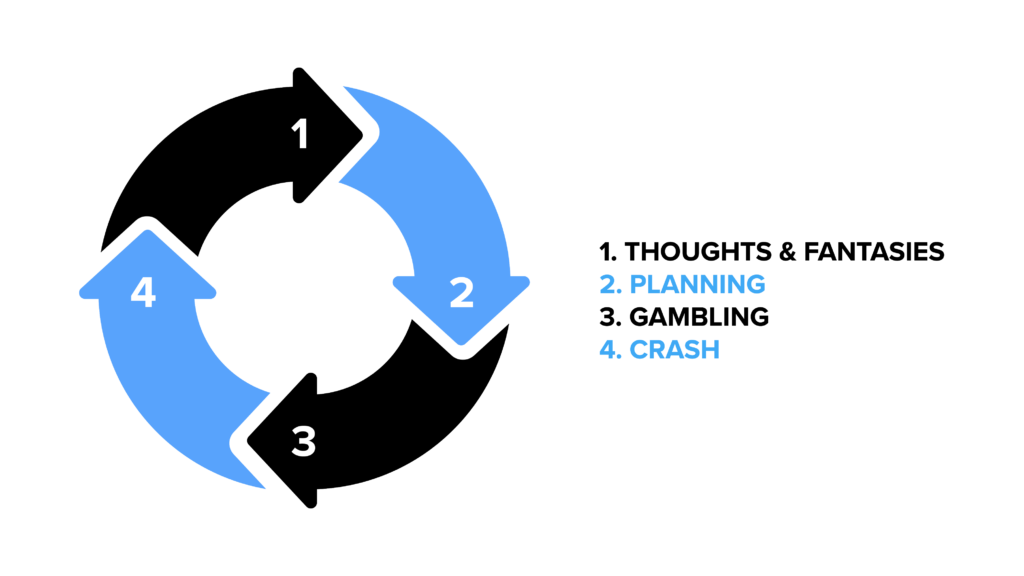
### Thoughts and Fantasies
The cycle or gambling episode begins with having thoughts and fantasies of gambling. **This is the first phase of “action,” a term used by professionals meaning currently engaged either consciously or unconsciously with thoughts or behaviors to gamble.** This consists of the thoughts and fantasies of past gambling episodes, such as remembering a big win but not the losses (euphoric recall). Brain imaging has shown compulsive gamblers can and will get “high” just by thinking about gambling. This means the brain is actually releasing dopamine (a neurotransmitter produced in the brain that helps people feel pleasure, satisfaction, and motivation at the chemical level), serotonin (a neurotransmitter that helps control mood and plays a role in happiness, optimism, and satisfaction), and adrenaline (a hormone that that causes an increased heart rate, high blood pressure and rapid, shallow respiration to prepare the body for stressful or intense situations) without ingesting any substance like drugs or alcohol. All of these chemical changes that influence thoughts and behaviors occur just by thinking about gambling!
### Planning
The second phase of the cycle involves finding ways and opportunities to gamble, along with access to money, and removing any roadblocks that may pop up. There is excitement during this phase as well. It is a challenge for the gambler get all this accomplished without anyone knowing what he or she is doing. That is a thrill in itself.
### Gambling
This is the actual gambling behavior. This phase usually ends when something external stops it, such as lack of money, time, getting caught, or having to deal with other obligations.
### Crash
This final phase is when reality comes crashing down because of loss of money, broken promises, and/or difficulty meeting responsibilities like bills, rent, food, and debt to family and friends. This phase can bring on great guilt, shame, depression, and anxiety. The results can bring on devastating emotions towards oneself and others, manifesting in anger, physical violence, illegal behaviors, and even suicidal ideation and attempts. There may be feelings of helplessness and hopelessness of not being able to stop the madness of disordered gambling. **Finally, this phase may end with a process known as “The Art of Digging Yourself Out of the Hole,” before the cycle begins again.** [**Learn more here.**](https://gamblinghelp.org/the-emotional-meaning-of-money-and-a-tragic-cycle-in-disguise/)
## The Cycle Can Be Broken. Recovery is Possible. Help and Hope are Always Available!
The 24/7, Confidential, and Multilingual 888-ADMIT-IT HelpLine is always available to help you stop the cycle and connect you with powerful tools and resources, no matter where you may be. You are never alone in the battle with problem gambling. Also, consider the following steps to help stop this cycle at any point in the episode:
### Thoughts and Fantasies Phase:
1. Put up barriers to money. Access to Cash Self-Exclusion resources available through the **888-ADMIT-IT** HelpLine can make a big difference.
2. Share with a trusted friend or family member that you are having thoughts of gambling.
3. Remember how you felt the last time you gambled and lost.
4. Write down all the negative consequences gambling has caused you in your life.
### Planning Phase:
1. Call or text **888-ADMIT-IT** and ask about the Peer Connect Program, where you can speak to an individual in recovery for problem gambling that has been in your shoes.
2. Call a friend or family member you trust, tell them what is going on, and make plans to spend time with them instead of going to gamble.
3. Give any credit/debit/ATM cards and cash over to your spouse or a trusted friend for safe keeping and prevent your ability to act on urges. The FCCG’s *A Chance for Change* Self-Help Recovery Workbooks, available for free through **888-ADMIT-IT**, can help you put together effective strategies like this and others.
4. Use your positive self-talk. You CAN break the cycle and resist the urge to gamble.
### Gambling Phase:
1. Take a break! Give yourself time to consider the actions you are taking and what the results may be.
2. Seek Self-Exclusion resources to prevent continued gambling. Call or text **888-ADMIT-IT** to connect with these tools, which are available for in-person and online forms of gambling.
### Crash Phase:
1. Reach out for help! **888-ADMIT-IT** HelpLine Specialists are standing by 24/7 to provide non-judgmental and informative conversation about your gambling and the free resources that have been proven to help on the path to recovery. It’s never too late or too early!
2. If you are having thoughts of self-harm, contact the 988 the National Suicide Helpline.
3. Speak with someone you trust to help you set up a plan for the next time you find yourself starting this cycle.
Just because you gambled or relapsed while in recovery DOES NOT mean you have failed. Recovery from problem gambling is a brave journey filled with challenges. Relapse can and will happen on the path to full recovery. It is part of the process, especially with problem gambling. Use what happened as a learning experience to be better prepared to avoid a recurrence of the disorder in the future. You can do this, and you’re never alone!
**Did you know that March is Problem Gambling Awareness Month (PGAM)? This year’s theme is *Shine the Light on Problem Gambling: 888-ADMIT-IT Fills in the Blanks!* If you or someone you know are seeking answers to questions left by gambling addiction, help and hope are always available. Learn more at [problemgamblingawarenessmonth.org](https://problemgamblingawarenessmonth.org/) and share this important campaign.**
**Categories:** 888-ADMIT-IT, Problem Gambling Awareness
**Tags:** #AddictionAwareness, #GamblingAddiction, #ProblemGambling, #ProblemGamblingAwareness
---
### [Cómo Romper el Ciclo de la Acción del Juego](https://gamblinghelp.org/como-romper-el-ciclo-de-la-accion-del-juego/)
**Published:** February 20, 2024
**Author:** The Florida Council on Compulsive Gambling Inc.
**Content:**
Para lograr una recuperación efectiva con el juego compulsivo, es crucial comprender la psicología que aborda el ciclo de la acción del juego. También es igual de importante adquirir las habilidades para salir del ciclo y entrar en la recuperación. Piensa en ello como si estuvieras en un carrusel y tuvieras que encontrar una manera de salir. ¿Cómo lo harías? Sigue leyendo, y te explicaremos cómo puedes arrojar una llave inglesa (habilidad de afrontamiento) en el ciclo en cualquier momento para evitar que continúe.
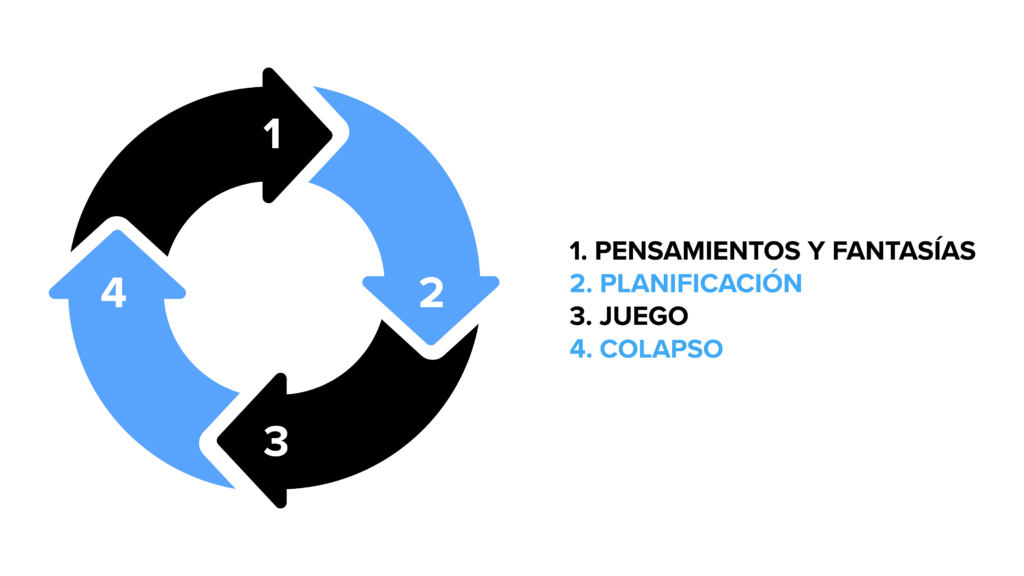
### Pensamientos y Fantasías
El ciclo o episodio de juego comienza con tener pensamientos y fantasías de juego. **Esta es la primera fase de “acción”, un término utilizado por profesionales que significa estar actualmente comprometido, ya sea consciente o inconscientemente, con pensamientos o comportamientos para apostar.** Esto consiste en los pensamientos y fantasías de episodios pasados de juego, como recordar una gran victoria pero no las pérdidas (recuerdo eufórico). Las imágenes cerebrales han mostrado que los jugadores compulsivos “se emocionarán” solo con *pensar* en el juego. ¡Esto significa que el cerebro está realmente liberando dopamina (un neurotransmisor producido en el cerebro que ayuda a las personas a sentir placer, satisfacción y motivación a nivel químico), serotonina (un neurotransmisor que ayuda a controlar el estado de ánimo y juega un papel en la felicidad, el optimismo y la satisfacción) y adrenalina (una hormona que causa un aumento de la frecuencia cardíaca, presión arterial alta y respiración rápida y superficial para preparar el cuerpo para situaciones estresantes o intensas) sin ingerir ninguna sustancia como drogas o alcohol. ¡Todos estos cambios químicos que influyen en los pensamientos y comportamientos ocurren solo pensando en el juego!
### Planificación
La segunda fase del ciclo implica encontrar formas y oportunidades para apostar, junto con el acceso al dinero y eliminar cualquier obstáculo que pueda surgir. También hay emoción durante esta fase. Es un desafío para el jugador lograr todo esto sin que nadie sepa lo que está haciendo. Esa es una emoción en sí misma.
### Juego
Este es el comportamiento real de juego. Esta fase generalmente termina cuando algo externo la detiene, como falta de dinero, tiempo, ser descubierto o tener que lidiar con otras obligaciones.
### Caída
Esta fase final es cuando la realidad se derrumba debido a la pérdida de dinero, promesas rotas y/o dificultad para cumplir con responsabilidades como facturas, alquiler, comida y deudas con familiares y amigos. Esta fase puede provocar una gran culpa, vergüenza, depresión y ansiedad. Los resultados pueden provocar emociones devastadoras hacia uno mismo y hacia los demás, manifestándose en ira, violencia física, comportamientos ilegales e incluso ideación e intentos suicidas. Puede haber sentimientos de impotencia y desesperanza de no poder detener la locura del juego desordenado**. Finalmente, esta fase puede terminar con un proceso conocido como “El Arte de Sacarte del Agujero”, antes de que el ciclo comience nuevamente.** [**Aprende más aquí.**](https://gamblinghelp.org/the-emotional-meaning-of-money-and-a-tragic-cycle-in-disguise/)
## El Ciclo Puede Ser Roto. ¡La Recuperación es Posible! ¡La Ayuda y la Esperanza Siempre Están Disponibles!
La Línea de Ayuda 888-ADMIT-IT, Confidencial y Multilingüe, está siempre disponible para ayudarte a detener el ciclo y conectarte con herramientas y recursos poderosos, sin importar dónde te encuentres. Nunca estás solo en la batalla contra el juego problemático. Además, considera los siguientes pasos para ayudar a detener este ciclo en cualquier punto del episodio:
### Fase de Pensamientos y Fantasías:
1. Establece barreras para el dinero. El acceso a recursos de Autoexclusión de Efectivo disponibles a través de la Línea de Ayuda **888-ADMIT-IT** puede marcar una gran diferencia.
2. Comparte con un amigo o familiar de confianza que estás teniendo pensamientos de juego.
3. Recuerda cómo te sentiste la última vez que jugaste y perdiste.
4. Escribe todas las consecuencias negativas que el juego te ha causado en tu vida.
### Fase de Planificación:
1. Llama o envía un mensaje de texto al **888-ADMIT-IT** y pregunta sobre el Programa de Conexión entre Pares, donde puedes hablar con una persona en recuperación por problema de juego que ha estado en tu situación.
2. Llama a un amigo o familiar en quien confíes, cuéntales lo que está pasando y haz planes para pasar tiempo con ellos en lugar de ir a jugar.
3. Entrega cualquier tarjeta de crédito/débito/ATM y dinero en efectivo a tu cónyuge o un amigo de confianza para su custodia segura y evita tu capacidad de actuar por impulsos. Los Cuadernos de Trabajo de Autoayuda *A Chance for Change* de la FCCG, disponibles de forma gratuita a través del **888-ADMIT-IT,** pueden ayudarte a desarrollar estrategias efectivas como esta y otras.
4. Usa un auto-diálogo positivo. Tú PUEDES romper el ciclo y resistir el impulso de jugar.
### Fase de Juego:
1. ¡Tómate un descanso! Date tiempo para considerar las acciones que estás tomando y cuáles pueden ser los resultados.
2. Busca recursos de Auto-exclusión para prevenir el juego continuo. Llama o envía un mensaje de texto al **888-ADMIT-IT** para conectarte con estas herramientas, que están disponibles para formas de juego presenciales y en línea.
### Fase de Caída:
1. ¡Busca ayuda! Los Especialistas de la Línea de Ayuda **888-ADMIT-IT** están disponibles las 24 horas, los 7 días de la semana, para proporcionar conversaciones informativas y sin prejuicios sobre tu juego y los recursos gratuitos que han demostrado ayudar en el camino hacia la recuperación. ¡Nunca es demasiado tarde ni demasiado temprano!
2. Si estás teniendo pensamientos de auto-lesión, contacta a la Línea Nacional de Prevención del Suicidio al 988.
3. Habla con alguien en quien confíes para ayudarte a establecer un plan para la próxima vez que te encuentres iniciando este ciclo.
Solo porque hayas jugado o recaído durante la recuperación NO significa que hayas fracasado. La recuperación del juego problemático es un viaje valiente lleno de desafíos. La recaída puede y ocurrirá en el camino hacia la recuperación completa. Es parte del proceso, especialmente con el juego compulsivo. Utiliza lo que sucedió como una experiencia de aprendizaje para estar mejor preparado para evitar una recurrencia del trastorno en el futuro. ¡Puedes hacer esto, y nunca estás solo!
**¿Sabías que marzo es el Mes de Concientización sobre el Juego Problemático (PGAM por sus siglas en inglés)? El tema de este año es *Ilumina el Problema del Juego Problemático: 888-ADMIT-IT Llena los Espacios en Blanco!* Si tú o alguien que conoces están buscando respuestas a preguntas dejadas por la adicción al juego, la ayuda y la esperanza siempre están disponibles. Obtén más información en** [**problemgamblingawarenessmonth.org**](https://problemgamblingawarenessmonth.org/) **y comparte esta importante campaña.**
**Categories:** 888-ADMIT-IT, Problem Gambling Awareness
**Tags:** #AddictionAwareness, #GamblingAddiction, #ProblemGambling, #ProblemGamblingAwareness
---
### [A Valentine’s Day Secret for Loved Ones Feeling the Impacts of Problem Gambling ](https://gamblinghelp.org/a-valentines-day-secret-for-loved-ones-feeling-the-impacts-of-problem-gambling/)
**Published:** February 14, 2024
**Author:** The Florida Council on Compulsive Gambling Inc.
**Content:**
For many, love is in the air this month. However, it may be difficult to feel love for others if you don’t feel love for yourself first – no matter the occasion. This is especially true for someone living with a partner or family member who is suffering from a gambling problem. In addiction, the person who is struggling with alcohol, drugs, or problem gambling can take away any feelings of love through their behaviors. When you, the loved one, loses connection with your values and beliefs in the process, you too begin behaving in ways that go against these principles. You can lose your self-worth and self-esteem as a result!
When involved in a relationship with someone addicted to gambling, it is very easy to forget about yourself while always putting the other person first, all in hopes it will help the situation. This never works out! It only reinforces the destructive and addictive behavior and does nothing to help you or the relationship. You have to help yourself before you can help others.
> *What lies behind us and lies before us are tiny matters compared to what lies within us.*
>
> *– Ralph Waldo Emerson*
**Self-worth is a reflection of *how you treat yourself*. Self-esteem reflects *how you feel about yourself*.** There are three ways to look at the self:
1. Self-Ideal: Who we would like to be or become.
2. Self-Image: The way we see ourselves or our behavior.
3. Self-Esteem: How we feel about ourselves, our abilities, and our self-worth.
Our self-esteem starts early after birth as do our value and belief systems. It is created by our environment and what we believe others say about us is true. In other words, how we are raised can shape us to have a high self-esteem or low self-esteem. Here are some possible causes of low self-esteem:
- Overly critical parents
- Parental over-protectiveness
- Experiencing physical, sexual, emotional, or verbal abuse
- Suffering from the impacts of addiction, such as to gambling, alcohol, or drugs
- Parental neglect
- Parental rejection
- Interactions with any other unsupportive authority figures
All of these have the power to shape our relationships and internal dialogues (or recurring thoughts about the self) as we age. Negative self-talk can be persistent and build up over time. Many listen to thoughts like these and others on repeat without ever confronting them:
- *“I am not worthy of love.”*
- *“I will never be good at anything.”*
- *“I don’t deserve a good relationship.”*
None of these things are true. It is important to break your comfort zone, challenge these negative thoughts, and reassure yourself that **you deserve** all the good things you can get in your life from others, like trust, respect, love, and compassion!

## Valentine’s Day Secret: Love Yourself First
Only after learning to love yourself will you then know how to expect and receive it from others. On Valentine’s Day and every other day of the year, YOU DESERVE TO BE LOVED. The next time one of those negative thoughts comes to mind, remember to challenge it out loud or write in a journal to help internalize a positive self-reflection: *“No, that is not true. I am not lazy! I work every day and take care of the household.”*
**Confidential and multilingual help and hope for problem gambling are available 24/7 in Florida – for both loved ones and gamblers. Call or text 888-ADMIT-IT now if your or someone you know is in need. The HelpLine can also be reached via live chat at gamblinghelp.org, by emailing** [**fccg@gamblinghelp.org**](mailto:fccg@gamblinghelp.org)**, with the 888-ADMIT-IT mobile app, or by connecting with the Florida Council on Compulsive Gambling on social media.**
**March is Problem Gambling Awareness Month (PGAM). This year’s theme is Shine the Light on Problem Gambling: 888-ADMIT-IT Fills in the Blanks! If you or someone you know are seeking answers to questions left by gambling addiction, help and hope are always available. Learn more at [problemgamblingawarenessmonth.org](https://problemgamblingawarenessmonth.org/) and share this important campaign.**
**Categories:** 888-ADMIT-IT, Problem Gambling Awareness
**Tags:** #AddictionAwareness, #GamblingAddiction, #ProblemGambling, #ProblemGamblingAwareness
---
### [Un Secreto de San Valentín para Seres Queridos que Sienten los Impactos del Juego Problemático](https://gamblinghelp.org/un-secreto-de-san-valentin-para-seres-queridos-que-sienten-los-impactos-del-juego-problematico/)
**Published:** February 14, 2024
**Author:** The Florida Council on Compulsive Gambling Inc.
**Content:**
Para muchos, el amor está en el aire este mes. Sin embargo, puede ser difícil sentir amor por los demás si primero no te amas a ti mismo, sin importar la ocasión. Esto es especialmente cierto para alguien que vive con una pareja o un familiar que está sufriendo por un problema de juego. En la adicción, la persona que lucha con el alcohol, las drogas o el juego problemático puede quitar cualquier sentimiento de amor a través de sus comportamientos. Cuando tú, el ser querido, pierdes conexión con tus valores y creencias en el proceso, también comienzas a comportarte de maneras que van en contra de estos principios. ¡Puedes perder tu autovalor y autoestima como resultado!
Cuando estás involucrado en una relación con alguien adicto al juego, es muy fácil olvidarte de ti mismo mientras siempre pones a la otra persona primero, con la esperanza de que ayude a la situación. ¡Esto nunca funciona! Solo refuerza el comportamiento destructivo y adictivo y no ayuda en absoluto ni a ti ni a la relación. Tienes que ayudarte a ti mismo antes de poder ayudar a los demás.
> **Lo que yace detrás de nosotros y lo que yace delante son asuntos pequeños en comparación con lo que yace dentro de nosotros.**
>
> *Ralph Waldo Emerson*
**El autovalor es un reflejo de cómo te tratas a ti mismo. La autoestima refleja cómo te sientes contigo mismo.** Hay tres formas de ver el yo:
1. Auto-ideal: Quién nos gustaría ser o convertirnos.
2. Auto-imagen: La forma en que nos vemos a nosotros mismos o nuestro comportamiento.
3. Auto-estima: Cómo nos sentimos acerca de nosotros mismos, nuestras habilidades y nuestro autovalor.
Nuestra autoestima comienza temprano después del nacimiento al igual que nuestros sistemas de valores y creencias. Es creado por nuestro entorno y lo que creemos que otros dicen sobre nosotros es verdad. En otras palabras, cómo somos criados puede influir en que tengamos una autoestima alta o baja. Aquí hay algunas posibles causas de una baja autoestima:
- Padres excesivamente críticos
- Sobreprotección de los padres
- Experiencia de abuso físico, sexual, emocional o verbal
- Sufrir los impactos de la adicción, como al juego, al alcohol o a las drogas
- Negligencia de los padres
- Rechazo de los padres
- Interacciones con cualquier otra figura de autoridad no solidaria
Todas estas tienen el poder de dar forma a nuestras relaciones y diálogos internos (o pensamientos recurrentes sobre el yo) a medida que envejecemos. El diálogo interno negativo puede ser persistente y acumularse con el tiempo. Muchos escuchan pensamientos como estos y otros en repetición sin confrontarlos nunca:
- *“No soy digno de amor”*
- *“Nunca seré bueno en nada”*
- *“No merezco una buena relación”*
Ninguna de estas cosas es cierta. ¡Es importante romper tu zona de confort, desafiar estos pensamientos negativos y asegurarte a ti mismo que mereces todas las cosas buenas que puedes obtener en tu vida de los demás, como confianza, respeto, amor y compasión!

## Secreto de San Valentín: Ámate a Ti Mismo Primero
Solo después de aprender a amarte a ti mismo sabrás cómo esperarlo y recibirlo de los demás. En el Día de San Valentín y todos los días del año, MERECES SER AMADO. La próxima vez que una de esas ideas negativas venga a tu mente, recuerda desafiarla en voz alta o escribir en un diario para ayudar a internalizar una reflexión positiva sobre ti mismo: *“No, ¡eso no es cierto! ¡No soy perezoso! Trabajo todos los días y cuido del hogar.”*
**La ayuda confidencial y multilingüe y la esperanza para el juego problemático están disponibles las 24 horas en la Florida, tanto para los seres queridos como para los jugadores. Llama o envía un mensaje de texto al 888-ADMIT-IT ahora si tú o alguien que conoces lo necesita. La Línea de Ayuda también se puede contactar a través de chat en vivo en gamblinghelp.org, enviando un correo electrónico a** [**fccg@gamblinghelp.org**](mailto:fccg@gamblinghelp.org)**, con la aplicación móvil 888-ADMIT-IT, o conectándose con el Consejo de Juego Compulsivo de la Florida en las redes sociales.**
**Marzo es el Mes de Concientización sobre el Juego Problemático (PGAM, por sus siglas en inglés). El tema de este año es ¡Ilumina el Problema del Juego Problemático: 888-ADMIT-IT Llena los Espacios en Blanco! Si tú o alguien que conoces están buscando respuestas a preguntas dejadas por la adicción al juego, la ayuda y la esperanza siempre están disponibles. Obtén más información en [problemgamblingawarenessmonth.org](https://problemgamblingawarenessmonth.org/) y comparte esta importante campaña.**
**Categories:** 888-ADMIT-IT, Problem Gambling Awareness
**Tags:** #AddictionAwareness, #GamblingAddiction, #ProblemGambling, #ProblemGamblingAwareness
---
### [Why No One Can “Beat the Odds”](https://gamblinghelp.org/why-no-one-can-beat-the-odds/)
**Published:** January 25, 2024
**Author:** The Florida Council on Compulsive Gambling Inc.
**Content:**
It is important to understand how we think and process situations, how we were taught to solve problems as children, and how that impacts our decision making when it comes to gambling. You may have heard the term “fallacy”, which is defined as “a failure in reasoning, which renders an argument invalid.” People suffering from problem gambling often believe one or more gambling fallacies, for example **“The Illusion of Control”, “The Hot Hand Fallacy”,** and **“The Gamblers Fallacy**” (also known as the Monte-Carlo Fallacy). These have a huge impact when it comes to gambling and the driving force that can become compulsive gambling.
## The Illusion of Control and the Hot Hand Fallacy
**Take a moment to reflect on the definition of gambling: any time you bet money or RISK something of value on an event of UNCERTAIN OUTCOME, you are gambling.** Nonetheless, many gamblers believe they can influence games that have completely random outcomes. Some forms of gambling are designed around this fallacy by providing the gambler with choices, for instance the opportunity to pick your numbers for the next lottery drawing or use random numbers generated by the computer (“quick pick”). It doesn’t matter if the gambler spends an hour deciding which numbers to play or one second telling the clerk that they want the “quick pick”: this has no impact on his or her chances of winning! Likewise, a gambler chooses one slot machine over the others on the casino floor, and this could be for a variety of reasons – they saw someone win a jackpot at that machine, the machine features a theme that resonates with them, they played that machine last time they came to the casino, the machine is their favorite color, and so on – none of which has any impact on their chances of winning. As such, one cannot become an “expert” or “professional” with these types of games in the way one might at a game of skill like chess or golf.
For the casual/social gambler who is not experiencing problems, this can be part of the mystique and what makes gambling entertaining, but for those who are experiencing problems or are at risk, the Illusion of Control and thinking that a jackpot is just around the corner can keep them gambling despite experiencing negative consequences. Another related gambling fallacy is the “Hot Hand Fallacy”, which characterizes the mistaken belief that a prior win will lead to future wins. For instance, a gambler might wrongly believe a slot machine which produced a jackpot recently is more likely than the machines next to it to produce a jackpot when he or she plays it. While on the casino floor, you might hear patrons say things like the following, which are all based on fallacies:
> “If I get my favorite machine, I can win.”
>
> “I know how this game works – I can beat it.”
>
> “This machine is hot!”
Many of the thoughts that lead to problem gambling are related to incorrect underlying beliefs, a lack of understanding about how the games work, and not knowing the odds. It is not hard to imagine how someone who believes they are “due to win” might start to have the thought that *gambling is a way to solve financial problems.* This belief is often (but not always) related to having experienced a “big win” early in their gambling history. Because it has happened before, they overestimate the likelihood that a big win will occur again. It is positively reinforced when the person sees the flashing lights and hears the characteristic sounds of someone else winning at the slot machine down the row from them or sees news about someone winning the multi-million-dollar lottery jackpot on TV or social media.
> Winning is noisy, but losing tends to be silent. We rarely hear about it.
A second misconception about gambling concerns the failure to understand the independence of random events. A common myth is that if you play long enough, you will win, or that a jackpot is just one wager away. But in truth, separate plays or wagers have absolutely no relationship to one another.
For example, if you flip a coin once, your chance of getting tails is 50%, and your chance of getting heads is 50% – there are two possible outcomes, and they are equally likely. The second time you flip a coin, the chances of heads and tails are the same: 50:50. The result of each individual toss has no relationship to any other toss. The coin does not have a memory. A run of heads does not mean tails is more likely on the next toss. **The same is true with slot machines and other forms of gambling. However, someone suffering from problem gambling will continue to make bets despite negative life consequences, because they are convinced it is “my turn to win” or that a specific machine is “due to pay out.”**
## The Gambler’s Fallacy:
This brings us to The Gambler’s Fallacy. It begins with the mistaken idea that odds for something with a fixed probability (games of chance) increase or decrease based upon recent occurrences.
Problem gamblers get stuck in these mistaken thoughts and can’t walk away from gambling, even while experiencing negative life consequences like difficulty paying bills, relationship problems, problems at work or school, and mental health difficulties like anxiety and depression. They continue to believe that the life-changing bet that can fix all of their life problems is just around the corner, without recognizing how the gambling problem is contributing to those struggles.
This fallacy has deep roots. Here are two ways we were taught as children to figure something out:
1\. Cause and Effect:
- A child learns in grade school that if he or she hits a nail on the head and it goes in, then “I” caused it to happen. Needless to say, “cause and effect” is an understanding that transcends through many aspects of life, but the temptation to apply it to gambling is dangerous. The gambler does not have control over the outcome! You may see this on the casino floor in the form of “rituals”, where the gambler might spin around three times before pressing the “spin” button on a slot machine. They believe their actions are a “cause” for the desired “effect” (a win).
2\. Patterning:
- Children learn patterning in 3rd or 4th grade, because it has many practical uses throughout life.
- Recognize the pattern – 2, 4, 6, \_\_\_\_. What would be the next number?
- Given the pattern of red, black, red, black…what comes next?
- Here again, trying to apply a pattern to predict a gambling outcome, which is rooted in random chance, won’t be any more reliable than taking a guess. You might see this in your facility when patrons make increased bets following a “near miss” (where their loss appears very close to a big win) – they believe that this means the pattern of the slot machine, cards, or racing is in their favor. In reality, their “near miss” loss was just as likely as any other loss.

**What about beating the odds?** “Beating the odds” is a misnomer, because the odds are simply a ratio expressing the probability one outcome (like winning) compared to another (like losing). No one bet can “beat the odds”, because every bet and every outcome (every win and every loss) exists WITHIN the odds. In other words, this is just another fallacy!
**Regardless of what may be happening in the mind of someone suffering from gambling addiction, the most important thing is to know that help and hope are available 24/7 by [calling or texting the 888-ADMIT-IT HelpLine.](https://gamblinghelp.org/#contact-the-helpline) Live chat and information are also available around the clock through the FCCG’s gamblinghelp.org website.**
**Categories:** 888-ADMIT-IT, Problem Gambling Awareness
**Tags:** #AddictionAwareness, #GamblingAddiction, #MentalHealth, #ProblemGambling, #ProblemGamblingAwareness
---
### [¿Por qué nadie puede "Vencer las Probabilidades"?](https://gamblinghelp.org/por-que-nadie-puede-vencer-las-probabilidades/)
**Published:** January 25, 2024
**Author:** The Florida Council on Compulsive Gambling Inc.
**Content:**
Es importante comprender cómo pensamos y procesamos situaciones, cómo nos enseñaron a resolver problemas de niños y cómo eso afecta nuestras decisiones en el juego. Puede que hayas oído el término “falacia”, definido como “un error en el razonamiento que invalida un argumento”. Las personas que sufren de juego problemático a menudo creen en una o más falacias del juego, como **“La Ilusión de Control”, “La Falacia de la Mano Caliente”** y **“La Falacia del Jugador”** (también conocida como la Falacia de Montecarlo). Estas tienen un gran impacto cuando se trata de jugar y son la fuerza impulsora que puede convertirse en juego compulsivo.
## La Ilusión de Control y la Falacia de la Mano Caliente
**Tómate un momento para reflexionar sobre la definición de juego: cada vez que apuestas dinero o RIESGAS algo de valor en un evento con RESULTADO INCERTERO, estás jugando.** Sin embargo, muchos jugadores creen que pueden influir en juegos con resultados completamente aleatorios. Algunas formas de juego están diseñadas en torno a esta falacia al proporcionarle al jugador opciones, como la oportunidad de elegir números para el próximo sorteo de lotería o usar números aleatorios generados por la computadora (“elección rápida”). No importa si el jugador pasa una hora decidiendo qué números jugar o un segundo diciéndole al dependiente que quiere la “elección rápida”: ¡esto no afecta sus posibilidades de ganar! De igual manera, un jugador elige una máquina tragamonedas sobre las demás en el casino, y esto puede deberse a diversas razones: vieron a alguien ganar un premio en esa máquina, la máquina tiene un tema que les gusta, jugaron en esa máquina la última vez que vinieron al casino, la máquina es de su
color favorito, etc. Ninguna de estas razones afecta sus posibilidades de ganar. Por lo tanto, uno no puede convertirse en “experto” o “profesional” en este tipo de juegos de la misma manera que en un juego de habilidad como el ajedrez o el golf.
Para el jugador casual/social que no tiene problemas, esto puede ser parte de la mística y lo que hace entretenido al juego, pero para aquellos que tienen problemas o están en riesgo, la Ilusión de Control y la creencia de que un premio mayor está a la vuelta de la esquina pueden mantenerlos jugando a pesar de las consecuencias negativas. Otra falacia relacionada con el juego es la “Falacia de la Mano Caliente”, que caracteriza la creencia errónea de que una victoria anterior llevará a victorias futuras. Por ejemplo, un jugador podría creer erróneamente que una máquina tragamonedas que produjo un premio mayor recientemente es más probable que produzca un premio mayor cuando él o ella juegue. Mientras estás en el casino, podrías escuchar a los clientes decir cosas como las siguientes, todas basadas en falacias:
> “Si obtengo mi máquina favorita, puedo ganar.”
> “Sé cómo funciona este juego, puedo vencerlo.”
> “¡Esta máquina está caliente!”
Muchos de los pensamientos que llevan al juego problemático están relacionados con creencias subyacentes incorrectas, una falta de comprensión sobre cómo funcionan los juegos y no conocer las probabilidades. No es difícil imaginar cómo alguien que cree que “le toca ganar” podría comenzar a pensar que *las apuestas son una forma de resolver problemas financieros*. Esta creencia a menudo (pero no siempre) está relacionada con haber experimentado una “gran victoria” al principio de su historia de juego. Como ya ha sucedido, sobreestiman la probabilidad de que ocurra una gran victoria nuevamente. Se refuerza positivamente cuando la persona ve las luces intermitentes y escucha los sonidos característicos de otra persona ganando en la máquina tragamonedas cerca de ellos o ve noticias sobre alguien ganando el premio mayor de la lotería multimillonaria en la televisión o en las redes sociales.
> Ganar es ruidoso, pero perder tiende a ser silencioso. Rara vez escuchamos sobre eso.
Un segundo error de concepto sobre el juego se refiere a la falta de comprensión de la independencia de eventos aleatorios. Un mito común es que si juegas el tiempo suficiente, ganarás, o que un premio mayor está a solo una apuesta de distancia. Pero en realidad, las apuestas o jugadas individuales no tienen absolutamente ninguna relación entre sí.
Por ejemplo, si lanzas una moneda una vez, tu probabilidad de obtener cara es del 50%, y tu probabilidad de obtener sello es del 50%: hay dos resultados posibles y son igualmente probables. La segunda vez que lanzas la moneda, las posibilidades de obtener cara y sello son las mismas: 50:50. El resultado de cada lanzamiento individual no tiene relación con ningún otro lanzamiento. La moneda no tiene memoria. Una racha de caras no significa que sea más probable obtener sello en el próximo lanzamiento. Lo mismo ocurre con las máquinas tragamonedas y otras formas de juego. **Sin embargo, alguien que sufre de juego problemático seguirá haciendo apuestas a pesar de las consecuencias negativas en su vida, porque está convencido de que “le toca ganar” o que una máquina específica “debe pagar”.**
## La Falacia del Jugador:
Esto nos lleva a la Falacia del Jugador. Comienza con la idea equivocada de que las probabilidades de algo con una probabilidad fija (juegos de azar) aumentan o disminuyen según eventos recientes.
Los jugadores compulsivos quedan atrapados en estos pensamientos equivocados y no pueden alejarse del juego, incluso experimentando consecuencias negativas en la vida, como dificultades para pagar las cuentas, problemas en las relaciones, problemas en el trabajo o la escuela, y dificultades de salud mental como ansiedad y depresión. Siguen creyendo que la apuesta que cambiará su vida está a la vuelta de la esquina, sin reconocer cómo el problema de juego contribuye a esas dificultades.
Esta falacia tiene raíces profundas. Aquí hay dos formas en que nos enseñaron de niños a entender algo:
Causa y Efecto:
- Un niño aprende en la escuela primaria que si golpea un clavo en la cabeza y entra, entonces “yo” lo causé. No hace falta decir que “causa y efecto” es una comprensión que trasciende muchos aspectos de la vida, pero la tentación de aplicarlo al juego es peligrosa. ¡El jugador no tiene control sobre el resultado! Puedes ver esto en el casino en forma de “rituales”, donde el jugador podría dar tres vueltas antes de presionar el botón “girar” en una máquina tragamonedas. Creen que sus acciones son una “causa” del “efecto” deseado (una victoria).
Pauta:
- Los niños aprenden patrones en 3º o 4º grado, porque tiene muchos usos prácticos a lo largo de la vida.
- Reconoce el patrón: 2, 4, 6, \_\_\_\_. ¿Cuál sería el siguiente número?
- Dado el patrón de rojo, negro, rojo, negro… ¿qué viene después?
- Nuevamente, tratar de aplicar un patrón para predecir un resultado de juego, que se basa en el azar, no será más confiable que adivinar. Puedes ver esto en tu establecimiento cuando los clientes hacen apuestas más altas después de un “casi acierto” (donde su pérdida parece muy cerca de una gran victoria): creen que esto significa que el patrón de la máquina tragamonedas, cartas o carreras está a su favor. En realidad, su pérdida “casi acertada” fue tan probable como cualquier otra pérdida.

**¿Y vencer las probabilidades?** “Vencer las probabilidades” es un nombre equivocado, porque las probabilidades son simplemente una proporción que expresa la probabilidad de un resultado (como ganar) en comparación con otro (como perder). Ninguna apuesta puede “vencer las probabilidades”, porque cada apuesta y cada resultado (cada victoria y cada derrota) existe DENTRO de las probabilidades. En otras palabras, ¡esto es solo otra falacia!
**Independientemente de lo que esté sucediendo en la mente de alguien que sufre de adicción al juego, lo más importante es saber que la ayuda y la esperanza están disponibles las 24 horas, 7 días a la semana, [llamando o enviando un mensaje de texto a la Línea de Ayuda 888-ADMIT-IT.](https://gamblinghelp.org/#contact-the-helpline) El chat en vivo y la información también están disponibles en cualquier momento a través del sitio web gamblinghelp.org del FCCG.**
**Categories:** 888-ADMIT-IT, Problem Gambling Awareness
**Tags:** #AddictionAwareness, #GamblingAddiction, #MentalHealth, #ProblemGambling, #ProblemGamblingAwareness
---
### [Even If You Never Place a Bet, You Can Still Be Impacted by Problem Gambling. Here’s How.](https://gamblinghelp.org/even-if-you-never-place-a-bet-you-can-still-be-impacted-by-problem-gambling-heres-how/)
**Published:** January 17, 2024
**Author:** The Florida Council on Compulsive Gambling Inc.
**Content:**
Living with a compulsive gambler can be life-changing in many ways. In addition to the financial difficulties, stress created by a gambling addiction in the family can manifest in loved ones emotionally and lead to significant relationship problems. It is common for family members and loved ones of an individual with gambling problems to feel anger, betrayal, or fear. Increased stress and worry can lead to physical and mental health problems for the gambler’s loved ones, including anxiety and depression. You are not alone. **The 888 ADMIT-IT HelpLine is available 24/7 for ANYONE impacted by problem gambling!**
For someone who lives and shares finances with a disordered gambler, the emotions can be overwhelming and can lead to self-destructive behaviors. There is a tendency to react to negative behaviors of others with rash actions and self-defeating behaviors. There is evidence that shows substance abuse along with over-eating are used as ways to cope, escape, or give a feeling of control for oneself. For a loved one, the thought may be something like, “If you can gamble all of our money away, I can drink as much as I want.”

With problem gambling, there are different ways a loved one may unconsciously believe they are helping or have some control. It can be a belief such as, “If I go and gamble with them, I can control how much and how long they gamble.” This may work in the beginning, but as the addiction progresses within the gambler, so do the negative self-behaviors of the loved one. When gambling alongside the problem gambler doesn’t work, loved ones may unconsciously over-spend money with the idea that there won’t be any money left for the gambler to bet. Over time a sense of urgency sets in, inspired by a lack of control, which may cause vulnerability and cause the loved one to acquire his or her own addictive behaviors.
There are other various negative impacts of problem gambling on emotional wellbeing, mental and physical health, and relationships. Because of gambling, many loved ones report a loss of respect and trust for the gambler due to lies, dishonesty, and betrayal. In the end, it is not only the compulsive gambler who is suffering. Loved ones may conclude that the only way they can live with the impacts of gambling addiction is to escape themselves into whatever can numb this despair, a destructive pattern which can itself lead to addiction.
## The Importance of Promoting Positive Self-Care
As you can see or may know already from experience, it isn’t easy to escape the self-destructive, reactive behaviors and thoughts inspired by a loved one’s gambling problem. The important thing to know is that you are not alone, and help and hope are available!
- Contact the 888-ADMIT-IT Problem Gambling HelpLine and get connected to powerful and free resources specifically for loved ones, such as: self-help literature like the FCCG’s A Chance for Change Workbooks Series for Loved Ones, self-help support groups like Gam-Anon, financial resources, legal resources, emergency/crisis resources, and many more.
- Avoid isolation by seeking out family, friends, or self-help support groups and recovery networks, such as a Gam-Anon.
- Focus on positivity and positive self-talk.
- Take time to exercise regularly: a 20-minute walk can have significant benefits.
- Practice gratitude by reminding yourself about the things for which you are grateful.
- Stay in touch with your thoughts and feelings. Don’t allow yourself to “numb out.”
**If you are in Florida and impacted by a loved one’s gambling, call or text the 24/7, Confidential, and Multilingual 888-ADMIT-IT HelpLine, or open a live chat here on [gamblinghelp.org](https://gamblinghelp.org) to get connected with a Specialist today.**
**Categories:** 888-ADMIT-IT, Problem Gambling Awareness
**Tags:** #AddictionAwareness, #GamblingAddiction, #MentalHealth, #ProblemGambling, #ProblemGamblingAwareness
---
### [Incluso si nunca haces una apuesta, aún puedes verte afectado por el juego problemático. Aquí te explicamos cómo.](https://gamblinghelp.org/incluso-si-nunca-haces-una-apuesta-aun-puedes-verte-afectado-por-el-juego-problematico-aqui-te-explicamos-como/)
**Published:** January 17, 2024
**Author:** The Florida Council on Compulsive Gambling Inc.
**Content:**
Vivir con un jugador compulsivo puede cambiar la vida de muchas maneras. Además de las dificultades financieras, el estrés creado por la adicción al juego en la familia puede manifestarse emocionalmente en los seres queridos y provocar problemas significativos en las relaciones. Es común que los familiares y seres queridos de una persona con problemas de juego sientan enojo, traición o miedo. El aumento del estrés y la preocupación puede llevar a problemas de salud física y mental para los seres queridos del jugador, incluyendo ansiedad y depresión. ¡No estás solo! **La Línea de Ayuda 888-ADMIT-IT está disponible las 24 horas, los 7 días de la semana, ¡para CUALQUIER PERSONA afectada por el juego problemático!**
Para alguien que vive y comparte finanzas con un jugador compulsivo, las emociones pueden ser abrumadoras y pueden llevar a comportamientos autodestructivos. Existe la tendencia a reaccionar ante comportamientos negativos de los demás con acciones impulsivas y comportamientos autodestructivos. Hay evidencia que muestra que el abuso de sustancias junto con la alimentación excesiva se utilizan como formas de enfrentar, escapar o dar una sensación de control a uno mismo. Para un ser querido, el pensamiento puede ser algo así como: “Si puedes apostar todo nuestro dinero, yo puedo beber tanto como quiera”.

Con el problema del juego, hay diferentes formas en que un ser querido puede creer inconscientemente que está ayudando o tiene algún control. Puede ser una creencia como: “Si voy y apuesto con ellos, puedo controlar cuánto dinero y cuánto tiempo apuestan”. Esto puede funcionar al principio, pero a medida que avanza la adicción en el jugador, también lo hacen los comportamientos negativos del ser querido. Cuando apostar junto al jugador problemático no
funciona, los seres queridos pueden gastar demasiado dinero inconscientemente con la idea de que no quedará dinero para que el jugador apueste. Con el tiempo, surge una sensación de urgencia, inspirada por la falta de control, que puede causar vulnerabilidad y llevar al ser querido a adquirir sus propios comportamientos adictivos.
Existen otros diversos impactos negativos del problema del juego en el bienestar emocional, la salud mental y física y las relaciones. Debido al juego, muchos seres queridos informan una pérdida de respeto y confianza en el jugador debido a mentiras, deshonestidad y traición. Al final, no solo es el jugador compulsivo quien sufre. Los seres queridos pueden concluir que la única manera de sobrellevar los impactos de la adicción al juego es escapar hacia lo que pueda adormecer esta desesperación, un patrón destructivo que también puede llevar a la adicción.
## La Importancia de Promover el Cuidado Personal Positivo
Como puedes ver o tal vez ya sepas por experiencia, no es fácil escapar de los comportamientos y pensamientos autodestructivos inspirados por el problema de juego de un ser querido. ¡Lo importante de saber es que no estás solo y hay ayuda y esperanza disponibles!
- Comunícate con la Línea de Ayuda 888-ADMIT-IT para el Problema del Juego y conéctate con recursos poderosos y gratuitos específicamente para seres queridos: literatura de autoayuda como la Serie de Cuadernos para el Cambio para Seres Queridos del FCCG, grupos de apoyo de autoayuda como Gam-Anon, recursos financieros, recursos legales, recursos de emergencia/crisis y muchos más.
- Evita el aislamiento buscando familiares, amigos o grupos de apoyo de autoayuda y redes de recuperación, como Gam-Anon.
- Enfócate en la positividad y el diálogo interno positivo.
- Dedica tiempo a hacer ejercicio regularmente: una caminata de 20 minutos puede tener beneficios significativos.
- Practica la gratitud recordándote a ti mismo las cosas por las que estás agradecido.
- Mantente en contacto con tus pensamientos y sentimientos. No permitas que te “anestesies”.
**Si estás en la Florida y te afecta el juego de un ser querido, llama o envía un mensaje de texto a la Línea de Ayuda, confidencial y multilingüe 888-ADMIT-IT las 24/7. También puedes abrir un chat en vivo aquí en [gamblinghelp.org](https://gamblinghelp.org) para conectarte con un Especialista hoy mismo.**
**Categories:** Problem Gambling Awareness
**Tags:** #AddictionAwareness, #GamblingAddiction, #MentalHealth, #ProblemGambling, #ProblemGamblingAwareness
---
### [WEB LETTER: The Importance of Loving Yourself on the Path to Recovery](https://gamblinghelp.org/web-letter-the-importance-of-loving-yourself-on-the-path-to-recovery/)
**Published:** January 8, 2024
**Author:** The Florida Council on Compulsive Gambling, Inc.
**Content:**
**January is self-love month and what a great way to start the new year!** You might make a resolution for yourself as a way to begin to take better care of yourself mentally, physically, intentionally, and authentically. By taking better care of yourself, YOU feel better, more positive, and stronger to take on anything that comes your way. **The reality is that problem gamblers and their loved ones often put themselves on hold, either to continue in the addiction or to unknowingly support the addiction in someone else.**
**[Read the January Web Letter](https://gamblinghelp.org/assets/Webletter-January-2024.pdf)** to learn what it means to practice self-love and its importance on the path to recovery from gambling addiction.
**Categories:** 888-ADMIT-IT, Problem Gambling Awareness, Web Letters
**Tags:** #AddictionRecovery, #GamblingAddiction, #ProblemGambling, #ProblemGamblingAwareness
---
### [Descubre la Importancia de la Comunicación Asertiva Cuando un Ser Querido Sufre de Problemas de Juego](https://gamblinghelp.org/descubre-la-importancia-de-la-comunicacion-asertiva-cuando-un-ser-querido-sufre-de-problemas-de-juego/)
**Published:** December 27, 2023
**Author:** The Florida Council on Compulsive Gambling Inc.
**Content:**
La importancia de la forma en que nos comunicamos con los demás no puede subestimarse. A algunos de nosotros no nos han enseñado cómo compartir nuestros pensamientos y sentimientos con los demás de manera asertiva. Cuando se trata de lidiar con un ser querido que sufre de juego compulsivo, se hace necesario aprender a hablar de manera asertiva. Una persona con adicción al juego insistirá en que todo y todos **giren en torno a sus necesidades**, ya sea que se den cuenta o no de que están haciendo esto.
Si estás viviendo con un jugador problemático y te has perdido en el caos, esta información será una herramienta de aprendizaje importante para ti. Tal vez nunca aprendiste que está BIEN pedir lo que necesitas y decir “NO” cuando sea apropiado. ¡No estás solo!
**El comportamiento asertivo “permite que una persona actúe en su propio interés, defienda sus propios derechos sin ansiedad indebida, exprese sus sentimientos honestos de manera cómoda y segura o ejerza sus propios derechos sin negar los derechos de los demás.”1**
La clave para la comunicación es aprender a usar tu tono de voz, contacto visual, lenguaje corporal y palabras cuidadosamente. Si alguno de estos falla, entonces el oyente tendrá una respuesta negativa. Esto es difícil de hacer cuando estás involucrado en una montaña rusa de vida con un jugador compulsivo. Hay tantas emociones que alimentan cualquier proceso de comunicación hacia lo negativo. Muchos seres queridos se convierten en “complacientes”, porque están hartos del conflicto y se vuelven pasivos.
**Ser asertivo significa comunicarse con otros de manera directa y honesta sin herir intencionalmente los sentimientos de nadie.**
A continuación, encontrarás ejemplos de las diferentes formas de expresarte.2
| Pasivo | Asertivo | Agresivo |
|---|---|---|
| Demasiado asustado para decir lo que piensas | Se expresa con claridad y seguridad | Se expresa con agresividad e irritación/enojo |
| Evita el contacto visual | Mantiene contacto visual | Mira de forma sentenciosa |
| Habla en voz baja o débil | Habla con firmeza | Habla duro (p. ej gritando) |
| Disminuye su autoestima | Incrementa su autoestima | Disminuye la autoestima de los demás |
| Reduce su cuerpo (p.ej encorvándose) | Postura firme pero acogedora | Postura cerrada (p. ej agrandando el cuerpo) |
| Las necesidades de los demás son lo primero | Tanto sus necesidades como las de los demás son consideradas | Las necesidades propias van primero |
| No puede decir “NO” a las peticiones o exigencias de los demás | Es capaz de decir NO de forma tranquila y directa | Dice NO de forma agresiva y reactiva |
| Pretende complacer a los demás | Pretende expresar necesidades | Pretende ganar |
Otra forma de comunicarse negativamente, combinando dos de estas, es **la agresión pasiva**. Algunos ejemplos de pasividad agresiva son el sarcasmo, el trato silencioso, las excusas, los ataques sutiles, el “ghosting” y expresar tus sentimientos de manera no verbal.
Si te preguntas cómo hablar asertivamente, aquí tienes algunos ejemplos. Primero, es importante comenzar cualquier afirmación con “**YO**“, en lugar de “**TÚ**“. Hacerte a ti mismo (“Yo”) el sujeto de la afirmación desarmará a la persona a la que intentas transmitir tu mensaje, mientras que decir “**TÚ**” los pondrá inmediatamente a la defensiva. No es fácil aprender a hablar en tonos de “Yo” y requiere práctica para romper el “juego de culpas”. Aquí tienes algunos ejemplos de afirmaciones asertivas:
- “Escucho lo que me estás diciendo, y (no *pero*) no puedo agregar eso a mi carga en este momento.”
- “Hicimos un acuerdo de que me encargaría de las finanzas y en este momento, no tenemos dinero extra para lo que quieres.”
- “Necesito que no me hables de manera agresiva.”
¡Esto lleva práctica y romper algunos hábitos reactivos! Toma una respiración profunda antes de decir algo, pero ten en cuenta esto: TIENES TODO EL DERECHO DE DECIR LO QUE NECESITAS Y PEDIR LO QUE QUIERES.
Recuerda siempre que en cualquier momento que necesites apoyo como ser querido de un jugador compulsivo, la línea **888-ADMIT-IT** tiene recursos para ti, tus hijos, tus finanzas y mucho más, según tu situación. **[¡Llama o envía un mensaje de texto las 24 horas del día, los 7 días de la semana, para hablar con un Especialista de la Línea de Ayuda](https://gamblinghelp.org/#contact-the-helpline)**, sabiendo que este servicio es completamente confidencial, multilingüe y gratuito!
1. Alberti, Robert E., et al. *The Professional Edition of Your Perfect Right: A Manual for Assertiveness Trainers.* Impact Publishers, 1986.
2. Arasteh Gatchpazian, A., Ph.D. Candidate. *Assertive Communication: Definition, Examples, & Techniques.* Berkley Well Being Institute. <https://www.berkeleywellbeing.com/assertive-communication.html>
**Categories:** 888-ADMIT-IT, Mental Health, Problem Gambling Awareness
**Tags:** #MentalHealth, #ProblemGambling, #ProblemGamblingAwareness
---
### [Discover the Importance of Assertive Communication When a Loved One is Suffering from Problem Gambling](https://gamblinghelp.org/discover-the-importance-of-assertive-communication-when-a-loved-one-is-suffering-from-problem-gambling/)
**Published:** December 27, 2023
**Author:** The Florida Council on Compulsive Gambling Inc.
**Content:**
The importance of the way we communicate to others cannot be understated. Some of us have not been taught how to share our thoughts and feelings with others in an assertive fashion. When it comes to dealing with a loved one suffering from problem gambling, it is imperative to learn to speak assertively. An individual with a gambling addiction will push to get everything and everyone to revolve around **his or her** needs, whether or not they know they are doing this.
If you are living with a problem gambler and have lost yourself in the chaos, this information will be an important learning tool for you. Maybe you never learned that it is OKAY to ask for what you need and to say “NO” when appropriate. You are not alone!
**Assertive behavior “enables a person to act in his/her own best interests, to stand up for him or herself without undue anxiety, to express his/her honest feelings comfortably, and safely or to exercise his/her own rights without denying the rights of others.”1**
The key to communication is learning to use your tone of voice, eye contact, body language, and words thoughtfully. If any one of these goes offline, then the listener will have a negative response. This is hard to do when you are involved in a roller coaster life with a compulsive gambler. There are so many emotions that fuel any communication process to the negative. Many loved ones will turn into “people pleasers”, because they are sick and tired of the conflict and become passive.
**Being assertive means *communicating with others in a direct and honest manner without* intentionally hurting anyone’s feelings**.
Below you will find examples of the different ways of expressing yourself.2
| Passive | Assertive | Aggressive |
|---|---|---|
| Too scared to say what you think | Expresses self clearly and confidently | Expresses self with aggression and irritation/anger |
| Avoids eye contact | Maintains eye contact | Stares in a judgmental way |
| Speaks softly or weakly | Speaks firmly | Speaks loudly (e.g., shouting) |
| Reduces own self-esteem | Increases own self-esteem | Reduces others’ self-esteem |
| Makes body smaller (e.g., slouching) | Firm yet welcoming posture | Closed posture (e.g., making body bigger) |
| Others’ needs are put first | Self and others’ needs are taken into account | Own needs are put first |
| Can’t say ‘no’ to others’ requests or demands | Is able to say no in a calm and direct way | Says no in an aggressive and reactive way |
| Aims to please others | Aims to express needs | Aims to win |
Another distinct way of negatively communicating, combing two of these, is **passive aggressive**. Some examples of passive aggressiveness are sarcasm, silent treatment, excuses, subtle digs, “ghosting”, and expressing your feelings non-verbally.

If you are wondering how to speak assertively, here are a few examples. First, it is important to begin any statement with “**I”**, instead of “**YOU**”. Making yourself (“I”) the subject of the statement will disarm the person you are trying to convey your message to, whereas saying “**YOU”** will immediately put them on the defensive. It is not easy to learn to speak in “I” tones and takes practice to break the “blame game”. Here are a few examples of assertive statements:
- “I hear what you are saying to me, and *(not but)* I cannot add that to my plate right now.”
- “We made an agreement that I would take care of the finances and at this time, we have no extra money for what you want.”
- “I need you to not speak to me in an aggressive manner.”
This takes practice and will take breaking some reactive habits! Take a deep breath before you say anything, but know this: YOU HAVE EVERY RIGHT TO SAY WHAT YOU NEED AND ASK FOR WHAT YOU WANT.
Always keep in mind that anytime you need support as the loved one of a problem gambler, **888-ADMIT-IT** has resources for you, your children, your finances, and much more, depending on your situation. **[Call or text 24/7 to speak with a knowledgeable HelpLine Specialist](https://gamblinghelp.org/#contact-the-helpline)**, knowing this service is completely confidential, multilingual, and free!
1. Alberti, Robert E., et al. *The Professional Edition of Your Perfect Right: A Manual for Assertiveness Trainers.* Impact Publishers, 1986.
2. Arasteh Gatchpazian, A., Ph.D. Candidate. *Assertive Communication: Definition, Examples, & Techniques.* Berkley Well Being Institute. <https://www.berkeleywellbeing.com/assertive-communication.html>
**Categories:** 888-ADMIT-IT, Mental Health, Problem Gambling Awareness
**Tags:** #MentalHealth, #ProblemGambling, #ProblemGamblingAwareness
---
### [CBS Miami Reports Surge of 888-ADMIT-IT HelpLine Contacts Following Florida Gambling Expansion](https://gamblinghelp.org/cbs-miami-reports-surge-of-888-admit-it-helpline-contacts-following-florida-gambling-expansion/)
**Published:** December 20, 2023
**Author:** The Florida Council on Compulsive Gambling, Inc.
**Content:**
**On December 20, 2023, CBS Miami reported on a surge of contacts to the 24/7, Confidential, and Multilingual 888-ADMIT-IT Problem Gambling HelpLine for Florida.** The uptick in gambling addiction help seekers follows the largest gambling expansion in U.S. history, with the introduction of mobile sports betting in the State of Florida. Florida Council on Compulsive Gambling (FCCG) Executive Director Jennifer Kruse was approached for the story by reporter Larry Seward and comments on the impacts. **[Read the full story on the CBS Miami website to learn more.](https://www.cbsnews.com/miami/news/reported-surge-of-people-calling-gambling-hotline-to-get-help-with-adiction/)**
**Categories:** 888-ADMIT-IT, Online Gambling, Problem Gambling Awareness, Sports Betting
**Tags:** #AddictionAwareness, #GamblingAddiction, #ProblemGambling, #ProblemGamblingAwareness
---
### [How Denial and Defense Mechanisms Work Against You (or a Loved One) in Finding Recovery for Problem Gambling](https://gamblinghelp.org/how-denial-and-defense-mechanisms-work-against-you-or-a-loved-one-in-finding-recovery-for-problem-gambling/)
**Published:** December 14, 2023
**Author:** The Florida Council on Compulsive Gambling Inc.
**Content:**
Denial is not letting yourself know what reality is. What we deny most often is a problem, a feeling, or a loss. Writing for Simply Psychology, Saul Mcleod, Ph.D. defines defense mechanisms as “psychological strategies that are unconsciously used to protect a person from anxiety arising from unacceptable thoughts or feelings,” and according to Freudian theory, “involve a distortion of reality in some way so that we are better able to cope with a situation.”1

Denial allows compulsive gamblers to stay safe in a world they instinctually created, removed from realities they are not ready to confront. Unfortunately, it works under the person’s normal level of awareness and gets in the way of leading a healthy and honest lifestyle. **It is a form of self-deception that progresses along with gambling addiction** and works to build an elaborate system of lies and defense mechanisms, so that the problem gambler starts to truly believe in what they are saying or doing, no matter how irrational. **Denial functions as a barrier to prevent admitting and accepting that there is a problem – also known as the first step on the path to recovery, which the FCCG reflects in its HelpLine number: 888-ADMIT-IT.** As the disease progresses along with the denial, the compulsive gambler will start structuring their lives in such a way that supports the denial within relationships, careers, friendships, and social circles.
### The 8 Types of Denial
1. **Simple Denial**: Maintaining that something is not so, such as insisting that gambling is not a problem.
2. **Blaming**: Denying responsibility for behaviors (and the consequences) and maintaining that the responsibility lies with someone else.
3. **Minimizing**: Admitting to only a small part of the problem, just to satisfy oneself or others.
4. **Rationalizing**: Gives excuses and justifies the gambling behavior.
5. **Anger/Hostility**: This is used to get people confronting them about the gambling problem to “back off.”
6. **Diversion**: Changing the subject to avoid a topic that is threatening.
7. **Intellectualizing**: Avoiding emotionally searching out the gambling problem by theorizing or generalizing.
8. **Humor**: This is a way to avoid any painful feelings associated with the seriousness of the gambling problem.
Maybe some of these behaviors resonate with you and your gambling habits, or those of a loved one. If so, ask yourself, *“Can you walk away?”* As you can see, denial and defense mechanisms can keep a problem gambler imprisoned by his or her addiction. It is all an effort to avoid the scary alternative of confronting the damage he or she has done to his or her self-esteem, family, children, finances, and spirituality.
### The 4 Stages of Change for Recovery
1. **Stage 1 – Total Denial:** Refusing to accept or admit the problem.
2. **Stage 2 – Admission:** Admitting to another that the gambling is a problem, even if just a form of “lip service” to appease others, will cause the gambler to admit the disease, but he or she is not interested in making any changes yet.
3. **Stage 3** **–** **Acceptance:** Once in recovery, the gambler starts to accept and believe they have the disease of addiction. This may be 3-6 months into recovery.
4. **Stage 4 –** **Surrender:** The gambler finally totally accepts the addiction as a disease and is willing to fight and do what is necessary to continue his or her recovery.2
No matter where you see yourself or your loved one, it is never too early or too late to seek help! The key to unlock your recovery is to call or text **888-ADMIT-IT (236-4848)**, the only 24/7, Confidential, and Multilingual Problem Gambling HelpLine in Florida, where you can connect to free support, resources, and direction for you and your loved ones.
*1. Mcleod, Saul. “Defense Mechanisms In Psychology Explained (+ Examples).” Simply Psychology. June 15, 2023. <https://www.simplypsychology.org/defense-mechanisms.html>.*
*2. Marcy, Nichols. No-Dice: Safety Net to Recovery. Self Published, 2005.*
**Categories:** Mental Health, Problem Gambling Awareness
---
### [Cómo la Negación y los Mecanismos de Defensa Actúan en Contra de Ti (o de un Ser Querido) al Buscar la Recuperación del Juego Compulsivo](https://gamblinghelp.org/como-la-negacion-y-los-mecanismos-de-defensa-actuan-en-contra-de-ti-o-de-un-ser-querido-al-buscar-la-recuperacion-del-juego-compulsivo/)
**Published:** December 14, 2023
**Author:** The Florida Council on Compulsive Gambling Inc.
**Content:**
La negación es no permitirte saber cuál es la realidad. Lo que más negamos con frecuencia es un problema, un sentimiento o una pérdida. Escribiendo para Simply Psychology, Saul Mcleod, Ph.D. define los mecanismos de defensa como “estrategias psicológicas que se usan inconscientemente para proteger a una persona de la ansiedad que surge de pensamientos o sentimientos inaceptables”, y según la teoría freudiana, “involucran una distorsión de la realidad de alguna manera para que podamos enfrentar mejor una situación”.1

La negación permite a los jugadores compulsivos permanecer seguros en un mundo que instintivamente crearon, alejados de realidades que no están listos para enfrentar. Desafortunadamente, funciona por debajo del nivel normal de conciencia de la persona y obstaculiza el llevar un estilo de vida saludable y honesto. **Es una forma de autoengaño que progresa junto con la adicción al juego** y trabaja para construir un elaborado sistema de mentiras y mecanismos de defensa, de modo que el jugador problemático comienza a creer verdaderamente en lo que está diciendo o haciendo, sin importar cuán irracional sea. **La negación funciona como una barrera para evitar admitir y aceptar que hay un problema, también conocido como el primer paso en el camino hacia la recuperación, que el FCCG refleja en su número de línea de ayuda: 888-ADMIT-IT**. A medida que la enfermedad progresa junto con la negación, el jugador compulsivo comenzará a estructurar sus vidas de manera que apoye la negación dentro de las relaciones, carreras, amistades y círculos sociales.
### Los 8 Tipos de Negación
1. **Negación Simple:** Sostener que algo no es así, como insistir en que el juego no es un problema.
2. **Culpar:** Negar la responsabilidad de comportamientos (y las consecuencias) y afirmar que la responsabilidad recae en otra persona.
3. **Minimizar:** Admitir solo una pequeña parte del problema, solo para satisfacer a uno mismo u a otros.
4. **Racionalizar:** Dar excusas y justificar el comportamiento de juego.
5. **Enojo/Hostilidad:** Se usa para que las personas que los confrontan sobre el problema de juego “se echen para atrás”.
6. **Diversión:** Cambiar el tema para evitar un tema amenazador.
7. **Intelectualización:** Evitar la búsqueda emocional del problema de juego teorizando o generalizando.
8. **Humor:** Esta es una forma de evitar cualquier sentimiento doloroso asociado con la gravedad del problema de juego.
Quizás algunos de estos comportamientos resuenen contigo y tus hábitos de juego, o los de un ser querido. Si es así, pregúntate a ti mismo, “¿Puedes alejarte?” Como puedes ver, la negación y los mecanismos de defensa pueden mantener a un jugador problemático prisionero de su adicción. Todo es un esfuerzo por evitar la aterradora alternativa de enfrentar el daño que ha causado a su autoestima, familia, hijos, finanzas y espiritualidad.
### Las 4 Etapas del Cambio para la Recuperación
1. **Etapa 1 – Negación Total:** Negarse a aceptar o admitir el problema.
2. **Etapa 2 – Admisión:** Admitir a otra persona que el juego es un problema, incluso si es solo “de palabra” para tranquilizar a otros, hará que el jugador admita la enfermedad, pero no está interesado en hacer ningún cambio todavía.
3. **Etapa 3 – Aceptación:** Una vez en la recuperación, el jugador comienza a aceptar y creer que tiene la enfermedad de la adicción. Esto puede ser de 3 a 6 meses en la recuperación.
4. **Etapa 4 – Rendición:** El jugador finalmente acepta totalmente la adicción como una enfermedad y está dispuesto a luchar y hacer lo necesario para continuar con su recuperación.2
No importa dónde te encuentres a ti mismo o a tu ser querido, ¡nunca es demasiado pronto o demasiado tarde para buscar ayuda! La clave para desbloquear tu recuperación es llamar o enviar un mensaje de texto al **888-ADMIT-IT (236-4848),** la única Línea de Ayuda para el Juego Problemático las 24 Horas, Confidencial y Multilingüe en La Florida, donde puedes conectarte a soporte gratuito, recursos y orientación para ti y tus seres queridos.
*1. Mcleod, Saul. “Defense Mechanisms In Psychology Explained (+ Examples).” Simply Psychology. June 15, 2023. <https://www.simplypsychology.org/defense-mechanisms.html>.*
*2. Marcy, Nichols. No-Dice: Safety Net to Recovery. Self Published, 2005.*
**Categories:** Mental Health, Problem Gambling Awareness
---
### [How to Identify Negative Consequences of Your Gambling](https://gamblinghelp.org/how-to-identify-negative-consequences-of-your-gambling/)
**Published:** November 7, 2023
**Author:** The Florida Council on Compulsive Gambling Inc.
**Content:**
While the majority of adults can gamble safely as a form of recreation, many don’t consider that it can become a problem for some, and dangerous misconceptions about problem gambling persist. For example, some believe that when an individual is experiencing negative consequences due to their gambling, this is simply a result of a lack of willpower, and that stopping is simple. Nothing could be further from the truth! Misconceptions like this one also lead to stigmatization of those who are in dire need of supports and may delay that person’s decision to seek help and hope that are readily accessible in the State of Florida through the [**888-ADMIT-IT Problem Gambling HelpLine.** ](https://gamblinghelp.org/#contact-the-helpline)
Today, gambling disorder is classified as a Substance-Related and Addictive Disorder in the American Psychiatric Association’s (APA) Diagnostic Statistical Manual 5. Similar to cases of substance abuse, those addicted to gambling are unable to stop on their own and suffer a wide range of debilitating life impacts. Unlike substance abuse disorders, problem gambling can progress under the surface for months or even years due to the lack of physical symptoms. Another important difference is that *money is the drug* that fuels gambling addiction, which means negative consequences can very quickly spiral out of control and directly impact loved ones, too. Millions are impacted by problem gambling nationally with hundreds of thousands in Florida – you are not alone!
This is a good time to reflect and understand that [problem gambling is a progressive disorder.](https://gamblinghelp.org/the-stages-of-gambling-addiction/) So, with this above information in mind, take an honest look at your gambling habits, along with any negative consequences that may be impacting you and those around you.
In 1974, a well-renowned psychiatrist by the name of Robert Custer, who was a pioneer in helping compulsive gamblers, identified three phases of disordered gambling: The Winning Phase, The Losing Phase, and The Desperation Phase. Researchers’ understanding of problem gambling has come a long way since 1974! Now, there are seven recognized stages of problem gambling development and recovery. A main takeaway here is that the progressive nature of problem gambling means it will only get worse over time, unless help is sought.
**Stage One: Winning Stage**
In the beginning, the compulsive gambler often experiences a “big win,” which results in more frequent gambling and increased wagers. This tends to enhance self-image, and the gambler begins to fantasize about winning and the wonderful and exciting future this will bring about. [Unreasonable optimism ](https://journals.sagepub.com/doi/abs/10.1177/0146167203259929)develops.
*Note: Some gamblers never experience this phase and skip to the following stages of progression.*
**Stage Two: Losing Stage**
During this period, the compulsive gambler thinks only about gambling. Personality changes begin to develop. Lies, borrowing money, and cover-ups are common. The gambler can no longer control the gambling, and relationships with family, friends, and employers deteriorate.
**Stage Three: Desperation Stage**
The gambler can no longer pay debts and looks for bailouts that could be legal or illegal. These actions are rationalized as a means of getting even or recovering their losses. As the “chase” continues, the gambler panics at the prospect that the action will stop. During this time, the gambler clings to the belief that a winning streak, which will solve all their problems, is just around the corner. There are increasing signs of depression, irritability, and thoughts of suicide may be present.
**Stage Four: Hopelessness Stage**
At this point, serious consequences begin to occur, which may seem irreversible, such as arrests, divorce, alcohol or other substance abuse problems, emotional breakdowns, and serious withdrawal symptoms. The gambler realizes that getting even or catching up is not possible, but no longer cares. Approximately 20% of the time, this type of despair may lead the gambler to attempt suicide.
**Stage Five: Critical Stage**
This person has reached the rock-bottom of their addiction, and has a newfound resolve to make things better. This stage is characterized by the person making decisions designed to lead to a solution to problems gambling has created. They have an honest desire for help, and an understanding that steps taken to start recovery need to be realistic. They may begin to do things more positively, such as rededicate to work or family life, and will seek to understand life away from gambling activity with higher levels of clarity.
**Stage Six: Rebuilding Stage**
The Rebuilding Stage allows the person to identify new interests, enhance their relationships with friends and family, and begin setting right the wrongs they created in their addiction. A defining feature of this stage is increases in awareness related to their own strengths and weaknesses with their addiction, and finding ways to keep their progress moving forward. The levels of success the problem gambler is having staying away leads to higher levels of self-respect, and richer interactions with others. Measures taken to repair gambling damages can include paying bills, established family financial plans, a budget, resolving legal problems, and experiencing less irritation and stress involved in the problems from the addiction.
**Stage Seven: Growth Stage**
In this stage, the person embraces a new way of life. They keep the insight and awareness they have built through this difficult process as a message for themselves and others. This person is also able to face problems promptly, and head-on, and is experiencing less pre-occupation related to their past gambling, and risk of relapse. The goal of this phase is to continue to grow as a person, and stay strong in all efforts that support a gambling free lifestyle. They are able to live for themselves and others around them, and can be willing to sacrifice or support others in many areas of life. Family relationships continue to grow, and the recovering person is able to show affection in ways that had been lost in the addiction. Generally, this person has lived a gambling free lifestyle for more than six months, and continues to work on growing as an individual in many areas of their life.

At this point, it is a good idea to consider the costs of your gambling. Do you recognize your gambling habits or that of a loved one when reading about these phases? Where you see yourself or a loved one in this progression is less important than recognizing that help and hope are available for problem gambling in Florida, that professional treatment and hundreds of other resources specific to problem gambling exist, and that recovery is possible. Even if you are still not sure whether gambling has become a problem, calling or texting the [**24/7, Confidential, and Multilingual 888-ADMIT-IT Problem Gambling HelpLine**](https://gamblinghelp.org/#contact-the-helpline) to speak to a live Specialist about problem gambling and supports available is a great first step.
Have you ever considered **the potential benefits if you were to STOP gambling? What could be the potential costs if you don’t?** Here is an initial screening with three questions to see if further evaluation is necessary. This is the **Brief Biosocial Gambling Screen ([BBGS](https://www.ncpgambling.org/help-treatment/screening-tools/)) used by professionals** to help with this process. If you answer “yes” to any one of these questions, then now is the time to contact the 888-ADMIT-IT HelpLine to see what your next step is before the disorder progresses.
1. During the past 12 months, have you become restless, irritable or anxious when trying to stop/cut down on gambling?
2. During the past 12 months, have you tried to keep your family or friends from knowing how much you gambled?
3. During the past 12 months did you have such financial trouble as a result of your gambling that you had to get help with living expenses from family, friends or welfare?
**Call or text the 888-ADMIT-IT HelpLine today and connect with no-cost, judgement-free support. The HelpLine can also be reached through live chat at** [**gamblinghelp.org**](https://gamblinghelp.org/)**, by email to** [**fccg@gamblinghelp.org**](mailto:fccg@gamblinghelp.org)**, through the** [**888-ADMIT-IT mobile app**](https://gamblinghelp.org/#mobile-app)**, and by** [**connecting with the FCCG on social media.**](https://gamblinghelp.org/#social-media)
**Categories:** Mental Health, Problem Gambling Awareness
---
### [Cómo Identificar las Consecuencias Negativas de tu Juego](https://gamblinghelp.org/como-identificar-las-consecuencias-negativas-de-tu-juego/)
**Published:** November 7, 2023
**Author:** The Florida Council on Compulsive Gambling Inc.
**Content:**
Si bien la mayoría de los adultos pueden apostar de manera segura como forma de entretenimiento, muchos no consideran que pueda convertirse en un problema para algunos, y persisten concepciones erróneas sobre el juego compulsivo. Por ejemplo, algunos creen que cuando una persona experimenta consecuencias negativas debido a su juego, esto es simplemente el resultado de la falta de fuerza de voluntad y que detenerse es sencillo. ¡Nada podría estar más lejos de la verdad! Concepciones erróneas como esta también llevan a la estigmatización de aquellos que necesitan apoyo y pueden retrasar la decisión de buscar ayuda y esperanza que están disponibles en la Florida a través de la [**Línea de Ayuda para el Juego Problemático 888-ADMIT-IT.**](https://gamblinghelp.org/#contact-the-helpline)
Hoy en día, el trastorno del juego se clasifica como un “Trastorno Relacionado con Sustancias y Adictivo” en el Manual Diagnóstico y Estadístico de la Asociación Psiquiátrica Americana (APA). Al igual que en los casos de abuso de sustancias, quienes son adictos al juego no pueden detenerse por sí solos y sufren una amplia gama de impactos perjudiciales en sus vidas. A diferencia de los trastornos por abuso de sustancias, el juego problemático puede progresar de manera invisible durante meses o incluso años debido a la falta de síntomas físicos. Otra diferencia importante es que *el dinero es la droga* que alimenta la adicción al juego, lo que significa que las consecuencias negativas pueden salir rápidamente de control y afectar directamente incluso, a los seres queridos. Millones de personas se ven afectadas por el juego compulsivo a nivel nacional, y cientos de miles en la Florida, ¡no estás solo!
Este es un buen momento para reflexionar y comprender que [el juego problemático es un trastorno progresivo](https://gamblinghelp.org/the-stages-of-gambling-addiction/). Por lo tanto, con esta información en mente, echemos un vistazo honesto a tus hábitos de juego, junto con cualquier consecuencia negativa que te esté afectando a ti y a quienes te rodean.
En 1974, un reconocido psiquiatra llamado Robert Custer, quien fue un pionero en ayudar a los jugadores compulsivos, identificó tres fases del juego desordenado: Fase Ganadora, Fase Perdedora y Fase de Desesperación. ¡Desde 1974, la comprensión de los investigadores sobre el juego problemático ha avanzado mucho! Ahora existen siete etapas reconocidas en el desarrollo y recuperación del juego problemático. Un punto clave aquí es que la naturaleza progresiva del juego compulsivo significa que solo empeorará con el tiempo a menos que se busque ayuda.
**Etapa Uno: Etapa Ganadora**
Al principio, el jugador compulsivo a menudo experimenta una “gran victoria”, lo que resulta en un juego más frecuente y apuestas más altas. Esto tiende a mejorar la autoimagen, y el jugador comienza a fantasear con ganar y el futuro maravilloso y emocionante que esto traerá. Se desarrolla un optimismo irracional.
*Nota: Algunos jugadores nunca experimentan esta fase y pasan a las siguientes etapas de progresión.*
**Etapa Dos: Etapa Perdedora**
Durante este período, el jugador compulsivo solo piensa en el juego. Comienzan a desarrollarse cambios en la personalidad. Las mentiras, el endeudamiento y los encubrimientos son comunes. El jugador ya no puede controlar el juego, y las relaciones con la familia, amigos y empleadores se deterioran.
**Etapa Tres: Etapa de Desesperación**
El jugador ya no puede pagar deudas y busca soluciones que pueden ser legales o ilegales. Estas acciones se justifican como un medio para recuperar lo perdido. A medida que la “persecución” continúa, el jugador entra en pánico ante la perspectiva de que la acción se detendrá. Durante este tiempo, el jugador se aferra a la creencia de que una racha ganadora, que resolverá todos sus problemas, está a la vuelta de la esquina. Aumentan los signos de depresión, irritabilidad y pueden surgir pensamientos de suicidio.
**Etapa Cuatro: Etapa de Desesperanza**
En este punto, comienzan a ocurrir consecuencias graves que pueden parecer irreversibles, como arrestos, divorcios, problemas de abuso de alcohol u otras sustancias, colapsos emocionales y graves síntomas de abstinencia. El jugador se da cuenta de que no es posible recuperar lo perdido, pero ya no le importa. Aproximadamente el 20% de las veces, este tipo de desesperación puede llevar al jugador a intentar el suicidio.
**Etapa Cinco: Etapa Crítica**
Esta persona ha llegado al punto más bajo de su adicción y está decidido a mejorar las cosas. En esta etapa, la persona toma decisiones destinadas a encontrar una solución a los problemas que el juego ha creado. Tienen un sincero deseo de ayuda y comprenden que los pasos que dan para comenzar la recuperación deben ser realistas. Pueden comenzar a hacer cosas de manera más positiva, como dedicarse nuevamente al trabajo o a la vida familiar, y buscar comprender la vida lejos de la actividad de juego con un mayor nivel de claridad.
**Etapa Seis: Etapa de Reconstrucción**
La Etapa de Reconstrucción permite a la persona identificar nuevos intereses, fortalecer sus relaciones con amigos y familiares, y comenzar a enmendar los errores que crearon en su adicción. Una característica concluyente de esta etapa es un aumento en la conciencia relacionada con sus propias fortalezas y debilidades con respecto a su adicción, y encontrar formas de mantener su progreso en marcha. Los niveles de éxito que el jugador problemático está teniendo para mantenerse alejado conducen a un mayor autorrespeto y a interacciones más enriquecedoras con los demás. Las medidas tomadas para reparar los daños causados por el juego pueden incluir el pago de facturas, la elaboración de planes financieros familiares, un presupuesto, la resolución de problemas legales y la experiencia de menos irritación y estrés relacionados con los problemas de la adicción.
**Etapa Siete: Etapa de Crecimiento**
En esta etapa, la persona adopta un nuevo estilo de vida. Mantienen la perspectiva y la conciencia que han desarrollado a través de este proceso difícil como un mensaje para ellos mismos y para los demás. Esta persona también es capaz de enfrentar los problemas de manera oportuna y directa, y experimenta menos preocupación relacionada con su pasado de juego y el riesgo de recaída. El objetivo de esta fase es seguir creciendo como persona y mantenerse fuerte en todos los esfuerzos que respalden un estilo de vida libre de juego. Son capaces de vivir para sí mismos y para quienes los rodean, y están dispuestos a sacrificarse o apoyar a otros en muchas áreas de la vida. Las relaciones familiares siguen creciendo, y la persona en recuperación es capaz de mostrar afecto de formas que se habían perdido durante la adicción. Por lo general, esta persona ha llevado un estilo de vida libre de juego durante más de seis meses y continúa trabajando en su crecimiento como individuo en muchas áreas de su vida.

En este punto, es una buena idea considerar los costos de tu juego. ¿Reconoces tus hábitos de juego o los de un ser querido al leer acerca de estas etapas? Dónde te ves a ti mismo o a un ser querido en esta progresión es menos importante que reconocer que existe ayuda y esperanza para el juego problemático en la Florida, que existe tratamiento profesional y cientos de otros recursos específicos para el juego problemático, y que la recuperación es posible. Incluso si aún no estás seguro de si el juego se ha convertido en un problema, llamar o enviar un mensaje de texto a la [Línea de Ayuda para el Juego Problemático 888-ADMIT-IT,](https://gamblinghelp.org/#contact-the-helpline) confidencial y multilingüe, disponible las 24 horas del día, es un gran primer paso para hablar con un Especialista en vivo sobre el juego compulsivo y los apoyos disponibles.
¿Alguna vez has considerado **los beneficios potenciales si DEJARAS de jugar** **¿Cuáles podrían ser los costos potenciales si no lo haces?** Aquí hay una evaluación inicial con tres preguntas para ver si es necesario una evaluación adicional. Este es el **Cuestionario de Juego Biosocial Abreviado ([BBGS](https://www.ncpgambling.org/help-treatment/screening-tools/)) utilizado por profesionales** para ayudar en este proceso. Si respondes “sí” a alguna de estas preguntas, entonces es el momento de comunicarte con la Línea de Ayuda 888-ADMIT-IT para ver cuál es tu próximo paso antes de que el trastorno progrese.
1. ¿Durante los últimos 12 meses, te has sentido inquieto, irritable o ansioso al intentar dejar o reducir el juego?
2. ¿Durante los últimos 12 meses, has tratado de ocultar a tu familia o amigos cuánto has jugado?
3. ¿Durante los últimos 12 meses has tenido problemas financieros como resultado de tu juego y has tenido que pedir ayuda a familiares, amigos o asistencia social para gastos de subsistencia?
**Llama o envía un mensaje de texto a la Línea de Ayuda 888-ADMIT-IT hoy y conecta con un apoyo gratuito y sin prejuicios. La Línea de Ayuda también se puede contactar a través del chat en vivo en** [**gamblinghelp.org**](https://gamblinghelp.org/)**, por correo electrónico a** [**fccg@gamblinghelp.org**](mailto:fccg@gamblinghelp.org)**, a través de la** [**aplicación móvil 888-ADMIT-IT**](https://gamblinghelp.org/#mobile-app) **y conectándote con la** [**FCCG en las redes sociales.**](https://gamblinghelp.org/#social-media)
**Categories:** Mental Health, Problem Gambling Awareness
---
### [Approaching Financial Impacts of Problem Gambling as a Loved One](https://gamblinghelp.org/approaching-financial-impacts-of-problem-gambling-as-a-loved-one/)
**Published:** December 4, 2023
**Author:** The Florida Council on Compulsive Gambling Inc.
**Content:**
There are many impacts to gambling addiction, and financial difficulties is often the first category that comes to mind. Loved ones of a compulsive gambler may be in denial about the seriousness of the addiction and the financial problems it is causing. **When it comes to problem gambling, money is the drug that feeds the addiction.** In the minds of individuals suffering from gambling disorder, every dollar is viewed as an opportunity to get their life back on track with the jackpot win they think is waiting for them with their next bet. **The drive to get money to continue gambling powers a vicious cycle that can push the gambler to the brink of financial collapse, often taking the family along with them.**
Once the addiction has progressed, which can be very quickly for some, the financial repercussions can be deafening. The following information and tips to get control of what is going on will help you as you go, but it is important to recognize that *you are not alone* in dealing with this serious problem.
> Addicted gamblers report refinancing their homes, taking money from their 401K or a child’s college savings fund, pawning or selling anything of value, and/or opening bank accounts and credit cards (to name a few), often without the loved one’s knowledge. In the later stages of this hidden addiction, desperate attempts to “stay in the action” and continue gambling can also include illegal acts, such as theft and embezzlement, risking jail time and loss of employment.

To put it lightly, loved ones are shocked when some or all of this comes to light and are faced with swirling questions and uncertainties around how to approach the situation! Did you know that the 888-ADMIT-IT Problem Gambling HelpLine for Florida has a plethora of resources available specifically for loved ones suffering from the impacts of problem gambling?
Resources include the [FCCG’s *A Chance for Change* Workbook series and other self-help literature](https://gamblinghelp.org/literature) for loved ones; [self-help group meetings](https://gamblinghelp.org/supportgroups) specifically for loved ones, [treatment referrals](https://gamblinghelp.org/counselingservices) to certified counselors; and non-emergency [financial resources](https://gamblinghelp.org/financialresources) like debt assistance, credit counseling services, and financial education. **If you and your family is in urgent need of financial relief,** [**call or text 888-ADMIT-IT now**](https://gamblinghelp.org/#contact-the-helpline) **to get connected to emergency financial resources in your area that provide temporary support for clothing, food, housing/shelters, utilities, and more.** The HelpLine also offers referrals to [legal resources.](https://gamblinghelp.org/legalresources)
This may all seem overwhelming, especially if you just found out about the magnitude of the problem. You have every right to be angry and feel it is not fair that you now have to deal with sorting through the finances and figuring out where you stand on top of everything else you do on a daily basis, but remember – it is financial survival for you and your loved one. Even in that, you are not alone!
Many loved ones dealing with the impacts of problem gambling find [Gam-Anon ](https://www.gam-anon.org/)meetings to be a helpful way to start, by connecting with others in similar situations who can relate. Gam-Anon is exclusively for husbands, wives, relatives, or close friends of individuals suffering from problem gambling. Their goal is to seek a solution for living with this problem by changing their own lives. Contacting the 888-ADMIT-IT HelpLine is the best way to find Gam-Anon meetings you can connect to in your area or virtually.
**At this point, it’s important to take a deep breath and do the first thing on the list: ask for help by calling or texting the** [**24/7, Confidential, and Multilingual 888-ADMIT-IT HelpLine**.](https://gamblinghelp.org/#contact-the-helpline) **FCCG’s HelpLine Specialists understand the weight of gambling addiction on loved ones and are standing by, ready to offer judgment-free support to begin your recovery.**
**Categories:** Mental Health, Problem Gambling Awareness
---
### [Afrontando los Impactos Financieros del Problema del Juego en un Ser Querido](https://gamblinghelp.org/afrontando-los-impactos-financieros-del-problema-del-juego-en-un-ser-querido/)
**Published:** December 4, 2023
**Author:** The Florida Council on Compulsive Gambling Inc.
**Content:**
Hay muchos impactos de la adicción al juego, y las dificultades financieras suelen ser la primera categoría que viene a la mente. Los seres queridos de un jugador compulsivo pueden estar en negación sobre la gravedad de la adicción y los problemas financieros que está causando. **Cuando se trata del problema del juego, el dinero es la droga que alimenta la adicción**. En la mente de las personas que sufren el trastorno del juego, cada dólar se ve como una oportunidad para recuperar su vida con el premio gordo que creen que les espera con su próxima apuesta. **La necesidad de obtener dinero para seguir jugando impulsa un ciclo vicioso que puede llevar al jugador al borde del colapso financiero, a menudo arrastrando a la familia con ellos.**
Una vez que la adicción ha progresado, lo que puede ocurrir muy rápidamente para algunos, las repercusiones financieras pueden ser ensordecedoras. La siguiente información y consejos para tomar el control de la situación te ayudarán a medida que avanzas, pero es importante reconocer que *no estás solo* al enfrentar este grave problema.
> Los jugadores adictos informan que refinancian sus hogares, toman dinero de su 401K o del fondo de ahorros universitarios de un hijo, empeñan o venden cualquier cosa de valor, y/o abren cuentas bancarias y tarjetas de crédito (por nombrar algunas), a menudo sin el conocimiento del ser querido. En las etapas posteriores de esta adicción oculta, los intentos desesperados de “seguir en la acción” y continuar jugando también pueden incluir actos ilegales, como el robo y la malversación, arriesgando tiempo en prisión y pérdida de empleo.

Hablando claramente, los seres queridos se sorprenden cuando parte o toda esta situación sale a la luz y se enfrentan a preguntas y dudas que giran en torno a cómo abordar la situación. ¿Sabías que la Línea de Ayuda para Problemas de Juego 888-ADMIT-IT de la Florida tiene una gran cantidad de recursos disponibles específicamente para los seres queridos que sufren los impactos del problema del juego?
Los recursos incluyen la serie de [Cuadernos de Oportunidades para el Cambio de la FCCG y otra literatura de autoayuda](https://gamblinghelp.org/literature) para los seres queridos; [reuniones de grupos de autoayuda](https://gamblinghelp.org/supportgroups) específicamente para los seres queridos, [referencias a consejeros certificados](https://gamblinghelp.org/counselingservices) y [recursos financieros](https://gamblinghelp.org/financialresources) no urgentes como asistencia para deudas, servicios de asesoramiento crediticio y educación financiera. **Si tu familia y tú necesitan ayuda financiera urgente,** [**llama o envía un mensaje de texto al 888-ADMIT-IT**](https://gamblinghelp.org/#contact-the-helpline) **ahora para conectarte con recursos financieros de emergencia en tu área que brindan apoyo temporal para ropa, alimentos, vivienda/refugios, servicios públicos y más.** La Línea de Ayuda también ofrece referencias a [recursos legales.](https://gamblinghelp.org/legalresources)
Todo esto puede parecer abrumador, especialmente si acabas de descubrir la magnitud del problema. Tienes todo el derecho de sentirte enojado y pensar que no es justo que ahora tengas que lidiar con la organización de las finanzas y descubrir dónde te encuentras, además de todo lo demás que haces a diario, pero recuerda: es la supervivencia financiera para ti y tu ser querido. ¡Incluso en eso, no estás solo!
Muchos seres queridos que lidian con los impactos del problema del juego encuentran útiles las reuniones de [Gam-Anon](https://www.gam-anon.org/), conectándose con otras personas en situaciones similares que pueden comprender. Gam-Anon está exclusivamente diseñado para esposos, esposas, familiares o amigos cercanos de personas que sufren de problema del juego. Su objetivo es buscar una solución para vivir con este problema cambiando sus propias vidas. Comunicarse con la Línea de Ayuda 888-ADMIT-IT es la mejor manera de encontrar reuniones de Gam-Anon a las que puedas conectarte en tu área o de forma virtual.
**En este momento, es importante respirar hondo y hacer lo primero de la lista: pedir ayuda llamando o enviando un mensaje de texto a la** [**Línea de Ayuda 888-ADMIT-IT, Confidencial y Multilingüe las 24 horas**](https://gamblinghelp.org/#contact-the-helpline)**. Los Especialistas de la Línea de Ayuda de la FCCG comprenden el peso de la adicción al juego en los seres queridos y están listos para ofrecer apoyo sin juicios para comenzar tu recuperación.**
**Categories:** Mental Health, Problem Gambling Awareness
---
### [WEB LETTER: Move Over Scrooge – How the Hidden Addiction Can Really Ruin the Holidays](https://gamblinghelp.org/web-letter-move-over-scrooge-how-the-hidden-addiction-can-really-ruin-the-holidays/)
**Published:** December 7, 2023
**Author:** The Florida Council on Compulsive Gambling, Inc.
**Content:**
Most look forward to the holidays as a special time of year time for family and friends to enjoy together, and some also take the time to deepen their faith and spirituality. However, for those suffering from gambling addiction, the experience is completely different. **What used to be an annual celebration becomes a looming threat where social and financial pressures peak.**
Read the **[December 2023 Web Letter](https://gamblinghelp.org/assets/Webletter-December-2023.pdf)** to learn more about how problem gambling can impact the holidays and discover the **[FCCG’s Gift Responsibly Campaign](https://gamblinghelp.org/gift-responsibly)**, which raises awareness about the dangers of gifting lottery tickets to youth.
**Categories:** Mental Health, Problem Gambling Awareness, Web Letters
**Tags:** #GamblingAddiction, #GiftResponsibly, #ProblemGambling, #ProblemGamblingAwareness
---
### [WEB LETTER: Understanding How Problem Gambling Fits Into the Fraud Triangle](https://gamblinghelp.org/web-letter-understanding-how-problem-gambling-fits-into-the-fraud-triangle/)
**Published:** November 13, 2023
**Author:** The Florida Council on Compulsive Gambling, Inc.
**Content:**
**November 12th to the 18th is International Fraud Awareness Week.** This is an important topic for anyone who is experiencing or knows someone who is suffering from compulsive gambling. Problem gambling is a progressive disorder. Without seeking recovery, it gets worse over time. When a disordered gambler gets to the point of being out of control and out of money, he or she may resort to committing illegal acts in order to finance continued gambling and feed the addiction.
**Have you ever heard of the Fraud Triangle? [Read the November Web Letter](https://gamblinghelp.org/assets/Webletter-November-2023.pdf)** to learn how problem gambling lines up with this concept developed to model conditions that lead to a higher risk of fraud for organizations. **This edition also covers the Legal Resources available through the 888-ADMIT-IT HelpLine!**
**Categories:** Problem Gambling Awareness, Web Letters
**Tags:** #GamblingAddiction, #InternationalFraudAwarenessWeek, #ProblemGambling, #ProblemGamblingAwareness
---
### [Understanding Feelings and Emotions as a Loved One of a Problem Gambler](https://gamblinghelp.org/understanding-feelings-and-emotions-as-a-loved-one-of-a-problem-gambler/)
**Published:** October 25, 2023
**Author:** The Florida Council on Compulsive Gambling Inc.
**Content:**
Do you have a friend, family member, or loved one who is experiencing problem gambling? If so, then you understand how devastating it can be not only financially, but emotionally, because you are also experiencing the negative impacts of problem gambling yourself. Calling or texting **888-ADMIT-IT** is a great first step to finding better understanding of what is going on and what you can do for yourself while supporting the compulsive gambler.
Each case of problem gambling takes a toll on an average of 8-10 people besides the gambler. As a loved one of someone who is suffering from gambling addiction, one of the biggest challenges is balancing your desire to support that individual while also caring for yourself. Did you know that the **888-ADMIT-IT** **HelpLine** offers full service and resources specifically for loved ones as well? You are not alone with these feelings and emotions that can take over your life. **Living with the impacts of gambling addiction is very similar to living with drug or alcohol addiction. Two of the biggest differences are that problem gambling is a hidden addiction you can’t see or smell and the speed with which it can devastate all parts of you and your life.**
## **The Increasing Impacts of Problem Gambling on Loves Ones**
**HelpLine data shows** increases in personal [mental health and domestic issues experienced by loved ones of problem gamblers in Florida](https://www.divisiononaddiction.org/outreach-resources/gdsd/toolkit/families-and-friends/), with sixty-seven percent (67%) reporting feelings of anxiety and almost half (49%) acknowledging periods of depression due to the presence of a gambling problem in their lives. When asked, the overwhelming majority (90%) of loved ones said there was family conflict present, more than half (60%) advised they felt neglected, and 10% reported some level of family violence in the home due to gambling, reflecting substantial increases in all areas when compared to the previous year’s data, and remaining a major concern.[1](#26feb46e-f556-4f85-875c-feafad17208f)
Quite often in the beginning stages of dealing with a compulsive gambler in your home or otherwise would be denial that there is a problem, including from you as the loved one. Even while experiencing anxiety, depression, shock, betrayal, guilt, resentment, and other powerful emotions, loved ones may use denial as a coping mechanism so as not to cause conflict in the relationship and attempt to maintain a balance for others in the home, like children or elders who are not aware of the issue.
> **Anger is not a feeling – it is a behavior in reaction to underlying emotions.** **Anger blocks the awareness of pain, discharges uncomfortable feelings, erases guilt, and places the blame for problems on others.**
Though you may feel inclined to put your needs aside and possibly lie to cover up for the problem gambler,this will inevitably lead to more stress, burn out, and health issues of your own – all the while, the gambler is being enabled and sees no reason to change. **You must take care of yourself first by asking for help – and stop trying keeping the secret**. Once you get help and have more information on what is going on, then it can become you and the problem gambler fighting *against the addiction*, instead of each other.
**Here are four steps that will help you going forward:**
1. **Identify Your Feelings**
2. **Realize There are Four Ways to Express Yourself:**
- Passive Way
- Passive Aggressive Way
- Aggressive Way
- Assertive Way
3. **Understand Your Anger and How It is Manifesting Itself**
4. **Use Assertive Thinking and Behaviors With “I” Statements:**
- ***I have the right** to ask for what I want and need.*
- ***I have the right** to say NO.*
- ***I have the right** to express all of MY feelings; positive or negative.*
- ***I have the right** to make mistakes and not be perfect.*
- ***I have the right** to follow my own values, beliefs, and standards.*
- ***I have the right** to not be responsible for other’s behavior, actions, feelings, or problems.*
- ***I have the right** to be angry at someone I love.*
- ***I have the right** to be in a non-abusive environment.*
- ***I have the right** to be treated with dignity and respect.*
- ***I have the right*** *to have my needs and wants respected by others.*
## Get Started Right Now with the 888-ADMIT-IT HelpLine
Confidential and multilingual help and hope for problem gambling is available 24/7 in Florida – for loved ones too! **[Call](tel:8882364848) or [text](sms:8882364848) the 888-ADMIT-IT HelpLine to have a safe and knowledgeable talk with Specialists who will refer you to the resources proven to make a difference to loved ones of problem gamblers, including professional counseling from certified treatment providers, self-help support groups, self-help literature, and so much more.** The HelpLine can also be reached through live chat at [gamblinghelp.org](http://gamblinghelp.org), by email to <fccg@gamblinghelp.org>, through the [888-ADMIT-IT mobile app](https://gamblinghelp.org/#mobile-app), and by connecting with the [FCCG on social media.](https://gamblinghelp.org/#social-media)
1. *“2021–2022 24-Hour Problem Gambling Annual HelpLine Report.” Florida Council on Compulsive Gambling, February 2023.* [↩︎](#26feb46e-f556-4f85-875c-feafad17208f-link)
**Categories:** Mental Health, Problem Gambling Awareness
**Tags:** #AddictionAwareness, #GamblingAddiction, #MentalHealth, #ProblemGambling, #ProblemGamblingAwareness
---
### [Comprender los Sentimientos y Emociones como Ser Querido de un Jugador Problemático](https://gamblinghelp.org/comprender-los-sentimientos-y-emociones-como-ser-querido-de-un-jugador-problematico/)
**Published:** October 25, 2023
**Author:** The Florida Council on Compulsive Gambling Inc.
**Content:**
¿Tienes un amigo, familiar o ser querido que está experimentando problemas con el juego? Si es así, entonces entiendes lo devastador que puede ser, no solo financieramente, sino también emocionalmente, porque también estás experimentando los impactos negativos del juego compulsivo. Llamar o enviar un mensaje de texto al **888-ADMIT-IT** es un primer paso para comprender mejor lo que está sucediendo y lo que puedes hacer por ti mismo mientras apoyas al jugador compulsivo.
Cada caso de juego problemático afecta a un promedio de 8-10 personas además del jugador. Como ser querido de alguien que sufre de adicción al juego, uno de los desafíos más grandes es equilibrar tu deseo de apoyar a esa persona mientras te cuidas a ti mismo. ¿Sabías que la **Línea de Ayuda 888-ADMIT-IT** ofrece servicios completos y recursos específicamente para los seres queridos? No estás solo con estos sentimientos y emociones que pueden apoderarse de tu vida. **Vivir con los impactos de la adicción al juego es muy similar a vivir con la adicción a las drogas o al alcohol. Dos de las diferencias más grandes son que el juego problemático es una adicción oculta que no puedes ver ni oler y la rapidez con la que puede devastar todas las partes de tu vida.**

## **Los Impactos Crecientes del Juego Compulsivo en los Seres Queridos**
**Los datos de la Línea de Ayuda** muestran un aumento en los problemas de salud [mental personal y en problemas domésticos experimentados por los seres queridos de jugadores problemáticos en La Florida](https://www.divisiononaddiction.org/outreach-resources/gdsd/toolkit/families-and-friends/), con un 67% informando sentimientos de ansiedad y casi la mitad (49%) reconociendo períodos de depresión debido a la presencia de un problema de juego en sus vidas. Cuando se les preguntó, la abrumadora mayoría (90%) de los seres queridos dijo que había conflicto familiar presente, más de la mitad (60%) aconsejó que se sentían descuidados y el 10% informó algún nivel de violencia familiar en el hogar debido al juego, reflejando aumentos sustanciales en todas las áreas en comparación con los datos del año anterior y permaneciendo como una preocupación importante.1[1](#b6d7b415-5224-4baa-b877-ca074b6df20d)
Muy a menudo, en las etapas iniciales del lidiar con un jugador compulsivo en tu hogar u otro lugar, se experimenta la negación de que existe un problema, incluyéndote a ti como ser querido. Incluso mientras experimentas ansiedad, depresión, shock, traición, culpa, resentimiento y otras emociones poderosas, los seres queridos pueden usar la negación como un mecanismo de afrontamiento para no causar conflictos en la relación y tratar de mantener un equilibrio para otras personas en el hogar, como niños o ancianos que no son conscientes del problema.
> **La ira no es un sentimiento, es un comportamiento en reacción a emociones subyacentes.** **La ira bloquea la conciencia del dolor, descarga sentimientos incómodos, borra la culpa y coloca la culpa de los problemas en otros.**
Aunque puedes sentirte inclinado a poner tus necesidades a un lado y posiblemente mentir para encubrir al jugador compulsivo, esto inevitablemente conducirá a más estrés, agotamiento y problemas de salud propios, mientras que el jugador está siendo habilitado y no ve razón para cambiar. **Debes cuidarte primero pidiendo ayuda y dejando de tratar de mantener el secreto.** Una vez que obtengas ayuda y tengas más información sobre lo que está sucediendo, entonces *pueden luchar juntos contra la adicción,* en lugar de luchar entre ustedes.
**Aquí hay cuatro pasos que te ayudarán en el futuro:**
1. **Identifica tus Sentimientos**
2. **Reconoce que hay Cuatro Formas de Expresarte:**
- De Forma Pasiva
- De Forma Pasivo Agresiva
- De Forma Agresiva
- De Forma Asertiva
3. **Comprende tu Ira y Cómo se Manifiesta**
4. **Utiliza el Pensamiento y Comportamiento Asertivos con las Afirmaciones “Yo”:**
- ***Tengo derecho** a pedir lo que quiero y necesito.*
- ***Tengo derecho** a decir NO.*
- ***Tengo derecho** a expresar todos MIS sentimientos, positivos o negativos.*
- ***Tengo derecho** de cometer errores y no ser perfecto.*
- ***Tengo derecho** de seguir mis propios valores, creencias y estándares.*
- ***Tengo derecho** de no ser responsable de la conducta, acciones, sentimientos o problemas de los demás.*
- ***Tengo derecho** de estar enojado con alguien a quien quiero.*
- ***Tengo derecho** de estar en un entorno no abusivo.*
- ***Tengo derecho** de ser tratado con dignidad y respeto.*
- ***Tengo derecho** de que se respeten mis necesidades y deseos.*
## **¡Comienza Ahora Mismo con la Línea de Ayuda 888-ADMIT-IT!**
La ayuda confidencial y multilingüe para el juego compulsivo está disponible las 24 horas, los 7 días de la semana en La Florida, ¡también para los seres queridos! **[Llama](tel:8882364848) o [envía un mensaje de texto](sms:8882364848) a la Línea de Ayuda 888-ADMIT-IT para tener una conversación segura y con conocimientos con especialistas** **que te remitirán a los recursos que marcan la diferencia para los seres queridos de los jugadores problemáticos, incluyendo la consejería profesional de proveedores de tratamiento certificados, grupos de apoyo de autoayuda, literatura de autoayuda y mucho más.** La Línea de Ayuda también se puede contactar a través del chat en vivo en [gamblinghelp.org](http://gamblinghelp.org), por correo electrónico a <fccg@gamblinghelp.org>, a través de [la aplicación móvil 888-ADMIT-IT](https://gamblinghelp.org/#mobile-app) y conectándote con el [FCCG en las redes sociales.](https://gamblinghelp.org/#social-media)
1. *“2021–2022 24-Hour Problem Gambling Annual HelpLine Report.” Florida Council on Compulsive Gambling, February 2023.* [↩︎](#b6d7b415-5224-4baa-b877-ca074b6df20d-link)
**Categories:** Mental Health, Problem Gambling Awareness
**Tags:** #AddictionAwareness, #GamblingAddiction, #MentalHealth, #ProblemGambling, #ProblemGamblingAwareness
---
### [Encontrar las Habilidades de Afrontamiento Correctas para Recuperarse del Juego Problemático](https://gamblinghelp.org/encontrar-las-habilidades-de-afrontamiento-correctas-para-recuperarse-del-juego-problematico/)
**Published:** October 18, 2023
**Author:** The Florida Council on Compulsive Gambling Inc.
**Content:**
Para encontrar la recuperación de la adicción al juego compulsivo, es importante entender en primer lugar que debes realizar cambios significativos en tu vida. Esto puede parecer difícil o incluso imposible al principio, pero con el conocimiento y el apoyo que puedes encontrar con solo llamar o enviar un mensaje de texto al **888-ADMIT-IT,** ¡estarás comenzando por el camino correcto hacia la recuperación del [problema al juego](https://gamblinghelp.org/what-is-recovery-path/)! **Una parte crucial de la enfermedad de la adicción es comprender los antojos y encontrar las habilidades de afrontamiento adecuadas para manejar estos antojos**. Aunque hayas decidido dejar de jugar, no significa que no sentirás deseos y antojos durante algún tiempo, posiblemente durante el resto de tu vida.
**La adicción al juego se reconoce como un trastorno y tiene criterios diagnósticos establecidos.** Al igual que en un diagnóstico para una afección cardíaca, donde verías la necesidad de cambiar tu dieta, tus hábitos de ejercicio y cómo te cuidas, la recuperación del juego compulsivo requiere ajustes significativos en tu estilo de vida. Siempre sé consciente de lo que estás haciendo, o planeas hacer, ya que podría aumentar el riesgo de una recaída. **Algo ha cambiado en ti y en tu vida, y ahora debes aprender a adaptarte a ello**. Así es como funciona con la adicción. Debes reconocerla todos los días para poder gestionarla eficazmente y mantener el rumbo en la recuperación, de manera que una recaída no te sorprenda.
Piensa en cuándo sientes la urgencia de jugar, ¿ocurre durante momentos de alto estrés?, ¿cuándo discutes con un ser querido?, ¿cuándo tienes problemas financieros? Todos estos tipos de factores estresantes continuarán cuando dejes de jugar y, al principio, harán que parezca imposible resistir los deseos. **El juego era la habilidad de afrontamiento no saludable utilizada en el pasado, entonces, ¿qué puedes usar ahora?** Después de adoptar habilidades de afrontamiento saludables, y a medida que pasa el tiempo sin jugar, los deseos se harán cada vez más raros y durarán menos. Por eso es tan importante resistir los deseos, por imposibles que parezcan, ¡y ahí es donde entra en juego tu “[Caja de Herramientas](https://www.bcbe.org/cms/lib/AL01901374/Centricity/Domain/1760/Coping%20Skills%20Toolkit.pdf)” de habilidades de afrontamiento!

## Crea una “Caja de Herramientas” de habilidades de afrontamiento para ti mismo. Aquí tienes algunas ideas para comenzar:
- No tomes decisiones importantes cuando te encuentres en un estado emocional o físico muy cargado
- Coloca una nota adhesiva en tu espejo por la mañana, junto a la puerta principal o en el espejo retrovisor de tu automóvil que diga: “**Hoy no jugaré.**“
- Acepta que los antojos son un proceso normal en la recuperación y mantente enfocado en las cosas que están bajo tu control.
- Utiliza una red de apoyo para resistir los deseos y compártelos con otros, ya sea un ser querido de confianza al que puedes llamar o enviar un mensaje de texto, o en una reunión de un grupo de apoyo como “Jugadores Anónimos”.
- Habla positivamente contigo mismo durante todo el día.
- Come bien y haz ejercicio.
- Mantente ocupado y concentrado, ya sea pasando tiempo con amigos y familiares o adoptando un nuevo pasatiempo; cualquier “tiempo libre” en tu día podría provocar un deseo de jugar.
- Reconoce tus señales de advertencia y desencadenantes y, si es posible, mantente alejado de lugares y personas con los que asocies el juego.
- Recompénsate por no jugar.
- Siempre planea con anticipación y aprende cómo usar tu “Caja de Herramientas” de habilidades de afrontamiento cuando te llegue un impulso.
## ¿No puedes escapar? ¡Mantén la Ayuda y la Esperanza en tu Bolsillo con la Línea de Ayuda 888-ADMIT-IT!
Ya sea que no sepas por dónde empezar, lleves años en recuperación o aún estés indeciso y quieras conocer más sobre las opciones y los recursos gratuitos disponibles para ti, ¡llama o envía un mensaje de texto a la **Línea de Ayuda 888-ADMIT-IT para Problemas de Juego! Esta línea es 24/7, Confidencial y Multilingüe**, llama en el día o en la noche. Especialistas que comprenden lo que estás enfrentando y conocen los recursos que han demostrado marcar la diferencia, están a tu disposición.
**Categories:** Mental Health, Problem Gambling Awareness
**Tags:** #AddictionAwareness, #GamblingAddiction, #ProblemGambling, #ProblemGamblingAwareness
---
### [Finding the Right Coping Skills for Recovery from Problem Gambling](https://gamblinghelp.org/finding-the-right-coping-skills-for-recovery-from-problem-gambling/)
**Published:** October 18, 2023
**Author:** The Florida Council on Compulsive Gambling Inc.
**Content:**
In order to find recovery from compulsive gambling, it is important first to understand you must make some big changes in your life. This may seem hard or even impossible at first, but with the knowledge and support you can find just by calling or texting **888-ADMIT-IT**, you will be starting on the right path to [problem gambling recovery](https://gamblinghelp.org/what-is-recovery-path/ "What is Recovery Path?")! **A crucial part of the disease of addiction is understanding cravings and finding the right coping skills to manage these cravings.** Even though you may have chosen to quit gambling, it doesn’t mean you will not feel urges and cravings for some time down the line, possibly for the rest of your life.
**Gambling addiction is recognized as a disorder and has established diagnostic criteria.** Much like a diagnosis for a heart condition, where you would see the need to change your diet, your exercise habits, and how you take care of yourself, recovery from problem gambling requires significant adjustments to your lifestyle. Always be mindful if what you are doing – or planning to do – could increase the risk of a relapse. **Something has changed in you and your life, and you now have to learn it adapt to it.** This is how it is with addiction. You must acknowledge it every day to be able to effectively manage it and stay the course in recovery, so a relapse does not sneak up on you.
Think about when you have the urge to go gamble – is it during times of high stress? When arguing with a loved one? When struggling with finances? All of these types of stressors will continue when you stop gambling and will at first make it seem impossible to fight the urges. **Gambling was the unhealthy coping skill used in the past, so now what can you use?** After adopting healthy coping skills, and as time goes by without gambling, the cravings will come further and further apart and not last as long. This is why it’s so important to ride out the cravings, no matter how seemingly impossible, and where your [coping skills “Tool Box”](https://www.bcbe.org/cms/lib/AL01901374/Centricity/Domain/1760/Coping%20Skills%20Toolkit.pdf) comes in!

## Come up with a “Tool Box” of coping skills for yourself. Here are some ideas to help you get started:
- Don’t make any decisions when you are in a highly-charged emotional or physical state.
- Put a sticky note on your mirror for the morning, by the front door, or on your rearview mirror in your car that says: **“I will not gamble today.”**
- Accept that cravings are a normal process in recovery and stay focused on the things that are in your control
- Use a support network to help ride out cravings and share them with others– whether that’s a trusted loved one you can call or text or in a self-help support group meeting like Gamblers Anonymous
- Use positive self-talk all through your day
- Eat well and exercise
- Stay busy and focused, whether that means spending time with friends and family or picking up a new hobby; any “free time” in your day could cause a craving
- Recognize your warning signs and triggers and if possible, stay away from places and people you associate with gambling
- Reward yourself for not gambling
- Always plan ahead and know how you will use your coping skills “Tool Box” when an urge strikes
## Can’t Walk Away? Keep Help and Hope in Your Pocket with the 888-ADMIT-IT HelpLine!
Whether you don’t know where to start, have been in recovery for years, or if you are still on the fence and want to learn more about options and free resources available to you, call or text the **24/7, Confidential, and Multilingual 888-ADMIT-IT Problem Gambling HelpLine** any time of day or night! Specialists who understand what you are up against – and know the resources that are proven to make a difference – are standing by.
**Categories:** Mental Health, Problem Gambling Awareness
**Tags:** #AddictionAwareness, #GamblingAddiction, #ProblemGambling, #ProblemGamblingAwareness
---
### [¿Alguna vez ha pensado que tal vez sus hábitos de apuestas podrían estar cruzando una línea invisible?](https://gamblinghelp.org/habitos-de-juego-cruzando-linea/)
**Published:** July 10, 2023
**Author:** The Florida Council on Compulsive Gambling Inc.
**Content:**
**El Consejo de Juego Compulsivo de Florida (FCCG)** desea aprovechar esta oportunidad para compartir cómo los profesionales ven y diagnostican las diferentes etapas de las apuestas. **Las apuestas** **problemáticas** y las **apuestas compulsivas** son sinónimos del término clínico “**[apuestas desordenadas](https://gamblinghelp.org/disordered-gambling-relapse-prevention-strategies-are-essential-for-those-in-recovery/)”**, que se clasifica como un trastorno relacionado con [sustancias y adictivo en el Manual Estadístico de Diagnóstico 5 (DSM V) de la Asociación Estadounidense de Psiquiatría (APA)](https://www.psychiatry.org/file%20library/psychiatrists/practice/dsm/apa_dsm-5-substance-use-disorder.pdf).1 Por lo general, se ve y se trata como una adicción. Si alguno de los siguientes puntos le resulta familiar, *Your* *One Sure Thing* (su acción segura) es buscar apoyo llamando al **888-ADMIT-IT.**
La APA define las **apuestas desordenadas** como un comportamiento de apuestas problemáticas persistente y recurrente que conduce a un deterioro o angustia clínicamente significativos, como lo indica el individuo que **muestra cuatro (o más) de los siguientes puntos en un período de 12 meses** y el comportamiento no se explica mejor como un episodio maníaco:
1. Necesita apostar con cantidades crecientes de dinero para lograr la emoción deseada.
2. Se pone inquieto o irritable si intenta reducir o dejar el juego.
3. Ha hecho repetidos esfuerzos infructuosos para controlar sus apuestas, reducirlas o dejarlas.
4. A menudo está preocupado por las apuestas (por ejemplo, tiene pensamientos persistentes que reviven experiencias de apuestas pasadas, haciendo cálculos o planificando la próxima oportunidad, pensando en formas de obtener dinero para apostar).
5. A menudo apuesta cuando se siente angustiado (por ejemplo, indefenso, culpable, ansioso, deprimido).
6. Después de perder dinero apostando, a menudo regresa otro día para vengarse (“perseguir”” las pérdidas).
7. Miente para ocultar el grado de su implicación con las apuestas.
8. Ha puesto en peligro o perdido una relación, trabajo u oportunidad educativa o profesional significativa debido a las apuestas.
9. Depende de otros para que le suministren dinero con objeto de aliviar situaciones financieras desesperadas causadas por las apuestas.2
> El término “**apuestas problemáticas”** es un término integral que se refiere a todos los patrones de comportamiento de apuestas que ponen en riesgo, interrumpen o dañan actividades personales, familiares o vocacionales y que dan como resultado la ruina financiera o problemas legales que pueden ir de serios a graves.
**Tipos de apostadores**:
- **Apostador de bajo riesgo**:
- Apostador social: Apuesta por diversión y entretenimiento, puede controlar cuánto gasta fijando un límite y apegándose a él, y puede retirarse con sus ganancias.
- Apostador social serio: Apuesta regularmente con intensidad mientras aún está bajo control; podría detenerse, pero lo echaría de menos.
- **Jugador en riesgo: Responde afirmativamente a uno o dos de los criterios indicados anteriormente**, comúnmente llamado **Apostador de alivio o escape** que podría convertirse rápidamente en un apostador compulsivo si ocurre algún evento traumático o circunstancias que le cambien la vida.
- **Jugador problemático: Responde afirmativamente a tres o cuatro** **de los criterios** indicados anteriormente, comúnmente llamado **Apostador situacional o compulsivo**. Donde las apuestas ya no son divertidas, han comenzado a causar problemas.
- **Apostador compulsivo/desordenado: Responde afirmativamente a cinco o más de los criterios enumerados anteriormente.**
Si usted o una persona que conoce podrían estar experimentando alguno de estos signos y necesitan hablar con alguien para encontrar ayuda y recursos, llame o envíe un mensaje de texto al **888-ADMIT-IT.** Esta Línea de ayuda de Florida es gratuita, confidencial y multilingüe, está disponible las 24 horas del día, los 7 días de la semana, para apoyar a aquellos que luchan contra las apuestas compulsivas.
1. *“2021–2022 24-Hour Problem Gambling Annual HelpLine Report.” Florida Council on Compulsive Gambling, February 2023.*
2. *Ibid.*
**Categories:** Mental Health, Online Gambling, Problem Gambling Awareness
**Tags:** #AddictionAwareness, #GamblingAddiction, #MentalHealth, #ProblemGambling, #ProblemGamblingAwareness
---
### [Have You Ever Had Thoughts That Maybe Your Gambling Habits Might Be Crossing an Invisible Line?](https://gamblinghelp.org/gambling-habits-crossing-line/)
**Published:** July 10, 2023
**Author:** The Florida Council on Compulsive Gambling Inc.
**Content:**
**The Florida Council on Compulsive Gambling (FCCG)** would like to take this opportunity to share how the professionals consider and diagnose the differing stages of gambling. **Problem gambling** and **compulsive gambling** are synonyms for the clinical term, “**[disordered gambling](https://gamblinghelp.org/disordered-gambling-relapse-prevention-strategies-are-essential-for-those-in-recovery/)**”, which is classified as a **[Substance-Related and Addictive Disorder in the American Psychiatric Association’s (APA)](https://www.psychiatry.org/file%20library/psychiatrists/practice/dsm/apa_dsm-5-substance-use-disorder.pdf)** Diagnostic Statistical Manual 5 (DSM V).1 It is typically viewed and treated as an addiction. If any of the below resonates with you, *Your* *One Sure Thing* is reaching out for support by calling **888-ADMIT-IT**.
**Disordered gambling** is defined by the APA as a persistent and recurrent problematic gambling behavior leading to clinically significant impairment or distress, as indicated by the individual **exhibiting four (or more) of the following in a 12-month period** and the behavior is not better explained by a manic episode:
1. Needs to gamble with increasing amounts of money in order to achieve the desired excitement.
2. Is restless or irritable when attempting to cut down or stop gambling.
3. Has made repeated unsuccessful efforts to control, cut back, or stop gambling.
4. Is often preoccupied with gambling (e.g., having persistent thoughts of reliving past gambling experiences, handicapping or planning the next venture, thinking of ways to get money with which to gamble).
5. Often gambles when feeling distressed (e.g., helpless, guilty, anxious, depressed).
6. After losing money gambling, often returns another day to get even (“chasing” one’s losses).
7. Lies to conceal the extent of involvement with gambling.
8. Has jeopardized or lost a significant relationship, job, or educational or career opportunity because of gambling.
9. Relies on others to provide money to relieve desperate financial situations caused by gambling.2
> The term “**problem gambling**” is an all-inclusive term that refers to all gambling behavioral patterns that compromise, disrupt or damage personal, family, or vocational pursuits resulting in financial ruin and/or legal problems that can range from serious to severe.
**Types of gamblers**:
- **Low-Risk Gambler**:
1. Social Gambler: Gambles for fun and entertainment, can control how much they spend by setting a limit and sticking to it and able to walk away with their winnings.
2. Serious Social Gambler: Gambles regularly with intensity while still under control, could stop but would miss it.
- **At-Risk gambler: Answers yes to one or two of the criteria listed above**, commonly called a **Relief or Escape Gambler** who could quickly become a compulsive gambler if any traumatic event or life-changing circumstances occur.
- **Problem Gambler: Answers yes to three or four** **of the criteria** listed above, commonly called a **Situational or Binge Gambler**. Where gambling is no longer fun it has started to cause problems.
- **Compulsive/Disordered Gambler: answers yes to five or more criteria listed above.**
If you or someone you know might be experiencing any of these signs and need to talk with someone to find help and resources, call or text **888-ADMIT-IT.** This Florida Helpline is free, confidential, and multilingual, available 24/7 to support those struggling with compulsive gambling.
1. *“2021–2022 24-Hour Problem Gambling Annual HelpLine Report.” Florida Council on Compulsive Gambling, February 2023.*
2. *Ibid.*
**Categories:** Mental Health, Online Gambling, Problem Gambling Awareness
**Tags:** #AddictionAwareness, #GamblingAddiction, #MentalHealth, #ProblemGambling, #ProblemGamblingAwareness
---
### [WEB LETTER | Raising Problem Gambling Awareness on National Lottery Day](https://gamblinghelp.org/web-letter-raising-problem-gambling-awareness-on-national-lottery-day/)
**Published:** July 17, 2023
**Author:** The Florida Council on Compulsive Gambling Inc.
**Content:**
Although we kicked off the month of July celebrating our independence, the truth is many Americans have become dependent on the rush of gambling on lottery tickets. [National Lottery Day is on July 17th](https://www.nationaldaycalendar.com/national-day/national-lottery-day-july-17#:~:text=The%20day%20encourages%20local%20and,to%20share%20on%20social%20media.), and FCCG wants to take this opportunity to educate Floridians on the realities of the lottery and how you can reclaim freedom from compulsive gambling this summer with Your One Sure Thing, 888-ADMIT-IT.
**Download our [July 2023 Web Letter](https://gamblinghelp.org/assets/Webletter-July-2023.pdf) to learn more!**
**Categories:** Lottery, Problem Gambling Awareness, Web Letters
**Tags:** #AddictionAwareness, #GamblingAddiction, #ProblemGambling, #ProblemGamblingAwareness
---
### [Understanding Codependency and How Loved Ones May Enable the Problem Gambler](https://gamblinghelp.org/understanding-codependency-and-how-loved-ones-may-enable-the-problem-gambler/)
**Published:** August 23, 2023
**Author:** The Florida Council on Compulsive Gambling Inc.
**Content:**
When we think of [codependency, many relate it to an addiction like drugs and alcohol](https://www.mhanational.org/co-dependency#:~:text=Co%2Ddependency%20often%20affects%20a,relationship%20with%20an%20addicted%20person.). Problem gambling is another addiction that can lead to codependency, and a family may find themselves behaving in ways to support the gambler and pushing their own wants and needs aside. It is important to know that the **888-ADMIT-IT** Problem Gambling HelpLine in Florida is there not only for the problem gambler, but also for loved ones.
A key difference from an addiction to drugs or alcohol is that **gambling disorder is a hidden addiction**. The household knows if someone comes home high or drunk by sight and smell. With compulsive gambling, these physical signs are not present, so not only are any associated mood changes misunderstood – the addiction may have progressed to damaging levels by the time anyone knows there is a problem. Part of co-dependency and enabling is when a spouse, parent, child, or friend may find himself or herself keeping the secret as well, hoping not to anger the gambler and start a fight. They may cover for the time lost or any financial problems that arise to keep the family together.
> “*When you are the victim of the behavior, it is black and white; when you are the perpetrator, there are a million shades of gray.*”
>
> – Dr. Laura Shlesinger
**Codependency, also known as relationship addiction, takes place when one person believes it’s their job to “save” another person by attending to all their needs. A codependent person builds their identity around this purpose and takes on a self-sacrificial role in the relationship.**\[[1](https://www.priorygroup.com/blog/the-five-core-issues-of-co-dependence)\] Enmeshment is the inappropriate closeness of family members. In an enmeshed and over-involved relationship, individuals get lost in the relationship. There is a clear lack of boundaries, thus each individual has difficulty developing a clear sense of self.\[[2](https://psychcentral.com/lib/symptoms-signs-of-codependency)\]
Common signs of co-dependency include:
- A deep-seated need for approval from others
- Self-worth that depends on what others think about you
- A habit of taking on more work emotionally and physically than you can realistically handle, in an effort to earn praise or lighten a loved one’s burden
- Avoiding conflict
- A tendency to apologize or take blame in order to keep the peace and minimize or ignore your own desires
- Overwhelming fear of rejection or abandonment
## You are Not Alone
**You are not alone** in your feelings and actions and since pathological lying can be a side effect of the addiction, trust is broken, and it may seem impossible to make any changes. Rebuilding trust may take months or years, or it may never happen. Creating a healthy emotional distance from a troubled loved one is necessary and beneficial for the codependent partner. It is a way to expose the compulsive gambler to the negative consequences of their behaviors. Before any change can happen in the relationship, the codependent person needs to change their patterns and behaviors. Here’s how to start healthy dependence for yourself:
- Set and maintain healthy boundaries
- Validate and protect yourself emotionally and financially
- Give thought to the fact that codependency may be rooted in childhood relationships with parents or other caregivers
- Contact the **888-ADMIT-IT** HelpLine to get connected to free resources like the FCCG’s A Chance for Change Recovery Workbooks series for loved ones, self-help support groups specifically for loved ones of problem gamblers, and many more
## Can You Walk Away?
**Have a loved one who can’t walk away from gambling? Don’t know how to break the cycle of codependency?** **If you** **are a family member looking for answers and support, call or text the [FCCG’s 24/7, Confidential, and Multilingual 888-ADMIT-IT Problem Gambling HelpLine](https://gamblinghelp.org) today to take the first step on the path to recovery.**
\[[1](https://www.priorygroup.com/blog/the-five-core-issues-of-co-dependence.)\] The 5 Core Issues of Codependency. PRIORY, 2023.
<https://www.priorygroup.com/blog/the-five-core-issues-of-co-dependence.>
\[[2](https://psychcentral.com/lib/symptoms-signs-of-codependency)\] Raypole, Crystal. What Are the Signs of Codependency? PsychCentral, June 10, 2021.
<https://psychcentral.com/lib/symptoms-signs-of-codependency>
**Categories:** Mental Health, Problem Gambling Awareness
**Tags:** #AddictionAwareness, #GamblingAddiction, #ProblemGambling, #ProblemGamblingAwareness
---
### [Entendiendo la Codependencia y Cómo los Seres Queridos Pueden Habilitar al Jugador Compulsivo](https://gamblinghelp.org/entendiendo-la-codependencia-y-como-los-seres-queridos-pueden-habilitar-al-jugador-compulsivo/)
**Published:** August 23, 2023
**Author:** The Florida Council on Compulsive Gambling Inc.
**Content:**
Cuando pensamos en la [codependencia, muchas personas la asocian con adicciones como las drogas y el alcohol](https://www.mhanational.org/co-dependency#:~:text=Co%2Ddependency%20often%20affects%20a,relationship%20with%20an%20addicted%20person.). Sin embargo, el juego problemático es otra adicción que puede llevar a la codependencia, donde una familia puede encontrarse actuando de maneras que apoyan al jugador y dejando de lado sus propios deseos y necesidades. Es importante saber que la Línea de Ayuda para el Juego Problemático **888-ADMIT-IT** en la Florida está disponible no solo para el jugador compulsivo, sino también para los seres queridos.
Una diferencia clave con respecto a una adicción a las drogas o el alcohol es que **el trastorno del juego es una adicción oculta.** Mientras que con las drogas o el alcohol se pueden identificar signos físicos como llegar a casa bajo los efectos o estar ebrio por su apariencia y olor, estos signos no están presentes cuando se trata del juego compulsivo. Por lo tanto, no solo se malinterpretan los cambios de humor asociados: la adicción puede haber progresado a niveles perjudiciales antes de que alguien se dé cuenta de que hay un problema. Parte de la codependencia y la habilitación ocurre cuando un cónyuge, padre, hijo o amigo se encuentra manteniendo el secreto también, esperando no enfurecer al jugador y provocar una pelea. Pueden encubrir el tiempo perdido o cualquier problema financiero que surja para mantener unida a la familia.
> *“Cuando eres víctima del comportamiento, todo parece estar en blanco y negro; pero cuando eres el perpetrador, hay un millón de matices grises.”*
>
> – Dra. Laura Shlesinger
**La codependencia, también conocida como adicción a las relaciones, ocurre cuando una persona cree que es su deber “salvar” a otra persona atendiendo todas sus necesidades. Una persona codependiente construye su identidad en torno a este propósito y asume un papel de sacrificio en la relación**\[[1](https://www.priorygroup.com/blog/the-five-core-issues-of-co-dependence)\]. El enmarañamiento familiar se refiere a la cercanía inapropiada entre los miembros de la familia. En una relación enredada y excesivamente involucrada, los individuos se pierden en la relación. Existe una clara falta de límites, por lo que cada individuo tiene dificultades para desarrollar un claro sentido de sí mismo\[[2](https://psychcentral.com/lib/symptoms-signs-of-codependency)\].
Algunos signos comunes de codependencia incluyen:
- Una necesidad arraigada de obtener aprobación de los demás.
- La autoestima depende completamente de lo que piensen los demás acerca de ti.
- Una costumbre de asumir más carga emocional y física de la que puedes manejar de manera realista, en un esfuerzo por obtener elogios o aliviar la carga del ser querido.
- Evitar conflictos.
- Tener tendencia a disculparte o asumir la culpa para mantener la paz y minimizar o ignorar tus propios deseos.
- Tener un temor abrumador al rechazo o al abandono.
## No Estás Solo
**No estás solo** en tus sentimientos y acciones, y dado que mentir patológicamente puede ser un efecto secundario de la adicción, la confianza se rompe y puede parecer imposible realizar cambios. Reconstruir la confianza puede llevar meses o años, o tal vez nunca ocurra. Es necesario y beneficioso para el compañero codependiente crear una distancia emocional saludable con un ser querido problemático. Esta es una manera de exponer al jugador compulsivo a las consecuencias negativas de sus comportamientos. Antes de que cualquier cambio pueda ocurrir en la relación, la persona codependiente necesita cambiar sus patrones y comportamientos. Aquí te mostramos cómo comenzar una dependencia saludable para ti:
- Establecer y mantener límites saludables.
- Validarte y protegerte emocional y financieramente.
- Reflexionar sobre la posibilidad de que la codependencia pueda tener sus raíces en relaciones de la infancia con padres u otros cuidadores.
- Comunícate con la Línea de Ayuda **888-ADMIT-IT** para acceder a recursos gratuitos como la serie de Cuadernos de Recuperación para seres queridos “A Chance for Change” del FCCG, grupos de apoyo de autoayuda específicos para seres queridos de jugadores problemáticos y muchos más.
## ¿Puedes escapar?
**¿Tienes un ser querido que no puede alejarse del juego? ¿No sabes cómo romper el ciclo de la codependencia? Si eres un miembro de la familia que busca respuestas y apoyo, llama o envía un mensaje de texto hoy mismo a la [Línea de Ayuda 888-ADMIT-IT del FCCG](https://gamblinghelp.org), confidencial y multilingüe, disponible las 24 horas, 7 días a la semana, para dar el primer paso en el camino hacia la recuperación.**
\[[1](https://www.priorygroup.com/blog/the-five-core-issues-of-co-dependence.)\] The 5 Core Issues of Codependency. PRIORY, 2023.
<https://www.priorygroup.com/blog/the-five-core-issues-of-co-dependence>
\[[2](https://psychcentral.com/lib/symptoms-signs-of-codependency)\] Raypole, Crystal. What Are the Signs of Codependency? PsychCentral, June 10, 2021.
<https://psychcentral.com/lib/symptoms-signs-of-codependency>
**Categories:** Mental Health, Problem Gambling Awareness
**Tags:** #AddictionAwareness, #GamblingAddiction, #ProblemGambling, #ProblemGamblingAwareness
---
### [El Significado Emocional del Dinero y un Ciclo Trágico Disfrazado](https://gamblinghelp.org/el-significado-emocional-del-dinero-y-un-ciclo-tragico-disfrazado/)
**Published:** August 28, 2023
**Author:** The Florida Council on Compulsive Gambling Inc.
**Content:**
La sociedad nos ha inculcado creencias y valores falsos e insanos sobre nuestra relación y mal uso del dinero, llegando al punto de avergonzarnos. Nos enseñan a no hablar de dinero: es un asunto personal. Desde la infancia, nos transmiten creencias y valores sobre el dinero por parte de quienes nos rodean, a menudo sin comprender completamente cómo esto moldea nuestra relación con él. **El juego compulsivo consume dinero y lleva a las personas afectadas a perder cualquier respeto o conexión con él.**
La relación de una persona con el dinero puede cambiar a lo largo de su vida y cuando el juego problemático es un factor, esto es un eufemismo. El dinero puede generar incomodidad emocional, lo que a su vez puede llevar a los jugadores compulsivos a deshacerse de él lo más rápido posible, apostándolo, lo que con el tiempo puede desencadenar una reacción en cadena de problemas financieros, conflictos en las relaciones, ansiedad, depresión, problemas legales e incluso pensamientos suicidas.
Para alguien que sufre de juego problemático, [el dinero es solo un medio para obtener la emoción que necesita del juego](https://gamblinghelp.org/the-emotional-meaning-of-money-and-a-tragic-cycle-in-disguise/). Muchos jugadores compulsivos explican esto como “no tener ningún apego al dinero” mientras apuestan. No tienen conocimiento de cuánto han gastado, ganado o perdido y ya no se trata del dinero, ni siquiera de la victoria, se trata simplemente de seguir involucrados. Los jugadores problemáticos también experimentan distorsiones cognitivas (“pensamiento mágico”), que generan expectativas poco realistas para el juego, como creer que tienen control sobre los resultados del mismo o verlo como una solución a problemas financieros.
Tener acceso al dinero es un desencadenante para apostar, por lo tanto, establecer barreras al dinero puede ayudar en el camino hacia la recuperación del juego compulsivo. **Encontrar formas de bloquearte cuando estás experimentando un impulso puede ser efectivo, y contar con información sobre los Programas de Autoexclusión de Acceso a Efectivo disponibles a través de la Línea de Ayuda 888-ADMIT-IT pueden ser fundamentales para lograr el éxito.** Aquí tienes algunas cuestiones en las que puedes reflexionar:
- How can you limit your access to money at any time?
- ¿Cuándo recibirás tu próximo pago? ¿Se depositará automáticamente?
- ¿Cuál puede ser un plan de seguridad para bloquear tu acceso?
- ¿Cuánto necesitas realmente en un día? ¿Para un café? ¿Almuerzo? ¿Cena?
- ¿Cuál es la cantidad mínima de dinero que necesitarías para apostar?
Find an amount that meets your daily needs and is below the minimum wagering amount. That is the sum you should carry with you. No one needs more than one credit card at all times, even in emergencies. Remember that the less access you have to money with you at any given time, the more limited your ability to act on impulses to gamble will be. **The free self-help literature packages available through the 888-ADMIT-IT Helpline, including the FCGG Opportunity for Change workbooks, are just one of many valuable resources that can help you establish and follow a realistic plan to overcome problems related to compulsive gambling.**
> “El Arte de Salir del Agujero” es Realmente un Ciclo Trágico Disfrazado
Did you know that there is a second, and especially dangerous, [“euphoria” associated with compulsive gambling](https://www.bbc.com/news/health-29659416)? This phenomenon, known as **“the art of getting out of the hole”** , represents the challenge and excitement of getting out of a situation caused by problem gambling. Emotions and dopamine, the “feel-good” hormone that is part of the brain’s reward system, skyrocket until the problem gambler manages to “climb out of the hole,” whether by chasing losses, receiving financial help from a friend or family member, or committing a crime such as fraud or theft. This heightened state can also trigger another episode of gambling, thus beginning this dangerous cycle again.
## ¿Puedes Escapar?
**¿Puedes escapar? ¿Puede hacerlo un ser querido?** La ayuda y el apoyo confidencial y multilingüe están disponibles las 24 horas, los 7 días de la semana en la Florida a través de la Línea de Ayuda para el Juego Compulsivo **888-ADMIT-IT.** Acceder a recursos gratuitos es tan fácil como llamar o enviar un mensaje de texto al número de la Línea de Ayuda, iniciar un chat en vivo en gamblinghelp.org o enviarnos un correo electrónico a fccg@gamblinghelp.org. La recuperación es posible y hay tratamientos disponibles.
**Categories:** Mental Health, Problem Gambling Awareness
**Tags:** #AddictionAwareness, #GamblingAddiction, #ProblemGambling, #ProblemGamblingAwareness
---
### [The Stigma Surrounding Problem Gambling and Promoting Self-Care](https://gamblinghelp.org/international-self-care-day-problem-gambling/)
**Published:** July 24, 2023
**Author:** The Florida Council on Compulsive Gambling Inc.
**Content:**
On July 24th, we are celebrating **International Self Care Day**, chosen to emphasize to our global community that self-care is a cornerstone to overall wellness. As we continue to find out more and more just how important self-care is today, we learn that it is more than something we do for ourselves. By caring for our mental, physical, and emotional health, it not only helps us but the side effect can help promote healthy relationships. Part of this self-care conversation intertwines with someone who may have a gambling problem because of the stigma that goes along with it. **This can weigh heavily on their self-worth and self-esteem and cause many problems for not only problem gamblers but can also affect up to 9 or 10 people around them**. Keep reading to learn more about the link between problem gambling, health, and the stigma one feels in seeking out recovery resources, as well as helpful self-care tips.
The impacts of [disordered gambling](https://gamblinghelp.org/substance-abuse-prevention-month-highlights-similarities-and-differences-with-disordered-gambling/) reach much farther than many people assume. Those who struggle with problem gambling are more likely to deal with stress-related conditions, including sleep deprivation, cardiovascular diseases, and hypertension. \[[1](http://bmcpublichealth.biomedcentral.com/articles/10.1186/s12889-019-6755-8)\] Additionally, **problem gambling can take a toll on one’s mental health, as it can worsen or initiate depressive episodes and anxiety, as well as lead to substance use disorders.** \[2\] This perceived stigma can cause internal strife and interfere with help-seeking efforts.
There are also social impacts, as compulsive gambling can strain relationships, lead to legal troubles, and threaten job security. \[3\] While these issues are not one-size-fits-all and those who struggle with problem gambling may experience a mix of these impacts, each highlights the importance of prioritizing self-care and taking proactive steps to protect health.
One thing that might hold people back from taking care of themselves is the stigma attached to problem gambling and recovery. In general, people may not seek help for problem gambling in fear of judgment from others and being labeled a “problem gambler.” \[[4](http://www.tandfonline.com/doi/full/10.1080/14459795.2015.1092566)\] There are also more gender-specific stigmas — for example, women are often viewed as caregivers, and struggling with problem gambling can be viewed as irresponsible and this **shame** prevents these women from admitting their struggle and getting the care they deserve. \[[5](http://www.algamus.org/blog/female-gamblers-mental-healt)\] For men, they fear the perceived embarrassment and shame that could come from seeking recovery resources. \[[6](http://www.ncbi.nlm.nih.gov/pmc/articles/PMC5845950/#:~:text=Men%20are%20less%20likely%20to,lose%20an%20important%20social%20network)\] In society, men are supposed to be strong and be able to stop or control themselves so it becomes self-perceived as **failure**. It’s important to remember that there is no shame in seeking help, and that the best favor anyone can do for themselves and their loved ones is to protect and promote self-care and wellness through problem gambling recovery.
So, what does self-care actually look like? For those struggling with problem gambling, the first step to better self-care is seeking out *Your One Sure Thing****,* 888-ADMIT-IT.** You can call, text, or chat this 24/7, multilingual, and completely free HelpLine as it can help those who might have a problem with gambling and their loved ones take the first step to a better future. Additional tips for practicing self-care include:
- Getting regular exercise
- Eating healthy
- Prioritizing a good sleep cycle
- Trying a new hobby
- Participating in relaxing activities
- Goal setting
- Practicing gratitude
- Staying connected to community \[[7](http://Matheson,%20Flora%20I.,%20et%20al.%20“The%20Use%20of%20Self-Management%20Strategies%20for%20Problem%20Gambling:%20A%20Scoping%20Review%20.”%20BioMed%20Central,%2029%20Apr.%202019,%20bmcpublichealth.biomedcentral.com/articles/10.1186/s12889-019-6755-8.%20Ibid%20Ibid%20Hing,%20Nerilee,%20et%20al.%20“Perceived%20Stigma%20and%20Self-Stigma%20of%20Problem%20Gambling%20...”%20Taylor%20&%20Francis%20Online,%2015%20Nov.%202015,%20www.tandfonline.com/doi/full/10.1080/14459795.2015.1092566. %20“Female%20Gamblers%20and%20Mental%20Health.”%20Algamus,%2012%20May%202022,%20www.algamus.org/blog/female-gamblers-mental-health.%20Baxter,%20Alison,%20et%20al.%20“Gender%20Differences%20in%20Felt%20Stigma%20and%20Barriers%20to%20Help-Seeking%20for%20Problem%20Gambling.”%20Addictive%20Behaviors%20Reports,%203%20Nov.%202015,%20www.ncbi.nlm.nih.gov/pmc/articles/PMC5845950/#:~:text=Men%20are%20less%20likely%20to,lose%20an%20important%20social%20network.%20“Caring%20for%20Your%20Mental%20Health.”%20National%20Institute%20of%20Mental%20Health,%20www.nimh.nih.gov/health/topics/caring-for-your-mental-health.)\]
This International Self-Care Day is the perfect opportunity to take a positive step in the right direction. Taking care of one’s self, whether it’s through seeking recovery resources or one of the helpful tips above, is crucial when overcoming a problem gambling addiction and creating a life full of joy.
1. Matheson, Flora I., et al. “The Use of Self-Management Strategies for Problem Gambling: A Scoping Review .” *BioMed Central*, 29 Apr. 2019, [bmcpublichealth.biomedcentral.com/articles/10.1186/s12889-019-6755-8](https://bmcpublichealth.biomedcentral.com/articles/10.1186/s12889-019-6755-8).
2. Ibid
3. Ibid
4. Hing, Nerilee, et al. “Perceived Stigma and Self-Stigma of Problem Gambling …” *Taylor & Francis Online*, 15 Nov. 2015, [www.tandfonline.com/doi/full/10.1080/14459795.2015.1092566](https://www.tandfonline.com/doi/full/10.1080/14459795.2015.1092566).
5. “Female Gamblers and Mental Health.” *Algamus*, 12 May 2022, [www.algamus.org/blog/female-gamblers-mental-healt](https://www.algamus.org/blog/female-gamblers-mental-health)[h](https://www.algamus.org/blog/female-gamblers-mental-health).
6. Baxter, Alison, et al. “Gender Differences in Felt Stigma and Barriers to Help-Seeking for Problem Gambling.” *Addictive Behaviors Reports*, 3 Nov. 2015, [www.ncbi.nlm.nih.gov/pmc/articles/PMC5845950/#:~:text=Men%20are%20less%20likely%20to,lose%20an%20important%20social%20network](https://www.ncbi.nlm.nih.gov/pmc/articles/PMC5845950/#:~:text=Men%20are%20less%20likely%20to,lose%20an%20important%20social%20network.)[.](https://www.ncbi.nlm.nih.gov/pmc/articles/PMC5845950/#:~:text=Men%20are%20less%20likely%20to,lose%20an%20important%20social%20network.)
7. “Caring for Your Mental Health.” *National Institute of Mental Health*, [www.nimh.nih.gov/health/topics/caring-for-your-mental-health](https://www.nimh.nih.gov/health/topics/caring-for-your-mental-health).
**Categories:** Mental Health, Problem Gambling Awareness
**Tags:** #AddictionAwareness, #GamblingAddiction, #ProblemGambling, #ProblemGamblingAwareness
---
### [El Estigma que Rodea a las Apuestas Problemáticas y la Promoción del Autocuidado](https://gamblinghelp.org/celebrando-dia-internacional-autocuido/)
**Published:** July 24, 2023
**Author:** The Florida Council on Compulsive Gambling Inc.
**Content:**
El 24 de julio, celebramos el **Día Internacional del Autocuidado**, elegido para subrayar ante nuestra comunidad global que el autocuidado es una piedra angular del bienestar general. A medida que continuamos descubriendo más y más cuán importante es el autocuidado hoy en día, aprendemos que es más que lo que hacemos por nosotros mismos. Cuidar nuestra salud mental, física y emocional no solo nos ayuda, sino que el efecto colateral puede ayudar a promover relaciones saludables. Parte de esta conversación del autocuidado se entrelaza con alguien que puede tener un problema con las apuestas debido al estigma que lo acompaña. **Esto puede pesar mucho en su autoestima y causarles muchos problemas no solo a los apostadores problemáticos, sino que también puede afectar hasta a 9 o 10 personas a su alrededor**. Siga leyendo para obtener más información sobre el vínculo entre el problema del juego, la salud y el estigma que uno siente al buscar recursos para la recuperación, así como consejos útiles de autocuidado.
The effects of [disordered gambling](https://gamblinghelp.org/substance-abuse-prevention-month-highlights-similarities-and-differences-with-disordered-gambling/) reach much further than many people assume. Those who struggle with problematic gambling are more likely to deal with stress-related conditions, including sleep deprivation, cardiovascular disease, and hypertension. \[ [1](https://bmcpublichealth.biomedcentral.com/articles/10.1186/s12889-019-6755-8) \] Additionally, **problem gambling can take a toll on a person’s mental health, as it can worsen or initiate depressive episodes and anxiety, as well as lead to substance use disorders.** \[2\] This perceived stigma can cause internal conflict and interfere with efforts to seek help.
También hay impactos sociales, ya que las apuestas compulsivas pueden tensar las relaciones, conducir a problemas legales y amenazar la seguridad laboral. \[3\] Si bien estos problemas no son generalizables, y quienes luchan contra las apuestas problemáticas pueden experimentar una combinación de estos efectos, cada uno de ellos destaca la importancia de priorizar el autocuidado y tomar medidas proactivas para proteger la salud.
Una cosa que podría impedir que las personas se cuiden a sí mismas es el estigma asociado a las apuestas problemáticas y la recuperación. En general, las personas pueden no buscar ayuda para las apuestas problemáticas por temor a ser juzgadas por otros y verse etiquetadas como “apostadores problemáticos”. \[[4](http://www.tandfonline.com/doi/full/10.1080/14459795.2015.1092566)\] También hay más estigmas específicos de cada género: por ejemplo, las mujeres a menudo son vistas como cuidadoras, y luchar contra las apuestas problemáticas puede verse como irresponsable y esta **vergüenza** impide que las mujeres admitan su lucha y obtengan la atención que merecen. \[[5](http://www.algamus.org/blog/female-gamblers-mental-health)\] En el caso de los hombres, temen el bochorno percibido y la vergüenza que podrían provenir de la búsqueda de recursos de recuperación. \[[6](http://www.ncbi.nlm.nih.gov/pmc/articles/PMC5845950/#:~:text=Men%20are%20less%20likely%20to,lose%20an%20important%20social%20network)\] En la sociedad, se supone que los hombres son fuertes y capaces de detenerse o controlarse a ellos mismos, de modo que se convierte en un **fracaso** autopercibido. Es importante recordar que no representa una vergüenza buscar ayuda, y que el mejor favor que una persona puede hacerse a sí misma y a sus seres queridos es proteger y promover el autocuidado y el bienestar a través de la recuperación de las apuestas problemáticas.
Entonces, ¿cómo es realmente el cuidado personal? Para quienes luchan contra las apuestas problemáticas, el primer paso para un mejor autocuidado es buscar a *Your One Sure Thing****,* 888-ADMIT-IT.** Puede llamar, enviar mensajes de texto o chatear en esta línea de ayuda multilingüe y completamente gratuita las 24 horas del día, 7 días a la semana, ya que puede ayudar a quienes podrían tener un problema con las apuestas y a sus seres queridos para que den el primer paso hacia un futuro mejor. Los consejos adicionales para practicar el autocuidado incluyen:
- Hacer ejercicio con regularidad
- Comer de modo saludable
- Darle prioridad a un buen ciclo de sueño
- Probar un nuevo pasatiempo
- Participar en actividades relajantes
- Establecer metas
- Practicar la gratitud
- Mantenerse vinculado a la comunidad \[[7](http://www.nimh.nih.gov/health/topics/caring-for-your-mental-health)\]
Este Día Internacional del Autocuidado es la oportunidad perfecta para dar un paso positivo en la dirección correcta. Cuidarse a usted mismo, ya sea mediante la búsqueda de recursos de recuperación o aplicando uno de los consejos útiles anteriores, es crucial para superar un problema de adicción a las apuestas problemáticas y crear una vida llena de alegría.
1. Matheson, Flora I., et al. “The Use of Self-Management Strategies for Problem Gambling: A Scoping Review .” *BioMed Central*, 29 de abril de 2019, [bmcpublichealth.biomedcentral.com/articles/10.1186/s12889-019-6755-8](https://bmcpublichealth.biomedcentral.com/articles/10.1186/s12889-019-6755-8).
2. Ibid
3. Ibid
4. Hing, Nerilee, et al. “Perceived Stigma and Self-Stigma of Problem Gambling …” *Taylor & Francis Online*, 15 de noviembre de 2015, [www.tandfonline.com/doi/full/10.1080/14459795.2015.1092566](https://www.tandfonline.com/doi/full/10.1080/14459795.2015.1092566).
5. “Female Gamblers and Mental Health.” *Algamus*, 12 de mayo de 2022, [www.algamus.org/blog/female-gamblers-mental-health](https://www.algamus.org/blog/female-gamblers-mental-health).
6. Baxter, Alison, et al. “Gender Differences in Felt Stigma and Barriers to Help-Seeking for Problem Gambling.” *Addictive Behaviors Reports*, 3 de noviembre de 2015, [www.ncbi.nlm.nih.gov/pmc/articles/PMC5845950/#:~:text=Men%20are%20less%20likely%20to,lose%20an%20important%20social%20network](https://www.ncbi.nlm.nih.gov/pmc/articles/PMC5845950/#:~:text=Men%20are%20less%20likely%20to,lose%20an%20important%20social%20network.)[.](https://www.ncbi.nlm.nih.gov/pmc/articles/PMC5845950/#:~:text=Men%20are%20less%20likely%20to,lose%20an%20important%20social%20network.)
7. “Caring for Your Mental Health.” *National Institute of Mental Health*, [www.nimh.nih.gov/health/topics/caring-for-your-mental-health](https://www.nimh.nih.gov/health/topics/caring-for-your-mental-health).
**Categories:** Mental Health, Problem Gambling Awareness
**Tags:** #AddictionAwareness, #GamblingAddiction, #ProblemGambling, #ProblemGamblingAwareness
---
### [The Emotional Meaning of Money and a Tragic Cycle in Disguise](https://gamblinghelp.org/the-emotional-meaning-of-money-and-a-tragic-cycle-in-disguise/)
**Published:** August 28, 2023
**Author:** The Florida Council on Compulsive Gambling Inc.
**Content:**
Society has taught us unhealthy false beliefs and values about our attachments to and misuse of money, to the point that it becomes shaming. We are taught not to talk about money: it’s personal business. We have been taught beliefs and values about money since childhood from those close to us, often without fully comprehending how that shapes our relationship with it. **Compulsive gambling takes money and causes impacted individuals to lose any respect or connection to it.**
One’s relationship to money can change over the course of his or her life and when problem gambling is a factor, this is an understatement. [Money can be emotionally uncomfortable, which in turn can cause problem gamblers to get rid of it as fast as they can by betting it away](https://gamblinghelp.org/how-gambling-can-become-an-addiction/), which over time can set off a chain reaction of financial issues, relationship problems, anxiety, depression, legal problems, and even suicidal ideation.
For someone suffering from problem gambling, **money is just a vehicle to get the excitement he or she needs from gambling.** Many compulsive gamblers explain this as having “[no attachment to the money](https://www.headward.co.uk/blogcontent/2019/6/13/attachments-to-money-how-to-actually-save-money-after-you-lost-it-all-to-gambling)” while gambling. They don’t know how much has been spent, won, or lost, and it’s not about the money or even winning anymore – it’s only about staying in the action. Problem gamblers also experience cognitive distortions (“magical thinking”), which set unrealistic expectations for gambling such as believing they have control over gambling outcomes or looking at gambling as a way to solve financial problems.
Having access to money is a trigger to gamble, so putting up barriers to money can help on the path to recovery from compulsive gambling. **Finding ways to block yourself when you are in the middle of a craving can be effective, and referrals to Access to Cash Self-Exclusion Programs available through the 888-ADMIT-IT HelpLine can be instrumental in succeeding.** Here are some things to think about:
- What is your access to money at any moment?
- When do you get paid next? Is it automatically deposited?
- What can be a safety plan to block yourself from access?
- How much do you really need in a day? For coffee? Lunch? Dinner?
- What is the least amount of money it would take for you to gamble?
Find an amount that covers your needs for the day while still remaining below the least amount to gamble. That is the amount you should carry with you. No one needs more than one credit card with them at any time, even for emergencies. Remember that the less access you have to money on you at one time will help block your ability to act on urges to gamble. **The free self-help literature packets available through the 888-ADMIT-IT HelpLine, which include the FCCG’s A Chance for Change Workbooks, are just one of many powerful resources that can help you set and stick to a realistic plan for problem gambling recovery.**
> “The Art of Digging Yourself Out of the Hole” is Really a Tragic Cycle in Disguise
Did you know that there is a second, especially dangerous “high” associated with compulsive gambling? Known as ***“the art of digging yourself out of the hole”***, this phenomenon represents the challenge and thrill of getting out of a situation brought about by problem gambling. Emotions and dopamine, the “feel-good” hormone that’s part of the brain’s reward system, rush until the problem gambler gets themselves “out of the hole”, whether by chasing losses, getting a financial bailout from a friend or family member, or committing a crime like fraud or theft. This high can also trigger another gambling episode, and the dangerous cycle begins again.
## Can You Walk Away?
**Can you walk away? Can a loved one?** Confidential and multilingual help and hope is available 24/7 in Florida through the **888-ADMIT-IT** Problem Gambling HelpLine. Getting connected to free resources is as easy as calling or texting the HelpLine number, opening a live chat at gamblinghelp.org, or emailing us at <fccg@gamblinghelp.org>. Recovery is possible, and treatment is available.
**Categories:** Mental Health, Problem Gambling Awareness
**Tags:** #AddictionAwareness, #GamblingAddiction, #ProblemGambling, #ProblemGamblingAwareness
---
### [Septiembre es el Mes Nacional de Concientización sobre la Prevención del Suicidio: Examinando el Juego Compulsivo como una Causa Raíz](https://gamblinghelp.org/septiembre-es-el-mes-nacional-de-concientizacion-sobre-la-prevencion-del-suicidio-examinando-el-juego-compulsivo-como-una-causa-raiz/)
**Published:** September 6, 2023
**Author:** The Florida Council on Compulsive Gambling Inc.
**Content:**
Septiembre es el Mes Nacional de Concientización sobre la Prevención del Suicidio. Lamentablemente, los datos provisionales de 2022 revelaron la cifra más alta de muertes anuales por suicidio registrada. Tras ajustarla por el crecimiento de la población y la edad, la tasa de suicidios ha aumentado en un impactante 16% desde 2011 \[1\].
**El FCCG está creando conciencia sobre la relación con el juego problemático, que tiene la tasa de suicidio más alta entre todas las adicciones. Las estadísticas muestran que 1 de cada 5 jugadores compulsivos intentará el suicidio.**
> En su llamada a la Línea de Ayuda 888-ADMIT-IT, una jugadora compulsiva adicta a las máquinas tragamonedas, informó que comenzó a jugar durante la pandemia de COVID-19 y sabe de varias personas dentro de su comunidad que se han suicidado como resultado del juego desordenado \[2\].
Primero, ¿por qué están aumentando las tasas de suicidio a nivel nacional? Los expertos aún no han llegado a una conclusión definitiva, pero han señalado la importancia de los síntomas de salud mental durante la pandemia de COVID-19, el aumento de las tensiones financieras (especialmente debido a la creciente inflación) y la dificultad para acceder a la atención de salud mental necesaria \[1\]. Después del inicio de la pandemia en 2020, [**el FCCG también destacó sus impactos en los problemas de juego**](https://blog.gamblinghelp.org/index.php/fccg-annual-report-reveals-striking-impacts-of-covid-19-on-those-suffering-from-gambling-addiction/), tal como se observó a través de los contactos con su Línea de Ayuda.
Mas allá de lo que puedan revelar las estadísticas agregadas, el suicidio es una preocupación personal primordial y la ayuda y la esperanza nunca están lejos. **Cualquier persona en crisis puede comunicarse con la Línea Nacional de Prevención del Suicidio y la Crisis 988, en cualquier momento del día o la noche**.
[![[IMAGE] September is Suicide Prevention Awareness Month: Looking at Problem Gambling as a Root Cause](https://gamblinghelp.org/wp-content/uploads/2023/09/iStock-1421541180-1024x819.jpg "September is Suicide Prevention Awareness Month: Looking at Problem Gambling as a Root Cause | The Florida Council on Compulsive Gambling, Inc")](https://gamblinghelp.org/wp-content/uploads/2023/09/iStock-1421541180.jpg)
## Una Crisis dentro de una Crisis: El Juego Compulsivo como Causa Raíz
Si el juego problemático es un factor, la causa raíz de las ideas suicidas es una crisis por sí sola que requiere atención urgente. Si se ignora, la adicción al juego llevará a la persona una y otra vez a la crisis, ya sea suicida o de otro tipo, a medida que las presiones aumentan y disminuyen. Por eso, la Línea de Ayuda 888-ADMIT-IT ofrece apoyo y recursos dedicados para los floridanos que sufren esta adicción oculta, las 24/7.
La adicción al juego es única en el sentido de que puede salirse rápidamente de control y causar problemas graves en todas las áreas de la vida, incluyendo la financiera, la relacional, la espiritual, la profesional y la emocional. Cuando una persona se ve atrapada en el juego compulsivo, puede perderse a sí misma, sentir que su vida está completamente fuera de control y concluir que no hay salida. **Pero la realidad es que esto no podría estar más lejos de la verdad: ¡la recuperación es posible para aquellos con problemas de juego y el tratamiento está disponible! Cada año, miles de personas encuentran ayuda y esperanza a través de la línea de ayuda 888-ADMIT-IT.**
El Informe Anual de la Línea de Ayuda del FCCG, reveló aumentos en todas las áreas relacionadas con la salud mental, emocional y doméstica durante el año, lo cual refleja tanto la magnitud como la gravedad de las dificultades experimentadas por los jugadores con problemas de juego. **Los datos anónimos recopilados a partir de los contactos con la Línea de Ayuda 888-ADMIT-IT, revelaron niveles más altos de ansiedad (62%), depresión (63%) y trastornos neurológicos (20%) en comparación con el año anterior. Es importante destacar que casi una cuarta parte (24%) informó haber tenido ideas suicidas o intentos previos por parte del jugador, lo cual refleja un aumento del 50% respecto al año anterior.** Al examinar los problemas de salud mental, emocional y doméstica en ambos géneros, los contactos con la Línea de Ayuda este año reportaron niveles más altos de dificultades de salud mental y emocional debido al juego experimentado por mujeres, en comparación con los jugadores hombres, tales como ansiedad y depresión. \[2\]
> ¿Sabías que todos los Especialistas de la Línea de Ayuda 888-ADMIT-IT de la Florida reciben Capacitación en Prevención del Suicidio, tanto anualmente como antes de responder a sus primeros contactos en la Línea de Ayuda?
**Si tú o alguien que conoces está experimentando pensamientos suicidas como resultado de la adicción al juego, ten en cuenta que estás en manos profesionales si [llamas o envías un mensaje de texto a la Línea de Ayuda 888-ADMIT-IT.](https://gamblinghelp.org/) El suicidio es una respuesta permanente a un problema temporal. Siempre hay una salida a la desesperación que tú o un ser querido puedan sentir.**
*\[1\] Saunders, Heather, and Nirmita Panchal. “A Look at the Latest Suicide Data and Change over the Last Decade.” KFF, 21 Aug. 2023, [www.kff.org/mental-health/issue-brief/a-look-at-the-latest-suicide-data-and-change-over-the-last-decade/](http://www.kff.org/mental-health/issue-brief/a-look-at-the-latest-suicide-data-and-change-over-the-last-decade/)*
*\[2\] “2021–2022 24-Hour Problem Gambling Annual HelpLine Report.” Florida Council on Compulsive Gambling, February 2023.*
**Categories:** Mental Health, Problem Gambling Awareness
**Tags:** #AddictionAwareness, #GamblingAddiction, #MentalHealth, #ProblemGambling, #ProblemGamblingAwareness
---
### [September is Suicide Prevention Awareness Month: Looking at Problem Gambling as a Root Cause](https://gamblinghelp.org/september-is-suicide-prevention-awareness-month-looking-at-problem-gambling-as-a-root-cause/)
**Published:** September 6, 2023
**Author:** The Florida Council on Compulsive Gambling Inc.
**Content:**
September is National Suicide Prevention Awareness Month. Sadly, **[provisional data for 2022](https://www.cdc.gov/media/releases/2023/s0810-US-Suicide-Deaths-2022.html)** revealed the highest number of annual deaths by suicide on record. After adjusting for population growth and age, the suicide rate has risen by a shocking 16% since 2011. \[1\]
**FCCG is raising awareness about the relation to disordered gambling, which has the highest suicide rate among all addictions. Statistics show that 1 in 5 compulsive gamblers will attempt suicide.**
> In her call to the 888-ADMIT-IT HelpLine, an addicted female slot machine gambler reported that she started gambling during the COVID-19 pandemic and knows of several people within her community that have committed suicide as a result of disordered gambling. \[2\]
First, why are suicide rates increasing nationally? Experts have yet to come to a definitive conclusion but noted the significance of mental health symptoms during the COVID-19 pandemic, rising financial stressors (particularly in light of rising inflation), and difficulty in accessing needed mental health care. \[1\] Following the onset of the pandemic in 2020, [**FCCG also highlighted its impacts on the issue of problem gambling**](https://blog.gamblinghelp.org/index.php/fccg-annual-report-reveals-striking-impacts-of-covid-19-on-those-suffering-from-gambling-addiction/) as observed through contacts to its HelpLine.
**Regardless of what the aggregate statistics may reveal, suicide is a personal concern first, and help and hope are never far away. Anyone in crisis can reach the national 988 Suicide & Crisis Lifeline any time of day or night.**
[![[IMAGE] September is Suicide Prevention Awareness Month: Looking at Problem Gambling as a Root Cause](https://gamblinghelp.org/wp-content/uploads/2023/09/iStock-1421541180-1024x819.jpg "September is Suicide Prevention Awareness Month: Looking at Problem Gambling as a Root Cause | The Florida Council on Compulsive Gambling, Inc")](https://gamblinghelp.org/wp-content/uploads/2023/09/iStock-1421541180.jpg)
## A Crisis within a Crisis: Problem Gambling as the Root Cause
If problem gambling is a factor, the root cause of the suicidal ideation is a crisis of its own which requires urgent attention. If left unaddressed, gambling addiction will lead the individual to back to crisis again and again, whether suicidal or otherwise, as pressures ebb and flow. This is why the 888-ADMIT-IT HelpLine provides dedicated supports and resources for Floridians suffering from this hidden addiction, 24/7.
Gambling addiction is unique in that it can soar out of control rapidly and cause serious problems in all areas of life, including financial, relational, spiritual, career wise, and emotionally. After compulsive gambling takes hold, the affected individual may at times not recognize him or herself anymore, feel like his or her life is completely out of control, and conclude that there is no way out. **The reality is this could not be further from the truth: recovery is possible for disordered gambling, and treatment is available. Thousands find help and hope each year through 888-ADMIT-IT!**
The FCCG’s HelpLine Annual Report showed increases across all types of mental health, emotional, and domestic areas during the year, reflecting both the magnitude and severity of difficulties experienced by problem gamblers. **Anonymized data collected from 888-ADMIT-IT HelpLine contacts revealed higher levels of anxiety (62%), depression (63%), and neurological disorders (20%) compared with the previous year.** \[2\] Of significant note is that almost one-quarter (24%) disclosed suicidal ideations or attempts by the gambler, reflecting a 50% increase from the previous year. When examining mental health, emotional, and domestic problems across genders, HelpLine contacts this year reported higher levels of mental health and emotional difficulties due to gambling experienced by female gamblers, when compared to male gamblers, such as anxiety and depression. \[2\]
> Did you know? All Florida 888-ADMIT-IT HelpLine Specialists complete Suicide Prevention Training, both annually, as well as prior to responding to their first contacts on the HelpLine.
**If you or someone you know is experiencing suicidal thoughts as a result of gambling addiction, know you are in professional hands if you [call or text the 888-ADMIT-IT HelpLine.](https://gamblinghelp.org/) Suicide is a permanent response to a temporary problem. There is always a way out of the hopelessness you or a loved one may feel.**
*\[1\] Saunders, Heather, and Nirmita Panchal. “A Look at the Latest Suicide Data and Change over the Last Decade.” KFF, 21 Aug. 2023, [www.kff.org/mental-health/issue-brief/a-look-at-the-latest-suicide-data-and-change-over-the-last-decade/](http://www.kff.org/mental-health/issue-brief/a-look-at-the-latest-suicide-data-and-change-over-the-last-decade/)*
*\[2\]“2021–2022 24-Hour Problem Gambling Annual HelpLine Report.” Florida Council on Compulsive Gambling, February 2023.*
**Categories:** Mental Health, Problem Gambling Awareness
**Tags:** #AddictionAwareness, #GamblingAddiction, #MentalHealth, #ProblemGambling, #ProblemGamblingAwareness
---
### [Coping Skills for Loved Ones of Compulsive Gamblers](https://gamblinghelp.org/coping-skills-for-loved-ones-of-compulsive-gamblers/)
**Published:** September 13, 2023
**Author:** The Florida Council on Compulsive Gambling Inc.
**Content:**
**You are not alone!** So many families, loved ones, and friends of problem gamblers can be severely mentally, physically, and financially impacted by this hidden addiction. It is crucial that you set boundaries and take care of yourself. Much like when you are watching the safety presentation on an airplane, they say for you to put your own mask on first, because you can’t help others without ensuring your own safety first. Read on to see what you can do for yourself to cope with the stress caused by this addiction and help support the problem gambler in finding recovery.
To begin, it is important to understand that this is not a battle between the loved one and the problem gambler. It’s a battle fought together against the addiction itself. It is important to understand that the addiction itself can dramatically change the behavior and demeanor of the compulsive gambler. You may have already been taken aback by these defense mechanisms acting out, like denial, shifting blame, manipulation, and the side effect of pathological lying. First and foremost, you must keep yourself safe while dealing with this person. The unfortunate reality is that problem gambling can also lead to family neglect and violence. This could mean threatening you verbally, physically, or actually getting violent by throwing things or hitting you. Abuse can also come in the form of gaslighting, meaning they lie or say things to you over and over again until you doubt yourself – simply put; manipulation. **The National Domestic Violence Hotline is 1-800-799-7233\[[1](https://www.myflfamilies.com/services/abuse)\], the Florida Domestic Violence Hotline is 1-800-500-1119, and the Florida Abuse Hotline is 1-800-962-2873\[[2](https://www.thehotline.org/)\] – all are available 24/7. If you are in a situation where you fear for your safety, call 911.**
[![[IMAGE] Coping Skills for Loved Ones of Compulsive Gamblers](https://gamblinghelp.org/wp-content/uploads/2023/09/iStock-167786996-1024x683.jpg "Coping Skills for Loved Ones of Compulsive Gamblers | The Florida Council on Compulsive Gambling, Inc")](https://gamblinghelp.org/wp-content/uploads/2023/09/iStock-167786996.jpg)
**Know that resources tailored to loved ones impacted by problem gambling are available any time of day or night in Florida through the [888-ADMIT-IT HelpLine.](https://gamblinghelp.org)** Experienced Specialists are standing by and ready to connect you with the GamAnon Self-Help Support Meetings for loved ones of problem gamblers, FCCG’s A Chance for Change Recovery Workbooks for Loved Ones, the FCCG’s Financial Debt & Budgeting Toolkit, counseling referrals from our network of licensed and certified gambling addiction treatment providers, the FCCG’s Peer Connect Program, and so much more. Help and hope are just a call or text away.
## **Here are a few ways to help yourself through this trying time:**
- **Don’t blame yourself:** First, you must know you are not to blame for your loved one’s addiction. Protecting yourself and your family from further financial hardships is important. You need to care for yourself and your family. You have no control over the compulsive gambler. You can only encourage the problem gambler to get help by calling the 888-ADMIT-IT HelpLine, and the HelpLine can also support YOU during these challenging times.
- **Take care of yourself:** Living with a compulsive gambler can place immense strain on a relationship. This can cause anxiety, depression, and grief. A loved one may over eat, over drink, or over spend in reaction to the problem, attempting to limit the gambler’s access to money by depleting savings – a destructive approach on its own. Loved ones may even think if they go gamble with the affected individual, they can better control the situation, but this simply isn’t true. It is understandable that you may feel at a loss for what to do – and that’s natural. That’s why the 888-ADMIT-IT HelpLine is standing by and ready to connect you with a wide range of resources that address nearly every situation brought about by problem gambling, all without sacrificing your own needs.
- **Focus on your family:** In extreme cases, problem gambling can lead to emergency financial problems that threaten basic needs like food and shelter, especially concerning when there are children in the household. If you are already in or fear you are nearing this situation, contact the 888-ADMIT-IT HelpLine immediately for connection to local resources for temporary housing, food banks, and other emergency financial supports. The impacts of gambling addiction can also take a toll on a child’s mental health, as he or she witnesses family arguments, tension, family violence, or breakdown. You can support your children emotionally by encouraging them to share their feelings when they are ready to do so. Be sure they know they are not responsible, and focus on engaging them with group activities and their favorite hobbies.
**Reach out for immediate support by calling or texting the [24/7, Confidential, and Multilingual 888-ADMIT-IT Problem Gambling HelpLine](https://gamblinghelp.org/), and get connected to resources from highly trained Specialists. It is never too late or too soon to begin your own recovery, as a loved one impacted by problem gambling.**
\[[1](https://www.myflfamilies.com/services/abuse)\] “Safety and Protection.” *Florida Department of Children and Families*, [www.myflfamilies.com/services/abuse](https://www.myflfamilies.com/services/abuse). Accessed 30 Aug. 2023.
\[[2](https://www.thehotline.org/)\] “National Domestic Violence Hotline.” *The Hotline*, National Domestic Violence Hotline, 27 Apr. 2023, [www.thehotline.org/](https://www.thehotline.org/).
**Categories:** Mental Health, Problem Gambling Awareness
**Tags:** #AddictionAwareness, #GamblingAddiction, #ProblemGambling, #ProblemGamblingAwareness
---
### [Habilidades de Supervivencia para los Seres Queridos de Jugadores Compulsivos](https://gamblinghelp.org/habilidades-de-supervivencia-para-los-seres-queridos-de-jugadores-compulsivos/)
**Published:** September 13, 2023
**Author:** The Florida Council on Compulsive Gambling Inc.
**Content:**
**¡No estás solo!** Muchas familias, seres queridos y amigos de jugadores problemáticos pueden verse gravemente afectados mental, física y financieramente por esta adicción oculta. Es crucial que establezcas límites y cuides de ti mismo. Al igual que cuando escuchas las instrucciones de seguridad en un avión, dicen que te pongas tu propia máscara primero, porque no puedes ayudar a los demás sin haber garantizado tu propia seguridad primero. Sigue leyendo este artículo para ver qué puedes hacer por ti mismo para enfrentar el estrés causado por esta adicción y ayudar al jugador compulsivo en su proceso de recuperación.
Para comenzar, es importante entender que esto no es una batalla entre el ser querido y el jugador problemático, es una batalla que se pelea juntos contra la propia adicción. Es importante entender que, la adicción en sí misma puede cambiar drásticamente el comportamiento y el carácter del jugador compulsivo. Es posible que ya te hayas sorprendido por estos mecanismos de defensa, como la negación, la transferencia de culpa, la manipulación y el efecto secundario de la mentira patológica. En primer lugar, debes mantenerte a salvo mientras lidias con esta persona. La triste realidad es que el juego problemático también puede llevar al abandono y a la violencia doméstica. Esto podría significar amenazarte verbalmente, físicamente o incluso volverse violento arrojando objetos o golpeándote. El abuso también puede presentarse en forma de “gaslighting”, lo que significa que mienten o te dicen cosas una y otra vez hasta que dudes de ti mismo, en pocas palabras, manipulación. **La Línea Nacional contra la Violencia Doméstica es 1-800-799-7233\[[1](https://www.myflfamilies.com/services/abuse)\],** **la Línea de Violencia Doméstica de la Florida es 1-800-500-1119 y la Línea Directa de Abuso de la Florida es 1-800-962-2873\[[2](https://www.thehotline.org/)\]. Todas están disponibles las 24 horas del día, los 7 días de la semana. Si te encuentras en una situación en la que temes por tu seguridad, no dudes en llamar al 911.**
[![[IMAGE] Coping Skills for Loved Ones of Compulsive Gamblers](https://gamblinghelp.org/wp-content/uploads/2023/09/iStock-167786996-1024x683.jpg "Coping Skills for Loved Ones of Compulsive Gamblers | The Florida Council on Compulsive Gambling, Inc")](https://gamblinghelp.org/wp-content/uploads/2023/09/iStock-167786996.jpg)
**Ten en cuenta que existen recursos adaptados a seres queridos afectados por el juego compulsivo, disponibles en cualquier momento del día o la noche en la Florida a través de [la Línea de Ayuda 888-ADMIT-IT.](https://gamblinghelp.org)** Especialistas experimentados están listos para conectarte con las reuniones de apoyo de “GamAnon” para seres queridos de jugadores problemáticos, los Cuadernos de Recuperación para seres queridos del FCCG “A Chance for Change”, el Kit de Deuda Financiera y Presupuesto del FCCG, referencias de consejería de nuestra red de proveedores de tratamiento de adicciones al juego con licencia y certificados, el Programa de Conexión entre Pares del FCCG y mucho más. La ayuda y la esperanza están a solo una llamada o mensaje de texto de distancia.
## Aquí hay algunas formas de ayudarte a ti mismo durante este difícil momento:
- **No te culpes a ti mismo:** En primer lugar, debes saber que no eres culpable de la adicción de tu ser querido. Protegerte a ti mismo y a tu familia de más dificultades financieras es importante. Necesitas cuidarte y cuidar a tu familia. No tienes control sobre el jugador compulsivo, solo puedes alentarlo a buscar ayuda llamando a la Línea de Ayuda 888-ADMIT-IT; esta Línea de Ayuda también puede apoyarte a TI durante estos tiempos desafiantes.
- **Cuídate a ti mismo:** Vivir con un jugador compulsivo puede poner una inmensa presión en una relación. Esto puede causar ansiedad, depresión y dolor. Un ser querido puede comer en exceso, beber en exceso o gastar en exceso como reacción al problema, intentando limitar el acceso del jugador al dinero agotando los ahorros, un enfoque destructivo por sí solo. Los seres queridos pueden incluso pensar que, si van a jugar con la persona afectada, pueden controlar mejor la situación, pero esto simplemente no es cierto. Es comprensible que te sientas perdido sobre qué hacer, y eso es natural. Por eso, la Línea de Ayuda 888-ADMIT-IT está lista y dispuesta a conectarte con una amplia gama de recursos que abordan casi todas las situaciones causadas por el juego problemático, todo sin sacrificar tus propias necesidades.
- **Céntrate en tu familia:** En casos extremos, el juego compulsivo puede llevar a problemas financieros de emergencia que amenazan las necesidades básicas como la comida y la vivienda, especialmente preocupante cuando hay niños en el hogar. Si ya te encuentras en esta situación o temes estar cerca de ella, comunícate de inmediato con la Línea de Ayuda 888-ADMIT-IT para conectarte con recursos locales de vivienda temporal, bancos de alimentos y otros apoyos financieros de emergencia. Los impactos de la adicción al juego también pueden afectar la salud mental de un niño, ya que él o ella es testigo de discusiones familiares, tensión, violencia familiar o desintegración. Puedes apoyar emocionalmente a tus hijos alentándolos a compartir sus sentimientos cuando estén listos para hacerlo. Asegúrate de que sepan que no son responsables y céntrate en involucrarlos en actividades grupales y en sus pasatiempos favoritos.
**Busca apoyo inmediato llamando o enviando un mensaje de texto [a la Línea de Ayuda para Problemas de Juego 888-ADMIT-IT](https://gamblinghelp.org/), que está disponible las 24 horas al día, 7 días a la semana, es Confidencial, Multilingüe y está atendida por especialistas altamente capacitados. Nunca es demasiado tarde ni demasiado pronto para comenzar tu propia recuperación como ser querido afectado por el juego compulsivo.**
\[[1](https://www.myflfamilies.com/services/abuse)\] “Safety and Protection.” *Florida Department of Children and Families*,[ www.myflfamilies.com/services/abuse](https://www.myflfamilies.com/services/abuse). Accessed 30 Aug. 2023.
\[[2](https://www.thehotline.org/)\] “National Domestic Violence Hotline.” *The Hotline*, National Domestic Violence Hotline, 27 Apr. 2023[, www.thehotline.org/](https://www.thehotline.org/).
**Categories:** Mental Health, Problem Gambling Awareness
**Tags:** #AddictionAwareness, #GamblingAddiction, #ProblemGambling, #ProblemGamblingAwareness
---
### [WEB LETTER | Problem Gambling in the Workplace?](https://gamblinghelp.org/web-letter-problem-gambling-in-the-workplace/)
**Published:** September 26, 2023
**Author:** The Florida Council on Compulsive Gambling Inc.
**Content:**
Every September is **[Responsible Gaming Education Month (RGEM)](https://www.wwlp.com/news/national/september-is-responsible-gaming-education-month/)**. This year, the Florida Council on Compulsive Gambling (FCCG) is joining with the American Gaming Association (AGA) in celebrating the industry’s 25 years of efforts to promote gambling literacy, consumer education, and associated employee training aimed at the prevention of problem gambling. **If you find yourself or a loved one struggling with an addiction to gambling, there is help and hope available in Florida through the 24/7, Confidential, and Multilingual 888-ADMIT-IT HelpLine.** Human Resource (HR) Professional Day is also recognized in September, on the 26th. These two events have more in common than you might think.
**Download our [September 2023 Web Letter](https://gamblinghelp.org/assets/Webletter-September-2023.pdf) to learn more!**
**Categories:** Mental Health, Problem Gambling Awareness, Web Letters
**Tags:** #AddictionAwareness, #GamblingAddiction, #ProblemGambling, #ProblemGamblingAwareness
---
### [WEB LETTER | October is Domestic Violence Awareness Month: Know the Connection to Problem Gambling](https://gamblinghelp.org/web-letter-october-is-domestic-violence-awareness-month-know-the-connection-to-problem-gambling/)
**Published:** October 12, 2023
**Author:** The Florida Council on Compulsive Gambling Inc.
**Content:**
The FCCG takes this month to shine a light on domestic violence, which is unfortunately more common than one might think. Add **[compulsive gambling to the equation, and emotions can quickly become explosive](https://www.sciencedirect.com/science/article/abs/pii/S0272735821000805#:~:text=Lack%20of%20emotional%20clarity%20and,studies%2C%20but%20results%20were%20mixed.)**. Tensions already run high when problem gambling is a factor, as relationship, financial, legal, and other pressures build. **Problem gambling has been extensively reported to negatively impact family relationships and is consistently the most frequently cited precipitating event individuals report as their primary reason for reaching out to the 888-ADMIT-IT HelpLine for problem gambling supports.**
**Download our [October 2023 Web Letter](https://gamblinghelp.org/assets/Webletter-October-2023.pdf)** to learn what 888-ADMIT-IT HelpLine data shows about the startling connection between problem gambling, relationship problems, family conflict, family neglect, and family violence – **and how Floridians can get connected to 24/7 help!**
**Categories:** Domestic Violence, Mental Health, Problem Gambling Awareness, Web Letters
**Tags:** #AddictionAwareness, #GamblingAddiction, #ProblemGambling, #ProblemGamblingAwareness
---
### [WEB LETTER | Two Letters Make a Big Difference: Illegal Gambling Disguised in Florida as Arcade Gaming](https://gamblinghelp.org/web-letter-two-letters-make-a-big-difference-illegal-gambling-disguised-in-florida-as-arcade-gaming/)
**Published:** August 15, 2023
**Author:** The Florida Council on Compulsive Gambling Inc.
**Content:**
Easily accessible, illegal gambling disguised as arcade gaming has spread to thousands of strip malls and stand-alone storefronts all over Florida. As a result, the FCCG’s 888-ADMIT-IT Problem Gambling HelpLine is experiencing a surge in contacts related to these shady establishments\[1\], sometimes referred to as “game rooms” or “gambling houses.”
**Download our [August 2023 Web Letter](https://gamblinghelp.org/assets/Webletter-August-2023.pdf) to learn more!**
**Categories:** Older Adults, Problem Gambling Awareness, Web Letters
**Tags:** #AddictionAwareness, #GamblingAddiction, #ProblemGambling, #ProblemGamblingAwareness
---
### [Avoiding the big game like the plague… Inside the mind of a recovering sports gambler](https://gamblinghelp.org/avoiding-super-bowl-50-like-the-plague-inside-the-mind-of-a-recovering-sports-gambler/)
**Published:** February 3, 2016
**Author:** The Florida Council on Compulsive Gambling Inc.
**Content:**
**Avoiding the big game like the plague…**
**Inside the mind of a recovering sports gambler**
**February 3, 2015**
In just a few days, millions of people will tune in to watch a single event. It goes without saying, each year the NFL’s big game is the single most viewed sporting event on planet Earth. The country will turn its eyes towards San Francisco to watch the Panthers face off against the Broncos. It’s not just a big event, it’s a big business. This year a 30 second commercial will cost 5 million dollars. And money isn’t just being spent on ads, chips, dip, and beer. The biggest game of the year is also one of the biggest gambling events of the year.
Last year, Vegas broke records in respect to how much money was wagered on the big game. Vegas itself, made 20 million off bets. However, most money is wagered outside of Las Vegas. Whether it’s buying a square, betting on player production, or placing money on the various prop bets that surround the game, the opportunity for action is plentiful.
All the betting hoopla that’s surrounds the game makes it difficult for some Americans to enjoy the game itself. To better understand what this event is like for recovering sports gamblers, we interviewed a recovering gambler under the condition of anonymity. His name has been changed to honor his request. Here is an excerpt from our interview:
**Kenny**: As a gambler in recovery, do you watch sports?
**Paul**: I’ve tried, and it sends me into a bad place. So on Sundays during football season, you’ll find me at brunch with my lovely wife, or running some errand, or doing something. Anything to stay away from the television.
**Kenny**: So if you don’t watch sports, is this time of year hard for you?
**Paul**: I grew up loving sports. In high school, I was a three sport letter-man. Sports was my entire life. So naturally, as I got older, I couldn’t hang in there without getting injured. So that’s when I started betting on games. Now that I’ve sworn off sports, and sworn off betting, this time of year sucks. It’s like a big part of my life is missing and my counselor and I talk about how I need to fill in that hole with something else, since sports and gambling were such a big part of my life. Let’s just say it’s an uphill battle every day.
**Kenny**: What is it about something like the big game that makes it particularly challenging? What makes it a potential roadblock on your road to recovery?
**Paul**: For me, I know how much money is involved. I know about the prop bets, the line, the various bets, the whole deal. I know the opportunity and craze surrounding the big game. For gamblers, this is not only the \[big game\] for the NFL but this is the \[big game\] of gambling. The money out there is insane…. (stops and thinks…)
But when I was gambling, it wasn’t *all* about the money. I really enjoyed the planning and the research. I loved listening to all the morning shows and various other programs dissecting the game. I loved putting in the work, searching for any little clue that would give me the edge. And then watching the game…. ohhhh, was there no better rush than watching the game, knowing that if things go right, there is a pay day coming.
No better rush.
The whole process was part of my addiction.
**Kenny**: So what will you be doing during the game this year?
**Paul**: Well my wife likes the commercials, so maybe we will DVR it so we can just watch the commercials. I’m sure she’ll find something for me to do around the house. (laughs)
While the game will be enjoyed by millions, some people don’t look forward to it. For gamblers in recovery, all the attention focused on the big game can be a danger to the progress they have made in recovery. At the FCCG, we urge you to exercise caution and good judgement when enjoying this year’s game. If gambling is a problem for you or someone you love, give us a call at [888-ADMIT-IT](tel:+8882364848).
**Categories:** 888-ADMIT-IT
---
### [Aburrimiento De Verano: Cómo Los Videojuegos Pueden Llevar a Problemas de Juego en el Futuro](https://gamblinghelp.org/como-videojuegos-conducen-problemas-juego-futuro/)
**Published:** June 26, 2023
**Author:** The Florida Council on Compulsive Gambling Inc.
**Content:**
¡Salida de la escuela! Las vacaciones de verano están aquí, y con este descanso de la escuela viene una gran cantidad de tiempo de inactividad adicional para los estudiantes desde la adolescencia hasta la edad universitaria. Una forma en que los niños y adolescentes frenan su aburrimiento es jugando videojuegos, a menudo solos, con los padres en el trabajo y los niños con sus propios dispositivos, puede ser un desafío mantener sus juegos bajo control. Es por eso que es esencial que los padres conozcan los riesgos del juego excesivo, su vínculo con el problema del juego y lo que pueden hacer para abordar este problema creciente. **Como nación, estamos viendo un aumento drástico en el estilo de vida sedentario, que puede conducir a la depresión y la ansiedad. Los niños y adolescentes de 8 a 18 años pasan un promedio de más de 7 horas al día mirando pantallas.\[[1](http://allkidsbike.org/research-and-resources/?gclid=CjwKCAjw4ZWkBhA4EiwAVJXwqa9WJeFRIMHVKMPnxmjmbJREVNiv3hoHTODP7DbMOAEuwTiYHoHFiBoCA-IQAvD_BwE)\]**
**Los videojuegos, al igual que los problemas con los juegos de azar, pueden convertirse rápidamente en adictivos para los jugadores de todas las edades, pero representan un riesgo significativo para las mentes en desarrollo de los niños.** Un estudio reciente encontró que, de los jóvenes encuestados, aproximadamente uno de cada diez mostró signos de comportamientos adictivos, y algunos encuestados incluso mostraron seis de los 11 síntomas que la Asociación Estadounidense de Psiquiatría usa para identificar el juego compulsivo.\[[2](http://rehabs.com/blog/excessive-video-gaming-can-alter-a-childs-brain/)\] Entre más del 90 % de los niños estadounidenses que juegan videojuegos\[[3](http://www.healthline.com/health-news/video-games-saints-or-psychopaths-082814#A-Daily-Dose-of-Violence)\], los investigadores han descubierto que los jugadores jóvenes son más propensos a tener pensamientos y sentimientos agresivos, insensibilidad a la violencia y comportamiento antisocial.\[[4](http://educationaladvancement.org/blog-the-good-and-the-bad-effects-of-video-games-on-children%20-%20:~:text=Video%20games%20can%20have%20a,increased%20aggressive%20thoughts%20and%20feelings)\]
Cuando los jugadores ganan un premio o terminan un nuevo nivel, los centros de recompensa en sus cerebros liberan dopamina que les da un subidón. Cuanto más sucede este lanzamiento, más jugadores anhelan la emoción y más juegos tienen que hacer para lograr la misma sensación.\[5\] **Si bien la adicción a los videojuegos no conduce necesariamente a problemas con el juego, los desequilibrios neurológicos causados por los juegos pueden estar preparando a los niños para comportamientos adictivos.**\[[6](http://www.mayoclinichealthsystem.org/hometown-health/speaking-of-health/are-video-games-and-screens-another-addiction)\] Como se informó en el informe de la línea de ayuda del año fiscal 2021/22 de Florida, el 53 % de los jugadores con problemas este año (frente al 48 % en 2020/2021) comenzaron a jugar antes de los 26 años, y el 17 % comenzó antes de la edad legal para jugar de 18 años (una aumento del último año fiscal del 13%). Ha habido un aumento del 33% en los últimos tres años fiscales de jugadores que comenzaron a jugar a la edad de 25 años o antes.\[7\]
Proteger a los niños de desarrollar comportamientos adictivos es esencial para un desarrollo saludable. Los videojuegos y las aplicaciones, así como sus desarrolladores, están aprovechando el acceso de los niños a estas plataformas. Según nuestra investigación, los avances tecnológicos y el software para aplicaciones en línea, móviles y de videojuegos, dirigidos a jóvenes de todas las edades, así como a adultos, están liderando la industria del juego.\[8\]
Si bien estos desarrollos son preocupantes, hay pasos que puede tomar para proteger la salud mental y física de sus hijos de los impactos negativos de la adicción a los videojuegos, que incluyen:
– Limitación del tiempo de pantalla: los niños mayores de seis años deben tener un límite de dos horas en días no escolares \[[9](http://childmind.org/article/healthy-limits-on-video-games/#:~:text=Put%20clear%20limits%20on%20your,less%20on%20non%2D%20school%20days)\]
– Controle sus propias actividades y dé el ejemplo correcto
– Deshabilitar compras en la aplicación
– Explicar el peligro de los juegos a los niños.
– Comprender sus motivaciones y monitorear sus acciones \[[10](https://www.algamus.org/blog/video-games-gambling-problem#:~:text=The%20signs%20of%20a%20gaming,beer%20or%20glass%20of%20wine)\]
**Entendemos que muchos padres se sienten un poco fuera de lugar a medida que la tecnología continúa avanzando, pero hay muchas maneras de proteger a sus hijos de comportamientos dañinos.** Si usted, su hijo adolescente u otros seres queridos tienen problemas con el juego, pueden llamar al **888-ADMIT-IT**, la línea de ayuda de FCCG 24/7, multilingüe y completamente gratuita que tiene todos los recursos que necesita para iniciar el camino hacia la recuperación. este verano.
1. “Research and Resources.” *All Kids Bike*, 23 Feb. 2023, [allkidsbike.org/research-and-resources/?gclid=CjwKCAjw4ZWkBhA4EiwAVJXwqa9WJeFRIMHVKMPnxmjmbJREVNiv3hoHTODP7DbMOAEuwTiYHoHFiBoCA-IQAvD\_BwE](http://allkidsbike.org/research-and-resources/?gclid=CjwKCAjw4ZWkBhA4EiwAVJXwqa9WJeFRIMHVKMPnxmjmbJREVNiv3hoHTODP7DbMOAEuwTiYHoHFiBoCA-IQAvD_BwE).
2. Seay, Nikki. “Excessive Video Gaming Can Alter a Child’s Brain.” *Drug Rehab Options*, 28 Sept. 2022, [rehabs.com/blog/excessive-video-gaming-can-alter-a-childs-brain/](http://rehabs.com/blog/excessive-video-gaming-can-alter-a-childs-brain/)[.](http://rehabs.com/blog/excessive-video-gaming-can-alter-a-childs-brain/)
3. Barclay, Rachel. “Do Video Games Make Kids Saints or Psychopaths (and Why Is It So.” *Healthline*, 20 Oct. 2018, [www.healthline.com/health-news/video-games-saints-or-psychopaths-082814#A-Daily-Dose-of-Violence](http://www.healthline.com/health-news/video-games-saints-or-psychopaths-082814#A-Daily-Dose-of-Violence).
4. “The Good and the Bad Effects of Video Games on Children.” *Institute for Educational Advancement*, 25 May 2022, [educationaladvancement.org/blog-the-good-and-the-bad-effects-of-video-games-on-children – :~:text=Video games can have a,increased aggressive thoughts and feelings.](https://educationaladvancement.org/blog-the-good-and-the-bad-effects-of-video-games-on-children/#:~:text=Video%20games%20can%20have%20a,increased%20aggressive%20thoughts%20and%20feelings.)
5. Ibid
6. “Video Games and Screen Addiction .” *Mayo Clinic Health System*, 1 July 2022, [www.mayoclinichealthsystem.org/hometown-health/speaking-of-health/are-video-games-and-screens-another-addiction](http://www.mayoclinichealthsystem.org/hometown-health/speaking-of-health/are-video-games-and-screens-another-addiction).
7. “2021–2022 24-Hour Problem Gambling Annual HelpLine Report.” *Florida Council on Compulsive Gambling,* February 5, 2023.
8. Ibid
9. “Healthy Limits on Video Games.” *Child Mind Institute*, 17 Jan. 2023, [childmind.org/article/healthy-limits-on-video-games/#:~:text=Put%20clear%20limits%20on%20your,less%20on%20non%2D%20school%20days](https://childmind.org/article/healthy-limits-on-video-games/#:~:text=Put%20clear%20limits%20on%20your,less%20on%20non%2D%20school%20days)[.](https://childmind.org/article/healthy-limits-on-video-games/#:~:text=Put%20clear%20limits%20on%20your,less%20on%20non%2D%20school%20days)
10. “Can Playing Video Games Lead to a Gambling Problem?” *Algamus*, 28 Apr. 2022, <https://www.algamus.org/blog/video-games-gambling-problem#:~:text=The%20signs%20of%20a%20gaming,beer%20or%20glass%20of%20wine>.
**Categories:** Problem Gambling Awareness, Video Games, Youth
**Tags:** #AddictionAwareness, #GamblingAddiction, #ProblemGambling, #ProblemGamblingAwareness
---
### [Summertime Boredom: How Video Games Can Lead to Future Gambling Problems](https://gamblinghelp.org/how-video-games-lead-future-gambling/)
**Published:** June 26, 2023
**Author:** The Florida Council on Compulsive Gambling Inc.
**Content:**
Schools out! Summer vacation is here, and with this break from school comes a lot of extra downtime to fill for students from adolescents to college age. One way kids and teens curb their boredom is by playing video games, often alone, with parents at work and kids left to their own devices, it can be challenging to keep their gaming in check. That’s why it’s essential for parents to learn the risks of excessive gaming, its link to problem gambling, and what they can do to address this growing issue. **As a nation, we’re seeing a drastic increase in a sedentary lifestyle, which can lead to depression and anxiety. Kids and teens for ages 8-18 spend an average of more than 7 hours a day looking at screens. \[[1](http://allkidsbike.org/research-and-resources/?gclid=CjwKCAjw4ZWkBhA4EiwAVJXwqa9WJeFRIMHVKMPnxmjmbJREVNiv3hoHTODP7DbMOAEuwTiYHoHFiBoCA-IQAvD_BwE)\]**
**Video gaming, much like problem gambling, can quickly become addictive for players of all ages, but it poses a significant risk for the developing minds of children.** A recent study found that of surveyed youth, about one in ten showed signs of addictive behaviors, and some respondents even displayed six out of the 11 symptoms the American Psychiatric Association uses to identify compulsive gambling. \[[2](http://rehabs.com/blog/excessive-video-gaming-can-alter-a-childs-brain/)\] Among the more than 90% of US kids that play video games \[[3](http://www.healthline.com/health-news/video-games-saints-or-psychopaths-082814#A-Daily-Dose-of-Violence)\], researchers have found that young gamers are more prone to aggressive thoughts and feelings, desensitization to violence, and anti-social behavior. \[[4](http://educationaladvancement.org/blog-the-good-and-the-bad-effects-of-video-games-on-children%20-%20:~:text=Video%20games%20can%20have%20a,increased%20aggressive%20thoughts%20and%20feelings)\]
When gamers win a prize or finish a new level, the reward centers in their brains release dopamine that gives them a rush. The more this release happens, the more gamers crave the rush and the more gaming they have to do to achieve the same feeling. \[5\] **While video game addiction doesn’t necessarily lead to problem gambling, the neurological imbalances caused by gaming may be priming children for addictive behaviors.** \[[6](http://www.mayoclinichealthsystem.org/hometown-health/speaking-of-health/are-video-games-and-screens-another-addiction)\] As reported in the Florida FY 2021/22 Helpline report 53% of problem gamblers this year (versus 48% in 2020/2021) started gambling before age 26, and 17% started prior to the legal gambling age of 18 (an increase from the past fiscal year of 13%). There has been a 33% increase over the past three fiscal years of gamblers first starting to gamble at, or before, the age of 25. (7)
Protecting children from developing addictive behaviors is essential for healthy development. Video games and applications, as well as their developers, are taking advantage of children’s access to these platforms. According to our research, technological advances and software for online, mobile, and video game applications, geared toward youth of all ages, as well as adults, is leading the gambling industry. \[8\]
While these developments are concerning, there are steps you can take to safeguard your children’s mental and physical health from the negative impacts of video game addiction, including:
- Limiting screen time: Children over the age of six should be limited to two hours on non-school days. \[[9](http://childmind.org/article/healthy-limits-on-video-games/#:~:text=Put%20clear%20limits%20on%20your,less%20on%20non%2D%20school%20days)\]
- Monitor your own activities and set the right example
- Disable in-app purchases
- Explain the danger of gaming to children
- Understand their motivations and monitor their actions \[[10](https://www.algamus.org/blog/video-games-gambling-problem#:~:text=The%20signs%20of%20a%20gaming,beer%20or%20glass%20of%20wine)\]
**We understand that many parents feel a bit out of their depth as technology continues to advance, but there are many ways to protect your children from harmful behaviors.** If you, your teen, or other loved ones are struggling with problem gambling, you can call **888-ADMIT-IT**, the FCCG’s 24/7, multilingual, and completely free Helpline that has all the resources you need to start the path to recovery this summer.
1. “Research and Resources.” *All Kids Bike*, 23 Feb. 2023, [allkidsbike.org/research-and-resources/?gclid=CjwKCAjw4ZWkBhA4EiwAVJXwqa9WJeFRIMHVKMPnxmjmbJREVNiv3hoHTODP7DbMOAEuwTiYHoHFiBoCA-IQAvD\_BwE](http://allkidsbike.org/research-and-resources/?gclid=CjwKCAjw4ZWkBhA4EiwAVJXwqa9WJeFRIMHVKMPnxmjmbJREVNiv3hoHTODP7DbMOAEuwTiYHoHFiBoCA-IQAvD_BwE).
2. Seay, Nikki. “Excessive Video Gaming Can Alter a Child’s Brain.” *Drug Rehab Options*, 28 Sept. 2022, [rehabs.com/blog/excessive-video-gaming-can-alter-a-childs-brain/](http://rehabs.com/blog/excessive-video-gaming-can-alter-a-childs-brain/)[.](http://rehabs.com/blog/excessive-video-gaming-can-alter-a-childs-brain/)
3. Barclay, Rachel. “Do Video Games Make Kids Saints or Psychopaths (and Why Is It So.” *Healthline*, 20 Oct. 2018, [www.healthline.com/health-news/video-games-saints-or-psychopaths-082814#A-Daily-Dose-of-Violence](http://www.healthline.com/health-news/video-games-saints-or-psychopaths-082814#A-Daily-Dose-of-Violence).
4. “The Good and the Bad Effects of Video Games on Children.” *Institute for Educational Advancement*, 25 May 2022, [educationaladvancement.org/blog-the-good-and-the-bad-effects-of-video-games-on-children – :~:text=Video games can have a,increased aggressive thoughts and feelings](https://educationaladvancement.org/blog-the-good-and-the-bad-effects-of-video-games-on-children/#:~:text=Video%20games%20can%20have%20a,increased%20aggressive%20thoughts%20and%20feelings.)[.](https://educationaladvancement.org/blog-the-good-and-the-bad-effects-of-video-games-on-children/#:~:text=Video%20games%20can%20have%20a,increased%20aggressive%20thoughts%20and%20feelings.)
5. Ibid
6. “Video Games and Screen Addiction .” *Mayo Clinic Health System*, 1 July 2022, [www.mayoclinichealthsystem.org/hometown-health/speaking-of-health/are-video-games-and-screens-another-addiction](http://www.mayoclinichealthsystem.org/hometown-health/speaking-of-health/are-video-games-and-screens-another-addiction).
7. “2021–2022 24-Hour Problem Gambling Annual HelpLine Report.” *Florida Council on Compulsive Gambling,* February 5, 2023.
8. Ibid
9. “Healthy Limits on Video Games.” *Child Mind Institute*, 17 Jan. 2023, [childmind.org/article/healthy-limits-on-video-games/#:~:text=Put%20clear%20limits%20on%20your,less%20on%20non%2D%20school%20days](https://childmind.org/article/healthy-limits-on-video-games/#:~:text=Put%20clear%20limits%20on%20your,less%20on%20non%2D%20school%20days)[.](https://childmind.org/article/healthy-limits-on-video-games/#:~:text=Put%20clear%20limits%20on%20your,less%20on%20non%2D%20school%20days)
10. “Can Playing Video Games Lead to a Gambling Problem?” *Algamus*, 28 Apr. 2022, <https://www.algamus.org/blog/video-games-gambling-problem#:~:text=The%20signs%20of%20a%20gaming,beer%20or%20glass%20of%20wine>.
**Categories:** Problem Gambling Awareness, Video Games, Youth
**Tags:** #AddictionAwareness, #GamblingAddiction, #ProblemGambling, #ProblemGamblingAwareness
---
### [Cómo Pasar Tiempo al Aire Libre Puede Ayudar a Frenar las Apuestas Compulsivas](https://gamblinghelp.org/tiempo-aire-libre-puede-ayudar-apuestas-compulsivas/)
**Published:** June 21, 2023
**Author:** The Florida Council on Compulsive Gambling Inc.
**Content:**
Su viaje hacia la recuperación de las apuestas problemáticas podría comenzar con un soplo de aire fresco. Si bien recursos como la Línea de Ayuda de las Apuestas Compulsivas del Consejo de Apuestas Problemáticas de Florida (FCCG), **888-ADMIT-IT**, pueden conectar a los contactos con apoyo en persona, en línea y por teléfono, hay otras vías de recuperación que vale la pena explorar, como pasar tiempo al aire libre, una herramienta gratuita y de fácil acceso para permanecer libre de apuestas. Dado que junio es el Mes Nacional del Aire Libre, esta es la oportunidad perfecta para discutir los beneficios de pasar tiempo al aire libre y ofrecer ideas gratuitas de actividades al aire libre a las que puede acceder en Florida.
Está demostrado que pasar tiempo en la naturaleza tiene numerosos beneficios psicológicos y físicos, incluido un aumento de la felicidad, el bienestar, las interacciones sociales positivas y un sentido general de significado y propósito en la vida.\[[1](https://www.science.org/doi/10.1126/sciadv.aax0903)\] El contacto con la naturaleza también puede reducir la angustia mental.\[2\] Para quienes luchan con las apuestas problemáticas, estar al aire libre puede proporcionar una distracción bienvenida de la preocupación constante por las apuestas.
Otro beneficio significativo de pasar tiempo en la naturaleza es la oportunidad de participar en actividades físicas. El ejercicio libera endorfinas, que pueden ayudar a mejorar el estado de ánimo y reducir los niveles de estrés. Practicar un deporte, salir a correr o simplemente dar un paseo al aire libre pueden ayudar a las personas a enfocar su energía en algo positivo y productivo, en lugar de en las apuestas compulsivas.
Pasar tiempo al aire libre puede ser una excelente manera de conectarse con las personas, socializando y participando en actividades de grupo. Esto puede ser especialmente útil para quienes pueden sentirse aislados o solos debido a su adicción a las apuestas.
Viviendo en Florida, tenemos acceso a una amplia gama de actividades al aire libre que pueden ayudar a apoyar la recuperación de las apuestas problemáticas. Aquí hay algunas ideas para que pueda empezar:
1. Excursionismo – Florida cuenta con muchas rutas de excursionismo que ofrecen la oportunidad de explorar el hermoso paisaje natural del estado al tiempo que hace ejercicio.
2. Actividades de playa – Las playas de Florida ofrecen gran cantidad de actividades al aire libre, como natación, surf, remo de pie y voleibol de playa.
3. Ciclismo – El ciclismo es una excelente manera de hacer ejercicio mientras explora las ciudades y áreas naturales de Florida.
4. Pesca – Florida es famosa por sus oportunidades de pesca, con innumerables lagos, ríos y zonas costeras que ofrecen la oportunidad de capturar diversos peces.
5. Acampada – **Junio es también el Mes Nacional de la Acampada**, por lo que es un buen momento para sumergirse en la naturaleza y alejarse de las distracciones de la vida cotidiana.
Las luchas en curso con las apuestas problemáticas pueden no remediarse con una sola caminata o noche bajo las estrellas. Sin embargo, proponerse salir de casa y alejarse de las instalaciones de apuestas (incluso si eso significa dejar su teléfono en casa para frenar el comercio de acciones o los juegos de azar en línea) podría ofrecer una base para su viaje de recuperación. Recuerde que Your One Sure Thing *de la FCCG* tiene innumerables recursos disponibles para todos los floridanos sin costo alguno a través de la Línea de Ayuda de las Apuestas Problemáticas 888-ADMIT-IT. Es gratis y confidencial, está disponible las 24 horas del día, 7 días a la semana, y es multilingüe, por lo que obtener la ayuda que necesita está a solo una llamada telefónica o mensaje de texto de distancia.
1. Bratman, Gregory, et al. “Nature and mental health: An ecosystem service perspective.” *Science Advances*, julio de 2019. <https://www.science.org/doi/10.1126/sciadv.aax0903>
2. Ibid.
**Categories:** Problem Gambling Awareness
**Tags:** #AddictionAwareness, #GamblingAddiction, #ProblemGambling, #ProblemGamblingAwareness, National Great Outdoors Month
---
### [How Spending Time in the Great Outdoors Can Help Curb Compulsive Gambling](https://gamblinghelp.org/time-outdoors-help-compulsive-gambling/)
**Published:** June 21, 2023
**Author:** The Florida Council on Compulsive Gambling Inc.
**Content:**
Your journey to recovery from problem gambling could begin with a breath of fresh air. While resources like the Florida Council on Compulsive Gambling’s (FCCG) Problem Gambling HelpLine, **888-ADMIT-IT**, can connect contacts with in-person, online and phone support, there are other recovery avenues worth exploring such as spending time in the great outdoors — an easily accessible and free tool in remaining bet-free. With June being National Great Outdoors Month, this is the perfect opportunity to discuss the benefits of spending time outdoors and offer free outdoor activity ideas you can access around Florida.
Spending time in nature has been shown to have numerous psychological and physical benefits, including an increase in happiness, well-being, positive social interactions, and an overall sense of meaning and purpose in life.\[[1](https://www.science.org/doi/10.1126/sciadv.aax0903)\] Contact with nature can also lower mental distress.\[2\] For those struggling with problem gambling, being outdoors can provide a welcome distraction from the constant preoccupation with betting.
Another significant benefit of spending time in nature is the opportunity to engage in physical activities. Exercise releases endorphins, which can help improve mood and reduce stress levels. Playing a sport, going for a run or simply taking a walk outdoors can help individuals focus their energy on something positive and productive, rather than on compulsive gambling.
Spending time outdoors can be a great way to connect with people by socializing and participating in group activities. This can be especially helpful for those who may be feeling isolated or lonely due to their gambling addiction.
Living in Florida, we have access to a wide range of outdoor activities that can help support problem gambling recovery. Here are a few ideas to get started:
1. Hiking – Florida boasts many hiking trails that offer a chance to explore the state’s beautiful natural scenery while getting in some exercise.
2. Beach activities – Florida’s beaches offer a wealth of outdoor activities, including swimming, surfing, paddleboarding and beach volleyball.
3. Cycling – Cycling is an excellent way to get exercise while exploring Florida’s cities and natural areas.
4. Fishing – Florida is famous for its fishing opportunities, with countless lakes, rivers and coastal areas offering a chance to catch a variety of fish.
5. Camping – **June is also National Camping Month**, making it a great time to immerse yourself in nature and get away from the distractions of everyday life.
Ongoing struggles with problem gambling may not be remedied with a single hike or night spent under the stars. However, making it a point to get out of the house and away from betting facilities (even if that means leaving your phone at home to curb stock trading or online gambling) could offer a foundation for your recovery journey. Remember the FCCG’s *Your One Sure Thing* has countless resources available to all Floridians at no cost through the 888-ADMIT-IT Problem Gambling HelpLine. It is free, confidential, 24/7, and multilingual, so getting the help you need is only a phone call or text message away.
1. Bratman, Gregory, et al. “Nature and mental health: An ecosystem service perspective.” *Science Advances*, July 2019. <https://www.science.org/doi/10.1126/sciadv.aax0903>
2. Ibid.
**Categories:** Problem Gambling Awareness
**Tags:** #AddictionAwareness, #GamblingAddiction, #ProblemGambling, #ProblemGamblingAwareness, National Great Outdoors Month
---
### [Criptocasinos: ¿Qué son y qué necesita saber usted?](https://gamblinghelp.org/que-son-los-criptocasinos/)
**Published:** May 18, 2023
**Author:** The Florida Council on Compulsive Gambling Inc.
**Content:**
Con **el auge de los criptocasinos, el Consejo de Juego Compulsivo de Florida (FCCG) desea destacar cómo las plataformas de apuestas digitales pueden resultar especialmente dañinas para quienes batallan contra el juego compulsivo.** No solo puede resultar más fácil hacer apuestas, con dinero que no “se siente real”, sino que los criptocasinos tampoco están regulados de la misma manera que otras instalaciones, como analizaremos en este artículo.
La criptomoneda, o cripto, es un tipo de moneda digital que utiliza la criptografía para asegurar las transacciones y operar independientemente de los bancos centrales o los gobiernos. \[[1](https://www.kaspersky.com/resource-center/definitions/what-is-cryptocurrency)\] Ha ganado una popularidad significativa en los últimos años, cuando uno de cada cinco estadounidenses ha invertido, comercializado con o utilizado criptomonedas. \[[2](https://www.nbcnews.com/tech/tech-news/one-five-adults-invested-traded-used-cryptocurrency-nbc-news-poll-show-rcna22380)\] Esta popularidad se ha extendido al mundo de los juegos de azar en línea, a pesar de lo volátil que es y cuánto riesgo hay asociado con su compra. De hecho, muchas tarjetas de crédito no permiten que los titulares de tarjetas compren criptomonedas a crédito, ya que sus impredecibles altibajos hacen que sea especialmente arriesgado endeudarse para comprarlas.
Los criptocasinos son plataformas de juego en línea que aceptan criptomonedas como pago además de los métodos de pago tradicionales, como las tarjetas de crédito. \[[3](https://www.nbcnews.com/tech/crypto/crypto-casinos-bitcoin-opened-new-online-gambling-world-rcna23062)\] Al igual que los casinos en línea tradicionales, estos sitios web ofrecen una amplia gama de juegos de casino, incluidas las versiones digitales de tragamonedas y ruleta. Sin embargo, ahí es donde terminan muchas de las similitudes entre los casinos tradicionales y los criptocasinos.
Si bien los juegos de azar en línea son ilegales en Florida, se descubrió que la mayoría de los criptocasinos tienen su sede fuera de los Estados Unidos, lo que hace que la supervisión del gobierno sea un desafío. \[4\] En Florida, las apuestas deportivas en línea basadas en criptografía han hecho posible que los residentes hagan apuestas sobre cualquier deporte, incluidas las carreras de caballos, el baloncesto y el fútbol. El uso de sitios web de apuestas deportivas en el extranjero permite a los floridanos hacer sus apuestas utilizando Bitcoin.
Actualmente, hay operando alrededor de 70 casinos que aceptan criptomonedas, que se calcula que recibieron $2,800 millones en ingresos en lo que va del año. \[5\] En 2022, la industria recaudó $10 mil millones, lo que representa un aumento del 64% con respecto al año anterior. \[6\] Los influencers de Twitch y YouTube se encuentran entre quienes promocionan estos sitios de apuestas y ofrecen instrucciones sobre cómo usar una red privada virtual para eludir las restricciones de los países, lo que también **pone a los adultos jóvenes y a los menores en un riesgo especialmente alto de buscar estas plataformas de apuestas. Esto podría estar preparándolos para una adicción a las apuestas potencialmente de por vida.**
**Los criptocasinos pueden ser una pendiente especialmente resbaladiza cuando se trata de desarrollar comportamientos de juego compulsivo.** A diferencia de los casinos tradicionales, los criptocasinos a menudo carecen de las salvaguardas necesarias para prevenir la adicción al juego, como son las políticas de autoexclusión. Esto puede ser especialmente preocupante para los adultos jóvenes y los menores de edad, que pueden verse influenciados por ver a sus compañeros participar en las criptoapuestas y pueden no entender a fondo las posibles consecuencias de sus acciones.
Afortunadamente, hay recursos disponibles para quienes buscan recuperarse de las apuestas problemáticas, ya sea para usted mismo o para un ser querido. *Your One Sure Thing*, la línea de ayuda de FCCG para las apuestas problemáticas **888-ADMIT-IT** es un servicio gratuito, confidencial y multilingüe disponible las 24 horas del día, los 7 días de la semana, por teléfono o mensaje de texto para cualquier persona afectada o preocupada por las apuestas problemáticas, lo que incluye las apuestas realizadas en criptocasinos. 888-ADMIT-IT también puede ayudar a proporcionar libros de trabajo enfocados en los adolescentes a fin de ayudar a los adultos jóvenes a comprender qué son las apuestas problemáticas, en qué se pueden convertir y cómo pueden superarlas. **La lista de recursos disponibles es interminable, y el momento de buscar ayuda es ahora**.
1. “What is cryptocurrency and how does it work?” Kaspersky. <https://www.kaspersky.com/resource-center/definitions/what-is-cryptocurrency>
2. Franck, Thomas. “One in 5 adults has invested in, traded or used cryptocurrency, NBC News poll shows.” NBC News, March 31, 2022. <https://www.nbcnews.com/tech/tech-news/one-five-adults-invested-traded-used-cryptocurrency-nbc-news-poll-show-rcna22380>
3. Collier, Kevin. “Crypto casinos: How bitcoin opened up a new online gambling world.” NBC News, April 14, 2022. <https://www.nbcnews.com/tech/crypto/crypto-casinos-bitcoin-opened-new-online-gambling-world-rcna23062>
4. Ibid.
5. Ibid.
6. Ibid.
**Categories:** Online Gambling, Problem Gambling Awareness, Sports Betting
**Tags:** #AddictionAwareness, #GamblingAddiction, #OnlineGambling, #ProblemGambling, #ProblemGamblingAwareness, #SportsBetting
---
### [Crypto Casinos: What They Are and What You Need to Know](https://gamblinghelp.org/what-are-crypto-casinos/)
**Published:** May 18, 2023
**Author:** The Florida Council on Compulsive Gambling Inc.
**Content:**
With **the rise of crypto casinos, the Florida Council on Compulsive Gambling (FCCG) would like to highlight how digital betting platforms can prove especially harmful for those struggling with compulsive gambling.** Not only can it be easier to place bets, with money that doesn’t “feel real,” crypto casinos are also not regulated in the same ways as other facilities, as we will discuss in this article.
Cryptocurrency, or crypto, is a type of digital currency that uses cryptography to secure transactions and operate independently of central banks or governments.\[[1](https://www.kaspersky.com/resource-center/definitions/what-is-cryptocurrency)\] It has gained significant popularity in recent years, with one in five Americans having invested in, traded, or used crypto.\[[2](https://www.nbcnews.com/tech/tech-news/one-five-adults-invested-traded-used-cryptocurrency-nbc-news-poll-show-rcna22380)\] This popularity has extended to the world of online gambling, despite how volatile it is and how much risk is associated with purchasing it. In fact, many credit cards do not allow cardholders to purchase crypto using credit, as its unpredictable highs and lows make it an especially risky item to go into debt to purchase.
Crypto casinos are online gambling platforms that accept cryptocurrency as payment in addition to traditional payment methods such as credit cards.\[[3](https://www.nbcnews.com/tech/crypto/crypto-casinos-bitcoin-opened-new-online-gambling-world-rcna23062)\] Like traditional online casinos, these websites offer a wide range of casino games, including digital versions of slots and roulette. However, that is where many of the similarities between traditional casinos and crypto casinos end.
While online gambling is illegal in Florida most crypto casinos were found to be based outside of the US, making government oversight a challenge.\[4\] In Florida, crypto-based online sports betting has made it possible for residents to place bets on any sport, including horse racing, basketball and football. Using off-shore sportsbook websites allows Floridians to make their wagers using Bitcoin.
Currently, there are about 70 crypto-friendly casinos operating, with an estimated $2.8 billion in revenue received so far this year.\[5\] In 2022, the industry pulled in $10 billion, representing a 64% increase from the previous year.\[6\] Twitch and YouTube influencers are among those promoting these gambling sites and offering instructions on how to use a virtual private network to bypass country restrictions, which also **places young adults and minors at especially high risk of seeking out these betting platforms. This could be setting them up for a potentially life-long addiction with gambling.**
**Crypto casinos can be an especially slippery slope when it comes to developing compulsive gambling behaviors.** Unlike traditional casinos, crypto casinos often lack the safeguards in place to prevent gambling addiction, such as self-exclusion policies. This can be especially concerning for young adults and minors who may be influenced by seeing their peers partaking in crypto betting and may not fully understand the potential consequences of their actions.
Fortunately, there are resources available for those searching for recovery from problem gambling, whether it is for yourself or a loved one. *Your One Sure Thing*, FCCG’s **888-ADMIT-IT** Problem Gambling HelpLine is a free, confidential, and multilingual service available 24/7 by phone or text to anyone impacted or concerned about problem gambling, including bets placed in crypto casinos. 888-ADMIT-IT can also help in providing teen-focused workbooks to aid young adults in understanding what problem gambling is, what it can turn into, and how they can overcome it. **The list of available resources is endless, and the time to seek help is now**.
1. “What is cryptocurrency and how does it work?” Kaspersky. <https://www.kaspersky.com/resource-center/definitions/what-is-cryptocurrency>
2. Franck, Thomas. “One in 5 adults has invested in, traded or used cryptocurrency, NBC News poll shows.” NBC News, March 31, 2022. <https://www.nbcnews.com/tech/tech-news/one-five-adults-invested-traded-used-cryptocurrency-nbc-news-poll-show-rcna22380>
3. Collier, Kevin. “Crypto casinos: How bitcoin opened up a new online gambling world.” NBC News, April 14, 2022. <https://www.nbcnews.com/tech/crypto/crypto-casinos-bitcoin-opened-new-online-gambling-world-rcna23062>
4. Ibid.
5. Ibid.
6. Ibid.
**Categories:** Online Gambling, Problem Gambling Awareness, Sports Betting
**Tags:** #AddictionAwareness, #GamblingAddiction, #OnlineGambling, #ProblemGambling, #ProblemGamblingAwareness, #SportsBetting
---
### [Triple Corona: Los Apostadores en Recuperación Deben Prepararse Para una Triple Amenaza](https://gamblinghelp.org/triple-corona-apostadores-en-recuperacion/)
**Published:** May 5, 2023
**Author:** The Florida Council on Compulsive Gambling Inc.
**Content:**
El Consejo de Florida sobre las Apuestas Compulsivas (FCCG) reconoce que el camino hacia la recuperación de las apuestas problemáticas rara vez está exento de desafíos. Uno de esos desafíos que muchas personas en recuperación pueden enfrentar es verse expuestos a situaciones que pueden desencadenar apuestas compulsivas, incluidos eventos de apuestas a gran escala como la Triple Corona, una serie de tres carreras de caballos pura sangre que se produce cada año desde mayo hasta principios de junio. \[[1](https://www.nytimes.com/article/triple-crown-horse-races.html)\]
La Triple Corona se considera una hazaña particularmente desafiante en las carreras de caballos, ya que exige que un caballo de tres años gane el Derby de Kentucky, los Preakness Stakes y los Belmont Stakes. Como tal, solo 13 caballos han logrado esto en la historia de las carreras. \[2\] **Mientras millones de personas en todo el país se preparan para este evento, también debemos reconocer la amenaza potencial que estas carreras representan para quienes batallan contra las apuestas problemáticas.**
Dado que se producen carreras de caballos casi todo el año, y muchas se corren aquí en Florida, el deporte es particularmente popular entre quienes buscan hacer de cada evento una oportunidad para apostar. En el Estado del Sol, los espectadores pueden apostar en carreras presencialmente en cualquiera de las cinco pistas de caballos que albergan estos eventos, junto con cualquiera de las más de 20 instalaciones pari-mutuel por todo el estado**. Si bien las apuestas deportivas en línea son ilegales en Florida, también hay aplicaciones y otras fuentes en línea disponibles para hacer apuestas en línea de carreras de caballos y sólo deportes de fantasía diarios, que ofrecen una laguna en las leyes de apuestas deportivas en línea de Florida** .
Los acontecimientos de la Triple Corona del verano son algunas de las carreras de caballos más grandes y celebradas del año. Pero, para quienes batallan contra las apuestas excesivas, la celebración puede traer cualquier cosa menos alegría. Ya sea que una persona esté buscando activamente la recuperación o apenas esté comenzando a reconocer los signos del juego compulsivo, a la FCCG le gustaría ver esto como una oportunidad para ayudar a las personas a prepararse con anticipación.
**Si actualmente está trabajando en la recuperación de las apuestas compulsivas**, aquí hay algunos pasos que puede seguir para proteger sus avances:
- Cancele la suscripción a cualquier correo electrónico, mensaje de texto o correo que promocione estos eventos
- Haga planes con amigos o familiares los días de las carreras para mantener su mente ocupada en lugar de buscar actualizaciones
- Haga saber a sus amigos o familiares que éste es un momento difícil para usted y pídales su apoyo
**Si las apuestas problemáticas son algo con** lo que todavía está batallando, también puede plantearse:
- “Salir de la red” los días de carreras haciendo senderismo o saliendo a la naturaleza para evitar las actualizaciones de las carreras
- Busque apoyo profesional llamando o enviando un mensaje de texto a la Línea de Ayuda para Apuestas Problemáticas de Juego de Florida al **888-ADMIT-IT**
Para algunos, la Triple Corona puede verse como un faro de esperanza cuando las pérdidas por apuestas problemáticas han subido a alturas inmanejables. Las probabilidades de una gran victoria son muy escasas; sin embargo, ese atractivo de “última oportunidad” puede ser muy tentador para quienes están en un viaje hacia la recuperación. En estas situaciones, el consejo más importante que debe recordar es que **no tiene que hacerlo solo.** Llame o envíe un mensaje de texto a ***Your One Sure Thing****,* la línea de ayuda para apuestas problemáticas de Florida las 24 horas, **888-ADMIT-IT**, para acceder a los recursos de recuperación que necesita a fin de mantener su mente y su billetera lejos de la Triple Corona.
1. Hoppert, Melissa. “What to Know About the Triple Crown.” New York Times, 18 de mayo de 2022. <https://www.nytimes.com/article/triple-crown-horse-races.html>
2. Ibid.
**Categories:** Online Gambling, Problem Gambling Awareness, Sports Betting
**Tags:** #AddictionAwareness, #GamblingAddiction, #ProblemGambling, #ProblemGamblingAwareness, #SportsBetting
---
### [Triple Crown: Gamblers in Recovery Should Prepare for a Triple Threat](https://gamblinghelp.org/triple-crown-how-gamblers-prepare/)
**Published:** May 5, 2023
**Author:** The Florida Council on Compulsive Gambling Inc.
**Content:**
The Florida Council on Compulsive Gambling (FCCG) recognizes that the road to recovery from problem gambling is rarely without its challenges. One such challenge many in recovery may face is being exposed to situations that may trigger compulsive betting, including large-scale betting events such as the Triple Crown, a series of three thoroughbred horse races that happen every year from May to early June. \[[1](https://www.nytimes.com/article/triple-crown-horse-races.html)\]
The Triple Crown is considered a particularly challenging feat in horse racing, as it requires a three-year-old horse to win the Kentucky Derby, Preakness Stakes, and Belmont Stakes. As such, only 13 horses have achieved this in racing history.\[2\] **While millions of people across the country gear up for this event, we must also acknowledge the potential threat these races pose for those struggling with problem gambling.**
With horse races taking place nearly year-round, and many occurring right here in Florida, the sport is particularly popular among those looking to make every event an opportunity for wagering. In the Sunshine State, spectators can place bets on races in person at any of the five horse tracks hosting these events, along with any of the more than 20 pari-mutuel facilities across the state**. While online sports betting is illegal in Florida** there are also apps and other online sources available for online bets to be made with horse racing, and daily fantasy sports only, offering a loophole to Florida’s online sports betting laws.
The summer’s Triple Crown events are some of the largest and most widely celebrated horse races of the year. But for those who struggle with excessive betting, the celebration may bring anything but joy. Whether a person is actively seeking recovery or just beginning to recognize the signs of compulsive gambling, the FCCG would like to take this as an opportunity to help individuals prepare ahead of time.
**If you are currently working on recovery from compulsive gambling**, Here are a few steps you can take to protect your progress:
- Unsubscribing from any emails, text messages or mail promoting these events
- Make plans with friends or family on race days to keep your mind occupied instead of searching for updates
- Letting friends or family know this is a difficult time for you and asking for their support
**If problem gambling is something you are still struggling with**, you may also consider:
- Going “off-grid” on race days by hiking or getting out in nature to avoid race updates
- Seek professional support by calling or texting Florida’s Problem Gambling HelpLine at **888-ADMIT-IT**
For some, the Triple Crown can be seen as a beacon of hope when problem gambling losses have climbed to unmanageable heights. The odds of a big win are very slim, yet that “last-ditch” appeal may be highly tempting for those on their journey towards recovery. In these situations, the most important piece of advice to remember is **you do not have to go at it alone.** Call or text ***Your One Sure Thing****,* Florida’s 24-hour Problem Gambling HelpLine, **888-ADMIT-IT,** to access the recovery resources you need to keep your mind, and your wallet, off the Triple Crown.
1. Hoppert, Melissa. “What to Know About the Triple Crown.” New York Times, May 18, 2022. <https://www.nytimes.com/article/triple-crown-horse-races.html>
2. Ibid.
**Categories:** Online Gambling, Problem Gambling Awareness, Sports Betting
**Tags:** #AddictionAwareness, #GamblingAddiction, #ProblemGambling, #ProblemGamblingAwareness, #SportsBetting
---
### [Manténgase Seguro en la Carretera: Evite que las Apuestas Problemáticas Lleven a una Conducción Distraída](https://gamblinghelp.org/apuestas-problematicas-conduccion-distraida/)
**Published:** April 24, 2023
**Author:** The Florida Council on Compulsive Gambling Inc.
**Content:**
Según la Administración Nacional de Seguridad del Tráfico en Carreteras, la conducción distraída fue responsable de la muerte de 3,142 personas en 2020.\[[1](https://crashstats.nhtsa.dot.gov/Api/Public/ViewPublication/813266)\] Este mes de abril, **el Consejo de Apuestas Compulsivas de Florida (FCCG)** no solo honra el **Mes Nacional de Concientización sobre la Conducción Distraída** y destaca la correlación entre las preocupaciones por las apuestas y la conducción distraída, sino que también nos estamos concentrando en compartir formas de mantenerlo seguro en la carretera.
Uno de los principales signos de un problema de juego es una preocupación constante por hacer apuestas, verificar las apuestas en línea y encontrar fondos adicionales con los que jugar. Esta charla cerebral interminable conduce inherentemente a que los apostadores compulsivos se distraigan mucho mientras completan las actividades diarias, incluida la conducción. **Ya sea que estén conduciendo a una instalación de apuestas y previendo sus experiencias allí, saliendo de un casino y rumiando sobre sus pérdidas, o escuchando la radio para obtener actualizaciones sobre apuestas deportivas, las mentes de los jugadores están en todas partes menos en el camino que tienen delante.** A medida que aquellos que apuestan lidian con las consecuencias pendientes de sus pérdidas y las ramificaciones que pueden tener para sus seres queridos, el agotamiento y la desesperación pueden ser una combinación peligrosa mientras se dirigen a su destino.
Los estudios demuestran que las apuestas problemáticas tienen un efecto similar al del alcohol en el cerebro; sin embargo, cuando alguien choca su automóvil después de apostar compulsivamente, normalmente no lo clasifican como lo que es: conducción en mal estado. **\[[2](https://www.alcoholrehabguide.org/resources/dual-diagnosis/alcoholism-and-gambling-addiction/)\] Los apostadores compulsivos a menudo sienten una pérdida de control, así que, si alguna vez la siente y se encuentra caminando hacia su automóvil, deténgase, vuelva a entrar y hable con alguien allí o, mejor aún, llame o envíe un mensaje de texto a *Your One Sure Thing* 888-ADMIT IT de FCCG para obtener ayuda en ese momento. Hay alguien allí las 24 horas del día, los 7 días de la semana para apoyarlo y ayudarle a encontrar lo que necesita para mantenerse seguro.**
Para agravar el problema, las apuestas en línea y móviles han llevado las distracciones de la conducción a un nuevo nivel. Enviar mensajes de texto y conducir es un problema importante y creciente para la población actual, desde conductores y pasajeros hasta peatones, y verificar apuestas en línea, aplicaciones de comercio de acciones o criptomonedas, o incluso jugar juegos de casino en línea mientras uno está tras el volante puede llevar a consecuencias mortales.
## Cómo prevenir la conducción distraída debido a preocupaciones por las apuestas
**Guarde el teléfono** – La conducción distraída y el uso del teléfono van de la mano. Si la tentación de revisar las apuestas en línea, los resultados deportivos u otras aplicaciones es demasiado grande como para resistirla, una buena estrategia es dejar los teléfonos celulares fuera de su alcance mientras conduce. Coloque el teléfono en la cajuela del automóvil para asegurarse de que no pueda revisarlo desde el asiento del conductor.
**Escuche los materiales de apoyo en formato de audio** – Disponibles a través de la Línea de Ayuda para Apuestas Problemáticas, los *libros de trabajo de recuperación* *A Chance for Change* (Una oportunidad para el cambio) de FCCG se pueden proporcionar en formato de audio, lo que permite a los apostadores escuchar contenido de apoyo mientras conducen. Con series disponibles para personas mayores, apostadores jóvenes e incluso seres queridos de apostadores con problemas, usted puede armarse con conocimientos y consejos prácticos para manejar y recuperarse del problema de las apuestas.
Si usted o alguien a quien conoce podrían estar en riesgo debido a la conducción distraída relacionada con problemas con las apuestas, el momento de obtener ayuda es AHORA. A través de ***Your One Sure Thing****,* la Línea de Ayuda sobre Apuestas Problemáticas de Florida, **888-ADMIT-IT,** los apostadores compulsivos y sus seres queridos pueden **acceder a recursos que incluyen hablar con un especialista altamente capacitado que puede escuchar sin juzgar y ofrecer pasos prácticos hacia la recuperación**. No espere para buscar apoyo: estos recursos están disponibles de forma gratuita las 24 horas del día, los 7 días de la semana para todos los floridanos.
1. Stewart, Timothy. “Descripción general de los accidentes automovilísticos en 2020”. National Highway Traffic Safety Administration, marzo de 2022. <https://crashstats.nhtsa.dot.gov/Api/Public/ViewPublication/813266>.
2. “Alcoholismo y adicción al juego”. Alcohol Rehab Guide, 31 de octubre de 2022, [https://www.alcoholrehabguide.org/resources/dual-diagnosis/alcoholism-and-gambling-addiction/.](https://www.alcoholrehabguide.org/resources/dual-diagnosis/alcoholism-and-gambling-addiction/)
**Categories:** Problem Gambling Awareness
**Tags:** #AddictionAwareness, #GamblingAddiction, #ProblemGambling, #ProblemGamblingAwareness
---
### [Stay Safe on the Road – Prevent Problem Gambling from Leading to Distracted Driving](https://gamblinghelp.org/problem-gambling-distracted-driving/)
**Published:** April 24, 2023
**Author:** The Florida Council on Compulsive Gambling Inc.
**Content:**
According to the National Highway Traffic Safety Administration, distracted driving was responsible for the death of 3,142 people in 2020.\[[1](https://crashstats.nhtsa.dot.gov/Api/Public/ViewPublication/813266)\] This April, **the Florida Council on Compulsive Gambling (FCCG)** is not only honoring **National Distracted Driving Awareness Month** and highlighting the correlation between gambling preoccupations and distracted driving, but we are also focusing on sharing ways to keep you safe on the road.
One of the major signs of a gambling problem is a constant preoccupation with placing bets, checking online wagers, and finding additional funds with which to gamble. This never-ending brain chatter inherently leads to compulsive gamblers being very distracted while completing daily activities, including driving. **Whether they are driving to a gambling facility and anticipating their experiences there, leaving a casino and ruminating on their losses, or listening to the radio for updates on sports bets, gamblers’ minds are everywhere but the road ahead.** As those who gamble deal with pending consequences of their losses and the ramifications, they may have on those they love, exhaustion and desperation can be a dangerous combination as they make their way to their destination.
Studies show that problem gambling has a similar effect on the brain as alcohol, however when someone crashes their car after compulsively gambling, they normally don’t classify it as what it is — impaired driving. **\[[2](https://www.alcoholrehabguide.org/resources/dual-diagnosis/alcoholism-and-gambling-addiction/)\] Compulsive gamblers often feel a loss of control so if you ever do and find yourself walking to your car, stop yourself, go back in and talk with someone there or better yet call or text FCCG’s *Your One Sure Thing* 888-ADMIT IT for help in that moment. Someone is there 24/7 to support and help you find what you need to stay safe.**
Exacerbating the issue, online and mobile gambling have taken driving distractions to a new level. Texting and driving is a major and growing issue for today’s population, from drivers and passengers to pedestrians, and checking online bets, stocks/cryptocurrency trading apps, or even playing online casino games while behind the wheel can lead to fatal consequences.
## How to Prevent Distracted Driving Due to Gambling Preoccupations
**Put your phone away** – Distracted driving and phone usage go hand in hand. If the temptation to check online bets, sports results, or other apps is too much to resist, a good strategy is to leave cellphones out of reach while driving. Place your phone in the trunk of your car to ensure you are not able to check it from the driver’s seat.
**Listen to support materials in audio format** – Available through the Problem Gambling HelpLine, the FCCG’s *A Chance for Change* *Recovery Workbooks* can be provided in audio format, allowing gamblers to listen to supportive content while driving. With series available for seniors, youth gamblers and even loved ones of problem gamblers, you can arm yourself with knowledge and practical tips to manage and recover from problem gambling.
If you or someone you know could be at risk due to distracted driving related to problem gambling, the time to get help is NOW. Through ***Your One Sure Thing****,* Florida’s Problem Gambling HelpLine, **888-ADMIT-IT**, compulsive gamblers and their loved ones can **access resources including speaking to a highly trained specialist able to listen without judgement and offer actionable steps towards recovery**. Don’t wait to seek support — these resources are available for free 24/7 for all Floridians.
1. Stewart, Timothy. “Overview of Motor Vehicle Crashes in 2020.” National Highway Traffic Safety Administration, March 2022. <https://crashstats.nhtsa.dot.gov/Api/Public/ViewPublication/813266>.
2. “Alcoholism and Gambling Addiction.” Alcohol Rehab Guide, 31 Oct. 2022, <https://www.alcoholrehabguide.org/resources/dual-diagnosis/alcoholism-and-gambling-addiction/>[.](https://www.alcoholrehabguide.org/resources/dual-diagnosis/alcoholism-and-gambling-addiction/)
**Categories:** Problem Gambling Awareness
**Tags:** #AddictionAwareness, #GamblingAddiction, #ProblemGambling, #ProblemGamblingAwareness
---
### [Apuestas Problemáticas Entre los Atletas Universitarios y Estudiantiles: Exploración de las Correlaciones, Riesgos y Más](https://gamblinghelp.org/problema-apuestas-estudiantes-atletas/)
**Published:** April 6, 2023
**Author:** The Florida Council on Compulsive Gambling Inc.
**Content:**
Al malabarear lo académico y lo extracurricular, los atletas estudiantes tienen mucho con lo que lidiar. Este 6 de abril, celebramos a estos talentosos jóvenes con **el Día Nacional del Estudiante-Atleta (#NatlSADay**), reconociendo los altos logros de aquellos que reparten su tiempo entre el aula y el campo deportivo. Sin embargo, los deportes escolares no son todo diversión y juegos, y cuando las apuestas entran en la ecuación, las consecuencias pueden ser significativas.
El problema de las apuestas no es ajeno a los campus escolares, habiendo investigaciones que estiman que el 75% de los estudiantes universitarios apostaron durante el año pasado, incluidas las apuestas legales e ilegales. \[[1](https://www.ncpgambling.org/files/NPGAWcollegefactsheet.pdf)\] Aunque las apuestas compulsivas pueden afectar y afectan a todas las edades, géneros, razas, etnias y clases sociales, los jóvenes y adultos jóvenes enfrentan riesgos únicos cuando se trata de apuestas excesivas.
**Alan Feldman, miembro distinguido de Apuestas Responsables del Instituto Internacional de los Juegos de la Universidad de Nevada, Las Vegas, comparte que los estudiantes universitarios son, en muchos sentidos, más susceptibles a desarrollar problemas con el juego debido a su edad, predisposición a asumir riesgos y acceso al dinero, que puede ser la primera vez. \[**[2](https://cdcgaming.com/as-march-madness-begins-college-students-are-at-increased-risk-from-problem-gambling/)\] Alrededor del 21% de los alumnos universitarios han utilizado su ayuda financiera para apostar y el 31% de los estudiantes informaron haber utilizado tarjetas de crédito para financiar sus juegos de azar. \[[3](https://www.intelligent.com/more-than-1-in-6-college-students-used-financial-aid-student-loans-on-gambling/#:~:text=Additionally%2C%2031%25%20of%20student%20gamblers,used%20credit%20cards%20to%20gamble)\] Además de estas características, los estudiantes universitarios también están “cerca de la acción”, y los deportes universitarios cumplen un papel muy importante en la vida estudiantil. Sin mencionar que puede haber presión del grupo de amigos y compañeros atletas para participar en las apuestas sociales.
Si bien las apuestas deportivas son actualmente ilegales en Florida, esto no significa que los estudiantes universitarios del Estado del Sol no estén haciendo apuestas fuera del sistema. El **Consejo Nacional sobre las Apuestas Problemáticas** informa que alrededor del 67% de todos los estudiantes universitarios a nivel nacional apuestan en deportes, lo que incluye al 30% de los atletas masculinos, que corren un alto riesgo de apuestas deportivas en parte debido a sus personalidades competitivas y su necesidad de acción y emoción.\[[4](https://www.ncpgambling.org/files/NPGAWcollegefactsheet.pdf)\]
Además, los deportes y los juegos de azar en línea pueden ser legalmente accesibles para los estudiantes de Florida que asisten a la universidad fuera del estado. En los estados donde este tipo de apuestas son legales, varios campus universitarios han llegado a acuerdos con las compañías de apuestas deportivas, a menudo asociándose con ellas como patrocinadores corporativos de sus programas de atletismo.\[[5](https://cnsmaryland.org/2023/02/27/on-college-campuses-sports-betting-agreements-are-shielded/)\] Si bien los detalles de estas asociaciones a veces carecen de transparencia, a menudo incluyen marcas de apuestas deportivas que se promocionan en estadios, estaciones de radio universitarias, sitios web y otros medios dirigidos principalmente a los estudiantes. De hecho, recientemente se descubrió que las compañías de apuestas han llegado a acuerdos con varias universidades en los que las escuelas reciben una compensación por cada estudiante que se inscribe, lo que las convierte en objeto de críticas por no proteger a sus estudiantes, que ya son vulnerables por las dificultades financieras. \[[6](https://moneywise.com/managing-money/debt/you-freakin-idiots-dave-ramsey-just-blasted-us-universities-for-promoting-online-gambling-to-students-and-reaping-millions-in-fees-why-young-people-are-the-perfect-prey)\]
La verdad del asunto cuando se trata de las apuestas compulsivas en atletas jóvenes y estudiantes universitarios es que, si bien casi todas las instituciones de educación superior estadounidenses tienen una política sobre el consumo de alcohol por parte de los alumnos, **solo el 22% tiene una política formal sobre las apuestas.**\[[7](https://www.ncpgambling.org/files/NPGAWcollegefactsheet.pdf)\] Esto significa que muchos adultos jóvenes pueden quedarse sin saber a dónde pueden acudir en busca de apoyo. Con un acceso constante a deportes escolares y grandes eventos deportivos profesionales como March Madness, los alumnos necesitan recursos en los que puedan confiar al buscar recuperarse de problemas con las apuestas.
Para los estudiantes que luchan contra las apuestas, no hay escasez de opciones de ayuda, esperanza y una hoja de ruta hacia la recuperación. La línea de ayuda de problemas de apuestas de Florida, 888-ADMIT-IT, es ***Your One Sure Thing* (su única cosa segura)** para obtener recursos gratuitos y confidenciales que ayudan a quienes lo necesitan; puede enviar un mensaje de texto al **888-ADMIT-IT**, enviar un correo electrónico a [**fccg@gamblinghelp.org**](mailto:fccg@gamblinghelp.org) o chatear en vivo en [**gamblinghelp.org**.](http://gamblinghelp.org/) Eso significa que los alumnos pueden acceder a apoyo de recuperación en cualquier momento y en cualquier lugar, desde su dormitorio hasta entre clases, y estos recursos gratuitos pueden adaptarse a cualquier presupuesto de un estudiante universitario.
1. “Datos y estadísticas de apuestas universitarias”. Consejo Nacional sobre Problemas con las Apuestas. <https://www.ncpgambling.org/files/NPGAWcollegefactsheet.pdf>.
2. Behe, Rege. “A medida que comienza March Madness, los estudiantes universitarios corren un mayor riesgo de tener problemas con las apuestas”. *CDC Gaming Reports*, 12 de marzo del 2022. <https://cdcgaming.com/as-march-madness-begins-college-students-are-at-increased-risk-from-problem-gambling/>.
3. “Más de 1 de cada 5 estudiantes universitarios utilizó sus ayudas financieras o préstamos estudiantiles para apostar”. *Intelligent*, 8 de marzo de 2023, <https://www.intelligent.com/more-than-1-in-6-college-students-used-financial-aid-student-loans-on-gambling/#:~:text=Additionally%2C%2031%25%20of%20student%20gamblers,used%20credit%20cards%20to%20gamble>.
4. “Datos y estadísticas de apuestas universitarias”. Consejo Nacional sobre Problemas con las Apuestas. <https://www.ncpgambling.org/files/NPGAWcollegefactsheet.pdf>.
5. Connuck, Shane y Blake Townsend. “Los acuerdos de apuestas de las universidades a menudo se ocultan al público”. *Capital News Service*, 27 de febrero de 2023. <https://cnsmaryland.org/2023/02/27/on-college-campuses-sports-betting-agreements-are-shielded/>.
6. Luis, Serah. “Dave Ramsey acaba de criticar a las universidades estadounidenses por promover las apuestas en línea …” *Moneywise*, 2 de diciembre de 2022, <https://moneywise.com/managing-money/debt/you-freakin-idiots-dave-ramsey-just-blasted-us-universities-for-promoting-online-gambling-to-students-and-reaping-millions-in-fees-why-young-people-are-the-perfect-prey>.
7. “Datos y estadísticas de apuestas universitarias”. Consejo Nacional sobre Problemas con las Apuestas. <https://www.ncpgambling.org/files/NPGAWcollegefactsheet.pdf>.
**Categories:** March Madness, Online Gambling, Problem Gambling Awareness, Sports Betting, Youth
**Tags:** #AddictionAwareness, #GamblingAddiction, #ProblemGambling, #ProblemGamblingAwareness, #SportsBetting
---
### [Problem Gambling within Colleges and Student Athletes: Exploring Correlations, Risks and More](https://gamblinghelp.org/problem-gambling-college-student-athletes/)
**Published:** April 6, 2023
**Author:** The Florida Council on Compulsive Gambling Inc.
**Content:**
Balancing academics and extracurriculars, student athletes have a lot on their plates. This April 6th, we celebrate these talented youth with **National Student-Athlete Day (#NatlSADay**), recognizing the high achievements of those splitting their time between the classroom and the sports field. However, school athletics are not all fun and games, and when gambling enters the equation, the consequences can be significant.
Problem gambling is no stranger to school campuses, with research estimating that 75% of college students have gambled during the past year, including both legal and illegal betting. \[[1](https://www.ncpgambling.org/files/NPGAWcollegefactsheet.pdf)\] Although compulsive gambling can and does affect every age, gender, race, ethnicity and social class, youth and young adults face unique risks when it comes to excessive betting.
**Alan Feldman, Distinguished Fellow in Responsible Gaming for the University of Nevada, Las Vegas’ International Gaming Institute, shares college students are in many ways more susceptive to develop issues with gambling due to their age, predisposition for risk taking, and access to money for what may be the first time.\[**[2](https://cdcgaming.com/as-march-madness-begins-college-students-are-at-increased-risk-from-problem-gambling/)\] About 21% of college students have used financial aid to gamble and 31% of students reported having used credit cards to fund their gambling. \[[3](https://www.intelligent.com/more-than-1-in-6-college-students-used-financial-aid-student-loans-on-gambling/#:~:text=Additionally%2C%2031%25%20of%20student%20gamblers,used%20credit%20cards%20to%20gamble)\] In addition to these characteristics, college students are also “close to the action,” with college sports playing a huge role in student life. Not to mention, there may be peer pressure from friends and fellow athletes to participate in social gambling.
While sports betting is currently illegal in Florida, this does not mean college students in The Sunshine State are not making wagers outside the system. The **National Council on Problem Gambling** reports about 67% of all college students nationally bet on sports, including 30% of male athletes, who are at high risk for sports gambling in part due to their competitive personalities and need for action and excitement.\[[4](https://www.ncpgambling.org/files/NPGAWcollegefactsheet.pdf)\]
Additionally, sports and online gambling may be legally accessible for students from Florida attending college or university out of state. In states where these types of wagers are legal, a number of college campuses have struck deals with sports betting companies, often partnering with these companies as corporate sponsors of their athletics programs.\[[5](https://cnsmaryland.org/2023/02/27/on-college-campuses-sports-betting-agreements-are-shielded/)\] While the details of these partnerships often lack transparency, they often include sports betting brands being promoted across stadiums, college radio stations, websites, and other mainly student-targeted media placements. In fact, it was recently uncovered that gambling companies have struck deals with several universities where the schools receive compensation for every student that signs up, making them the subjects of criticism for not protecting their already vulnerable students from financial distress. \[[6](https://moneywise.com/managing-money/debt/you-freakin-idiots-dave-ramsey-just-blasted-us-universities-for-promoting-online-gambling-to-students-and-reaping-millions-in-fees-why-young-people-are-the-perfect-prey)\]
The truth of the matter when it comes to compulsive gambling in young athletes and college students is that, **while almost all American higher education institutions have a policy on student alcohol use, only 22% have a formal policy on gambling.**\[[7](https://www.ncpgambling.org/files/NPGAWcollegefactsheet.pdf)\] This means many young adults may be left wondering where they can turn to for support. With constant access to school sports and big professional sporting events such as March Madness, students need resources they can trust when they’re looking to recover from problem gambling.
For students struggling with gambling, there is no shortage of options for help, hope, and a roadmap to recovery. Florida’s Problem Gambling HelpLine, **888-ADMIT-IT**, is ***Your One Sure Thing*** for free, confidential resources helping those who are in need, you can text **888-ADMIT-IT**, email at [**fccg@gamblinghelp.org**](mailto:fccg@gamblinghelp.org) or live chat at [**gamblinghelp.org**.](http://gamblinghelp.org/) That means students can access recovery support anytime, anywhere — from their dorm room to in-between classes — and these free resources can fit into any college student budget.
1. “College Gambling Facts and Statistics.” National Council on Problem Gambling. [https:/](https://www.ncpgambling.org/files/NPGAWcollegefactsheet.pdf)[/www.ncpgambling.org/files/NPGAWcollegefactsheet.pdf](https://www.ncpgambling.org/files/NPGAWcollegefactsheet.pdf).
2. Behe, Rege. “As March Madness Begins, College Students Are at Increased Risk from Problem Gambling.” *CDC Gaming Reports*, March 12, 2022. <https://cdcgaming.com/as-march-madness-begins-college-students-are-at-increased-risk-from-problem-gambling/>.
3. “More than 1 in 5 College Students Used Financial Aid and/or Student Loans for Gambling.” *Intelligent*, 8 Mar. 2023, <https://www.intelligent.com/more-than-1-in-6-college-students-used-financial-aid-student-loans-on-gambling/#:~:text=Additionally%2C%2031%25%20of%20student%20gamblers,used%20credit%20cards%20to%20gamble>.
4. “College Gambling Facts and Statistics.” National Council on Problem Gambling. <https://www.ncpgambling.org/files/NPGAWcollegefactsheet.pdf>.
5. Connuck, Shane and Blake Townsend. “Colleges’ Betting Agreements Are Often Hidden from the Public.” *Capital News Service*, February 27, 2023. <https://cnsmaryland.org/2023/02/27/on-college-campuses-sports-betting-agreements-are-shielded/>.
6. Louis, Serah. “Dave Ramsey Just Blasted US Universities for Promoting Online Gambling …” *Moneywise*, 2 Dec. 2022, <https://moneywise.com/managing-money/debt/you-freakin-idiots-dave-ramsey-just-blasted-us-universities-for-promoting-online-gambling-to-students-and-reaping-millions-in-fees-why-young-people-are-the-perfect-prey>.
7. “College Gambling Facts and Statistics.” National Council on Problem Gambling. <https://www.ncpgambling.org/files/NPGAWcollegefactsheet.pdf>.
**Categories:** March Madness, Online Gambling, Problem Gambling Awareness, Sports Betting, Youth
**Tags:** #AddictionAwareness, #GamblingAddiction, #ProblemGambling, #ProblemGamblingAwareness, #SportsBetting
---
### [Este Mes de Marzo, Haga de la Esperanza y la Curación una Parte de su Plan de Juego](https://gamblinghelp.org/problema-apuestas-durante-march-madness/)
**Published:** March 13, 2023
**Author:** The Florida Council on Compulsive Gambling Inc.
**Content:**
Ya sea que haya conseguido asientos para ver a su equipo favorito batallar en la cancha o que esté organizando una fiesta para ver los partidos desde la comodidad de su sala de estar, suponemos que usted, junto con muchos otros estadounidenses, estará sintonizado con la emoción que es March Madness. Si bien este torneo es un buen momento para celebrar el deporte que uno adora con sus mejores amigos, el **Consejo de Juego Compulsivo de Florida (FCCG)** sabe que también puede ser un momento peligroso para quienes están en riesgo de problemas con el juego, ya que en el Estado del Sol se hacen apuestas deportivas legales e ilegales.
Antes de lanzarnos a las semanas favoritas del año para los aficionados al baloncesto, lo animamos a seguir leyendo para saber más sobre las realidades de las apuestas deportivas y cómo practicar el juego responsable a medida que esta temporada llega a un final espectacular.
No es coincidencia que el [**Mes de Concientización sobre el Problema de las apuestas (PGAM)**](https://www.ncpgambling.org/pgam/) también se lleve a cabo en marzo. Cuando se lanzó esta iniciativa hace 20 años, solo duró una semana y se inspiró en el aumento de apuestas deportivas realizadas durante el legendario torneo **March Madness Basketball de la NCAA. Tan solo en 2022, se calculó que 45 millones de adultos estadounidenses apostaron por los resultados de los partidos. Esas apuestas totalizarían más de 3,100 millones de dólares, lo que incluye las apuestas hechas legal e ilegalmente. \[[1](https://www.americangaming.org/new/45-million-americans-to-wager-3-1b-on-march-madness/)\]** Este año, se prevé que se apostarán legalmente 6 mil millones de dólares durante March Madness. \[[2](https://www.cbsnews.com/news/march-madness-tournament-sports-betting-gambling)\]
Ahora con un mes completo de duración, el PGAM es la culminación de los esfuerzos de varias organizaciones de todo el país que trabajan unidas para crear conciencia sobre el problema de las apuestas y conectar a las personas que necesitan ayuda con los recursos que necesitan para su recuperación. Si bien las apuestas deportivas en línea siguen siendo ilegales en Florida, quienes se encuentran apostando demasiado deben estar conscientes de los riesgos que implican incluso las apuestas aparentemente casuales entre amigos y compañeros de trabajo.
Este año, el tema del PGAM es “*El juego de la vida: elija su camino”,* y cuando uno [hace clic aquí](http://problemgamblingawarenessmonth.org/) puede jugar un juego interactivo de cartas que el FCCG creó basado en la ideación de un empleado de la industria del juego. Durante este juego, como en la vida, los jugadores se enfrentarán a decisiones importantes y se les desafiará para elegir el siguiente paso correcto. Queremos enfatizar que cuando (**APOSTAR YA NO ES UN JUEGO, PERDER NO ES UNA OPCIÓN).** Antes de que se hagan apuestas el domingo de selección, queremos proporcionar la información de antecedentes necesaria para tomar la elección responsable. Por ejemplo, ¿sabía que las probabilidades de elegir el intervalo perfecto son de 2 a la 63.a potencia? Eso significa que hay una probabilidad de 1 en 9,223,372,036,854,775,808, ¡eso es 1 en 9.2 millones de billones! \[[3](https://www.ncaa.com/news/basketball-men/bracketiq/2022-03-10/perfect-ncaa-bracket-absurd-odds-march-madness-dream#:~:text=As%20such%2C%20the%20number%20of,correctly%201%20in%209.2%20quintillion)\]
Para quienes eligen participar en apuestas durante el torneo, queremos asegurarnos de que todos los participantes estén practicando comportamientos de apuestas responsables para que estos juegos sigan siendo lo que deben ser: divertidos. Entre algunos consejos que conviene tener presentes durante el torneo y en cualquier entorno de apuestas tenemos:
- Tomar descansos frecuentes en el juego y establecer límites de tiempo
- Si ya no se divierte, deje de jugar
- No persiga las pérdidas
- No dependa de estrategias de “buena suerte”
- No piense en ello como una forma de ganar dinero
- No apueste con fondos esenciales
- No apueste cuando esté molesto, estresado o bajo la influencia de alcohol o drogas \[[4](https://www.responsiblegambling.org/for-the-public/safer-play/safer-gambling-tips/)\]
Este año en el **PGAM** y la temporada de March Madness, todos podemos beneficiarnos de un recordatorio para dar un paso atrás y desconectarnos de la locura. **Si bien las oportunidades para apostar en los partidos están disponibles las 24 horas del día, los 7 días de la semana, también lo está 888-ADMIT-IT, la línea de ayuda multilingüe y confidencial de Florida que ayuda a quienes están luchando con problemas con las apuestas y a sus seres queridos para conectarlos con recursos para *Your One Sure Thing* *(Su única cosa segura)*, la recuperación.**
1. *“45 millones de estadounidenses apostarán $ 3,100 millones en el March Madness”. American Gaming Association, 13 de marzo de 2022, <https://www.americangaming.org/new/45-million-americans-to-wager-3-1b-on-march-madness/>*
2. *“Las apuestas en el torneo de March Madness superarán los 3 mil millones de dólares, predice un grupo sobre apuestas”. CBS News, CBS Interactive, 14 de marzo de 2022, <https://www.cbsnews.com/news/march-madness-tournament-sports-betting-gambling>/.*
3. *Wilco, Daniel. “Las absurdas probabilidades de un intervalo perfecto de la NCAA”. NCAA.com, NCAA.com, 13 de marzo de 2022, <https://www.ncaa.com/news/basketball-men/bracketiq/2022-03-10/perfect-ncaa-bracket-absurd-odds-march-madness-dream#:~:text=As%20such%2C%20the%20number%20of,correctly%201%20in%209.2%20quintillion>.*
4. *“Consejos para mantener sus apuestas seguras: Juego más seguro: Para el público: Consejo de Apuestas Responsables”. Consejos para mantener sus apuestas seguras \| Juego más seguro \| Para el público \| Consejo de Apuestas Responsables, <https://www.responsiblegambling.org/for-the-public/safer-play/safer-gambling-tips/>.*
**Categories:** March Madness, Online Gambling, Problem Gambling Awareness, Problem Gambling Awareness Month, Sports Betting
**Tags:** #AddictionAwareness, #GamblingAddiction, #MarchMadness, #ProblemGambling, #ProblemGamblingAwareness, #SportsBetting
---
### [This March, Make Hope and Healing a Part of the Game Plan](https://gamblinghelp.org/problem-gambling-awareness-march-madness/)
**Published:** March 13, 2023
**Author:** The Florida Council on Compulsive Gambling Inc.
**Content:**
Whether you scored seats to watch your favorite team battle it out on the court or are hosting a watch party from the comfort of your living room, we are guessing that you, along with many other Americans, will be tuned in to the excitement that is March Madness. While this tournament is a great time to celebrate the sport you love with your favorite watching buddies, the **Florida Council on Compulsive Gambling (FCCG)** knows it can also be a dangerous time for those at risk of problem gambling as legal and illegal sports bets are placed in The Sunshine State.
Before we launch into basketball fans’ favorite few weeks of the year, we encourage you to keep reading to learn more about the realities of sports gambling and how to practice responsible gambling as this season comes to a spectacular close.
It’s no coincidence that [**Problem Gambling Awareness Month (PGAM)**](https://www.ncpgambling.org/pgam/) also takes place in March. When this initiative was launched 20 years ago, it was only a weeklong and inspired by the surge in sports bets placed during the NCAA’s legendary **March Madness Basketball** tournament**. In 2022 alone, it was estimated that 45 million American adults would bet on the outcome of the games. Those bets would total over $3.1 billion, including bets placed legally and illegally.\[[1](https://www.americangaming.org/new/45-million-americans-to-wager-3-1b-on-march-madness/)\]** This year, it’s projected that $6 billion will be legally gambled during March Madness. \[[2](https://www.cbsnews.com/news/march-madness-tournament-sports-betting-gambling/)\]
Now a full month, PGAM is a culmination of efforts across various organizations working together from all over the nation to raise awareness about problem gambling and to connect people who are in need of help with the resources they need for recovery. While online sports gambling is still illegal in Florida, those who find themselves gambling too much should be aware of the risks of even seemingly casual betting among friends and coworkers.
This year, the PGAM theme is “*The Game of Life: Choose Your Path,”* and when you [click here](http://problemgamblingawarenessmonth.org/) you can play an interactive card game the FCCG created based on a gambling industry employee’s ideation. During this game, just like in life, players will be faced with important decisions and challenged to choose the next right step. We want to stress that when (**GAMBLING IS NO LONGER A GAME, LOSING IS NOT AN OPTION**). Before any wagers are set on Selection Sunday, we want to provide the background information needed to make the responsible choice. For example, did you know the odds of picking the perfect bracket is 2 to the 63rd power? That means there is a 1 in 9,223,372,036,854,775,808 chance— that’s 1 in 9.2 quintillion! \[[3](https://www.ncaa.com/news/basketball-men/bracketiq/2022-03-10/perfect-ncaa-bracket-absurd-odds-march-madness-dream#:~:text=As%20such%2C%20the%20number%20of,correctly%201%20in%209.2%20quintillion)\]
For those who choose to take part in wagering during the tournament, we want to make sure all participants are practicing responsible gambling behaviors so that these games stay what they should be — fun. Some tips to keep in mind during the tournament and in any gambling setting include:
- Taking frequent breaks in play and set time limits
- If you’re no longer having fun, stop playing
- Don’t chase losses
- Don’t depend on “good luck” strategies
- Don’t think of it as way to make money
- Don’t gamble with essential funds
- Don’t gamble when upset, stressed, or under the influence \[[4](https://www.responsiblegambling.org/for-the-public/safer-play/safer-gambling-tips/)\]
This year **PGAM** and March Madness season, we can all use a reminder to take a step back and unplug from the madness. **While opportunities to gamble on the games are available 24/7, so is 888-ADMIT-IT, Florida’s multilingual and confidential HelpLine that helps those struggling with problem gambling and their loved ones get connected to resources for *Your One Sure Thing*, recovery.**
1. *“45 Million Americans to Wager $3.1B on March Madness.” American Gaming Association, 13 Mar. 2022, <https://www.americangaming.org/new/45-million-americans-to-wager-3-1b-on-march-madness/>*
2. *“Betting on March Madness Tournament to Top $3 Billion, Gambling Group Predicts.” CBS News, CBS Interactive, 14 Mar. 2022, <https://www.cbsnews.com/news/march-madness-tournament-sports-betting-gambling/>*
3. *Wilco, Daniel. “The Absurd Odds of a Perfect NCAA Bracket.” NCAA.com, NCAA.com, 13 Mar. 2022, <https://www.ncaa.com/news/basketball-men/bracketiq/2022-03-10/perfect-ncaa-bracket-absurd-odds-march-madness-dream#:~:text=As%20such%2C%20the%20number%20of,correctly%201%20in%209.2%20quintillion>.*
4. *“Tips to Keep Your Gambling Safe: Safer Play: For the Public: Responsible Gambling Council.” Tips to Keep Your Gambling Safe \| Safer Play \| For the Public \| Responsible Gambling Council, <https://www.responsiblegambling.org/for-the-public/safer-play/safer-gambling-tips/>.*
**Categories:** March Madness, Online Gambling, Problem Gambling Awareness, Problem Gambling Awareness Month, Sports Betting
**Tags:** #AddictionAwareness, #GamblingAddiction, #MarchMadness, #ProblemGambling, #ProblemGamblingAwareness, #SportsBetting
---
### [Festejamos a las Mujeres de Nuestras Vidas y Rompemos el Sesgo en la Búsqueda de Esperanza y Sanación](https://gamblinghelp.org/celebrando-avances-dia-internacional-mujer/)
**Published:** March 8, 2023
**Author:** The Florida Council on Compulsive Gambling Inc.
**Content:**
A lo largo de la historia, las mujeres han dado grandes pasos, rompiendo barreras sociales, económicas, políticas y culturales en la lucha por la igualdad. En el **Día Internacional de la Mujer el 8** **de marzo** y el **Mes de la Historia de la Mujer** durante todo marzo, estamos festejando estos avances mientras mantenemos la vista sobre las futuras generaciones de políticos, padres, estudiantes, médicos, vecinos, amigos y mucho más. A medida que trabajamos para #BreaktheBias (#RomperelSesgo) y forjar la igualdad de las mujeres, el **Consejo de Juego Compulsivo de Florida (FCCG)** quiere llamar su atención sobre una preocupación creciente: cómo las mujeres se ven atraídas de manera singular por las apuestas problemáticas y las barreras que pueden impedirles buscar ayuda.
A medida que luchamos por la diversidad, la equidad y la inclusión a todos los niveles, es importante reconocer que los trastornos de las apuestas no discriminan, y las mujeres no se ven excluidas de los impactos dañinos de estos trastornos. **Junto con el Mes de la Historia de la Mujer está el Mes de Concientización sobre el Problema de las Apuestas (PGAM)**, un tiempo durante el cual promovemos la conciencia pública sobre los efectos de las apuestas problemáticas. Esta adicción oculta puede no mostrarse de modo tan evidente como otros comportamientos compulsivos, pero su impacto es igual de real.
Si bien hay la suposición de que las apuestas problemáticas se limitan principalmente a los hombres, esto no es cierto. Por ejemplo, estudios recientes muestran que las mujeres representan casi un tercio del total de los apostadores deportivos. \[[1](https://ggbnews.com/article/studies-women-make-up-about-one-third-of-sports-bettors/)\] Si bien las apuestas deportivas siguen siendo ilegales en Florida, la American Gaming Association estima que las apuestas deportivas ilegales representan 511 mil millones de dólares de todas las apuestas deportivas que se hacen cada año, por lo que hay muchas formas en que hombres y mujeres por igual pueden apostar por sus equipos preferidos. \[[2](https://www.americangaming.org/new/new-aga-report-shows-americans-gamble-more-than-half-a-trillion-dollars-illegally-each-year/#:~:text=Washington%2C%20D.C.%20%E2%80%93%20Americans%20gamble%20an,from%20the%20American%20Gaming%20Association)\]
Las mujeres suelen tener diferentes motivaciones que los hombres para apostar: mientras que los hombres prosperan en la acción y la competencia de las apuestas, **las mujeres a menudo las ven como un escape de sus realidades** y encuentran un alivio temporal al perderse en juegos de azar como los tragamonedas, el video póker, las loterías y el bingo. \[[3](https://www.ncpgambling.org/files/WOMEN_GAMBLERS_FACTS.pdf)\] Además de las diferentes avenidas para las apuestas, las mujeres también pueden percibir un problema de apuestas bajo una luz diferente. Con una menor representación femenina de las apuestas problemáticas en los medios de comunicación, las mujeres pueden sentirse solas en sus luchas, y algunas expresan que sería más vergonzoso tener problemas con las apuestas que con otras adicciones, como el alcohol, ya que parecen más comunes. \[[4](https://www.algamus.org/blog/female-gamblers-mental-health)\]
Con las presiones sociales y las percepciones de que las mujeres deben ser cuidadoras responsables, el miedo a ser vistas como irresponsables debido a las **apuestas puede llevar a una vergüenza y soledad adicionales para las mujeres**. \[[5](https://www.ncpgambling.org/files/WOMEN_GAMBLERS_FACTS.pdf)\] Este estigma podría impedir que las mujeres obtengan la ayuda y el apoyo que necesitan y merecen, y evitar que nuestra sociedad en su conjunto alcance la verdadera igualdad en todas las facetas de la vida.
La mejor manera de honrar los logros de las mujeres que nos han precedido al tiempo que protegemos a las generaciones presentes y futuras contra los impactos negativos de las apuestas problemáticas es romper el estigma que rodea la búsqueda de ayuda y la difusión de la conciencia sobre los recursos que hay para la recuperación. Si usted o un ser querido están batallando con las apuestas problemáticas, recuerde que la recuperación es ***Your One Sure Thing (su única cosa segura)*** cuando llame o envíe un mensaje de texto al **888-ADMIT-IT**. Esta línea **de ayuda multilingüe, confidencial y gratuita** las 24 horas del día, los 7 días de la semana, está disponible para cualquier residente de Florida que busque conectarse con los recursos que necesita para liberarse de los comportamientos de apuestas compulsivas. Mientras festejamos a las mujeres fuertes de nuestras vidas, el FCCG quiere que usted conozca recursos como nuestro Paquete de literatura, una herramienta que creamos y que está diseñada específicamente para mujeres que luchan con apuestas problemáticas para que puedan experimentar una sanación que va a donde ellas están.
1. *Sokolic, Bill. “Estudios: Las mujeres representan aproximadamente un tercio de los apostadores deportivos”. GGB News, 20 de julio de 2021, <https://ggbnews.com/article/studies-women-make-up-about-one-third-of-sports-bettors/>[.](https://ggbnews.com/article/studies-women-make-up-about-one-third-of-sports-bettors/)*
2. *“Un nuevo informe de Aga muestra que los estadounidenses apuestan más de 500 billones de dólares ilegalmente cada año”. American Gaming Association, 6 de diciembre de 2022, <https://www.americangaming.org/new/new-aga-report-shows-americans-gamble-more-than-half-a-trillion-dollars-illegally-each-year/#:~:text=Washington%2C%20D.C.%20%E2%80%93%20Americans%20gamble%20an,from%20the%20American%20Gaming%20Association>.*
3. *Hoja informativa para apostadoras – Ncpgambling.org. <https://www.ncpgambling.org/files/WOMEN_GAMBLERS_FACTS.pdf>[.](https://www.ncpgambling.org/files/WOMEN_GAMBLERS_FACTS.pdf)*
4. *“Las apostadoras y la salud mental”. Algamus, <https://www.algamus.org/blog/female-gamblers-mental-health>[.](https://www.algamus.org/blog/female-gamblers-mental-health)*
5. *Hoja informativa para apostadoras – Ncpgambling.org. <https://www.ncpgambling.org/files/WOMEN_GAMBLERS_FACTS.pdf>[.](https://www.ncpgambling.org/files/WOMEN_GAMBLERS_FACTS.pdf)*
**Categories:** March Madness, Problem Gambling Awareness, Problem Gambling Awareness Month
**Tags:** #AddictionAwareness, #GamblingAddiction, #ProblemGambling, #ProblemGamblingAwareness, #SportsBetting
---
### [Celebrating the Women in Our Lives and Breaking the Bias on Seeking Hope and Healing](https://gamblinghelp.org/celebrating-breakthroughs-international-womens-day/)
**Published:** March 8, 2023
**Author:** The Florida Council on Compulsive Gambling Inc.
**Content:**
Throughout history, women have made great strides, breaking through social, economic, political, and cultural barriers in the fight for equality. On **International Women’s Day on March 8th** and **Women’s History Month throughout March**, we are celebrating these breakthroughs while keeping an eye on future generations of politicians, parents, students, doctors, neighbors, friends, and so much more. As we work to #BreaktheBias and forge women’s equality, **the Florida Council on Compulsive Gambling (FCCG)** wants to draw your attention to a rising concern — how women are uniquely drawn in by problem gambling and the barriers that may prevent them from seeking help.
As we strive for diversity, equity, and inclusivity on every level, it is important to recognize that gambling disorders do not discriminate, and women are not excluded from these disorders’ harmful impacts. **Alongside Women’s History Month is Problem Gambling Awareness Month (PGAM**), a time where we promote public awareness of the effects of problem gambling. This hidden addiction may not show itself as obviously as other compulsive behaviors, but its impact is just as real.
While there is an assumption that problem gambling is mostly limited to men, this is not true. For example, recent studies show that women account for almost one-third of total sports bettors. \[[1](https://ggbnews.com/article/studies-women-make-up-about-one-third-of-sports-bettors/)\] While sports betting is still illegal in Florida, the American Gaming Association estimates illegal sports gambling accounts for $511 billion of all sports bets placed each year, so there are many ways that men and women alike can still place bets on their preferred teams. \[[2](https://www.americangaming.org/new/new-aga-report-shows-americans-gamble-more-than-half-a-trillion-dollars-illegally-each-year/#:~:text=Washington%2C%20D.C.%20%E2%80%93%20Americans%20gamble%20an,from%20the%20American%20Gaming%20Association)\]
Women typically have different motivations for gambling than men — while men thrive on the action and competition of gambling, **women often see it as an escape from their realities** and find temporary relief as they lose themselves in games such as slots, video poker, lotteries, and bingo. \[[3](https://www.ncpgambling.org/files/WOMEN_GAMBLERS_FACTS.pdf)\] In addition to different avenues of gambling, women may also perceive a gambling problem in a different light. With less representation of female problem gambling across media, women may feel alone in their struggles, with some expressing it would be more shameful to experience problem gambling than other addictions, such as alcohol, as they seem more common. \[[4](https://www.algamus.org/blog/female-gamblers-mental-health)\]
With societal pressures and perceptions that women must be responsible caregivers, the fear of being seen as irresponsible due to **gambling may lead to additional shame and loneliness for women**. \[[5](https://www.ncpgambling.org/files/WOMEN_GAMBLERS_FACTS.pdf "5")\] This stigma could keep women from seeking the help and support they need and deserve and keep our society as a whole from reaching true equality in every facet of life.
The best way we can honor the achievements of the women who have gone before us while protecting present and future generations from the negative impacts of problem gambling is to break down the stigma surrounding seeking help and spreading awareness of resources for recovery. If you or a loved one is struggling with problem gambling, remember that recovery is ***Your One Sure Thing*** when you call or text **888-ADMIT-IT**. This 24/7, **multilingual, confidential and free HelpLine** is available for any Florida resident looking to connect with the resources they need to experience freedom from compulsive gambling behaviors. As we celebrate the strong women in our lives, the FCCG wants you to be aware of resources such as our Literature Packet, a tool we put together that is tailored to women struggling with problem gambling so that they can experience healing that meets them where they are.
1. *Sokolic, Bill. “Studies: Women Make up about One-Third of Sports Bettors.” GGB News, 20 July 2021, [https://ggbnews.com/article/studies-women-make-up-about-one-third-of-sports-bettors/.](https://ggbnews.com/article/studies-women-make-up-about-one-third-of-sports-bettors/)*
2. *“New Aga Report Shows Americans Gamble More than Half a Trillion Dollars Illegally Each Year.” American Gaming Association, 6 Dec. 2022, <https://www.americangaming.org/new/new-aga-report-shows-americans-gamble-more-than-half-a-trillion-dollars-illegally-each-year/#:~:text=Washington%2C%20D.C.%20%E2%80%93%20Americans%20gamble%20an,from%20the%20American%20Gaming%20Association>.*
3. *Female Gamblers Fact Sheet – Ncpgambling.org. [https://www.ncpgambling.org/files/WOMEN\_GAMBLERS\_FACTS.pdf.](https://www.ncpgambling.org/files/WOMEN_GAMBLERS_FACTS.pdf)*
4. *“Female Gamblers and Mental Health.” Algamus, [https://www.algamus.org/blog/female-gamblers-mental-health.](https://www.algamus.org/blog/female-gamblers-mental-health)*
5. *Female Gamblers Fact Sheet – Ncpgambling.org. [https://www.ncpgambling.org/files/WOMEN\_GAMBLERS\_FACTS.pdf.](https://www.ncpgambling.org/files/WOMEN_GAMBLERS_FACTS.pdf)*
**Categories:** March Madness, Problem Gambling Awareness, Problem Gambling Awareness Month
**Tags:** #AddictionAwareness, #GamblingAddiction, #ProblemGambling, #ProblemGamblingAwareness, #SportsBetting
---
### [Celebramos el Mes Nacional de la Administración del Tiempo: Cómo la Administración del Tiempo Puede ser un Salvavidas](https://gamblinghelp.org/como-administracion-tiempo-salvavidas/)
**Published:** February 21, 2023
**Author:** The Florida Council on Compulsive Gambling Inc.
**Content:**
Si usted es un planificador experto o es más una persona que va con la corriente, la administración del tiempo puede ser un salvavidas y reducir el riesgo de desarrollar comportamientos problemáticos de apuestas. Si bien puede sonar como un engorro, ejercer una buena administración del tiempo puede ayudarle a aprovechar al máximo su día. Siga leyendo para saber más sobre estrategias sencillas de administración del tiempo y cómo practicar comportamientos de apuestas responsables para mantener su vida en el buen camino y apegada a su calendario.
## Sugerencias para la administración del tiempo
¿No tiene suficiente tiempo en el día? ¿Demasiado tiempo en sus manos? De cualquier manera, planificar su horario y reservar tiempo para desconectarse y tiempo para trabajar en sus habilidades de recuperación pueden ayudarle a mantener un equilibrio saludable. De hecho, administrar bien su tiempo es un componente clave para las apuestas responsables. A veces, cuando se apuesta, las personas pueden sentirse desconectadas de la realidad y perder la noción del tiempo. Sin embargo, cuando las personas designan momentos para tomarse descansos y se ajustan a ellos, esto puede ayudar a los apostadores a reconectarse con la realidad y obtener el control de sus emociones, ya que hacer apuestas puede crear una liberación de dopamina en el cerebro y dar a los participantes un tipo de “subidón” que puede nublar el juicio.
Si elige limitar o restringir sus apuestas, ya sea limitando el tiempo empleado, cuánto dinero se apuesta o de otra manera, es esencial hacer un plan y cumplirlo. Una buena manera de reducir el tiempo dedicado a las apuestas es invertir su tiempo en otras actividades, entre ellas:
- Estructurar el tiempo todos los días para que no haya tiempo “libre”
- Permanecer en el momento siendo consciente de lo que está haciendo
- Pasar tiempo con amigos y familiares que lo apoyen
- Asistir a reuniones de grupos de apoyo
- Leer los libros de trabajo de recuperación de autoayuda, disponibles al comunicarse con 888-ADMIT-IT
- Revisión de videos en línea – disponible a través de 888-ADMIT-IT
Muchas personas que apuestan creen que no necesitan tomarse descansos, pero, cuanto más se ignoran las restricciones de tiempo, más peligrosas pueden llegar a ser las apuestas. Una buena práctica es hacerse cargo de su horario escribiendo las cosas que planea hacer ese día para reflejar dónde puede haber tiempo libre. En el caso de los apostadores problemáticos, el tiempo libre puede ser peligroso, por lo que, de nuevo, estructurar su tiempo es esencial.
## Prácticas de apuestas responsables
Administrar mejor el tiempo es un gran primer paso para las apuestas responsables, pero hay muchos otros enfoques positivos que se pueden implementar, entre ellos:
- No apostar cuando está molesto, estresado, cansado o distraído
- Nunca apostar bajo la influencia de sustancias
- No apostar con dinero destinado a cosas esenciales
- No perseguir pérdidas
## Siempre es el momento adecuado para la recuperación
En la vida, todo se reduce al momento adecuado, y cuando se trata de problemas con las apuestas, cuanto antes encuentren la ayuda y la esperanza que necesitan los que están en riesgo y sus seres queridos, mejor. La recuperación comienza con *Your One Sure Thing*, la línea de ayuda para problemas de juego multilingüe y confidencial las 24 horas del día, los 7 días de la semana, 888-ADMIT-IT. Aquí, las personas que experimentan dificultades con las apuestas y las personas cercanas a ellas pueden encontrar los recursos necesarios para dar sus primeros pasos en la recuperación; y recuerde, nunca es demasiado tarde o demasiado temprano para obtener ayuda.
**Categories:** Mental Health, Problem Gambling Awareness
**Tags:** #AddictionAwareness, #GamblingAddiction, #ProblemGambling, #ProblemGamblingAwareness
---
### [Celebrating National Time Management Month – How Managing Time can be a Lifesaver](https://gamblinghelp.org/how-time-management-lifesaver/)
**Published:** February 21, 2023
**Author:** The Florida Council on Compulsive Gambling Inc.
**Content:**
Whether you’re an expert planner or more of a go-with-the-flow person, time management can be a lifesaver and lower your risk of developing problem gambling behaviors. While it may sound like a chore, exercising good time management can help you make the most out of your day. Keep reading to learn more about simple time management strategies and how to practice responsible gambling behaviors to keep your life on track and on schedule.
## Time Management Tips
Not enough time in the day? Too much time on your hands? Either way, planning your schedule and setting aside time to decompress and time to work on your recovery skills can help you maintain a healthy balance. In fact, managing your time well is a key component to responsible gambling. Sometimes when gambling people can feel disconnected from reality and lose track of time. However, when people designate times to take breaks and stick to them, this can help players reconnect to reality and gain control of their emotions, since placing bets can create a release of dopamine in the brain and give participants a type of “high” that can cloud judgement.
If you choose to limit or restrict your gambling, whether it’s limiting time spent, how much money is wagered or otherwise, it is essential to make a plan and stick with it. A good way to keep time spent gambling down is to invest your time in other activities, including:
- Structuring time every day so there is no “free” time
- Staying in the moment being mindful of what you are doing
- Spending time with friends and family who are supportive
- Attending support group meetings
- Reading the self-help recovery workbooks – available when contacting 888-ADMIT-IT
- Reviewing online videos – available through 888-ADMIT-IT
Many people who gamble believe they don’t need to take breaks, but the more that time restraints are ignored, the more dangerous gambling can become. A good practice is to take charge of your schedule by writing things down you plan to do that day to reflect where there may be free time. For problem gamblers, free time can be dangerous, so again, structuring your time is essential.
## Responsible Gambling Practices
Managing time better is a great first step to responsible gambling, but there are plenty of other positive approaches to implement, which may include:
- Not gambling when upset, stressed, tired, or distracted
- Never gambling while under the influence
- Not gambling with money earmarked for essentials
- Not chasing losses
## It’s Always the Right Time for Recovery
In life, everything comes down to right timing, and when problem gambling is involved, the sooner those at risk and their loved ones find the help and hope they need, the better. Recovery begins with *Your One Sure Thing*, the 24/7, multilingual, and confidential Problem Gambling HelpLine, 888-ADMIT-IT. Here, people experiencing gambling difficulties and those close to them can find the resources needed to take their first steps in recovery— and remember, it’s never too late or too early to get help.
**Categories:** Mental Health, Problem Gambling Awareness
**Tags:** #AddictionAwareness, #GamblingAddiction, #ProblemGambling, #ProblemGamblingAwareness
---
### [Celebración del Día Nacional de los Cuidadores y el Mes de la Independencia de las Personas Mayores](https://gamblinghelp.org/celebrando-personas-mayores-cuidadores/)
**Published:** February 17, 2023
**Author:** The Florida Council on Compulsive Gambling Inc.
**Content:**
Las generaciones anteriores a nosotros han allanado el camino para nuestro futuro, y el Consejo de Apuestas Compulsivas de Florida está aprovechando esta oportunidad para festejar a las personas mayores en nuestras vidas durante el Mes de la Independencia de las Personas Mayores. Este mes se diseñó para honrar la independencia de una persona mayor y llamar la atención sobre actividades y programas que pueden ayudarles a mantenerla. La independencia no significa una vida solo, por lo que ésta es una gran oportunidad para reconocer también a quienes cuidan a las personas mayores y a muchos otros en el Día Nacional del Cuidador el 17 de febrero. Una forma de honrar a las personas mayores y a sus cuidadores es crear conciencia sobre las apuestas compulsivas y los recursos disponibles.
## Por qué las personas mayores corren más riesgo
Si bien muchas personas mayores están entrando en una nueva etapa de la vida llena de más tiempo libre para pasarlo con sus seres queridos o para dedicarse a sus pasiones, existe un mayor riesgo de desarrollar comportamientos problemáticos de apuestas a medida que intentan llenar vacíos de tiempo o de otro tipo. Las personas mayores corren más riesgo de sufrir los efectos de los problemas con las apuestas porque:
- Muchos viven de ingresos fijos con una capacidad limitada para obtener ganancias futuras
- Desafíos con el deterioro cognitivo o físico
- Aburrimiento o sentimientos de soledad o aislamiento
- Son significativamente más propensos a tener una ansiedad generalizada o un trastorno por uso de sustancias \[[1](https://www.oregon.gov/oha/HSD/Problem-Gambling/Documents/Older-Adults.pdf)\]
## La importancia de elegir un cuidador confiable
Los cuidadores vienen en muchas formas y, ya sea otro miembro de la familia o un profesional contratado, es esencial tener cuidado al elegir a la persona que cuida a nuestros seres queridos mayores. Los cuidadores son responsables de llevar a la persona bajo su cuidado a las citas, preparar las comidas, hacer las tareas domésticas, ayudar con el pago de facturas y más. Sin embargo, el cuidado puede llegar a ser abrumador, por lo que la persona que elija necesita tener formas saludables de sobrellevar la situación, para que ellos tampoco busquen escapar a través de comportamientos problemáticos de apuestas.
## Cómo el problema de apuestas de un cuidador puede afectar a sus seres queridos
Los clientes y las familias pueden sentir los efectos dominó del problema de las apuestas de un cuidador, aunque en algunos casos los clientes pueden ser incapaces de comunicar claramente sus preocupaciones.
Si un cuidador ha desarrollado comportamientos problemáticos de apuestas, esto puede conducir a la explotación financiera de su cliente para alimentar la adicción al juego. Esta explotación puede no notarse antes de que falten artículos o se haya malversado una gran suma de dinero. Más allá de la explotación financiera, los cuidadores también pueden introducir a sus clientes a los juegos de azar para llenar el tiempo libre.
## Cómo identificar la explotación
La mayoría de las personas emplean a un cuidador cuando no pueden atender a sus seres queridos las 24 horas del día, los 7 días de la semana. Es fundamental comprender la importancia que tiene monitorear lo que sucede cuando no hay nadie más en los alrededores. Aquí hay algunas maneras de identificar la explotación de ancianos debida a las apuestas:
- Joyas, dinero u otras posesiones faltantes en la casa del cliente
- Cambios repentinos o grandes retiradas de cuentas financieras
- Retiros no autorizados de cajeros automáticos
- El cliente y el cuidador no están donde se supone que deben estar cuando se hacen visitas sin previo aviso
Afortunadamente, hay ayuda disponible para los apostadores con problemas, sus seres queridos, profesionales y otros. *Your One Sure Thing*, **888-ADMIT-IT,** puede proporcionarle el apoyo y los recursos gratuitos y confidenciales necesarios.
*1. Adultos mayores y problemas con el juego – Oregón. [https://www.oregon.gov/oha/HSD/Problem-Gambling/Documents/Older-Adults.pdf](https://www.oregon.gov/oha/HSD/Problem-Gambling/Documents/Older-Adults.pdf "https://www.oregon.gov/oha/HSD/Problem-Gambling/Documents/Older-Adults.pdf").*
**Categories:** Older Adults, Problem Gambling Awareness
**Tags:** #AddictionAwareness, #GamblingAddiction, #ProblemGambling, #ProblemGamblingAwareness
---
### [Celebrating National Caregivers Day & Senior Independence Month](https://gamblinghelp.org/national-caregivers-day-senior-independence-month/)
**Published:** February 17, 2023
**Author:** The Florida Council on Compulsive Gambling Inc.
**Content:**
The generations before us have paved the way for our future and the Florida Council on Compulsive Gambling is taking this opportunity to celebrate the senior citizens in our lives during Senior Independence Month. This month was designed to honor a senior’s independence and draw attention to activities and programs that can help them maintain it. Independence doesn’t mean doing life alone, making this a great opportunity to also recognize those who care for seniors and countless others on National Caregiver’s Day on February 17th. One way of honoring seniors and their caregivers is to raise awareness about compulsive gambling and available resources.
## Why Seniors Are at Higher Risk
While many seniors are entering a new season of life filled with more free time to spend with loved ones or to pursue passions, there is a greater risk to develop problem gambling behaviors as they attempt to fill time gaps or other voids. Seniors are more at-risk of the effects of problem gambling because:
- Many live on fixed incomes with a limited ability for future earnings
- Challenges with cognitive and/or physical decline
- Boredom or feelings of loneliness or isolation
- They are significantly more likely to have a generalized anxiety or substance use disorder \[[1](https://www.oregon.gov/oha/HSD/Problem-Gambling/Documents/Older-Adults.pdf)\]
## The Importance of Choosing a Dependable Caregiver
Caregivers come in many forms and whether it’s another family member or a hired professional, it’s essential to use caution when choosing the person caring for our older loved ones. Caregivers are responsible for taking the person under their care to appointments, preparing meals, housekeeping, assisting with bill paying, and more. However, caregiving can become overwhelming, so the person you choose needs to have healthy ways of coping, so they too do not seek escape via problem gambling behaviors.
## How a Caregiver’s Gambling Problem Can Affect Loved Ones
The ripple effects of a caregiver’s gambling problem can be felt by clients and families, though in some cases clients may be unable to clearly communicate concerns.
If a caregiver has developed problem gambling behaviors, this can lead to financial exploitation of their client to feed the gambling addiction. This exploitation may not be noticed before items are missing or a large sum of money has been misappropriated. Beyond financial exploitation, caregivers may also introduce their clients to gambling to fill free time.
## How to Identify Exploitation
Most people employ a caregiver when they are unable to tend to their loved ones 24/7. Understanding the importance of monitoring what goes on when no one else is around, is essential. Here are a few ways to identify elder exploitation due to gambling:
- Missing jewelry, money, or other possessions in client’s home
- Sudden changes or large withdrawals from financial accounts
- Unauthorized withdrawals from ATMs
- Client and caregiver are not where they are supposed to be when conducting unannounced visits
Fortunately, help is available for problem gamblers, loved ones, professionals, and others. *Your One Sure Thing*, **888-ADMIT-IT**, can provide the free and confidential support and resources needed.
*1. Older Adults and Problem Gambling – Oregon. <https://www.oregon.gov/oha/HSD/Problem-Gambling/Documents/Older-Adults.pdf>.*
**Categories:** Older Adults, Problem Gambling Awareness
**Tags:** #AddictionAwareness, #GamblingAddiction, #ProblemGambling, #ProblemGamblingAwareness
---
### [Las Promociones de Apuestas en Línea No Son Cosa de Juego](https://gamblinghelp.org/promociones-juegos-en-linea-afectan-menores/)
**Published:** January 30, 2023
**Author:** The Florida Council on Compulsive Gambling Inc.
**Content:**
Entre ardides entretenidos y el apoyo de grandes estrellas, es fácil ver cómo las promociones de apuestas en línea podrían llamar la atención de los menores que aún no tienen la edad legal para apostar. Si bien las apuestas en línea son ilegales en Florida, las promociones siguen llegando a los menores y los introducen en el juego antes de que tengan la edad necesaria para tomar decisiones informadas. Es importante aprender más sobre cómo estas promociones están llegando inadvertidamente a los niños, cómo conducen a un comportamiento problemático y la normalización de los anuncios de apuestas durante acontecimientos deportivos populares.
## Llegar al público equivocado
La mayoría de las plataformas en línea tienen algunas regulaciones con respecto a los anuncios de apuestas y los menores, pero, ¿qué sucede cuando estas plataformas no están aplicando sus propias políticas? En 2021, Tech Transparency Company realizó un experimento en el que enviaron anuncios a Facebook dirigidos a adolescentes con contenido inapropiado para su edad, como de apuestas y alcohol, y encontraron que todos sus anuncios fueron aprobados en cuestión de horas.\[[1](https://www.parents.com/kids/safety/kids-as-young-as-11-are-becoming-addicted-to-online-gambling/)\] De manera intencional o no, comúnmente hay chistes, memes, respaldos de celebridades y atletas, e imágenes que atraen a públicos más jóvenes.
Los niños no solo se ven más expuestos a anuncios de esta naturaleza, sino que también son más capaces de actuar sobre estos anuncios que en el pasado. Esta generación adopta rápidamente las tecnologías más nuevas y puede acceder a sitios de apuestas en línea debido a una verificación de edad deficiente o nula, o a través de la cuenta de uno de sus padres. Y, en algunos casos, los niños no son monitoreados por adultos cuando están en sus dispositivos.
## Los anuncios de apuestas afectan a menores
Cuanto más temprano se vean expuestos los niños a anuncios y oportunidades de apuestas, más probabilidades tendrán de desarrollar comportamientos de apuestas compulsivas en el futuro. La investigación muestra que la exposición regular a los anuncios de apuestas puede cambiar la percepción de un menor respecto de esa actividad y normalizarla a una edad más temprana.\[[2](https://www.theguardian.com/society/2020/mar/27/children-more-likely-to-become-gamblers-due-to-high-volume-of-betting-ads)\] De hecho, los niños que se ven introducidos a las apuestas para los 12 años tienen cuatro veces más probabilidades de apostar compulsivamente. Debido a que el cerebro de un menor no está completamente desarrollado, carece de una sensibilidad refinada respecto de los comportamientos de riesgo cuando éstos se presentan. Actualmente, el 4-5% de los menores de 12 a 17 años cumplen con los criterios para un problema de juego, con un 10-14% adicional en riesgo de desarrollar uno.\[[3](https://www.ncpgambling.org/files/HS_Fact_Sheet.pdf)\]
## Cómo los grandes acontecimientos deportivos podrían causar problemas
Es la época del año en la que se esperan muchos eventos deportivos emocionantes, desde la gran final del fútbol hasta la March Madness. Si bien las apuestas deportivas no son legales para nadie en el Estado del Sol, los niños, adolescentes y otros siguen viéndose bombardeados con anuncios que promueven las apuestas mientras ven competir a sus equipos favoritos. Se ha convertido en una norma que los menores vean a los atletas apoyar las apuestas, lo que puede ser perjudicial para los jóvenes e impresionables fans que ven a estos jugadores como ídolos.
## Trabajando juntos por la educación y la prevención
Ya sea que su hijo o alguien que conozca haya estado haciendo preguntas sobre anuncios de apuestas deportivas o mostrando comportamientos preocupantes, la FCCG tiene los recursos que necesita para proteger a quienes están en riesgo o que experimentan los impactos del problema con las apuestas. ***Your One Sure Thing* puede ayudarles a usted, a un menor y a otros a comprender los riesgos de la adicción a las apuestas comunicándose con la Línea de Ayuda para Problemas con el Juego al 888-ADMIT-IT (888-236-4848), mensajes de texto (321-978-0555), correos electrónicos (<fccg@gamblinghelp.org>), chat ([gamblinghelp.org](http://gamblinghelp.org)) o visitándonos en las redes sociales.**
REFERENCIAS:
1. *Mayer, Beth Ann. “Kids as Young as 11 Are Becoming Addicted to Online Gambling.” Parents, 23 de diciembre de 2021, <https://www.parents.com/kids/safety/kids-as-young-as-11-are-becoming-addicted-to-online-gambling/>[.](about:blank)*
2. *Davies, Rob. “Children More Likely to Become Gamblers Due to High Volume of Betting Ads.” The Guardian, 27 de marzo de 2020, <https://www.theguardian.com/society/2020/mar/27/children-more-likely-to-become-gamblers-due-to-high-volume-of-betting-ads>.*
3. *Hoja informativa sobre apuestas para la escuela secundaria. Consejo Nacional sobre Problemas con el Juego, <https://www.ncpgambling.org/files/HS_Fact_Sheet.pdf>.*
**Categories:** March Madness, Online Gambling, Problem Gambling Awareness, Sports Betting, Youth
**Tags:** #AddictionAwareness, #GamblingAddiction, #ProblemGambling, #ProblemGamblingAwareness, #SportsBetting
---
### [Online Gambling Promotions are No Playing Matter](https://gamblinghelp.org/online-gambling-promotions-minors/)
**Published:** January 30, 2023
**Author:** The Florida Council on Compulsive Gambling Inc.
**Content:**
Between entertaining gimmicks and all-star endorsements, it’s easy to see how online gambling promotions could catch the attention of those under the legal betting age. **While online gambling is illegal in Florida, promotions are still reaching minors and introducing them to gambling before they’re of age to make informed decisions.** It’s important to learn more about how these promotions are inadvertently reaching kids, how they lead to problematic behavior, and the normalization of gambling ads during popular sporting events.
## Reaching the Wrong Audience
Most online platforms have some regulations regarding gambling ads and minors, but what happens when these platforms aren’t enforcing their own policies? In 2021, the Tech Transparency Company ran an experiment where they submitted ads to Facebook that targeted teens with age-inappropriate content, such as gambling and alcohol, and found all their ads approved within hours.\[[1](https://www.parents.com/kids/safety/kids-as-young-as-11-are-becoming-addicted-to-online-gambling/)\] Intentional or not, there are commonly jokes, memes, celebrity and athlete endorsements, and imagery that appeal to younger audiences.
Not only are children more exposed to ads of this nature, they’re also more able to act on these ads than before. This generation is quick to adopt the newest technologies and can access online gambling sites due to poor or no age verification or through a parent’s account. And, in some cases, children are not monitored by adults when on their devices.
## Gambling Ads Affect Minors
**The earlier children are exposed to gambling advertisements and opportunities the more likely they are to develop compulsive gambling behaviors in the future.** Research shows that regular exposure to gambling ads can change a minor’s perception of the activity and make it normalized at a younger age.\[[2](https://www.theguardian.com/society/2020/mar/27/children-more-likely-to-become-gamblers-due-to-high-volume-of-betting-ads)\] In fact, children introduced to gambling by age 12 are four times more likely to compulsively gamble. Because a minor’s brain isn’t fully developed, they lack a refined sensitivity to risky behaviors when presented. Currently, 4-5% of minors ages 12-17 meet the criteria for a gambling problem, with an additional 10-14% at risk of developing one.\[[3](https://www.ncpgambling.org/files/HS_Fact_Sheet.pdf)\]
## How Major Sporting Events Could Cause Problems
It’s that time of year when many exciting sporting events are anticipated, from the big football game final to March Madness. While sports betting isn’t legal in the Sunshine State for anyone, children, teens, and others are still being bombarded with commercials promoting betting while watching their favorite teams compete. It’s become the norm for minors to see athletes endorse gambling, which can be harmful for impressionable young fans who view these players as idols.
## Working Together for Education and Prevention
Whether your child or someone you know has been asking questions about sports betting commercials or displaying concerning behaviors, the FCCG has the resources you need to protect those at-risk or experiencing the impacts of problem gambling. ***Your One Sure Thing* can help you, a minor and others to understand the risks of gambling addiction by contacting the Problem Gambling HelpLine at 888-ADMIT-IT (888-236-4848), texting (321-978-0555), emailing (<fccg@gamblinghelp.org>), chatting ([gamblinghelp.org)](http://gamblinghelp.org%29), or visiting us on social media.**
REFERENCES:
1. *Mayer, Beth Ann. “Kids as Young as 11 Are Becoming Addicted to Online Gambling.” Parents, 23 Dec. 2021, <https://www.parents.com/kids/safety/kids-as-young-as-11-are-becoming-addicted-to-online-gambling/>[.](blank)*
2. *Davies, Rob. “Children More Likely to Become Gamblers Due to High Volume of Betting Ads.” The Guardian, 27 Mar. 2020, <https://www.theguardian.com/society/2020/mar/27/children-more-likely-to-become-gamblers-due-to-high-volume-of-betting-ads>.*
3. *High School Gambling Fact Sheet. National Council on Problem Gambling, <https://www.ncpgambling.org/files/HS_Fact_Sheet.pdf>.*
**Categories:** March Madness, Online Gambling, Problem Gambling Awareness, Sports Betting, Youth
**Tags:** #AddictionAwareness, #GamblingAddiction, #ProblemGambling, #ProblemGamblingAwareness, #SportsBetting
---
### [Su Guía Para Establecer Propósitos Duraderos](https://gamblinghelp.org/como-establecer-propositos-duraderos-2023/)
**Published:** January 9, 2023
**Author:** The Florida Council on Compulsive Gambling Inc.
**Content:**
Una vez que los pirotécnicos se han terminado y han sonado las 12 campanadas, parece que todo es posible. Saludar el año nuevo no equivale a una nueva página instantánea, es una gran oportunidad para dar un paso atrás y reflexionar sobre el año pasado mientras mira hacia lo que quiere lograr en 2023. Para quienes luchan contra los efectos del problema de las apuestas, establecer propósitos intencionales es la clave para cambiar el comportamiento y mejorar la calidad de su vida. Siga leyendo para aprender cómo celebrar la Semana de Propósitos de Año Nuevo (del 1.° al 7 de enero) seleccionando propósitos que importan y elevando uno o más aspectos de la vida diaria.
## Establecer y Lograr Propósitos que Importen
Para que un propósito u objetivo tenga éxito, debe ser razonablemente alcanzable y mensurable. Una vez que encuentre su confianza alcanzando el éxito con unos pequeños pasos hacia su meta, será más fácil emprender el cambio continuo.
Un consejo para quienes aprenden de modo visual es crear un tablero de estados de ánimo con propósitos e imágenes relacionadas con ellos para que tenga un recordatorio físico de lo que quiere realizar. Cuélguelo en su habitación donde se despierta cada mañana y ponga sus intenciones hacia el tablero. También se sugiere que comparta sus metas con un familiar cercano o amigo, de modo que puedan ayudarle a alcanzarlas o verificar su progreso periódicamente. La preparación es la clave del éxito y, con el plan de juego correcto, 2023 puede ser el comienzo de una nueva forma de vida, libre de apuestas.
## Guía de Propósitos de 2023
Considere los propósitos en lo que respecta a su comportamiento de juego. Por ejemplo, si está teniendo dificultades con las apuestas y desea sanar a través de la recuperación, éste sería su objetivo general. Una vez que está establecido el propósito general, puede hacer una lista de los pasos que dará para lograrlo, que pueden comenzar comunicándose con la línea de ayuda de problemas de juego confidencial y multilingüe 888-ADMIT-IT las 24 horas del día, 7 días a la semana. Otros pasos para la recuperación pueden incluir:
- Asistir a reuniones de autoayuda
- Pasar más tiempo con sus seres queridos que apoyan su recuperación
- Aprovechar los servicios gratuitos de la línea de ayuda 888-ADMIT-IT, como su programa en línea para apostadores con problemas
Estos pasos se pueden ajustar para adaptarse a las preferencias y necesidades personales, pero deben cumplir con algunas reglas básicas a fin de garantizar que reflejen lo que es importante y alcanzable. Los propósitos deberían:
- Afectar de modo positivo una o más áreas de la vida
- Ser lo más específicos posible en el desglose de los pasos
- Poder trabajarse en ellos a diario
- Ser realistas en función de las demandas de calendarización que tenga
- Ser beneficiosos para el bienestar general
- Ser mensurable
## Los Recursos que Necesita para Tener Éxito
La recuperación es un esfuerzo de equipo, no destinado a hacerse de forma aislada, por lo que, abordas tus propósitos este año, el FCCG está aquí para proporcionarle los recursos necesarios para los apostadores problemáticos y sus seres queridos. **Comience 2023 comunicándose con *Your One Sure Thing* por teléfono, 888-ADMIT-IT (888-236-4848), mensajes de texto (321-978-0555), correos electrónicos (<fccg@gamblinghelp.org>), chat ([gamblinghelp.org](http://gamblinghelp.org)) o visitándonos en las redes sociales.**
**Categories:** Mental Health, New Year's, Problem Gambling Awareness
**Tags:** #AddictionAwareness, #GamblingAddiction, #ProblemGambling, #ProblemGamblingAwareness
---
### [Your Guide to Setting Resolutions That Last](https://gamblinghelp.org/how-to-set-resolutions-last-2023/)
**Published:** January 9, 2023
**Author:** The Florida Council on Compulsive Gambling Inc.
**Content:**
Once the fireworks are over and the ball has dropped, it feels like anything is possible. While ringing in the new year doesn’t mean an instant clean slate, it’s a great opportunity to take a step back and reflect on the past year while looking forward to what you want to achieve in the next one. For those struggling with the impacts of problem gambling, setting intentional resolutions is the key to changing behavior and improving quality of life. Keep reading to learn how celebrate New Year’s Resolution Week (January 1st-7th) by selecting resolutions that matter and elevate one or more aspects of daily life.
## Setting & Achieving Resolutions that Matter
The word “resolution” has a bit of a bad reputation, with many people leaving their well-intentioned gym plans and financial goals in the dust around the second week of January. However, this year we’re breaking that cycle and turning resolutions into realities with positive impacts that last well beyond 365 days.
A pro tip for those who are visual learners is to create a mood board with the resolutions and related images so you can have a physical reminder of what you want to accomplish. We also recommend telling a close family member or friend about your goals so they can help you achieve them or simply check in on your progress throughout the year. We firmly believe preparation is the key to success, and with the right game plan, 2023 can be the best year yet.
## 2023 Resolutions Guide
The first step to creating a list of resolutions is to choose a meaningful goal and then break it down into smaller components. For example, if someone is experiencing difficulties with gambling and wants to heal through recovery, that would be their overall goal. Once the overarching resolution is established, they should list out the steps they’ll take to achieve it, which in this case begins with calling the Florida Council on Compulsive Gambling’s (FCCG) 24/7, confidential, and multilingual 888-ADMIT-IT Problem Gambling HelpLine. Other [steps to recovery](https://www.youtube.com/watch?v=3Ts03nEApNs) may include:
- Spending more time with loved ones
- Attending a self-help meeting
- Taking advantage of the 888-ADMIT-IT Problem Gambling HelpLine’s free services
- Investing time in other activities, such as golfing, traveling or art.
These steps can be adjusted to fit personal preferences and needs, but should still follow a few rules of thumb. They should:
- Positively impact multiple areas of life
- Be as specific as possible in the breakdown steps
- Be able to be worked on every day
- Be achievable based on schedule demands and starting point
- Be Beneficial to overall wellness
- Have set milestones so you can track progress
## The Resources You Need to Succeed
Recovery is a team effort, not a solo sport, so as you tackle their resolutions this year, FCCG is here to provide the right resources for compulsive gamblers and their loved ones. **Start the journey today by contacting the Problem Gambling HelpLine at 888-ADMIT-IT (888-236-4848), texting (321-978-0555), emailing (<fccg@gamblinghelp.org>), chatting ([gamblinghelp.org](https://gamblinghelp.org/)), or visiting us on social media.**
**Categories:** Mental Health, New Year's, Problem Gambling Awareness
**Tags:** #AddictionAwareness, #GamblingAddiction, #ProblemGambling, #ProblemGamblingAwareness
---
### [Mes Nacional De Concientización Sobre Juguetes y Regalos Seguros – Regale Responsablemente En Esta Temporada Navideña](https://gamblinghelp.org/concientizacion-sobre-juguetes-regalos-seguros/)
**Published:** December 19, 2022
**Author:** The Florida Council on Compulsive Gambling Inc.
**Content:**
Como adultos, entendemos que el “motivo de la temporada” es celebrar junto a nuestros seres queridos. Pero, para los niños y adolescentes, otra parte de las fiestas juega un papel mucho más emocionante: recibir regalos. **El Florida Council on Compulsive Gambling (FCCG) alienta a los padres, familiares y otras personas a dejar los juegos de lotería y raspar boletos de las listas de regalos de sus hijos mientras celebramos el Mes Nacional de Concientización sobre Juguetes y Regalos Seguros**. El FCCG vuelve a unir fuerzas con la Regalar con Responsabilidad del Consejo Nacional sobre Problemas de Apuestas (NCPG) para educar a las comunidades sobre los riesgos del juego juvenil.
## Riesgos de las apuestas para los jóvenes
La prevención del problema de las apuestas comienza con nuestros jóvenes. Los juegos de azar son ilegales en Florida para personas menores de 18 años y, aunque muchos adultos creen que los juegos de lotería y los raspaditos son inofensivos, pueden ser una puerta de entrada al juego para los menores que no pueden comprender completamente los riesgos asociados.
Sin embargo, los rasca y gana, o un puñado de boletos de lotería para “probar tu suerte”, pueden ser una puerta de entrada a las apuestas para niños y adolescentes que no pueden comprender completamente los riesgos asociados con las apuestas excesivas. **Las investigaciones muestran que cuanto antes una persona se expone o participa en juegos de azar durante la infancia, es más probable que desarrolle un problema de juego más adelante en la vida.** Dado que la exposición al juego a menudo ocurre durante la adolescencia, varios estudios revelan tasas de prevalencia de juego problemático en adolescentes de 3 a 10 veces más altas que en los adultos.
De acuerdo con el NCPG \[[1](http://www.ncpgambling.org/)\]
- 10-14% de los adolescentes están en riesgo de desarrollar un problema con las apuestas
- 4-6% de los adolescentes actualmente tienen un problema grave con las apuestas
- Muchos jóvenes reportan su primera experiencia de apuestas entre las edades de 9 y 11 años
- Aproximadamente el 60% de los adolescentes en edad de escuela secundaria informan haber apostado dinero en el último año\[1\]
## Mercadotecnia de apuestas dirigida a los jóvenes
Los padres y otras personas no son los únicos responsables de confundir los juegos de lotería con regalos apropiados para menores. La comercialización de productos de juegos de apuestas ha superado durante mucho tiempo el límite de dirigirse explícitamente a los menores con el uso de personajes infantiles coloridos, “bonitos” o conocidos en las campañas. Este año, los raspaditos de la familia Addams llegaron a las tiendas en varios estados para atraer compradores \[2\].
Fuera de la industria de las apuestas, muchos videojuegos también presentan actividades de apuestas que pueden no reflejarse en sus calificaciones ESRB. Las clasificaciones ESRB brindan información esencial a los padres y otras personas, lo que les permite realizar compras informadas. **Hoy en día, los adultos necesitan estar atentos a los juegos que juegan los niños y el tiempo que pasan en las computadoras, teléfonos celulares y otros dispositivos.**
## Cómo puede ayudar a prevenir el problema de las apuestas juveniles
Esta temporada navideña y más allá, ayude a la FCCG a continuar creando sobre los peligros asociados con el juego juvenil. Más allá de comprender que los productos de lotería no son apropiados para niños, aquí hay varias pautas sugeridas que pueden ayudar cuando se habla con menores.
Recuerde: los productos de lotería nunca son regalos apropiados para los niños. Además, esté atento a las señales de que un ser querido tiene un problema con las apuestas, entre las cuales tenemos:
- Explicar qué es el juego y cómo funciona.
- Proporcione una idea de que el juego no es una forma de ganar dinero porque la mayoría de las veces la gente pierde
- Aconsejar cómo la adicción al juego, como el abuso de alcohol/drogas, afecta a personas de todas las edades.
- Establezca/respete las reglas familiares sobre el tiempo frente a la pantalla/teléfono celular y el uso de Internet.
- Educar sobre las señales de advertencia de la adicción al juego.
- Preste atención a los cambios de comportamiento/emocionales/estilo de vida.
Para obtener más información sobre el juego juvenil o para obtener ayuda con un problema de juego, comuníquese con **Your One Sure Thing, 888-ADMIT-IT**, para obtener asistencia gratuita, confidencial y multilingüe las 24 horas del día, los 7 días de la semana.
1. *“Campaña Regalar con Responsabilidad”. Consejo Nacional sobre Problemas de Apuestas, <http://www.ncpgambling.org/>*
2. *Edelstein Jeff, USBETS, ‘Addams Family’ Cartoon Scratch-offs Are Way Too Kid Friendly. publicado 27 de Octubre 2022.*
**Categories:** Holidays, Mental Health, Problem Gambling Awareness
**Tags:** #AddictionAwareness, #GamblingAddiction, #ProblemGambling, #ProblemGamblingAwareness
---
### [National Safe Toys and Gifts Awareness Month – Gift Responsibly This Holiday Season](https://gamblinghelp.org/national-safe-toys-gifts-awareness-month/)
**Published:** December 19, 2022
**Author:** The Florida Council on Compulsive Gambling Inc.
**Content:**
As adults, we understand the holidays are to be celebrated alongside loved ones and others. But for young children and adolescents, there’s another part of the holiday excitement – receiving gifts. **The Florida Council on Compulsive Gambling (FCCG) encourages parents, family members and others to leave lottery games and scratch off tickets off their children’s gift lists as we celebrate National Safe Toys and Gifts Awareness Month**. The FCCG is again joining forces with the National Council on Problem Gambling’s Gift Responsibly initiative to educate communities on the risks of youth gambling.
## Youth Gambling Risks
Problem gambling prevention starts with children. Gambling is illegal in Florida for persons under age 18 and while many adults believe lottery games and scratch offs are harmless, they can be a gateway to gambling for minors unable to fully grasp associated risks. **Research shows the earlier a person is exposed to or participates in gambling during childhood, the likelier they are to develop a gambling problem later in life.** As exposure to gambling often occurs during adolescence, several studies reveal adolescent problem gambling prevalence rates 3 to 10 times higher than adults.
According to the NCPG \[[1](https://www.ncpgambling.org/programs-resources/gift-responsibly-campaign/)\]
- 10-14% of adolescents are at risk for developing a gambling problem.
- 4-6% of adolescents presently have a serious gambling problem.
- Many young people report their first gambling experience between ages 9 and 11.
- Almost 60% of high-school-aged adolescents report having gambled for money in the last year.
## Youth-Targeted Gambling Marketing
Parents and others are not solely responsible for mistaking lottery games as appropriate gifts for minors. The marketing of gambling products has long pushed the boundary of explicitly targeting minors with the use of colorful, “cute” or well-known children’s characters in campaigns. This year, Addams Family scratch-offs hit stores in several states to draw in buyers \[2\].
Beyond the gambling industry, many video games feature gambling activities not reflected by their Entertainment Software Ratings Board (ESRB) ratings. ESRB ratings provide essential information to parents and others, enabling them to make informed purchases. **Today, adults need to be attentive to the games children play and the time they spend on computers, cell phones and other devices.**
## You Can Help Prevent Youth Problem Gambling
This holiday season and beyond, help the FCCG continue raising awareness of the associated dangers of youth gambling. Beyond understanding that lottery products are not child appropriate, here are several suggested guidelines that can help when speaking with minors:
- Explain what gambling is and how it works.
- Provide insight that gambling is not a way to make money because most times people lose
- Advise how gambling addiction, like alcohol/drug abuse, impacts upon persons of all ages.
- Set/stick to family rules about screen time/cell phone and web use.
- Educate about warning signs of gambling addiction.
- Pay attention to behavioral/emotional/lifestyle changes.
For more information about youth gambling or for assistance with a gambling problem, contact **Your One Sure Thing**, **888-ADMIT-IT**, for free, confidential, and multilingual 24/7 supports.
1. *National Council on Problem Gambling. “Gift Responsibly Campaign”, <https://www.ncpgambling.org/programs-resources/gift-responsibly-campaign/>.*
2. *Edelstein Jeff, USBETS, ‘Addams Family’ Cartoon Scratch-offs Are Way Too Kid Friendly. Published October 27, 2022.*
**Categories:** Holidays, Mental Health, Problem Gambling Awareness
**Tags:** #AddictionAwareness, #GamblingAddiction, #ProblemGambling, #ProblemGamblingAwareness
---
### [Manejo De Las Emociones Durante Las Vacaciones](https://gamblinghelp.org/manejando-tus-emociones-durante-vacaciones/)
**Published:** December 12, 2022
**Author:** The Florida Council on Compulsive Gambling Inc.
**Content:**
Las fiestas han llegado y el FCCG les desea lo mejor a ustedes y a sus familias. Para muchos de nosotros, las festividades pueden ser un momento difícil, estresante y emocional. Respire hondo y sepa que esto es común. Todos necesitamos ser sensibles con nosotros mismos y con los demás en esta temporada. Esto incluye al jugador problemático, la familia, los amigos y los compañeros de trabajo, ya que muchos de nosotros no entendemos completamente cómo se desarrollan las emociones en nuestra vida diaria. Es posible que, sin saberlo, experimentemos emociones y ni siquiera sepamos por qué sentimos, pensamos o nos comportamos como lo estamos haciendo.
Las celebraciones de fin de año pueden ser diferentes de los recuerdos que tenemos de cuando éramos niños. La vida puede ser difícil y con frecuencia los cambios se producen sin nuestro control. Podemos tener expectativas que nunca se pueden cumplir y, a su vez, nos causan decepción. Una cosa que todos podemos practicar es el manejo de nuestras emociones, para que no nos causen daño a nosotros mismos ni a los demás. Sin embargo, para manejar nuestras emociones, es importante reconocer primero que nos estamos comportando de alguna manera negativa o estresante, y luego tomar medidas para detener el comportamiento y aliviar el estrés que causa.
Aquí hay algunos motivos por los cuales podemos tener emociones que salen a la superficie durante esta época del año: Tal vez estar solos, sin familiares o amigos con quienes celebrar. Posiblemente la pérdida de un cónyuge o pareja, hogar o trabajo. Dolor por una culpa o vergüenza producto de un comportamiento pasado. A veces, tener, no tener, gastar dinero o gastarlo de más pueden ser cosas emocionalmente estresantes.
Éstas son algunas formas de ayudar a aliviar el estrés:
- Comparta cómo se siente con alguien con quien se sienta seguro y cercano
- En el caso de otras personas, entable un diálogo con alguien en un espacio seguro sobre sus emociones después de compartir las suyas
- Pida ayuda o asista a una reunión del grupo de apoyo de autoayuda
- No se acelere
- Conozca sus opciones y elija la que sea mejor para usted
- Llorar
- Aléjese de una situación
- Háblese a usted mismo o escriba lo que siente en un diario
Las emociones pueden llevarnos a lugares a los que no queremos ir para escapar de los sentimientos asociados con las apuestas, la bebida, las drogas, el aislamiento o las discusiones con nuestros seres queridos. **Nuestros pensamientos desencadenan las emociones, así que recuerde: puede elegir cómo sentirse y cómo reaccionar ante cualquier situación o acontecimiento dados.**
Intente usar algunas técnicas de conexión a tierra. Hay 3 formas de conectarse a tierra:
1. Mental – Concéntrese en lo que está sucediendo en su mente y disminuya su velocidad.
2. Físico – Concéntrese en sus sentidos, como el tacto, lo que ve frente a usted, escuche a su alrededor, y calme su respiración.
3. Calmante – Hable con usted mismo de una manera amable y gentil, escuche música o dese un baño caliente.
**Si usted o alguien a quien conoce está experimentando dificultades debido a las apuestas, comience el viaje de recuperación hoy mismo poniéndose en contacto con la línea gratuita, confidencial y multilingüe de ayuda para problemas de apuestas disponible las 24 horas del día, los 7 días de la semana, en el 888-ADMIT-IT (888-236-4848), enviando mensajes de texto (321-978-0555), enviando correos electrónicos ([fccg@gamblinghelp.org)](mailto:fccg@gamblinghelp.org), chatenado [(](mailto:fccg@gamblinghelp.org)[gamblinghelp.org](http://gamblinghelp.org/)) o visitándonos en nuestra aplicación móvil o en las redes sociales.**
**Categories:** Holidays, Mental Health, Problem Gambling Awareness
**Tags:** #AddictionAwareness, #GamblingAddiction, #ProblemGambling, #ProblemGamblingAwareness
---
### [Managing Emotions During the Holidays](https://gamblinghelp.org/managing-you-emotions-during-holidays/)
**Published:** December 12, 2022
**Author:** The Florida Council on Compulsive Gambling Inc.
**Content:**
The holidays are here and the FCCG would like to wish you and your families the best. For many of us, the holidays can be a difficult, stressful, emotional time. Take a deep breath and know this is typical. We all need to be sensitive to ourselves and to others during this time. This includes the problem gambler, family, friends, and co-workers, since many of us do not fully understand how emotions play out in our daily lives. We may unknowingly feel emotions and not even know why we are feeling, thinking, or behaving as we are.
Holidays may be different than the memories we have as a child. Life can be hard and often change happens without our control. We may have expectations that can never be fulfilled and in turn cause disappointment. One thing we can all practice is managing our emotions, so they do not cause harm to ourselves or to others. However, to manage our emotions, it is important to first recognize we are behaving in some negative or stressful way, and then take steps to stop the behavior and alleviate the stress caused by it.
Here are some reasons we may have emotions rise to the surface during this time of year: Maybe being alone without family or friends to celebrate with. Possibly the loss of a spouse/partner, home, or job. Grief from guilt or shame caused by past behavior. Sometimes having, not having, spending, or overspending money can be emotionally stressful.
Here are some ways to help alleviate stress:
- Share how you feel with someone you feel safe and close to
- For others, open a dialog with someone in a safe space about their emotions after sharing yours
- Ask for help or attend a self-help support group meeting
- Pace yourself
- Know your options and choose the one that is best for you
- Cry
- Remove yourself from a situation
- Talk yourself through it or journal how you feel
Emotions can take us places we don’t want to go to escape the feelings associated with gambling, drinking, drugging, isolating, and/or arguing with loved ones. **Emotions are triggered by our thoughts, so remember, you get to choose how you feel and how to react to any given situation or event.**
Try using some grounding techniques. There are 3 ways of grounding:
1. Mental – Focus on what is going on in your mind and slow it down.
2. Physical – Focus on your senses like touch, what you see in front of you, and hear around you, and calm your breathing.
3. Soothing – Talk to yourself in a kind and gentle way, listen to music, or take a hot bath.
**If you or someone you know is experiencing difficulties due to gambling, start the journey of recovery today by contacting the free, confidential, multilingual, 24/7 Problem Gambling HelpLine at 888-ADMIT-IT (888-236-4848), texting (321-978-0555), emailing (<fccg@gamblinghelp.org>), chatting ([gamblinghelp.org](http://gamblinghelp.org/)), or visiting us on our mobile app or on social media.**
**Categories:** Mental Health, Problem Gambling Awareness
**Tags:** #AddictionAwareness, #GamblingAddiction, #ProblemGambling, #ProblemGamblingAwareness
---
### [Celebrando el Mes Nacional de Veteranos y Familias de Militares](https://gamblinghelp.org/celebrando-mes-nacional-veteranos-2022/)
**Published:** November 10, 2022
**Author:** The Florida Council on Compulsive Gambling Inc.
**Content:**
“Tierra de libres, hogar de valientes”. — Este sentimiento de larga data recibió más apoyo el 31 de octubre de 2019, cuando el presidente Trump firmó una proclamación que designaba noviembre como el mes nacional de los veteranos y las familias de militares. En los Estados Unidos, hay aproximadamente 18 millones de veteranos y alrededor del 57 % de los adultos de entre 30 y 49 años dicen tener un familiar inmediato que ha prestado servicio, lo que significa que la mayoría de nosotros conocemos a alguien que actualmente está prestando servicio o que ha prestado servicio en el ejército en el pasado. [\[1\]](https://www.pewresearch.org/social-trends/2011/11/23/the-military-civilian-gap-fewer-family-connections/)
Si bien este mes es una oportunidad para celebrar a los valientes hombres y mujeres que lucharon por nuestra libertad, también debería servir como un importante recordatorio de que la batalla no siempre termina con el regreso a casa, y no sólo afecta al miembro en servicio.
***Según los informes publicados, tanto los militares activos como los retirados y sus familias son susceptibles a los problemas con los juegos de azar. Las fuerzas armadas están compuestas por muchos hombres y mujeres que están acostumbrados a correr riesgos y esforzarse al máximo. Muchos son jóvenes, atléticos y altamente competitivos. Florida alberga una gran cantidad de veteranos, que deben manejar la transición del servicio militar activo debido a la finalización del servicio o la jubilación, un cambio en las condiciones de vida u otras circunstancias. De manera similar, los miembros de la familia de militares enfrentan numerosas presiones, como reubicaciones y separaciones de sus seres queridos. Un problema con los juegos de azar puede surgir para el personal militar, los veteranos y sus familias cuando la necesidad de una distracción o un escape se convierte en un mecanismo, una rutina o una adicción poco saludable para enfrentarla. En tiempos de guerra, el personal militar y los miembros de la familia son particularmente vulnerables a desarrollar dificultades relacionadas con los juegos de azar, al exponerse a niveles elevados de estrés y ansiedad.***
## El impacto del problema con los juegos de azar en veteranos y familias de militares
El asunto del problema con los juegos de azar puede comenzar mucho antes de que finalice el alistamiento, lo que lleva a los miembros del servicio a continuar con este comportamiento cuando regresan a casa. En las bases en el extranjero, hay un estimado de 3,000 máquinas tragamonedas, reguladas únicamente por el Departamento de Defensa y disponibles para los soldados desde los 18 años. [\[2\]](https://www.npr.org/2022/07/31/1110882487/dod-slot-machines-overseas-bases#:~:text=Wayne%20Parry%2FAP-,The%20U.S.%20military%20runs%20more%20than%203%2C000%20slot%20machines%20on,organization%20that%20advocates%20for%20services) Con poco para entretenerse, aquellos que de otro modo no habrían participado en actividades de juegos de azar, pueden desarrollar un problema con estos juegos y tener acceso limitado a los recursos de ayuda o los apoyos adecuados.
Las investigaciones muestran que el 75 % de los militares que abandonan las fuerzas armadas, por lo general entre los 40 y los 45 años, después de servir durante 20 años, desarrollan un desorden de estrés postraumático (PTSD, por sus siglas en inglés). [\[3\]](https://www.statista.com/statistics/1202701/post-traumatic-stress-disorder-during-service-after-911-by-problem-veterans/) Por lo general, este desorden hace que las personas sean más vulnerables a la adicción, y el 34 % de todos las personas con problemas con los juegos de azar informa haber sido diagnosticado con PTSD. [\[4\]](https://www.statista.com/statistics/1202701/post-traumatic-stress-disorder-during-service-after-911-by-problem-veterans/) Mientras los soldados luchan por adaptarse al estilo de vida muy diferente de la jubilación, especialmente a una edad tan temprana, los juegos de azar pueden parecer un escape bienvenido contra el estrés. Sin embargo, sabemos que este alivio no durará, y continuarán superando los límites de su frecuencia de juego y sus apuestas para seguir sintiendo la subida de adrenalina que anhelan las personas con problemas con los juegos de azar. Desafortunadamente, el problema con los juegos de azar y el PTSD pueden conducir a una mayor probabilidad de tener otros padecimientos de salud mental y problemas de abuso de sustancias.
Otro problema importante que enfrenta el personal militar que sufre el desorden con los juegos de azar es el miedo a buscar ayuda. Si bien, como sociedad, hemos logrado grandes avances para enfatizar la importancia de la salud mental, todavía existe un estigma relacionado con el problema con los juegos de azar que impide que muchas personas busquen ayuda. Esto es aún más común entre los soldados, que a menudo se enorgullecen de su rudeza y confianza en sí mismos. [\[5\]](https://americanaddictioncenters.org/veterans/stigma-impacts)
## Cómo usted puede ayudar
Este mes nacional de los veteranos y las familias de militares, ayudemos a aquellos que han servido a nuestro país y a sus seres queridos aumentando la conciencia sobre el problema con los juegos de azar y proporcionando acceso confidencial a los apoyos. **Si usted o alguien que conoce está enfrentando dificultades por problemas con los juegos de azar, hoy pueden comenzar el viaje de recuperación comunicándose con la línea de ayuda confidencial, multilingüe, gratuita y disponible las 24 horas, los 7 días de la semana, para el problema con los juegos de azar en el 888-ADMIT-IT (888-236-4848), por mensajes de texto (321-978-0555), por correo electrónico (<fccg@gamblinghelp.org>), por chat ([gamblinghelp.org](https://gamblinghelp.org/)) o visitándonos en nuestra aplicación móvil o en las redes sociales.**
1. *“The Military-Civilian Gap: Fewer Family Connections.” Pew Research Center’s Social & Demographic Trends Project, Pew Research Center, 30 de mayo de 2020, [https://www.pewresearch.org/social-trends/2011/11/23/the-military-civilian-gap-fewer-family-connections/.](https://www.pewresearch.org/social-trends/2011/11/23/the-military-civilian-gap-fewer-family-connections/)*
2. *Means, Gabby. “U.S. Military-Run Slot Machines Earn $100 Million a Year from Service Members Overseas.” NPR, NPR, 31 de julio de 2022, [https://www.npr.org/2022/07/31/1110882487/dod-slot-machines-overseas-bases#:~:text=Wayne%20Parry%2FAP-,The%20U.S.%20military%20runs%20more%20than%203%2C000%20slot%20machines%20on,organization%20that%20advocates%20for%20services.](https://www.npr.org/2022/07/31/1110882487/dod-slot-machines-overseas-bases#:~:text=Wayne%20Parry%2FAP-,The%20U.S.%20military%20runs%20more%20than%203%2C000%20slot%20machines%20on,organization%20that%20advocates%20for%20services)*
3. *Elflein, John. “Post-Traumatic Stress Disorder during Service after 9/11 among Veterans U.S. 2021.” Statista, 10 de marzo de 2022, [https://www.statista.com/statistics/1202701/post-traumatic-stress-disorder-during-service-after-911-by-problem-veterans/.](https://www.statista.com/statistics/1202701/post-traumatic-stress-disorder-during-service-after-911-by-problem-veterans/)*
4. *Tull , Matthew. “You Can Get Help If You Have PTSD and Cannot Stop Gambling.” Verywell Mind, Verywell Mind, 30 de abril de 2021, [https://www.verywellmind.com/ptsd-and-gambling-2797144.](https://www.verywellmind.com/ptsd-and-gambling-2797144)*
5. *Brown, Amy. “Military Stigma: Substance Abuse and Mental Health.” American Addiction Centers, 15 de septiembre de 2022, <https://americanaddictioncenters.org/veterans/stigma-impacts>.*
**Categories:** Mental Health, Problem Gambling Awareness, Veterans and Military
**Tags:** #AddictionAwareness, #GamblingAddiction, #ProblemGambling, #ProblemGamblingAwareness
---
### [Celebrating National Veterans & Military Families Month](https://gamblinghelp.org/celebrating-national-veterans-month-2022/)
**Published:** November 10, 2022
**Author:** The Florida Council on Compulsive Gambling Inc.
**Content:**
“Land of the free, home of the brave.” — this long-standing sentiment was further supported on October 31, 2019, when President Trump signed a proclamation designating November as National Veterans and Military Families Month. In the U.S., there are roughly 18 million veterans and about 57% of adults ages 30-49 who say they have an immediate family member who served — meaning most of us know someone who is currently serving or who has served in the military in the past. [\[](https://www.pewresearch.org/social-trends/2011/11/23/the-military-civilian-gap-fewer-family-connections/)[1\]](https://www.pewresearch.org/social-trends/2011/11/23/the-military-civilian-gap-fewer-family-connections/)
While this month is a chance to celebrate the brave men and women who’ve fought for our freedom, it should also serve as an important reminder that the battle doesn’t always end with a return home, and it doesn’t solely affect the service member.
***According to published reports, both active and retired military members and their families are susceptible to gambling problems. The armed forces are comprised of many men and women who are accustomed to taking risks and pushing themselves to the limit. Many are young, athletic, and highly competitive. Florida houses a large number of veterans, who must manage the transition out of active military duty due to service completion or retirement, a change in life conditions, or other circumstances. Similarly, military family members face numerous pressures, such as relocations and separations from loved ones. A gambling problem can surface for military personnel, veterans and their families when the need for a distraction or an escape becomes an unhealthy coping mechanism, routine or addiction. In times of war, military personnel and family members are particularly vulnerable for developing gambling related difficulties, in light of heightened stress and anxiety levels.***
## The Impact of Problem Gambling on Veterans & Military Families
The issue of problem gambling can begin long before enlistment ends, priming service members to continue this behavior when they return home. On overseas bases, there are an estimated 3,000 slot machines solely regulated by the Department of Defense and available to soldiers as young as 18. [\[2\]](https://www.npr.org/2022/07/31/1110882487/dod-slot-machines-overseas-bases#:~:text=Wayne%20Parry%2FAP-,The%20U.S.%20military%20runs%20more%20than%203%2C000%20slot%20machines%20on,organization%20that%20advocates%20for%20services) With little else to entertain them, those who may have not participated in gambling activities otherwise, may develop a gambling problem and have limited access to resources for help or adequate supports.
Research shows that 75% of servicemen who exit the military, typically around ages 40-45 after serving for 20 years, develop Post Traumatic Stress Disorder (PTSD). [\[3\]](https://www.statista.com/statistics/1202701/post-traumatic-stress-disorder-during-service-after-911-by-problem-veterans/) This disorder typically makes individuals more vulnerable to addiction, with 34% of all problem gamblers reporting being diagnosed with PTSD. [\[4\]](https://www.verywellmind.com/ptsd-and-gambling-2797144) As soldiers struggle to adjust to the vastly different lifestyle of retirement, especially at such a young age, gambling can seem like a welcome escape from the stress. However, we know that this relief does not last, and they will continue to push the bounds of their gambling frequency and stakes to keep feeling the adrenaline rush problem gamblers crave. Unfortunately, problem gambling and PTSD can both lead to an increased likelihood of other mental health issues and substance abuse problems.
Another major issue facing military personnel who suffer from gambling disorder, is the fear of seeking help. While, as a society, we’ve made great strides to emphasize the importance of mental health, there is still a stigma attached to problem gambling that prevents many people from reaching out for help. This is even more common among soldiers, who often pride themselves on toughness and self-reliance. [\[5\]](https://americanaddictioncenters.org/veterans/stigma-impacts)
## How You Can Help
This National Veterans and Military Families Month, let’s help serve those who have served our country and their loved ones by increasing awareness of problem gambling and providing access to confidential supports. **If you or someone you know is experiencing difficulties due to gambling, start the journey of recovery today by contacting the confidential, multilingual, free, 24/7 Problem Gambling HelpLine at 888-ADMIT-IT (888-236-4848), texting (321-978-0555), emailing (<fccg@gamblinghelp.org>), chatting ([gamblinghelp.org](https://gamblinghelp.org/)), or visiting us on our mobile app or on social media.**
1. *“The Military-Civilian Gap: Fewer Family Connections.” Pew Research Center’s Social & Demographic Trends Project, Pew Research Center, 30 May 2020, [https://www.pewresearch.org/social-trends/2011/11/23/the-military-civilian-gap-fewer-family-connections/.](https://www.pewresearch.org/social-trends/2011/11/23/the-military-civilian-gap-fewer-family-connections/)*
2. *Means, Gabby. “U.S. Military-Run Slot Machines Earn $100 Million a Year from Service Members Overseas.” NPR, NPR, 31 July 2022, [https://www.npr.org/2022/07/31/1110882487/dod-slot-machines-overseas-bases#:~:text=Wayne%20Parry%2FAP-,The%20U.S.%20military%20runs%20more%20than%203%2C000%20slot%20machines%20on,organization%20that%20advocates%20for%20services.](https://www.npr.org/2022/07/31/1110882487/dod-slot-machines-overseas-bases#:~:text=Wayne%20Parry%2FAP-,The%20U.S.%20military%20runs%20more%20than%203%2C000%20slot%20machines%20on,organization%20that%20advocates%20for%20services)*
3. *Elflein, John. “Post-Traumatic Stress Disorder during Service after 9/11 among Veterans U.S. 2021.” Statista, 10 Mar. 2022, [https://www.statista.com/statistics/1202701/post-traumatic-stress-disorder-during-service-after-911-by-problem-veterans/.](https://www.statista.com/statistics/1202701/post-traumatic-stress-disorder-during-service-after-911-by-problem-veterans/)*
4. *Tull , Matthew. “You Can Get Help If You Have PTSD and Cannot Stop Gambling.” Verywell Mind, Verywell Mind, 30 Apr. 2021, [https://www.verywellmind.com/ptsd-and-gambling-2797144.](https://www.verywellmind.com/ptsd-and-gambling-2797144)*
5. *Brown, Amy. “Military Stigma: Substance Abuse and Mental Health.” American Addiction Centers, 15 Sept. 2022, <https://americanaddictioncenters.org/veterans/stigma-impacts>.*
**Categories:** Mental Health, Problem Gambling Awareness, Veterans and Military
**Tags:** #AddictionAwareness, #GamblingAddiction, #ProblemGambling, #ProblemGamblingAwareness
---
### [Repasar la Educación Sobre el Problema con los Juegos de Azar Durante El Mes Nacional de la Alfabetización Familiar](https://gamblinghelp.org/educacion-problema-juegos-azar-2022/)
**Published:** November 7, 2022
**Author:** The Florida Council on Compulsive Gambling Inc.
**Content:**
No hay nada mejor que reunirse con su familia y pasar un tiempo de calidad juntos mientras leen un buen libro. Durante el mes nacional del aprendizaje familiar, queremos animar a los miembros de la familia de todas las edades a repasar sus habilidades de aprendizaje a medida que abordamos el creciente problema de la falta de educación en torno al problema con los juegos de azar.
La próxima vez que esté con su familia, le sugerimos que se tomen un tiempo para aprender juntos de qué se trata el problema con los juegos de azar y cómo reconocer las señales desde el principio. Siga leyendo para obtener información clave que detalla la importancia de la prevención y la educación, cómo es el problema con los juegos de azar, cómo la falta de aprendizaje puede afectar a las poblaciones en riesgo y la esperanza que está disponible para cada miembro de la familia.
## El aprendizaje sobre el problema con los juegos de azar es lo mejor para su familia
Las habilidades de aprendizaje bien desarrolladas son la piedra angular de una educación integral, y en el Florida Council on Compulsive Gambling (FCCG) queremos ampliar el horizonte de la educación general para incluir señales de advertencia del problema con los juegos de azar, recursos, acceso a ayuda y más. A medida que las personas se vuelven más conscientes de los riesgos de los juegos de azar y conocen las señales de advertencia de los comportamientos del juego compulsivo que deben buscar, pueden protegerse mejor a sí mismos y a sus seres queridos contra el desarrollo de problemas relacionados con los juegos de azar.
No importa en qué etapa de la vida se encuentre una persona, puede experimentar riesgos únicos que pueden hacerla más vulnerable al problema con los juegos de azar. Por eso, es importante aprovechar este mes para reflexionar sobre el nivel de aprendizaje de toda la familia en relación con la calidad de la educación en temas importantes, incluido el problema con los juegos de azar. A menudo, el comportamiento compulsivo con los juegos de azar se define como un “desorden oculto”, pero es una condición que potencialmente puede acarrear graves consecuencias personales y sociales. Este desorden es muy difícil de detectar porque no hay síntomas físicos visibles. De hecho, los problemas con los juegos de azar en gran medida pueden pasar desapercibidos para otras personas, e incluso las más cercanas a la persona con problemas con los juegos de azar desconocen que existe un problema, a pesar de las consecuencias negativas en la vida que el jugador experimenta.
El aprendizaje sobre el problema con los juegos de azar es la clave para comprender esta enfermedad y reconocer las señales de advertencia de este problema. Estas incluyen, pero no se limitan a:
- Tener la necesidad de jugar con cantidades cada vez mayores de dinero para obtener la misma emoción
- Sentirse inquieto o irritable cuando intenta reducir el juego
- Buscar recuperar las pérdidas
- Mentir para ocultar el alcance del juego
- Poner en riesgo las relaciones o la seguridad laboral \[[1](https://www.mayoclinic.org/diseases-conditions/compulsive-gambling/symptoms-causes/syc-20355178#:~:text=Feeling%20restless%20or%20irritable%20when,the%20extent%20of%20your%20gambling)\]
Además, si una persona está lidiando con estos síntomas del problema con los juegos de azar, pero no puede leer con fluidez, es posible que le resulte más difícil buscar ayuda para el problema con los juegos de azar. Aunque una simple búsqueda en línea o una visita a la biblioteca puede ayudar a educar a alguien sobre los recursos disponibles para ayudar con el problema con los juegos de azar, aquellos que tienen pocas habilidades de aprendizaje pueden sentir que hay un obstáculo innecesario entre ellos y la ayuda disponible.
Mientras celebramos el mes del aprendizaje familiar, es esencial recordar la importancia de la educación en temas como el problema con los juegos de azar; aunque por lo común se le conoce como la “enfermedad oculta”, sus impactos son generalizados. A través de los esfuerzos de aprendizaje en torno al problema con los juegos de azar durante este noviembre y los meses por venir, podemos arrojar luz sobre esta adicción invisible y proporcionar a las familias las herramientas necesarias para reconocer las señales de advertencia de un problema con los juegos de azar en el hogar, y acceder, si es necesario, a los apoyos adecuados.
## La ayuda está aquí
Incluso si una persona con problemas con los juegos de azar o un ser querido no puede leer, aún puede acceder a la ayuda y la esperanza para el problema con los juegos de azar. Cuando las personas se comunican con la línea de ayuda 888-ADMIT-IT, pueden hablar en directo con un especialista de la línea de ayuda para obtener apoyo confidencial, multilingüe y gratuito, las 24 horas del día, los 7 días de la semana. No hay obstáculos para obtener asistencia a través de la línea de ayuda 888-ADMIT-IT; los recursos disponibles incluyen el Programa de conexión entre pares del FCCG, el “Programa en línea para personas con problemas con los juegos de azar” (OPPG, por sus siglas en inglés), según solicitud; los libros de talleres de recuperación *A Chance for Change*, disponibles no sólo en formato impreso, sino también en formato de audio para personas con problemas con los juegos de azar, sus seres queridos y personas mayores con problemas con los juegos de azar, así como historias de recuperación que se pueden encontrar en nuestro canal de YouTube, sólo por nombrar algunas.
**Si usted o alguien que conoce está enfrentando dificultades por problemas con los juegos de azar, hoy pueden comenzar el viaje de recuperación comunicándose con la línea de ayuda para el problema con los juegos de azar de Florida en el 888-ADMIT-IT (888-236-4848), por mensajes de texto (321-978-0555), por correo electrónico (<fccg@gamblinghelp.org>), por chat ([gamblinghelp.org](https://gamblinghelp.org/ "gamblinghelp.org")) o visitándonos en nuestra aplicación móvil o redes sociales.**
1. *“Compulsive Gambling.” Mayo Clinic, Mayo Foundation for Medical Education and Research, 18 de junio de 2022, <https://www.mayoclinic.org/diseases-conditions/compulsive-gambling/symptoms-causes/syc-20355178#:~:text=Feeling%20restless%20or%20irritable%20when,the%20extent%20of%20your%20gambling>.*
**Categories:** Financial Literacy, Problem Gambling Awareness, Youth
**Tags:** #AddictionAwareness, #GamblingAddiction, #ProblemGambling, #ProblemGamblingAwareness
---
### [Brushing up on Problem Gambling Education During National Family Literacy Month](https://gamblinghelp.org/problem-gambling-education-family-literacy-2022/)
**Published:** November 7, 2022
**Author:** The Florida Council on Compulsive Gambling Inc.
**Content:**
There’s nothing better than gathering with your family and spending some quality time together while reading a good book. During National Family Literacy Month, we want to encourage family members of all ages to brush up on their literacy skills as we tackle the growing issue of lack of education surrounding problem gambling.
Next time you’re with your family, we suggest taking some time to learn together about what problem gambling is and how to recognize signs early on. Keep reading for key information that details the importance of prevention and education, what problem gambling looks like, how a lack of literacy can impact at-risk populations, and the hope that’s available for every member of the family.
## Problem Gambling Literacy is in Your Family’s Best Interest
Well-developed literacy skills are the cornerstone of a well-rounded education, and at the Florida Council on Compulsive Gambling (FCCG), we want to widen the horizon of general education to include problem gambling warning signs, resources, access to help, and more. As people become more aware of gambling risks , and know warning signs of compulsive gambling behaviors to look for, they can better protect themselves and their loved ones from developing gambling-related problems. .
No matter what life stage a person is in, they can experience unique risks that may make them more vulnerable to problem gambling. This is why it’s important to take this month to reflect on the whole family’s level of literacy as it relates to the quality of education on important topics, including problem gambling. Compulsive gambling is often referred to as a “hidden disorder,” but it is a condition that can potentially lead to severe personal and social consequences. It’s very difficult to detect because there are no visible outward physical symptoms. In fact, gambling problems largely go undetected by others, with even those closest to the gambler unaware that a problem even exists, despite the negative life consequences that the gambler experiences.
Problem gambling literacy is the key to understanding this disease and recognizing the warning signs of a gambling problem. These include, but are not limited to:
- Needing to gamble with increasing amounts of money to get the same thrill
- Feeling restless or irritable when trying to cut down on gambling
- Chasing losses
- Lying to hide the extent of gambling
- Risking relationships or job security \[[1](https://www.mayoclinic.org/diseases-conditions/compulsive-gambling/symptoms-causes/syc-20355178#:~:text=Feeling%20restless%20or%20irritable%20when,the%20extent%20of%20your%20gambling)\]
Additionally, if a person is dealing with these symptoms of problem gambling but can’t read proficiently, they may have a more difficult time seeking help for problem gambling. Where a simple online search or library trip may help educate someone on the resources available for problem gambling help, those who have poor literacy skills can experience an unnecessary barrier between them and the help that is available. .
As we celebrate Family Literacy Month, it is essential to remember the importance of education on issues like problem gambling; although commonly referred to as the “hidden illness”, its impacts are widespread. Through literacy efforts surrounding problem gambling this November and beyond, we can shine the light on this invisible addiction and provide families with the tools needed to recognize warning signs of a gambling problem in the home, and access appropriate supports if necessary.
## Help is Here
Even if a gambler or loved one is unable to read, help and hope for problem gambling can still be accessed. When people contact the 888-ADMIT-IT HelpLine, they can speak with a live HelpLine Specialist for confidential, multilingual, free, 24/7 support. There are no barriers to getting help through the 888-ADMIT-IT HelpLine; available resources include the FCCG’s Peer Connect Program, the on-demand “Online Program for Problem Gamblers” (OPPG), *A Chance for Change* Recovery Workbooks, available in not just print but also audio format for gamblers, loved ones, and senior gamblers, as well as stories of recovery that can be found on our [YouTube channel](https://www.youtube.com/channel/UCAPVUhfQG9oppoiEg2VlJgg), just to name a few..
**If you or someone you know are experiencing difficulties due to problem gambling, start the journey of recovery today by contacting Florida’s Problem Gambling HelpLine at 888-ADMIT-IT (888-236-4848), texting (321-978-0555), emailing (<fccg@gamblinghelp.org>), chatting ([gamblinghelp.org](https://gamblinghelp.org/)), or visiting us on our mobile app or social media.**
1. *“Compulsive Gambling.” Mayo Clinic, Mayo Foundation for Medical Education and Research, 18 June 2022, <https://www.mayoclinic.org/diseases-conditions/compulsive-gambling/symptoms-causes/syc-20355178#:~:text=Feeling%20restless%20or%20irritable%20when,the%20extent%20of%20your%20gambling>.*
**Categories:** Financial Literacy, Problem Gambling Awareness, Youth
**Tags:** #AddictionAwareness, #GamblingAddiction, #ProblemGambling, #ProblemGamblingAwareness
---
### [National Crime Prevention Month: The Link to Problem Gambling & How to Help](https://gamblinghelp.org/preventing-link-crime-problem-gambling/)
**Published:** October 12, 2022
**Author:** The Florida Council on Compulsive Gambling Inc.
**Content:**
October is National Crime Prevention Month, a month-long event created in 1984 to spread the word about crime prevention and personal safety. At the Florida Council on Compulsive Gambling (FCCG), we believe that prevention is key in the identification of both the link between compulsive gambling and crime and potential solutions.
In pursuit of this goal, the FCCG advocates the need for a gambling court in Florida, to serve non-violent or first-time offenders who commit crimes due to a gambling problem, similarly to how drug courts facilitate rehabilitation in lieu of or in conjunction with incarceration for qualified offenders. Until the judicial system takes steps to identify whether a crime committed is the result of someone’s gambling problem, afflicted individuals will continue to go undetected and will not receive the necessary supports to address their underlying problem. For example, there are times when a person is using or selling drugs, yet their drug use may be due to a gambling problem and attempts to self-medicate or escape. Conversely, a person who is selling drugs may be doing so to obtain more money to gamble, at any means necessary. If the primary/underlying issue of a gambling problem is not identified, and in absence of an established gambling court system in Florida, this person will not receive the rehabilitation necessary to address their gambling addiction and is at a much higher risk of re-offending upon release if incarcerated for the crime committed.
## The Connection Between Problem Gambling and Crime
Overall, problem gamblers are substantially more likely that non-problem gamblers to gamble on illegal activities, as well as to exhaust personal finances and options. They’re also more vulnerable to resorting to illegal activities to pay off gambling debts or to obtain money for placing more bets. One out of every 10 patients in treatment for compulsive gambling has been in jail. \[1\]
Problem and disordered gambling is fueled by cash, and the access to cash contributes to the pace and depth of an individual’s gambling addiction. The progression of problem gambling pressures the individuals to look for new sources of cash often leading to criminal activities including embezzlement, fraud, and theft. Further, problem gambling is associated with an increased risk for mental health problems, including depression, anxiety, suicide attempts, and substance abuse. Up to 50% of compulsive gamblers in support groups report problems with drugs and alcohol. \[[2](https://gamblinghelp.org/assets/research_pdfs/Gambling_and_Problem_Gambling_Prevalence_Among_Adults_in_Florida_August_10_2011.pdf)\]
Keep in mind that while many compulsive gamblers will ultimately commit a crime resulting from their gambling addiction, attorneys, police officers, court systems, correctional facilities, and other human services organizations do not currently screen for a gambling disorder and therefore do not ultimately address the root of the problem. The legal and criminal justice systems are generally not equipped to screen for gambling addiction and do not provide treatment support services for persons incarcerated due to crimes resulting from a gambling disorder. Additionally, while counselors within correctional facilities are typically familiar with conducting assessments and establishing treatment for alcoholics, drug addicts, and violent offenders, very few have experience in the pathology, assessment, and treatment of problem gamblers.
Ultimately, research has revealed that across age groups, problem gamblers are more likely to consume alcohol, to use drugs, to experience mental health issues, and to engage in illegal acts than non-problem or lower risk gamblers.
Problem gamblers are typically faced with many legal consequences and challenges, mental health challenges, and relationship problems because of their gambling addiction. This year, the 888-ADMIT-IT HelpLine data revealed that 21% of contacts reported experiencing legal problems, including both civil and criminal actions as a result of their gambling addiction. Given considerable debt, it is not surprising to find that 34% of this year’s contacts reported that they filed bankruptcy at least once or have a bankruptcy case currently pending due to their gambling problem (a decrease from 50% in 2020/2021 which saw high levels of bankruptcy during the pandemic). It’s also important to note that gamblers’ divorce rate in the 2021/2022 fiscal year was 32% compared to 18% in 2020/2021. This likely attests to the financial and relationship difficulties faced by families where a family member has a gambling problem. There are clear long-term social and economic consequences for both the gambler and their family.
## Hope and Help Are Here
In honor of National Crime Prevention Month, it’s time to take action and start helping the people and families behind these statistics. Without practical identification and intervention approaches, gambling activities and problems will usually continue while incarcerated and illegal acts will again be committed upon release. The FCCG has recognized this issue and responded with the 888-ADMIT-IT HelpLine, providing expert assistance and resources for those facing legal action in a problem gambling-related case. With our 24/7, multilingual and confidential HelpLine, people who are struggling can get the help they need to address outstanding legal issues and start the road to recovery.
Some resources available through the 888-ADMIT-IT HelpLine include:
- FCCG’s Online Program for Problem Gamblers (OPPG)
- FCCG’s Peer Connect Program
- Self-Help Support Group Information and Referrals
- Self-Exclusion Program Options
- Financial Resources & Assistance Programs
- Legal Resources & Assistance Programs
**If you or someone you know are experiencing difficulties due to problem gambling, start the journey of recovery today by contacting the confidential, multilingual, free, 24/7 Problem Gambling HelpLine at 888-ADMIT-IT (888-236-4848), texting (321-978-0555), emailing (<fccg@gamblinghelp.org>), chatting ([gamblinghelp.org](http://gamblinghelp.org)), or visiting us on social media.**
1. *Custer, Robert L., and Harry Milt. When Luck Runs out: Help for Compulsive Gamblers and Their Families. Warner Books, 1986.*
2. *Furr, Robert C. Gambling on Credit: Exploring the Link Between Compulsive Gambling and Access to Credit . Florida Council on Compulsive Gambling, Inc., May, 2006, <https://gamblinghelp.org/assets/research_pdfs/Gambling_and_Problem_Gambling_Prevalence_Among_Adults_in_Florida_August_10_2011.pdf>.*
**Categories:** Mental Health, Problem Gambling Awareness
**Tags:** #AddictionAwareness, #GamblingAddiction, #ProblemGambling, #ProblemGamblingAwareness
---
### [Mes Nacional de la Prevención Contra el Delito: El Vínculo con las Personas Apostadoras y Cómo Ayudar](https://gamblinghelp.org/prevencion-vinculo-delito-problema-apuestas/)
**Published:** October 12, 2022
**Author:** The Florida Council on Compulsive Gambling Inc.
**Content:**
Octubre es el Mes nacional de la prevención contra el delito, es un evento de un mes creado en 1984 para hacer correr la voz sobre la prevención contra el delito y la seguridad personal. En el Florida Council on Compulsive Gambling (FCCG), creemos que la prevención es la clave en la identificación tanto del vínculo entre las apuestas compulsivas y los delitos, como en las posibles soluciones.
En la búsqueda de esta meta, el FCCG defiende la necesidad de una corte para los juegos de azar en Florida que sirva a los infractores no violentos o de primera vez que cometan delitos relacionados con un problema de apuestas, de manera similar a como las cortes de drogas facilitan la rehabilitación en lugar de, o junto con, la encarcelación de infractores calificados. Hasta que el sistema judicial tome las medidas para identificar si un delito cometido es el resultado de un problema con los juegos de azar de una persona, las personas afectadas continuarán sin ser detectadas y no recibirán los apoyos necesarios para abordar su problema subyacente. Por ejemplo, hay momentos cuando una persona usa o vende drogas, pero su uso puede ser debido a un problema con los juegos de azar y trata de automedicarse o escapar. Por otro lado, una persona que vende drogas puede hacerlo para obtener más dinero para apostar, por cualquier medio que sea necesario. Si el problema básico / subyacente de un apostador no es identificado, y no existe un sistema de cortes para los juegos de azar en Florida, esta persona no recibirá la rehabilitación necesaria para abordar su adicción a las apuestas y estará expuesta a un riesgo mucho mayor de volver a cometer una infracción al ser liberada, si fue encarcelada por un delito cometido.
## La conexión entre el problema con los juegos de azar y el delito
En general, las personas con problemas con los juegos de azar están mucho más expuestas, en comparación con los apostadores que no tienen problemas con los juegos de azar, a apostar en actividades ilegales, así como a agotar las finanzas personales y las opciones. También son más vulnerables a recurrir a actividades ilegales para pagar las deudas de juego o para obtener dinero para hacer más apuestas. Uno de cada 10 pacientes en tratamiento por apuestas compulsivas ha estado en la cárcel. \[1\]
Los juegos de azar problemáticos y desordenados son incentivados por el efectivo, y el acceso al efectivo contribuye al ritmo y la profundidad de la adicción a las apuestas de una persona. La progresión de una persona con problemas de apuestas la lleva a buscar nuevas fuentes de efectivo que a menudo conducen a actividades delictivas como malversación de fondos, fraude y robo. Además, el problema con los juegos de azar se relaciona con un aumento en el riesgo de sufrir problemas de salud mental como depresión, ansiedad, intentos de suicidio y abuso de sustancias. Hasta el 50% de los apostadores compulsivos en grupos de apoyo reportan problemas con drogas y alcohol. \[[2](https://gamblinghelp.org/assets/research_pdfs/Gambling_and_Problem_Gambling_Prevalence_Among_Adults_in_Florida_August_10_2011.pdf)\]
Tenga en cuenta que, aunque muchos apostadores compulsivos finalmente cometerán un delito como resultado de su adicción a las apuestas, abogados, policías, sistemas de cortes, establecimientos penales y otras organizaciones de servicios humanos no detectarán un desorden con los juegos de azar y, por lo tanto, no abordarán, en última instancia, la raíz del problema. Por lo general, los sistemas legales y de justicia penal no están equipados para detectar adicciones a las apuestas y no proporcionan servicios para tratamiento de apoyo para personas encarceladas debido a delitos producidos por un desorden con los juegos de azar. Adicionalmente, si bien los consejeros dentro de los establecimientos penales están familiarizados por lo común con la realización de evaluaciones y el establecimiento de tratamientos para alcohólicos, drogadictos y delincuentes violentos, muy pocos han indagado en la patología, las evaluaciones y el tratamiento para las personas con problemas con los juegos de azar.
Finalmente, investigaciones han revelado que en todos los grupos de edad, las personas con problemas con los juegos de azar están más propensas a consumir alcohol, a usar drogas, a experimentar problemas de salud mental y a participar en actos ilegales que las personas apostadoras sin problemas o en menor riesgo de adicción a los juegos de azar.
Por lo general, las personas con problemas con los juegos de azar se enfrentan a muchas consecuencias y desafíos legales, desafíos para la salud mental y problemas en sus relaciones debido a su adicción a las apuestas. Este año, los datos de la línea de ayuda 888-ADMIT-IT revelaron que el 21% de los contactos reportaron haberse enfrentado a problemas legales, tanto acciones civiles como penales, como resultado de su adicción a las apuestas. Dadas las considerables deudas, no sorprende encontrar que el 34% de los contactos de este año se declararon en bancarrota al menos una vez o tienen un caso por bancarrota en la actualidad debido a su problema con los juegos de azar (una disminución del 50% en 2020/2021 que vio altos niveles de bancarrota durante la pandemia). También es importante tener en cuenta que la tasa de divorcios entre los apostadores en el año fiscal 2021/2022 fue del 32% en comparación con el 18% en 2020/2021. Esto probablemente atestigua las dificultades financieras y en las relaciones a las que se enfrentan las familias donde uno de sus miembros tiene un problema con los juegos de azar. Existen consecuencias sociales y económicas, claras y a largo plazo, tanto para las personas apostadoras como para sus familias.
## La esperanza y la ayuda están aquí
En honor al Mes nacional de la prevención contra el delito, es momento de tomar medidas y comenzar a ayudar a las personas y a las familias detrás de estas estadísticas. Sin métodos prácticos de identificación e intervención, las actividades y problemas con los juegos de azar continuarán de manera habitual mientras los encarcelamientos y los actos ilegales se volverán a cometer luego de que las personas sean liberadas. El FCCG ha reconocido este problema y ha respondido con la línea de ayuda 888-ADMIT-IT, brindando asistencia y recursos especiales para aquellas personas que se enfrentan a acciones legales en un caso relacionado con un problema con los juegos de azar. En nuestra línea de ayuda multilingüe, confidencial y 24/7, las personas que están luchando con estas situaciones pueden obtener la ayuda que necesitan para abordar problemas legales pendientes y comenzar el camino de la recuperación.
Algunos de los servicios que se ofrecen en la línea de ayuda 888-ADMIT-IT son:
- Programa en línea del FCCG para personas con problemas con los juegos de azar (OPPG, por sus siglas en inglés)
- Programa de conexión entre pares del FCCG
- Información y remisiones sobre grupos de apoyo y de autoayuda
- Opciones del Programa de autoexclusión
- Programas de recursos y asistencia financiera
- Programas de recursos y asistencia legal
**Si usted o alguien que usted conoce está enfrentando dificultades por problemas con los juegos de azar, hoy pueden comenzar el viaje de recuperación comunicándose con la línea de ayuda multilingüe, confidencial, gratuita y 24/7, 888-ADMIT-IT (888-236-4848), por texto (321-978-0555), por correo electrónico (<fccg@gamblinghelp.org>), por chat ([gamblinghelp.org](http://gamblinghelp.org)) o visitando nuestras redes sociales.**
1. *Custer, Robert L., and Harry Milt. When Luck Runs out: Help for Compulsive Gamblers and Their Families. Warner Books, 1986.*
2. *Furr, Robert C. Gambling on Credit: Exploring the Link Between Compulsive Gambling and Access to Credit. Florida Council on Compulsive Gambling, Inc., mayo de 2006, <https://gamblinghelp.org/assets/research_pdfs/Gambling_and_Problem_Gambling_Prevalence_Among_Adults_in_Florida_August_10_2011.pdf>.*
**Categories:** Mental Health, Problem Gambling Awareness
**Tags:** #AddictionAwareness, #GamblingAddiction, #ProblemGambling, #ProblemGamblingAwareness
---
### [Make Mental Health a Priority on National Depression Screening Day](https://gamblinghelp.org/mental-health-priority-national-depression-screening-day/)
**Published:** October 6, 2022
**Author:** The Florida Council on Compulsive Gambling Inc.
**Content:**
Whether it’s an eye appointment or a yearly checkup, screening for diseases and physical ailments typically has a spot in the back of every person’s mind, particularly as we get older. However, while physical and mental health are equally important, the latter is not as widely recognized in awareness and prevention measures. People with underlying mental health factors have an increased risk of developing a gambling problem. Someone, for instance, who is depressed and turning to gambling as a way to escape from anxiety or other stressors, this might make them more vulnerable to a gambling problem or gambling for longer than anticipated to or spending more than planned, hence eventually developing a gambling problem. A history of abuse or trauma can also increase the likelihood that someone may be more vulnerable to developing a gambling problem. As we highlight National Depression Screening Day on October 6, we invite you to use this as a chance to discuss the importance of taking care of our mental health with a focus on its relationship to problem gambling.
## The Connection between Depression and Problem Gambling
Approximately 40 million US adults struggle with depression or anxiety \[[1](https://adaa.org/understanding-anxiety/facts-statistics)\].This makes depression one of the most prevalent mental health issues in our country, and one that can be closely related to other struggles, including problem gambling.
At the Florida Council on Compulsive Gambling (FCCG), our 24-hour confidential, multilingual HelpLine has received countless contacts from Floridians experiencing serious to severe problems in their lives due to a gambling problem in their household. In many cases, depression was the underlying cause of presenting symptoms, with compulsive gambling at the root of their struggles. If these issues go unassessed, unidentified, and untreated, these struggles can remain “hidden” and lead to significant consequences.
Alternatively, mental health issues can also increase the risk of compulsive gambling. For example, gamblers may place excess bets to feel better, escape or distract themselves. It can feel like gambling is helping them cope, even if they are losing more than they are winning. Those struggling with a gambling problem will chase the sensation of winning, no matter the circumstances or negative consequences experienced, because the euphoria of staying in action while gambling can feel magnified when dealing with depression.
The FCCG’s 888-ADMIT-IT HelpLine data from the 2021/2022 fiscal year reveals gamblers’ mental health status and domestic difficulties yielding high levels of anxiety (62%), depression (63%), suicidal thoughts (24%), family conflict (60%), family neglect (41%), family violence (5%), and problems at work or school (37%). Among problem gamblers, 39% reported having a family with a history of gambling problems, and over 33% reported a family history of alcohol and/or substance abuse. Loved ones of the problem gambler (i.e., spouse, partner, parent, child, siblings) also suffer from a number of significant mental health issues. Among loved ones, 67% reported anxiety, 49% depression, 87% family conflict, 40% family neglect, 8% family violence, and 20% indicated personal problems at work or school. The prevalence rates for each of these difficulties experienced by loves ones was markedly higher this year compared to last, further supporting the continuing need to help educate mental healthcare professionals about the familial impacts and mental health comorbidities among problem gamblers.
## Identifying the Signs of Depression and Problem Gambling
The symptoms or warning signs of problem gambling and depression can be similar, including alienating loved ones, irritability, an inability to concentrate, and skirting responsibilities. With problem gambling, warning signs may also include tolerance, withdrawal, a diminished control when gambling, preoccupation with gambling, gambling to escape, chasing losses, lying, jeopardizing relationships and careers, and seeking financial bailouts. . Depression symptoms can also encompass emotional outbursts, feelings of hopelessness, sleeplessness, and lethargy. Problem gamblers are also at increased risk of suicide, with as many as one in five of compulsive gamblers attempting suicide.\[[2](https://www.theguardian.com/society/2019/jul/19/problem-gamblers-much-more-likely-to-attempt-suicide-study)\] In fact, gambling has the highest rate of suicide of all addictions.\[[3](https://www.thebatavian.com/press-release/september-is-suicide-prevention-month-problem-gambling-has-highest-suicide-rates-among)\]
Those struggling with gambling problems or depression can have moments when these symptoms are more apparent, and other times when symptoms may subside. During the latter, the person might feel they have overcome the issue or that there isn’t an issue at all, when this isn’t the case. Having access to free, 24/7, confidential, multilingual supports and resources is essential for both problem gamblers and their loved ones and available through the FCCG’s 888-ADMIT-IT HelpLine.
Gambling becomes a problem when it is causing negative life impacts. There is oftentimes denial that a problem even exists, despite the experience of multiple negative life consequences. Problem gamblers typically progress through some very clear stages as they sink further into gambling addiction. Because of the non-physical symptoms of a gambling addiction, a gambler may feel even more distressed while undergoing these transitional changes which largely go undetected by others. In fact, even the ones closest to the gambler often do not recognize that there is a problem.
It is imperative to remember that no one can predict who will become a compulsive gambler or who will develop any sort of mental health disorder. We must spread the message that help, hope, and recovery from a gambling disorder are possible when early interventions are used. This Thursday, October 6, 2022, help us increase awareness about National Depression Screening Day, which could be a life-changing moment for you or someone you care about.
**If you or someone you know are experiencing difficulties due to problem gambling, start the journey of recovery today by contacting the confidential, multilingual, free, 24/7 Problem Gambling HelpLine at 888-ADMIT-IT (888-236-4848), texting (321-978-0555), emailing (<fccg@gamblinghelp.org>), chatting ([gamblinghelp.org](https://gamblinghelp.org/)), or visiting us on social media.**
1. *“Facts & Statistics: Anxiety and Depression Association of America, ADAA.” Facts & Statistics \| Anxiety and Depression Association of America, ADAA, <https://adaa.org/understanding-anxiety/facts-statistics>.*
2. *Davies, Rob. “Problem Gamblers Much More Likely to Attempt Suicide – Study.” The Guardian, Guardian News and Media, 19 July 2019, <https://www.theguardian.com/society/2019/jul/19/problem-gamblers-much-more-likely-to-attempt-suicide-study>.*
3. *Jones, Colleen. “September Is Suicide Prevention Month: Problem Gambling Has Highest Suicide Rates among All Addictions.” The Batavian, 16 Sept. 2020, <https://www.thebatavian.com/press-release/september-is-suicide-prevention-month-problem-gambling-has-highest-suicide-rates-among>.*
**Categories:** Mental Health, Problem Gambling Awareness
**Tags:** #AddictionAwareness, #GamblingAddiction, #ProblemGambling, #ProblemGamblingAwareness
---
### [Hacer de la Salud Mental una Prioridad en el Día Nacional de la Detección de la Depresión](https://gamblinghelp.org/salud-mental-prioridad-dia-nacional-deteccion-depresion/)
**Published:** October 6, 2022
**Author:** The Florida Council on Compulsive Gambling Inc.
**Content:**
Ya sea una cita oftalmológica o una revisión anual, la detección de enfermedades y dolencias físicas tienen, por lo general, un lugar en la mente de todas las personas, en particular a medida que envejecemos. Sin embargo, aunque la salud física y mental son igual de importantes, ésta última no es ampliamente reconocida en términos de concientización y prevención. Las personas con factores de salud mental subyacentes tienen un mayor riesgo de desarrollar un problema con los juegos de azar. Por ejemplo, si alguien se encuentra deprimido y recurre a las apuestas como una manera de escapar de la ansiedad y de otros elementos estresantes, esto podría hacerlo más vulnerable a tener un problema con las apuestas o llevarlo a apostar más del tiempo previsto o a gastar más de lo que tenía planeado, lo que finalmente daría lugar a un problema con los juegos de azar. Una historia de abuso o trauma también puede aumentar la probabilidad de que alguien pueda estar más expuesto a desarrollar un problema con los juegos de azar. Tal como lo destacamos en el Día nacional de la detección de la depresión, el 6 de octubre, lo invitamos a que use esto como una oportunidad para discutir la importancia de prestar atención a nuestra salud mental con un enfoque en su relación con el problema con los juegos de azar.
## La conexión entre depresión y un problema con los juegos de azar
Alrededor de 40 millones de adultos estadounidenses luchan con la depresión y la ansiedad \[[1](https://adaa.org/understanding-anxiety/facts-statistic)\]. Esto ubica a la depresión como uno de los problemas de salud mental preponderantes en nuestro país, y como un problema que puede relacionarse con otros tipos de luchas, incluido el problema con los juegos de azar.
En el Florida Council on Compulsive Gambling (FCCG, por sus siglas en inglés), nuestra línea de ayuda 24 horas, confidencial y multilingüe, recibe incontables contactos de floridanos que experimentan problemas serios y graves en sus vidas debido a un problema con los juegos de azar presente en sus hogares. En muchos de los casos, la depresión fue la causa subyacente de los síntomas que presentaban, y las apuestas compulsivas eran la raíz de los problemas. Si estos problemas no se evalúan, ni se identifican, ni se tratan, pueden permanecer “ocultos” y dar lugar a consecuencias importantes.
De manera alternativa, los problemas de salud mental también pueden aumentar el riesgo de apostar de manera compulsiva. Por ejemplo, los apostadores pueden apostar en exceso para sentirse mejor, escapar o distraerse. Pueden sentir que apostar les ayuda a sobrellevar las situaciones, incluso si pierden más de lo que ganan. Quienes luchan con un problema con los juegos de azar perseguirán la sensación de ganar, sin importar las circunstancias ni las consecuencias negativas que puedan experimentar, debido a que la euforia de estar en acción mientras apuestan puede sentirse de manera aumentada cuando se enfrentan con la depresión.
Los datos de la línea de ayuda del FCCG, 888-ADMIT-IT del año fiscal 2021/2022 revelan la condición de salud mental de los apostadores y los problemas domésticos producen altos niveles de ansiedad (62%), depresión (63%), pensamientos suicidas (24%), conflictos familiares (60%), abandono familiar (41%), violencia familiar (5%) y problemas en el trabajo o en la escuela (37%). Entre las personas apostadoras, el 39% reportó tener una historia familiar de problemas con los juegos de azar, y más del 33% reportó una historia familiar de abuso del alcohol o sustancias. Los seres queridos de los apostadores (por ejemplo, cónyuges, compañeros, padres, hijos, hermanos) también sufren de una cantidad importante de problemas de salud mental. Entre los seres queridos, se reportó 67% de ansiedad, 49% de depresión, 87% de conflicto familiar, 40% de abandono familiar, 8% de violencia familiar, y el 20% indicó problemas personales en el trabajo o en la escuela. Las tasas de frecuencia para cada una de estas dificultades experimentadas por los seres queridos fueron significativamente más altas este año en comparación con el año anterior, lo que apoya aún más la necesidad continua de ayudar a educar a los profesionales de la atención en salud mental sobre los impactos familiares y las comorbilidades de salud mental entre las personas con problemas con los juegos de azar.
## Identificación de las señales de depresión y el problema con los juegos de azar
Los síntomas o las señales de advertencia de los problemas con las apuestas y la depresión pueden ser similares, como el alejarse de los seres queridos, estar irritables, ser incapaces de concentrarse y evitar asumir las responsabilidades. Con los apostadores, las señales de advertencia también pueden incluir la intolerancia, el retraimiento, una disminución del control cuando apuestan, el preocuparse por las apuestas, el apostar para escapar, el buscar recuperar las pérdidas, el mentir, poner en riesgo las relaciones y sus carreras, y el buscar rescates financieros. Los síntomas de depresión también pueden abarcar crisis nerviosas, sentimientos de desesperación, insomnio y apatía. Adicionalmente, las personas apostadoras también están expuestas a un aumento en el riesgo de cometer suicidio, teniendo en cuenta que uno de cada cinco apostadores compulsivos trata de suicidarse. \[[2](https://www.theguardian.com/society/2019/jul/19/problem-gamblers-much-more-likely-to-attempt-suicide-study)\] De hecho, la adicción a las apuestas presenta la tasa más alta de suicidios entre todas las adicciones. \[[3](https://www.thebatavian.com/press-release/september-is-suicide-prevention-month-problem-gambling-has-highest-suicide-rates-among)\]
Quienes luchan con problemas con los juegos de azar o con la depresión pueden tener momentos en los que estos síntomas son más evidentes, y otros en los que estos síntomas pueden disminuir. Durante los momentos en los que los síntomas disminuyen, las personas pueden sentir que han superado el problema o que éste no existe realmente, lo cual no es así. Tener acceso a apoyos y recursos multilingües de manera confidencial, gratuita y 24/7, es esencial tanto para los apostadores como para sus seres queridos, y están disponibles a través de la línea de ayuda del FCCG, 888-ADMIT-IT.
Los juegos de azar comienzan a ser un problema cuando causan impactos negativos en la vida de las personas. Muy a menudo niegan que exista un problema, a pesar de experimentar muchas consecuencias negativas en sus vidas. Las personas apostadoras avanzan, por lo general, a través de algunas etapas muy claras a medida que se sumergen en la adicción a las apuestas. Debido a que no hay síntomas físicos de adicción a las apuestas, un apostador puede sentirse muy angustiado mientras pasa por estos cambios de transición, y esto, en gran medida, no puede ser detectado por otras personas. De hecho, incluso las personas más cercanas a un apostador no reconocen, a menudo, que exista un problema.
Es imprescindible recordar que nadie puede predecir que se convertirá en un apostador compulsivo o que desarrollará algún tipo de desorden en la salud mental. Debemos transmitir el mensaje de que la ayuda, la esperanza y la recuperación de un desorden de adicción a las apuestas pueden ser posibles cuando se realizan intervenciones tempranas. Este jueves, 6 de octubre de 2022, ayúdenos a difundir este mensaje sobre el Día nacional de la detección de la depresión, lo cual podrá cambiar su vida o la de alguna persona por la que usted se preocupa.
**Si usted o alguien que usted conoce está enfrentándose a dificultades debidas a problemas con los juegos de azar, puede iniciar hoy el viaje de recuperación comunicándose con la línea de ayuda multilingüe, confidencial, gratuita y 24/7, 888-ADMIT-IT (888-236-4848), por texto (321-978-0555), por correo electrónico (<fccg@gamblinghelp.org>), por chat ([gamblinghelp.org](https://gamblinghelp.org/)) o visitando nuestras redes sociales.**
1. *“Facts & Statistics: Anxiety and Depression Association of America, ADAA.” Facts & Statistics \| Anxiety and Depression Association of America, ADAA, <https://adaa.org/understanding-anxiety/facts-statistic>s.*
2. *Davies, Rob. “Problem Gamblers Much More Likely to Attempt Suicide – Study.” The Guardian, Guardian News and Media, 19 de julio de 2019, <https://www.theguardian.com/society/2019/jul/19/problem-gamblers-much-more-likely-to-attempt-suicide-study>.*
3. *Jones, Colleen. “September Is Suicide Prevention Month: Problem Gambling Has Highest Suicide Rates among All Addictions.” The Batavian, 16 de septiembre de 2020, <https://www.thebatavian.com/press-release/september-is-suicide-prevention-month-problem-gambling-has-highest-suicide-rates-among>.*
**Categories:** 888-ADMIT-IT, Mental Health, Problem Gambling Awareness
**Tags:** #AddictionAwareness, #GamblingAddiction, #ProblemGambling, #ProblemGamblingAwareness
---
### [Creando Conciencia Sobre el Problema de Adicción al Juego Durante el Mes del Legado Hispano](https://gamblinghelp.org/adiccion-juego-creando-conciencia-mes-legado-hispano/)
**Published:** September 15, 2022
**Author:** The Florida Council on Compulsive Gambling Inc.
**Content:**
Del 15 de septiembre al 15 de octubre, celebramos la rica historia y cultura de la comunidad hispana durante el Mes del Legado Hispano. No solo es la celebración de un mes, sino que también es tiempo para reflexionar y mostrar un problema que afecta a la comunidad y a otros grupos de personas en todo el mundo y en nuestro estado: el problema de la adicción al juego.
La forma en que este problema se presenta es variable; ya sea a través de videojuegos, apuestas de casino o juegos de azar en línea, los efectos que estos comportamientos tienen en las personas con adicción al juego son generalmente los mismos. Esto incluye problemas de salud mental, finanzas, relaciones y más.
Si bien este trastorno afecta a personas en todo el mundo, [estudios recientes](https://www.sportsbusinessjournal.com/en/SB-Blogs/COVID19-OpEds/2022/02/18-Gnat?_sp=96597770-6461-4b89-bae9-120af5a46837.1660590503717) muestran que la expansión de las apuestas en deportes podría afectar de manera desproporcionada a latinos, específicamente a hombres. Desde que la Corte Suprema de EE.UU. emitió un fallo en 2018 que legalizó las apuestas en deportes en muchos estados y anuló ciertas restricciones, el riesgo de problemas con la adicción a los juegos ha aumentado en un 50% y ha atraído a casi 20 millones de adultos a participar en estas actividades.\[[1](https://www.sportsbusinessjournal.com/en/SB-Blogs/COVID19-OpEds/2022/02/18-Gnat?_sp=96597770-6461-4b89-bae9-120af5a46837.1660590503717)\]
[Otro estudio explica](https://www.ncbi.nlm.nih.gov/pmc/articles/PMC5589834/#:~:text=Overall%2C%20the%20highest%20proportion%20of,ideation%20in%20the%20past%20year) cómo los participantes hispanos eran significativamente más propensos que otros grupos demográficos a usar y abusar de sustancias y reportar problemas de salud mental como adicciones de conducta o pensamientos suicidas.\[2\] Si bien éstos son problemas que comúnmente vienen con problemas de adicción al juego, no hay nada de común en la forma en que la comunidad hispana se ha vuelto vulnerable a estos comportamientos potencialmente dañinos.
En vista de esto, queremos asegurarnos de que las comunidades hispanas de nuestro estado tengan acceso a los recursos que ayuden a hacer posible la recuperación. Sabemos que el camino hacia la recuperación puede parecer desalentador cuando no sabe por dónde empezar o si hay ayuda disponible en su idioma preferido. Sin embargo, hay esperanzas: el Consejo de la Florida sobre el Juego Compulsivo (FCCG) ha simplificado el proceso para usted, para que le resulte más fácil conectarse a recursos probados para la recuperación de problemas con la adicción al juego; de hecho, usted o su ser querido pueden dar el primer paso hacia la sanación hoy mismo.
La mejor manera de conectarse con recursos es comunicarse con la línea de ayuda 888-ADMIT-IT, un lugar que brinda apoyo multilingüe en vivo para personas cuyas vidas se han visto afectadas por problemas con el juego. Este recurso está disponible las 24 horas del día, los 7 días de la semana y ofrece referencias a literatura en español y a proveedores con licencia y certificados en tratamiento de trastornos del juego que hablan español con fluidez.
Queremos brindarle un programa de recuperación que satisfaga sus necesidades, y la Línea de Ayuda sirve como una ventanilla única donde puede obtener acceso a diversos recursos diseñados para llegar donde usted se encuentra y ayudarle a llegar adonde usted desea.
Si bien la recuperación no es fácil, hay pasos sencillos que le ayudarán a encaminarse hacia su nueva realidad. Si bien puede parecer demasiado fácil, le recomendamos que imagine la vida que podría llevar una vez que supere la tentación de comportamientos problemáticos con el juego. Esto le ayudará a recordar por qué está luchando y por qué su esfuerzo, al final, valdrá la pena.
Los pasos prácticos a seguir incluyen reemplazar los comportamientos problemáticos con actividades positivas, como salir a caminar, hacer ejercicio, reunirse con un amigo o hacer algo que le apasione. Puede ser difícil renunciar a algo sin llenar ese espacio en su vida con un nuevo comportamiento, ¡así que elija algo que haga que su vida sea un poco más alegre!
Para obtener más información sobre la Línea de Ayuda 888-ADMIT-IT y los pasos que FCCG está tomando para hacer posible la recuperación para todos en Florida, mire el video a continuación:
[**https://www.youtube.com/watch?v=Drt3A-oiy5Y.**](https://www.youtube.com/watch?v=Drt3A-oiy5Y.)
**Para arrancar con su recuperación y comenzar el proceso de sanación, llame al 888-ADMIT-IT (888-236-4848), envíe un mensaje de texto al (321-978-0555), envíe un correo electrónico a [(fccg@gamblinghelp.org](mailto:fccg@gamblinghelp.org)), chatee en vivo [(gamblinghelp.org](http://gamblinghelp.org/)), use la aplicación 888-ADMIT-IT [(https://landing.appypie.com/888-admit-it](https://landing.appypie.com/888-admit-it)) o comuníquese por medio de redes sociales, como Facebook y Twitter.**
1. *Gnat, Jordan. La industria de los juegos y las apuestas deportivas debe hacer más para atender el mercado hispano en EE.UU., <https://www.sportsbusinessjournal.com/en/SB-Blogs/COVID19-OpEds/2022/02/18-Gnat?_sp=96597770-6461-4b89-bae9-120af5a46837.1660590503717>.*
2. *Caler, Kyle R, et al. “Problemas de juego entre minorías étnicas: Resultados de un estudio epidemiológico”. Asian Journal of Gambling Issues and Public Health, Springer Berlin Heidelberg, 2017, <https://www.ncbi.nlm.nih.gov/pmc/articles/PMC5589834/#:~:text=Overall%2C%20the%20highest%20proportion%20of,ideation%20in%20the%20past%20year>.*
**Categories:** Mental Health, Problem Gambling Awareness
**Tags:** #AddictionAwareness, #GamblingAddiction, #ProblemGambling, #ProblemGamblingAwareness
---
### [Raising Problem Gambling Awareness During Hispanic Heritage Month](https://gamblinghelp.org/raising-awareness-problem-gambling-hispanic-heritage-month/)
**Published:** September 15, 2022
**Author:** The Florida Council on Compulsive Gambling Inc.
**Content:**
From September 15th to October 15th, we’re celebrating the rich history and culture of the Hispanic community during Hispanic Heritage Month. Not only is this a month-long celebration, but it’s also a time to reflect and shine a light on an issue that affects the community and other people groups around the globe and in our state — problem gambling.
The way this issue presents itself varies, whether it be through video gaming, casino betting or online gambling, the effects these behaviors have on people with a gambling addiction are generally the same. This includes trouble with mental health, finances, relationships, and more.
While this disorder impacts people worldwide, [recent studies](https://www.sportsbusinessjournal.com/en/SB-Blogs/COVID19-OpEds/2022/02/18-Gnat?_sp=96597770-6461-4b89-bae9-120af5a46837.1660590503717) show that the expansion of sports betting could disproportionately affect Latinos, specifically men. Since the U.S. Supreme Court made a ruling in 2018 that legalized sports betting in many states and overturned certain restrictions, the risk for gambling problems has increased by 50% and has enticed nearly 20 million adults to take part in these activities.\[[1](https://www.sportsbusinessjournal.com/en/SB-Blogs/COVID19-OpEds/2022/02/18-Gnat?_sp=96597770-6461-4b89-bae9-120af5a46837.1660590503717)\]
[Another study explains](https://www.ncbi.nlm.nih.gov/pmc/articles/PMC5589834/#:~:text=Overall%2C%20the%20highest%20proportion%20of,ideation%20in%20the%20past%20year) how Hispanic participants were significantly more likely than other demographics to use and abuse substances and report mental health problems such as behavioral addictions or suicidal thoughts.\[[2](https://www.ncbi.nlm.nih.gov/pmc/articles/PMC5589834/#:~:text=Overall%2C%20the%20highest%20proportion%20of,ideation%20in%20the%20past%20year)\] While these are issues that commonly come packaged with problem gambling, there is nothing common about the way the Hispanic community has become vulnerable to these potentially harmful behaviors.
In light of this, we want to ensure the Hispanic communities in our state have access to the resources that help make recovery possible. We know the road to recovery can seem daunting when you don’t know where to start or if there is help available in your preferred language. However, there is hope — the Florida Council on Compulsive Gambling (FCCG) has streamlined the process for you, so you don’t have to jump through hoops to get connected to proven resources for problem gambling recovery — in fact, you or your loved ones can take the first step toward healing today.
The best way to get connected with resources is to contact the 888-ADMIT-IT HelpLine, a place that provides live multilingual support for those whose lives have been impacted by problem gambling. This resource is available 24/7 and offers referrals to Spanish-language literature and licensed and certified gambling disorder treatment providers who are fluent in Spanish.
We want to provide you with a recovery program that meets your needs, and the HelpLine serves as a one-stop shop where you can gain access to diverse resources that are designed to meet you where you are and help you get to where you want to be.
While recovery isn’t easy, there are simple steps you can take to help you get on track to your new reality. While it may seem too easy, we recommend envisioning the life you could lead once you overcome the temptation of problem gambling behaviors. This will help remind you what you are striving for and why putting in the work now will be worth it in the end.
Practical steps you can take today include replacing problem behaviors with positive activities, such as getting outside for a walk, exercising, meeting up with a friend or doing something that you’re passionate about. It can be difficult to give something up when you don’t fill that space in your life with a new behavior, so pick something that makes your life feel a little brighter!
For more information on the 888-ADMIT-IT HelpLine and the steps FCCG is taking to make recovery possible for everyone in Florida, watch the video below:
[**https://www.youtube.com/watch?v=Drt3A-oiy5Y.**](https://www.youtube.com/watch?v=Drt3A-oiy5Y.)
**To start your recovery journey and begin the healing process, call 888-ADMIT-IT (888-236-4848), text (321-978-0555), email (<fccg@gamblinghelp.org>), live chat ([gamblinghelp.org](http://gamblinghelp.org/)), use the 888-ADMIT-IT App (<https://landing.appypie.com/888-admit-it>), or reach out on social media, such as Facebook and Twitter.**
1. *Gnat, Jordan. The Sports Betting and Gaming Industry Must Do More to Service the U.S. Hispanic Market, <https://www.sportsbusinessjournal.com/en/SB-Blogs/COVID19-OpEds/2022/02/18-Gnat?_sp=96597770-6461-4b89-bae9-120af5a46837.1660590503717>.*
2. *Caler, Kyle R, et al. “Problem Gambling among Ethnic Minorities: Results from an Epidemiological Study.” Asian Journal of Gambling Issues and Public Health, Springer Berlin Heidelberg, 2017, <https://www.ncbi.nlm.nih.gov/pmc/articles/PMC5589834/#:~:text=Overall%2C%20the%20highest%20proportion%20of,ideation%20in%20the%20past%20year>.*
**Categories:** Mental Health, Problem Gambling Awareness
**Tags:** #AddictionAwareness, #GamblingAddiction, #ProblemGambling, #ProblemGamblingAwareness
---
### [Jugadas Defensivas Para Detener el Problema de las Apuestas en Esta Temporada de Fútbol](https://gamblinghelp.org/jugadas-detener-problema-apuestas-temporada-futbol/)
**Published:** September 8, 2022
**Author:** The Florida Council on Compulsive Gambling Inc.
**Content:**
De septiembre a febrero, los estadounidenses reorganizan los planes y escuchan el sonido revelador de sus teléfonos mientras millones de televisores en todo el país muestran los últimos juegos de fútbol, estadísticas y resúmenes. Pero, ¿sigue la gente sintonizándose por amor al deporte, o hay algo un poco menos honesto que ha eclipsado el juego aparentemente inofensivo?
Si bien, a menudo, este deporte une a las personas, es importante reconocer que esta temporada puede ser un desafío para aquellos que tienen dificultades con la adicción a las apuestas y para quienes les rodean y están preocupados por su bienestar. Sin embargo, hay medidas que se pueden tomar para protegerse a uno mismo y a los seres queridos de trampas y trucos. Siga leyendo para obtener más información sobre el libro de tácticas del otro equipo y qué recursos están a su disposición cuando crea que necesita un poco de respaldo.
## *La Línea Ofensiva*
Con el flujo constante de tentaciones de apuestas colocadas a cada segundo libre de programación, existe un mayor riesgo de que apostadores compulsivos en recuperación regresen a los viejos patrones. [Las investigaciones muestran](https://www.ispot.tv/ads/betting-on-tv-advertising-sportsbook-brands-expand-reach-and-resonance/) que con más y más estados legalizando las apuestas en deportes, la categoría de anuncios televisivos de apuestas de deportes ha experimentado un aumento del gasto del 281%, lo que hace que el gasto total en publicidad sea de alrededor de $282 millones este año. Esto también ha llevado a una mayor cantidad de impresiones, hasta un 48% más, hasta 18,200 millones de telespectadores en el último año.\[[1](https://www.ispot.tv/ads/betting-on-tv-advertising-sportsbook-brands-expand-reach-and-resonance/)\] La transmisión a diestra y siniestra de estas megacampañas sin duda incluye a personas que sufren o están en riesgo de tener problemas con el juego, que están expuestas a mensajes que podrían desencadenar el desarrollo o la recurrencia del trastorno del juego.
Aunque las apuestas en deportes aún no son legales en Florida, el acceso a ellas aún es posible, ya sea uniéndose a una liga de fantasía con amigos o viendo un juego en un lugar mientras se hacen apuestas en vivo en un dispositivo móvil. Si bien este tipo de apuestas es cada vez más aceptado socialmente, puede ser muy tentador y potencialmente destructivo para aquellos que sufren problemas con las apuestas y otros tipos de juegos de azar. De hecho, se descubrió que apostadores en deportes tienen tres o más probabilidades de reportar conductas de riesgo frecuentes que los apostadores no deportivos.\[[2](https://www.ncpgsurvey.org/executive-summary/)\]
## *Defensa de carrera*
No se preocupe: todavía tenemos la ventaja de jugar en casa. Con los recursos adecuados y un sistema de apoyo constante, los jugadores con problemas en recuperación pueden huir de la tentación de hacer apuestas en las llamadas “cosas seguras”. Hay ayuda disponible las 24 horas del día, los 7 días de la semana en la línea de ayuda 888-ADMIT-IT, una línea directa confidencial y multilingüe que fue diseñada para ayudar a residentes de Florida a encontrar la ayuda necesaria y los recursos locales para que puedan liberarse de comportamientos dañinos. Incluso si no está lidiando personalmente con estos comportamientos, puede aprovechar este recurso gratuito para obtener más información sobre este trastorno y cómo identificar las etapas en seres queridos en riesgo.
Si bien hay cosas que están fuera de nuestro control, hay pasos sencillos que puede tomar para mejorar sus circunstancias y disminuir la probabilidad de caer en viejos comportamientos. El camino hacia la recuperación no es estático, pero puede despertarse cada día y elegir buscar actividades y relaciones que beneficien su salud emocional, mental, física, espiritual y financiera.
¿La mejor parte? No tiene que hacerlo solo. Comuníquese con personas a su alrededor para obtener apoyo cuando no se sienta lo mejor posible o llame al 888-ADMIT-IT para obtener asistencia realmente impactante. Ya sea que salga a correr o tome una taza de café con un viejo amigo, los pequeños pasos pueden conducir a un cambio positivo.
Algo que ha ayudado a personas que sufren de problemas con el juego a superar la tentación que se presenta en ciertos escenarios, ya sea el fútbol del lunes por la noche o la mesa del casino, es visualizar la vida que desea para usted. Controle los pensamientos negativos o destructivos tan pronto como entren en su cerebro y redirija su mente a la vida que es posible cuando da el primer paso para salir del problema con el juego hoy mismo.
**Para arrancar con su recuperación y comenzar el proceso de sanación, llame al 888-ADMIT-IT (888-236-4848), envíe un mensaje de texto al (321-978-0555), envíe un correo electrónico a [(fccg@gamblinghelp.org](mailto:fccg@gamblinghelp.org)), chatee en vivo [(gamblinghelp.org](http://gamblinghelp.org/)), use la aplicación 888-ADMIT-IT [(https://landing.appypie.com/888-admit-it](https://landing.appypie.com/888-admit-it)) o comuníquese por medio de redes sociales, como Facebook y Twitter.**
1. *iSpot. “Apuestas en publicidad televisiva: Compañías de apuestas deportivas amplían alcance y repercusión”. ISpottv, 8 de junio de 2022, <https://www.ispot.tv/ads/betting-on-tv-advertising-sportsbook-brands-expand-reach-and-resonance/>.*
2. *“Resumen ejecutivo”. Encuesta nacional sobre actitudes y experiencias de juego, 6 de abril de 2021, <https://www.ncpgsurvey.org/executive-summary/>.*
**Categories:** Mental Health, Problem Gambling Awareness, Sports Betting
**Tags:** #AddictionAwareness, #GamblingAddiction, #ProblemGambling, #ProblemGamblingAwareness
---
### [Defensive Plays to Stop Problem Gambling This Football Season](https://gamblinghelp.org/defensive-plays-stop-problem-gambling/)
**Published:** September 8, 2022
**Author:** The Florida Council on Compulsive Gambling Inc.
**Content:**
From September to February, Americans rearrange plans and listen for the telltale ding from their phones as millions of TVs across the nation display the latest football games, stats, and highlights. But are people still tuning in for the love of the sport, or has something a little less wholesome overshadowed the seemingly harmless game?
While this sport often brings people together, it’s important to acknowledge that this season can be challenging for those are struggling with problem gambling and those around them who are concerned for their continued welfare. However, there are steps you can take to safeguard yourself and those you love from sneaky traps and trick plays. Keep reading to learn more about the other team’s playbook and what resources are at your disposal when you feel like you could use a little back up.
## *The Offensive Line*
With the constant stream of betting enticements being placed in every free second of programming, there is a heightened risk for problem gamblers in recovery to fall back into old patterns. [Research shows](https://www.ispot.tv/ads/betting-on-tv-advertising-sportsbook-brands-expand-reach-and-resonance/) that with more and more states legalizing sports betting, the sports wagering TV ad category has seen a spending increase of 281%, making total ad spend around $282 million this year. This has also led to a higher amount of impressions, up 48% to 18.2 billion viewers in the last year.\[[1](https://www.ispot.tv/ads/betting-on-tv-advertising-sportsbook-brands-expand-reach-and-resonance/)\] The wide net cast by these mega campaigns undoubtedly includes people who are suffering from, or at risk for, problem gambling, who are being exposed to messaging that could trigger the development or recurrence of gambling disorder.
Though sports betting is still not legal in Florida, access to sports betting is still possible, whether by joining a fantasy league with friends or catching a game at a venue while placing live bets on a mobile device. While this type of betting is more and more socially accepted, it can be just as much a temptation and potentially destructive for those who suffer from problem gambling as other types of gambling. In fact, sports bettors were found to be three or more times as likely to report frequent risky behaviors than non-sports bettors.\[[2](https://www.ncpgsurvey.org/executive-summary/)\]
## *Running Defense*
Don’t worry — we’ve still got the home field advantage. With the right resources and a steady support system, recovering problem gamblers can run from the temptation of placing bets on so-called “sure things.” Help is available 24/7 with the 888-ADMIT-IT HelpLine, a confidential and multilingual hotline that was designed to help Florida residents find necessary help and local resources, so they can break free from harmful behaviors. Even if you aren’t dealing with these behaviors personally, you can take advantage of this free resource to learn more insights about the disorder and how to identify the stages in loved ones that may be at risk.
While there are things that are out of our control, there are simple steps you can take to improve your circumstances and decrease the likelihood of falling into old behaviors. The path to recovery isn’t static, but you can wake up each day and choose to pursue activities and relationships that benefit your emotional, mental, physical, spiritual, and financial health.
The best part? You don’t have to do it alone. Reach out to the people around you for support when you’re not feeling your best or call 888-ADMIT-IT to get truly impactful assistance. Whether you’re going on a run or grabbing a cup of coffee with an old friend, small steps can lead to positive change.
Something we’ve seen that’s helped people suffering from gambling problems to overcome the temptation that creeps in during certain scenarios — whether it’s Monday night football or the casino table — is visualizing the life you want for yourself. Curb negative or destructive thoughts as soon as they enter your brain and redirect your mind to the life that’s possible when you take the first step out of problem gambling today.
**To start your recovery journey and begin the healing process, call 888-ADMIT-IT (888-236-4848), text (321-978-0555), email (<fccg@gamblinghelp.org>), live chat ([gamblinghelp.org](http://gamblinghelp.org/)), use the 888-ADMIT-IT App (<https://landing.appypie.com/888-admit-it>), or reach out on social media, such as Facebook and Twitter.**
1. *iSpot. “Betting on TV Advertising: Sportsbook Brands Expand Reach and Resonance.” ISpottv, 8 June 2022, <https://www.ispot.tv/ads/betting-on-tv-advertising-sportsbook-brands-expand-reach-and-resonance/>.*
2. *“Executive Summary.” National Survey on Gambling Attitudes and Gambling Experiences, 6 Apr. 2021, <https://www.ncpgsurvey.org/executive-summary/>.*
**Categories:** Mental Health, Problem Gambling Awareness, Sports Betting
**Tags:** #AddictionAwareness, #GamblingAddiction, #ProblemGambling, #ProblemGamblingAwareness
---
### [El Día Nacional de la Tercera Edad es un Momento Para Obtener Ayuda](https://gamblinghelp.org/dia-nacional-tercera-edad-momento-obtener-ayuda/)
**Published:** August 19, 2022
**Author:** The Florida Council on Compulsive Gambling Inc.
**Content:**
El Día Nacional de la Tercera Edad es el 21 de agosto de cada año y es una oportunidad para expresar agradecimiento a los estadounidenses mayores por sus contribuciones para mejorar nuestras familias, nuestras comunidades y nuestro país.
Florida es un destino para los adultos mayores al igual que para los jóvenes. El estado atrae un gran flujo de personas para disfrutar del clima, las playas, el entretenimiento y el estilo de vida. Dado que el juego es una de las actividades recreativas que disfrutan muchas personas mayores, no sorprende que tantos jubilados se muden al Estado del Sol. De acuerdo con las últimas estimaciones de la Oficina de Censos de EE.UU., Florida tiene el mayor porcentaje de personas de la tercera edad (21% o 4.2 millones) [\[1\]](https://www.consumeraffairs.com/homeowners/elderly-population-by-state.html#:~:text=According%20to%20the%20U.S.%20Census,followed%20by%20Maine%20(20%25).), que no parece estar disminuyendo. Para documentar el número de reubicaciones, en 2020, 167 personas se mudaron a Florida por cada 100 que se fueron, mientras que, en 2021, ese número se duplicó a 210 residentes entrantes por cada 100 que se fueron, esto significa que más del doble de personas se mudaron al estado en comparación con los que salieron [\[2\]](https://www.floridarealtors.org/news-media/news-articles/2022/05/new-yorkers-and-californians-flock-florida#:~:text=In%202020,%20167%20people%20moved%20into%20Florida%20for%20every%20100,the%20state%20than%20left%20it.). Además, Tampa estuvo entre las tres principales áreas metropolitanas que experimentaron la mayor cantidad de nuevos residentes entre 2010 y 2020, junto con Orlando y Miami \[3\].
Para muchas personas mayores, el juego proporciona una salida social, ya que les brinda un lugar para ir y conocer a otros en un momento de sus vidas en el que disfrutan de la socialización. Para otros, el juego parece ser una forma divertida de tener un poco de emoción y tal vez ganar algo de dinero. A medida que uno envejece, algunos han descubierto que el juego ofrece una forma de llenar el tiempo vacío o libre, provocado desde la jubilación o tras la pérdida de un ser querido. Con el tiempo, lentamente, el juego se puede ver como una actividad necesaria para brindar emoción, aliviar el aburrimiento o la tristeza, o un lugar de pertenencia. Y algunos terminan gastando más y más dinero en juegos de azar y menos tiempo en otras actividades. Dado que el juego puede parecer como una actividad inofensiva al principio, puede ser difícil verlo de otra manera.
El Florida Council on Compulsive Gambling quiere que los residentes de la Florida sepan, ya sea que vivan con ingresos fijos o no, que si bien pueden presentarse circunstancias especiales cuando el juego se convierte en un problema entre las personas mayores. Comunicarse con 888-ADMIT-IT les ayudará a ellos y a sus familias a iniciar su camino hacia la recuperación, un paso a la vez. Tenga en cuenta que las personas mayores tienen menos tiempo y menos recursos financieros para recuperarse de las consecuencias sociales, financieras y, en particular, médicas y psiquiátricas que resultan del juego desordenado, por lo que es importante buscar asistencia inmediata, y los apoyos están disponibles las 24 horas. Recuerde: nunca es demasiado tarde para comenzar a recuperarse, así que este Día Nacional de la Tercera Edad consiga la ayuda que usted o un ser querido necesite.
Además de una variedad de recursos y organizaciones de referencia, 888-ADMIT-IT puede proporcionar libros de trabajo de autoayuda para personas mayores, en forma impresa y en audio, para aquellos que tienen dificultades visuales. Además, 888-ADMIT-IT ofrece guías de autoayuda para sus seres queridos, quienes frecuentemente experimentan muchos de los mismos síntomas que sus contrapartes con problemas de juego. Más allá de un programa de contacto con amigos y un programa en línea para jugadores con problemas, 888-ADMIT-IT le comunica con profesionales certificados en adicción al juego, organizaciones de autoayuda y brinda diversos apoyos según las circunstancias y necesidades individuales.
**Si el juego representa dificultades en su vida o en la de un ser querido, Your One Sure Thing, 888-ADMIT-IT puede brindarle los servicios que necesita. Puede comunicarse por teléfono con la línea de ayuda (888-ADMIT-IT o 888-236-4848), mensaje de texto (321-978-0555), correo electrónico (fccg@gamblinghelp.org), chat ([gamblinghelp.org](https://gamblinghelp.org/)), a través de la aplicación móvil 888-ADMIT-IT (<https://landing.appypie.com/888-admit-it>), o en las redes sociales.**
1. *Referencia: Rubin, E. (2022). *Elderly population in U.S. by state*. Consumer Affairs. Tomado de [Población mayor de 65 años por estado (2022) \| Oficina del Consumidor](https://www.consumeraffairs.com/homeowners/elderly-population-by-state.html#:~:text=According%20to%20the%20U.S.%20Census,followed%20by%20Maine%20(20%25).).*
2. *Referencia: Hayes, K. (2022). *New Yorkers and Californians Flock to Florida*. Agentes inmobiliarios de Florida. Tomado de [Neoyorquinos y californianos acuden a Florida \| Agentes Inmobiliarios de Florida](https://www.floridarealtors.org/news-media/news-articles/2022/05/new-yorkers-and-californians-flock-florida#:~:text=In%202020%2C%20167%20people%20moved%20into%20Florida%20for%20every%20100,the%20state%20than%20left%20it.).*
3. *Referencia: Ibídem*
**Categories:** Mental Health, Older Adults, Problem Gambling Awareness
**Tags:** #AddictionAwareness, #GamblingAddiction, #ProblemGambling, #ProblemGamblingAwareness
---
### [National Senior Day is a Time to Secure Help](https://gamblinghelp.org/national-senior-day-time-secure-help/)
**Published:** August 19, 2022
**Author:** The Florida Council on Compulsive Gambling Inc.
**Content:**
National Senior Citizens Day is August 21st of each year and is an opportunity to express thanks to older Americans for their contributions to making our families, our communities, and our country better.
Florida is a destination for older adults, who flock to the state, as do their younger counterparts to enjoy the weather, the beaches, the entertainment, and the lifestyle. As gambling is among recreational activities enjoyed by many seniors, it is not surprising that so many retirees are relocating to the Sunshine State. Per the U.S. Census Bureau’s latest estimates, Florida has the largest percentage of senior citizens (21% or 4.2 million) [\[1\]](https://www.consumeraffairs.com/homeowners/elderly-population-by-state.html#:~:text=According%20to%20the%20U.S.%20Census,followed%20by%20Maine%20(20%25).), which doesn’t appear to be slowing. To document the number of relocations, in 2020, 167 people moved into Florida for every 100 who left, whereas in 2021, that number doubled to 210 inbound residents for every 100 who left, meaning more than twice as many people moved into the state than left it [\[2\]](https://www.floridarealtors.org/news-media/news-articles/2022/05/new-yorkers-and-californians-flock-florida#:~:text=In%202020,%20167%20people%20moved%20into%20Florida%20for%20every%20100,the%20state%20than%20left%20it.). Further, Tampa was among the top three metro areas that experienced the largest number of new residents from 2010 to 2020, along with Orlando and Miami \[3\].
For many seniors, gambling provides a social outlet, giving them a place to go and meet others at a time in their lives when they enjoy the socialization. For others, gambling seems like a fun way to have a little excitement and maybe win some money along the way. As one grows older, some have found that gambling offers a way to fill empty or free time, brought about since retirement or following the loss of a loved one. Over time, slowly, gambling may become viewed as a necessary activity to provide excitement, relief from boredom or sadness, or a place to belong. And some find themselves spending more and more money gambling and less time in other activities. Since gambling may have seemed like a harmless activity in the beginning, it can be difficult to see it in a different light.
The Florida Council on Compulsive Gambling wants Floridians to know, whether they are living on fixed incomes or not, that while special circumstances may present when gambling becomes a problem among senior citizens, one contact to 888-ADMIT-IT will help them and their families to start their paths to recovery, one step at a time. Keep in mind seniors have less time and fewer financial resources to recover from social, financial and, particularly, the medical and psychiatric consequences resulting from disordered gambling, so seeking prompt assistance is important and supports are available around the clock. Remember, it’s never too late to start recovering, so this National Senior Day, secure the help you or a loved one needs.
In addition to a breadth of resources and referral organizations, 888-ADMIT-IT can provide self-help workbooks for seniors in print and in audio, for those who experience visual difficulties. Moreover, 888-ADMIT-IT offers self-help guides for loved ones, who frequently experience many of the same symptoms as their problem gambling counterparts. Beyond a Peer Connect program and an Online Program for Problem Gamblers, 888-ADMIT-IT refers to certified gambling addiction professionals, self-help organizations, and provides diverse supports pending individual circumstances and needs.
**If gambling is presenting difficulties in your life or in a loved one’s, Your One Sure Thing, 888-ADMIT-IT can provide the services you need. The HelpLine may be reached by phone (888-ADMIT-IT or 888-236-4848), text (321-978-0555), email (fccg@gamblinghelp.org), chat ([gamblinghelp.org](https://gamblinghelp.org/)), via the 888-ADMIT-IT mobile app (<https://landing.appypie.com/888-admit-it>), or on social media.**
1. *Reference: Rubin, E. (2022). Elderly population in U.S. by state. Consumer Affairs. Retrieved [Population Over 65 by State (2022) \| ConsumerAffairs](https://www.consumeraffairs.com/homeowners/elderly-population-by-state.html#:~:text=According%20to%20the%20U.S.%20Census,followed%20by%20Maine%20(20%25).).*
2. *Reference: Hayes, K. (2022). New Yorkers and Californians Flock to Florida. Florida Realtors. Retrieved [New Yorkers and Californians Flock to Florida \| Florida Realtors](https://www.floridarealtors.org/news-media/news-articles/2022/05/new-yorkers-and-californians-flock-florida#:~:text=In%202020%2C%20167%20people%20moved%20into%20Florida%20for%20every%20100,the%20state%20than%20left%20it.).*
3. *Ibid.*
**Categories:** Mental Health, Older Adults, Problem Gambling Awareness
**Tags:** #AddictionAwareness, #GamblingAddiction, #ProblemGambling, #ProblemGamblingAwareness
---
### [Las Relaciones Importan - Día Nacional de la Amistad](https://gamblinghelp.org/relaciones-importan-dia-nacional-amistad/)
**Published:** August 5, 2022
**Author:** The Florida Council on Compulsive Gambling Inc.
**Content:**
¿Sabías que el 7 de agosto es el Día Nacional de la Amistad? El Día Nacional de la Amistad alienta a las personas de todo el país a celebrar la importancia de las relaciones amorosas y platónicas. Piénsalo. ¿A quién recurre en su vida para compartir momentos de alegría, para descargar un corazón cargado, para expresar sus pensamientos más íntimos, así como sus logros y decepciones?
Muchas veces, cuando la vida se vuelve desafiante, los amigos están en primera línea brindando amor, apoyo y aliento.
> Para aquellos que experimentan dificultades debido a las apuestas, las amistades se resienten porque la compulsión de apostar consume tiempo y energía de una persona, dejando pocas oportunidades para fomentar relaciones importantes.
La pandemia de coronavirus tuvo un impacto notable en la forma en que nos comunicamos con las personas que nos importan. Muchos de nosotros recurrimos a nuestros teléfonos celulares y computadoras para mantenernos conectados con familiares, amigos y otras personas. Sin embargo, otros usaron esta misma tecnología para llenar el vacío en sus vidas, apostando en línea, que se expandió significativamente durante y después del inicio de COVID-19.
Para aquellos que luchan contra el trastorno del juego de azar, es importante saber que su primer “amor” es su adicción. Ocupa su tiempo, reemplaza su necesidad de cualquier otra persona y se presenta como un remedio. De hecho, no es raro que los cónyuges y parejas de jugadores con problemas piensen que su ser querido está siendo infiel. La verdad es que lo están, pero no con otra persona. En cambio, están jugando cuando deberían estar en el trabajo, la escuela, asistiendo a una función familiar o en otro lugar.
> Los jugadores compulsivos no reconocen que sus prioridades son irracionales hasta que comienzan su recuperación de la adicción.
Además, ¿sabía que los buenos amigos son buenos para la salud?
Los adultos con fuertes conexiones sociales tienen un riesgo reducido de muchos problemas de salud importantes, como depresión y presión arterial alta. Además, es probable que los adultos mayores que tienen relaciones significativas y apoyo social vivan más que sus amigos con menos conexiones. [\[1\]](https://www.mayoclinic.org/healthy-lifestyle/adult-health/in-depth/friendships/art-20044860#:~:text=Friends%20also%20play%20a%20significant,body%20mass%20index%20(BMI).)
Las amistades son importantes. Por lo tanto, si el juego no le está sirviendo bien en la vida y hace que se sienta aislado de sus amigos, Tu Única Cosa Segura, 888-ADMIT-it, puede brindarle el apoyo necesario para que su vida y sus relaciones vuelvan a normalizarse. Esto también es cierto para los amigos que están preocupados por los juegos de azar de un ser querido: 888-ADMIT-IT brinda asistencia a todos, al jugador y a los afectados negativamente.
Las amistades vienen en muchas formas, y, aunque un verdadero amigo resiste la prueba del tiempo, a veces las personas sólo están destinadas a estar en nuestras vidas por un período en lugar de toda la vida. Por lo tanto, acepte el proceso, dejando espacio para que algunos se vayan y otros entren, cuando sea el momento adecuado.
> El Día Nacional de la Amistad es un momento para recordar que las relaciones que importan requieren una inversión de tiempo.
Algunas ideas para celebrar el Día Nacional de la Amistad:
- Pídale a un amigo o a un grupo de amigos que se reúnan
- Dígales a sus amigos cuánto los aprecia
- Comparta recuerdos con un amigo en persona o en línea
- Publique #NationalFriendshipDay en las redes sociales para recordar a otros que se conecten con los amigos
- Esté dispuesto a conocer gente nueva, lo que puede conseguirle amistades para toda la vida
Si usted o alguien que conoce está experimentando dificultades debido a los juegos de azar, comience hoy su camino hacia la recuperación llamando a la Línea de ayuda para problemas con el juego las 24 horas, los 7 días de la semana al 888-ADMIT-IT (888-236-4848), enviando mensajes de texto (321-978-0555) , enviando un correo electrónico (fccg@gamblinghelp.org), chateando ([gamblinghelp.org](https://gamblinghelp.org/)), a través de la aplicación móvil 888-ADMIT-IT (<https://landing.appypie.com/888-admit-it>) o en las redes sociales.
1. *Referencia: Personal de Mayo Clinic (2022). Amistades: Enriquecen su vida y mejoran su salud. Estilo de vida saludable Salud para adultos. Tomado de [Amistades: Enriquecen su vida y mejoran su salud – Mayo Clinic](https://www.mayoclinic.org/healthy-lifestyle/adult-health/in-depth/friendships/art-20044860#:~:text=Friends%20also%20play%20a%20significant,body%20mass%20index%20(BMI).).*
**Categories:** Mental Health, Problem Gambling Awareness
**Tags:** #AddictionAwareness, #GamblingAddiction, #ProblemGambling, #ProblemGamblingAwareness
---
### [Relationships Matter – National Friendship Day](https://gamblinghelp.org/relationships-matter-national-friendship-day/)
**Published:** August 5, 2022
**Author:** The Florida Council on Compulsive Gambling Inc.
**Content:**
Did you know that August 7th is National Friendship Day? National Friendship Day encourages people across the country to celebrate the importance of loving, platonic relationships. Think about it. Who do you turn to in your life to share a joy, to unload a heavy heart, to express your innermost thoughts, as well as your accomplishments and disappointments?
Often, when life becomes challenging, friends are on the frontline providing love, support, and encouragement.
> For those experiencing difficulties due to gambling, friendships suffer because the compulsion to gamble consumes a person’s time and energy, leaving little opportunity to nurture relationships that matter.
The coronavirus pandemic made a notable impact as to how we communicate with those we care about. Many of us turned to our cell phones and computers to stay connected with family, friends, and others. Yet, others used this same technology to fill the void in their lives, by gambling online, which expanded significantly during and following the onset of COVID-19.
For those who struggle with gambling disorder, it’s important to be aware that their first “love” is to their addiction. It fills their time, replaces their need for anyone else, and presents as a panacea. In fact, it is not unusual for spouses and partners of problem gamblers to think their loved one is having an affair. The truth is, they are, but not with another person. Instead, they are gambling when they should be at work, school, attending a family function, or somewhere else.
> Compulsive gamblers do not recognize that their priorities are irrational until they begin their recovery from the addiction.
Also, did you know that good friends are good for your health?
Adults with strong social connections have a reduced risk of many significant health problems, including depression and high blood pressure. Further, older adults who have meaningful relationships and social support are likely to live longer than their peers with fewer connections. [\[1\]](https://www.mayoclinic.org/healthy-lifestyle/adult-health/in-depth/friendships/art-20044860#:~:text=Friends%20also%20play%20a%20significant,body%20mass%20index%20(BMI).)
Friendships matter. So, if gambling is not serving your life well and is making you feel isolated from your friends, Your One Sure Thing, 888-ADMIT-it, can provide the supports needed to get your life and your relationships back on track. This is also true for friends who are concerned about a loved one’s gambling – 888-ADMIT-IT provides assistance to everyone, the gambler and those adversely affected.
Friendships come in many forms, and while a true friend stands the test of time, sometimes people are only intended to be in our lives for a period versus a lifetime. So, embrace the process, allowing space for some to leave, and others to enter, whenever the time feels right.
> National Friendship Day is a time to remember that relationships that matter require an investment of time.
Some ideas for celebrating National Friendship Day:
- Ask a friend or a group of friends to get together
- Tell your friends how much you appreciate them
- Share memories with a friend in person or online
- Post #NationalFriendshipDay on social media to remind others to connect with friends
- Be open to meeting new people, which can result in lifelong friendships
If you or someone you know are experiencing difficulties due to gambling, start your path to recovery today by calling the 24/7 Problem Gambling HelpLine at 888-ADMIT-IT (888-236-4848), texting (321-978-0555), emailing (fccg@gamblinghelp.org), chatting ([gamblinghelp.org](https://gamblinghelp.org/)), via the 888-ADMIT-IT mobile app (<https://landing.appypie.com/888-admit-it>), or on social media.
1. *Reference: Mayo Clinic Staff, (2022). Friendships: Enrich your life and your improve your health. Healthy Lifestyle Adult Health. Retrieved [Friendships: Enrich your life and improve your health – Mayo Clinic](https://www.mayoclinic.org/healthy-lifestyle/adult-health/in-depth/friendships/art-20044860#:~:text=Friends%20also%20play%20a%20significant,body%20mass%20index%20(BMI).).*
**Categories:** Mental Health, Problem Gambling Awareness
**Tags:** #AddictionAwareness, #GamblingAddiction, #ProblemGambling, #ProblemGamblingAwareness
---
### [National Simplicity Day Can Serve as Foundation for Gambling Recovery Addiction](https://gamblinghelp.org/national-simplicity-day-can-serve-as-foundation-for-gambling-recovery-addiction/)
**Published:** July 12, 2022
**Author:** The Florida Council on Compulsive Gambling Inc.
**Excerpt:** If you are recovering from a gambling addiction, here's how to celebrate National Simplicity Day.
**Content:**
July 12th, National Simplicity Day, is a time to take a break, sit back, relax, and figure out ways to slow your life down to enjoy the simple moments, using the summertime to nurture these spaces and activities for yourself and those closest to you. **If you are recovering from a gambling addiction and trying to balance between the responsibilities of your recovery program and everyday life, this July 12th, celebrate Simplicity Day by identifying what activities in your life can be eliminated, which could be healthy substitutes, being sure to note how these changes make you feel, and how they affect others**, such as family members or other loved ones.
Oftentimes, people start gambling as a means of socializing with family or friends. While fun and entertainment are common reasons why people partake in various wagering games, for others in search of a distraction from everyday life or other disturbances, gambling can turn into a crutch that over time can become a debilitating compulsion. The breaking point often surfaces when people can no longer justify gambling as fun because all evidence points to negative outcomes, such as lost money, relationships, homes, jobs, and in some cases, lives.
**Upon entering recovery from a gambling problem, it is essential to keep things simple, by adding new activities into your life that are stress-free. First, it is important that you replace the energy, time, and effort you spent on gambling with other activities.** Second, as you begin to engage in new activities, you will have the opportunity to meet new friends or reconnect with those you already know. It will also furnish inroads to explore new things that are healthy and stress-free that you can participate in with others.
July is Social Wellness Month in the United States, and its timing coincides perfectly with Simplicity Day because it refers to the relationships we have and how we interact with others. Relationships provide support and according to the University of California, Davis, the focus of Social Wellness Month is on “building healthy, nurturing, and supportive relationships, and fostering genuine connections with those around you. \[1\]” **An addiction to gambling can often destroy relationships that can take time a lifetime to build. So, it’s imperative to surround yourself with people who support you, are worthy of your trust, honor your boundaries, and encourage you to care for yourself, while remaining true to you!** Always remember, strong, healthy relationships will always play an important role throughout your life \[2\].
**The key is balance. Keep your mind focused on finding and feeling the happiness that comes with experiencing everyday life in a positive, balanced, and simplified way. Just be sure to pace yourself.** Whenever you create a plan to make changes in your life, while it’s important to keep things simple, it’s equally essential to set realistic goals along the way. The best approach is to start with small, manageable pieces that you can easily tackle. It will take some investment in time to build a new life without gambling, so give yourself the time you need. Also, remember to pay attention to your needs, to keep in mind what your priorities are, and to **keep Simplicity Day as a foundation to your ongoing recovery plan, by taking life one day at a time.**
If you or someone you know are in need of assistance for a gambling problem, **Your One Sure Thing in Florida is 888-ADMIT-IT, the statewide 24/7 Problem Gambling HelpLine** that offers comprehensive supports by phone, 888-236-4848, text (321-978-0555), email (**<fccg@gamblinghelp.org>**), chat (**[gamblinghelp.org](https://gamblinghelp.org)**), via the **[888-ADMIT-IT mobile app](https://landing.appypie.com/888-admit-it)**, and on social media. Recovery from gambling addiction is possible for those who seek help. **To get started, contact 888-ADMIT-IT today!**
References:
1. *Primary Medical Care Center. Celebrate Social Wellness Month by Nurturing Healthy Relationships and Taking Control of Your Health and Wellness. Retrieved [Celebrate Social Wellness Month by Nurturing Healthy Relationships and Taking Control of Your Health and Wellness – Primary Medical Care Center for Seniors in Miami, Broward, Palm Beach](https://primarymed.com/health-articles/celebrate-social-wellness-month-by-nurturing-healthy-relationships-and-taking-control-of-your-health-and-wellness).*
2. *NIH Office of Communications and Public Liaison (2018). Building Social Bonds: Connections That Promote Well-Being, NIH News in Health. Retrieved <https://newsinhealth.nih.gov/2018/04/building-social-bonds>.*
**Categories:** Mental Health, Problem Gambling Awareness
**Tags:** #AddictionAwareness, #GamblingAddiction, #ProblemGambling, #ProblemGamblingAwareness
---
### [Have You Been Lying to Yourself About Your Gambling?](https://gamblinghelp.org/have-you-been-lying-to-yourself-about-your-gambling/)
**Published:** July 7, 2022
**Author:** The Florida Council on Compulsive Gambling Inc.
**Content:**
July 7th is Tell the Truth Day, as well as the Global Day of Forgiveness, so if you’ve been lying to yourself or your loved ones about your gambling and the state of your finances, speaking up now could be a life altering event. **Gambling addiction often makes people do things they would not otherwise do, including engaging in deceptions and illegal acts, so choosing to be honest with yourself and others, and applying self-forgiveness, prior to asking others to forgive you, are vital steps.** The best news of all is that you do not need to undergo this process alone!
The Florida Council on Compulsive Gambling’s 24-hour Confidential and Multilingual Problem Gambling HelpLine, 888-ADMIT-IT, offers a range of resources that can prove helpful to compulsive gamblers and their families struggling with financial and other difficulties. In addition to a budget toolkit and self-help recovery workbooks, 888-ADMIT-IT can refer contacts to a series of supports to assist with financial concerns. **One contact to 888-ADMIT-IT can furnish trusted resources and referrals for credit counseling, self-help programs, and professional treatment, as well as online and mobile supports.** For example, some of the self-help fellowship groups of Gamblers Anonymous (GA) offer a service called Pressure Relief, which assists the gambler and family members in addressing financial, legal, and other problems. It is designed to relieve the pressure from the gambler and family so they can attempt to live a normal and healthy life. One contact to 888-ADMIT-IT can provide you with in-person, phone, and online GA meetings, pending your preference.
If you or someone you know are experiencing difficulties due to gambling, declare your independence today by breaking free from addiction, by telling the truth and learning to forgive yourself, which will pave your pathway to recovery. **One contact to Your One Sure Thing in Florida, 888-ADMIT-IT, is all it takes to get started, by phone, 888-236-4848, text (321-958-0555), email (<fccg@gamblinghelp.org>), chat ([gamblinghelp.org](https://gamblinghelp.org)), via the** [**888-ADMIT-IT mobile app**](https://landing.appypie.com/888-admit-it), or on social media.
**Categories:** Mental Health, Problem Gambling Awareness
**Tags:** #AddictionAwareness, #GamblingAddiction, #ProblemGambling, #ProblemGamblingAwareness
---
### [What Do Telling the Truth, Forgiveness and Independence Have in Common?](https://gamblinghelp.org/what-does-telling-the-truth-forgiveness-and-independence-have-in-common/)
**Published:** July 4, 2022
**Author:** The Florida Council on Compulsive Gambling Inc.
**Content:**
July 4th marks a significant day in the United States because it signifies the freedoms and independence experienced by Americans. Yet, there are those among us who do not feel they share the same liberties as others, for varying reasons. **For compulsive gamblers starting the path to recovery, relinquishing certain aspects of their independence, such as control over their finances, is an essential component to assuring they do not have ready access to cash or credit.**
Sometimes in life, it is apparent that we need to lose our independence to ultimately regain and appreciate the responsibilities that accompany certain freedoms. And for those who experience difficulties due to gambling, turning over financial control to a trusted person or source is typically something that needs to occur from the outset. In short, a person suffering from disordered gambling should not have control of, or have access to, finances, at home, at work, or elsewhere, because in the final stages of the addiction, these individuals often become desperate and compromised.
**Taking an honest look at finances is one of the most difficult aspects of recovery for compulsive gamblers and loved ones because they fear what may be revealed. However, regardless of one’s circumstances or financial situation, it is always possible to create a plan to repair finances.**
It’s equally important to note that **while 888-ADMIT-IT is readily available to assist with an array of common problems frequently accompanying gambling addiction, it is first the gambler’s responsibility to commit to a plan to improve their financial, emotional, physical, and spiritual health.** As the gambler grows within their recovery program and develops strength in abstinence, it is possible they can resume financial, among other responsibilities.
**If you or someone you know are experiencing difficulties due to gambling, declare your independence today by breaking free from addiction, by telling the truth and learning to forgive yourself, which will pave your pathway to recovery.** One contact to Your One Sure Thing in Florida, 888-ADMIT-IT, is all it takes to get started, by phone, 888-236-4848, text (321-978-0555)[,](https://landing.appypie.com/888-admit-it) email (**<fccg@gamblinghelp.org>**), chat ([**gamblinghelp.org**](https://gamblinghelp.org)), via the [**888-ADMIT-IT mobile app**](https://landing.appypie.com/888-admit-it), or on social media.
**Categories:** Mental Health, Problem Gambling Awareness
**Tags:** #AddictionAwareness, #GamblingAddiction, #IndependenceDay, #ProblemGambling, #ProblemGamblingAwareness
---
### [Doing Fun Things During Recovery Can Restore Healthy Lives](https://gamblinghelp.org/doing-fun-things-during-recovery-can-restore-healthy-lives/)
**Published:** June 20, 2022
**Author:** The Florida Council on Compulsive Gambling Inc.
**Content:**
Having fun is one of the first behaviors that disappears when an individual or a family is dealing with a crisis, such as discovering or acknowledging that you or someone you care about has a serious gambling problem. Individuals and loved ones of compulsive gamblers often feel bogged down – emotionally and physically burdened with overwhelming serious issues. **When making a decision to stop gambling, while it is crucial to do all the hard work necessary required in recovery, allowing the gambling problem to dominate all aspects of your family life is not only unfair but is counterproductive to revitalizing and strengthening the family. Playing, laughing, and having fun are excellent ways to renew energy, enthusiasm, and intimacy. They also contribute to restoring normalcy to healthy individuals and families.**
When did you last think about how much time you spend with your loved ones, especially on activities that are fun or entertaining? Stop and estimate in a 24-hour period the average amount of time you personally spend on the following: sleeping, getting ready to go to work or school (bathing, washing and fixing hair, selecting clothing, etc.), driving or transportation to work, school, shopping, spiritual activities, preparing and eating meals, cleaning up after meals, spending time talking on the phone or computer, taking care of household chores, homework, paying bills, running errands, taking care of pets, working, attending school, social events, and other activities you routinely include in your day. Now, estimate how many minutes daily you spend on average on family entertainment and fun. You can use a paper plate or draw a large circle to create a pie chart illustrating how you typically use your time.
You may feel that your money situation prohibits you from doing a lot of fun activities. Finances are a significant concern among many families, especially those devastated by the financial drain of a problem gambler. However, here in the Sunshine State, you have an abundance of open space and air to enjoy the environmental beauty and cultural diversity that Florida offers. **Depending upon your interests and those of your loved ones, you can identify an array of different ideas that are free or low cost**, including but not limited to the following:
- Take a daily or weekly family walk, bike ride, hike, or roller blade outing.
- Build something together that you can monitor and enjoy (e.g., garden, outdoor firepit, etc.).
- Spend time on the water (e.g., swimming, fishing, snorkeling, etc.).
- Fly a kite.
- Pack up a nice lunch or dinner and eat in a new location.
- Visit one or more of the many historic sites or monuments.
- Attend an open-air concert, community music or theater performance.
- Go on a nature walk.
- Play a game of catch or frisbee.
- Look for discount coupons for things your family can do (e.g., canoeing, miniature golf, etc.).
- Watch and discuss a movie.
- Go to one of the local museums or art galleries. (Identify free/reduced admission days/times.)
- Pick fresh fruit and make pies or jams with your harvest.
- Visit one of many beaches or national forests.
The only thing that will limit what you do is the amount of time. Identifying ideas and making decisions for your next outing can be an enjoyable task when making it all about spending quality time with family and loved ones. And should you need help getting inspired, visit [Florida Vacations, Travel & Tourism Guide \| VISIT FLORIDA](https://www.visitflorida.com/) for tips and suggestions.
If you or someone you know wants to stop gambling and begin healing one day at a time, contact the FCCG’s 24-hour Confidential and Multilingual Problem Gambling HelpLine at **888-ADMIT-IT** (888-236-4848), by text (**321-978-0555**), email (**<fccg@gamblinghelp.org>**), live chat (**[gamblinghelp.org](http://gamblinghelp.org)**), via the 888-ADMIT-IT App (<https://landing.appypie.com/888-admit-it>) or on social media platforms, such as Facebook and Twitter.
**Categories:** 888-ADMIT-IT
**Tags:** Gambling Addiction Recovery, Healthy Habits, Healthy Living, problem gambling
---
### [Hacer cosas divertidas durante la recuperación puede restaurar vidas saludables](https://gamblinghelp.org/hacer-cosas-divertidas-durante-la-recuperacion-puede-restaurar-vidas-saludables/)
**Published:** June 20, 2022
**Author:** The Florida Council on Compulsive Gambling Inc.
**Content:**
Divertirse es uno de los primeros comportamientos que desaparece cuando un individuo o una familia atraviesa una crisis, como descubrir o reconocer que tu o un ser querido tiene un problema grave con el juego. Las personas y los seres queridos de los jugadores compulsivos a menudo se sienten abrumados, emocional y físicamente triste por problemas graves. **Al tomar la decisión de dejar de jugar, si bien es crucial hacer todo el trabajo duro necesario para la recuperación, permitir que el problema del juego domine todos los aspectos de su vida familiar no solo es injusto sino contraproducente para revitalizar y fortalecer a la familia. Jugar, reír, y divertirse son excelentes formas de renovar la energía, el entusiasmo y la intimidad. También contribuyen a restaurar la normalidad en personas y familias sanas.**
¿Cuándo pensó por última vez en cuánto tiempo pasa con sus seres queridos, especialmente en actividades que son divertidas o entretenidas? Deténgase y calcule en un período de 24 horas la cantidad de tiempo promedio que personalmente dedica a lo siguiente: dormir, prepararse para ir al trabajo o a la escuela (bañarse, lavarse y arreglarse el cabello, seleccionar la ropa, etc.), conducir o transportarse a trabajo, la escuela, ir de compras, actividades espirituales, preparar y comer comidas, limpiar después de las comidas, pasar tiempo hablando por teléfono o por computadora, encargarse de las tareas domésticas, tareas escolares, pagar facturas, hacer mandados, cuidar mascotas, trabajar, asistir la escuela, los eventos sociales y otras actividades que incluye habitualmente en su día. Ahora, calcule cuántos minutos diarios dedica en promedio al entretenimiento y la diversión familiar. Puede usar un plato de papel o dibujar un círculo grande para crear un gráfico circular que ilustre cómo usa su tiempo normalmente.
Puede sentir que su situación económica le impide realizar muchas actividades divertidas. Las finanzas son una preocupación importante para muchas familias, especialmente aquellas devastadas por las pérdidas financieras de un jugador con problemas. Sin embargo, aquí en el estado del sol, tiene abundante espacio abierto y aire para disfrutar la belleza ambiental y la diversidad cultural que ofrece Florida. **Según sus intereses y los de sus seres queridos, puede identificar una variedad de ideas diferentes que son gratuitas o de bajo costo,** incluidas, entre otras, las siguientes:
- Realice una caminata familiar diaria o semanal, un paseo en bicicleta, una caminata o una excursión en patines.
- Construyan algo juntos que puedan monitorear y disfrutar (por ejemplo, un jardín, una fogata al aire libre, etc.).
- Pasar tiempo en el agua (p. ej., nadando, pescando, buceando, etc.).
- Volar una cometa.
- Prepare un buen almuerzo o cena y coma en una nueva ubicación.
- Visite uno o más de los muchos sitios o monumentos históricos.
- Asista a un concierto al aire libre, música comunitaria o representación teatral.
- Salga a caminar por la naturaleza.
- Juega un juego de atrapar o frisbee.
- Busque cupones de descuento para cosas que su familia pueda hacer (p. ej., piragüismo, golf en miniatura, etc.).
- Ver y discutir una película.
- Ir a uno de los museos o galerías de arte locales. (Identifique los días/horas de entrada gratuita/reducida).
- Recoge fruta fresca y haz pasteles o mermeladas con tu cosecha.
- Visite una de las muchas playas o bosques nacionales.
Lo único que limitará lo que haces es la cantidad de tiempo. Identificar ideas y tomar decisiones para su próxima salida puede ser una tarea agradable cuando se trata de pasar tiempo de calidad con la familia y los seres queridos. Y si necesita ayuda para inspirarse, visite [Florida Vacations, Travel & Tourism Guide \| VISITE FLORIDA](https://www.visitflorida.com/) para obtener consejos y sugerencias.
Si usted o alguien que conoce quiere dejar de jugar y comenzar a sanar un día a la vez, comuníquese con la línea de ayuda para problemas de juego multilingüe y confidencial de FCCG las 24 horas al **888-ADMIT-IT** (888-236-4848), por mensaje de texto (**321- 978-0555**), correo electrónico (**<fccg@gamblinghelp.org>**), chat en vivo (**[gamblinghelp.org](http://gamblinghelp.org)**), a través de la aplicación 888-ADMIT-IT (**<https://landing.appypie.com/888-admit-it>**) o en las **redes sociales**, como Facebook y Twitter.
**Categories:** 888-ADMIT-IT
**Tags:** Actividades divertidas, Adicción al juego, Florida, Recuperación de problemas de juego
---
### [Recovery is a Great Way to Honor Thy Father](https://gamblinghelp.org/recovery-is-a-great-way-to-honor-thy-father/)
**Published:** June 14, 2022
**Author:** The Florida Council on Compulsive Gambling Inc.
**Content:**
June 19th is Father’s Day and is a wonderful time to thank your father or the person in your life who has fulfilled a paternal role. Often, we do not know what to say or cannot seem to put into words the immense gratitude we may feel. This may be especially true in instances when we may have given our fathers a hard time while growing up, or as adults created all types of havoc in their lives, including placing pressures upon them due to gambling problems we experienced. While the best present one can give their fathers, whether they are suffering from a gambling addiction or another compulsion, is the gift of recovery, there is no better time than now to take the first step. **One call to Florida’s 888-ADMIT-IT Problem Gambling HelpLine can help you put a plan in place with comprehensive supports. Best of all, services are free to Florida residents and supports are available for anyone experiencing difficulties due to gambling, whether the gambler or a loved one who is adversely affected, such as a family member or friend.**
In some cases, our relationships with our fathers may be strained, due to their own gambling problems, or of our own. Regardless, Father’s Day presents an opportunity to make amends, to let things that occurred in the past remain in the past, and start anew. While this can be incredibly challenging for various reasons, there is no time like the present to begin the work necessary to repair the relationship. **Making amends is about accountability and taking responsibility for one or more things you have done, so it’s different than an apology, in that it requires some type of action or behavioral change on your part.** Most importantly, it’s essential to remember that recovery is a process and making amends is a necessary component to healing one day at a time.
Some ideas for making amends with your dad on Father’s Day include:
- Be clear going into the conversation about what you want to say. Practicing can help.
- Be direct and loving with your message and present from a place of calm.
- Do not be defensive or place blame. This is an opportunity to accept responsibility, not a time to point fingers.
- Be clear about what you want. You need to know what you want going into the conversation.
- Be ready for whatever unfolds. Be grateful for the process and the chance to express yourself without reservation.
**Think positive! Abandon making judgments, be grateful, and focus on the good things in your life!**
Some ideas for things you can say or express in a card as a means of displaying your gratitude this Father’s Day follow. Keep in mind these are suggestions, so feel free to express yourself from the heart in any way you are comfortable.
**Thanks for:**
- Always being there for me
- Never giving up on me
- Lifting me up when I’ve been down
- Setting a great example
- Enabling me to feel safe and secure
- Being a wonderful father
- Listening to me, even when I might not have made sense
- Providing the best advice
- Telling me what I needed to hear vs. what I wanted to hear
- Loving me unconditionally
If you or someone you know is struggling with difficulties due to gambling, the best gift you can give or receive is one of recovery. To start your journey and begin the healing process, call **888-ADMIT-IT** (888-236-4848), text (**321-978-0555**), email (**<fccg@gamblinghelp.org>**), live chat (**[gamblinghelp.org](http://gamblinghelp.org)**), use the 888-ADMIT-IT App (**<https://landing.appypie.com/888-admit-it>**), or reach out on **social media**, such as Facebook and Twitter.
**Categories:** 888-ADMIT-IT
**Tags:** Father's Day, Forgiveness, Gambling Addiction Recovery, problem gambling
---
### [La recuperación es una gran manera de honrar a tu padre](https://gamblinghelp.org/la-recuperacion-es-una-gran-manera-de-honrar-a-tu-padre/)
**Published:** June 14, 2022
**Author:** The Florida Council on Compulsive Gambling Inc.
**Content:**
El 19 de junio es el Día del Padre y es un momento maravilloso para agradecer a tu padre o a la persona en tu vida que ha cumplido un papel paterno. A menudo, no sabemos qué decir o parece que no podemos poner en palabras la inmensa gratitud que podemos sentir. Esto puede ser especialmente cierto en los casos en los que le hayamos hecho pasar un mal rato a nuestros padres mientras crecíamos, o cuando de adultos creamos algún tipo de estragos en sus vidas, incluida la presión sobre ellos debido a los problemas de juego que experimentamos. Si bien el mejor regalo que se les puede dar a sus padres, ya sea que padezcan una adicción al juego u otra compulsión, es el regalo de la recuperación, no hay mejor momento que ahora para dar el primer paso. **Una llamada a la línea de ayuda para problemas con el juego 888-ADMIT-IT de Florida puede ayudarlo a implementar un plan con apoyo integral. Lo mejor de todo es que los servicios son gratuitos para los residentes de Florida y los apoyos están disponibles para cualquier persona que experimente dificultades debido al juego, ya sea el jugador o un ser querido que se vea afectado negativamente, como un familiar o amigo.**
En algunos casos, nuestras relaciones con nuestros padres pueden ser tensas, debido a sus propios problemas con el juego o a los nuestros. Independientemente, el Día del Padre presenta una oportunidad para hacer las paces, para dejar que las cosas que ocurrieron en el pasado permanezcan en el pasado y comiencen de nuevo. Si bien esto puede ser increíblemente desafiante por varias razones, no hay mejor momento que el presente para comenzar el trabajo necesario para reparar la relación. **Hacer las paces se trata de rendir cuentas y asumir la responsabilidad por una o más cosas que haz hecho, por lo que es diferente a una disculpa, ya que requiere algún tipo de acción o cambio de comportamiento de tu parte.** Lo más importante, es recordar que la recuperación es un proceso y hacer las paces es un componente necesario para sanar un día a la vez.
Algunas ideas para hacer las paces con tu papá en el Día del Padre incluyen:
Sea claro al iniciar la conversación sobre lo que quiere decir.
- Practicar puede ayudar.
- Sea directo y amoroso con su mensaje y presente desde un lugar de calma.
- No se ponga a la defensiva ni culpe. Esta es una oportunidad para aceptar la responsabilidad, no un momento para señalar con el dedo.
- Tenga claro lo que quiere. Necesitas saber lo que quieres que entre en la conversación.
- Esté preparado para lo que se desarrolle. Agradece el proceso y la oportunidad de expresarte sin reservas.
**¡Piensa positivo! ¡Abandona los juicios, sé agradecido y concéntrate en las cosas buenas de tu vida!**
A continuación se presentan algunas ideas de cosas que puede decir o expresar en una tarjeta como medio para mostrar su gratitud este Día del Padre. Tenga en cuenta que estas son sugerencias, así que siéntase libre de expresarse desde el corazón de cualquier forma que le resulte cómodo.
Gracias por:
- Siempre estas allí por mi
- Nunca rendirte conmigo
- Levantarme cuando he estado abajo
- Ser un gran ejemplo
- Hacerme sentir seguro y protegido
- Ser un padre maravilloso
- Escucharme, incluso cuando no he tenido sentido
- Brindarme el mejor consejo
- Decirme lo que necesitaba escuchar versus lo que quería escuchar
- Amarme incondicionalmente
Si tu o alguien que conoce está luchando con dificultades debido al juego, el mejor regalo que puede dar o recibir es uno de recuperación. Para comenzar tu camino y comenzar el proceso de curación, llame al **888-ADMIT-IT** (888-236-4848), envíe un mensaje de texto (**321-978-0555**), envíe un correo electrónico (**<fccg@gamblinghelp.org>**), chat en vivo (**[gamblinghelp.org](http://gamblinghelp.org)**), use la aplicación 888-ADMIT-IT (**<https://landing.appypie.com/888-admit-it>**), o comuníquese con las **redes sociales**, como Facebook y Twitter.
**Categories:** 888-ADMIT-IT
**Tags:** Adicción al juego compulsivo, Dia del Padre, Problemas con el juego, Recuperación de adiccion
---
### [Mental Health Awareness Month is a Time to Remember Gambling Addiction](https://gamblinghelp.org/mental-health-awareness-month-is-a-time-to-remember-gambling-addiction/)
**Published:** May 10, 2022
**Author:** The Florida Council on Compulsive Gambling Inc.
**Content:**
May 1-31, 2022 is Mental Health Awareness Month and the theme this year is Back to Basics, which is appropriate considering so many Americans have been struggling with mental health difficulties since the onset of the coronavirus pandemic, not to mention everything going on in the world around us today. The years 2020 and 2021 can best be described as a transitional period for Floridians, from coping with the impacts of the COVID-19 pandemic in their daily lives to adapting to the situation, and finally accepting a new normal. The onset of 2022 has also been challenging for many and for those suffering from the ill effects of gambling addiction, increased stressors, including mental health impacts are ongoing.
During FY 2020-2021, the Florida Council on Compulsive Gambling’s 24-Hour Confidential and Multilingual 888-ADMIT-IT HelpLine received contacts from Floridians experiencing serious to severe problems in their lives due to gambling. In addition to relationship, financial and legal complications, more than half of the gamblers identified during these contacts (60%) acknowledged experiencing feelings of depression and others identified challenges with anxiety (55%) and neglect (37%). This was also true for loved ones seeking help, in that nearly 59% admitted to feeling anxiety, depression (34%), and neglect (33%).
**It’s important to remember that while there are many things compulsive gamblers and loved ones have no control over, there is always something one can do to improve their individual circumstances and it’s never too late to start.** This is particularly true for those suffering with mental health problems due to gambling because gambling addiction is treatable for those who seek help. **Best of all, in the State of Florida, all anyone needs to do to secure the assistance needed for a gambling problem is to make contact with the 888-ADMIT-IT HelpLine.** While this may sound too good to be true, it’s a fact – the **888-ADMIT-IT** HelpLine can provide gamblers and loved ones with the support needed to begin their paths to recovery, healing one day at a time.
This year’s theme of Back to Basics is also an important reminder to keep things simple because at times we engage in activities or situations that can complicate our lives. **Getting Back to Basics encourages us to examine our daily habits to determine if they are serving us in positive ways.** Are we engaging in activities that will improve our life situations and enable us to feel better? Are we caring for our physical, emotional, spiritual, and financial health? Are we nurturing the relationships that are important in our lives? **Start doing things NOW that present positives in your life!** Engage in activities that relax you, talk to others, get rest, eat well, exercise, and most importantly, take action to bring about positive change in your life!
Finally, think about things differently. **Start imagining a new reality.** This is a solid first step. **When you think about things, you start to redirect your mind. Your thoughts become words. Your words become actions. Your actions can change your life!**
To start your recovery journey and begin the healing process, call **888-ADMIT-IT** (888-236-4848), text (**321-978-0555**), email (**<fccg@gamblinghelp.org>**), live chat (**[gamblinghelp.org](http://gamblinghelp.org)**), use the 888-ADMIT-IT App (**<https://landing.appypie.com/888-admit-it>**), or reach out on **social media**, such as Facebook and Twitter.
**Categories:** Mental Health
**Tags:** #AddictionRecovery, #BacktoBasics, #GamblingAddictionRecovery, #GoodHabits, #MentalHealth
---
### [El mes de la concientización sobre la salud mental es un momento para recordar la adicción al juego](https://gamblinghelp.org/el-mes-de-la-concientizacion-sobre-la-salud-mental-es-un-momento-para-recordar-la-adiccion-al-juego/)
**Published:** May 10, 2022
**Author:** The Florida Council on Compulsive Gambling Inc.
**Content:**
Del 1 al 31 de mayo de 2022 es el Mes de la Concientización sobre la Salud Mental y el tema de este año es Volver a los conocimientos básicos, lo cual es apropiado considerando que muchos estadounidenses han estado luchando con problemas de salud mental desde el inicio de la pandemia de coronavirus, sin mencionar todo lo que sucede en el mundo que nos rodea hoy. Los años 2020 y 2021 se pueden describir mejor como un período de transición para los floridanos, desde hacer frente a los impactos de la pandemia de COVID-19 en su vida diaria hasta adaptarse a la situación y finalmente aceptar una nueva normalidad. El comienzo de 2022 también ha sido un desafío para muchos y para aquellos que sufren los efectos nocivos de una adicción al juego, el aumento de los factores estresantes, incluidos los impactos en la salud mental, está en curso.
Durante 2020-2021, la línea de ayuda 888-ADMIT-IT, confidencial y multilingüe, disponible las 24 horas del Florida Council on Compulsive Gambling, recibió contactos de floridanos que experimentaban problemas graves en su vida debido al juego. Además de las complicaciones financieras, legales y de relación, más de la mitad de los jugadores identificados durante estos contactos (60 %) reconocieron experimentar sentimientos de depresión y otros identificaron desafíos con ansiedad (55 %) y abandono (37 %). Esto también fue cierto para los seres queridos que buscaban ayuda, ya que casi el 59 % admitió sentir ansiedad, depresión (34 %) y abandono (33 %).
**Es importante recordar que si bien hay muchas cosas sobre las que los jugadores compulsivos y sus seres queridos no tienen control, siempre hay algo que uno puede hacer para mejorar sus circunstancias individuales y nunca es demasiado tarde para comenzar.** Esto es particularmente cierto para aquellos que sufren problemas de salud mental debido al juego porque la adicción al juego es tratable para aquellos que buscan ayuda. **Lo mejor de todo es que, en el estado de Florida, todo lo que cualquier persona debe hacer para obtener la asistencia necesaria para un problema con el juego es comunicarse con la línea de ayuda 888-ADMIT-IT.** Si bien esto puede parecer demasiado bueno para ser verdad, es un hecho: la línea de ayuda **888-ADMIT-IT** puede proporcionar a los jugadores y sus seres queridos el apoyo necesario para comenzar su camino hacia la recuperación, sanando un día a la vez.
El tema de este año de Volver a los conocimientos básicos, también es un recordatorio importante para mantener las cosas simples porque a veces nos involucramos en actividades o situaciones que pueden complicar nuestras vidas**. Volver a los conocimientos básicos nos anima a examinar nuestros hábitos diarios para determinar si nos están sirviendo de manera positiva.** ¿Estamos participando en actividades que mejorarán nuestras situaciones de vida y nos permitirán sentirnos mejor? ¿Estamos cuidando nuestra salud física, emocional, espiritual y financiera? ¿Estamos fomentando las relaciones que son importante en nuestras vidas? **¡Empieza a hacer cosas AHORA que presenten aspectos positivos en tu vida!** Participe en actividades que lo relajen, hable con otros, descanse, coma bien, haga ejercicio y, lo que es más importante, tome medidas para lograr un cambio positivo en su vida.
Finalmente, piensa en las cosas de manera diferente. **Empieza a imaginar una nueva realidad.** Este es un primer paso sólido. **Cuando piensas en las cosas, empiezas a redirigir tu mente. Tus pensamientos se convierten en palabras. Tus palabras se convierten en acciones. ¡Tus acciones pueden cambiar tu vida!**
Para comenzar su viaje de recuperación y comenzar el proceso de curación, llame al **888-ADMIT-IT** (888-236-4848), envíe un mensaje de texto (**321-978-0555**), envíe un correo electrónico (**<fccg@gamblinghelp.org>**), chat en vivo (**[gamblinghelp.org](http://gamblinghelp.org)**) , use la aplicación 888-ADMIT-IT (**<https://landing.appypie.com/888-admit-it>**), o comuníquese con las **redes sociales**, como Facebook y Twitter.
**Categories:** Mental Health
**Tags:** #Buenos hábitos, #Recuperación de adicciones, #Recuperación de la adicción al juego, #Salud mental, #Volver a lo básico
---
### [En reconocimiento al Día de la Madre – Haga las paces](https://gamblinghelp.org/en-reconocimiento-al-dia-de-la-madre-haga-las-paces/)
**Published:** May 5, 2022
**Author:** The Florida Council on Compulsive Gambling Inc.
**Content:**
El Día de la Madre se acerca el domingo 8 de mayo y para muchos de nosotros brinda la oportunidad de reflexionar sobre nuestras relaciones con nuestras madres. En algunos casos, esto no es una tarea fácil. Si bien muchos de nosotros recurrimos a nuestras madres en busca de consuelo y orientación, para otros, nuestras relaciones con nuestras madres son difíciles y abrumadoras porque no pudimos obtener lo que necesitábamos, no pudimos perdonar o hicimos algo que fue tan doloroso. que dañamos el vínculo madre-hijo a largo plazo. Para complicar las cosas, en algunos casos nuestras madres ya fallecieron, por lo que parece que perdimos cualquier oportunidad de hacer las cosas bien.
Los jugadores con problemas a menudo usan su adicción para escapar y/o mitigar el dolor asociado con las experiencias de la infancia y/o los desafíos que enfrentan en su vida diaria. Por lo tanto, **cuando se toman decisiones para llevar una vida libre de apuestas, una parte importante del proceso de recuperación es identificar los errores cometidos y hacer las paces con todos aquellos a quienes hemos lastimado o perjudicado.** Al tomar la decisión de hacer las pace se está asumiendo la responsabilidad por algo que ha hecho.
Hacer las paces es un proceso que requiere paciencia y perseverancia. Para empezar, es importante que reafirmes tu compromiso con el proceso de recuperación y de cambio. Su capacidad para estar totalmente de acuerdo con las siguientes declaraciones lo ayudará a prepararse cuando trabaje para hacer las paces.
♡ Admito que tengo un serio problema con el juego que no puedo controlar.
♡ Busco activamente ayuda para comprender y resolver mis problemas.
♡ Me comprometo de todo corazón a trabajar en mi recuperación para un cambio a largo plazo.
**El primer paso es tomarse un tiempo y pensar en cómo podrías haber lastimado o dañado la relación** que tienes con tu madre a causa de tu adicción al juego. Los errores pueden tomar muchas formas. Pueden ser financieros, sociales, emocionales, físicos o combinaciones de estos. A veces, los problemas y los malentendidos son el resultado de no hacer algo o de la negligencia. En otros casos, a pesar de su intento de hacer las paces, es posible que no haya palabras o acciones verdaderas que puedan compensar lo que ha hecho o el daño que ha causado. Sin embargo, **debe tener en cuenta que, independientemente de lo que haya hecho, es importante considerar lo mejor que puede hacer para corregir el error y hacerlo.** Sepa que después de haber hecho su mejor esfuerzo, debe dejar de castigarse, dejar de lado la culpa y seguir adelante.
Como nota de advertencia, es importante recordar que, aunque estés listo para pedir perdón por los errores del pasado y tratar de enmendar tus errores, tu madre puede tener su propio tiempo. El proceso de hacer las paces implica reflexionar sobre cómo su comportamiento afectó a su madre y su vida. Requerirá pensar y perspicacia de su parte para considerar la forma más efectiva de acercarse a su madre y determinar si el Día de la Madre se presenta como el momento adecuado. **Piensa si te disculparás en persona, por teléfono o en una carta. ¿Explicarás lo que pasó y asumirás la responsabilidad de tus acciones? ¿Hará algo específico para corregir el error? ¿Entonces qué?** Escriba en una hoja de papel lo que pudo haber hecho y cómo hará las paces. Revisar cuidadosamente esta información le permitirá reunir la fuerza y el coraje para dar el siguiente paso. Y, en los casos en que su madre ya no esté viva, puede leer una carta que preparó en voz alta o tener una conversación en su tumba, o al sostener sus cenizas, o de alguna otra manera que les permita comunicarse. Hacer las paces es liberador e independientemente del resultado, te permitirá seguir adelante en tu vida.
**Para obtener más orientación y asistencia, comuníquese con la línea de ayuda 888-ADMIT-IT confidencial y multilingüe del Florida Council on Compulsive Gambling las 24 horas del día, los 7 días de la semana.** Nuestros compasivos especialistas de la línea de ayuda pueden brindarle el apoyo necesario para sanar un día a la vez. La línea de ayuda ofrece asistencia concreta basada en sus circunstancias individuales. ¿Necesitas un terapeuta profesional certificado? ¿Quiere saber qué programas de autoayuda podrían ser de ayuda? ¿Necesita asistencia financiera o legal? Póngase en contacto hoy para aprender a administrar su vida.
Puede comunicarse con la línea de ayuda por teléfono al **888-ADMIT-IT (888-236-4848)**, por mensaje de texto (**321-978-0555**), correo electrónico (<fccg@gamblinghelp.org>), chat en vivo ([gamblinghelp.org](http://gamblinghelp.org)), a través del aplicación móvil 888-ADMIT-IT (<https://landing.appypie.com/888-admit-it>), o en las **redes sociales**, como Facebook y Twitter.
**Categories:** 888-ADMIT-IT
**Tags:** #Adicción al juego, #Día de la Madre, #Problema de juego, #Recuperación de adicciones
---
### [In Recognition of Mother’s Day – Make Amends](https://gamblinghelp.org/in-recognition-of-mothers-day-make-amends/)
**Published:** May 5, 2022
**Author:** The Florida Council on Compulsive Gambling Inc.
**Content:**
Mother’s Day is approaching on Sunday, May 8th, and for many of us, it provides an opportunity to reflect on our relationships with our mothers. In some cases, this is not an easy task. While many of us may turn to our mothers for comfort and guidance, for others, our relationships with our mothers are difficult and overwhelming because we were unable to get what we needed, we’re unable to forgive or had done something that was so hurtful that we damaged the mother-child bond long-term. Complicating matters is that in some cases our mothers have since passed away, so it seems we lost any opportunity to make things right.
Problem gamblers often use their addiction to escape and/or to deaden the pain associated with childhood experiences and/or challenges encountered in their daily lives. So, **when decisions are made to lead a life free of gambling, a major part of the recovery process is to identify mistakes made and to make amends to those whom we have hurt or wronged.** At the heart of making an amend is taking responsibility for something you have done.
Making amends is a process that requires patience and perseverance. To begin, it is important that you reaffirm your commitment to the recovery process and to change. Your ability to strongly agree to the following statements will help prepare you when working toward making amends.
♡ I admit that I have a serious problem with gambling that I cannot control.
♡ I am actively seeking help to understand and resolve my problems.
♡ I wholeheartedly commit to working on my recovery for long-term change.
**The first step is to take some time and to think about how you might have hurt or damaged the relationship** you have with your mother because of your gambling. Wrongs can take many forms. They might be financial, social, emotional, physical, or combinations of these. Sometimes problems and misunderstandings result from a failure to do something or from neglect. In other cases, despite your attempt to make amends, there might be no true words or actions that can make up for what you have done or the hurt you have caused. However, **you need to keep in mind that whatever you may have done, it’s important to consider the very best you can do to rectify the wrong and do it.** Know that after you have done your best, you need to stop beating yourself up, to let go of the guilt, and move on.
As a cautionary note, it is important to remember that even though you might be ready to ask for forgiveness for past mistakes and to try to make amends, your mother may have her own time schedule. The process of making amends involves your reflecting on how your behavior affected your mother and her life. It will require thinking and insight on your part to consider the most effective way to approach your mom and to determine if Mother’s Day presents as the right time. **Think about whether you will apologize in person, by phone or in a letter. Will you explain what happened and take responsibility for your actions? Will you do something specific to rectify the wrong? If so, what?** Write down on a piece of paper what you may have done and how you will make amends. Carefully reviewing this information will enable you to garner up the strength and courage to take the next step. And, in instances when your mother may no longer be alive, you can read a letter you prepared out loud or have a discussion at her gravesite, or upon holding her ashes, or in some other way that will enable you to communicate. Making amends is freeing and regardless of the outcome, it will enable you to move forward in your life.
**For further guidance and assistance, contact the Florida Council on Compulsive Gambling’s 24/7 Confidential and Multilingual 888-ADMIT-IT HelpLine.** Our compassionate HelpLine Specialists can provide you with the necessary support for healing one day at a time. The HelpLine offers concrete assistance based upon your individual circumstances. Need a certified professional therapist? Want to know which self-help programs might be able to assist? Need financial or legal assistance? Make contact today to learn how to manage your life.
The HelpLine may be reached by phone at **888-ADMIT-IT (888-236-4848**), by text (**321-978-0555**), email (**<fccg@gamblinghelp.org>**), live chat ([**gamblinghelp.org**)](http://gamblinghelp.org), via the 888-ADMIT-IT mobile app (**<https://landing.appypie.com/888-admit-it>**), or on **social media**, such as Facebook and Twitter.
**Categories:** 888-ADMIT-IT
**Tags:** #AddictionRecovery, #GamblingAddiction, #Mother'sDay, #ProblemGambling
---
### [Educating Children About Money Makes Dollars and Sense](https://gamblinghelp.org/educating-children-about-money-makes-dollars-and-sense/)
**Published:** April 13, 2022
**Author:** The Florida Council on Compulsive Gambling Inc.
**Content:**
April is National Financial Literacy Month and April 9th-16th is Smart Money Week. Both provide opportunities to address the importance of money management and financial literacy.
Talking about finances is difficult. Financial problems are among the top reasons why relationships fail. Yet, for those who experience hardships due to gambling, it is imperative that these discussions occur sooner than later given the magnitude of losses and impacts. Unlike substance abusers, disordered gamblers do not have a saturation point, so they can continue the behavior despite mounting consequences.
While financial literacy is of importance among adults, it is equally essential to educate young children, as early as pre-school age, about managing money properly. Setting examples and modeling behaviors on how to make decisions demonstrate to children how smart money determinations are made. Children mimic what they see and hear, so if you are consistently using credit cards or are borrowing money to pay for various purchases or household bills, and/or are arguing with loved ones and others about finances, these are all behavioral cues to minors. If you pay bills online or elsewhere, demonstrate how and why you choose to do it this way, so children understand.
Using some basic guidelines will enable adults to teach children about financial literacy \[1\]. This is vital given the effects of the pandemic, which has resulted in lost income in many families:
- Explain where money comes from.
- Designate three clear jars for your child to SHARE, SPEND or SAVE \[2\]. Having visual cues will help children to see the money growing, or shrinking, pending on deposits and withdrawals made. Encourage saving. (Note: Older children can have a bank account opened. As they age, increase oversight responsibilities, and monitor performance.)
- If paying children an allowance, be sure it relates to responsibilities performed, so they recognize money is earned and how they are contributing to the household. Educate kids about ways to earn money.
- Discourage impulse buying, explaining they do not allow the time necessary to make informed purchases.
- Stress the importance of sharing and giving and when they might be appropriate. While compulsive gamblers and loved ones often do not have money to spare, donating or sharing, even a little, will reveal how vital these concepts are to self and others.
- Encourage your children to be independent and mindful critical thinkers who appreciate what they have and do not base decisions on what others may own.
- When a child expresses a desire for an item or something that costs money, have them remove this money from the appropriate jar/account. This will help them to see the transaction and understand, which are the benefits.
- Help minors to distinguish between wants and needs. Also, be sure to raise awareness about weighing options.
- Educate youth about the potential benefits and short and long-term impacts of student and other loans from banks or elsewhere.
- Outline the dangers of credit cards and cashless transactions when not used wisely. When paying via credit or debit, explain why you are doing so and how you intend to pay the money back.
- Prepare a budget with your child and help them to understand how to manage their money appropriately.
For fun ideas, check out the interview with prominent author and financial journalist, Beth Kobliner**:** [](https://www.youtube.com/watch?v=bmyzRf3bV3k)
Remember, if you do not teach your children about responsible money management, others will influence their decision-making process.
For assistance with money difficulties or other problems caused by gambling, call **888-ADMIT-IT** (888-236-4848), text (**321-978-0555**), email (<fccg@gamblinghelp.org>), live chat ([gamblinghelp.org](http://gamblinghelp.org)), tap into the 888-ADMIT-IT App (<https://landing.appypie.com/888-admit-it>), or reach out on **social media**, such as Facebook and Twitter. The FCCG has a breadth of practical resources for gamblers and loved ones addressing financial and other difficulties related to problem gambling.
Citations:
1. PBS News Hour (2017). Making Sense: Penny Wise. Retrieved [The best ways to teach your little kids about money – YouTube](https://www.youtube.com/watch?v=bmyzRf3bV3k).
2. Ibid.
**Categories:** Financial Literacy
**Tags:** #ProblemGambling, Financial Literacy, Gambling Addiction Recovery, Smart Money
---
### [Educar los niños sobre el dinero genera dolares y sentido](https://gamblinghelp.org/educar-los-ninos-sobre-el-dinero-genera-dolares-y-sentido/)
**Published:** April 13, 2022
**Author:** The Florida Council on Compulsive Gambling Inc.
**Content:**
Abril es el Mes Nacional de la Educación Financiera y del 9 al 16 de abril se celebra la Semana del Dinero Inteligente. Ambos brindan oportunidades para abordar la importancia de la administración del dinero y la educación financiera.
Hablar de finanzas es difícil. Los problemas financieros se encuentran entre las principales razones por las cuales las relaciones fracasan. Sin embargo, para aquellos que experimentan dificultades debido al juego, es imperativo que estas discusiones ocurren mucho lo antes dada la magnitud de las pérdidas y los impactos. A diferencia de los que abusan de sustancias, los jugadores desordenados no tienen un punto de saturación, por lo que pueden continuar con este comportamiento a pesar de las crecientes consecuencias.
Si bien la educación financiera es importante entre los adultos, es igualmente esencial educar a los niños pequeños, desde la edad preescolar, sobre el manejo adecuado del dinero. Establecer ejemplos y moldear comportamientos sobre cómo tomar decisiones demuestra a los niños cómo se toman decisiones inteligentes sobre el dinero. Los niños imitan lo que ven y escuchan, por lo que, si usa tarjetas de crédito constantemente o pide dinero prestado para pagar varias compras o cuentas del hogar, y/o está discutiendo con sus seres queridos y otras personas sobre las finanzas, todas estas son señales de comportamiento para los menores. Si paga facturas en línea o en otro lugar, demuestre cómo y por qué elige hacerlo de esta manera, para que los niños entiendan.
El uso de algunas pautas básicas permitirá a los adultos enseñar a los niños sobre educación financiera\[1\]. Esto es vital dados los efectos de la pandemia, que ha resultado en la pérdida de ingresos en muchas familias:
- Explique de dónde viene el dinero.
- Designe tres frascos transparentes para que su hijo COMPARTA, GASTE o AHORRE\[2\]. Tener señales visuales ayudará a los niños a ver el dinero aumenta o se reduce, pendiente de los depósitos y retiros realizados. Se debe fomentar el ahorro. (Nota: los niños mayores pueden tener una cuenta bancaria abierta. A medida que crecen, aumente las responsabilidades de supervisión y controle el desempeño).
- Si paga una mesada a los niños, asegúrese de que se relacione con las responsabilidades realizadas, de modo que reconozcan que se gana dinero y contribuyen al hogar. Eduque a los niños sobre las formas de ganar dinero.
- Desincentivar la compra impulsiva, explicando que no se ha dado el tiempo necesario para realizar compras mejor informadas.
- Enfatice la importancia de compartir y dar y cuándo puede ser apropiados. Si bien los jugadores compulsivos y sus seres queridos a menudo no tienen dinero de sobra, donar o compartir, aunque sea un poco, revelará cuán vitales son estos conceptos para uno mismo y para los demás.
- Anime a sus hijos a ser personas críticas, independientes y conscientes que aprecian lo que tienen y no basan sus decisiones en lo que otros pueden tener.
- Cuando un niño exprese su deseo por un artículo o algo que cuesta dinero, pídale que saque ese dinero del frasco/cuenta correspondiente. Esto les ayudará a ver la transacción y comprender cuáles son los beneficios.
- Ayude a los menores a distinguir entre deseos y necesidades. Además, asegúrese de crear conciencia sobre las opciones de pesaje.
- Educar a los jóvenes sobre los beneficios y los impactos a corto y largo plazo de los préstamos estudiantiles y de otro tipo de los bancos o de otros lugares.
- Describa los peligros de las tarjetas de crédito y las transacciones sin efectivo cuando no se usan con prudencia. Cuando pague con crédito o débito, explique por qué lo hace y cómo piensa devolver el dinero.
- Prepare un presupuesto con su hijo y ayúdelo a comprender cómo administrar su dinero de manera adecuada.
Para obtener ideas divertidas, consulte la entrevista con la destacada autora y periodista financiera Beth Kobliner:
[](https://www.youtube.com/watch?v=bmyzRf3bV3k)
Para obtener ayuda con dificultades de dinero u otros problemas causados por el juego, llame al **888-ADMIT-IT** (888-236-4848), envíe un mensaje de texto (**321-978-0555**), envíe un correo electrónico (<fccg@gamblinghelp.org>), chat en vivo ([gamblinghelp.org](http://gamblinghelp.org)), acceda a la aplicación 888-ADMIT-IT (<https://landing.appypie.com/888-admit-it>) o comuníquese con las **redes sociales**, como Facebook y Twitter. El FCCG tiene una variedad de recursos prácticos para jugadores y seres queridos que abordan dificultades financieras y de otro tipo relacionadas con el problema del juego.
Citas:
1. PBS News Hour (2017). Making Sense: Penny Wise. Retrieved [The best ways to teach your little kids about money – YouTube](https://www.youtube.com/watch?v=bmyzRf3bV3k).
2. Ibid.
**Categories:** Financial Literacy
**Tags:** #dinero inteligente, #Educación financiera, #problema con el juego, #Recuperación de la adicción al juego
---
### [Hope Exists in Florida for Those Struggling with Gambling Problems](https://gamblinghelp.org/hope-exists-in-florida-for-those-struggling-with-gambling-problems/)
**Published:** April 11, 2022
**Author:** The Florida Council on Compulsive Gambling Inc.
**Content:**
**April is the National Month of Hope** \[1\] and the Florida Council on Compulsive Gambling wants Sunshine State residents to know that hope is a reality for those struggling with difficulties due to gambling. All too often, individuals contacting our **888-ADMIT-IT** Problem Gambling HelpLine report feelings of hopelessness.
Hopelessness occurs when problem gamblers see no way out of their situations, given all access to money, credit and bailouts are exhausted, they are left with substantial debt and in many cases legal difficulties. Hopelessness is exacerbated by the loss of relationships, families, jobs, homes, and lives. In desperation, problem gamblers call our **888-ADMIT-IT** HelpLine because they are homeless, living out of their cars, sleeping at their jobs or elsewhere, who express wanting to end their lives because they have lost everything due to gambling.
**Problem gamblers have the highest rate of suicide among persons suffering from other addictions and are far more likely to experience suicidal ideation and attempts.**
The term “problem gambling” reflects a range of gambling difficulties, which can vary from serious to severe. According to the Center for Disease Control, suicide is the 10th leading cause of death nationwide. Among the general adult population, 4% have experienced serious thoughts of suicide, 1.1% have made suicide plans, and 0.6% attempt suicide each year \[2\]. These rates are substantially higher among problem gamblers. Research has shown that 37% of those struggling with problem gambling and 49% of those with pathological gambling disorder have suicidal ideations. (The American Psychiatric Association now classifies gambling disorder as a behavioral addiction.) The research further shows that 17% of problem gamblers and 18% of those with gambling disorder attempt suicide \[3\].
Another important consideration is that for each problem gambler, 9 other people are adversely impacted. So, there are millions of Floridians currently struggling from gambling related problems. **An important word in a loved one and recovering compulsive gambler’s vocabulary is hope because it reflects one’s dreams for the future. Hope is a concept one can both see and feel.** While the definition of hope varies among individuals, it involves some uncertainty of an outcome and typically concerns matters of importance. However, it is frequently considered a temporary condition that is specific to a given situation and contingent upon a person’s skills or abilities \[4\].
**The 888-ADMIT-IT Confidential and Multilingual Problem Gambling HelpLine provides the hope one needs when in the throes of the addiction with nowhere to turn.** In addition to in-person, online and phone supports, **888-ADMIT-IT** provides referral services for anyone in the State who is feeling compromised due to gambling. Simply, whether you or someone you know are struggling with an emergency caused by gambling (e.g., financial, mental health, legal, housing, childcare, food, or other challenges), **888-ADMIT-IT** can provide meaningful and realistic assistance to help you start your path to recovery. Most importantly, remember, gambling addiction is treatable for those who seek help. So, again, hope is not only something to aspire to, but is attainable in Florida by healing one day at a time.
For help preparing your game plan, call **888-ADMIT-IT** (888-236-4848), text (**321-978-0555**), email (<fccg@gamblinghelp.org>), live chat ([gamblinghelp.org](http://gamblinghelp.org)), tap into the 888-ADMIT-IT App (<https://landing.appypie.com/888-admit-it>), or reach out on **social media**, such as Facebook and Twitter.
References
1. Impact Community Action (2021). Celebrate National Month of Hope This April. Retrieved [Celebrate National Month of Hope This April — IMPACT Community Action (impactca.org)](https://www.impactca.org/blog/celebrate-national-month-of-hope-this-april).
2. Piscopo, K., Lipari, R. (SAMSHA); Clooney, J. & Glasheen, C. (2016). Suicidal Thoughts and Behavior among Adults: Results from the 2015 National Survey on Drug Use and Health. SAMSHA, NSDUH Data Review, September 2016. Retrieved [Suicidal Thoughts and Behavior among Adults: Results from the 2015 National Survey on Drug Use and Health (samhsa.gov)](https://www.samhsa.gov/data/sites/default/files/NSDUH-DR-FFR3-2015/NSDUH-DR-FFR3-2015.htm).
3. The Guardian (2019). Problem gamblers much more likely to attempt suicide – study. Retrieved [Problem gamblers much more likely to attempt suicide – study \| Gambling \| The Guardian](https://www.theguardian.com/society/2019/jul/19/problem-gamblers-much-more-likely-to-attempt-suicide-study)
4. Dunavold, P. (1997). Happiness, Hope and Optimism, California State University, Northridge, Spring 1997). Retrieved [Happiness, Hope, Optimism (csun.edu)](http://www.csun.edu/~vcpsy00h/students/happy.htm).
**Categories:** Suicide Prevention
**Tags:** #GamblingAddiction, #GamblingAddictionRecovery, #ProblemGambling, #ThereIsHope
---
### [Hay esperanza en Florida para los que luchan con problemas de juego](https://gamblinghelp.org/hay-esperanza-en-florida-para-los-que-luchan-con-problemas-de-juego/)
**Published:** April 11, 2022
**Author:** The Florida Council on Compulsive Gambling Inc.
**Content:**
**Abril es el Mes Nacional de la Esperanza** \[1\] y el Florida Council on Compulsive Gambling quiere que los residentes de Sunshine State sepan que la esperanza es una realidad para aquellos que luchan con dificultades debido al juego. Con frecuencia, las personas que se comunican con nuestra línea de ayuda para problemas con el juego **888-ADMIT-IT** reportan tener sentimientos de desesperanza.
La desesperanza ocurre cuando los jugadores con problemas no ven salida a su situación, dado que han agotado todos los accesos al dinero, crédito y prestamos, quedan con una deuda sustancial y, en muchos casos, con dificultades legales. La desesperanza se ve exacerbada por la pérdida de relaciones, familias, trabajos, hogares y vidas. Desesperados, los jugadores con problemas llaman a nuestra línea de ayuda **888-ADMIT-IT** porque no tienen hogar, viven fuera de sus autos, duermen en sus trabajos o en otro lugar, y expresan querer terminar con sus vidas porque lo han perdido todo debido al juego.
**Los jugadores con problemas tienen la tasa más alta de suicidio entre las personas que sufren de otras adicciones y son mucho más propensos a experimentar ideas e intentos suicidas.**
El término “problemas con el juego” refleja una variedad de dificultades relacionadas con el juego, que pueden variar de graves a severas. Según el Centro para el Control de Enfermedades, el suicidio es la décima causa principal de muerte en todo el país. Entre la población adulta general, el 4% ha experimentado pensamientos suicidas graves, el 1,1% ha hecho planes de suicidio y el 0,6% intenta suicidarse cada año \[2\]. Estas tasas son sustancialmente más altas entre las personas con problemas de juego. Las investigaciones han demostrado que el 37 % de las personas que tienen problemas con el juego y el 49 % de las personas con un trastorno patológico del juego tienen ideas suicidas. (La Asociación Estadounidense de Psiquiatría ahora clasifica el trastorno del juego como una adicción conductual). La investigación muestra además que el 17 % de los jugadores con problemas y el 18 % de los que tienen un trastorno del juego intentan suicidarse \[3\].
Otra consideración importante es que por cada jugador con problemas, otras 9 personas se ven afectadas negativamente. Por lo tanto, hay millones de residentes en Florida que actualmente luchan por problemas relacionados con el juego. **Una palabra importante para un ser querido y en proceso de recuperación es esperanza ya que refleja los sueños de uno para el futuro.** **La esperanza es un concepto que uno puede ver y sentir.** Si bien la definición de esperanza varía entre las personas, implica cierta incertidumbre de un resultado y, por lo general, se refiere a asuntos de importancia. Sin embargo, con frecuencia se considera una condición temporal que es específica de una situación determinada y depende de las habilidades o capacidades de una persona \[4\].
**La línea de ayuda confidencial y multilingüe para problemas de juego 888-ADMIT-IT brinda la esperanza que uno necesita cuando está en medio de la adicción y no tiene a quién acudir.** Además de la asistencia en persona, en línea y por teléfono, **888-ADMIT-IT** brinda servicios de referencia para cualquier persona en el estado que se sienta comprometida debido a los juegos de azar. Simplemente, ya sea que usted o alguien que conozca esté luchando con una emergencia causada por el juego (p. ej., problemas financieros, de salud mental, legales, de vivienda, de cuidado de niños, alimentarios u otros), **888-ADMIT-IT** puede brindar asistencia significativa y realista para ayudar en su camino hacia la recuperación. Lo más importante, recuerde, la adicción al juego es tratable para aquellos que buscan ayuda. Entonces, nuevamente, la esperanza no es solo algo a lo que aspirar, sino que se puede lograr en Florida sanando un día a la vez.
Para obtener ayuda para preparar su plan de juego, llame al **888-ADMIT-IT** (888-236-4848), envíe un mensaje de texto (**321-978-0555**), envíe un correo electrónico (<fccg@gamblinghelp.org>), chatee en vivo ([gamblinghelp.org](http://gamblinghelp.org)), acceda al 888-ADMIT-IT App (<https://landing.appypie.com/888-admit-it>), o comuníquese en las **redes sociales**, como Facebook y Twitter.
Referencias
1. Impact Community Action (2021). Celebrate National Month of Hope This April. Retrieved [Celebrate National Month of Hope This April — IMPACT Community Action (impactca.org)](https://www.impactca.org/blog/celebrate-national-month-of-hope-this-april).
2. Piscopo, K., Lipari, R. (SAMSHA); Clooney, J. & Glasheen, C. (2016). Suicidal Thoughts and Behavior among Adults: Results from the 2015 National Survey on Drug Use and Health. SAMSHA, NSDUH Data Review, September 2016. Retrieved [Suicidal Thoughts and Behavior among Adults: Results from the 2015 National Survey on Drug Use and Health (samhsa.gov)](https://www.samhsa.gov/data/sites/default/files/NSDUH-DR-FFR3-2015/NSDUH-DR-FFR3-2015.htm).
3. The Guardian (2019). Problem gamblers much more likely to attempt suicide – study. Retrieved [Problem gamblers much more likely to attempt suicide – study \| Gambling \| The Guardian](https://www.theguardian.com/society/2019/jul/19/problem-gamblers-much-more-likely-to-attempt-suicide-study)
4. Dunavold, P. (1997). Happiness, Hope and Optimism, California State University, Northridge, Spring 1997). Retrieved [Happiness, Hope, Optimism (csun.edu)](http://www.csun.edu/~vcpsy00h/students/happy.htm).
**Categories:** Suicide Prevention
**Tags:** #Adicción al juego, #Hay esperanza, #problema con el juego, #Recuperación de la adicción al juego
---
### [Personal and Social Costs of Gambling Addiction](https://gamblinghelp.org/personal-and-social-costs-of-gambling-addiction/)
**Published:** March 10, 2022
**Author:** The Florida Council on Compulsive Gambling Inc.
**Content:**
March is Problem Gambling Awareness Month. It is a time to recognize that gambling is a behavior that, for most people, is recreational and non-problematic, yet can be problematic for others. **The reasons why people gamble vary.** For example, certain people partake because it provides a social outlet to meet with loved ones and friends, while others participate because it is a fun way to have a little excitement and win money along the way. In other cases, individuals frequent because it serves as an escape or a distraction from everyday life. **Most gamblers start out as recreational bettors, as no one anticipates it will become problematic.**
When gamblers are unable to control their actions, it is because they are powerless over the addiction. **Gambling disorder is a behavioral addiction that creates an uncontrollable urge to continue the destructive behavior despite adverse consequences.** In recognition of March as National Problem Gambling Awareness Month, the following sheds light on the magnitude of difficulties problem gamblers and loved ones commonly experience. However, it is necessary to first acknowledge that **gambling** **becomes** **a problem when it negatively impacts any aspect of a person’s life**.
- **Relationships/Familial** – Often when people are experiencing problems due to gambling it impacts upon their relationships with others closest to them (e.g., loved ones and friends) and can result in separation, divorce, child/domestic abuse, and neglect, among other things.
- **Workplace/Employment** – Compulsive gamblers do not typically realize how the addiction is interfering in their daily lives. Gambling problems in the workplace result in the loss of productivity, theft/embezzlement, employee turnover, unemployment, legal difficulties, and related complications.
- **Financial** – Money fuels a gambling addiction and problem gamblers will go to any extreme to gain access to keep the action going and/or to pay off gambling related debts. Financial difficulties lead to credit problems, legal issues, bankruptcies, homelessness, and other significant challenges.
- **Legal** – When times become desperate, problem gamblers will seek any avenue they can to relieve the pressures caused by gambling. When this occurs, many turn to crime as a last resort, which results in individual and family impacts, and pending on the circumstances, also affects the legal, criminal justice and correctional systems.
- **Physical/Mental Health** – Frequently, compulsive gamblers will experience an array of physical and emotional difficulties but fail to realize they are related to gambling. Examples include anxiety, depression, suicidal thoughts, cardiovascular problems, and sleeplessness, which burden individuals, families, the health care system, governments, and insurance companies, who furnish social service supports, unemployment benefits, treatment services, and/or other resources.
- **Regulatory/Oversight Costs** – Policymakers and regulators have an obligation to put provisions in place to assure that gambling operators are adhering to rules and regulations while implementing adequate protections for consumers.
The good news is recovery from a gambling problem is possible for those who seek help. To learn more about Problem Gambling Awareness Month visit [problemgamblingawarenessmonth.org](http://problemgamblingawarenessmonth.org). For help healing one day at a time, contact the Confidential and Multilingual HelpLine by phone, **888-ADMIT-IT (888-236-4848)**, text **(321-978-0555**), email **(**[**fccg@gamblinghelp.org**](mailto:fccg@gamblinghelp.org)**)**, live chat ([**gamblinghelp.org**](https://gamblinghelp.org/)), use the 888-ADMIT-IT App ([**https://landing.appypie.com/888-admit-it**](https://landing.appypie.com/888-admit-it)**)**, or reach out on **social media**, such as Facebook and Twitter.
**Categories:** Problem Gambling Awareness
**Tags:** Gambling Addiction, PGAM 2022, Problem Gambling Awareness, Problem Gambling Recovery
---
### [Costos personales y sociales de la adicción al juego](https://gamblinghelp.org/costos-personales-y-sociales-de-la-adiccion-al-juego/)
**Published:** March 10, 2022
**Author:** The Florida Council on Compulsive Gambling Inc.
**Content:**
Marzo es el mes de concientización sobre el problema del juego. Es un momento para reconocer que el juego es un comportamiento que, para la mayoría de las personas, es recreativo y no problemático, pero que puede ser problemático para otros. **Las razones por las que la gente juega varían.** Por ejemplo, ciertas personas participan porque proporciona una salida social para reunirse con sus seres queridos y amigos, mientras que otras participan porque es una forma divertida de tener un poco de emoción y ganar dinero en el camino. En otros casos, los individuos lo frecuentan porque les sirve como escape o distracción de la vida cotidiana. **La mayoría de los jugadores comienzan como apostadores recreativos, ya que nadie anticipa que se volverá problemático.**
Cuando los jugadores no pueden controlar sus acciones, es porque son impotentes ante la adicción. **El trastorno del juego es una adicción conductual que crea una necesidad incontrolable de continuar con el comportamiento destructivo a pesar de las consecuencias adversas.** En reconocimiento a marzo como el Mes Nacional de Concientización sobre Problemas con las Apuestas, lo siguiente arroja una luz sobre la magnitud de las dificultades que los jugadores problemáticos y sus seres queridos experimentan comúnmente. Sin embargo, es necesario reconocer primero que **el juego se convierte en un problema cuando impacta negativamente en cualquier aspecto de la vida de una persona.**
- **Relaciones/familiares** – a menudo, cuando las personas experimentan problemas debido al juego, esto afecta sus relaciones con las personas más cercanas a ellos (por ejemplo, seres queridos y amigos) y puede resultar en separación, divorcio, abuso infantil/doméstico y negligencia, entre otras cosas.
- **Lugar de trabajo/empleo** – los jugadores compulsivos normalmente no se dan cuenta de cómo la adicción interfiere en su vida diaria. Los problemas con las apuestas en el lugar de trabajo resultan en pérdida de productividad, robo/malversación de fondos, rotación de empleados, desempleo, dificultades legales y complicaciones relacionadas.
- **Financiero** – cuando los jugadores se ven comprometidos, al agotar las opciones para obtener fondos para continuar jugando o para pagar deudas, la adicción puede llevarlos a considerar medidas desesperadas, como cometer un delito, declararse en bancarrota, perder sus hogares y otros desafíos.
- **Legal** – En momentos críticos y de desesperación, los jugadores con problemas buscarán cualquier vía que puedan para aliviar las presiones causadas por el juego. Cuando esto ocurre, muchos recurren al crimen como último recurso, lo que resulta en impactos individuales y familiares, y en función de las circunstancias, afecta también el ordenamiento jurídico, penal y sistemas correccionales.
- **Salud física/mental** – con frecuencia, los jugadores compulsivos experimentan una serie de dificultades físicas y emocionales, pero no se dan cuenta de que están relacionadas con el juego. Los ejemplos incluyen: ansiedad, depresión, pensamientos suicidas, problemas cardiovasculares e insomnio, que son una carga para las personas, las familias, el sistema de atención médica, los gobiernos y las compañías de seguros, que brindan servicios de apoyo social, beneficios por desempleo, servicios de tratamiento y/u otros recursos.
- **Costos regulatorios/de supervisión** – los legisladores y los reguladores tienen la obligación de establecer disposiciones para garantizar que los operadores de juegos de azar se adhieran a las reglas y regulaciones mientras implementan las protecciones adecuadas para los consumidores.
La buena noticia es que aquellos que buscan ayuda pueden recuperarse de un problema con el juego. Para obtener más información sobre el mes de concientización sobre el problema del juego, visite [problemgamblingawarenessmonth.org](http://problemgamblingawarenessmonth.org). Para obtener ayuda para curarte un día a la vez, comunícate con la línea de ayuda confidencial y multilingüe por teléfono, **888-ADMIT-IT** (888-236-4848), texto **(321-978-0555)**, correo electrónico (<fccg@gamblinghelp.org>), en vivo chatea (**[gamblinghelp.org](http://gamblinghelp.org)**), usa la aplicación 888-ADMIT-IT ([https://landing.appypie.com/888-admit-it](http://problemgamblingawarenessmonth.org)) o comunícate por medio de nuestras **redes sociales**, como Facebook y Twitter.
**Categories:** Problem Gambling Awareness
**Tags:** #PGAM2022, Adicción al juego, Concienciación sobre el problema del juego, Recuperación de problemas de juego
---
### [The Florida Council on Compulsive Gambling is Raising Awareness on National Gambling Disorder Screening Day](https://gamblinghelp.org/the-florida-council-on-compulsive-gambling-is-raising-awareness-on-national-gambling-disorder-screening-day/)
**Published:** March 8, 2022
**Author:** The Florida Council on Compulsive Gambling Inc.
**Content:**
**FOR IMMEDIATE RELEASE**: March 8, 2022
**CONTACT:** Jennifer Kruse, 407-865-6200
**SANFORD, FL: March is National Problem Gambling Awareness Month (PGAM) in the United States, an annual event that increases public awareness about problem gambling, and the availability of prevention, treatment, and recovery services.** Another emphasis is to encourage healthcare providers to screen clients for problem gambling and to urge non-healthcare professionals, such as community groups, governmental bodies, academic institutions, and others to serve as supporters by spreading the message that recovery from a gambling addiction is possible for those who seek help. For more than 30 years, the Florida Council on Compulsive Gambling (FCCG) has operated the Sunshine State’s 24-hour confidential and multilingual 888-ADMIT-IT HelpLine, has provided resources and services to thousands of individuals and families in need of assistance, and has furnished training and additional supports to gambling operators, educators, health care practitioners, and others.
**Supporters can visit the FCCG’s Problem Gambling Awareness Month microsite at** [**problemgamblingawarenessmonth.org**](https://problemgamblingawarenessmonth.org/) **to learn more about PGAM and ways to become involved.**
Tuesday, March 8th is National Gambling Disorder Screening Day, which urges medical, mental health, and other health care professionals to serve as hosts this Screening Day by conducting a quick 3-question assessment on patients who present with various physical and emotional difficulties to determine whether further evaluation for a gambling problem may be warranted. **“Conducting a preliminary screening for a gambling disorder is quick, painless and can be lifesaving for patients who may be silently suffering. Unfortunately, these quick screens are typically not performed and are routinely overlooked by health care providers during annual visits and when questioning clients about their alcohol, substance, and tobacco use,” explained Jennifer Kruse, the FCCG’s Executive Director.** Therefore, when clients present in offices or emergency room settings with physical and emotional ailments, such as high blood pressure, heart palpitations, anxiety, migraines, depression, sleep difficulties, or other health concerns, medical, mental health, and addiction professionals need to be certain they are performing preliminary screening for a gambling problem. Screenings are equally imperative when clients report difficulties with alcohol and other substances, given incidences of comorbidity for gambling disorder among these populations.
**“National Gambling Disorder Screening Day is one day each year. However, it serves as a gentle reminder that assessments for gambling addiction are worthy to perform year-round,” explained Kruse.** “It is important for Floridians to know that when gambling is no longer a game, 888-ADMIT-IT is the game plan! HelpLine services are available around the clock and are free and confidential. In addition to offering self-help and professional resources and referrals, 888-ADMIT-IT provides an Online Program for Problem Gamblers that is completely free!”, Kruse concluded.
Gambling disorder is often identified when a person has progressed to the latter stages of the disorder, so early detection is essential to help mitigate the severity of issues one experiences late in the addiction. Non-health care providers, such as individuals and organizations serving youth, senior citizens, veterans, and others, are urged to participate in Screening Day as supporters by posting and distributing information, and by raising awareness in the workplace, at home, in the community and elsewhere! To learn more, visit the Problem Gambling Awareness Month microsite.
**Kick off Problem Gambling Awareness Month by completing a quick screen for gambling disorder today at** [**problemgamblingawarenessmonth.org/BBGS.**](https://problemgamblingawarenessmonth.org/BBGS) If you answer “yes” to one or more of the three questions, contact the multilingual HelpLine by phone (888-ADMIT-IT (236-4848), text (321-978-0555), email (fccg@gamblinghelp.org), live chat ([**gamblinghelp.org**](https://gamblinghelp.org)), the [**888-ADMIT-IT App**](https://landing.appypie.com/888-admit-it), or by connecting on social media, such as Facebook and Twitter to begin your path to recovery and healing one day at a time.
**Categories:** Press Releases, Problem Gambling Awareness, Problem Gambling Awareness Month
**Tags:** #NationalGamblingDisorderScreeningDay', #PGAM2022, #ProblemGambling, #ProblemGamblingAwareness, #ProblemGamblingAwarenessMonth
---
### [For Problem Gamblers, March Madness is No Game!](https://gamblinghelp.org/for-problem-gamblers-march-madness-is-no-game/)
**Published:** March 7, 2022
**Author:** The Florida Council on Compulsive Gambling Inc.
**Content:**
**March is National Problem Gambling Awareness Month (PGAM)** across the U.S., which occurs at a perfect time, considering the onset of **March Madness on Sunday, March 13th**, the NCAA’s collegiate championship tournament. Since sports betting became legal in 2018, today 30 states have sanctioned it, and March Madness has become one of the most popular wagering events. Increasing its popularity is the sheer number of bets one can place while the games are in play, which is a dramatic shift from years past. In-play wagers, otherwise known as live bets, provide gamblers with the ability to place or change multiple wagers throughout the course of a game, as events are occurring, which has shifted some forms, such as mobile sports betting, to continuous forms of gambling. **Research has confirmed that gambling games that provide rapid cycles of play and the reinvestment of winnings are highly addictive.**
Though it is evident that sports betting is benefiting from a pandemic fueled expansion, it is imperative for Floridians to know that help and hope for a gambling problem are possible by contacting **888-ADMIT-IT**. Exacerbating matters, especially among those working hard in their recovery, is the amount of advertising dollars being spent and exposures made on the promotion of sports wagering, as recently witnessed with NFL games leading up to the championship event. Yet, these numbers pale in comparison to the billions spent on game wagers, legally and illegally. So, while the fate of legal sports betting in the Sunshine State is in limbo, the reality is that residents have ample options to place their wagers with bookies and illegal gambling sites, which is already adversely impacting upon a segment of the population, particularly among young males.
To furnish perspective, per FY 2020-2021 data from the Florida Council on Compulsive Gambling’s 24-hour **888-ADMIT-IT** Confidential and Multilingual Problem Gambling HelpLine, among those engaged primarily in online gambling:
🏀 The large majority were male (89%), White (68%), and 30 years of age or younger (52%).
🏀 The most common type of online gambling reported was online sports betting (54%), followed by online casino games (40%).
According to the American Gaming Association, over 50 million Americans are projected to gamble over $10 billion combined on March Madness 2022, with an increasingly larger share at legal U.S. sportsbooks each year.\[1\]
Gambling addiction is real. Remember, **When Gambling is No Longer a Game…888-ADMIT-IT is the Game Plan!** The HelpLine provides free resources, including an Online Program for Problem Gamblers, a Peer Connect Program, self-exclusion programs to curtail access to gambling websites and to cash, and much more!
For help healing one day at a time call **888-ADMIT-IT (888-236-4848)**, text **(321-978-0555)**, email **(**[**fccg@gamblinghelp.org**](mailto:fccg@gamblinghelp.org)**)**, live chat ([**gamblinghelp.org**](https://gamblinghelp.org/)), use the 888-ADMIT-IT App ([**https://landing.appypie.com/888-admit-it**](https://landing.appypie.com/888-admit-it)**)**, or reach out on **social media**, such as Facebook and Twitter.
**References**
1. PlayUSA (2022). How to Bet on March Madness 2022. Retrieved [March Madness Odds – How to Bet March Madness Online in US (playusa.com)](https://www.playusa.com/march-madness-betting/)
**Categories:** March Madness, Problem Gambling Awareness, Sports Betting
**Tags:** #ProblemGamblingAwareness, Gambling Addiction, March Madness, PGAM 2022, Problem Gambling Recovery, Sports Betting
---
### [¡Para los jugadores con problemas, March Madness no es un juego!](https://gamblinghelp.org/para-los-jugadores-con-problemas-march-madness-no-es-un-juego/)
**Published:** March 7, 2022
**Author:** The Florida Council on Compulsive Gambling Inc.
**Content:**
**Marzo es el Mes Nacional de Concientización sobre Problemas con las Apuestas (PGAM)** en los Estados Unidos, que ocurre en un momento perfecto, considerando el inicio de **March Madness el domingo 13 de marzo**, el torneo de campeonato universitario de la NCAA. Desde que las apuestas deportivas se legalizaron en 2018, hoy en día 30 estados las han sancionado y March Madness se ha convertido en uno de los eventos de apuestas más populares. El aumento de su popularidad se debe a la gran cantidad de apuestas que se pueden realizar mientras se está apostando, lo que es un cambio dramático con respecto a años anteriores. Las apuestas en juego, también conocidas como apuestas en vivo, brindan a los jugadores la capacidad de realizar o cambiar múltiples apuestas durante el transcurso de un juego, a medida que ocurren los eventos, lo que ha cambiado algunas formas, como las apuestas deportivas móviles, a formas continuas de juego. **Las investigaciones han confirmado que los juegos de apuestas que proporcionan ciclos rápidos de juego y la reinversión de ganancias son altamente adictivos.**
Si bien es evidente que las apuestas deportivas se están beneficiando de una expansión impulsada por la pandemia, es imperativo que los Floridanos sepan que es posible obtener ayuda y esperanza cuando se tiene un problema de apuestas comunicándose con **888-ADMIT-IT**. Lo que agrava las cosas, especialmente entre aquellos que trabajan arduamente en su recuperación, es la cantidad de dólares en publicidad que se gastan y las exposiciones realizadas en la promoción de las apuestas deportivas, como se vio recientemente con los juegos de la NFL previos al evento del campeonato. Sin embargo, estos números palidecen en comparación con los miles de millones gastados en apuestas de juegos, legal e ilegalmente. Entonces, aunque el destino de las apuestas deportivas legales en el Estado del sol está en el limbo, la realidad es que los residentes tienen amplias opciones para realizar sus apuestas en corredores de apuestas y sitios de apuestas ilegales, lo que ya está afectando negativamente a un segmento de la población, particularmente entre hombres jóvenes.
Para brindar una perspectiva, según los datos del año fiscal 2020-2021 de la línea de ayuda para problemas de juego confidencial y multilingüe **888-ADMIT-IT** del Florida Council on Compulsive Gambling, disponible las 24 horas, entre los que se dedican principalmente al juego en línea:
🏀 La gran mayoría eran hombres (89 %), blancos (68 %) y de 30 años o menos (52 %).
🏀 El tipo más común de juego en línea informado fue el de las apuestas deportivas en línea (54 %), seguido de los juegos de casino en línea (40 %).
Según la American Gaming Association, se prevé que más de 50 millones de estadounidenses apuesten más de $10 mil millones combinados en March Madness 2022, con una participación cada vez mayor en las casas de apuestas deportivas legales de los Estados Unidos cada año.\[1\]
La adicción al juego es real. Recuerda, **cuando el juego deja de ser un juego… ¡888-ADMIT-IT es el plan de juego!** La línea de ayuda proporciona recursos gratuitos, incluido un programa en línea para jugadores con problemas, un programa Peer Connect, programas de autoexclusión para restringir el acceso a sitios web de apuestas y dinero en efectivo, ¡y mucho más!
Para obtener ayuda para sanar un día a la vez, llama al **888-ADMIT-IT (888-236-4848)**, envía un mensaje de texto **(321-978-0555)**, envía un correo electrónico (<fccg@gamblinghelp.org>), chat en vivo (gamblinghelp.org), usa el 888-ADMIT-IT App (<https://landing.appypie.com/888-admit-it>), o comunícate por medio de nuestras **redes sociales,** como Facebook y Twitter.
**Categories:** March Madness, Problem Gambling Awareness Month, Sports Betting
**Tags:** #ProblemGamblingAwareness, Adicción al juego, Apuestas Deportivas, March Madness, PGAM2022, Recuperación de problemas de juego
---
### [Sports Betting Stealing the Spotlight? 888-ADMIT-IT is the Game Plan for Football’s Grand Finale.](https://gamblinghelp.org/sports-betting-stealing-the-spotlight-888-admit-it-is-the-game-plan-for-footballs-grand-finale/)
**Published:** February 11, 2022
**Author:** The Florida Council on Compulsive Gambling Inc.
**Content:**
SANFORD, Fla. — Football’s big game is this Sunday, February 13th, and millions of Americans are gearing up to watch who is going to be the victor on the playing field and in the betting arena. According to Jennifer Kruse, Executive Director of the Florida Council on Compulsive Gambling, “While football has been an American pastime, today it seems much of the focus is on gambling. Fans can no longer watch a game without being bombarded with sports betting advertisements. This is a significant cultural shift and one in which government, health care professionals, and others need to be attentive to and prepared for, because the proliferation of sports betting is increasing the number of people at risk for gambling addiction.”
Legalized sports betting exploded in 2021, in large part following gambling facility closures and quarantines presented by COVID-19. During this period, 11 states approved sports wagering, most of which sanctioned transactions through mobile devices. As of February 2022, 30 states and the District of Columbia and Puerto Rico offer some form of legal sports betting via mobile app, in person at a casino or sportsbook, or both. Evidence of this growth is the projection by the American Gaming Association that 31.4 million Americans will bet $7.61 billion (legal and illegal betting) on this year’s championship game, making it the most heavily bet game ever.1
Society is transforming through digital technology and is becoming accustomed to instantaneous and cashless transactions, which now have transcended to gambling. Exacerbating matters is the sheer number of bets one can place, including live in-play wagers, which allow gamblers to place bets throughout the course of a game as events are unfolding. These “micro bets” convert these games to continuous forms of gambling which have a rapid cycle of play, allow for the reinvestment of winnings, and do not encourage breaks in play, which research has consistently shown to be highly addictive. “When people can gamble from anywhere, at any time, and can do so in isolation without the benefit of others knowing, this presents risks for gambling addiction, as it does for the use and abuse of alcohol and drugs. Given technological advances and the action associated with live betting, it is particularly attractive to young males who enjoy the accessibility, immediacy, and privacy of the games,” explained Kruse.
Though many sports bettors may have knowledge of the games, the players, and the conditions, because there are variables that are unknown or unforeseen, sports wagering, like other forms of gambling, involves varying degrees of chance. However, research has shown that sports bettors perceive their gambling as more determined by their own skills, knowledge, and analysis, and less by chance or luck. It further reveals that gamblers who play games of skill overestimate their personal ability to win. Further, younger bettors are less experienced with gambling, are more likely to misunderstand how gambling works, and have irrational beliefs about the odds. For example, some mistakenly believe that the more bets they place, the better their chances for winning.
Finally, Kruse suggests that recovering compulsive gamblers and others who wish to refrain from gambling on the game put protective measures in place by scheduling alternative activities with trusted loved ones and by contacting the **888-ADMIT-IT HelpLine**.
Some problem gambling warning signs among sports bettors include:
- Inability to watch sporting events without wagering
- Borrowing money to gamble on sports
- Writing bad checks or engaging in other criminal activities for money to gamble
- Preoccupation with betting and critical of others interfering with sporting event
- Ignoring family and responsibilities while sporting events are being aired
- Excessive superstitions while sporting event is taking place
- Increasing amounts of bets and chasing losses to get even
- Lying to family and friends about amounts wagered
- Betting excessively on multiple sporting events on a daily or frequent basis
The Florida Council on Compulsive Gambling (FCCG) wants Sunshine State residents to know, [**When Gambling is No Longer a Game…888-ADMIT-IT is the Game Plan!**](https://problemgamblingawarenessmonth.org/) The statewide **888-ADMIT-IT** **Confidential and Multilingual Problem Gambling HelpLine** is available 24/7 and is for anyone experiencing difficulties due to gambling, including gamblers and their loved ones. Worried about your own gambling or that of a loved one? Call **888-ADMIT-IT** (888-236-4848), text (**321-978-0555**), email ([**fccg@gamblinghelp.org**](mailto:fccg@gamblinghelp.org)), start a live chat ([**gamblinghelp.org**](https://gamblinghelp.org)), tap into the [**888-ADMIT-IT App**](https://landing.appypie.com/888-admit-it), or reach out to the FCCG on **social media**, such as [**Facebook**](https://www.facebook.com/888AdmitIt) and [**Twitter**](https://twitter.com/FLCouncil), to get connected to help and hope.
*1 “Record 31.4 Million Americans to Wager $7.61B on Super Bowl LVI.” American Gaming Association, 9 Feb. 2022, https://www.americangaming.org/new/record-31-4-million-americans-to-wager-on-super-bowl-lvi/.*
**Categories:** Press Releases, Problem Gambling Awareness, Sports Betting
**Tags:** #ProblemGambling, #ProblemGamblingAwareness, #SportsBetting, #SuperBowl
---
### [This Valentine's Day, Start With Loving Yourself](https://gamblinghelp.org/this-valentines-day-start-with-loving-yourself/)
**Published:** February 10, 2022
**Author:** The Florida Council on Compulsive Gambling Inc.
**Content:**
February 14th is Valentine’s Day, which is typically celebrated by sharing your love and affection for someone else. However, what we often fail to realize is that if we do not love ourselves, it is difficult to experience true happiness. “Learning how to self-love is important to living happier and healthier in every aspect of your life. It influences who you pick to be your mate for life, the image you project at work, how you accomplish your work, the way you raise your children, the way you interact with those around you, and the way you cope with the problems in your life” \[1\].
According to prominent author Louise Hay, “After years of individual counseling with clients and conducting hundreds of workshops and intensive training programs across the country and around the world, I found that there is only one thing that heals every problem, and that is: **to know how to love yourself**. When people start to love themselves more each day, it’s amazing how their lives get better. They feel better. They get the jobs they want. They have the money they need. Their relationships either improve, or the negative ones dissolve and new ones begin” \[2\].
Yet, the truth is that most of us find it difficult to love ourselves. This is particularly true for compulsive gamblers who have done things that have hurt themselves and others deeply. However, it is important to forgive yourself and to understand that making mistakes provide new opportunities to learn. “Self-love is not simply a state of feeling good; it is an action. Self-love is a choice. It is a way of relating to yourself that involves being understanding for your mistakes, understanding in your losses, and being able to effectively communicate with yourself about life without harshly judging or punishing yourself \[3\].”
Some suggestions to get started follow:
♡ Schedule yourself a check-up
♡ Be self-compassionate
♡ Be honest with yourself
♡ Take responsibility
♡ Learn to say no
♡ Do something nice for yourself daily
♡ Don’t compare yourself to others
♡ Dance
♡ Make fun a priority
♡ Take good care of your body
♡ Get the sleep you need
♡ Stand up for yourself
♡ Allow yourself downtime
♡ Spend time with people who respect your recovery
♡ Ask for help when you need it
February is also National Self-Check Month, which raises awareness about the importance of regular self-checks. It is also a perfect opportunity, with Valentine’s Day in mind, to sit ourselves down and talk about health concerns, perform self-checks, and schedule wellness visits with healthcare professionals. It’s also a great time to remind those we care about to do the same because we cannot take things for granted that we cannot always see. Just like compulsive gambling, the symptoms of many diseases are hidden and can be best assessed by trained professionals. It’s also important to practice what you preach. So, start this Valentine’s Day by giving yourself the gift of loving all of **YOU** first, experiencing the benefits of true healing one day at a time.
To start your recovery journey, call **888-ADMIT-IT** (888-236-4848), text (**321-978-0555**), email (**<fccg@gamblinghelp.org>**), live chat (**[gamblinghelp.org](http://gamblinghelp.org)**), use the 888-ADMIT-IT App (**<https://landing.appypie.com/888-admit-it>**), or reach out on **social media**, such as Facebook and Twitter.
**References**
1. Psychological Health Care Blog (2019). Learn How to Self-love. Retrieved [Learn How to Self-love \| Psychological Health Care](https://www.psychologicalhealthcare.com.au/blog/learn-how-to-self-love/).
2. Hay, L. (2021). Do You Truly Know How to Love Yourself? Retrieved <https://www.louisehay.com/do-you-truly-know-how-to-love-yourself/>.
3. Psychological Health Care Blog (2019).
**Categories:** 888-ADMIT-IT
**Tags:** #AddictionRecovery, #ProblemGambling, #SelfLove, Healing
---
### [Este San Valentín, empieza a amarte a ti mismo](https://gamblinghelp.org/este-san-valentin-empieza-a-amarte-a-ti-mismo/)
**Published:** February 10, 2022
**Author:** The Florida Council on Compulsive Gambling Inc.
**Content:**
El 14 de febrero es el Día de San Valentín, que normalmente se celebra compartiendo amor y afecto por otra persona. Sin embargo, muchas veces no nos damos cuenta de que, si no nos amamos a nosotros mismos, es difícil sentirse realmente feliz. “Aprender a amarse a sí mismo es importante para vivir más feliz y saludable en todos los aspectos de tu vida. Influye en a quién eliges para que sea tu pareja de por vida, la imagen que proyectas en el trabajo, cómo realizas tu trabajo, la forma en que crías a tus hijos, la forma en que interactúas con quienes te rodean y la forma en que enfrentas los problemas en tu vida” \[1\].
Según la destacada autora Louise Hay, “Después de años de asesoramiento individual con clientes y de realizar cientos de talleres y programas intensivos de capacitación en todo el país y en todo el mundo, descubrí que solo hay una cosa que soluciona todos los problemas, y es: **saber amarte a ti mismo**. Cuando las personas comienzan a amarse más a sí mismas cada día, es increíble cómo sus vidas mejoran. Se sienten mejor. Consiguen los trabajos que quieren. Tienen el dinero que necesitan. Sus relaciones o mejoran, o las negativas se disuelven y comienzan otras nuevas” \[2\].
Sin embargo, la verdad es que a la mayoría de nosotros nos resulta difícil amarnos a nosotros mismos. Esto es particularmente cierto para los jugadores compulsivos que han hecho cosas que los han lastimado profundamente a sí mismos y a otros. Sin embargo, es importante perdonarse a sí mismo y comprender que cometer errores brinda nuevas oportunidades para aprender. “El amor propio no es simplemente un estado para sentirse bien; es una acción. El amor propio es una elección. Es una forma de relacionarse contigo mismo que implica ser comprensivo con tus errores, comprender tus pérdidas y ser capaz de comunicarte efectivamente contigo mismo sobre la vida sin juzgarte o castigarte severamente \[3\].”
Algunas sugerencias para comenzar son las siguientes:
♡ Programe tu mismo un chequeo
♡ Se autocompasivo
♡ Se honesto contigo mismo
♡ Asume responsabilidad
♡ Aprende a decir no
♡ Haz algo bueno por ti mismo todos los días
♡ No te compares con los demás
♡ Baila
♡ Haz la diversión una prioridad
♡ Cuida bien tu cuerpo
♡ Duerme lo que necesitas
♡ Defiéndete a ti mismo
♡ Permítete un tiempo de inactividad
♡ Pasa tiempo con gente que respeten tu recuperación.
♡ Pide ayuda cuando la necesites
Febrero también es el Mes Nacional del Autocontrol, que crea conciencia sobre la importancia de los autocontroles regulares. También es una oportunidad perfecta, pensando en el Día de San Valentín, para sentarnos y hablar sobre problemas de salud, realizar autoevaluaciones y programar visitas de bienestar con profesionales de la salud. También es un buen momento para recordarles a quienes nos importan que hagan lo mismo porque no podemos dar por sentado cosas que no siempre podemos ver. Al igual que el juego compulsivo, los síntomas de muchas enfermedades están ocultos y pueden ser mejor evaluados por profesionales capacitados. También es importante practicar lo que predicas. Entonces, comienza este Día de San Valentín dándote el regalo de amarte a **TI** primero, experimentando los beneficios de la verdadera curación un día a la vez
Para comenzar tu camino a la recuperación, llama al **888-ADMIT-IT** (888-236-4848), envía un mensaje de texto (**321-978-0555**), envía un correo electrónico (**<fccg@gamblinghelp.org>**), chat en vivo (gamblinghelp.org), descarga la app 888- ADMIT-IT (**<https://landing.appypie.com/888-admit-it>**), o comunícate con **las redes sociales**, como Facebook y Twitter.
**Referencias**
1\. Psychological Health Care Blog (2019). Learn How to Self-love. Retrieved [Learn How to Self-love \| Psychological Health Care](https://www.psychologicalhealthcare.com.au/blog/learn-how-to-self-love/).
2\. Hay, L. (2021). Do You Truly Know How to Love Yourself? Retrieved <https://www.louisehay.com/do-you-truly-know-how-to-love-yourself/>.
3\. Psychological Health Care Blog (2019).
**Categories:** 888-ADMIT-IT
**Tags:** Amor propio, Curación, Problema con el juego, Recuperación de adiccion
---
### [When Gambling Is No Longer A Game... 888-ADMIT-IT is the Game Plan!](https://gamblinghelp.org/when-gambling-is-no-longer-a-game-888-admit-it-is-the-game-plan/)
**Published:** February 8, 2022
**Author:** The Florida Council on Compulsive Gambling Inc.
**Content:**
Football’s big game, scheduled for Sunday, February 13th is among the top wagering events worldwide and is an exciting time for sports fans nationwide. However, for millions of Americans, it is anything but a game. In fact, for at-risk, problem, and recovering compulsive gamblers, it is a time of year that requires advance preparation and a different kind of game plan to avoid triggers and to assure self-protective measures are in place.
Gambling addiction presents serious short and long-term consequences and has grown significantly since the onset of the COVID-19 pandemic. In addition to a rise in popularity among minors and young adult males, today there is a proliferation of sports betting advertisements during NFL games, which is a notable shift. It is also true that members of the gambling addiction recovery community and others who choose not to partake in the games also encounter exposures to sports wagering advertisements in their daily activities because one cannot escape the millions of dollars spent on promotions leading up to the big game.
In 2020 alone, companies spent 449 million U.S. dollars on in-game advertising during the big game, which reflected a 32% increase from just one year prior \[1\]. To provide perspective, one 30-second commercial during the one championship game, played in February 2021, cost $5.6 million on average \[2\], which was double the amount spent in 2010 (i.e., $2.7 million) \[3\]. Keep in mind these figures do not account for the millions spent on promotions prior to game day or the billions spent by consumers on game wagers both legally and illegally.
The Florida Council on Compulsive Gambling (FCCG) wants Sunshine State residents to know that **when gambling is no longer a game, 888-ADMIT-IT is the game plan!** The statewide **888-ADMIT-IT** **Confidential and Multilingual Problem Gambling HelpLine** is available 24/7 and is for anyone experiencing difficulties due to gambling, directly or is adversely affected by a loved one’s gambling. The crisis support line provides a breadth of free resources, including an Online Program for Problem Gamblers (OPPG), a Peer Connect Program, and extensive other referrals for in-person, phone, and online supports to accommodate individual needs, preferences, and schedules, including online, phone and in-person counseling.
The FCCG is urging those who feel vulnerable to put protective measures in place and offers the following activities as alternatives while the game is in play:
- Call the 888-ADMIT-IT HelpLine and start your path to recovery today!
- Attend a Gamblers Anonymous meeting
- Make plans to take a hike or bike ride with a trusted friend
- Spend time with those who support your recovery
- Host a barbeque where everyone brings something to eat
- Watch a movie
- Video chat with a loved one
- Journal your thoughts
Remember, you didn’t get to this point overnight. It took months and even years to create the life you are leading now. It will take time to build a new life too. Give yourself the gift of healing one day at a time.
For help devising your game plan, call 888-ADMIT-IT (888-236-4848), text (321-978-0555), email (<fccg@gamblinghelp.org>), live chat ([gamblinghelp.org](http://gamblinghelp.org)), tap into the 888-ADMIT-IT App (<https://landing.appypie.com/888-admit-it>), or reach out on social media, such as Facebook and Twitter.
**References**
1. Guttman, A. (2022). Super Bowl Advertising Revenue from 2003-2020. Statista. Retrieved [ Super Bowl advertising revenue 2020 \| Statista](https://www.statista.com/statistics/251585/super-bowl-advertising-spending/).
2. Heyen, B. (2021). Super Bowl commercials 2021: How much does an ad cost for Super Bowl 55? Sporting News. Retrieved <https://www.sportingnews.com/us/nfl/news/super-bowl-commercials-cost-2021/o496m61j4lkn19kxoygv9690a>.
3. Evergreen Marketing (2022). 10 Insane Super Bowl Statistics From a Marketing Perspective. [Retrieved 10 Insane Super Bowl Statistics From a Marketing Perspective (mktoolboxsuite.com).](https://mktoolboxsuite.com/super-bowl-statistics-marketing/)
**Categories:** Sports Betting
**Tags:** #ProblemGambling, #ProblemGamblingAwareness, #ProblemGamblingRecovery, #SportsBetting
---
### [Cuando el juego dejo de ser un juego...
¡888-ADMIT-IT es el plan de juego!](https://gamblinghelp.org/cuando-el-juego-dejo-de-ser-un-juego-888-admit-it-es-el-plan-de-juego/)
**Published:** February 8, 2022
**Author:** The Florida Council on Compulsive Gambling Inc.
**Content:**
El gran partido de fútbol programado para el domingo 13 de febrero, se encuentra entre los eventos de apuestas más importantes del mundo. Es un momento emocionante para los fanáticos del deporte en todo el país. Sin embargo, para millones de estadounidenses más que un juego. Incluso, para los apostadores de riesgo, problemáticos y en recuperación, es una época del año que requiere preparación anticipada y un plan de juego diferente para evitar desencadenantes y asegurar medidas de autoprotección.
La adicción al juego presenta graves consecuencias a corto y largo plazo; y ha crecido significativamente desde el inicio de la pandemia de COVID-19. Además de un aumento en la popularidad entre los menores y los adultos jóvenes. Hoy en día hay un incremento importante de anuncios de apuestas deportivas durante los juegos de la NFL, lo cual es un cambio notable. También es cierto que los miembros de la comunidad de recuperación a la adicción al juego y otros que eligen no participar en los juegos también se ven expuestos a anuncios de apuestas deportivas en sus actividades diarias porque uno no puede escapar de los millones de dólares gastados en promociones que conducen al “Gran juego”.
Solo en 2020, las empresas gastaron 449 millones de dólares estadounidenses en publicidad en durante el “Gran juego”, lo que reflejó un aumento del 32 % con respecto al año anterior. Para brindar perspectiva, un comercial de 30 segundos durante el juego de campeonato en febrero 2021 costó un promedio de $5.6 millones,
que fue el doble de la cantidad gastada en 2010, $ 2.7 millones. Estas cifras no representan los millones gastados en promociones antes del “Gran juego”o los miles de millones gastados por los consumidores en apuestas de juegos, tanto legales como ilegales.
Florida Council on Compulsive Gambling (FCCG) quiere que los residentes de Sunshine State sepan **cuando el juego dejo de ser un juego,** ¡**888-ADMIT-IT es el plan de juego!** **La línea de ayuda confidencial y multilingüe para problemas de juego en todo el estado** **888-ADMIT-IT**, está disponible las 24 horas del día, los 7 días de la semana y es para cualquier persona que experimente dificultades directamente o que se vea afectada negativamente por el juego de un ser querido. La línea de apoyo en caso de crisis, brinda una variedad de recursos gratuitos, incluido un Programa en línea para jugadores con problemas (OPPG), un Programa Peer Connect y otras referencias extensas para apoyo en persona, por teléfono y en línea para adaptarse a las necesidades, preferencias y horarios individuales.
El FCCG invita a aquellos que se sienten vulnerables a implementar medidas de protección ofreciendo alternativas durante el juego:
- ¡Llame a la línea de ayuda 888-ADMIT-IT y comience su camino hacia la recuperación hoy mismo!
- Asistir a una reunión de Jugadores Anónimos
- Haga planes para hacer una caminata o un paseo en bicicleta con un amigo de confianza
- Pase tiempo con aquellos que apoyan su recuperación
- Organice una parrillada donde todos traigan algo para comer
- Ver una película
- Videochat con un ser querido
- Diario de sus pensamientos
Recuerda, no llegaste a este punto de la noche a la mañana. Tomó meses e incluso años crear la vida que llevas ahora. Tomará tiempo construir una nueva vida. Date el regalo de curarte un día a la vez.
Para obtener ayuda para diseñar su plan de juego, llama al 888-ADMIT-IT (888-236-4848), envía un mensaje de texto al (321-978-0555), envía un correo electrónico (<fccg@gamblinghelp.org>), chatee en vivo ([gamblinghelp.org](http://gamblinghelp.org)), descarga la 888-ADMIT-IT App (<https://landing.appypie.com/888-admit-it>), o comuníquese en las redes sociales, como Facebook y Twitter.
**Referencias**
1. Guttman, A. (2022). Super Bowl Advertising Revenue from 2003-2020. Statista. Retrieved [ Super Bowl advertising revenue 2020 \| Statista](https://www.statista.com/statistics/251585/super-bowl-advertising-spending/).
2. Heyen, B. (2021). Super Bowl commercials 2021: How much does an ad cost for Super Bowl 55? Sporting News. Retrieved <https://www.sportingnews.com/us/nfl/news/super-bowl-commercials-cost-2021/o496m61j4lkn19kxoygv9690a>.
3. Evergreen Marketing (2022). 10 Insane Super Bowl Statistics From a Marketing Perspective. [Retrieved 10 Insane Super Bowl Statistics From a Marketing Perspective (mktoolboxsuite.com).](https://mktoolboxsuite.com/super-bowl-statistics-marketing/)
**Categories:** Sports Betting
**Tags:** #problemaconeljuegoCompulsivo, #Recuperacióndeproblemasconeljuego, Adicción al juego compulsivo, ApuestasDeDeportes
---
### [Bringing Your Visions to Reality: Creating a Recovery Vision Board That Works!](https://gamblinghelp.org/bringing-your-visions-to-reality-creating-a-recovery-vision-board-that-works/)
**Published:** January 6, 2022
**Author:** The Florida Council on Compulsive Gambling Inc.
**Content:**
A new year is upon us and while you may want to change some things to improve your personal and/or professional life, you aren’t quite sure how to get started. A vision board is a great place to begin because it will help to provide you with a visualization of where you want to go or be in a year from now.
National Vision Board Day is celebrated the second Saturday of each year, and in 2022 it falls on January 8th. A vision board can be about anything – the ideal house you want to live in with your family, a career in a certain field, finding the right person you want to fall in love with, or improved finances. This is true for a **Recovery Vision Board** as well because it will include the various aspects of your life where you are seeking to change and **will provide a roadmap for making your dreams a reality**. It will serve as a daily visual tool and can help you to remain motivated, especially when you are feeling overwhelmed.
**To Get Started You Will Need:**
- An open creative space
- A clear mind
- Soft inspirational music
- Motivation
- Cork or poster board
- Magazines
- Scissors
- Pens, paint, or markers
- Glitter, stickers, ribbons, or anything else you want to use
- Glue stick, tape, or pins
- 2-4 hours (does not need to be in one sitting)
**Identify Some Questions You Want to Ask Yourself**
- What do I want, as in, what do I really want?
- What do I need?
- How do I want to feel?
- What activities or destructive behaviors do I want to reduce or avoid?
- What do I want to change in my personal life?
- What do I want the people in my life to be like?
- What healthy habits do I want to embrace?
- How do I want to spend my free time?
- What type of change am I seeking in my marriage or home life?
**Creating Your Recovery Vision Board**
1. When creating your recovery vision board, start by looking through different magazines.
2. Trust your instincts by cutting out photos, words, content, and anything that resonates, inspires, or motivates you. Keep in mind that positive messages can be powerful influences.
3. Place the larger images, words, and content first, then the smaller graphics and items, and shift things around until they look the way you want.
4. When all is in order, adhere the items to your board with glue, tape, or pins.
5. Display on a wall or in a location that you consider a sacred space where you will see it each day and can focus on it.
***You can manifest your future by believing that change is possible.***
***If you focus on your recovery vision board, it will become your reality.***
For help manifesting your recovery dreams and healing one day at a time, call **888-ADMIT-IT** (888-236-4848), text (**321-978-0555**), email (**<fccg@gamblinghelp.org>**), live chat (**[gamblinghelp.org](https://gamblinghelp.org/)**), use the 888-ADMIT-IT App (**<https://landing.appypie.com/888-admit-it>**), or reach out on **social media**, such as Facebook and Twitter.
**Categories:** New Year's
**Tags:** #GamblingAddiction, #NewYear, #Recovery, #RecoveryTips, #SettingGoals
---
### [Convierte tus ideales en realidad: ¡Cómo crear una tabla de planes de recuperación que realmente funcione!](https://gamblinghelp.org/convierte-tus-ideales-en-realidad-como-crear-una-tabla-de-planes-de-recuperacion-que-realmente-funcione/)
**Published:** January 6, 2022
**Author:** The Florida Council on Compulsive Gambling Inc.
**Content:**
Es un nuevo año y es muy posible que desees cambiar algunas cosas para mejorar tu vida personal y/o profesional, pero, ¿Estás seguro por dónde empezar?
Una tabla de planes es una gran herramienta para comenzar porque te ayudará a proyectar a dónde quieres ir o como quieres estar dentro de un año.
El Día Nacional de la tabla de planes se celebra el segundo sábado de cada año, y en 2022 cae el 8 de enero. Una tabla de planes puede ser sobre cualquier cosa: la casa ideal en la que deseas vivir con tu familia, una carrera en un campo determinado, encontrar a la persona adecuada de la que deseas enamorarse o mejorar tus finanzas.
**Tú tabla de planes podrá incluir diversos aspectos de tu vida en los que estás buscando cambiar y** **proporcionará una hoja de ruta para hacer realidad tus sueños**. Servirá como una herramienta visual diaria y puede ayudarte a mantenerte motivado, especialmente cuando te sientas abrumado.
**Para comenzar, necesitarás:**
- Un espacio creativo abierto
- Una mente clara
- Música suave e inspiradora
- Motivación
- Corcho o cartulina
- Revistas
- Tijeras
- Bolígrafos, pintura o marcadores
- Escarcha, pegatinas, cintas o cualquier otra cosa que quieras usar.
- Barra de pegamento, cinta o alfileres
- 2-4 horas (no es necesario estar en una sola sesión)
**Identifica algunas preguntas que quieras hacerte**
- ¿Qué es lo que realmente quiero?
- ¿Qué necesito?
- ¿Cómo me quiero sentir?
- ¿Qué actividades o comportamientos destructivos quiero reducir o evitar?
- ¿Qué quiero cambiar en mi vida personal?
- ¿Cómo quiero que sean las personas en mi vida?
- ¿Qué hábitos saludables quiero adoptar?
- ¿Cómo quiero pasar mi tiempo libre?
- ¿Qué tipo de cambio busco en mi matrimonio o en mi vida familiar?
**Creación de tu tabla de planes de recuperación**
1. Al crear tu tabla de planes de recuperación, busca tu fuente de inspiración
2. Confía en tus instintos recortando fotos, palabras, contenido y cualquier cosa que te resuene, inspire o motive.
3. Ten en cuenta que los mensajes positivos pueden ser influencias poderosas.
4. Coloca primero las imágenes, las palabras y el contenido más grandes, luego los gráficos y los elementos más pequeños, y cambia las cosas hasta que se vean como deseas. Cuando todo esté en orden, adhiere los elementos a tu tabla con pegamento, cinta o alfileres.
5. Colócalo en una pared o en un lugar que consideres un espacio sagrado donde lo verás todos los días y podrás concentrarte en él.
***Puedes manifestar tu futuro creyendo que el cambio es posible.***
***Si te concentras en tu tablero de visión de recuperación, se convertirá en tu realidad.***
Para obtener ayuda para manifestar tus sueños de recuperación y sanación día a día, llama al **888-ADMIT-IT** (888-236-4848), envía un mensaje de texto (**321-978-0555**), envía un correo electrónico a (**<fccg@gamblinghelp.org>**), chat en vivo (**[gamblinghelp.org](https://gamblinghelp.org/)**), usa la aplicación 888-ADMIT-IT (<https://landing.appypie.com/888-admit-it>), o comunícate en **nuestras redes sociales**, como Facebook y Twitter.
**Categories:** New Year's
**Tags:** Adicción al juego compulsivo, Año nuevo, Consejos de recuperación, establecer metas, Recuperación
---
### [Establishing A Game Plan That Matters - New Year’s Resolution Week](https://gamblinghelp.org/establishing-a-game-plan-that-matters-new-years-resolution-week/)
**Published:** January 3, 2022
**Author:** The Florida Council on Compulsive Gambling Inc.
**Content:**
New Year’s Resolution Week is the first week of January. Setting resolutions is routinely done each year by millions of Americans. Often, resolutions are set to add purpose or meaning to our lives. The onset of a new year also provides opportunity to look ahead versus back.
When devising resolutions, it is important to identify ones that are achievable and can be fulfilled in stages, so it will serve as a reminder that change is a process versus an activity that happens quickly or overnight. ***Healing one day at a time*** is possible when you set realistic goals.
To get started, **select a resolution that matters** and will improve one or more aspects of your life. Break it down into components. For example, if you are experiencing difficulties with gambling and want to stop, this can be accomplished **by completing a resolution game plan**, that starts with calling the Florida Council on Compulsive Gambling’s (FCCG) 24/7 confidential and multilingual **888-ADMIT-IT** HelpLine. While the following are some ideas and you are encouraged to devise your own resolution game plan, just remember, 888-ADMIT-IT can help you make your resolutions a reality:
- Spend time with loved ones who support your efforts and exclude those who don’t.
- Remove gambling paraphernalia from your home, car, office and elsewhere.
- Attend a self-help meeting by Gamblers Anonymous in person, by phone or online.
- Ask a trusted person to attend a self-help meeting by Gam-Anon, to increase their understanding.
- Sign up for the FCCG’s Online Program for Problem Gamblers, completely free of charge!
- Ask someone you trust to oversee your finances.
- Restrict your access to money and credit.
- Self-exclude at the locations you gamble (land based and online options).
- Unsubscribe and block yourself from receiving gambling ads and solicitations.
- Visit a therapist certified in compulsive gambling
- Fill unplanned time with family, friends, and others who encourage you to keep moving forward.
- Use the FCCG’s Budget Toolkit to devise a financial plan that pays off debt over time, and monthly expenses.
- Meditate and reflect daily.
- Track your progress.
**Resolution Guidelines**
- Write down your resolution
- Be sure it is specific and attainable
- Outline how, when, and why you chose it
- Set a plan to achieve
- Schedule what you plan to do when
- Start with small steps
- Share your resolution with the people closest to you
- Ask others to support your resolution efforts
- Start a resolution journal to hold yourself accountable
*Be patient! Change is a process and does not occur overnight.*
***Motivational and mood-boosting reminders, such as the following, can prove helpful when trying to adhere to a resolution plan. Place positive post-it notes in visible locations to furnish the daily doses of motivation needed to get started and adhere to your plan!***
- Live more in the moment
- Add meaning to your life
- Be gentle with self and others
- Change your mindset
- Invest in yourself
- Improve your finances
- Meditate
- Be more grateful
- Enjoy the little things
- Improve relationships
- Bring more peace into your life
For help devising your resolution game plan, call **888-ADMIT-IT** (888-236-4848), text (**321-978-0555**), email (**fccg@gamblinghelp.org**), live chat (**gamblinghelp.org**), use the 888-ADMIT-IT App (**https://landing.appypie.com/888-admit-it**), or reach out on **social media**, such as Facebook and Twitter.
**Categories:** New Year's
**Tags:** #2022, #GamblingAddiction, #GamePlan, #NewYear, #NewYearsResolutions, #ProblemGamblingRecovery
---
### [Estableciendo Un Plan de Juego Que Importa: Semana de Resolución de Año Nuevo](https://gamblinghelp.org/estableciendo-un-plan-de-juego-que-importa-semana-de-resolucion-de-ano-nuevo/)
**Published:** January 3, 2022
**Author:** The Florida Council on Compulsive Gambling Inc.
**Content:**
La Semana de la Resolución de Año Nuevo es la primera semana de enero. El establecimiento de resoluciones se realiza de forma rutinaria cada año por millones de estadounidenses. A menudo, las resoluciones se establecen para agregar propósito o significado a nuestras vidas. El inicio de un nuevo año también brinda la oportunidad de mirar hacia adelante en lugar de hacia atrás.
Al idear resoluciones, es importante identificar las que se pueden lograr y se pueden cumplir en etapas, por lo que servirá como un recordatorio de que el cambio es un proceso frente a una actividad que ocurre rápidamente o de la noche a la mañana. ***La curación día a día*** es posible cuando establece metas realistas.
Para comenzar, ***seleccione una resolución que sea importante*** y mejorará uno o más aspectos de su vida. Divídalo en componentes. Por ejemplo, si tiene dificultades con el juego y desea dejar de jugar, esto se puede lograr ***completando un plan de juego de resolución***, que comienza con una llamada al Florida Council on Compulsive Gambling’s (FCCG) 24/7 confidencial y multilingüe ***888-ADMIT-IT*** Línea de ayuda. Si bien las siguientes son algunas ideas y se le anima a diseñar su propio plan de resolución, solo recuerde, 888-ADMIT-IT puede ayudarlo a hacer realidad sus resoluciones:
- Pase tiempo con sus seres queridos que apoyan sus esfuerzos y excluya a los que no lo hacen.
- Elimine la parafernalia de juegos de azar de su hogar, automóvil, oficina y otros lugares.
- Asista a una reunión de autoayuda de Jugadores Anónimos en persona, por teléfono o en línea.
- Pídale a una persona de confianza que asista a una reunión de autoayuda de Gam-Anon para aumentar su comprensión.
- Regístrese en el programa en línea de FCCG para jugadores con problemas, ¡completamente gratis!
- Pídale a alguien de su confianza que supervise sus finanzas.
- Restrinja su acceso al dinero y al crédito.
- Excluirse en los lugares en los que apuesta (opciones terrestres y en línea).
- Anule la suscripción y evite recibir anuncios y solicitudes de juegos de apuestas.
- Visite a un terapeuta certificado en juego compulsivo
- Llene el tiempo no planificado con familiares, amigos y otras personas que lo alienten a seguir adelante.
- Utilice el conjunto de herramientas de presupuesto de la FCCG para diseñar un plan financiero que pague las deudas a lo largo del tiempo y los gastos mensuales.
- Medita y reflexiona a diario.
- Realice un seguimiento de su progreso.
Directrices de Resolución
- Escribe tu resolución
- Asegúrese de que sea específico y alcanzable
- Describe cómo, cuándo y por qué lo elegiste
- Establece un plan para lograr
- Programe lo que planea hacer cuando
- Comience con pequeños pasos
- Comparte tu resolución con las personas más cercanas a ti
- Pida a otros que apoyen sus esfuerzos de resolución Empiece un diario de resoluciones para responsabilizarse
*¡Se paciente! El cambio es un proceso y no ocurre de la noche a la mañana.*
*Los recordatorios motivacionales y que mejoran el estado de ánimo, como los siguientes, pueden resultar útiles cuando se trata de cumplir con un plan de resolución. ¡Coloque notas post-it positivas en lugares visibles para proporcionar las dosis diarias de motivación necesarias para comenzar y cumplir con su plan!*
- Vive más en el momento
- Dale sentido a tu vida
- Sea amable consigo mismo y con los demás
- Cambia tu forma de pensar
- Invierte en ti mismo
- Mejora tus finanzas
- Meditar
- Se más agradecido
- Disfruta las cosas pequeñas
- Mejorar las relaciones
- Trae más paz a tu vida
Para obtener ayuda para diseñar su plan de juego de resolución, llame al 888-ADMIT-IT (888-236-4848), envíe un mensaje de texto (321-978-0555), correo electrónico (fccg@gamblinghelp.org), chat en vivo (gamblinghelp.org), use el Aplicación 888-ADMIT-IT (https://landing.appypie.com/888-admit-it), o comuníquese con las redes sociales, como Facebook y Twitter.
**Categories:** New Year's
**Tags:** #2022, #adiccionaljuego, #Añonuevo, #plandejuego, #Recuperacióndeproblemasconeljuego, #resolucionesdeAñoNuevo
---
### [Manejo De Conflictos Durante La Temporada Navideña : Cómo Evitar El Riesgo De Recuperación](https://gamblinghelp.org/manejo-de-conflictos-durante-la-temporada-navidena-como-evitar-el-riesgo-de-recuperacion/)
**Published:** December 17, 2021
**Author:** The Florida Council on Compulsive Gambling Inc.
**Content:**
Para muchos jugadores compulsivos, la temporada navideña y el comienzo de un nuevo año trae recuerdos de la infancia, la familia, y otros que a menudo son dolorosos. Y, en algunos casos, los jugadores con problemas y aquellos a quienes impactan, incluidos algunos en la recuperación de la adicción al juego compulsivo, descubren que las reuniones familiares a menudo pueden crear ansiedad, aislamiento, y interferir en su proceso de curación. En general, mientras las vacaciones están destinadas a traer alegría a millones, para muchos, provocan conflictos en sus vidas.
Manejar los conflictos familiares puede presentar conflictos, es importante tener herramientas que pueda utilizar para protegerse de situaciones y conversaciones incómodas. Tener un plan antes de un evento le ayudará a proteger su tranquilidad. Solo recuerde, tiene la opción de tomar sus propias decisiones, así que no tengas miedo expresar su opinión. Mantener las actividades simples le ayudará a asegurarse de participar en las cosas en las que se sienta cómodo.
[](http://blog.gamblinghelp.org/wp-content/uploads/2021/12/Yellow-Red-Tan-Playful-Celebratory-Traditional-Graduation-Banner.png)
• Reconocer los recuerdos dolorosos ya sean personas, lugares, o cosas. Prepara algo de antemano que te pueda ayudar a afrontar diferentes escenarios, como afirmaciones, meditaciones, etc. Esto te asegurará que sin importar dónde te encuentres, podrás crear tu propio espacio seguro.
• Organizar celebraciones, que es una forma de hacerse cargo de una situación, estableciendo cuáles son las reglas básicas (por ejemplo, participantes, hora de llegada y hora de finalización, solo bebidas no alcohólicas, actividades sin apuestas, etc.)
• Pídale a alguien de su confianza que lo acompañe al evento, le explique sus sentimientos de incomodidad y describa por qué será útil tener tranquilidad.
• Invita a diferentes grupos de personas que no se conocen entre ellos, hará las cosas interesantes y se desviarán de lo habitual.
• ¡Solo di no! – Es mejor decir “No” que decir “Sí” y estar resentido. Está bien elegir estar solo o simplemente estar con su familia inmediata si esto lo hace sentir más cómodo.
• Rodéese de amigos y otras personas que lo apoyen a usted y a su recuperación.
• Consulte a un consejero y asista a una reunión de grupo de autoayuda, que puede ayudarlo a establecer un plan.
• Separar las personas del problema. Si un hermano tiende a causar conflictos, insiste en ver el partido de fútbol o siempre trae y consume alcohol en exceso, en lugar de averiguar cómo hacer frente, puede reducir sus pérdidas y no invitar a la persona o ideando límites que se expliquen y sean de acuerdo, incluidas las consecuencias, si no lo siguen (es decir, se le pedirá que se vayan). Sin embargo, no establezca límites a menos que tenga la intención de adherirse a ellos.
• Reduzca las expectativas para que no se predisponga al fracaso. Si asiste con la mente abierta y no tiene expectativas, lo ayudará a alejarse sin sentirse decepcionado.
• Esté abierto a curar viejas heridas. Tomarse el tiempo para enmendar las cosas puede ser muy satisfactorio. Mientras no todas las heridas pueden olvidarse, pueden dejarse de lado para que usted y los demás puedan dar pasos importantes.
Otro punto importante a tener en cuenta para las fiestas es considerar los regalos para niños, compre únicamente artículos apropiados para su edad. Regalar de manera responsable es clave, por lo que, si bien puede parecer aceptable para algunos comprar un boleto de lotería para un niño, tenga en cuenta que los boletos de lotería no son un juego de niños y solo están destinados a adultos en Florida mayores de 18 años. [Haga clic aquí para obtener más información](https://www.prweb.com/releases/let_go_of_lottery_tickets_when_choosing_gifts_for_children_this_holiday_season/prweb18373382.htm) sobre la campaña Regale Responsablemente 2021.
**Recuerde: Cuando El Juego Ya No Es Un Juego… ¡888-ADMIT-IT Es El Plan De Juego!** Comuníquese con la línea de ayuda confidencial y multilingüe para problemas de juegos compulsivos las 24 horas del día, los 7 días de la semana al 888-ADMIT-IT (236-4848), por mensaje de texto (321-978-0555), correo electrónico (fccg@gamblinghelp.org), chat en vivo (gamblinghelp.org), la aplicación 888-ADMIT-IT (https://landing.appypie.com/888-admit-it), o en las redes sociales, como Facebook o Twitter.
**Categories:** Holidays
**Tags:** # GESTIÓNDECONFLICTOS, # RECUPERACIÓNCONSEJOS, #conflictofamiliar, #DÍASFESTIVOS, #límites
---
### [Managing Conflict Around the Holidays: How to Avoid Risking Recovery](https://gamblinghelp.org/managing-conflict-around-the-holidays-how-to-avoid-risking-recovery/)
**Published:** December 17, 2021
**Author:** The Florida Council on Compulsive Gambling Inc.
**Content:**
For many problem gamblers, the holiday season and the onset of a new year triggers childhood, family, and other memories that are often painful. And, in some instances, problem gamblers and those they impact, including some in gambling addiction recovery, find that family gatherings can often create anxiety, isolation, and interfere in their healing process. Overall, while the holidays are intended to bring joy to millions, for so many, they wreak conflict in their lives.
Managing family conflict can present significant challenges, so it is important to have tools in place you can use to safeguard yourself from uncomfortable situations and conversations. Having a plan, in advance of an event, will help to assure that you protect your peace of mind. Just remember, you have the option of making your own decisions, so do not be afraid to voice your opinion. Keeping things simple will help to assure you are participating in activities you are comfortable with.
[](http://blog.gamblinghelp.org/wp-content/uploads/2021/12/Yellow-Red-Tan-Playful-Celebratory-Traditional-Graduation-Banner.png)• Recognize triggers, whether they are people, places, or things. Prepare something in advance that can help you to cope with different scenarios, such as affirmations, meditations, etc. This will assure that regardless of where you are, you can create your own safe space.
• Host celebrations, which is one way to take charge of a situation, establishing what the ground rules are (e.g., participants, arrival time and end time, only non-alcoholic beverages, bet-free activities, etc.)
• Ask someone you trust to accompany you to the event, explain your feelings of discomfort, and outline why having reassurance will be helpful.
• Invite different groups of people who do not know one another, which will make things interesting and will stray from the usual.
• Just Say No! – It is better to say “No” than to say “Yes” and be resentful. It’s okay to choose to be by yourself or to just be with your immediate family if this will make you more comfortable.
• Surround yourself with friends and others who are supportive of you and your recovery.
• See a counselor and attend a self-help group meeting, which can help you put a plan in place.
• Separate people from the problem. If a sibling tends to cause conflict, insists on watching the football game, or always brings and consumes alcohol in excess, instead of figuring out how to cope, you can cut your losses by not inviting the person or by devising boundaries that are explained and agreed upon in advance, including consequences, if violated (i.e., will be asked to leave). However, do not establish boundaries unless you intend to adhere to them.
• Lower expectations so you do not set yourself up to fail. If you attend with an open mind and have zero expectations, it will help you to walk away without feeling disappointed.
• Be open to healing old wounds. Taking time to make amends can be very satisfying. While not all wounds can be forgotten, they can be cast aside so you and others can make critical strides.
Another important point to keep in mind for the holidays is when considering gifts for children, only buy age-appropriate items. Gifting responsibly is key, so while it may seem acceptable to some to purchase a lottery ticket for a child, keep in mind that lottery tickets are not child’s play and are only intended for adults in Florida 18 years of age and older. [Click here to learn more](https://www.prweb.com/releases/let_go_of_lottery_tickets_when_choosing_gifts_for_children_this_holiday_season/prweb18373382.htm) about the 2021 Gift Responsibly Campaign.
**Remember: When Gambling is No Longer a Game…888-ADMIT-IT is the Game Plan!** Contact the 24/7 confidential and multilingual Problem Gambling HelpLine at 888-ADMIT-IT (236-4848), via text (321-978-0555), email (fccg@gamblinghelp.org), live chat (gamblinghelp.org), the 888-ADMIT-IT App (https://landing.appypie.com/888-admit-it), or on social media, such as Facebook or Twitter.
**Categories:** Holidays
**Tags:** #Boundaries, #FamilyConflict, #Holidays, #ManagingConflict, #RecoveryTips
---
### [Capturing the Essence of the Holidays](https://gamblinghelp.org/capturing-the-essence-of-the-holidays/)
**Published:** December 6, 2021
**Author:** The Florida Council on Compulsive Gambling Inc.
**Content:**
With so many things to navigate daily stemming from our personal and/or professional lives, often it feels as though the holidays are a time that creates enormous pressure for many. The thought of making travel plans, hosting a celebration, buying presents, decorating, visiting with family, friends, and others, coupled with numerous commitments, can be overwhelming. However, we mustn’t forget that holidays are a special time for so many people. Whether it’s Hannukah, Christmas, Kwanzaa, or other holidays, while all may have different meanings, each has significance within their cultures where gift-giving to others, particularly children, is commonplace.
Holidays are a time to reflect on the past, the present, and the future, and enable us to move forward with a renewed sense of hope and faith that recovery from a gambling problem is possible. Unlike last year, impacted by the COVID-19 pandemic, this year presents a new opportunity to revisit things done before and make adjustments. This is the beauty of the holidays because it is a time to stop and think about what is important in life.
Make the most of this holiday season by changing a path you or others are on and remember this year for the rest of your life! Florida’s confidential and multilingual Problem Gambling HelpLine is an invaluable resource for residents in need to begin their recovery journey and best of all, services are free and available around the clock by calling 888-ADMIT-IT (236-4848), texting (321-978-0555), emailing (fccg@gamblinghelp.org), starting a live chat (gamblinghelp.org), using the 888-ADMIT-IT App (https://landing.appypie.com/888-admit-it), or by connecting on social media, such as Facebook and Twitter.
**Embracing New Holiday Gift Ideas for Children**
Sometimes we are unable to spend quality time with children, family, friends, and others. This can be the result of many things, including time spent away gambling versus attending child or family functions. A significant way to begin the healing process is to identify presents for our younger family and friends that they have an interest in and encourage them to spend time with you and others – versus on activities typically done in isolation.
• Buy a puzzle that generates interest and discussion, assemble and frame it, then hang it in a special place.
• Pick a great book or movie and discuss it together.
• Purchase a coloring tablecloth with a world map or another graphic on it, design it, and use it.
• Start a miniature garden to grow herbs and vegetables for cooking, aromatherapies, or to beautify a space.
• Select practical and creative projects youths and others can work on together (e.g., models, arts and crafts).
• Identify non-gambling games that children can play with others.
• Choose gifts that encourage involvement in sports and other healthy activities.
• Schedule day/overnight trips to someplace special (e.g., beach, museum, camping).
• Build upon artistic talents (e.g., music, art), and do something together in the related area.
• Find a small gadget youths can enjoy with others.
• Change the mood of a living space with lighting or paint.
• Gift clothing with purpose and positive messages.
Make room for new memories this year by contacting the 24-Hour **888-ADMIT-IT** HelpLine and taking the first step to free yourself or a loved one from problem gambling!
If you or someone you care about needs assistance for a gambling problem, call the FCCG 24-hour Confidential and Multilingual Problem Gambling HelpLine at **888-ADMIT-IT** (888-236-4848), by text (**321-978-0555**), email (**fccg@gamblinghelp.org**), live chat (**gamblinghelp.org**), the 888-ADMIT-IT App ([https://landing.appypie.com/888-admit-it)](https://landing.appypie.com/888-admit-it), or on social media, such as Facebook and Twitter.
**Categories:** Holidays, Youth
**Tags:** #GiftIdeas, #GiftResponsibly, #Holidays, #ManageYourLife, #ProblemGambling
---
### [Capturando la Esencia de las Fiestas](https://gamblinghelp.org/capturando-la-esencia-de-las-fiestas/)
**Published:** December 6, 2021
**Author:** The Florida Council on Compulsive Gambling Inc.
**Content:**
Con tantas cosas para navegar diariamente derivadas de nuestra vida personal y / o profesional, a menudo parece que la temporada navideña es un momento que crea una enorme presión para muchos. La idea de hacer planes de viaje, organizar una celebración, comprar regalos, decorar, visitar la familia, amigos y otras personas, junto con numerosos compromisos, puede ser abrumador. Sin embargo, no debemos olvidar que la temporada navideña es un momento especial para muchas personas. \[ER1\]. Ya sea en Hannukah, Navidad, Kwanzaa u otras festividades, todas pueden tener diferentes significados, cada una tiene un significado dentro de sus culturas, donde dar regalos a otros, particularmente a los niños, es algo común.
La temporada navideña es un momento para reflexionar sobre el pasado, el presente y el futuro, y nos permite avanzar con un renovado sentido de esperanza y fe en que es posible la recuperación de un problema de juegos compulsivos A diferencia del año pasado, afectado por la pandemia de COVID-19, este año presenta una nueva oportunidad para revisar las cosas hechas antes y hacer ajustos. Esta es la belleza del a temporada navideña porque es un momento para detenerse y pensar en lo que es importante en la vida.
¡Aproveche al máximo esta temporada navideña para cambiar el camino en que usted u otros están y recuerde este año por el resto de su vida! La línea de ayuda confidencial y multilingüe de problemas de juegos compulsivos de la Florida es un recurso invaluable para los residentes que necesitan comenzar su camino de recuperación y, lo mejor de todo, los servicios son gratis y están disponibles las 24 horas llamando al 888-ADMIT-IT (236-4848), enviando mensajes de texto (321- 978-0555), enviando un correo electrónico (fccg@gamblinghelp.org), iniciando un chat en vivo (gamblinghelp.org), utilizando la aplicación 888-ADMIT-IT (https://landing.appypie.com/888-admit-it), o conectándose en las redes sociales, como Facebook y Twitter.
**Reconociendo Nuevas Ideas de Regalos Navideños Para Niños**
A veces no podemos pasar tiempo de calidad con los niños, la familia, los amigos o otras personas. Esto puede ser el resultado de muchas cosas, incluido el tiempo que se pasa en los juegos compulsivos en lugar de asistir familiares. Una forma de comenzar el proceso de curación es identificar los regalos para nuestros familiares y amigos más jóvenes, en los que tengan interés, y alentarlos a que pasen tiempo contigo y con los demás en lugar de realizar actividades que normalmente se realizan de forma aislada.
• Comprar un rompecabezas, armarlo y enmarcarlo, luego colgarlo en un lugar especial.
• Elija un gran libro o película y discútanlo juntos.
• Compre un mantel simple, imprima un mapa del mundo o otro gráfico en él, diséñelo y úselo.
• Inicie un jardín en miniatura para cultivar hierbas y verduras para cocinar, aromatherapies o embellecer un espacio.
• Identifique juegos que no sean juegos de azar y que los niños puedan jugar en grupos.
• Alentar participación en deportes y otras actividades saludables.
• Programar viajes de un día o de una noche a un lugar especial (por ejemplo, playa, museo, campamento).
• Desarrollar talentos artísticos (por ejemplo, música o arte) y hacer algo juntos en el área relacionada.
• Encuentre un dispositivo pequeño que los jóvenes puedan disfrutar con otros.
• Cambiar el ambiente de un espacio habitable con iluminación o pintura.
• Regalar ropa con propósito y mensajes positivos.
¡Haga espacio para nuevos recuerdos este año comunicándose con la línea de ayuda 888-ADMIT-IT disponible las 24 horas y dando el primer paso para liberarse usted o un ser querido del problema con el juego compulsivo!
Si used o alguien que conoces necesita ayuda por un problema de juegos compulsivos, llame a la línea de ayuda confidencial y multilingual para problemas de juego compulsivos de FCCG, disponible las 24 Por último, si usted o alguien que conoce está experimentando un problema con el juego compulsivo, comuníquese con la línea de ayuda para problemas de juego las 24 horas del Florida Council on Compulsive Gambling al 888-ADMIT-IT (888-236-4848), por mensaje de texto (321-978-0555), correo electrónico (<fccg@gamblinghelp.org>), chat en vivo en ([gamblinghelp.org](https://na0messaging.icarol.com/ConsumerRegistration.aspx?org=54632&pid=271&cc=en-US)), a través de la aplicación 888-ADMIT-IT (<https://landing.appypie.com/888-admit-it>), o en plataformas de redes sociales, como Facebook y Twitter. 888-ADMIT-IT hace que Sanando Un Día a la Vez sea una realidad en la Florida.
**Categories:** Holidays, Youth
**Tags:** #IDEASDEREGALO, #ManejaSuVida, #problemaconeljuegoCompulsivo, #RegalarResponsablemente, #TEMPORADANAVIDEÑA
---
### [“Let Go of Lottery Tickets” When Choosing Gifts for Children This Holiday Season](https://gamblinghelp.org/let-go-of-lottery-tickets-when-choosing-gifts-for-children-this-holiday-season/)
**Published:** December 6, 2021
**Author:** The Florida Council on Compulsive Gambling Inc.
**Content:**
**SANFORD, FL: The Florida Council on Compulsive Gambling (FCCG) today announced its support of the 2021 Gift Responsibly Campaign, joining other state council affiliates, and more than 80 other lotteries and community organizations from across the U.S., Canada, and the world.**
The campaign, which raises awareness about risks associated with giving lottery products as gifts to minors during the holiday season or at any time of year, is organized by the National Council on Problem Gambling (NCPG) and the International Center for Youth Gambling Problems and High-Risk Behaviors at McGill University.
This holiday season, the FCCG is sending the message that lottery tickets are not child’s play. According to Jennifer Kruse, Executive Director of the FCCG, “At a time when children are increasingly exposed to gambling concepts, it is imperative for parents and others to recognize that gifting lottery tickets to minors promotes a restricted activity that is intended only for adults, which sends a contradictory message, and is dangerous.” Gambling is legal within Florida only for persons 18 years of age and older (and 21 years of age and older for slot machine gambling), yet underage children in many instances have received lottery tickets as gifts or managed to place wagers online and elsewhere.
“According to our 2020-2021 Annual HelpLine Report, overall, the reported age of initiation of gambling and when it became a problem revealed that 48% of problem gamblers this year, versus 40% in 2019/2020, started gambling before age 26, and 13% started prior to the legal gambling age of 18. Further, nearly 30% reported that gambling-related problems began before age 26 and 4% reported difficulties prior to reaching the legal gambling age of 18. This data demonstrates the involvement of minors in gambling and outlines the importance of gifting responsibly,” Kruse added.
The FCCG supports the 2021 Gift Responsibly Campaign and encourages parents and others to give gifts to children that are age appropriate. The FCCG further appreciates that both the World Lottery Association (WLA) and the North American Association of State and Provincial Lotteries (NASPL) have endorsed the campaign.
“We commend the Florida Council on Compulsive Gambling for their comprehensive messaging approach to the Gift Responsibly Campaign,” said NCPG Executive Director Keith Whyte. “They have gone beyond simply educating the public about the potential harmful effects of adults giving lottery tickets to children. The FCCG also recognizes that alternative gift ideas, especially when last minute shopping is occurring, are an important part of the equation,” Whyte added.
To assist parents and others this holiday season, the FCCG is suggesting giving gifts to children that encourage participation and healthy engagement with others, many of which are both affordable and memorable, such as taking day trips to a museum, a beach, or elsewhere, starting a project together, playing sports, taking a hike, or engaging in other healthy activities, or by changing the mood of a living space with lighting or paint. “These activities are stimulating, fun and assure that children are spending quality time with family members and other loved ones on age-appropriate things,” added Kruse. “It’s time to let go of lottery tickets when choosing gifts for children,” concluded Kruse.
**For more information on gift ideas for children and others, check out this month’s posts on the FCCG blog at [blog.gamblinghelp.org.](https://blog.gamblinghelp.org/ "Visit the FCCG's Blog") For assistance with a gambling problem, make the most of this holiday season by contacting the 24/7 Confidential and Multilingual Problem Gambling HelpLine at 888-ADMIT-IT (236-4848), via text (321-978-0555), email (<fccg@gamblinghelp.org>), live chat ([gamblinghelp.org](https://gamblinghelp.org/ "Visit the FCCG's Official Website")), the [888-ADMIT-IT App](https://landing.appypie.com/888-admit-it "Download the 888-ADMIT-IT Mobile App"), or on social media, such as [Facebook](https://www.facebook.com/888AdmitIt "Follow the FCCG on Facebook") and [Twitter.](https://twitter.com/FLCouncil "Follow the FCCG on Twitter")**
**Categories:** Holidays, Lottery, Problem Gambling Awareness, Youth
**Tags:** #AddictionPrevention, #GiftResponsibly, #ProblemGambling, #ProblemGamblingAwareness
---
### [Una Razón para Ser Agradecido](https://gamblinghelp.org/una-razon-para-ser-agradecido/)
**Published:** November 22, 2021
**Author:** The Florida Council on Compulsive Gambling Inc.
**Content:**
Noviembre está aquí y el inicio de la temporada navideña comienza esta semana. Ahora es una oportunidad perfecta para tomar un momento de pausa para reconocer a las personas y las cosas por las que estamos agradecidos en nuestras vidas. Si usted o alguien que conoces se está recuperando de un problema de juegos compulsivos, hay mucho por lo que estar agradecido. Por otro lado, si usted o un ser querido necesitan ayuda, esté agradecido y consuélese sabiendo que nunca es demasiado tarde para comenzar el camino hacia la recuperación. Liberarse de las cadenas de una adicción al juego compulsivo puede cambiar la vida del jugador y sus familias.
Los queridos de los jugadores compulsivos hacen sacrificios diarios. Ya sean problemas financieros o legales, dificultades con las relaciones interpersonal, o problemas de salud física o mental, a menudo es abrumador. Mientras que los miembros de la familia y otras personas toman la decisión de trabajar a través de los desafíos que presentan, es esencial expresar gratitud. Los seres queridos que brindan los apoyos necesarios dan fuerza al jugador problemático en sus vidas para navegar por nuevos terrenos mientras se curan día a día. Gracias.
Noviembre también es el Mes de Apreciación a la Familia Militar y el Día de los Veteranos, así que también es imperativo dar nuestro agradecimiento a aquellos que actualmente están o han servido a esta nación para proteger nuestras libertades. Las familias de militares también brindan la perseverancia que necesitan nuestros militares cuando se despliegan, y a su regreso cuando luchan contra diversas dificultades, incluida la adicción al juego compulsivo. El juego compulsivo impacta a los veteranos y a los miembros militares activos a tasas más altas que la población general y los seres queridos son a menudo los que se quedan navegando por un terreno desconocido cuando surgen problemas.
La buena noticia en esta temporada navideña es saber que la ayuda y la esperanza son posibles para los miembros militares y civiles pasados y presentes que necesitan asistencia por un problema de juego compulsivos comunicándose con la línea de ayuda confidencial y multilingüe las 24 horas al 888-ADMIT-IT (888-236- 4848), por mensaje de texto (321-978-0555), correo electrónico (fccg@gamblinghelp.org), chat en vivo (gamblinghelp.org), a través de la aplicación 888-ADMIT-IT (https://landing.appypie.com/888 -admit-it) o por redes sociales, como Facebook y Twitter.
Además, el 30 de noviembre es el Día Nacional de Dar, que nos recuerda que debemos dar a los menos afortunados. “Es un gran recordatorio para animar a los demás durante una época generosa del año. El martes, después del Día de Acción de Gracias, organizaciones benéficas, familias, empresas, centros comunitarios, estudiantes y otras personas de todo el mundo se unen con un propósito común: celebrar la generosidad y dar. “\[1\] Sin embargo, para los jugadores con problemas de juego compulsivo y sus familias, como donar el dinero no puede ser factible, hay muchas formas en que uno puede contribuir dentro de sus comunidades:
• Organice una recolección de alimentos no perecederos en el trabajo o en otro lugar y entregue en una despensa de alimentos local.
• Done tarjetas hecho en casa a un refugio.
• Ofrezca su tiempo voluntario para una causa que apoye.
• Identificar una organización necesitada y acercarse a los minoristas para que donen juguetes o productos.
Por último, tómese el tiempo para recordarles a sus seres queridos lo agradecido que está por estar en su vida y recuerde, si usted o alguien que conoce tiene un problema con el juego compulsivo, la recuperación está a su alcance comunicándose con 888-ADMIT-IT.
*REFERENCIAS*
*\[1\] Recuperado [NATIONAL DAY OF GIVING – #GIVINGTUESDAY – Tuesday after Thanksgiving – National Day Calendar](https://nationaldaycalendar.com/national-day-of-giving-givingtuesday-usually-follows-cyber-monday/).*
**Categories:** Problem Gambling Awareness, Veterans and Military
**Tags:** #GRATITUD, #problemaconeljuegoCompulsivo, #recuperación, #TEMPORADANAVIDEÑA, #VETERANOS
---
### [A Reason to Be Grateful](https://gamblinghelp.org/a-reason-to-be-grateful/)
**Published:** November 22, 2021
**Author:** The Florida Council on Compulsive Gambling Inc.
**Content:**
November is here and the onset of the holiday season begins this week. Now is a perfect opportunity to take a moment of pause to acknowledge the people and things we are grateful for in our lives. If you or someone you know is in recovery from a gambling problem, there is much to be thankful for. On the other hand, if you or a loved one are in need of assistance, be grateful, and take comfort knowing that it’s never too late to begin the path to recovery. Being set free from the chains of a gambling addiction can be life-changing, for the gambler and their families.
Loved ones of compulsive gamblers make daily sacrifices. Whether it’s financial or legal troubles, difficulties with interpersonal relationships, or physical or mental health problems, it is often overwhelming. While family members and others make the choice to work through presenting challenges, it is essential to express gratitude. Loved ones who provide the necessary support give strength to the problem gambler in their lives to navigate new terrain while healing one day at a time. Thank you.
November is also Military Family Appreciation Month and Veterans Day, so here too it is imperative to give our thanks to those who are currently or have previously served this nation to protect our freedoms. Military families also provide the perseverance our military needs when deployed and overseas, and upon their return when combatting various difficulties, including gambling addiction. Compulsive gambling impacts veterans and active military members at higher rates than the general population and loved ones are often the ones left navigating unfamiliar terrain when presenting issues surface.
The good news this holiday season is knowing help and hope are possible for past and present military members and civilians in need of assistance for a gambling problem by contacting the 24-hour confidential and multilingual HelpLine at 888-ADMIT-IT (888-236-4848), through text (321-978-0555), via email (fccg@gamblinghelp.org), through live chat (gamblinghelp.org), by downloading the 888-ADMIT-IT App (https://landing.appypie.com/888-admit-it), or through our social media, such as Facebook and Twitter.
Further, November 30th is the National Day of Giving, which reminds us to give to those less fortunate. “It’s a great reminder to lift others up during a generous time of year. On the Tuesday after Thanksgiving, charities, families, businesses, community centers, students, and others around the world come together for one common purpose: to celebrate generosity and to give.“ \[1\] However, for problem gamblers and their families, while donating money might not be feasible, there are many ways one can contribute within their communities:
• Set up a collection for non-perishable food at work or elsewhere and deliver to a local food pantry.
• Donate gift cards to a shelter.
• Volunteer your time to a cause you support.
• Promote an organization in need and encourage retailers to donate toys or products.
Finally, take the time to remind those you love how grateful you are that they are in your life, and remember, if you or someone you know is experiencing a gambling problem, recovery is within reach by contacting 888-ADMIT-IT.
*REFERENCES*
*\[1\] Retrieved [NATIONAL DAY OF GIVING – #GIVINGTUESDAY – Tuesday after Thanksgiving – National Day Calendar](https://nationaldaycalendar.com/national-day-of-giving-givingtuesday-usually-follows-cyber-monday/).*
**Categories:** Problem Gambling Awareness, Veterans and Military
**Tags:** #GamblingAddiction, #Gratitude, #Holidays, #VeteransDay, military, recovery
---
### [La Importancia de Estar Atento al Fraude](https://gamblinghelp.org/la-importancia-de-estar-atento-al-fraude/)
**Published:** November 15, 2021
**Author:** The Florida Council on Compulsive Gambling Inc.
**Content:**
La Semana Internacional de Concientización sobre el Fraude se reconoce del 14 al 20 de Noviembre de 2021, aunque el fraude es un tema al que hay que prestarle atención durante todo el año. El fraude, como el juego compulsivo, afecta a personas de todos los orígenes y condiciones sociales, y puede presentarse de diferentes formas. Es importante saber cómo se presenta el fraude, y los pasos que se pueden tomar para evitar exposiciones.
Según el CEO Bruce Dorris, JD, CFE, CPA, de la Asociación de Examinadores de Fraude Certificados, “Ya sea un empleado de confianza que roba a una pequeña empresa, o bandas organizadas de estafadores que apuntan a personas mayores en nuestra comunidad … Es un problema serio que requiere un enfoque proactivo para prevenirlo…”\[1\] En ocasiones, la persona que perpetró estos fraudes eran jugadores compulsivos que agotaron todas las demás opciones y recurrieron a actividades ilegales. Dado que el 85% de todos los estafadores muestran al menos una de las siguientes señales de alerta mientras cometen sus delitos, no es difícil entender por qué alguien adicto al juego consideraría participar en tales actividades cuando las pérdidas financieras se vuelven insuperables:
La pandemia de coronavirus también estuvo acompañada de un brote de estafas, particularmente entre los adultos mayores. \[3\] A mediados de septiembre, la Comisión Federal de Comercio reportó más de 600,000 quejas de consumidores relacionadas con COVID-19 y pagos de estímulo, más del 70% de las cuales involucraron fraude o robo de identidad. Más allá de los costos de estas estafas para los consumidores, crearon un punto de entrada para los delincuentes que se aprovechan de los vulnerables y desconocidos. \[4\]
**Algunas pautas para evitar situaciones fraudulentas incluyen:**
• Nunca proporcione información a ninguna persona que se comunique con usted en nombre de una agencia o empresa gubernamental sin antes confirmar su legitimidad. Además, no responda a mensajes de texto, correos electrónicos o cartas por correo de personas desconocidas. En su lugar, busque la confirmación y la autenticidad a través de otros medios que no sean la información proporcionada por el contacto.
• Esté atento cuando compre en línea para asegurarse de que está trabajando con una empresa de buena fe.
• Asegúrese de tener un programa antivirus instalado en sus dispositivos. asegúrese de que el software esté actualizado y de que se realicen análisis de virus de forma rutinaria.
• Evite donar dinero a cualquier persona que requiera el pago en efectivo, transferencias bancarias o tarjetas de regalo.
• Proteja sus tarjetas de crédito, la información relacionada y actualice periódicamente las contraseñas de sus dispositivos.
Tenga en cuenta que si algo suena demasiado bueno para ser verdad, por lo general lo es, así que si lo contactan sobre ganar una lotería o un sorteo, asegúrese de autenticar la información. Si sospecha que se trata de una estafa, infórmelo a la Oficina del Fiscal General de la Florida al 1-866-9-NO-SCAM (1-866-966-7226). Para otras estafas, comuníquese con la Comisión Federal de Comercio en ([ReportFraud.ftc.gov](https://reportefraude.ftc.gov/#/?pid=B)). Por último, si usted o alguien que conoce está experimentando un problema con el juego compulsivo, antes de considerar medidas desesperadas, como el fraude, comuníquese con la línea de ayuda para problemas de juego las 24 horas del Florida Council on Compulsive Gambling al 888-ADMIT-IT (que es 888-236-4848), por mensaje de texto al 321 -978-0555, correo electrónico a (<fccg@gamblinghelp.org>), chat en vivo en ([gamblinghelp.org](https://na0messaging.icarol.com/ConsumerRegistration.aspx?org=54632&pid=271&cc=en-US)), a través de la aplicación 888-ADMIT-IT (<https://landing.appypie.com/888-admit-it>), o en plataformas de redes sociales, como Facebook y Twitter. 888-ADMIT-IT hace que Sanando Un Día a la Vez sea una realidad en la Florida.
*REFERENCIAS*
*\[1\] Asociación de Examinadores de Fraude Certificados (2021). Semana Internacional de Concientización Sobre el Fraude, Plantilla de Comunicado de Prensa, Noviembre 14-20, 2021.*
*\[2\] Banderas Rojas Conductuales del Fraude, Semana Internacional de Concientización Sobre el Fraude, Noviembre 14-2-, 2021. Recuperado <https://www.fraudweek.com/-/media/Files/Fraudweek/PDFs/2021/BehavioralRedFlags.>*
*\[3\] Waggonner, J. y Markowitz, A. (2021). Tenga Cuidado con las Llamadas Automáticas, Los Mensajes de Texto y los Correos Electrónicos que Prometen Curas COVID-19 o Pagos de Estímulo: Las Estafas de Coronavirus se Propagan a Medida que los Estafadores Siguen los Titulares, AARP, 28 de Septiembre de 2021). Recuperado <https://www.aarp.org/money/scams-fraud/info-2020/coronavirus.html.>*
*\[4\] Ibid*
**Categories:** Online Gambling, Problem Gambling Awareness
**Tags:** #ConcienciadelaAdicción, #entenderelfraude, #Ludopatia, #PrevencióndelFraude, #problemaconeljuegoCompulsivo, #recuperación
---
### [The Importance of Being Attentive to Fraud](https://gamblinghelp.org/the-importance-of-being-attentive-to-fraud/)
**Published:** November 15, 2021
**Author:** The Florida Council on Compulsive Gambling Inc.
**Content:**
International Fraud Awareness Week is recognized November 14-20, 2021, though fraud is a topic to be attentive to year-round. Fraud, like problem gambling, affects people from all backgrounds and walks of life and can present in different forms. It’s important to know what fraud looks and sounds like, and steps that can be taken to avoid exposures.
According to CEO Bruce Dorris, J.D., CFE, CPA, of the Association of Certified Fraud Examiners, “Whether it’s a trusted employee stealing from a small business, or organized rings of fraudsters targeting seniors in our community…It is a serious problem that requires a proactive approach toward preventing it…”\[1\] At times, the person who perpetrated these frauds were compulsive gamblers who exhausted all other options and turned to illegal activity. Given 85% of all fraudsters display at least one of the red flags covered in the following video while committing their crimes, it is not difficult to understand why someone addicted to gambling would consider engaging in such activities when financial losses become insurmountable:
The coronavirus pandemic was also accompanied by an outbreak of scams, particularly among older adults.\[3\] As of mid-September, the Federal Trade Commission reported more than 600,000 consumer complaints related to COVID-19 and stimulus payments, over 70% of which involved fraud or identity theft. Beyond the costs of these scams to consumers, they further created an entry point for criminals who prey on the vulnerable and unknowing.\[4\]
Some guidelines for avoiding fraudulent situations include:
• Never provide information to any person contacting you on behalf of a government agency or company without first confirming its legitimacy. Further, do not respond to texts, emails, or letters by mail, from unfamiliar persons. Instead, seek confirmation and authenticity via means other than information provided by the contact.
• Be attentive when shopping online to assure you are working with a bona fide company.
• Be certain you have an anti-virus program installed on computers, assure the software is current and virus scans are routinely performed.
• Avoid donating money to anyone requiring payment via cash, wire transfers, or gift cards.
• Safeguard your credit cards, related information, and routinely update computer passwords.
Keep in mind, if something sounds too good to be true, it typically is, so if you are contacted about winning a lottery or sweepstakes, be sure to authenticate the information. If you suspect it is a scam, report it to the Florida Attorney General’s Office at 1-866-9-NO-SCAM (1-866-966-7226). For other scams, contact the Federal Trade Commission at [ReportFraud.ftc.gov](https://reportfraud.ftc.gov/#/?pid=A). Finally, if you or someone you know is experiencing a gambling problem, before considering desperate measures, contact the Florida Council on Compulsive Gambling’s 24-Hour Problem Gambling HelpLine at 888-ADMIT-IT (888-236-4848), by text (321-978-0555), email (<fccg@gamblinghelp.org>), live chat ([gamblinghelp.org](https://na0messaging.icarol.com/ConsumerRegistration.aspx?org=54632&pid=271&cc=en-US)), via the 888-ADMIT-IT App (<https://landing.appypie.com/888-admit-it>), or on social media platforms, such as Facebook and Twitter. 888-ADMIT-IT makes Healing One Day at a Time a reality in Florida.
*REFERENCES*
*\[1\] Association of Certified Fraud Examiners (2021). International Fraud Awareness Week, Press Release Template, November 14-20, 2021.*
*\[2\] Behavioral Red Flags of Fraud, International Fraud Awareness Week, November 14-20, 2021. Retrieved* [*https://www.fraudweek.com/-/media/Files/Fraudweek/PDFs/2021/BehavioralRedFlags.*](https://www.fraudweek.com/-/media/Files/Fraudweek/PDFs/2021/BehavioralRedFlags.)
*\[3\] Waggonner, J. & Markowitz, A. (2021). Beware of Robocalls, Texts and Emails Promising COVID-19 Cures or Stimulus Payments: Coronavirus scams spreading as fraudsters follow the headlines, AARP, September 28, 2021). Retrieved <https://www.aarp.org/money/scams-fraud/info-2020/coronavirus.html>.*
*\[4\] Ibid.*
**Categories:** Online Gambling, Problem Gambling Awareness
**Tags:** #AddictionAwareness, #FraudPrevention, #ProblemGambling, #UnderstandingFraud, recovery
---
### [El Mes de la Prevención del Abuso de Sustancias destaca similitudes y diferencias con el juego desordenado](https://gamblinghelp.org/el-mes-de-la-prevencion-del-abuso-de-sustancias-destaca-similitudes-y-diferencias-con-el-juego-desordenado/)
**Published:** October 13, 2021
**Author:** The Florida Council on Compulsive Gambling Inc.
**Content:**
Octubre es el mes Nacional de Prevención del Abuso de Sustancias y, a menudo, es más fácil comprender el problema del juego comparándolo con el alcoholismo y la adicción a las drogas. Si bien las similitudes son muchas, existen algunas diferencias importantes que han hecho que el juego compulsivo sea más difícil de identificar y tratar. Para empezar, un trastorno del juego es una adicción oculta, por lo que es difícil de detectar porque no hay síntomas físicos externos visibles, como pupilas dilatadas. Además, el 100% de abstinencia es un gran desafío porque el dinero es la “droga” que alimenta la adicción. Los juegos de azar no requieren la ingestión de productos químicos, sin embargo, las personas que participan en la actividad experimentan con frecuencia los mismos “subidones” fisiológicos. También es cierto que un trastorno del juego no se puede evaluar mediante un análisis de sangre u orina, por lo que es importante la evaluación por parte de un profesional capacitado.
Además, es esencial reconocer que el juego desordenado está clasificado por la Asociación Estadounidense de Psiquiatría como una adicción no relacionada con sustancias. Sin embargo, no se entiende ampliamente ni se ha dedicado tanta conciencia pública al tema como ha sido el caso de la educación y la divulgación para la prevención del abuso de sustancias. Como resultado, la adicción al juego conlleva un estigma que a menudo impide que las personas que sufren busquen ayuda, tratamiento y recuperación. A veces, tales estigmatizaciones se originan en juicios que la gente hace basándose en estereotipos, prejuicios, percepciones erróneas, creencias religiosas u otras razones. También es cierto que las personas afectadas por el trastorno pueden autoimponerse prejuicios en respuesta a la vergüenza, la vergüenza y el estigma. Lo importante es que, independientemente de la dirección que genere el estigma, los estigmas desalientan a las personas a buscar los apoyos necesarios. La adicción al juego no se considera un trastorno, por lo que los recursos son limitados.
Otra distinción importante es que no hay un “punto de saturación” con los jugadores, como ocurre con el alcohol y las drogas, en el sentido de que una persona solo puede consumir una cantidad limitada antes de que el cuerpo se apague. Este no es el caso de los juegos de azar, por lo que la actividad continuará hasta que se agote el dinero o el crédito, lo que con frecuencia genera impactos financieros significativos.
Tampoco es raro que las personas en riesgo o que ya son jugadores problemáticos sufran dificultades con las drogas o el alcohol, dada la alta tasa de comorbilidad dentro de esta población. También pueden sustituir una adicción por otra, como dejar de beber solo para comenzar a jugar más o viceversa. Varios estudios indican que aproximadamente el 50% de la población con problemas de juego tiene o ha tenido problemas con las drogas o el alcohol. Y por contactos con el 888-ADMIT-IT del Florida Council on Compulsive Gambling, más del 25% de los jugadores con problemas provenían de familias con abuso de alcohol y sustancias.
| **Algunos riesgos de un problema de juego incluyen:** |
|---|
| Personas que sufren de problemas de salud mental. |
| Adultos mayores, dada la pérdida de seres queridos, el inicio de la jubilación y la vida con ingresos fijos. |
| Personas con antecedentes de abuso o trauma en busca de un escape. |
| Factores culturales y crianza, dada la exposición al juego en la niñez. |
| Factores genéticos: el historial familiar aumenta el riesgo. |
| Abuso de alcohol o drogas porque perjudica el juicio. |
| Lesión, ya que a menudo depende del juego de su elección, las personas con diversas discapacidades pueden participar |
| Minorías, acceso a juegos de azar en zonas urbanas. |
| Usuarios de ingresos más bajos porque a menudo no tienen ingresos disponibles. |
| Jóvenes, dados los cambios tecnológicos, disponibilidad de juegos de azar en línea y fácil acceso. |
**Si usted o alguien que conoce está luchando contra los efectos de un problema de juego, puede comunicarse con la Línea de Ayuda Confidencial y Multilingüe para Problemas con el Juego las 24 horas del día de la FCCG al 888-ADMIT-IT (888-236-4848), por mensaje de texto (321-978). -0555), correo electrónico (<fccg@gamblinghelp.org>), chat en vivo ([gamblinghelp.org](http://gamblinghelp.org)), a través de la aplicación 888-ADMIT-IT (****<https://landing.appypie.com/888-admit-it>) o en las redes sociales plataformas, como Facebook y Twitter.**
**Categories:** Substance Abuse
**Tags:** #DisorderedGambling, #GamblingAddiction, #ProblemGambling, #SubstanceAbusePreventionMonth
---
### [Substance Abuse Prevention Month Highlights Similarities and Differences with Disordered Gambling](https://gamblinghelp.org/substance-abuse-prevention-month-highlights-similarities-and-differences-with-disordered-gambling/)
**Published:** October 13, 2021
**Author:** The Florida Council on Compulsive Gambling Inc.
**Content:**
October is National Substance Abuse Prevention Month, and it is often easiest to understand problem gambling by comparing it to alcoholism and drug addiction. While the similarities are many, there are some important differences that have made compulsive gambling more difficult to identify and to treat. For starters, a gambling disorder is a hidden addiction, so it’s difficult to detect because there are no visible outward physical symptoms, such as dilated pupils. In addition, 100% abstinence is very challenging because money is the “drug” that fuels the addiction. Gambling requires no ingestion of chemicals, yet persons engaging in the activity frequently experience the same physiological “highs”. It is also true that a gambling disorder cannot be assessed through a blood or urine analysis, so evaluation by a trained professional is important.
It is further essential to recognize that disordered gambling is classified by the American Psychiatric Association as a nonsubstance-related addiction. Yet, it is not widely understood nor has there been the amount of public awareness devoted to the topic as has been the case with substance abuse prevention education, and outreach. As a result, gambling addiction carries a stigma that often precludes suffering persons from seeking help, treatment, and recovery. At times, such stigmatizations originate from judgments people make based upon stereotypes, prejudices, misperceptions, religious beliefs, or other reasons. It is also true that those inflicted with the disorder can self-impose biases in response to shame, embarrassment, and stigma. The important point is that regardless of which direction the stigma generates, stigmas discourage people from seeking the necessary supports. Gambling addiction is not widely viewed as a disorder, so resources are limited.
Another important distinction is there is no “saturation point” with gamblers, as there is with alcohol and drugs, in that a person can only consume so much prior to the body shutting down. This is not the case with gambling so the activity will continue until the money or credit runs out, which frequently results in significant financial impacts.
It is also not uncommon for those at-risk or are already problem gamblers to suffer from drug or alcohol difficulties, given the high rate of co-morbidity within this population. They may also substitute one addiction for another, such as stopping drinking only to start gambling more or vice versa. Several studies indicate that approximately 50% of the problem gambling population has or have had drug or alcohol problems. And per contacts to the Florida Council on Compulsive Gambling’s 888-ADMIT-IT, more than 25% of problem gamblers originated from families with alcohol and substance abuse.
| **Some Risk Factors for a Gambling Problem Include:** |
|---|
| Individuals suffering from mental health issues |
| Older adults, given the loss of loved ones, onset of retirement, and living on fixed incomes |
| Persons with a history of abuse or trauma in search of an escape |
| Cultural factors and upbringing, given exposure to gambling as a child |
| Genetic factors – family history increases risk |
| Alcohol or drug abuse because it impairs judgment |
| Injury since often pending on the game of choice, persons with various disabilities can partake |
| Minorities, given access to gambling in urban locations |
| Lower income patrons because they often do not have disposable income |
| Youth, given technology changes, availability of gambling online, and easy access |
**If you or someone you care about needs assistance for a gambling problem, call the FCCG’s 24-hour Confidential and Multilingual Problem Gambling HelpLine at 888-ADMIT-IT (888-236-4848), by text (321-978-0555), email (<fccg@gamblinghelp.org>), live chat ([gamblinghelp.org](http://gamblinghelp.org)), via the 888-ADMIT-IT App (<https://landing.appypie.com/888-admit-it>), or on social media platforms, such as Facebook and Twitter.**
**Categories:** Substance Abuse
**Tags:** #DisorderedGambling, #GamblingAddiction, #NationalSubstanceAbusePreventionMonth, #ProblemGambling
---
### [Octubre es un mes para honrar a los adultos mayores](https://gamblinghelp.org/octubre-es-un-mes-para-honrar-a-los-adultos-mayores/)
**Published:** October 1, 2021
**Author:** The Florida Council on Compulsive Gambling Inc.
**Content:**
Octubre es un mes para honrar a los adultos mayores. El 1 de octubre es el Día Internacional de las Personas Mayores, establecido por las Naciones Unidas (ONU), para crear conciencia pública sobre los problemas que afectan a las personas mayores. El tema de este año, *Equidad digital para todas las edades*, se centra en el crecimiento de Internet, las aplicaciones móviles y todas las herramientas para recopilar, almacenar, analizar y compartir información digitalmente \[1\]. Del 4 al 10 de octubre es la Semana del Envejecimiento Activo, que reconoce el envejecimiento y los beneficios de una vida activa a cualquier edad \[2\]. Ambos días festivos también muestran la capacidad de las personas mayores como miembros de la sociedad que participan plenamente.
El reconocimiento de estos días festivos es importante cada año, son particularmente dignos de atención ahora, ya que COVID-19 ha tenido un impacto significativo en los adultos mayores y muchos continúan luchando contra los efectos. Además de tener que protegerse de la exposición a la enfermedad, muchos no pudieron ver a sus seres queridos durante períodos prolongados, no realizaron ninguna actividad física ni participaron en actividades recreativas de rutina debido al cierre de centros para personas mayores, gimnasios, casinos y otras ubicaciones. Y, para aquellos que contribuyeron con su tiempo y talento sirviendo como voluntarios, estas opciones de socialización también llegaron a su fin.
El objetivo de la Semana del Envejecimiento Activo es promover iniciativas de bienestar y hacer que nuestros cuerpos se muevan. También es un mensaje para las personas mayores de 50 años para que aprovechen todo lo que la vida tiene para ofrecer \[2\]. Ahora que los centros para personas mayores, casinos, cines y otros lugares en Florida han reabierto, aunque hay un porcentaje significativo de adultos mayores que se resisten a regresar, hay un buen número que está reanudando estas actividades. Sin embargo, algunos han identificado nuevas vías de entretenimiento durante la pandemia, incluyendo formas de juego en línea. La proliferación de los juegos de azar en línea también presenta dificultades entre un segmento de la población mayor y otros. El tema de la ONU es acertado, porque la expansión de estas tecnologías y la introducción de criptomonedas en las plataformas de juego presentan riesgos que requieren supervisión y protección al consumidor.
Finalmente, el mes de octubre es el mes de la planificación financiera, por lo que es fundamental tener en cuenta que cuando el juego se convierte en un problema en las últimas etapas de la vida, puede presentar consecuencias devastadoras. Por lo tanto, el juego es una forma de entretenimiento en la que la mayoría puede participar sin dificultad, es imperativo cumplir con las pautas de juego responsable, al tiempo que se aprende a mantener un presupuestar y la salud financiera.
**El juego responsable y las finanzas**
Al participar en cualquier forma de apuestas, es esencial respetar los límites de tiempo y dinero antes del juego, ya que no es jugar con crédito o dinero que no pueda permitirse perder. A continuación, se presentan algunos consejos generales sobre el presupuesto y la salud financiera:
- Preparar un presupuesto realista basado en sus gastos e ingresos y cúmplalo.
- Pagar deudas.
- Pagar las facturas a tiempo para evitar multas y recargos por demora.
- Cada mes, reserva una cantidad de dinero para el fondo de emergencia.
- Vender/donar artículos que ya no se usa y ahorar fondos o ultilizalo como deducciones calificadas imponibles.
- Consulta a un planificador financiero para revisar sus finanzas y preparar un plan que funcione para usted.
**Si usted o alguien que conoce está luchando contra los efectos de un problema de juego, puede comunicarse con la Línea de Ayuda Confidencial y Multilingüe para Problemas con el Juego las 24 horas del día de la FCCG al 888-ADMIT-IT (888-236-4848), por mensaje de texto (321-978). -0555), correo electrónico (<fccg@gamblinghelp.org>), chat en vivo ([gamblinghelp.org](http://gamblinghelp.org)), a través de la aplicación 888-ADMIT-IT (****<https://landing.appypie.com/888-admit-it>) o en las redes sociales plataformas, como Facebook y Twitter.**
*REFERENCIAS*
*\[1\] United Nations. “Digital Equity for All Ages”. 2021, www.un.org/development/desa/dspd/2021/02/online-global-dialogue-on-digital-inclusion-for-all/*
*\[2\] National Today. “Active Aging Week-October 4-10, 2021”. 2021, nationaltoday.com/active-aging-week/*
**Categories:** Older Adults, Problem Gambling Awareness, Problem Gambling Awareness Month
**Tags:** #ActiveAgingWeek, #FinancialPlanning, #InternationalDayofOlderPersons, #ProblemGambling, #responsiblegambling
---
### [October is a Time to Honor Older Adults](https://gamblinghelp.org/october-is-a-time-to-honor-older-adults/)
**Published:** October 1, 2021
**Author:** The Florida Council on Compulsive Gambling Inc.
**Content:**
October is a time to honor older adults. October 1st is International Day of Older Persons, established by the United Nations (UN), to raise public awareness about issues affecting the elderly. This year’s theme, *Digital Equity for All Ages*, focuses on the growth of the internet, mobile applications, and all tools to collect, store, analyze, and share information digitally \[1\]. October 4th-10th is Active Aging Week, which recognizes aging and the benefits of active living at any age \[2\]. Both holidays also showcase the capability of senior citizens as fully participating members of society.
While recognition of these holidays is important each year, they are particularly worthy of attention now as COVID-19 has significantly impacted upon older adults, and many continue to struggle from the effects. In addition to needing to safeguard from exposure to the illness, many were unable to see loved ones for extended periods, did not engage in any physical activities or participate in routine recreational outlets given the closures of senior centers, fitness centers, casinos, and other locations. And, for those who contributed their time and talents by serving as volunteers, these socialization options also came to an end.
The goal of Active Aging Week is to promote wellness initiatives and to get our bodies up and moving! It is also a message to those ages 50 and older to take advantage of all that life has to offer \[2\]. Now that senior centers, casinos, movie theaters and other venues in Florida have reopened, though there are a significant percentage of older adults who are reluctant to return, there are a fair number who are resuming these activities. However, some have identified new avenues of entertainment during the pandemic, including online forms of gambling. The proliferation of online gambling is also presenting difficulties among a segment of the senior population and others. The UN’s theme is on point, because the expansion of these technologies and the introduction of cryptocurrencies on gambling platforms present risks that require oversight and consumer protections.
Finally, the month of October is Financial Planning Month, so it’s crucial to note that when gambling becomes a problem in the latter stages of life, it can present devastating consequences. Therefore, while gambling is a form of entertainment in which most can partake without difficulty, it’s imperative to adhere to responsible gambling guidelines, while understanding how to budget and maintain financial health.
**Responsible Gambling and Finances**
When engaging in any form of wagering, adhering to time and money limits in advance of play is essential, as is not gambling with credit or money you cannot afford to lose. Some general budget and financial health tips follow:
- Prepare a realistic budget based upon your expenses and income and stick to it.
- Pay off debts.
- Pay bills on time to avoid late fees and penalties.
- Each month, set aside an amount of money for an emergency fund.
- Sell/donate items you no longer use and save funds or use as taxable qualified deductions.
- Consult a financial planner to review your finances and prepare a plan that works for you.
**If you or someone you care about needs assistance for a gambling problem, call the FCCG’s 24-hour Confidential and Multilingual Problem Gambling HelpLine at 888-ADMIT-IT (888-236-4848), by text (321-978-0555), email (<fccg@gamblinghelp.org>), live chat ([gamblinghelp.org](http://gamblinghelp.org)), via the 888-ADMIT-IT App (<https://landing.appypie.com/888-admit-it>), or on social media platforms, such as Facebook and Twitter.**
*REFERENCES*
*\[1\] United Nations.“Digital Equity for All Ages”. 2021, www.un.org/development/desa/dspd/2021/02/online-global-dialogue-on-digital-inclusion-for-all*
*\[2\] National Today.“Active Aging Week-October 4-10, 2021”. 2021, nationaltoday.com/active-aging-week*
**Categories:** Older Adults, Personal Finance, Problem Gambling Awareness
**Tags:** #ActiveAgingWeek, #FinancialPlanningMonth, #InternationalDayofOlderPersons, #ProblemGambling, #responsiblegambling
---
### [888-ADMIT-IT HelpLine Breaks New Ground with Online Support Program to Help Problem Gamblers in Partnership with Seminole Tribe of Florida](https://gamblinghelp.org/888-admit-it-helpline-breaks-new-ground-with-online-support-program-to-help-problem-gamblers-in-partnership-with-seminole-tribe-of-florida/)
**Published:** September 20, 2021
**Author:** The Florida Council on Compulsive Gambling Inc.
**Content:**
**FOR IMMEDIATE RELEASE:** September 20, 2021
**CONTACT:** Jennifer Kruse, (407) 865-6200
***As technology changes how we gamble, support programs offered for those with gambling problems are also evolving with new and innovative solutions.***
SANFORD, Fla. — The Florida Council on Compulsive Gambling (FCCG) is launching a new, no-cost Online Program for Problem Gamblers (OPPG), created with partnership support from the Seminole Tribe of Florida.
Floridians can now access online interactive support immediately, on-demand. No insurance is needed and no additional payments for in-person services are charged.
Designed using the latest science, combined with data generated from decades of assisting problem gamblers, the FCCG’s OPPG program offers meaningful and effective ways for people in Florida to get help.
“We want to lead the way for advancing problem gambling support services available in the United States,” said Jennifer Kruse, Executive Director of FCCG. “And we are proud of our almost 30-year relationship with the Seminole Tribe of Florida and Seminole Gaming. Without them, we could not have created this program.”
The 8-week online program, accessed through the FCCG’s 24-hour HelpLine (888-ADMIT-IT), allows the user to self-pace exercises, videos, and readings, while interactive questionnaires provide individual feedback on participant results from licensed mental health professionals.
Informed by research from the fields of psychology, psychiatry, mental health, and problem gambling, the program’s core content was developed by several of the world’s leading experts, incorporating interventions shown to help problem gamblers obtain a path to recovery.
“This program is rooted in FCCG’s extensive experience with problem gamblers, drawing upon data from 30 years of managing the helpline for one of the largest states in the USA,” said Dr. Rory Reid, a research psychologist and International Certified Gambling Counselor with over 20 years of clinical experience working with problem gamblers. “The content targets important issues faced by problem gamblers.”
The OPPG eliminates barriers that keep people from seeking traditional face-to-face help services, including cost, travel times, remote geography, childcare challenges, stigmatization of gambling, methods of learning, and fears about confidentiality.
“One of the big questions globally in the gambling field is, ‘why don’t more people who experience problems seek gambling help services?’ The Florida Council’s OPPG tackles this challenge head on,” said Paul Pellizzari, Vice-President of Global Social Responsibility for Seminole Gaming and Hard Rock International.
Release of OPPG marks Responsible Awareness Education Awareness Week, September 19-25, an annual national event promoted by the American Gaming Association. The FCCG, Florida’s authority on issues related to gambling addiction, will be traveling to all six Seminole Gaming and Hard Rock Casinos in Florida to promote OPPG and other services as part of Seminole Gaming and Hard Rock’s PlayersEdge program, which includes ongoing efforts to educate casino employees who interact with gamblers.
In addition to the new online program, the FCCG’s 24-hour confidential and multilingual HelpLine provides many resources for gamblers, loved ones, and others in need of assistance, including referrals to:
• Professional treatment services provided by certified gambling addiction mental health professionals
• Self-help support group options
• Self-exclusion programs for land-based and online forms of gambling, including cryptocurrency and stock trading
• Resources for limiting access to cash and restricting transaction permissions
• Self-help literature
“OPPG is another way we can offer hope for positive change,” Ms. Kruse said. “Problem gamblers can better understand their behavior, improve emotional regulation, develop sustainable personal coping strategies, and reduce the shame often associated with the disorder.”
Compulsive or problem gambling is classified as a behavioral addiction by the American Psychiatric Association, and research shows this disorder is similar to substance-related disorders based on brain origin, physiology, association with other mental health problems, and treatment.
**Gambling addiction is treatable for those who seek help. For anyone in need of assistance, contact the FCCG’s 24/7 888-ADMIT-IT HelpLine via phone (888-236-4848), text (321-978-0555), email (<fccg@gamblinghelp.org>), chat ([gamblinghelp.org](https://gamblinghelp.org)), or social media (e.g., [Facebook](https://www.facebook.com/888AdmitIt) and [Twitter](https://www.facebook.com/888AdmitIt)), and by [downloading the 888-ADMIT-IT mobile app.](https://landing.appypie.com/888-admit-it) Every contact is completely free and confidential, and multilingual support is available.**
**Categories:** Mental Health, Press Releases, Problem Gambling Awareness
**Tags:** #AddictionAwareness, #AddictionRecovery, #ProblemGambling, #ProblemGamblingAwareness, #ProblemGamblingRecovery
---
### [La Recuperación Puede Tomar Muchas Formas Diferentes, ¡Siempre que Funcione para Usted!](https://gamblinghelp.org/la-recuperacion-puede-tomar-muchas-formas-diferentes-siempre-que-funcione-para-usted/)
**Published:** September 8, 2021
**Author:** The Florida Council on Compulsive Gambling Inc.
**Content:**
“El Mes Nacional de la Recuperación (Mes de la Recuperación) es una celebración nacional que se celebra cada septiembre para informar a los estadounidenses de que el tratamiento por abuso de sustancias y los servicios de salud mental pueden permitir que las personas con un trastorno mental o por abuso de sustancias vivan una vida saludable y gratificante \[1\]”. Muchos estadounidenses están luchando contra los efectos del juego, las drogas y la adicción al alcohol, y aunque la mayoría puede requerir algún tipo de tratamiento, es importante saber que las vías de recuperación pueden variar de persona a persona. Más específicamente, una persona puede beneficiarse de una forma de tratamiento y otra puede preferir otra modalidad o una combinación de opciones, el punto es que la recuperación de uno es personal, por lo que debe ser la adecuada. Seamos realistas, solo porque la consejería, un recurso en línea o un grupo de autoayuda funcionó para un familiar o amigo cercano, no significa que funcionará para usted. Por lo tanto, es importante saber cuáles son las opciones para que uno pueda tomar una decisión informada y con conocimiento.
Encontrando un programa de recuperación adecuado puede parecer abrumador pero el Florida Council on Compulsive Gambling ha simplificado este proceso al servir como el destino único para las referencias de tratamiento de adicción al juego y necesidades relacionadas en el estado. Al contactar a la línea de ayuda se puede ayudar a los solicitantes con información y diversos recursos, dependiendo de las circunstancias individuales. Las opciones incluyen, pero no se limitan a, referencias de consejería a profesionales certificados, grupos de apoyo de autoayuda; un programa de conexión entre pares, un programa de autoexclusión, recursos financieros y legales, apoyo en línea y de emergencia, y literatura y recursos específicos de la población.
El lema del Mes Nacional de la Recuperación de 2021 es “La recuperación es para todos: cada persona, cada familia, cada comunidad” y tiene como objetivo recordar a las personas en recuperación y a quienes las apoyan que nadie está solo en el camino hacia la recuperación
\[2\]”. Este es un punto crucial porque los impactos de una adicción al juego causan estragos en una familia y, a menudo, los jugadores y sus seres queridos piensan que necesitan sufrir en silencio. Cada persona que lucha con un problema de juego afecta como mínimo a las 10 personas más cercanas a ella. En un estudio, más del 90% de los afectados por el comportamiento de juego de otra persona informaron sentir angustia emocional \[3\]. Los efectos del trastorno del juego también se filtran a las comunidades, dados los costos sociales y económicos.
El paso más importante para superar la adicción al juego es admitir que tiene un problema. Esto requiere una fuerza tremenda porque junto a él viene la conciencia y la responsabilidad. La adicción al juego es tratable para quienes buscan ayuda, y nadie debería sentir que necesita pasar por el proceso solo. La curación toma un día a la vez y requiere un programa de recuperación que satisfaga sus necesidades, así que recuerda, su recuperación se trata de avanzar, no de retroceder. La ayuda comienza aquí, así que no se demore.
**Si usted o alguien que conoce está luchando contra los efectos de un problema de juego, puede comunicarse con la Línea de Ayuda Confidencial y Multilingüe para Problemas con el Juego las 24 horas del día de la FCCG al 888-ADMIT-IT (888-236-4848), por mensaje de texto (321-978). -0555), correo electrónico (<fccg@gamblinghelp.org>), chat en vivo ([gamblinghelp.org](http://gamblinghelp.org)), a través de la aplicación 888-ADMIT-IT (****<https://landing.appypie.com/888-admit-it>) o en las redes sociales plataformas, como Facebook y Twitter.**
*REFERENCIAS*
*\[1\] Asociación de Profesionales en Adicciones (2021). Mes Nacional de la Recuperación 2021.*
*\[2\] Ibid.*
*\[3\] Nash, E., MacAndrews, N. y Edwards, S. (2018). Fuera de suerte: una exploración de las causas y los impactos de los problemas con el juego. Londres: Aviso a los ciudadanos.*
**Categories:** Mental Health, Problem Gambling Awareness, Problem Gambling Awareness Month
**Tags:** #NationalRecoveryMonth, #ProblemGambling, #ProblemGamblingAwareness, #RecoveryProgram
---
### [Recovery Can Take Many Different Forms – As Long as It Works for You!](https://gamblinghelp.org/recovery-can-take-many-different-forms-as-long-as-it-works-for-you/)
**Published:** September 8, 2021
**Author:** The Florida Council on Compulsive Gambling Inc.
**Content:**
“National Recovery Month (Recovery Month) is a national observance held every September to educate Americans that substance use treatment and mental health services can enable those with a mental and/or substance use disorder to live a healthy and rewarding life \[1\].” Many Americans are struggling from the effects of gambling, drug, and alcohol addiction, and while most may require some form of treatment, it is important to know that the pathways to recovery can vary. More specifically, while one person may benefit from one form of treatment and another may prefer another modality or a combination of options, the point is that one’s recovery is personal, so it needs to be the right fit. Let’s face it, just because counseling, an online resource, or a self-help group worked for a close family member or friend, does not mean it will work for you. Therefore, it’s important to know what the options are, so you can make an educated and informed decision.
While finding the right recovery program can seem daunting, the Florida Council on Compulsive Gambling has simplified this process by serving as the one-stop destination for gambling addiction treatment referrals and related needs in the state. One contact to the HelpLine can provide help and information seekers with diverse resources, pending individual circumstances. Options include but are not limited to counseling referrals to certified professionals, self-help support groups; a peer connect program, a self-exclusion program, financial and legal resources, online and emergency supports, and population-specific resources and literature.
The 2021 National Recovery Month theme, “*Recovery is For Everyone: Every Person, Every Family, Every Community*,” is intended to remind people in recovery and those who support them that no one is alone in the journey through recovery \[2\]. This is a crucial point because the impacts of a gambling addiction wreak havoc on a family and often gamblers and loved ones think they need to suffer in silence. Each person struggling with a gambling problem affects minimally 8-10 people closest to them. In one study, over 90% of those affected by someone else’s gambling behavior reported feeling emotional distress \[3\]. The effects of gambling disorder also trickle down to communities, given social and economic costs.
The biggest step to overcoming a gambling addiction is admitting that you have a problem. This takes tremendous strength because alongside it comes awareness and responsibility. Gambling addiction is treatable for those who seek help, and no one should feel they need to go through the process alone. Healing takes one day at a time and requires a recovery program that meets your needs, so remember, your recovery is all about moving forward, not back. Help starts here, so don’t delay.
**If you or someone you know is struggling from the effects of a gambling problem, the FCCG’s 24-hour Confidential and Multilingual Problem Gambling HelpLine can be reached at 888-ADMIT-IT (888-236-4848), by text (321-978-0555), email (<fccg@gamblinghelp.org>), live chat ([gamblinghelp.org](http://gamblinghelp.org)), via the 888-ADMIT-IT App (<https://landing.appypie.com/888-admit-it>) or on social media platforms, such as Facebook and Twitter.**
*REFERENCES*
*\[1\] The Association for Addiction Professionals (2021). National Recovery Month 2021.*
*\[2\] Ibid*
*\[3\] Nash, E., MacAndrews, N. and Edwards, S. (2018). Out of luck: An exploration of the causes and impacts of problem gambling. London:
Citizens Advice.*
**Categories:** Mental Health, Problem Gambling Awareness, Problem Gambling Awareness Month
**Tags:** #NationalRecoveryMonth, #ProblemGambling, #ProblemGamblingAwareness, #RecoveryProgram
---
### [Hablando Sobre el Suicidio Puede Salvar una Vida](https://gamblinghelp.org/hablando-sobre-el-suicidio-puede-salvar-una-vida/)
**Published:** September 1, 2021
**Author:** The Florida Council on Compulsive Gambling Inc.
**Content:**
**Del 5 al 11 de septiembre es la Semana Nacional de Prevención del Suicidio y en Florida nadamas, el suicidio fue la octava causa principal de muerte en el año 2019, lo que representa a más de 3,400 residentes que se quitaron la vida. El suicidio en Florida también sigue siendo la segunda causa más alta de muerte entre las personas de 10 a 34 años, siguiendo al homicidio, el cáncer y las enfermedades cardíacas \[1\].**
Los jugadores compulsivos tienen las tasas de suicidio más altas entre todas las adicciones y los impactos de una adicción al juego se extienden mucho más allá del jugador a sus seres queridos. Según el National Council on Problem Gambling, una de cada cinco personas que experimentan problemas con el juego intenta suicidarse. Esto es aproximadamente el doble de la tasa de suicidios que se informa con otras adicciones. En un estudio, dos tercios de los jugadores encuestados informaron que su salud mental se resintió debido a su juego \[2\]. Además, casi el 37% de los que experimentan un problema de juego y el 50% de los que padecen un trastorno del juego han tenido pensamientos suicidas \[3\]. Además, la mayoría de las personas que padecen un trastorno del juego tienen antecedentes de un trastorno psiquiátrico de por vida. Más específicamente, más allá de luchar contra el juego \[4\]:
- 60% tiene un trastorno de personalidad
- 49% tiene un trastorno del estado de ánimo
- 41% tiene un trastorno de ansiedad
- 17% ha intentado suicidarse
Generalmente, las personas que luchan con problemas de juego también tienen un mayor riesgo de tener otros trastornos de salud mental. Desafortunadamente, en las últimas etapas del trastorno, los impactos de la adicción al juego a menudo hacen que las personas se sientan abatidas y sin esperanza, lo que lleva a muchos a creer que no hay salida.
Es importante saber que hablar abiertamente sobre el suicidio con alguien a quien amas puede salvar la vida. Hacerle a sus seres queridos preguntas directas, como “¿Estás pensando en suicidarte?” a menudo minimiza la ansiedad y actúa como un elemento disuasorio de la conducta suicida. Solo recuerda, no importa cuán difícil o terrible puede parecer sus circunstancias, hay ayuda y esperanza disponibles las 24 horas. No estás solo, así que no demores porque la asistencia que obtengas hoy puede cambiar el resto de su vida.
**Si usted o alguien que conoce está luchando con pensamientos suicidas, comunícate con la línea directa de suicidio al 800-273-TALK (800-273-8255) o por chat, <https://suicidepreventionlifeline.org/chat/>. Para aquellos que necesitan apoyo por un problema de juego, la Línea de Ayuda Confidencial y Multilingüe para Problemas de Juego de la FCCG las 24 horas puede ser contactada al 888-ADMIT-IT (888-236-4848), por mensaje de texto (321-978-0555), correo electrónico (<fccg@gamblinghelp.org>), chat en vivo ([gamblinghelp.org](https://gamblinghelp.org)), a [través de la aplicación 888-ADMIT-IT](https://landing.appypie.com/888-admit-it), o en plataformas de redes sociales, como Facebook y Twitter.**
*REFERENCES*
*\[1\] Departamento de Salud de Florida (2021). Prevención del Suicidio, Oficina de Prevención del Suicidio.*
*\[2\] Nash, E., MacAndrews, N. y Edwards, S. (2018). Fuera de suerte: una exploración de las causas y los impactos de los problemas con el juego. Londres: Aviso a los ciudadanos.*
*\[3\] Petry, N., Stinson F., Grant B. (2005). Comorbilidad del juego patológico DSM-IV y otros trastornos psiquiátricos: resultados de la Encuesta Epidemiológica Nacional sobre Alcohol y Condiciones Relacionadas. Journal of Clinical Psychiatry, 66: 564-74; Moghaddam, J., Yoon, G., Dickerson, D., Kim, SW, Westermeyer, J. (2015). “Ideas suicidas e intentos de suicidio en cinco grupos con diferentes grados de juego: hallazgos de la Encuesta Epidemiológica Nacional sobre el Alcohol y Condiciones Relacionadas”. The American Journal on Addictions 24 (4): 292-298.*
*\[4\] Ibid.*
**Categories:** Mental Health, Problem Gambling Awareness, Suicide Prevention
**Tags:** #NationalSuicidePreventionWeek, #ProblemGamblingAwareness, #SuicidePrevention, #SuicidePreventionMonth
---
### [Talking About Suicide Can Save a Life](https://gamblinghelp.org/talking-about-suicide-can-save-a-life/)
**Published:** September 1, 2021
**Author:** The Florida Council on Compulsive Gambling Inc.
**Content:**
**September 5th-11th is National Suicide Prevention Week and in Florida alone, suicide was the 8th leading cause of death in 2019, representing more than 3,400 residents who took their own lives. Suicide in Florida also remains the second highest cause of death among people ages 10-34, followed by homicide, cancer, and heart disease \[1\].**
Compulsive gamblers have the highest suicide rates among all addictions and the impacts of a gambling addiction extend far beyond the gambler to loved ones. According to the National Council on Problem Gambling, one in five people experiencing problems with gambling attempt suicide. This is about twice the rate of suicides as reported with other addictions. In one study, two-thirds of gamblers surveyed reported that their mental health suffered because of their gambling \[2\]. Moreover, nearly 37% of those experiencing a gambling problem and 50% of those with a gambling disorder have had suicidal thoughts \[3\]. Further, the majority of those experiencing a gambling disorder have a lifetime history of a psychiatric disorder. More specifically, beyond struggling with gambling \[4\]:
- 60% have a personality disorder
- 49% have a mood disorder
- 41% have an anxiety disorder
- 17% have attempted suicide
Generally, people who struggle with gambling problems are also at higher risk for other mental health disorders. Unfortunately, in the latter stages of the disorder, the impacts of a gambling addiction often leave people feeling despondent and hopeless, leading many to believe there is no way out.
It is important to know that talking openly about suicide with someone you love can be lifesaving. Asking those you care about direct questions, such as, “Are you thinking about committing suicide?” often minimizes the anxiety and acts as a deterrent to suicidal behavior. Just remember, no matter how difficult or dire your circumstances may seem, there is help and hope available around the clock. You are not alone, so don’t delay because the assistance you secure today can change the rest of your life.
**If you or someone you know is struggling with thoughts of suicide, contact the Suicide Hotline at 800-273-TALK (800-273-8255) or by chat, <https://suicidepreventionlifeline.org/chat/>. For those in need of supports for a gambling problem, the FCCG’s 24-hour Confidential and Multilingual Problem Gambling HelpLine can be reached at 888-ADMIT-IT (888-236-4848), by text (321-978-0555), email (<fccg@gamblinghelp.org>), live chat ([gamblinghelp.org](https://gamblinghelp.org)), via the [888-ADMIT-IT App](https://landing.appypie.com/888-admit-it), or on social media platforms, such as Facebook and Twitter.**
*REFERENCES*
*\[1\] Florida Department of Health (2021). Suicide Prevention, Office of Suicide Prevention.*
*\[2\] Nash, E., MacAndrews, N. and Edwards, S. (2018). Out of luck: An exploration of the causes and impacts of problem gambling. London: Citizens Advice.*
*\[3\] Petry, N., Stinson F., Grant B. (2005). Comorbidity of DSM-IV pathological gambling and other psychiatric disorders: Results from the National Epidemiologic Survey on Alcohol and Related Conditions. Journal of Clinical Psychiatry, 66:564-74; Moghaddam, J., Yoon, G., Dickerson, D., Kim, SW, Westermeyer, J. (2015). “Suicidal ideation and suicide attempts in five groups with different severities of gambling: Findings from the National Epidemiologic Survey on Alcohol and Related Conditions.” The American Journal on Addictions 24(4): 292-298.*
*\[4\] Ibid*
**Categories:** Mental Health, Problem Gambling Awareness, Suicide Prevention
**Tags:** #NationalSuicidePreventionWeek, #ProblemGamblingAwareness, #SuicidePrevention, #SuicidePreventionMonth
---
### [Se Inste a los Floridanos a Poner en Marcha su Plan de Juego para el Inicio de la Temporada de Fútbol Americano con el Abridor de Casa de los Buccaneers](https://gamblinghelp.org/se-inste-a-los-floridanos-a-poner-en-marcha-su-plan-de-juego-para-el-inicio-de-la-temporada-de-futbol-americano-con-el-abridor-de-casa-de-los-buccaneers/)
**Published:** August 20, 2021
**Author:** The Florida Council on Compulsive Gambling Inc.
**Content:**
**Con solo unas pocas semanas para que empiezan los finales, la NFL lanzará su 102 temporada el 9 de septiembre. Con la victoria del Super Bowl del año pasado, se inste a los fanáticos del fútbol Americano de Florida a poner en marcha su plan de juego para el partido de los Tampa Bay Buccaneers.** Dado el próximo inicio, con equipos programados para jugar 17 juegos cada uno por primera vez este año, mientras que muchos fanáticos se están preparando para la expansión de las apuestas deportivas en línea anticipadas aquí en el Sunshine State, a partir de octubre de 2021, para muchos jugadores compulsivos en recuperación, estos cambios pueden resultar desconcertantes.
Para los jugadores con problemas que apuestan en deportes u otras cosas, ver los partidos de fútbol Americano puede ser un detonante en su camino hacia la recuperación, lo que incita el deseo de apostar. **Por lo tanto, el mejor curso de acción es recordar que cuando el juego ya no se siente como un juego… ¡888-ADMIT-IT es el plan de juego!** Tener un plan establecido antes del inicio de la temporada, junto con actividades alternativas programadas con familiares y amigos de confianza, puede marcar una diferencia significativa. Al diseñar un plan, asegúrese de que incluye:
- El enfoque correcto: a menudo los jugadores compulsivos en recuperación, particularmente aquellos en las primeras etapas de la adicción, experimentan fuertes ansias e impulsos de jugar. Si bien puede parecer que los antojos durarán para siempre, es esencial recordar que estos impulsos tienen un principio y un final. Concentrarse en el período final, pero acuerda que 888-ADMIT-IT es el plan de juego para ayudar a superarlo. Ten en cuenta que cada momento de retraso o resistir el impulso, quita algo de poder a los antojos hasta que se disipen. Parece que nunca sucederá, pero sucederá. ¡Confía en el proceso!
- Evitar los factores desencadenantes: si ciertos entornos sociales o personas presentan dificultades o sirven como puntos desencadenantes para usted, haz otros arreglos y no asistes a esas actividades. Haz provisiones y asume la responsabilidad de sus acciones. Si bien puede ser el único en un círculo de amigos que lucha con una adicción al juego, es importante recordar que no estás solo. Muchos jugadores problemáticos luchan en silencio, así que asegúrate de informar a sus seres más cercanos que pueden utilizar su apoyo para asegurarse de permanecer en el camino de la recuperación.
- Busca un amigo o un grupo de amigos o familiares de confianza con quien pasar tiempo cuando comiencen los juegos. Programar actividades alternativas saludables y divertidas es un gran comienzo. Comienza un grupo de caminatas o ejercicios, medita, haz actividades de voluntario en un refugio de mascotas o en otro lugar, descrubre nuevos pasatiempos o completa un proyecto en casa, haz excursiones de un día para ver los hermosos paisajes y las cosas que hacer en el estado del sol. Los floridanos tienen el beneficio del clima cálido, por lo que planificar picnics al aire libre y otras posibilidades son infinitas.
- Asiste a una reunión de autoayuda para la adicción al juego o un grupo de apoyo similar en persona, por teléfono o en línea, o invite a algunos amigos a ver una película oa una parrillada planificada.
- Mantenga cerca el número de la Línea de Ayuda para Problemas de Juego 888-ADMIT-IT (888-236-4848) del Florida Council on Compulsive Gambling para asegurarse de que puede comunicarse en cualquier momento que sienta que necesita ayuda o apoyo.
**La línea de ayuda confidencial y multilingüe esta disponible las 24 horas por mensaje de texto (321-958-0555), correo electrónico (<fccg@gamblinghelp.org>), chat ([gamblinghelp.org](https://gamblinghelp.org)), la aplicación móvil 888-ADMIT-IT o en las redes sociales. medios, como [Facebook](https://www.facebook.com/888AdmitIt) y [Twitter.](https://twitter.com/FLCouncil)**
**Categories:** Problem Gambling Awareness, Sports Betting
---
### [Floridians Urged to Put their Game Plan in Place for Football Season Kick Off with Buccaneers Home Opener](https://gamblinghelp.org/floridians-urged-to-put-their-game-plan-in-place-for-football-season-kick-off-with-buccaneers-home-opener/)
**Published:** August 20, 2021
**Author:** The Florida Council on Compulsive Gambling Inc.
**Content:**
**With just a few weeks to go, the NFL will launch its 102nd season on September 9th and with last year’s Super Bowl win, Florida football fans are urged to put their game plan in place for the Tampa Bay Buccaneers’ home game.** Given the upcoming kick-off, with teams scheduled to play 17 games each for the first time this year, while many fans are gearing up for the expansion of online sports wagering anticipated here in the Sunshine State, beginning as early as October 2021, for many recovering compulsive gamblers these changes can be unnerving.
For problem gamblers who wager on sports or other things, watching football can serve as a trigger in their path to recovery, prompting a desire to gamble. **Therefore, the best course of action is to remember that when gambling no longer feels like a game…888-ADMIT-IT is the game plan!** Having a plan in place in advance of the season’s onset, coupled with scheduled alternative activities with trusted family and friends can make a significant difference. When devising a plan, be sure it includes:
- The right focus – often recovering compulsive gamblers, particularly those in the early stages of the addiction, experience strong cravings and urges to gamble. While cravings can feel as though they will last forever, it is essential to remember these urges have a beginning and an end. Focus on the end period, but remember, 888-ADMIT-IT is the game plan, to help you through. Keep in mind each moment you delay or resist the urge you take some of the power away from the cravings until they dissipate. It feels like it will never happen, but it will. Trust the process!
- Avoiding triggers – If certain social settings or people present difficulties or serve as triggering points for you, make other arrangements and do not attend these activities. Making provisions and taking responsibility for your actions are key. While you may be the only one in a circle of friends who struggles with a gambling addiction, it is important to remember you are not alone. Many problem gamblers struggle in silence, so be sure to advise those closest to you that you can use their support to assure you stay on your recovery path.
- Find a buddy or a group of trusted friends or family to spend time with when the games are on. Scheduling healthy and fun alternative activities are a great start. Begin a walking or exercise group, meditate, volunteer at a pet shelter or elsewhere, explore new hobbies or complete a project at home, take day road trips to check out the beautiful landscapes and things to do in the Sunshine State. Floridians have the benefit of warm weather, so planning outdoor picnics and other possibilities are endless.
- Attend a self-help gambling addiction or similar support group meeting in person, by phone or online, or invite some friends over to watch a movie or for a planned barbeque.
- Keep the Florida Council on Compulsive Gambling’s 888-ADMIT-IT (888-236-4848) Problem Gambling HelpLine number nearby to assure you can make contact anytime you feel you need assistance or support.
**The 24-Hour Confidential and Multilingual HelpLine can also be reached via text (321-958-0555), email (fccg@gamblinghelp.org), chat (gamblinghelp.org), the** [**888-ADMIT-IT mobile app**](https://landing.appypie.com/888-admit-it)**, or on social media, such as Facebook and Twitter.**
**Categories:** Problem Gambling Awareness, Sports Betting
**Tags:** #GoBucs, #NFL, #ProblemGambling, #SportsBetting, #TampaBayBuccaneers, #TampaBayBucs
---
### [Las Estrategias de Prevención del Juego Desordenado son Esenciales para Quienes se Están Recuperando del Problema de Juego](https://gamblinghelp.org/las-estrategias-de-prevencion-del-juego-desordenado-son-esenciales-para-quienes-se-estan-recuperando-del-problema-de-juego/)
**Published:** August 12, 2021
**Author:** The Florida Council on Compulsive Gambling Inc.
**Content:**
La realidad es que recuperarse de una adicción al juego puede ser difícil debido a las estrategias de marketing y publicidad destacadas para una amplia gama de oportunidades de juego. También es cierto que los recordatorios de juegos de apuestas son evidentes cuando uno va a comprar alimentos, cuando uno esta poniendo gasolina, esta navegando por el Internet o cuando uno esta manejando en una autopista de Florida o en cualquier otro lugar, con anuncios de juegos de apuestas en línea, la caída al juego puede ser extremadamente desafiante cuando uno enfrenta a anuncios de juegos de apuesta.
Una “recaída” es cuando una persona siente que no puede controlar su juego o continúa jugando después de un período de abstinencia. Si las tasas de recaída son altas para los jugadores compulsivos en recuperación dentro de su primer año de recuperación, es esencial recordar que esto no significa que la persona haya fallado. La recaída es común, es parte del proceso de recuperación y puede indicar la necesidad de modificar el tratamiento. La forma en que vemos las cosas tiene un impacto significativo en la forma en que respondemos, es importante que los jugadores desordenados y los seres queridos sean conscientes de que la prevención de recaídas es clave para una recuperación exitosa.
Los puntos principales para recordar incluyen el establecimiento de metas que sean alcanzables, la búsqueda del apoyo necesario a través de tratamiento profesional, grupos de autoayuda, programas de autoexclusión, servicios en línea y otros servicios útiles y literatura. También es importante tener estrategias implementadas, incluyndo las personas en su vida a las que puedes llamar cuando experimente períodos difíciles.
La recuperación es un trabajo duro y, aunque es alcanzable, no suele ser algo que se debe hacer de forma aislada. Comprender que no estás solo puede cambiar su vida. Hay ayuda y esperanza disponibles para quienes sufren los efectos de un problema de juego puede ser igualmente reconfortante. **Comunicate con la línea de ayuda confidencial y multilingüe las 24 horas por teléfono al 888-ADMIT-IT, por mensaje de texto (321-958-0555), correo electrónico (<fccg@gamblinghelp.org>), chat ([gamblinghelp.org](https://gamblinghelp.org)) o en las redes sociales, como [Facebook](https://www.facebook.com/888AdmitIt) y [Twitter.](https://twitter.com/FLCouncil)**
**Categories:** Lottery, Online Gambling, Problem Gambling Awareness, Sports Betting
**Tags:** #AddictionAwareness, #AddictionRecovery, #ProblemGamblingAwareness, #Relapse
---
### [Disordered Gambling Relapse Prevention Strategies are Essential for Those in Recovery](https://gamblinghelp.org/disordered-gambling-relapse-prevention-strategies-are-essential-for-those-in-recovery/)
**Published:** August 12, 2021
**Author:** The Florida Council on Compulsive Gambling Inc.
**Content:**
The reality is that recovering from a gambling addiction can be difficult given prominent advertising and marketing strategies for a wide range of gambling opportunities. It is also true that gambling reminders are readily apparent when going grocery food shopping, stopping for gas at a convenient store, browsing the internet, or driving on a Florida highway or elsewhere, with ads for online gambling, the lottery, or promotions from casinos, pari-mutuel facilities, and card rooms around the state. Avoiding relapse can be extremely challenging when encountering ongoing exposures to gambling.
A “relapse” is when a person returns to gambling after a period of improvement or abstinence. While relapse rates are high for recovering compulsive gamblers within their first year of recovery, it is essential to remember that this does not mean the person failed. Relapse is common, is part of the recovery process, and can signal the need to alter treatment. How we view things impact significantly on how we respond, so it is important for disordered gamblers and loved ones to be aware that relapse prevention is key to a successful recovery.
The primary points to remember include establishing goals that are attainable, seeking the necessary support through professional treatment, self-help groups, self-exclusion programs, online and other helpful services, and literature. It is also important to have strategies in place, including people in your life who you can call on when experiencing challenging periods.
Recovery is hard work and while attainable, it is not typically something that one should do in isolation. Understanding you are not alone can be life changing. Knowing that help and hope are available for those suffering from the effects of a gambling problem can be equally comforting. **The 24-Hour Confidential and Multilingual HelpLine can be reached by phone at 888-ADMIT-IT, via text (321-958-0555), email (**[**fccg@gamblinghelp.org**](mailto:fccg@gamblinghelp.org)**), chat ([gamblinghelp.org](https://gamblinghelp.org)), or on social media, such as [Facebook](https://www.facebook.com/888AdmitIt) and [Twitter. ](https://twitter.com/FLCouncil)**
**Categories:** Lottery, Online Gambling, Problem Gambling Awareness, Sports Betting
**Tags:** #AddictionAwareness, #AddictionRecovery, #ProblemGamblingAwareness, #Relapse
---
### [National Lottery Week Provides Opportunity to Distinguish Between Myths and Facts](https://gamblinghelp.org/national-lottery-week-provides-opportunity-to-distinguish-between-myths-and-facts/)
**Published:** July 15, 2021
**Author:** The Florida Council on Compulsive Gambling Inc.
**Content:**
The week of July 11th is National Lottery Week and a time to acknowledge that while lottery games are a form of entertainment for the overwhelming majority of Floridians who play, they can create serious difficulties for a segment of the population – problem gamblers. There are many misconceptions people have about lottery games, so National Lottery Week is a perfect opportunity to distinguish myths from facts.
| **Myths** | **Facts** |
|---|---|
| State lotteries are not a form of gambling. | State lotteries offer gambling games of chance, so when a person purchases a lottery ticket, while they may hope to win, they risk losing. |
| Lottery players are not considered gamblers. | Persons playing lottery games are no different from those who place wagers on other forms of gambling. When individuals buy lottery tickets, they are risking their money on games with uncertain outcomes, which is the definition of gambling. |
| People cannot become addicted to lottery games. | A percentage of all lottery players experience difficulties due to gambling on these games. The problems that they and their families experience are no different than other problem gamblers. It is also true that some forms of lottery games are more addictive than others (i.e., involve rapid cycles of play). |
The Florida Council on Compulsive Gambling’s 24-Hour Confidential and Multilingual HelpLine, **888-ADMIT-IT**, continues to show lottery games among the top three forms of gambling people most identify when seeking assistance. Based upon 2019-2020 HelpLine data, the average income of lottery players contacting the crisis line for assistance had a household income of $27,477. Another interesting observation is that while 58% of those seeking help for problems relating to lottery games resided in primarily 4 different counties, three of the four counties do not offer any other forms of legalized gambling.
The important point to remember is that problem gambling is treatable for those who seek help and the first step to recovering is admitting it.
**Do you or someone you know:**
- Frequently stop at the convenience store, gas station or elsewhere to purchase scratch off tickets or other lottery games?
- Spend more money than can afford to lose?
- Use money earmarked for other purposes?
- Upon winning, reinvest winnings, or spend more than planned on purchases?
- Lie to others about how much money or time is spent playing lottery games?
- Experience feelings of anger, frustration or anxiety if cannot play the lottery or upon losing?
- Often think about buying lottery tickets, planning the next outing, or fantasizing about how lottery winnings will be spent?
- Borrow or steal from others to secure the funds needed to keep playing lottery games?
**If you responded yes to one or more of the above indicators, gambling may be a problem. The Florida Council on Compulsive Gambling’s 24/7, Confidential, and Multilingual HelpLine may be reached by calling 888-ADMIT-IT (888-236-4848), texting (321) 978-0555, emailing <fccg@gamblinghelp.org>, initiating a live chat at [gamblinghelp.org](https://gamblinghelp.org), or by reaching out on social media platforms, such as [Facebook](https://www.facebook.com/888AdmitIt) and [Twitter.](https://twitter.com/FLCouncil) The HelpLine offers help and hope for anyone suffering from the effects of a gambling problem.**
**Categories:** Lottery, Mental Health, Problem Gambling Awareness
---
### [In Honor of Social Wellness Month – Let’s Zoom in on Ourselves and Loved Ones](https://gamblinghelp.org/in-honor-of-social-wellness-month-lets-zoom-in-on-ourselves-and-loved-ones/)
**Published:** July 14, 2021
**Author:** The Florida Council on Compulsive Gambling Inc.
**Content:**
> ***“The FCCG is embracing its new framework, ‘Healing One Day at a Time’ because the truth is that healing is a process that takes time, so it is essential that we remind ourselves and others that it is never too late to start the path to recovery, one day at a time.”***
**July is Social Wellness Month and another reminder to ask ourselves if we are taking time out of our daily lives to nurture ourselves and those we care about.** Very often, when we are faced with trying times or get caught up in the pressures of everyday life, we tend to go into overdrive and react to presenting situations, without first taking the time necessary to pause to determine how best to proceed. For disordered gamblers who are in the latter stages of their addiction, a sense of desperation can set it that results in a domino effect, impacting upon financial, legal, relationship and other life decisions, that frequently have short and long-term impacts upon them and their loved ones.
The FCCG is embracing its new framework, “*Healing One Day at a Time*” because the truth is that healing is a process that takes time, so it is essential that we remind ourselves and others that it is never too late to start the path to recovery, one day at a time.” **Social Wellness Month is another way we can start *Healing One Day at a Time* by recognizing that as we continue to forge forward from the impacts of COVID-19, we need to open ourselves back up to healthy relationships.** The pandemic may have provided the opportunity to self-reflect, to reach some conclusions about the way we are leading our lives, and to realize what the research concludes – a vital component of one’s health is comprised by healthy relationships, whether it’s at home or elsewhere.
**Healthy relationships benefit health.** The health risks from being alone or isolated in one’s life are comparable to the risks associated with cigarette smoking, blood pressure, and obesity. On the other hand, **“social relationships—both quantity and quality—affect mental health, health behavior, physical health, and mortality risk” \[1\].** The studies confirm that individuals with the lowest level of involvement in social relationships are more likely to die than those with greater involvement \[2\]. Additionally, marriage appears to be one of the more studied social ties. “Recent work shows that marital history over the life course shapes a range of health outcomes, including cardiovascular disease, chronic conditions, mobility limitations, self-rated health, and depressive symptoms” \[3\].
There are generally three board categories that social ties work to influence: behavioral (routinely performing exercise, eating a balanced diet and adhering to medical regimens); psychosocial (emotional support provided by social ties enhances psychological well-being and can reduce the risk of unhealthy behaviors and poor physical health) \[4\]; and physiological (supportive interactions with others benefit immune, endocrine, and cardiovascular functions and reduces how the body responds to stress and stabilizes equilibrium \[5\].
**People who have a strong social network tend to live longer, respond better to stress, and are better able to fight off infectious disease.** However, starting anew can oftentimes be difficult because problem gamblers and family members may find it challenging to let go of the past and live in the moment. If you or yours find yourself in this position, consider that the third Saturday in July (17th) is *Toss Away the Could Haves and Should Haves Day*, which is intended to encourage people to let go of the past and live for the present. To participate, it is suggested that you write a list of your “could haves” and “should haves” on a piece of paper and then throw it away. Then, make the following resolution:\[6\]
***From this day forward, I choose not to live in the past – the past is history that I cannot change.* *I can do something about the present – I choose to live in the present.***
**The Florida Council on Compulsive Gambling’s 24/7, Confidential, and Multilingual HelpLine may be reached by calling 888-ADMIT-IT (888-236-4848), texting (321) 978-0555, emailing <fccg@gamblinghelp.org>, initiating a live chat at [gamblinghelp.org](https://gamblinghelp.org), or by reaching out on social media platforms, such as [Facebook](https://www.facebook.com/888AdmitIt) and [Twitter.](https://twitter.com/FLCouncil) The HelpLine offers help and hope for anyone suffering from the effects of a gambling problem.**
*\[1\] Umberson, D., & Montez, J. (2010). Social Relationships and Health: A Flashpoint for Health Policy. Journal of Health and Social Behavior.*
*\[2\] House, J., Landis K., Umberson D. (1988). Social Relationships and Health. Science, 241:540–45.*
*\[3\] Hughes, ME. & Waite, L. (2009). Marital Biography and Health at Mid-Life. Journal of Health and Social Behavior. 50:344–58; Zhang, Z. & Hayward, M. (2006). Gender, the Marital Life Course, and Cardiovascular Disease in Late Midlife. Journal of Marriage and Family. 68:639–57.*
*\[4\] Kiecolt-Glaser J., McGuire L., Robles, T., Glaser, R. (2002). Emotions, Morbidity, and Mortality: New Perspectives from Psychoneuroimmunology. Annual Review of Psychology. 53:83–107; Thoits, P. (1995). Stress, Coping, and Social Support Processes: Where Are We? What Next? Journal of Health and Social Behavior. 35:53–79; Uchino, B. (2004). Social Support and Physical Health: Understanding the Health Consequences of Relationships. New Haven, CT: Yale University Press.*
*\[5\] McEwen, B. (1998). Stress, Adaptation, and Disease: Allostasis and Allostatic Load. Annals of the New York Academy of Sciences. 840:33–44; Seeman, Seeman, T., Singer, B., Ryff, C., Love, G., Levy-Storms, L. (2002). Social Relationships, Gender, and Allostatic Load across Two Age Cohorts. Psychosomatic Medicine.64:395–406; Uchino, B. (2004). Social Support and Physical Health: Understanding the Health Consequences of Relationships. New Haven, CT: Yale University Press.*
*\[6\] Faye, T. (2012). Toss Away the Could Haves and Should Haves.*
**Categories:** Mental Health, Problem Gambling Awareness
**Tags:** #Addiction, #AddictionAwareness, #ProblemGambling, #ProblemGamblingAwareness
---
### [Celebrating a Newfound Independence – Healing One Day at a Time](https://gamblinghelp.org/celebrating-a-newfound-independence-healing-one-day-at-a-time/)
**Published:** July 8, 2021
**Author:** The Florida Council on Compulsive Gambling Inc.
**Content:**
**“…the FCCG is embracing its new framework, “*Healing One Day at a Time*” because the truth is that healing is a process that takes time, so it is essential that we remind ourselves and others that it is never too late to start the path to recovery, one day at a time.”**
On July 4th, we felt gratitude for those who fought for the freedoms Americans enjoy today. But it is also important to remember that there are those among us who are struggling every day with their internal battles and wars, trying to break free from the dependence of a gambling addiction.
**The effects of “disordered gambling”, classified by the American Psychiatric Association as a behavioral addiction, are vast and typically take control over one’s mind, actions, finances, relationships, health, and ultimately can consume one’s life.** While the disorder is treatable for those who seek help, the associated impacts often present short to long-term consequences. In particular, the magnitude of financial difficulties alone, presented in the lives of compulsive gamblers, frequently result in grave challenges, because **unlike alcohol and substance abusers, there is no saturation point, so gamblers can continue to embrace the addiction until the money or credit runs out**. Therefore, assuring there is adequate and ongoing support for problem gamblers enabling these individuals to regain a sense of independence in their lives.
Equally challenging, this year has been spent by most Americans in some form of recovery, primarily from the COVID-19 pandemic, many of whom were searching for outlets or forms of relief or entertainment to pass the time. W**hile many people gained the benefits of spending more time with family, resulting from required quarantines, others were left to process in solitude and sought avenues to escape daily life, some of whom turned inward and to online forms of gambling**. When people gamble online, in isolation, it often can become problematic over a short duration of time because there aren’t the usual breaks in play when wagering from home, for example, and time and money limits are easily ignored.
This fiscal *year*, **the FCCG is embracing its new framework, “*Healing One Day at a Time*” because the truth is that healing is a process that takes time, so it is essential that we remind ourselves and others that it is never too late to start the path to recovery, one day at a time.** Today, you can also serve as the saving *grace* in someone’s life if you are aware that they or a loved one are experiencing difficulties due to *gambling*. Help them to find and celebrate a newfound independence this year, free from the chains of a *gambling* addiction.
**Our** [**24/7, Confidential, and Multilingual Problem Gambling HelpLine**](https://gamblinghelp.org/) **may be reached by calling 888-ADMIT-IT (888-236-4848), texting (321) 978-0555, emailing** [**fccg@gamblinghelp.org**](mailto:fccg@gamblinghelp.org)**, initiating a live chat at** [**gamblinghelp.org**](https://gamblinghelp.org/)**, or by reaching out to us on social media platforms, such as** [**Facebook**](https://www.facebook.com/888AdmitIt) **and** [**Twitter.**](https://twitter.com/FLCouncil) **The HelpLine offers help and hope for *anyone* suffering from the effects of gambling addiction.**
**Categories:** Mental Health, Problem Gambling Awareness
**Tags:** #Addiction, #AddictionAwareness, #AddictionRecovery, #ProblemGambling, #ProblemGamblingAwareness
---
### [How Problem Gambling Awareness Fits Into National Men’s Health Month](https://gamblinghelp.org/how-problem-gambling-awareness-fits-into-national-mens-health-month/)
**Published:** June 30, 2021
**Author:** The Florida Council on Compulsive Gambling Inc.
**Content:**
June is also National Men’s Health Month, and perfect timing for a reminder to encourage the man or men in your life to take care of their bodies by eating right, getting sufficient sleep, engaging in exercise, and working to prevent disease. The purpose of Men’s Health Month is to heighten awareness regarding preventable health conditions and seeking early detection and treatment of diseases, such as cancer, heart disease, and depression. The official symbol for the month is a blue ribbon as a gentle reminder of its importance. So, planning activities and outings with these points in mind can be both helpful and enjoyable.
**While gambling addiction is becoming more prevalent among females, prevalence studies continue to affirm that males are more likely to be compulsive gamblers.** So, when the men in your life go for their routine check-ups, be sure the doctor asks about gambling activities. It is known as the hidden disorder as there aren’t any visible symptoms, such as those exhibited by alcohol and substance abusers, so it’s essential to inquire how people are spending their free time, or what they might be doing at night, prior to going to bed. Problem gamblers often experience a breadth of physical and emotional difficulties, so asking specific questions can make a difference.
**Our [24/7, Confidential, and Multilingual Problem Gambling HelpLine](https://gamblinghelp.org) may be reached by calling 888-ADMIT-IT (888-236-4848), texting (321) 978-0555, emailing <fccg@gamblinghelp.org>, initiating a live chat at [gamblinghelp.org](https://gamblinghelp.org), or by reaching out to us on social media platforms, such as [Facebook](https://www.facebook.com/888AdmitIt) and [Twitter.](https://twitter.com/FLCouncil)** **The HelpLine offers help and hope for** ***anyone*** **suffering from the effects of gambling addiction.**
**Categories:** Mental Health, Problem Gambling Awareness, Substance Abuse
**Tags:** #AddictionAwareness, #MensHealth, #MensHealthMonth, #ProblemGambling, #ProblemGamblingAwareness
---
### [It's PTSD Awareness Month: Here's Why Problem Gambling Should Be Part of the Conversation](https://gamblinghelp.org/its-ptsd-awareness-month-heres-why-problem-gambling-should-be-part-of-the-conversation/)
**Published:** June 29, 2021
**Author:** The Florida Council on Compulsive Gambling Inc.
**Content:**
Post Traumatic Stress Disorder (PTSD) is a mental health condition that some people develop after witnessing or experiencing a life-threatening event, such as military combat, a national disaster, a car accident, violence or abuse, a major injury, or some other traumatic incident. June is PTSD Awareness Month in the United States, and it is important to openly discuss it, because similar to compulsive gamblers, persons struggling from the effects of PTSD frequently suffer in silence since their wounds are not frequently visible, and they too do not generally seek the necessary assistance. Among the general U.S. population, each year, there are an estimated 8 million adults who have PTSD, and women generally are more than twice as likely to experience it than men.
Rates are also substantially higher among women and men in the military. It is further important to note that children are also at risk of experiencing PTSD, and in nearly one-third of the cases, it results from some type of physical, sexual, or psychological abuse. Neglect is also largely responsible for such episodes in approximately two-thirds of cases involving children.\[1\]
> **Research has shown, that given the high comorbidity between symptoms of PTSD and gambling disorder, these relationships are likely of clinical interest for both populations when seeking treatment.\[2\]**
PTSD sufferers are more prone to deal with gambling addiction because they view the activity as a means of coping with their trauma.\[3\] The reverse is also true in that a large percentage of people who experience gambling problems also suffer from PTSD symptoms. “PTSD sufferers gamble to try to escape their past trauma and related problems. They find temporary relief in gambling, especially when they are winning. But the relief is short-lived, which leads to the need to continue to gamble, and this will result in financial loss and personal problems. People who suffer from PTSD and are showing signs of problem gambling need to look for help and get specialized treatment.”\[4\]
**Our [24/7, Confidential, and Multilingual Problem Gambling HelpLine](https://gamblinghelp.org) may be reached by calling 888-ADMIT-IT (888-236-4848), texting (321) 978-0555, emailing <fccg@gamblinghelp.org>, initiating a live chat at [gamblinghelp.org](https://gamblinghelp.org), or by reaching out to us on social media platforms, such as [Facebook](https://www.facebook.com/888AdmitIt) and [Twitter.](https://twitter.com/FLCouncil)**
*\[1\] U.S. Department of Veteran Affairs (2021). PTSD: National Center for PTSD.*
*\[2\] Grubbs JB, Chapman H, Milner L, Gutierrez IA, Bradley DF. Examining links between posttraumatic stress and gambling motives: The role of positive gambling expectancies. Psychol Addict Behav. 2018 Nov;32(7):821-831. doi: 10.1037/adb0000399. Epub 2018 Sep 27. PMID: 30265056.*
*\[3\] Ibid.*
*\[4\] PTSD Journal (2021). The Connection Between PTSD and Problem Gambling.*
**Categories:** Mental Health, Problem Gambling Awareness, Veterans and Military
**Tags:** #ProblemGambling, #PTSD, #PTSDAwareness, #PTSDAwarenessMonth
---
### [Embracing Forgiveness Can Positively Change Your Life](https://gamblinghelp.org/embracing-forgiveness-can-positively-change-your-life/)
**Published:** June 25, 2021
**Author:** The Florida Council on Compulsive Gambling Inc.
**Content:**
***Health studies show that people who are willing to forgive themselves and others are happier and healthier than those who hold resentments.***
It can often be difficult for problem gamblers to ask for forgiveness because they do not feel worthy of it, experience deep levels of shame, regret, and sadness caused by their actions, offenses, or flaws that caused the anger or resentment in themselves and in others. At the same time, it can be equally challenging for loved ones to be receptive to the concept of forgiveness. However, it is imperative to embrace forgiveness, even when one or others do not feel it is worthy. Otherwise, it can hold a person captive from moving on in their lives. In fact, research confirms that granting forgiveness can improve a person’s overall mental and physical health.\[1\] More specifically, forgiveness can:\[2\]
- Improve cholesterol levels and sleep
- Reduce blood pressure, stress, anxiety, depression, and major psychiatric disorders
- Lessen physical health symptoms
- Lower the risk of heart attack and mortality rates
- Build self-esteem
***Research confirms that granting forgiveness can improve a person’s overall mental and physical health.***
While stress relief is important, Bob Enright, a psychologist at the University of Wisconsin, Madison, who pioneered the study of forgiveness over three decades ago, “believes
there are other important mechanisms by which forgiveness works its magic. One of those, he suggests, is ‘toxic’ anger.”\[6\] According to Enright, “There’s nothing wrong with healthy anger, but when anger is very deep and long-lasting, it can do a number on us systemically. When you get rid of anger, your muscles relax, you’re less anxious, you have more energy, your immune system can strengthen.”\[7\]
For compulsive gamblers and others, it is essential to note that to be forgiven, a person needs to make amends and take ownership of their actions. Some suggested steps include:
- Be sincere
- Acknowledge mistakes or trespasses made
- Show remorse
- Avoid making excuses
- Ask for forgiveness
According to Dr. Karen Swartz, Director of the Mood Disorders Adult Consultation Clinic at John Hopkins Hospital, “There is an enormous physical burden to being hurt and disappointed. Chronic anger puts you into a fight-or-flight mode, which results in numerous changes in heart rate, blood pressure, and immune response. Those changes, then, increase the risk of depression, heart disease, and diabetes, among other conditions. Forgiveness, however, calms stress levels, leading to improved health.”\[3\]
Research conducted by Toussaint and Worthington “suggests that stress relief is probably the chief factor connecting forgiveness and well-being.”\[4\] Medical evidence documents that chronic stress is bad for one’s health and according to Toussaint, “Forgiveness allows you to let go of the chronic interpersonal stressors that cause us undue burden.”\[5\]
**FOR ANYONE SUFFERING FROM THE FINANCIAL IMPACTS OF PROBLEM GAMBLING, HELP AND HOPE CAN BE FOUND THROUGH [FCCG’S 24/7 CONFIDENTIAL AND MULTILINGUAL 888-ADMIT-IT HELPLINE.](https://gamblinghelp.org) THE HELPLINE CAN ALSO BE REACHED BY TEXTING 321-978-0555, STARTING A LIVE CHAT AT [GAMBLINGHELP.ORG](https://gamblinghelp.org), EMAILING <FCCG@GAMBLINGHELP.ORG>, AND MESSAGING THE FCCG ON SOCIAL MEDIA PLATFORMS, SUCH AS [FACEBOOK](https://www.facebook.com/888AdmitIt) AND [TWITTER.](https://twitter.com/FLCouncil)**
*\[1\] Weir, K. (2017, Vol. 48, No. 1). Forgiveness Can Improve Mental and Physical Health (2017). American Psychological Association; John Hopkins Medicine (2021). Forgiveness: Your Health Depends on It.*
*\[2\] John Hopkins Medicine (2021); Weir, K.(2017).*
*\[3\] John Hopkins Medicine (2021).*
*\[4\] Weir, K. (2017)*
*\[5\] Ibid.*
*\[6\] Ibid.*
*\[7\] Ibid.*
**Categories:** Mental Health, Problem Gambling Awareness
**Tags:** #AddictionAwareness, #AddictionRecovery, #ProblemGambling, #ProblemGamblingAwareness
---
### [For National Senior Health and Fitness Day, Learn How Problem Gambling Can Affect Older Adults](https://gamblinghelp.org/for-national-senior-health-and-fitness-day-learn-how-problem-gambling-can-affect-older-adults/)
**Published:** May 26, 2021
**Author:** The Florida Council on Compulsive Gambling Inc.
**Content:**
Though gambling addiction is serious for anyone affected, different factors come into play for older adults. Retirees have plenty of leisure time on hand, and unfortunately, those who have a problem with gambling will see this as an opportunity to spend even more time and money at casinos or on other types of gambling, worsening what might already be a serious problem. Others may try gambling for the first time and develop an unhealthy relationship right from the start, leading to a downward spiral..
**Major changes in life can drive older adults to spend too much time and money on gambling; older people tend to be “vulnerable to gambling-related problems due to loss experienced in their personal life: loss of role, loneliness, social isolation, and a lower fixed income\[1\].”** Living on a fixed income can lead to serious loss of finances, accumulation of debts, and possible legal troubles. Mental health issues like anxiety and depression, which are risk factors for the development of a gambling addiction, can also arise from the challenges of these major life changes.
For most seniors, gambling can be just another form of entertainment. Before gambling, it is important to know the risks involved, responsible gambling guidelines, and the warning signs of problem gambling — in order to prevent the development of a problem and **seek help through the 888-ADMIT-IT HelpLine if needed.** Balancing gambling with other types of recreation and taking regular breaks in play are important to prevent problem gambling.
**Today is National Senior Health and Fitness Day**, a nationwide event that encourages older adults to focus on their well-being, and a great chance to think about alternative activities that have a positive impact, such as: going to the park, attending a fitness class, taking a walk, dancing, getting a health screening done, volunteering, among many others.
**The good news is that help and hope are available for anyone suffering from gambling problems, and treatment is available. The FCCG’s** [**Confidential and Multilingual Problem Gambling HelpLine**](https://gamblinghelp.org/) **can be reached 24/7 by phone at 888-ADMIT-IT, by text at 321-978-0555, by live chat at** [**gamblinghelp.org**](https://gamblinghelp.org/)**, by emailing fccg@gamblinghelp.org, and by reaching out to the FCCG on social media.**
*\[1\] Guillou Landreat, M., Cholet, J., Grall Bronnec, M., Lalande, S., & Le Reste, J. Y. (2019, November 25). Determinants of Gambling Disorders in Elderly People-A Systematic Review. Frontiers in psychiatry. https://www.ncbi.nlm.nih.gov/pmc/articles/PMC6886010/#:~:text=The%20prevalence%20of%20problem%20gambling,a%20systematic%20review%20(1).*
**Categories:** Older Adults, Problem Gambling Awareness
**Tags:** #AddictionAwareness, #OlderAdults, #ProblemGambling, #ProblemGamblingAwareness, #Seniors
---
### [Problem Gambling Awareness Matters, Even in the Workplace: Global Employee Health and Fitness Month](https://gamblinghelp.org/problem-gambling-awareness-matters-even-in-the-workplace-global-employee-health-and-fitness-month/)
**Published:** May 25, 2021
**Author:** The Florida Council on Compulsive Gambling Inc.
**Content:**
**The month of May is recognized as Global Employee Health & Fitness Month (GEHFM)**, an annual awareness event which aims to “promote the benefits of a healthy lifestyle to employers and their employees through worksite health promotion activities and environments” \[1\]. Problem gambling can affect anyone from any age, gender, background, or ethnicity. The issues that stem from problem gambling can disrupt all areas of life, including one’s career, with direct impacts on the workplace too. Did you know that each case of gambling addiction affects an average of 8-10 people beyond the gambler? Loved ones such as family and friends often feel the most direct impacts, but employers and co-workers can be affected as well.
Because gambling disorder is characterized by an inability to stop or control gambling and often preoccupation, the affected individual may be distracted at work and call out to go to the casino to gamble, impacting the employee’s overall work performance. Just as those who suffer from gambling disorder will lie to family and friends to cover up gambling, the same can extend to coworkers and supervisors. **For the gambler, problem gambling can lead to performance and productivity problems, disciplinary action, and termination. For the employer, gambling addiction in the workplace can mean substantial economic loss, increased liability, and when the gambler becomes desperate, risk of resulting criminal activity, such as embezzlement.**
These days, gambling is not confined to the walls of casinos. In the workplace, it can take the form of betting pools among coworkers. When someone on staff is in recovery for gambling addiction, what starts as a friendly social activity can mean relapse back into a vicious cycle. Online gambling through mobile phones and expanded work-from-home arrangements following the COVID-19 pandemic also make access to gambling on the clock hard to track.
**On the bright side, recovery is possible, and the first step is to reach out to our 888-ADMIT-IT (888-236-4848) Confidential and Multilingual Problem Gambling Helpline. Whether for yourself or someone you know, it’s the best way to get connected to the resources that make a difference with problem gambling. The 888-ADMIT-IT HelpLine is available 24/7 and may also be reached by texting (321) 978-0555, emailing <fccg@gamblinghelp.org>, initiating a live chat at [gamblinghelp.org](https://gamblinghelp.org), or by reaching out to us on social media platforms, such as [Facebook](https://www.facebook.com/888AdmitIt) and [Twitter.](https://twitter.com/FLCouncil)**
# **The FCCG’s *Managing the Odds* Problem Gambling Workplace Program**
Did you know that the FCCG has developed a problem gambling awareness program designed for the workplace? ***Managing the Odds*** arms employers with the tools necessary to address and provide resources for individuals in the workplace with gambling problems. The program provides specific information pertaining to workplace impacts, strategies for addressing, and policy development to establish protocols and services for employees (or employers) who may fall prey to the negative effects of gambling. It bridges the gap between workplace programs which address employee alcohol, drugs, and tobacco use to include awareness and resources for help with a gambling addiction.
***Managing the Odds*** can be easily integrated into an existing Employee Awareness Program (EAP) or utilized independently. The kit includes an instruction guide outlining the program purpose and material use; an internal company assessment (programs, policies, practices, and workplace culture in relationship to problem gambling); an employee two question screen for use in instances where employees exhibit signs of a gambling problem; and collateral materials (i.e., paycheck insert, poster, sample newsletter article, and mouse pad). Finally, it furnishes a postcard with stories of embezzlement highlighting that gambling in the workplace is costly and outlines the true costs of gambling in the workplace (productivity, time, etc.).
**To learn more about this program and request a copy, call 888-ADMIT-IT.**
*\[1\] “Encouraging Fit and Healthy Employees Is Fast & Easy!” Global Employee Health & Fitness Month, The National Association for Health and Fitness (NAHF), 2021, www.gehfm.org/.*
**Categories:** COVID-19, Mental Health, Online Gambling, Problem Gambling Awareness
**Tags:** #COVID19, #GEHFM, #MentalHealth, #ProblemGambling, #ProblemGamblingAwareness
---
### [Why Mental Health Awareness Month Must Include Recognition of Gambling Disorder](https://gamblinghelp.org/why-mental-health-awareness-month-must-include-recognition-of-gambling-disorder/)
**Published:** May 19, 2021
**Author:** The Florida Council on Compulsive Gambling Inc.
**Content:**
Problem gambling was first classified as a psychiatric disorder in 1980\[1\]. Currently, gambling disorder is classified in the DSM-V as a behavioral addiction characterized by the inability to stop gambling. Those who suffer from gambling disorder experience a wide range of severe life impacts, including significant levels of debt; relationship problems; illegal acts to fund continued gambling; legal consequences like foreclosure, eviction, and divorce; and homelessness. **Not surprisingly, mental health problems like anxiety, depression, and even suicidal ideation and attempts often accompany problem gambling due to the immense pressure placed on the individual and those closest to them. That’s why it’s imperative that we take time to recognize gambling addiction during Mental Health Awareness Month, at a time when mental health conditions are already on the rise, due in part to the COVID-19 pandemic \[2\].** It is important to note that problem gambling can be the cause *and* effect of mental health problems. For some, gambling becomes an “escape” from other life problems, leading to a downward spiral of gambling addiction develops as a result. The good news is that help and hope are available for anyone facing problems with gambling through FCCG’s 24/7 Confidential and Multilingual 888-ADMIT-IT HelpLine.
**Past-year data on contacts to the 888-ADMIT-IT Problem Gambling HelpLine demonstrate the effect that gambling has on mental health, emotional, and domestic difficulties, with more than 65% of problem gamblers experiencing anxiety and depression and upwards of 75% reporting resulting family conflict \[3\].**
Problem gambling does not discriminate and can affect anyone from any age and gender. It is important for society to raise awareness on the serious mental health impacts that problem gambling can cause and, most importantly, how to access available help and hope for recovery. The 888-ADMIT-IT HelpLine offers resources for the gambler, as well as for concerned loved ones, such as connection to self-help supports and groups, referrals to certified treatment providers, and much more, specific to the help seeker’s situation.
For anyone suffering from the financial impacts of problem gambling, help and hope can be found through **FCCG’s 24/7 Confidential and Multilingual 888-ADMIT-IT HelpLine**. **The HelpLine can also be reached by texting 321-978-0555, starting a live chat at** [**gamblinghelp.org**](https://gamblinghelp.org/)**, emailing** [**fccg@gamblinghelp.org**](mailto:fccg@gamblinghelp.org)**, and messaging the FCCG on social media platforms, such as** [**Facebook**](https://www.facebook.com/888AdmitIt) **and** [**Twitter.**](https://twitter.com/FLCouncil) Get connected to the resources that make a difference and know that recovery *is* possible!
*\[1\] Bates, M. (n.d.). Gambling Addiction and the Brain. BrainFacts.org. https://www.brainfacts.org/diseases-and-disorders/addiction/2015/gambling-addiction-and-the-brain#:~:text=Problem%20gambling%20was%20first%20classified%20as%20a%20psychiatric%20disorder%20in%201980.*
*\[2\] 2021 State of Mental Health in America. Mental Health America. (n.d.). https://www.mhanational.org/research-reports/2021-state-mental-health-america.*
*\[3\] Citation from report: Compiled from FY 2019-2020 Florida Council on Compulsive Gambling 888-ADMIT-IT HelpLine data (2021). The Florida Council on Compulsive Gambling.*
**Categories:** COVID-19, Mental Health, Problem Gambling Awareness
**Tags:** #MentalHealth, #MentalHealthAwareness, #MentalHealthAwarenessMonth, #ProblemGambling
---
### [For National Financial Literacy Month, Let’s Talk About the Crippling Debt That Can Result from Problem Gambling](https://gamblinghelp.org/for-national-financial-literacy-month-lets-talk-about-the-crippling-debt-that-can-come-along-with-problem-gambling/)
**Published:** April 21, 2021
**Author:** The Florida Council on Compulsive Gambling Inc.
**Content:**
It is no secret that problem gambling can lead to financial problems. According to Debt.org, 85% of adults in the United States have gambled at least once in their life, and some 23 million Americans go into debt because of gambling. \[1\] Those suffering from a gambling addiction have become desensitized to taking financial risks and continue to wager without considering the far-reaching consequences in order to stay “in the action” or to escape other problems. Because of this, the gambler’s family is often at the mercy of their addiction.
**Over the past year, half (50%) of those contacting Florida’s 888-ADMIT-IT Problem Gambling HelpLine reported there were household gambling related debts of some type, nineteen percent (19%) did not know if there were gambling debts, and thirteen percent (13%) refused to respond to this question. Of those reporting debts, the average gambling related debts this year was $30,715, with almost one third (32%) reporting gambling-related debts of $25,000 or greater, with 9% reporting gambling debts of $100,000 or more. It should also be noted that gambling-related debts are frequently under-reported by problem gamblers and many loved ones are unaware the extent to which the gambler is actually indebted. \[2\]**
Due to the high volume and dollar amounts of gambling related debts common amongst those struggling with addiction, amounts of debt common with gambling addiction, it is not surprising to also find that 17% of last year’s HelpLine contacts (up from 15% the prior year) reported that the gambler filed bankruptcy at least once or has a bankruptcy case pending currently as a result of the gambling problem. Further indicative of the seriousness of the financial consequences associated with problematic gambling, are the direct impacts on basic needs, such as living expenses like rent, mortgage, and utility payments, with 2% of gamblers seeking help this year advising they were homeless due to their gambling, and 24% were staying with someone (such as family or friends) due to the gambling. \[2\]
Not surprisingly, given the large debts, a large percentage of problem gamblers are reported to have difficulty paying household bills (67%), have gambled and lost their savings (65%), and sold or pawned possessions (50%). It is not hard to imagine how an average of 8-10 other people are affected for every case of problem gambling.
**This Financial Literacy Month, take the chance to teach youth in your life about what it means to gamble, the risks involved, and why it’s an age-restricted activity. Financial literacy is important, because it provides the knowledge and skills to manage money effectively. \[3\] Understanding the importance of budgeting expenses and saving money will benefit anyone in the long run and can help reduce the risk of developing a gambling problem down the road.**
**For anyone suffering from the financial impacts of problem gambling, help and hope can be found through FCCG’s 24/7 Confidential and Multilingual 888-ADMIT-IT HelpLine. The HelpLine can also be reached by texting 321-978-0555, starting a live chat at [gamblinghelp.org](https://gamblinghelp.org/), emailing <fccg@gamblinghelp.org>, and messaging the FCCG on social media. Get connected to the resources that make a difference, including referrals to certified treatment providers!**
*\[1\] Gambling and debt – problems & compulsive behavior. (2020, July 22). Retrieved April 16, 2021, from <https://www.debt.org/advice/gambling/>*
*\[2\] Compiled from FY 2019-2020 Florida Council on Compulsive Gambling 888-ADMIT-IT HelpLine data (2021). The Florida Council on Compulsive Gambling.*
*\[3\] Literacy, T., & Miller, J. (2020, September 14). The importance of financial literacy. Retrieved April 16, 2021, from [https://cardancapital.com/2020/09/10/the-importance-of-financial-literacy/ ](https://cardancapital.com/2020/09/10/the-importance-of-financial-literacy/)*
**Categories:** Personal Finance, Problem Gambling Awareness
**Tags:** #AddictionAwareness, #AddictionPrevention, #FinancialProblems, #NationalFinancialLiteracyMonth, #ProblemGambling, #ProblemGamblingAwareness
---
### [April is Child Abuse Prevention Month, and a Good Time to Recognize the Domestic Impacts Problem Gambling Can Have](https://gamblinghelp.org/april-is-child-abuse-prevention-month-and-a-good-time-to-recognize-the-domestic-impacts-problem-gambling-can-have/)
**Published:** April 19, 2021
**Author:** The Florida Council on Compulsive Gambling Inc.
**Content:**
**Did you know that April is Child Abuse Prevention Month?** The COVID-19 pandemic has, among its long list of detrimental effects, increased the rate of domestic partner violence. Police departments from around the country noted upticks in domestic violence incidents following the start of the pandemic. \[1\] Not only that, but the health crisis also exacerbated the severity of family violence according to Jacky Mulveen, project manager of Women’s Empowerment and Recovery Educators: “It gives \[the abuser\] more tools, more chances to control you. The abuser says, ‘You can’t go out; you’re not going anywhere,’ and the government also is saying, ‘You have to stay in.’” \[2\]
There are also serious consequences for children who are exposed to domestic violence. For the child, this can lead to poor physical health, substance use, anxiety, depression, and post-traumatic stress symptoms. \[3\] Children are impressionable, and these impacts can linger into adulthood.
**Though not commonly thought of together, disordered gambling has real and severe impacts on those closest to the gambler, up to and including domestic violence.** Loved ones of those who have fallen victim to gambling addiction often report a range of effects from the deprivation of basic needs, to physical, emotional, and psychological abuse – in other words, domestic abuse. Of the loved ones contacting the 888- ADMIT-IT HelpLine over the past year, 96% reported Family Conflict, 42% reported Family Neglect, and 8% reported Family Violence. \[4\]
When problem gambling becomes an issue in a family, it can also become a financial issue between parents that affects their children on a larger scale. Children can feel at fault, hurting them emotionally, leading them to feel isolated, depressed, and angry, leading to further family conflict. When a parent is a compulsive gambler, children are more likely to be exposed to gambling at a young age, putting them at a higher risk for developing gambling addiction as well.
The good news is that help and hope are available for anyone suffering from gambling problems, and treatment is available. **The FCCG’s** [**Confidential and Multilingual Problem Gambling HelpLine**](https://gamblinghelp.org/) **can be reached 24/7 by phone at 888-ADMIT-IT, by text at 321-978-0555, by live chat at [gamblinghelp.org](https://gamblinghelp.org), by emailing <fccg@gamblinghelp.org>, and by reaching out to the FCCG on social media.**
*\[1\] Boserup, Brad, et al. “Alarming Trends in US Domestic Violence during the COVID-19 Pandemic.” The American Journal of Emergency Medicine, 1 Dec. 2020, [www.ajemjournal.com/article/S0735-6757(20)30307-7/fulltext](http://www.ajemjournal.com/article/S0735-6757(20)30307-7/fulltext).*
*\[2\] Kluger, Jeffrey. “Domestic Violence Is a Pandemic Within the COVID-19 Pandemic.” Time, 3 Feb. 2021, [time.com/5928539/domestic-violence-covid-19/](http://time.com/5928539/domestic-violence-covid-19/).*
*\[3\] “Domestic Violence and Child Abuse.” Center for Violence Prevention, Children’s Hospital of Philadelphia, 11 Feb. 2021, [violence.chop.edu/types-violence/domestic-violence-and-child-abuse](http://violence.chop.edu/types-violence/domestic-violence-and-child-abuse).*
*\[4\] Compiled from FY 2019-2020 Florida Council on Compulsive Gambling 888-ADMIT-IT HelpLine data (2021). The Florida Council on Compulsive Gambling.*
**Categories:** COVID-19, Domestic Violence, Problem Gambling Awareness
**Tags:** #AddictionAwareness, #AddictionRecovery, #ChildAbusePreventionMonth, #COVID19, #GamblingAddiction
---
### [How Money Smart Week Factors Into Problem Gambling Prevention](https://gamblinghelp.org/how-money-smart-week-factors-into-problem-gambling-prevention/)
**Published:** April 8, 2021
**Author:** The Florida Council on Compulsive Gambling Inc.
**Content:**
**Money Smart Week is an annual awareness event designed to raise financial literacy, which, when paired with an understanding of what constitutes gambling, can help prevent the development of gambling addiction.** Financial literacy is described as the education and knowledge of how money can be earned, saved, spent, and invested properly.
According to data compiled from the FCCG’s 24-hour HelpLine, in 2019-2020, a large percentage of problem gamblers are reported to have difficulty paying household bills (67%), have gambled and lost their savings (65%), and have even sold or pawned possessions to get money to continue gambling (50%, reflecting a 7% increase from the prior year’s data). The average amount of lifetime gambling losses was reported at $184,153, and a total of 25% of help seekers reported gambling losses of $150,000 or more, 10% reported losses of $500,000 or more, and 5% cited losses greater than $1,000,000. Meanwhile, only 3% of HelpLine callers reported an income of $150,000 or greater for the gambler \[1\]. It’s easy to see how sound money management is not possible when a gambling addiction is present.
Though the majority of people can gamble safely as a form of recreation, for some, it becomes an addiction affecting nearly all facets of life. Gambling addiction does not discriminate and affects people across all ages, ethnicities, income/education levels, and financial situations, causing financial problems, family conflict and neglect, legal problems, mental health issues, and even suicidal ideation and attempts, among other impacts.
The good news is that problem gambling is preventable. Though it is never too late in life to develop financial literacy, it is particularly impactful for preventing the development of problem gambling in adulthood, when these lessons are imparted during youth. It is also important to understand the definition of gambling and be able to recognize it: the act of risking anything of value on an event with an uncertain outcome.
Anyone can register for and attend free financial literacy education webinars during Money Smart Week from April 10-17, 2021. To learn more, visit [moneysmart.org](https://www.moneysmartweek.org/). The Florida Council for Compulsive Gambling also offers tools and resources for prevention, education, and awareness through the 888-ADMIT-IT Problem Gambling HelpLine. Did you know that Florida community organizations, schools, and others can contact the HelpLine to learn more and request materials for use with the populations they serve?
**Don’t wait until you’re in debt because of gambling. Seek help if you think you or a loved one may have a gambling problem.**
**The Florida Council of Compulsive Gambling has the resources necessary to help guide those suffering from problem gambling into recovery through its 24/7, Confidential, and Multilingual 888-ADMIT-IT Problem Gambling HelpLine. The FCCG’S 24-hour confidential and multilingual HelpLine may be reached by calling 888-ADMIT-IT (888-236-4848), texting (321) 978-0555, emailing [fccg@gamblinghelp.org](mailto:FCCG@GAMBLINGHELP.ORG), initiating a live chat at gamblinghelp.org, or by reaching out to us on social media platforms, such as Facebook and Twitter.**
*\[1\] Compiled from FY 2019-2020 Florida Council on Compulsive Gambling 888-ADMIT-IT HelpLine data (2021). The Florida Council on Compulsive Gambling.*
**Categories:** Personal Finance, Problem Gambling Awareness
**Tags:** #FinancialLiteracy, #MoneySmartWeek, #PersonalFinance, #ProblemGambling, #ProblemGamblingAwareness
---
### [The Goals of Women’s History Month and Problem Gambling Awareness Month Go Beyond March](https://gamblinghelp.org/the-goals-of-womens-history-month-and-problem-gambling-awareness-month-go-beyond-march/)
**Published:** March 29, 2021
**Author:** The Florida Council on Compulsive Gambling Inc.
**Content:**
[**Problem Gambling Awareness Month**](http://problemgamblingawarenessmonth.org) **(PGAM) and Women’s History Month both happen in March, but that doesn’t mean the importance of these recognitions end there.** It is always in our best interests to honor the contributions of women to history, culture, and society and likewise, to identify and raise awareness about the impacts that gambling addiction has upon individuals and families. In educating those affected about the services and supports available for problem gambling, such as treatment referrals, self-exclusion resources, financial and legal supports, literature, and others, we have to first understand how problem gambling affects people in different ways. For instance, prior-year 888-ADMIT-IT HelpLine data shows that female problem gamblers skewed older than males, reflecting how the varied stages of life impact upon gambling behavior differently between genders \[1\].
Another consideration revealed by the 2019-2020 Annual HelpLine Report is that problem gamblers are more likely to be male (64% male compared with 36% female), which means that women often feel the effects of a loved one’s gambling problem, to include serious financial, legal, and domestic issues. **Women also have unique challenges when it comes to resource referrals, including that women gamblers may not feel comfortable attending Gamblers Anonymous meetings, which are often heavily male, and that women gamblers have also reported difficulties in managing time constraints and arranging need for childcare to attend traditional therapy \[1\].**
## **FCCG Executive Director Jennifer Kruse Interviewed on
*All In: The Addicted Gambler’s Podcast***
Jennifer Kruse, FCCG’s Executive Director, was interviewed this month by Brian Hatch on “All In: The Addicted Gambler’s Podcast.” Jennifer started as a bookkeeper at the FCCG and developed a passion for helping those suffering from the impacts of gambling disorder that led her all the way to the role of Executive Director. **“We really do help,” said Jennifer when explaining the [24/7, Confidential, and Multilingual 888-ADMIT-IT Problem Gambling HelpLine](https://gamblinghelp.org/), “and having somebody tell me, ‘wow, you just saved my life,’ gives me chills just talking about it.”** When Brian asked whether PGAM was just for the month of March, Jennifer responded: ”We always promote [**Problem Gambling Awareness Month**](https://problemgamblingawarenessmonth.org/), for the month of March and beyond. The outreach and awareness is necessary all the time.” \[2\]. You can listen to the full podcast episode with the player below, or **[on Spotify.](https://open.spotify.com/episode/4AkvoCfAiGukcLC74zJ8Mm?si=Fr4ZG4haQzaIWrSlSlLZdg)**
The bottom line is that gambling disorder does not discriminate and can affect anyone. If you or a loved one are affected by problem gambling, know that help and hope are available, and treatment is possible. **The FCCG’s [Confidential and Multilingual Problem Gambling HelpLine](https://gamblinghelp.org/) can be reached 24/7 by phone at 888-ADMIT-IT, by text at 321-978-0555, by live chat at gamblinghelp.org, by emailing** **<fccg@gamblinghelp.org>, and by reaching out to the FCCG on social media.**
Follow and share PGAM on social media using hashtags **\#PGAM** and **\#PGAM2021!** [**Learn more at problemgamblingawarenessmonth.org.**](https://problemgamblingawarenessmonth.org/)
*\[1\] Compiled from FY 2019-2020 Florida Council on Compulsive Gambling 888-ADMIT-IT HelpLine data (2021). The Florida Council on Compulsive Gambling.*
*\[2\] All in: The addicted gambler’s podcast. (n.d.). Retrieved March 29, 2021, from https://addictedgamblerpodcast.libsyn.com/episode-203*
**Categories:** Personal Finance, Problem Gambling Awareness, Problem Gambling Awareness Month
**Tags:** #PGAM, #PGAM2021, #ProblemGamblingAwarenessMonth, #WomensDay, #WomensHistoryMonth
---
### [The Connection Between March Madness and Problem Gambling Awareness Month](https://gamblinghelp.org/the-connection-between-march-madness-and-problem-gambling-awareness-month/)
**Published:** March 23, 2021
**Author:** The Florida Council on Compulsive Gambling Inc.
**Content:**
[**Problem Gambling Awareness Month (PGAM)**](https://problemgamblingawarenessmonth.org/) **coincides with March Madness, the popular NCAA basketball single-elimination tournament, and this is not by accident.** Collectively, the games in the tournament will attract more in wagers than even the NFL’s Big Game. Following 2020, when March Madness was cancelled due to the COVID-19 pandemic, sports bettors are eager to return to the action they’re used to this time of year. Unfortunately, this too means that those suffering from and at risk for problem gambling will also be drawn in and make bets they cannot afford, and the impacts go far beyond financial problems.
It’s no secret that the COVID-19 pandemic has transformed the world of sports and the way people watch. With in-person attendance restricted or completely off-limits in certain markets, many sports networks have leveraged virtual viewing opportunities \[1\]. As the viewing methods have changed, so too have the ways that one can wager on the games. . Nationally, there have been reported increases in online gambling as many gamblers shift from casino or other gambling types to online gambling and social casino or gambling sites. In terms of March Madness, 42% of fans said they followed college basketball more closely this season, with 70% of those following more closely attributing their increased attention either somewhat or very significantly to the increased availability of legal sports betting. “The sports betting landscape has changed dramatically since 2019 – and as a result, tournament betting has transformed. With more legal, regulated options than ever before, millions of customers now have safer ways to enjoy all the fun and suspense only March Madness provides,” said Bill Miller, President and CEO of, American Gaming Association \[2\]. **As sports betting expands in other states, an important thing to remember is that in the state of Florida, online gambling and sports betting have not been legalized to date.**
According to the American Gaming Association, the number of Americans planning to wager on this year’s tournament via online sportsbooks will triple compared to 2019, while the number of Americans placing wagers at brick-and-mortar sportsbooks will nearly double \[2\]. In Florida, sports betting is not legal, but that doesn’t mean that those who struggle with a gambling addiction will restrict themselves to legal boundaries. Within the last year, 888-ADMIT-IT HelpLine callers reported that 17% of the problem gamblers committed illegal acts in order to help finance their gambling addiction. Those reporting online gambling (which is also not legalized in Florida) as the form of gambling causing the most problems also more than doubled over the past year with the onset of the COVID-19 pandemic \[3\]. Did you know that legal assistance referrals and associated resources are part of the extensive services that our 888-ADMIT-IT Problem Gambling Helpline offers?
This [**Problem Gambling Awareness Month**](http://www.problemgamblingawarenessmonth.org), our emphasis is on leading individuals to learn about the opportunities and challenges that this pandemic has brought to the issue of problem gambling. That’s why our PGAM theme for this year is ***Shining the Light on Problem Gambling: Changing the Game*.** We have worked hard to expand the resources available through the 888-ADMIT-IT HelpLine furnish help and hope to those indirectly or directly affected by problem gambling during these transformative times, not only in March but throughout the year. Problem Gambling is both treatable and preventable, and anyone in need of supports, including gamblers and loved ones, can call our 24/7, Confidential, and Multilingual 888-ADMIT-IT HelpLine to get connected to the road to recovery.
**Our 24/7, Confidential and Multilingual Problem Gambling HelpLine may be reached by calling 888-ADMIT-IT (888-236-4848), texting (321) 978-0555, emailing <fccg@gamblinghelp.org>, initiating a live chat at [gamblinghelp.org](https://gamblinghelp.org), or by reaching out to us on social media platforms, such as [Facebook](https://www.facebook.com/888AdmitIt) and [Twitter.](https://twitter.com/FLCouncil)**
Follow and share PGAM on social media using hashtags **\#PGAM** and **\#PGAM2021!** [**Learn more at problemgamblingawarenessmonth.org.**](https://problemgamblingawarenessmonth.org/)
*\[1\] Booton, Jen, and Joe Lemire. “How Sports Have Adapted Over the First Six Months of the Pandemic.” SportTechie, Sporttechie, 15 Sept. 2020, www.sporttechie.com/sports-technology-industry-covid-19-coronavirus-pandemic-six-months.*
*\[2\] 2021 March Madness WAGERING ESTIMATES. (n.d.). Retrieved March 17, 2021, from https://www.americangaming.org/resources/2021-march-madness-wagering-estimates*
*\[3\] 24-Hour Problem Gambling HelpLine Annual Report., 2020 ed., The Florida Council on Compulsive Gambling, Inc., 2020, 24-Hour Problem Gambling HelpLine Annual Report.*
**Categories:** COVID-19, March Madness, Problem Gambling Awareness Month, Sports Betting
**Tags:** #Basketball, #Bracketology, #MarchMadness, #PGAM, #PGAM2021, #SportsBetting
---
### [Why Our Theme for Problem Gambling Awareness Month is "Shine the Light on Problem Gambling: Changing the Game"](https://gamblinghelp.org/why-our-theme-for-problem-gambling-awareness-month-is-shine-the-light-on-problem-gambling-changing-the-game/)
**Published:** March 18, 2021
**Author:** The Florida Council on Compulsive Gambling Inc.
**Content:**
On the one-year anniversary since the COVID-19 pandemic hit the U.S, we can reflect on how this new way of life has affected the issue of problem gambling. The one thing that has remained constant throughout this period has been our commitment to serving Florida by providing hope and help for those affected by gambling addiction through the 888-ADMIT-IT HelpLine. Our HelpLine has remained open 24/7, providing support to thousands of contacts who are being affected by problem gambling, including gamblers, their loved ones, and others. March is [**Problem Gambling Awareness Month**](https://problemgamblingawarenessmonth.org/)**, and our theme this year is a reflection of the challenges and opportunities created by the pandemic — *Shine the Light on Problem Gambling: Changing the Game*.**
Many Florida residents, like many Americans, are struggling given the unforeseen consequences resulting from the pandemic. For disordered gamblers \[1\] and their families, the effects of the virus can exacerbate already serious financial, psychological, legal, and other problems caused by gambling. 888-ADMIT-IT HelpLine data has revealed significant impacts on those suffering from gambling addiction as a result of the pandemic, including shifts in gambling behaviors resulting from land-based gambling operation closures and sporting event cancellations during this past year, coupled with a general increase in life stressors for the population at large.
The FCCG’s 2019-2020 Annual HelpLine Outcome Evaluation report identified that a recent CDC Report suggested that another trend being reported anecdotally, though not well understood or measured, is that casino gamblers are apt to be younger, on average, now than prior to the pandemic. This is surmised as older gamblers appear to be less willing to be in public places. The CDC indicated that although there is no quantitative evidence, the trend has been reported in several jurisdictions. \[3\]
In August of 2020, it was announced that the COVID-19 pandemic and mandatory social distancing measures caused video game spending in the United States to skyrocket to new heights through the second quarter. According to a new report from market analysts with the NPD Group, revenues reached $11.6 billion between April and June 2020, a 30% jump year-over-year. Many have used these games as a means of keeping one “preoccupied” and/or for staying in touch with family and friends. As gaming and gambling have expanded, there is concern that the structural boundaries between gaming and gambling may have become blurred. Some have further argued that the overlap between gambling and gaming have become indistinguishable such that “hybrid gambling activities have adopted features of gaming and vice-versa”.
Offering consistent support has been our primary objective throughout this period of uncertainty, heightened tension, shifting trends, generational shifts, and evolving forms of gambling. Though recognized in March for PGAM, shining the light on problem gambling is a year-round goal to get those in need connected to help and hope for recovering from problem gambling. **Our 24/7, Confidential and Multilingual Problem Gambling HelpLine may be reached by calling [888-ADMIT-IT (888-236-4848)](https://gamblinghelp.org/), texting (321) 978-0555, emailing <fccg@gamblinghelp.org>, initiating a live chat at [gamblinghelp.org](https://gamblinghelp.org), or by reaching out to us on social media platforms, such as [Facebook](https://www.facebook.com/888AdmitIt/) and [Twitter.](https://twitter.com/FLCouncil)**
Follow and share PGAM on social media using hashtags **\#PGAM** and **\#PGAM2021!** [**Learn more at problemgamblingawarenessmonth.org.**](https://problemgamblingawarenessmonth.org/)
*\[1\] Disordered gambling is classified by the American Psychiatric Associa6on as a behavioral addic6on and involves repeated problema6c gambling behavior that causes significant problems or distress. It is also called gambling addic6on or compulsive gambling. (APA, 2020).*
*\[2\] 24-Hour Problem Gambling HelpLine Annual Report., 2020 ed., The Florida Council on Compulsive Gambling, Inc., 2020, 24-Hour Problem Gambling HelpLine Annual Report.*
*\[3\] To view the report in full, visit, The Path Forward for Casinos in a Post COVID World: How Younger Gamblers, Experiences, and Safety Concerns Will Influence Industry Recovery, Retrieved August 10, 2020, https://synergyblue.us/wp-content/uploads/2020/05/SynergyBlue\_Post-COVID-report.FINAL\_.pdf*
**Categories:** COVID-19, Online Gambling, Problem Gambling Awareness, Problem Gambling Awareness Month, Sports Betting, Video Games
**Tags:** #AddictionAwareness, #COVID19, #PGAM, #PGAM2021, #ProblemGamblingAwarenessMonth
---
### [Celebrating Black History Month to Raise Awareness About Problem Gambling Prevention](https://gamblinghelp.org/celebrating-black-history-month-to-raise-awareness-about-problem-gambling-prevention/)
**Published:** February 26, 2021
**Author:** The Florida Council on Compulsive Gambling Inc.
**Content:**
**As we honor the history, traditions, and progress of all Black Americans during Black History Month, we must also recognize the challenges, including problem gambling.** Problem gambling has many effects on an individual’s life, including but not limited to financial, relational, mental, and physical impacts. Consequences exist, such as elevated rates of anxiety, mood, and substance use disorders, as well as personality disorders, which were found among black and white problem or “pathological gamblers” (now classified by the American Psychiatric Association as “disordered gamblers”). Differences in the patterns of co-occurring disorders between syndromal (those who exhibit symptoms to be classified with a gambling disorder), and particularly subsyndromal levels (those who show some symptoms but not sufficient to be diagnosed with a gambling disorder), and any mood disorder, hypomania, and any substance-related disorder gambling, in black and white respondents indicate the importance of considering race-related factors in mental health prevention and treatment strategies \[1\].
**Recognizing the challenges that problem gambling poses to the black community is necessary to prevent gambling addiction.** Not only does problem gambling not discriminate by race, ethnicity, socioeconomic or educational status, it affects Floridians of all ages, from seniors to youth. In fact, results of a large national representative study found that Black Americans had twice the rate (2.2%) of disordered gambling compared to their White American counterparts, and lower scores on general health measures \[2\]. Similar findings were also reported for Black youth, who were significantly more likely than White youth to engage in heavy gambling \[3\]. Overall, being young, male, and non-Hispanic Black is associated with high rates of gambling disorder in the U.S. National Comorbidity Survey Replication (NCS-R) data \[4\]. It further confirms the need to further explore ethnic differences among gamblers to better differentiate between the cause of disordered gambling and other risk factors that may variously predispose different ethnic groups to developing gambling problems \[5\].
**To raise awareness about gambling impacts among Black Floridians and other minority populations, the FCCG conducts routine reviews of its HelpLine data to determine whether programs and services are adequately meeting the needs of the State’s diverse population.** Per 2019-2020 888-ADMIT-IT HelpLine data, African Americans represented 22% of problem gamblers in the past year \[6\]. More specifically, of the Florida HelpLine contacts received where the problem gambler was Black/African American, 55% were male and 45% were female. Further, in 79% of the cases, the gambler made direct contact and loved ones comprised the remaining 21%. Additional highlights follow \[7\].
#### **Top 3 Precipitating Events (Primary Reason) for Contact by Gamblers and Loved Ones**
| **Precipitating Event** | **Gambler****(N=138)** | **Family Members/Spouses/ Cohabitants****(N=37)** |
|---|---|---|
| Difficulty Paying Bills | 18% | – |
| Overextended Debt | – | – |
| Relationship Problems | – | 68% |
| Substantial Loss | 34% | 5% |
| Treatment Referral/Information | 16% | 16% |
*Note: N refers to the total number of Males and Females who provided responses to questions. In some instances, loved ones do not know the gambler’s primary gambling problem or the difficulties experienced by the gambler.*
#### **Top 4 Primary Gambling Problems by Gender of Gambler**
| **Primary Gambling Problem** | **Males****(N=91)** | **Females****(N=77)** |
|---|---|---|
| Arcade Games/VLTs/EGMs | – | 13% |
| Card/Table Games | 36% | 17% |
| Lottery Games | 16% | 16% |
| Online Gambling | 13% | – |
| Slot Machines | 24% | 52% |
#### **Mental Health, Emotional and Domestic Problems by Gender of Gambler**
| **Mental Health, Emotional and Domestic Problems** | **Males** | **Females** |
|---|---|---|
| Anxiety (N=78/Male; N=70/Female) | 56% | 63% |
| Depression (N=73/Male; N=69/Female) | 44% | 75% |
| Family Conflict (N=79/Male; N=71/Female) | 70% | 61% |
| Family Neglect (N=78/Male; N=68/Female) | 67% | 49% |
| Family Violence (N=70/Male; N=63/Female) | 1% | 5% |
**The good news is that help and hope can be found through the 24/7, Confidential, and Multilingual 888-ADMIT-IT HelpLine for ANYONE in need, including concerned loved ones. The HelpLine can also be reached by texting 321-978-0555, live chat at [gamblinghelp.org](https://gamblinghelp.org), by email** [**fccg@gamblinghelp.org**](mailto:fccg@gamblinghelp.org)**, and messaging on social media. Get connected to the resources that make a difference, including referrals to certified treatment providers!**
*What can you do about it?* Spreading the word about the 888-ADMIT-IT HelpLine can provide those closest to you with the help they so desperately need.
## **March is Problem Gambling Awareness Month**
March is [**Problem Gambling Awareness Month (PGAM)**](https://problemgamblingawarenessmonth.org/), a grassroots effort to raise awareness about gambling disorder, classified by the American Psychiatric Association as a behavioral addiction that impacts millions of Floridians who struggle with gambling-related difficulties or are adversely affected by a loved one’s gambling problem. This year, our campaign theme is *Shine the Light on Problem Gambling: Changing the Game*.
During this past year, the world has been forced to grapple with crippling impacts caused by the COVID-19 pandemic. Florida residents, like many Americans, are struggling given the unforeseen consequences, and for disordered gamblers and their families, the effects of the virus can exacerbate already serious financial, psychological, legal, and other problems caused by gambling.
**[Click here to learn more about PGAM](https://problemgamblingawarenessmonth.org/) and join the movement in raising awareness about the issue of problem gambling and the help and hope available through the 24/7, Confidential, and Multilingual Problem Gambling HelpLine!**
*\[1\] Barry, DT, Stefanovics, EA, Desai, RA, and Potenza, MN (2011). Differences in the Associations between Gambling Problem Severity and Psychiatric Disorders among Black and White Adults: Findings from the National Epidemiologic Survey on Alcohol and Related Conditions. The American Journal on Addictions.*
*\[2\] Alegria AA, Petry NM, Hasin DS, Liu SM, Grant BF, Blanco C (March 2009). Disordered gambling among racial and ethnic groups in the U.S.: results from the national epidemiologic survey on alcohol and related conditions, CNS Spectrums.*
*\[3\] Barnes GM, Welte JW, Hoffman JH, Tidwell MO (2009). Gambling, alcohol, and other substance use among youth in the United States. Journal of Studies on Alcohol and Drugs.*
*\[4\] Kessler RC, Hwang I, LaBrie R, Petukhova M, Sampson NA, Winters KC, Shaffer HJ (2008). DSM-IV pathological gambling in the National Comorbidity Survey Replication. Psychological Medicine.*
*\[5\] Caler, KR, Vargas Garcia, JR, & Nower, L (2017). Problem gambling among ethnic minorities: results from an epidemiological study. Asian journal of gambling issues and public health.*
*\[6\] 24-Hour Problem Gambling HelpLine Annual Report (2020 ed). The Florida Council on Compulsive Gambling, Inc.*
*\[7\] Compiled from FY 2019-2020 Florida Council on Compulsive Gambling 888-ADMIT-IT HelpLine data (2021). The Florida Council on Compulsive Gambling.*
**Categories:** Mental Health, Problem Gambling Awareness, Problem Gambling Awareness Month
**Tags:** #AddictionAwareness, #AddictionRecovery, #BlackHistory, #BlackHistoryMonth, #ProblemGamblingAwareness, #ProblemGamblingAwarenessMonth
---
### [Gambling Under the Guise of Investment: The Stock Market Day Trading Craze](https://gamblinghelp.org/gambling-under-the-guise-of-investment-the-stock-market-day-trading-craze/)
**Published:** February 25, 2021
**Author:** The Florida Council on Compulsive Gambling Inc.
**Content:**
**Gambling is the act of risking anything of value on an activity that has an uncertain outcome. Though not often recognized as such, day trading on the stock market constitutes a form of gambling, and today’s trading apps and websites make it easier than ever.** At the end of January, a thread on Reddit fueled an unexpected meteoric rise in the share price of Gamestop, which surged more than 2,300%\[1\], and moved the country to pay attention to the stock market. Even those who have never traded before were moved to make buys to get ahold of the excitement. Many began to step into this “unknown realm” of stocks in the hope of making it big, because of what they heard on Reddit or social media. It’s imperative to understand the definition of gambling, to know the risks if you decide to gamble and to recognize that day trading on the stock market is a form of gambling.
**For some, gambling can become an addiction that too often leads to debilitating life impacts, including financial distress, relationship problems up to and including divorce, legal problems, homelessness, and even crime, suicidal ideation, and suicide attempts, among others.** While some have made the choice to avoid gambling, whether through personal discretion or because they are already in recovery for problem gambling, not being able to recognize day trading as a form of gambling could lead to the beginning of a problem or relapse. *“The online day trader with problems is indistinguishable from the online gambling addict,” said Keith Whyte, the Executive Director of the National Council on Problem Gambling, pointing to graphics like the iconic green confetti that displays on a user’s phone when a Robinhood trade executes. “A lot of this is directly taken from the user experience of casinos: It encourages immediacy and frequent engagement”* \[2\]. With more technology available to individuals and unchecked time spent, it can cause many to fall into addictive patterns such as chasing losses or risking money that one cannot afford. Just like there are consequences to losing large amounts of money on a poker table or a slot machine, the same risks are there for day trading on the stock market. Both gambling and high-risk stock trading generate a rush of dopamine in some people, says Lia Nower, professor and director of the Center for Gambling Studies at Rutgers School of Social Work in New Brunswick, New Jersey \[3\].
**One does not have to look far to see that problematic gambling can escalate quickly and that the consequences can be deadly.** In June of 2020, a young trader committed suicide after thinking he racked up significant losses on the popular trading app Robinhood and was left with a negative $730,165 cash balance \[4\]. Feeling like there was no escape, his problem became a tragedy. Understanding that day trading constitutes a form of gambling and setting limits on time and money spent if you choose to participate are essential in preventing the development of a gambling addiction.
**Join us this March for [Problem Gambling Awareness Month](https://problemgamblingawarenessmonth.org/), and Shine the Light on Problem Gambling!** Together, we can get those in need connected to help and hope available through the 888-ADMIT-IT Problem Gambling HelpLine. Treatment is possible for gambling disorder, and no one suffering from this hidden addiction should have to go it alone.
**If you see yourself or a loved one spending more time or money than intended, experiencing a loss of control, and chasing losses, these are signs of problem gambling. Contact our FREE, Confidential, and Multilingual Problem Gambling HelpLine 24/7 by calling 888-ADMIT-IT (888-236-4848), texting (321) 978-0555, emailing** [**fccg@gamblinghelp.org**](mailto:fccg@gamblinghelp.org)**, initiating a live chat at** [**gamblinghelp.org**](https://gamblinghelp.org/)**, or by reaching out to us on social media platforms, such as** [**Facebook**](https://www.facebook.com/888AdmitIt/) **and** [**Twitter**](https://twitter.com/FLCouncil)**.**
*\[1\] Stankiewicz, Kevin. “Bill Gates Likens GameStop Frenzy to Gambling, Says Such Speculation Has No Societal Purpose.” CNBC, CNBC, 18 Feb. 2021, www.cnbc.com/2021/02/18/bill-gates-compares-reddit-fueled-gamestop-stock-frenzy-to-gambling.html.*
*\[2\] Farivar, C. (2021, January 30). Gambling addiction experts see familiar aspects in Robinhood app. Retrieved February 19, 2021, from https://www.nbcnews.com/business/business-news/gambling-addiction-experts-see-familiar-aspects-robinhood-app-n1256213https://www.nbcnews.com/business/business-news/gambling-addiction-experts-see-familiar-aspects-robinhood-app-n125621*
*\[3\] Hicks, Coryanne. “How to Tell If You’re Addicted to Day Trading.” Yahoo!, Yahoo!, 22 Apr. 2019, www.yahoo.com/lifestyle/tell-youre-addicted-day-trading-200938072.html.*
*\[4\] Yasmin Khorram, K. (2020, June 20). Young trader dies by suicide after thinking he racked up big losses on Robinhood. Retrieved February 19, 2021, from https://www.cnbc.com/2020/06/18/young-trader-dies-by-suicide-after-thinking-he-racked-up-big-losses-on-robinhood.html*
**Categories:** Personal Finance, Problem Gambling Awareness, Problem Gambling Awareness Month
**Tags:** #DayTrading, #ProblemGamblingAwareness, #Robinhood, #StockMarket, #StockTrading
---
### [When Relationships Fall Victim to Problem Gambling](https://gamblinghelp.org/when-relationships-fall-victim-to-problem-gambling/)
**Published:** February 12, 2021
**Author:** The Florida Council on Compulsive Gambling Inc.
**Content:**
Many celebrate love, romance, and relationships during February and on Valentine’s Day. While no relationship is perfect, some endure significant hardship due to the presence of addiction, and gambling addiction is no exception. **Did you know that relationship problems have been the top reported reason for seeking help by contacts to the 888-ADMIT-IT HelpLine for more than a decade?**
Contrary to social stigmas, individuals who struggle with problem gambling are not able to simply stop. Gambling addiction rewires the brain much in the same way as substance abuse, yet the symptoms are unseen, leaving loved ones unaware until the gambler hits “rock bottom.” Feelings like shame, guilt, and stress also flood these individuals and leave them hiding the consequences of problem gambling, exacerbating relationship difficulties and preventing them from seeking needed supports. Family members and other loved ones often do not know the extent of the gambler’s behaviors or debt. Over the past year, 76% of 888-ADMIT-IT HelpLine contacts reported the presence of family conflict, and 52% indicated family neglect as a result of problem gambling, with some also experiencing domestic violence and abuse \[1\]. **It is imperative to understand that for every case of problem gambling, an average of 8-10 additional people are affected — often those closest to the gambler.**
Research published in the Asian Journal of Gambling Issues and Public Health found that the negative effects of their partner’s gambling problems centered on four key areas — financial loss, emotional distress, impairment of mental and physical health, and erosion of their relationship \[2\]. **Complicating matters further, the COVID-19 pandemic is causing heightened levels of emotional distress and mental health impacts across the population, leaving those suffering from this hidden addiction even more vulnerable.** HelpLine data shows that a large percentage of problem gamblers are experiencing significant anxiety (68%) and depression (67%), with more than one in five admitting to suicidal thoughts (22%) and an appreciable number (13%) reporting neurological disorders. These mental health issues understandably extend to family members and loved ones.
**The good news is that help and hope can be found through the 24/7, Confidential, and Multilingual 888-ADMIT-IT HelpLine for anyone in need, including loved ones. The HelpLine can also be reached by texting 321-978-0555, starting a live chat at [gamblinghelp.org](https://gamblinghelp.org), emailing** [**fccg@gamblinghelp.org**](mailto:fccg@gamblinghelp.org)**, and messaging the FCCG on social media. Get connected to the resources that make a difference, including referrals to certified treatment providers!**
## March is Problem Gambling Awareness Month
March is [**Problem Gambling Awareness Month (PGAM)**](https://problemgamblingawarenessmonth.org), a grassroots effort to raise awareness about gambling disorder, classified by the American Psychiatric Association as a behavioral addiction, that impacts millions of Floridians who struggle directly with gambling related difficulties or are adversely affected by a loved one’s gambling problem. **This year, our campaign theme is *Shine the Light on Problem Gambling: Changing the Game*.**
During this past year, the world has been forced to grapple with crippling impacts caused by the COVID-19 Pandemic. Many Florida residents, like many Americans, are struggling given the unforeseen consequences resulting from the pandemic. For disordered gamblers and their families, the effects of the virus can exacerbate already serious financial, psychological, legal, and other problems caused by gambling.
**[Click here to learn more about PGAM](https://problemgamblingawarenessmonth.org) and join the movement in raising awareness about the issue of problem gambling and the help and hope available through the 24/7, Confidential, and Multilingual Problem Gambling HelpLine!**
*\[1\] 24-Hour Problem Gambling HelpLine Annual Report., 2020 ed., The Florida Council on Compulsive Gambling, Inc., 2020, 24-Hour Problem Gambling HelpLine Annual Report.*
*\[2\] Abbott, M., DA. Abbott, S., Boyatzis, R., V. Braun, V., EM. Chan, A., Charmaz, K., . . . Volberg, R. (1970, January 01). Impacts of gambling problems on partners: Partners’ interpretations. Retrieved February 11, 2021, from https://link.springer.com/article/10.1186/2195-3007-3-11*
**Categories:** COVID-19, Mental Health, Problem Gambling Awareness, Problem Gambling Awareness Month
**Tags:** #PGAM, #ProblemGambling, #ProblemGamblingAwarenessMonth, #RelationshipProblems, #ValentinesDay
---
### [Calls for Problem Gambling Help Expected to Rise for Super Bowl LV Amid the COVID-19 Pandemic](https://gamblinghelp.org/calls-for-problem-gambling-help-expected-to-rise-for-super-bowl-lv-amid-the-covid-19-pandemic/)
**Published:** February 3, 2021
**Author:** The Florida Council on Compulsive Gambling Inc.
**Content:**
**FOR IMMEDIATE RELEASE:** February 3, 2021
**CONTACT:** Jennifer Kruse, (407) 865-6200
**Calls for Problem Gambling Help Expected to Rise for Super Bowl LV Amid the COVID-19 Pandemic**
**Sanford, FL:** The Tampa Bay Buccaneers and Kansas City Chiefs are meeting at Super Bowl LV this Sunday, February 7, 2021, for the finale of the National Football League season at Raymond James Stadium in Tampa. It’s the second year in a row that the Super Bowl is being held in Florida, though this year’s game will be markedly different as a result of the COVID-19 pandemic. **The Florida Council on Compulsive Gambling (FCCG) is preparing for a surge in contacts to its 888-ADMIT-IT Problem Gambling HelpLine.**
With face masks required to attend the game and the stadium’s seating capacity capped at just over 30%\[1\], you can say that this year’s Super Bowl is unprecedented — but so too is the opportunity to place bets on it. With the expansion of legal sports betting in recent years, along with the growing popularity of online gambling due to the pandemic, many Americans have easy access to place their wagers on this year’s big game. According to the American Gaming Association (AGA), $17.3 billion was wagered on sports between January and November of 2020, and more than 4 in 10 Americans now live in a jurisidiction where wagering on sports is legal.\[2\] PlayUSA.com projects that Americans will legally wager over $500 million in total on Super Bowl LV, up from an estimated $300 million last year\[3\] – but these figures don’t include illegal sports betting. **The AGA found that 23.2 million Americans plan to wager a total of $4.3 billion on Super Bowl LV, expected to be the largest handle for a single event in American sports betting history.\[4\]**
“Although sports betting has not been legalized in the State of Florida, the impact of the sports betting expansion nationwide on problem gamblers is still very much present,” cautioned Jennifer Kruse, Executive Director of the Florida Council on Compulsive Gambling (FCCG). “As many as 6-9 million people in the U.S., including hundreds of thousands of Floridians, suffer either directly or indirectly from the disorder commonly known as the hidden addiction, due to the lack of outward visible symptoms.” **Over the past year, 888-ADMIT-IT HelpLine data reveals a 19.7% increase in Floridians citing sports betting as the type of gambling causing the most problems, indicative of local impacts resulting from this expansion.**
**“The Super Bowl represents a cultural tradition in America and should be an event all can enjoy, free from pressures to bet. With big changes in the sports betting landscape across the country and the COVID-19 pandemic increasing many problem gambling risk factors, we need to make sure raising awareness about gambling disorder is part of the discussion and be spreading the word that help and hope are available in Florida through the 888-ADMIT-IT HelpLine for anyone who needs it,” concluded Kruse.**
If you think you or someone you know may be suffering from problem gambling, **Florida’s 24/7, Confidential, and Multilingual Problem Gambling HelpLine, 888-ADMIT-IT, will continue to be available before, during, and after the game and offers help and hope for those feeling the impacts of gambling addiction.** HelpLine Specialists can also be reached by texting to 321-978-0555, starting a live chat at [gamblinghelp.org](https://gamblinghelp.org/), or reaching out to the FCCG on [Facebook](https://www.facebook.com/888AdmitIt) and [Twitter.](https://twitter.com/FLCouncil) The 888-ADMIT-IT HelpLine is also available as a resource to those who will be traveling to Tampa for this year’s game.
*The Florida Council on Compulsive Gambling, Inc. (FCCG) is a not-for-profit corporation under contract with Florida State government, serving as the designated state affiliate of the National Council on Problem Gambling (NCPG). In addition to operating the 24-hour Problem Gambling HelpLine (888-ADMIT-IT), the FCCG increases awareness of problem gambling through education and outreach efforts throughout the state of Florida, advocates on behalf of the public regarding issues relating to problem gambling, and provides programs, resources, and other population specific supports to those in need of assistance.*
*\[1\] Kerr, Jeff. “NFL Reveals Attendance, Other Details for Super Bowl: What to Expect for the Game and Plans for 2021 Season.” CBSSports.com, 22 Jan. 2021,* [*www.cbssports.com/nfl/news/nfl-reveals-attendance-other-details-for-super-bowl-what-to-expect-for-the-game-and-plans-for-2021-season/*](http://www.cbssports.com/nfl/news/nfl-reveals-attendance-other-details-for-super-bowl-what-to-expect-for-the-game-and-plans-for-2021-season/)*.*
*\[2\] Received by Eric Randazzo, PGA TOUR Joins Have A Game Plan®, 19 Jan. 2021. Email message from Casey Clark of the American Gaming Association (*[*pa@americangaming.org*](mailto:pa@americangaming.org)*).*
*\[3\] “PlayUSA.com Predicts Super Bowl to Attract More Than $500 Million in Legal Wagers.” CISION PR Newswire, 28 Jan. 2021,* [*www.prnewswire.com/news-releases/playusacom-predicts-super-bowl-to-attract-more-than-500-million-in-legal-wagers-301217668.html#:~:text=28%2C%202021%20%2FPRNewswire%2F%20%2D%2D,of%20the%20U.S.%20gaming%20industry*](http://www.prnewswire.com/news-releases/playusacom-predicts-super-bowl-to-attract-more-than-500-million-in-legal-wagers-301217668.html#:~:text=28%2C%202021%20%2FPRNewswire%2F%20%2D%2D,of%20the%20U.S.%20gaming%20industry)*.*
*\[4\] 23.2 Million Americans to Wager on Super Bowl LV.” American Gaming Association, 2 Feb. 2021, www.americangaming.org/new/23-2-million-americans-to-wager-on-super-bowl-lv/.*
**Categories:** COVID-19, Press Releases, Problem Gambling Awareness, Sports Betting
**Tags:** #AddictionAwareness, #Football, #ProblemGambling, #SportsBetting, #SuperBowl, #SuperBowlLV
---
### [Problem Gambling, Anxiety, and Mental Health Checks During Tense Times](https://gamblinghelp.org/problem-gambling-anxiety-and-mental-health-checks-during-tense-times/)
**Published:** January 21, 2021
**Author:** The Florida Council on Compulsive Gambling Inc.
**Content:**
While some are excited that the New Year has begun, it may be a different story for others. The continuation of pandemic health risks in the United States, job insecurity, and a tense political climate may cause feelings of anxiety and panic. While 2020 was difficult, everyone should stay keen when it comes to their mental health, especially when it comes to problem gambling. Unlike with substance abuse, problem gambling does not present obvious physical symptoms and can remain undetected by even those closest to the gambler — until the situation becomes dire. It’s imperative to learn the signs and risk factors to stay aware!
Anxiety, depression, and feelings of isolation are among the risk factors for problem gambling, which, for some people, have become more prevalent in the pandemic. Research has shown that those who suffer from problem gambling are “at an increased risk to develop stress-related conditions, such as hypertension, sleep deprivation, cardiovascular disease, and peptic ulcer disease,” and also are more likely to experience an “exacerbation and initiation of major depressive episodes, anxiety disorders, or substance use disorders” \[1\]. Many individuals who struggle with problem gambling are not only struggling with addiction itself but the consequences that come with it that beyond the personal medical and mental health impacts can include family conflict, debt, medical problems, legal matters, and even suicidal ideation and attempts.
Over the past year, more than one in five help seekers contacting the 888-ADMIT-IT HelpLine (22%) reported the gambler had suicidal ideation or attempts, 68% stated the gambler experienced anxiety as a result of the gambling problem, and 67% reported the gambler suffered from depression, reflecting a 5% increase from last year in reported gambling-related depression \[2\]. Know that no one is alone in struggling with problem gambling. Help and hope are available for anyone suffering from gambling addiction, and treatment is possible. The FCCG offers a Confidential, Multilingual, 24/7 Problem Gambling HelpLine for Individuals who struggle with problem gambling, including loved ones. Even if you have no personal experience with problem gambling, join us in spreading the word that help and hope are available!
**If you or someone you know may have a gambling problem, contact the 24/7, Confidential, and Multilingual Problem Gambling HelpLine at 888-ADMIT-IT (236-4848) to get connected with services and supports that pave the path to recovery, tailored to each individual’s situation. The HelpLine may also be reached by texting (321) 978-0555, emailing <fccg@gamblinghelp.org>, initiating a live chat at [gamblinghelp.org](https://gamblinghelp.org), or reaching out to us on social media platforms, such as Facebook and Twitter.**
*\[1 \]Fong, T. (2005, March). The biopsychosocial consequences of pathological gambling. Retrieved January 11, 2021, from <https://www.ncbi.nlm.nih.gov/pmc/articles/PMC3004711/>*
*\[2\] 24-Hour Problem Gambling HelpLine Annual Report., 2020 ed., The Florida Council on Compulsive Gambling, Inc., 2020, 24-Hour Problem Gambling HelpLine Annual Report.*
**Categories:** COVID-19, Mental Health, Problem Gambling Awareness
**Tags:** #COVID19, #MentalHealth, #NewYear, #ProblemGamblingAwareness
---
### [If Cutting Back or Stopping Gambling Was Your (or a Loved One’s) New Year’s Resolution, Read This](https://gamblinghelp.org/if-cutting-back-or-stopping-gambling-was-your-or-a-loved-ones-new-years-resolution-read-this/)
**Published:** January 15, 2021
**Author:** The Florida Council on Compulsive Gambling Inc.
**Content:**
Millions of Americans partake in the annual tradition of setting New Year’s resolutions, but did you know that only 35% of those who made resolutions last year say they kept them all?\[1\] So, where do things go wrong? According to Psychology Today, the top four reasons New Year’s resolutions fail are not setting clear goals, feeling overwhelmed, feeling discouraged, and not being ready to change \[2\].
Though the most common New Year’s resolutions going into 2021 will sound familiar – exercising more, following a better diet, and losing weight; \[1\] **Did you know that many among the hundreds of thousands of Floridians suffering from problem gambling made resolutions to cut back on or stop gambling? If you or someone you know is among them, know that recovery is attainable. You have completely confidential and 24/7 support in keeping (or reviving) your (or a loved one’s) resolution through the 888-ADMIT-IT Problem Gambling HelpLine.**
Most people who gamble can do so safely. If you choose to gamble, it’s essential to have other forms of recreation that you enjoy to help prevent problem gambling. Did you know that January is National Hobby Month? This is the month where people are most open to trying new things and making new hobbies a part of their routines, from trying out a new sport to fit your fitness goals to learning to play an instrument to start an art project. “Taking up a new hobby” was also among the most common New Year’s resolutions going into 2021, cited by 14% of those surveyed!\[1\]
**Are you wondering if you or someone you know may be at risk for gambling addiction? Here are some signs of gambling addiction:**
- Do you find yourself reliving past gambling experiences, planning the next venture, or thinking of ways to get money to gamble?
- Do you need to gamble with increasing amounts of money in order to feel the excitement?
- Do you become restless or irritable when attempting to cut down or stop gambling?
- Do you gamble as a way of escaping from problems or relieving guilt, anxiety, or depression?
- Do you often return another day in order to get even or chase your losses after gambling?
- Do you lie to family members, friends, your therapist, or others to conceal the extent of involvement with gambling?
- Have you jeopardized or lost a significant relationship, job, educational, or career opportunity because of gambling?
- Do you rely on others to provide money to relieve a desperate financial situation caused by gambling?
- Do you attempt to control, cut back, or stop gambling but are unable to do so?
The HelpLine receives serious calls each January from gamblers and loved ones. Though many New Year’s resolutions are taken lightly, it’s an entirely different matter for those who are unable to control their urges to gamble. **Gambling disorder can have serious impacts on the individual and also on an average of 8-10 people closest to the gambler. Difficulties faced include financial ruin, relationship problems, legal troubles, medical impacts, and suicidal ideation and attempts, among others. When a resolution related to overcoming gambling addiction doesn’t work out, there isn’t time to wait for the next New Year to try again.**
Even if you are not impacted directly by problem gambling, help raise awareness that help and hope are available and that treatment is possible. **Florida’s Confidential and Multilingual Problem Gambling HelpLine can be reached 24/7 by phone at 888-ADMIT-IT, by text at 321-978-0555, by live chat at gamblinghelp.org, by emailing** **<fccg@gamblinghelp.org>, and by reaching out to the FCCG on social media.**
*\[1\] Ballard, Jamie. “Exercising and Sticking to a Healthy Diet Are the Most Common 2021 New Year’s Resolutions.” YouGov, YouGov, 17 Dec. 2020, today.yougov.com/topics/lifestyle/articles-reports/2020/12/23/2021-new-years-resolutions-poll.*
*\[2\] Ali, Shainna. “Why New Year’s Resolutions Fail.” Psychology Today, Sussex Publishers, 5 Dec. 2018, www.psychologytoday.com/us/blog/modern-mentality/201812/why-new-years-resolutions-fail.*
*\[3\] 24-Hour Problem Gambling HelpLine Annual Report., 2020 ed., The Florida Council on Compulsive Gambling, Inc., 2020, 24-Hour Problem Gambling HelpLine Annual Report.*
**Categories:** Mental Health, Problem Gambling Awareness
**Tags:** #AddictionAwareness, #AddictionRecovery, #GamblingAddiction, #ProblemGambling, #ProblemGamblingAwareness
---
### [The Holidays Just Aren’t the Same with Problem Gambling in the Family](https://gamblinghelp.org/the-holidays-just-arent-the-same-with-problem-gambling-in-the-family/)
**Published:** December 23, 2020
**Author:** The Florida Council on Compulsive Gambling Inc.
**Content:**
Most will be able to celebrate the end of 2020, a year full of challenges and changed plans. The pandemic has motivated, if not required, families to spend more time at home and enjoy the holidays differently. Everyone nonetheless hopes for the ideal holiday season: to have the time of rest, cheer, and most importantly, little to no family conflict. But undoubtedly, the holidays aren’t perfect for everyone.
Gambling addiction, although it seems invisible, can make its presence known during the holidays and heading into the New Year. Time off from work and higher-than-normal expenses during this time can pose a risk for those who struggle with this disorder or who are in their process of recovery, often to the point where it can no longer be hidden. Individuals who struggle with problem gambling can be seen experiencing far more than financial problems, including debt, job loss, legal problems, and even suicidal ideation and attempts. It’s not hard to imagine how these hardships bubbling to the surface can cause the holidays to shift from joy to trouble and a strain on relationships.
HelpLine data revealed that over the past year, relational and familial problems were confirmed as the primary reason for seeking help by 29% of contacts, 76% of all HelpLine contacts reported there was family conflict present, and 52% indicated family neglect as a result of problem gambling \[1\]. Yet, the situation doesn’t have to get worse before it gets better. One of the most important keys in the decision to seek help for gambling addiction and to success in recovery is a strong support network. It is often those closest to the gambler who experience the most profound effects and who also can make the biggest difference.
**The good news is that help and hope are available for gambling addiction, and treatment is possible. If you or someone you know may have a gambling problem, contact the 24/7, Confidential, and Multilingual Problem Gambling HelpLine at 888-ADMIT-IT (236-4848) to get connected with services and supports that pave the path to recovery. The HelpLine may also be reached by texting (321) 978-0555, emailing <fccg@gamblinghelp.org>, initiating a live chat at [gamblinghelp.org](https://gamblinghelp.org), or reaching out to us on social media platforms, such as [Facebook](https://www.facebook.com/888AdmitIt) and [Twitter.](https://twitter.com/FLCouncil)**
*\[1\] 24-Hour Problem Gambling HelpLine Annual Report., 2020 ed., The Florida Council on Compulsive Gambling, Inc., 2020, 24-Hour Problem Gambling HelpLine Annual Report.*
**Categories:** COVID-19, Problem Gambling Awareness
**Tags:** #AddictionAwareness, #AddictionRecovery, #FamilyConflict, #HappyHolidays, #ProblemGambling, #ProblemGamblingAwareness
---
### [Give the Gift of Prevention: Keep Kids Away from Lottery Play](https://gamblinghelp.org/give-the-gift-of-prevention-keep-kids-away-from-lottery-play/)
**Published:** December 17, 2020
**Author:** The Florida Council on Compulsive Gambling Inc.
**Content:**
**Sanford, FL:** Today, the Florida Council on Compulsive Gambling (FCCG) is joining the National Holiday Lottery Responsible Gambling Campaign to raise awareness about the risks of gifting lottery tickets to minors during the holidays and to encourage parents and others to choose safer gifts.
**According to Jennifer Kruse, FCCG’s Executive Director, “Unfortunately, the myth persists that gifting lottery tickets to children for the holidays carries no risks. There is a reason that gambling is strictly prohibited for those under the age of 18 in the Sunshine State. Research shows us that receipt of lottery tickets as gifts during childhood is correlated with risky, problematic gambling behavior later in life.”**i
Stressors brought about by the COVID-19 pandemic, which impact youth through school closures and restricted social activities, must also be considered as risk factors for the development of a gambling problem and warrant a heightened awareness for parents and caregivers about limiting exposure to gambling concepts before the legal age. In addition, many adults are not aware of the new ways that gambling opportunities are being integrated into online formats, such as through video games and mobile apps with shaky or no age verification. **Data collected on the 888-ADMIT-IT HelpLine over the past year showed that an astounding 27% of lottery gamblers seeking help reported that they first gambled before the age of 21, and that 40% of all problem gamblers contacting the HelpLine started gambling before age 26.**
“Taking the time to instead choose a gift that will inspire a new hobby or passion for the youngster in your life can help fight this troubling trend and leave a more lasting impact,” continued Kruse. It’s important to know that help and hope for anyone affected by problem gambling, including concerned loved ones, is available 24/7 through the confidential and multilingual 888-ADMIT-IT Problem Gambling HelpLine. **“Like drugs and alcohol, gambling is off limits for minors and needs to be treated as such without exception to avoid the normalization of an illegal behavior and to support the prevention of problem gambling,” concluded Kruse.**
*The Florida Council on Compulsive Gambling, Inc. (FCCG) is a not-for-profit corporation under contract with Florida State government, serving as the designated state affiliate of the National Council on Problem Gambling (NCPG). In addition to operating the 24-hour Problem Gambling HelpLine (888-ADMIT-IT), the FCCG increases awareness of problem gambling through education and outreach efforts throughout the state of Florida, advocates on behalf of the public regarding issues relating to problem gambling, and provides programs, resources, and other population specific supports to those in need of assistance. For more information, please visit* [*www.gamblinghelp.org*](http://www.gamblinghelp.org)*.*
i Kundu, Priya V eta l. “Gambling-Related Attitudes and Behaviors in Adolescents Having Received Instant (Scratch) Lottery Tickets as Gifts” Journal of Adolescent Health: Official publication of the Society for Adolescent Medicine vol. 52, 4 (2013): 456-64.
**Categories:** COVID-19, Lottery, Press Releases, Problem Gambling Awareness
**Tags:** #COVID_19, #COVID19, #HappyHolidays, #Holidays, #Lottery, #ProblemGambling
---
### [Reflecting on Video Games, Loot Boxes, and Their Correlation with Problem Gambling](https://gamblinghelp.org/reflecting-on-video-games-loot-boxes-and-their-correlation-with-problem-gambling/)
**Published:** December 1, 2020
**Author:** The Florida Council on Compulsive Gambling Inc.
**Content:**
In 2020, the conversation has been centered around the COVID-19 pandemic and its impacts on daily life, including an increased reliance on technology. Activities that would typically happen in-person, such as school, work, hanging out with friends, and family gatherings, have shifted online. **The COVID-19 crisis and the confinement and other restrictions associated with it present a slew of new life stressors ranging from financial and career impacts to anxiety about the future and the threat of health complications, all of which can increase the risk of problematic gambling behavior \[1\].**
The changes brought about by the pandemic are impacting people of all ages, many of whom play video games. The Game Awards occurs on December 10, 2020, and represent an annual awards ceremony honoring achievements in the video game industry, which helps drive the hype about the most popular games and new releases, just in time for the holiday season. While video games are a great pastime for kids, youth, and even adults, they can, in recent years, also be a spark for many when it comes to problem gambling—ever heard of loot boxes?
Loot boxes are randomized digital grab bags of in-game items that can be purchased with real currency in titles such as FORTNITE, FIFA, Star Wars™ Battlefront™ II, and many other titles spanning multiple gaming platforms, including mobile phones. Each item that can appear in the loot boxes has predetermined odds ranging from common (the least desirable items to the player) to extremely rare (the most desirable). The contents of each loot box purchased and opened by the player are determined through a random number generator. **Similar to a slot machine jackpot, a player can pay for and unlock hundreds of loot boxes in pursuit of a particular item and still not receive it. \[2\]**
Though the Entertainment Software Rating Board (ESRB) designates the appropriate audience for each game, it is ultimately up to the end consumer to restrict play. The games themselves have no effective mechanism to limit content based on age. Additionally, the ESRB itself denies that loot boxes are a form of gambling, so we cannot expect this to be factored into the ratings. \[3\] Understanding the mechanisms that appear in the games, how your child or a loved one is playing the game, and thinking twice about handing over your credit card for an in-game purchase can help prevent the development of gambling addiction. In fact, recently, a class action lawsuit has been filed against Electronic Arts (EA) over the use of loot boxes in its games.\[4\]
Talk to your kids about what defines gambling and help them understand the odds and the risks. Hope and help are available 24/7 for anyone struggling with problem gambling and their loved ones through our 888-ADMIT-IT HelpLine.
**Going into the holiday and gift-giving season, here are some things to consider:**
- Video games can be a subtle way that gambling addiction can slip into an individual’s life unnoticed. Keeping a limit on how much time and money are spent on video games is an adequate safeguard in the prevention of problem gambling.
- There is a correlation between increased anxiety and stress and the occurrence of problematic gambling behavior. Mental health checks are vital to the prevention of problem gambling, especially during the pandemic \[1\].
- Educating youth on the definition of gambling, the odds, and the risks is a good step in the prevention of problem gambling later in life, regardless of whether they play video games.
- Know that help and hope are available for anyone suffering from or worried about problem gambling through the completely confidential and 24/7 888-ADMIT-IT HelpLine. Treatment is possible with gambling addiction, and there are resources that can help create the path to recovery.
**The FCCG’s 24-hour confidential and multilingual HelpLine may be reached by calling 888-ADMIT-IT (888-236-4848), texting (321) 978-0555, emailing <fccg@gamblinghelp.org>, initiating a live chat at [gamblinghelp.org](https://gamblinghelp.org/), or by reaching out to us on social media platforms, such as [Facebook](https://www.facebook.com/888AdmitIt/) and [Twitter](https://twitter.com/FLCouncil).**
*\[1\] Anders Hakansson (2020). Brief research report: Impact of COVID-19 on online gambling -a general population survey during the pandemic. Front. Psychol. 11:02588. doi: 10.3389/fpsyg.2020.568543*
*\[2\] Kaufmann, Daniel A. “Dr. Daniel A Kaufmann, PhD, LMHC, BACC: Loot Box RNG – A Case Exploration of Video Game Gambling.” Southern Region Problem Gambling Conference. 2018.*
*\[3\] Schreier, Jason. “ESRB Says It Doesn’t See ‘Loot Boxes’ As Gambling.” Kotaku, Kotaku, 11 Oct. 2017, [kotaku.com/esrb-says-it-doesnt-see-loot-boxes-as-gambling-1819363091](http://kotaku.com/esrb-says-it-doesnt-see-loot-boxes-as-gambling-1819363091).*
*\[4\] Miller, Chris. “Electronic Arts Faces Lawsuit In Northern California Regarding FIFA Ultimate Team Gambling: Happy Gamer.” HappyGamer, HappyGamer, 12 Nov. 2020, [happygamer.com/electronic-arts-faces-lawsuit-in-northern-california-regarding-fifa-ultimate-team-gambling-92445/](http://happygamer.com/electronic-arts-faces-lawsuit-in-northern-california-regarding-fifa-ultimate-team-gambling-92445/).*
**Categories:** COVID-19, Mental Health, Problem Gambling Awareness, Video Games, Youth
**Tags:** #AddictionAwareness, #AddictionPrevention, #ProblemGambling, #ProblemGamblingAwareness, #ProblemGamblingPrevention
---
### [Raising Awareness Before the Holidays: Safer Gambling Week 2020](https://gamblinghelp.org/raising-awareness-before-the-holidays-safer-gambling-week-2020/)
**Published:** November 20, 2020
**Author:** The Florida Council on Compulsive Gambling Inc.
**Content:**
As we get into holiday season mode, mentalities begin to shift to vacation, leisure activities, and family time. While 2020 has been an exceptional year and holiday gatherings will likely be tapered back **due to the risk presented by COVID-19, the importance of raising awareness about the impacts of gambling addiction has only increased.** It is no secret that between time off from work, travel expenses, and gift-giving, the holidays put additional strain on the finances for many. For most, this is all part of the yearly budget and justified through the joy it brings to the whole family.
**For problem gamblers and their loved ones, the story is different.** Each January, the 888-ADMIT-IT Problem Gambling HelpLine receives a substantial increase in contacts from those who reached the breaking point during the holidays, whether through relationship problems, financial difficulties, or even loss of hope and suicidal ideation and attempts. That’s why it’s so important to get the word out now that help and hope are available for gambling addiction, treatment is possible, and it’s never too late to reach out.
**Did you know that November 19-25, 2020, is Safer Gambling Week in the United Kingdom?** Much like September’s Responsible Gaming Education Week here in the U.S., it’s an awareness event meant to promote and encourage responsible gambling. A big part of responsible gambling is access to help for those who need it.
While Responsible Gaming Education Week is an initiative specifically targeted at the gambling industry, Safer Gambling Week is aimed at “all businesses and organizations.” That’s an important difference during this time of year when people are shopping (whether in person or online), dining, and entertaining at the highest levels. This year, we’re encouraging all Florida businesses to join in the **conversation with the public about safer gambling, the dangers of gambling addiction, and most importantly, that help is available 24/7 through the 888-ADMIT-IT Problem Gambling HelpLine.**
While gambling can be a safe recreational activity for most, for some, it becomes an addiction affecting nearly all aspects of life. If you choose to gamble, take a moment to reflect and ask yourself if you are taking the necessary precautions for safer gambling and the prevention of problem gambling. **Since gambling disorder doesn’t have the physical signs common with alcohol and drug addictions and is thus known as the hidden addiction, it can be hard to know if you or someone you know is at risk. Did you know that you can take a brief screen on our website at** **[gamblinghelp.org](https://gamblinghelp.org/) or on the [888-ADMIT-IT mobile app](https://landing.appypie.com/888-admit-it)?**
![[IMAGE] Raising Awareness Before the Holidays: Safer Gambling Week 2020](http://blog.gamblinghelp.org/wp-content/uploads/2020/11/Blog-post-image.png "| The Florida Council on Compulsive Gambling, Inc")
**Safer gambling starts with responsible play habits:**
- Playing for Fun
- Setting Limits for Time and Money Spent
- Having Realistic Expectations for Gambling
- Only Wagering Money You Can Afford to Lose
- Experiencing Little to No Negative Gambling Consequences
**If you or someone you know may have a gambling problem, contact the 24/7, Confidential, and Multilingual Problem Gambling HelpLine at [888-ADMIT-IT (236-4848)](tel:8882364848) to get connected with services and supports that pave the path to recovery. The HelpLine may also be reached by texting [(321) 978-0555](sms:3219780555), emailing** [**fccg@gamblinghelp.org**](mailto:fccg@gamblinghelp.org)**, initiating a live chat at** [**gamblinghelp.org**](https://gamblinghelp.org/)**, or by reaching out to us on social media platforms, such as** [**Facebook**](https://www.facebook.com/888AdmitIt/) **and** [**Twitter**](https://twitter.com/FLCouncil)**.**
**Categories:** COVID-19, Mental Health, Problem Gambling Awareness
**Tags:** #ProblemGambling, #ProblemGamblingAwareness, #responsiblegambling, #SaferGamblingWeek, #SaferGamblingWeek2020
---
### [Combat Gambling Addiction: Prevention is the Best Defense](https://gamblinghelp.org/combat-gambling-addiction-prevention-is-the-best-defense/)
**Published:** November 11, 2020
**Author:** The Florida Council on Compulsive Gambling Inc.
**Content:**
Every November, also known as **Military Family Month**, our nation proudly pays tribute as a symbol of gratitude, remembrance, and support for our nation’s heroes on **Veterans Day**. These individuals are members of our country who have proudly served in the U.S armed forces. Though we recognize the journey that these individuals faced while in service, the challenges veterans undergo when returning to civilian life are often overlooked. As we observe this holiday, we want to take a moment to raise awareness about how veterans can be affected by problem gambling.
When returning home from service, veterans may struggle to re-assimilate into civilian life, find a new career path, and reassess life goals and ambitions. Some may be returning with physical disabilities or mental health impacts, including Post-Traumatic Stress Disorder (PTSD), survivor’s guilt, depression, and substance abuse. **Unfortunately, these factors also put veterans at a higher risk of developing a gambling addiction. Research shows that veterans are at least twice as likely to develop a gambling problem. Not to mention, as many as 56,000 active duty military members meet the criteria for gambling disorder.** **Gambling disorder was also found to co-occur with trauma-related conditions such as substance abuse and suicidality \[1\].**
With hundreds of thousands of Floridians and millions nationwide suffering from gambling addiction, the rates are even higher for veterans. Despite growing evidence that individuals from military backgrounds are more vulnerable to developing problem gambling, limited research has focused on developing prevention and treatment, and a lack of standardized screening among healthcare providers working with military populations persists, leaving up a barrier to treatment \[1\]. **The good news is that Florida’s 888-ADMIT-IT Problem Gambling HelpLine offers confidential help and hope for veterans, military families, and anyone impacted by problem gambling. Did you know that the FCCG provides FREE services and supports to mental health professionals and others servicing this population? [Click here to download our flyer for military service providers to learn more.](https://drive.google.com/file/d/1ULkwcDbUYIR7T5BcquRRMmdZe2k0vzNn/view)**
**Veterans deserve care and support, so help us spread the word!** Through the FCCG’s 888-ADMIT-IT Problem Gambling HelpLine, veterans and their loved ones can find support and resources 24/7.
**How can you help?** Share the HelpLine resource. Create awareness. Become a voice in calling for problem gambling prevention, screening, and treatment for active military service members and veterans.
**The FCCG’s 24-hour confidential and multilingual HelpLine may be reached by calling 888-ADMIT-IT (888-236-4848), texting (321) 978-0555, emailing[ fccg@gamblinghelp.org](mailto:fccg@gamblinghelp.org), initiating a live chat at [gamblinghelp.org](http://gamblinghelp.org), or by reaching out to us on social media platforms, such as [Facebook](https://www.facebook.com/888AdmitIt) and [Twitter](https://twitter.com/FLCouncil).**
*\[1\] JE. Grant, SW. Kim et al. “Gambling Problems in US Military Veterans.” Current Addiction Reports, Springer International Publishing, 24 Apr. 2020, [link.springer.com/article/10.1007/s40429-020-00310-2](http://link.springer.com/article/10.1007/s40429-020-00310-2)*
**Categories:** Mental Health, Problem Gambling Awareness, Veterans and Military
**Tags:** #MilitaryFamiliesMonth, #ProblemGambling, #VeteransDay, military, veterans
---
### [Problem Gambling and Financial Planning Don’t Mix](https://gamblinghelp.org/problem-gambling-and-financial-planning-dont-mix/)
**Published:** October 26, 2020
**Author:** The Florida Council on Compulsive Gambling Inc.
**Content:**
**Did you know that October is Financial Planning Month?** Financial planning is vital to reach long-term goals while paying short and long-term expenses, whether working towards a down payment on a new home, saving for your child’s college tuition, or ensuring a more comfortable retirement. This alone isn’t an easy balancing act, and many hire financial advisors for help. It’s pretty easy to see why a gambling problem doesn’t fit into a financial plan.
However, the impacts reach much further than most realize. Data from contacts to the 888-ADMIT-IT Problem Gambling HelpLine illustrate the financial pressure placed on those who suffer:
- **The average amount of lifetime gambling losses was reported at $184,153** during the 2019/2020 fiscal year, reflecting a $10,000 increase in gambling-related losses from last year’s data. In addition, average lifetime losses amongst those admitting to committing illegal acts to fund their gambling were $339,592, almost twice as much.
- This year, half (50%) of HelpLine contacts reported there were household gambling-related debts of some type. **Of those reporting debts, the average gambling-related debts this year was $30,715, with almost one third (32%) reporting gambling-related debts of $25,000 or greater and 9% reporting gambling debts of $100,000 or more.**
- It should also be noted that gambling-related debts are frequently under-reported by problem gamblers, and many loved ones are unaware of the extent to which the gambler is actually indebted.
- Due to the high volume and dollar amounts of gambling-related debts common amongst those struggling with addiction, amounts of debt common with gambling addiction, it is not surprising to also find that **17% of this year’s HelpLine contacts (up from 15% the prior year) reported that the gambler filed bankruptcy at least once or has a bankruptcy case pending currently as a result of the gambling problem.**
- Further indicative of the seriousness of the financial consequences associated with problematic gambling are the direct impacts on basic needs, such as living expenses like rent, mortgage, and utility payments, with **2% of gamblers seeking help this year advising they were homeless due to their gambling, and 24% were staying with someone (such as family or friends) due to the gambling.**
- Not surprisingly, given the large debts, a large percentage of **problem gamblers are reported to have difficulty paying household bills (67%), have gambled and lost their savings (65%), and sold or pawned possessions (50% reflecting a 7% increase from last year’s data).**\[1\]
![[IMAGE] Problem Gambling and Financial Planning Don’t Mix](http://blog.gamblinghelp.org/wp-content/uploads/2020/10/shutterstock_1746359510.jpg "| The Florida Council on Compulsive Gambling, Inc")
While this immense financial stress seems inescapable to the gambler and their loved ones, hope for a better future can be found when individuals reach out through the 888-ADMIT-IT HelpLine. **Gambling addiction is treatable.** Financial planning can only begin after starting on the journey to recovery.
**The FCCG’s 24-hour confidential and multilingual HelpLine may be reached by calling 888-ADMIT-IT (888-236-4848), texting (321) 978-0555, emailing** [**fccg@gamblinghelp.org**](mailto:fccg@gamblinghelp.org)**, initiating a live chat at** [**gamblinghelp.org**](https://gamblinghelp.org/)**, or by reaching out to us on social media platforms, such as** [**Facebook**](https://www.facebook.com/888AdmitIt/) **and** [**Twitter**](https://twitter.com/FLCouncil)**.**
*\[1\] 24-Hour Problem Gambling HelpLine Annual Report., 2020 ed., The Florida Council on Compulsive Gambling, Inc., 2020, 24-Hour Problem Gambling HelpLine Annual Report.*
**Categories:** Mental Health, Personal Finance, Problem Gambling Awareness
**Tags:** #FinancialPlanning, #FinancialPlanningMonth, #GamblingAddiction, #PersonalFinance, #ProblemGambling
---
### [FCCG Annual Report Reveals Striking Impacts of COVID-19 on Those Suffering from Gambling Addiction](https://gamblinghelp.org/fccg-annual-report-reveals-striking-impacts-of-covid-19-on-those-suffering-from-gambling-addiction/)
**Published:** October 26, 2020
**Author:** The Florida Council on Compulsive Gambling Inc.
**Content:**
**Sanford, FL:** Today, the Florida Council on Compulsive Gambling (FCCG) released its FY 2019-2020 Annual Report of its statewide 24-hour Problem Gambling Confidential and Multilingual HelpLine (888-ADMIT-IT), which revealed important findings, some of which present significant implications.
During this past fiscal year (July 1, 2019 to June 30, 2020), the agency received 17,848 contacts, of which 3,153 were requesting help and/or information regarding a gambling problem. According to FCCG Executive Director Jennifer Kruse, the numbers alone don’t tell the whole story. **“Many Florida residents, like many Americans, are struggling given the unforeseen consequences resulting from the COVID-19 pandemic. For disordered gamblers and their families, the effects of the virus can exacerbate already serious financial, psychological, legal, and other problems caused by gambling,” related Kruse.** HelpLine data revealed significant impacts on those suffering from gambling addiction as a result of pandemic, including shifts in gambling behaviors resulting from land-based gambling operation closures and sporting event cancellations during the months of March through June 2020, coupled with a general increase in life stressors for the population at large.
As gambling operators sought to adapt to the changing landscape brought about by COVID-19 with new advertising tactics and opportunities to bet, those in recovery for problem gambling faced increasing temptations to wager money and fall back into unhealthy gambling habits, presenting a risk of relapse for these individuals. At the same time, those who may not have had a gambling problem before may have been more likely to choose betting as a psychological escape to the stressors or a relief for boredom brought about by the pandemic, putting them at risk for developing an addiction (Fineman, 2020; Pfefferbaum & North, 2020; Price, 2020; Whyte, 2020).
The primary gambling problems most often cited throughout the year were slot machines (34%), cards/table games (23%), and lottery games (14%). However, compared to the previous year’s data, those citing the popular casino-operated slot machines and cards/table games as the primary gambling problem decreased by 9% (7% decrease for slot machines and a 2% decrease for cards/table games). **According to Jennifer Kruse, FCCG’s Executive Director, “Problem gamblers will not stop gambling just because of an inability to access their gambling preference; instead, they will supplement their gambling activity through other avenues as a means of satisfying their cravings.”**
This is reflected in 888-ADMIT-IT HelpLine contacts and the data reported here as well, with those citing online gambling as causing the most problems more than doubling this year to 11%, and still-accessible Lottery games (39%) surging as the most frequently cited secondary problem for those engaged in one or more gambling types. Also of note, this was the first year in FCCG history in which “Lottery point of purchase” was one of the top three ways HelpLine contacts reported learning of the number, as reported by 7%.
Data on the gamblers’ primary gambling venue revealed 47% were reported to prefer gambling at land-based casinos (includes both in-state as well as out-of-state casinos), 15% at convenience stores (lottery tickets), and 12% each at racinos or at their home or a friend’s home (online gambling). This data shows a 4% increase for convenience stores and a 3% increase for gambling at home, which is reflective of the shift in reported gambling preferences this year, to Lottery and online games. In April, May and June 2020, the top primary gambling location identified by callers consecutively was convenience stores, as reflected by 40%, 41% and 25% respectively. It is evident, when segregating out HelpLine data throughout different periods of the year, that these results appear to indicate a close correlation to the primary gambling location reported and the onset of the COVID-19 pandemic, which significantly restricted access to traditional gambling facilities throughout the last four months of the fiscal year.
**Of additional concern, notes Kruse, “888-ADMIT-IT HelpLine contacts received during the final quarter of the fiscal year were markedly more severe due to compounding financial and mental health impacts, likely worsened by the pandemic.”** As brief examples, the FCCG’s Peer Connect Program observed a higher rate of increase in active versus passive suicide calls, and a much higher level of depression in more than two-thirds of Peer contacts . Overall, a large percentage of all gamblers represented in this study reported significant anxiety (68%) and depression (67%), with more than one in five admitting to suicidal thoughts (22%), and an appreciable number (13%) reporting neurological disorders at the time help was sought.
Data regarding the employment status of the gambler reveals that 59% were full-time employees, 13% were retired, and 17% were unemployed, disabled, or collecting workers’ compensation benefits. The average reported household income of problem gamblers this year was $47,051, with 30% reporting the gambler earning less than $25,000 annually, and 10% reporting income of less than $2,500 per year. In addition, when examining data for May and June, it reveals a significant decrease in both average income and an increase in lower income households that could be attributable to job loss, furloughs, and underemployment as a result of recent COVID-19 impacts to the economy. Furthermore, 32% of the gamblers were either unemployed or receiving disability/worker’s compensation benefits in April, 17% in May, and 20% in June.
As to financial difficulties due to gambling, which included but were not limited to trouble paying bills, overextended debt, and substantial losses, 31% of respondents collectively cited these problems as the primary reasons for making contact with the HelpLine. This year, half (50%) of HelpLine contacts reported gambling-related debts, averaging $30,715 with almost one-third (32%) reporting debts of $25,000 or greater, 9% reporting debts of $100,000 or more, and more than 50% of gamblers experiencing substantial credit card debt as a result of gambling. Nearly two-thirds (65%) reported the gambler bet away their savings, 50% sold or pawned possessions to pay off gambling debts or to continue gambling, and 17% filed bankruptcy at least once. Equally troubling, this year more than one-quarter (26%) of the gamblers acknowledged they were either staying with someone (e.g. friends or family) (24%) or were homeless (2%) due to financial consequences related to gambling.
**The HelpLine can be accessed 365 days a year, around the clock, by calling 888-ADMIT-IT (236-4848), starting a live chat on [gamblinghelp.org](https://gamblinghelp.org), texting to 321-978-0555, emailing <fccg@gamblinghelp.org>, and reaching out to the FCCG on social media. “Since the pandemic’s inception, the FCCG has expanded programs and services, resource options, and access to virtual supports. We know the HelpLine is a vital service, and we know it works! The FCCG’s most recent HelpLine Evaluation Outcome study revealed that Floridians using the service continue to be overwhelmingly satisfied, see it as an important resource, would use it again, and recommend it to others. Finally, the Evaluation concluded that in response to the recommendations provided by HelpLine Specialists, gamblers showed greater improvement following the HelpLine contact, and were more likely to stop gambling altogether,” Kruse concluded.**
**Categories:** COVID-19, Press Releases, Problem Gambling Awareness
**Tags:** #AddictionAwareness, #COVID_19, #COVID19, #GamblingAddiction, #ProblemGambling
---
### [The Aftermath of Gambling Addiction on Relationships](https://gamblinghelp.org/the-aftermath-of-gambling-addiction-on-relationships/)
**Published:** October 14, 2020
**Author:** The Florida Council on Compulsive Gambling Inc.
**Content:**
Multiple factors can influence a person to develop a gambling addiction. It is essential to know that most individuals who struggle with this addiction by no means planned to let their gambling spiral out of control. To help individuals who battle with problem gambling, we must understand the difficulties they face. Problem gambling results in far-reaching challenges beyond the financial hardships that can affect nearly every area of one’s life.
There are many ways that gambling addiction can also bring turmoil to the individuals that surround the gambler. For every case of problem gambling, 8-10 other people are also affected. Conversations about gambling addiction may be a difficult task when it comes to speaking to loved ones. However, contacts to the 888-ADMIT-IT HelpLine demonstrate how much pressure gambling addiction puts on relationships. **Looking at HelpLine data from the past year, it is evident that issues such as family conflict, family neglect, and domestic violence are serious and significant impacts resulting from gambling addiction. Seventy-six percent of callers reported family conflict, and 52% indicated family neglect as a result of gambling addiction \[1\].**
By listening to the stories of the brave people who have shared their stories, we can see that these impacts are much more than a statistic. When Betty White’s husband developed a gambling addiction, which is also known as the hidden addiction due to the lack of physical signs, he continually lied to her to keep his gambling a secret.
The situation escalated to the point where she almost lost her life due to her husband’s desperation from where gambling had taken him \[2\].
In the final stages of a gambling disorder, when gamblers have exhausted all finances, credit, and bailout options, some turn to crime as a means of taking one more risk to reconcile their desperate situations \[1\]. In relationships, domestic abuse can also arise as a result of problem gambling.
**While it may feel as though there is no way out with gambling addiction, there are resources available for every situation, and treatment is possible.** Many loved ones and people experiencing gambling addiction have sought help and found hope by reaching our 888-ADMIT-IT Problem Gambling Helpline. Loved ones such as Betty have found support and hope just by picking up the phone. If you feel like you or a loved one is struggling with gambling addiction, know that the 888-ADMIT-IT HelpLine is entirely confidential and is available 24/7, and also offers multilingual support. Help and hope are just a call or click away.
**The FCCG’s 24-hour confidential and multilingual HelpLine may be reached by calling 888-ADMIT-IT (888-236-4848), texting (321) 978-0555, emailing <fccg@gamblinghelp.org>, initiating a live chat at [gamblinghelp.org](https://gamblinghelp.org/), or by reaching out to us on social media platforms.**
*\[1\] 24-Hour Problem Gambling HelpLine Annual Report., 2020 ed., The Florida Council on Compulsive Gambling, Inc., 2020, 24-Hour Problem Gambling HelpLine Annual Report.*
*\[2\]Florida Council of Compulsive Gambling (2015). Surviving Compulsive Gambling: The Betty White Story \[Video file\]. Retrieved September 2020, from https://www.youtube.com/watch?v=rMghvaFhnQI*
**Categories:** Domestic Violence, Mental Health, Problem Gambling Awareness
**Tags:** #DomesticViolence, #DomesticViolenceAwarenessMonth, #DVAM, #GamblingAddiction, #ProblemGambling, #ProblemGamblingAwareness
---
### [Some Could Not Overcome the Urge to Bet on the Preakness Stakes](https://gamblinghelp.org/some-could-not-overcome-the-urge-to-bet-on-the-preakness-stakes/)
**Published:** October 5, 2020
**Author:** The Florida Council on Compulsive Gambling Inc.
**Content:**
The anticipation to see world-class horses and their trainers line up for the second Triple Crown race had been building up for weeks. After being delayed due to the pandemic, the Preakness Stakes featured 12 horses on Saturday, October 3, 2020, for an event with no fans in the stands and shown through simulcast. The anticipation was especially high for bettors, as the winner of the Kentucky Derby was not featured in Saturday’s race, putting all other competitors at odds with each other. \[1\]
The Triple Crown (the Kentucky Derby, the Preakness Stakes, and the Belmont Stakes) draws thousands of wagers each year. **Last year, the Kentucky Derby alone set a record for the amount of money bet, with a total of $165.5 million in wagers \[2\]!** Gambling on horse racing, when done amongst the bettors themselves and not involving the race track or a bookie, is considered “pari-mutuel betting.”. However, it is important to remember that online gambling, including placing an online wager for the Preakness Stakes, is not legal in Florida. Regardless, those who cannot control their urges to bet did not let this stand in the way. While most who choose to gamble can do so as a safe form of recreation, some suffer from gambling addiction with devastating effects including financial difficulties, lost life opportunities, relationship problems including divorce, and even suicidal ideation and attempts.
![[IMAGE] Some Could Not Overcome the Urge to Bet on the Preakness Stake](http://blog.gamblinghelp.org/wp-content/uploads/2020/10/shutterstock_1127945873.jpg "| The Florida Council on Compulsive Gambling, Inc")
**Although horse racing is not an everyday activity, the heightened thrill of betting on a highly publicized event can trigger a recurrence of gambling addiction for any individual struggling with this condition or on their road to recovery.** Depending on gambling to improve your financial circumstances is a sign that you may need to seek help as well. Our 2019-2020 HelpLine report showed that 50% of callers help household gambling-related debts of some type. \[3\]
**888-ADMIT-IT HelpLine callers have found hope when all else seemed lost.** By seeking help, you and your loved ones can begin your journey on the path to problem gambling recovery. Knowing that you are not alone on your journey to recovery is essential when you make the call.
**The FCCG’s 24-hour confidential and multilingual HelpLine may be reached by calling 888-ADMIT-IT (888-236-4848), texting (321) 978-0555, emailing <fccg@gamblinghelp.org>, initiating a live chat at [gamblinghelp.org](https://gamblinghelp.org/), or by reaching out to us on social media platforms, such as [Facebook](https://www.facebook.com/888AdmitIt/) and [Twitter](https://twitter.com/FLCouncil).**
*\[1\] CBS Sports Staff Oct 1. “2020 Preakness States Odds, Predictions: Expert Who’s Called 9 Winners Releases Surprising Picks.” CBSSports.com, 1 Oct. 2020, [www.cbssports.com/general/news/2020-preakness-states-odds-predictions-expert-whos-called-9-winners-releases-surprising-picks/](http://www.cbssports.com/general/news/2020-preakness-states-odds-predictions-expert-whos-called-9-winners-releases-surprising-picks/)*
*\[2\] Shapiro, Michael. “Report: Kentucky Derby Sets Betting Record at $165 Million.” Sports Illustrated, 6 May 2019, [www.si.com/horse-racing/2019/05/06/kentucky-derby-gambling-record-country-house-maximum-security](http://www.si.com/horse-racing/2019/05/06/kentucky-derby-gambling-record-country-house-maximum-security).*
*\[3\] 24-Hour Problem Gambling HelpLine Annual Report., 2020 ed., The Florida Council on Compulsive Gambling, Inc., 2020, 24-Hour Problem Gambling HelpLine Annual Report.*
**Categories:** COVID-19, Mental Health, Problem Gambling Awareness
---
### [Celebrating National Recovery Month: Treatment is Available for Gambling Addiction](https://gamblinghelp.org/celebrating-national-recovery-month-treatment-is-available-for-gambling-addiction/)
**Published:** September 24, 2020
**Author:** The Florida Council on Compulsive Gambling Inc.
**Content:**
**National Recovery Month** is a national observance held every September to educate Americans that treatment services can enable those with mental health and substance use disorders to live healthy and rewarding lives. Our goal is to provide hope and help to the individuals who want to get started on the path to recovery from problem gambling. As problem gambling is known as a hidden addiction, learning the signs is a huge step forward. **Striving towards the next few steps, such as contacting our 888-ADMIT-IT Problem Gambling HelpLine, is what can get you or a loved one into recovery.**
In this pandemic, online gambling expanded unlike ever before. Due to temporary casino closures and a rise in the adoption of smartphones, improvement in internet infrastructure, and easy accessibility to casino gaming platforms has driven the market demand \[1\]. Although Florida legislation has not legalized online gambling, including mobile sports betting and desktop websites, individuals can still gamble through offshore casinos, posing a risk in developing a gambling disorder where few, if any, protections are in place for those suffering from problem gambling. The celebration of recovery from problem gambling includes telling the stories of brave individuals who took steps towards gaining independence from this hidden addiction. Gambling disorder does not discriminate., and gambling opportunities are more diverse and accessible than ever before, including anything from slot machines in casinos to loot boxes in video games to lottery tickets in convenience stores. **The most important thing to know is that anyone can also recover, if they recognize the signs of a problem and choose to seek help.**
> *“That 888-ADMIT-IT number became my lifeline”…*
>
> *“This is the first time I’ve said out loud what I’ve had to do to gamble”…*
>
> *“They let me know that I was not alone, and gave me the resources for therapists that I continue to see”…*
These are the words of actual stories of individuals who decided to call the HelpLine and change their lives around. Listening to these stories and empathizing with these individuals helps us understand why we celebrate National Recovery Month. Many of the signs include spending more money than you can afford, gambling on borrowed money, and chasing your losses. When gambling is no longer a game, the 888-ADMIT-IT HelpLine is available.
**Our 24-hour confidential and multilingual HelpLine can be reached by calling 888-ADMIT-IT (888-236-4848), texting (321) 978-0555, emailing <fccg@gamblinghelp.org>, initiating a live chat at [gamblinghelp.org](https://gamblinghelp.org/), or by reaching out to us on social media platforms, such as [Facebook](https://www.facebook.com/888AdmitIt/) and [Twitter](https://twitter.com/FLCouncil).**
*\[1\] Wadhwani, P., & Gankar, S. (2020). Online Gambling Market Size & Share: Global Statistics Report 2026. Retrieved August 28, 2020, from https://www.gminsights.com/industry-analysis/online-gambling-market*
**Categories:** COVID-19, Mental Health, Online Gambling, Problem Gambling Awareness
**Tags:** #Addiction, #AddictionAwareness, #AddictionRecovery, #GamblingAddiction, #GamblingDisorder
---
### [Financial Stress and Problem Gambling: The Hole Grows Deeper and Deeper](https://gamblinghelp.org/financial-stress-and-problem-gambling-the-hole-grows-deeper-and-deeper/)
**Published:** September 15, 2020
**Author:** The Florida Council on Compulsive Gambling Inc.
**Content:**
**OUR 888-ADMIT-IT CONFIDENTIAL, MULTILINGUAL PROBLEM GAMBLING HELPLINE IS ACCESSIBLE 24/7 AND AVAILABLE FOR ANYONE WHO IS AFFECTED BY A GAMBLING PROBLEM. WE OFFER VARIOUS RESOURCES, TOOLS, AND REFERRALS, TO HELP REGAIN CONTROL OF YOUR FINANCES IN A HEALTHY AND SUSTAINABLE WAY. IT ONLY TAKES ONE CALL.**
The burden of financial problems can be overwhelming for many of the individuals who contact the HelpLine. In these unprecedented times with high unemployment rates, layoffs, and a slow economy, smart financial decisions may be what everyone needs to stay afloat. For individuals who suffer from a gambling disorder however, this may not be possible, and this additional financial stress could be their breaking point, as the urges to bet will not stop, despite their financial situation. With online gambling on the rise and always accessible, it is improbable that the current financial situation our country finds itself in will stop gamblers from gambling.
Money is the drug that fuels the action of the gambling; gamblers are addicted to the action, not necessarily the money, but the money is what is required to stay in the action. Access to credit funds much of problem gamblers money needs, and gamblers may have large numbers of creditors and high debts due to gambling. When the money to gamble runs out, the gambler often convinces themselves that the next time they gamble they will win it back and so instead of paying the rent or mortgage or car payment or utility bill, they place “just one more bet” in effort to get even or improve their financial situation. As a result, it is not uncommon to hear reports on the HelpLine as reflected in this year’s data, of problem gamblers having difficulty paying household bills (67%), gambling away savings, equity or retirement monies (65%), and even selling or pawning assets to get more money when necessary so that they can continue to gamble (50%, reflecting a 7% increase from last year’s data) \[1\].
# **Problem gambling can fool those affected into thinking that the end of these financial worries is just one bet away, while the hole grows deeper and deeper.**
The average reported household income of problem gamblers this year was $47,051, with 30% reporting the gambler earning less than $25,000 annually, and 10% reporting income of less than $2,500 per year (many indicated they were unemployed or retired) \[1\].
**Particularly troubling and indicative of many of the COVID-19 related problem gambling impacts seen in the final few months of this fiscal year, more than one quarter (26%) of problem gamblers were homeless or staying with someone (such as friends or family) due to financial consequences experienced from the gambling problem.** Of these specific HelpLine contacts almost 1/3 were 50 years of age or older (30%) with average household incomes of $25,786, average gambling losses of $83,681, and gambling related debts in excess of $10,000+ \[1\].
Due to the high volume and dollar amounts of gambling related debts common amongst those struggling with addiction, amounts of debt common with gambling addiction, it is not surprising to also find that 17% of this year’s HelpLine contacts (up from 15% the prior year) reported that the gambler filed bankruptcy at least once or has a bankruptcy case pending currently as a result of the gambling problem. In addition, 11% (up from 9% the prior year) stated bankruptcy had been filed due to gambling related financial difficulties more than once \[1\].
Further indicative of the seriousness of the financial consequences associated with problematic gambling, are the direct impacts on basic needs, such as living expenses like rent, mortgage, and utility payments, with 2% of gamblers seeking help this year advising they were homeless due to their gambling, and 24% were staying with someone (such as family or friends) due to the gambling. It is worth noting that the COVID-19 pandemic and associated job losses and furloughs potentially placed additional strain on these gamblers’ already stressed finances \[1\].
*\[1\] 24-Hour Problem Gambling HelpLine Annual Report., 2020 ed., The Florida Council on Compulsive Gambling, Inc., 2020, 24-Hour Problem Gambling HelpLine Annual Report.*
**Categories:** COVID-19, Personal Finance, Problem Gambling Awareness
**Tags:** #FinancialProblems, #MoneyProblems, #PersonalFinance, #ProblemGambling
---
### [The Importance of Strong Mental Health in the Fight Against Suicide and Problem Gambling](https://gamblinghelp.org/the-importance-of-strong-mental-health-in-the-fight-against-suicide-and-problem-gambling/)
**Published:** September 9, 2020
**Author:** The Florida Council on Compulsive Gambling Inc.
**Content:**
Protecting our mental health should be a priority in our daily lives; September 6-12, 2020, is National Suicide Prevention Week. More than ever, we are taking steps to prevent suicide and effects that may come from gambling addiction. No one has escaped from the changes that this pandemic has brought on the world. Even though COVID has physically affected lives, many have taken an impact financially and mentally. Situations such as job loss, lockdown orders, new school structures, and travel restrictions all affect mental health. Many may not know that all of these changes have caused changes in gambling habits, some for the worse.
A common misconception about gambling addiction is that those who suffer from this condition just “have a problem weighing their odds.” However, gambling addiction affects the brain much in the same way as drugs, leaving those who suffer unable to control their urges to bet. Because this condition has no obvious physical symptoms, it often goes undetected by even those closest to the gambler, and so do the difficulties that may come with it, including suicidal ideation. Difficulties faced by problem gamblers and their loved ones are not limited to financial and legal troubles, and often include emotional and domestic problems as well. More than one in five (22%) reported the gambler had suicidal ideation or attempts, 68% stated the gambler experienced anxiety as a result of the gambling problem, and 67% reported the gambler suffered from depression, reflecting a 5% increase from last year in reported gambling related depression \[1\]. These results leave us to understand how the pandemic and past events have impacted people negatively, and how this is reflected in gambling behaviors. In July, a 20-year old male committed suicide due to a negative day trading balance on the popular app Robinhood \[2\]. However, this isn’t the only instance; another teen in India this August took the same route as a result of losing all of his savings through online gambling \[3\].
While we mourn these tragic events, we know that we can continue to make a difference in prevention. Your gambling habits may be an indicator of your mental health. Many individuals who struggle with disordered gambling experience mental health and domestic challenges such as anxiety, depression, and family neglect \[4\]. As a result of these difficulties, these individuals seek gambling to “escape” the negative emotions and difficult situations. Our goal is always to inspire hope and create a path towards recovery and a better life on the other side of problem gambling. While many people gamble for various reasons, we remain steadfast in providing help through our Peer Connect Program, amongst other resources we provide for those who contact our confidential 888-ADMIT-IT Problem Gambling HelpLine. If you feel that you or your loved one are at risk of gambling addiction, contact our HelpLine. The first step is just a call away.
**The FCCG’s 24-hour confidential and multilingual HelpLine may be reached by calling 888-ADMIT-IT (888-236-4848), texting (321) 978-0555, emailing <fccg@gamblinghelp.org>, initiating a live chat at [gamblinghelp.org](https://gamblinghelp.org/), or by reaching out to us on social media platforms, such as [Facebook](https://www.facebook.com/888AdmitIt/) and [Twitter](https://twitter.com/FLCouncil).**
*\[1\]* *24-Hour Problem Gambling HelpLine Annual Report., 2020 ed., The Florida Council on Compulsive Gambling, Inc., 2020, 24-Hour Problem Gambling HelpLine Annual Report.*
*\[2\] Klebnikov, Sergei. “20-Year-Old Robinhood Customer Dies By Suicide After Seeing A $730,000 Negative Balance.” Forbes, Forbes Magazine, 19 June 2020, [www.forbes.com/sites/sergeiklebnikov/2020/06/17/20-year-old-robinhood-customer-dies-by-suicide-after-seeing-a-730000-negative-balance/](http://www.forbes.com/sites/sergeiklebnikov/2020/06/17/20-year-old-robinhood-customer-dies-by-suicide-after-seeing-a-730000-negative-balance/).*
*\[3\] NewIndianXpress. “Youth Loses Savings in Online Gambling, Kills Self.” The New Indian Express, The New Indian Express, 28 July 2020, www.newindianexpress.com/cities/chennai/2020/jul/28/youth-loses-savings-in-online-gambling-kills-self-2175731.html.*
*\[4\] 24-Hour Problem Gambling HelpLine Annual Report., 2019 ed., The Florida Council on Compulsive Gambling, Inc., 2019, 24-Hour Problem Gambling HelpLine Annual Report*
**Categories:** COVID-19, Mental Health, Suicide Prevention
**Tags:** #MentalHealth, #MentalHealthAwareness, #NationalSuicidePreventionWeek, #ProblemGambling, #SuicidePrevention
---
### [Showing Care for Our Seniors Through Problem Gambling Prevention](https://gamblinghelp.org/showing-care-for-our-seniors-through-problem-gambling-prevention/)
**Published:** September 1, 2020
**Author:** The Florida Council on Compulsive Gambling Inc.
**Content:**
Within the past 20 years, gambling in the United States has become a preferred pastime. Here in Florida, gambling opportunities have increased, as has the senior population, which has been growing more rapidly than any other age group. For most Florida seniors, as is true for most Americans, gambling is a form of entertainment that does not present any difficulty in their lives. **However, among older adults, the consequences of a gambling disorder are often more debilitating. Therefore, before gambling, it is important to know the risks involved and the warning signs of problem gambling.**
While gambling is a recreational activity that does not present harm to the majority who participate, for those experiencing difficulties, gambling is even riskier with increasing age. A gambling disorder is often referred to as the “hidden addiction” because inflicted persons display no visual symptoms, as is typically associated with substance abuse. Also, because problem gamblers have no saturation point and cannot be assessed through traditional means, such as a blood test, the disease progresses unnoticed, even to those closest to the gambler.
**Many seniors gamble as a means of escaping everyday problems, feelings of loneliness, sadness, boredom, as well as a lack of alternative activities.** They are among one of the fastest-growing groups of gamblers because they are more likely to face challenges in response to coping with major life changes or losses. The onset of social isolation resulting from retirement and family members moving away, the increased awareness of physical limitations, and the grief that accompanies the death of a loved one are among a series of overwhelming losses and difficult life transitions that make seniors especially vulnerable. Similarly, cognitive impairments are another consideration, as many elders struggle with their ability to make sound decisions. In fact, while medical experts estimate that 15% of all Americans over age 70 are suffering from some degree of dementia, in many cases it is undiagnosed.
It is essential for health care professionals and others to know that a gambling disorder is linked to a range of serious health conditions, such as heart disease, migraines, depression, insomnia, intestinal problems, obesity, high blood pressure, and a series of other medical and stress-related conditions. It is also true that compulsive gamblers often report that the adrenaline high they experience while gambling enables them to temporarily detach and forget their emotional and physical problems, including chronic pain. These are important points, because depression and chronic pain are routinely reported by this population, yet many are reluctant to visit a therapist or a medical doctor for help with their gambling problem due to feelings of shame and social stigma.
**This year’s 888-ADMIT-IT HelpLine data indicates noticeable shifts in the age of gamblers seeking problem gambling supports, with a general increase in those 65 years of age and older, and 34% stating they were fifty (50) years old or older.** Among female problem gamblers represented in this year’s HelpLine contacts, half (50%) were older adults (ages 55 and older). This represents an increase over the previous year of more than 2% and demonstrates the importance of continuing outreach and prevention efforts for this segment of the population. Overall, female problem gamblers skewed older than males, reflecting how the varied stages of life impact upon gambling behavior differently between genders \[1\].
# **What makes seniors particularly vulnerable?**
There are multiple factors that contribute to why seniors are particularly vulnerable when confronting gambling related difficulties. Some most often identified include the following:
- Onset of retirement and unstructured time
- Loss of family members and other supports
- Memory challenges
- Physical limitations
- Lack of available or accessible alternative activities
- Feelings of isolation
- Inability to recover financial losses
- Exposure through recreational gambling offerings by senior centers and other organizational or group outings
- Accessibility through free transportation
**The following social gambling guidelines can help keep gambling recreational, and assist in problem gambling prevention efforts amongst this vulnerable population:**
| **LOW-RISK (SOCIAL) GAMBLING GUIDELINES**- Set a time/dollar limit and stick to it - Treat winning as a bonus/resist chasing losses - Don’t gamble with credit/cash advance money - Take a “buddy” when gambling - Don’t substitute gambling for other activities - Take breaks when gambling - Don’t gamble if you are upset or angry or to avoid pain or problems - Know the 24-hour Problem Gambling HelpLine (888-ADMIT-IT) |
|---|
**Because of the non-physical symptoms of a gambling addiction, even the ones closest to the gambler often do not recognize that there is a problem until the gambler has crossed into a desperate or hopeless phase.**
To determine whether you have a compulsive gambler in your life, here are a few signs to look for:
| **HIGH-RISK GAMBILNG WARNING SIGNS** - Loss of interest in normal activities - Blocks of time unaccounted for - Increase in gambling or gambling-related activities - Missing possessions or assets - Use of retirement funds or other savings to gamble - Changes in attitude and personality, including withdrawal and depression - Lying about gambling or responding with anger when asked about gambling behaviors - Neglecting personal needs and responsibilities (food, utilities, medications) - Declining health or physical appearance |
|---|
**The good news is that a gambling disorder is diagnosable and treatable! There is a diverse variety of population specific supports available for older adult gamblers, loved ones, senior serviced providers, caretakers, and others, impacted by the effects of gambling addiction, through the FCCG’s 24/7, Confidential, and Multilingual 888-ADMIT-IT HelpLine.**
*\[1\] 24-Hour Problem Gambling HelpLine Annual Report., 2020 ed., The Florida Council on Compulsive Gambling, Inc., 2020, 24-Hour Problem Gambling HelpLine Annual Report.*
**Categories:** COVID-19, Mental Health, Problem Gambling Awareness
**Tags:** #AddictionAwareness, #Bingo, #COVID19, #OlderAdults, #ProblemGamblingAwareness, #Seniors
---
### [What Will the Football Season Look Like During the Pandemic? It’s a Good Time to Pause and Reflect on Sports Betting.](https://gamblinghelp.org/what-will-the-football-season-look-like-during-the-pandemic-its-a-good-time-to-pause-and-reflect-on-sports-betting/)
**Published:** August 18, 2020
**Author:** The Florida Council on Compulsive Gambling Inc.
**Content:**
As the world aims to catch a glimpse of normality, this year has been unlike any other. Many are on their toes waiting for their favorite sport to kick-off, and the announcement of the Big Ten and the PAC-12 postponing the college football season until next year plus uncertainty with the NFL is leading others to place bets on when the football season will begin or how it will turn out \[1\] . While the COVID-19 pandemic might be delaying sports seasons, individuals who struggle with gambling disorder are looking for other ways in which they will be able to fulfill their gambling addictions. **A key in the prevention of gambling disorder is understanding the risks that come with placing bets, and in this case, sports betting.**
Sports betting can show up in different kinds of ways, on mobile applications, websites, advertising, and even through social media. While sports betting is not legal in Florida, there is always a threat posed to the individuals that struggle with gambling addiction. Back in January, a survey from Morning Consult found that nearly 5 million were planning to place a bet on the big game via an online or mobile platform either through a licensed, legal operator or an illegal offshore book\[2\]. According to an analysis by the National Council of Problem Gambling, sports bettors are at least twice as likely to have gambling problems \[3\]. While the nation is still in the process of recovery from COVID-19 and awaiting the start of football season, it’s a good time to reflect on your gambling activity, including sports betting. **Our** **[888-ADMIT-IT Problem Gambling HelpLine ](https://gamblinghelp.org/)offers the necessary resources to anyone suffering from gambling addiction or their loved ones, including those who are concerned about whether they have a problem.**
“As a society, we need to make sure raising awareness about the issue of problem gambling is part of the discussion and be spreading the word that help and hope are available in Florida through the 888-ADMIT-IT HelpLine for anyone who needs it” said Jennifer Kruse, FCCG’s Executive Director \[4\]. Steps to avoid developing a gambling problem include: setting limits of time and money spent gambling, seeking help to manage negative feelings, viewing gambling as an activity with long-term losses, and avoiding forms of gambling that are not legal \[3\]. While online gambling is on the rise, learning to know one’s weaknesses and difficulties is important in preventing any addiction. Our 18-19 HelpLine data showed that online sports betting caused the most difficulty (52%) for help seekers engaged in online gambling — another form of gambling not legal in Florida. \[5\]. **We are ready to help you through any difficulty gambling may be presenting in your life or in those of your loved ones. Help and hope are available, call our** **[888-ADMIT-IT HelpLine](https://gamblinghelp.org/) available 24/7. In this season of many changes, no one should have to walk alone. We are ready to help you. We bet you can get help for you and your loved ones.**
**The FCCG’s 24-hour confidential and multilingual HelpLine may be reached by calling 888-ADMIT-IT (888-236-4848), texting (321) 978-0555, emailing <fccg@gamblinghelp.org>, initiating a live chat at [gamblinghelp.org](https://gamblinghelp.org/), or by reaching out to us on social media platforms, such as [Facebook](https://www.facebook.com/888AdmitIt/) and [Twitter](https://twitter.com/FLCouncil).**
*\[1\] Kelli Dugan, C. (2020, August 11). Pac-12 and Big Ten Conference postpone 2020 football season. Retrieved August 12, 2020, from <https://www.wftv.com/news/trending/report-commissioners-eye-postponing-2020-college-football-season-after-emergency-meeting/M3E7WOV7XNDIJCBDTGYOYZUHQM/>*
*\[2\] American Gaming Association. “Super Bowl LIV Wagering Estimates.” American Gaming Association, [www.americangaming.org/resources/super-bowl-liv-wagering-estimates/](http://www.americangaming.org/resources/super-bowl-liv-wagering-estimates/).*
*\[3\] Rollins, Barbara. “Keep Your Super Bowl Safer: Sports Betting & Online Gambling Are A Volatile Mix.” National Council on Problem Gambling, 31 Jan. 2020, [www.ncpgambling.org/keep-your-super-bowl-safer/](http://www.ncpgambling.org/keep-your-super-bowl-safer/).*
*\[4\] Florida Council of Compulsive Gambling. “Florida’s 888-ADMIT-IT Problem Gambling HelpLine Data Reveals Callers in Crisis Amid COVID-19 Pandemic.” Press Release May 2020, May 2020, [gamblinghelp.org/assets/Pressrelease-May-2020.pdf](http://gamblinghelp.org/assets/Pressrelease-May-2020.pdf).*
*\[5\] 24-Hour Problem Gambling HelpLine Annual Report., 2019 ed., The Florida Council on Compulsive Gambling, Inc., 2019, 24-Hour Problem Gambling HelpLine Annual Report*
**Categories:** COVID-19, Problem Gambling Awareness, Sports Betting
**Tags:** #AddictionAwareness, #COVID_19, #COVID19, #ProblemGambling, #SportsBetting
---
### [3 Ways Gambling Addiction Can Affect Your Life, Even if You Don’t Gamble](https://gamblinghelp.org/3-ways-gambling-addiction-can-affect-your-life-even-if-you-dont-gamble/)
**Published:** August 6, 2020
**Author:** The Florida Council on Compulsive Gambling Inc.
**Content:**
While there is no problem with recreational gambling, the moment when a person loses control over their gambling, it is when it becomes clear they have developed a gambling disorder. According to the DSM-5, or the Diagnostic and Statistical Manual of Mental Disorders published by the American Psychiatric Association, Gambling Disorder is a diagnosable and treatable behavioral addiction with many similarities to Substance Use Disorders. In many ways, gambling disorder affects not only the gambler but the lives of their loved ones.
Relationship problems are very evident in the lives of individuals struggling with gambling disorder. In fact, the top reason reported for making contact with our 888-ADMIT-IT HelpLine during the 2018/2019 fiscal year was relationship problems, as stated by 33% of callers \[1\]. **One way that gambling addiction can affect your life is in your relationships.**
In recent events, a teen in the UK spent nearly £3,000 (or about $3,550) on his “addiction” to video game loot boxes. He lost all of the savings set aside for his university tuition without his mother’s permission as a result of gambling addiction, all while his mother was battling cancer \[2\]. While these situations are difficult to cope with, gambling addiction does not discriminate and any individual can be a victim of this disorder. **Another way gambling addiction can affect your life is by distorting your future.**
A large percentage of individuals struggling with problem gambling, commit multiple illegal acts to finance their gambling habit. Our Annual HelpLine 18-19 report showed that 66% of callers committed fraud, which includes bad checks, forgery, and other forms of deception. A large percentage of gamblers reported committing multiple illegal acts to finance their gambling habit, and in many cases, loved ones rarely knew the extent of the gamblers’ behaviors \[1\]. **A third way that gambling addiction can affect your life is through legal consequences.**
For these situations and others, the 888-ADMIT-IT Problem Gambling HelpLine provides those suffering from gambling addiction and their loved ones the proper information and resources to understand and take steps toward recovery from gambling addiction. The first step is **reaching for help.**
**No one suffering from the effects of problem gambling should have to walk alone. We are ready to help you. We bet you can get help for you and your loved ones. The FCCG’s 24-hour confidential and multilingual HelpLine may be reached by calling [888-ADMIT-IT (888-236-4848)](https://gamblinghelp.org), texting (321) 978-0555, emailing <fccg@gamblinghelp.org>, initiating a live chat at [gamblinghelp.org](https://gamblinghelp.org/), or by reaching out to us on social media platforms, such as [Facebook](https://www.facebook.com/888AdmitIt/) and [Twitter](https://twitter.com/FLCouncil).**
\[1\] 24-Hour Problem Gambling HelpLine Annual Report., 2019 ed., The Florida Council on Compulsive Gambling, Inc., 2019, 24-Hour Problem Gambling HelpLine Annual Report
\[2\] Hannah, Felicity, and Jane Andrews. “Loot Boxes: I Blew My University Savings Gaming on Fifa.” *BBC News*, BBC, 9 July 2020, [www.bbc.com/news/business-53337020](http://www.bbc.com/news/business-53337020).
**Categories:** E-Sports, Problem Gambling Awareness, Video Games
**Tags:** #AddictionAwareness, #AddictionRecovery, #GamblingAddiction, #ProblemGambling, #ProblemGamblingAwareness, #VideoGameAddiction
---
### [The Importance of Self-Forgiveness on the Path to Recovery from Gambling Addiction](https://gamblinghelp.org/the-importance-of-self-forgiveness-on-the-path-to-recovery-from-gambling-addiction/)
**Published:** July 22, 2020
**Author:** The Florida Council on Compulsive Gambling Inc.
**Content:**
**Gambling disorder is treatable and is widely recognized in the mental health community.** Many individuals that have or are currently struggling with problem gambling face many difficulties, including but not limited to financial and legal troubles, emotional and domestic problems, family conflict, suicidal thoughts or attempts, and other mental health and domestic challenges such as anxiety, depression, and family neglect.
Studies have also shown that problem gambling is widely linked to crime. A review of gambling research over 25 years suggests there is a high prevalence of gamblers committing a crime to feed their habit, said the Howard League for Penal Reform in a study released on Monday, May 29th, 2020 \[1\]. **2018-2019 888-ADMIT-IT HelpLine data showed that Illegal acts were reportedly committed by 29% of the gamblers to help finance their gambling addiction. The most common illegal acts reported were fraud (66%) (bad checks, forgery, etc.), larceny/theft (35%), and embezzlement (13%) \[2\].**
In recent events right here in Florida, a dispute over a gambling debt turned violent and sadly led to the death of a 19 year-old-football player in a shootout that also left two others injured \[3\]. Our job at the FCCG is to provide hope and help for those individuals who are experiencing gambling-related problems. We provide the resources necessary for individuals to start on the path to recovery from gambling disorder. Listen to the experiences of these callers, as they share how they found help and hope for gambling addiction through the 888-ADMIT-IT HelpLine:
Self-forgiveness is a topic that is discussed in our Peer Connect calls. The Peer Connect Program is a resource we use to connect HelpLine callers with other individuals who are further along the path of recovery from gambling disorder. When debts, crimes, and legal issues result from problem gambling, individuals who struggle with this disorder may additionally be filled with feelings of guilt and shame. However, one can begin to understand that self-forgiveness is an important part of leaving gambling disorder behind in taking steps towards recovery. The completely confidential 888-ADMIT-IT HelpLine connects individuals in need with self-help, treatment, and many other resources that inspire self-forgiveness on the path to recovery.
**The first step on the path of moving forward and leaving problem gambling behind is reaching out for help.**
If a loved one is engaged in gambling, or if you’re worried about yourself, know that help and hope are available through the 888-ADMIT-IT Problem Gambling HelpLine.
**The FCCG’s 24-hour confidential and multilingual HelpLine may be reached by calling 888-ADMIT-IT (888-236-4848), texting (321) 978-0555, emailing <fccg@gamblinghelp.org>, initiating a live chat at [gamblinghelp.org](https://gamblinghelp.org/), or by reaching out to us on social media platforms, such as [Facebook](https://www.facebook.com/888AdmitIt/) and [Twitter](https://twitter.com/FLCouncil).**
*\[1\] Altaner, David. Problem Gambling Widely Linked To Crime, Study Says. 1 June 2020, gamblingcompliance.com/premium-content/insights\_analysis/problem-gambling-widely-linked-crime-study-says.*
*\[2\] 24-Hour Problem Gambling HelpLine Annual Report., 2019 ed., The Florida Council on Compulsive Gambling, Inc., 2019, 24-Hour Problem Gambling HelpLine Annual Report*
*\[3\] Reports, Staff. “19-Year-Old Former Football Player Killed, 2 Shot in Merritt Island after Dispute.” Florida Today, Florida Today, 18 June 2020, www.floridatoday.com/story/news/crime/2020/06/18/three-men-including-19-year-old-injured-in-merritt-island-shootout/3212706001/.*
**Categories:** Mental Health, Problem Gambling Awareness
**Tags:** #Addiction, #AddictionAwareness, #AddictionRecovery, #GamblingAddiction, #ProblemGambling
---
### [With Gambling Addiction, Getting Rid of the “I Could Haves and Should Haves” Starts with Reaching Out for Help](https://gamblinghelp.org/with-gambling-addiction-getting-rid-of-the-i-could-haves-and-should-haves-starts-with-reaching-out-for-help/)
**Published:** July 14, 2020
**Author:** The Florida Council on Compulsive Gambling Inc.
**Content:**
The blame game? Have you ever played it? Felt it? Do you know it? It comes along the lines of blaming yourself for something you “should have done” or “could have done better.” It begins with a feeling within yourself, most often a negative feeling, that burns within you that in the past, you should have done something a different way that changed the outcome of a situation.
When it comes to problem gambling, those sentiments – the “I could haves and should haves” – come into play in various ways. In the end, it is all about how you react. **You have the power to control your future and when you feel powerless, you can always ask for help.**
Debunking the myths of problem gambling is important because it helps get rid of stigmas that people have when it comes to those who are suffering from gambling addiction. It is true that people might feel ashamed when it comes to getting help, but there is no shame in getting the help you need. Gambling often starts with just a game but can turn into an addiction. A myth people often believe is, “all compulsive gamblers want to win.” Problem gamblers become addicted to the “action”. Gambling can change the mood by affecting the biochemistry of the brain much the same way as when an addictive substance is ingested \[1\]. When one becomes addicted to gambling, stopping becomes much harder to do it without the proper help. Our completely confidential and multilingual HelpLine has the resources necessary to help guide those who are suffering into recovery. **All you have to do, whether you are the gambler or a concerned loved one, is call 888-ADMIT-IT (236-4848).** Part of getting rid of the “I could haves and should haves” is ***seeking help.***
For every problem gambler, 8-10 other people are also negatively affected \[1\]. We are working hard to assist those struggling with this disorder, including those who are affected by another’s gambling problem. Thanks to the loved ones and concerned family members that have called our HelpLine, many have gotten assistance with their gambling addiction. Another way of getting rid of your “I could haves and should haves” is **noticing patterns in other people and taking the first step to getting help for yourself while making those who may be struggling with gambling aware that help and hope are available.**
The power is in the action. We have resources available so that those in need have immediate access to help for gambling addiction. Regret doesn’t belong in the equation when there are specialists ready to offer the help you need, 24/7.
The Florida Council of Compulsive Gambling has the resources necessary to help guide you into recovery through its completely confidential 888-ADMIT-IT Problem Gambling HelpLine.
**The FCCG’s 24-hour confidential and multilingual HelpLine may be reached by calling 888-ADMIT-IT (888-236-4848), texting (321) 978-0555, emailing <fccg@gamblinghelp.org>, initiating a live chat at [gamblinghelp.org](https://gamblinghelp.org/), or by reaching out to us on social media platforms, such as [Facebook](https://www.facebook.com/888AdmitIt/) and [Twitter](https://twitter.com/FLCouncil).**
**Categories:** COVID-19, Mental Health, Problem Gambling Awareness
**Tags:** #Addiction, #AddictionAwareness, #COVID_19, #COVID19, #GamblingAddiction, #MentalHealth, #ProblemGambling
---
### [Gaining Independence from Problem Gambling](https://gamblinghelp.org/gaining-independence-from-problem-gambling/)
**Published:** July 3, 2020
**Author:** The Florida Council on Compulsive Gambling Inc.
**Content:**
On Independence Day, the United States remembers the sacrifices made in order for our country to become the “land of the free.”Our founding fathers fought for the rights of life, liberty, and the pursuit of happiness. That’s the independence we value and wish for everybody to pursue.
**This month, we want to promote independence from problem gambling.** In the state of Florida, the number of at-risk problem gamblers is estimated to be approximately 801,855 adults\[1\]. Problem gamblers are more likely to participate in all types of gambling activities, both regulated and non-regulated. Our goal is to work closely with individuals, their loved ones, and others experiencing gambling related problems while maintaining expanded efforts to help train professionals in the field and raising awareness among others suffering from the effects of disordered gambling.
**Understanding that problem gambling does not discriminate and has severe impacts is the first step to engaging and taking action towards this disorder.** While we are living in different times, we must understand that the different steps towards independence are understanding the times that we live in. Gambling opportunities are no longer confined to casinos or places where one can buy lottery tickets or play cards. There is another side to gambling that has grown rapidly in the last few months, due to COVID-19.
While the world of sports betting isn’t new, another kind of betting has been on the rise because of the cancellation of traditional sports events. If you are unfamiliar, esports are essentially video game sports. **Some bookmakers have seen increases in esports betting of more than 40 times since early March \[2\].** This is alarming and shows that traditional sports bettors are switching to esports due to the lack of live events due to the pandemic. Esports statistics have also shown that worldwide esports gambling revenue is expected to double this year to about $14 billion \[3\].To promote independence from and prevention of problem gambling, it is important to monitor activity and limit the amount of time spent on gaming platforms. If you are concerned that a loved one is experiencing problems with esports betting or any kind of gambling, or if you’re worried about yourself, know that help and hope are available through the 888-ADMIT-IT Problem Gambling HelpLine. It is important to understand that there are many different channels in which problem gambling can present itself, and the success is in prevention! We are prepared to provide confidential and multilingual help, 24/7.
**The FCCG’s Confidential and Multilingual HelpLine may be reached by calling 888-ADMIT-IT (888-236-4848), texting (321) 978-0555, emailing fccg@gamblinghelp.org, intiating a live chat at gamblinghelp.org, or by reaching out to us on social media platforms.**
*\[1\] 24-Hour Problem Gambling HelpLine Annual Report., 2019 ed., The Florida Council on Compulsive Gambling, Inc., 2019, 24-Hour Problem Gambling HelpLine Annual Report*
*\[2\] Everymatrix. “The State of Esports Betting 2020.” Issuu, 2020, issuu.com/everymatrix/docs/esports-report-may-2020.*
*\[3\] Geigner, Timothy. “Esports Milestone: Gambling On Esports Will Double To $14 Billion In 2020.” Techdirt., www.techdirt.com/articles/20200421/11475244343/esportsmilestone-gambling-esports-will-double-to-14-billion-2020.shtml.*
**Categories:** COVID-19, E-Sports, Problem Gambling Awareness
**Tags:** #Addiction, #AddictionAwareness, #AddictionRecovery, #GamblingAddiction, #IndependenceDay, #ProblemGambling
---
### [As Florida’s Gambling Venues Reopen, Prevention of Problem Gambling Needs to be Top-of-Mind](https://gamblinghelp.org/as-floridas-gambling-venues-reopen-prevention-of-problem-gambling-needs-to-be-top-of-mind/)
**Published:** June 24, 2020
**Author:** The Florida Council on Compulsive Gambling Inc.
**Content:**
While we are all still navigating our new normal , Florida’s gambling facilities are starting to reopen with new safety measures, including installing plexiglass, rigorous cleaning schedules, reduced capacity, and even disposing of cards and chips to help avoid the spread of the virus. But much like we need to prevent the spread of COVID-19, we must not forget responsible play measures that prevent a different kind of illness: problem gambling. If you choose to gamble, focus on making sure that you create healthy play habits to prevent the development of a gambling addiction.
Prevention is key!
**Follow These Responsible Play Guidelines to Keep Gambling Recreational:**
- Set limits on the amount of time and money spent
- Remember gambling is “just a game”
- Know the odds and set realistic expectations
- Only bet money you CAN afford to lose
- Know when to stop
- Don’t chase your losses
*The signs are there. Can you see them?*
**Know the Signs of Problem Gambling:**
- Chasing losses
- Exceeding limits on amount of time and money spent
- Wagering money that you CANNOT afford to lose
- Gambling to self-medicate or to escape from unpleasant emotions
- Approaching gambling with unrealistic expectations or viewing it as a source of income
On our [**website**](http://gamblinghelp.org), you can take a short quiz and learn if you are at risk for problem gambling. If you think that gambling has become a problem for you or a loved one, **know that help and hope are available 24/7 through the 888-ADMIT-IT Problem Gambling HelpLine.** The resources necessary to guide you or a loved one into recovery are just a call away.
**The FCCG’s 24-hour confidential and multilingual HelpLine may be reached by calling 888-ADMIT-IT (888-236-4848), texting (321) 978-0555, emailing <fccg@gamblinghelp.org>, initiating a live chat at [gamblinghelp.org](https://gamblinghelp.org/), or by reaching out to us on social media platforms, such as [Facebook](https://www.facebook.com/888AdmitIt/) and[ Twitter.](https://twitter.com/FLCouncil)**
**Categories:** COVID-19, Mental Health, Problem Gambling Awareness
**Tags:** #AddictionAwareness, #AddictionRecovery, #COVID_19, #COVID19, #GamblingAddiction, #ProblemGambling, #Reopening
---
### [Prevention of Problem Gambling Goes Hand-in-Hand with Men's Health Month](https://gamblinghelp.org/prevention-of-problem-gambling-goes-hand-in-hand-with-mens-health-month/)
**Published:** June 19, 2020
**Author:** The Florida Council on Compulsive Gambling Inc.
**Content:**
June is Men’s Health Month, a national observance used to raise awareness about health and wellness for men and boys all over the country. It is used to encourage families to practice healthy habits. According to the Center for the Disease Control and Prevention, men in the United States die an average of five years earlier than women and die at higher rates from the three leading causes of death: heart disease, cancer, and unintentional injuries.\[1\] This can be treated and prevented when families, specifically men, take the proper measures that aid in promoting health and thus lead to longer life.
**Part of having a longer life is building habits that not only promote your physical health but also prevent mental health issues such as problem gambling.** Difficulties faced by those suffering from gambling addiction are not limited to financial and legal troubles, and often include emotional and domestic problems as well. **Seventy-five percent (75%) of those contacting Florida’s 888-ADMIT-IT HelpLine reported family conflict, and twenty-three percent (23%) reported suicidal thoughts or attempts as a result of gambling addiction.** Other mental health challenges associated with problem gambling are anxiety, depression and family neglect. HelpLine data also showed that out of contacts who identified the gender of the gambler, sixty-two percent (62%) were male.\[2\] The success in promoting health for a longer life is to seek help, if you are experiencing any of these situations.
Working towards creating healthy habits is also raising awareness to the patterns youth may develop, in gaming online. As we all know, media usage has increased due to COVID-19, and internet consumption has increased as well. However, with more internet access comes a higher risk for exposure to gambling addiction for kids. Research has shown that kids who play casino-like video games for free are also more likely to start gambling \[3\].
It is important to consider that kids may not have the best coping or decision making skills and part of prevention is family involvement. Take the time to speak to your boys about gambling addiction and its negative effects. The success is in prevention when it comes to problem gambling. **The Florida Council of Compulsive Gambling (FCCG) has the resources necessary to help guide you into recovery through its completely confidential [888-ADMIT-IT Problem Gambling HelpLine.](https://gamblinghelp.org/)**
**The FCCG’s 24-hour Confidential and Multilingual Problem Gambling HelpLine may be reached by calling 888-ADMIT-IT (888-236-4848), texting (321) 978-0555, emailing <fccg@gamblinghelp.org>, initiating a live chat at [gamblinghelp.org](https://gamblinghelp.org/), or by reaching out to us on social media platforms.**
*\[1\] Xu JQ, Murphy SL, Kochanek KD, Arias E. Mortality in the United States, 2018. NCHS Data Brief, no 355. Hyattsville, MD: National Center for Health Statistics. 2020.*
*\[2\] 24-Hour Problem Gambling HelpLine Annual Report., 2019 ed., The Florida Council on Compulsive Gambling, Inc., 2019, 24-Hour Problem Gambling HelpLine Annual Report.*
*\[3\] King, D. L., Delfabbro, P. H., & Griffiths, M. D. (2010b). The convergence of gambling and digital media: Implications for gambling in young people. Journal of Gambling Studies, 26, 175–187.*
**Categories:** COVID-19, Problem Gambling Awareness, Video Games, Youth
**Tags:** #AddictionAwareness, #GamblingAddiction, #MensHealthMonth, #ProblemGambling, #ProblemGamblingAwareness
---
### [When Tensions are This High, Unplugging Should Sound Nice](https://gamblinghelp.org/when-tensions-are-this-high-unplugging-should-sound-nice/)
**Published:** June 16, 2020
**Author:** The Florida Council on Compulsive Gambling Inc.
**Content:**
So far, 2020 has presented our society and the world with challenges that were unthinkable in the recent past. Not only that – today’s issues are dividing us like never before. Tune into almost any news station or app, and you might feel anxious, angry, fearful, or sad after reading the first few headlines.
This is the other side of the coin with our “connected” world. Our ability to access news and information about the world at large, our country, our state, and our city while interacting with our closest friends, family, and even complete strangers is growing exponentially. **It’s becoming easier and easier to connect with everything – including opportunities to gamble – and more and more difficult to disconnect.**
![[IMAGE] When Tensions are This High, Unplugging Should Sound Nice](http://blog.gamblinghelp.org/wp-content/uploads/2020/06/iStock-1063638618.jpg "| The Florida Council on Compulsive Gambling, Inc")
# **Would You Do Anything 2,617 Times in a Day? Are You Sure?**
How you ever looked around and noticed how many people are on their phones, tablets, and laptops? Your smartphone, smartwatch, smart TV, computer, and gaming console are incredibly powerful devices. How we use them is even more powerful – but not particularly comforting. The below stats about our dependency on devices should be alarming, though they may not surprise you:
- People touched their phones an average of 2,617 times per day, with the top 10% more than doubling that number to 5,427 touches per day[\[1\]](#_ftn1)
- Phone screen time was 2.42 hours per day for the average user and 3.75 hours a day for heavy users[\[1\]](#_ftn1)
- The average user engaged in 76 phone sessions in a day, while the top 10% had 132 sessions[\[1\]](#_ftn1)
![[IMAGE] When Tensions are This High, Unplugging Should Sound Nice](http://blog.gamblinghelp.org/wp-content/uploads/2020/06/iStock-1193802562.jpg "| The Florida Council on Compulsive Gambling, Inc")
# **Problem Gambling and Technology Can Be a Dangerous Combination**
**In the study mentioned above, gaming apps topped all other categories in number of touches at 80 per session, followed by shopping apps. In the study, “Video Poker” was one of the top 75 apps with the most total touches (3,564 touches from 94 participants over just 5 days), beating out the Camera app, the Outlook app, the Clock app, and the Amazon app!**[\[1\]](#_ftn1)
Given the COVID-19 pandemic, which may soon see a resurgence, online gambling offers accessibility from anywhere at any time and may be a tempting escape from increased stress or boredom. However, online gambling is not legal in the State of Florida as of this writing, and many operators don’t offer many protections or precautions for problem gambling and may be based offshore. While the majority of people can gamble safely as a form of recreation, for some it becomes a problem that affects nearly all aspects of life.
Think about it – what might happen when you combine increased risk factors for gambling addiction during COVID-19, an average of 2,617 touches per day, and always-accessible yet illegal online betting opportunities? The good news is that help and hope are available for anyone suffering from an addiction to any kind of gambling through the [**888-ADMIT-IT (236-4848) HelpLine number.**](https://gamblinghelp.org/)
![[IMAGE] When Tensions are This High, Unplugging Should Sound Nice](http://blog.gamblinghelp.org/wp-content/uploads/2020/06/iStock-1190900816.jpg "| The Florida Council on Compulsive Gambling, Inc")
# **Take the Challenge and Remember – Help for Problem Gambling is Available**
Could you “unplug” from all technology for one hour? Would you make it through an entire weekend? Though it may seem unthinkable at first, remember that in the not-so-distant past, people went about their days just fine without the conveniences afforded by the Internet and today’s mobile devices. You may even be pleasantly surprised by the positive effects of disconnecting for a bit.
Are you familiar with the term FOMO (Fear Of Missing Out)? It’s defined as “anxiety that an exciting or interesting event may currently be happening elsewhere, often aroused by posts seen on a social media website.”[\[2\]](#_ftn2) As one could ascertain from that definition, FOMO is a term that originated from our always-connected current reality. While FOMO has you zoomed into your screens, what’s happening around you that you might be missing?
![[IMAGE] When Tensions are This High, Unplugging Should Sound Nice](http://blog.gamblinghelp.org/wp-content/uploads/2020/06/iStock-502193384.jpg "| The Florida Council on Compulsive Gambling, Inc")
Take it from Ferris Bueller: “Life moves pretty fast. If you don’t stop and look around once in a while, you could miss it.”[\[3\]](#_ftn3) So take the challenge: disconnect for an hour, take your mind off of your devices, go for a walk, observe your surroundings, and see how you feel.
**If you or someone you know is unable to stop gambling, whether online or in any other format, confidential and multilingual help and hope are available 24/7 through [Florida’s 888-ADMIT-IT Problem Gambling HelpLine.](https://gamblinghelp.org/) The HelpLine is also available for concerned loved ones and can additionally be reached by text at 321-978-0555, by starting a live chat at [gamblinghelp.org](https://gamblinghelp.org/), and by reaching out to the Florida Council on Compulsive Gambling (FCCG) on social media.**
*[\[1\]](#_ftnref1) “Mobile Touches: Dscout’s Inaugural Study on Humans and Their Tech.” dscout, 15 June 2016, [blog.dscout.com/hubfs/downloads/dscout\_mobile\_touches\_study\_2016.pdf?\_ga=2.158493882.1449839686.1591914935-370487630.1591914935](http://blog.dscout.com/hubfs/downloads/dscout_mobile_touches_study_2016.pdf?_ga=2.158493882.1449839686.1591914935-370487630.1591914935).*
*[\[2\]](#_ftnref2) “FOMO: Definition of FOMO by Oxford Dictionary on Lexico.com Also Meaning of FOMO.” Lexico.com, Oxford Dictionary, [www.lexico.com/en/definition/fomo](http://www.lexico.com/en/definition/fomo).*
*[\[3\]](#_ftnref3) Hughes, John, director. Ferris Bueller’s Day Off. Paramount Pictures, 1986.*
**Categories:** COVID-19, E-Sports, Mental Health, Online Gambling, Problem Gambling Awareness, Sports Betting, Video Games
**Tags:** #AddictionAwareness, #COVID_19, #COVID19, #eSports, #OnlineGambling
---
### [Florida’s 888-ADMIT-IT Problem Gambling HelpLine Data Reveals Callers in Crisis Amid COVID-19 Pandemic](https://gamblinghelp.org/floridas-888-admit-it-problem-gambling-helpline-data-reveals-callers-in-crisis-amid-covid-19-pandemic/)
**Published:** May 26, 2020
**Author:** The Florida Council on Compulsive Gambling Inc.
**Content:**
FOR IMMEDIATE RELEASE: May 26, 2020
CONTACT: Jennifer Kruse, Executive Director, Florida Council on Compulsive Gambling
(407) 865-6200, [**gamblinghelp.org**](https://gamblinghelp.org)
## **Florida’s 888-ADMIT-IT Problem Gambling HelpLine Data Reveals Callers in Crisis Amid COVID-19 Pandemic**
**Sanford, FL:** As the COVID-19 pandemic continues to reshape life as we had once known it, closures of traditional brick-and-mortar gambling facilities coupled with social distancing restrictions and requirements have resulted in dramatic shifts in gambling behaviors along with serious negative consequences as reported by contacts to Florida’s 888-ADMIT-IT Problem Gambling HelpLine in March and April.
According to Jennifer Kruse, Executive Director of the [**Florida Council on Compulsive Gambling (FCCG)**](https://gamblinghelp.org), “Of particular concern with recent COVID-19 closures and quarantines, is the associated increase in problem-gambling-related risk factors that occur as a result, such as loneliness, stress, anxiety, depression, and increased use or abuse of substances. The severity of problems reported by individuals contacting the FCCG’s 888-ADMIT-IT HelpLine in March and April illustrate the increased occurrence of these associated risk factors and resulting, exacerbated problem-gambling-related impacts experienced during this time.”
While gambling can be a safe recreational activity for the majority of people, hundreds of thousands of Floridians suffer from gambling disorder, often with devastating impacts.1 Current and ongoing pandemic-related financial strains from job loss, furloughs, and lost income may lead to more gambling of all types in hopes of winning money just to survive. Receiving a stimulus check may also be viewed as an unexpected “big win” for at-risk and problem or recovering gamblers. Money lost gambling can lead to financial difficulties, which can trigger associated stressors that interfere with relationships, mental, and even physical health. These experiences can leave problem gamblers and their loved ones feeling discouraged and hopeless about the future.
**“When a problem gambler feels they have lost everything and sees no possibility to gain or recover, suicidal ideation and/or attempts are very real possibilities. This is unfortunately what we have seen with contacts to the [888-ADMIT-IT HelpLine](https://gamblinghelp.org) in April, with more than one in five (21%), revealing current or recent suicidal feelings or thoughts due to their gambling problem,” explained Kruse.** “The share of callers referred to Crisis Lines in April (23%), also rose significantly by more than double, with increased levels of hopelessness and desperation reported, due to gambling-related financial and mental health repercussions brought about by the COVID-19 crisis,” Kruse noted, as cause for additional concern.
If a problem gambler’s first game of choice is not available, most do not just “stop gambling” because they are simply unable to do so. They instead seek to feed their addiction through any accessible and available means, even if not their typical gambling preference. Closures of traditional land-based gambling facilities had a significant impact on the primary gambling problems reported by Florida’s 888-ADMIT-IT HelpLine contacts in April. “The most frequently cited primary gambling problems shifted from slot machines, cards, and table games that are most often reported, to those forms of gambling which were still accessible; Online Gambling (41%), Lottery (38%), and Sweepstakes (10%),” said Kruse.
“Of equal significance was the reported geographical location from which the HelpLine contact originated. During the month of April, for the first time ever, Seminole County tied with Miami-Dade County (16% each) as the top most frequently cited area from which the help contact originated. Alachua County was the second most frequently cited location in April, as reported by 13%, and 9% of help seekers reported their location as Hillsborough County, which is also atypical from “Pre-COVID-19” 888-ADMIT-IT HelpLine data, which consistently reflects Broward and Miami-Dade Counties as the top areas from which the contact originated,” added Kruse.
The data reported during the month of April by 888-ADMIT-IT HelpLine contacts, reveals that help seekers this month were from areas all over the state and were primarily from those engaged in the forms of gambling activities still available during quarantine and social distancing restrictions, Online Gambling and the Lottery. This illustrates the effects that gambling addiction can have on any community in the state, and further highlights that those associated impacts will correlate with what gambling options are accessible or available in a particular area.
At a time of uncertainty while the whole world anxiously awaits the return to “normal life,” whatever that may be, reassurance for anyone negatively impacted by a gambling problem that resources are available and accessible through Florida’s 888-ADMIT-IT Problem Gambling HelpLine has never been more important. “Gambling addiction is treatable, and population-specific programs and services for gamblers and their loved ones are accessible any time of the day or night, any day of the year. **The FCCG’s 24-hour confidential and multilingual HelpLine may be reached by calling 888-ADMIT-IT (888-236-4848), texting (321) 978-0555, emailing <fccg@gamblinghelp.org>, initiating a live chat at [gamblinghelp.org](https://gamblinghelp.org), or by reaching out to us on social media platforms, such as [Facebook](https://www.facebook.com/888AdmitIt/) and [Twitter](https://twitter.com/FLCouncil),” concluded Kruse.**
*The Florida Council on Compulsive Gambling, Inc. (FCCG) is a gaming neutral not-for-profit corporation under contract with Florida State government, serving as the designated state affiliate of the National Council on Problem Gambling (NCPG). In addition to operating the 24-hour Problem Gambling HelpLine (888-ADMIT-IT), the FCCG increases awareness of problem gambling through education and outreach efforts throughout the state of Florida, advocates on behalf of the public regarding issues relating to problem gambling, and provides programs, resources, and other population specific supports to those in need of assistance.*
**Categories:** COVID-19, Mental Health, Press Releases, Problem Gambling Awareness
**Tags:** #COVID_19, #COVID19, #GamblingAddiction, #MentalHealth, #ProblemGambling
---
### [Moving Forward with the Spirit of Those Who Gave All](https://gamblinghelp.org/moving-forward-with-the-spirit-of-those-who-gave-all/)
**Published:** May 25, 2020
**Author:** The Florida Council on Compulsive Gambling Inc.
**Content:**
First and foremost, the FCCG would like to pass on gratitude for those that gave ALL to support our freedoms and way of life. Without the men and women that made the ultimate sacrifice, we would not be the great country that we are. **As we remember the valor of our country’s fallen heroes on Memorial Day, let us also be inspired by their bravery to move through the challenges facing us today.**
An unprecedented pandemic has forced major changes on the world’s way of life, and many have struggled over the past few months. Emotional, mental, and financial problems are swelling. This is an especially scary time for families and individuals also suffering from the effects of problem gambling, as the additional pressures on all three of these fronts can push them to the brink. **Help and hope are still available 24/7 through the [888-ADMIT-IT Problem Gambling HelpLine](https://gamblinghelp.org/) for ANYONE – including loved ones – suffering as a result of gambling addiction.**
For those that have lost loved ones, friends, or family members in combat, or as a result of the COVID-19 pandemic, the Florida Council on Compulsive Gambling (FCCG) extends its deepest condolences. Like the heroes we reflect on today, we are resilient and will forge a path through this crisis!
![[IMAGE] Moving Forward with the Spirit of Those Who Gave All](http://blog.gamblinghelp.org/wp-content/uploads/2020/05/iStock-1177967778.jpg "| The Florida Council on Compulsive Gambling, Inc")
## Delving into the Challenges and Opportunities
Recently, the FCCG team participated in several webinars revealing new research into gambling disorder, the effects of the pandemic on the gaming industry, and more effective preventative measures for problem gambling.
On May 22, 2020, Dr. Jeffrey Derevensky presented on the issue of youth gambling, as children and adolescents are prone to developing a gambling addiction at a young age. In a recent study, 4-6% of adolescents met the criteria for gambling addiction. Dr. Derevensky recommended that prevention begin in the third grade to effectively educate youth on the risks associated with gambling and provide alternative resources.\[1\]
On May 21, 2020, the FCCG attended a webinar featuring a panel of eSports operators from around the world. The panelists discussed the rapid growth of this type of gambling since the pandemic started, showing that gamblers have sought out alternate ways to bet when their go-to became unavailable. While total handle, number of gamblers, and profit for eSports operators have been up since April, all of the panelists expected to see a drop in revenue and participants once brick-and-mortar gambling facilities reopen.\[2\]
For the FCCG, one of the biggest concerns with any type of online gambling is the relative ease of access for underage gamblers. As a result, we have worked to provide materials to youth, parents, and educators to raise awareness of what defines gambling and the dangers involved for children. If you are concerned about your child’s online activity and are afraid he/she may be gambling, contact Florida’s 888-ADMIT-IT HelpLine.
**The [888-ADMIT-IT (236-4848) Problem Gambling HelpLine](https://gamblinghelp.org/) is available 24/7 to assist you and provide resources if you or someone you know is negatively affected by gambling. You can also reach us by texting 321-978-0555, starting a live chat at [gamblinghelp.org](https://gamblinghelp.org/), emailing us at <fccg@gamblinghelp.org>, and connecting with us on social media.**
\[1\] Derevensky, Dr. Jeffrey. “Understanding Youth Gambling: Clinical and Treatment Implications.” University of North Carolina School of Social Work. 22 May 2020, Webinar.
\[2\] Igelman, Alex, et al. “Regulated Esports Gambling: The New Frontier.” eHorizon Connect, Spectrum eSports Advisors. 21 May 2020, Webinar.
**Categories:** COVID-19, Mental Health, Problem Gambling Awareness, Veterans and Military, Youth
**Tags:** #COVID_19, #COVID19, #MemorialDay, #MentalHealth, #ProblemGambling
---
### [This May, Mental Health Month is More Important Than Ever](https://gamblinghelp.org/this-may-mental-health-month-is-more-important-than-ever/)
**Published:** May 12, 2020
**Author:** The Florida Council on Compulsive Gambling Inc.
**Content:**
## *The Florida Council on Compulsive Gambling (FCCG) would like to spread a message of peace, harmony, and well wishes to those who need it most during this pandemic.*
**May is Mental Health Month and in 2020, that means more than ever. Over 47 million Americans suffered from diagnosable mental health disorders in 2018.**\[1\] These include depression, anxiety, bi-polar disorder, PTSD and a myriad of other issues. Compounded by these unprecedented times everyone is going through, it is ever more important to take care of yourself and your mental well-being while being mindful that people you may come in contact with could be experiencing serious difficulties.
**For problem gamblers, the stress from isolation, unemployment, family conflict, or other problematic situations can lead to an increase in gambling activity, criminal behavior, and even suicidal ideation.** It is no surprise that problem gamblers have a substantial rate of depression and anxiety and serious thoughts of self-harm. With an overall decrease in traditional supports available during the COVID-19 crisis, it is still vitally important that everyone knows there is still help available. From 12-step virtual/phone meetings to telehealth sessions with Certified Gambling Addiction Professionals to the FCCG’s expanded Peer Connect Program and much more, help is still very accessible through [**Florida’s 888-ADMIT-IT (236-4848) HelpLine**](https://gamblinghelp.org/) to anyone that requests assistance.
![[IMAGE] This May, Mental Health Month is More Important Than Ever](http://blog.gamblinghelp.org/wp-content/uploads/2020/05/iStock-537461532.jpg "| The Florida Council on Compulsive Gambling, Inc")
**COVID-19 is changing life as we know it, and it’s also leading to rapid developments in the gambling landscape.** There are still many temptations for problem gamblers and many may feel the urge to step outside of their “normal” gambling behavior to stay in the action. Even though traditional facilities are still closed, gambling opportunities abound and are evolving to meet lifestyle shifts. In addition to lottery games, gamblers have turned to other options which they feel can help break up the monotony of self-isolation and stay-at-home orders. For those in recovery from or at risk for gambling addiction, the challenges are mounting. While stay-at-home and quarantine orders are enough to make anyone feel trapped, those who suffer from gambling addiction can easily be overwhelmed as they struggle to feed uncontrollable urges and replace go-to escapes.
**Some of the newest gambling options include:**
- Filling the void of live sports, the Korean Baseball Organization (KBO) has started their professional season and will show multiple games a week on ESPN® (with Nevada and New Jersey taking odds). The networks reporters are actually giving play-by-play calls on these games.\[2\]
- Recently, professional basketball players held a “stay at home” NBA 2K tournament.\[3\] In the same vein, professional athletes and celebrities also held a Madden Football tournament.\[4\]
- E-Sports operators have been touting sweepstakes opportunities where you can bid/bet on different packages such as having dinner with a professional athlete, going to a live game, playing sports with a pro, and many others.
- In the absence of traditional sports, FanDuel has turned the Survivor TV show into a gambling opportunity, where you can bet on the contestants much like a fantasy sports game.\[5\]
- Finally yet importantly, here in Florida, sports have been deemed essential, and the UFC held its first matches on Saturday May 9, 2020, since being ordered to shut down. This is sure to ramp up quickly, as Florida is one of the few states to allow sporting events of this kind to operate at this time.\[6\]
Of course, online gambling remains readily available, even though it is not legal here in Florida. There may be problem gamblers who turn to this option as well, which presents additional risks and far fewer protections.
## Help and Hope are Still Available: 888-ADMIT-IT
These new options provide problem and at-risk gamblers an escape from unprecedented levels of stress and may even provide an additional rush through novelty. At a time when mental health issues are not being properly confronted and taken care of in a constructive manner, problems such as financial distress, domestic violence and family neglect could increase. It is never too late to open the channels of help and hope!
The FCCG wants everyone to know that no matter how you feel, you are not alone. The supports the Council offers are tailored to help anyone who depends on gambling to start on the path to recovery, be connected with others, and become a part of something healthy and mentally nourishing. **If you or someone you know is having a problem with gambling, please contact [Florida’s 24/7, Confidential, and Multilingual Problem Gambling HelpLine](https://gamblinghelp.org/), which is reachable through phone at 888-ADMIT-IT (236-4848), texting to 321-978-0555, starting a live chat on [gamblinghelp.org](https://gamblinghelp.org/), emailing <fccg@gamblinghelp.org>, and by connecting with the FCCG on social media.**
\[1\] “Mental Health By the Numbers.” *NAMI: National Alliance on Mental Illness*, Sept. 2019, www.nami.org/mhstats.
\[2\] “ESPN to Televise Korea Baseball Organization Games.” *ESPN*, The Associated Press, 4 May 2020, www.espn.com/mlb/story/\_/id/29132165/espn-televise-korea-baseball-organization-games.
\[3\] Helin, Kurt, and Dan Feldman. “Kevin Durant Tips off ‘NBA 2K Players Tournament’ Friday Night; Start Time and More.” *NBC Sports*, 3 Apr. 2020, nba.nbcsports.com/2020/04/03/nba-2k-players-tournament/.
\[4\] Heck, Jordan. “Madden NFL Players Tournament: Full Bracket, Rules, Entry List & Live Stream for Charity Event.” *Sporting News*, 1 Apr. 2020, www.sportingnews.com/us/nfl/news/madden-tournament-nfl-players-bracket-rules-live-stream/s7wu5jrzb7is1dp9bg8ire9kk.
\[5\] Kampis, Johnny. “FanDuel Turns to Non-Sporting Events in Age of Coronavirus.” *OnlineGambling.com \| OG News*, 24 Mar. 2020, www.onlinegambling.com/news/fanduel-turns-to-nonsporting-events-in-age-of-coronavirus/.
\[6\] “UFC 249 in an Empty Jacksonville Arena: Best Photos.” *USA Today*, MMA Junkie, 10 May 2020, mmajunkie.usatoday.com/gallery/ufc-249-empty-arena-jacksonville-florida-coronavirus-photo-gallery-mma.
**Categories:** COVID-19, E-Sports, Lottery, Mental Health, Problem Gambling Awareness, Sports Betting
**Tags:** #COVID_19, #COVID19, #MentalHealthMonth, #MentalHeatlhAwareness, #ProblemGambling
---
### [Older Americans Month: Resources for Coping with Problem Gambling and a Pandemic](https://gamblinghelp.org/older-americans-month-resources-for-coping-with-problem-gambling-and-a-pandemic/)
**Published:** May 1, 2020
**Author:** The Florida Council on Compulsive Gambling Inc.
**Content:**
May is Older Americans Month[\[1\]](#_ftn1), and the Florida Council on Compulsive Gambling (FCCG) has been and always will committed to helping our seniors get the help they need. There are currently 52 million Americans that are 65 years of age or older.[\[2\]](#_ftn2) **If you or someone you know is having problems with gambling, please call and share our [24/7, Confidential, and Multilingual Problem Gambling HelpLine at 1-888-ADMIT-IT (236-4848)](https://gamblinghelp.org/) to get connected with the resources described here and many more.**
These are hard times for many people. Unemployment is at a rate that rivals the Great Recession, food is scarce in supermarkets, and people are having to use savings and retirement monies to pay for bills, goods, and services. Simply put, this is a situation that many thought they would never have to go through in their lifetime.
**One of the most vulnerable groups of people are older adults.** It is well known that older adults are prone to gambling addiction. This happens for many reasons. It could be the death of a loved one, onset of an illness, boredom due to retirement, and many other factors.
With a global crisis such as we are facing now with COVID-19, this adds an extra layer to the problems older adults can face. Sadly, 8 out of 10 coronavirus-linked fatalities reported in the U.S. have been adults that are 65 years of age or older.[\[3\]](#_ftn3)
![[IMAGE] Older Americans Month: Resources for Coping with Problem Gambling and a Pandemic](http://blog.gamblinghelp.org/wp-content/uploads/2020/05/iStock-1094017768.jpg "| The Florida Council on Compulsive Gambling, Inc")
For older adults (55 years and older) that have a gambling problem, these times can be especially difficult. **The urge to gamble, even for those in recovery practicing abstinence, can be overwhelming.** Some situations that factor into this and can make the situation worse are:
- Financial strain due to limited income
- Isolation from family and friends
- Inability to use traditional resources (i.e. face-to-face group meetings or counseling)
- Withdrawal from gambling (or other substances)
- Displaced from a normal routine of walking, exercising, and spending time with neighbors and friends
- Not adept at technology now needed for social interaction (such as Skype™, FaceTime®, and social media tools)
- Not eating on a regular basis
- Not taking proper medications or supplements
**As over one third of callers to the Florida Council on Compulsive Gambling’s (FCCG’s) 888-ADMIT-IT Problem Gambling HelpLine are older adults**, this is a situation that is taken very seriously by everyone at the FCCG.[\[4\]](#_ftn4) The stress that seniors are exposed to during this crisis is real and undeniable.
Thankfully, the FCCG provides resources to those that feel alone, have the urge to gamble, including those who have thoughts of harming themselves.
We provide a special set within our ***A Chance for Change* Workbooks** series that is specifically geared towards older adults with gambling problems, which can assist you or a loved one in staying occupied by reading, journaling, and doing written exercises. We can send them to you at no cost.
There are **Gamblers Anonymous phone meetings** every night of the week which can connect you with others that are experiencing the same thing you are going through. These self-help groups can provide guidance on how to react to triggers and urges to gamble.
Our **Peer Connect Program** is an opportunity to have a conversation with a HelpLine Specialist that is in recovery for gambling addiction, providing an important and relatable perspective that can help guide you to a path of recovery.
Counseling is also available through our network of **Certified Gambling Addiction Treatment Providers.** These professionals have treated many people over the years and have the skills and education to assist anyone in need.
If you are seeking other assistance such as utilities, rent, medications, food, or any other special need, contact the **Florida Elder Helpline at 1-800-963-5337.** They can direct older adults to proper local resources to assist them.
The **[AARP® Community Connections website](https://aarpcommunityconnections.org/)** is aimed to assist anyone over 50 years of age and can connect you with an AARP® volunteer, provides community discussion groups with online resources for those feeling anxious or experiencing emotional distress, contains online tools that help coordinate support from family and friends, and offers guidance during the COVID-19 crisis.
**If you know an older adult – or anyone else, including yourself – who is suffering from gambling addiction, call [Florida’s 24/7, Confidential, and Multilingual Problem Gambling HelpLine at 1-888-ADMIT-IT (236-4848).](https://gamblinghelp.org/) You can also contact the HelpLine by texting to 321-978-0555, starting a live chat at [gamblinghelp.org](https://gamblinghelp.org/), and connecting with the FCCG on [Facebook](https://www.facebook.com/888AdmitIt/) and [Twitter.](https://twitter.com/FLCouncil)**
Remember, we are all in this together!
*[\[1\]](#_ftnref1) “Older Americans Month 2020.” Older Americans Month 2020, Administration for Community Living (ACL), 30 Apr. 2020, [acl.gov/oam/2020/older-americans-month-2020](http://acl.gov/oam/2020/older-americans-month-2020).*
*[\[2\]](#_ftnref2) Reggentin, Mimi. “Orange County Commission on Aging Newsletter.” Orange County Commission on Aging Newsletter, 30 Apr. 2020.*
*[\[3\]](#_ftnref3) “Older Adults.” Centers for Disease Control and Prevention, 7 Apr. 2020, [www.cdc.gov/coronavirus/2019-ncov/need-extra-precautions/older-adults.html](http://www.cdc.gov/coronavirus/2019-ncov/need-extra-precautions/older-adults.html).*
*[\[4\]](#_ftnref4) 24-Hour Problem Gambling HelpLine Annual Report. July 1, 2018 – June 30, 2019 ed., The Florida Council on Compulsive Gambling, Inc., 2019, p. 19.*
**Categories:** COVID-19, Problem Gambling Awareness
**Tags:** #COVID_19, #COVID19, #OlderAdults, #OlderAmericansMonth, #ProblemGambling
---
### [Problem Gambling and Domestic Violence in Times of Crisis](https://gamblinghelp.org/problem-gambling-and-domestic-violence-in-times-of-crisis/)
**Published:** April 24, 2020
**Author:** The Florida Council on Compulsive Gambling Inc.
**Content:**
These are trying times – not only for Floridians, but for people around the globe. Being isolated and in “lockdown mode” can be a difficult experience. It is important to keep staying positive and have hope that this will all be over sooner, rather than later.
**A troubling side effect – domestic violence is on the rise around the world.**
Multiple states have shown a substantial increase in domestic violence calls over the last few months and unfortunately, this could be a trend that continues for some time.
The United Nations raised the alarm that there has been “a sharp rise in domestic violence amid global coronavirus lockdowns.”\[1\] Recently, super-middleweight boxing champion Billy Joe Saunders posted a video on social media about how to hit your spouse during the coronavirus lockdown. This, of course, drew ire from many, and Saunders was suspended by the British Boxing Board of Control following the incident. In the video, the world super-middleweight champion appeared to demonstrate how men could hit their partners if “your old woman is giving you mouth” during the coronavirus lockdown. Also of note, Saunders posted in October about losing £22,000 (about $23,715) at a casino in one visit.\[2\]
![[IMAGE] Problem Gambling and Domestic Violence in Times of Crisis](http://blog.gamblinghelp.org/wp-content/uploads/2020/04/iStock-1216173249.jpg "| The Florida Council on Compulsive Gambling, Inc")
# Gambling Addiction Can Be a Factor in Domestic Violence
For problem gamblers, this has always been a serious and related statistic. It is not just spousal or significant other abuse but also children and elders that are affected. Unfortunately, domestic violence takes on many ugly faces and can be physical, verbal, or emotional abuse.
Troubling factors that may influence domestic violence during this time include:
- Isolation due to COVID-19
- Financial woes/behind on bills
- Unemployment
- Frustrations due to “stay at home” orders
- Arguments over money with spouses and family
- Problem gamblers can’t get their “fix,” as casinos are closed and few options are available
- Depression and anxiety
- Lack of access to traditional self-help meetings due to COVID-19 closures
These can all lead to a dangerous boiling point for some, which can result in violence, neglect, and conflict.
According to the 2018/2019 888-ADMIT-IT HelpLine data, 75% of callers cited family conflict, 56% stated there was family neglect and 4% admitted to domestic violence as a result of problem gambling.\[3\]
Unfortunately, many victims will not reach out for help, due to the close proximity of the perpetrator (especially during quarantine), a feeling of guilt as a result of continued emotional manipulation, and desensitization from prolonged abuse.
During the “stay at home” order, some problem gamblers will try new ways to stay in action. Casino gamblers could turn to illegal online gambling/gaming and there is a concern that this has already happened with many in Florida.
**The Florida Council on Compulsive Gambling (FCCG) wants you to know that if you are being abused, to contact the Florida Domestic Violence Hotline at 1-800-500-1119 or contact them through [fcadv.org](http://www.fcadv.org).** As with many other domestic violence websites, there is a “quick escape” button to instantly leave the site, in case the perpetrator is near.
**The FCCG can connect you with resources regarding your significant other’s gambling problem and even legal assistance providers. Twenty-four hours a day, seven days a week, the FCCG is committed to helping those that are struggling with gambling and assisting significant others in reaching help, including those who are victims of domestic abuse. Contact [Florida’s 24/7, Confidential, and Multilingual Problem Gambling HelpLine at 1-888-ADMIT-IT (236-4848)](https://gamblinghelp.org/), by starting a live chat at [www.gamblinghelp.org](http://www.gamblinghelp.org), or by texting to 321-978-0555. You can also email us at <fccg@gamblinghelp.org> or reach out to the Council on Facebook and Twitter.**
*\[1\] Neuman, Scott. “Global Lockdowns Resulting In ‘Horrifying Surge’ In Domestic Violence, U.N. Warns.” NPR, 6 Apr. 2020, www.npr.org/sections/coronavirus-live-updates/2020/04/06/827908402/global-lockdowns-resulting-in-horrifying-surge-in-domestic-violence-u-n-warns.*
*\[2\] Morse, Ben. “World Champion Boxer Billy Joe Saunders Suspended Following Domestic Violence ‘Advice’ Video.” CNN, Cable News Network, 31 Mar. 2020, edition.cnn.com/2020/03/31/sport/billy-joe-saunders-suspended-domestic-violence-boxing-spt-intl/index.html.*
*\[3\]24-Hour Problem Gambling HelpLine Annual Report. July 1, 2018 – June 30, 2019 ed., The Florida Council on Compulsive Gambling, Inc., 2019, pp. 19–19, 24-Hour Problem Gambling HelpLine Annual Report.*
**Categories:** COVID-19, Domestic Violence, Problem Gambling Awareness
**Tags:** #COVID_19, #COVID19, #DomesticAbuse, #DomesticViolence, #ProblemGambling
---
### [Florida’s 888-ADMIT-IT Problem Gambling HelpLine Expands Resources for COVID-19](https://gamblinghelp.org/floridas-888-admit-it-problem-gambling-helpline-expands-resources-for-covid-19/)
**Published:** April 17, 2020
**Author:** The Florida Council on Compulsive Gambling Inc.
**Content:**
**We are still in the early stages of the COVID-19 crisis, and with the correlating increased risks for problem gamblers, there has never been a more important time for widespread public awareness that there is help and hope available through the 888-ADMIT-IT HelpLine – especially for those who are suffering alone right now, in silence.**
Anyone needing problem gambling help should know that Florida’s 24/7, Confidential, and Multilingual Problem Gambling HelpLine remains fully operational, with support continuing uninterrupted and accessible, including by calling [**888-ADMIT-IT (236-4848)**](tel:8882364848), texting to [**321-978-0555**](sms:3219780555), starting a live chat on **[gamblinghelp.org](https://gamblinghelp.org/)**, and reaching out to the Florida Council on Compulsive Gambling (FCCG) on **[Facebook](https://www.facebook.com/888AdmitIt/)** or **[Twitter](https://twitter.com/FLCouncil)**.
In response to quarantine guidelines, we have also expanded our Peer Connect Program availability, which gives problem gamblers and concerned loved ones the opportunity to speak directly with an individual in recovery for gambling addiction, providing invaluable perspective and insight in understanding this hidden addiction and how to move forward. HelpLine callers can now schedule Peer Connect calls for weekday mornings and evenings, as well as during the weekend.
The FCCG has also identified telephone, online, and other distance or remotely accessible problem gambling supports in March that can aid those in need during these special circumstances. Updates include gambling addiction mental health treatment and counseling options as well as virtual self-help support group meetings. In addition, new and enhanced crisis services developed in response to COVID-19, such as the Florida Blue HelpLine, and Disaster Distress HelpLine, are also available as resources for anyone experiencing feelings of stress, anxiety, trauma, and grief due to the current health crisis.
![[IMAGE] Florida’s 888-ADMIT-IT Problem Gambling HelpLine Expands Resources for COVID-19](http://blog.gamblinghelp.org/wp-content/uploads/2020/04/iStock-1138263362.jpg "| The Florida Council on Compulsive Gambling, Inc")
# Why the Crisis Affects Problem Gamblers More Than Most
**Research has shown that social isolation, anxiety, stress, and depression are all associated with higher rates of gambling problems, and current COVID-19 closures and quarantines will only exacerbate these issues.** Recent financial related impacts from job loss, furloughs, and lost income may lead to more gambling of all types in hopes of winning money just to survive. Stimulus checks once received, may also be viewed as an unexpected “big win” for at-risk and problem or recovering gamblers. Problem gamblers are also less likely to have health, social, financial, and recovery capital, which makes them less likely than others to recover from a crisis like this.
**The risk for relapse is high right now, especially for those in early recovery, many of whom are being bombarded by ads for online gambling.** Nationally, there have been reported increases in online gambling as many gamblers shift from casino or other gambling types to online gambling and social casino or gaming sites. There have been reports of surges in online gambling participation in regulated U.S. online gambling states (note that online gambling has not been legalized in the State of Florida). So far, online poker has been the most frequently cited gambling type, with the biggest increase in the United States, according to data collected to date by the National Council on Problem Gambling.
Are exotic bets on unusual sports, or politics, or entertainment, or the weather, the new normal? There are a lot of sure bettors who used to gamble on only skill-based games or “sure” things, and they are now betting on these “exotic” and “futures” bets that are not typical, simply because that is all that is available to them.
![[IMAGE] Florida’s 888-ADMIT-IT Problem Gambling HelpLine Expands Resources for COVID-19](http://blog.gamblinghelp.org/wp-content/uploads/2020/04/iStock-1182248147.jpg "| The Florida Council on Compulsive Gambling, Inc")
## Confidential Help & Hope Continue to Be Available 24/7 Through the 888-ADMIT-IT HelpLine
The month of March 2020 marked the beginning of the end of life as we had previously known it. People around the world are all grappling with new restrictions, requirements, and regulations designed to limit the spread of COVID-19. For many, these sudden and dramatic lifestyle changes are resulting in increased stress, anxiety, and boredom.
**A point of comfort is that [Florida’s 888-ADMIT-IT HelpLine](tel:8882364848) is actively adapting to the situation to continue to provide the most effective and relevant resources available for problem gamblers and their loved ones. Help and hope are just a call away. The HelpLine can also be reached by texting to [321-978-0555](sms:3219780555), starting a live chat at [gamblinghelp.org](https://gamblinghelp.org), and reaching out to the FCCG on [Facebook](https://www.facebook.com/888AdmitIt/) or [Twitter.](https://twitter.com/FLCouncil)**
*Inclusion of any entity, product, service or information does NOT constitute an endorsement or recommendation by the FCCG. The FCCG is not responsible for the contents of any “off-site” web pages or programs accessed through this site. The FCCG does not endorse entities, products or services provided by any such sites or programs. In addition, the FCCG does not necessarily endorse or oppose the views expressed by any other entity or website, whether or not linked to the FCCG site. Listing information is compiled by the FCCG from information believed to be reliable, but neither the accuracy nor completeness of such information is guaranteed in any way. Anyone using this information does so at their own risk. Further, this list is compiled and maintained at the sole discretion of the FCCG, which reserves the right to deny inclusion based on its proprietary criteria.*
**Categories:** COVID-19, Mental Health, Online Gambling, Problem Gambling Awareness, Video Games
**Tags:** #Addiction, #AddictionRecovery, #COVID_19, #COVID19, #ProblemGambling, #ProblemGamblingAwareness, #Quarantine, #SocialDistancing
---
### [The FCCG is Committed to Giving Help and Hope to Others During This Crisis](https://gamblinghelp.org/the-fccg-is-committed-to-giving-help-and-hope-to-others-during-this-crisis/)
**Published:** April 10, 2020
**Author:** The Florida Council on Compulsive Gambling Inc.
**Content:**
**The Florida Council on Compulsive Gambling (FCCG) wants everyone to know that we are here for them 24 hours a day, 7 days a week at 888-ADMIT-IT!** Problem gambling resources are always available for gamblers, loved ones, friends, family members, and others. We realize this has been a difficult time for many people. Being isolated or being in a “stay at home” situation has brought many hardships to a significant amount of Floridians and of course, people across the entire country.
We all need to do our part to ensure that everyone stays safe, so that when this situation is over, we can all get back to a normal life.
That being said, the FCCG has made a list of constructive and low-to-no-cost things that families or individuals can take advantage of during this time.
![[IMAGE] The FCCG is Committed to Giving Help and Hope to Others During This Crisis](http://blog.gamblinghelp.org/wp-content/uploads/2020/04/iStock-1176732415.jpg "| The Florida Council on Compulsive Gambling, Inc")
# Constructive Hobbies to Explore During This Crisis
1. Download apps like “Calm” – there are several apps available that can help you sleep or just relax. Did you know that the FCCG also has a new app for its HelpLine? Download the 888-ADMIT-IT app from the **[Apple App Store](https://apps.apple.com/us/app/888-admit-it/id1499418438?ls=1)** or [**Google Play Store**](https://play.google.com/store/apps/details?id=com.app.floridagamblinghelp&hl=en_US) to keep access to help and resources for problem gambling in hand.
2. Challenge yourself with crossword puzzles – mentally stimulating, these keep you sharp and focused.
3. Try trivia – [**sporcle.com**](https://www.sporcle.com/) is a trivia site that spans many subjects (History, Movies, Sports, Science, and more!) Take your mind off things for a while and learn.
4. House projects – time to get that to-do list out! There are many projects you can do around your home in order to get a break from everything going on and be productive at the same time. Weeding, planting new flowers, and cleaning out your closets to put together donations for a local charity are just some ideas to start with.
5. Learn to cook new foods – get creative with what you have in your pantry. Cooking is a great way to bring the family together. Take a deep dive into your supplies, bring out those cans of vegetables, and get the frozen chicken out of your freezer to whip up a feast. Cooking every day is a positive thing for the whole family. If you have children, get them involved in the process.
6. Take online courses to learn new skills and take up new hobbies – many websites offer free lessons, free webinars and other helpful information for singing, dancing, sewing, and so forth. Take advantage of these and encourage others to do the same.
7. Take walks around your neighborhood – even though we are in a “stay at home” protocol, you still go for a walk in your neighborhood. Just be sure to maintain distance when you encounter others. Fresh air, sun, and nature can do wonders to clear your mind.
8. Stay in touch with family and friends – contact friends and family on a regular basis. This will help them and you through this difficult situation. Reach out to an old high school friend you have not spoken to in some time. Just let them know you have thinking about them. This will make you feel better and of course, make them feel better as well.
9. Meditation to relax – find a space in your home to sit back, turn your phone off, and just shut your eyes and relax. You don’t have to dwell on any idea or thought…just relax. Take 20 minutes a day to do this, and you will feel more focused.
10. Spend some time with a book – read or reread a novel that you haven’t touched in a while. Literature is a great and healthy way to escape from any situation you are going through.
11. Listen to music – listening to your favorite tunes or exploring some new ones brings peace to one’s mind and body.
12. Watch movies – much like music, movies are a great escape mechanism. With today’s streaming services or even your DVD collection, there are plenty of ways to immerse your mind in a story.
13. Pay extra attention to your pets – make sure no matter how stressed you are, that your pets receive the love they deserve. They are there for you 100% of the time, and you should be there for them, too. This is a great time to make sure you are showing extra love to your pets. You already know they love you unconditionally!
**The Florida Council on Compulsive Gambling wishes you all the best during this trying time and is always here for anyone experiencing gambling problems. We are available 24/7 at [1-888-ADMIT-IT](tel:18882364848), live chat at [gamblinghelp.org](https://gamblinghelp.org/), email at <fccg@gamblinghelp.org> and also text at [321-978-0555](sms:3219780555). We have resources that can assist you and want you to know that we are here for you anytime.**
**Categories:** COVID-19, Mental Health, Problem Gambling Awareness
**Tags:** #COVID_19, #COVID19, #Entertainment, #ProblemGamblingAwareness, #Stress
---
### [Why This Year’s National Drug and Alcohol Facts Week® is Still Important](https://gamblinghelp.org/why-this-years-national-drug-and-alcohol-facts-week-is-still-important/)
**Published:** April 2, 2020
**Author:** The Florida Council on Compulsive Gambling Inc.
**Content:**
Did you know that we’re currently in the middle of National Drug and Alcohol Facts Week® (NDAFW)? NDAFW is an awareness event put on by the U.S. Department of Health and Human Services each year to fight the falsehoods that teens get from pop culture and their peers about drugs and alcohol. This year’s theme is “Shatter the Myths®” – a mission we can also apply to the myths surrounding problem gambling while raising awareness about the comorbidity of substance abuse and gambling addiction.
**This NDAFW is unique – no one could have predicted the COVID-19 public health crisis. While the novel coronavirus has the world’s attention right now, NDAFW is still incredibly important and relevant.** Due to stay-at-home orders, increased stress, and lack of access to treatment and self-help meetings, the risk of relapse is high for substance abuse patients in recovery, and is even more so for those who also suffer from gambling addiction, often a comorbid issue. For those who have yet to admit having a problem, lack of traditional access to substances and gambling opportunities significantly raises the risk of withdrawal, which can result in deep depression, severe anxiety, and even suicidal thoughts.
![[IMAGE] Why This Year’s National Drug and Alcohol Facts Week® is Still Important](http://blog.gamblinghelp.org/wp-content/uploads/2020/04/iStock-164640831.jpg "| The Florida Council on Compulsive Gambling, Inc")
# **Don’t Wait to Give Them the Facts: Here’s What Parents and Teachers Can Do Now**
Teens and youth may turn to experimentation with drugs, alcohol, and gambling as escapes from boredom and increased stress during this crisis. That’s why it’s important for them to realize the compounded risks those who suffer from these addictions face during this time.
One of the first steps is shattering the myths! Youngsters may not yet be able to grasp why “everyone is doing it” is not the foundation for a good decision, or that the consequences of certain actions extend far beyond the present. But that begs the question: is everyone really doing it?
- The Majority of High School Students DON’T Use Marijuana1
- The Majority of Youth DON’T Use Illicit Drugs1
- 72% of High School Students DON’T Vape Nicotine2
- More Than 97% of High School Students DON’T Misuse Opioids3
- More Than 70% of High School Students DON’T Use Alcohol4
- More Than 85% of High School Students DON’T Binge Drink Alcohol4
Nonetheless, these figures reveal that too many are in fact abusing substances at a young age. What about gambling? How many have tried that, and how does it relate to alcohol and drug use?
- 6% of Florida Middle and High School Students Acknowledged Gambling Once a Month or More5
- 3% of Florida Middle and High School Students Reported Gambling Once a Week or More5
- Florida Middle and High School Students Considered High Risk Gamblers Were Much More Likely to:5
- Have Best Friends Who Use Alcohol, Tobacco, and Other Drugs
- Have Favorable Attitudes Toward Taking a Handgun to School
- Steal and Fight
- Cut School – Among High-Risk Gamblers, Four Times More Likely to Skip Class for Six or More Days within the Last Four Weeks
- Have More Risk Factors and Less Protective Factors
- Be Sensation Seekers
- Those Suffering from Problem Gambling at Age 30 Were Found to be Three Times More Likely to Engage in a Greater Variety of Gambling Activities as Youth6
What about video games? For those who choose video games as a form of entertainment, the current crisis is providing plenty of opportunities to pick up the controller. Is video game play related to participation in gambling for youth and young adults and the development of problem gambling? The research is emerging:
- Among Those Aged 16-24, Significantly More Gamblers (94.1%) Than Non-Gamblers (85.7%) Played Video Games. Significantly More Video Game Players (54.6%) Than Non-Players (31.1%) Gambled.7
- A Greater Proportion of Gamblers Reported Playing Video Games (94.1%) Compared with Video Game Players who Reported Gambling (54.6%).7
- Addicted Gamers Were Found to Have the Highest Rates of Gambling Participation, and Both Addicted Gamers and Social Gamers Reported Greater Past-Year Gambling Than Did Non-Gamers. 7
Addiction is not something to take lightly, and underage substance use and gambling raise the likelihood of developing a problem in adulthood, leading to complications teens and young adults can’t begin to foresee. That’s why it’s so important to give them the facts now, not just about their peers, but about the risks inherent in use of alcohol, drugs, and in gambling, so they can make informed choices about responsible use in adulthood.
With everyone homebound for the time being, now is a great opportunity to have this talk with the teens in your family, and for teachers to integrate it into an eLearning session. With gambling in particular, new ways to bet are popping up each day, with many accessible over the Internet from the home computer or a smartphone. Many popular video games now feature gambling mechanisms as well, such as the ability to purchase “loot boxes” with randomized content. Find new answers to teens’ stress and boredom by keeping them busy with alternative learning and entertainment options, and stay on top of their digital and gaming activity. Be wary of requests for money from your children related to video games, websites, and mobile apps, as the transaction may be for a form of gambling!
**If you are concerned about a loved one’s gambling behavior or your own, call [Florida’s 24/7, Confidential, and Multilingual Problem Gambling HelpLine at 888-ADMIT-IT (236-4848).](https://gamblinghelp.org/) The HelpLine remains open and is still taking calls throughout the day and night to provide those who may be suffering from gambling addiction and their loved ones with resources they can access right from home during the COVID-19 crisis! The HelpLine can also be reached via text message at 321-978-0555, by starting a LiveChat at [gamblinghelp.org](https://gamblinghelp.org/), and by messaging the Florida Council on Compulsive Gambling on [Facebook](https://www.facebook.com/888AdmitIt/) or [Twitter.](https://twitter.com/FLCouncil)**
1 *National Institute on Drug Abuse. “Monitoring the Future 2019 Survey Results: Overall Findings.” National Institute on Drug Abuse, 18 Dec. 2019, [www.drugabuse.gov/related-topics/trends-statistics/infographics/monitoring-future-2019-survey-results-overall-findings](http://www.drugabuse.gov/related-topics/trends-statistics/infographics/monitoring-future-2019-survey-results-overall-findings).*
2 *“National Youth Tobacco Survey (NYTS).” Centers for Disease Control and Prevention, 23 Dec. 2019, [www.cdc.gov/tobacco/data\_statistics/surveys/nyts/index.htm](http://www.cdc.gov/tobacco/data_statistics/surveys/nyts/index.htm).*
3 *Schulenberg, John E., et al. “Monitoring the Future NATIONAL SURVEY RESULTS ON DRUG USE 1975-2019: Key Findings on Adolescent Drug Use.” Monitoring the Future, The National Institute on Drug Abuse at The National Institutes of Health, January 2020, <http://www.monitoringthefuture.org//pubs/monographs/mtf-overview2019.pdf>.*
4 *Schulenberg, John E., et al. “Monitoring the Future NATIONAL SURVEY RESULTS ON DRUG USE 1975-2018: College Students & Adults Ages 19-60.” Monitoring the Future, The National Institute on Drug Abuse at The National Institutes of Health, July 2019, [www.monitoringthefuture.org//pubs/monographs/mtf-vol2\_2018.pdf](http://www.monitoringthefuture.org/pubs/monographs/mtf-vol2_2018.pdf).*
*5 Rothenbach Research and Consulting, LLC, and Florida Department of Children & Families Substance Abuse Program. “2006 Florida Youth Substance Abuse Survey.” Florida Department of Children and Families, Executive Office of the Governor, Sept. 2006, [www.myflfamilies.com/service-programs/samh/prevention/fysas/2006/2006fysasreport.pdf](http://www.myflfamilies.com/service-programs/samh/prevention/fysas/2006/2006fysasreport.pdf).*
*6 Carbonneau, Rene, et al. “Variety of Gambling Activities from Adolescence to Age 30 and Association with Gambling Problems: a 15-Year Longitudinal Study of a General Population Sample.” PubMed.gov, U.S. National Library of Medicine, Dec. 2015, [www.ncbi.nlm.nih.gov/pubmed/26234317](http://www.ncbi.nlm.nih.gov/pubmed/26234317).*
*7 Mcbride, Jessica, and Jeffrey Derevensky. “Gambling and Video Game Playing Among Youth.” Journal of Gambling Issues, no. 34, 2017, doi:10.4309/jgi.2016.34.9.*
**Categories:** COVID-19, Problem Gambling Awareness, Substance Abuse, Youth
**Tags:** #COVID_19, #COVID19, #GamblingAddiction, #NationalDrugAndAlcoholFactsWeek, #NDAFW, #ProblemGambling, #SubstanceAbuse
---
### [COVID-19: Risks of Passing the Time with Online Gambling](https://gamblinghelp.org/covid-19-risks-of-passing-the-time-with-online-gambling/)
**Published:** March 30, 2020
**Author:** The Florida Council on Compulsive Gambling Inc.
**Content:**
**With COVID-19 forcing everyone to stay inside and isolated, a lot of people are turning more to digital devices as forms of entertainment and discovering that many online pastimes contain elements of gambling.** For many people, gambling is a safe recreational pastime. However, for some, it can turn into a dangerous addiction. From the man who spent $16k on Final Fantasy \[1\], to Japan having to crack down on digital slot machines \[2\], it can’t be denied that young and old alike can fall into problem gambling behavior when it is presented in a digital form.
**Even though online gambling is not legal in the state of Florida, many people are turning to digital means to place bets.** In fact, the National Council on Compulsive Gambling has seen a 30%-40% increase in online gambling since the COVID-19 virus hit. \[3\] Wages are being placed on everything from the weather to the outcome of popular TV shows. \[4\] It is easy to see the dangers that problem gamblers could face when they are given the option to gambling from the comfort of their couch. Moreover, the ease of accessing extra money at the swipe of a finger makes it simple for individuals with problem gambling behaviors to chase their gambling losses by gambling more and more money.
Additionally, Verizon had found a 75% spike in online video gameplay as a result of increased isolation. \[5\] This spike will more than likely lead to increased video game related gambling, such as loot boxes, microtransactions, and e-sports betting. **An alarming aspect of digital gambling through video games is that, oftentimes, there are no tangible rewards. Yet, this type of gambling can present the same addictive elements to problem gamblers as in-person gambling.** This means that as problem gamblers seeking to chase their losses, may find themselves spending thousands of dollars for a single line of code that turns their avatar into a special character.
Problem gamblers often seek out gambling while distressed. With a rise in the variety and prevalence of these digital forms of gambling amidst these stressful times, it is more important now than ever to be mindful of your gambling habits and to seek out help if you are suffering from problem gambling. **If you or a loved one may be struggling with a gambling problem, contact [Florida’s 24/7, confidential, multilingual Problem Gambling HelpLine, 888-ADMIT-IT (236-4848).](https://gamblinghelp.org/) The Florida Council on Compulsive Gambling (FCCG) is providing uninterrupted help and hope for problem gamblers and their loved ones throughout this pandemic.** The HelpLine is also available via text at [**321-978-0555**](sms:3219780555), LiveChat on [**gamblinghelp.org**](https://gamblinghelp.org/), by email at [**fccg@gamblinghelp.org**](mailto:fccg@gamblinghelp.org), or by messaging the FCCG’s [**Facebook**](https://www.facebook.com/888AdmitIt/) and [**Twitter**](https://twitter.com/FLCouncil) pages.
# [![[IMAGE] Don't Let Problem Gambling Block Your Shot](http://blog.gamblinghelp.org/wp-content/uploads/2020/03/PGAM-2020-Email-Header-1649x650.jpg "| The Florida Council on Compulsive Gambling, Inc")](http://reboundyourlife.org/)
# March Madness Cancellation
On March 12th, COVID-19 added March Madness 2020 to its growing list of disruptions, and across the nation fans (and industry workers) found themselves disappointed. An estimated $8 billion was set to be wagered this year during March Madness, and if you are one of those individuals let down by the cancellation, then we hope you take this unexpected time to check in with yourself and make sure that you are not engaging in problem gaming behaviors by asking yourself the following questions:
**“HOW UPSET AM I THAT I CAN’T BET ON MARCH MADNESS THIS YEAR?”**
Many people recreationally engage in sports betting, and a feeling of disappointment is normal. However, if you find that you are angry or irritated by this forced cut back from gambling it may be a sign to seek help.
**“WAS I RELYING ON MARCH MADNESS TO MEET UPCOMING FINANCIAL OBLIGATIONS?”**
A common sign of problem gambling is relying on others for financial bailouts when complications arise. If you were relying on sports betting to meet your goals and now have to ask for financial assistance, it may be time to seek more information.
**“WAS I RELYING ON MARCH MADNESS WINNING TO MAKE UP FOR PREVIOUS LOSSES?”**
Problem gamblers often attempt to make up for their betting losses by betting more and more money. This type of gambling habit can be the sign of a large problem.
***If you or a loved one has a gambling problem, contact [Florida’s 24/7 Confidential, Multilingual Problem Gambling HelpLine, 888-ADMIT-IT (236-4848).](https://gamblinghelp.org/)***
*\[1\] Stanton, Rich. “The Heartbreaking Story of How One Man Spent £12,000 on Final Fantasy and Nearly Lost His Family.” Kotaku UK, www.kotaku.co.uk/2017/12/14/the-heartbreaking-story-of-how-one-man-spent-12000-on-final-fantasy-and-nearly-lost-his-family.*
*\[2\] Toto, Serkan, and Serkan Toto. “It’s Official: Government Regulates Japan’s Social Gaming Industry Over Kompu Gacha \[Social Games\].” Kantan Games Inc. CEO Blog, 18 May 2012, www.serkantoto.com/2012/05/18/gacha-regulation-official/.*
*\[3\] Whyte, Keith. Impacts of COVID-19 on People and Problem Gambling. National Council on Problem Gambling, 25 March 2020.*
*Webinar.*
*\[4\] Miller, Kirk. “What Bets Are Sports Books Even Taking in the Time of Coronavirus?” InsideHook, 20 Mar. 2020, www.insidehook.com/article/sports/sports-bets-online-coronavirus.*
*\[5\] Haydn. “Gaming and Live Streaming Rise Globally amid COVID-19 Crisis.” GamesIndustry.biz, www.gamesindustry.biz/articles/2020-03-18-gaming-and-live-streaming-rise-globally-amid-covid-19-crisis.*
**Categories:** COVID-19, E-Sports, March Madness, Problem Gambling Awareness Month, Sports Betting, Video Games
**Tags:** #COVID_19, #COVID19, #GamblingAddiction, #OnlineGambling, #PGAM, #ProblemGambling, #ProblemGamblingAwarenessMonth
---
### [Support Continues Uninterrupted](https://gamblinghelp.org/support-continues-uninterrupted/)
**Published:** March 20, 2020
**Author:** The Florida Council on Compulsive Gambling Inc.
**Content:**
Given the rapidly-evolving situation with COVID-19, we wanted to take this opportunity to update you on the measures and precautions we are taking at this time, and to reassure you that the Florida Council on Compulsive Gambling (FCCG) will continue to provide uninterrupted problem gambling specific help and resources through our 24/7 confidential, multilingual **[888-ADMIT-IT HelpLine](https://l.facebook.com/l.php?u=http%3A%2F%2Fgamblinghelp.org%2F%3Ffbclid%3DIwAR1rFZg2eqzxUW7tDpwiMgb9FXUdEDK1Q_2VdgJ2ifUgdHt1YUJd1yJGCGU&h=AT22PB55o3v16G0jdYdycGcQjgurzAsENLfNfdtEpcaUXCYC34dHnJVHKSG52ppkAt4Yey0PAJwGVtUuRFFgq7deIZBHNLIWlNQC20fp-G57DMOpZnnRLloddS205xD8Hgk)**, through [**live chat on our website**](https://l.facebook.com/l.php?u=http%3A%2F%2Fgamblinghelp.org%2F%3Ffbclid%3DIwAR1bafgBEt-uDLkXbqQ9fSwQlPTWIOrHMVabzkYJNLcQgsCHTTz26i8UAbc&h=AT0GMbD1HWi4nMVcoNHUqrCR9uMZBSDpFcFWSPnZfoJrR7MBdYfJ_02A8mNOlJXBHmokerV4VC-H9sDXa13I8D6slVUxFyBYi4JGhh2gwyQLCbp7gHZgijCVgGDviOUBEPQ), or through HelpLine text at (321) 978-0555.
We, as a nation, have taken care to implement recent protective measures in response to COVID-19. These recent social changes can increase stress, both physically and mentally, and the FCCG will continue to be at the forefront of supporting the mental health of our community at this time. Our long history of leveraging technology to enable 24/7 problem gambling HelpLine supports has enabled thousands of Floridians access to important help and resources for more than two decades. We are confident in our ability to continue to provide all of the necessary problem gambling related programs, services, resources, and supports, to all key stakeholders without disruption during this challenging and changing environment.
> **If you or someone you know needs confidential, multilingual help for a gambling problem, call [888-ADMIT-IT](https://l.facebook.com/l.php?u=http%3A%2F%2Fgamblinghelp.org%2F%3Ffbclid%3DIwAR0JMn0QZV76DjaGa8HwRgwDDNBceusN31nhoxT0eJ7fllmVN-dfuL8v82c&h=AT31__SzyZyII2szmYl9Zblf7cvEhZWP-C6dY1fsfFNyvcGzmkoJB58HT-4shaAvJlkN7Ri04QVt1f8F5GR37PoTICzyEgZ04u9iFAajE2UDrCki3Pa2t_7C9zhYmghsRUk), or [visit us on our website](https://l.facebook.com/l.php?u=http%3A%2F%2Fgamblinghelp.org%2F%3Ffbclid%3DIwAR3tyu5T91BZKKyQPcbJkwMbK4-WULY_hSEl72y_bAGqDEiyKpUs48_dXGY&h=AT1fxet5rQYq84raTvmhvP_s5gUqPMIT6z5xg52vEgJaKZ8k_78c029jMIbz-Vk2AS-EIl5xc8tDt4A-NvmpNQY83074z4nujV3RhKZYs1lb5_NHRennsze7fBpe8M1VCy4). HelpLine Specialists are ready and willing to serve you any time of the day or night**.
*The FCCG is committed to increasing public awareness about problem and compulsive gambling. The FCCG provides services and support to residents in need of assistance, as well as to professionals and others servicing this population. The organization is governed by a volunteer Board of Directors and is one of more than 35 affiliates of the National Council on Problem Gambling.*
**Categories:** Mental Health, Problem Gambling Awareness
**Tags:** #AddictionRecovery, #GamblingAddiction, #ProblemGambling
---
### [The FCCG and Seminole Gaming Urge Consumers to Rebound with the Florida HelpLine during Problem Gambling Awareness Month](https://gamblinghelp.org/the-florida-council-on-compulsive-gambling-and-seminole-gaming-urge-consumers-to-rebound-with-the-florida-helpline-during-problem-gambling-awareness-month/)
**Published:** March 2, 2020
**Author:** The Florida Council on Compulsive Gambling Inc.
**Content:**
***Today the Florida Council on Compulsive Gambling (FCCG) and Seminole Gaming advised Floridians to Keep Gambling Fun! Don’t Let Problem Gambling Affect Your Shot: Rebound with Florida’s Problem Gambling HelpLine, 888-ADMIT-IT during National Problem Gambling Awareness Month******.*** Gearing up for the one-month launch on March 1st, [**Problem Gambling Awareness Month (PGAM)**](http://problemgamblingawarenessmonth.org/) is a nationwide grassroots public awareness and outreach campaign, first established by the National Council on Problem Gambling 18 years ago, that promotes recognition of problem gambling and the availability of prevention, treatment, and recovery resources. Recent research examining the prevalence rates of various forms of gambling revealed that 79% of Floridians reported engaging in some type of gambling activity in the past year, with 24% acknowledging participation in traditional sports betting, and 18% playing Fantasy Sports. \[1\] In light of the Supreme Court ruling last year and expansion of sports betting across the country, coupled with a projected $10 billion wagered on the upcoming NCAA basketball championship games (i.e. March Madness), it is imperative to spread the message that help and hope exist for anyone struggling with a gambling problem in the Sunshine State. “The PGAM campaign is important for Florida, nicely complementing [**Seminole Gaming’s PlayersEdge Program**](http://playersedge.org/), which aims to provide a safe and entertaining gaming experience by mitigating harm through the promotion of informed choices, positive play, and understanding of risks. While we recognize the vast majority of our guests will not experience gambling related difficulties, because some will, our responsible play messaging, alongside highly trained employees, makes us well-equipped to assist guests as needs arise,” explained Paul Pellizzari, Vice President of Global Social Responsibility for Seminole Hard Rock. “Our longstanding and ongoing partnership with the FCCG extending beyond two decades has shaped our responsible gaming program, which remains current, innovative, and focused,” added Pellizzari. “In order for someone who is affected by a gambling problem to seek help, there must first be awareness of the problem and of the solution. This comes through education and awareness of what a gambling disorder is, what it looks like, potential warning signs to look for, as well as by providing access to help, because one can’t get help for a gambling problem if they don’t know that help exists!” said Jennifer Kruse, FCCG’s Executive Director. “Gambling addiction is treatable, and population-specific programs and services for gamblers and their loved ones are accessible any time of the day or night, any day of the year. The FCCG’s 24-hour confidential and multilingual HelpLine may be reached by calling [**888-ADMIT-IT**](http://gamblinghelp.org/) (888-236-4848), texting **(**321) 978-0555, emailing [**fccg@gamblinghelp.org**](mailto:fccg@gamblinghelp.org), initiating a live chat at [**gamblinghelp.org**](http://gamblinghelp.org/), or by visiting us on social media platforms, such as [**Facebook**](https://www.facebook.com/888AdmitIt/) and [**Twitter**](https://twitter.com/FLCouncil),” concluded Kruse. *The Florida Council on Compulsive Gambling is a not-for-profit 501(c)3 under contract with state government and is one of more than 30 affiliates of the National Council on Problem Gambling (NCPG).* **Interested in joining the FCCG’s Problem Gambling Awareness Month Campaign? Call the** [**24-hour HelpLine, 888-ADMIT-IT**](http://gamblinghelp.org/)**, or visit the organization’s PGAM website at** [**reboundyourlife.org**](http://reboundyourlife.org/)**.**
---
\[1\] National Survey on Gambling Attitudes and Gambling Experience: Report for the National Council on Problem Gambling. Ipsos Group, S.A, 2018.
**Categories:** March Madness, Press Releases, Problem Gambling Awareness Month, Sports Betting
**Tags:** #AwarenessPlusAction, #PGAM, #ProblemGamblingAwareness, #ProblemGamblingAwarenessMonth
---
### [Tips for Loved One's: Are You Affected by Someone's Gambling Problem?](https://gamblinghelp.org/tips-for-loved-ones-are-you-affected-by-someones-gambling-problem/)
**Published:** February 28, 2020
**Author:** The Florida Council on Compulsive Gambling Inc.
**Content:**
\[1\] “NATIONAL CAREGIVERS DAY – THIRD FRIDAY IN FEBRUARY.” National Day Calendar, [nationaldaycalendar.com/national-caregivers-day-third-friday-in-february/](http://nationaldaycalendar.com/national-caregivers-day-third-friday-in-february/?fbclid=IwAR0FtGUuwzuVYJ8lWQA6dPRyGoMkdsJ6f9s4lutQDs4LhayT9fg3cwY7hIk).
In celebration of the month of love, let’s discuss the reality of problem gambling in the household. Discovering that a loved one has a gambling addiction is a shock, and the ramifications can spread beyond emotional. You are not alone in this struggle. For every problem gambler, 8-10 other people are negatively impacted, including loved ones. This month we hope to share some of the signs to look out for, the steps that you can take to protect yourself, and the help and hope available for yourself and a loved one who may be suffering from gambling addiction. **Recognizing the situation is key!** Too often we find ourselves in denial about unpleasant facts until they are unavoidable, and this holds true for our relationships. If you find yourself sweeping things under the rug (such as missing money or checkbooks) and making excuses for tardiness on financial obligations, then perhaps it’s time that you stop looking away and recognize the situation. Compulsive gambling is classified as an addiction, and there is hope for recovery! This recovery is unable to start if the problem is not recognized and directly addressed for what it is. The first step to recovery is acceptance, and that’s true whether you are the gambler or a concerned loved one. **Protecting your assets also protects their future!** You don’t want to imagine that your loved one would use your protected finances to fuel their habit, but it’s important to check. Contact your bank and see if a second mortgage has been taken out, or check your credit history to see if things have changed. By removing their name off of all accounts, you can limit the amount of damage that they do to you, and to themselves. It is important to keep in mind that the problem gambler in your life is not intentionally hurting you. Compulsive gambling is a progressive disorder and becomes an uncontrollable impulse in which, the gambler truly believes that they will win back any money they “borrow.” Like with any addiction, the problem gambler doesn’t consider how their actions impact their loved ones. Your struggle as a love one of a problem gambler, and the stress and anger that you may feel, is only human. The FCCG provides resources, help, and hope for the loved ones of a problem gambler, as well as for the gambler themselves. If you or someone you know may be suffering from gambling addiction, call **[Florida’s 24/7, Confidential, and Multilingual Problem Gambling HelpLine: 888-ADMIT-IT](http://gamblinghelp.org)**. You are not alone, and gambling addiction is treatable.
## 
## National Caregivers Day
In 2015, the Providers Association for Home Health & Hospice Agencies (PAHHHA) declared the third Friday of February National Caregivers Day. \[1\] Since then, this day has been dedicated to recognizing the individuals that spend their time providing care and compassion for our aging loved ones. Many of these caregivers are paid professionals, however family members and friends often serve as unpaid caregivers, giving their time and money to support the people we cherish. Whether paid or unpaid, caregivers provide essential services and personal care to Florida’s senior community. It seems fitting that we recognize the hard work of these people during the “month of love” and honor the vital role they play in the lives of those we hold most dear. As we spend this time recognizing the people who support the health and well-being of the seniors in our lives, it is important to take note that seniors are among one of the fastest-growing groups of gamblers and are often at risk of developing problem gambling behaviors. While most can enjoy gambling as a harmless recreational activity, many seniors use gambling to cope with major life changes and losses, which can lead to dangerous gambling habits. The FCCG provides a wide range of support, including resources specific to Florida’s senior population and for caregivers. If you or a loved one may have a gambling problem, call [**Florida’s 24-7, Confidential, and Multilingual Problem Gambling HelpLine at 888-ADMIT-IT (236-4848)**](http://gamblinghelp.org).
---
\[1\] “NATIONAL CAREGIVERS DAY – THIRD FRIDAY IN FEBRUARY.” National Day Calendar, [nationaldaycalendar.com/national-caregivers-day-third-friday-in-february/](http://nationaldaycalendar.com/national-caregivers-day-third-friday-in-february/?fbclid=IwAR0FtGUuwzuVYJ8lWQA6dPRyGoMkdsJ6f9s4lutQDs4LhayT9fg3cwY7hIk).
**Categories:** Mental Health, Personal Finance, Problem Gambling Awareness, Problem Gambling Awareness Month
**Tags:** #AddictionAwareness, #AddictionRecovery, #GamblingAddiction, #GamblingDisorder, #ProblemGambling
---
### [This Sunday’s Perfect Storm](https://gamblinghelp.org/this-sundays-perfect-storm/)
**Published:** January 31, 2020
**Author:** The Florida Council on Compulsive Gambling Inc.
**Content:**
On Sunday, February 2, 2020, sports betting’s perfect storm will touch down at approximately 6:30p (EST). An estimated record 26 million American adults – that’s more than one-in-ten – will bet on the big game. According to the latest survey by The American Gaming Association (AGA), the amount of money that will be wagered on the last football game of the season will amount to an estimated $6.8 billion**.**1
With the expansion of legal sports betting in 2019, Americans have never had more opportunity to wager on the most hyped football event of the year. It’s not a secret that for problem gamblers, this annual sports tradition often represents a way to “chase losses” from earlier in the season and try to break even. With Problem Gambling Awareness Month (PGAM) right around the corner, it’s a great time to learn makes this time of year so tough for those suffering from gambling addiction, as well as how to get help if you or someone you know is suffering from this problem.
Sports betting is no longer something that just happens around the office or between friends at a party; the AGA’s survey shows that more and more people are adapting to digital betting, with an estimated 5 million placing their bets through websites and phone apps (up 19% from last year).1
In 2018, the Supreme Court overturned The Professional and Amateur Sports Protection Act of 1992 (PASPA), leaving it to the states to decide whether to legalize sports betting. 2 Despite the fact that **sports gambling is still illegal in the State of Florida**, with this restriction lifted, people are flocking to sports betting when the opportunity arises. Alongside the rise of digital betting, as well as 2020 marking the 100-year anniversary of the National Football League (NFL), the lifting of PASPA is part of what will make this year’s big game one of the biggest sports betting events yet.
![[IMAGE] This Sunday’s Perfect Storm](http://blog.gamblinghelp.org/wp-content/uploads/2020/01/iStock-690333046.jpg "| The Florida Council on Compulsive Gambling, Inc")
# **Florida’s Problem Gambling HelpLine is Available 24/7 for Those Who Need Shelter from the Storm**
Since sports betting is one of the top three forms of gambling in which problem and pathological gamblers participate significantly more than low to no-risk gamblers, this time of year is always a challenge for those suffering from gambling addiction. The combination of increased access to sports betting and the surge in media coverage, due to the NFL’s centennial anniversary, could lead to a perfect storm for these people.
While **[March is Problem Gambling Awareness Month (PGAM)](http://problemgamblingawarenessmonth.org)**, take the opportunity now to educate yourself (and others) on the dangers of gambling addiction. If you think gambling has become a problem for yourself or someone you know, call [**888-ADMIT-IT (236-4848). Florida’s 24/7, Confidential, and Multilingual Problem Gambling HelpLine**](http://gamblinghelp.org) will be available before, during, and after the big game.
---
1 “A Record 26 Million Americans Will Wager on Super Bowl LIV.” A Record 26 Million Americans Will Wager on Super Bowl LIV, PRNewswire, 28 Jan. 2020, <https://www.prnewswire.com/news-releases/a-record-26-million-americans-will-wager-on-super-bowl-liv-300994018.html?fbclid=IwAR2RD61Xc9GANG4XBLaSF3IgSOCWTJzryMsJ4xYAP9pg5VkA71j7wkLpZxA>.
2 Perez, A.J. “What It Means: Supreme Court Strikes down PASPA Law That Limited Sports Betting.” USA Today, Gannett Satellite Information Network, 14 May 2018, [www.usatoday.com/story/sports/2018/05/14/supreme-court-sports-betting-paspa-law-new-jersey/440710002/](http://www.usatoday.com/story/sports/2018/05/14/supreme-court-sports-betting-paspa-law-new-jersey/440710002/).
**Categories:** E-Sports, Problem Gambling Awareness Month, Sports Betting
**Tags:** #GamblingAddiction, #PGAM, #ProblemGamblingAwareness, #SportsBetting
---
### [National Hobby Month: Please, Play Responsibly](https://gamblinghelp.org/national-hobby-month-please-play-responsibly/)
**Published:** January 27, 2020
**Author:** The Florida Council on Compulsive Gambling Inc.
**Content:**
Hobbies are essential for a healthy and well-rounded life. They provide us a much-needed opportunity to leave behind the stress of daily life and fill us with a sense of joy and relaxation. From extreme sports to drawing comics, types of hobbies are as diverse as the people that engage in them. As a legal activity in the state of Florida for anyone 18 years and older, gambling has become a popular hobby as well. If you are one of the many Floridian’s that choose gambling as a recreational activity, it is important to set safe guidelines for yourself, such as never betting more than you can afford to loose and setting limits on time and money. January is National Hobby Month, and if gambling is a pastime of yours the Florida Council on Compulsive Gambling encourages you to take a look at your gambling habits and ensure you have safe practices.
For most people, gambling is a safe recreational pastime. However, it can escalate into a dangerous addiction with severe consequences for some. That is why it is so important to establish guidelines and safe practices to minimize your risk. Establishing responsible gambling habits is just as important as responsible drinking habits, such as having a designated driver and knowing when to stop drinking. Similar to these habits, responsible gambling practices help players to enjoy gambling safely. If you are unsure if your gambling habits are safe, take a look at the following signs of problem gambling:
- Gambling with more money to feel the same excitement.
- Becoming irritable when attempting to cut back gambling.
- Unable to stop gambling.
- Preoccupied with thoughts about gambling.
- Gambling when feeling distressed.
- Gambling to try to get even after a gambling loss.
- Lying to family or friends about gambling.
- Jeopardizing your relationships or job because of gambling.
- Relying on others for financial bailouts caused by gambling.
If gambling is no longer fun for you, or if you have a loved one that may be struggling with a gambling problem, contact [**Florida’s Problem Gambling HelpLine, 888-ADMIT-IT (236-4848)**](https://gamblinghelp.org). It’s available **24/7, completely confidential, multilingual**, and provides help and hope. The HelpLine is also available via text at **321-978-0555**, LiveChat on [**gamblinghelp.org**](https://gamblinghelp.org), by email at [**fccg@gamblinghelp.org**](mailto:fccg@gamblinghelp.org), or by messaging the FCCG’s [**Facebook**](https://www.facebook.com/888AdmitIt/) and [**Twitter**](https://twitter.com/FLCouncil) pages
[![[IMAGE] Stay Active for Walk Your Pet Month](http://blog.gamblinghelp.org/wp-content/uploads/2020/01/iStock-1098033974.jpg "| The Florida Council on Compulsive Gambling, Inc")](https://gamblinghelp.org)
# **Stay Active for Walk Your Pet Month**
If gambling is one of your chosen recreational activities, it is important to incorporate other hobbies into your life as well. Walk Your Pet Month is a great time to explore these other activities! Taking a daily walk with your pet is not only a great bonding experience, but also provides amazing health benefits. Just 15 minutes of sunlight a day can lower blood pressure, improve brain function, cultivate better sleep, and even help fight depression.1 Additionally, walking leads too decreased stress levels, lower cholesterol, improved mood, and a longer life. 2
If all of these benefits still haven’t convinced you to explore this hobby, consider the abundant outdoor experiences that are available throughout Florida this time of year. With temptures averaging in the mid seventies, it’s the perfect time to explore all of the pet-friendly art festivals, craft fairs, pop-up markets, and hiking trails your community has to offer. You may even find additional hobbies that peak your interest into while you are out and about.
If you are having trouble breaking away from gambling to enjoy other hobbies or if gambling is negatively affecting you or a loved one, contact [**Florida’s 24/7 confidential, multilingual, Problem Gambling HelpLine, 888-ADMIT-IT**](http://www.gamblinghelp.org).
---
1 “15 Health Benefits of Sunshine.” The Active Times, 27 Apr. 2016, [www.theactivetimes.com/fitness/nutrition/15-health-benefits-sunshine](http://blog.gamblinghelp.org/wp-admin/_wp_link_placeholder).
2 Wadyka, Sally. “How to Get the Biggest Benefits of Walking.” Consumer Reports, [www.consumerreports.org/exercise-fitness/benefits-of-walking/](http://www.consumerreports.org/exercise-fitness/benefits-of-walking/).
**Categories:** Mental Health, Problem Gambling Awareness
**Tags:** #GamingAddiction, #GamingDisorder, #MentalHealth, #ProblemGamblingAwareness, #responsiblegambling
---
### [Making the Rose Bowl Your New Year’s Day Tradition](https://gamblinghelp.org/making-the-rose-bowl-your-new-years-day-tradition/)
**Published:** December 30, 2019
**Author:** The Florida Council on Compulsive Gambling Inc.
**Content:**
There are countless New Year’s traditions from champagne toasts to watching the ball drop. For many Americans, New Year’s Day means settling down on the couch with friends and family to enjoy the Rose Bowl. This New Year’s tradition is increasing in popularity each year, with the 2019 game drawing in a record audience of more than 16.7 million viewers.1 The game has consistently increased in viewership year after year. The 2019 Rose Bowl saw a 7% increase in views from the 2017 game and a whopping 24% increase from the 2016 game. 1
The Rose Bowl appeals to a widespread and diverse audience, which makes it no surprise that it is becoming more popular every year! Some enjoy the game for the sport, while others are drawn to the intense college rivalries and a desire to support their alma mater. The addition of the Rose Parade to this sporting event creates a massive appeal that also draws in individuals who may not consider themselves football fans. Whatever the reason for watching, it is clear this sporting event will continue to grow as a New Year’s Day tradition.
![[IMG] Making the Rose Bowl Your New Year’s Day Tradition](http://blog.gamblinghelp.org/wp-content/uploads/2019/12/iStock-699118228.png "| The Florida Council on Compulsive Gambling, Inc")
## Make 2020 the Year We Shine Light on Gambling Addiction
With this tradition on the rise, it’s understandable that sports gambling is not uncommon this time of year. According to the ESPN sports network, $95 billion is gambled in under-the-table NFL and college football wagers every year. 2 Not only is sports betting illegal in the State of Florida, encouraging betting or forming betting pools can trigger a recovering gambling addict. Gambling addition is a hidden addiction due to the lack of visible symptoms, and it is quite possible that you have a loved one suffering from this issue. **If you are having friends and family over for the 2020 game, remember, don’t make sports gambling a New Year’s tradition. Instead, create a safe and comfortable environment for all of your loved ones by staying away from sports gambling this New Year’s Day.**
The FCCG encourages you to help shine the light on gambling addiction in 2020. **If you or a loved one may be struggling with a gambling problem, contact [Florida’s Problem Gambling HelpLine, 888-ADMIT-IT (236-4848)](https://gamblinghelp.org). It’s available 24/7, completely confidential, multilingual, and provides help and hope for loved ones as well. The HelpLine is also available via text at [321-978-0555](sms:3219780555), [LiveChat on gamblinghelp.org](https://gamblinghelp.org/), by [email at fccg@gamblinghelp.org](mailto:fccg@gamblinghelp.org), or by messaging the FCCG’s [Facebook](https://www.facebook.com/888AdmitIt/) and [Twitter](https://twitter.com/FLCouncil) pages.**
\_\_\_\_\_\_\_\_\_\_\_\_\_\_\_\_\_\_\_\_\_\_\_\_\_\_\_\_\_\_\_\_\_\_\_\_\_\_\_\_\_\_\_\_\_\_\_\_\_\_\_\_\_\_\_\_\_\_\_\_\_\_\_\_\_\_\_\_\_\_\_\_\_\_\_\_
*\[1\] Volner, Derek. “ESPN Begins 2019 with Record-Setting Viewership for The Rose Bowl Game Presented by Northwestern Mutual and Allstate Sugar Bowl.” ESPN Press Room U.S., 2 Jan. 2019, <https://espnpressroom.com/us/press-releases/2019/01/espn-begins-2019-with-record-setting-viewership-for-the-rose-bowl-game-presented-by-northwestern-mutual-and-allstate-sugar-bowl>.*
*\[2\] “Show Me the Money: Sports Betting Off and Running.” The Pew Charitable Trusts, [*https://www.pewtrusts.org/en/research-and-analysis/blogs/stateline/2018/09/10/show-me-the-money-sports-betting-off-and-running*](https://www.pewtrusts.org/en/research-and-analysis/blogs/stateline/2018/09/10/show-me-the-money-sports-betting-off-and-running)*.**
**Categories:** Mental Health, Sports Betting
**Tags:** #Football, #GamblingAddiction, #ProblemGambling, #SportsBetting
---
### [Lottery Tickets as Holiday Gifts for Minors? Know the Risks!](https://gamblinghelp.org/lottery-tickets-as-holiday-gifts-for-minors-know-the-risks/)
**Published:** December 10, 2019
**Author:** The Florida Council on Compulsive Gambling Inc.
**Content:**
**Today, the [Florida Council on Compulsive Gambling (FCCG)](https://gamblinghelp.org/) joined forces with the National Council on Problem Gambling and the International Center for Youth Gambling Problems and High-Risk Behaviors at McGill University, to urge parents and others to take the time to select meaningful holiday gifts and stocking stuffers for kids, versus buying unsuitable, quick-fix gifts, like lottery scratch off tickets, or other items not intended for children, which have the potential to cause harm.**
According to Jennifer Kruse, FCCG’s Executive Director, “The idea that a game of poker among teens or the gifting of a lottery ticket to a minor is harmless, simply because they are not smoking or drinking, is sending the wrong message that somehow gambling is acceptable for underage persons. It is essential to remember that gambling is strictly prohibited for individuals under the age of 18 in the Sunshine State. Of equal importance, attaching a lottery ticket to a child’s gift or including a lottery ticket in a child’s holiday stocking can actually cause harm, with research findings on this very issue directly correlating the receipt of lottery tickets as gifts during childhood with risky, problematic gambling behavior later in life.”
While most people don’t have problems when they gamble, more young people today are developing problems with gambling than ever before, due to the availability, accessibility, and acceptability in our society. Many adults are unaware of the non-traditional ways that gambling is now popping up online, such as through video games – where casino gambling takes place within the game or players purchase upgrades that increase the likelihood of success or extend the game (extra chances or lives) – all of which are forms of gambling. Research findings from one study noted that those with problem gambling behaviors at age 30 were three times more likely to have engaged in a greater variety of gambling activities as youth. Thus, children receiving lottery tickets as holiday gifts have an increased risk for the development of later-life problem gambling, as this represents exposure to another type of gambling activity .
Youth between the ages of 13-17 are among the fastest growing groups of problem gamblers, with prevalence rates in some states twice that of the adult population. According to Kruse, “Data collected on the FCCG’s 888-ADMIT-IT HelpLine supports this assertion, as 36% of problem gamblers seeking help last year said they started gambling before the age of 25, and 10% stated they began gambling prior to reaching the legal age of 18. Further, more than one-third (34%) reported the onset of gambling-related problems began before the age of 30. Whether or not folks are comfortable with the idea, children can and do engage with gambling. The FCCG urges parents, educators, and others not to dismiss problem gambling from the long list of concerns regarding today’s youth.”
Additionally, Florida prevalence research among adolescents’ ages 13-17 reveal that at-risk, problem and compulsive gamblers acknowledge that the first person they gambled with was a family member, often identifying a grandparent, parent, sibling, or other relative. “Parents and other adults must remember that just as gifting a child a bottle of alcohol or a pack of cigarettes is inappropriate, so too is the gifting of lottery tickets to minors. We must create safeguards to help protect our youth and ensure they understand that gambling is a risky behavior, as is the consumption or use of alcohol, drugs, or tobacco,” Kruse concluded.
*The Florida Council on Compulsive Gambling, Inc. (FCCG) is a not-for-profit corporation under contract with Florida State government, serving as the designated state affiliate of the National Council on Problem Gambling (NCPG). In addition to operating the 24-hour Problem Gambling HelpLine (888-ADMIT-IT), the FCCG increases awareness of problem gambling through education and outreach efforts throughout the state of Florida, advocates on behalf of the public regarding issues relating to problem gambling, and provides programs, resources, and other population specific supports to those in need of assistance.*
*i. Kundu, Priya V eta l. “Gambling-Related Attitudes and Behaviors in Adolescents Having Received Instant (Scratch) Lottery Tickets as Gifts” Journal of Adolescent Health: Official publication of the Society for Adolescent Medicine vol. 52, 4 (2013): 456-64.
ii. Caribonneau, R., Viataro, F., Brendgen, M., Tremblay, RE., Variety of Gambling Activities from Adolescence to Age 30 and Association with Gambling Problems, December 2015.
iii. Shapira, N., Ferguson, M., Frost-Pineda, K., Gold, M., Gambling and Problem Gambling Among Adolescents in Florida, A Report to the Florida Council on Compulsive Gambling, February 2003.*
**Categories:** Lottery, Press Releases, Problem Gambling Awareness
**Tags:** #GiftsForKids, #HolidayGiftGuide, #HolidayGifts, #ProblemGambling, #ProblemGamblingAwareness
---
### [Food for Thought on #GivingTuesday](https://gamblinghelp.org/food-for-thought-on-givingtuesday/)
**Published:** December 3, 2019
**Author:** The Florida Council on Compulsive Gambling Inc.
**Content:**
The holiday season is upon us. What better way to commemorate the closing of a decade, and herald in the new, than to seriously take a look at what it means *to give* during the “Season of Giving?” With the commercialization of the upcoming worldwide celebrations, it can be easy to assume that the spirit of generosity is reliant upon financial offerings.
We don’t need to tell you that there is more to what can be given during this season, as Mother Teresa famously said, “Let us not be satisfied with just giving money. Money is not enough, money can be got, but they need your hearts to love them.”1 #GivingTuesday is a global movement that asks people to transform the world by giving back to their communities and this year, we would like to encourage you to embrace this aspect of generosity.
**That’s why the Florida Council on Compulsive Gambling (FCCG) asks that this #GivingTuesday, you give thought to the issue of problem gambling. It doesn’t cost a cent to learn about an issue that plagues over five million Americans2 including nearly two-hundred thousand Floridans (according to the most recent prevalence studies) and learn how to best show your love and compassion to those in your life who may be struggling with this widespread addiction.**
![[IMAGE] Food for Thought on #GivingTuesday](http://blog.gamblinghelp.org/wp-content/uploads/2019/12/iStock-1189928286.jpg "| The Florida Council on Compulsive Gambling, Inc")
# How You Can Give Thought to the Issue of Problem Gambling Today
**STEP ONE: EDUCATE YOURSELF ON THE ISSUE**
The majority of people that gamble do so recreationally, and without any adverse effects or consequences. However, for some this leisurely pastime can turn into a dangerous compulsion.
Here are important signs to watch out for – in the past year, have you or someone you know…
- Needed to gamble with more and more money to feel the same excitement?
- Become restless or irritable in attempts to cut back or stop gambling?
- Made repeated unsuccessful attempts to control or stop gambling?
- Been preoccupied with thoughts about gambling?
- Gambled when feeling distressed?
- Continued gambling to try and get even after a previous gambling loss?
- Lied to your family, friends, or others to hide the extent of your gambling?
- Jeopardized or lost a significant relationship, job, or opportunity because of gambling?
- Relied on another for financial bailouts caused by gambling?
You can educate yourself further on this issue by visiting [**gamblinghelp.org.**](https://gamblinghelp.org/)
**STEP TWO: BE MINDFUL THIS HOLIDAY SEASON**
Being mindful of the gifts you are buying this holiday season can be a great way to give thought to this issue. If you suspect a loved one is struggling with compulsive gambling, please avoid gifting scratch-off tickets or hard cash. This could be detrimental for someone going through recovery. Also keep in mind that, according to state law, a person must** be 18+ to gamble. Just as you would not give a minor alcohol or drugs as a gift, so too should you refrain from using scratch-off tickets as stocking stuffers for minors.
**STEP THREE: GET HELP FOR OTHERS OR YOURSELF**
**If you or someone you know may be suffering from gambling addiction, call [Florida’s 24/7, Confidential, and Multilingual Problem Gambling HelpLine: 888-ADMIT-IT (236-4848)](https://gamblinghelp.org/), the HelpLine can also be reached by texting to [321-978-0555](sms:3219780555), by starting a LiveChat at [gamblinghelp.org](https://gamblinghelp.org/), and by reaching out to the Florida Council on Compulsive Gambling on social media. You are not alone, and gambling addiction is treatable.**
1 *Great Thinkers Great Thoughts*. O ! Publishing, 2012, [www.books.google.com/books?id=uaHkBgAAQBAJ](http://www.books.google.com/books?id=uaHkBgAAQBAJ).
2 Problem Gambling Solutions, Inc. *2016 Survey of Problem Gambling Services in the United States*. *National Council on Problem Gambling*, 2016, <http://www.ncpgambling.org/wp-content/uploads/2018/03/2016-Survey-of-PGS-in-US_FULL-REPORT-FINAL-12-19-2017-1.pdf>
**Categories:** Lottery, Mental Health, Problem Gambling Awareness
**Tags:** #Florida, #GivingTuesday, #HolidayGifts, #ProblemGambling
---
### [Turkey, Stuffing, and Football: Happy Thanksgiving!](https://gamblinghelp.org/turkey-stuffing-and-hopefully-not-sports-betting-happy-thanksgiving/)
**Published:** November 25, 2019
**Author:** The Florida Council on Compulsive Gambling Inc.
**Content:**
Thanksgiving is a time for tradition, with American families gathering each year to enjoy a festive feast that’s full of its own traditions. Turkey, stuffing, gravy, candied yams, cranberry sauce, and more fill the table, but perhaps more important is how it all got there.
Everyone in the family has a role. Grandma makes her famous fried turkey, dad whips up the best mashed potatoes you’ve had since last year, and it’s surprising mom’s pumpkin pie hasn’t won awards. None of that culinary perfection would be possible without taste testers, and that’s where the kids lend a helping hand (or two).
**But not every Thanksgiving dinner looks like a postcard, and that’s okay. The real magic can be found in the togetherness that this holiday inspires, and the memories that it creates. So from everyone here at the FCCG, have a Happy Thanksgiving!**
The family doesn’t get together like this often, which brings us to another tradition on the minds on millions of Americans this week: Thanksgiving football.
![[IMAGE] Turkey, Stuffing, and Hopefully Not Sports Betting: Happy Thanksgiving!](http://blog.gamblinghelp.org/wp-content/uploads/2019/11/iStock-483691391.jpg "| The Florida Council on Compulsive Gambling, Inc")
# Thanksgiving Football: A Tradition That Predates Professional Play
Did you know that Thanksgiving football dates back to 1876? The first football game played on Thanksgiving was between Yale and Princeton, some 44 years before the founding of the American Professional Football Association in 1920, which changed its name to the National Football League (NFL) in 1922.[\[1\]](#_ftn1)[\[2\]](#_ftn2)
Back then, football as we know it today was still in its infancy. Nonetheless, the competitive nature of the sport was there from the beginning and formed the basis for the sport’s continued commercial success. Whether or not you’ll be gathering around the TV on Thursday for this year’s Thanksgiving games, it’s important to realize the dangers that sports betting presents to those who may be suffering from problem gambling.
While most people can gamble safely as a form of recreation, some cannot control their urges to place bets. Introducing (or even allowing, if you’re a host) bets during the Thanksgiving games can trigger a relapse for those in recovery for gambling addiction. You may not know who suffers from what’s known as the hidden addiction, due to its lack of physical symptoms.
Partaking in betting activity in a family atmosphere is dangerous, especially for youth. Gambling is restricted in Florida to those 18 and up (21 and up for slot machines) for a reason. Minors are more likely to develop gambling problems later in life if exposed during these impressionable years. Don’t forget – sports betting is still not legal in Florida!
**This Thanksgiving, let’s keep the focus on family (and food). If you or someone you know may suffer from gambling addiction, call [Florida’s 24/7, Confidential, and Multilingual Problem Gambling HelpLine: 888-ADMIT-IT (236-4848)](https://gamblinghelp.org/) and get connected to important resources. The HelpLine can also be reached by texting to [321-978-0555](sms:3219780555), starting a [LiveChat at gamblinghelp.org](https://gamblinghelp.org/), and reaching out to the Florida Council on Compulsive Gambling on social media. It’s also available for loved ones!**
*[\[1\]](#_ftnref1) Andrews, Evan. “Why Do Americans Watch Football on Thanksgiving?” History.com, A&E Television Networks, 27 Nov. 2013, [www.history.com/news/why-do-americans-watch-football-on-thanksgiving](http://www.history.com/news/why-do-americans-watch-football-on-thanksgiving).*
*[\[2\]](#_ftnref2) The Editors of Encyclopaedia Britannica. “National Football League.” Encyclopædia Britannica, Encyclopædia Britannica, Inc., 11 Nov. 2019, [www.britannica.com/topic/National-Football-League](http://www.britannica.com/topic/National-Football-League).*
**Categories:** Problem Gambling Awareness, Sports Betting
**Tags:** #GamblingAddiction, #HappyThanksgiving, #ProblemGambling, #Thanksgiving, #ThanksgivingFootball
---
### [An Important Cause for National Veterans & Military Families Month](https://gamblinghelp.org/an-important-cause-for-national-veterans-military-families-month/)
**Published:** November 14, 2019
**Author:** The Florida Council on Compulsive Gambling Inc.
**Content:**
On October 31, 2019, President Trump signed a proclamation designating November 2019 as National Veterans and Military Families Month.[\[1\]](#_ftn1) According to the most recent Census statistics, there are over 18 million veterans in the United States.[\[2\]](#_ftn2) Between relatives, friends, coworkers, neighbors, and others, most of us know at least one person who has served.
The annual Veterans Day holiday was also celebrated around the country earlier this week on November 11, 2019. What we now know as Veterans Day was originally known as Armistice Day and marked the anniversary of the end of World War I.[\[3\]](#_ftn3) It was first recognized in 1919 by President Woodrow Wilson and was made a holiday in 1938.[\[4\]](#_ftn4)
**It should be understood that National Veterans and Military Families Month and the Veterans Day holiday are not why we celebrate – they’re reminders. But these should also serve as times to think about the challenges that those who have served face after returning home.**
Finding a civilian job and reconnecting with loved ones after being away are big enough challenges on their own, but veterans also often struggle with Post-Traumatic Stress Disorder (PTSD) and addiction, including gambling addiction. Did you know that gambling addiction is treatable?
![[IMAGE] An Important Cause for National Veterans and Military Families Month](http://blog.gamblinghelp.org/wp-content/uploads/2019/11/iStock-898852210-1732x1000.jpg "| The Florida Council on Compulsive Gambling, Inc")
## **Why Veterans are at Risk for Gambling Addiction**
Prevalence research indicates that veterans and active military members are twice as likely to develop a gambling addiction than the general population. Did you know that there are nearly 3,000 slot machines on overseas military bases?[\[5\]](#_ftn5)
**It is estimated that as many as 56,000 active duty personnel meet the criteria for problem gambling!**[\[5\]](#_ftn5) Life is different when you’re an active military member. Many of the conveniences we’re used to in everyday civilian life, like an abundance of entertainment choices and relatively flexible schedules, don’t apply. On-base slot machines or even a simple deck of cards make it easy to engage in gambling when there may not be much else to do.
The inclusion of “military families” in the president’s proclamation is an important addition, since the challenges faced by veterans upon returning home also reflect on family members and friends. Problem gambling in particular is known to affect 8-10 people in addition to the gambler.
Gambling can be a safe recreational activity for most adults. But for those who lose the ability to control their betting activity, the results are devastating: from financial woes to anxiety, depression, relationship troubles, and even suicidal ideation. **On top of that, gambling addiction is still widely misunderstood. Unfortunately, stigma persists, and the majority of those who are suffering don’t reach out for help as a result.**
![[IMAGE] An Important Cause for National Veterans and Military Families Month](http://blog.gamblinghelp.org/wp-content/uploads/2019/11/iStock-1182469092.jpg "| The Florida Council on Compulsive Gambling, Inc")
## **How You Can Serve Those Who Have Served**
Veterans deserve to know that help and hope are available for gambling addiction. **In the State of Florida, services and supports for problem gambling can be sourced any time of day or night through the 888-ADMIT-IT HelpLine.** Show your support for veterans and others suffering from problem gambling by remembering and sharing the HelpLine!
Another important way to support veterans who struggle with gambling addiction is to support the GAP Act, a bipartisan effort that requires the Department of Defense to implement policies and programs, including screening, to combat problem gambling. You can show your support today by visiting **[ncpgambling.org/gap-act](https://www.ncpgambling.org/gap-act/)** to sign the NCPG’s NDAA Support Letter.
Let’s make National Veterans and Military Families Month a reminder to serve those who have served our country and their loved ones, because they may need our help, too. **If you or someone you know may be suffering from gambling addiction, call [Florida’s 24/7, Confidential, and Multilingual Problem Gambling HelpLine at 888-ADMIT-IT (236-4848).](https://gamblinghelp.org/) The HelpLine can also be reached by texting to 321-978-0555, starting a LiveChat at [gamblinghelp.org](https://gamblinghelp.org/), and reaching out to the Florida Council on Compulsive Gambling on social media. It’s also available for loved ones!**
*[\[1\]](#_ftnref1) Bushatz, Amy. “President Trump Proclaims November National Veterans and Military Families Month.” Military.com, 1 Nov. 2019, [www.military.com/military-family-appreciation-month/president-proclaims-november-as-military-family-month.html](http://www.military.com/military-family-appreciation-month/president-proclaims-november-as-military-family-month.html).*
*[\[2\]](#_ftnref2) “VETERAN STATUS – 2017 American Community Survey 1-Year Estimates.” American FactFinder – Results, United States Census Bureau, 5 Oct. 2010, [factfinder.census.gov/faces/tableservices/jsf/pages/productview.xhtml?src=CF](http://factfinder.census.gov/faces/tableservices/jsf/pages/productview.xhtml?src=CF).*
*[\[3\]](#_ftnref3) Lange, Katie. “5 Facts to Know About Veterans Day.” U.S. DEPARTMENT OF DEFENSE, 5 Nov. 2018, [www.defense. gov/explore/story/article/1675470/5-facts-to-know-about-veterans-day/](http://www.defense.gov/explore/story/article/1675470/5-facts-to-know-about-veterans-day/).*
*[\[4\]](#_ftnref4) “History of Veterans Day.” U.S. Department of Veterans Affairs, 20 Mar. 2006, [www.va.gov/opa/vetsday/vetdayhistory.asp](http://www.va.gov/opa/vetsday/vetdayhistory.asp).*
*[\[5\]](#_ftnref5) Shane, Leo. “Why Gambling Addiction among Active-Duty Troops May Pose National Security Risks.” Military Times, 10 July 2019, [www.militarytimes.com/news/pentagon-congress/2019/07/09/gambling-addiction-remains-a-troubling- problem-among-active-duty-troops-advocates-warn/](http://www.militarytimes.com/news/pentagon-congress/2019/07/09/gambling-addiction-remains-a-troubling-problem-among-active-duty-troops-advocates-warn/).*
**Categories:** Mental Health, Problem Gambling Awareness, Veterans and Military
**Tags:** #GamblingAddiction, #NationalVeteransAndMilitaryFamiliesMonth, #ProblemGambling, #VeteransDay, military, veterans
---
### [The Scariest Thing About Sports Betting](https://gamblinghelp.org/the-scariest-thing-about-sports-betting/)
**Published:** October 31, 2019
**Author:** The Florida Council on Compulsive Gambling Inc.
**Content:**
It’s that time of year again: the weather’s finally starting to cool down in Florida (or is it?), pumpkin spice lattes are in season, and the trick-or-treating is about to begin. Whether or not you’ll be putting on a costume or watching horror movies, Halloween is a *serious* event for many Floridians. From converted garage haunted houses to office costume parties, theme park special events, and movie marathons, the last day in October thrills millions each year.
If you’re a sports fan, you’re also getting your fill at the end of October with the MLB World Series, the beginning of the NBA and NCAA basketball seasons, and the midpoint for the NFL and NCAA Football seasons. How is your Fantasy team performing so far?
But beneath all of the fun and games lies a real terror…and the scariest thing about sports betting…
# ![[IMAGE] The Scariest Thing About Sports Betting](http://blog.gamblinghelp.org/wp-content/uploads/2019/10/iStock-618862932.jpg "| The Florida Council on Compulsive Gambling, Inc")
# **Gambling Addiction: The Monster Lurking in the Shadows**
While the majority of people can gamble safely as a form of recreation, hundreds of thousands of Floridians suffer from gambling addiction or are at risk. For these individuals who are unable to control their gambling activity, the addiction is a threat that lies behind every opportunity to bet.
Even though starting a betting pool for this week’s games may seem like innocent fun, you may never know when someone who suffers from the hidden addiction is in your company. Problem gambling is known as the hidden addiction because unlike substance abuse, it lacks physical symptoms. Prevailing stigma also works to suppress those who suffer from gambling addiction from disclosing their inability to maintain control, many times until it is too late.
Inviting and especially pressuring anyone to gamble risks starting someone who is vulnerable down the path towards problem gambling and creates the potential for a relapse to someone who is in recovery. Sports betting is not lawful in the Sunshine State, which is just one more reason to keep the focus on the game – don’t bet on it!
Gambling addiction can wreak havoc on nearly every aspect of one’s life. Callers to Florida’s 888-ADMIT-IT Problem Gambling HelpLine report financial devastation, loss of their closest relationships up to and including divorce, career problems, committing a range of crimes to continue funding their addiction, the onset of anxiety and depression, and even suicidal ideation and attempts. Not to mention, every case of problem gambling affects 8-10 additional people, beyond the gambler.
**Though gambling addiction is scarier than any fictional monster, it is treatable, and help and hope are available. If you or someone you know may be struggling with controlling their gambling, call [Florida’s 24/7, Confidential, and Multilingual Problem Gambling HelpLine at 888-ADMIT-IT (236-4848).](https://gamblinghelp.org/) You can also text the HelpLine at [321-978-0555](sms:3219780555), email <fccg@gamblinghelp.org>, and start a live chat at [gamblinghelp.org.](https://gamblinghelp.org/)**
**Categories:** Mental Health, Problem Gambling Awareness, Sports Betting
**Tags:** #GamblingAddiction, #Halloween, #ProblemGambling, #SportsBetting
---
### [It’s Time to Speak Up: National Domestic Violence Awareness Month](https://gamblinghelp.org/its-time-to-speak-up-national-domestic-violence-awareness-month/)
**Published:** October 22, 2019
**Author:** The Florida Council on Compulsive Gambling Inc.
**Content:**
Domestic Violence is a highly pervasive issue. Did you know that in the United States, almost 20 people are physically abused by an intimate partner each minute? Over the course of a year, that adds up to more than 10 million women and men who suffer in their own homes.[\[1\]](#_ftn1) In Florida, 34.2% of women and 24.6% of men experience dating violence, sexual violence and/or stalking in their lifetimes.[\[2\]](#_ftn2)
**Did you know that October is National Domestic Violence Awareness Month?** Like gambling addiction, domestic violence does not discriminate based on sex, race, religion, culture, or societal status. It’s important to recognize that women AND men can be victims, with 1 in 3 women and 1 in 4 men nationally having experienced some form of domestic physical violence.1
Domestic abuse, which includes domestic violence, also includes psychological abuse and economic abuse: verbal harassment, public humiliation and shaming, manipulation, withholding access to money, and stalking, to name a few. Though these forms of abuse may not leave bruises, they can have enormous negative impacts on one’s life. **The National Domestic Violence Hotline is 1-800-799-7233.**[\[3\]](#_ftn3)
![[IMAGE] It’s Time to Speak Up: National Domestic Violence Awareness Month](http://blog.gamblinghelp.org/wp-content/uploads/2019/10/iStock-843314600.jpg "| The Florida Council on Compulsive Gambling, Inc")
# **When Domestic Abuse is a Result of Gambling Addiction**
Though not commonly thought of together, disordered gambling has real and severe impacts on those closest to the gambler, up to and including domestic violence. Loved ones of those who have fallen victim to gambling addiction often report a range of effects from the deprivation of basic needs, to physical, emotional, and psychological abuse – in other words, domestic abuse.
On the other hand, those suffering from domestic abuse may themselves become disordered gamblers, turning to gambling as a way to “escape” from the stress and fear that permeates their relationship and home life. Gambling to escape is a telltale sign of disordered gambling.
Unfortunately, the effects of gambling disorder and domestic abuse invariably have profound impacts on any children in the household. Kids who grow up in these circumstances are more likely than their peers to suffer from emotional issues such as anxiety and depression, abuse alcohol or other drugs, develop gambling problems of their own, and even experience suicidal ideation.
**Help and hope are available. The Florida Council on Compulsive Gambling (FCCG) operates the state’s [24/7, Confidential, and Multilingual Problem Gambling HelpLine, 888-ADMIT-IT (236-4848).](https://gamblinghelp.org/)** The HelpLine offers powerful resources and supports for those suffering from gambling addiction and their loved ones. The Florida Council has also developed a wide range of programs to serve diverse parts of the population, from impaired professionals to families, youth, seniors, Spanish speakers, and much more, which can be accessed through the HelpLine.
[\[1\]](#_ftnref1) What Is Domestic Violence? National Coalition Against Domestic Violence (NCADV), 2019, [assets.speakcdn.com/assets/2497/domestic\_violence2.pdf](http://assets.speakcdn.com/assets/2497/domestic_violence2.pdf).
[\[2\]](#_ftnref2) Domestic Violence in Florida. National Coalition Against Domestic Violence (NCADV), 2019, [assets.speakcdn.com/assets/2497/florida\_2019.pdf](http://assets.speakcdn.com/assets/2497/florida_2019.pdf).
[\[3\]](#_ftnref3) “What Is Domestic Violence?” The National Domestic Violence Hotline, [www.thehotline.org/is-this-abuse/abuse-defined/](http://www.thehotline.org/is-this-abuse/abuse-defined/).
**Categories:** Mental Health, Problem Gambling Awareness
**Tags:** #DomesticViolence, #GamblingAddiction, #NationalDomesticViolenceAwarenessMonth, #ProblemGambling
---
### [If There is Life, There is Hope](https://gamblinghelp.org/if-there-is-life-there-is-hope/)
**Published:** September 26, 2019
**Author:** The Florida Council on Compulsive Gambling Inc.
**Content:**
**According to the Florida Council on Compulsive Gambling’s 2018-2019 [888-ADMIT-IT HelpLine](https://gamblinghelp.org/) report, 23% of problem gamblers and loved ones reported having suicidal ideations.** That’s more than one out of every five help callers. September has been recognized as National Suicide Prevention Month, and gambling addiction is a risk factor. Gambling addiction does not discriminate and neither does suicidal ideation. It’s best to know the warning signs and risk factors to be proactive in helping yourself or others that may be afflicted. And there’s no better time to educate yourself than now.
# ![[IMAGE] If There is Life, There is Hope](http://blog.gamblinghelp.org/wp-content/uploads/2019/09/iStock-976966834.jpg "| The Florida Council on Compulsive Gambling, Inc")
# **Let’s Talk and Save Lives**
### ***\#BeThe1To***
**[The National Suicide Prevention Lifeline, 1-800-273-8255](https://suicidepreventionlifeline.org/)[,](https://suicidepreventionlifeline.org/) is a national network of local crisis centers that offers free and confidential support to those in need.** There are steps that can be taken to communicate with someone who may need help. Studies have shown that having a discussion is beneficial to reducing suicidal thoughts \[1\]. Therefore, the first step is to ask someone about what they are thinking and listen to their response. It’s important to follow through with these steps and keep someone with these types of thoughts safe by reducing their access to anything they could use to harm themselves. Being there for someone with suicidal thoughts is the next step in the process and is managed simply by being present in their lives and helping them feel connected to others. This can also be done by sharing resources to help them, for example, if the problem is a gambling addiction, you should provide [**Florida’s 888-ADMIT-IT HelpLine number.**](https://gamblinghelp.org/)
Don’t forget to follow up with this person you’ve been helping. It’s been proven that this stage in the process can seriously reduce the number of suicides \[1\], especially if support services like the 888-ADMIT-IT HelpLine or other crisis interventions are offered and utilized. Suicidal ideation is something with which many struggle. Nobody should be left alone to struggle with these thoughts. There is help available. You could **\#BeThe1To** help save a life today.
If you or someone you know is having suicidal thoughts due to a gambling addiction, there is help available. [**Florida’s Problem Gambling HelpLine, 888-ADMIT-IT (236-4848), is available 24 hours a day, 7 days a week.**](https://gamblinghelp.org/) It’s confidential and multilingual, and it could help save a life.
\[1\] #BeThe1To. (2019). *How The 5 Steps Can Help Someone Who is Suicidal – #BeThe1To*. \[online\] Available at: <https://www.bethe1to.com/bethe1to-steps-evidence/> \[Accessed 9 Sep. 2019\].
**Categories:** Mental Health, Problem Gambling Awareness, Suicide Prevention
**Tags:** #BeThe1To, #MentalHealth, #SuicidePrevention, #SuicidePreventionMonth
---
### [Don’t Fumble the Football Season on Sports Betting](https://gamblinghelp.org/dont-fumble-the-football-season-on-sports-betting/)
**Published:** September 9, 2019
**Author:** The Florida Council on Compulsive Gambling Inc.
**Content:**
If you are a football fan, you have been waiting for the National Football League season to start since the big game in February. Maybe you’ve even followed all of the training reports and draft news along the way! Many already have ideas of what team will be the top dog. Will New England return to glory yet again? Or will an underdog team take everyone by surprise?
At the beginning, even the best sportscasters cannot make reliable calls about how the season will go, let alone how one team will fare or how a certain player will perform. Weather conditions, coaching decisions, and player injuries are just a few of the uncontrollable factors that can have an impact on the outcome of a matchup. Your predictions may have already shifted after yesterday’s games. Even artificial intelligence can’t get it right.[\[1\]](#_ftn1)
Nonetheless, friendly banter about who made the right call can be good fun and is part of how we enjoy sports. But if all this is so uncertain, why put money on it?
![[IMAGE] Don’t Fumble the Football Season on Sports Betting](http://blog.gamblinghelp.org/wp-content/uploads/2019/09/iStock-1166462592.jpg "| The Florida Council on Compulsive Gambling, Inc")
# The Risks Go Further Than You Think
A bet of even $5 on one of tonight’s game risks much more than a Lincoln. To someone who is able to gamble safely as a form of recreation, that may be all the bet is worth. But for those individuals who are in recovery from gambling addiction, being asked to bet is like putting a needle up to a balloon.
Because problem gambling is a behavioral addiction, the risk of relapse is something those who suffer will carry for life, regardless of their stage of recovery. Those who cannot control their urges to bet face countless consequences, including financial devastation, troubles at work, the loss of important relationships with family and friends, and an increased risk of suicidal ideation.
Hundreds of thousands of Floridians suffer from gambling addiction, and due to its lack of physical symptoms and prevailing societal stigma, it’s also known as the hidden addiction. You may not know when you are in the company of someone who is in recovery. Not to mention, sports betting remains unlawful in Florida.
“Keep your eye on the ball” is common advice for those just getting started in sports, and it applies here, too. Stay focused on the game itself, keep it fun, and stay away from sports betting. The risks are too great!
***Help and hope are available. If you or someone you know may be suffering from problem gambling, call [Florida’s 24/7, Confidential, and Multilingual HelpLine, 888-ADMIT-IT (236-4848)](https://gamblinghelp.org/) and get connected to a wide range of services and supports.***
[\[1\]](#_ftnref1) Heath, Thomas. “Microsoft’s Prediction Engine Is off to a Bad Start Picking NFL Winners.” The Washington Post, WP Company, 12 Sept. 2016, [www.washingtonpost.com/news/business/wp/2016/09/12/microsofts-prediction-engine-is-off-to-a-bad-start-picking-nfl-winners/](http://www.washingtonpost.com/news/business/wp/2016/09/12/microsofts-prediction-engine-is-off-to-a-bad-start-picking-nfl-winners/).
**Categories:** Mental Health, Problem Gambling Awareness, Sports Betting
**Tags:** #Football, #NFL, #ProblemGambling, #SportsBetting
---
### [Camping World Kickoff: You Can Pick a Side without Placing a Bet](https://gamblinghelp.org/camping-world-kickoff-you-can-pick-a-side-without-placing-a-bet/)
**Published:** August 23, 2019
**Author:** The Florida Council on Compulsive Gambling Inc.
**Content:**
Tomorrow’s Camping World Kickoff in Orlando will start of the college football season with one of the nation’s most heated rivalry games: the Florida Gators vs. the Miami Hurricanes. Thousands of fans from around Florida and beyond will gather to cheer their alma mater, and the stands will be painted orange, blue, and green.
**But no matter how spirited, attendees and those following the game from afar should be careful not to turn their fervor into a sports betting fantasy.** Great dangers come with exposure to and participation in illegal sports betting for those who may be suffering from gambling addiction. That’s right – sports betting is still illegal in Florida, and although playing Fantasy Football is legal, the risks for problem gamblers remain.
While most can enjoy gambling as a form of recreation, those who suffer from problem gambling often cannot enjoy the game without urges to place bets, leading to a plethora of consequences which can affect nearly every area of one’s life. Financial setbacks resulting from gambling losses can lead to lies to family, friends, and employers. To make matters worse, problem gamblers who have suffered a substantial loss will often chase losses and continue gambling as a means of “breaking even.” These are just some of the signs of an unsustainable cycle which can continue for months or even years without detection by loved ones, due to the lack of physical symptoms for this “hidden addiction.”
![[IMAGE] Camping World Kickoff: You Can Pick a Side without Placing a Bet](http://blog.gamblinghelp.org/wp-content/uploads/2019/08/iStock-504280530.jpg "| The Florida Council on Compulsive Gambling, Inc")
## **Regardless of Your Alma Mater, Florida’s Problem Gambling HelpLine is Always Available**
The Camping World Kickoff is just the beginning of what can be a long NCAA football season for someone suffering from problem gambling. If you or someone you know cannot control urges to gamble, it is important to reach out for help now.
**Regardless of race, culture, age, income, or team affiliation, gambling addiction does not discriminate, and neither does [Florida’s Problem Gambling HelpLine, 888-ADMIT-IT (236-4848).](https://gamblinghelp.org)** It’s completely confidential, multilingual, and available to loved ones as well. The HelpLine is also available via text at [**321-978-0555**](sms:13219780555), LiveChat on [**gamblinghelp.org**](https://gamblinghelp.org/), by email at [**fccg@gamblinghelp.org**](mailto:fccg@gamblinghelp.org), or by messaging the FCCG’s **[Facebook](https://www.facebook.com/888AdmitIt/)** and **[Twitter ](https://gamblinghelp.org)**pages.
**Categories:** E-Sports, Problem Gambling Awareness, Sports Betting
**Tags:** #CampingWorldKickoff, #FantasyFootball, #GamblingAddiction, #ProblemGambling, #SportsBetting
---
### [Family Fun Month Goes Further in Florida](https://gamblinghelp.org/family-fun-month-goes-further-in-florida/)
**Published:** August 6, 2019
**Author:** The Florida Council on Compulsive Gambling Inc.
**Content:**
**When it comes to family fun, Florida is hard to beat.** Some of the world’s best beaches, theme parks, and campgrounds abound with accommodating weather all year. So, for Family Fun Month, celebrated each year during August, you’ll have no shortage of options that are safe for everyone, from grandma and grandpa down to the little ones. Another form of entertainment that is more and more prevalent in Florida and accessible from anywhere on the web – though not intended for everyone in the family – is gambling.
Everyone has different ideas about how to get the most out of their leisure time. For example, one person might enjoy seeing the latest blockbuster at the theater, whereas another might prefer to spend their free time kayaking on the lake, while the children may opt to remain indoors, glued to the TV. Pulling the whole family together for an adventure is not as easy as it sounds!
![[IMAGE] Family Fun Month Goes Further in Florida](http://blog.gamblinghelp.org/wp-content/uploads/2019/08/iStock-1028180678.jpg "| The Florida Council on Compulsive Gambling, Inc")
## Know When to Take a Break
Most of us know that it’s best to do certain things in moderation. Watching TV, exercising, browsing the Internet, eating, playing video games, sleeping, and spending time in the sun all have their healthy limits. When we enjoy something, we’re “wired” to seek it out by way of the brain’s reward system. But when that reward system gets hijacked by a chemical, as in the case of substance abuse, or by a behavior, as in problem gambling or gaming, the result is loss of control and addiction. The American Society of Addiction Medicine defines addiction as “a primary, chronic disease of brain reward, motivation, memory, and related circuitry.”[\[1\]](#_ftn1)
Though some people get bored easily and need to toggle between different things to maintain their interest and attention for a duration of time, others do not tire from engaging in repeated activities for hours and hours on end. Keep in mind that both gaming and gambling addictions consume an individual’s thoughts, depriving the time necessary for life’s responsibilities, including maintaining strong relationships, tending to children, and taking care of the homestead – or responsibilities at school, work, or elsewhere.
Disordered gambling can break bonds of trust and bring financial ruin to an entire family, but help and hope are available. **If you or someone you know may have a gambling problem, call [Florida’s 24-7, Confidential, and Multilingual Problem Gambling HelpLine at 888-ADMIT-IT (236-4848).](https://gamblinghelp.org/)** Hundreds of gamblers and loved ones reach out to the HelpLine each year and connect to resources for self-help meetings, professional treatment, the FCCG’s Peer Connect Program and more.
![[IMAGE] Family Fun Month Goes Further in Florida](http://blog.gamblinghelp.org/wp-content/uploads/2019/08/iStock-949446550.jpg "| The Florida Council on Compulsive Gambling, Inc")
## Try Something New with the Family This Month
Let’s call it the Family Fun Month Challenge. Break the habit, get out, and try something new this month! Check out these often overlooked – and free – attractions around the Sunshine State.
#### **South Florida**
- [**Wakodahatchee Wetlands**](http://discover.pbcgov.org/waterutilities/Pages/Wetlands.aspx) **– Delray Beach, FL**
If you have an appreciation for nature and want to inspire that in children, look no further than the Wakodahatchee Wetlands. Walk along the three-quarter mile elevated boardwalk through this all-natural adventure and behold the wonder that our subtropical state has to offer. You can expect to see turtles, alligators, rabbits, and more bird species than you’ll be able to name!
- [**The Florida Keys**](https://floridakeys.com/) **– Key Largo to Key West, FL**
From the Southernmost Point in the Continental U.S.A. to the Dry Tortugas National Park and downtown Key West, there’s plenty to explore in this chain of tropical islands. On your way to snorkeling, scuba diving, fishing, and more, the 100+ mile stretch along U.S. 1 makes for one of the most scenic drives you’ll ever take.
#### **Central Florida**
- [**Angell & Phelps Chocolate Factory**](https://www.angellandphelps.com/) **– Daytona Beach, FL**
Those with a sweet tooth will enjoy the free tour offered at the Angell & Phelps Chocolate Factory. See your favorite chocolates and candies being made the old-fashioned way and conclude your visit with free samples. Tours are offered throughout the day from Monday through Saturday.
- [**Old Town**](https://myoldtownusa.com/) **– Kissimmee, FL**
Take a stroll down memory lane and pass a charming assortment of unique shops, restaurants, and attractions. A wide variety of free-to-attend events are held here throughout the week, including Family Movie Night on Sundays, the Wednesday and Friday Night Car Shows featuring live entertainment, and a rotating schedule of local band performances.
#### **Northeast Florida**
- **[St. George Street](https://www.floridashistoriccoast.com/blog/free-things-do-st-augustine/) – St. Augustine, FL**
You can make a day or two out of the historic city of St. Augustine, with plenty of history to behold. The centerpiece of the nation’s oldest city is St. George Street, lined end to end with quaint shops, museums, and street performers. Head over the Bridge of Lions to explore more than 40 miles of breezy beaches, including a nature preserve at the north end.
- [**The Jacksonville Skyway**](https://www.jtafla.com/schedules/skyway/) **– Jacksonville, FL**
Ever wish you could fly? The complimentary Jacksonville Skyway is an automated monorail train connecting the city’s hotels, restaurants, and entertainment venues from above the streets of downtown. On the first Wednesday of each month, the Skyway stays open late to take riders to and from the **[Art Walk](http://jacksonvilleartwalk.com/#home)**, where you can browse local art, see a concert, and much more. Admission to the Art Walk is also free.
#### **Northwest Florida**
- [**Naval Aviation Museum**](https://www.navalaviationmuseum.org/) **– Pensacola, FL**
Get into the world’s largest Naval Aviation museum for free, where you’ll see 150 aircraft from different eras on display. Jump into a flight simulator with the kids and experience the twists, turns, and G-forces felt by fighter pilots. Check the schedule and plan to visit during a Blue Angels practice to see the makings of their breathtaking aerial performance on display.
- [**Florida’s State Capitol**](https://www.floridacapitol.myflorida.com/visitors/visiting_the_capitol) **– Tallahassee, FL**
Taking a self-guided tour of Florida’s Capitol Complex makes for a great civics lesson for children and adults alike. Ride the elevator up to the 23rd floor and get an eagle’s eye view that spans for miles. Walk next door to the Historic Capitol Museum and step inside the Governor’s Suite from 1902 and the Florida Supreme Court Chamber from 1903.
#### **Don’t see your favorite? Tell us about it in the comments.**
[\[1\]](#_ftnref1) “ASAM Definition of Addiction.” American Society of Addiction Medicine, 12 Apr. 2011, [www.asam.org/resources/definition-of-addiction](https://www.asam.org/resources/definition-of-addiction).
**Categories:** Mental Health, Problem Gambling Awareness, Video Games
**Tags:** #FamilyFun, #FamilyFunMonth, #Florida, #GamblingAddiction, #GamingAddiction
---
### [National Parents’ Day Celebrates the Heroes of Problem Gambling Prevention](https://gamblinghelp.org/national-parents-day-celebrates-the-heroes-of-problem-gambling-prevention/)
**Published:** July 26, 2019
**Author:** The Florida Council on Compulsive Gambling Inc.
**Content:**
Since Congress passed “The Parents’ Day Resolution” in 1994, Americans have been recognizing the role of outstanding parents in ensuring the sound future of our society on the fourth Sunday in July.[\[1\]](#_ftn1) This year, National Parents’ Day falls on July 28th. We want to take this opportunity to celebrate – and inspire – mothers and fathers as the true heroes of problem gambling prevention.
Parents are charged with a daunting responsibility. They must work tirelessly and carefully to shape their children into independent, productive, and happy adults. From taking their first steps, to going off to college, parents devote their lives to leading their children in overcoming a lifetime of milestones during their most impressionable years.
# The Powerful and Delicate Developing Brain
You have probably heard something along the lines of “a child’s brain is like a sponge.” This analogy refers to what researchers and psychologists call “plasticity,” which refers to the brain’s ability to change throughout life. While a child’s brain has an immense advantage in its capability to change in response to experiences, which facilitates learning in the early years, the effects of adverse experiences are also amplified.[\[2\]](#_ftn2)[\[3\]](#_ftn3)
As a society, we have a general understanding of the risks that this developmental science presents, which is evident in things such as movie and video game ratings that advise on appropriate audiences, laws that prevent the sales of alcohol and tobacco to minors, and the term “helicopter parent.” Florida law restricts gambling to those at least 18 years of age. Until then, it is up to parents to furnish the necessary guidance to limit their children’s exposure.
![[IMAGE] National Parents’ Day Celebrates the Heroes of Problem Gambling Prevention](http://blog.gamblinghelp.org/wp-content/uploads/2019/07/iStock-1082517174.jpg "| The Florida Council on Compulsive Gambling, Inc")
# Video Game Loot Boxes: Paying Real Money for an Uncertain Outcome
*It’s Monday at 2:39 a.m. John has now been sitting in the same place for over five hours. His eyes are bloodshot, and the rest of the house is fast asleep. He’s thinking about calling it for the night – he has to get at least a few hours of sleep before school. But then he finds what he’s been looking for all week: a “loot box” that he thinks could contain an ultra-rare item coveted by the game’s player community.*
*“This could be it. This is my time to shine,” he mutters under his breath. He’s proud of himself for saving the payment info from his mom’s credit card, which she begrudgingly gave him after dinner for the first loot box. He seamlessly confirms the purchase and opts to open it. A dramatic animation unfolds, as John watches in suspense, revealing three items pulled randomly from thousands of possibilities.*
*“REALLY? Are you kidding me?!” Forgetting what time it is, he shouts his disappointment aloud and throws the controller. As he starts to hear shuffling and footsteps from downstairs, John hits the power button on his computer, jumps into bed, and pretends to be asleep.*
## ![[IMAGE] National Parents’ Day Celebrates the Heroes of Problem Gambling Prevention](http://blog.gamblinghelp.org/wp-content/uploads/2019/07/iStock-1130144874.jpg "| The Florida Council on Compulsive Gambling, Inc")
# Make Sure the Game Doesn’t Take Control
Video games are not what they used to be. Gone are the days of walking into an arcade with your friends, popping a quarter in the machine, and seeing who has better hand-eye coordination. Today, video games take the form of immersive networks where one can escape reality for hours alongside players from around the world from the comfort of the living room. Advanced graphics engines, emotionally captivating storylines, theatrical cut scenes, and carefully designed sound effects and music set the stage for digital communities where players cooperate, compete, and socialize in real time.
It’s easy for anyone to get lost in these virtual worlds and for most, it’s a harmless pastime. But for those unable to control their play, video games start to take precedence over other activities. Gaming disorder can mean trouble at school and social isolation for youngsters, while adult problem gamers can be seen putting aside their career, family, and physical health. The World Health Organization recognized gaming disorder in its 11th Revision of the International Classification of Diseases (ICD-11).[\[4\]](#_ftn4)
The advent of loot boxes – digital treasure chests with randomized contents that can be purchased in video games using real currency – adds a layer of gambling behavior. Players are spending real money for the chance to open loot boxes and receive digital items chosen by a random number generator in the game’s code.
Like with a slot machine in a casino, the player seeks a “big win,” which in this case might be a rare in-game item that gives the player a competitive advantage or elevates their status over other players. Video game loot boxes bear a striking resemblance to traditional forms of gambling and pose a risk to the younger audiences they reach. Those who suffer from gambling disorder experience much more than financial difficulties in adulthood, including elevated rates of criminal activity, family neglect, divorce, and suicidal ideation.
## ![[IMAGE] National Parents’ Day Celebrates the Heroes of Problem Gambling Prevention](http://blog.gamblinghelp.org/wp-content/uploads/2019/07/iStock-930905126.jpg "| The Florida Council on Compulsive Gambling, Inc")
# Gaming Disorder and Gambling Disorder: Parents are the Key to Prevention
While we aim to raise awareness of the risks that may be under the surface to inspire prevention, parents know their children best. Being aware of the potential risks that certain types of video games and other content present is just the first step in deciding what’s appropriate for your family. Setting rules and limits to video game play and exposure are important in the prevention of gaming disorder and gambling disorder.
**To learn more about responsible gaming for youth and adults, or if you believe anyone you know may be struggling with a gambling disorder, [contact the FCCG’s 24/7, Confidential, and Multilingual HelpLine at 888-ADMIT-IT.](https://gamblinghelp.org/)**
[\[1\]](#_ftnref1) “National Parents’ Day.” Parents’ Day National Holiday, [parentsday.com/](http://parentsday.com/).
[\[2\]](#_ftnref2) Dennis, Maureen, et al. “Age, Plasticity, and Homeostasis in Childhood Brain Disorders.” PubMed Central®, U.S. National Library of Medicine, National Institutes of Health, Dec. 2013, [www.ncbi.nlm.nih.gov/pmc/articles/PMC3859812/](http://www.ncbi.nlm.nih.gov/pmc/articles/PMC3859812/).
[\[3\]](#_ftnref3) “Brain Architecture.” Center on the Developing Child at Harvard University, Harvard University, [developingchild.harvard.edu/science/key-concepts/brain-architecture/](http://developingchild.harvard.edu/science/key-concepts/brain-architecture/).
[\[4\]](#_ftnref4) “Gaming Disorder – Online Q&A.” World Health Organization, 14 Sept. 2018, [www.who.int/features/qa/gaming-disorder/en/](http://www.who.int/features/qa/gaming-disorder/en/).
**Categories:** E-Sports, Mental Health, Problem Gambling Awareness, Video Games
**Tags:** #GamingAddiction, #GamingDisorder, #LootBox, #ParentsDay, #ProblemGambling, #VideoGames
---
### [Don’t Ruin Your 4th with Illegal Bets on the 400](https://gamblinghelp.org/dont-ruin-your-4th-with-illegal-bets-on-the-400/)
**Published:** July 3, 2019
**Author:** The Florida Council on Compulsive Gambling Inc.
**Content:**
**What do barbecue, the beach, and fireworks have in common?** They’re all part of the way Floridians celebrate Independence Day! Not to mention, all three of these come with their own set of safety warnings.
Daytona Beach also has a tradition for the holiday weekend that started in the summer of 1959. Originally dubbed the Firecracker 250, the Coke® Zero Sugar 400 is the second major stock car cup series race of the year in the “World’s Most Famous Beach,” following the famed DAYTONA 500® that kicks off the season. The National Association for Stock Car Auto Racing (NASCAR®) fittingly has its headquarters in Daytona Beach as well, and the Daytona International Speedway is a landmark that cannot be missed.
This year’s Coke® Zero Sugar 400 takes place on Saturday, July 6, 2019. **Will you be watching?**
![[IMAGE] Don’t Ruin Your 4th with Illegal Bets on the 400](http://blog.gamblinghelp.org/wp-content/uploads/2019/06/iStock-172693639-2000x1333.jpg "| The Florida Council on Compulsive Gambling, Inc")
# The Wheels are Turning on Sports Betting
Although sports betting has not been legalized in Florida, betting on stock car racing is in the fast lane elsewhere. Dover International Speedway in Delaware introduced a betting kiosk in October 2018 and became the first racetrack to allow visitors to gamble on site. Delaware passed legislation to allow sports betting less than one month after the Supreme Court’s landmark decision that declared the Professional and Amateur Sports Protection Act (PASPA) unconstitutional in May of last year.[\[1\]](#_ftn1)
In partnership with Sportradar Integrity Services, NASCAR® developed its policy for gambling on races in order to prevent associated cheating, which it put in place for the 2019 season. The policy includes a ban on betting for drivers and team members.[\[2\]](#_ftn2) This past May, NASCAR® announced that it is teaming up with Genius Sports to create a live betting platform for sportsbooks.[\[3\]](#_ftn3) NASCAR® also operates its own fantasy game website.[\[4\]](#_ftn4)
**The wheels are turning on sports betting, and so too must the wheels on problem gambling treatment and prevention.** While gambling is a safe recreational activity for most, those who suffer from “gambling disorder” experience a wide range of devastating effects that go far beyond an empty wallet. Gambling addiction is associated with divorce, domestic abuse, child neglect, crime, and suicidal ideation and attempts, to name a few.
Take note that it is not always easy to tell when someone in recovery for problem gambling may be in the room. Problem gambling is also known as the hidden addiction, since those who are suffering do not show physical symptoms common in cases of substance abuse. Even starting a friendly betting pool for next Saturday’s race presents a host of triggers and poses a significant risk of relapse to these individuals.
**If you or someone you know may be struggling with problem gambling, call [Florida’s 24-7, Confidential, and Multilingual Problem Gambling HelpLine at 888-ADMIT-IT (236-4848).](https://gamblinghelp.org/)** The HelpLine offers a wide range of resources to help individuals understand disordered gambling and be able to recognize the warning signs, while providing referrals to support groups and licensed treatment providers for those in need.
[\[1\]](#_ftnref1) “NASCAR Set to Implement Gambling Regulations in 2019.” USA Today, Gannett Satellite Information Network, The Associated Press, 7 Oct. 2018, [www.usatoday.com/story/sports/NASCAR/2018/10/07/NASCAR-set-to-implement-gambling-regulations-in-2019/38081241/](https://www.usatoday.com/story/sports/nascar/2018/10/07/nascar-set-to-implement-gambling-regulations-in-2019/38081241/).
[\[2\]](#_ftnref2) “Place Your Bets: NASCAR Pushes Its Chips on Sports Gambling.” USA Today, Gannett Satellite Information Network, The Associated Press, 13 Feb. 2019, [www.usatoday.com/story/sports/NASCAR®/2019/02/12/place-your-bets-NASCAR-pushes-its-chips-on-sports-gambling/39045969/](https://www.usatoday.com/story/sports/nascar/2019/02/12/place-your-bets-nascar-pushes-its-chips-on-sports-gambling/39045969/).
[\[3\]](#_ftnref3) Chaffin, Sean. “NASCAR To Provide More Live Betting Options For Sportsbooks.” The Lines, 5 May 2019, [www.thelines.com/NASCAR-live-letting-genius/](https://www.thelines.com/nascar-live-letting-genius/).
[\[4\]](#_ftnref4) “NASCAR Fantasy Games Home Page.” Official Site Of NASCAR, The National Association for Stock Car Auto Racing, [www.NASCAR.com/fantasy#/](https://www.nascar.com/fantasy#/).
**Categories:** Mental Health, Problem Gambling Awareness, Sports Betting
**Tags:** #CokeZero400, #NASCAR, #ProblemGambling, #SportsBetting, #StigmaFree
---
### [Ice Hockey Didn’t Always Have Nets](https://gamblinghelp.org/ice-hockey-didnt-always-have-nets/)
**Published:** June 12, 2019
**Author:** The Florida Council on Compulsive Gambling Inc.
**Content:**
**Did you know that goal nets haven’t always been a part of ice hockey?** The sport has a long history, dating back to at least March 3, 1875, when the first recorded game took place at the Victoria Skating Rink in Montreal, Canada.[\[1\]](#_ftn1) At first, the goal zone was marked only by two poles or rocks placed on the ice on either side. An official would stand at the end of the rink and watch to see if the puck passed between the poles to determine whether a goal was scored.
**As you can imagine, this caused many disputes between the players and the official.** Teams would often argue with the official and between each other. Sometimes, the official would be accused of favoring the home team. In 1889, this gave goaltender William Fairbrother an idea: get some netting from local fishermen and tie it to the two posts. Players loved the new system, as it reduced the amount of arguments and increased the pace of the games.[\[2\]](#_ftn2)
Watching a National Hockey League game today, it’s hard to conceive ice hockey without the goal net. As great as it is, it did not eliminate disputes. Neither did slow-motion cameras and replays. How about infrared puck and player-tracking technology?[\[3\]](#_ftn3) **The competitive nature of sports and passionate fan bases all but assure us that “questioning the call” is here to stay. While disputes are part of the career for players, coaches, and officials, they can be part of the fun and camaraderie for fans. But if bets are on the table, it’s another story.**
![[IMAGE] Ice Hockey Didn’t Always Have Nets](http://blog.gamblinghelp.org/wp-content/uploads/2019/06/iStock-507898361-2000x1500.jpg "| The Florida Council on Compulsive Gambling, Inc")
# The Safety Net for Problem Gambling During Stanley Cup® Game 7
***Tonight at 8 p.m. – the Blues and the Bruins face off for the tie-breaking seventh and final game to win it all and take home the Stanley Cup*** ®***!*** Given the previous six games, hockey fans are sure to be kept on the edge of their seats tonight – hopefully for the right reasons.
If you are planning to watch the game tonight with friends and family, remember that sports betting is not legal in Florida. Pressuring a loved one to place a bet can also present serious consequences for those in recovery for problem gambling. So, it might be best to just bask in the glory of the game.
Much like the net catches the puck in hockey, [**Florida’s Problem Gambling HelpLine, 888-ADMIT-IT (236-4848)**](https://gamblinghelp.org/), is here to assist anyone who needs help with a gambling problem. Gambling disorder is a serious mental health condition that warrants treatment by a licensed specialist. The **888-ADMIT-IT HelpLine** provides help, hope, and connection to powerful and effective resources for Floridians at risk for problem gambling, those who are already suffering from gambling addiction, and their loved ones. To learn more about gambling addiction and the HelpLine, visit **[gamblinghelp.org](https://gamblinghelp.org/)**.
[\[1\]](#_ftnref1) “IIHF to Recognize Montreal’s Victoria Rink as Birthplace of Hockey.” Internet Archive Wayback Machine, The International Ice Hockey Federation, 2 July 2002, [web.archive.org/web/20070930024002/http://www.iihf.com/news/iihfpr3902.htm](http://web.archive.org/web/20070930024002/http://www.iihf.com/news/iihfpr3902.htm).
[\[2\]](#_ftnref2) Buckingham, Shane. “Lincoln Touted as Birthplace of the Hockey Net.” Internet Archive Wayback Machine, The Standard, 1 Mar. 2009, [web.archive.org/web/20161018223450/http://www.stcatharinesstandard.ca/2009/03/01/lincoln-touted-as-birthplace-of-the-hockey-net](http://web.archive.org/web/20161018223450/http://www.stcatharinesstandard.ca/2009/03/01/lincoln-touted-as-birthplace-of-the-hockey-net).
[\[3\]](#_ftnref3) Isaac, Dave. “NHL Introduces Puck- and Player-Tracking Technology.” USA Today, Gannett Satellite Information Network, 25 Jan. 2015, [www.usatoday.com/story/sports/nhl/allstar/2015/01/25/nhl-player-puck-tracking-technology/22315241/](http://www.usatoday.com/story/sports/nhl/allstar/2015/01/25/nhl-player-puck-tracking-technology/22315241/).
**Categories:** Mental Health, Problem Gambling Awareness, Sports Betting
**Tags:** #NHL, #ProblemGambling, #SportsBetting, #StanleyCup, #StanleyCupFinal, #StanleyCupFinals
---
### [Men are More Likely to Suffer from the Hidden Addiction](https://gamblinghelp.org/men-are-more-likely-to-suffer-from-the-hidden-addiction/)
**Published:** June 7, 2019
**Author:** The Florida Council on Compulsive Gambling Inc.
**Content:**
**According to 888-ADMIT-IT HelpLine data for 2017-2018, of the more than 1,700 callers who identified the gambler’s gender, 66% indicated male, and for those who specified the age and gender (nearly 1,200), 94% were young men between the ages of 18-20.[\[1\]](#_ftn1)** That’s cause for alarm!
Did you know that June is Men’s Health Month, and June 10-16, 2019, is Men’s Health Week? While the initiatives aim to raise awareness of men’s health issues, such as prostate cancer and testicular cancer, lower insurance rates,[\[2\]](#_ftn2) less frequent doctor visits,[\[3\]](#_ftn3) and higher death rates,[\[4\]](#_ftn4) gambling addiction often goes unmentioned.
![[IMAGE] Men are More Likely to Suffer from the Hidden Addiction](http://blog.gamblinghelp.org/wp-content/uploads/2019/06/iStock-628561240-2000X1333.jpg "| The Florida Council on Compulsive Gambling, Inc")**Gambling addiction is serious.** Known as the hidden addiction, due to a lack of visible symptoms, those affected suffer from a range of consequences, including financial, relationship, career, legal, and mental health difficulties, as well as *high rates of suicidal ideation and attempts*. In addition, an average of 8 to 10 others are affected by each case of problem gambling!
# Help Us Make Problem Gambling Awareness a Part of Men’s Health Month
![[IMAGE] Men are More Likely to Suffer from the Hidden Addiction](http://blog.gamblinghelp.org/wp-content/uploads/2019/06/iStock-539259861-2000X1333.jpg "| The Florida Council on Compulsive Gambling, Inc")Wear Blue Day is Friday, June 14, 2019, and it’s a simple cause organized by Men’s Health Network to raise awareness of men’s health issues during Men’s Health Week.[\[1\]](#_ftn1) Join us in blue the Friday before Father’s Day, and help us draw attention to the impact of problem gambling on men. Use hashtag #ShowUsYourBlue on social media to add to the conversation.
The good news is that gambling addiction is treatable, and helpful resources are available. **[Florida’s 24-7, Confidential, and Multilingual Problem Gambling HelpLine, 888-ADMIT-IT (236-4848)](https://gamblinghelp.org/), is available to gamblers and loved ones alike to get the help, hope, and resources that can put them on the path to recovery to overcome gambling addiction. If you or someone you know is struggling with problem gambling, call 888-ADMIT-IT today.**
[\[1\]](#_ftnref1) “Wear Blue Day.” Men’s Health Network, Men’s Health Network, www.menshealthnetwork.org/wearblue/friday/.
[\[1\]](#_ftnref1) 24-HOUR PROBLEM GAMBLING HELPLINE ANNUAL REPORT. The Florida Council on Compulsive Gambling, 2017-2018, 24-HOUR PROBLEM GAMBLING HELPLINE ANNUAL REPORT.
[\[2\]](#_ftnref2) Carrol, Christina, and Titilope Fadiyimu. “Lack of Health Insurance Hinders Medical Care for Men.” Men’s Health Network, Men’s Health Network,www.menshealthnetwork.org/library/inscover.pdf.
[\[3\]](#_ftnref3) “CDC: Women Are 100% More Likely than Men to Seek Preventative Health Care.” Men’s Health Network, Centers for Disease Control and Prevention (CDC), 26 July 2001, www.menshealthnetwork.org/library/MvWhealthuse072501CDC.pdf.
[\[4\]](#_ftnref4) “Age Adjusted Death Rate: 2015.” Men’s Health Network, Centers for Disease Control and Prevention (CDC), www.menshealthnetwork.org/library/ageadjusteddeathrate.pdf.
**Categories:** Mental Health, Problem Gambling Awareness
**Tags:** #MensHealthMonth, #MensHealthWeek, #ProblemGambling, #ProblemGamblingAwareness
---
### [Dexter Shows Us the Damage Gambling Addiction Can Do](https://gamblinghelp.org/dexter-shows-us-the-damage-gambling-addiction-can-do/)
**Published:** May 10, 2019
**Author:** The Florida Council on Compulsive Gambling Inc.
**Content:**
TV series and movies often glorify gambling, showing the hero or heroine as the smooth roller. Think *Casino Royale* from the *James Bond* series or *Ocean’s Eleven*. But a past episode of Showtime’s *Dexter* followed a slightly different path.
If you’re not familiar, the *Dexter* series is a crime drama mystery that takes place in Miami. Protagonist Dexter Morgan, played by Michael C. Hall, is employed by the Miami Metro Police Department but leads a secret life as a vigilante who delivers justice to murderers and other violent criminals who have escaped the legal system.
![[IMAGE] Dexter Shows Us the Damage Gambling Addiction Can Do](http://blog.gamblinghelp.org/wp-content/uploads/2019/05/BillyFleeter.jpg "| The Florida Council on Compulsive Gambling, Inc")Billy Fleeter (Jeff Chase) murdered his bookie’s debtors to pay off
his own gambling debt. Image property of Showtime Networks Inc.\[1\]
## **Season 3, Episode 8: *The Damage a Man Can Do***
The Season 3 episode features scenes in the fictional Oceanfront Casino, where Dexter’s friend and Assistant District Attorney Miguel Prado (Jimmy Smits) identifies the next target, Billy Fleeter. Billy is a former college football player who was kicked off the team after his drug addiction was discovered. He later took up gambling, which became a problem for him as well.
The plot details the numerous occasions when Mr. Fleeter got himself into trouble, including getting into fights at the casino and in his home, where he managed to dodge charges of assault and battery. He formed a habit of hanging out in Oceanfront Casino and placing bets, all the while running up debts with the Nardo crime family.
To pay off his own gambling debt, Billy made an arrangement with his bookie to kill others who weren’t able to pay their debts, including an elderly school teacher, a mother of two, and a man named Dillard Nessman, who also suffered from gambling addiction.
While investigating, Dexter and Miguel discovered a gambling ledger in Billy’s home that showed his recent losses of $30,000, which led to his murder of Dillard. This becomes the justification for Dexter and Miguel to exact revenge on Billy at the conclusion of the episode.[\[1\]](#_ftn1)
![[IMAGE] Dexter Shows Us the Damage Gambling Addiction Can Do](http://blog.gamblinghelp.org/wp-content/uploads/2019/05/BillyFleeterVictims.jpg "| The Florida Council on Compulsive Gambling, Inc")Billy Fleeter’s (Jeff Chase) victims included Dillard Nessman, who also
suffered from gambling addiction. Image property of Showtime Networks Inc.\[1\]
## ***Dexter* May Be Fiction, But the Issues That Accompany Gambling Addiction are Real**
Though the show’s plot is fictional and designed to be entertaining, this episode portrays several very serious issues that actually present with gambling addiction, beyond financial difficulties.
For example, Billy Fleeter’s problems with substance abuse highlight the high incidence of comorbidity among disordered gamblers. Recent research reveals that those with lifetime Gambling Disorder have highly elevated rates of comorbid psychiatric disorders, including 73% who met the criteria for Alcohol Use Disorder and 38% who were suffering from Drug Use Disorder.[\[2\]](#_ftn2)
Gambling addiction negatively affects an average of eight to ten people, including family members, friends, co-workers, and others. In the show, we see that unveil in Billy’s violent behavior and fights. Pending circumstances, **[family neglect, domestic abuse, and child abuse can also be associated with compulsive gambling.](https://gamblinghelp.org/assets/Webletter-April-2019.pdf)**
As a crime drama, *Dexter* focuses most heavily on criminal activity. Unfortunately, that too can be a symptom of problem gambling. Those suffering from the Hidden Addiction can and do resort to illegal acts – embezzlement, fraud, theft, selling drugs, etc. – to make up for the financial losses incurred while gambling, which perpetuates a cycle of chasing losses.
![[IMAGE] Dexter Shows Us the Damage Gambling Addiction Can Do](http://blog.gamblinghelp.org/wp-content/uploads/2019/05/iStock-1023472694.jpg "| The Florida Council on Compulsive Gambling, Inc")
## **Removing the Stigma and Sharing the Resources**
This *Dexter* episode portrays the character with the gambling problem as an antagonist who has committed heinous crimes. When it comes to real people that suffer from disordered gambling, we must work to remove the stigma that blames the individual and instead help them battle this serious behavioral addiction with support and helpful resources.
**If you or someone you know is struggling with a gambling problem, call [888-ADMIT-IT (236-4848)](https://gamblinghelp.org) and talk to someone who understands this issue and can offer a wide variety of helpful resources. Florida’s Problem Gambling HelpLine also operates the Peer Connect program, which can connect gamblers and their loved ones to those who have gone through recovery for the Hidden Addiction. [Visit gamblinghelp.org](https://gamblinghelp.org/) to learn more.**
[\[1\]](#_ftnref1) Buck, Scott, et al. “The Damage a Man Can Do.” Dexter, created by James Manos, performance by Michael C. Hall, et al., season 3, episode 8, Showtime Networks, 16 Nov. 2008.
[\[2\]](#_ftnref2) Rash, Carla J, et al. “A Review of Gambling Disorder and Substance Use Disorders.” National Center for Biotechnology Information, U.S. National Library of Medicine, Dove Medical Press, 17 Mar. 2016, [www.ncbi.nlm.nih.gov/pmc/articles/PMC4803266/](http://www.ncbi.nlm.nih.gov/pmc/articles/PMC4803266/).
**Categories:** Mental Health, Problem Gambling Awareness
**Tags:** #Dexter, #GamblingAddiction, #GamblingDisorder, #ProblemGambling
---
### [Declare Yourself a Winner](https://gamblinghelp.org/declare-yourself-a-winner/)
**Published:** May 3, 2019
**Author:** The Florida Council on Compulsive Gambling Inc.
**Content:**
The Triple Crown is a series of three thoroughbred horse races for three-year-old horses, which occurs each year during May and early June. Over time it has been considered one of the most difficult accomplishments in horse racing, and quite possibly across all sports because it requires a three-year old horse to win the Kentucky Derby, the Preakness Stakes (two weeks later), and then the Belmont Stakes (just three weeks thereafter). **In all of racing history, only 13 horses have achieved the Triple Crown.[\[1\]](#_ftn1) So, what is it about this race that has millions gearing up all across the country?**
While there are many traditions associated with horse racing, in recent years, many changes have also occurred within the industry. Given new technology, individuals can now place their wagers on the big horse races via cell phones, tablets, computers, and smart TVs. Off-track simulcasting, where available, offers another convenient alternative to going to the track. Many of the thousands expected to attend will spend an exorbitant amount of time and money in preparation, dress fashionably, and even make it an outing for the entire family.
**However, for thousands of others who rely too heavily on gambling, they can often view these types of championships as a last-ditch effort to improve their financial situations or circumstances brought about by problem gambling.** Yet, realistically speaking, these gamblers and others have zero control over the outcome of such events, as it is still a game of chance, so why do so many hold out hope?
![[IMAGE] Declare Yourself a Winner](http://blog.gamblinghelp.org/wp-content/uploads/2019/05/iStock-1048976828-2561x2000.jpg "| The Florida Council on Compulsive Gambling, Inc")
**Historically, the pari-mutuel industry has served as a significant entertainment and revenue source in Florida.** For many, being at the track, here in Florida and elsewhere, is tradition. Over time, these operations grew and today provide horse and greyhound racing, Jai-Alai, and cards. But, given the increased competition in the marketplace (e.g. the establishment of the Florida Lottery, gambling cruise ships, tribal casinos, etc.) the industry began to struggle. To revitalize the pari-mutuel industry, state governments across the country implemented strategies, such as approving the presence of slot machines in licensed facilities. Further, facility operators have also taken steps within the past decade to expand their service appeal, making investments to welcome younger adults and women.
![[IMAGE] Declare Yourself a Winner](http://blog.gamblinghelp.org/wp-content/uploads/2019/05/iStock-939986822.jpg "| The Florida Council on Compulsive Gambling, Inc")
If you are among one of the thousands of gamblers who are relying heavily on a win for tomorrow’s race or on the Triple Crown, it is suggested that you take a moment to ask yourself how you arrived at your current destination**. If gambling is more than recreation and is something you have difficulty doing without, take the time to call [Florida’s 24-hour Problem Gambling HelpLine, 888-ADMIT-IT](https://gamblinghelp.org/), for alternatives to watching or betting on the race.** You can also attend a self-help meeting with recovering problem gamblers as a source of support. The point is that it is up to you to declare yourself a winner by making your life a priority now.
**If gambling is creating challenges in your life or a loved one’s, and is making you question varying aspects, it is time to take a closer look at recent behaviors and patterns.** If you or someone you care about is:
- Spending more money than one can afford to lose
- Exhausting funds earmarked for other essential things
- Jeopardizing relationships in one’s personal life or at work
- Turning to others for financial bailouts
- Lying to conceal betting activities
- Preoccupied with thoughts of gambling
- Experiencing feelings of hopelessness due to gambling
It is important to recognize that it is not too late to admit that gambling may be at the root of the problem. **Call the [24-Hour, Confidential, and Multilingual Problem Gambling HelpLine at 888-ADMIT-IT (236-4848)](https://gamblinghelp.org/) for a variety of services and supports, including financial assistance for treatment for Florida residents who qualify.**
Declare your freedom from a gambling addiction by taking the first step.
Walk away a winner and secure the help you need.
## [**888-ADMIT-IT (236-4848)**](tel:18882364848)
We are here to help, and we don’t play games…
*[\[1\]](#_ftnref1) “Triple Crown Winners.” Kentucky Derby, Churchill Downs Incorporated, www.kentuckyderby.com/history/derby-history/triple-crown-winners.*
**Categories:** Mental Health, Problem Gambling Awareness, Sports Betting
**Tags:** #BelmontStakes, #HorseRacing, #KentuckyDerby, #PreaknessStakes, #SportsBetting, #TripleCrown
---
### [The Hidden Addiction is Watching Tonight – Will It Be on Your Couch?](https://gamblinghelp.org/the-hidden-addiction-is-watching-tonight-will-it-be-on-your-couch/)
**Published:** April 8, 2019
**Author:** The Florida Council on Compulsive Gambling Inc.
**Content:**
Wow! If your bracket isn’t broken by now, we would be amazed. With upsets right out of the gate and continuing throughout, March Madness® 2019 has given us whiplash with upsets and buzzer-beaters. There have even been surprises off the court, like when Steph Curry gave his signature kicks to Texas Tech and Auburn players before the Final Four.[\[1\]](#_ftn1)
Have you enjoyed the tournament so far? If you’re a Virginia or Texas Tech fan, the answer is probably “YES!” Even if your team didn’t make it very far – or into the tournament at all – the games are still downright entertaining. Basketball’s fast pace and back-and-forth action are enough to keep anyone on the edge of their seat.
***So why risk turning innocent fun into tension and anxiety?***
An important point to consider, beyond the fact that sports gambling is not lawful in Florida, is that a significant percentage of at-risk and disordered gamblers are struggling with difficulties resulting from sports betting. Per statistics from 2017-2018 alone, of the 1,859 callers seeking help from the FCCG’s 24/7 Problem Gambling HelpLine, 15% identified sports betting as their primary (5%) or secondary (10%) gambling problem. (Note: These numbers do not include fantasy sports.) Moreover, according to the 2011 replication prevalence study conducted for the FCCG by the University of West Florida, 33% of problem and pathological gamblers and 41% of at-risk gamblers have participated in sporting events through a pool. Further, 36% placed their wagers through bookies.[\[2\]](#_ftn2)
Sports betting also places many adolescents at risk of developing a gambling disorder, since it is among the top three preferred forms of gambling among problem and pathological adolescent gamblers, ages 13-17.[\[3\]](#_ftn3)
![[IMAGE] The Hidden Addiction is Watching Tonight – Will It Be on Your Couch?](http://blog.gamblinghelp.org/wp-content/uploads/2019/04/iStock-1074974788-2000X1561.jpg "| The Florida Council on Compulsive Gambling, Inc")
## Stay Focused on the Game for the Finale of March Madness®
The fact is the hidden addiction will be watching tonight’s game. Are you sure it won’t be on your couch? The best thing that you can do as a host or a guest is to make sure you’re not creating a dangerous environment for those who may be at risk for problem gambling. Here are some things to keep in mind:
- Don’t pressure anyone into placing a bet or starting a pool.
- Alcohol lowers inhibitions and can lead to poor decision-making, so be sure to offer alternatives.
- Though the Supreme Court’s decision on PASPA created a lot of buzz, remember that sports betting is still not legal in the State of Florida as of this writing. Let’s stay focused on the game!
Does anyone you know suffer from gambling addiction? It’s known as the hidden addiction because there are no obvious physical symptoms. On top of that, there is a stigma associated with problem gambling that often stands in the way of much-needed help for those who suffer.
**If you or someone you know suffers from problem gambling, know that help and hope are available. Call Florida’s 24-7, Confidential, and Multilingual Problem Gambling HelpLine, [888-ADMIT-IT (236-4848)](tel:18882364848) and get connected to a specialist who will listen and offer the necessary resources, including free treatment. [Visit gamblinghelp.org to learn more.](https://gamblinghelp.org/)**
[\[1\]](#_ftnref1) Caron, Emily. “Watch: Steph Curry Surprises Texas Tech, Auburn With Special Curry 6s Before Final Four.” Sports Illustrated, 4 Apr. 2019, [www.si.com/college-basketball/2019/04/04/texas-tech-final-four-march-madness-steph-curry-surprise-shoes](http://www.si.com/college-basketball/2019/04/04/texas-tech-final-four-march-madness-steph-curry-surprise-shoes).
[\[2\]](#_ftnref2) Rotunda, Robert J., and Terry L. Schell. *Gambling and Problem Gambling Prevalence among Adults in Florida: A 2011 Replication*. The Florida Council on Compulsive Gambling, Inc., 2012, pp. 1–125, *Gambling and Problem Gambling Prevalence among Adults in Florida: A 2011 Replication*.
[\[3\]](#_ftnref3) Shapira, Nathan A., et al. *Gambling and Problem Gambling Prevalence among Adolescents in Florida*. The Florida Countil on Compulsive Gambling, Inc., 2002, pp. 1–100, *Gambling and Problem Gambling Prevalence among Adolescents in Florida*.
**Categories:** Mental Health, Problem Gambling Awareness, Sports Betting
**Tags:** #GamblingAddiction, #MarchMadness, #NCAA, #ProblemGambling, #SportsBetting
---
### [Shocking Statistics Show Why We Need Money Smart Week®](https://gamblinghelp.org/shocking-statistics-show-why-we-need-money-smart-week/)
**Published:** April 3, 2019
**Author:** The Florida Council on Compulsive Gambling Inc.
**Content:**
Right now, we’re in the middle of **[Money Smart Week® 2019](https://www.moneysmartweek.org/)**. This national campaign is held each year to educate folks young and old about better management of personal finances. It’s a noble cause, given that many Americans are not in good shape financially:
- **44% of Americans don’t have the funds to cover a $400 emergency[\[1\]](#_ftn1)**
- **43% of student loan recipients are behind on payments or aren’t making them at all[\[2\]](#_ftn2)**
- **Mortgage debt across the country surged to a record $9.4 trillion in 2018[\[3\]](#_ftn3)**
- **Americans’ credit card debt hit a record high of $834 billion in 2018[\[3\]](#_ftn3)**
- **Total credit card debt was up 7.9% in Florida for 2018, the second-highest increase in the nation – trailing only Nevada[\[4\]](#_ftn4)**
What is causing the empty-wallet epidemic? Many blame a lack of personal finance education in public schools that would help prepare students for success and prevent financial disarray in adulthood.
In November 2018, the Dorothy L. Hukill Financial Literacy Act (SB 114) was introduced to the Florida Senate. The bill seeks to require high school students to complete a half-credit financial literacy and money management class prior to graduation. In addition to managing a bank account, classes would teach students about completing a loan application, computing interest, income taxes, and simple contracts. If it passes, the Sunshine State would become just the sixth state in the nation to require such a course.[\[5\]](#_ftn5)
![[IMAGE] Shocking Statistics Show Why We Need Money Smart Week®](http://blog.gamblinghelp.org/wp-content/uploads/2019/04/iStock-877114832.jpg "| The Florida Council on Compulsive Gambling, Inc")
## Gambling Addiction Can Devastate Personal Finances – But It Doesn’t Stop There
For an individual carrying the financial burdens of student loan debt, a mortgage, and mounting credit card balances, adding even a dime more may seem like the tipping point. Now consider an individual who suffers from problem gambling.
Gambling addiction does not discriminate and affects people across all ages, ethnicities, income/education levels, and financial situations. Whether the person is already struggling with debt or has significant savings, the Hidden Addiction can wreak havoc on one’s finances.
**According to data compiled from the FCCG’s 24-hour HelpLine, in 2017-2018, the average amount of lifetime gambling losses reported by callers was $194,796 with one-third (33%) stating the gambler lost $90,000 or more. Further, while the average gambling debt reported was nearly $26,000, and 25% of respondents admitted to owing $25,000 and above, nearly one third (32%) of the gamblers earned less than $25,000 per year. Over half (54%) of the respondents owed the money to credit cards, and 57% cited banks/credit unions (26%) or loan companies (31%). More than 45% acknowledged they owed money to their utility, rent, or mortgage company because of money spent on gambling versus bills.**
But that’s not all – did you know that eight to ten additional people are affected by each case of problem gambling? All too often, it leads to family and relationship troubles, child neglect, crime, legal disputes, and even physical harm.
![[IMAGE] Shocking Statistics Show Why We Need Money Smart Week®](http://blog.gamblinghelp.org/wp-content/uploads/2019/04/iStock-698603616.jpg "| The Florida Council on Compulsive Gambling, Inc")
### Problem Gambling Prevention Fits Right into Money Smart Week®
While gambling can be a safe recreational activity for most, those suffering from gambling addiction cannot control their urges to place a bet.
The Florida Council on Compulsive Gambling has developed an array of tools designed to educate Floridians – especially our youth – about probability and risk-taking, so that everyone can make smart choices about gambling in adulthood:
- **[Click here to download our free Financial Toolkit](http://problemgamblingawarenessmonth.org/wp-content/uploads/2016/02/Financial-Toolkit-Fillable-1.pdf), which you can use to evaluate your financial situation and create a budget plan for the future.**
- **The *Smart Choices* program, designed for elementary school students, features lesson plans, worksheets, and fun activities to teach the importance of honesty and the impacts of risk-taking behavior, while encouraging sound thinking about money.**
- **The FCCG also worked with educators to create middle and high school lesson plans that teach the crucial math concept of probability in a fun and engaging way.**
To learn more about the resources that the FCCG offers for different populations, **[click here.](https://gamblinghelp.org/resources/toolkits)**
**If you feel as though you or someone you know is suffering from a gambling problem – financially or otherwise – call Florida’s 24-7, Confidential, and Multilingual Problem Gambling HelpLine at 888-ADMIT-IT (263-4848). Help and hope are available, and gambling addiction is treatable. Learn more at [gamblinghelp.org](https://gamblinghelp.org/).**
[\[1\]](#_ftnref1) Pascarella, Dani. “4 Stats That Reveal How Badly America Is Failing At Financial Literacy.” Forbes, Forbes Magazine, 3 Apr. 2018, [www.forbes.com/sites/danipascarella/2018/04/03/4-stats-that-reveal-how-badly-america-is-failing-at-financial-literacy/#79f4b4112bb7](http://www.forbes.com/sites/danipascarella/2018/04/03/4-stats-that-reveal-how-badly-america-is-failing-at-financial-literacy/#79f4b4112bb7).
[\[2\]](#_ftnref2) Mitchell, Josh. “More Than 40% of Student Borrowers Aren’t Making Payments.” The Wall Street Journal, Dow Jones & Company, Inc., 7 Apr. 2016, [www.wsj.com/articles/more-than-40-of-student-borrowers-arent-making-payments-1459971348](http://www.wsj.com/articles/more-than-40-of-student-borrowers-arent-making-payments-1459971348).
[\[3\]](#_ftnref3) Tatham, Matt. “Consumer Debt Reaches $13 Trillion in Q4 2018.” Experian, Experian Information Solutions, Inc., 26 Mar. 2019, [www.experian.com/blogs/ask-experian/research/consumer-debt-study/](http://www.experian.com/blogs/ask-experian/research/consumer-debt-study/).
[\[4\]](#_ftnref4) Tatham, Matt. “State of Credit Cards.” Experian, Experian Information Solutions, Inc., 11 Mar. 2019, [www.experian.com/blogs/ask-experian/state-of-credit-cards/](http://www.experian.com/blogs/ask-experian/state-of-credit-cards/).
[\[5\]](#_ftnref5) The State of Florida, Senate, Florida State Senate District 7, and Travis Hutson. “SB 114: High School Graduation Requirements/Dorothy L. Hukill Financial Literacy Act.” SB 114: High School Graduation Requirements/Dorothy L. Hukill Financial Literacy Act, The Florida Senate, 30 Nov. 2018. [www.flsenate.gov/Session/Bill/2019/00114/](http://www.flsenate.gov/Session/Bill/2019/00114/).
**Categories:** Mental Health, Personal Finance, Problem Gambling Awareness
**Tags:** #MoneySmartWeek, #PersonalFinance, #ProblemGambling, #ProblemGamblingAwareness
---
### [Don’t Make This Common March Madness® Bracket Mistake](https://gamblinghelp.org/dont-make-this-common-march-madness-bracket-mistake/)
**Published:** March 18, 2019
**Author:** The Florida Council on Compulsive Gambling Inc.
**Content:**
**Did you watch the *2019 March Madness® Selection Show* last night?** Judging by the vibrant emotions on display and unrelenting energy, you would almost think it was the championship game itself.
“Selection Sunday” is an annual TV tradition that builds excitement for the coming showdown between the top men’s college basketball teams in the country. Suspenseful animations dramatically reveal each team’s first-round matchup and preliminary ranking (called a seed). The visuals are aided by intense discussion from sports pros about the first-round matchups and predictions. Yet another layer of sensation features live video of each team’s campus during selection, showing the impassioned reactions from the team and fans about their school’s seed.
Along with boosting TV ratings, the intensity of this program helps impart upon the viewer a desire to follow the tournament to its finale and an itch to compete. And there’s nothing wrong with that – people from all walks of life enjoy watching sports! Did we mention that tonight is “Selection Monday,” featuring a similar show to reveal the women’s tournament matchups?
![[IMAGE] Don’t Make This Common March Madness® Bracket Mistake](http://blog.gamblinghelp.org/wp-content/uploads/2019/03/iStock-185088702.jpg "| The Florida Council on Compulsive Gambling, Inc")
## It’s Time to Blow the Whistle on Bracketology Bets
> **A survey from the American Gaming Association found that a stunning 40 million American adults plan to wager $4.6 billion on 149 million brackets during March Madness®.**1
You may have gotten here while searching for the secrets to a perfect bracket yourself. There is no shortage of opinions out there on that topic, but we want to focus on the facts: sports betting has not been legalized in the State of Florida as of this writing, and the NCAA opposes all forms of sports wagering.2
The NCAA goes on to state that sports betting “has the potential to undermine the integrity of sports contests and jeopardizes the welfare of student-athletes and the intercollegiate athletics community.”1 If you’re familiar with the expressions **[“throwing the game” and “match fixing,”](https://en.wikipedia.org/wiki/Match_fixing)** it’s easy to see why the league would go to great lengths on this stance. In fact, sports gambling is grounds for ineligibility and lifelong termination for players from NCAA schools.
Beyond the dangers to the game and the careers of aspiring young athletes lie the inherent risks of disordered gambling to our communities. State and national studies have confirmed that sports betting is among the top forms of gambling presenting the greatest risks to adolescents and adults. Gambling addiction has the power to devastate players, fans, and families, and has far-reaching implications for society at large.
Given the impacts, the NCAA’s campaign, [**Don’t Bet on It!**](https://www.ncaa.org/enforcement/sports-wagering), highlights how gambling affects its players. Yet, sports betting affects people of all ages, so remember, if someone lacks interest in the games or simply chooses to opt out of the discussion, resist asking for an explanation. It’s not always easy to tell who may be suffering from this hidden addiction, but it’s essential to be supportive.
For someone with a gambling problem, the hype surrounding March Madness® alone is enough of a challenge to resist the urge to place a bet. Be mindful of the immense time and effort a person in recovery for gambling disorder has invested and that the pressure to place a bet can lead to relapse, undoing it all in minutes. **It helps to be familiar with [the warning signs of problem gambling](http://gamblinghelp.org/forum/viewtopic.php?t=50) and to know Florida’s 24-7, Confidential, and Multilingual Problem Gambling HelpLine, [888-ADMIT-IT](tel:18882364848), which offers resources that include free treatment for those suffering from gambling addiction and their loved ones.**
1 “Americans Will Wager $8.5 Billion on March Madness.” American Gaming Association, 18 Mar. 2019, [www.americangaming.org/new/americans-will-wager-8-5-billion-on-march-madness/](https://www.americangaming.org/new/americans-will-wager-8-5-billion-on-march-madness/).
2 “Sports Wagering.” NCAA.org – The Official Site of the NCAA, 14 Feb. 2019, [www.ncaa.org/enforcement/sports-wagering](http://www.ncaa.org/enforcement/sports-wagering).
**Categories:** March Madness, Mental Health, Problem Gambling Awareness, Sports Betting
**Tags:** #Basketball, #MarchMadness, #NCAA, #ProblemGambling, #SportsBetting
---
### [It’s Problem Gambling Awareness Month: Here’s How You Can Become Involved](https://gamblinghelp.org/its-problem-gambling-awareness-month-heres-how-you-can-become-involved/)
**Published:** March 1, 2019
**Author:** The Florida Council on Compulsive Gambling Inc.
**Content:**
The Florida Council on Compulsive Gambling (FCCG) invites you to join with our partners across the Sunshine State in promoting March 2019 as **[Problem Gambling Awareness Month (PGAM)](http://problemgamblingawarenessmonth.org/)** within your community and among the population you serve. Your assistance will help to raise awareness about problem gambling and available resources through the FCCG’s 24-Hour Confidential and Multilingual HelpLine, **888-ADMIT-IT**, which offers diverse services and supports, including free treatment to Florida residents (gamblers and loved ones).
The theme for this year’s **PGAM** is **[Play it Safe – So the Game Doesn’t Take Control of You](http://problemgamblingawarenessmonth.org/)**, which draws connections between video gaming, various forms of gambling, and problem gambling. It will alert parents and others of the need to be attentive to recreational games children and adults play. This is especially important as video games, smartphone apps, and other forms of “play” have become increasingly difficult to distinguish from gambling, which often feature many of the same elements as traditional forms of gambling.
### For Those Devastated by Problem Gambling,
Help and Hope are Available
For most, gambling is recreational and does not present any adverse consequences. Yet, for thousands of Floridians gambling progresses from a leisure-time activity to a compulsion. PGAM will increase awareness of the risks of gaming, and other forms of gambling, and spread the message that gambling problems can be prevented by encouraging safe play and smart gambling guidelines.
For people at risk for problem gambling, these activities can be the first step down a very dangerous path. Problem gamblers and their families suffer from a range of consequences, including financial, relationship, career, legal, mental health, and other difficulties – and high rates of suicidal ideation and attempts. Your support will help to raise awareness of both the risks and the resources available to those affected.
### We Need Your Help in Getting the Word Out
![[IMAGE] It’s Problem Gambling Awareness Month: Here’s How You Can Become Involved](http://blog.gamblinghelp.org/wp-content/uploads/2019/03/IMG_0310.jpeg "| The Florida Council on Compulsive Gambling, Inc")
**[Click here to download our Order Form](http://problemgamblingawarenessmonth.org/wp-content/uploads/2019/02/PGAM-2019-Order-Form_Fillable.pdf)**, which Florida residents and organizations may use to receive FREE collateral materials and informative literature that may be used during PGAM and beyond. You can also participate in this outreach effort by including a link to our PGAM website at **[problemgamblingawarenessmonth.org](http://problemgamblingawarenessmonth.org/)**, by distributing e-blasts that will be issued during PGAM, and by following us and sharing information on social media, using hashtags #PlayItSafe and #PGAM.
If you have other ideas, please don’t hesitate to let us know! We can be reached via email at **<PGAM@gamblinghelp.org>** or by phone at **[407-865-6200](tel:14078656200)** or **[888-ADMIT-IT](tel:18882364848)**. Additional resources are also available on our website at **[gamblinghelp.org](https://gamblinghelp.org/)**.
*If you think you, or someone you know, may have a gambling problem, call the FCCG’s 24/7, Confidential and Multilingual Problem Gambling HelpLine at [888-ADMIT-IT (236-4848)](tel:18882364848).*
**Categories:** Mental Health, Problem Gambling Awareness, Problem Gambling Awareness Month
**Tags:** #AwarenessPlusAction, #MentalHealthAwareness, #PGAM, #ProblemGamblingAwarenessMonth
---
### [Don't Go Mad This March](https://gamblinghelp.org/dont-go-mad-this-march/)
**Published:** February 28, 2019
**Author:** The Florida Council on Compulsive Gambling Inc.
**Content:**
#### *Have you ever wondered why [Problem Gambling Awareness Month (PGAM)](http://problemgamblingawarenessmonth.org) takes place in March? Originally a week-long event, PGAM was established by the National Council on Problem Gambling (NCPG) to raise awareness about gambling addiction during the NCAA March Madness tournament. [The Florida Council on Compulsive Gambling (FCCG)](http://gamblinghelp.org) is one of more than 30 State Affiliates of the NCPG that dedicates the month of March to spreading the word about disordered gambling, a psychiatric condition defined by the American Psychiatric Association.*
---
### **What is “March Madness”?**
Each March, millions of sports fans are swept into the mayhem known as March Madness. Over the course of three short weeks, the top 64 NCAA men and women college basketball teams compete in a single-elimination tournament composed of over 63 total games with hopes of bringing the National Championship title home to their campus. Fans are encouraged to complete a “tournament bracket” where they pick which teams they believe will advance from each round to compete in the Final Four. Sharing bracket selections among friends and colleagues has become a yearly tradition for many fans, even though sports betting is still illegal in an overwhelming majority of states.
[](http://www.espn.com/chalk/story/_/id/19740480/gambling-sports-betting-bill-tracker-all-50-states)
Map created by ESPN. Click image to view source.
Leading up to the 2018 tournament, it was estimated that nearly $10 billion was to be wagered on the men’s tournament alone, with only three percent of bets placed legally.1 The estimation of unlawful bets is striking when considering that sports wagering was only permitted in the state of Nevada in March 2018. However, in May 2018, the Supreme Court ruled that the 1992 Professional and Amateur Sports Protection Act (PASPA, also known as the “Bradley Act”) was unconstitutional, leaving the decision to allow or prohibit sports wagering to individual states. Since the ruling, Delaware, Mississippi, New Jersey, New Mexico, Pennsylvania, Rhode Island, and West Virginia have voted to legalize full-scale sports betting. Industry trackers predict at least 25 states will have legalized sports wagering, catapulting the U.S. to become the largest sports betting market, surpassing both the U.K. and China.2 **As of this writing, Florida has not yet moved to legalize sports betting.**
### Remember to be Respectful
While the tournament is enjoyed by millions of college basketball fans nationwide, March Madness can be a difficult time for many individuals who are struggling with a gambling addiction. Similarly, given the widespread attention associated with the annual event, for many in recovery for disordered gambling, the games can serve as a trigger for relapse. Therefore, it is important to keep in mind that recovery from a gambling addiction is different for everyone. For example, in some cases, compulsive gamblers recovering from sports wagering are unable to watch the games. In consideration of these differences, keep in mind that if someone you know indicates they are not following the tournament this year, avoid pressuring the individual for an explanation. It is possible they are struggling with a gambling problem or simply do not have an interest in basketball. Regardless of why an individual chooses to opt out, it’s important to respect the boundaries of others. Offer alternative activities and support for those who may be struggling, such as hosting a movie night or accompanying a friend to a support group. Additionally, limiting workplace conversations about March Madness can further help to avoid an uncomfortable situation for coworkers who prefer not to disclose their gambling addiction.
### **Dedicate March to PGAM!**
Another great way to offer support for individuals struggling with disordered gambling is to dedicate March to spreading awareness of the “hidden addiction”. PGAM officially kicks off on March 1st, and the FCCG is conducting a statewide campaign: *Play it Safe: So the Game Doesn’t Take Control of You*. This year’s campaign will draw connections between various forms of recreational games, including online video games and traditional forms of gambling. For more information, materials, and ways to become involved, visit **[problemgamblingawarenessmonth.org](http://problemgamblingawarenessmonth.org/)** or call **[888-ADMIT-IT](tel:18882364848)** today.
> *If you or someone you know has a problem with gambling or are negatively impacted by a loved one’s gambling, know that help and hope are available. Contact the FCCG’s statewide 24/7, Confidential, and Multilingual Problem Gambling HelpLine at* ***[888-ADMIT-IT (236-4848)](tel:18882364848)*** *to get connected to a wide range of resources, including free treatment for Florida residents.*
---
1\. “97% Of Expected $10 Billion Wagered on March Madness to Be Bet Illegally.” *American Gaming*, The American Gaming Association, 12 Mar. 2018, [www.americangaming.org/new/97-of-expected-10-billion-wagered-on-march-madness-to-be-bet-illegally/](http://www.americangaming.org/new/97-of-expected-10-billion-wagered-on-march-madness-to-be-bet-illegally/).
2\. Kilsby, James, et al. U.S. Sports Betting Tracker . GamblingCompliance, 2019, pp. 1–3, U.S. Sports Betting Tracker.
**Categories:** Mental Health, Personal Finance, Problem Gambling Awareness, Sports Betting
**Tags:** #888AdmitIt, #Addiction, #AddictionRecovery, #MarchMadness, #MentalHealth, #PGAM, #PlayItSafe, #ProblemGambling, #SportsBetting
---
### [This Year's Big Game Expected to Set Betting Record](https://gamblinghelp.org/the-big-game-expected-to-set-betting-record/)
**Published:** January 23, 2019
**Author:** The Florida Council on Compulsive Gambling Inc.
**Content:**
After some of the closest NFL Conference Championship games to date – with both going into overtime – the stage is set for the big game: the New England Patriots will take on the Los Angeles Rams next Sunday in Atlanta. The biggest football game of the year draws hundreds of millions of viewers and multimillion-dollar ad buys, but that’s not all. From point spreads to prop bets to office pools, the ways one can bet on the big game are nearly endless. Legal bets alone accounted for $158.5 million in wagers on last year’s big game.1
> #### **The American Gaming Association projected that legal bets would account for just 3% of all the money wagered on last year’s game, bringing their total estimate for last year’s big game to a staggering $4.76 billion in bets!2**
The Supreme Court’s decision to overturn the Professional and Amateur Sports Protection Act (PASPA) last May opened the door for Delaware, New Jersey, Mississippi, West Virginia, New Mexico, Pennsylvania, and Rhode Island to join Nevada with legalized sports betting for this year’s game (Florida has not moved to legalize sports betting to date).3 The Vegas States & Information Network estimates that this expansion will bring the *legal* betting total up to $320 million – double the amount from 2018.4 Now add the illegal bets back in…
![[IMAGE] Super Bowl LIII Expected to Set Betting Record](http://blog.gamblinghelp.org/wp-content/uploads/2019/01/iStock-157435789.jpg "| The Florida Council on Compulsive Gambling, Inc")
## Florida’s Problem Gambling HelpLine Available Before, During, and After the Desperation Bowl
**Do you know why the big game is known as the Desperation Bowl in the Problem Gambling community?** It’s the last chance gamblers have to recoup any money lost throughout the regular season. That means many will wager *just to try and break even.*
Combine this urge to chase losses – a sign of problem gambling – with the monumental media coverage, social happenings, and increased pressures to bet, and it’s easy to see why this is one of the most trying times of year for those who are suffering from Gambling Disorder.
**[Florida’s 24/7, Confidential, and Multilingual Problem Gambling HelpLine](https://gamblinghelp.org/) will be available before, during, and after the big game. If you think gambling has become a problem for yourself or someone you know, call [888-ADMIT-IT (236-4848)](tel:18882364848). All services are free to Florida residents, including treatment.**
*1 Ginsbach, Jay. “Opening Super Bowl LIII Odds: Avalanche Of Bets On Patriots Gives Line A Jolt.” Forbes, Forbes, 21 Jan. 2019, 10:41 p.m., www.forbes.com/sites/jayginsbach/2019/01/21/opening-2019-super-bowl-llll-odds-and-record-betting-expected/#389c77347ecd.*
*2 Barrabi, Thomas. “Super Bowl Betting Total to Top $4.7B, with 97% Bet Illegally.” Fox Business, Fox Business, 11 Feb. 2018, www.foxbusiness.com/features/super-bowl-betting-total-to-top-4-7b-with-97-bet-illegally.*
*3 Rodenberg, Ryan. “State-by-State Sports Betting Bill Tracker.” ESPN, ESPN Internet Ventures, 26 Nov. 2018, www.espn.com/chalk/story/\_/id/19740480/gambling-sports-betting-bill-tracker-all-50-states.*
*4 Tuley, Dave. “Legal Super Bowl Betting Could Double to More than $300 Million with Additional States on Board, According to VSiN Projections.” Vegas Stats & Information Network, VSiN, 21 Jan. 2019, www.vsin.com/legal-super-bowl-betting-could-double-to-more-than-300-million-with-additional-states-on-board-according-to-vsin-projections/.*
**Categories:** Mental Health, Problem Gambling Awareness, Sports Betting
**Tags:** #Football, #GamblingDisorder, #ProblemGambling, #SportsBetting
---
### [Tax Season is Upon Us: Can Gambling Losses Be Deducted?](https://gamblinghelp.org/tax-season-is-upon-us-can-gambling-losses-be-deducted/)
**Published:** January 18, 2019
**Author:** The Florida Council on Compulsive Gambling Inc.
**Content:**
It’s that time of year again: tax filing season. While gathering your receipts, W-2s, and 1099s, you may wonder what income and expenses you have to report, what you can deduct, and what may be different this year.
You are not alone. The biggest tax reform legislation in more than 30 years became effective on January 1, 2018, making this the first filing season to incorporate the sweeping changes.1 As always, you should consult a tax professional about your specific situation. The deadline to file is Monday, April 15, 2019.
## Gambling Losses are Not a Tax Break: Here’s Why
If you gambled during 2018, you may be wondering if you can deduct your losses. Gambling losses can be deducted if you itemize, but are limited to the extent of your winnings, which you must report as taxable income.2 So if you report $100 in winnings but have $1,000 in losses, you can only deduct $100 in losses.
And not only that, if you choose to deduct your losses, the Internal Revenue Service (IRS) requires a detailed diary of your winnings and losses. In addition to the amounts won and lost, you must include the dates and types of gambling, the names and addresses of the facilities where you gambled, and the names of the people who were with you.3 You must also keep related receipts, such as tickets and statements.2 **[Click here to visit the IRS website to learn more about how gambling winnings and losses can affect your tax filing.](https://www.irs.gov/help/ita/how-do-i-claim-my-gambling-winnings-andor-losses)**
![[IMAGE] Tax Season is Upon Us: Can Gambling Losses Be Deducted?](http://blog.gamblinghelp.org/wp-content/uploads/2019/01/iStock-475120384.jpg "| The Florida Council on Compulsive Gambling, Inc")
## Already Have a Plan for Your Tax Return?
Tax returns seem to have an interesting psychological effect. While the amount you receive from Uncle Sam may be perceived as an unexpected gain, keep in mind that *it is not free money.* The operative word is *return* – receiving a tax return means that you have overpaid your share of taxes throughout the year.
Instead of going on a shopping spree, consider using your tax return to pay down debts from mortgages, car or student loans, or gambling. You could also save or invest the money for the future. What will you do with your tax return?
**Filing taxes may not be fun, but realistically the process puts your financial history in the spotlight. This yearly review can also help to determine how you are spending your money and the steps you might need to take to assure your financial health.**
**If you think that you or a loved one may have a gambling problem, call Florida’s Free, Confidential, and Multilingual Problem Gambling HelpLine at [888-ADMIT-IT (236-4848).](tel:18882364848)**
[Click here to visit our website](https://gamblinghelp.org/) and learn more.
1 Williams, David. “2018 Tax Reform Impact: What You Should Know.” TurboTax Tax Tips & Videos, Intuit, Inc., 2017, [turbotax.intuit.com/tax-tips/irs-tax-return/2017-tax-reform-legislation-what-you-should-know/L96aFuPhc](http://turbotax.intuit.com/tax-tips/irs-tax-return/2017-tax-reform-legislation-what-you-should-know/L96aFuPhc).
2 “Topic No. 419 Gambling Income and Losses.” Internal Revenue Service, The Internal Revenue Service, 13 Mar. 2018, [www.irs.gov/taxtopics/tc419](http://www.irs.gov/taxtopics/tc419).
3 “Diary or Similar Record.” Understanding Taxes – Theme 3: Fairness in Taxes – Lesson 3: Progressive Taxes, The Internal Revenue Service, 2017, [apps.irs.gov/app/IPAR/resources/help/Records.html](http://apps.irs.gov/app/IPAR/resources/help/Records.html).
**Categories:** Mental Health, Problem Gambling Awareness
**Tags:** #GamblingAddiction, #PersonalFinance, #ProblemGambling, #Taxes, #TaxSeason
---
### [Think Twice Before Placing Bets on the Playoff Picture](https://gamblinghelp.org/think-twice-before-placing-bets-on-the-playoff-picture/)
**Published:** December 21, 2018
**Author:** The Florida Council on Compulsive Gambling Inc.
**Content:**
**It’s Week 16 of the NFL 2018 Regular Season, and we’re coming down to the wire. The last two weeks of games were filled with upsets that shook the playoff picture, including the one that still has South Florida abuzz – the Miracle in Miami.**
Favored by 9 points, the New England Patriots kicked a field goal to take the lead with just 20 seconds left in the game. The Dolphins snapped the ball for the final play with only 7 seconds remaining. Quarterback Ryan Tannehill completed a quick pass to wide receiver Kenny Stills, and the rest of the play was the kind of thing you see in movies. As he was headed for the turf, Stills lateraled the ball to receiver DeVante Parker, who made another quick toss to running back Kenyan Drake at midfield. Zigzagging through the New England defense for more than 50 yards, Drake somehow managed to reach the end zone. It was the first walk-off, game-winning touchdown in NFL history with multiple laterals!
*But this last-second win **wasn’t a miracle for everyone** who placed a bet on the game.*
## “I knew Miami would win!”
Do you know any self-proclaimed “professional” sports bettors? This historical play at Hard Rock Stadium was a great reminder that no one knows how a game will finish, all the way up to the last play. Even the announcers thought the game was over up until that first lateral pass – which was after the clock hit 0:00.
![[IMAGE] Think Twice Before Placing Bets on the Playoff Picture](http://blog.gamblinghelp.org/wp-content/uploads/2018/12/iStock-486762601.jpg "| The Florida Council on Compulsive Gambling, Inc")
Sports betting is a form of gambling, and it’s not just football that’s unpredictable. If you follow hockey, you are used to the challenge of keeping your eye on the puck. The NHL’s fast-paced games are often decided by a margin of just one goal, so “calling it” can be even more difficult! Remember to be realistic and know your odds if you decide to participate in any kind of gambling.
## A New Year’s Resolution for Those Struggling with Problem Gambling and Their Loved Ones
Do you remember your last New Year’s resolution? They are often fleeting and made in jest, but here’s one that you can get serious about: taking the first step in getting help and hope for problem gambling. Whether you think you may have a problem or are worried about a loved one, Florida’s Problem Gambling HelpLine is available around the clock every day of the year, including the holidays.
**Just call [888-ADMIT-IT](tel:+18882364848) (236-4848), text to [321-978-0555](sms:+13219780555), start a LiveChat on [gamblinghelp.org](https://gamblinghelp.org/), or message us on [Facebook](https://www.facebook.com/888AdmitIt) or [Twitter](https://twitter.com/FLCouncil) to get connected to resources that include free treatment, the opportunity to talk with someone in recovery for gambling addiction with our Peer Connect program, population-specific literature, and so much more! This service is free, 24/7, confidential, and multilingual.**
Can’t think of anyone who needs help? Problem gambling is known as The Hidden Addiction, because it shows no physical symptoms and often goes undetected. Make a resolution to be respectful of boundaries and cognizant of the dangers that starting a betting pool poses to those who suffer from a gambling problem. It may be the tipping point that undoes weeks, months, or even years of recovery. Not to mention, the State of Florida has not legalized sports betting of any form to date. Now let’s enjoy the holiday season and the rest of 2018!
**Categories:** Mental Health, Problem Gambling Awareness, Sports Betting
**Tags:** #MentalHealth, #MiamiDolphins, #MiracleInMiami, #NewEnglandPatriots, #NFL, #NHL, #Playoffs, #ProblemGambling, #ProblemGamblingAwareness, #SportsBetting, #StigmaFree
---
### [Responsible Gambling During the Holidays: Why Lottery Tickets Make Dangerous Gifts for Minors](https://gamblinghelp.org/responsible-gambling-during-the-holidays-why-lottery-tickets-make-dangerous-gifts-for-minors/)
**Published:** December 5, 2018
**Author:** The Florida Council on Compulsive Gambling Inc.
**Content:**
*The Florida Council on Compulsive Gambling (FCCG) joins the National Council on Problem Gambling and the International Centre for Youth Gambling Problems and High-Risk Behaviors at McGill University in raising awareness regarding the risks of underage lottery play during the holiday season.*
Today, the Florida Council on Compulsive Gambling is raising awareness about responsible gambling and gifting during the holidays as part of the National Council on Problem Gambling’s Holiday Lottery Responsible Gaming Campaign. Although it may seem fun and innocent, gifting scratch-off or other lottery tickets to minors carries serious risks.
In Florida, statutory law prohibits the sale of lottery tickets to those under the age of 18 – and with good reason. While an adult purchasing alcohol, drugs, or tobacco as a gift for a minor would be widely frowned upon, the same perception does not extend to the various forms of gambling, including lottery tickets. We can no longer afford this double standard when research confirms that the receipt of scratch lottery tickets as gifts during childhood or adolescence is associated with risky-problematic gambling later in life.1 In fact, many problem gamblers have their first experience with gambling as early as the age of nine.2
“Did you know that a study among Florida Middle and High School students revealed more than half (55%) reported participating in some type of gambling activity, and 24% of those were already classified as medium- to high-risk gamblers?3 This study also recognized strong correlations between youth gambling and problematic behavior in school such as truancy, poor grades, disorderly conduct, and substance use. The adolescent brain is also vulnerable specifically when it comes to decision making, impulsivity, and emotional reactivity, which can hinder their ability to make a rational and informed decision about whether to gamble,” said Jennifer Kruse, the FCCG’s Executive Director.
“Even through the cheer of the holiday season, parents and others need to be aware of the problem gambling risks inherent in giving lottery tickets to children. Alternative stocking stuffers are in no short supply, and this simple responsible gambling choice just makes sense for the holiday season,” concluded Kruse.
The Florida Council on Compulsive Gambling is under contract with Florida State government and operates the 24-hour Problem Gambling HelpLine (888-ADMIT-IT), advocates on behalf of the public on issues relating to problem gambling, provides programs and resources to individuals in need of help for a gambling problem, including free treatment for gamblers and loved ones by certified professionals. The FCCG is an affiliate of the National Council on Problem Gambling.
[Click here to download the press release in PDF format.](https://gamblinghelp.org/assets/Pressrelease-December-2018.pdf)
1 *Kundu, Priya V et al. “Gambling-Related Attitudes and Behaviors in Adolescents Having Received Instant (Scratch) Lottery Tickets as Gifts” Journal of Adolescent Health: Official publication of the Society for Adolescent Medicine vol. 52,4 (2013): 456-64.*
2 *Derevensky, Jeffrey L, and Rina Gupta. Adolescents with Gambling Problems: From Research to Treatment. Journal of Gambling Studies, 2000, [link.springer.com/article/10.1023/A:1009493200768](https://link.springer.com/article/10.1023/A:1009493200768).*
3 *Lieberman, Louis, and Mary Cuadrado. Gambling among Florida Middle and High School Students. The Florida Council on Compulsive Gambling, Inc., 2006, Gambling among Florida Middle and High School Students, [www.gamblinghelp.org/assets/research\_pdfs/Gambling\_Among\_Florida\_Middle\_and\_High\_School\_Students.pdf](https://gamblinghelp.org/assets/research_pdfs/Gambling_Among_Florida_Middle_and_High_School_Students.pdf).*
**Categories:** Lottery, Press Releases, Problem Gambling Awareness
**Tags:** #GiftIdeas, #GiftIdeasForKids, #Lottery, #ProblemGambling
---
### [Don't Count On A "Lucky Break"](https://gamblinghelp.org/dont-count-on-a-lucky-break/)
**Published:** November 20, 2018
**Author:** The Florida Council on Compulsive Gambling Inc.
**Content:**
> **The smell of turkey and football is in the air – it’s starting to look a lot like thanksgiving!**
>
> **In this thanksgiving themed blog post, we’re sharing the history behind the “wish bone” and insight as to why you might want to pass when it comes to betting on rivalry weekend.**
#### Come On, Give Me a Break!
Breaking a wish bone has become a Thanksgiving tradition for many families, but did you know it originated over 2,400 years ago during the Etruscan period? During this time, it was believed that fowls were sacred animals who had the ability to predict the future. When a chicken died, their collar bone would be left in the sun to dry and Etruscans would gather to hold the bone in hope of receiving good luck.
Years later, when the Romans embraced many Etruscan customs, they too believed a chicken’s collar bone was lucky. Those who are familiar with the gladiator games, might not be surprised to learn that
Romans would often physically fight over the unbroken bones as they were desperate to receive good fortune. It’s believed that the phrase “lucky break” or “catch a break” came from this contest.
It didn’t take long for the custom to then reach England where the English adopted the practice as “merry-thoughts”. Pilgrims later brought the custom to North America, and due to a lack of chickens and abundance of turkeys, put an American spin on the age old tradition.1
#### Rivalry Weekend: A College Football And Thanksgiving Tradition
With Thanksgiving just around the corner, many households around the state are gearing up for what some argue to be the most exciting time of the year – college football’s rivalry weekend and the end of the regular season. Whether a family is divided or has been attending the same university for decades, there’s very little that can disrupt the loyalty fans have in their favorite team. Unfortunately, there’s seemingly even less that can be done to predict the outcome of any given game. Even Lee Corso doesn’t get it right each week!
If you follow college football at all, you know very well that in the end, a game’s outcome is dependent on hundreds (if not thousands) of uncontrollable factors. Rivalry games tend to be even more unpredictable as emotions run high. For some teams the rivalry game is their last chance to end the season with more wins than losses or the final string of hope that they’ll advance to a bowl game (ahem, looking at you FSU). Additionally, many players have grown up playing with and against their opponents, granting them inside knowledge that pollsters leave out of their game day prediction.
One might believe that due to the chaos and uncertainty that prevails in NCAA, sports gamblers are less likely to bet on college football than the NFL. However, John Avello, a bookmaker in Las Vegas, says gamblers see “better opportunity for more lucrative payouts in the college game” given the higher room for error. Others have even noticed a trend of more bets being placed on college football games than on professional games. Additionally, there has been noticeable increase in popularity of sports betting smart phone apps as the U.S becomes more accepting of sports wagering.2
With this rising popularity and ease of accessibility, comes the potential for more individuals to develop a gambling problem. Children who are exposed to gambling at a young age and participate in sports betting with family members are more likely to develop gambling problems of their own. **If sports betting or any type of gambling has become a problem for you or someone you know, contact our 24-Hour, multilingual, problem gambling helpLine, [888-ADMIT-IT](http://www.gamblinghelp.org).**
**Categories:** Mental Health, Problem Gambling Awareness, Sports Betting
**Tags:** #Luck, #SportsBetting, #Thanksgiving
---
### [Blurred Lines: Gaming vs. Gambling Addiction](https://gamblinghelp.org/blurred-lines-gaming-vs-gambling-addiction/)
**Published:** November 19, 2018
**Author:** The Florida Council on Compulsive Gambling Inc.
**Content:**
Addiction to gaming is described in the American Psychiatric Association’s *Diagnostic and Statistical Manual of Mental Disorders (DSM-5)*, which is used by mental health professionals to diagnose mental disorders. The *DSM-5* notes that gaming must cause “significant impairment or distress” in several aspects of a person’s life including, but not limited to: an uncontrollable desire to continue play, loss of interest in other previously enjoyed activities such as reading, swimming, or playing with friends, and using gaming to escape emotions such as hopelessness. **These criteria are limited to gaming and do not include problems with general use of the internet, online gambling, or use of social media or smartphones**.1
#### **Why parents should take note**
There has been a lot of recent conversation within the problem gambling and gaming communities, as to whether or not random rewards within games (more commonly known as loot boxes) and microtransactions constitute a form of gambling and if these types of games should be made available to younger players – both in the United States and abroad. Academics argue that games containing these elements are “simulated gambling”, having psychological addictive elements.2 Researchers in the field have drawn attention to the “variable reinforcement schedule” of loot boxes, meaning players do not know if they will actually receive a reward (power up, skins, etc.) when spending money on a loot box.3

The Office of the eSafety Commissioner in Australia estimates that thirty-four percent (34%) of young people made in-game purchases in the 12 months preceding June 2017. Additionally, research has found that approximately twenty percent (20%) of simulated gambling players moved on to traditional forms of online gambling, and estimated that five percent (5%) of young people would develop gambling problems before the age of twenty-five (25).4
#### **But not all games have loot boxes, should I still be concerned?**
Many parents are familiar with, or at the very least, have heard their children ask for the digital currency “V-Bucks” which are available for purchase with real money within the popular game Fortnite. It’s important to note that Fornite, at least in the United States, does not allow players to purchase power-ups to gain a weapon or skill advantage, rather the items purchased are strictly for cosmetic purposes. However, this does not mean that there are no gambling principles within Fortnite’s microtransaction system. Gambling, by definition is the act of wagering something of value with an unknown outcome. This applies to Fortnite as many players are relying on the collection of rare items to heighten their social status within the game. Some young players may be facing bullying at school, yet when they log on to Fortnite and are equipped with the “coolest” gear, they gain popularity among other players. In these instances, the item of value becomes social acceptance.

Additionally, Fornite is akin to gambling in that it can trap players into continuous play or spending money through the ability to earn V-bucks upon completing battles. This gives players a taste of what is to come should they continue playing or invest real currency into the game. Problem gamblers often site a big win as the significant event in their progression from recreational to problem gambler.
Perhaps one of the most concerning elements within video games that rely on microtransactions is how “convenient” it is to spend money. Turning once more to popular game Fortnite, this becomes glaringly apparent when making a purchase within the game, as players are not asked to confirm whether or not they wish to proceed. However, when trying to exit the game, an additional screen appears asking the player “are you sure you wish to exit?”.
It’s important to remember that video games and the companies that make them are not evil. As a parent or guardian, you know your child best – what’s most important, is to be aware of the potential risks with certain types of video games and to establish rules and practices that make sense for your family. This is a crucial step in problem gambling prevention.
For more information on responsible gaming for youth or adults, contact the FCCG at our 24-hour multilingual HelpLine, [**888-ADMIT-IT**](http://www.gamblinghelp.org).
References:
1. “Internet Gaming.” *Warning Signs of Mental Illness*, American Psychiatric Association, [psychiatry.org/patients-families/internet-gaming](http://www.psychiatry.org/patients-families/internet-gaming).
2. Drummond, Aaron, and James Sauer. “Gaming or Gambling: Study Shows Almost Half of Loot Boxes in Video Games Constitute Gambling.” *The Conversation*, The Conversation, 19 Sept. 2018, [theconversation.com/gaming-or-gambling-study-shows-almost-half-of-loot-boxes-in-video-games-constitute-gambling-99013.](http://www.theconversation.com/gaming-or-gambling-study-shows-almost-half-of-loot-boxes-in-video-games-constitute-gambling-99013)
3. “The Psychology of Loot Boxes and Microtransactions.” *Psychology and Video Games*, 7 June 2018, [platinumparagon.info/the-psychology-of-loot-boxes-and-microtransactions/](http://www.platinumparagon.info/the-psychology-of-loot-boxes-and-microtransactions/).
4. Lum, Patrick. “Video Game Loot Boxes Addictive and a Form of ‘Simulated Gambling’, Senate Inquiry Told.” *The Guardian*, Guardian News and Media, 16 Aug. 2018, [www.theguardian.com/games/2018/aug/17/video-game-loot-boxes-addictive-and-a-form-of-simulated-gambling-senate-inquiry-told](http://www.theguardian.com/games/2018/aug/17/video-game-loot-boxes-addictive-and-a-form-of-simulated-gambling-senate-inquiry-told).
**Categories:** E-Sports, Mental Health, Problem Gambling Awareness
**Tags:** #Addiction, #AddictionRecovery, #fortnight, #GamingDisorder, #MentalHealth, #parenting, #VideoGames
---
### [Combatting Gambling Addiction: Everyone's Mission](https://gamblinghelp.org/combatting-gambling-addiction-everyones-mission/)
**Published:** November 9, 2018
**Author:** The Florida Council on Compulsive Gambling Inc.
**Content:**
As we enter Veterans Day weekend, let us begin to reflect and honor the sacrifices made by U.S military personnel and their loved ones to defend our freedom and democracy.
## ***Veterans: From all of us here at the Florida Council on Compulsive Gambling* *– Thank you for your service.***

To be a veteran in our country warrants the utmost respect. Unfortunately, thousands of veterans experience daily hardships upon returning home, including PTSD, securing a civilian job, reconnecting with loved ones after time away, and addiction. Recent research reveals that as many as 56,000 active duty members of the Armed Forces meet the criteria for gambling disorder, and studies have shown that veterans have elevated rates of gambling problems – at least twice the rate of the general adult population.1
According to the Department of Defense (DOD), roughly **589** military personnel were diagnosed with Gambling Disorder or were seen for problem gambling within the Military Health System each year between FY2011 and FY2015. In general, fewer than 10 percent **(10%)** of people with gambling problems seek help, due to the shame, stigma and misunderstanding of Gambling Disorder.2 As gambling addiction does not come with distinct physical signs, as is the case with many substance addictions, problem gambling has become known as the Hidden Addiction.
### **Combat Gambling Addiction**

On August 13, 2018, President Trump signed the National Defense Authorization Act **(NDAA)** for Fiscal Year 2019 into law. This Act includes a provision **requiring** members of the Armed Forces to be screened for gambling addiction. While there is still more that can be done in terms of prevention and education within the military, screenings can often be an instrumental tool to help individuals determine whether or not to seek a formal evaluation and are generally quick to complete. Take a moment to consider the following questions:3
#### • *Have you ever had to lie to people important to you about how much you gambled?*
#### *• Have you ever felt the need to bet more and more money?*
If you answered yes to either of the above questions, *it is possible that gambling has become a problem and further assessment is recommended.*
### It’s Our Honor to Serve You

Perhaps one of the most challenging things for anyone to do is to admit that they have lost control; to do so requires great strength.
At the FCCG, we believe that part of honoring veterans is to spread awareness of the hidden addiction affecting so many of our service men and women.
We are proud to offer FREE treatment and resources through our **24/7** problem gambling HelpLine, [**888-ADMIT-IT**](http://www.gamblinghelp.org) for veterans, active-duty and reserve personnel, as well as civilian family members living in Florida.
### **Hope & Help Are Just a Call or Click Away**
If you or someone you know has a gambling problem, remember that *knowing when to ask for help is both courageous and honorable.* Contact the FCCG at our toll-free, multilingual, and completely confidential HelpLine, [**888-ADMIT-IT**](http://www.gamblinghelp.org). Additionally, you may contact the FCCG via text, live chat, email, or through Facebook & Twitter.

**Text:** [**321-978-0555**](http://www.gamblinghelp.org)
**Chat:** [www.gamblinghelp.org](http://www.gamblinghelp.org)
**Email:** <fccg@gamblinghelp.org>
**Facebook**: [@888AdmitIt](https://www.facebook.com/888AdmitIt/)
**Twitter:** [@FLCouncil](https://twitter.com/FLCouncil)
For those that serve Florida military and veteran populations and would like to know more about the *Hidden Addiction* or FCCG resources such as our **FREE** Military Toolkit, please contact our HelpLine via any of the above-mentioned methods.
### **HelpLine Specialists are available 24-hours a day, seven days a week.**
---
References:
1\. United States, Congress, Government Accountability Office. “DOD and the Coast Guard Need to Screen for Gambling Disorder Addiction and Update Guidance.” GAO-17-114. *U.S. Government Accountability Office*, Jan. 2017. [www.gao.gov/products/GAO-17-114](http://www.gao.gov/products/GAO-17-114).
2\. Westermeyer, J., et al. “Pathological and Problem Gambling among Veterans in Clinical Care: Prevalence, Demography, and Clinical Correlates.” *US National Library of Medicine National Institutes of Health*, May 2013, [www.ncbi.nlm.nih.gov/pubmed/23617862](http://www.ncbi.nlm.nih.gov/pubmed/23617862).
3\. Johnson, Edward E., et al. “The Lie/Bet Questionnaire for Screening Pathological Gamblers.” *Psychological Reports*, vol. 80, no. 1, Feb. 1997, pp. 83–88, doi:[10.2466/pr0.1997.80.1.83](https://doi.org/10.2466/pr0.1997.80.1.83).
**Categories:** Mental Health
**Tags:** #Addiction, military, prevention, recovery, veterans
---
### [How Sports Betting Pools Risk More Than Money](https://gamblinghelp.org/how-sports-betting-pools-risk-more-than-money/)
**Published:** October 23, 2018
**Author:** The Florida Council on Compulsive Gambling Inc.
**Content:**
Can you believe that the football season is already almost half over? Is it going the way you expected? What has been the biggest surprise so far?
It’s not easy to predict the winner of all 256 regular-season NFL games – let alone the spirited matchups in the arguably more volatile college football season. It’s even harder to forecast score spreads, the total score for the game, or who will win the championship at the end of the season.
And yet these are exactly the types of things on which people place bets. For most people, sports betting and gambling in general are enjoyable and occasional forms of entertainment. **But for some, gambling can become an uncontrollable urge and a downward spiral.**
![[IMAGE] How Sports Betting Pools Risk More Than Money](http://blog.gamblinghelp.org/wp-content/uploads/2018/10/iStock-884731324.jpg "| The Florida Council on Compulsive Gambling, Inc")
## **“But We’re Just Putting Down a Few Dollars…”**
You may consider setting up a betting pool with your coworkers, friends, or family in the name of fun or camaraderie. Despite your good intentions, this presents a tough challenge for someone who is struggling with gambling addiction or may be in recovery for gambling disorder.
It isn’t always obvious when someone has a gambling problem, as there are no physical symptoms as with substance abuse. That’s why it’s called the Hidden Addiction. You don’t have to wager hundreds or thousands to feed the addiction. Even small bets use the same mental mechanisms that led to the gambling problem.
**So for someone in your group who suffers from problem gambling, the offer of joining a betting pool risks much more than the wager itself. It could be the tipping point for someone at risk for disordered gambling or trigger a relapse for someone in recovery, undoing months or years of work and therapy.**
That being said, the FCCG strongly recommends skipping betting pools. Watching football or any sport should be fun for everyone, so let’s keep it that way!
**If you or someone you know is suffering from a gambling problem, call Florida’s 24/7, confidential, and multilingual Problem Gambling HelpLine, 888-ADMIT-IT. Visit the FCCG’s official website at [gamblinghelp.org](https://gamblinghelp.org/) to learn more.**
**Categories:** Problem Gambling Awareness, Sports Betting
---
### [Speak Out Against Domestic Violence!](https://gamblinghelp.org/speak-out-against-domestic-violence/)
**Published:** October 22, 2018
**Author:** The Florida Council on Compulsive Gambling Inc.
**Content:**
### **Defining Domestic Violence:**
Domestic violence is the willful intimidation, physical assault, battery, sexual assault, and/or other abusive behavior as part of a systematic pattern of power and control perpetrated by one intimate partner against another.1 Domestic violence does not discriminate and can affect anyone regardless of gender, age, nationality, religion, or social status. In the state of Florida, one in three (1:3) women and one in four (1:4) men have experienced physical violence by an intimate partner.2

Although physical abuse is often times, the most recognizable form of domestic violence, it is important to note that abuse does not always present itself in the form of physical violence, and in many cases, the emotional and psychological abuse experienced can be just as damaging to victims. Domestic violence can vary from relationship to relationship; some signs of an abusive relationship include, but are certainly not limited to:3
- **Giving an allowance and monitoring how it is spent**
- **Placing your paycheck in their bank account and denying access to it**
- **Using funds from children’s savings accounts without your permission**
- **Forcing pregnancy and not supporting your decision about when or if you want to have a child**
- **Steals or insists on being given your passwords**
- **Uses any kind of technology (such as spyware or GPS in a car or on a phone) to monitor you**
- **Forcing you to dress in a sexual way**
- **Calling you names, insulting you or continually criticizing you**
- **Punishing you by withholding affection**
- **Preventing you from calling the police or seeking medical attention**
- **Pulling your hair, punching, slapping, kicking, biting or choking you**
*If you or someone you know is a victim of domestic abuse, please contact the 24/7 National Domestic Violence Hotline at* [**1-800-799-7233 (SAFE)**](https://www.thehotline.org/) *o*r **[1-800-787-3224 (TTY)](https://www.thehotline.org/).**
### **Problem Gambling: Impacts on the Family:**
Problem gambling – also known as the Hidden Addiction – is not frequently identified when family members present for help or seek refuge from an abusive situation. The impact of disordered gambling on those closest to the gambler is real and severe, both emotionally and financially. Loved ones of problem gamblers often suffer a range of effects from the deprivation of basic needs, to physical, emotional, and psychological abuse. Relationships that are full of conflict, especially those where conflicts occur around finances, frequently become violent. It is also possible that victims of abuse and neglect may become problem gamblers themselves, turning to gambling as a way to “escape” from the stress and fear that permeates their relationship.

Additionally, children who are impacted by problem gambling are more likely than their peers to suffer from emotional issues such as anxiety and depression, abuse alcohol or other drugs, develop gambling problems of their own, and even experience suicidal ideation.
The Florida Council on Compulsive Gambling (FCCG) has developed a program designed to raise awareness of the negative impacts problem gambling can have on loved ones: Problem Gambling: Impact on the Family.
### 
**Problem Gambling is treatable for those who seek help**. Proper assessment and referral are key components to a family’s ability to become a healthy functioning unit. The FCCG’s 24/7, free, confidential and multilingual HelpLine, [**888-ADMIT-IT (236-4848)**](http://www.gamblinghelp.org), provides gamblers, their loved ones, and professionals with the help they need.
###### 1.[“NCADV \| National Coalition Against Domestic Violence.” The Nation’s Leading Grassroots Voice on Domestic Violence, ncadv.org/learn-more](https://ncadv.org/learn-more).
###### 2. [“Domestic Violence in Florida.” National Coalition Against Domestic Violence, 2015.](https://ncadv.org/statistics)
###### 3.[ “Abuse Defined.” The National Domestic Violence Hotline, National Domestic Violence Hotline, www.thehotline.org/is-this-abuse/abuse-defined/.](https://www.thehotline.org/is-this-abuse/abuse-defined/)
**Categories:** Mental Health, Problem Gambling Awareness
**Tags:** addiction recovery, Domestic Violence Awareness
---
### [These are Not the Only Players in the Game](https://gamblinghelp.org/these-are-not-the-only-players-in-the-game/)
**Published:** September 21, 2018
**Author:** The Florida Council on Compulsive Gambling Inc.
**Content:**
Football is here in full force! The preseason rankings are starting to show their true colors, and the top teams in both pro and college leagues are being defined. You can still count on plenty of upsets throughout the remainder of the season, but even the pundits can’t predict when or how they will happen.
The outcome of any particular game depends on *hundreds* of factors. The starting quarterback might get injured in practice. The coaches might call the wrong plays. The flags might not go your way. The fans might be extra rowdy. Or maybe it’ll rain or snow!
One thing that ***will not*** affect the outcome of the game is whether you decide to place a bet. No matter how much research you do, how good that gut feeling is, or how much you wager, gambling will have no bearing on the final score.
## The State of Sports Betting: Is It Legal in Florida?
![[IMAGE] The State of Sports Betting: Is It Legal in Florida?](http://blog.gamblinghelp.org/wp-content/uploads/2018/09/iStock-172764884-2000x1333-300x200.jpg "| The Florida Council on Compulsive Gambling, Inc")Betting on football is a multi-billion dollar market in the U.S., involving many more “players” than can be seen on the field. In 2017, a record $4.9 billion was legally bet on sports in Nevada alone.1
The Supreme Court ruled in May of 2018 that the Professional and Amateur Sports Protection Act (PASPA) was not constitutional, ultimately leaving it up to each state to decide whether to legalize sports betting.2 PASPA, also known as the Bradley Act, was a 1992 federal law that effectively prohibited sports betting in most states.
**As of this writing, Florida has not yet moved to legalize sports betting of any form within the state – whether through a bookie or in betting pools among coworkers and friends.**
Although a betting pool in the office or among friends might still seem like innocent fun, it can be a trigger for someone in recovery for Gambling Disorder. These people are battling the urges of addiction, and pressure to participate from a friend or colleague may start them down a slippery slope.
The FCCG recommends avoiding company betting pools to be respectful of others’ boundaries and avoid uncomfortable situations. Since alcohol use can lead to bad decision-making and relapse for those struggling with a gambling problem or other addictions, be sure to offer alternatives if you’re having friends or family over for the game. **If you or someone you know has a problem with any kind of gambling, call Florida’s free, 24/7, confidential, and anonymous HelpLine at [888-ADMIT-IT (236-4848)](tel:18882364848)[.](tel:18882364848)**
![[IMAGE] The State of Sports Betting: Is It Legal in Florida?](http://blog.gamblinghelp.org/wp-content/uploads/2018/09/iStock-844054082-2000x1334.jpg "| The Florida Council on Compulsive Gambling, Inc")
*1 16, 2018 April. “A Look inside the Numbers of Sports Betting in the U.S. and Overseas.” Street & Smith’s SportsBusiness Journal, 16 Apr. 2018, [www.sportsbusinessdaily.com/Journal/Issues/2018/04/16/World-Congress-of-Sports/Research.aspx](http://www.sportsbusinessdaily.com/Journal/Issues/2018/04/16/World-Congress-of-Sports/Research.aspx).*
*2 Perez, A.J. “What It Means: Supreme Court Strikes down PASPA Law That Limited Sports Betting.” USA Today, Gannett Satellite Information Network, 14 May 2018, [www.usatoday.com/story/sports/2018/05/14/supreme-court-sports-betting-paspa-law-new-jersey/440710002/](http://www.usatoday.com/story/sports/2018/05/14/supreme-court-sports-betting-paspa-law-new-jersey/440710002/).*
**Categories:** Mental Health, Problem Gambling Awareness
---
### [World Suicide Prevention Day: #BeThe1To Make a Difference](https://gamblinghelp.org/world-suicide-prevention-day-bethe1to-make-a-difference/)
**Published:** September 10, 2018
**Author:** The Florida Council on Compulsive Gambling Inc.
**Content:**
### **Suicide: A Growing Health Concern**
Suicide is a public health issue that does not discriminate against age or ethnicity and can impact anyone regardless of their social or economic status. In Florida, it is believed that one person dies by suicide every three hours. Unfortunately, that number is rising.1

While there is no single cause of suicide, it most often occurs when stress and other health issues combine, leaving an individual with feelings of isolation, hopelessness, and despair. Research suggests that undiagnosed mental illness such as depression, anxiety, and addiction increase one’s risk for suicide.2
### **Comorbidity: Suicide and Problem Gambling
Problem gambling, known as the “Hidden Addiction,” gets its nickname due to the fact that many symptoms do not present themselves physically as is the case in substance addictions. This means that many individuals suffering from Gambling Disorder often do so alone, potentially increasing feelings of isolation and depleting self-worth. According to data collected by the **888-ADMIT-IT** HelpLine, more than one in five callers reported having suicidal ideation. Additionally, almost three-quarters of callers reported experiencing additional emotional difficulties such as depression and anxiety.
Although we are unable to pinpoint the exact reason for such a strong connection between suicidal ideation and Gambling Disorder, it is possible that financial, legal, and relationship issues all play a role. As a gambling addiction progresses, it becomes more difficult for that individual to contribute to the household, leaving some to believe the only solution is to end their life.
### **Know the Warning Signs**
An essential step to suicide prevention is knowing the warning signs. Individuals who take their own life often display one or more of the following:

### **What Can I Do to Help?**
If you are concerned that someone you know may be suicidal, Dr. Christine Moutier, chief medical officer for the American Foundation for Suicide Prevention, recommends the following:3
1. Trust your gut
2. Be the one to take action
3. Don’t worry about being the “right person”
4. Set up a heart-to-heart
5. Let them know what worried you
6. Listen
7. If you’re still worried, be direct, ask them “are you considering suicide?”
8. Help connect them to resources if necessary
9. Know the suicide prevention lifeline **800-273-TALK (8255)**
10. Follow up even if they are not suicidal
Although talking to someone you believe might be considering suicide may be difficult, it is extremely important to open the line of communication and connect individuals in crisis to local help and services. That difficult conversation can save a life.
### **Additional Help and Resources**
For more information on suicide and prevention visit, <https://afsp.org/>. If you or someone you know is suicidal, please contact the 24/7 national suicide prevention lifeline at **800-273-TALK (8255).** To be directly connected to someone who speaks Spanish, call **888-628-4889.**
To learn more about gambling disorder or if you or someone you know has a gambling problem call Florida’s 24/7, confidential, and multilingual HelpLine **888-ADMIT-IT (236-4848).**
1\. “Suicide Statistics.” AFSP, American Foundation for Suicide Prevention, 2018, afsp.org/about-suicide/suicide-statistics/.
2. Gaines, James. “If You Know Someone Who Might Be Suicidal, Here Are 12 Helpful Suggestions from Experts.” Upworthy, 9 Sept. 2016, www.upworthy.com/if-you-know-someone-who-might-be-suicidal-here-are-12-helpful-suggestions-from-experts.
3. “Risk Factors and Warning Signs.” AFSP, American Foundation for Suicide Prevention, 12 June 2018, afsp.org/about-suicide/risk-factors-and-warning-signs/.
**Categories:** Mental Health, Problem Gambling Awareness, Suicide Prevention
---
### [Super Mario™ Slot Machine Toy is Inappropriate in McDonald's® Happy Meals®](https://gamblinghelp.org/super-mario-slot-machine-toy-is-inappropriate-in-mcdonalds-happy-meals/)
**Published:** August 17, 2018
**Author:** The Florida Council on Compulsive Gambling Inc.
**Content:**
*The Florida Council on Compulsive Gambling (FCCG) joins the National Council on Problem Gambling by calling upon Nintendo® of America and McDonald’s® to stop marketing their Slot Machine Super Mario™ toy to children in McDonald’s® Happy Meals®.*
Today, Jennifer Kruse, Executive Director of the Florida Council on Compulsive Gambling (FCCG), joined the National Council on Problem Gambling by calling upon the toy manufacturer giant, Nintendo® of America, and the fast food industry leader, McDonald’s®, to stop marketing their Slot Machine Super Mario™ toy from McDonald’s® Happy Meals®.
![[IMAGE] Super Mario Slot Machine Toy is Inappropriate in McDonald's Happy Meals](http://blog.gamblinghelp.org/wp-content/uploads/2018/08/Mario-cropped.jpg "| The Florida Council on Compulsive Gambling, Inc")
“We were shocked when we noted the slot machine toy in a Happy Meal® here in Florida. Nintendo® and McDonald’s® need to be attentive to the messages their products are promoting among children,” said Kruse. Youngsters are very impressionable and despite the restrictions to gamble among minors, research reveals that adolescents are involved in gambling activities and are at higher risk for developing gambling problems than their adult counterparts.”
So, why advertise a child playing with a Slot Machine Super Mario™ toy when state laws require persons partaking in such electronic games to be a minimum age of 18 or 21? The mere presence of this toy in the marketplace confirms there is a perception that gambling is viewed as less of a threat than alcohol, drugs and tobacco. This viewpoint is ill guided when research confirms that children are already suffering from serious gambling related difficulties.
“Just because you cannot easily ‘see’ a hazard, does not mean it doesn’t exist. Had the Super Mario™ Happy Meal® toy highlighted a bottle of beer or bloodshot eyes, or had the fantasy character smoking a cigarette, government and others would be up in arms. Unfortunately, we can no longer afford a double standard when research confirms that problem gambling is a growing public health issue, in general, and especially among adolescents, that demands attention now,” concluded Kruse.
*The Florida Council on Compulsive Gambling is under contract with Florida State government and operates the 24-hour Problem Gambling HelpLine (888-ADMIT-IT), advocates on behalf of the public on issues relating to problem gambling, provides programs and resources to individuals in need of help for a gambling problem, including free treatment for gamblers and loved ones by certified professionals. The FCCG is an affiliate of the National Council on Problem Gambling.*
[Click here to download the press release in PDF format.](http://gamblinghelp.org/assets/Pressrelease-August-2018.pdf)
**Categories:** Mental Health, Press Releases, Problem Gambling Awareness
**Tags:** #McDonalds, #Nintendo, #ProblemGambling, #SuperMario
---
### [The Kids are Back in School. Here’s How They May Be Exposed to Gambling.](https://gamblinghelp.org/the-kids-are-back-in-school-heres-how-they-may-be-exposed-to-gambling/)
**Published:** August 17, 2018
**Author:** The Florida Council on Compulsive Gambling Inc.
**Content:**
There is no question about it – kids love summer break! While your little ones aren’t always excited about the beginning of the new school year, it may bring peace to your daily schedule.
For you and your children, “Back to School” is an annual tradition of transition. Whether it’s moving up a grade or moving to a new school, your son or daughter will need to adjust to new teachers, new academic challenges, and maybe even a new social circle. We hope you went to orientation!
Orientation prepares parents and students alike for many of these changes and provides the opportunity to get to know the faculty, staff, and curriculum. You likely received resources that address many of the issues that may come up throughout the school year. ***But how about being pressured to gamble?***
## Fighting Peer Pressure: “You Always Have a Choice”
![[IMAGE] The Kids are Back in School. Here’s How They May Be Exposed to Gambling.](http://blog.gamblinghelp.org/wp-content/uploads/2018/08/iStock-585598966-2000X1333.jpg "| The Florida Council on Compulsive Gambling, Inc")You know from experience that peer pressure is just a part of growing up. The dynamics of social circles change dramatically with each new school year – from kindergarten through college. The subject is frequently discussed as it relates to bullying, cyberbullying, drugs, and alcohol.
**But did you know that the risk of developing a gambling addiction could also be hiding on the playground?** Putting lunch or allowance money on the line for cafeteria dares or basketball court bets mimics gambling behavior and can lead to a serious gambling problem in adulthood.
If your child has a smartphone, they may also feel pressured to keep up with their friends on the latest app or mobile game. Unfortunately, these apps and games often push users to pay for upgrades or “loot boxes,” where the item received is unknown before purchase – similar to gambling.
So when you have the talk about dealing with bullies and staying away from drugs, it’s important to remind them that they ALWAYS have a choice when it comes to how they use their money: **Bank It, Don’t Bet It.**
If you think you or someone you know may have a problem with gambling, call our free, confidential, multilingual HelpLine and get connected to resources for counseling, peer support, self-help groups, and more, 24/7: **888-ADMIT-IT (236-4848)**. Learn more at **[www.gamblinghelp.org](http://www.gamblinghelp.org/)**.
**Categories:** Mental Health, Problem Gambling Awareness
**Tags:** #Back2School, #BackToSchool, #GamblingDisorder, #GamingDisorder, #IllegalGambling, #PeerPressure, #ProblemGambling
---
### [If You Gamble, Play It Safe.](https://gamblinghelp.org/if-you-gamble-play-it-safe/)
**Published:** August 7, 2018
**Author:** The Florida Council on Compulsive Gambling Inc.
**Content:**
Have you gambled in the last twelve months? If you answered yes, you’re not alone. In fact, the majority of Floridians gambled within the last year—and that’s okay, as long as you do so responsibly! Gambling is a legal activity in state of Florida for adults 18 years and older. In addition to operating the state’s only 24-hour problem gambling HelpLine (**888-ADMIT-IT**), the Florida Council on Compulsive Gambling is committed to supporting responsible gambling.
### **Gambling Problem?**
#### 
The first step to responsible gambling is understanding that for some people, gambling may come with serious consequences. Although most people who gamble are able to do so safely and without difficulty, it is estimated that one to three percent (**1-3%**) of Floridians suffer from Gambling Disorder with an additional four to five percent (**4-5%**) considered at-risk. When gambling becomes a problem, it not only impacts the gambler, but also their family, friends, and even coworkers in some capacity. The good news is, there are things you can do to minimize your risk of developing a gambling problem.

### **Play It Safe**.
Similarly to how the alcohol industry encourages adults of legal drinking age to establish limits or to designate a driver before a night out, responsible gambling encourages players to establish and stick to guidelines for gambling. Some recommendations for responsible gambling include, but are certainly not limited to:
> **Set time & money limits.** If it helps, consider bringing a fixed amount of cash to the casino to avoid the temptation of using a card and exceeding your limit.
> **Take a break.** Many gambling facilities offer amenities such as food and beverages. Make the most of your trip to the casino and be sure to check out what they have to offer!
> **Don’t chase losses.** Nobody likes to lose, and while it may be tempting to keep playing in hopes of breaking even, continuous play does not increase your odds of winning.
> **Remember to have fun.** Gambling is meant to be an enjoyable activity. If you find that it’s no longer “just a game”, consider other interests and hobbies. If you feel as though you cannot stop gambling, give us a call at 888-ADMIT-IT (263-4848).
### **Help When You Need It Most:**
#### ****
If you or someone you know is experiencing difficulties due to gambling, the FCCG has a vast array of resources available regardless of your ability to pay. To learn more about the services provided by the FCCG or to learn more about responsible gambling, contact us today at **888-ADMIT-IT** or by email at <fccg@gamblinghelp.org>. You can also visit our [website](http://www.gamblinghelp.org).
**Categories:** Mental Health, Problem Gambling Awareness
**Tags:** #GamblingDisorder, #MentalHealth, #ProblemGambling
---
### [Suffering in Silence: Suicide and Problem Gambling](https://gamblinghelp.org/suicideandproblemgambling/)
**Published:** July 24, 2018
**Author:** The Florida Council on Compulsive Gambling Inc.
**Content:**
With high profile deaths such as Kate Spade and Anthony Bourdain, the issue of suicide and the stigma surrounding mental health have remained the center of many conversations throughout the United States and abroad. A recent report published by the Centers for Disease Control and Prevention reveals that from 1999-2016, suicide rates have steadily increased throughout the United States. In the state of Florida, suicide rates have risen approximately six to eighteen percent (6-18%). How does this affect the field of problem gambling?
#### Prevalence of Suicide Among Problem Gamblers
#### 
Problem gambling, known as the “Hidden Addiction,” gets its nickname due to the fact that many symptoms do not present themselves physically as is the case in substance addictions. This means that many individuals suffering from Gambling Disorder often do so alone, potentially increasing feelings of isolation and depleting self-worth.
According to the FCCG’s Annual HelpLine report, twenty-six percent **(26%)** of **888-ADMIT-IT** callers reported having *suicidal ideation*. Additionally, sixty-six percent **(66%)** of callers reported having *depression*, and seventy-two percent **(72%)** revealed they are struggling with *anxiety***.** It is important to continue to recognize this population of problem gamblers and increase efforts of prevention and treatment.
Although we are unable to pinpoint the exact reason for such a strong connection between suicidal ideation and Gambling Disorder, it is possible that finances play a role. Research indicates that historically, suicide rates have been higher during economic downturns.
#### 
#### What Can We Do?
Unfortunately, the vast majority of suicide victims are not diagnosed with mental illness until after their death. It is believed that approximately ninety percent (90%) of individuals who take their own life were living with an undiagnosed mental illness, illustrating the need to destigmatize mental health in the United States. Continuing to have conversations with friends and family regarding mental health is the first step to ensure fewer people suffer in silence, but don’t stop there.

#### The following resources are available 24 hours a day:
To learn more about the signs, symptoms, and prevention of suicide, please visit the [Florida Suicide Prevention Coalition website](http://floridasuicideprevention.org/).
If you or someone you know is suicidal, call **800-273-TALK (8255)**.
For more information regarding Problem gambling, contact the Florida Council on Compulsive Gambling at **888-ADMIT-IT (236-4848)** or visit [www.gamblinghelp.org.](http://www.gamblinghelp.org)
#### For more information, visit:
<https://www.washingtonpost.com/news/to-your-health/wp/2018/06/07/u-s-suicide-rates-rise-sharply-across-the-country-new-report-shows/?noredirect=on&utm_term=.bf01949af651>
**Categories:** Mental Health, Problem Gambling Awareness
**Tags:** #CureStigma, #MentalHealthAwareness, #ProblemGambling, addiction recovery
---
### [World Cup Betting Pools are Not Safe for Everyone](https://gamblinghelp.org/world-cup-betting-pools-are-not-safe-for-everyone/)
**Published:** July 12, 2018
**Author:** The Florida Council on Compulsive Gambling Inc.
**Content:**
You have probably heard a lot about this year’s World Cup – officially the 2018 FIFA World Cup Russia™ – since it started about a month ago. Men’s soccer teams representing 32 different countries qualified for the tournament over a three-year period from a total spread of 211 teams. Will you watch the final this Sunday?
The World Cup takes place every four years, and the international involvement in the World Cup means MEGA reach – it’s the most widely viewed sporting event in the world (Wong, 2013). According to FIFA and Kantar Media, the 2014 FIFA World Cup Brazil™ had a global in-home television audience of 3.2 billion people (FIFA, 2015). **TV audiences around the globe are expected to top 3.4 billion for this year’s tournament** (Roxborough, 2018)**!**
![[IMAGE] World Cup Betting Pools are Not Safe for Everyone](http://blog.gamblinghelp.org/wp-content/uploads/2018/07/iStock-612395228-2000x1173.jpg "| The Florida Council on Compulsive Gambling, Inc")
Big viewership means big-time betting activity. The scope of the tournament alone gives gamblers an expansive list of betting options, from the team that takes home the trophy to the player who scores the most goals. On top of that, the [Supreme Court’s decision to strike down the Professional and Amateur Sports Protection Act in May](http://www.espn.com/chalk/story/_/id/23501236/supreme-court-strikes-federal-law-prohibiting-sports-gambling) brought national attention to the subject of sports betting.
> ### ***The World Cup presents a difficult challenge for gambling addicts in recovery. The urge to wager may prove difficult to resist, especially if asked to participate by a friend or colleague.***
Known as the Hidden Addiction, the signs and symptoms of problem gambling can remain undetected for weeks, months, and even years – contrary to what we see from substance abuse problems. With this in mind, the FCCG recommends skipping World Cup betting pools to be respectful of others’ boundaries and avoid uncomfortable situations. Because alcohol use can lead to bad decision making and relapse for those struggling with a gambling problem or substance abuse, be sure to offer alternatives if you’re hosting a watch party.
**You can access problem gambling help for yourself or a loved one 24/7 by calling the FCCG’s confidential and anonymous HelpLine at 888-ADMIT-IT (236-4848), texting to 321-978-0555, messaging through live chat at** [**www.gamblinghelp.org**](http://www.gamblinghelp.org/)**, or reaching out to us on** [**Facebook**](https://www.facebook.com/888AdmitIt/) **or** [**Twitter**](https://twitter.com/flcouncil)**.**
1\. Wong, Glenn M. *The Comprehensive Guide to Careers in Sports*. Second Edition ed., Jones & Bartlett Learning, 2013.
2\. “*2014 FIFA World Cup™ reached 3.2 billion viewers, one billion watched final.*” *FIFA.com,* Fédération Internationale de Football Association, 16 Dec. 2015, https://www.fifa.com/worldcup/news/2014-fifa-world-cuptm-reached-3-2-billion-viewers-one-billion-watched–2745519.
3\. Roxborough, Scott. “*Soccer World Cup 2018: Global Audience to Hit 3.4 Billion, FIFA Revenue to Reach $6 Billion.*” *The Hollywood Reporter*, The Hollywood Reporter, 14 June 2018, https://www.hollywoodreporter.com/news/soccer-world-cup-2018-global-audience-hit-34-billion-fifa-revenue-reach-6-billion-1120071.
**Categories:** Mental Health, Problem Gambling Awareness
**Tags:** #FrancevsCroatia, #WorldCup, #WorldCup2018, #WorldCupFinal, mental health, problem gambling, Sports, Sports Betting, World Cup
---
### [HAGS With These Summer Safety Tips](https://gamblinghelp.org/hags-with-these-summer-safety-tips/)
**Published:** June 26, 2018
**Author:** The Florida Council on Compulsive Gambling Inc.
**Content:**

The yearbooks have been signed, school’s out, and kids all across the state are as excited as ever to dive head first into summer vacation. As internet access and video games are just a quick reach away, it is important to establish responsible gaming practices at a young age. According to data collected from our **888-ADMIT-IT** Helpline, the majority of problem gamblers began gambling before the age of twenty-five (25). Although it is prohibited for children under the age of eighteen (18) to gamble, knowing when to walk away or when to take a break from video games could help your kids avoid some behaviors that could lead to a gambling problem in the future.
#### Be Aware of Emotional Gaming
For example, if you notice your son or daughter becomes emotional while playing (i.e. throwing the controller after losing), remind them that gaming is meant to be fun and if it’s no longer enjoyable, it might be time to find a new game or activity. Due to the social nature of online gaming and available chat and talk features, cyberbullying is a growing concern. The FCCG recommends having a conversation with your son or daughter to get to the bottom of what exactly is making them so upset to determine a plan of action going forward.

#### Monitor Length of Play
Monitoring length of play and encouraging children to take a break from their phone or video games to instead opt for a bike ride, swim, or even a book is another method that could help foster responsible gaming practices when they become of legal gambling age. Additionally, swapping a screen for a book or physical activity can contribute to an overall healthier well-being.
#### **You Know What’s Best for Your Child**
As a parent or guardian, you know your child best- what’s most important is to establish rules and practices that make sense for your family. For more information on responsible gaming for youth or adults, contact the FCCG at our 24-hour multilingual HelpLine, **888-ADMIT-IT**.

**Categories:** Mental Health, Problem Gambling Awareness
**Tags:** cyberbullying, safety, summer, video games, youth
---
### [Why We Must Discuss Gambling Disorder for Men’s Health Month](https://gamblinghelp.org/why-we-must-discuss-gambling-disorder-for-mens-health-month/)
**Published:** June 12, 2018
**Author:** The Florida Council on Compulsive Gambling Inc.
**Content:**
## Did you wear blue yesterday?
In 1994, President Clinton proclaimed “Blue Monday” as the kickoff event for Men’s Health Week. Each year since, the nation observes Men’s Health Week from Blue Monday to Father’s Day to bring focus on the health issues affecting men. In tandem, the entire month of June has been dubbed Men’s Health Month, a health education campaign dedicated to raising the awareness of preventable health problems among men.
The top health issues affecting men include prostate cancer, diabetes, osteoporosis, and workplace accidents, along with a higher risk of suicide. Men are also more likely candidates for substance abuse and are more than twice as likely to suffer from alcoholism. ***But did you know that men are more likely to develop Gambling Disorder?***1
## **The Majority of 888-ADMIT-IT Callers are Men**
![[IMAGE] The Majority of 888-ADMIT-IT Callers are Men](http://blog.gamblinghelp.org/wp-content/uploads/2018/06/67-Percent-graphic-400x400-300x300.jpg "| The Florida Council on Compulsive Gambling, Inc")
According to 2016-2017 **888-ADMIT-IT** HelpLine data, sixty-seven percent **(67%)** of all HelpLine callers were men, and *all* of the callers aged 20 or under were male.2 It is time to bring Gambling Disorder to the table for men’s health awareness.
Gambling problems are no joke. Most people who choose to gamble can do so responsibly, but some are unable to control their urges. Also known as the Hidden Addiction, problem gambling comes with no visible symptoms and impacts individuals, families, and communities. Gambling Disorder can also lead to a higher likelihood of suicidal ideation for anyone – not just men.
**Thankfully, you can access help for yourself or a loved one 24/7 by calling the FCCG’s confidential and anonymous HelpLine at 888-ADMIT-IT (236-4848), texting to 321-978-0555, messaging through live chat at** [**www.gambinghelp.org**](http://www.gamblinghelp.org/)**.**
**If you’re thinking about suicide, are worried about a friend or loved one, or would like emotional support, contact the National Suicide Prevention Lifeline at 800-273-TALK (273-8255).**
¹Shapira, Nathan A, et al. Gambling and Problem Gambling Prevalence Among Adults in Florida. Gambling and Problem Gambling Prevalence Among Adults in Florida.
²24-HOUR PROBLEM GAMBLING HELPLINE ANNUAL REPORT. The Florida Council on Compulsive Gambling, 2016-2017, 24-HOUR PROBLEM GAMBLING HELPLINE ANNUAL REPORT.
**Categories:** Mental Health, Problem Gambling Awareness
**Tags:** #888AdmitIt, #Addiction, #AddictionRecovery, #BlueMonday, #GamblingDisorder, #Health, #HealthTips, #MensHealth, #MensHealthMonth, #MensHealthWeek, #MentalHealth, #MentalHealthAwareness, #ProblemGambling
---
### [Support #StigmaFree for Mental Health Awareness Month](https://gamblinghelp.org/support-stigmafree-for-mental-health-awareness-month/)
**Published:** May 23, 2018
**Author:** The Florida Council on Compulsive Gambling Inc.
**Content:**
Millions of Americans experience life through the lens of mental illness, and millions more – their family members, friends, and other personal connections – are affected. Living with mental illness is hard enough. Stigma makes it even harder by shaming those who need treatment into fear and silence.
> # ***Did you know that one in five Americans are affected by a mental health condition?***
May is **Mental Health Awareness Month** and a time to support a stigma-free world, where anyone who needs help is not afraid to seek it. Year in and year out, the FCCG works to end the stigma surrounding problem gambling by raising awareness of the issue, educating the public, and advocating for policies that support those affected by this mental illness.
So let’s do everything we can to erase the stigma and empower the millions affected by Gambling Disorder and other mental illnesses to find help and pursue treatment. If you or someone you know has a gambling problem, show compassion and acceptance, open the channels of communication, and understand that recovery will take time. Start by calling the FCCG’s 24/7 problem gambling HelpLine today: 888-ADMIT-IT.
## **Engage at Every Age – May is Also Older Americans Month**
![[IMAGE] Seniors & Gambling Placard](http://blog.gamblinghelp.org/wp-content/uploads/2018/05/Senior-Placard-Scan_Front.jpg "| The Florida Council on Compulsive Gambling, Inc")
The Administration on Aging leads the country in observance of Older Americans Month each May to inspire physical, mental, and emotional well-being among older adults.
> # *Approximately 20% of all callers to our 888-ADMIT-IT HelpLine are 55 and older.*
This year’s theme for Older Americans Month is “Engage at Every Age,” and we couldn’t agree more. We encourage caretakers to contact us to learn more about how Gambling Disorder affects seniors, how to spot the signs of a gambling problem, and the do’s and don’ts regarding this issue. Call our 24/7 problem gambling HelpLine today: 888-ADMIT-IT.
*Follow us and join the conversation on [Facebook](https://www.facebook.com/888AdmitIt/), [Twitter](https://twitter.com/flcouncil), [LinkedIn](https://www.linkedin.com/company/the-florida-council-on-compulsive-gambling-inc./), [Instagram](https://www.instagram.com/florida.gamblinghelp/), [Pinterest](https://www.pinterest.com/888admitit/) and [Google+](https://plus.google.com/+GamblinghelpOrg) using hashtags #MentalHealthAwarenessMonth and #StigmaFree!*
**Categories:** Mental Health
**Tags:** #CureStigma, #MentalHealth, #MentalHealthAwarenessMonth, #MentalHealthMonth, #OlderAmericansMonth, #ProblemGambling, #StigmaFree
---
### [National Pet Week®: Benefits of Pet Ownership](https://gamblinghelp.org/national-pet-week-benefits-to-pet-ownership/)
**Published:** May 10, 2018
**Author:** The Florida Council on Compulsive Gambling Inc.
**Content:**

Whether you are a pet owner or not, it’s tough to deny the joy that companion animals bring to their owners. In fact, the majority of pet owners consider their animals part of the family, many even purchase birthday or holiday gifts for them. While the average house pet decidedly lives a fairly luxurious life, ongoing research shows that both animals and humans (notably individuals with mental illness) benefit from these relationships.
**Here are a few of the many ways pets have been known to improve the well-being of their owners:**

**•IMPROVES HEART HEALTH**
According to the Harvard Medical School, dog owners tend to have lower blood pressure than non-dog owners. This is believed to occur in part because owners on average, get more exercise due to daily walks.

**•GIVES A SENSE OF PURPOSE** For many, the routine nature of taking care of an animal has proven to help create a sense of purpose that was previously lacking. This can be extremely beneficial to individuals in recovery for problem gambling as well as older adults who may be dealing with low self-esteem.
**•ALLEVIATES FEELINGS OF ISOLATION**
People with mental illness and Gambling Disorder often see their social groups shrink and find themselves alienated from friends and family. In these instances, animals help combat that isolation as they do not need to understand their owners disorder in order to give affection or a listening ear. Additionally, many individuals have noted not acting on thoughts of suicide in fear that their pet will not receive necessary care.
[](https://www.npr.org/sections/health-shots/2016/12/09/504971146/pets-help-people-manage-life-with-serious-mental-illness)
**•KEEPS YOU IN THE MOMENT** For individuals struggling with problem gambling, it can often be difficult to focus on anything other than the negative impacts of their gambling. Spending time with a pet can serve as a much-needed distraction. Scratching or stroking your pet can serve as an easy form of meditation and has been proven to release oxytocin, a chemical that helps create bonds.

It is important to note that while pets offer many health benefits to individuals in recovery and provide essential everyday support for combating various types of mental illnesses, not everyone is prepared to take on the responsibility of caring for another life. If you are unsure if you can commit to taking care of an animal full time but feel as though you would benefit from their companionship, consider contacting your local animal shelter to learn what options are available.
<https://www.npr.org/sections/health-shots/2016/12/09/504971146/pets-help-people-manage-life-with-serious-mental-illness>
**Categories:** Mental Health, Problem Gambling Awareness
**Tags:** addiction recovery, awareness, mental health, pets, problem gambling
---
### [Problem Gambling and Minority Mental Health Month](https://gamblinghelp.org/problem-gambling-and-minority-mental-health-month/)
**Published:** April 19, 2018
**Author:** The Florida Council on Compulsive Gambling Inc.
**Content:**
# Problem Gambling and Minority Mental Health Month

The U.S Department of Health and Human Services is raising awareness of Minority Mental Health Month to end racial health disparities throughout the month of April. The Florida Council on Compulsive Gambling (FCCG) joins the conversation through a look at how minority populations are affected by problem gambling throughout Florida.
#### **Problem Gambling and Mental Health**
Problem gambling (Gambling Disorder) is recognized by DSM-5 and categorized as an Addictive Disorder by the American Psychiatric Association similarly to substance abuse. For this reason, clinical support and treatment are often recommended. However, unlike alcoholism or substance abuse, problem gamblers often do not display any physical symptoms giving Gambling Disorder its nickname, “The Hidden Addiction”.

Florida population map courtesy of U.S Census Bureau
#### **Meeting the Needs of a Diverse State**
Florida has a unique population make up; nearly two thirds of Floridians were born in a different state or country. Additionally, Florida is one of only three states with a Hispanic population greater than one million. Because of this diverse population, the FCCG offers a wide range of resources specifically tailored to Spanish and Creole speakers.
Additionally, the FCCG provides Responsible Gaming and Player Protection (RGPPP) trainings for casino employees in both English and Spanish to ensure all employees are equipped with crucial information pertaining to problem gamblers at their facility. RGPPP trainings are an essential step in problem gambling prevention as lines of communication and healthy relationships are opened between employees and patrons.
#### **888-ADMIT-IT Caller Demographics**

Self-Identified race of problem gambler from 888-ADMIT-IT annual report
According to data collected from the FCCG annual **888-ADMIT-IT** HelpLine report, approximately twenty one percent (21%) of callers self-identified as Hispanic, twenty percent (20%) Black, and fifty three percent (53%) identified as White. Despite being a reflection of Florida’s overall population, these statistics contradict findings of a recent NESARC study which had found that Black or African Americans are more likely to exhibit problem gambling than their white counterpart**.** One possible reason for this disparity is the ongoing stigma against mental health within minority populations; it is believed that only ten percent (10%) of problem gamblers seek treatment. The FCCG plans to continue to further promote health equity by expanding our outreach around county and regional demographics throughout the state of Florida.
#### **Keeping Problem Gambling in Mind During Minority Health Month**
We encourage you keep in mind that gambling addiction is very much so a mental health issue and to familiarize yourself with the red flag signs of problem gambling during the month of April and beyond. If you or someone you know has a gambling problem, show compassion and acceptance, do not hide or cover up the problem, explain problem gambling to children and understand that recovery will take time. Most importantly, contact the FCCG through **888-ADMIT-IT** or via email at <FCCG@gamblinghelp.org>. We are here to help.
Sources:
<https://www.psychiatry.org/patients-families/gambling-disorder/what-is-gambling-disorder>
Barry, D. T., Stefanovics, E. A., Desai, R. A., & Potenza, M. N. (2011). Differences in the associations between gambling problem severity and psychiatric disorders among Black and White adults: Findings from the national epidemiologic survey on alcohol and related conditions. The American Journal on Addictions, 20(1), 69-77.
**Categories:** Problem Gambling Awareness
**Tags:** addiction recovery, awareness, mental health, problem gambling
---
### [Problem Gambling in Pop Culture: The Gambler (1974)](https://gamblinghelp.org/problem-gambling-in-pop-culture-the-gambler-1974/)
**Published:** April 12, 2018
**Author:** The Florida Council on Compulsive Gambling Inc.
**Content:**
# 
# Problem Gambling in Pop Culture:
Karel Reisz’s The Gambler (1974)
Karel Reiz’s *The Gambler* (1974) is a poetic, gritty drama that provides a valuable and realistic representation of the perils faced by the millions of Americans effected by problem gambling. The film follows Axel Freed (James Caan) as he desperately exhausts every possible avenue to fuel his addiction to gambling. Additionally, the film provides insight to the harsh reality of problem gambling’s affects on personal relationships with a memorable performance by the supporting actors.

Freed (James Caan) and Bille (Laura Hutton) gamble in Vegas. Image property of Paramount Pictures.
In the opening sequence, the audience is immediately thrust into Freed’s dark and lonely world, where he finds himself $44,000 in debt after a single night of gambling. While this figure may seem high, it is important to note that according to data collected from the FCCG’s 24 hour HelpLine **888-ADMIT-IT**, the average debt of a problem gambler is approximately $45,000. As Axel drives himself to work straight from his all-night binge, the audience begins to see glimpses as to why problem gambling is often referred to as “The Hidden Addiction.”

A frustrated Hips (Paul Sorvino) comes to collect what he is owed. Image property of Paramount Pictures.
To his family, friends, and colleagues, Freed appears to be very successful—he is a Harvard educated literature professor, can quote poetry on a whim, and provides insightful, articulate commentary in almost any situation. Upon meeting his girlfriend Billie (Laura Hutton), Axel’s grandfather (A.R Lowenthal) disapproves noting that she is “not worthy of a scholar” as she is the type of woman who deserves “players and club boys. Yet, in stark contrast to this well-established professional life, Freed’s nights are spent with violent criminals, drug users, and mobsters. Despite his attempts to hide the severity of his addiction from those closest to him, as the film and his issues progress doing so becomes impossible.

Axel reveals to his mother (Jacqueline Brookes) just how severe his situation is.
Realizing he has no other option, Axel turns to his mother Naomi (Jacqueline Brookes), in hopes that she will bail him out of his debt. Like many mothers of addicts, Naomi blames herself for her son’s destructive behavior, claiming she is a “failure” for having a “son with the morals of a snake”. Freed does nothing to convince her that it is not her fault, and if anything, he guilts her into giving him the money saying “are you gonna give me the money or not?” Similarly, he tests his relationship with grandfather asking him for money to ensure he “can count on \[him\] if he needs to”. At one point Axel even casually asks his undergraduate students if they have “ten thousand of anything” to give him. Hoping her son will “come to terms with it all”, Naomi painfully withdraws $44,000 from the bank. Unfortunately, but not so surprisingly, the money is instead used to gamble.
For Axel, and many individuals plagued with a gambling addiction, no amount of money (lost or won) is ever enough. Throughout the film, the audience watches Freed chase numerous loses, and blow his winnings on bets he “shouldn’t be making in the first place” as he constantly craves the “juice” juice of risk taking. As much as you may want to dislike Axel Freed, it is impossible as it becomes apparent that simply quitting gambling is not easy as it may sound.
*The Gambler*, is available for streaming via [Amazon Video](https://www.amazon.com/Gambler-James-Caan/dp/B001LMQVU4)
**Categories:** Problem Gambling Awareness
---
### [A Nationwide Event Takes Hold in Florida: Money Smart Week](https://gamblinghelp.org/a-nationwide-event-takes-hold-in-florida-money-smart-week/)
**Published:** April 5, 2018
**Author:** The Florida Council on Compulsive Gambling Inc.
**Content:**
**Money Smart Week** is a nationwide event about something that’s important to everyone: personal finance. From learning how to count money as a child to improving your credit score to developing the best retirement strategy, the subject touches people at all stages of life.
For most of us, it’s also an area where we can improve. This year, Money Smart Week will be held from April 21-28 and will feature events, workshops, and resources to help consumers better manage their personal finances. It’s a time to learn, reflect, and improve on the foundation for our lives.
### **An Opportunity to Raise Awareness About Problem Gambling**
Money Smart Week is also a great opportunity to increase public awareness about gambling addiction – also known as the Hidden Addiction – and provide support to anyone in need of assistance.
> Gambling can become a problem for all kinds of people, from children to seniors. A gambling addiction may start with problems in personal finance, but it can spread to many other facets of life. For example, statistics show that an average of 8-10 *additional people* are negatively affected by each case of problem gambling.
### **What Money Smart Week Means for You**
Watch for Money Smart Week events to pop up at libraries near you, like free workshops and educational events. The Florida Council on Compulsive Gambling has reached out to Florida’s libraries with the opportunity to order free educational materials focused on problem gambling and personal finance. We’ll be passing along information on these events throughout the month of April!
The FCCG will be sharing Money Smart Week on social media using hashtag #MSW2018. We welcome you to follow us and help share what’s going on in your community! For questions or additional information, please call us at (407) 865-6200 or visit **[www.gamblinghelp.org](http://www.gamblinghelp.org).**
**Categories:** Problem Gambling Awareness
**Tags:** #MSW2018, Finance, Gambling, Libraries, Money, Money Smart Week, Personal Finance, Retirement
---
### [How Gambling Can Rewire Your Brain](https://gamblinghelp.org/how-gambling-can-rewire-your-brain/)
**Published:** March 21, 2018
**Author:** The Florida Council on Compulsive Gambling Inc.
**Content:**
> When you hear the word “addiction,” what comes to mind? The spotlight has been shined on the dangers of alcohol and drug addictions, and the signs and symptoms of these are relatively easy to spot. But the psychological mechanisms of addiction do not require a substance.
An addiction is a brain disorder where an individual compulsively seeks rewarding stimuli – things that make them feel good – without regard to the consequences. In 2013, the American Psychiatric Association (APA) reclassified problem gambling as an addiction in the fifth edition of its Diagnostic and Statistical Manual of Mental Disorders (DSM-5). Why the sudden change?
## **When the Hidden Addiction Hijacks a Natural Process**
Neurotransmitters are chemicals released by neurons, your body’s nerve cells, to communicate with other nerve cells. Your body’s “reward system” communicates using the neurotransmitter dopamine to inspire motivation and desire. This biological process is crucial in keeping us focused on the things that sustain life, like food, water, reproduction and parental care.
The trouble comes with the fact that our brains can be fooled. Addictive drugs like cocaine stimulate this reward system to release *up to 10 times more dopamine than usual*. The unnaturally powerful good feeling that results can lead to continuous use of an addictive substance, which essentially desensitizes the brain to dopamine. This has two effects: the individual develops a tolerance to the substance, requiring more and more to have the same good feeling, and becomes at risk for withdrawal.
Recent research shows that problem gamblers experience the same process. Instead of being addicted to a substance, they’re addicted to a behavior. Just like substance addicts require more and more to get high, problem gamblers make more and more risky bets to get the same good feeling and can also experience withdrawal. But unlike other addictions, problem gamblers show no physical signs. That’s why it’s known as *the Hidden Addiction*.
**The bottom line is that gambling addiction should be treated just as seriously as substance addiction. Should you or someone you know struggle with gambling, please know that help and hope are available by calling our 24/7, multilingual HelpLine: 888-ADMIT-IT. Visit the [Florida Council on Compulsive Gambling website](http://www.gamblinghelp.org/) and our [Problem Gambling Awareness Month microsite](http://problemgamblingawarenessmonth.org/) to learn more.**
**Categories:** 888-ADMIT-IT
---
### [Why Problem Gambling Awareness Month is a Big Deal](https://gamblinghelp.org/why-problem-gambling-awareness-month-is-a-big-deal/)
**Published:** March 6, 2018
**Author:** The Florida Council on Compulsive Gambling Inc.
**Content:**
> **[Problem Gambling Awareness Month](http://problemgamblingawarenessmonth.org/) is a big deal here at the Florida Council on Compulsive Gambling. We are joined by [organizations from around the country](http://problemgamblingawarenessmonth.org/wp-content/uploads/2018/03/Complete-PGAM-Partner-List-FINAL.pdf) to raise awareness on the issue of problem gambling in addition to prevention, treatment and recovery services throughout the month of March.**
So what is problem gam[![[IMAGE] 2018 Problem Gambling Awareness Month Placard](http://blog.gamblinghelp.org/wp-content/uploads/2018/03/2018-PGAM-Placard-Front-455x1024.jpg "March is Problem Gambling Awareness Month | The Florida Council on Compulsive Gambling, Inc")](http://problemgamblingawarenessmonth.org/)bling? Your first thought might be to imagine the financial stress that comes along with the risks of gambling, but that’s not the whole picture. Digging out of financial problems doesn’t mean that the addiction goes away. In extreme cases, problem gambling can lead to legal problems, job loss, relationship troubles, family devastation and *even suicide*.
At its root, problem gambling is an obsession – an addiction – to the experience itself. You’ve heard about addictions to alcohol, drugs, tobacco and others. Even though there is no “substance” abuse inherently found in an addiction to gambling, the individual experiences the same psychological effects that lead to the inability to quit.
Unlike traditional substance addictions, the individual struggling with problem gambling may show little to no physical signs of addiction at all. Furthermore, problem gambling is often a gateway to other types of addiction and abuse. That’s why problem gambling has become known as the Hidden Addiction.
### **Help Us Help Those in Need**
Enter **Problem Gambling Awareness Month** – a time dedicated to having those tough conversations to “Shine the Light” on the Hidden Addiction and ultimately, getting help to those who need it. We can’t do it without you. **[Click here to learn more](http://problemgamblingawarenessmonth.org)** and see what you can do to help us spread the word, including ordering free educational materials for your office or event.
#### Should you or someone you know struggle with gambling, please know that help and hope are available by calling our 24/7, multilingual HelpLine: 888-ADMIT-IT.
**Categories:** 888-ADMIT-IT
---
### [Think You Know March Madness? Get to Know PGAM.](https://gamblinghelp.org/march-madness-pgam/)
**Published:** February 27, 2018
**Author:** The Florida Council on Compulsive Gambling Inc.
**Content:**
**March marks the beginning of [Problem Gambling Awareness Month.](http://problemgamblingawarenessmonth.org/)** Organizations from around the country partake in this grassroots campaign to help raise awareness concerning the issue of problem gambling.
March also marks the beginning of March Madness, the NCAA’s largest sporting tournament when basketball teams from around the country compete for a national championship.
Betting on the games is big business. The NCAA tournament now ranks second to only the NFL season finale in terms of betting and seems to be gaining ground in recent years. There is so much action going on from the first tip with four consecutive games going all through the day. The opening two days of the tournament feature over 16 games and give gamblers a ton of betting options.
> ## ***For gambling addicts in recovery, this time of year could be extremely difficult. From office pools to online gambling, the opportunity to wager may prove difficult to avoid.***
During this time, be respectful of people’s boundaries. Should someone not want to participate in the office pool, respect their right to abstain.
Gambling is often called the Hidden Addiction, meaning that it is difficult to tell that someone is struggling.
**Should you or someone you know struggle with gambling, please know that help and hope are available by calling 888-ADMIT-IT.**
**Categories:** 888-ADMIT-IT
---
### [Join us in PGAM!](https://gamblinghelp.org/join-us-in-pgam/)
**Published:** February 26, 2018
**Author:** The Florida Council on Compulsive Gambling Inc.
**Content:**
March is **Problem Gambling Awareness Month** (PGAM). At its core, **PGAM** is a grassroots campaign that relies on a wide range of organizations from different industries to help raise awareness for the issue of problem gambling. As the conversation regarding mental health in the United States begins to intensify, it’s important that the gambling addiction treatment community has a voice.
**Some main goals of PGAM’s national campaign are:**
- To increase public knowledge regarding problem gambling with a focus on awareness, prevention, and treatment options.
- To encourage healthcare professionals to screen clients for problem gambling.
Here at the **Florida Council on Compulsive Gambling** (FCCG), we see the devastating impact problem gambling has on our state as we serve as Florida’s only state funded, 24/7 helpline. The impact of problem gambling is far reaching. This addiction impacts individuals, families, schools, and communities. It is often overlooked and even sometimes labeled, ***“The Hidden Addiction.”*** During the month of March, we plan to play a big part in bringing the issue of problem gambling into the light.
Problem gamblers are at an increased risk for anxiety, depression, as well as a host of other mental health disorders. Problem gamblers are also in a higher risk pool for substance abuse issues as well. One of the most shocking facts regarding a gambling addiction is the corresponding suicide rate.
**In fact, among all the addictions, the rate of suicide is highest from people who suffer from compulsive gambling.**
It’s important to note that problem gambling is a public health issue that results in approximately $7 billion in yearly social costs. And while problem gambling seems like a huge issue to tackle, by treating it like a public health issue, we can begin to provide a roadmap to lessen its societal impacts.
During the month of March, be sure to share information regarding problem gambling. Help is available, but people must know how and where to get help. In Florida, people can call 888-ADMIT-IT for free resources and support.
Stayed tuned during the month of March as we engage our community in a detailed exploration of this important public health issue!
Follow us on [Facebook](https://www.facebook.com/888AdmitIt/) and [Twitter](https://twitter.com/FLCouncil) and be sure to visit our [PGAM dedicated website](http://www.problemgamblingawarenessmonth.org/) for more information!
**Categories:** 888-ADMIT-IT
---
### [National Drug and Alcohol Facts Week](https://gamblinghelp.org/national-drug-and-alcohol-facts-week/)
**Published:** January 26, 2018
**Author:** The Florida Council on Compulsive Gambling Inc.
**Content:**
**National Drug and Alcohol Facts Week**
The Florida Council on Compulsive Gambling (FCCG) supports the National Institute on Drug Abuse (NIDA) and the National Institute on Alcohol Abuse and Alcoholism (NIAAA) during their annual **National Drug and Alcohol Facts Week** (NDAFW).
NDAFW brings teens and scientific experts together to discuss the scientific facts about drugs, as well as their potential health effects on teen bodies and brains. Held the last week of January every year since 2010, NDAFW is a national health observance linking teens to science based facts to “Shatter the Myths”® about drugs and alcohol that teens get from the internet, social media, tv, movies, music or from friends.
Here are 5 shocking facts concerning drug & alcohol use in America. Because this year’s focus is on teens, you will see that many of the stats pertain to our youngest and often most vulnerable community members.
1. By the 8th grade, 28% of adolescents have consumed alcohol, 15% have smoked cigarettes, and 16.5% have used marijuana.
2. 60% of seniors don’t see regular marijuana use as harmful, but THC (the active ingredient in the drug that causes addiction) is nearly 5 times stronger than it was 20 years ago.
3. The United States represents 5% of the world’s population and 75% of prescription drugs taken. 60% of teens who abuse prescription drugs get them free from friends and relatives.
4. More teens die from prescription drugs than heroin/cocaine combined.
5. 54% of high school seniors do not think regular steroid use is harmful, the lowest number since 1980, when the National Institute on Drug Abuse started asking about perception on steroids.
The FCCG believes it is important to inform youth and the general public about the dangers of substance abuse and other addictive behaviors. In our research, we have found that there is a strong correlation between youth gambling and problematic behaviors.
Adolescent gambling is also linked to other problems and risk taking behaviors. For example, youth who gamble are:
– Twice as likely to be drunk or high at school than non-gamblers
– Almost 4 times as likely to skip school six or more days during a four-week period.
– More than twice as likely to receive D’s and F’s as their non-gambler counterparts
– More likely to develop a problem than adults
– Nearly 6 times as likely to carry a gun
– More likely to have used drugs during the past 30 days
The findings are certainly alarming… Youth playing cards and shooting dice for money may seem harmless. However, for some, it can be the introduction to a life-long addiction, resulting in many of the same dysfunctions as substance abuse.
Should you or someone you know have an issue with problem gambling be sure to seek help by calling 888-ADMIT-IT.
**Categories:** 888-ADMIT-IT
---
### [Technology: A Force for Good or Evil?](https://gamblinghelp.org/technology-a-force-for-good-or-evil/)
**Published:** January 18, 2018
**Author:** The Florida Council on Compulsive Gambling Inc.
**Content:**
**Technology: A Force for Good or Evil?**
**January 18, 2018**
From the most basic technologies, i.e. “the wheel”, to the modern smartphone, technology has been changing the world. January 6 is the day to recognize those achievements and to look to the future of technology and how it impacts our daily lives.
In many respects, technology has improved life on Earth. Our world is a lot smaller thanks to technology (both literally and figuratively). You can video chat with a friend who is 3,000 miles away via Skype or other method, largely thanks to amazing advancements in technology.
But often, advancement comes with a price, the phone/super-computer you have in your pocket connects you to the world, but also can be destructive if not used appropriately.
In the world of problem gambling, technology has been both a blessing and a curse. Facebook has plans to roll out AI that will set off alerts for users that are displaying suicidal behavior. Tech advancements like this will literally save lives.
Suicide is unfortunately a large part of the conversation when it related to problem gambling as a gambling addiction puts people in an extremely high risk category.
But with as much good as technology has done, it also can be dangerous, especially for people who struggle with gambling.
The rise of mobile gaming has made gambling easier than ever. You can participate in a wide array of gambling actions, all from your cell phone. Its instant, anonymous, and very easy to wager large amounts of money.
Sports Apps provide the opportunity for users to wager money on fantasy sports with the click of a button.
As we celebrate technology and all the wonderful ways its shaped our world for the better, we must also remember that it is our responsibility to use technology in a safe manner.
If your or someone you know struggles with problem gambling, our 24/7 Helpline number is [888-ADMIT-IT](tel:+8882364848)
**Categories:** 888-ADMIT-IT
---
### [6 TIPS TO SURVIVE THE HOLIDAYS](https://gamblinghelp.org/6-tips-to-survive-the-holidays/)
**Published:** December 21, 2017
**Author:** The Florida Council on Compulsive Gambling Inc.
**Content:**
### **6 TIPS TO SURVIVE THE HOLIDAYS**
Turn on any television, radio, or simply scroll through your Facebook feed and you will be immediately inundated with holiday cheer.
And while the holiday season is undoubtedly a time for joy, for many, the holidays can be an extremely stressful time. For those struggling with addiction, the stress that surrounds this time of year can pose a major threat to recovery.
With that being said, here is your quick guide to surviving the holiday season.
**BE PREPARED**
Most people are aware of the potential issues that might arise within their own families. If your family discussion leads to uncomfortable questions, practice some appropriate responses and don’t feel obligated to discuss any aspect of your recovery that you’re not comfortable talking about.
If there is something you know that could be a potential problem regarding your families’ activities during the holiday (i.e., a card game after dinner or lottery tickets being given as gifts), be sure to have a plan in place so your recovery is not threatened.
**TAKE CARE OF YOURSELF**
The holidays are the perfect time to refocus and take care of yourself. Although it’s the season of “giving,” be sure to give to yourself in a healthy way. Don’t let stressful situations derail you from continuing the positive habits crucial to your recovery (i.e., eating right, exercising, attending 12-step meetings or any other activities that are beneficial to you).
**SPEND TIME GIVING BACK**
The holiday season is a great time to give back to your community! Best of all, giving back doesn’t mean you have to spend money. Donate your time to a local charity or organization that needs volunteers. Helping others is shown to have a positive effect on your mental health.
**LEAN ON YOUR SUPPORT SYSTEM**
The holidays can be an amazing time to connect with family and loved ones— but it can also bring about a lot of stress. Be sure to lean on your support system during the holidays.
As always, should you need to talk to someone, the FCCG’s problem gambling helpline [888-ADMIT-IT](tel:+8882364848) is always available. We know the holidays are tough for many, and we are here to provide help and support to anyone in need.
**Merry Christmas and Happy Holidays!**
**Categories:** 888-ADMIT-IT
---
### [Santa Says Give Responsibly This Holiday Season](https://gamblinghelp.org/santa-says-give-responsibly-this-holiday-season/)
**Published:** December 7, 2017
**Author:** The Florida Council on Compulsive Gambling Inc.
**Content:**
**Give Responsibly This Holiday Season**
The holiday season is upon us and if Black Friday wasn’t enough to get all of your shopping done and you still have more to do, the Florida Council on Compulsive Gambling has an important message for you.
Lottery tickets may be fun-filled and exciting presents, but they are not suitable gifts for minors.
Lottery products have been shown sometimes to be an initial introduction to gambling activities for youth. Research shows that when youth are exposed to gambling at a young age, they are more likely to develop a problem later in life. We can decrease the likelihood of future gambling problems by practicing responsible gift giving this holiday season.
The Florida Council on Compulsive Gambling wants to remind you that the legal age for gambling in the state of Florida is 18. Giving lottery tickets as a gift to minors not only puts them at risk for developing a problem, but it is also against that law.
Here are some age appropriate stocking stuffers you can pick up last minute….

**Categories:** 888-ADMIT-IT
---
### [HONORING OUR NATION’S FINEST](https://gamblinghelp.org/honoring-our-nations-finest/)
**Published:** November 9, 2017
**Author:** The Florida Council on Compulsive Gambling Inc.
**Content:**
**HONORING OUR NATION’S FINEST**
**November 9, 2017**
Each year our country takes a collective pause and honors our Veterans. Over the course of American history, no group has given more to preserve, protect, and honor American values and our way of life.
For many around the world, America is a symbol for freedom and democracy. We have our veterans to thank for that.
Here at The Florida Council on Compulsive Gambling, we believe part of honoring Veterans is understanding what they endured to serve our country and protect our freedoms.
This Veteran’s Day, we ask you to remember our veterans and acknowledge all they have done for us as a country.
From PTSD to trouble re-acclimating to civilian life—being a Veteran isn’t easy. In our organization, we see Veterans often struggle with addiction, specifically gambling addiction.
Furthermore, approximately 1-2% of adults in America which equates to millions of people, meet the criteria for problem gambling each year. However, the rate of problem gambling is much higher for veterans. **It is estimated that 4% of active duty service members and veterans, a rate that’s approximately 2 times higher than that of the general population suffer from a gambling addiction.**
Here is a short video which outlines a growing, and not often discussed problem with our nation’s service men and women.
Honoring Veteran’s means giving them the care and support they truly deserve. Should you know a veteran who struggles with gambling, please pass along our [888-ADMIT-IT](tel:+8882364848) HelpLine so they can receive the resources that can assist them to get back on track.
To learn more about our services, visit us on the web at [www.gamblinghelp.org](http://www.gamblinghelp.org) and also you can download our military toolkit titled “Combat Gambling Addiction” for free by clicking on the following link: <http://www.gamblinghelp.org/resources/toolkits>. This toolkit offers a wealth of resources regarding this population including screening materials, and information for treatment professionals who counsel veterans and active military service members.
**Categories:** 888-ADMIT-IT
---
### [10 Tips for Family Caregivers](https://gamblinghelp.org/10-tips-for-family-caregivers/)
**Published:** November 3, 2017
**Author:** The Florida Council on Compulsive Gambling Inc.
**Content:**
**10 Tips for Family Caregivers**
**November 3, 2017**
In 1997 President Clinton signed the first National Family Caregivers Month Presidential Proclamation and every president since has followed suit by issuing an annual proclamation recognizing and honoring family caregivers each November.
As our loved ones age, it’s important that the care given to them is healthy and constructive. It is also important to recognize how important a job the caregiver has.
**Here are ten tips for family caregivers:**
1. [Seek support from other caregivers](http://caregiveraction.org/forum). You are not alone!
2. [Take care of your own health](http://caregiveraction.org/staying-strong-yourself) so that you can be strong enough to take care of your loved one.
3. [Accept offers of help](http://caregiveraction.org/defining-help-you-need) and suggest specific things people can do to help you.
4. Learn how to [communicate effectively](http://caregiveraction.org/resources/how-talk-your-doctor) with doctors.
5. Caregiving is hard work so [take respite breaks](http://caregiveraction.org/respite-time-out-caregivers-part-1)
6. Watch out for [signs of depression](http://caregiveraction.org/caregivers-and-depression) and don’t delay getting professional help when you need it.
7. Be open to [new technologies](http://nfca.typepad.com/pluggedin_caregiving/) that can help you care for your loved one.
8. [Organize medical information](http://caregiveraction.org/patient-file-checklist) so it’s up to date and easy to find.
9. Make sure [legal documents are in order](http://caregiveraction.org/legal-documents-checklist).
10. Give yourself credit for doing the best you can in one of the toughest jobs there is!
In the addiction world, we often see the elderly turn to gambling as they age. It is important to understand that the elderly are in a higher risk pool as it pertains to developing a gambling addiction.
Should you know someone who may be struggling with problem gambling, it is okay to ask for help. Give us a call on our 24/7 confidential helpline.
Call [888-ADMIT-IT (888-236-4848)](tel:+8882364848).
**Categories:** 888-ADMIT-IT
---
### [Domestic Violence, it’s a Bigger Problem Than You Think](https://gamblinghelp.org/domestic-violence-its-a-bigger-problem-than-you-think/)
**Published:** October 12, 2017
**Author:** The Florida Council on Compulsive Gambling Inc.
**Content:**
**Domestic Violence, it’s a Bigger Problem Than You Think**
**October 12, 2017**
It’s October, which means that it is Domestic Violence Awareness Month. Each year, The FCCG joins millions of other voices to raise awareness concerning the epidemic that is domestic violence as it has a strong correlation with problem gambling.
Domestic violence is a major issue and it must change.
As Americans, we share a moral obligation to recognize, address, and stop domestic violence. Stopping domestic violence is a community and individual mission as each of us must be a voice for those suffering in silence and must speak up when we see signs of physical or emotional abuse. Together we can strengthen victims’ support networks and encourage and empower them to report offenses.
Next time you stand in a crowded room, look around and think about these stats:
- On average, nearly 20 people per minute are physically abused by an intimate partner in the United States. During one year, this equates to more than 10 million women and men.[1](http://www.cdc.gov/violenceprevention/pdf/nisvs_report2010-a.pdf)
- 1 in 3 women and 1 in 4 men have been victims of \[some form of\] physical violence by an intimate partner within their lifetime.[1](http://www.cdc.gov/violenceprevention/pdf/nisvs_report2010-a.pdf)
- 1 in 4 women and 1 in 7 men have been victims of severe physical violence by an intimate partner in their lifetime.[1](http://www.cdc.gov/violenceprevention/pdf/nisvs_report2010-a.pdf)
- 1 in 7 women and 1 in 18 men have been stalked by an intimate partner during their lifetime to the point in which they felt very fearful or believed that they or someone close to them would be harmed or killed.[1](http://www.cdc.gov/violenceprevention/pdf/nisvs_report2010-a.pdf)
- On a typical day, there are more than 20,000 phone calls placed to domestic violence hotlines nationwide.[9](http://nnedv.org/downloads/Census/DVCounts2013/DVCounts13_NatlSummary.pdf)
- The presence of a gun in a domestic violence situation increases the risk of homicide by 500%
In the problem gambling community, domestic violence is sadly a common theme. Don’t think so? Watch our [Betty White video](https://www.youtube.com/watch?v=rMghvaFhnQI) and see how she survived a near death attack from a gambling addict, who also happened to be her husband.
Do your part, and share this link.
**Categories:** 888-ADMIT-IT
---
### [Your Mind Matters. Talk About It.](https://gamblinghelp.org/your-mind-matters-talk-about-it/)
**Published:** October 2, 2017
**Author:** The Florida Council on Compulsive Gambling Inc.
**Content:**
**Your Mind Matters. Talk About It.**
**October 2, 2017**
Sadly, we kicked off Mental Illness Awareness Week with a mass shooting.
With each passing mass shooting, the conversation turns towards the issue of mental health.
While we have no definitive proof that mental illness was a contributing factor to this tragedy —as it seems one can deduce with relatively certainty that someone in their “right state of mind” does not elect to shoot into a crowd with the intention of committing mass murder.
Either way, mental illness should and will be discussed.
Millions of Americans are living with a mental health condition, many go untreated. Mental illness affects everyone directly or indirectly through family, friends or coworkers. Despite mental illnesses’ [reach and prevalence](https://www.nami.org/Learn-More/Mental-Health-By-the-Numbers), stigma and misunderstanding are widespread.
That is why each year, during the first week of October, organizations and participants across the country raise awareness of mental illness. Each year, we educate the public, [fight stigma](https://www.nami.org/stigma) and provide support. And each year, the movement grows stronger.
The FCCG believes that it is important to discuss mental health conditions year-round, but highlighting them during Mental Illness Awareness Week provides a dedicated time for mental health advocates across the country to come together as one unified voice.
The FCCG often hears from callers that are not only struggling with a gambling problem, but are also affected by mental health conditions such as depression, anxiety and suicidal ideations. The Council provides resources such as free private counseling with certified professionals that can help individuals suffering from these conditions.
To check out some cool campaigns that are happening to raise mental illness awareness, simply go on social media and see for yourself. Celebrities like Melissa Benoist, aka Supergirl, are trying their best to raise awareness.
Check out the link below.
**https://idontmind.com/**
**Categories:** 888-ADMIT-IT
---
### [Suicide Prevention Week](https://gamblinghelp.org/suicide-prevention-week/)
**Published:** September 14, 2017
**Author:** The Florida Council on Compulsive Gambling Inc.
**Content:**
**Suicide Prevention Week**
**September 14, 2017**
Suicide in the United States, especially when you factor in the standard of living and amenities provided for everyday Americans, is teetering on an epidemic.
Suicide in the United States has surged to the highest levels in nearly 3 decades, a federal data analysis has found, with increases in every age group except older adults. Women ranked as the steepest rise. It was also substantial among middle-aged Americans, sending a signal of deep anguish from a group whose suicide rates had been stable or falling since the 1950s.
In the addiction field, suicide is something treatment professionals always have to account for.
Counselors who deal with problem gamblers have to pay especially close attention to suicidal ideations and warning signs.
Gambling addicts have the highest rate of suicide attempts among all addictions.
However, suicide isn’t an issue unique to just the addiction field, its a massive problem all over the country.
**Here are 5 alarming statistics concerning suicide:**
1. Suicide is the 10th leading cause of death in the US
2. Each year 44,193 Americans die by suicide
3. People who suffer from addiction are at an increased risk.
4. Suicide costs the US $51 Billion annually
5. Every 30-40 seconds, someone kills themselves in America.
Want to learn how to spot people who are at risk. Here are some helpful tips according to the American Foundation for Suicide Prevention:
**Talk**
If a person talks about:
- Being a burden to others
- Feeling trapped
- Experiencing unbearable pain
- Having no reason to live
- Killing themselves
**Behavior**
Specific things to look out for include:
- Increased use of alcohol or drugs
- Looking for a way to kill themselves, such as searching online for materials or means
- Acting recklessly
- Withdrawing from activities
- Isolating from family and friends
- Sleeping too much or too little
- Visiting or calling people to say goodbye
- Giving away prized possessions
- Aggression
**Mood**
People who are considering suicide often display one or more of the following moods:
- Depression
- Loss of interest
- Rage
- Irritability
- Humiliation
- Anxiety
Help is available. Call the National Suicide Prevention Hotline at [1-800-273-8255](tel:+8002738255) to speak to a professional. If you are in the State of Florida, have a gambling problem and need help, call [888-ADMIT-IT](tel:+8882364848) or visit us on the web at [www.gamblinghelp.org](http://www.gamblinghelp.org).
**Categories:** 888-ADMIT-IT
---
### [September is Recovery Month](https://gamblinghelp.org/september-is-recovery-month/)
**Published:** September 5, 2017
**Author:** The Florida Council on Compulsive Gambling Inc.
**Content:**
**September is Recovery Month**
**September 5, 2017**
The Substance Abuse and Mental Services Administration (SAMHSA) is the driving force behind National Recovery Month which is a national observance held every September to educate Americans that proper treatment and mental health services can enable those with a mental health and/or substance use disorder to live a healthy and rewarding life.
National Recovery Month celebrates the gains made by those not only in recovery from a gambling addiction but recovery in general, just as we celebrate health improvements made by those who are managing other health conditions. Observance and participation reinforces the positive message that behavioral health is essential to overall health, prevention works, treatment is effective, and people *can and do* recover.
Here at the Florida Council on Compulsive Gambling, we help people get on the road to recovery each and every day. Our [888-ADMIT-IT Helpline](tel:+8882364848) is the first touchpoint for problem gamblers and their loved ones seeking help.
By dialing our Helpline, callers are granted access to useful information, referrals, free counseling, and various other programs. More importantly, on the other end of the phone is a trained professional who specializes in helping people with a gambling disorder.
During National Recovery Month, people will often overlook problem gambling as a serious addiction. Here are some statistics regarding gambling and recovery:
- Between 3 and 5 gamblers out of every 100 gamblers struggles with an addictive gambling disorder and many more are at-risk for developing a problem.
- It is estimated that roughly 80 percent of adult Americans gamble on an annual basis.
- It is estimated that nearly 750,000 young Americans, aged 14 to 21, suffers from a severe addictive gambling disorder.
- 40 percent of all gambling addicts began gambling before the age of 17.
- 75 percent of college students admitted to gambling within the past year.
- Young adults in college settings are twice as likely to develop addictive gambling problems than members of any other demographic.
Celebrate Recovery Month by [liking on us Facebook](https://www.facebook.com/pages/Florida-Council-On-Compulsive-Gambling/111678008896039) and following us on [Twitter](https://twitter.com/FLCouncil). If you or someone you love needs to begin the road to recovery, feel free to call [888-ADMIT-IT](tel:+8882364848).
**Categories:** 888-ADMIT-IT
---
### [5 Things You Can Do to Improve Your Mood for National Happiness Day](https://gamblinghelp.org/5-things-you-can-do-to-improve-your-mood-for-national-happiness-day/)
**Published:** August 11, 2017
**Author:** The Florida Council on Compulsive Gambling Inc.
**Content:**
**5 Things You Can Do to Improve Your Mood for National Happiness Day**
**August 11, 2017**
**National Happiness Day is celebrated in the beginning of August. Here are some simple tips you can implement to improve your mood and well-being.**
1. **Get Moving!**
Regular exercise has been linked to improved moods and overall health. Amazon Prime currently has an awesome series of guided workouts you can stream from the comfort of your own home.
**Take Advantage of the Great Outdoors**
Making time to go outside on a nice day also delivers a huge advantage. One study found that spending 20 minutes outside in good weather not only boosted positive mood, but broadened thinking and improved working memory…
**Pay it Forward, Lend a Helping Hand**
One of the most counter-intuitive pieces of advice I found is that to make yourself feel happier, you should help others. In fact, 100 hours per year (or two hours per week) is the [optimal time we should dedicate to helping others](http://blog.bufferapp.com/simple-productivity-tips-science) in order to enrich our lives.
**Plan a trip – but don’t take one**
Although it is hard to advocate against vacation, it seems that planning a vacation can improve our happiness. A study published in the journal, [Applied Research in Quality of Life](http://well.blogs.nytimes.com/2010/02/18/how-vacations-affect-your-happiness/?_r=0), showed that the highest spike in happiness came during the planning stage of a vacation as employees enjoyed the sense of anticipation. In the study, the effect of vacation anticipation boosted happiness for eight weeks. After the vacation, happiness quickly dropped back to baseline levels for most people.
**Meditate – rewire your brain for happiness**
Meditation is often touted as an important habit for improving focus, clarity and attention span, as well as helping to keep you calm. It turns out its also useful for [improving your happiness](http://blog.bufferapp.com/how-to-rewire-your-brains-for-positivity-and-happiness). In one study, a research team from Massachusetts General Hospital looked at the brain scans of 16 people before and after they participated in an eight-week course in mindfulness meditation. The study, published in the January issue of Psychiatry Research: Neuroimaging, concluded that after completing the course, parts of the participants’ brains associated with compassion and self-awareness grew, and parts associated with stress diminished.
Meditation literally clears your mind and calms you down, it’s been often proven to be the single most effective way to live a happier live.
**Categories:** 888-ADMIT-IT
---
### [Big Losses, Fraud, and Problem Gambling](https://gamblinghelp.org/big-losses-fraud-and-problem-gambling/)
**Published:** August 11, 2017
**Author:** The Florida Council on Compulsive Gambling Inc.
**Content:**
**Big Losses, Fraud, and Problem Gambling**
**August 11, 2017**
While the average debt of our helpline callers is about $50,000, that is nothing compared to what some people have lost during bouts of high stakes gambling.
Take Harry Kakavas for example.
Kakavas made his fortune selling real estate on Australia’s Gold Coast and is considered one of the biggest high rollers in the world. In just five and a half hours, he lost $164 million, after betting $300,000 per hand.
Harry Kakavas’ legal team states that he has a serious gambling addiction, and that casinos around the world are taking advantage of his “special disability”. His lawyer stated “What the evidence demonstrates…is that this was a man who did not and could not control his urge to gamble…”
Just like other men who have lost millions in casinos, Harry is fighting his debts in court – and this isn’t the first time that he’s had to do this. Harry has tried to recover his losses after losing $20.5 million to a casino, but the court dismissed his claim.
So, does Harry have a legitimate gambling problem? Some like Charles Barkley would say that its only a problem if you cannot afford it. We know that not to be true.
Those closest to him say that he served a minor jail sentence after stealing $286,000 and has had to borrow millions of dollars from his family, friends, and banks, in order to feed his gambling habits.
Often, problem gamblers engage in fraudulent activities to fund their gambling addiction. Each year, we encounter numerous helpline callers who are in trouble with the law due to their gambling behavior.
Should you have legal troubles that can be attributed to problem gambling, give our Helpline a call. In the past, we’ve lobbied on behalf of callers in support of their addiction to gambling, opening the legal system’s eyes to alternatives to doing hard time.
Call today. [**1-888-ADMIT-IT (236-4848)**](tel:+8882364848)
**Categories:** 888-ADMIT-IT
---
### [Have the Conversation: National Purposeful Parenting Month](https://gamblinghelp.org/have-the-conversation-national-purposeful-parenting-month/)
**Published:** July 20, 2017
**Author:** The Florida Council on Compulsive Gambling Inc.
**Content:**
**Have the Conversation: National Purposeful Parenting Month**
**July 20, 2017**
July is National Purposeful Parenting Month, which strives to build strong, positive, and healthy relationships between parents and their children. One of the many goals for all parents is to emphasize healthy communication skills and teach their children independence. The world is a more complicated place than it was just decades prior, therefore children face unique challenges and pressures.
One of the many ways in which purposeful parenting can occur is by modeling the behaviors we want our children to learn. Everyone is familiar with the saying, “monkey see, monkey do.” Children learn habits and behaviors from their environment and role models. There is mounting evidence that suggests that positive parenting practices such as monitoring your children’s activities, having an open style of communication, and assisting your children in developing goals and helping them plan how to meet them can override negative outside influences.
During the month of July, we encourage every parent to have an open conversation with your child concerning responsible money management and the risks of gambling. Children are more susceptible to struggle with problem gambling the earlier they are exposed. Many problem gamblers report placing their first bet even before they are of legal age to do so. Although gambling at a young age can seem innocent and harmless, studies have shown that children who are introduced to and begin gambling by the age 12, are four times more likely to become a problem gambler as an adult.
Have the conversation! Instilling good financial practices now can prevent costly mistakes in the future!
**If you or someone you know has a gambling problem, call**
[**1-888-ADMIT-IT (236-4848)**](tel:+8882364848)
**Categories:** 888-ADMIT-IT
---
### [Minority Mental Health Month](https://gamblinghelp.org/minority-mental-health-month/)
**Published:** July 17, 2017
**Author:** The Florida Council on Compulsive Gambling Inc.
**Content:**
**Minority Mental Health Month**
**July 17, 2017**
July is National Minority Mental Health Awareness Month. During the month of July, treatment professionals from around the United States engage in conversation and awareness efforts promoting mental health.
In American culture, there is a negative stigma surrounding mental health. Often, in Hispanic communities, that stigma is intensified. The way people talk and react to mental health concerns has a profound effect on whether people seek treatment.
In the popular television series Homeland, the main character (Carrie Mathison) struggles with bipolar disorder. She is forced to conceal her illness in fear of her job being threatened. When she is not ‘med-compliant,’ she suffers from intense bouts of mania, during which people think she is “crazy” or “insane.”
In reality, she is sick.
When people catch a fever, they go to the doctor, take a few days off from work— and no one blinks an eye.
Take 2 days off from work because a manic episode, and people around the office start whispering that you are “crazy.”
The way we discuss and often shun people who struggle with mental illness has a negative impact on the overall health of our communities. In a perfect world, people should feel a nonjudgmental attitude towards seeking treatment.
In a perfect world, there would be no shame associated with asking for help.
The [Florida Council on Compulsive Gambling (FCCG)](http://www.gamblinghelp.org) understands how difficult it can be for people to reach out for help given this stigma. That is why the [888-ADMIT-IT](tel:+8882364848) Problem Gambling Helpline is confidential. People are sometimes afraid to give any identifying information out of fear and shame and the [FCCG](http://www.gamblinghelp.org) always makes sure to let callers know that anonymity is a top priority when providing resources.
During July, expand your thought process as it relates to mental health. People of all ethnic backgrounds should feel that treatment is an option, for any mental illness.
To read more and find way to get involved, click [here](https://www.nami.org/Get-Involved/Awareness-Events/Minority-Mental-Health-Awareness-Month).
**Categories:** 888-ADMIT-IT
---
### [Simple Tips To Help Celebrate Men’s Health Month](https://gamblinghelp.org/simple-tips-to-help-celebrate-mens-health-month/)
**Published:** June 27, 2017
**Author:** The Florida Council on Compulsive Gambling Inc.
**Content:**
**Simple Tips To Help Celebrate Men’s Health Month**
**June 27, 2017**
Our calendar is riddled with special interest events that overlap with what we are trying to accomplish as an organization. While we specialize in all areas surrounding the public health concern of problem gambling, we realize that a holistic prevention approach is useful and needed. June is Men’s Health Month.
In promoting **Men’s Health Month,** we’ve come up with a simple list of action items that you can easily do to promote keeping your favorite men in your life healthy!
The list includes:
Take your dad/brother/uncle/grandfather/significant other to the doctor.
Plan some fitness activities at lunch time or after work.
Bring your coworkers or neighbors together to be healthy and active. Some activities could include:
- Walking
- Golfing
- Tennis
- Bowling
- Pick up basketball
- Softball/baseball
- Pick up soccer
- Flag football
- Frisbee
- Bicycling
- Hiking
The road to living a healthy life is simply a series of small steps. Put one foot in front of the other and start making healthy choices. If gambling is a problem, we can help get you on the road to recovery. Simply dial, [888-ADMIT-IT](tel:+8882364848) and a helpline specialist will be ready to assist.
**Categories:** 888-ADMIT-IT
---
### [Peer Connect](https://gamblinghelp.org/peer-connect/)
**Published:** June 21, 2017
**Author:** The Florida Council on Compulsive Gambling Inc.
**Content:**
**Peer Connect**
**June 22, 2017**
Addiction affects more than just a single person. In fact, experts say that addiction directly affects 8-10 people. Often as the addiction begins to take more of a hold on the addict, their functioning begins to become impaired.
Strained relationships.
Poor job performance.
Distressed finances.
Gambling addiction is like a weed that takes root in all areas of your life. In particular, the family members of addicts have a unique challenge. Living in a family that struggles with addiction requires a specific set of skills and experiences.
Luckily, the [FCCG](http://www.gamblinghelp.org) has a program that helps the loved ones of problem gamblers. By calling our gambling helpline, callers receive access to our Peer Connect Program.
Our Peer Connect Program connects callers with people that have lived through a spouse, child, or loved one who has struggled with a gambling problem. They understand the road to recovery, what is helpful, and what is not. They can often provide clarity and direction, but more importantly, they provide support to loved ones in the early stages of recovery.
Without proper knowledge and guidance, loved ones of gamblers often find themselves in unhealthy, codependent relationships. Codependency revolves around the idea that an individual is addicted to a person entangled in an addiction or multiple addictions. Our Peer Connect Program can help shed light on how to effectively navigate this situation.
Here are some examples of codependent behaviors.

Although living with an addict is never easy, we can help give you the support and tools you need. Should you wish to connect with a peer, call [888-ADMIT-IT](tel:+8882364848).
**Categories:** 888-ADMIT-IT
---
### [Is There a Cure for Gambling Addiction?](https://gamblinghelp.org/is-there-a-cure-for-gambling-addiction/)
**Published:** May 26, 2017
**Author:** The Florida Council on Compulsive Gambling Inc.
**Content:**
**Is There a Cure for Gambling Addiction?**
**May 26, 2017**
In honor of ***Mental Health Awareness Month***, let us take a quick dive into addiction vs physical ailments. There is a great misunderstanding in American culture surrounding mental health.
Flu season runs from October to May. Each year, millions of people contract the flu. This year, I caught the flu twice. Both times it absolutely knocked me out! Upon my latest visit to my doctor (who began to actually know me by name), I overheard and interesting conversation in the waiting room. Two ladies were discussing **alcoholism**.
One of the ladies recounted her husband’s struggle with the disease and claimed him to be “cured.”
It got me thinking, is there a cure for addiction?
Well as most addictions expert would agree, like the flu, there isn’t a cure, but there are treatment options!
When it comes to addiction, there is a difference between treatment and a cure.
Mental illnesses, such as OCD or anorexia, don’t have an endpoint at which they are declared cured. At Gamblers Anonymous, members come to know that this is true of their illness as well. Instead, recovery is a life-long process.
***So we ask ourselves again, is there a cure for gambling addiction?***
The short answer is, no.
But as with any other addiction, steps can be taken to break the hold gambling has over your life or over the lives of your loved ones. Whether you gamble all the time and cannot stop or go on binges that spiral out of control, there is help available.
In Florida, citizens have access to free help concerning their gambling problem. The state views gambling as a public health concern and in turn invests money into programs that can assist those that are negatively impacted. Here at the Florida Council on Compulsive Gambling, we are lucky enough to service the citizens of Florida who are in need.
By calling our [**888-ADMIT-IT**](tel:+8882364848) Problem Gambling Helpline, anyone can receive access to help and hope, in addition to receiving various resources. Each person is unique, that’s why our helpline specialists work with each caller to give them the appropriate supports to get the help they need.
Should gambling be a problem for you or someone you love, give us a call.
[888-ADMIT-IT](tel:+8882364848).
**Categories:** 888-ADMIT-IT
---
### [Stages of Change](https://gamblinghelp.org/stages-of-change/)
**Published:** May 19, 2017
**Author:** The Florida Council on Compulsive Gambling Inc.
**Content:**
**Stages of Change**
**May 19, 2017**
When it comes to addiction, making a change can be hard. However, the Florida Council on Compulsive Gamblings’ [888-ADMIT-IT](tel:+8882364848) Helpline is here for problem gamblers and their loved ones who are looking to make a change in their lives. The decision to reach out and request help is just a [phone](tel:+8882364848), [text](sms:13219780555), or [chat away](http://webapp.icarol.com/pub/Messaging/StatusBadge.aspx?OrgNum=54632).
There is a commonly used model in the addiction field that categorizes, organizes, and makes sense of the change process. The Transtheoretical Model (Prochaska & DiClemente, 1983; Prochaska, DiClemente, & Norcross, 1992) is an integrative, biopsychosocial model to conceptualize the process of intentional behavior change. Here are the stages of change.
**Precontemplation (Not Ready)**
People in the Precontemplation stage do not intend to take action in the foreseeable future, usually measured as the next six months. Being uninformed or under informed about the consequences of one’s behavior may cause a person to be in the Precontemplation stage. Multiple unsuccessful attempts at change can lead to demoralization about the ability to change. Precontemplators are often characterized in other theories as resistant, unmotivated, or unready for help.
**Contemplation (Getting Ready)**
Contemplation is the stage in which people intend to change in the next six months. They are more aware of the pros of changing, but are also acutely aware of the cons. This weighing between the costs and benefits of changing can produce profound ambivalence that can cause people to remain in this stage for long periods of time. This phenomenon is often characterized as chronic contemplation or behavioral procrastination. People often say things like, “I can get my gambling under control.” or, “if I have one more big win, I’ll be alright.”
Internally, they realize on some level that gambling is negatively impacting their functioning. Individuals in the Contemplation stage are not ready for traditional action-oriented programs that expect participants to act immediately.
**Preparation (Ready)**
Preparation is the stage in which people intend to take action in the immediate future, usually measured as the next month. Typically, they have already taken some significant action in the past year. These individuals have a plan of action, such as relying on a self-change approach. These are the people who should be recruited for action-oriented programs. The FCCG regularly refers people to self-help programs as well as counseling.
**Action**
The Action is the stage in which people have made specific overt modifications in their lifestyles within the past six months. Because action is observable, the overall process of behavior change often has been equated with action. But in the Transtheoretical Model, Action is only one of five stages. Taking action often means researching and then reaching out to get help. Once the person knows where help is and how to get it, action includes making a plan and sticking to the plan.
**Maintenance**
Maintenance is the stage in which people have made specific overt modifications in their lifestyles and are working to prevent relapse; however, they do not apply change processes as frequently as do people in Action. While in the Maintenance stage, people are less tempted to relapse and grow increasingly more confident that they can continue their changes. Maintenance is a lifelong process, many problem gamblers who are in recovery find that a firm commitment to making recovery a part of their life is crucial to success.
Should you want to take a positive action towards making a change, consider where you or someone you love are on this model. Should you have a gambling problem and need to get help, call [888-ADMIT-IT](tel:+8882364848). We regularly help people in the initial steps of taking action and making a change.
**Categories:** 888-ADMIT-IT
---
### [Comorbidity and Problem Gambling](https://gamblinghelp.org/comorbidity-and-problem-gambling/)
**Published:** April 28, 2017
**Author:** The Florida Council on Compulsive Gambling Inc.
**Content:**
**Comorbidity and Problem Gambling**
**April 28, 2017**
Problem gambling is a diagnosable and treatable disorder that appears in the DSM-5, which is a publication that mental health clinicians use for identifying presenting mental health issues. **People that are diagnosed as having a gambling disorder often do not just suffer from a gambling addiction.**
According to the Nation Institute on Drug Abuse, when two disorders or illnesses occur in the same person, simultaneously or sequentially, they are described as comorbid. Comorbidity also implies interactions between the illnesses that affect the course and prognosis of both.
People who suffer from problem gambling often also suffer from anxiety, depression, and/or other addictions and compulsions. Here are some key facts from the National Center for Responsible Gaming concerning comorbidity:
Comorbidity is the term used to describe the existence of concurrent disorders in an individual. It also refers to the ways in which these disorders interact or interfere with each other.
- As with all addictive behaviors, people who struggle with gambling disorders tend to have other psychological problems such as depression, anxiety and substance-use disorders.
- According to the National Comorbidity Survey Replication, 96.3 percent of the lifetime pathological gamblers also met lifetime criteria for one or more of the other psychiatric disorders assessed in the survey.
- A 2008 study by Harvard Medical School’s Department of Health Care Policy analyzed the gambling data in the National Comorbidity Survey Replication (NCS-R). They discovered that survey participants with any other psychiatric disorder are 17.4 times more likely to develop pathological gambling than those without such problems.
- The largest study that examined the comorbidity of pathological gambling surveyed more than 43,000 representative Americans and concluded that almost 75 percent of those diagnosed with a gambling disorder also had a co-occurring alcohol use disorder, while almost 40 percent had a co-occurring drug use disorder.
- Studies have also found that people with gambling disorders had very high rates of personality disorders (more than 60 percent), mood disorders (almost 50 percent) and anxiety disorders (more than 40 percent).
- Researchers have attempted to determine whether or not a gambling disorder precedes a co-occurring disorder, or vice versa. In 2008, researchers found that among those who were diagnosed with pathological gambling, 23.5 percent developed the gambling disorder before any other psychiatric problem. In contrast, 74.3 percent developed the gambling disorder after experiencing co-occurring disorders.
In truth, problem gambling is a complex disorder that can make treatment difficult. People who are negatively impacted often seek structured, professional help. While everyone’s treatment needs are different, one of best approaches to treating any addiction is a blend of support groups plus individual counseling. The FCCG operates a [24/7 helpline](tel:+8882364848) committed to furnishing help, hope, and support to those negatively impacted by problem gambling.
**Categories:** 888-ADMIT-IT
---
### [The Truth About Betty White Video](https://gamblinghelp.org/the-truth-about-betty-white-video/)
**Published:** April 26, 2017
**Author:** The Florida Council on Compulsive Gambling Inc.
**Content:**
**The Truth About Betty White Video**
**April 26, 2017**
Last year, the FCCG produced a long form interview with Betty White, who survived a brutal attack that almost took her life. And while we are not a non-profit committed to the epidemic of domestic violence, we took to the story because the assailant was Betty’s husband who was also a problem gambler.
We regularly get people sounding off in the comments section of our YouTube video (which has been viewed over 34,000 times). Many of these comments never get published because they are brutal and bullying towards Betty, who is in fact the victim. People fail to realize that her story is real, she is not a paid actor but rather a strong woman who has overcome a tremendous amount of hardship and adversity and is now brave enough to share her story.
She came to us through our helpline, [888-ADMIT-IT](tel:+8882364848). Like many others, we got her the help and support she needed.
Her story is real.
It *is* horrifying.
And it is a real-life example of how problem gambling can make people do things they never thought they’d do.
Watch for yourself.
**Categories:** 888-ADMIT-IT
---
### [Can you Guess the Addiction](https://gamblinghelp.org/can-you-guess-the-addiction/)
**Published:** March 31, 2017
**Author:** The Florida Council on Compulsive Gambling Inc.
**Content:**
**Can you Guess the Addiction**
**March 31, 2017**
Each year, during the month of March, organizations from around the country combine their efforts to raise awareness concerning problem gambling. During this time of year, Americans see just how much gambling is ingrained in our culture.
Combine football’s big game with March Madness, and the first quarter of the year is packed with popular wagering opportunities. Tens of billions of dollars will be wagered on these events combined.
Half of the battle of reducing the number of people affected by a gambling addiction is making the public aware that gambling is a public health issue that has broad and far reaching consequences.
In an effort to raise awareness, we created a short video called, “Guess the Addiction.”
Most people know that drugs and alcohol can ruin people’s lives, but they don’t often think of gambling in the same light. Here is the short video highlighting some of the numbers behind problem gambling:
**Categories:** 888-ADMIT-IT
---
### [The Casino in Your Pocket](https://gamblinghelp.org/the-casino-in-your-pocket/)
**Published:** March 14, 2017
**Author:** The Florida Council on Compulsive Gambling Inc.
**Content:**
**The Casino in Your Pocket**
**March 14, 2017**
Across the addiction arena, the goal of most recovery programs is abstinence.
(We obviously understand certain addictions are excluded from the abstinence goal, such as food addictions.)
Take, for example, Russell Brand. The English actor had quite a long history with substance abuse. Due to his outlandish nature, it is hard to totally rule out that he didn’t spend some of his screen time under the influence.
Brand has now been sober for a decade and wants to help other people struggling with addiction. Part of helping people with addiction is empowering them to take hold of their own recovery. While everyone’s path to recovery is a little different, there are some common themes.
Most people need to set limits in how they interact with their vice. Take alcohol for example; individuals who struggle with drinking most certainly need to avoid alcohol. Ever see someone who starts recovery? The opening act in their recovery story is a systematic purge of all liquor, beer, and wine from their household.
Want to derail an alcoholic’s recovery efforts?
Take ‘em to your nearby bar.
From a clinical standpoint, one of the first things addiction counselors do with their clients is set up a plan (*usually using a* [*strengths based*](http://www.buildmotivation.com/substance-abuse.php) *model*) on how the individual can successfully sustain from their affliction.
(Names changed to protect confidentially)
Take Joe for example.
Joe is a problem gambler who has blown many paychecks at his local casino, which is conveniently on his commute home from work. One of the first things his counselor (Mary) did with Joe was set up a plan to avoid the casino, especially on paydays.
The casino represented temptation. After much discussion, Joe agreed that on paydays, he would take the long way home and instead make a date night with his wife.
(Everyone wins).
The problem with this story is it was 8 years ago.
Today, technology has changed the landscape of gambling. Despite all of Joe’s efforts, he couldn’t avoid the temptation.
But it wasn’t the casino that gave him problems.
Gambling was the center dash of his car, it was on his nightstand as he slept. Gambling was on his work desk as he plugged away at his accounting job.
The problem for Joe is, that there is a casino in his pocket. *(Thanks modern smartphone).*
Joe enjoyed a mild run of success; a time period of about 6 years of no gambling.
Joe went to counseling.
Joe went to meetings.
Joe did not go to the casino.
Instead, the casino came to him.
About two years ago, Joe downloaded DraftKings and started playing fantasy sports. What started off as casually playing fantasy football, quickly spiraled into playing all types of games.
Everything from MMA, to MLB, to NBA—Joe bet on it all.
Joe’s smartphone functions as part phone, part supercomputer, and part mobile casino.
Technology has completely changed the way people gamble. The ease and access made it dangerous for Joe.
Joe fell back into his old habits.
To learn more about how technology has been impacting the world of problem gambling, visit our Problem Gambling Awareness Month web page by clicking [here](http://www.problemgamblingawarenessmonth.org/).
**Categories:** 888-ADMIT-IT
---
### [March is Problem Gambling Awareness Month](https://gamblinghelp.org/march-is-problem-gambling-awareness-month/)
**Published:** February 28, 2017
**Author:** The Florida Council on Compulsive Gambling Inc.
**Content:**
**March is Problem Gambling Awareness Month**
**February 28, 2017**
Each year, the addiction community takes the month of March to recognize the impact that problem gambling has on the general public. Non-profits, just like us, around the country engage in a collective mass effort with the goal being spreading awareness about problem gambling.
While just 1-3% of people suffer from a gambling addiction, when you put that number into context, you’ll quickly realize that 2% of 318 million people is over 6.3 million people. Problem gambling doesn’t only affect the gambler, but their friends, colleagues, and loved ones.
Our theme this year centers around the role technology plays in contributing to problem gambling. Throughout the month of March, we will be engaging in a dynamic, multi-level campaign that seeks to spread awareness on the public health issue of problem gambling.
Gambling used to be something that you had to seek out. The desire would require a casino or gaming facility, or at the very least—a group of friends willing to engage in the weekly poker game. Technology has completely changed the way people gamble.
The modern smart phone has made gambling more accessible and quicker than ever.
Ten years ago, a casino would require acres of land.
Today, that casino is in your pocket.
Follow us on social media and visit [problemgamblingawarnessmonth.org](http://problemgamblingawarnessmonth.org) to stay up to date!
**Categories:** 888-ADMIT-IT
---
### [TECHNOLOGY IS CHANGING THE GAME](https://gamblinghelp.org/technology-is-changing-the-game/)
**Published:** February 20, 2017
**Author:** The Florida Council on Compulsive Gambling Inc.
**Content:**
**TECHNOLOGY IS CHANGING THE GAME**
**February 20, 2017**
Taco Bell was one of the first companies that let people order on an app. What they found is shaping the mobile consumer experience.
Bloomberg Business Week reported, when Taco Bell introduced a food-ordering app last year, the chain figured it could speed up service for customers and cut down on wrong orders, so the next time you ask for a chicken soft taco you won’t wind up with a bean burrito.
What Taco Bell didn’t know was how much extra food Americans order when they do so from the privacy of their smartphones. “You don’t want to say large or order extra cheese—you look like a pig,” says Hope Neiman, chief marketing officer at Tillster, a company that helped develop the app. “But if I’m sitting here tapping, who cares?”
That’s why Taco Bell’s Live Más app, available for its 6,000 U.S. restaurants, has been downloaded more than 3 million times. Customers who use it also spend more than $10 on an average order—about 20 percent more than those who order in person, says Taco Bell.
What Taco Bell found is a key insight, and has far reaching implications.
When people are allowed the opportunity to make purchase decisions from the privacy and comfort of their own cell phone, they begin to indulge more.
As the marketplace begins to take advantage of consumer preference towards their mobile devices, the gaming industry has been investing heavily in how to leverage mobile.
According to Now, the amount of bets placed on mobile devices is said to hit $100 billion, with [164 million people using mobile devices to visit a mobile casino](http://www.securetrading.com/blog/three-online-gambling-trends-bet-2015-beyond/), place a bet or purchase a lottery ticket. By 2018 the mobile gambling industry is set to take 40% of the total online gambling market. This growth has proven the vitality of mobile apps for the betting industry with so many customers being able to bet from the comfort of their own homes.
And with comfort comes danger. For many, when no one is watching, it is much harder to make responsible choices. Chasing your losses or gambling irresponsibly becomes easier when you can deposit extra money into your account with the swipe of your finger.
Technology has changed the way gambling happens. As technology continues to evolve, there will undoubtedly be new ways to gamble, often making it easier and more engaging.
During the month of March, the FCCG participates in [Problem Gambling Awareness Month](http://problemgamblingawarenessmonth.org). Gambling addiction is a public health concern that affects millions of Americans, both directly and indirectly, each year.
Take a moment out of your day and learn what [\#PGAM](https://twitter.com/hashtag/pgam) is and how you can be part of the conversation!
**Categories:** 888-ADMIT-IT
---
### [Big Game. Big Betting.](https://gamblinghelp.org/superbowl-super-betting/)
**Published:** January 31, 2017
**Author:** The Florida Council on Compulsive Gambling Inc.
**Content:**
**Big Game. Big Betting.**
**Feeling overwhelmed? We are here to help.**
**January 31, 2017**
The NFL’s big game of the year is just around the corner. The media circus that surrounds America’s largest one-day sports event seems to grow larger each year. Companies will likely spend over 3 million dollars for a thirty second advertising spot. Everything is bigger when it comes to the this game. More exposure, more money, and more gambling.
In fact, it is one of the most wagered upon sports event of the year. And for problem gamblers, the hoopla that surrounds February 5 is often a major distraction and potential disruption in the road to recovery.
In the problem gambling community, the big game is called the Desperation Bowl as it is the last chance gamblers have in making back any money they lost throughout the season. Gamblers will wager larger amounts of money on the game just to try to break even.
Last year, Americans legally wagered over 100 million dollars on the game, and an estimated 4.2 billion was wagered illegally. This year industry experts expect that figure to increase. Some of the most popular and alluring bets are “prop bets.” These are wagers on non-conventional aspects that surround the game. Here are some example prop bets that revolve around the concept of records being broken. As you’ll notice, there are prop bets for just about anything.
**Prop odds to break records for the big game:**
**Will any player break the record of 414 passing yards?**
Yes +1000
No -3000
**Will any player break the record of 215 receiving yards?**
Yes +1100
No -4000
**Will any player break the record of 204 rushing yards?**
Yes +1200
No -5500
**Will any player break the record of 6 touchdown passes?**
Yes +1150
No -4500
**Will any player break the record of 13 receptions?**
Yes +1100
No -4000
Anything that can be quantified as a statistic can be wagered on, making this time of year extremely dangerous for people who struggle with a problem gambling. With the big game comes a variety of bets designed to make even someone with little interest in gambling want to get in on the action.
This time of year is particularly hard for people who are struggling with a gambling addiction, especially for people whose game of choice is sports betting. Whether it’s online, at the office, or doing something as simple as betting at your neighborhood watch party, it seems like the opportunities to gamble on the big game are endless.
The FCCG Gambling Helpline will be available and taking calls before, during, and after the big game. Should you feel that your gambling has become a problem, please give us a call.
[888-ADMIT-IT](tel:+8882364848).
**Categories:** 888-ADMIT-IT
---
### [New Year, New Beginning](https://gamblinghelp.org/new-year-new-beginning/)
**Published:** December 30, 2016
**Author:** The Florida Council on Compulsive Gambling Inc.
**Content:**
**New Year, New Beginning**
**December 30, 2016**
We are at that time of year again – the time of year where people start crafting their resolutions for the upcoming year.
Did you make a New Year’s resolution? Do you want to see how your resolution matches up with everyone else? Here are the top five resolutions for 2016, according to one study. [GoBankingRates](https://www.gobankingrates.com/personal-finance/enjoying-life-2016s-top-new-years-resolution-survey/) asked 5,000 people what their New Year’s Resolutions were for 2016:
1\. Enjoy life to the fullest
2\. Live a healthier lifestyle
3\. Lose weight
4\. Spend more time with family and friends
5\. Save more, spend less
Here at the [FCCG](http://gamblinghelp.org), we are laser focused on helping people who are negatively affected by problem gambling. And while all the aforementioned resolutions are good and dandy, we often encounter another type of resolution.
“Stop gambling.”
As gambling has become more readily accessible (thanks DFS apps and automated lottery machines) more and more people are becoming exposed to gambling.
And with more exposure, comes an elevated risk for misuse and addiction.
If your 2017 resolution is to get help with your gambling problem, we are here to help. By calling our [helpline](tel:+8882364848), we can recommend support groups, counseling, and connect callers with additional resources that would benefit their recovery. Should you have questions about the process or what we are able to do to help people and their loved ones who struggle with problem gambling, please give us a call at [888-ADMIT-IT](tel:+8882364848).
Happy New Year! Make 2017 your best yet!
**Categories:** 888-ADMIT-IT
---
### [MO MONEY, MO PROBLEMS - WHAT TO DO WITH THAT EXTRA HOLIDAY CASH](https://gamblinghelp.org/mo-money-mo-problems-what-to-do-with-that-extra-holiday-cash/)
**Published:** December 28, 2016
**Author:** The Florida Council on Compulsive Gambling Inc.
**Content:**
**MO MONEY, MO PROBLEMS**
**WHAT TO DO WITH THAT EXTRA HOLIDAY CASH**
**December 28, 2016**
On the surface, the world is full of holiday cheer during the month of December. However, holidays are often difficult for people who are struggling with a gambling addiction.
The month of December brings about a certain level of financial stress for everybody but for someone with a gambling addiction, that level is often unbearable. The exchange of gifts, travel and big family dinners is often an expensive ordeal.
***Putting it plainly, the holidays are expensive.***
But after all that money is spent, after all those gifts are exchanged, people are often left with a little something extra in their pockets.
Having extra cash on hand can be a dangerous situation for problem gamblers.
A gambling addict having disposable income is the equivalent of handing Russel Brand (now sober) a handle of whiskey.
We write this holiday message to remind people who are in recovery from problem gambling to remember all the hard work they have done to get to this point. If you or someone you love is feeling the urge to gamble, there are things they can do:
1. Call their sponsor
2. Call [888-ADMIT-IT](tel:+8882364848) to get additional resources
3. Spend time with a trusted family member or friend
4. Instead of gambling, engage in a healthy activity or hobby
5. Look into Mindfulness meditation or another form of meditation
Like Biggie said, “Mo Money, Mo Problems.”
But to every problem, there is a solution! Having extra cash after the holidays is a positive thing and should be viewed as a bonus not as an excuse to gamble.
There are tools out there (as well as within you) that makes accomplishing your goals easier.
Happy Holidays!
**Categories:** 888-ADMIT-IT
---
### [The Power of Support Groups](https://gamblinghelp.org/the-power-of-support-groups/)
**Published:** October 27, 2016
**Author:** The Florida Council on Compulsive Gambling Inc.
**Content:**
**The Power of Support Groups**
**October 27, 2016**
The Florida Council on Compulsive Gambling (FCCG) is committed to increasing public awareness about problem and compulsive gambling. The FCCG provides services and support to those in need of assistance to help improve their lives. For problem gamblers, support groups are often a critical part of their path to recovery.
Support groups come in all shapes and sizes. They allow those suffering from problem gambling to seek help by sharing their story with others. Talking to others who are going through the same struggles fosters a comfortable space for those learn from others to improve their quality of life and learn from each other’s mistakes. Being part of a community of people who understand what you are going through is therapeutic. Support groups have similar success rates to individual counseling and other forms of therapy. The bottom line is, they work! Here is a list of some common benefits:
- Feeling less lonely, isolated or judged.
- Gaining a sense of empowerment and control.
- Improving your coping skills and sense of adjustment.
- Talking openly and honestly about your feelings.
- Reducing distress, depression, anxiety or fatigue.
FCCG connects callers to our helpline with meeting information so you do not feel alone when trying to recover from problem gambling. Sometimes those closest to you have no idea what you are going through and how difficult it can be to combat an addiction alone. A support group with like-minded individuals, who understand the struggles you similarly face, can help you navigate a life without gambling.
A common myth is that support groups are just for the gambler. There are support groups for the loved ones of problem gamblers as well. By calling the [FCCG helpline](tel:+8882364848), the loved ones of gamblers can [learn more about available programs](http://www.gamblinghelp.org/).
**Categories:** 888-ADMIT-IT
---
### [7 Facts About Domestic Violence](https://gamblinghelp.org/7-facts-about-domestic-violence/)
**Published:** October 24, 2016
**Author:** The Florida Council on Compulsive Gambling Inc.
**Content:**
**7 Facts About Domestic Violence**
**October 24, 2016**
October is Domestic Violence Awareness Month. Around the country, different groups put on various marches, races, auctions, and events to raise money and awareness in order to combat a growing problem. Here at the Florida Council, we come across instances of domestic violence due to the strong correlation between gambling addiction and domestic violence.
The sad reality is that an overwhelming majority of people have been personally touched by domestic violence, some maybe not even realizing it. Here are some facts taken from the National Coalition Against Domestic Violence.
- On average, nearly 20 people per minute are physically abused by an intimate partner in the United States. During one year, this equates to more than 10 million women and men.
- 1 in 3 women and 1 in 4 men have been victims of \[some form of\] physical violence by an intimate partner within their lifetime
- On a typical day, there are more than 20,000 phone calls placed to domestic violence hotlines nationwide.
- 3 million women and 5.1 million men in the United States have been stalked in their lifetime. 60.8% of female stalking victims and 43.5% men reported being stalked by a current or former intimate partner.
- 1 in 15 children are exposed to intimate partner violence each year and 90% of these children are eyewitnesses to this violence
- Between 21-60% of victims of intimate partner violence lose their jobs due to reasons stemming from the abuse.
- 72% of all murder-suicides involve an intimate partner; 94% of the victims of these murder suicides are female.
There are things we all can do to help prevent domestic violence. Many actions also apply to addiction as well. The first thing we would encourage you to do is share resources and information. Problems that need community solutions, like domestic violence and addiction, need to be talked about in a public forum. Share content on social media, educate your children about the issues, and take action.
It all starts in the home. Promote healthy relationships and good boundaries in your home and local community. Invest time and energy into programs that make your community healthier.
Domestic violence is a major problem in America. In the addiction community, we see too often how addiction puts more people at risk. Last year, we produced a video about a woman who was the victim of domestic abuse. The abuser was her husband, who was suffering from a gambling addiction. The video has been viewed over 20,000 times on our [YouTube page.](https://www.youtube.com/watch?v=rMghvaFhnQI)
Moving forward, domestic violence isn’t a problem for just the abusers and victims, it’s a problem for all of us. With that being said, we all need to do our part (however small it may seem) to be part of the solution.
If gambling is a problem for you or someone you love, give our helpline a call [888-ADMIT-IT](tel:+8882364848). We can connect you with a variety of [free resources](http://www.gamblinghelp.org) that can help you.
**Categories:** 888-ADMIT-IT
---
### [National Take a Break Day - 7 Things you can do Instead of Gambling](https://gamblinghelp.org/national-take-a-break-day-7-things-you-can-do-instead-of-gambling/)
**Published:** September 29, 2016
**Author:** The Florida Council on Compulsive Gambling Inc.
**Content:**
**National Take a Break Day – 7 Things you can do Instead of Gambling**
**September 29, 2016**
September 29 is National Take a Break from Gambling Day. As a nonprofit that helps Floridians who are negatively impacted by problem gambling, we encourage people to think of alternative and healthy ways to spend their day instead of gambling.
We are gambling neutral organization and understand that for a majority of people, gambling is a leisure activity that millions enjoy responsibly. However, hundreds of thousands of Floridians are negatively impacted my problem gambling.
Today, we urge you to take a break! Here are 7 things you can do in in lieu of gambling.
1. If you have a loved one (this extends to Mom, partner, Dad, etc), do a date night! You were planning to spend money anyway. Put it to good use and reconnect!
2. Go exercise. Exercising is a natural way to improve your overall health and mood.
3. Read a book. In our digital world, people often neglect picking up a paperback book. Research has shown that staying mentally engaged can [slow the progress](http://abcnews.go.com/Health/story?id=117588&page=1#.UZZr0Cv703Y) of Alzheimer’s and Dementia, since keeping your brain active and engaged prevents it from losing power.
4. Learn a new hobby. Want to learn to play an instrument but never felt like you had the time? Today may be as good as any to start!
5. See a movie. Movies are a fun and low cost option to consume your evening!
6. Even better, dive into Netflix! But be careful, because some of these shows can be addicting! Be especially careful with shows like Black List, Making a Murderer, Narcos, House of Cards, and Stranger Things
7. Learn to cook something new. Who doesn’t love a great steak! Grab your iPad, go on YouTube, and watch a short tutorial on how to make the perfect ribeye.
While gambling is fun for many, for some, it is destroys jobs, families, and lives. If you believe that gambling is a problem for you, we urge you, for one day…
**TAKE A BREAK!**
**Categories:** 888-ADMIT-IT
---
### [Suicide & Problem Gambling](https://gamblinghelp.org/suicide-problem-gambling/)
**Published:** September 6, 2016
**Author:** The Florida Council on Compulsive Gambling Inc.
**Content:**
**Suicide & Problem Gambling**
**September 6, 2016**
When people think about dangerous addictions, they immediately turn to heroin, cocaine, bath salts or other hard drugs. And while those drugs definitely carry with them an extreme degree of risk, when it comes to addiction there is another player in the lethality category.
Gambling.
If you are like most people, this is the point where you are probably confused.
Suicide.
It is reported that 1 in 5 compulsive gamblers will attempt suicide and a much higher percentage has suicidal ideations.
When you drink too much or take drugs, your body tells you something is wrong. You may get sick or pass out or fall and injure yourself. This is your body’s way of sending you a message. When you gamble excessively, there is no message sent and there is no overdose level or point of saturation.
You may be asking why are gamblers more prone to suicide? Mental health disorders such as depression may be a cause, the guilt and shame associated with the addiction, the feeling of hopelessness and that there is no way out of the hole they have gotten themselves into, and the fact that this addiction can remain hidden from even those closest to the gambler until the roof caves in.
Serious financial problems can send people into an unhealthy state of mind. The average amount of debt among callers to the 888-ADMIT-IT Helpline is $50,000. The financial devastation and the fact that the gambler may feel like they are a burden to others can push them over the edge.
This week is National Suicide Prevention Week. Suicide is not an epidemic that is unique to the addiction world either. According to the American Foundation for Suicide Prevention, over 42,700 people die annually by taking their own lives, which rounds out to 117 people a day. White males account for 70% of suicide.
Suicide is the 10th leading cause of death in the United States.
Suicide Prevention Week is about raising awareness and educating people about this quiet epidemic that is inflicting our nation. Think about this in number in scale. Since 2001, 6,251 American troops have died in combat. In 2015 alone, over 45,000 people committed suicide. We can all do our part. Talk about suicide with your family and friends. Share interesting articles on social media. If you are worried about a friend or family member, ask them how they are feeling. If you are truly worried and think they are at high risk, give them resources so they know where help is. Should you want to become more involved, visit the [American Foundation for Suicide Prevention](https://afsp.org/take-action/). And lastly, if gambling is a problem for you or someone you love, give our helpline a call [888-ADMIT-IT](tel:+8882364848). We can connect you with a variety of [free resources](http://www.gamblinghelp.org) that can help you.
**Categories:** 888-ADMIT-IT
---
### [Debt and Gambling](https://gamblinghelp.org/debt-and-gambling/)
**Published:** August 22, 2016
**Author:** The Florida Council on Compulsive Gambling Inc.
**Content:**
**Debt and Gambling**
**August 22, 2016**
In our last blog post, we spoke about understanding the human side of gambling. Metadata will paint the picture as to the scope of the problem and its place in society. For example, if you were to learn that just 900 people report being addicted to Pokemon Go, in the scope of how many people live in the United States, just 900 people doesn’t seem all that bad. The numbers tell part of the story, but you must learn about the human side too.
In this blog installment, we will combine the numbers and the human experience while exploring the element of what makes a gambling addiction incredibly unique.
Debt.
Both heroin and gambling addictions are dangerous. Let’s first explore how heroin use has affected our neighbors in the Northeast.
In 2014, there were 781 heroin-related overdose deaths in New Jersey alone, according to data by the state Department of Criminal Justice. Considering the amount of heroin users in New Jersey is relatively small, that is a startling number. Each week, scores of people are dropping dead from overdoses. The possibility of overdose is an element that makes drug addiction different than gambling. Drugs like heroin can be instantly fatal.
While it’s true you cannot overdose on gambling, it doesn’t mean that extreme damage cannot be done quickly. People have blown through their life savings in one evening at a black jack table. People have squandered their fortunes playing cards, slots, and table games. And the quick onslaught of massive debt has grave consequences.
**This past year, the FCCG found that the average debt of a caller phoning our helpline exceeded 50 thousand dollars.**
Imagine waking up to find out that you are 50k in debt. A reality like that is crushing. Sudden debt comes along bringing feelings of anxiety, panic, and depression. It wrecks relationships and puts people in grave danger. It is known in the mental health world that problem gambling has the highest rate of suicide among the addictions.
Heroin and gambling are dangerous in different ways.
The silver lining about problem gambling is that recovery is possible. Getting out of debt and reclaiming your financial life is possible. Here at the FCCG, we have developed a tool to help people attack the debt process. While owing fifty thousand dollars may seem like a mountain few are able to climb, it can be done. Should you be experiencing debt due to gambling, you can download our Budget Toolkit for starters. Feel free to call our helpline and speak with one of our specialists. We have specialized experience when it comes to helping people navigate problem gambling.
[Click here to download the toolkit.](http://blog.gamblinghelp.org/wp-content/uploads/2016/08/Financial-Toolkit.pdf)
Call [888-ADMIT-IT](tel:+8882364848) to access our helpline and all of our great, [free resources](http://www.gamblinghelp.org).
**Categories:** 888-ADMIT-IT
---
### [The Importance of the Betty White Story](https://gamblinghelp.org/the-importance-of-the-betty-white-story/)
**Published:** August 11, 2016
**Author:** The Florida Council on Compulsive Gambling Inc.
**Content:**
**The Importance of the Betty White Story**
**August 10, 2016**
A little over a year ago, we produced a video detailing one woman’s account of living with a gambling addict. Betty White, a native of Tennessee, survived a deadly attack from her husband, who was suffering from a gambling addiction. In just one year, our video has garnered over 20,000 views, and while we are very proud of our reach, more people have to tune in and take in Betty’s story. It’s stories like that of Betty White that remind us about the human side of an addiction that can get scary.
All too often, people hear about addiction in the form of statistics and sound bites.
The average debt of a FCCG helpline caller is $50,000
- Three to five gamblers out of every hundred struggles with a gambling problem
- The risk of developing a gambling addiction more than doubles for young adults in college settings
- 34 percent of those who seek treatment for gambling addiction exhibit symptoms of PTSD
As you read through those statistics, you probably reflect on the gravity of the information and try to relate the information into terms you can understand. If I were to tell you that medical malpractice is the third leading cause of unexpected death in the United States, you’d likely consider the information, find it shocking, and then emotionally transition to your next thought.
And while learning about statistics is helpful in understanding the scope of a problem, it is more important to learn how addiction affects individuals and families on a personal level. To listen to Betty’s first hand account of her brutal attack, watch the video below.
Addiction is a serious disease that affects millions of Americans. It is easy to make people a statistic. However, in doing so, you also dehumanize the public health crisis that is sweeping our country. You can read a whole report of statistics, but I challenge you to listen to one person’s story and we can almost guarantee you that in 3 years, you’ll remember the story in greater detail than the statistics.
Addiction, especially problem gambling is a real problem that devastates the lives of millions of people each year. Do you part and share videos like Betty’s story. Put a face to the damage that problem gambling does to our loved ones, neighbors, and friends.
**Categories:** 888-ADMIT-IT
---
### [Fantasy is Around the Corner!](https://gamblinghelp.org/fantasy-is-around-the-corner/)
**Published:** July 26, 2016
**Author:** The Florida Council on Compulsive Gambling Inc.
**Content:**
**Fantasy is Around the Corner!**
**July 27, 2016**
August is coming up on us quickly, which means the fantasy football season is lurking around the corner. In just a few weeks, your news feeds will begin to be populated with football news and fantasy advice. In the last 5 years, fantasy sports have seen an explosion in the number of participants.
Last August, the American Express Spending & Saving Tracker projected about 75 million Americans will play fantasy sports, which is roughly one third of the population. Of those 75 million participants, 22 million are women.
With the advent of the smartphone, people now have the ability to wager large amounts of money right on their cell phones using popular apps like DraftKings and FanDuel. It is akin to living inside a casino, or more realistically, having a casino in your pocket.
The FCCG notes that the attraction to gambling, especially Fantasy Sports is not surprising. After all, temptation is all around in this day and age of social media where everything is accessible by the click of a mouse or an App on a smart phone.
Although fantasy football attracts the most players by far, other sports are looking to incorporate daily fantasy into their consumer experience. Recently a joint venture between the MLB and DraftKings took place. Essentially, both companies partnered together and are giving away prize money for people to play their MLB fantasy baseball platform.
Whatever your take on fantasy sports is, it’s important to approach fantasy sports with caution. If you are going to partake in fantasy, whether it be season long leagues or daily action, follow these 3 responsible gaming practices.
1. Set limits to how much time you spend dedicated to fantasy sports participation and research. We constantly hear tales about how people become consumed with the ritual of setting lineups, researching, watching games, etc.
2. Set limits on how much money you are willing to wager. Don’t spend more than you can afford to lose. Be realistic about your chances of winning. The more players in the pool, the less likely you are to win.
3. Don’t get sucked in. Many people who play fantasy football report spending Thursday, Sunday, and Monday obsessing over football. Make sure you don’t become consumed.
Should you feel that gambling is taking control over your life, be sure to give us a call at [888-ADMIT-IT](tel:+8882364848). We have the support and resources to help you!
**Categories:** 888-ADMIT-IT
---
### [Breadsticks and Debt](https://gamblinghelp.org/breadsticks-and-debt/)
**Published:** July 10, 2016
**Author:** The Florida Council on Compulsive Gambling Inc.
**Content:**
**Breadsticks and Debt**
**July 10, 2016**
Suffering from a gambling addiction is a unique affliction on many fronts. Make no mistake, gambling is a behavior, and like many other process addictions, individuals are compelled to do engage in the act. Consider this, you are out at dinner and the restaurant you are dining at this evening has unlimited bread and butter prior to your meal. Your server puts down the fresh, hot loaf and you immediately dig in. Being the smart consumer you are, you know that consuming bread is a major source of calories. You know you should not consume two entire loafs of bread on your own prior to the appetizer arriving, but you just can’t help yourself. 15 minutes later, you are have completely spoiled your appetite and have no room for the rest of the meal.
Many, if not all of us have been there.
While eating too much bread can lead to a bigger waistline on top of a whole host of other health concerns, partaking in excessive and irresponsible gambling can leave people in a whole different situation. The compulsion, can lead to massive debt.
One of the most distressing symptoms of gambling is the massive debt problem gamblers rack up.
Every day the FCCG fields help calls from people in distress. To the outside world, hearing that the average caller is 50 thousand dollars in debt is shocking. To us, it’s the reality of the disease.
With problem gambling often comes debt.
The good news is you can rebound.
Every person’s financial situation is different. Some gamblers can be hundreds of dollars in debt, while others can have debt climbing into the 5 or even 6 digit range. The amount of debt a person can shoulder largely has to do with many factors, which makes dealing with gambling debt truly unique. While repaying thousands of dollars can seem like a daunting task, rest assured, it can be done.
This spring, we unveiled a debt management tool. Should you or a loved one be in debt, you can download our free PDF and complete the guide.
[Click here to download the debt toolkit.](http://blog.gamblinghelp.org/wp-content/uploads/2016/08/Financial-Toolkit.pdf)
**Categories:** 888-ADMIT-IT
---
### [Mental Toughness and Recovery](https://gamblinghelp.org/mental-toughness-and-recovery/)
**Published:** June 22, 2016
**Author:** The Florida Council on Compulsive Gambling Inc.
**Content:**
**Mental Toughness and Recovery**
**June 22, 2016**
Having recently caught a re-run of Lone Survivor, it got me thinking about the concept of **mental toughness**. In the movie, mental toughness is on full display throughout the film. One of the first displays of mental toughness was the moment before they were set to engage the enemy forces.
“Hey Mikey, I am about ready to punch that time card.” You can watch the clip [here](https://www.youtube.com/watch?v=z6eGvVE0vws).
The SEAL team sat patiently, knowing they were going to engage are enemy that was far greater than them in terms of numbers. Their mental toughness and belief in one another allowed them to wage a great battle against the opposition.
The fact of the matter is; you need mental toughness to overcome any substantial obstacle in your life. Every day our helpline is full of people who are struggling with problem gambling and looking to turn their lives around. The more mentally tough and resilient the callers are, the higher likelihood they will be successful in their road to recovery.
Mental strength is often measured by what you don’t do rather than by your actions. Take the urge to gamble for example, being mentally strong would be not acting upon that urge. So the question is, how do you build mental strength? Here are just a few tips:
- Don’t feel sorry for yourself. Mentally strong people don’t waste time sulking in their own emotions. They best way to attack a problem is often head on.
- Don’t shy away from change. Reclaiming your life is going to take change. Commit to that change and make it happen.
- Don’t focus on things you cannot control. Trying to be in control of everything is a response to anxiety. Realize the things you cannot control and accept them.
- Don’t worry about pleasing every person you meet.
- Don’t dwell on the past. Today is a new day to make healthy, positive choices.
- Just because you’ve lost a battle, doesn’t mean you lost the war. Don’t give up when you have a setback. View setbacks as an opportunity to get back on track.
- The world owes you nothing, accept that.
- Don’t fear alone time. Learn to be alone. Mediation often helps with this.
Building your mental toughness is a process, but a big component of mental toughness is how you perceive and think about situations, conflict, and issues. Be sure to keep the above bullet points in mind and you will be on the road to improving your mental toughness.
Should gambling be negatively impacting your life, make the change and give our helpline a call at [888-ADMIT-IT](tel:+8882364848).
**Categories:** 888-ADMIT-IT
---
### [Emotional Health](https://gamblinghelp.org/emotional-health/)
**Published:** May 31, 2016
**Author:** The Florida Council on Compulsive Gambling Inc.
**Content:**
**Emotional Health**
**May 31, 2016**
Consider this narrative: you are sleep deprived, over worked, and can’t seem to outrun your stress. After several days of feeling run down, you fall ill. For many of us, this happens a few times a year. We don’t take care of our basic needs, leaving the door open for sickness.
While the aforementioned example pertained to your physical health, people stand to benefit from taking steps to protect your mental and emotional health. When we are not emotionally healthy and well balanced, we open the door for addiction to move in. We all can take steps to ensure out emotional well-being.
Just so we are clear, being emotionally and mentally healthy doesn’t mean never going through bad times or experiencing emotional problems. We all go through disappointments, loss, and change. And while these are normal parts of life, they can still cause sadness, anxiety, and stress. Being emotionally healthy is a lifelong process that takes dedicated time and energy.
One of the big differences between emotionally healthy people and those who are not, is the concept of resilience. The ability to bounce back from adversity, trauma, and stress is a sign of emotional resilience. Having a clean bill of mental health centers around having good coping skills and excellent habits. One of the coping skills you can help yourself develop is maintaining a positive attitude. While different therapists call having a positive attitude different things, we will keep it simple. When something stressful or bad happens, spend the extra energy to stay positive. We get to choose our emotions, be resilient and chose to remain focused, flexible, and creative in bad times as well as good.
Focus on healthy ways to express yourself and keeping a balance between your stress and emotions. Express emotions in a healthy way. Stay ahead of your problems and take steps to remain emotionally healthy. Many problems gamblers choose to gamble when they are feeling depressed or anxious. Remaining emotionally balanced and resilient gives people options when things aren’t going right. Be sure to nourish your support network. A group of close friends you can count on is much like a garden, both needs time and attention to ensure they are healthy.
Should you be feeling overwhelmed and use are gambling to escape your problems, [give us a call](tel:+8882364848)[ at 888-ADMIT-IT](tel:+8882364848). One of our trained helpline specialists can help you get the support and resources you need to reclaim your emotional well-being.
24/7 multi-lingual helpline designed to furnish support to those negatively affected by gambling.
**[24/7 LiveChat](http://webapp.icarol.com/pub/Messaging/StatusBadge.aspx?OrgNum=54632)**
**[Text Service](sms://13219780555)**
**Visit our site at [www.gamblinghelp.org](http://gamblinghelp.org).**
**Categories:** 888-ADMIT-IT
---
### [Is Social Media Causing You to Become an Addict?](https://gamblinghelp.org/is-social-media-causing-you-to-become-an-addict/)
**Published:** April 29, 2016
**Author:** The Florida Council on Compulsive Gambling Inc.
**Content:**
**Is Social Media Causing You to Become an Addict?**
**April 29, 2016**
Most all American’s carry a small computer in their pocket. The modern smartphone is nothing short of amazing. The computing power, capability, and speed of your standard iPhone dwarfs that of an expensive desktop just 8 years ago.
With all that speed and connectivity comes easy access to games, many of which simulate gambling. And while gambling is a recreational activity for many people, it begs the question- do online simulated gambling games increase the likelihood the user develops a problem gambling.
Are certain users being conditioned to be addicts? Many of these games exist and are promoted on social media platforms like Facebook and Twitter, many of them start out as free but offer in app purchases. These in app purchases are the equivalent to rebuying at a poker table after you go bust.
**According to a report from the Australian Gambling Research Centre (AGRC). People who play simulated gambling games for free online are more likely to become problem gamblers in real life.** This ground breaking research comes closer directly linking online gaming with addiction.
The report — a compilation of online gambling related research over the last 15 years — said the proliferation of gambling games raised a number of red flags:
- Because the online games are so realistic, the lines between simulated gambling and real life “commercial” gambling are increasingly blurred.
- Simulated gambling is accessed increasingly through social media platforms such as Facebook and Twitter. Players are heavily exposed to commercial gambling site advertising on these sites.
- In simulated games, players are protected from the consequences of losing — they can just play again if their luck turns. That creates unrealistic expectations of gambling in real life.
The AGRC report also raised concerns about online games that disguise their gambling components.
These games have nothing to do with gambling as a central theme. But they have opportunities to gamble embedded in the game.
Each year we are learning more about the link between technology, games, and addiction. It is important that as a user, you are actively taking steps to guard yourself from developing a gambling problem. If you spend too much time playing games, if your relationships or job performance is suffering, or if you find yourself preoccupied with the thought of playing; you may be developing a problem.
In Florida, we operate a [24/7 Helpline](tel:+8882364848) designed to furnished help and support to those negatively impacted by problem gambling. We’ve also recently transitioned our [LiveChat](http://webapp.icarol.com/pub/Messaging/StatusBadge.aspx?OrgNum=54632) and [Text Service](sms://13219780555) to 24/7. Visit our site at [www.gamblinghelp.org](http://gamblinghelp.org).
**Categories:** 888-ADMIT-IT
---
### [A Quick Guide in How to Help a Problem Gambler](https://gamblinghelp.org/a-quick-guide-in-how-to-help-a-problem-gambler/)
**Published:** April 21, 2016
**Author:** The Florida Council on Compulsive Gambling Inc.
**Content:**
**A Quick Guide in How to Help a Problem Gambler**
**April 21, 2016**
Over the course of the last month, we have received a lot of inquires about how to help someone with a gambling problem. Talking to someone that is not actively seeking treatment or help themselves can be challenging. Here is a roadmap to help along with some tidbits of information.
- **You can’t make someone ready to change!** Remember that even though a person’s gambling has affected you to the point where you’re ready for them to change, they might not be ready yet. You can offer support and seek professional help with how to proceed.
- Take a non judgmental tone- how you say it is almost more important that what you say!
- Be sure to have open and inviting body language
- Be sure to talk in a safe, private place where all parties are comfortable
- Put your own hurt aside and focus on being their for your loved one
- Do not accuse them of wrong doing- they are hurting and don’t want to feel as if they are on trial.
- Convey your message as one of love and concern. Use “I-language”
- Do say: “I feel like you’ve been struggling with gambling and because I love you and care about you I want to know if there is anything I can do to help?”
- Do say: “I am worried about you” — be sure to have a soft tone that conveys caring.
- Don’t say: “You are an addict and need help.” — this often shuts people down.
- Some people might not want to talk because they’re ashamed and could become defensive. If a person lies about having a problem, you can still say you care about your loved one and give them information on where to get help. Often times, gamblers will reflect on the conversation after, so even if you don’t get a desired response, the gambler could come back to your message of love and concern later.
- Be prepared to give them resources. In Florida, the FCCG operates a non-profit with tons of great tools and resources designed to help people negatively affected by gambling.
If gambling is a problem for you or someone you love, give us a call at [888-ADMIT-IT](tel:+8882364848).
**Categories:** 888-ADMIT-IT
---
### [5 Questions March Madness is Leading You Down a Dark Path](https://gamblinghelp.org/5-questions-march-madness-is-leading-you-down-a-dark-path/)
**Published:** March 31, 2016
**Author:** The Florida Council on Compulsive Gambling Inc.
**Content:**
**5 Questions March Madness is Leading You Down a Dark Path**
**March 31, 2016**
Both Problem Gambling Awareness Month and March Madness are drawing near their natural conclusions. In the addiction arena, we have spent the month spreading awareness about how problem gambling impacts the lives of millions of Americans. With betting becoming more accessible, it’s important to talk openly and honestly about gambling.
It seems there is no more perfect time to talk about gambling than during March Madness. In 2015, an estimated 40 million people filled out brackets. While most people enjoy the process safely and responsibly, some are not so lucky. Chemicals in the brain are activated during gambling in much the same way as when drinking alcohol or doing drugs. Just as engaging in regular drinking can develop into alcoholism, regular gambling can become an addiction. Like other addictions, there is still a stigma around gambling addiction. It’s estimated that less than 10% of problem gamblers get treatment.
March Madness is a good litmus test to see if you are at risk. Here are a few questions to consider:
1. Have you lost money (*that you could not afford to lose*) competing in pools?
2. Do you find yourself preoccupied with thinking about waging new bets, or the bets you placed on the game?
3. Are you experiencing anxiety and sleeplessness due to gambling?
4. Are you lying about the amount of money spent competing in pools?
5. Are you borrowing money to keep betting?
If you answered yes to any of these questions, gambling may be an issue. For Floridians, the [FCCG](http://www.gamblinghelp.org) operates a 24/7 confidential and multilingual Helpline designed to help people struggling with gambling. We are proud to announce that recently, we have turned our text and LiveChat options on 24/7. We are accessible and ready to help should you or someone you love need it.
**Categories:** 888-ADMIT-IT
---
### [Problem Gambling Awareness Month](https://gamblinghelp.org/problem-gambling-awareness-month/)
**Published:** March 9, 2016
**Author:** The Florida Council on Compulsive Gambling Inc.
**Content:**
**Problem Gambling Awareness Month**
**March 8, 2016**
March is Problem Gambling Awareness Month and with every March, the addiction support community rallies together in a grand push to raise awareness about a public health issue that has major impacts on our country. Millions of Americans are negatively impacted by problem gambling. Yet, it doesn’t get the same recognition as drugs and alcohol. In fact, there is a large sentiment that a gambling addiction is simply one displaying bad behavior.
Those affected by problem gambling know this is far from the truth. A gambling addiction’s hold over a person can best be described as gripping, even all-consuming. It is not uncommon for problems gamblers to do things their sober selves would never consider doing.
Last year, the FCCG had a video produced about Betty White and her experience living with a problem gambler, (not thee Betty White). She described her husband as a loving, caring, involved member of the community. They enjoyed a long relationship and a stable life. This was true until he got into gambling. The lies, deceit, and change started it. Within a short period, Betty was sleeping next to a man she hardly knew.
It got to the point that he attempted to murder Betty, almost taking the life of his beloved wife. Although an extreme case, gambling can change the very fabric of a person’s being. Transforming them into something so distant from their original self.
This March, take time to consider how a gambling addiction can affect people. Visit our [PGAM](http://www.problemgamblingawarenessmonth.org) site to learn more about the addiction and how it affects people. By bringing awareness to this issue, we help people negatively affected while ensuring the public from future harm.
Visit [www.problemgamblingawarenessmonth.org](http://www.problemgamblingawarenessmonth.org).
**Categories:** 888-ADMIT-IT
---
### [4 Things You Need to do Before Going to the Casino](https://gamblinghelp.org/4-things-you-need-to-do-before-going-to-the-casino/)
**Published:** February 22, 2016
**Author:** The Florida Council on Compulsive Gambling Inc.
**Content:**
**4 THINGS YOU NEED TO DO BEFORE GOING TO THE CASINO**
**February 22, 2016**
[The Florida Council on Compulsive Gambling](http://www.gamblinghelp.org/) recently participated as a vendor at the Dragon Parade, a community event in Orlando, Florida. The event was a celebration of Asian culture, and thousands of community members were in attendance. Of the many conservations we had with attendees, we found it interesting that two questions we were consistently asked.
**Question 1: Are you for or against gambling?**
**Question 2: What kind of message do you have for people who do gamble?**
The answer to the first question is simple, we are gambling neutral. We realize that gambling is a recreational activity that a majority of people partake in responsibly. Our mission is to provide services and supports to those people negatively impacted by gambling while also providing the public with information on what they can do if they feel their gambling is getting out of control.
The second question can be answered below. Gambling is only growing in popularity, especially with the increase in availability of activities like fantasy sports that can be accessed anywhere and at any time. We urge people to take precautions to protect themselves when gambling. Here are four things you should do, should you go to the Casino this weekend.
**I. Bring a set amount of cash you can afford to lose**
Before a night out at the casinos, you need to plan ahead. Consider how much money you spend on entertainment, and be prepared to part ways with it. Just like any other night out, designate how much you intend to spend as your limit and stick to that limit. If you’re prepared to spend $50 for a night on the town, then only take out $50 in cash when you go gambling. Setting limits on the amount of cash you bring to the Casino and the way you conceptualize money is an important responsible gaming tip we strongly advocate. Think of the money allotted for gambling as the cost of entertainment.
**II. Don’t Bring a Debit Card or Credit Card**
If there is something that can get gamblers into big trouble, real quick, it’s chasing their losses. Sometimes you have to know when to walk away. You can make walking away easier if you don’t bring a debit or credit card or any other means to access more cash; when your designated money is gone, your night is over, plain and simple. Limiting your access to cash by leaving the ATM and credit card at home is a good idea. Next you can enjoy the other amenities the casino has to offer.
**III. Bring a Buddy**
Use the buddy system! Do not gamble in isolation. Having a responsible friend with you is a good practice. You can help each other know when to walk away. If I had a dollar for every time I saw someone double their stack at the poker table only to be pried away by a friend, urging them to take their winnings and walk away, I’d be a rich man. Even when you are up at the casino, the allure to win more is sometimes greater than your will power. Sometimes nothing is better than an outside voice, telling you the car is leaving in 5 minutes and its a long walk home.
**IV. Set a Time Limit**
Setting a time limit of how long you intend to stay at the casino is important. In casinos there are no windows or clocks, so it is very hard to tell time is passing by. It is very easy to spend more time than you intended to at a casino. Setting time limits and sticking to them is a very important responsible gambling tip to adhere to!
**Categories:** 888-ADMIT-IT
---
### [Dreaming of a 1.3 Billion Dollars Jackpot Makes Recovery Difficult…](https://gamblinghelp.org/dreaming-of-a-1-3-billion-dollars-jackpot-makes-recovery-difficult/)
**Published:** January 11, 2016
**Author:** The Florida Council on Compulsive Gambling Inc.
**Content:**
**Dreaming of a 1.3 Billion Dollars Jackpot Makes Recovery Difficult…**
**January 11, 2015**
The Powerball has made real headlines of late.
As the record setting jackpot eclipses 1.3 billion dollars, Americans everywhere dream about what they would do with a lifetime of money. But before you go ahead and blow your next paycheck trying to become the country’s next Powerball winner, first consider the odds of winning. The odds of hitting the jackpot are roughly 1 in 293 million. Here are some things that are slightly more likely to happen:
- Have an IQ of 190 or greater (1 out of 107 million)
- Give birth to quadruplets, even without the help of fertility treatments – (1 in 729,000)
- Be killed by an asteroid strike (1 in 700,000)
- Being an American billionaire (1 in 575,097)
- Be killed by a lightning strike – (1 in 164,968)
- Die by drowning (1 in 1,113)
- Be struck by lightning, while drowning (1 in 183 million)
We advocate responsible gaming. So if you are to play the lottery, please exercise good judgement!
And as fun as the lottery can be (who doesn’t love dreaming about what they would do with hundreds of millions of dollars?) the lottery poses problems for some…All the buzz surrounding the Powerball has the potential to make it difficult for problem gamblers in recovery. Part of the allure of gambling is the ability to make massive amounts of money is a short period of time. The anticipation, the rush, and the dream of financial stability are just some of the elements that make gambling addictive. For those in recovery, avoiding temptation is part of their recovery plan. Avoiding temptation is harder to do when temptation is everywhere.
For all those who are in recovery, please use whatever tools and coping mechanisms at your disposal to keep from derailing your progress. Whether it’s going to extra support group meetings, calling your sponsor, scheduling a session with your counselor, or linking up with supportive friends, we hope you are empowered to stay strong!
And our hotline number is [888-ADMIT-IT](tel:+8882364848) should you need to talk.
**Categories:** 888-ADMIT-IT
---
### [A New Year, a New You](https://gamblinghelp.org/a-new-year-a-new-you/)
**Published:** December 31, 2015
**Author:** The Florida Council on Compulsive Gambling Inc.
**Content:**
**A New Year, a New You**
**December 31, 2015**
As 2015 comes to a close, it is the perfect time to sit and reflect. What was your resolution last year? Did you keep it? If not, what road blocks got in the way? 2015 was an action packed year. It was a year that saw the rise of extreme terrorist groups and continued attacks around the world but it also saw its share of triumphs and uplifting stories like Pope Francis’ visit to the U.S. and the U.S. Women’s Soccer team’s victory in the World Cup. On the home-front, our political and social climate seems more charged than ever. In fact, if you were to watch a “Year in Review,” you would undoubtedly seen a fair share of pain and carnage.
There were plenty of stories that made headlines. However, there were many other painful stories that never made a single headline, never crossed a single news-feed. In America alone, millions are negatively impacted by addiction, specifically gambling. According to [www.pbs.org](http://www.pbs.org), in America, gambling has become a $40 billion dollar a year industry. Las Vegas alone brings in close to 10 billion dollars a year from people gambling at their casinos and placing bets. So Americans are clearly gambling and while many enjoy gambling as simply a recreational activity, many do not.
For many people, gambling addiction wrecks their finances, marriages, jobs, and other personal relationships. If gambling is a problem for you or someone you love, you should know there is help out there. Its highly likely that your community has a great support system for people adversely impacted by a gambling addiction. Various businesses and groups offer services and support. The bottom line is, there is help out there. As bleak as a situation may seem, there is always hope.
If gambling has put a dark stain on any part of your 2015 and you need help, we are here to assist. Our helpline is 24/7, staffed with dedicated professionals who would love nothing more than to start you off on the right foot in 2016!
**Happy New Year everybody and thanks for making 2015 a great year!**
**Categories:** 888-ADMIT-IT
---
### [The Holidays Were Supposed to be Fun....](https://gamblinghelp.org/the-holidays-were-supposed-to-be-fun/)
**Published:** December 17, 2015
**Author:** The Florida Council on Compulsive Gambling Inc.
**Content:**
**The Holidays Were Supposed to be Fun….**
**December 15, 2015**
The holiday season is synonymous with cheer, joy, and family. Every year, millions of people come together in celebration. Whatever your creed is, the holiday season is usually a time for joy. However, there is an unspoken truth that clouds the holiday season.
The holidays aren’t all smiles, hugs, and warm eggnog for some people. When I worked as a counselor, it was shocking hearing about all the hardships the holiday season brought upon people.
Consider this, roughly half of American marriages end in divorce. Many of these marriages produce children who have to split time between parents. Depending on situation and circumstance, this has the potential to be stressful. The holidays also serve as a reminder to those who are not with us anymore. Many older adults struggle around the holiday season because their loved one is gone. My grandfather recently passed away. The next Christmas, as tough as my grandmother is, was hard for her. It was hard not to notice the despair and pain in her eyes.
And while this may seem morbid, especially in a time of cheer, there is a bright side. Although hardship is inevitable, there is something we all can do. Embrace the holiday season. Be extra cheerful. Be extra patient and caring. The holidays are a time of love and light. Take a second each day and consider how to facilitate love and light during this holiday season.
Lastly, because we spend our time and energy helping people negatively affected by gambling, we have to make a quick mention. The holiday season often leaves us with a little extra money in our pockets. Many can feel the urge to take that extra holiday money and gamble. If you chose to gamble this holiday season, take some precautions and do so responsibly. Use the buddy system. Set limits in respect to time spent gambling and the amount of money you wish to spend gambling.
May you all have a safe and happy holiday season!
**Categories:** 888-ADMIT-IT
---
### [Responsible Gift Giving](https://gamblinghelp.org/responsible-gift-giving/)
**Published:** December 2, 2015
**Author:** The Florida Council on Compulsive Gambling Inc.
**Content:**
**Responsible Gift Giving**
**December 2, 2015**
Santa Says Give Responsibly.
The holiday season is upon us. If you have survived Black Friday but aren’t done shopping, we have an important message for you.
Give responsibly this holiday season!
Everyone loves giving and receiving gifts but there are some parameters to consider when gifting. Make sure your gifts are appropriate. There are some gifts that just don’t make sense for some people. I bought my Mom a toaster one year as a Christmas gift. This was in part because ours was broke and as a wise guy teenager, I thought it would be funny to get her a toaster. My odd sense of humor combined with my desire to have warm pop tarts in the morning, made that gift one I’m still living down.
Would you buy your soccer playing, rough housing, nephew a doll house? And grandma probably doesn’t need roller blades. There are some gifts that just don’t make sense. Then there are some gifts that are actually not legal. You probably shouldn’t stuff your 15 year old’s stocking with cigarettes, that would be illegal. You probably shouldn’t buy your 10 year old a motorcycle, as much as they want it.
And you shouldn’t stuff stockings with scratch off tickets.
Gambling is illegal for people under the age of 18. An overwhelming majority of problem gamblers report their first experience gambling was often before they were of legal age to gamble. While not everyone who gambles becomes a problem gambler, it’s important to remember that gambling is a process addiction. You can’t develop a gambling problem without actually gambling!
So at the FCCG we ask you to give responsibly this holiday season and keep the lottery tickets out of the stockings of people under the age of 18!
And who are we kidding, you weren’t going to let your 8 year old keep the money if they won $50,000 😉
Stay on the nice list, give responsibly!
**Categories:** 888-ADMIT-IT
---
### [You are an addict... shhhh...](https://gamblinghelp.org/you-are-an-addict-shhhh/)
**Published:** November 18, 2015
**Author:** The Florida Council on Compulsive Gambling Inc.
**Content:**
**You are an addict… shhhh…**
**November 15, 2015**
If you struggle or know someone who struggles with addiction you understand the culture of silence that surrounds the topic. There is a shame and guilt that comes along with being an addict. While strides have been made in openly talking about addiction, one cannot deny that it is still taboo to talk about it.
I just finished watching a wonderful film called I Smile Back featuring renowned comedian Sarah Silverman. While comedy is her speciality, this movie is far from funny. It is a serious depiction of what it is like to live with mental illness and addiction. Silverman’s character, Laney, suffers from an undisclosed mental illness and battles addiction throughout the movie. The writer and director use Laney’s interactions with other people to show society’s reluctance in openly discussing addiction. The characters are even uncomfortable saying the word “addiction.”
When people suffer from cancer, the community often rallies behind them. During the month of October, you can see pink everywhere, as people unite in support of breast cancer awareness. There is no taboo when discussing cancer. Our society supports and celebrates survivors. But do we do the same for addiction and mental illness?
The answer is no. There are some people who view addiction and mental illness as simply bad behavior. But these people cannot be further off base. Addiction is a disease, with physical implications. Its diagnosable and treatable. And we, as a society, need to do a better job in being inclusive. There shouldn’t be health concerns and mental health concerns. It doesn’t have to be binary. It doesn’t have to be black and white. Mental health and addiction is a public health issue. Plain and simple. It deserves to be talked about and treated in the same way as other diseases and ailments.
**Categories:** 888-ADMIT-IT
---
### [Addiction Through the Eyes of a Poker Dealer](https://gamblinghelp.org/addiction-through-the-eyes-of-a-poker-dealer/)
**Published:** October 31, 2015
**Author:** The Florida Council on Compulsive Gambling Inc.
**Content:**
## **Addiction Through the Eyes of a Poker Dealer**
**October 31, 2015**
The universe has a funny way of working out.
Recently, I was fortunate enough to play in a charity golf event that benefited abused children. Aside from playing a quality golf course for a great cause, I was paired up with two strangers.
One of my playing partners was a forensic accountant. The other, a poker dealer.
Of all the people to play golf with, I got paired with a professional poker dealer.
Naturally I couldn’t help but inquire about his job, the characters he has met and all of the things he has witnessed over the course of the last 15 years. After wayward drives and missed putts, we finally got on the subject of addiction.
Since the FCCG provides training for casino employees, I couldn’t resist but ask, “have you ever dealt for players that you knew were gambling addicts?”
Maybe it was the 7th hole drink tent that loosened his lips, or maybe he was simply in an honest mood, but he snapped back with a decisive and resounding…
“Yes.”
I proceeded to ask him *how* he knew he was in the presence of a gambling addict and his response was interesting.
“They are easy to pick out. They lose and whip out their wallets to buy back in almost before I can even slide the chips to the winner. But it’s not simply buying back in that tips me off. Its the look in their eyes. Its almost like the hundreds (sometimes thousands) of dollars they lost isn’t gone, its just being held by someone else. Not knowing when to call it quits, that’s how I can spot them.”
For the next few holes, he proceeded to share bad beat stories along with the enraged gambler. In summary, how an addict looks from the eyes of a poker deal is summarized as follows:
1. The player can’t stop gambling, they overdo their stay at the casino.
2. The player chases his losses
3. The player gets very angry with losing but doesn’t leave
4. The player’s poker game is beyond entertainment, it doesn’t look fun for the person
Having a clinical background, its interesting to how a gaming professional’s experience of addiction has many parallels to how mental health professional’s would diagnose a gambling addiction.
**Categories:** 888-ADMIT-IT
---
### [Domestic Violence - A Well Defined Problem with Foggy Solutions](https://gamblinghelp.org/domestic-violence-a-well-defined-problem-with-foggy-solutions/)
**Published:** October 16, 2015
**Author:** The Florida Council on Compulsive Gambling Inc.
**Content:**
## **Domestic Violence**
**A Well Defined Problem with Foggy Solutions**
**October 15, 2015**
Every nine seconds a woman is beaten in America.
That’s right, in America. By the time you are done reading this blog post, about 7-9 women will have been physically assaulted in the United States.
We live in one of the most advanced, industrialized countries in the world and for all of our grandeur, for all of our equality, our world is still not a safe world for women. As I write this blog I count 12 women in my field of vision at Panera Bread. The National Domestic Violence Hotline says that 1 in 4 women have been the victim of severe physical violence by an intimate partner in their lifetime…
So in Panera Bread, right now, I am likely in the presence of 3 victims of domestic violence. Those are numbers I would expect to hear in totalitarian countries where women are treated as second class citizens, if citizens at all. Those are not statistics that should be part of America’s story. Intimate partner violence is a major problem in our country, one that we have to get serious about.
In the addiction realm, domestic violence and family conflict is part of the daily conversation. At the FCCG over 70% of callers cite family conflict as a prevailing issue in their home. There is a correlation between gambling addiction and an increased risk for violence in the home.
Simply talking statistics doesn’t do the domestic violence epidemic justice. We need to take action. Just discussing the problem is akin to gamblers just discussing whether or not they will attend their local GA meeting tonight. While the discussion represents progress, its not enough.
Here are some bullet points on how our society can take action and help protect our wives, mothers, sisters, cousins, and friends.
• **Keep on the prevention bandwagon.** The best way to solve a problem is to stop it before it becomes a problem. Our society is extremely reactive and not proactive. Why do we only talk gun control after a mass shooting? Why do we talk about domestic violence only after several NFL players beat their loved ones? We spend an inordinate about of energy reacting to events. Time to get out ahead of the problem. Programs like Coaching Boys into Men were on the right track. There needs to be more funding and effort in the prevention realm.
• **One family, one judge.** Not all of courts handle divorce and domestic violence in the most efficient way possible. Some court systems have one judge preside over the divorce while another judge presides over the domestic abuse claim. Such a system create undue hardship and burden on victims.
• **Help women be economically dependent.** In my years spent as a mental health therapist, I cannot tell you how many women I saw stay in abusive, even deadly, situations because of finances. Watching a woman walk out of my office with tears in her eyes, knowing she was returning to her abuser due to economic slavery, may be the most heart-wrenching thing I’ve ever witnessed. Helping women become financially fit will increase their options and flexibility in responding to domestic violence.
• **Increase funding for support services.** Although funding for domestic violence in the hundreds of millions (coming from a vast amount of sources) experts say its still not enough.
If you are a victim of domestic violence and need help call 1-800-799-7233 or visit <http://www.thehotline.org/>.
If gambling is a problem for you or someone you love, call 888-ADMIT-IT or visit <http://www.gamblinghelp.org>
**Categories:** 888-ADMIT-IT
---
### [The NCAA Cracks Down on Fantasy Sports](https://gamblinghelp.org/the-ncaa-cracks-down-on-fantasy-sports/)
**Published:** September 30, 2015
**Author:** The Florida Council on Compulsive Gambling Inc.
**Content:**
## **The NCAA Cracks Down on Fantasy Sports**
**September 30, 2015**
40 million Americans play fantasy sports.
That number includes scores of college athletes.
Call it the Pete Rose affect, but there is a general distaste for the of athletes partaking in gambling.
The NCAA recently [took a stand against fantasy sports](https://www.washingtonpost.com/news/early-lead/wp/2015/09/22/ncaa-athletes-arent-allowed-to-play-fantasy-sports-for-money-even-though-its-legal/), barring their players from participating in any fantasy sports game. Players who violate the NCAA bylaw will be subject to a year long suspension. The different responses towards the NCAA’s ruling have been interesting. Some declare the NCAA ruling a step in the right direction, a sign that institutions are beginning to call for restrictions and oversight into the fantasy community.
Some people think the ban is a restrictive move, infringing on the free will of college athletes. As it stands now, gambling on fantasy sports is legal and is considered a “game of skill.” The debate on the role, legality, and scope of fantasy sports will surely play out over the near future. In the meantime, we would love to hear what you think about the topic!
Should fantasy sports be legal in the United States?
Should NCAA college athletes be banned from participating in fantasy sports?
Hit us up on [Twitter](https://twitter.com/FLCouncil) and give us your opinion!
[@FLCouncil](https://twitter.com/FLCouncil)
**Categories:** 888-ADMIT-IT
---
### [What to expect when you first call](https://gamblinghelp.org/what-to-expect-when-you-first-call/)
**Published:** September 16, 2015
**Author:** The Florida Council on Compulsive Gambling Inc.
**Content:**
## **What to expect when you first call**
**September 15, 2015**
For gamblers, the decision to enter into recovery is often not an easy one. We live in a culture that reinforces the concept of, “*pull yourself up by the bootstraps.”* Within the addiction realm, there is a quiet voice that addicts have to contend with, for gamblers, that voice sounds like this, “if you have a gambling problem, just stop gambling.”
Addicts receive cultural messages that often make them think twice about seeking help. The seemingly taboo nature of asking for help is a major barrier that keeps people from seeking the help they need. For addicts, simply stopping on sheer will power alone is not an option. Luckily, for people who struggle with gambling, there is the Florida Council on Compulsive Gambling.
If you’ve landed on this page, you are probably familiar with our services. We operate a 24/7 multilingual helpline designed to furnish help to people negatively affected by problem gambling. Our callers are often very anxious to make that first call. **We are here to ease some of that anxiety!**
First time callers can expect to speak with a dedicated, caring, and compassionate professional who has helped hundreds, if not thousands of people who struggle with problem gambling. First time callers are also worried about their anonymity, and with good reason. But rest assured, our hotline is 100% confidential. We do not share your information with any outside party. And if we are being candid, you don’t even have to give us your real name. Actually, you don’t have to give us a name at all. Our helpline team has one objective, to pair you with the resources you need to start your recovery.
That’s it.
(We have a variety of programs and resources at our disposal!)
If gambling is becoming a problem, you can pick up the phone and call 888-ADMIT-IT. While many of our callers make that first call in distress, it is not uncommon that by the time they hang up, they experience some ease and clarity, for they have been given a roadmap to recovery.
**Categories:** 888-ADMIT-IT
---
### [The New Gateway Drug](https://gamblinghelp.org/the-new-gateway-drug/)
**Published:** September 4, 2015
**Author:** The Florida Council on Compulsive Gambling Inc.
**Content:**
## **The New Gateway Drug**
September 4, 2015
The final preseason games have been played, which means that the NFL season in upon us. Professional football has become a staple of American culture. Every Monday, Thursday, and of course Sunday, millions of people will tune into watch their favorite team.
Actually that last sentence is not totally true… Millions of people are now tuning into watch more than *just* their favorite team, they are attempting to consume as much football as they can. Over the course of the last few days, a bunch of my friends have ordered a comprehensive NFL viewing package, giving them access to every snap, every game.
Over the last few years it’s been hard to get a lot of my friends to do anything on Sundays aside from sitting glued to the television for hours. My cohort of friends *usually* spends the weekends on the golf course, but football has robbed me of precious time with my buddies (during football season).
I’ve begun to ponder the change in behavior… My buddies have not always been like this… Why the sudden need to stay fixed to the television, with their iPads or computers nearby? They have become fanatical, often letting certain outcomes ruin their entire day and sometime week.
What has changed you ask?
Why have all my friends become SUDDENLY OBSESSED with NFL football?
The answer is quite simple, maybe you’ve even guessed it by now.
**They all play fantasy football.**
It’s been interesting to observe the change in many adults in regard to how they consume football. My friend Eric used to just watch the Dolphins play. Now he watches six to seven games a weekend, because he has players from his fantasy team on each squad. But the change goes deeper and is more troublesome than that. Eric is no longer fun to watch football with. Watching the game has transitioned to something like a job for Eric. Over the last three years Eric has increased the amount of money he devotes to fantasy football…
Eric’s happiness is tied to player outcomes. He has become more withdrawn from the group and physically cannot leave his couch on Sunday’s.
I wonder if fantasy football is becoming the gateway activity in problem gambling.
If I were to read a research study which concluded that participation in daily fantasy football increases the likelihood one will develop a gambling problem, I wouldn’t be surprised at all.
Like every first Sunday of the NFL season for the past three years, I’ll be playing golf alone.
Maybe the next wave of addiction prevention educational materials that come out will put sports gambling in the same vein as cannabis, the original gateway drug.
*\*\*\* As always, if gambling is becoming a problem for you or someone you love, please give us a call at 888-ADMIT-IT. We operate a 24/7 multi-lingual helpline.***
**Categories:** 888-ADMIT-IT
---
### [5 Myths About Addiction](https://gamblinghelp.org/5-myths-about-addiction/)
**Published:** August 20, 2015
**Author:** The Florida Council on Compulsive Gambling Inc.
**Content:**
## **5 Myths About Addiction**
August 16, 2015
**1. Overcoming addiction is simply a matter of willpower.**
Sure, we wish it were that easy. Just stop gambling. Easier said than done. With drugs, prolonged exposure alters the brain in way that results in powerful cravings and compulsions. A gambling addiction has similar parallels. These brain changes make it extremely difficult to quit by sheer force of will. The brain begins to crave the rush it receives from gambling and the brain is a powerful thing!
**2. Addiction is a disease and there is nothing you can do about it**
Most experts agree that addiction is a brain disease, or at the very least, has a neuro component to it. However, addiction is not a terminal disease, there is something you can do about it! The brain changes associated with addiction can be treated!
**3. Addicts have to hit rock bottom before they can get better.**
Recovery can begin at any point in the addiction process and the sooner recovery begins, the better! Often, gambling addicts wait to long, but some start the recovery process before everything is lost.
**4. You can’t force someone into treatment, they have to want help.**
Treatment doesn’t have to be voluntary to be successful. Although, a willingness to change does usually provide for better outcomes, as motivated people are more committed to the treatment process. Sometimes people who are pressured into treatment by their family, friends, or employer benefit from treatment. While this may not be the norm, it is fully possible to have positive takeaways even when treatment is not the gambler’s idea.
**5. Treatment didn’t work before, so there is not point in trying again.**
Recovery from an addiction is a life long process that often involves setbacks. Relapse doesn’t mean treatment has failed or the person is a lost cause. Rather, it’s a signal to get on track. For gamblers, it’s not uncommon to go through some type of treatment several times for an everlasting change occurs.
Should you have a gambling problem, or have a loved one who does, give us a call at 888-ADMIT-IT. The Florida Council on Compulsive Gambling operates a 24/7 multi-lingual hotline designed to furnish support for those negatively impacted by a gambling addiction.
**Categories:** 888-ADMIT-IT
---
### [“Hi, my name is Aaron…” An Anonymous Letter from a Compulsive Gambler](https://gamblinghelp.org/hi-my-name-is-aaron-an-anonymous-letter-from-a-compulsive-gambler-july-31st-2015/)
**Published:** August 11, 2015
**Author:** The Florida Council on Compulsive Gambling Inc.
**Content:**
“Hi, my name is Aaron and I am a compulsive gambler.”
I’ve never said those words out loud and I’m not sure I ever will. This is due in part to my reluctance to attend a gamblers anonymous meeting. Now, I have nothing against groups like GA, I think they are wonderful. I am just against getting help in general. I’ve never told a counselor, doctor, or even my accountant about my gambling problems.
And since I am being honest, my name is not Aaron. Truth is, I can’t say my real name due to my position in the community. I am a closet compulsive gambler, hiding in the shadows. My commitment to staying in the shadows is only one barrier to getting help. Truth is, getting help is hard for a whole bunch of reasons….
In an odd way, I’ve grown to care for my addiction. People who are not addicts will probably think I am crazy…. But if you listen with an open mind, maybe this will make sense… I’ve lied, cheated, stolen, and done countless other things I am not proud of just to protect my addiction. I’ve stolen thousands of dollars from my wife and I’s retirement account. I’ve lied to my friends and family about my whereabouts. Last summer, I told my wife I had to travel for work. I told work I was taking a family vacation. Neither were true; both fibs were instead a part of the same scheme in which I lost over seven grand playing poker in Vegas.
I’ve begged, borrowed, lied, and cheated to ensure the survival of my addiction. I protect my addiction the same way a parent protects their child, I’ll do anything for it.
The crazy part is… I know I am an addict…. My bank account never fails to remind me that gambling is a problem. At this point in my life, my checking, savings, and retirement account should be littered with thousands of dollars….
The key phrase is *should be*.
What *should be* and *what is* are two different things…
Over the course of the last two years the people closest to me have urged me to get help… and I know I should… but I am scared…
What will everyone else think of me?
Will I never see my gambling friends again? There are so many people I’ve formed relationships with at the various poker rooms…
And my wife… I can only think how this will crush her… if she ever knew all the crummy things I have done, she’d surely leave me…
“Hi my name is Aaron, and I am an addict.”
Just saying the words gives me chills.
Respectfully yours,
Anonymously Aaron
**Categories:** 888-ADMIT-IT
---
### [Fantasy Sports and Online Gambling](https://gamblinghelp.org/fantasy-sports-and-online-gambling/)
**Published:** July 15, 2015
**Author:** The Florida Council on Compulsive Gambling Inc.
**Content:**
## **Fantasy Sports and Online Gambling**
**July 15, 2015**
I spent the July 4th holiday like many people… with friends, grilling out by the pool. While catching up with my college roommate, he was quick to inform me about how much money he spent gambling last month…
The amount of money lost wasn’t the shocking part… the shocking part was the median in which he spent it…
Gambling comes in many forms.
If someone choses to gamble, they can go to their local convenience store and buy lottery tickets. They can also go to the dog or horse track, many of which feature a poker room to boot. And we must not forget about casinos, which are synonymous with the term gambling.
However, there is a gambling frontier that is quickly developing…
Ever hear of DraftKings or FanDuel? My college roommate definitely has…
If you haven’t, you will soon. In fact, online fantasy sports companies will spend millions of dollars this year promoting their fantasy sports websites. Thanks to sites like DraftKings and FanDuel, any adult can register and wager money on fantasy sports.
Major sports teams and Fortune 500 companies alike are all finding ways to get into the business of fantasy sports. For our purpose, we will focus on two businesses, DraftKings and FanDuel, which are the biggest players in the online fantasy sports arena.
Daily fantasy sports is a huge business…
How huge may you ask?
Fantasy sports is a multi-BILLION dollar business!
This year over 57 millions Americans will participate in fantasy sports in some way. Many of these leagues are for money. FanDuel, launched in 2009, says it pays out $10 million in weekly cash prizes. DraftKings’ revenue grew more than seven times between 2013 and 2014 and the company plans to pay out more than $1 billion in prize money in 2015.
And while fantasy sports isn’t *legally* considered gambling (yet) under federal law, one just needs a degree in common sense to realize that betting on fantasy sports is in fact, gambling.
And while drafting the perfect fantasy football team this fall may be just good fun, there will be countless people sucked into the terrible world of a gambling addiction. Like with all things, it is important to set limits on the time, money, and resources you dedicate to gambling.
If you wish to learn more about online gaming and the risks associated, please visit [our page](http://www.gamblinghelp.org/fccg/read_news/69) and scroll down to our monthly newsletter. And if you were wondering about my college roommate and how he is doing after last month’s massive fantasy sports blunder, let’s just say I gave him our hotline number, 888-ADMIT-IT.
Always here to help,
The FCCG
**Categories:** 888-ADMIT-IT
---
### [7 non-related but ever-important questions to ask yourself](https://gamblinghelp.org/7-non-related-but-ever-important-questions-to-ask-yourself/)
**Published:** July 8, 2015
**Author:** The Florida Council on Compulsive Gambling Inc.
**Content:**
## **7 non-related but ever-important questions to ask yourself**
**July 2, 2015**
The FCCG recently visited the University of Central Florida’s Counselor Education program and presented our *Awareness Now* program to their counselors in training. Being a graduate of the program, it was comforting to walk back into the classroom. There is something therapeutic about being in a group of people who share similar experiences; this is surely a common factor in what makes self-help groups and group therapies so powerful. The classroom is safe environment where people can stretch, grow, and develop. My favorite part about being in the classroom is being in a room with a bunch of people who are smarter than I am.
Now, this is no knock on my mental acuity, but I am a firm believer that:

I love being surrounded by different viewpoints, experiences, and energies.
As I took in Dr. Reid’s presentation, reflected on my own, and interacted with our audience, I couldn’t help but feel stuck on the following questions…
1. Is gambling, or any other addiction, really about the addiction, or is it a failure to develop healthy coping? So much of our behavior is a means to cope with what we experience…
2. How much do we really pay attention to our coping skills?
3. How does boredom affect addicts? The concept of boredom is never something I’ve clinically explored with a client… And of course once Dr. Reid started talking about boredom and addiction I instantly wanted to go back in time and re-do some of my old sessions!
4. What is therapy? Does therapy have to organized or even led by someone other than yourself? In an attempt to organize, label, and make sense of the human experience, do we restrict the concept of therapy?
5. What type of role does ***hope*** play in recovery?
6. How much time do we take out for ***our own*** wellness?
7. What can the treatment community do to better serve the general public?
Excuse my word vomit and randomness, but a lot was covered in our 75-minute presentation! I would encourage each of you to wrestle with these questions, however discombobulated they appear before you.
Pay special attention to coping… how do you cope with all that life throws at you?
Until next time!
**Categories:** 888-ADMIT-IT
---
### [A Culture of Silence](https://gamblinghelp.org/a-culture-of-silence/)
**Published:** June 16, 2015
**Author:** The Florida Council on Compulsive Gambling Inc.
**Content:**
## A Culture of Silence
**June 16, 2015**
Recently, I was fortunate enough to serve as an exhibitor at the Asian Cultural Event in Orlando, Florida. The FCCG purchased a table at the event in order to expose the Asian community to the various problem gambling resources available to Floridians. I’ve tabled at events like this in the past, your average event features community members quickly passing by tables, simply gazing at the materials and free handouts (which we had plenty of!). The Asian Cultural Event was not your normal event.
Within *just* the first hour, five different individuals came up to our table specifically to thank us for being there while relaying stories of how prevalent problem gambling is within the Asian community.
By the end of the event, countless people came up to our table requesting more information for resources. After processing all the stories and conversations, I came away with one theme… **there is a major cultural silence regarding problem gambling**. Many concerned family members expressed their frustrations regarding the reluctance of people to speak openly about their gambling addiction. Cultural norms and traditions served as a barrier, preventing people from asking for help.
One of the taglines from this year’s Problem Gambling Awareness Month was “*have the conversation*.” We want to encourage people to have an open dialogue about problem gambling and addiction in general. Addiction is a community issue and communities need to break the culture of silence if they wish to heal.
**Categories:** 888-ADMIT-IT
---
### [Planes and Bad Behavior](https://gamblinghelp.org/planes-and-bad-behavior/)
**Published:** May 31, 2015
**Author:** The Florida Council on Compulsive Gambling Inc.
**Content:**
Because of airplanes, it’s possible to eat breakfast in Orlando but have lunch in New York City. In theory, modern air travel is a marvelous luxury. In reality, there is nothing fun about the actual flying. Waiting in long lines at airport security coupled with the limited space coach seating provides makes the actual process of flying no fun. Recently, I had to make an unexpected trip home to attend to a family emergency. Already dreading the trip home, all I wanted to do was sit on the plane and complete some work on the computer in peace and quiet.
Low and behold, I got seated next to the most talkative person on the plane. Once the plane reached cruising altitude, I opened my laptop and began to brainstorm for this month’s blog post. I found a really interesting article on gambling addiction that I was planning on writing a response too.
That plan was interrupted.
After asking where I work, what I do, and all the normal, vanilla questions strangers ask each other, Martha insisted she knew what I was working on as well.
“What is that you are working on?” Martha asked, looking at my computer.
I fell for it… I should have known better…
“I work for the Florida Council on Compulsive Gambling, I’m trying to come up with a blog post for this month.”
“Oh so you work for the Casino?”
“Nope, we help people who suffer from a gambling addiction.” I tried my best to be informative, polite, but short… these blogs posts don’t write themselves! 😉
“Gambling addiction? Isn’t gambling only a problem when you lose? I don’t see how someone can become addicted to gambling. Seems like just bad behavior to me, hardly qualifies as an addiction.”
Wow, Martha is kind of rude.
Now, I can write on the topic what qualifies as an addiction all day, but I am going to cherry pick one statement and shed some light on what I tried to explain to Martha…
**Gambling is NOT just bad behavior**. It is an addiction.
Period.
People can become addicted to processes in a similar way they become addicted to substances. There is actually hard science on this!
People don’t want to fall into financial ruin on account of a gambling addiction, but each year millions of Americans do.
People don’t want to lose their savings, homes, and even families on account of a gambling addiction, but it happens every day.
The highlight of my unpleasant flight was actually the fact that I got to act as an advocate on behalf of people negatively impacted by gambling. I knew I couldn’t overload Martha with information and facts, although I had plenty to throw out at her. My mission was simple….
**I wanted to let Martha know that gambling is NOT just bad behavior.**
It is an addiction.
**Categories:** 888-ADMIT-IT
---
### [Problem Gambling… a Family Addiction](https://gamblinghelp.org/problem-gambling-a-family-addiction/)
**Published:** May 1, 2015
**Author:** The Florida Council on Compulsive Gambling Inc.
**Content:**
Recently, the FCCG was afforded the opportunity to speak to community members of the Port Orange Library. The presentation consisted of a standard overview of problem gambling. The audience was engaged, asked questions, and seemed to display a thirst to learn more about a very important topic.
The Q & A session that succeeded the presentation had a different tone. The audience members bravely shared their personal experiences with problem gambling.
There was a clear, undeniable theme.
**Problem gambling** is not an addiction that quietly affects ***just*** the addict. It is an addiction that often wreaks widespread havoc and despair on family, close friends, and loved ones. There is a popular statistic that declares each problem gambler negatively impacts 8-10 people… At the end of the Q & A that statistic felt much more real.
Interacting with the audience and hearing their stories served as a reminder of the reach of problem gambling. The audience members were desperate to understand what their loved ones were going through. But understanding wasn’t enough; many yearned to understand their role and what they can do to help.
**If you are reading this and want to learn more about problem gambling or even need to know where to turn for help, click [here](http://www.gamblinghelp.org).**
**Categories:** 888-ADMIT-IT
---
## Pages
### [Gambling Problem? Download Problem Gambling Resource Packs Completely Free.](https://gamblinghelp.org/)
**Published:** November 10, 2017
**Author:** The Florida Council on Compulsive Gambling, Inc.
**Content:**
## Problem Gambling Resource Packs – Coming Soon!
Most people are surprised to learn how many resources are available. You’ll soon be able to download a wide range of free, Florida‑focused problem gambling resources designed to inform, support, and empower anyone affected by gambling problems. Here’s how it will work:
[LEARN MORE](https://gamblinghelp.org/problem-gambling-resource-packs)
1
##### BROWSE RESOURCE PACKS
Explore a wide range of Florida‑focused problem gambling resources, organized by topic so you can quickly find what fits your needs.
2
##### DOWNLOAD FOR FREE
Get instant access to professionally curated materials at no cost—each pack ready to use, share, or print.
3
##### START THE RECOVERY JOURNEY
Use these resources to take meaningful steps toward understanding, support, and positive change for yourself or someone you care about.
## Self-Assessment Quiz
Worried about your gambling? It only takes a minute to take our free Self-Assessment Quiz to learn the warning signs of gambling addiction and see if you may be at risk.
[DOWNLOAD RESOURCES](#problem-gambling-resource-packs)
## We are the FCCG.
We are 888-ADMIT-IT.
Thousands of people contact the **888-ADMIT-IT HelpLine** each year for help and information, and millions more have been exposed to the number and the services and resources the Florida Council on Compulsive Gambling (FCCG) provides to Floridians suffering from the impacts of problem gambling. [**Learn more about FCCG.**](https://gamblinghelp.org/aboutus)
##### WHO WE ARE
## Help and hope for problem gambling are available 24/7 in Florida.
**As the 24/7, Confidential, and Multilingual Problem Gambling HelpLine for the entire state, 888-ADMIT-IT is the gateway to a series of free services which are not available anywhere in Florida, online, or elsewhere.**
Help seekers receive timely and updated resources as well as up-to-the-minute problem-gambling-related news, research, and information, along with FCCG’s tailored programs and services, available for both gamblers and their loved ones.
❖
[ ](https://youtu.be/n6Zs-piF-ms)
[ ](https://www.youtube.com/embed/videoseries?list=PLw6BTX4LgJ1YgNmEckfAOGVLc4Muc-2Mg)
##### ABOUT THE HIDDEN ADDICTION
## What is problem gambling?
A gambling addiction can be devastating. This disease affects a person’s self-worth, their relationships with others, their financial livelihood, and so much more. Problem and compulsive gambling is referred to as a “hidden addiction”, because suffering persons often appear normal on the outside. Like alcohol and substance abuse, the disorder does not discriminate and affects persons from all backgrounds and walks of life.
❖
#### **LEARN THE IMPACTS OF GAMBLING ADDICTION**
**Disordered Gambling is classified as a Substance-Related and Addictive Disorder in the American Psychiatric Association’s (APA) Diagnostic Statistical Manual 5.** Initially recognized by the APA beginning in 1980, and previously referred to as “pathological gambling”, today “disordered gambling” is typically viewed and treated as an addiction.
**Like drug and alcohol addiction, compulsive gamblers often feel a physical “rush” when engaged in or thinking about gambling.** Additional similarities to other addictions include being preoccupied with the activity, a decrease in tolerance that feeds the need to increase time and money spent gambling, engaging in illegal activities due to gambling, and experiencing withdrawal-like symptoms when forced to stop.
[READ MORE](https://gamblinghelp.org/how-gambling-can-become-an-addiction)
#### PROBLEM GAMBLING IS A PROGRESSIVE DISORDER
**“Problem gambling” is an all-inclusive term that refers to all gambling behavioral patterns that compromise, disrupt or damage personal, family or vocational pursuits and range from serious to severe difficulties.**
Symptoms include increasing preoccupation with gambling, a need to bet more money more frequently, restlessness or irritability when attempting to stop, “chasing” losses, and loss of control manifested by continuation of the gambling behavior despite mounting, serious, negative consequences. **In extreme cases, problem gambling can result in financial ruin, legal problems, loss of career and family, and even suicide.**
[READ MORE](https://gamblinghelp.org/the-stages-of-gambling-addiction)
## Learn How Gambling Addiction Impacts Individuals
##### PROBLEM GAMBLING CAN BE HARD TO SPOT. DISCOVER THE SIGNS.

#### Need to gamble with increasing amounts to achieve the desired excitement.
[LEARN MORE](https://gamblinghelp.org/how-gambling-can-become-an-addiction/)

#### Restless or irritable when trying to cut down or stop gambling.
[LEARN MORE](https://gamblinghelp.org/how-gambling-can-become-an-addiction/)
#### Repeated unsuccessful efforts to control, cut back on or stop gambling.
[LEARN MORE](https://gamblinghelp.org/how-gambling-can-become-an-addiction/)

#### Frequent thoughts about gambling (such as reliving past gambling or planning future gambling).
[LEARN MORE](https://gamblinghelp.org/how-gambling-can-become-an-addiction/)

#### Often gambling when feeling distressed.
[LEARN MORE](https://gamblinghelp.org/how-gambling-can-become-an-addiction/)

#### After losing money gambling, often returning to get even. (This is referred to as "chasing" one's losses.)
[LEARN MORE](https://gamblinghelp.org/how-gambling-can-become-an-addiction/)

#### Lying to hide gambling activity.
[LEARN MORE](https://gamblinghelp.org/how-gambling-can-become-an-addiction/)

#### Risking or losing a close relationship, a job, or a school or job opportunity because of gambling.
[LEARN MORE](https://gamblinghelp.org/how-gambling-can-become-an-addiction/)

#### Relying on others to help with money problems caused by gambling.
[LEARN MORE](https://gamblinghelp.org/how-gambling-can-become-an-addiction/)
## Problem Gambling Does Not Discriminate
Gambling addiction does not discriminate and affects people across all ages, ethnicities, income/education levels, and financial situations, causing financial problems, family conflict and neglect, legal problems, mental health issues, and even suicidal ideation and attempts, among other impacts.

[](https://gamblinghelp.org/adults-impacted-by-problem-gambling)
#### Adults
A gambling problem can negatively affect an individual’s home life, financial status, career, education, social relationships, and physical and emotional health.
[Read More](https://gamblinghelp.org/adults-impacted-by-problem-gambling)

[](https://gamblinghelp.org/loved-ones-impacted-by-problem-gambling)
#### Loved Ones
A gambling addiction extends beyond the gambler. Family members and friends are often severely impacted by the gambler’s behaviors and activities.
[Read More](https://gamblinghelp.org/loved-ones-impacted-by-problem-gambling)

[](https://gamblinghelp.org/youth-impacted-by-problem-gambling)
#### Youth
Teens with gambling problems often have much higher rates of alcohol, drug, and tobacco use, struggle with depression, and are more likely to commit crimes.
[Read More](https://gamblinghelp.org/youth-impacted-by-problem-gambling)

[](https://gamblinghelp.org/college-students-impacted-by-problem-gambling)
#### College Students
College students with a gambling problem can risk ruining their lives at a period in time when they are first gaining independence.
[Read More](https://gamblinghelp.org/college-students-impacted-by-problem-gambling)
[](https://gamblinghelp.org/seniors-impacted-by-problem-gambling)
#### Seniors
When gambling becomes a problem among seniors, it can be particularly challenging since it occurs at a time when recouping financial losses can be very difficult, if not impossible.
[Read More](https://gamblinghelp.org/seniors-impacted-by-problem-gambling)
[](https://gamblinghelp.org/impaired-professionals-and-others-impacted-by-problem-gambling)
#### Impaired Professionals & Others
A wide range of professionals, including doctors, lawyers and judges, athletes, and others, are among those most likely to be at risk for developing a gambling problem.
[Read More](https://gamblinghelp.org/impaired-professionals-and-others-impacted-by-problem-gambling)
## Hear a First-Hand Account of Problem Gambling
When you first hear what problem gambling can do to an individual, their loved ones, and their lives, you might not believe it. The Betty White story featured here is just an example that brings to the surface the threat facing hundreds of thousands of Floridians each day.
[ ](https://youtu.be/rMghvaFhnQI)
## Recovery is Possible. Treatment is Available.
Floridians at all stages of the recovery process get connected to proven resources tailored to their specific situations. When it comes to problem gambling, it’s never too soon or too late to begin the journey to recovery.
*It is now four and a half years since I’ve made my last bet. I have a decent life again. I have a relationship with my kids. My life is actually decent, you know? It’s good to be able to smile and even talk about this. If I could just help one person from destroying their life like I did…it would be my biggest goal and my biggest dream.*
###### John
Contacted the 888-ADMIT-IT HelpLine
*The ability to enjoy sunsets and just relax one day if I wanted to — I wasn’t going to have any of that without the program, without my therapy, without that call that I made that day on January 15th. I was not going to have any of that — I owe it to all of them. The time that I go and meditate at least once a week and watch the sunset — that is truly my enjoyment. I enjoy every moment of it.*
###### Michael
Contacted the 888-ADMIT-IT HelpLine
*By the grace of God, a great sponsor, the program, and great doctors, I made it. But now I’ve more than made it. For the first time in…I’m 73 almost, so for the first time in 60-some years, I can say I’m a good person, and I like myself. I look straight in the mirror, and I like the reflection. There was a long time I couldn’t do that.*

###### Janice
Contacted the 888-ADMIT-IT HelpLine
*\[When I called the 888-ADMIT-IT HelpLine\] , they just let me know that I’m not alone. They gave me all kinds of meeting lists and information and education and resources. It’s a miracle. And I’m very, very grateful for every breath I take.*
![[VIDEO] Impacts of Problem Gambling Video Screenshot](https://gamblinghelp.org/wp-content/uploads/2023/05/cropped-Impacts-of-Problem-Gambling-Video-Screenshot.jpg "cropped-Impacts-of-Problem-Gambling-Video-Screenshot.jpg")
###### Lee
Contacted the 888-ADMIT-IT HelpLine
*Right now, I’m pretty happy with myself. It’s really cool to like yourself for a change. It really, really is. I can’t begin to tell you how much of a difference it’s made in my life.*

###### Tom
Contacted the 888-ADMIT-IT HelpLine
*Without the Florida Council, I don’t know where I’d be today. They helped save my life…and it’s just so important that people reach out, that we touch more people, \[that\] the counselors that are out there realize…let’s just not let this happen to one more person.*
###### Betty
Contacted the 888-ADMIT-IT HelpLine
[ ](https://youtu.be/tYGK23py9e8)
[](https://gamblinghelp.org/outreach)
## Community Outreach
The Florida Council on Compulsive Gambling works year-round to raise awareness about the impacts of problem gambling and the help and hope available through its resources.
To understand where we stand today and the opportunities we have for the future, it’s important to look at how far we’ve come. Our [**news timeline**](https://gamblinghelp.org/outreach) takes you back through out outreach efforts over the years. Check back regularly for updates, as we add to the history of problem gambling awareness in Florida!
[VIEW THE NEWS TIMELINE](https://gamblinghelp.org/outreach)
## March is Problem Gambling Awareness Month
**Problem Gambling Awareness Month (PGAM)** in a national grassroots advocacy campaign that occurs each year in March, and provides the opportunity for heightened problem gambling awareness, both in the state of Florida and across the country. During each annual PGAM campaign, the FCCG leverages the national spotlight on gambling addiction to provide widespread education and awareness about the disorder and resources available for help through the 888-ADMIT-IT HelpLine. Learn more, become a PGAM partner, and follow along with the campaign on the [**PGAM Microsite.**](https://gamblinghelp.org/pgam)
[VISIT PGAM MICROSITE](https://gamblinghelp.org/pgam)
[ ](https://www.youtube.com/watch?v=rhtcUqWKL2w)
[](https://gamblinghelp.org/rgem)
## September is Responsible Gaming Education Month
Every September is recognized as **Responsible Gaming Education Month (RGEM).** The primary purpose of RGEM is to shed light on problem gambling while encouraging responsible gambling, and bring awareness and access to help for individuals, families, and communities in need.
The FCCG joins the RGEM campaign each year to champion responsible gambling habits while raising awareness about the signs of problem gambling and the help available in Florida through the 888-ADMIT-IT HelpLine.
[VISIT RGEM MICROSITE](https://gamblinghelp.org/rgem)
## December Marks the Gift Responsibly Campaign
The **Gift Responsibly Campaign** strongly urges parents, family members, and caregivers to leave lottery tickets off children’s gift lists, and help to raise awareness to the dangers of youth gambling. Join the campaign every December to ensure that every gift reflects care and consideration. Together, we can make the holiday season a time of joy and responsible choices for all.
[LEARN MORE](https://gamblinghelp.org/gift-responsibly)
[](https://gamblinghelp.org/gift-responsibly)
## Worried about your gambling or that of a loved one? Contact the HelpLine today.
[ CONTACT THE HELPLINE ](#contact-the-helpline)
## Facts About Problem Gambling
For most, gambling is a form of recreation that doesn’t cause harm. But when gambling becomes a problem, the impacts can be devastating. How big of an issue is gambling addiction in Florida, and who is affected?
$
0
B
The Estimated Social Costs of Problem Gambling Represent Billions of Dollars Per Year
[Read More](https://www.wpmart.com/accordion-faq-pro)
0
An Estimated 9 Million Americans Suffer from Problem Gambling
0
The Estimated Number of At-Risk Past-Year Problem Gamblers (Adults) in Florida
[Read More](https://www.wpmart.com/accordion-faq-pro)
0
Florida Adults Who are Currently (Past Year) Diagnosable as Disordered Gamblers
[Read More](https://www.wpmart.com/accordion-faq-pro)
+
0
%
888-ADMIT-IT: Increase in Florida Problem Gambling Help Contacts Since Last Year
0
%
888-ADMIT-IT: Increase in Florida Problem Gambling Help Contacts Since 2019-2020
+
0
%
888-ADMIT-IT: Increase in Florida Online Gambling Help Contacts Since Last Year
0
%
888-ADMIT-IT: Increase in Florida Online Gambling Help Contacts Since 2019-2020
Following historic expansion with the introduction of online sports betting, contacts to the 888-ADMIT-IT Problem Gambling HelpLine for Florida are on the rise. [****](wp-content/uploads/2024/10/888-ADMIT-IT-HelpLine-Contacts-Media-Sheet-8.5-X-11.pdf)**[Download](wp-content/uploads/2024/10/888-ADMIT-IT-HelpLine-Contacts-Media-Sheet-8.5-X-11.pdf) the FCCG’s one-page media sheet for the latest figures and trends,** or explore more in-depth HelpLine data to learn about the impacts of problem gambling.
[DOWNLOAD MEDIA SHEET](https://gamblinghelp.org/wp-content/uploads/2025/02/888-ADMIT-IT-HelpLine-Contacts-Media-Sheet-8.5-X-11-02.28.25.pdf)[WATCH HELPLINE DATA HIGHLIGHT VIDEO](#annual-helpline-report)[EXPLORE & SEARCH THE DATA](https://gamblinghelp.org/explore-888-admit-it-helpline-data)
## **888-ADMIT-IT HelpLine Data Highlights:**
July 1 – December 31, 2025
During the most recent July 1, 2025 – December 31, 2025 period, the FCCG continued to offer a wide variety of problem gambling services and supports to Florida residents via the 888-ADMIT-IT Problem Gambling HelpLine. Learn what we found in this video! [**Download FCCG Annual HelpLine Reports here.**](https://gamblinghelp.org/reports)
[ ](https://youtu.be/fvWDdWPxgzY)
##### GAMBLING & PROBLEM GAMBLING IN FLORIDA
Gambling opportunities in Florida have rapidly increased throughout the years, as has the population. Florida currently ranks as one of the top three states in the country for both population and for consumer spending on gambling activities. There continues to be a documented need for increased problem gambling services and supports in the State of Florida.
[READ MORE](https://gamblinghelp.org/gambling-and-problem-gambling-in-florida)
##### FLORIDA’S GAMBLING ADDICTION PROGRAM
Although the FCCG is recognized by most through its 888-ADMIT-IT HelpLine, this is only one of the many services and programs it provides. In addition to providing problem gambling assistance to thousands of contacts each year, the FCCG has developed comprehensive training programs for industry employees, Florida’s gambling addiction certification program, and more.
[READ MORE](https://gamblinghelp.org/florida-gambling-addiction-program)
##### CONNECT WITH THE APP
## 888-ADMIT-IT also has a free mobile app.
Download the free 888-ADMIT-IT mobile app to stay connected with the HelpLine and resources for problem gambling. Available on both Apple and Android devices, the app allows users to contact the HelpLine in just one or two taps, take a Self-Assessment Quiz to help detect problematic gambling behaviors, learn about the FCCG’s Online Program for Problem Gamblers (OPPG), see problem gambling prevention tips, discover the warning signs of gambling addiction, and more.
[APPLE DEVICES](https://apps.apple.com/us/app/888-admit-it/id1499418438?uo=4)[ANDROID DEVICES](https://play.google.com/store/apps/details?id=com.app.floridagamblinghelp)
![[IMAGE] 888-ADMIT-IT Mobile App](https://gamblinghelp.org/wp-content/uploads/2023/03/cropped-888-ADMIT-IT-Mobile-App-Graphic.png "888-ADMIT-IT Mobile App")
## Resources for Help-Seekers
FCCG provides supportive interventions and information to individuals who are adversely impacted by a gambling or gambling-related problems. Individuals include gamblers, spouses/significant others (often referred to as loved ones), children, parents, relatives, friends, co-workers, employers, and anyone else seeking resources and information regarding a gambling problem.

[Download Resources](#problem-gambling-resource-packs)
#### **Problem Gambling Resource Packs – Coming Soon!**
Most people are surprised to learn how many resources are available. You’ll soon be able to download a wide range of free, Florida‑focused problem gambling resources designed to inform, support, and empower anyone affected by gambling problems. Read on to learn more about the Problem Gambling Resource Packs we’re planning!
[Read More](https://gamblinghelp.org/problem-gambling-resource-packs)

[Download Resources](#problem-gambling-resource-packs)
#### **Online Program (OPPG)**
**PROGRAM AT CAPACITY**
For those seeking on-demand options, or who lack insurance, or the ability to pay for in person counseling services, the FCCG provides problem gamblers with immediate access to interactive problem gambling supports, through the FCCG’s Online Program for Problem Gamblers (OPPG). This program is at capacity and not currently accepting new enrollments.
[Read More](https://gamblinghelp.org/oppg)

[Download Resources](#problem-gambling-resource-packs)
#### **Peer Connect Program**
**PROGRAM AT CAPACITY**
The FCCG’s Peer Connect Program provides gamblers and loved ones with the opportunity to speak to someone in recovery, or a loved one of someone in recovery. This program aims to motivate individuals to take necessary steps towards stopping gambling and rebuilding their lives, personally, professionally, and financially when necessary, through peer-to-peer support. This program is at capacity and not currently accepting new enrollments.
[Read More](https://gamblinghelp.org/peerconnect)

[Download Resources](#problem-gambling-resource-packs)
#### **Counseling Services**
Treatment from trained professionals can assist in finding ways to cope with stress and begin recovery from a gambling addiction. The FCCG refers help seekers (problem gamblers and other affected individuals) to its network of licensed mental health treatment providers who are certified to treat gambling addiction.
[Read More](https://gamblinghelp.org/counselingservices)

[Download Resources](#problem-gambling-resource-packs)
#### **Self-Exclusion Programs**
Self-Exclusion Programs are provided as a resource as a tool to help people control their gambling behavior and restrict access to money, gambling venues, and gambling platforms for those in need.
[Read More](https://gamblinghelp.org/selfexclusion)

[Download Resources](#problem-gambling-resource-packs)
#### **Self-Help Support Groups**
The FCCG offers referrals to self-help groups, such as Gamblers Anonymous and Gam-Anon, which can assist individuals with tools for recovery and can provide insight that they are not dealing with problem gambling alone. Self-help groups offer the opportunity to identify with others through a shared group experience, and furnish ongoing and lifelong support.
[Read More](https://gamblinghelp.org/supportgroups)
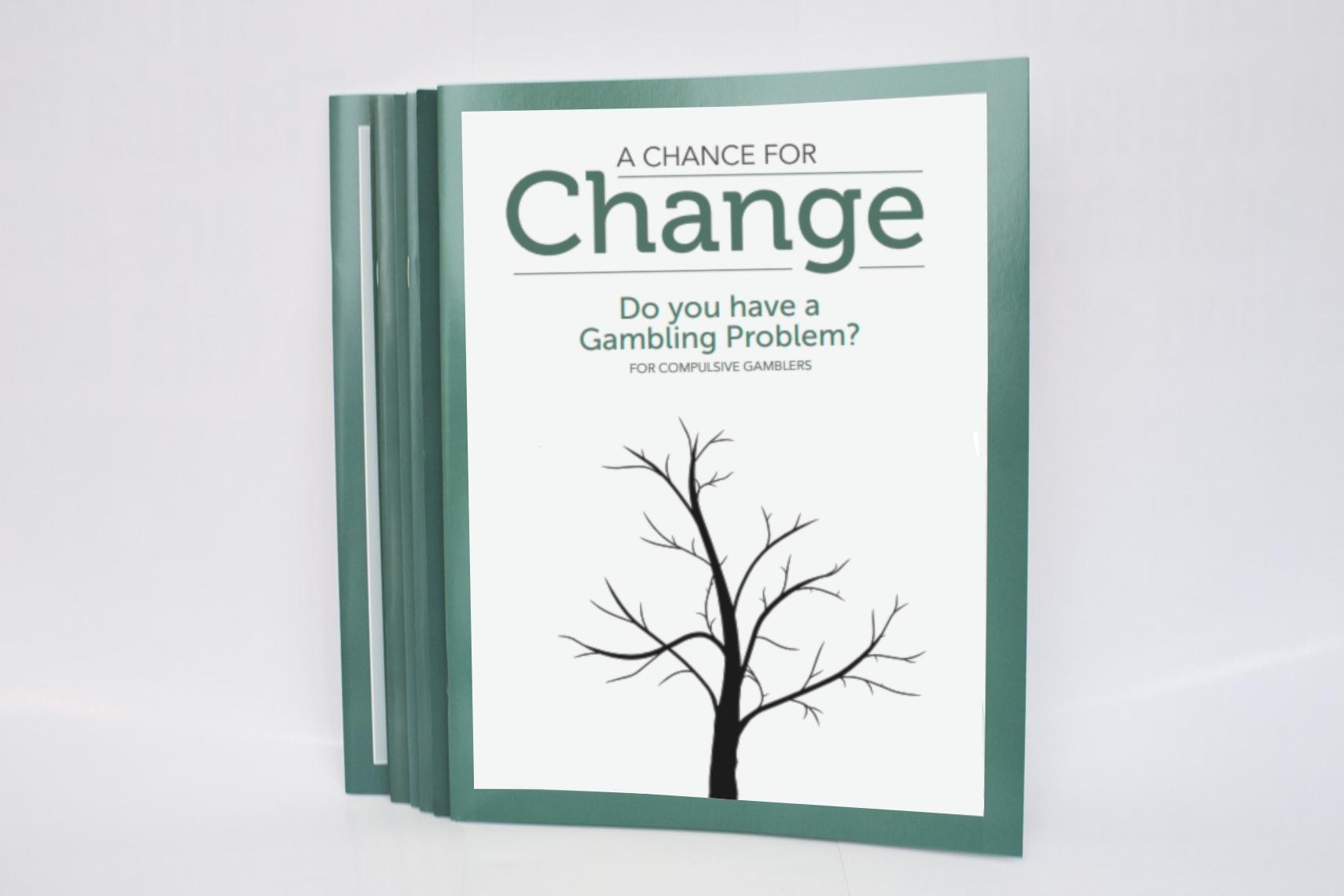
[Download Resources](#problem-gambling-resource-packs)
#### **Self-Help Literature**
As the flagship of its robust self-help literature offerings, the FCCG’s “A Chance for Change” recovery workbook series closely examines how individuals can escape the grips of problem and compulsive gambling through such strategies as creating and maintaining a plan for positive change, dealing with financial and legal problems, and taking charge of one’s life.
[Read More](https://gamblinghelp.org/literature)

[Download Resources](#problem-gambling-resource-packs)
#### **Financial Resources**
The burden of financial problems is frequently overwhelming for many of the individuals who contact the HelpLine. The FCCG offers HelpLine contacts both emergency and non-emergency financial resources. Likewise, it is not uncommon for problem gamblers to experience legal problems due to their addiction, and the FCCG offers resources in this arena as well.
[Read More](https://gamblinghelp.org/financialresources)

[Download Resources](#problem-gambling-resource-packs)
#### **Legal Resources**
It is not uncommon for problem gamblers to experience legal problems due to their addiction. Whether it be criminal in nature (embezzlement, theft, fraud, etc.) or civil (divorce, foreclosure, bankruptcy etc.), the FCCG provides expert assistance and resources for those faced with any type of legal action in a gambling related case, completely free of charge.
[Read More](https://gamblinghelp.org/legalresources)
[Download Resources](#problem-gambling-resource-packs)
#### **Population-Specific Resources**
The FCCG’s Population Specific Programs, Resources, Literature, and Materials are designed specifically for specific populations, including College Students, Women, Military Members, Veterans and their Families, Seniors, and Adolescents / Teens and their Parents, who are experiencing gambling-related problems, as well as for the professionals who serve these populations.
[Read More](https://gamblinghelp.org/population-specific-resources)

[Download Resources](#problem-gambling-resource-packs)
#### **Impaired Professionals Programs**
Impaired Professional Programs are designed for a wide range of professionals who are among those most likely to be at risk for developing a gambling problem, including doctors, lawyers, judges, athletes, and others, and provide self-help/treatment options in non-public settings to address the challenges of utilizing traditional resources.
[Read More](https://gamblinghelp.org/impaired-professionals-resources)
[Download Resources](#problem-gambling-resource-packs)
#### **Hotlines/Crisis Lines & Social Services/Emergency Assistance**
In the event individuals are in need of assistance for a non-gambling related or other traumatic issue, the FCCG refers to National Hotlines and Crisis Lines for additional specialized supports and resources as a wrap-around service. The FCCG also provides access to emergency supports through a wide range of vital social services referrals.
[Read More](https://gamblinghelp.org/hotlines-crisis-lines)
[Download Resources](#problem-gambling-resource-packs)
## 888-ADMIT-IT Only Refers to Certified Gambling Addiction Counselors
True problem gambling experts and certified treatment providers possess specialized knowledge and extensive training about the unique characteristics of gambling disorder. Only certified treatment providers understand what drives the suffering individual to choose gambling over financial stability, career, legal standing, and even family. Likewise, only certified counselors can attest to the impacts of gambling addiction and the treatment process, whether speaking with the media or educating the community.
[LEARN MORE](https://gamblinghelp.org/the-importance-of-gambling-addiction-certified-counselors)
[](https://gamblinghelp.org/the-importance-of-gambling-addiction-certified-counselors)
## Resources for Professionals
The Florida Council on Compulsive Gambling is known for its 888-ADMIT-IT HelpLine and has been providing leadership on the subject of problem gambling in Florida for over 30 years. Additionally, the FCCG HelpLine furnishes information, supports, and training for qualified addictions/mental health/other medical professionals, gambling operators, employers, and others in providing services and supports to the population negatively affected by gambling within the Sunshine State. Learn more about our programs and services for professionals below.

[Read More](https://gamblinghelp.org/outreach)
#### **Community Outreach Programs and National Problem Gambling Awareness Month (PGAM)**
*The FCCG provides an array of community outreach services, as compulsive gambling transcends throughout every aspect of the marketplace. The FCCG works year-round to raise awareness about problem gambling, leads Florida’s PGAM campaign in March of each year, and acts as an advocate and a voice in policy concerning gambling addiction at the state level.*
[Read More](https://gamblinghelp.org/outreach)
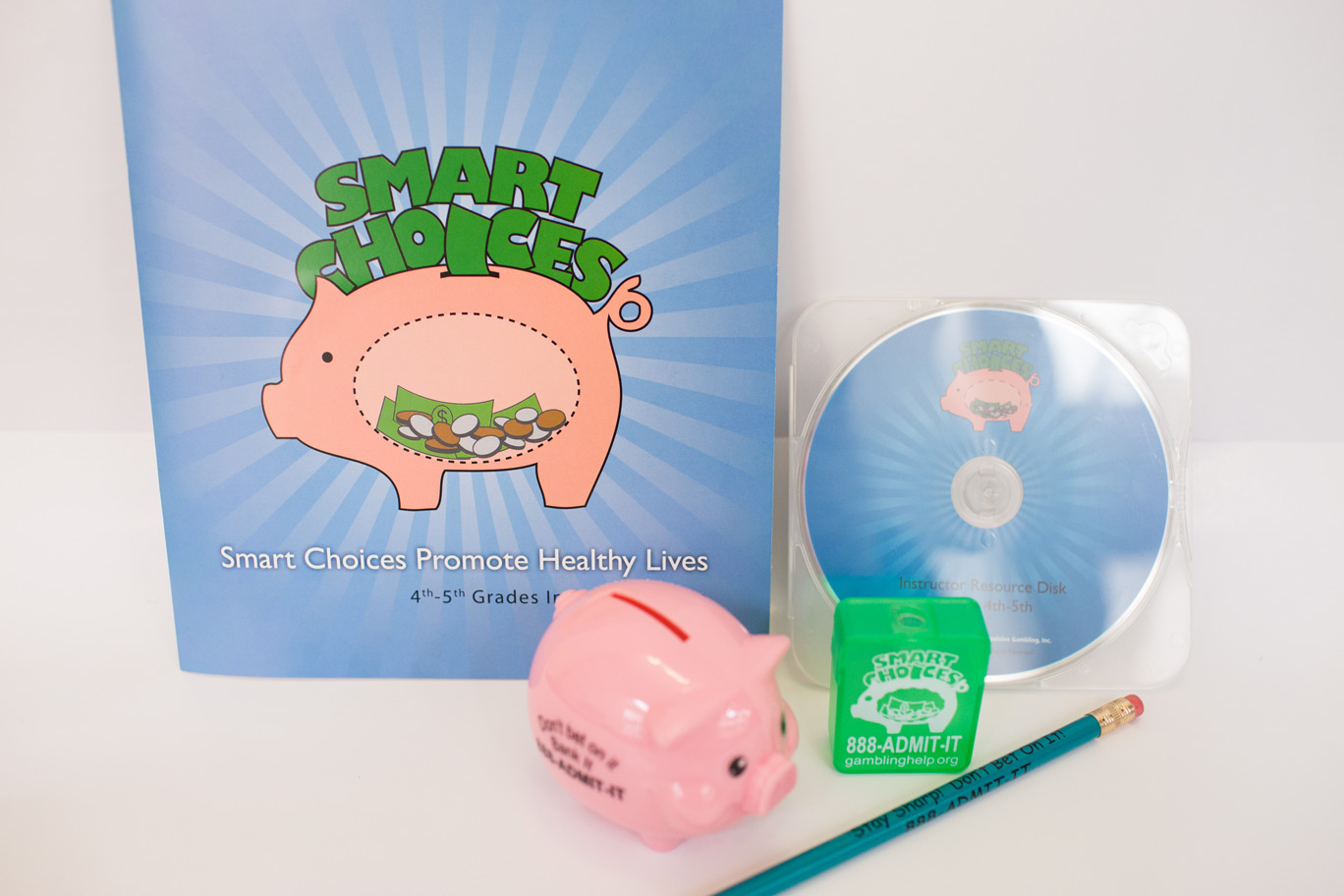
[Read More](https://gamblinghelp.org/prevention)
#### **Problem Gambling Prevention Programs for Youth and College Students**
*The FCCG’s prevention and responsible gambling approaches and programs, like other FCCG initiatives, are derived from a gambling neutral perspective and created based upon sound knowledge and understanding of the target population in any specific area, as opposed to a “one-size-fits-all” model or approach.*
[Read More](https://gamblinghelp.org/prevention)

[Read More](https://gamblinghelp.org/rgppp)
#### **Responsible Gambling and Player Protection Program (RGPPP) for Industry**
*The FCCG provides Florida gambling industry operators with information and training, and has furnished print and collateral materials featuring the 888-ADMIT-IT HelpLine for patron access to problem gambling supports, through its Responsible Gambling & Player Protection Program (RGPPP).*
[Read More](https://gamblinghelp.org/rgppp)

[Read More](https://gamblinghelp.org/research)
#### **Evidence-Based Research on the Issue of Problem Gambling in the State of Florida**
*The FCCG’s approach to development of compulsive gambling prevention, education, responsible gambling, and other related programming initiatives, is research driven. FCCG programs are based upon evidence-based research, conducted in the State of Florida to assure population appropriateness and effectiveness.*
[Read More](https://gamblinghelp.org/research)

[Read More](https://gamblinghelp.org/treatmentproviders)
#### **Certification Training and Continuing Education Modules for Treatment Providers**
*An important role of the FCCG is the continued training of treatment providers, mental health workers, clinical social workers and marriage and family therapists throughout the state. This has been accomplished through multiple webinars, online training modules and outreach activities conducted to promote the FCCG’s programs and services to diverse audiences throughout the state of Florida.*
[Read More](https://gamblinghelp.org/treatmentproviders)

[Read More](https://gamblinghelp.org/legalprofessionals)
#### **Training and Programming for Legal, Criminal Justice, and Court Professionals**
*The FCCG has developed programming that empowers and educates professionals in the judicial system to understand the uniqueness of compulsive gambling and offers suggestions on how to approach sentencing, probationary guidelines, and other legal facets when dealing with someone who is addicted to gambling.*
[Read More](https://gamblinghelp.org/legalprofessionals)

[Read More](https://gamblinghelp.org/programs-and-materials-for-senior-service-providers)
#### **Programs and Materials for Senior Service Providers**
The FCCG has developed a variety of senior specific programs and resources offering a comprehensive approach for diverse elder service providers in recognizing the signs of a gambling problem in the population served. FCCG senior specific programs address common situations that seniors encounter, identify age appropriate solutions, and offer viable approaches to prevention, assessment, intervention, treatment, and outreach efforts.
[Read More](https://gamblinghelp.org/programs-and-materials-for-senior-service-providers)

[Read More](https://gamblinghelp.org/programs-and-materials-for-military-and-veteran-service-providers)
#### **Programs and Materials for Military and Veteran Service Providers**
*Recent research reveals that as many as 56,000 active duty members of the Armed Forces meet the criteria for gambling disorder, and studies have shown that veterans have elevated rates of gambling problems, at least twice the rate of the general adult population. The FCCG provides FREE services and supports to mental health professionals and others servicing this population.*
[Read More](https://gamblinghelp.org/programs-and-materials-for-military-and-veteran-service-providers)
[Contact Us](#contact)
## Connect with Us
Follow the FCCG on social media to be in the know about the latest problem gambling news and HelpLine updates.
[](https://www.facebook.com/888AdmitIt)
[](https://x.com/FLCouncil)
[](https://www.linkedin.com/company/888admitit)
[](https://www.instagram.com/florida.gamblinghelp)
[](https://www.youtube.com/@888AdmitIt)
[](https://www.pinterest.com/888admitit)
[](https://www.reddit.com/user/888-ADMIT-IT)
## Follow Our Blog & Learn More About
Problem Gambling
For those who suffer from gambling disorder and their loved ones, the impacts touch upon nearly every aspect of life. The FCCG’s blog is a deep dive into everything problem gambling, from resources available for gamblers and loved ones, to seasonal concerns, prevention tips, awareness events, and more.
[ ![[IMAGE] Why Understanding Gambling Disorder is Crucial During National Suicide Prevention Month](https://gamblinghelp.org/wp-content/uploads/2026/08/Why-Understanding-Gambling-Disorder-is-Crucial-During-National-Suicide-Prevention-Month-1024x576.jpg "Why Understanding Gambling Disorder is Crucial During National Suicide Prevention Month | The Florida Council on Compulsive Gambling, Inc") ](https://gamblinghelp.org/why-understanding-gambling-disorder-is-crucial-during-national-suicide-prevention-month/)
### [ Why Understanding Gambling Disorder is Crucial During National Suicide Prevention Month ](https://gamblinghelp.org/why-understanding-gambling-disorder-is-crucial-during-national-suicide-prevention-month/)
September is both National Recovery Month and National Suicide Prevention Month, two observances that underscore the importance of mental health, early intervention, and compassionate support for individuals facing behavioral‑health challenges.\[…\]
[ Read more ](https://gamblinghelp.org/why-understanding-gambling-disorder-is-crucial-during-national-suicide-prevention-month/)
[ ![[IMAGE] How to Prepare for Sports Betting Risks Before Kickoff](https://gamblinghelp.org/wp-content/uploads/2026/08/How-to-Prepare-for-Sports-Betting-Risks-Before-Kickoff-1024x576.jpg "How to Prepare for Sports Betting Risks Before Kickoff | The Florida Council on Compulsive Gambling, Inc") ](https://gamblinghelp.org/how-to-prepare-for-sports-betting-risks-before-kickoff/)
### [ How to Prepare for Sports Betting Risks Before Kickoff ](https://gamblinghelp.org/how-to-prepare-for-sports-betting-risks-before-kickoff/)
September’s fall sports kickoff brings excitement, anticipation, and the return of football season. It’s a time when fans across Florida reconnect with their favorite teams and traditions. But it also\[…\]
[ Read more ](https://gamblinghelp.org/how-to-prepare-for-sports-betting-risks-before-kickoff/)
[ ![[IMAGE] How to Empower Awareness and Action for RGEM](https://gamblinghelp.org/wp-content/uploads/2026/08/How-to-Empower-Awareness-and-Action-for-RGEM-1024x576.jpg "How to Empower Awareness and Action for RGEM | The Florida Council on Compulsive Gambling, Inc") ](https://gamblinghelp.org/how-to-empower-awareness-and-action-for-rgem/)
### [ WEB LETTER: How to Empower Awareness and Action for RGEM ](https://gamblinghelp.org/how-to-empower-awareness-and-action-for-rgem/)
Each September, Responsible Gaming Education Month (RGEM) provides an important opportunity for Florida communities, families, and industry stakeholders to increase awareness of the risks associated with gambling. It’s a time\[…\]
[ Read more ](https://gamblinghelp.org/how-to-empower-awareness-and-action-for-rgem/)
[SEE ALL BLOG POSTS](https://gamblinghelp.org/blog/)
## Get blog updates in your inbox!
[SUBSCRIBE TO FCCG EMAILS](http://FCCG.informz.net/FCCG/pages/SignUptoReceiveFCCGCommunications888admititorg)
## **Contact Us**
Want to learn more about problem gambling? Are you a professional that works with this population? Whatever you’re looking for, feel free to reach out using the form below. For media contact information, [**visit our media contacts page.**](https://gamblinghelp.org/media)
Name \*First
Last
Email \*
Select Your State \*Select Your StateAlabamaAlaskaArizonaArkansasCaliforniaColoradoConnecticutDelawareFloridaGeorgiaHawaiiIdahoIllinoisIndianaIowaKansasKentuckyLouisianaMaineMarylandMassachusettsMichiganMinnesotaMississippiMissouriMontanaNebraskaNevadaNew HampshireNew JerseyNew MexicoNew YorkNorth CarolinaNorth DakotaOhioOklahomaOregonPennsylvaniaRhode IslandSouth CarolinaSouth DakotaTennesseeTexasUtahVermontVirginiaWashingtonWest VirginiaWisconsinWyomingOutside of the U.S.
Message
Privacy Policy \*
- *By using this form, I agree to the FCCG’s [Privacy Policy.](https://gamblinghelp.org/privacy-policy/) For immediate and anonymous assistance, please contact the [888-ADMIT-IT HelpLine](https://gamblinghelp.org/#contact-the-helpline) instead of using this form.*
Name
Submit
---
### [Download Free Problem Gambling Resources](https://gamblinghelp.org/problem-gambling-resource-packs/)
**Published:** September 9, 2026
**Author:** The Florida Council on Compulsive Gambling, Inc.
**Content:**
**The FCCG maintains a vast database of problem gambling resources specifically developed and chosen to assist those in need of help with a gambling problem (both for gamblers and their loved ones), along with addressing the collateral impacts of this addiction.** From over three decades of experience providing help and hope to individuals suffering from a gambling addiction, the FCCG has grown its resource database to serve nearly every circumstance or situation brought about by problem gambling. **Soon, all of our resources will be available as free downloads!**
## Problem Gambling Resource Packs – *Coming Soon!*
The FCCG utilizes a very strict referral system, offering a variety of problem gambling specific programs, services, and local referral resources, to assist individuals with their specific needs, based upon individual circumstances. Select a resource category below to explore and download available Problem Gambling Resource Packs:
- **Counseling Services** *– Coming soon!*
- **Self-Exclusion Programs** *– Coming soon!*
- **Self-Help Support Groups** *– Coming soon!*
- **Self-Help Literature** *– Coming soon!*
- **Financial Resources** *– Coming soon!*
- **Legal Resources** *– Coming soon!*
- **Population-Specific Resources** *– Coming soon!*
- **Impaired Professionals Programs** *– Coming soon!*
- **Hotlines/Crisis Lines & Social Services/Emergency Assistance** *– Coming soon!*
FCCG’s Problem Gambling Resource Packs will be an ever-evolving resource for Floridians. The FCCG takes information from data collected and supplied by contacts to assist in the development of programs and additional services in future years. *Best of all, resources are FREE to Florida citizens!*
---
### [Problem Gambling Awareness Month (PGAM)](https://gamblinghelp.org/pgam/)
**Published:** May 5, 2023
**Author:** The Florida Council on Compulsive Gambling, Inc.
**Content:**
#### SHINE THE LIGHT ON PROBLEM GAMBLING:
## **Florida Finds Hope Through 888-ADMIT-IT**
March is Problem Gambling Awareness Month (PGAM). Nationally recognized for its comprehensive support, localized resources, and personalized service, the 888‑ADMIT‑IT HelpLine stands as the trusted gateway to recovery for anyone in Florida concerned about gambling. As the only organization in the Sunshine State with over three decades of experience providing support and programming for this issue, it’s no coincidence that 93% of help seekers reported reduced gambling after reaching out.
**If you’re worried about your gambling or that of a loved one, call the 24/7, Confidential, and Multilingual [888-ADMIT-IT HelpLine!](#contact-the-helpline)**
[CONTACT THE HELPLINE](https://gamblinghelp.org/pgam/#contact-the-helpline)[SELF-ASSESSMENT QUIZ](https://gamblinghelp.org/#self-assessment-quiz)
[ ](https://www.youtube.com/watch?v=rhtcUqWKL2w)
## **March is Problem Gambling Awareness Month**
Problem Gambling Awareness Month (PGAM) in a national grassroots advocacy campaign that occurs each year in March, and provides the opportunity for heightened problem gambling awareness throughout the country. FCCG leads the PGAM campaign in Florida each year, bringing together voices from across the community to highlight the impacts of problem gambling as well as the confidential help and hope available 24/7 through the 888-ADMIT-IT HelpLine.
##### **RAISE AWARENESS**
By becoming educated about problem gambling you can help the FCCG raise awareness and bring this public health issue to light. Understand it, recognize it, and understand that this is a treatable problem.
##### **STAND WITH US**
As gambling continues to be more accessible, the FCCG needs your continued support in order for us to assist those who reach out for help. Contact us for FREE educational and training opportunities and become a responsible gaming advocate.
[BECOME A PGAM PARTNER](https://gamblinghelp.org/pgam/#partners)
##### **REMOVE THE STIGMA**
Often, people who are suffering with a gambling problem are reluctant to reach out for help. The FCCG helps thousands each year through its 24/7, Confidential, and Multilingual HelpLine, 888-ADMIT-IT. You can help us end the stigma!
## **Challenge Your Knowledge** with Free Games
Over the years, the FCCG has developed a number of free educational games for Problem Gambling Awareness Month (PGAM), which you can play below. Just click or tap anywhere in the game frames to begin each activity. Instructions for play are included at the beginning of each activity (look for the ⓘ icon).
### NEW! 888-ADMIT-IT Reveals the Route to Recovery
Learn about the resources available through the 888-ADMIT-IT HelpLine by following the path to recovery! Click on the “Start” button below to begin the game. Then, click on the first stage (blue circle) to open the first activity, and complete each stage to advance to the next one. Stages include interactive videos and images, short reading activities, and different knowledge challenges. See how many points you can get!
### **888-ADMIT-IT HelpLibs**
###
Crossword Challenge
###
The Signs of Problem Gambling Challenge
###
ARE YOU A RISKTAKER? Game
## Get Connected to Help and Hope
There are more ways than ever to get connected with the 24/7 Problem Gambling HelpLine. [**Call**](tel:8882364848) or [**text**](sms:8882364848) 888-ADMIT-IT (236-4848), [**open a live chat**](https://na0messaging.icarol.com/ConsumerRegistration.aspx?org=54632&pid=271&cc=en-US) on this website, email us at [**fccg@gamblinghelp.org**](mailto:fccg@gamblinghelp.org), download the [**free mobile app**](#mobile-app), or connect with us on social media, such as [**Facebook**](https://www.facebook.com/888AdmitIt) and **[X](https://x.com/FLCouncil)**. For media contact information, [**visit our media contacts page.**](https://gamblinghelp.org/media)
[](tel:8882364848)
##### **Call
888-ADMIT-IT**
[](sms:8882364848)
##### **TEXT
888-ADMIT-IT**
[](https://na0messaging.icarol.com/ConsumerRegistration.aspx?org=54632&pid=271&cc=en-US)
##### **OPEN LIVE CHAT**
[](mailto:fccg@gamblinghelp.org)
##### **EMAIL THE HELPLINE**
[](https://gamblinghelp.org/pgam/#mobile-app)
##### **GET THE MOBILE APP**
[](https://gamblinghelp.org/pgam/#social-media)
##### **CONNECT WITH US**
## **Problem gambling is an addiction like no other.**
**A gambling addiction can be devastating.** This disease affects a person’s self-worth, their relationships with others, their financial livelihood – and while everyone’s story is unique, there is a common thread that links those who contact the 888-ADMIT-IT HelpLine. They are looking for a way to get their lives back on track. For over 30 years, the FCCG has been instilling hope and furnishing help to those affected by problem gambling.
**The 888-ADMIT-IT HelpLine can be accessed by [calling](tel:8882364848) or [texting](sms:8882364848) the widely publicized toll-free telephone HelpLine number (888-ADMIT-IT), through Live Chat on the agency’s website ([gamblinghelp.org](https://gamblinghelp.org)), by email (<fccg@gamblinghelp.org>), with the 888-ADMIT-IT mobile app, or by connecting with the FCCG on [Facebook](https://www.facebook.com/888AdmitIt) and [Twitter.](https://twitter.com/FLCouncil)**
[CONTACT THE HELPLINE](https://gamblinghelp.org/pgam/#contact-the-helpline)
[ ](https://youtu.be/7AN3VLLlkdI?list=PLw6BTX4LgJ1YgNmEckfAOGVLc4Muc-2Mg)
## Facts About Problem Gambling
For most, gambling is a form of recreation that doesn’t cause harm. But when gambling becomes a problem, the impacts can be devastating. How big of an issue is gambling addiction in Florida, and who is affected?
$
0
B
The Estimated Social Costs of Problem Gambling Represent Billions of Dollars Per Year
[Read More](https://www.wpmart.com/accordion-faq-pro)
0
An Estimated 9 Million Americans Suffer from Problem Gambling
0
The Estimated Number of At-Risk Past-Year Problem Gamblers (Adults) in Florida
[Read More](https://www.wpmart.com/accordion-faq-pro)
0
Florida Adults Who are Currently (Past Year) Diagnosable as Disordered Gamblers
[Read More](https://www.wpmart.com/accordion-faq-pro)
+
0
%
888-ADMIT-IT: Increase in Florida Problem Gambling Help Contacts Since Last Year
0
%
888-ADMIT-IT: Increase in Florida Problem Gambling Help Contacts Since 2019-2020
+
0
%
888-ADMIT-IT: Increase in Florida Online Gambling Help Contacts Since Last Year
0
%
888-ADMIT-IT: Increase in Florida Online Gambling Help Contacts Since 2019-2020
[WATCH THE HIGHLIGHT VIDEO](https://gamblinghelp.org/pgam/#annual-helpline-report)[EXPLORE & SEARCH THE DATA](https://gamblinghelp.org/explore-888-admit-it-helpline-data)
## **888-ADMIT-IT HelpLine Data Highlights:**
July 1 – December 31, 2025
During the most recent July 1, 2025 – December 31, 2025 period, the FCCG continued to offer a wide variety of problem gambling services and supports to Florida residents via the 888-ADMIT-IT Problem Gambling HelpLine. Learn what we found in this video! [**Download FCCG Annual HelpLine Reports here.**](https://gamblinghelp.org/reports)
[ ](https://www.youtube.com/watch?v=fvWDdWPxgzY)
[ ](https://youtu.be/n6Zs-piF-ms)
## We are the FCCG.
**We are 888-ADMIT-IT.**
Thousands of people contact the 888-ADMIT-IT HelpLine each year for help and information, and millions more have been exposed to the number and the services and resources the Florida Council on Compulsive Gambling (FCCG) provides to Floridians suffering from the impacts of problem gambling.
**As the 24/7, Confidential, and Multilingual Problem Gambling HelpLine for the entire state, 888-ADMIT-IT is the gateway to a series of free services which are not available anywhere in Florida, online, or elsewhere.** Help seekers receive timely and updated resources as well as up-to-the-minute problem-gambling-related news, research, and information, along with FCCG’s tailored programs and services, available for both gamblers and their loved ones.
[LEARN MORE ABOUT AVAILABLE RESOURCES](https://gamblinghelp.org/pgam/#resources)
## **888-ADMIT-IT** is the Only Problem Gambling HelpLine Dedicated to Serving Floridians
The 888-ADMIT-IT HelpLine is an ever-evolving resource for Floridians. The FCCG is committed to personalized service and prides itself on the relationships built during HelpLine contacts, which are often a one-time opportunity to motivate behavioral change, and to share a message of hope that recovery is possible.
#### PURPOSEFUL
From decades of experience providing help and hope to Floridians suffering from gambling addiction, the FCCG has grown its HelpLine resource database to serve nearly every situation brought about by problem gambling.
#### PROFESSIONAL
FCCG HelpLine Specialists are trained to provide resources catered to the contact’s unique situation, including immediate access to FCCG HelpLine programs that have been developed specifically for Florida help seekers.
#### PERSONAL
The FCCG HelpLine utilizes a very strict referral system, offering a variety of problem gambling specific programs, services, and local referral resources, to assist individuals with their specific needs and circumstances.
## Gambling Addiction Can Be Hard to Spot
Unlike other addictions, problem gambling does not have obvious visible physical symptoms. That’s why it’s known as the hidden addiction — but there are behavioral signs. Are you seeing them?

#### Need to gamble with increasing amounts to achieve the desired excitement.
[LEARN MORE](https://gamblinghelp.org/how-gambling-can-become-an-addiction/)

#### Restless or irritable when trying to cut down or stop gambling.
[LEARN MORE](https://gamblinghelp.org/how-gambling-can-become-an-addiction/)

#### Repeated unsuccessful efforts to control, cut back on or stop gambling.
[LEARN MORE](https://gamblinghelp.org/how-gambling-can-become-an-addiction/)

#### Frequent thoughts about gambling (such as reliving past gambling or planning future gambling).
[LEARN MORE](https://gamblinghelp.org/how-gambling-can-become-an-addiction/)

#### Often gambling when feeling distressed.
[LEARN MORE](https://gamblinghelp.org/how-gambling-can-become-an-addiction/)

#### After losing money gambling, often returning to get even. (This is referred to as "chasing" one's losses.)
[LEARN MORE](https://gamblinghelp.org/how-gambling-can-become-an-addiction/)

#### Lying to hide gambling activity.
[LEARN MORE](https://gamblinghelp.org/how-gambling-can-become-an-addiction/)

#### Risking or losing a close relationship, a job, or a school or job opportunity because of gambling.
[LEARN MORE](https://gamblinghelp.org/how-gambling-can-become-an-addiction/)

#### Relying on others to help with money problems caused by gambling.
[LEARN MORE](https://gamblinghelp.org/how-gambling-can-become-an-addiction/)
## Hear First-Hand Accounts of Problem Gambling
In Surviving Compulsive Gambling: The Betty White Story, a woman recounts her experience being married to a compulsive gambler. Her honesty provides insight into how dangerous compulsive gambling can be, including for loved ones. The Domino Effect tells the stories of Brandon, Terry, and Sarah, three individuals whose gambling addiction affected not only their lives, but the lives of those closest to them.
[ ](https://www.youtube.com/embed/videoseries?list=PLw6BTX4LgJ1ZTLAF6lj6gykMXxk4BpQRq)
##### CONNECT WITH THE APP
## 888-ADMIT-IT also has a free mobile app.
Download the free 888-ADMIT-IT mobile app to stay connected with the HelpLine and resources for problem gambling. Available on both Apple and Android devices, the app allows users to contact the HelpLine in just one or two taps, take a Self-Assessment Quiz to help detect problematic gambling behaviors, learn about the FCCG’s Online Program for Problem Gamblers (OPPG), see problem gambling prevention tips, discover the warning signs of gambling addiction, and more.
[APPLE DEVICES](https://apps.apple.com/us/app/888-admit-it/id1499418438?uo=4)[ANDROID DEVICES](https://play.google.com/store/apps/details?id=com.app.floridagamblinghelp)
[![[IMAGE] 888-ADMIT-IT Mobile App](https://gamblinghelp.org/wp-content/uploads/2023/03/cropped-888-ADMIT-IT-Mobile-App-Graphic.png "888-ADMIT-IT Mobile App")](#)
## Learn the Impacts of Gambling Addiction
Discover how gambling disorder causes financial and career difficulties, legal problems, relationship issues, and even suicidal ideation and attempts from those who lived it, but most importantly – that help and hope are available through the 888-ADMIT-IT HelpLine, and [recovery is possible.](https://gamblinghelp.org/#recovery-is-possible)
[ ](https://www.youtube.com/embed/videoseries?list=PLw6BTX4LgJ1biCo4kfKnTLiZ1pz_NjkrN)
##### KNOWING WHAT TO LOOK FOR ISN’T ENOUGH
## **888-ADMIT-IT** Offers 24/7 Connection to Resources for Help Seekers & Professionals
As the 24/7, Confidential, and Multilingual Problem Gambling HelpLine for the entire state,
888-ADMIT-IT is the gateway to a series of free services which are not available anywhere in Florida, online, or elsewhere. Help seekers receive timely and updated resources as well as up-to-the-minute problem-gambling-related news, research, and information, along with FCCG’s tailored programs and services, available for both gamblers and their loved ones. Additionally, the FCCG HelpLine furnishes information, supports, and training for qualified addictions/mental health/other medical professionals, gambling operators, employers, and others in providing services and supports to the population negatively affected by gambling within the Sunshine State.

[Resources for Help Seekers](https://gamblinghelp.org/#help-seekers)
##### **Resources for Help Seekers**
By contacting 888-ADMIT-IT, help seekers can connect with resources like the Online Program for Problem Gamblers (OPPG), the Peer Connect Program, Referrals to Gambling Addiction Certified Treatment Providers, Self-Exclusion Programs, Self-Help Support Groups, Self-Help Literature, Financial Supports, Legal Resources, and many more.
[Learn More](https://gamblinghelp.org/#help-seekers)

[Resources for Professionals](https://gamblinghelp.org/#professionals)
##### **Resources for Professionals**
The FCCG HelpLine furnishes information, supports, and training for qualified addictions/mental health/other medical professionals, gambling operators, employers, and others in providing services and supports to the population negatively affected by gambling within the Sunshine State. Want to learn more about our programs and services for professionals?
[Learn More](https://gamblinghelp.org/#professionals)
## Worried about your gambling or that of a loved one? Contact the HelpLine today.
[CONTACT THE HELPLINE](https://gamblinghelp.org/pgam/#contact-the-helpline)
[](https://www.youtube.com/watch?v=0wWWdQv_3tk)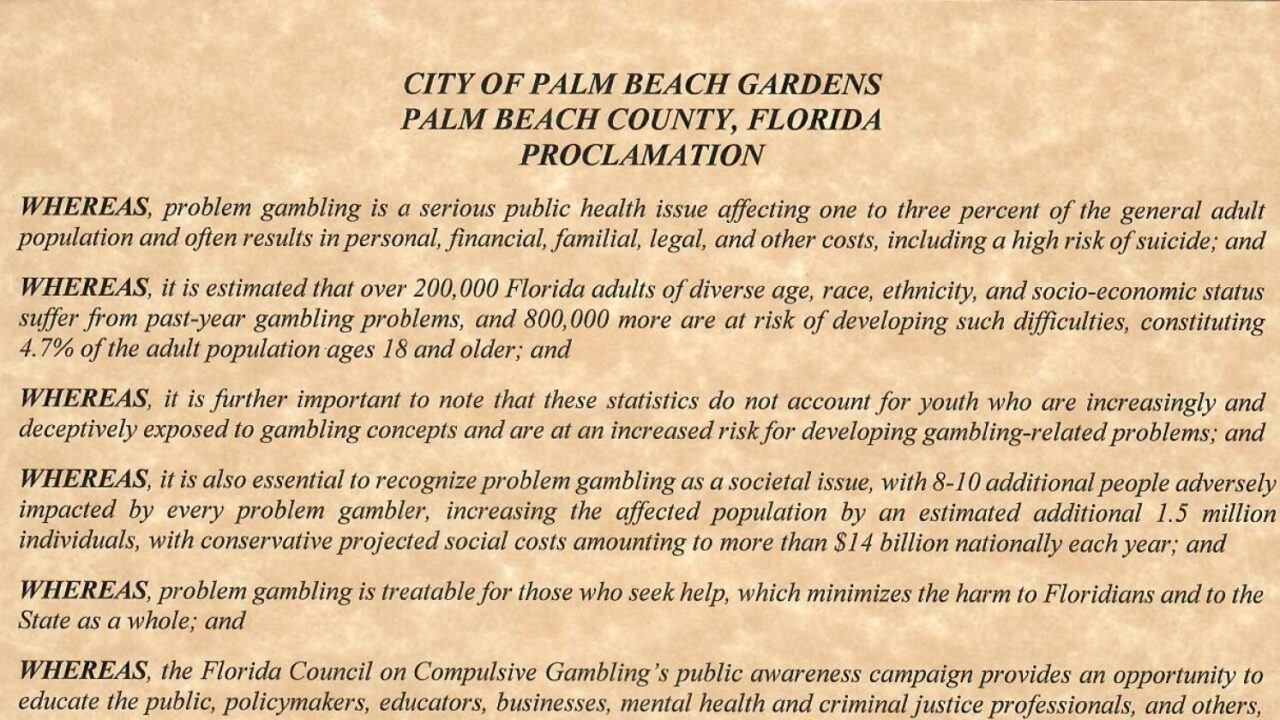![[IMAGE] Resorts World Bimini Partners with FCCG for corporate Responsible Gambling and Self-Exclusion Program](https://gamblinghelp.org/wp-content/uploads/2025/04/Resorts-World-Bimini-Partnership-Graphic.jpg "Resorts World Bimini - Partnership Graphic")
## PGAM Partners Amplify Our Message in Florida & Beyond
From mayoral proclamations around the state, to Florida’s gambling facilities raising awareness among their employees, PGAM partners are helping spread the word about the 888-ADMIT-IT HelpLine. Interested in becoming a PGAM partner? Email us at [**pgam@gamblinghelp.org**](mailto:pgam@gamblinghelp.org)!
[SIGN UP TO PARTICIPATE](mailto:pgam@gamblinghelp.org)[SEE A LIST OF PGAM PARTNERS](https://gamblinghelp.org/pgam/2026-problem-gambling-awareness-month-pgam-supporters)
## Problem Gambling is in the Press During PGAM
Over the years, the FCCG has been routinely contacted by reporters writing stories about the impacts of problem gambling on Floridians. These days, the the Florida Council is fielding a record number of media requests as a result of gambling expansion and the resulting surge in 888-ADMIT-IT HelpLine contacts. Click on the images in the slideshow to read the most recent stories.
[![[IMAGE] FCCG Executive Director Interviewed About Rising Problem Gambling Impacts During March Madness](https://gamblinghelp.org/wp-content/uploads/2026/03/FCCG-Executive-Director-Interviewed-About-Rising-Problem-Gambling-Impacts-During-March-Madness.jpg "FCCG Executive Director Interviewed About Rising Problem Gambling Impacts During March Madness | The Florida Council on Compulsive Gambling, Inc")](https://www.pbs.org/video/southwest-florida-in-focus-episode-246-mar-24th-2026-yjagyl/)[![[IMAGE] Documents show Florida problem gambling hotline funds flow from nonprofit to for-profit company](https://gamblinghelp.org/wp-content/uploads/2026/03/Documents-show-Florida-problem-gambling-hotline-funds-flow-from-nonprofit-to-for-profit-company.jpg "Documents show Florida problem gambling hotline funds flow from nonprofit to for-profit company | The Florida Council on Compulsive Gambling, Inc")](https://www.wptv.com/news/state/documents-show-florida-problem-gambling-hotline-funds-flow-from-nonprofit-to-for-profit-company)[![[IMAGE] News 4 Jax Features FCCG Report & HelpLine Number in TV Segment During PGAM](https://gamblinghelp.org/wp-content/uploads/2026/04/News-4-Jax-Features-FCCG-Report-HelpLine-Number-in-TV-Segment-During-PGAM.jpg "News 4 Jax Features FCCG Report & HelpLine Number in TV Segment During PGAM | The Florida Council on Compulsive Gambling, Inc")](https://www.news4jax.com/video/news/morning-show/2026/03/16/sports-betting-surge-how-to-find-help-if-you-re-dealing-with-addiction/)[](https://www.gamblingnews.com/news/floridas-gambling-helpline-is-seeing-more-people-calling-texting-for-help/)[![[IMAGE] Florida Gambling Helpline Sees Sharp Increase of Calls Since Start of Online Sports Betting](https://gamblinghelp.org/wp-content/uploads/2026/04/Florida-Gambling-Helpline-Sees-Sharp-Increase-of-Calls-Since-Start-of-Online-Sports-Betting.jpg "Florida Gambling Helpline Sees Sharp Increase of Calls Since Start of Online Sports Betting | The Florida Council on Compulsive Gambling, Inc")](https://www.casino.org/news/florida-gambling-helpline-influx-calls-since-online-sports-betting/)[](https://brobible.com/culture/article/florida-sports-betting-leads-to-rise-problem-gambling/)[](https://www.fox13news.com/video/fmc-636lhjhofmhrtfxd)[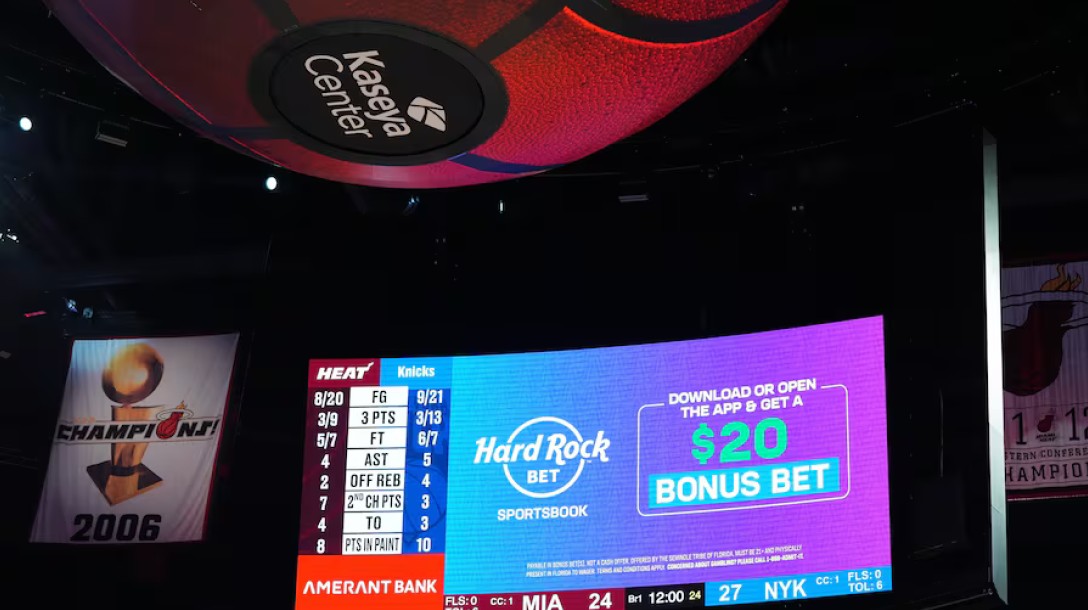](https://www.tampabay.com/news/florida-politics/2026/02/23/sports-betting-drives-calls-helpline-florida-gambling/)[![[IMAGE] ' Rise in Mental Health Issues Since Legalizing Sports Betting](https://gamblinghelp.org/wp-content/uploads/2026/02/Florida-Sees-Astronomical-Rise-in-Mental-Health-Issues-Since-Legalizing-Sports-Betting.jpg "' Rise in Mental Health Issues Since Legalizing Sports Betting | The Florida Council on Compulsive Gambling, Inc")](https://www.wflx.com/2026/02/08/florida-sees-astronomical-rise-mental-health-issues-since-legalizing-sports-betting/)[](https://www.yahoo.com/news/articles/pinellas-man-stole-600k-clients-194346153.html)
## Connect with Us
Follow the FCCG on social media to be in the know about the latest problem gambling news and HelpLine updates.
[](https://www.facebook.com/888AdmitIt)
[](https://x.com/FLCouncil)
[](https://www.linkedin.com/company/888admitit)
[](https://www.instagram.com/florida.gamblinghelp)
[](https://www.youtube.com/@888AdmitIt)
[](https://www.pinterest.com/888admitit)
[](https://www.reddit.com/user/888-ADMIT-IT)
## Follow Our Blog & Learn More About
Problem Gambling
For those who suffer from gambling disorder and their loved ones, the impacts touch upon nearly every aspect of life. The FCCG’s blog is a deep dive into everything problem gambling, from resources available for gamblers and loved ones, to seasonal concerns, prevention tips, awareness events, and more.
[ ![[IMAGE] Why Understanding Gambling Disorder is Crucial During National Suicide Prevention Month](https://gamblinghelp.org/wp-content/uploads/2026/08/Why-Understanding-Gambling-Disorder-is-Crucial-During-National-Suicide-Prevention-Month-1024x576.jpg "Why Understanding Gambling Disorder is Crucial During National Suicide Prevention Month | The Florida Council on Compulsive Gambling, Inc") ](https://gamblinghelp.org/why-understanding-gambling-disorder-is-crucial-during-national-suicide-prevention-month/)
### [ Why Understanding Gambling Disorder is Crucial During National Suicide Prevention Month ](https://gamblinghelp.org/why-understanding-gambling-disorder-is-crucial-during-national-suicide-prevention-month/)
September is both National Recovery Month and National Suicide Prevention Month, two observances that underscore the importance of mental health, early intervention, and compassionate support for individuals facing behavioral‑health challenges.\[…\]
[ Read more ](https://gamblinghelp.org/why-understanding-gambling-disorder-is-crucial-during-national-suicide-prevention-month/)
[ ![[IMAGE] How to Prepare for Sports Betting Risks Before Kickoff](https://gamblinghelp.org/wp-content/uploads/2026/08/How-to-Prepare-for-Sports-Betting-Risks-Before-Kickoff-1024x576.jpg "How to Prepare for Sports Betting Risks Before Kickoff | The Florida Council on Compulsive Gambling, Inc") ](https://gamblinghelp.org/how-to-prepare-for-sports-betting-risks-before-kickoff/)
### [ How to Prepare for Sports Betting Risks Before Kickoff ](https://gamblinghelp.org/how-to-prepare-for-sports-betting-risks-before-kickoff/)
September’s fall sports kickoff brings excitement, anticipation, and the return of football season. It’s a time when fans across Florida reconnect with their favorite teams and traditions. But it also\[…\]
[ Read more ](https://gamblinghelp.org/how-to-prepare-for-sports-betting-risks-before-kickoff/)
[ ![[IMAGE] How to Empower Awareness and Action for RGEM](https://gamblinghelp.org/wp-content/uploads/2026/08/How-to-Empower-Awareness-and-Action-for-RGEM-1024x576.jpg "How to Empower Awareness and Action for RGEM | The Florida Council on Compulsive Gambling, Inc") ](https://gamblinghelp.org/how-to-empower-awareness-and-action-for-rgem/)
### [ WEB LETTER: How to Empower Awareness and Action for RGEM ](https://gamblinghelp.org/how-to-empower-awareness-and-action-for-rgem/)
Each September, Responsible Gaming Education Month (RGEM) provides an important opportunity for Florida communities, families, and industry stakeholders to increase awareness of the risks associated with gambling. It’s a time\[…\]
[ Read more ](https://gamblinghelp.org/how-to-empower-awareness-and-action-for-rgem/)
[SEE ALL BLOG POSTS](https://gamblinghelp.org/blog/)
## Get blog updates in your inbox!
[SUBSCRIBE TO FCCG EMAILS](http://fccg.informz.net/FCCG/pages/SignUptoReceiveFCCGCommunications888admititorg)
## **Contact Us**
Want to learn more about problem gambling? Are you a professional that works with this population? Whatever you’re looking for, feel free to reach out using the form below. For immediate or anonymous assistance, please [contact the 888-ADMIT-IT HelpLine.](#contact-the-helpline) For media contact information, [**visit our media contacts page.**](https://gamblinghelp.org/media)
Name \*First
Last
Email \*
Select Your State \*Select Your StateAlabamaAlaskaArizonaArkansasCaliforniaColoradoConnecticutDelawareFloridaGeorgiaHawaiiIdahoIllinoisIndianaIowaKansasKentuckyLouisianaMaineMarylandMassachusettsMichiganMinnesotaMississippiMissouriMontanaNebraskaNevadaNew HampshireNew JerseyNew MexicoNew YorkNorth CarolinaNorth DakotaOhioOklahomaOregonPennsylvaniaRhode IslandSouth CarolinaSouth DakotaTennesseeTexasUtahVermontVirginiaWashingtonWest VirginiaWisconsinWyomingOutside of the U.S.
Message
Privacy Policy \*
- *By using this form, I agree to the FCCG’s [Privacy Policy.](https://gamblinghelp.org/privacy-policy/) For immediate and anonymous assistance, please contact the [888-ADMIT-IT HelpLine](https://gamblinghelp.org/#contact-the-helpline) instead of using this form.*
Phone
Submit
---
### [FCCG's Peer Connect Program ©](https://gamblinghelp.org/peerconnect/)
**Published:** April 11, 2023
**Author:** The Florida Council on Compulsive Gambling, Inc.
**Content:**
**PROGRAM AT CAPACITY. This program is at capacity and not currently accepting new enrollments.**
**The FCCG’s Peer Connect Program** was established in 2008, and today, continues to be a successful support service for **[888-ADMIT-IT HelpLine](https://gamblinghelp.org/helpline)** contacts in choosing their individual path of recovery from a gambling addiction. The Peer Connect Program offers valuable insight into the world of gambling addiction and information on proven recovery strategies, such as professional treatment, self-help programs, financial counseling, and legal aid.
## The Opportunity to Speak to Someone in Recovery
**The FCCG’s Peer Connect Program provides gamblers and loved ones with the opportunity to speak to someone in recovery, or a loved one of someone in recovery, in an effort to facilitate an easier transition into recovery and/or treatment.** This program’s goal is to motivate individuals to take necessary steps towards stopping gambling and rebuilding their lives, personally, professionally, and financially when necessary, through peer-to-peer support. During Peer Connect appointments, peers share their story of when they first began recovery, and can speak from experience on how the recovery process works. This program is not meant to take the place of counseling, 12-step meetings, faith-based treatment, or any other recovery method, but rather to serve as a complement to treatment by helping to guide the person into a comfortable path of their choosing.
Peer Connect also provides a much-needed support service for those living in remote areas of the state where clinical services and self-help programs are generally limited and/or unavailable. Peer Connect offers assistance with the **[FCCG’s *A Chance for Change* Recovery Workbooks and the FCCG’s Budget Toolkit](https://gamblinghelp.org/literature)** as well. The FCCG’s seven-part series of self-help recovery workbooks, *A Chance for Change*, were developed for problem gamblers, loved ones and senior compulsive gamblers. Titled “*A Chance for Change*,” the workbooks are designed to act as a self-help program for persons suffering from the adverse effects of problem and compulsive gambling.
**It can be overwhelming to know where to start with problem gambling resources. [Contact the 888-ADMIT-IT HelpLine today](https://gamblinghelp.org/#contact-the-helpline), and speak to a Specialist who will listen to your situation, help you learn more about the FCCG’s Peer Connect Program, and connect you with the best resources for gambling addiction, whether you are worried about your own gambling or that of a loved one. Best of all, your contact to the HelpLine is completely free and confidential.**
[**Contact the HelpLine**](https://gamblinghelp.org/#contact-the-helpline)
---
### [FCCG's Online Program for Problem Gamblers (OPPG) ©](https://gamblinghelp.org/oppg/)
**Published:** April 11, 2023
**Author:** The Florida Council on Compulsive Gambling, Inc.
**Content:**
**PROGRAM AT CAPACITY. This program is at capacity and not currently accepting new enrollments.**
**For those seeking on-demand options, or who lack insurance, or the ability to pay for [in-person counseling services](https://gamblinghelp.org/counselingservices), the [888-ADMIT-IT HelpLine](https://gamblinghelp.org/helpline) provides problem gamblers with immediate access to interactive problem gambling supports, through the FCCG’s Online Program for Problem Gamblers (OPPG).** The core content for this program has been derived from experts in the field of problem gambling and is based on scientific literature of the issues most relevant for problem gamblers.
## Immediate Access to Interactive Problem Gambling Supports
The FCCG’s OPPG includes elements of both traditional telehealth treatment supports as well as self-guided change lessons and activities. The FCCG’s OPPG offers many advantages as a resource for Floridians suffering from gambling-related problems. This program can reach problem gamblers in under-served areas, address scheduling challenges that can occur with traditional face-to-face services and reduce stigmatization common among problem gamblers seeking help.
**Another advantage of the FCCG’s OPPG, is that problem gamblers can repeat content as needed, have opportunities for visual learning, and have access to necessary information (e.g., coping with triggers or urges to gamble) at times when other supports may not be available.** The OPPG is an 8-week self-help program that covers many important issues that are relevant for problem gamblers. It includes videos, readings, and exercises that cover topics such as understanding perspectives on problem gambling including the neurosciences, strategies to address shame, boredom, and stress, as well as other helpful approaches for reducing problem gambling behavior. The FCCG’s OPPG also includes no-cost self-assessments.
**It can be overwhelming to know where to start with problem gambling resources. [Contact the 888-ADMIT-IT HelpLine today](https://gamblinghelp.org/#contact-the-helpline), and speak to a Specialist who will listen to your situation, help you learn more about the FCCG’s OPPG, and connect you with the best resources for gambling addiction, whether you are worried about your own gambling or that of a loved one. Best of all, your contact to the HelpLine is completely free and confidential.**
[**Contact the HelpLine**](https://gamblinghelp.org/#contact-the-helpline)
---
### [Responsible Gaming Education Month (RGEM)](https://gamblinghelp.org/rgem/)
**Published:** August 16, 2024
**Author:** The Florida Council on Compulsive Gambling, Inc.
**Content:**
## **Play Smart from the Start**
**Every September is recognized as Responsible Gaming Education Month (RGEM).** The 2025 campaign theme, “Play Smart from the Start,” encourages anyone choosing to gamble to understand the risks, set personal limits, and make educated choices from day one.
**The Florida Council on Compulsive Gambling joins the RGEM campaign each year to champion responsible gambling habits while raising awareness about the signs of problem gambling and the help available in Florida through the 888-ADMIT-IT HelpLine. If gambling is no longer a game, 888-ADMIT-IT!**
[LEARN MORE](https://gamblinghelp.org/rgem/#september-is-responsible-gaming-education-month)
## **September is Responsible Gaming Education Month (RGEM)**
September is recognized as Responsible Gaming Education Month (RGEM) here in Florida and across the United States. The American Gaming Association (AGA) leads the RGEM campaign nationwide, promoting gambling literacy and consumer education, elevating employee training with gambling operators, and advancing operators’ understanding of responsible gambling. The Three C’s – Clarity, Caution, and Control – form the foundation of responsible gambling during RGEM. Together, these principles guide smart choices from the very start.
##### **CLARITY**
Understand how gambling works, including the odds and risks involved. By fostering this knowledge, individuals are better equipped to make smart, informed decisions, because responsible gaming doesn’t begin at the table or the app – it begins in the mind.
##### **CAUTION**
Do you know the steps to responsible gambling? **Going in with a Play Smart Plan makes a big difference – get help creating yours for free [here.](#rgem-educational-activities)** See if you can tell the difference between responsible gambling habits and the signs of problem gambling below!
##### **CONTROL**
Only you can keep your gambling responsible, and only you can set your boundaries. Set time and money limits before you start, and stick to them. Take breaks in play when YOU need them. Know when to walk away, even if nobody else does.
## Do You Know the Differences Between Responsible Gambling & Problem Gambling?
Take a look at these gambling habits. Do you know which are responsible gambling practices and which are signs of a gambling problem? Hover your mouse or tap on each card to reveal the answer.
#### Responsible Gambling
#### Responsible Gambling
#### Problem Gambling
#### Responsible Gambling
#### Problem Gambling
#### Responsible Gambling
#### Problem Gambling
#### Problem Gambling
#### Responsible Gambling
## Can’t Walk Away? Your Best Play is to
**Call or Text 888-ADMIT-IT.**
Thousands of people contact the 888-ADMIT-IT HelpLine each year for help and information. If you are concerned about your gambling or that of a loved one, know that you are not alone. There are thousands of free resources available to Floridians struggling with the impacts of problem gambling.
**As the 24/7, Confidential, and Multilingual Problem Gambling HelpLine for the entire state, 888-ADMIT-IT is the gateway to a series of free services which are not available anywhere in Florida, online, or elsewhere.** Help seekers receive timely and updated resources as well as up-to-the-minute problem-gambling-related news, research, and information, along with FCCG’s tailored programs and services, available for both gamblers and their loved ones.
[CONTACT THE HELPLINE](https://gamblinghelp.org/rgem/#contact-the-helpline)
[ ](https://www.youtube.com/watch?v=a04WNBbJvI8)
## Get Connected to Free Supports
There are more ways than ever to get connected with the 24/7 888-ADMIT-IT Problem Gambling HelpLine! Click or tap the buttons below to get connected with a HelpLine Specialist now.
[](tel:8882364848)
##### **Call
888-ADMIT-IT**
[](sms:8882364848)
##### **TEXT
888-ADMIT-IT**
[](https://na0messaging.icarol.com/ConsumerRegistration.aspx?org=54632&pid=271&cc=en-US)
##### **OPEN LIVE CHAT**
[](https://gamblinghelp.org/#mobile-app)
##### **GET THE MOBILE APP**
[](mailto:fccg@gamblinghelp.org)
##### **EMAIL THE HELPLINE**
[](https://gamblinghelp.org/rgem/#social-media)
##### **CONNECT WITH US**
##### RESPONSIBLE GAMING EDUCATION MONTH
## For Gambling Operators: Employees
***Employees*** serve as the front line for responsible gaming efforts. Use RGEM to reenergize your training efforts and empower employees with the knowledge and tools to recognize the difference between responsible gaming and gambling that is potentially problematic, and resources for help in Florida, if necessary, through the 888-ADMIT-IT HelpLine.
##### INTERVIEWS
Interview your staff for a video, social media or blog post on how they prioritize responsible gaming.
##### MATERIALS
Use the month to reinvigorate responsible gaming and 888-ADMIT-IT HelpLine resources––like brochures, posters––offered to employees.
##### TRAINING
RGEM serves as a great opportunity to provide refresher trainings to employees at all levels. Make the trainings informative and interactive by adding in quizzes, prizes or recognition.
##### COMMUNICATIONS
Highlight responsible gaming and RGEM through internal communications channels like newsletters and intranets, break rooms, and back of house digital displays featuring access to help if needed through Florida’s Problem Gambling HelpLine 888-ADMIT-IT.

##### RESPONSIBLE GAMING EDUCATION MONTH
## For Gambling Operators: Patrons
**Responsible gaming efforts help customers make informed choices about their gambling.** RGEM provides the opportunity to promote transparency and gaming literacy by educating customers.
[](#)
##### MESSAGING
Feature responsible gaming messaging with the 888-ADMIT-IT HelpLine on public channels like social media, informational kiosks and websites.
##### PROMOTIONS
Promote RGEM and the 888-ADMIT-IT HelpLine on signage and marquees on property and digitally on social media.
##### MATERIALS
Distribute 888-ADMIT-IT HelpLine informational materials throughout the property or through gaming apps.
##### RESPONSIBLE GAMING EDUCATION MONTH
## RGEM Educational Activities
Facility employees and patrons can challenge their knowledge about responsible gambling habits, the signs of problem gambling, and the resources available in Florida for problem gambling help with these free educational activities. Just click or tap anywhere in the game frames to begin each activity. Instructions for play are included at the beginning of each activity (look for the ⓘ icon).
### Play Smart Planner
###
888-ADMIT-IT HelpLibs
###
Crossword Challenge
###
The Signs of Problem Gambling Challenge
### **DIRE STAKES: Industry Edition**
###
ARE YOU A RISKTAKER? Game
##### RESPONSIBLE GAMING EDUCATION MONTH
## For Policymakers & Regulators
Policymakers and regulators play a key role in creating a baseline for responsibility. Get engaged during RGEM by acknowledging the importance of responsible gaming to a successful market.
##### PROCLAMATIONS & COMMUNICATIONS
Sign a proclamation recognizing the month of September as RGEM in Florida, or use your communications channels to highlight responsible gaming efforts in Florida.

##### RESPONSIBLE GAMING EDUCATION MONTH
## For Other Organizations / Industry Partners
Businesses both inside and outside the gaming industry—including media and league partners— have a role to play in educating consumers on responsible gaming.

##### MEDIA
For media, avoid promoting illegal gambling websites by citing and partnering with the only legal sportsbook in Florida, Hard Rock Bet, that provides consumers with responsible gaming protections.
##### COLLABORATION
Collaborate with responsible gaming organizations and initiatives to develop educational campaigns and initiatives.
##### MESSAGING
In addition to featuring responsible gaming messaging on public channels, promote self-assessment tools (available on the FCCG’s website, [gamblinghelp.org](https://gamblinghelp.org)) and provide awareness of problem gambling support services in Florida available through the 888-ADMIT-IT HelpLine to ensure that resources are easily accessible to individuals seeking help.
## Download the FCCG’s RGEM Toolkit
The FCCG is making it easier for Florida organizations to promote Responsible Gaming Education Month with a free downloadable toolkit that includes our RGEM brochure, digital banners, and sample social media posts.
### Give Your RGEM Campaign a Headstart
Download the FCCG’s RGEM Materials to use in your RGEM campaign, and help raise awareness about the importance of responsible gambling and also problem gambling supports available in Florida through the 888-ADMIT-IT HelpLine.
##### RGEM Brochure
The FCCG’s 2025 RGEM brochure, designed double sided in English and Spanish, lays out ways to “Play Smart from the Start” by providing examples of ways to keep gambling responsible and the warning signs of problem gambling, making it easy for anyone to read and ultimately decide if they need help.
##### RGEM Digital Banners
RGEM themed digital banners in two sizes for use on your website and for sharing on social media platforms along with the official campaign hashtag, #RGEM2025.
##### RGEM Social Media Guide
Not sure how to come up with content to promote RGEM? We have you covered with sample social media posts that also raise awareness about the 888-ADMIT-IT Problem Gambling HelpLine.
[DOWNLOAD TOOLKIT](https://gamblinghelp.org/wp-content/uploads/2025/07/2025-RGEM-Toolkit.zip)
![[IMAGE] September is Responsible Gaming Education Month (RGEM)](https://gamblinghelp.org/wp-content/uploads/2025/07/cropped-iStock-1344939844.jpg "September is Responsible Gaming Education Month (RGEM)")
## Worried about your gambling or that of a loved one? Contact the HelpLine today.
[CONTACT THE HELPLINE](https://gamblinghelp.org/rgem/#contact-the-helpline)
## Connect with Us
Follow the FCCG on social media to be in the know about the latest problem gambling news and HelpLine updates.
[](https://www.facebook.com/888AdmitIt)
[](https://x.com/FLCouncil)
[](https://www.linkedin.com/company/the-florida-council-on-compulsive-gambling)
[](https://www.instagram.com/florida.gamblinghelp)
[](https://www.youtube.com/@888AdmitIt)
[](https://www.pinterest.com/888admitit)
[](https://www.reddit.com/user/888-ADMIT-IT)
![[IMAGE] 2025 RGEM Signature Brochure - Resorts World Bimini - Graphic - 650x731](https://gamblinghelp.org/wp-content/uploads/2025/10/2025-RGEM-Signature-Brochure-Resorts-World-Bimini-Graphic-650x731-1-650x365.jpg "2025 RGEM Signature Brochure - Resorts World Bimini - Graphic - 650x731")![[IMAGE] 2025 RGEM Signature Brochure - FCCG - Graphic - 650x731](https://gamblinghelp.org/wp-content/uploads/2025/10/2025-RGEM-Signature-Brochure-FCCG-Graphic-650x731-1-650x365.jpg "2025 RGEM Signature Brochure - FCCG - Graphic - 650x731")[![[IMAGE] 2025 RGEM - PlayersEdge - Jackpotainment](https://gamblinghelp.org/wp-content/uploads/2025/10/2025-RGEM-PlayersEdge-Jackpotainment-883x497.png "2025 RGEM - PlayersEdge - Jackpotainment")](https://www.hardrock.bet/news/september-is-responsible-gaming-education-month/)![[IMAGE] 2025 RGEM - Hard Rock Bet - Responsible Gambling Video Spot Featuring Dale Earnhardt Jr.](https://gamblinghelp.org/wp-content/uploads/2025/10/2025-RGEM-Hard-Rock-Bet-Responsible-Gambling-Video-Spot-Featuring-Dale-Earnhardt-Jr-808x454.png "2025 RGEM - Hard Rock Bet - Responsible Gambling Video Spot Featuring Dale Earnhardt Jr.")![[IMAGE] 2025 RGEM - Hard Rock Bet - Responsible Gaming Website](https://gamblinghelp.org/wp-content/uploads/2025/10/2025-RGEM-Hard-Rock-Bet-Responsible-Gaming-Website-825x464.png "2025 RGEM - Hard Rock Bet - Responsible Gaming Website")![[IMAGE] 2025 RGEM - Hard Rock Bet - Player Education How-To Videos Featuring Responsible Gambling Tools](https://gamblinghelp.org/wp-content/uploads/2025/10/2025-RGEM-Hard-Rock-Bet-Player-Education-How-To-Videos-Featuring-Responsible-Gambling-Tools-792x445.png "2025 RGEM - Hard Rock Bet - Player Education How-To Videos Featuring Responsible Gambling Tools")[](https://www.caesars.com/corporate-social-responsibility/responsible-gaming?utm_campaign=IPB&utm_medium=social-org&utm_source=sprout)
## Florida Organizations are Supporting RGEM
Join Florida gambling operators and organizations in raising awareness about the importance of responsible gambling and the signs of problem gambling each September.
[GET THE TOOLKIT](https://gamblinghelp.org/rgem/#rgem-toolkit)
## Follow Our Blog & Learn More About
Problem Gambling
For those who suffer from gambling disorder and their loved ones, the impacts touch upon nearly every aspect of life. The FCCG’s blog is a deep dive into everything problem gambling, from resources available for gamblers and loved ones, to seasonal concerns, prevention tips, awareness events, and more.
[ ![[IMAGE] Why Understanding Gambling Disorder is Crucial During National Suicide Prevention Month](https://gamblinghelp.org/wp-content/uploads/2026/08/Why-Understanding-Gambling-Disorder-is-Crucial-During-National-Suicide-Prevention-Month-1024x576.jpg "Why Understanding Gambling Disorder is Crucial During National Suicide Prevention Month | The Florida Council on Compulsive Gambling, Inc") ](https://gamblinghelp.org/why-understanding-gambling-disorder-is-crucial-during-national-suicide-prevention-month/)
### [ Why Understanding Gambling Disorder is Crucial During National Suicide Prevention Month ](https://gamblinghelp.org/why-understanding-gambling-disorder-is-crucial-during-national-suicide-prevention-month/)
September is both National Recovery Month and National Suicide Prevention Month, two observances that underscore the importance of mental health, early intervention, and compassionate support for individuals facing behavioral‑health challenges.\[…\]
[ Read more ](https://gamblinghelp.org/why-understanding-gambling-disorder-is-crucial-during-national-suicide-prevention-month/)
[ ![[IMAGE] How to Prepare for Sports Betting Risks Before Kickoff](https://gamblinghelp.org/wp-content/uploads/2026/08/How-to-Prepare-for-Sports-Betting-Risks-Before-Kickoff-1024x576.jpg "How to Prepare for Sports Betting Risks Before Kickoff | The Florida Council on Compulsive Gambling, Inc") ](https://gamblinghelp.org/how-to-prepare-for-sports-betting-risks-before-kickoff/)
### [ How to Prepare for Sports Betting Risks Before Kickoff ](https://gamblinghelp.org/how-to-prepare-for-sports-betting-risks-before-kickoff/)
September’s fall sports kickoff brings excitement, anticipation, and the return of football season. It’s a time when fans across Florida reconnect with their favorite teams and traditions. But it also\[…\]
[ Read more ](https://gamblinghelp.org/how-to-prepare-for-sports-betting-risks-before-kickoff/)
[ ![[IMAGE] How to Empower Awareness and Action for RGEM](https://gamblinghelp.org/wp-content/uploads/2026/08/How-to-Empower-Awareness-and-Action-for-RGEM-1024x576.jpg "How to Empower Awareness and Action for RGEM | The Florida Council on Compulsive Gambling, Inc") ](https://gamblinghelp.org/how-to-empower-awareness-and-action-for-rgem/)
### [ WEB LETTER: How to Empower Awareness and Action for RGEM ](https://gamblinghelp.org/how-to-empower-awareness-and-action-for-rgem/)
Each September, Responsible Gaming Education Month (RGEM) provides an important opportunity for Florida communities, families, and industry stakeholders to increase awareness of the risks associated with gambling. It’s a time\[…\]
[ Read more ](https://gamblinghelp.org/how-to-empower-awareness-and-action-for-rgem/)
[SEE ALL BLOG POSTS](https://gamblinghelp.org/blog/)
## Get blog updates in your inbox!
[SUBSCRIBE TO FCCG EMAILS](http://fccg.informz.net/FCCG/pages/SignUptoReceiveFCCGCommunications888admititorg)
## **Contact Us**
Want to learn more about responsible gambling or problem gambling? Are you a professional that works with this population? Whatever you’re looking for, feel free to reach out using the form below. For immediate or anonymous assistance, please [contact the 888-ADMIT-IT HelpLine.](#contact-the-helpline) For media contact information, [**visit our media contacts page.**](https://gamblinghelp.org/media)
Name \*First
Last
Email \*
Select Your State \*Select Your StateAlabamaAlaskaArizonaArkansasCaliforniaColoradoConnecticutDelawareFloridaGeorgiaHawaiiIdahoIllinoisIndianaIowaKansasKentuckyLouisianaMaineMarylandMassachusettsMichiganMinnesotaMississippiMissouriMontanaNebraskaNevadaNew HampshireNew JerseyNew MexicoNew YorkNorth CarolinaNorth DakotaOhioOklahomaOregonPennsylvaniaRhode IslandSouth CarolinaSouth DakotaTennesseeTexasUtahVermontVirginiaWashingtonWest VirginiaWisconsinWyomingOutside of the U.S.
Message
Privacy Policy \*
- *By using this form, I agree to the FCCG’s [Privacy Policy.](https://gamblinghelp.org/privacy-policy/) For immediate and anonymous assistance, please contact the [888-ADMIT-IT HelpLine](https://gamblinghelp.org/#contact-the-helpline) instead of using this form.*
Name
Submit
---
### [FCCG's HelpLine Literature Packets ©](https://gamblinghelp.org/literature/)
**Published:** April 11, 2023
**Author:** The Florida Council on Compulsive Gambling, Inc.
**Content:**
The FCCG provides a wide array of written materials to help seekers that are both population and problem gambling specific as well as general in nature. Problem gambling specific brochures, fact sheets, bookmarks, workbooks, toolkits, research and posters are offered in English and Spanish (and Creole in certain instances) and provided through the **[888-ADMIT-IT HelpLine](https://gamblinghelp.org/helpline)** in a variety of formats, such as hard-copy, digital PDF, as video or audio files and discs. FCCG literature offerings serve as a means of reaching out to target populations who may be unable to seek other avenues of help due to a variety of reasons, such as transportation issues, language and/or cultural barriers. The FCCG also provides specific resources through the HelpLine for affected others, loved ones, like spouses, significant others, family members and friends.
FCCG HelpLine literature packets, which include multiple population-specific resources for help for both gamblers and loved ones, such as brochures, toolkits, recovery workbooks, and research, are provided to HelpLine contacts immediately at the time of contact in electronic format and mailed within 24 hours if requested by mail.
## Literature Packets for Gamblers
FCCG’s Literature Packets for Gamblers are available in English and Spanish and provide a focused, ready‑to‑use set of recovery materials tailored to each individual’s gambling profile. Each packet includes the *A Chance for Change* Recovery Workbook Series© for Gamblers, offering structured guidance for understanding gambling behaviors and building healthier habits; the Financial Debt & Budgeting Toolkit©, which helps individuals stabilize finances and address gambling‑related debt; and supporting literature specific to the person’s primary gambling type (including a packets designed for women and college students, and a “Standard” packet without a focus on one gambling type), ensuring the information speaks directly to their experiences. Together, these materials give gamblers practical tools, insight, and direction as they begin working toward change. For some packets, an audio workbooks option is available.
#### **Download Links (English Literature):**
- [**Casino Gamblers Literature Packet – English**](https://gamblinghelp.org/wp-content/uploads/resources/literature-materials-requests/gamblers-literature-packet-casino-english.zip)
- [**Casino Gamblers Literature Packet – English (Audio Workbooks)**](https://gamblinghelp.org/wp-content/uploads/resources/literature-materials-requests/gamblers-literature-packet-casino-audio-english.zip)
- [**Sports Betting Gamblers Literature Packet – English**](https://gamblinghelp.org/wp-content/uploads/resources/literature-materials-requests/gamblers-literature-packet-sports-bettors-english.zip)
- [**Sports Betting Gamblers Literature Packet – English (Audio Workbooks)**](https://gamblinghelp.org/wp-content/uploads/resources/literature-materials-requests/gamblers-literature-packet-sports-bettors-audio-english.zip)
- [**Stock Market Gamblers Literature Packet – English**](https://gamblinghelp.org/wp-content/uploads/resources/literature-materials-requests/gamblers-literature-packet-stock-market-english.zip)
- [**Stock Market Gamblers Literature Packet – English (Audio Workbooks)**](https://gamblinghelp.org/wp-content/uploads/resources/literature-materials-requests/gamblers-literature-packet-stock-market-audio-english.zip)
- [**Women Gamblers Literature Packet – English**](https://gamblinghelp.org/wp-content/uploads/resources/literature-materials-requests/gamblers-literature-packet-women-english.zip)
- [**Women Gamblers Literature Packet – English (Audio Workbooks)**](https://gamblinghelp.org/wp-content/uploads/resources/literature-materials-requests/gamblers-literature-packet-women-audio-english.zip)
- [**College-Aged Gamblers Literature Packet – English**](https://gamblinghelp.org/wp-content/uploads/resources/literature-materials-requests/gamblers-literature-packet-college-aged-english.zip)
- [**Standard Gamblers Literature Packet – English**](https://gamblinghelp.org/wp-content/uploads/resources/literature-materials-requests/gamblers-literature-packet-english.zip)
- [**Standard Gamblers Literature Packet – English (Audio Workbooks)**](https://gamblinghelp.org/wp-content/uploads/resources/literature-materials-requests/gamblers-literature-packet-audio-english.zip)
#### **Download Links (Spanish Literature):**
- [**Casino Gamblers Literature Packet – Spanish**](https://gamblinghelp.org/wp-content/uploads/resources/literature-materials-requests/gamblers-literature-packet-casino-spanish.zip)
- [**Sports Betting Gamblers Literature Packet – Spanish**](https://gamblinghelp.org/wp-content/uploads/resources/literature-materials-requests/gamblers-literature-packet-sports-bettors-spanish.zip)
- [**Women Gamblers Literature Packet – Spanish**](https://gamblinghelp.org/wp-content/uploads/resources/literature-materials-requests/gamblers-literature-packet-women-spanish.zip)
- [**Standard Gamblers Literature Packet – Spanish**](https://gamblinghelp.org/wp-content/uploads/resources/literature-materials-requests/gamblers-literature-packet-spanish.zip)
## Literature Packets for Senior Gamblers
FCCG’s Literature Packets for Senior Gamblers are available in English and Spanish and offer a focused collection of recovery materials designed specifically for older adults and the unique challenges they may face with problem gambling later in life. Each packet includes the *A Chance for Change* Recovery Workbook Series© for Senior Gamblers, providing age‑specific guidance that addresses issues such as isolation, fixed‑income financial pressures, and the emotional impacts of gambling during retirement years. The packets also contain the Financial Debt & Budgeting Toolkit© to help seniors stabilize finances and navigate debt, along with supporting literature tailored to the individual’s primary gambling type (including a packet designed for women and a “Standard” packet without a focus on one gambling type). Together, these resources give older adults practical tools, insight, and direction as they work toward healthier habits and meaningful change. For some packets, an audio workbooks option is available.
#### **Download Links (English Literature):**
- [**Senior Casino Gamblers Literature Packet – English**](https://gamblinghelp.org/wp-content/uploads/resources/literature-materials-requests/senior-gamblers-literature-packet-casino-english.zip)
- [**Senior Casino Gamblers Literature Packet – English (Audio Workbooks)**](https://gamblinghelp.org/wp-content/uploads/resources/literature-materials-requests/senior-gamblers-literature-packet-casino-audio-english.zip)
- [**Senior Sports Betting Gamblers Literature Packet – English**](https://gamblinghelp.org/wp-content/uploads/resources/literature-materials-requests/senior-gamblers-literature-packet-sports-bettors-english.zip)
- [**Senior Sports Betting Gamblers Literature Packet – English (Audio Workbooks)**](https://gamblinghelp.org/wp-content/uploads/resources/literature-materials-requests/senior-gamblers-literature-packet-sports-bettors-audio-english.zip)
- **[Senior Stock Market Gamblers Literature Packet – English](https://gamblinghelp.org/wp-content/uploads/resources/literature-materials-requests/senior-gamblers-literature-packet-stock-market-english.zip)**
- **[Senior Stock Market Gamblers Literature Packet – English (Audio Workbooks)](https://gamblinghelp.org/wp-content/uploads/resources/literature-materials-requests/senior-gamblers-literature-packet-stock-market-audio-english.zip)**
- **[Senior Women Gamblers Literature Packet – English](https://gamblinghelp.org/wp-content/uploads/resources/literature-materials-requests/senior-gamblers-literature-packet-women-english.zip)**
- **[Senior Women Gamblers Literature Packet – English (Audio Workbooks)](https://gamblinghelp.org/wp-content/uploads/resources/literature-materials-requests/senior-gamblers-literature-packet-women-audio-english.zip)**
- **[Senior Standard Gamblers Literature Packet – English](https://gamblinghelp.org/wp-content/uploads/resources/literature-materials-requests/senior-gamblers-literature-packet-english.zip)**
- **[Senior Standard Gamblers Literature Packet – English (Audio Workbooks)](https://gamblinghelp.org/wp-content/uploads/resources/literature-materials-requests/senior-gamblers-literature-packet-audio-english.zip)**
#### **Download Links (Spanish Literature):**
- **[Senior Casino Gamblers Literature Packet – Spanish](https://gamblinghelp.org/wp-content/uploads/resources/literature-materials-requests/senior-gamblers-literature-packet-casino-spanish.zip)**
- **[Senior Sports Betting Gamblers Literature Packet – Spanish](https://gamblinghelp.org/wp-content/uploads/resources/literature-materials-requests/senior-gamblers-literature-packet-sports-bettors-spanish.zip)**
- **[Senior Women Gamblers Literature Packet – Spanish](https://gamblinghelp.org/wp-content/uploads/resources/literature-materials-requests/senior-gamblers-literature-packet-women-spanish.zip)**
- **[Senior Standard Gamblers Literature Packet – Spanish](https://gamblinghelp.org/wp-content/uploads/resources/literature-materials-requests/senior-gamblers-literature-packet-spanish.zip)**
## Literature Packets for Loved Ones
FCCG’s Literature Packets for Loved Ones are available in English and Spanish and provide a supportive, easy‑to‑use collection of materials created specifically for individuals affected by someone else’s gambling. Each packet includes the *A Chance for Change* Recovery Workbook Series© for Loved Ones, offering guidance on navigating relationship strain, rebuilding trust, and managing the emotional impacts that arise when a family member or partner struggles with gambling. The packets also feature the Financial Debt & Budgeting Toolkit© to help loved ones stabilize shared finances and address gambling‑related money challenges, along with literature tailored to the help seeker’s relationship to the gambler (including a “Standard” packet for generalized support). Together, these resources equip loved ones with practical tools, clarity, and encouragement as they work toward healthier boundaries and a more stable future. For some packets, an audio workbooks option is available.
#### **Download Links (English Literature):**
- **[Significant Other/Spouse Loved Ones Literature Packet – English](https://gamblinghelp.org/wp-content/uploads/resources/literature-materials-requests/loved-ones-literature-packet-significant-other-spouse-english.zip)**
- **[Significant Other/Spouse Loved Ones Literature Packet – English (Audio Workbooks)](https://gamblinghelp.org/wp-content/uploads/resources/literature-materials-requests/loved-ones-literature-packet-significant-other-spouse-audio-english.zip)**
- **[Parents of the Gambler Loved Ones Literature Packet – English](https://gamblinghelp.org/wp-content/uploads/resources/literature-materials-requests/loved-ones-literature-packet-parents-of-the-gambler-english.zip)**
- **[Parents of the Gambler Loved Ones Literature Packet – English (Audio Workbooks)](https://gamblinghelp.org/wp-content/uploads/resources/literature-materials-requests/loved-ones-literature-packet-parents-of-the-gambler-audio-english.zip)**
- **[Standard Loved Ones Literature Packet – English](https://gamblinghelp.org/wp-content/uploads/resources/literature-materials-requests/loved-ones-literature-packet-english.zip)**
- **[Standard Loved Ones Literature Packet – English (Audio Workbooks)](https://gamblinghelp.org/wp-content/uploads/resources/literature-materials-requests/loved-ones-literature-packet-audio-english.zip)**
#### **Download Links (Spanish Literature):**
- **[Standard Loved Ones Literature Packet – Spanish](https://gamblinghelp.org/wp-content/uploads/resources/literature-materials-requests/loved-ones-literature-packet-spanish.zip)**
## *A Chance for Change* Recovery Workbook Series©
The FCCG has developed and produced a seven-part series of self-help recovery workbooks targeting problem gamblers, loved ones and senior compulsive gamblers. Titled “*A Chance for Change*,” the workbooks are designed to act as a self-help program for persons suffering from the adverse effects of problem and compulsive gambling. **The FCCG’s “*A Chance for Change*” recovery workbook series, closely examines how persons can escape the grips of problem and compulsive gambling through such strategies as creating and maintaining a plan for positive change, dealing with financial and legal problems, and taking charge of one’s life.** Additional resources for statewide and national assistance, as well as professional treatment, self-help groups and additional print resources are also listed.
**The overall goal of “*A Chance of Change*” program is to help persons experiencing gambling related difficulties to eliminate self-defeating negative behaviors, to think clearly and to make better decisions that can lead to a healthier lifestyle.** The workbooks can be used either independently, or in conjunction with support groups or professional counseling.
Within each workbook series, the FCCG’s “A Chance for Change” program covers topics including but not limited to getting started, assessing one’s state of mind, triggers and boundary setting, managing finances, gaining a handle on legal related issues, navigating new terrain and keeping the focus.
**Each of the three series consists of seven workbooks, with workbook specifics as follows:**
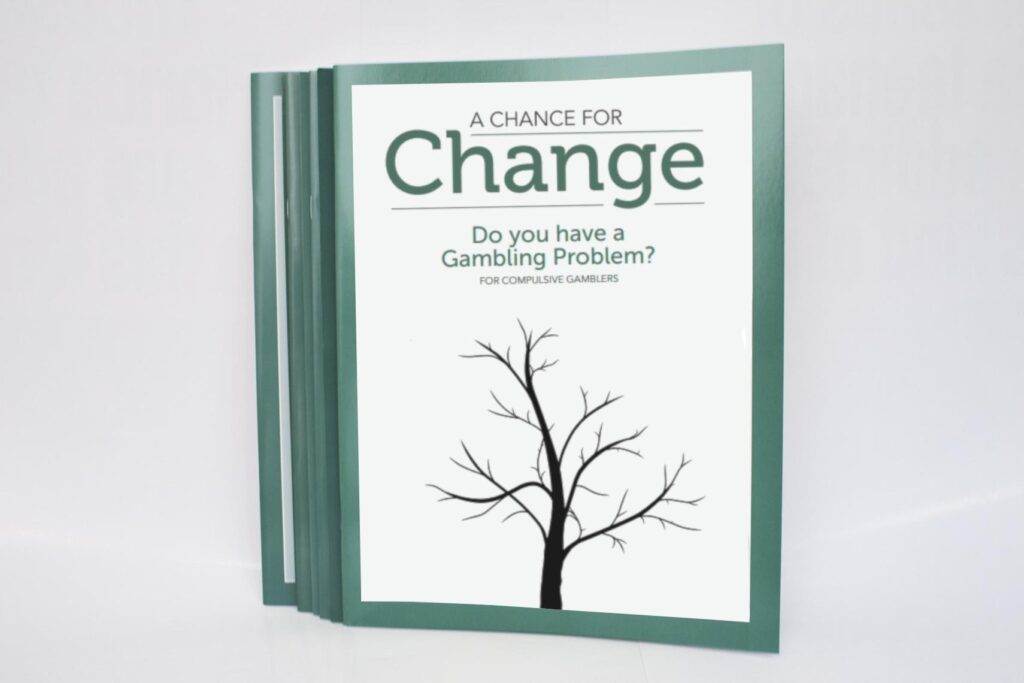
## Gambler Series
❖ Book One – *Do You Have a Gambling Problem?*
❖ Book Two – *Beginning the Process of Change*
❖ Book Three – *Staying the Course*
❖ Book Four – *Managing Your Finances*
❖ Book Five – *Understanding Legal Issues*
❖ Book Six – *Rebuilding Your Life*
❖ Book Seven – *Healing Your Way to a New Beginning*
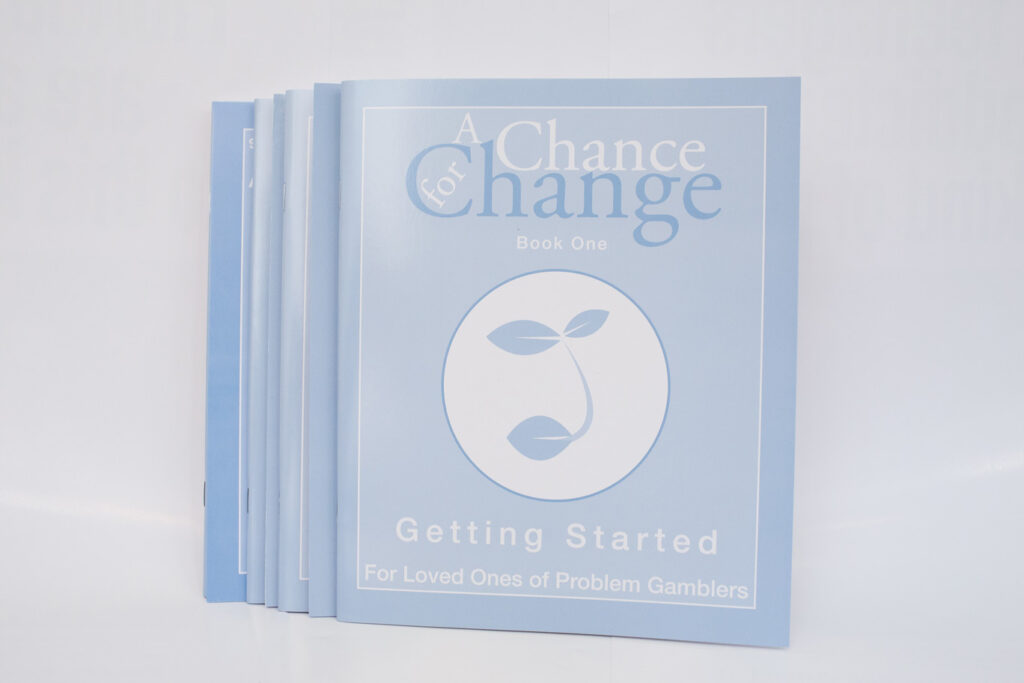
## Loved Ones Series
❖ Book One – *Getting Started*
❖ Book Two – *Assessing Your State of Mind*
❖ Book Three – *Triggers and Relapse*
❖ Book Four – *Managing Finances*
❖ Book Five – *Legal Related Issues*
❖ Book Six – *Revitalizing Your Family*
❖ Book Seven – *Navigating New Terrain*
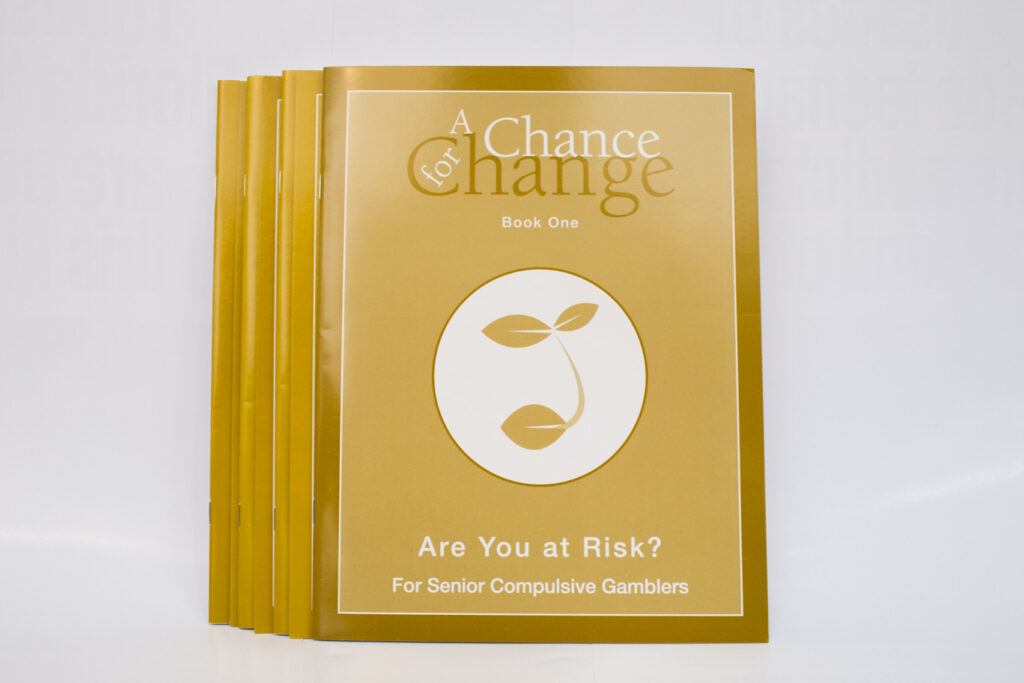
## Senior Series
❖ Book One – *Are You at Risk?*
❖ Book Two – *Beginning the Process of Change*
❖ Book Three – *Creating and Maintaining Your Plan for Positive Change*
❖ Book Four – *Financial Problems and Solutions*
❖ Book Five – *Legal Problems and Solutions*
❖ Book Six – *Creating a New Life Plan*
❖ Book Seven – *Motivating Yourself to Keep Going*
## Financial Debt & Budgeting Toolkit©
**The FCCG’s Financial Debt & Budgeting Toolkit©** is a financial budgeting assistance program that provides financial guidance and accountability for problem gamblers and loved ones through peer supports. The budgeting plan is developed based upon the available income (or amount of money coming in), regular bills that need to be paid (i.e. rent/mortgage, utilities, food, etc.), and the amount of gambling related debts that may be owed. Through the **[Peer Connect Program](https://gamblinghelp.org/peerconnect)**, utilization of the Budget Toolkit can help problem gamblers and family members develop goals and measures to sustain a budget and help ensure long-term positive financial sustainability.
****Most people are surprised to learn how many resources are available. You can download a wide range of free, Florida‑focused problem gambling resources designed to inform, support, and empower anyone affected by gambling problems. Visit the full collection of Problem Gambling Resource Packs to discover additional topics, tools, and materials**!**
[**See All Problem Gambling Resource Packs**](https://gamblinghelp.org/problem-gambling-resource-packs/)
---
### [Self-Help Support Groups](https://gamblinghelp.org/supportgroups/)
**Published:** April 12, 2023
**Author:** The Florida Council on Compulsive Gambling, Inc.
**Content:**
**Self-help is considered a critical part of the recovery process for gambling disorders.** Self-help groups can assist callers and provide the tools and strategies for recovery by providing support, direction, motivation, resources, and a sense that they are not dealing with the gambling problem alone. An essential aspect of many self-help programs is the utilization of a sponsor. Sponsors frequently provide additional information, encouragement, fellowship, and guidance to newcomers on a voluntary basis. They may also furnish assistance and offer suggestions to newcomers on a case-by-case basis.
**The Florida Council on Compulsive Gambling (FCCG) provides resource referrals for both in-person and virtual meetings, for a wide variety of Self-Help Support Groups**.
## Gamblers Anonymous
Gamblers Anonymous (GA) is an anonymous and confidential fellowship of men and women of all ages, from diverse social and economic backgrounds, races and religions, who meet for the purpose of sharing their experience, strength and hope as it relates to maintaining abstinence from gambling while living a happy and useful life. There are no dues or fees, and the only requirement for membership is a desire to stop gambling.
[**Download Resource Pack: Gamblers Anonymous In-Person Meetings**](https://gamblinghelp.org/wp-content/uploads/resources/self-help-support-groups/gamblers-anonymous/gamblers-anonymous-florida-in-person-meetings.zip)
[**Download Resource Pack: Gamblers Anonymous Virtual Meetings**](https://gamblinghelp.org/wp-content/uploads/resources/self-help-support-groups/gamblers-anonymous/gamblers-anonymous-florida-and-nationwide-virtual-meetings.zip)
## Gam-Anon
Gam-Anon is for persons adversely affected by the gambler, such as family members and friends. Members are provided opportunities for learning how to cope with the gambler and accompanying difficulties. It is similar in structure and function to GA. It is not necessary for the gambler to attend Gamblers Anonymous in order for a family member, friend or other loved one to participate in the Gam-Anon program. Members are provided opportunities for learning how to cope with the gambler and accompanying difficulties. It is similar in structure and function to GA.
[**Download Resource Pack: Gam-Anon In-Person Meetings**](https://gamblinghelp.org/wp-content/uploads/resources/self-help-support-groups/gam-anon/gam-anon-florida-in-person-meetings.zip)
[**Download Resource Pack: Gam-Anon Virtual Meetings**](https://gamblinghelp.org/wp-content/uploads/resources/self-help-support-groups/gam-anon/gam-anon-florida-and-nationwide-virtual-meetings.zip)
## Gamblers in Recovery
Gamblers in Recovery is an online tool which catalogs over 400 gambling-specific weekly virtual self-help group meetings hosted around the world via ZOOM, including Gamblers Anonymous meetings, Gam-Anon meetings, and Recovery Road meetings. The Gamblers in Recovery website uses a simple interface to assist help seekers in locating meetings to join around the clock, throughout the week. The worldwide nature of the meetings list and resulting overlap of global time zones also helps bridge the gap for help seekers with scheduling conflicts that can make joining local meetings challenging. Best of all, this resource is completely free.
[**Download Resource Pack: Gamblers in Recovery (for Gamblers)**](https://gamblinghelp.org/wp-content/uploads/resources/self-help-support-groups/gamblers-in-recovery/gamblers-in-recovery-meetings-for-gamblers.zip)
[**Download Resource Pack: Gamblers in Recovery (for Loved Ones)**](https://gamblinghelp.org/wp-content/uploads/resources/self-help-support-groups/gamblers-in-recovery/gamblers-in-recovery-meetings-for-loved-ones.zip)
## Recovery Road
Recovery Road is an online recovery program with no dues or fees that was founded from the growing urgency of problem gamblers wanting to quit gambling and live in recovery. Support is available for gamblers and loved ones through private Facebook Groups and daily online 12-Step meetings offered from morning to midnight and more, facilitating connection to a support network of others going through similar situations.
[**Download Resource Pack: Recovery Road Meetings (for Gamblers)**](https://gamblinghelp.org/wp-content/uploads/resources/self-help-support-groups/recovery-road/recovery-road-meetings-for-gamblers.zip)
[**Download Resource Pack: Recovery Road Meetings (for Loved Ones)**](https://gamblinghelp.org/wp-content/uploads/resources/self-help-support-groups/recovery-road/recovery-road-meetings-for-loved-ones.zip)
## Celebrate Recovery
Celebrate Recovery is a faith-based support group that can help with all types of addictions and problems. This group calls them “hang-ups, habits and hurts”. They work the 12 steps and the 8 Recovery Principles of the Beatitudes to instill a feeling of hope in overcoming whatever problem the person is facing. In the meetings you will share about your situation with other group members, receive guidance from church members, and work through the program together over the course of 8-10 weeks.
**Download Resource Pack: Celebrate Recovery In-Person & Virtual Meetings**
## Gaming Addicts Anonymous (GAA)
Gaming Addicts Anonymous (GAA) – formerly Computer Gaming Addicts Anonymous (CGAA) – is a fellowship and recovery program for compulsive video gamers. The only requirement for GAA membership is a desire to stop computer/video gaming.
[**Download Resource Pack: Gaming Addicts Anonymous In-Person & Virtual Meetings**](https://gamblinghelp.org/wp-content/uploads/resources/self-help-support-groups/gaming-addicts-anonymous/gaming-addicts-anonymous-in-person-and-virtual-meetings.zip)
## Online Gamers Anonymous (OLGA & OLGA-Anon)
On-Line Gamers Anonymous®, founded in 2002, is a 12-step self-help group. Members share experience, strengths and hope to help and support each other recover and heal from problems resulting from excessive video game playing (gaming disorder). Anyone affected by excessive gaming is welcome here. The OLGA/OLG-Anon fellowship offers a spiritual solution for recovery. The 12-steps are offered as one of the tools for recovery from gaming addiction, and are highly recommended, for a successful recovery.
[**Download Resource Pack: Online Gamers Anonymous Virtual Meetings**](https://gamblinghelp.org/wp-content/uploads/resources/self-help-support-groups/online-gamers-anonymous/online-gamers-anonymous-virtual-meetings.zip)
## Internet & Technology Addicts Anonymous (ITAA & IT-Anon)
ITAA is a 12-step fellowship of individuals who support each other in recovering from compulsive internet and technology use. The single purpose is to abstain from compulsive internet and technology use and to help others find freedom from this addiction. Meetings are free to attend, and there are no membership requirements beyond the desire to stop compulsive internet/technology use.
[**Download Resource Pack: Internet & Technology Addicts Anonymous Virtual Meetings**](https://gamblinghelp.org/wp-content/uploads/resources/self-help-support-groups/internet-%26-technology-addicts-anonymous/internet-%26-technology-addicts-anonymous-%26-anon-virtual-meetings.zip)
## Collectors MD
Collectors MD operates the first recovery focused peer support community designed specifically for collectors navigating compulsive spending, gambling adjacent behaviors, and the emotional fallout of modern hobby culture (sports cards, TCG, memorabilia, sneakers, watches, NFTs, or any other collectibles). Their weekly virtual meetings provide a safe, judgment free environment where collectors can slow down, reflect, and regain control.
[**Download Resource Pack: Collectors MD Virtual Meetings**](https://gamblinghelp.org/wp-content/uploads/resources/self-help-support-groups/collectors-md/collectors-md-virtual-meetings.zip)
## Other Alternative Support Groups
These groups are for gamblers or loved ones that are afflicted with other issues in addition to the gambling addiction, such as substance abuse, Parkinson’s disease, Depression, Bi-Polar Disorder, compulsive shopping/spending, overeating, or are stricken with grief. Although they are not a traditional 12-step programs, they offer comfort, support, and a chance to share with others who are also affected by the same or similar serious mental/physical health issues.
[**Download Resource Pack: Other Alternative Support Groups**](https://gamblinghelp.org/wp-content/uploads/resources/self-help-support-groups/other-alternative-support-groups/other-alternative-support-groups-and-meetings.zip)
**Most people are surprised to learn how many resources are available. You can download a wide range of free, Florida‑focused problem gambling resources designed to inform, support, and empower anyone affected by gambling problems. Visit the full collection of Problem Gambling Resource Packs to discover additional topics, tools, and materials!**
[**See All Problem Gambling Resource Packs**](https://gamblinghelp.org/problem-gambling-resource-packs/)
---
### [Self-Exclusion Programs](https://gamblinghelp.org/selfexclusion/)
**Published:** April 13, 2023
**Author:** The Florida Council on Compulsive Gambling, Inc.
**Content:**
**Self-Exclusion Programs are provided as a resource through the [888-ADMIT-IT HelpLine](https://gamblinghelp.org/helpline) as a tool to help people control their gambling behavior and restrict access to money, gambling venues, and gambling platforms for those in need.**
## Land-Based Gambling Operators Self-Exclusion Programs
In instances when a gambler has lost control of their gambling and can no longer self-regulate their gambling behaviors, self-exclusion provides an opportunity to exclude oneself from returning to a land-based gambling establishment for a minimum period of time ranging from a mandatory 6 months up to a lifetime. Many operators of land-based gambling facilities have developed programs to allow customers to voluntarily self-exclude themselves, as a means of restricting their access to gambling.
[**Download Resource Pack: Land-Based Operators Self-Exclusion Programs**](https://gamblinghelp.org/wp-content/uploads/resources/self-exclusion-programs/land-based-operators.zip)
[**Download Resource Pack: Land-Based Operators Self-Exclusion Programs (Español)**](https://gamblinghelp.org/wp-content/uploads/resources/self-exclusion-programs/land-based-operators-spanish.zip)
## Online Gambling Operator Self-Exclusion Programs
Many years of research has concluded how crucial online gambling self-exclusion can be. Online self-exclusion from Online Gambling Operators is enacted at the player’s will. It is a personal choice to restrict access to specific online betting platforms, helping to weaken the impact of problem gambling, which can be very dangerous. The nature of addictions varies, as do the options offered by Online Gambling Operators.
[**Download Resource Pack: Online Gambling Operator Self-Exclusion Programs**](https://gamblinghelp.org/wp-content/uploads/resources/self-exclusion-programs/online-%26-mobile-operators.zip)
## Self-Exclusion Access to Cash Programs
Self-exclusion Access to Cash Programs provide resources and tools to help support financial recovery and promote financial wellness. The FCCG provides referrals to Financial Service Providers that provide access to cash for gambling operators through networks of ATM’s, cash access kiosks, booths, credit, and other financial access services. Another resource provides access to cash restrictions through a customizable and reloadable VISA debit card that can be obtained and customized to work where gamblers need it to and to block where they don’t, helping to provide restricted access to funds and limit gambling related losses. Other options include blocking gambling transactions through online payment gateways, and much more. Self-Exclusion Access to Cash Programs are provided as a resource through the 888-ADMIT-IT HelpLine as a tool to help people control their gambling behavior and restrict access to money if gambling has become problematic.
[**Download Resource Pack: Access to Cash Programs**](https://gamblinghelp.org/wp-content/uploads/resources/self-exclusion-programs/access-to-cash.zip)
## Self-Exclusion – Internet Controls & Web Blocking Software
Self-Exclusion Internet Controls & Web Blocking Software can also be a powerful tool for those that gamble on the Internet and would like to block the ability to access gambling sites, track and control Internet usage, or restrict access at specific times. Like self-exclusion, web-based exclusion programs allow users to “ban” themselves from being able to gamble online.
[**Download Resource Pack: Internet Controls & Web Blocking Software**](https://gamblinghelp.org/wp-content/uploads/resources/self-exclusion-programs/internet-controls-%26-web-blocking.zip)
## Self-Exclusion – Ad Blocking Settings & Controls
With gambling advertising appearing across all platforms (radio, television, online, social media, billboards, etc.) and targeted towards all demographics, its more difficult than ever to avoid potential triggers these ads can cause. Constant exposure to these advertisements is known to have an adverse effect on those who are at-risk or in recovery. For those negatively impacted by gambling, trying to avoid all possible triggers, depending on the household’s internet, television, social media, and other habits, can be an almost impossible task, but there are some protective measures available to help limit exposure to gambling advertisements through popular online platforms. For an added layer of protection, there are also software and plugins designed to block all online advertising.
[**Download Resource Pack: Ad Blocking Settings & Controls**](https://gamblinghelp.org/wp-content/uploads/resources/self-exclusion-programs/ad-blocking.zip)
## Self-Exclusion – Stock/Cryptocurrency Trading Restrictions
Previous research has identified that excessive trading can be a gambling disorder. Grall-Bronnec et al (2017) found that addictive-like trading behavior can be a subset of gambling disorders. Similarly, a study by Mills et al (2019) presented preliminary findings on cryptocurrency trading among regular gamblers and found that over 50% of regular gamblers have traded cryptocurrencies in the previous year and that trading cryptocurrencies was associated with risk for problem gambling, depression and anxiety.
Cryptocurrency trading and stock trading are the most prevalent, posing a higher-risk trading option for problem gamblers where there is significant capacity for harm due to exposure to risk from speculative trading and volatility, when compared to bond or commodity trading. Restriction of access to these forms of trading (Cryptocurrency and Stock trading) provided by the blocking capabilities offered by the FCCG’s Self-Exclusion – Stock/Cryptocurrency referral resources can be beneficial.
[**Download Resource Pack: Stock/Cryptocurrecy Trading Restrictions**](https://gamblinghelp.org/wp-content/uploads/resources/self-exclusion-programs/stock-market-cryptocurrency-trading.zip)
**Most people are surprised to learn how many resources are available. You can download a wide range of free, Florida‑focused problem gambling resources designed to inform, support, and empower anyone affected by gambling problems. Visit the full collection of Problem Gambling Resource Packs to discover additional topics, tools, and materials!**
[**See All Problem Gambling Resource Packs**](https://gamblinghelp.org/problem-gambling-resource-packs/)
---
### [Counseling Services](https://gamblinghelp.org/counselingservices/)
**Published:** April 13, 2023
**Author:** The Florida Council on Compulsive Gambling, Inc.
**Content:**
**The FCCG only refers help seekers (problem gamblers and other affected individuals) to licensed, mental health treatment providers who are Certified in Gambling Addiction.**
Problem gambling specific programs and services offered include counseling service referrals provided through a variety of professional treatment options. Modalities of available treatment services provided by FCCG referrals include problem gambling specific outpatient mental health counseling services (furnished by a specific network of licensed, certified gambling addiction treatment professionals located throughout the State of Florida), as well as referrals to residential/inpatient treatment program facilities meeting FCCG standards of care in delivering gambling-specific services to the problem gambling population.
Treatment from trained professionals can assist in finding ways to cope with stress and begin recovery from a gambling addiction. Receiving professional treatment supports through outpatient counseling or via inpatient/residential services, differs from **[self-help support groups (like Gamblers Anonymous or Gam-Anon)](https://gamblinghelp.org/supportgroups)**, by providing the opportunity to share personal information in an individualized setting, through one-on-one dialogue with licensed, gambling addiction certified treatment providers. Mental health counseling services can be provided in a variety of ways, including individual, couples, or group counseling sessions. Certified, mental health, addiction and other health care professional problem gambling counseling referrals offered through FCCG’s Problem Gambling Resource Packs provide counseling supports by treatment providers who have received specialized training to understand and treat the unique circumstances and experiences of problem gamblers and others who are adversely affected.
## Outpatient Counseling Service Referrals
There are times when professional guidance and support can be particularly helpful to aid problem gamblers in delineating options or strategies for learning how to cope with situations or difficulties that arise in their life. **Outpatient Counseling Services Referrals** offer problem gambling specific outpatient mental health counseling services which are provided by a specific network of licensed, certified gambling addiction treatment providers located throughout the state of Florida. Such treatment also provides the option of services as an individual or in a couple or group counseling session. In addition to providing an environment to help gamblers and their families examine essential issues, it can furnish comprehensive treatment supports for varying difficulties based upon individual needs.
The FCCG utilizes a network of Gambling Addiction Certified Provider Referrals spread across multiple Florida counties These Providers all maintain international (ICGC-I/II) or state (CGAC) certification in the treatment of gambling disorders, in addition to being Licensed Clinicians through the Florida Board of Social Work, Mental Health, and Marriage and Family Therapy.
[**Download Resource Pack: Outpatient Counseling**](https://gamblinghelp.org/wp-content/uploads/resources/counseling-services/outpatient-counseling.zip)
## Inpatient/Residential Treatment Service Referrals
For a small percentage of problem gamblers in need of more intensive supports, the FCCG provides **Inpatient/Residential Treatment Program Referrals** through the HelpLine. As is consistent with FCCG outpatient treatment referrals, the FCCG is committed to only providing referrals for residential/inpatient treatment to facilities that meet the standard of delivering gambling-specific services to the problem gambling population.
[**Download Resource Pack: Inpatient/Residential Treatment**](https://gamblinghelp.org/wp-content/uploads/resources/counseling-services/residential-inpatient.zip)
**Most people are surprised to learn how many resources are available. You can download a wide range of free, Florida‑focused problem gambling resources designed to inform, support, and empower anyone affected by gambling problems. Visit the full collection of Problem Gambling Resource Packs to discover additional topics, tools, and materials**!
[**See All Problem Gambling Resource Packs**](https://gamblinghelp.org/problem-gambling-resource-packs/)
---
### [Problem Gambling Prevention Programs for Youth and College Students](https://gamblinghelp.org/prevention/)
**Published:** May 2, 2023
**Author:** The Florida Council on Compulsive Gambling, Inc.
**Content:**
Florida’s young people are exposed to gambling influences earlier and more frequently than ever before. From video gaming microtransactions to sports wagering and social pressures, the risks are real and growing. **The FCCG provides a comprehensive suite of prevention programs designed to educate, support, and protect youth, teens, and college students.** These programs are grounded in research, developmentally appropriate, and built to help young people make informed, healthy decisions. FCCG’s prevention programs are built to intervene early, educate effectively, and empower young people to make healthy choices.
## Early Prevention Programs for Elementary Students
FCCG’s prevention efforts begin in elementary school, where children are introduced to the foundations of healthy decision‑making. Younger students learn how peer pressure, dares, and risk‑taking behaviors can mirror gambling and lead to negative consequences. They are encouraged to seek guidance from trusted adults and to understand the importance of honesty and personal responsibility.
Older elementary students explore how spending habits, media influence, and financial choices shape their well‑being. These early lessons help children develop strong critical‑thinking skills and a healthy relationship with money long before they encounter real gambling opportunities.
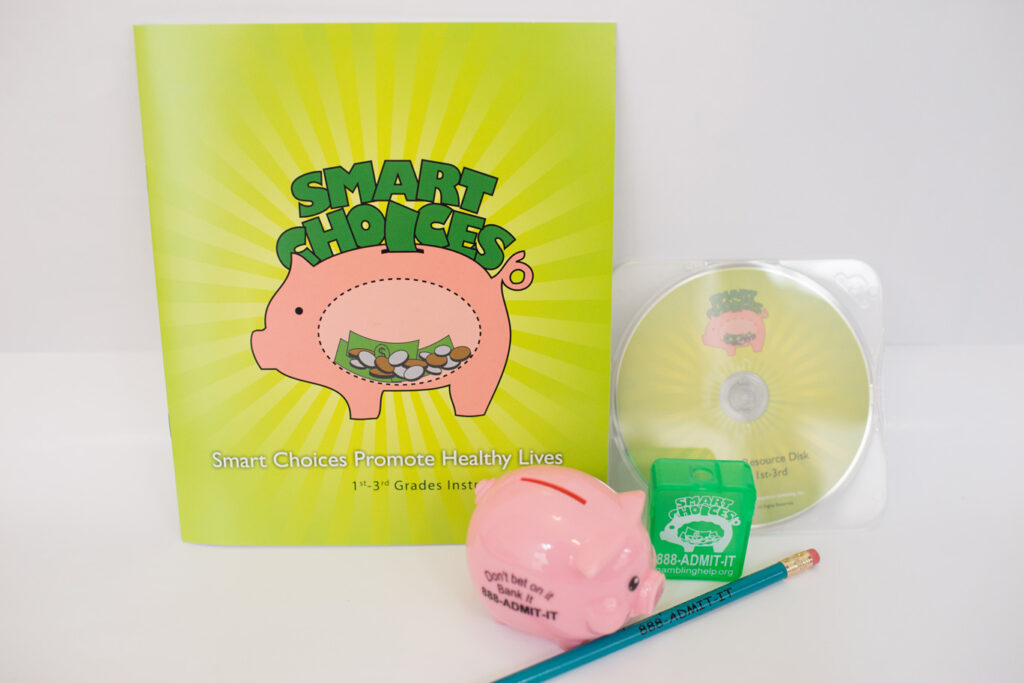
### Smart Choices Elementary School Program (1st-3rd Grade)
The lesson plan geared for 1st-3rd graders discusses the role that “dares” play among youth and outlines how these activities are another form of gambling that can present significant risks and problems among this population. It further reinforces the short and long-term consequences of gambling, and helps students to understand they have options and can make smart choices that will be in their best interests, even when pressured by peers to engage in risk-taking activities. Additionally, it promotes honesty as the best policy, the significance of turning to a trusted adult in times of concern, and lays the groundwork that money is not to be wasted but saved for needs and wants.
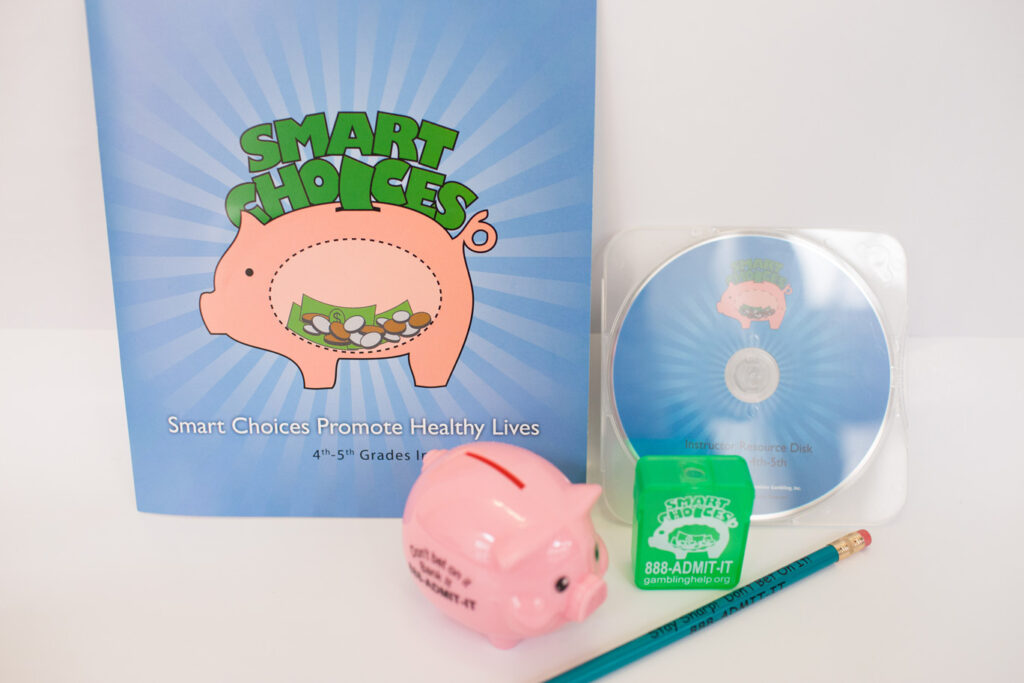
### Smart Choices Elementary School Program (4th-5th Grade)
The 4th-5th grade lesson plan highlights the diverse ways in which young people spend money and value different things. It also introduces the concept that one’s financial health impacts upon personal health, enables students to contemplate the ways in which they spend and save money, and helps them to recognize how they prioritize purchases. It further promotes that money should only be spent when persons can afford to do so, demonstrates the influence that the media, peers and other can have on spending habits and purchases, and presents betting with money or other items of value as a risk-taking behavior that has short and long-term impacts.
## Middle and High School Gambling Prevention Education
As students enter adolescence, FCCG provides a structured curriculum that integrates seamlessly into existing health and prevention programs. Middle school lessons introduce probability concepts that help students understand chance, randomness, and the realities behind gambling outcomes. High school lessons expand on these ideas by exploring independent and conditional probability, connecting mathematical principles to real‑world gambling risks. This curriculum strengthens students’ analytical skills while highlighting the personal, academic, and social consequences of gambling.
The Problem Gambling Prevention Program for Middle and High School Students is a prevention and behavioral change tool geared toward middle and high school youth, educators, counselors, parents and others associated with problem and compulsive gambling. This prevention program was endorsed by the Florida Departments of Education, Drug Control, Children and Families, Health, Lottery, and Juvenile Justice, and was the first of its kind in the nation.
It equips educators, counselors, and parents to deliver essential information about gambling risks and connects naturally to existing alcohol, tobacco, and substance‑use prevention efforts.
The middle school component introduces experimental and theoretical probability to help students understand chance and randomness, while the high school component expands into independent and conditional probability to illustrate real‑world gambling outcomes. Originally aligned with Florida’s Sunshine Standards and later Common Core, the program is slated to be updated to reflect Florida’s latest academic standards and ensure continued relevance in today’s learning environment.
### “Problem Gambling Prevention Curriculum” Youth Toolkit PDF for Professionals (Youth Service Providers)
The FCCG’s Youth Toolkit Problem Gambling Prevention Curriculum for Teachers, Administrators, and Guidance Counselors contains the Middle and High School Problem Gambling Curriculum, Counselors and Instructors Guide, and explains how FCCG youth specific problem gambling prevention materials are intended for use. This PDF includes the “Fool You Lose” and Teen “Deception” videos.
## Youth Toolkit and Multimedia Prevention Resources
To support educators, counselors, and youth service providers, FCCG offers a comprehensive Youth Toolkit filled with practical, ready‑to‑use prevention materials. The toolkit includes educational guides, interactive activities, and multimedia resources designed to spark meaningful conversations about gambling risks. The teen docudrama video illustrates how gambling behaviors can escalate during adolescence, while an interactive computer game helps students understand the consequences of risky choices. These tools make it easier for adults to engage youth in prevention efforts and intervene early when concerns arise.
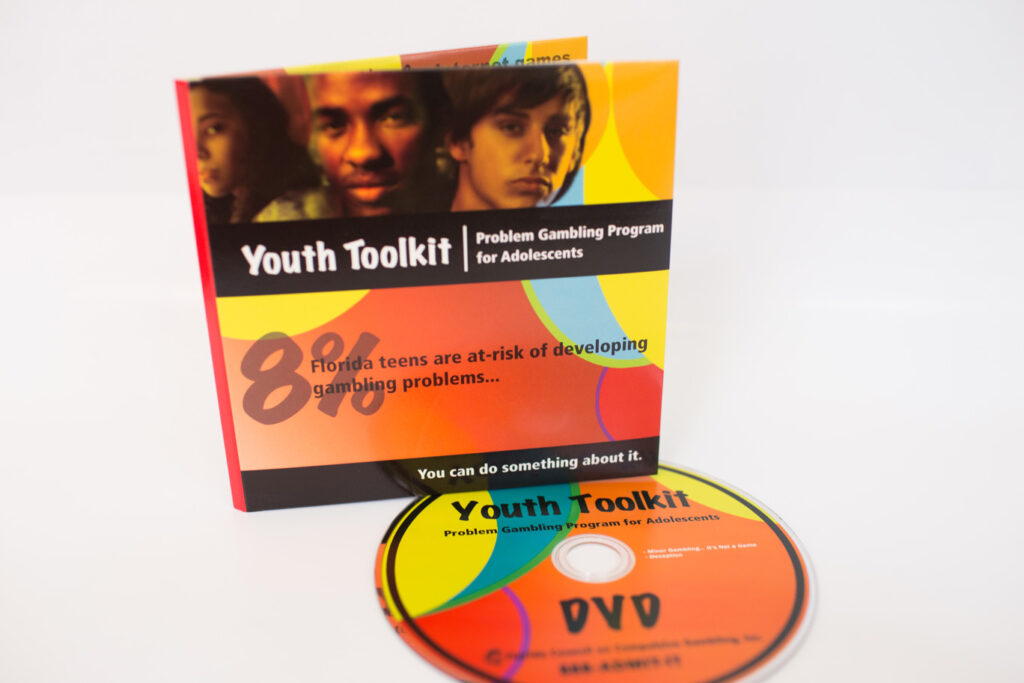
### Youth Toolkit
FCCG’s Youth Toolkit, *Underage Gambling….It’s Not a Game*, furnishes tangible tools for parents, teachers, counselors and students to use to educate adolescents about the dangers of youth gambling. It offers insight, factual information, learning exercises (e.g., the State funded and approved Problem Gambling Prevention Program for Middle and High School Students listed above), a counselor guide, a video docudrama on teen betting, an interactive computer game, *Dire Stakes* (similar to the popular TV show, Jeopardy, but uses the PowerPoint program), and collateral materials.
### Youth/Teen Gambling Awareness Docudrama Video for Youth Gamblers & their Loved Ones (Parents) & Professionals (Youth Service Providers) “*Deception*”
29-minute docudrama which explores the story of two high school buddies growing up together but taking very different paths in life, as one watches the other develop and progress through the stages of a gambling disorder.
## Problem Gambling Prevention Designed for Student Athletes
Sports wagering has become one of the most common forms of gambling among teens, especially those involved in athletics. FCCG addresses this trend through a specialized curriculum developed in partnership with national athletic organizations. This program educates high school athletes about the dangers of sports betting, the impact it can have on academic and athletic eligibility, and the long‑term consequences that gambling can have on their future careers. By reaching athletes early, the program helps prevent gambling behaviors before they become entrenched.
### When Gambling Takes Control of the Game
Since we are also aware that for many student athletes, gambling and problem gambling do not begin upon arrival at a College or University, we recognize that awareness and prevention need to begin at a much earlier age. The FCCG teamed up with the National Collegiate Athletic Association and the National Federation of State High School Associations in an effort to curb sports wagering activities in young adults. The three associations, which each have a strong focus on raising awareness and education on the dangers associated with sports wagering, combined efforts to develop and distribute a comprehensive curriculum for high school student-athletes.
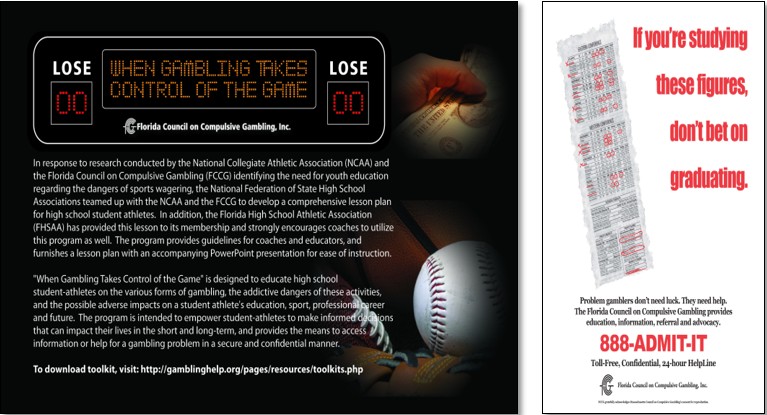
The curriculum is designed to educate high school student-athletes on the various forms of gambling, the addictive dangers of these activities, as well as the possible adverse impacts on a student-athlete’s education, sport, professional career, and future. The three organizations partnered in the development of the curriculum guidelines for coaches and instructors and distributed to high schools nationwide.
Studies conducted by the NCAA and FCCG independently of one another helped identify the opportunity and need for youth education regarding the dangers of sports wagering. An NCAA study of gambling and associated behaviors among collegiate student-athletes found that nearly 45 percent of students surveyed placed their first sports wager in high school or earlier. In addition, FCCG studies confirm that sports wagering is among the top three forms of gambling among Florida adults and is a popular form among adolescents who gamble.
## Programs for At‑Risk and High‑Risk Youth: Department of Juvenile Justice Programs
The FCCG sponsored a study within Florida Department of Juvenile Justice (DJJ) facilities, which revealed that 17% of the inmates surveyed attributed their institutionalization in part to gambling, in which 51% were in need of help for a gambling problem. In addition, 10% of the inmates admitted to being detained or arrested due to gambling within the prior 12-month period, 12.5% had been told they need treatment for a gambling problem and 3% had actually received such professional assistance. Essentially, the study speculated that youth may be engaging in income generating crime to pay for a gambling debt or engaged in violence for which they were arrested in order to avoid a gambling debt or some other indirect gambling related offense. Finally, the study concluded that over four-fifths (84% or 356 of 426) of those who gambled in the year prior to institutionalization had at least one negative consequence, which translated to 63% of the entire residential population. Yet, few reported receiving any help for gambling despite problems experienced.
Based on these finding, The FCCG devised and instituted a program, DJJ specific, “Are You Gambling with Your Life?” which provides supports to DJJ counseling personnel, intake and exit staff, and educators. Further, the FCCG designed an accompanying interactive computer game on DVD, which teaches life skills training through realistic video situations and population sensitive music and language. The DVD has been approved for use by DJJ in DJJ facilities.
### High Risk Youth Program: “Are You Gambling With Your Life?
Department of Juvenile Justice Program developed for at-risk and high-risk youth. As a result, the FCCG developed its at-risk youth program “Are Youth Gambling With Your Life?”, endorsed by the Florida Department of Juvenile Justice. This 10 hour in-house educational program provides essential information about the dangers and consequences of gambling through the provision of interactive games, posters, videos, and awareness messaging designed specifically for this target population. *\*Note, this program is not intended for use or distribution outside the juvenile justice system.*

### “Fool You Lose” CD for Professionals (Youth Service Providers)
This interactive educational PDF Program for adolescent/youth service providers is designed to provide education and awareness about the risks of gambling amongst youth.
## College Gambling Prevention and Awareness Programs
FCCG’s college‑level initiatives are anchored by the Students Against Gambling Addiction (SAGA) program, a comprehensive prevention system developed in collaboration with higher education institutions and athletic organizations. SAGA helps colleges build campus‑wide prevention strategies through training guides, lesson plans, presentations, and specialized content for student‑athletes. The program also includes a peer educator component that equips students to lead discussions, facilitate workshops, and promote awareness among their peers.
To further support college communities, FCCG provides interactive learning tools, financial literacy games, and a workbook that helps students assess their gambling behaviors and explore healthier alternatives. Resident advisors receive dedicated kits that include educational materials, programming ideas, and referral resources, enabling them to identify concerns early and connect students with appropriate support.
![[IMAGE] Students Against Gambling Addiction (SAGA) - College Toolkit](https://gamblinghelp.org/wp-content/uploads/2023/05/Students-Against-Gambling-Addiction-SAGA-Programs-and-Materials-1024x683.jpg "Students Against Gambling Addiction (SAGA) - College Toolkit | The Florida Council on Compulsive Gambling, Inc")
### Students Against Gambling Addiction (SAGA) Toolkit
The Students Against Gambling Addiction (SAGA) Toolkit was developed in cooperation with the University of Central Florida, and endorsed by the National Collegiate Athlete Association’s (NCAA) Department of Agent Gambling and Amateurism Activities (i.e. student athlete portion of SAGA program). In 2008, FCCG partnered with the REAL Project at UCF to develop Students Against Problem Gambling (SAGA). The REAL Project at UCF is a nationally recognized prevention and intervention program that provides services for students who are concerned about gambling problems as well as substance abuse. SAGA is designed to teach student leaders how to recognize signs of problem gambling and to connect their friends and classmates with resources available on campus and in the community.
SAGA aids institutions in devising campus-wide programs and provides training guides, lesson plans and associated materials for college counselors, peer advocates, resident advisors, financial aid personnel, coaches, students/student-athletes, administrators, and others. Similar to the middle and high school program, the FCCG works closely with colleges and universities statewide to develop and implement problem gambling awareness programs on campus. The FCCG SAGA program aids institutions in devising campus-wide programs, provides training for college counselors, educators, administrators and others, offers presentations for college students and athletes, and utilizes collateral materials and a webpage geared toward this population.
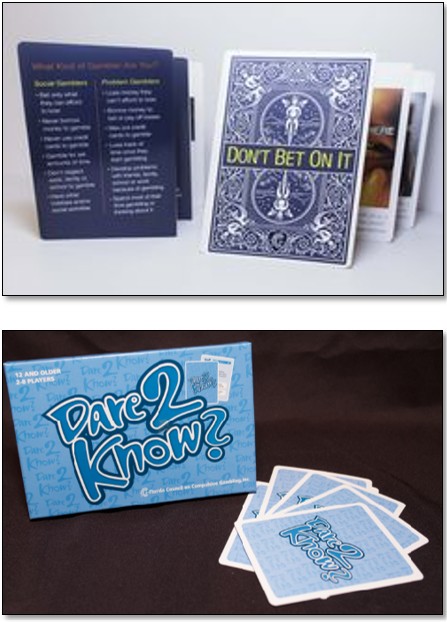
### College Brochure & Card Game
The FCCG’s ***Don’t Bet on It* brochure** for college students and the Agency bookmark (see below) have also been identified as very eye-catching and informational items for college students. Both reflect the role of card play, and poker in particular, among this age group. ***Dare2Know*** is an interactive card game geared toward college-aged youth. The objective is to start the conversation around financial management and beliefs surrounding risky behaviors. In the course of the game, players discuss different forms of betting and how gambling addiction can impact anyone’s life.
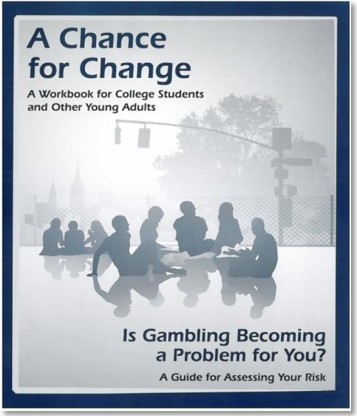
### College *A Chance for Change* Workbook
The FCCG has also developed a College Workbook designed as a resource for counselors and as a tool to compliment the SAGA program. The workbook is comprised of two parts; student interactive activities and a counselor guide. Each student activity can be removed, copied, and then provided to the student to read and respond to, either with the counselor or on their own for future discussion when in a counseling session. The counselor guide will provide helpful information on the various student activities, as well as a reference to resources for further review and information. Essentially this workbook provides the tools necessary to aid young adults and college aged individuals in assessing the extent and impacts of their gambling and assists in leading a healthier lifestyle.
### SAGA Peer Educator Program
The SAGA Peer Educator Program is an easy to use, structured, peer educators program, designed to train peer educators on issues surrounding problem and compulsive gambling amongst college students. The program includes a brief introductory letter to introduce the program and express the objectives desired by the FCCG, a presentation for Peer Educators to give to students, which includes information, questions to ask groups, interactive activities, a self-assessment, optional jeopardy questions which can be used as a game, some brief addendums with extra info for special populations (athletes, freshmen), and pre/post-tests with evaluations.
### College SAGA Peer Educator Toolkit Video “Whose Gamble is it Anyway?” DVD for Professionals (Colleges/Universities)
This 12-minute comedy brings light to the dark realities of gambling addiction among the college student population through comedic skits based on a popular television show. Watch Bo, Rebecca, and Tony compete in Lou Flarey’s rendition of Drew Carey’s *Whose Line is it Anyway?*
### College Resident Advisor Kits
As Universities often look to their Residence Life staff and particularly their Resident Assistants (RA’s) as a first line of defense in understanding information and resources available to aid a diverse student population in maintaining balance in all aspects of their college life as they transition to college, the FCCG developed RA toolkits that include college problem gambling posters, brochures and bookmarks, along with a *For RA’s Only* newsletter, outlining ideas for bulletin boards and programming, as well as referral resources for RA’s to use.
### FOCUS Newsletters & the Dire Stakes Game for College Students
The FCCG also produces editions of its FOCUS Newsletter specifically for college students, offering timely insights, practical guidance, and relatable content that speaks directly to the campus experience. In addition, the FCCG provides a college version of its interactive computer game, Dire Stakes—an engaging, quiz‑style activity modeled after a Jeopardy‑style format using PowerPoint—to help students learn about gambling risks in a fun, interactive way that works well in classrooms, residence halls, and peer‑education settings.
## Additional Problem Gambling Prevention & Awareness Materials
FCCG offers a wide range of awareness materials designed to be engaging, accessible, and effective. These include brochures on video gaming addiction, financial impacts, and warning signs of gambling problems, as well as bookmarks and posters tailored to youth and college audiences. These materials can be used in classrooms, youth programs, residence halls, and community settings to reinforce prevention messages and encourage early help‑seeking.
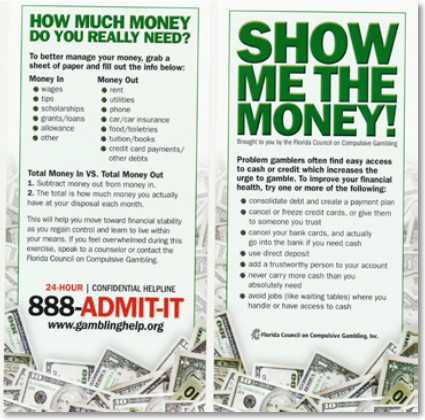
### College Financial Impacts Brochure: “Show Me The Money”
A two-sided brochure with helpful tips and suggestions for college students with financial troubles related to gambling. Provides budgeting suggestions along with a financial exercise designed to help college student problem gamblers regain control of their finances as well as develop and sustain financial stability.
### Youth/Teen Video Gaming Addiction Brochure “Play it Safe”
Pocket-sized brochure designed as a video game controller to appeal to youth gamers, provides important information about the risks and dangers of excessive gaming, including physical health problems, mental health impacts, and financial loss and consequences. Education for parents about virtual loot boxes, skins, power-ups, and other in-game financial transactions is provided, as well as important warning signs to look for in loved ones who game.
### Prevention Awareness Bookmarks
The FCCG also offers a series of Prevention Awareness Bookmarks created specifically for college students, youth, and teens. These bookmarks are designed to be visually engaging, easy to understand, and ideal for quick distribution in classrooms, campus settings, and community programs. Each version delivers age‑appropriate messaging that highlights key gambling risks, promotes healthy decision‑making, and directs young people to trusted resources for help and information.
### Prevention Posters for Professionals
In addition to brochures and newsletters, the FCCG produces a series of posters geared toward youth, college students, and professionals that have been specially prepared to accompany the FCCG’s prevention programs.
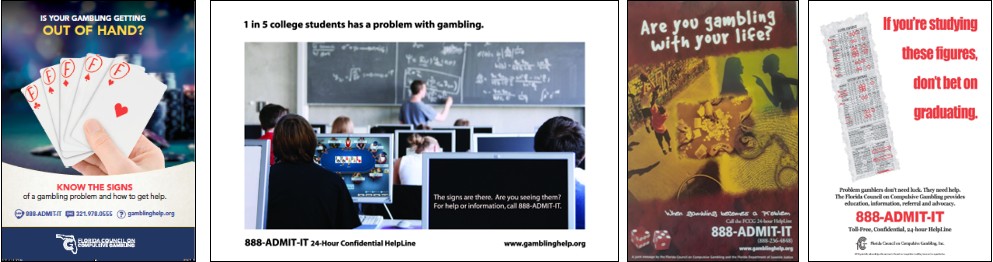
## FCCG’s Prevention Programs are Research‑Driven
FCCG’s prevention programs are built on decades of research examining gambling behaviors among Florida’s youth and college populations. Studies consistently show that gambling often begins early, is linked to other risk behaviors, and can lead to significant personal and academic consequences. These insights guide the development of FCCG’s curricula and ensure that each program addresses the real challenges facing young people today. By grounding its work in evidence, FCCG delivers prevention strategies that are both effective and relevant. FCCG youth- and college-specific research includes:
Gambling and Problem Gambling Prevalence Among College Students in Florida, A Report to the Florida Council on Compulsive Gambling, Inc., McGill University & University of South Florida, July 2008.
Gambling Among Florida Middle and High School Students: A Report to the Florida Council on Compulsive Gambling, Inc., Louis Lieberman, Ph.D. and Mary Cuadrado, Ph.D., June 2006.
Pilot Study of the Problem Gambling Prevention Program, Presented to the Florida Council on Compulsive Gambling, National Resource Center, University of South Florida, Tampa, 2003.
Gambling and Problem Gambling Prevalence Among Adolescents in Florida, A Report to the Florida Council on Compulsive Gambling, Inc., University of Florida, December 2002.
Gambling Education and Prevention Needs Assessment for Juveniles in Residential Detention Centers of the Florida Department of Juvenile Justice, Dr. Louis Lieberman and Dr. Mary Cuadrado, November 2002.
[**Download FCCG Research Reports**](https://gamblinghelp.org/research/)

## Interested in FCCG Programs?
All youth and college prevention materials are available by [**contacting the 24‑hour 888‑ADMIT‑IT HelpLine.**](https://gamblinghelp.org/#contact-the-helpline) Educators, youth service providers, families, and students can request toolkits, videos, and resources to support prevention efforts in schools, campuses, and community programs. Through these initiatives, FCCG remains committed to helping young people build healthier futures and avoid the harms associated with gambling.
## Free Training Available for Curriculum Implementation
The Florida Council also provides free training to schools in advance of curriculum implementation to improve the awareness and prevention capabilities among school staff. Such training is provided at no cost to school districts and universities. While the programs are designed to enable educators to conduct lesson plans without outside assistance, prevention program training sessions are an option if desired, and vary in length depending on the institution or district’s program implementation plan. **[For more information, please contact the HelpLine.](https://gamblinghelp.org/#contact-the-helpline)**
[**Contact the HelpLine**](https://gamblinghelp.org/#contact-the-helpline)
---
### [FCCG Website, Mobile App, and Social Media Sites](https://gamblinghelp.org/fccg-website-mobile-app-social-media/)
**Published:** May 1, 2023
**Author:** The Florida Council on Compulsive Gambling, Inc.
**Content:**
The FCCG’s Website, the **[888-ADMIT-IT Mobile App](https://gamblinghelp.org/#mobile-app)** available for download free of charge on both the Apple App Store (Apple devices) and the Google Play Store (Android devices), and **[Social Media sites](https://gamblinghelp.org/#social-media)** (listed below), are all valuable tools that offer additional information in an on-demand format, such as self-assessments and videos, as well as the ability to communicate directly with a HelpLine Specialist in the event a help seeker feels more comfortable with this method of connection, or has any follow up questions.
**FCCG Social Media Sites**
- YouTube – [**https://www.youtube.com/user/fccg888**](https://www.youtube.com/user/fccg888)
- Facebook – **<https://www.facebook.com/888AdmitIt>**
- X (formerly Twitter) – **<https://x.com/flcouncil>**
- Reddit – **[https://www.reddit.com/user/888-A](https://www.reddit.com/user/888-ADMIT-IT/)[D](https://www.reddit.com/user/888-ADMIT-IT/)[MIT-IT](https://www.reddit.com/user/888-ADMIT-IT/)**
- Instagram – **[https://www.instagram.com/florida.gamblinghelp](https://www.instagram.com/florida.gamblinghelp/)**
- Pinterest – [**https://www.pinterest.com/888admitit**](https://www.pinterest.com/888admitit)
- LinkedIn – **<https://www.linkedin.com/company/the-florida-council-on-compulsive-gambling>**
[**Contact the HelpLine**](https://gamblinghelp.org/#contact-the-helpline)
---
### [888-ADMIT-IT HelpLine](https://gamblinghelp.org/helpline/)
**Published:** November 10, 2017
**Author:** The Florida Council on Compulsive Gambling, Inc.
**Content:**
**The FCCG maintains a vast database of resources specifically developed and chosen to assist those in need of help with a gambling problem (both for gamblers and their loved ones), along with addressing the collateral impacts of this addiction.** From over three decades of experience providing help and hope to individuals suffering from a gambling addiction, and in listening to the pleas of 888-ADMIT-IT HelpLine callers, the FCCG has grown its resource database to serve nearly every circumstance or situation brought about by problem gambling.
## Programs, Services, and Local Referral Resources
The FCCG HelpLine utilizes a very strict referral system, offering a variety of problem gambling specific programs, services, and local referral resources, to assist individuals with their specific needs, based upon individual circumstances. These services and supports include, without limitation:
❖ **[FCCG’s Online Program for Problem Gamblers (OPPG)](https://gamblinghelp.org/oppg)**
❖ **[FCCG’s Peer Connect Program](https://gamblinghelp.org/peerconnect)**
❖ [**FCCG’s *A Chance for Change* Self-Help Recovery Workbooks & Literature Packets**](https://gamblinghelp.org/literature)
❖ **[FCCG’s Financial Debt & Budgeting Toolkit](https://gamblinghelp.org/literature)**
❖ **[FCCG Website/Mobile App/Social Media Sites](https://gamblinghelp.org/fccg-website-mobile-app-social-media/)**
❖ Referrals for [**Professional Treatment/Counseling Services**](https://gamblinghelp.org/counselingservices) Offered Through the FCCG’s Network of Licensed Gambling Addiction Certified Mental Health Treatment Providers
❖ [**Self-Exclusion Forms and Policy Information**](https://gamblinghelp.org/selfexclusion) for Florida’s Land Based Gambling Operators
❖ Web Blockers, Ad Blockers, and Other [**Online Self-Exclusion Programs**](https://gamblinghelp.org/selfexclusion) and Tools for Online Gamblers
❖ [**Legal Supports**](https://gamblinghelp.org/legalresources), such as Community-Based Legal Assistance Referrals and Advocacy for Treatment as an Alternative to, or in Conjunction with Incarceration
❖ **[Hotlines and Crisis Lines](https://gamblinghelp.org/hotlines-crisis-lines/)** (Non-Gambling Specific Social Services and Emergency Assistance)
❖ [**Impaired Professional Services**](https://gamblinghelp.org/impaired-professionals-resources/)
❖ **[Mental Health and Addiction Supports](https://gamblinghelp.org/additional-resources/)**
❖ **[Population Specific Needs](https://gamblinghelp.org/population-specific-resources/)** (Older Adults, Women, Youth, College Students, Military Members/Veterans/Families)
❖ **[Online/Mobile Gambling/Video Game/Social Casino Gaming Addiction Resources](https://gamblinghelp.org/additional-resources/)**
❖ **[Employee Assistance Programs](https://gamblinghelp.org/additional-resources/)**
❖ **[Online Supports and Mobile Apps](https://gamblinghelp.org/additional-resources/)**
❖ **[Consumer Protection Referrals](https://gamblinghelp.org/additional-resources/)**
❖ Financial Programs and Supports which Address Both **[Immediate and Emergency Financial Needs](https://gamblinghelp.org/financialresources)**, such as Homelessness, Utility Bill Assistance, Asset Seizure, Foreclosure, or Bankruptcy Issues
❖ **[Non-Emergency Financial Needs](https://gamblinghelp.org/financialresources)**, such as Debt Management Programs, Debt Consolidation, and Credit Counseling Options that can assist families in getting their finances in order, while repaying debts, making restitution, and working a recovery program
❖ Plus an array of other services, pending an individual’s circumstances
## Professional, Personalized Service
FCCG HelpLine Specialists are trained to provide resources catered to the contact’s unique situation, including immediate access to FCCG HelpLine programs that have been developed specifically for Florida help seekers, such as the **[FCCG’s Online Program for Problem Gamblers (OPPG)](https://gamblinghelp.org/oppg)**, the **[FCCG’s Peer Connect Program](https://gamblinghelp.org/peerconnect)**, the FCCG’s Financial Debt and Budgeting Toolkit (Budget Tool), the FCCG’s “A Chance for Change” Recovery Workbooks, and the **[FCCG’s Population-Specific HelpLine Literature Packets](https://gamblinghelp.org/literature)**, all of which are available only to Florida help seekers.
The 888-ADMIT-IT HelpLine is an ever-evolving resource for Floridians. The FCCG takes information from data collected and supplied by contacts to assist in the development of programs and additional services in future years. *Best of all, resources are FREE to Florida citizens!*
**It can be overwhelming to know where to start with problem gambling resources. [Contact the 888-ADMIT-IT HelpLine today](https://gamblinghelp.org/#contact-the-helpline), and speak to a Specialist who will listen to your situation and connect you with the best resources for gambling addiction, whether you are worried about your own gambling or that of a loved one. Best of all, your contact to the HelpLine is completely free and confidential.**
[**Contact the HelpLine**](https://new.888admitit.org/#contact-the-helpline)
---
### [2026 Problem Gambling Awareness Month (PGAM) Supporters](https://gamblinghelp.org/pgam/2026-problem-gambling-awareness-month-pgam-supporters/)
**Published:** March 19, 2026
**Author:** The Florida Council on Compulsive Gambling, Inc.
**Content:**
## **Extending a “Thank You” to All PGAM Supporters**
**Problem Gambling Awareness Month (PGAM)** is a grassroots campaign that depends on the participation of state Affiliates, organizational and individual members, state health agencies, gambling companies, recovery groups and a wide range of healthcare organizations and providers.
Thank you to this year’s PGAM partners for joining us in raising awareness! See the full list of 2026 PGAM supporters below. **Interested in becoming a partner for PGAM? Email us at [pgam@gamblinghelp.org](mailto:pgam@gamblinghelp.org?subject=Interested%20in%20Becoming%20a%20PGAM%20Partner&body=(Thank%20you%20for%20your%20interest%20in%20supporting%20Problem%20Gambling%20Awareness%20Month!%20Please%20tell%20us%20a%20little%20about%20your%20organization%20and%20be%20sure%20to%20include%20your%20full%20contact%20information.))**.
### **— GAMBLING INDUSTRY —**
Norwegian Cruise Line
Resorts World Bimini
### **— MAYORAL PROCLAMATIONS —**
City of Palm Beach Gardens
### **— COMMUNITY ORGANIZATIONS —**
Central Florida Behavioral Health Network
Drug Free Lee
International Centre for Youth Gambling Problems and High-risk Behaviours at McGill University
Southwest Florida Prevention Alliance
[**View 2025 PGAM Supporters**](https://gamblinghelp.org/pgam/2025-problem-gambling-awareness-month-pgam-supporters/)
![[IMAGE] Resorts World Bimini Partners with FCCG for corporate Responsible Gambling and Self-Exclusion Program](https://gamblinghelp.org/wp-content/uploads/2025/04/Resorts-World-Bimini-Partnership-Graphic.jpg "Resorts World Bimini - Partnership Graphic")[](https://www.youtube.com/watch?v=0wWWdQv_3tk)
*This list was last updated on April 4, 2025.*
---
### [Download Annual Reports](https://gamblinghelp.org/reports/)
**Published:** July 9, 2025
**Author:** The Florida Council on Compulsive Gambling, Inc.
**Content:**
## FCCG Annual HelpLine Reports
**The 24/7, Confidential, and Multilingual 888-ADMIT-IT Problem Gambling HelpLine**, one of the largest in the nation, meets an important need for Florida residents. The information contained in FCCG’s Annual HelpLine Reports attests to the fact that the FCCG fulfills an essential statewide need, while demonstrating important trends.
**Download our reports by clicking on the links below.**
[Florida’s 888-ADMIT-IT Problem Gambling HelpLine Report – Sports Betting Impacts in Florida – CY 2023 to CY 2025](https://gamblinghelp.org/wp-content/uploads/2026/03/888-ADMIT-IT-HelpLine-Data_Online-Sports-Betting-Impacts-in-Florida-CY-2023-through-CY-2025-03.18.2026.pdf)
[FCCG Activities Report – FY 2020 to FY 2026](https://gamblinghelp.org/wp-content/uploads/2025/12/FCCG-Activities-Report-Help_Advertising_Slot-Facility_Community-Outreach-Services-FINAL-12.30.2025.pdf)
[2023-2024 FCCG Annual HelpLine Report](https://gamblinghelp.org/wp-content/uploads/2026/03/2023-2024-Annual-HelpLine-Report-UPDATED_FINAL-February-27-2026.pdf)
[2022-2023 FCCG Annual HelpLine Report](https://gamblinghelp.org/wp-content/uploads/2025/07/2022-2023-Annual-HelpLine-Report-July-23-2025.pdf)
[2021-2022 FCCG Annual HelpLine Report](https://gamblinghelp.org/wp-content/uploads/2025/07/2021-2022-FCCG-Annual-HelpLine-Report.pdf)
[2020-2021 FCCG Annual HelpLine Report](https://gamblinghelp.org/wp-content/uploads/2025/07/2020-2021-FCCG-Annual-HelpLine-Report.pdf)
[2019-2020 FCCG Annual HelpLine Report](https://gamblinghelp.org/wp-content/uploads/2025/07/2019-2020-FCCG-Annual-HelpLine-Report.pdf)
[2018-2019 FCCG Annual HelpLine Report](https://gamblinghelp.org/wp-content/uploads/2025/07/2018-2019-FCCG-Annual-HelpLine-Report.pdf)
[2017-2018 FCCG Annual HelpLine Report](https://gamblinghelp.org/wp-content/uploads/2025/07/2017-2018-FCCG-Annual-HelpLine-Report.pdf)
[2016-2017 FCCG Annual HelpLine Report](https://gamblinghelp.org/wp-content/uploads/2025/07/2016-2017-FCCG-Annual-HelpLine-Report.pdf)
[2015-2016 FCCG Annual HelpLine Report](https://gamblinghelp.org/wp-content/uploads/2025/07/2015-2016-FCCG-Annual-HelpLine-Report.pdf)
[2014-2015 FCCG Annual HelpLine Report](https://gamblinghelp.org/wp-content/uploads/2025/07/2014-2015-FCCG-Annual-HelpLine-Report.pdf)
[2013-2014 FCCG Annual HelpLine Report](https://gamblinghelp.org/wp-content/uploads/2025/07/2013-2014-FCCG-Annual-HelpLine-Report.pdf)
[2012-2013 FCCG Annual HelpLine Report](https://gamblinghelp.org/wp-content/uploads/2025/07/2012-2013-FCCG-Annual-HelpLine-Report.pdf)
[2011-2012 FCCG Annual HelpLine Report](https://gamblinghelp.org/wp-content/uploads/2025/07/2011-2012-FCCG-Annual-HelpLine-Report.pdf)
[2010-2011 FCCG Annual HelpLine Report](https://gamblinghelp.org/wp-content/uploads/2025/07/2010-2011-FCCG-Annual-HelpLine-Report.pdf)
[2009-2010 FCCG Annual HelpLine Report](https://gamblinghelp.org/wp-content/uploads/2025/07/2009-2010-FCCG-Annual-HelpLine-Report.pdf)
[2008-2009 FCCG Annual HelpLine Report](https://gamblinghelp.org/wp-content/uploads/2025/07/2008-2009-FCCG-Annual-HelpLine-Report.pdf)
[2007-2008 FCCG Annual HelpLine Report](https://gamblinghelp.org/wp-content/uploads/2025/07/2007-2008-FCCG-Annual-HelpLine-Report.pdf)
[2006-2007 FCCG Annual HelpLine Report](https://gamblinghelp.org/wp-content/uploads/2025/07/2006-2007-FCCG-Annual-HelpLine-Report.pdf)
[2005-2006 FCCG Annual HelpLine Report](https://gamblinghelp.org/wp-content/uploads/2025/07/2005-2006-FCCG-Annual-HelpLine-Report.pdf)
---
### [Problem Gambling Awareness Month (PGAM) for Treatment Providers](https://gamblinghelp.org/pgam/treatmentproviders/)
**Published:** February 4, 2024
**Author:** The Florida Council on Compulsive Gambling, Inc.
**Content:**

*Select resources and information on this page provided by the Cambridge Health Alliance Division on Addiction and Harvard Medical School Teaching Hospital.*
## How to Participate in Gambling Disorder Screening Day During Problem Gambling Awareness Month (PGAM)
Tuesday, March 10th is National Gambling Disorder Screening Day, which urges medical, mental health, and other health care professionals to serve as hosts this Screening Day during **[Problem Gambling Awareness Month (PGAM)](https://gamblinghelp.org/pgam)** by conducting a quick 3-question assessment on patients who present with various physical and emotional difficulties to determine whether further evaluation for a gambling problem may be warranted.

**AN INTRODUCTION TO SCREENING DAY**
### **The next Gambling Disorder Screening Day is March 10, 2026**
Screening Day is an annual, one-day event intended to educate and support providers in screening for Gambling Disorder. Screening helps to identify individuals who should seek further assessment for potential gambling-related problems. It does **not** provide a diagnosis. Each year, this event takes place on the second Tuesday in March during [**Problem Gambling Awareness Month**](https://gamblinghelp.org/pgam).
Client-facing organizations, community groups, other organizations, and individuals can participate in this event by screening their patients/clients for Gambling Disorder on Screening Day. We refer to this as ‘hosting’ a Screening Day event and these participants are called ‘Screeners.’
Anyone can host. This grassroots event is open to everyone interested. You do not need to be a gambling-specific organization to screen. Some other organizations who could screen are:
- Addiction service providers
- Mental health service providers
- Physicians (e.g., primary care and emergency medicine)
- Gerontologists
- Pediatricians
- Educators
- Youth community leaders
- Employee Assistance Plan service providers
- Veterans groups
- Corrections officials
Many cases of Gambling Disorder go undetected, in part due to limited assessment for this problem. Relatedly, very few people experiencing gambling-related problems actually receive treatment. Screening for Gambling Disorder by mental health providers is important, because many individuals experiencing gambling harms might already be seeking services for other expressions of addiction or mental health concerns. By screening clients in your setting, you are well positioned to find clients struggling with Gambling Disorder who may not have otherwise been connected with resources.
We strongly encourage organizations to register by sending us an email letting us know your intention of hosting a Screening Day event. This allows us to promote your organization’s efforts. **If you are in Florida and would like to register, please email The Florida Council on Compulsive Gambling (FCCG) at <fccg@gamblinghelp.org>**. We will then know to promote and thank your organization on our **[PGAM Microsite](https://gamblinghelp.org/pgam)** as one of our screening partners.
---
**WHY HOST A SCREENING EVENT?**
**Gambling Disorder Screening Day (Screening Day) is a one-day event held annually on the second Tuesday of March during [Problem Gambling Awareness Month](https://gamblinghelp.org/pgam).** Established in 2014, Screening Day has included supporters and screeners from Cambridge Health Alliance, Massachusetts and New England, the United States, and around the world. Screening Day has helped identify individuals in those regions who might have Gambling Disorder and should seek further assessment.
Although the FCCG supports year-round screening for gambling-related problems, Screening Day is an international movement designed to support providers in the identification of Gambling Disorder. Gambling Disorder leads to financial, emotional, social, occupational, and physical harms, yet many cases of Gambling Disorder go undetected, due to limited assessment for this problem. Screening Day addresses the imperative to detect gambling-related problems as early as possible, and the FCCG encourages all organizations and providers to participate in this annual event.
##### **Why Screen for Gambling Disorder?**
- Gambling Disorder leads to financial, emotional, social, occupational, and physical harms.
- Gambling Disorder affects about 1% of the general population, and subclinical past year gambling-related problems affect 2 – 3% of the general population.
- As much as 10% of primary care patients report lifetime Gambling Disorder, and an additional 5% report lifetime subclinical problems.
- People with gambling-related problems are more likely to smoke, consume excessive amounts of caffeine, have more emergency department visits, and be obese.
- Although nearly 50% of people who have gambling problems are in treatment for “something,” national studies have failed to identify anyone who currently reports being in treatment specifically for gambling-related problems.
- Many cases of Gambling Disorder go undetected, due to limited assessment for this problem.
##### **What Should Happen at Gambling Disorder Screening?**
- Complete a brief Gambling Disorder screen
- Provide educational materials on Gambling Disorder
- **Individuals who screen positively or want to learn about additional help, resources, and information should be referred to the 24/7, Confidential, and Multlingual 888-ADMIT-IT Problem Gambling HelpLine for Florida**
**Hosting a screening event on Screening Day has never been easier.** Read on for information about the free downloadable BBGS and example social media posts to promote your event.
![[IMAGE] • Senior Service Provider Online Continuing Education Unit Module “A Chance for Change”](https://gamblinghelp.org/wp-content/uploads/2023/05/iStock-1300822206.jpg "• Senior Service Provider Online Continuing Education Unit Module “A Chance for Change” | The Florida Council on Compulsive Gambling, Inc")
**GAMBLING DISORDER SCREENING DAY:**
**A GUIDE FOR SCREENERS**
#### **Getting Started**
Familiarize yourself and your staff with the Brief Biosocial Gambling Screen ([**BBGS**](#bbgs)). This is a three-question screener that you and your staff can use on Screening Day. A “yes” response to any single item indicates potential gambling-related problems and the need for additional evaluation. A “yes” response is **not** a diagnosis for Gambling Disorder. Your organization should develop a plan for how to screen on Screening Day. [**A printable version of the BBGS is available for download here.**](https://gamblinghelp.org/wp-content/uploads/2026/03/Brief-Biosocial-Gambling-Screen-BBGS-Printable.pdf)
Promote your event!
#### **What to Do the Week Before Screening Day**
Make sure to share information about Gambling Disorder and Screening Day through your channels. Post on social media about the event (#GamblingScreen, #GDSD, #PGAM2026), feature it in your newsletter, and talk about it with colleagues. Screening Day is an international grassroots event that uses word of mouth as its primary mode of sharing information and resources.
Communicate with your staff that when an individual screens positive with the BBGS, they should be referred to the **[24/7, Confidential, and Multlingual 888-ADMIT-IT Problem Gambling HelpLine for Florida](https://gamblinghelp.org)** for additional help and resources.
#### **What to Do on Screening Day**
It’s time to screen. Let clients know today is Screening Day, and explain why you’re screening everyone today and request consent to proceed. Next, go through the three questions on the BBGS with them.
a. If clients screen negative: let the client know they screened negative. Share the 24/7, Confidential, and Multlingual 888-ADMIT-IT Problem Gambling HelpLine for Florida with them if they express interest or are concerned about their gambling or a loved-one’s gambling. Direct them to the **[FCCG’s website at gamblinghelp.org](https://gamblinghelp.org)**, and conduct the rest of the visit as you normally would.
b. If clients screen positive: let the client know they screened positive and need further assessment. Make clear that this is **not** a diagnosis, but is an indication that they would benefit from formal assessment for Gambling Disorder beyond the brief screen. **Individuals who screen positively or want to learn about additional help, resources, and information should be referred to the [24/7, Confidential, and Multlingual 888-ADMIT-IT Problem Gambling HelpLine for Florida.](https://gamblinghelp.org)**
#### **What to Do after Screening Day**
Share your Screening Day results, including how many people were screened, and photos with the FCCG by emailing [**pgam@gamblinghelp.org**](mailto:pgam@gamblinghelp.org). We will share your efforts as part of our PGAM outreach campaign!
![[IMAGE] Programs and Materials for Senior Service Providers](https://gamblinghelp.org/wp-content/uploads/2023/05/iStock-1399284554.jpg "Programs and Materials for Senior Service Providers | The Florida Council on Compulsive Gambling, Inc")
**BRIEF BIOSOCIAL GAMBLING SCREEN (BBGS)**
#### **Overview**
Brief screens can help people decide whether to seek formal evaluation of their gambling behavior. The [**3-item BBGS**](https://journals.sagepub.com/doi/abs/10.1177/070674371005500204) is based on the American Psychiatric Association’s Diagnostic and Statistical Manual of Mental Disorders (DSM-IV) criteria for Gambling Disorder.
[**Download Printable BBGS**](https://gamblinghelp.org/wp-content/uploads/2026/03/Brief-Biosocial-Gambling-Screen-BBGS-Printable.pdf)
#### **Scoring**
A “yes” response to ***any single item*** indicates potential gambling-related problems and the need for additional evaluation.
#### **Psychometric Properties**
For identifying individuals with Gambling Disorder, [**Gebauer and colleagues (2010)**](https://journals.sagepub.com/doi/abs/10.1177/070674371005500204) report that the BBGS has good psychometric characteristics: high sensitivity (0.96) and high specificity (0.99). The Positive Predictive Value of the BBGS is 0.37. This suggests that one of the three individuals who screen positive on the BBGS will be identified as having Gambling Disorder after full follow-up.
#### **Additional Evaluation**
Researchers other than the original authors have completed independent evaluation of the BBGS. For example, [**Brett et al. (2014)**](https://www.tandfonline.com/doi/abs/10.1080/14459795.2014.931449) concluded that the BBGS was psychometrically robust to the DSM-5’s diagnostic protocol changes, but specifically would improve if a two-item endorsement were adopted: high sensitivity (0.99) and high specificity (0.83). Likewise, [**an evaluation of the BBGS**](https://pubmed.ncbi.nlm.nih.gov/25963048/) among a substance using population also suggested solid psychometric features: high sensitivity (0.91) and high specificity (0.87). Clinical researchers have used the BBGS with a number of populations, including [**veterans**](https://pubmed.ncbi.nlm.nih.gov/32783750/), [**college students**](https://psycnet.apa.org/record/2015-05391-001), and [**opioid substitution therapy patients**](https://substanceabusepolicy.biomedcentral.com/articles/10.1186/1747-597X-10-4), among others.

**SCREENING DAY PROMOTION GUIDE**
Whether you’re hosting an event on Screening Day or simply support the goals of this initiative, you can do your part to get the word out! You can:
- Host a Screening Day event
- Promote your Screening Day event
- Encourage self-screening with the [**printable BBGS, a free resource**](https://gamblinghelp.org/wp-content/uploads/2026/03/Brief-Biosocial-Gambling-Screen-BBGS-Printable.pdf)
- Raise awareness about Gambling Disorder and the importance of screening
- Encourage clinical and client-facing organizations to participate in Screening Day
There are many ways that you or your organization can promote Screening Day, including:
- Social media posts
- Blog posts
- Email blasts
- Announcements in newsletters or on websites
- Press releases
- Signage and materials in waiting rooms or lobbies of healthcare or community centers
How you choose to promote Screening Day is up to you. As a starting point, consider the networks you have available to you and the message you’d like to communicate. For example, a healthcare provider might choose to promote their Screening Day event to patients via signage in their building’s lobby. They might also choose to encourage other providers to participate in Screening Day through an announcement in their organization’s newsletter. Non-client-facing individuals or organizations who support Screening Day might disseminate information about Gambling Disorder or encourage self-screening via an email blast to contact lists or through posts on social media.
#### **Promoting on Social Media**
Social media is a great way to promote Screening Day. If you or your organization uses social media, you already have a built-in audience for whatever you post!
When promoting this event on social media (e.g., Instagram or X), we recommend using any combination of the following hashtags:
- \#GDSD
- \#GamblingScreen
- \#PGAM2026
Below are a few sample social media posts. These can be adapted for various social media platforms.
- *Gambling Disorder Screening Day is an international event that supports and encourages providers to screen their clients for Gambling Disorder. Find out how to participate this year on Tuesday, March 10: <https://gamblinghelp.org/pgam/treatmentproviders> #GDSD #PGAM202*6
- *Gambling Disorder Screening Day is a grassroots event that any person or organization can host. Want to screen this year on March 10? Find out how you can participate in Florida: [https://gamblinghelp.org/pgam/treatmentproviders ](https://gamblinghelp.org/pgam/treatmentproviders)\#GamblingScreen #PGAM202*6
- *Screening for gambling problems is easy with free, anonymous resources! Check out the 3-question BBGS if you want to know more about your gambling. #GamblingScreen #PGAM2026 <https://fccg.wufoo.com/forms/brief-biosocial-gambling-screen-bbgs/>*
- *Gambling Disorder Screening Day is Tuesday, March 10! Learn more about how you can participate: #GamblingScreen #GDSD <https://gamblinghelp.org/pgam/treatmentproviders>*
#### **Promoting on Other Platforms**
Below you will find a couple sample paragraphs about Gambling Disorder Screening Day. These can be tailored and adapted for newsletter or website announcements, blog posts, email blasts, and more.
- *The 13th Annual [Gambling Disorder Screening Day](https://gamblinghelp.org/pgam/treatmentproviders/ "Problem Gambling Awareness Month (PGAM) for Treatment Providers") is Tuesday, March 10. Gambling Disorder leads to financial, emotional, social, occupational, and physical harms, yet many cases go undetected and untreated. Failure to detect gambling harm is due, in part, to limited screening for this problem. Gambling Disorder Screening Day is an international grassroots event designed to increase awareness of gambling harm, and support and encourage providers to screen for Gambling Disorder in a variety of settings. This event was established by the Division on Addiction at Cambridge Health Alliance, a Harvard medical school teaching hospital, in 2014. Screening Day occurs every year on the second Tuesday of Problem Gambling Awareness Month (March).*
- *Participating in Gambling Disorder Screening Day has never been easier. Download a printable version of the 3-question [Brief Biosocial Gambling Screen](https://gamblinghelp.org/pgam/treatmentproviders/#bbgs). To learn more about Gambling Disorder Screening Day and how to participate, visit the FCCG’s [website](https://gamblinghelp.org/pgam/treatmentproviders/ "Problem Gambling Awareness Month (PGAM) for Treatment Providers") or email <pgam@gamblinghelp.org>.*
- *The 13th Annual Gambling Disorder Screening Day is Tuesday, March 10. Did you know that worldwide, less than 10% of people experiencing Gambling Disorder seek treatment for it? Screening is a low-cost way to raise awareness and help people learn when their gambling has crossed a line. To get more people thinking about their relationship with gambling, you can share the 3-question [Brief Biosocial Gambling Screen](https://gamblinghelp.org/pgam/treatmentproviders/#bbgs "Problem Gambling Awareness Month (PGAM) for Treatment Providers").*
- *The 13th Annual Gambling Disorder Screening Day is Tuesday, March 10. Have you ever wondered if gambling has gone too far for you or someone you care about? Answer [three simple questions](https://gamblinghelp.org/pgam/treatmentproviders/#bbgs) to learn more about your relationship with gambling.*
![[IMAGE] Impaired Professionals Impacted by Problem Gambling](https://gamblinghelp.org/wp-content/uploads/2023/05/iStock-1227101833.jpg "Impaired Professionals Impacted by Problem Gambling | The Florida Council on Compulsive Gambling, Inc")
**WHAT IS GAMBLING DISORDER?**
Gambling is betting something valuable on an event that is determined by chance. The gambler hopes that he or she will ‘win,’ and gain something of value. Once placed, a bet cannot be taken back. When most people think of gambling, they think of slots machines and casinos. But, it’s important to understand that playing bingo, buying lottery tickets, even betting on office pools – **all of these, and many other activities, are forms of gambling.**
Mental health professionals have developed criteria that help to identify when someone has a problem. For example, many professionals use the Diagnostic and Statistical Manual of Mental Disorders (DSM) criteria. The DSM is a handbook published by the American Psychiatric Association. Professionals use the DSM to diagnose psychological problems. The newest version of the DSM lists Gambling Disorder alongside other addictive behaviors.
The DSM-5 provides a series of symptoms commonly found among people with gambling problems. The symptoms include:
A. Persistent and recurrent problematic gambling behavior leading to clinically significant impairment or distress, as indicated by the individual exhibiting **four (or more)** of the following in a 12-month period:
1. Needs to gamble with increasing amounts of money in order to achieve the desired excitement.
2. Is restless or irritable when attempting to cut down or stop gambling.
3. Has made repeated unsuccessful efforts to control, cut back, or stop gambling.
4. Is often preoccupied with gambling (e.g., having persistent thoughts of reliving past gambling experiences, handicapping or planning the next venture, thinking of ways to get money with which to gamble).
5. Often gambles when feeling distressed (e.g., helpless, guilty, anxious, depressed).
6. After losing money gambling, often returns another day to get even (“chasing” one’s losses).
7. Lies to conceal the extent of involvement with gambling.
8. Has jeopardized or lost a significant relationship, job, or educational or career opportunity because of gambling.
9. Relies on others to provide money to relieve desperate financial situations caused by gambling.
B. The gambling behavior is not better explained by a manic episode.
People meet the DSM standard for Gambling Disorder when they satisfy four of these criteria. Gambling problems exist with every form of gambling activity. It’s not just associated with casinos or Internet gambling. Bingo players, lottery players, casino players, and friends playing poker all can develop Gambling Disorder.
People with Gambling Disorder continue gambling despite bad consequences. For example, they might not fulfill work or home duties, or have legal problems. They also might have repeated social problems, like getting into fights and conflicts with other people. People with Gambling Disorder are preoccupied with gambling. They may try to quit unsuccessfully or hide their behavior. They might also commit crimes to pay for their gambling.
In this video segment, Dr. Howard J. Shaffer, Director of the Division on Addiction, describes how gambling can become an addiction.
---
**SYNDROME MODEL OF ADDICTION**
The Division’s research agenda is driven, in part, by the Syndrome Model of Addiction, an overarching theoretical framework that conceptualizes various expressions of addiction (i.e., chemical or behavioral) as opportunistic disorders that have common underlying etiological factors. Figure 1 illustrates of these relationships. The Division uses a syndrome framework to understand addiction as a cluster of symptoms and signs with multiple opportunistic expressions, as well as to test various aspects of the model and disseminate findings.
#### **Treating Addiction as a Syndrome**
*The following is an excerpt from [**Treating Addiction as a Syndrome: Bridging Research and Clinical Practice**](https://www.divisiononaddiction.org/wp-content/uploads/2021/02/ShafferTom2017.pdf) (Shaffer et al., 2017). This article first appeared in* Trends in Medicine*, a Harvard Medical School online blog.*
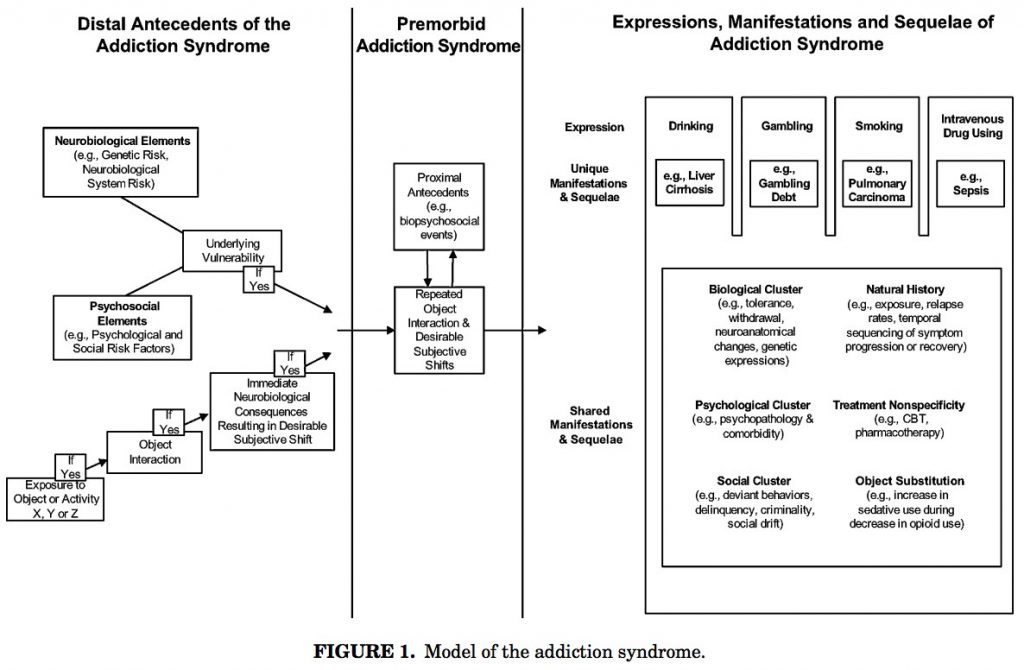
“Addictive behaviors often coexist with other common mental health problems ([**Regier et al., 1990**](https://jamanetwork.com/journals/jama/article-abstract/383975); [**Kessler et al., 2008**](https://pubmed.ncbi.nlm.nih.gov/18257941/)), but traditional treatment models view different expressions of addiction as unique disorders (e.g., substance use disorder, alcohol use disorder, gambling disorder, etc.). When patients seeks treatment for a particular expression of addiction, clinicians usually refer them to services that “specialize” in the presenting problem. Consequently, because of the extent of co-occurring disorders among people with addiction, treatment-seekers might experience confusion and treatment fragmentation, leading to a decrease in clinical compliance.”
“One alternative, contemporary view conceptualizes addiction–expressed as behavioral (e.g., gambling) and substance (e.g., alcohol) involved–as a syndrome that shares common etiological vulnerabilities. Viewing addiction as a syndrome suggests that not all signs of symptoms are present all of the time. The hypothesis that there is a singular addiction with multiple expressions forms the basis of the Syndrome Model of Addiction ([**Shaffer et al., 2004**](https://www.divisiononaddiction.org/wp-content/uploads/2020/08/shafferetalsyndrome.pdf)). The Syndrome Model suggests that people inherit, encounter, and accumulate different life influences and experiences, which can interact or accumulate to form factors, ranging from neurobiological to psychosocial. Some factors or combinations of factors can increase the likelihood of addiction. If people then gain access to an object of addiction, they might develop increased motivation to seek and use the object (e.g., alcohol, drugs, gambling). Within the Syndrome Model, the emphasis is on the relationship between the person and their object of addiction. Addiction resides in the relationship and not in the object.”
![[IMAGE] March is Problem Gambling Awareness Month](https://gamblinghelp.org/wp-content/uploads/2025/02/2.jpg "March is Problem Gambling Awareness Month | The Florida Council on Compulsive Gambling, Inc")
**LEARN MORE ABOUT PGAM IN FLORIDA**
### Shine the Light on Problem Gambling:
**Florida Finds Hope Through 888-ADMIT-IT**
When gambling becomes a problem, it calls everything into question. Gamblers and loved ones in Florida find hope for recovery from problem gambling by contacting the **24/7, Confidential, and Multilingual [888-ADMIT-IT HelpLine!](https://gamblinghelp.org/pgam/)**
[**Learn More About PGAM**](https://gamblinghelp.org/pgam)
---
### [Problem Gambling Awareness Month (PGAM) for Responsible Gambling Programs](https://gamblinghelp.org/pgam/rgppp/)
**Published:** December 23, 2023
**Author:** The Florida Council on Compulsive Gambling, Inc.
**Content:**
#### SHINE THE LIGHT ON PROBLEM GAMBLING:
## Florida Finds Hope Through 888-ADMIT-IT
March is Problem Gambling Awareness Month (PGAM). Nationally recognized for its comprehensive support, localized resources, and personalized service, the 888‑ADMIT‑IT HelpLine stands as the trusted gateway to recovery for anyone in Florida concerned about gambling. As the only organization in the Sunshine State with over three decades of experience providing support and programming for this issue, it’s no coincidence that 93% of help seekers reported reduced gambling after reaching out.
**If you’re worried about your gambling or that of a loved one, call the 24/7, Confidential, and Multilingual [888-ADMIT-IT HelpLine!](#contact-the-helpline)**
[CONTACT THE HELPLINE](#contact-the-helpline)[SELF-ASSESSMENT QUIZ](https://gamblinghelp.org/#self-assessment-quiz)
[ ](https://youtu.be/rhtcUqWKL2w?si=c6_ti-gdr6NglTKz)
## **March is Problem Gambling Awareness Month**
Problem Gambling Awareness Month (PGAM) in a national grassroots advocacy campaign that occurs each year in March, and provides the opportunity for heightened problem gambling awareness throughout the country. FCCG leads the PGAM campaign in Florida each year, bringing together voices from across the community to highlight the impacts of problem gambling as well as the confidential help and hope available 24/7 through the 888-ADMIT-IT HelpLine.
##### **RAISE AWARENESS**
By becoming educated about problem gambling you can help the FCCG raise awareness and bring this public health issue to light. Understand it, recognize it, and understand that this is a treatable problem.
##### **STAND WITH US**
As gambling continues to be more accessible, the FCCG needs your continued support in order for us to assist those who reach out for help. Contact us for FREE educational and training opportunities and become a responsible gaming advocate.
[BECOME A PGAM PARTNER](#partners)
##### **REMOVE THE STIGMA**
Often, people who are suffering with a gambling problem are reluctant to reach out for help. The FCCG helps thousands each year through its 24/7, Confidential, and Multilingual HelpLine, 888-ADMIT-IT. You can help us end the stigma!
## **Challenge Your Knowledge** with Free Games
Over the years, the FCCG has developed a number of free educational games for Problem Gambling Awareness Month (PGAM), which you can play below. Just click or tap anywhere in the game frames to begin each activity. Instructions for play are included at the beginning of each activity (look for the ⓘ icon).
##
NEW! 888-ADMIT-IT Reveals the Route to Recovery
Learn about the resources available through the 888-ADMIT-IT HelpLine by following the path to recovery! Click on the “Start” button below to begin the game. Then, click on the first stage (blue circle) to open the first activity, and complete each stage to advance to the next one. Stages include interactive videos and images, short reading activities, and different knowledge challenges. See how many points you can get!
##
Can You Fill in the Blanks?
Play 888-ADMIT-IT HelpLibs
##
PGAM “Fill in the Blanks” Crossword Challenge
##
The Signs of Problem Gambling:
A “Fill in the Blanks” Challenge
##
Play DIRE STAKES: Industry Edition
##
Play ARE YOU A RISKTAKER?
## Get Connected to Help and Hope
There are more ways than ever to get connected with the 24/7 Problem Gambling HelpLine. [**Call**](tel:8882364848) or [**text**](sms:8882364848) 888-ADMIT-IT (236-4848), [**open a live chat**](https://na0messaging.icarol.com/ConsumerRegistration.aspx?org=54632&pid=271&cc=en-US) on this website, email us at [**fccg@gamblinghelp.org**](mailto:fccg@gamblinghelp.org), download the [**free mobile app**](#mobile-app), or connect with us on social media, such as [**Facebook**](https://www.facebook.com/888AdmitIt) and **[X](https://x.com/FLCouncil)**.
[](tel:8882364848)
##### **Call
888-ADMIT-IT**
[](sms:8882364848)
##### **TEXT
888-ADMIT-IT**
[](https://na0messaging.icarol.com/ConsumerRegistration.aspx?org=54632&pid=271&cc=en-US)
##### **OPEN LIVE CHAT**
[](mailto:fccg@gamblinghelp.org)
##### **EMAIL THE HELPLINE**
[](#mobile-app)
##### **GET THE MOBILE APP**
[](#social-media)
##### **CONNECT WITH US**
## **Problem gambling is an addiction like no other.**
**A gambling addiction can be devastating.** This disease affects a person’s self-worth, their relationships with others, their financial livelihood – and while everyone’s story is unique, there is a common thread that links those who contact the 888-ADMIT-IT HelpLine. They are looking for a way to get their lives back on track. For over 30 years, the FCCG has been instilling hope and furnishing help to those affected by problem gambling.
**The 888-ADMIT-IT HelpLine can be accessed by [calling](tel:8882364848) or [texting](sms:8882364848) the widely publicized toll-free telephone HelpLine number (888-ADMIT-IT), through Live Chat on the agency’s website ([gamblinghelp.org](https://gamblinghelp.org)), by email (<fccg@gamblinghelp.org>), with the 888-ADMIT-IT mobile app, or by connecting with the FCCG on [Facebook](https://www.facebook.com/888AdmitIt) and [Twitter.](https://twitter.com/FLCouncil)**
[CONTACT THE HELPLINE](#contact-the-helpline)
[ ](https://youtu.be/7AN3VLLlkdI?list=PLw6BTX4LgJ1YgNmEckfAOGVLc4Muc-2Mg)
## Facts About Problem Gambling
For most, gambling is a form of recreation that doesn’t cause harm. But when gambling becomes a problem, the impacts can be devastating. How big of an issue is gambling addiction in Florida, and who is affected?
$
0
B
The Estimated Social Costs of Problem Gambling Represent Billions of Dollars Per Year
[Read More](https://www.wpmart.com/accordion-faq-pro)
0
An Estimated 9 Million Americans Suffer from Problem Gambling
0
The Estimated Number of At-Risk Past-Year Problem Gamblers (Adults) in Florida
[Read More](https://www.wpmart.com/accordion-faq-pro)
0
Florida Adults Who are Currently (Past Year) Diagnosable as Disordered Gamblers
[Read More](https://www.wpmart.com/accordion-faq-pro)
+
0
%
888-ADMIT-IT: Increase in Florida Problem Gambling Help Contacts Since Last Year
0
%
888-ADMIT-IT: Increase in Florida Problem Gambling Help Contacts Since 2019-2020
+
0
%
888-ADMIT-IT: Increase in Florida Online Gambling Help Contacts Since Last Year
0
%
888-ADMIT-IT: Increase in Florida Online Gambling Help Contacts Since 2019-2020
[WATCH THE HIGHLIGHT VIDEO](#annual-helpline-report)[EXPLORE & SEARCH THE DATA](https://gamblinghelp.org/explore-888-admit-it-helpline-data)
## **888-ADMIT-IT HelpLine Data Highlights:**
July 1 – December 31, 2025
During the most recent July 1, 2025 – December 31, 2025 period, the FCCG continued to offer a wide variety of problem gambling services and supports to Florida residents via the 888-ADMIT-IT Problem Gambling HelpLine. Learn what we found in this video! [**Download FCCG Annual HelpLine Reports here.**](../../reports)
[ ](https://youtu.be/fvWDdWPxgzY?si=jIETjXzt03U53JjK)
[ ](https://youtu.be/n6Zs-piF-ms)
## We are the FCCG.
**We are 888-ADMIT-IT.**
Thousands of people contact the 888-ADMIT-IT HelpLine each year for help and information, and millions more have been exposed to the number and the services and resources the Florida Council on Compulsive Gambling (FCCG) provides to Floridians suffering from the impacts of problem gambling.
**As the 24/7, Confidential, and Multilingual Problem Gambling HelpLine for the entire state, 888-ADMIT-IT is the gateway to a series of free services which are not available anywhere in Florida, online, or elsewhere.** Help seekers receive timely and updated resources as well as up-to-the-minute problem-gambling-related news, research, and information, along with FCCG’s tailored programs and services, available for both gamblers and their loved ones.
[LEARN MORE ABOUT AVAILABLE RESOURCES](#resources)
## **888-ADMIT-IT** is the Only Problem Gambling HelpLine Dedicated to Serving Floridians
The 888-ADMIT-IT HelpLine is an ever-evolving resource for Floridians. The FCCG is committed to personalized service and prides itself on the relationships built during HelpLine contacts, which are often a one-time opportunity to motivate behavioral change, and to share a message of hope that recovery is possible.
#### PURPOSEFUL
From decades of experience providing help and hope to Floridians suffering from gambling addiction, the FCCG has grown its HelpLine resource database to serve nearly every situation brought about by problem gambling.
#### PROFESSIONAL
FCCG HelpLine Specialists are trained to provide resources catered to the contact’s unique situation, including immediate access to FCCG HelpLine programs that have been developed specifically for Florida help seekers.
#### PERSONAL
The FCCG HelpLine utilizes a very strict referral system, offering a variety of problem gambling specific programs, services, and local referral resources, to assist individuals with their specific needs and circumstances.
## Gambling Addiction Can Be Hard to Spot
Unlike other addictions, problem gambling does not have obvious visible physical symptoms. That’s why it’s known as the hidden addiction — but there are behavioral signs. Are you seeing them?

#### Need to gamble with increasing amounts to achieve the desired excitement.
[LEARN MORE](https://gamblinghelp.org/how-gambling-can-become-an-addiction/)

#### Restless or irritable when trying to cut down or stop gambling.
[LEARN MORE](https://gamblinghelp.org/how-gambling-can-become-an-addiction/)

#### Repeated unsuccessful efforts to control, cut back on or stop gambling.
[LEARN MORE](https://gamblinghelp.org/how-gambling-can-become-an-addiction/)

#### Frequent thoughts about gambling (such as reliving past gambling or planning future gambling).
[LEARN MORE](https://gamblinghelp.org/how-gambling-can-become-an-addiction/)

#### Often gambling when feeling distressed.
[LEARN MORE](https://gamblinghelp.org/how-gambling-can-become-an-addiction/)

#### After losing money gambling, often returning to get even. (This is referred to as "chasing" one's losses.)
[LEARN MORE](https://gamblinghelp.org/how-gambling-can-become-an-addiction/)

#### Lying to hide gambling activity.
[LEARN MORE](https://gamblinghelp.org/how-gambling-can-become-an-addiction/)

#### Risking or losing a close relationship, a job, or a school or job opportunity because of gambling.
[LEARN MORE](https://gamblinghelp.org/how-gambling-can-become-an-addiction/)

#### Relying on others to help with money problems caused by gambling.
[LEARN MORE](https://gamblinghelp.org/how-gambling-can-become-an-addiction/)
## Hear First-Hand Accounts of Problem Gambling
In Surviving Compulsive Gambling: The Betty White Story, a woman recounts her experience being married to a compulsive gambler. Her honesty provides insight into how dangerous compulsive gambling can be, including for loved ones. The Domino Effect tells the stories of Brandon, Terry, and Sarah, three individuals whose gambling addiction affected not only their lives, but the lives of those closest to them.
[ ](https://www.youtube.com/embed/videoseries?list=PLw6BTX4LgJ1ZTLAF6lj6gykMXxk4BpQRq)
##### CONNECT WITH THE APP
## 888-ADMIT-IT also has a free mobile app.
Download the free 888-ADMIT-IT mobile app to stay connected with the HelpLine and resources for problem gambling. Available on both Apple and Android devices, the app allows users to contact the HelpLine in just one or two taps, take a Self-Assessment Quiz to help detect problematic gambling behaviors, learn about the FCCG’s Online Program for Problem Gamblers (OPPG), see problem gambling prevention tips, discover the warning signs of gambling addiction, and more.
[APPLE DEVICES](https://apps.apple.com/us/app/888-admit-it/id1499418438?uo=4)[ANDROID DEVICES](https://play.google.com/store/apps/details?id=com.app.floridagamblinghelp)
[![[IMAGE] 888-ADMIT-IT Mobile App](https://gamblinghelp.org/wp-content/uploads/2023/03/cropped-888-ADMIT-IT-Mobile-App-Graphic.png "888-ADMIT-IT Mobile App")](#)
## Learn the Impacts of Gambling Addiction
Discover how gambling disorder causes financial and career difficulties, legal problems, relationship issues, and even suicidal ideation and attempts from those who lived it, but most importantly – that help and hope are available through the 888-ADMIT-IT HelpLine, and [recovery is possible.](https://gamblinghelp.org/#recovery-is-possible)
[ ](https://www.youtube.com/embed/videoseries?list=PLw6BTX4LgJ1biCo4kfKnTLiZ1pz_NjkrN)
##### KNOWING WHAT TO LOOK FOR ISN’T ENOUGH
## **888-ADMIT-IT** Offers 24/7 Connection to Resources for Help Seekers & Professionals
As the 24/7, Confidential, and Multilingual Problem Gambling HelpLine for the entire state,
888-ADMIT-IT is the gateway to a series of free services which are not available anywhere in Florida, online, or elsewhere. Help seekers receive timely and updated resources as well as up-to-the-minute problem-gambling-related news, research, and information, along with FCCG’s tailored programs and services, available for both gamblers and their loved ones. Additionally, the FCCG HelpLine furnishes information, supports, and training for qualified addictions/mental health/other medical professionals, gambling operators, employers, and others in providing services and supports to the population negatively affected by gambling within the Sunshine State.

[Resources for Help Seekers](https://gamblinghelp.org/#help-seekers)
##### **Resources for Help Seekers**
By contacting 888-ADMIT-IT, help seekers can connect with resources like the Online Program for Problem Gamblers (OPPG), the Peer Connect Program, Referrals to Gambling Addiction Certified Treatment Providers, Self-Exclusion Programs, Self-Help Support Groups, Self-Help Literature, Financial Supports, Legal Resources, and many more.
[Learn More](https://gamblinghelp.org/#help-seekers)

[Resources for Professionals](https://gamblinghelp.org/#professionals)
##### **Resources for Professionals**
The FCCG HelpLine furnishes information, supports, and training for qualified addictions/mental health/other medical professionals, gambling operators, employers, and others in providing services and supports to the population negatively affected by gambling within the Sunshine State. Want to learn more about our programs and services for professionals?
[Learn More](https://gamblinghelp.org/#professionals)
## Worried about your gambling or that of a loved one? Contact the HelpLine today.
[CONTACT THE HELPLINE](#contact-the-helpline)
[](https://www.caesars.com/corporate-social-responsibility/responsible-gaming?utm_campaign=IPB&utm_medium=social-org&utm_source=sprout)![[IMAGE] Sanford Orlando Racebook and Sportsbar Displays FCCG PGAM Digital Banners on Facility TVs](https://gamblinghelp.org/wp-content/uploads/2025/04/PGAM-2025-Gambling-Industry-Digital-Banners-Sanford-Orlando-Racebook-and-Sportsbar-600x337-1-599x337.jpg "PGAM 2025 - Gambling Industry Digital Banners - Sanford Orlando Racebook and Sportsbar - 600x337")[![[IMAGE] Resorts World Bimini Makes 2025 PGAM Social Media Posts](https://gamblinghelp.org/wp-content/uploads/2025/04/Resorts-World-Bimini-Facebook-Post-03.01.25-647x363.jpg "Resorts World Bimini - Facebook Post - 03.01.25")](https://www.hardrock.bet/news/september-is-responsible-gaming-education-month/)![[IMAGE] Town of Juno Beach Issues 2025 PGAM Proclamation](https://gamblinghelp.org/wp-content/uploads/2025/04/Town-of-Juno-Beach-Issues-2025-PGAM-Proclamation-1015x570.jpg "Town of Juno Beach Issues 2025 PGAM Proclamation")![[IMAGE] City of Belleair Bluffs Issues 2025 PGAM Proclamation](https://gamblinghelp.org/wp-content/uploads/2025/04/City-of-Belleair-Bluffs-Issues-2025-PGAM-Proclamation-910x512.jpg "City of Belleair Bluffs Issues 2025 PGAM Proclamation")![[IMAGE] Resorts World Bimini Partners with FCCG for corporate Responsible Gambling and Self-Exclusion Program](https://gamblinghelp.org/wp-content/uploads/2025/04/Resorts-World-Bimini-Partnership-Graphic.jpg "Resorts World Bimini - Partnership Graphic")[](https://www.caesars.com/corporate-social-responsibility/responsible-gaming?utm_campaign=IPB&utm_medium=social-org&utm_source=sprout)[![[IMAGE] Calder Casino Makes 2025 PGAM Social Media Posts](https://gamblinghelp.org/wp-content/uploads/2025/04/Calder-Casino-Instagram-Post-03.14.25-941x529.jpg "Calder Casino - Instagram Post - 03.14.25")](https://www.instagram.com/reel/DARbziTS5Ir/?utm_source=ig_web_copy_link&igsh=MzRlODBiNWFlZA==)![[IMAGE] Resorts World Bimini Employees Receive CARE TEAM Newsletter During PGAM](https://gamblinghelp.org/wp-content/uploads/2025/04/Resorts-World-Bimini-March-CARE-TEAM-Newsletter-03.26.25-648x364.jpg "Resorts World Bimini - March CARE TEAM Newsletter - 03.26.25")
## PGAM Partners Amplify Our Message in Florida & Beyond
From mayoral proclamations around the state, to Florida’s gambling facilities raising awareness among their employees, PGAM partners are helping spread the word about the 888-ADMIT-IT HelpLine. Interested in becoming a PGAM partner? Email us at [**pgam@gamblinghelp.org**](mailto:pgam@gamblinghelp.org)!
[SIGN UP TO PARTICIPATE](mailto:pgam@gamblinghelp.org)[SEE A LIST OF PGAM PARTNERS](https://gamblinghelp.org/pgam/2025-problem-gambling-awareness-month-pgam-supporters)
## Problem Gambling is in the Press During PGAM
Over the years, the FCCG has been routinely contacted by reporters writing stories about the impacts of problem gambling on Floridians. These days, the the Florida Council is fielding a record number of media requests as a result of gambling expansion and the resulting surge in 888-ADMIT-IT HelpLine contacts. Click on the images in the slideshow to read the most recent stories.
[](https://www.fox13news.com/video/1612767)[](https://www.wptv.com/sports/gambling-addiction-hotline-sees-88-increase-in-contacts-after-sports-gambling-apps-become-legal)[](https://www.youtube.com/watch?v=ZCWbz_v-OEM)[![[IMAGE] FCCG Executive Director Jennifer Kruse Interviewed on iHeartRadio Communities Ahead of Problem Gambling Awareness Month](https://gamblinghelp.org/wp-content/uploads/2025/03/iStock-1665393390.jpg "FCCG Executive Director Jennifer Kruse Interviewed on iHeartRadio Communities Ahead of Problem Gambling Awareness Month | The Florida Council on Compulsive Gambling, Inc")](https://www.iheart.com/podcast/960-iheartradio-communities-28241250/episode/american-red-cross-month-help-269124458/?position=1077&embed=true)[![[IMAGE] Why Florida’s Problem Gambling Helpline Gets Zero Funding From The State](https://gamblinghelp.org/wp-content/uploads/2025/02/Why-Floridas-Problem-Gambling-Helpline-Gets-Zero-Funding-From-The-State.jpg "Why Florida’s Problem Gambling Helpline Gets Zero Funding From The State | The Florida Council on Compulsive Gambling, Inc")](https://www.casinoreports.com/florida-problem-gambling-helpline-funding/)[](https://www.alligator.org/article/2025/02/increase-in-sports-betting)[](https://mynews13.com/fl/orlando/news/2025/02/10/a-florida-organization-looks-to-help-people-beat-their-gambling-addiction)[](https://www.clickorlando.com/news/local/2025/02/07/are-you-betting-on-the-super-bowl/)[](https://www.fox35orlando.com/video/1589105)[](https://www.legalsportsbetting.com/news/floridas-problem-gambling-goes-unfunded-as-super-bowl-nears-02-05-2025/)[](https://www.clickorlando.com/news/local/2025/02/04/doing-the-best-we-can-floridas-problem-gambling-hotline-stops-receiving-state-funding/)[](https://www.gamblingnews.com/news/florida-reports-increased-calls-for-problem-gambling/)[](https://weartv.com/news/local/florida-gambling-hotline-sees-50-more-calls-as-online-betting-raises-addiction-concerns)[](https://www.univision.com/local/miami-wltv/programas-adiccion-apuestas-deportivas-florida-juego-responsable-miami)[](https://www.clickorlando.com/sports/2024/12/10/do-you-or-someone-you-know-have-a-gambling-problem-let-us-know/)[](https://www.sun-sentinel.com/2024/12/09/editorial-click-by-click-floridas-illegal-storefront-casinos-prey-on-the-vulnerable/)[](https://www.sun-sentinel.com/2024/12/05/a-gambling-underworld-players-and-police-accuse-illegal-florida-casinos-of-cheating/)
## Connect with Us
Follow the FCCG on social media to be in the know about the latest problem gambling news and HelpLine updates.
[](https://www.facebook.com/888AdmitIt)
[](https://x.com/FLCouncil)
[](https://www.linkedin.com/company/888admitit)
[](https://www.instagram.com/florida.gamblinghelp)
[](https://www.youtube.com/@888AdmitIt)
[](https://www.pinterest.com/888admitit)
[](https://www.reddit.com/user/888-ADMIT-IT)
## Follow Our Blog & Learn More About
Problem Gambling
For those who suffer from gambling disorder and their loved ones, the impacts touch upon nearly every aspect of life. The FCCG’s blog is a deep dive into everything problem gambling, from resources available for gamblers and loved ones, to seasonal concerns, prevention tips, awareness events, and more.
[ ![[IMAGE] Why Understanding Gambling Disorder is Crucial During National Suicide Prevention Month](https://gamblinghelp.org/wp-content/uploads/2026/08/Why-Understanding-Gambling-Disorder-is-Crucial-During-National-Suicide-Prevention-Month-1024x576.jpg "Why Understanding Gambling Disorder is Crucial During National Suicide Prevention Month | The Florida Council on Compulsive Gambling, Inc") ](https://gamblinghelp.org/why-understanding-gambling-disorder-is-crucial-during-national-suicide-prevention-month/)
### [ Why Understanding Gambling Disorder is Crucial During National Suicide Prevention Month ](https://gamblinghelp.org/why-understanding-gambling-disorder-is-crucial-during-national-suicide-prevention-month/)
September is both National Recovery Month and National Suicide Prevention Month, two observances that underscore the importance of mental health, early intervention, and compassionate support for individuals facing behavioral‑health challenges.\[…\]
[ Read more ](https://gamblinghelp.org/why-understanding-gambling-disorder-is-crucial-during-national-suicide-prevention-month/)
[ ![[IMAGE] How to Prepare for Sports Betting Risks Before Kickoff](https://gamblinghelp.org/wp-content/uploads/2026/08/How-to-Prepare-for-Sports-Betting-Risks-Before-Kickoff-1024x576.jpg "How to Prepare for Sports Betting Risks Before Kickoff | The Florida Council on Compulsive Gambling, Inc") ](https://gamblinghelp.org/how-to-prepare-for-sports-betting-risks-before-kickoff/)
### [ How to Prepare for Sports Betting Risks Before Kickoff ](https://gamblinghelp.org/how-to-prepare-for-sports-betting-risks-before-kickoff/)
September’s fall sports kickoff brings excitement, anticipation, and the return of football season. It’s a time when fans across Florida reconnect with their favorite teams and traditions. But it also\[…\]
[ Read more ](https://gamblinghelp.org/how-to-prepare-for-sports-betting-risks-before-kickoff/)
[ ![[IMAGE] How to Empower Awareness and Action for RGEM](https://gamblinghelp.org/wp-content/uploads/2026/08/How-to-Empower-Awareness-and-Action-for-RGEM-1024x576.jpg "How to Empower Awareness and Action for RGEM | The Florida Council on Compulsive Gambling, Inc") ](https://gamblinghelp.org/how-to-empower-awareness-and-action-for-rgem/)
### [ WEB LETTER: How to Empower Awareness and Action for RGEM ](https://gamblinghelp.org/how-to-empower-awareness-and-action-for-rgem/)
Each September, Responsible Gaming Education Month (RGEM) provides an important opportunity for Florida communities, families, and industry stakeholders to increase awareness of the risks associated with gambling. It’s a time\[…\]
[ Read more ](https://gamblinghelp.org/how-to-empower-awareness-and-action-for-rgem/)
[SEE ALL BLOG POSTS](https://gamblinghelp.org/blog/)
## Get blog updates in your inbox!
[SUBSCRIBE TO FCCG EMAILS](http://fccg.informz.net/FCCG/pages/SignUptoReceiveFCCGCommunications888admititorg)
## Participate in This Year’s
**“Take the Plunge Challenge!”**
**Do you have an idea for the FCCG’s 2027 PGAM theme?** We invite you to take part in the “Take the Plunge Challenge” by discussing and submitting ideas that can be used for next year’s campaign. Whether you want to volunteer taglines, outreach activities, games, brochures, and webinars pertaining to PGAM, we want to hear from you! **The employee (and their facility) submitting the idea chosen by the FCCG may be featured in an upcoming CARE Team Newsletter.**
Submit your idea via the form below no later than April 30, 2026, to be considered. Following your submission, you will be able to download a free digital copy of the FCCG’s ***Do This, Not That*** brochure, which provides important and helpful strategies when encountering different problem gambling situations in the workplace. For immediate or anonymous assistance with a gambling problem, please [contact the 888-ADMIT-IT HelpLine.](#contact-the-helpline)
Name \*First
Last
Email \*
Select Your State \*Select Your StateAlabamaAlaskaArizonaArkansasCaliforniaColoradoConnecticutDelawareFloridaGeorgiaHawaiiIdahoIllinoisIndianaIowaKansasKentuckyLouisianaMaineMarylandMassachusettsMichiganMinnesotaMississippiMissouriMontanaNebraskaNevadaNew HampshireNew JerseyNew MexicoNew YorkNorth CarolinaNorth DakotaOhioOklahomaOregonPennsylvaniaRhode IslandSouth CarolinaSouth DakotaTennesseeTexasUtahVermontVirginiaWashingtonWest VirginiaWisconsinWyomingOutside of the U.S.
Message
Privacy Policy \*
- *By using this form, I agree to the FCCG’s [Privacy Policy.](https://gamblinghelp.org/privacy-policy/) For immediate and anonymous assistance, please contact the [888-ADMIT-IT HelpLine](https://gamblinghelp.org/#contact-the-helpline) instead of using this form.*
Name
Submit
---
### [Loved Ones Impacted by Problem Gambling](https://gamblinghelp.org/loved-ones-impacted-by-problem-gambling/)
**Published:** May 11, 2023
**Author:** The Florida Council on Compulsive Gambling, Inc.
**Content:**
A gambling addiction extends beyond the gambler. Family members and friends are often severely impacted by the gambler’s behaviors and activities.
**Statistics show that an average of 5-10 people are also negatively affected by a compulsive gambler.** Family members, friends, co-workers and others can experience financial and emotional repercussions due to this addiction.
![[IMAGE] Loved Ones Impacted by Problem Gambling](https://gamblinghelp.org/wp-content/uploads/2023/05/iStock-1158481726.jpg "Loved Ones Impacted by Problem Gambling | The Florida Council on Compulsive Gambling, Inc")
**Statistics show that an average of 5-10 people are also negatively affected by a compulsive gambler.**
**Because of the non-physical symptoms of a gambling addiction, even the ones closest to the gambler often do not recognize that there is a problem until the gambler has crossed into a desperate or hopeless phase. Hence, compulsive gambling is known as the “hidden addiction”.** There are signs that loved ones can look for.
To determine whether you have a compulsive gambler in your life, here are a few things to look for:
❒ Isolation
❒ Unaccounted blocks of time
❒ Mood swings
❒ Neglecting personal needs or responsibilities
❒ Claiming a sudden need for money or loans
❒ Secretive or lying about money and/or gambling
❒ Spending more time gambling than any other activity
❒ Boasting about winning, often minimizing or denying losses and exaggerating wins
❒ Missing work or school due to gambling
❒ Arguing with spouse, partner, other family members, or friends due to gambling
❒ Experiencing behavioral or personality changes when watching or listening to sports
❒ Having difficulty sleeping or eating
To see if a loved one would benefit from our resources, please take our **Loved Ones Assessment Quiz** below or **[contact the 888-ADMIT-IT HelpLine today.](https://gamblinghelp.org/#contact-the-helpline)**
---
---
[**Contact the HelpLine**](https://gamblinghelp.org/#contact-the-helpline)
## Resources are Available for Loved Ones of Problem Gamblers
Compulsive gambling results in broken promises, broken rules, broken hearts, and broken homes.
**Impacts from a gambling problem are devastating to those closest to the gambler.** In fact, often time’s family members suffer just as much or even more than the gambler does themselves. In most cases, loved ones rarely know the extent of the gamblers’ behaviors.
**Effects of a gambling problem can range from loss of [basic necessitates, such as food and shelter](https://gamblinghelp.org/financialresources/), to loss of hope, trust, and family security.** Family members frequently report physical and emotional issues that mirror those of the gambler, including high suicidal ideation and stress related illnesses. Neglect and abuse can impact the family, not only financially, but physically and emotionally as well. Children growing up in homes where a gambling problem is present feel the effects of this disease too, and the impacts can be long-lasting, especially if help is not received.
**The good news is that help is available, and family members, friends, and other loved ones of problem gamblers can get help for themselves through the [888-ADMIT-IT HelpLine (888-236-4848)](https://gamblinghelp.org/#contact-the-helpline), *even if* the gambler is not ready to stop gambling, or get help for themselves.** There are resources available that are specifically geared towards assisting loved one, such as the **[FCCG’s *A Chance for Change* Workbooks Series](https://gamblinghelp.org/literature/)**, developed specifically for loved ones of problem gamblers and addressing important issues such as insomnia, stress, relationship difficulties, co-dependency, and anger, and the **[FCCG’s *Peer Connect Program*](https://gamblinghelp.org/peerconnect/)** which provides loved ones with the opportunity to speak to someone in recovery for problem gambling, or a loved one of someone in recovery, who can share their personal experiences in a relatable way in effort to facilitate an easier transition into the recovery process.
Other loved one’s specific resources available include **[self-help support group referrals](https://gamblinghelp.org/supportgroups/)** to programs such as *GamAnon*, where members are provided opportunities for learning how to better understand the illness and best cope with the accompanying difficulties, and **[counseling services referrals](https://gamblinghelp.org/counselingservices/)** for individual, family, or even group sessions with a licensed mental health professional **[who is certified to treat gambling disorder](https://gamblinghelp.org/the-importance-of-gambling-addiction-certified-counselors)**, and much more. **Whether or not the gambler is engaged in recovery, the loved ones can utilize multiple resources and participate in different recovery programs to learn how to protect themselves, deal with the problem, and support the gambler, if and when they are ready to change.**
[**Explore Our Resources**](https://gamblinghelp.org/#help-seekers)
---
### [Learn the Impacts of Gambling Addiction](https://gamblinghelp.org/how-gambling-can-become-an-addiction/)
**Published:** May 5, 2023
**Author:** The Florida Council on Compulsive Gambling, Inc.
**Content:**
**Gambling Addiction is a progressive disorder causing disruptions in every area of a person’s life – psychological, physical, social, and vocational.**
An individual who is suffering from Gambling Disorder presents a persistent, maladaptive pattern of gambling related behavior that disrupts personal, family, or vocational pursuits. It is defined as any time a person wagers something of value on an event with an uncertain outcome.
**Gambling can be considered an addiction when a person continues to participate in their betting activities even when they are facing consequences in their life.** It was first recognized as a diagnosis by the American Psychiatric Association in 1980 in their publication of the Diagnostic & Statistical Manual of Mental Disorders.
- Compulsive Gambling is referred to as the “hidden disease” because there are no physical symptoms like with substance-based addictions.
- The effects of Gambling Addiction can be as devastating as alcohol or drug addictions, and can result in both financial and personal destruction. Unlike with substance abuse issues, there is no saturation point, which means a person can continue to embrace the addiction as long as the money or credit is available.
## Action Gamblers and Escape Gamblers
**Compulsive gamblers fall into two main types – action and escape.** Both suffer at the core from similar problems such as depression, anxiety, financial difficulty, family stress, and more. However, the way they use gambling to meet their psychological needs can be vastly different.
**Action gamblers** outwardly tend to appear egotistical, controlling, successful, and outgoing. They gamble primarily because they believe they can become skillful enough to beat the odds. They tend to play games of “skill” such as poker, dice, or betting on races or sports.
**Escape gamblers** differ in that they often gamble to escape from problems, feeling they can free themselves from pain while gambling. They are normally described as responsible, caring, and nurturing. These players tend to use slot machines, video poker, bingo, or the lottery to fulfill their gambling urges.
Regardless of the player type, each problem can progress at different speeds, with some developing a problem in days, and others feeling fine for years. Once you lose the ability to set limits and walk away, you may become at risk for creating huge problems by continuing to gamble.
## How Gambling Disorder is Diagnosed
**Gambling Addiction has a set of criteria used by treatment professionals to identify problems cause by compulsive gambling, as well as identify appropriate ways to [begin treatment.](https://gamblinghelp.org/#recovery-is-possible)**
Today, the American Psychiatric Association (APA) defines Gambling Disorder as a Non-Substance based Addictive Disorder. The following 9 criteria are used by mental health professionals to identify the presence of gambling as a clinical issue:
1. **Tolerance:** Needs to gamble with increasing amounts of money in order to achieve the desired excitement.
2. **Withdrawal:** Is restless or irritable when attempting to cut down or stop gambling.
3. **Relapse:** Has repeated unsuccessful efforts to control, cut back, or stop gambling.
4. **Preoccupation:** Is often preoccupied with gambling (e.g., having persistent thoughts of reliving past gambling experiences, handicapping or planning next venture, thinking of ways to get money with which to gamble).
5. **Escape:** Often gambles when feeling distressed (e.g., helpless, guilty, anxious, depressed).
6. **Chasing:** After losing money gambling, often returns another day to get even.
7. **Lying to Loved Ones:** Lies to conceal the extent of involvement with gambling.
8. **Risking Relationships:** Has jeopardized or lost a significant relationship, job, or educational or career opportunity because of gambling.
9. **Bailouts/Relying on Others for Money:** Relies on others to provide money to relieve a desperate financial situation caused by gambling.
If you have experienced more than one of these in the past 12 months, it may be helpful to **[contact the 888-ADMIT-IT HelpLine](https://gamblinghelp.org/#contact-the-helpline)** to receive resources and additional information. Not sure if you should contact the HelpLine? [**Take our quick Self-Assessment Quiz.**](https://gamblinghelp.org/#contact-the-helpline)
## Recovery is Possible. Treatment is Available.
It all starts with the first (but not necessarily the last) completely free and confidential contact to the 888-ADMIT-IT HelpLine. Floridians at all stages of the recovery process make contact every day to get connected to proven resources tailored to their specific situations. When it comes to problem gambling, **[it’s never too soon or too late](https://gamblinghelp.org/#recovery-is-possible)** to begin the journey to recovery. Worried about your gambling or a loved one’s? [**Contact 888-ADMIT-IT today.**](https://gamblinghelp.org/#recovery-is-possible)
[**Contact the HelpLine**](https://gamblinghelp.org/#contact-the-helpline)
---
### [Learn the Signs and Stages of Gambling Addiction](https://gamblinghelp.org/the-stages-of-gambling-addiction/)
**Published:** May 5, 2023
**Author:** The Florida Council on Compulsive Gambling, Inc.
**Content:**
Gambling Addiction has a number of stages to describe how the disorder progresses, as well as how to begin the path to recovery.
**The onset of problem gambling varies from person to person, and depends largely on the person’s experience when they gamble.** It can be important to understand the type of game you play, how it affects you, and why you are continuing to play, even when things in your life begin to fall apart. Gamblers who experience these difficulties often experience their problem in a set of stages.
### Stage One: Winning Stage
In the beginning, the compulsive gambler often experiences a “big win,” which results in more frequent gambling and increased wagers. This tends to enhance self-image, and the gambler begins to fantasize about winning and the wonderful and exciting future this will bring about. Unreasonable optimism develops.
*Note: Some gamblers never experience this phase and skip to the following stages of progression.*
### Stage Two: Losing Stage
During this period, the compulsive gambler thinks only about gambling. Personality changes begin to develop. Lies, borrowing money, and cover-ups are common. The gambler can no longer control the gambling, and relationships with family, friends, and employers deteriorate.
### Stage Three: Desperation Stage
The gambler can no longer pay debts and looks for bailouts that could be legal or illegal. These actions are rationalized as a means of getting even or recovering their losses. As the “chase” continues, the gambler panics at the prospect that the action will stop. During this time, the gambler clings to the belief that a winning streak, which will solve all their problems, is just around the corner. There are increasing signs of depression, irritability, and thoughts of suicide may be present.
### Stage Four: Hopelessness Stage
At this point, serious consequences begin to occur, which may seem irreversible, such as arrests, divorce, alcohol or other substance abuse problems, emotional breakdowns, and serious withdrawal symptoms. The gambler realizes that getting even or catching up is not possible, but no longer cares. Approximately 20% of the time, this type of despair may lead the gambler to attempt suicide.
### Stage Five: Critical Stage
This person has reached the rock-bottom of their addiction, and has a newfound resolve to make things better. This stage is characterized by the person making decisions designed to lead to a solution to problems gambling has created. They have an honest desire for help, and an understanding that steps taken to start recovery need to be realistic. They may begin to do things more positively, such as rededicate to work or family life, and will seek to understand life away from gambling activity with higher levels of clarity.
### Stage Six: Rebuilding Stage
The Rebuilding Stage allows the person to identify new interests, enhance their relationships with friends and family, and begin setting right the wrongs they created in their addiction. A defining feature of this stage is increases in awareness related to their own strengths and weaknesses with their addiction, and finding ways to keep their progress moving forward. The levels of success the problem gambler is having staying away leads to higher levels of self-respect, and richer interactions with others. Measures taken to repair gambling damages can include paying bills, established family financial plans, a budget, resolving legal problems, and experiencing less irritation and stress involved in the problems from the addiction.
### Stage Seven: Growth Stage
In this stage, the person embraces a new way of life. They keep the insight and awareness they have built through this difficult process as a message for themselves and others. This person is also able to face problems promptly, and head-on, and is experiencing less pre-occupation related to their past gambling, and risk of relapse. The goal of this phase is to continue to grow as a person, and stay strong in all efforts that support a gambling free lifestyle. They are able to live for themselves and others around them, and can be willing to sacrifice or support others in many areas of life. Family relationships continue to grow, and the recovering person is able to show affection in ways that had been lost in the addiction. Generally, this person has lived a gambling free lifestyle for more than six months, and continues to work on growing as an individual in many areas of their life.
## Recovery is Possible. Treatment is Available.
It all starts with the first (but not necessarily the last) completely free and confidential contact to the 888-ADMIT-IT HelpLine. Floridians at all stages of the recovery process make contact every day to get connected to proven resources tailored to their specific situations. When it comes to problem gambling, **[it’s never too soon or too late](https://gamblinghelp.org/#recovery-is-possible)** to begin the journey to recovery. Worried about your gambling or a loved one’s? [**Contact 888-ADMIT-IT today.**](https://gamblinghelp.org/#contact-the-helpline)
[**Contact the HelpLine**](https://gamblinghelp.org/#contact-the-helpline)
---
### [Meet the FCCG's Leadership Team](https://gamblinghelp.org/leadership/)
**Published:** July 29, 2023
**Author:** The Florida Council on Compulsive Gambling, Inc.
**Content:**

## **Jennifer Kruse, MSA**
Executive Director
As Executive Director for the Florida Council on Compulsive Gambling (FCCG), Jennifer Kruse creates and oversees innovative programs and supports for problem gamblers, their loved ones, and related professionals, including the statewide 888-ADMIT-IT Problem Gambling HelpLine, nationally recognized for its exceptional 24-hour, confidential, and multilingual service. During her 20 years with the FCCG, Jennifer has authored and co-authored problem gambling research in scientific journals and other publications, has been featured and recognized as a problem gambling expert by local and national media outlets, and has provided essential problem gambling prevention education, in Florida and beyond, through various conference presentations and appearances on problem-gambling-specific podcasts.
She has served on the Board of Directors for the National Council on Problem Gambling as well as in various roles on national problem gambling committees. Jennifer spearheads the FCCG’s Responsible Gambling and Player Protection Program for industry and has trained thousands of gambling facility employees to meet statutory requirements. She has also provided training and education for population-specific service providers, including legal and judicial professionals, healthcare providers, governmental organizations and policymakers, community audiences, and others, on problem and disordered gambling. Jennifer received her Bachelor’s Degree in Business Administration and Master’s Degree in Accounting from the University of Central Florida.
## **David Griffin, Esq.**
President of the Board
David Griffin is a licensed attorney and has operated his own consulting firm since 2003. Prior to starting David Griffin Consulting, he held positions in athletic, public and private enterprises. In 1999 David was appointed Secretary of the Florida Lottery by Governor Jeb Bush and led the operation, management and revenue performance of the agency. During his tenure, the lottery achieved four consecutive years of record setting profits and the Lottery’s operating budget was reduced by 8.5 percent to $126.5 million while revenues increased by twenty percent, from $2 billion to $2.8 billion. David’s other positions include Assistant Executive Director of the Ohio Lottery Commission, Labor Relations Manager for Bailey Controls Company and MRI Marketing Manager for King’s Medical. David also played one season of professional basketball in France.
David’s past and current board affiliations include: Florida Council on Compulsive Gambling, Transforming Ministries, Boys & Girls Clubs of the Big Bend, Take-Stock in Children, The Florida Technology Research and Scholarship Board, Florida Tax Watch, Florida A & M Board of Trustees, Volunteer USA Foundation.
David earned a Juris Doctorate from Cleveland Marshall College of Law in Ohio, a M.B.A. from Lake Erie College in Ohio and a Bachelor of Science degree in Community Development from Penn State University, where he attended on a full athletic scholarship and was co-captain of the men’s varsity basketball team.

## **John Fontana**
Vice President of the Board
John Fontana, as the former president of Seminole Hard Rock Hotel & Casino Tampa, oversaw the day-to-day operations of the world’s sixth-largest casino and a 12-story, 246-room hotel. Fontana also served as the first president of Seminole Hard Rock Support Services, established in 2017 to coordinate and consolidate
staff functions while streamlining operations.
John Fontana retired as president of the Seminole Hard Rock Hotel & Casino Tampa in 2018 after 38 years of working with the Tribe. As general manager of the original Seminole Casino Tampa, the Florida State University graduate coupled his financial training and management acumen with a unique experience to help transform a few rough acres around an abandoned J.M. Fields store into the award-winning Hard Rock Tampa, one of the most profitable casino in the United States.
Fontana’s career in Indian gaming includes stints as a consultant on the opening teams for the initial facilities built for the Sycuan Casino in El Cajon, Calif., and Little Six Casino in Prior Lake, Minn. Fontana also serves on the board for the Florida Council for Compulsive Gambling.
Fontana is the son of Jean Fontana, who worked myriad jobs during her 40 years as a valued Seminole Tribal government employee, including assistant controller, risk manager and Human Resources Department director for the Seminole Tribe of Florida. John Fontana’s brother, Vincent, is a storage manager for the Seminole Tribe Accounting Department in Hollywood.
## **John A. Colón**
Board Member
John A. Colón is the Managing Partner of Sanderling Partners. He has spent over 30 years managing investments for his clients, and has been duly recognized by several prominent firms. Mr. Colón most recently served as a Senior Vice President-Investments at Wells Fargo Advisors in downtown Sarasota. Prior to joining Wells Fargo Advisors, Mr. Colón spent more than a decade at Morgan Stanley in New York. While there he attained the rank of First Vice President, and was tapped to open the Locust Valley, NY office of the firm which he managed for several years.
Outside of the office, Mr. Colón has been active in his community both locally and at the state level. He has served as a Gubernatorial appointee on the State Board of Education, and the Manatee County Schoolboard. Mr. Colón has also been a Commissioner of the Sarasota Housing Authority since 2005, and has served as its chairman 4 times over the years.
## **Rory Reid, Ph.D., LCSW, ICGC-II**
Board Member
Dr. Rory Reid holds a master’s degree in social work and a doctorate in clinical psychology with a dual emphasis in Neuropsychology and Marriage and Family Therapy. He completed his post-doctoral fellowship in the Department of Psychiatry at UCLA and additional post-doctoral training in clinical research at Harvard Medical School. Dr. Reid is an Assistant Professor of Psychiatry and Research Psychologist in the Department of Psychiatry at UCLA and an International Certified Gambling Counselor. He has published numerous research articles on problem gambling in scientific journals and has worked with hundreds of individuals, couples, and families negatively impacted by various addictions and other mental health issues. His work has been featured in press outlets such as the New York Times, the Wall Street Journal, TIME magazine, as well as TV specials on ABC, CBS and Fox News. He serves on the editorial boards for several peer-reviewed journals and has trained and educated mental health professionals, industry specialists, government organizations, and community audiences around the world on problem gambling issues.
## **Jonathan Zachem, Esq.**
Board Member
Jonathan “Jon” Zachem is a Tallahassee based lawyer with a Master’s in Business Administration. Prior to founding Zachem Law, P.A., Jon was appointed by former governor Rick Scott to lead Florida’s Department of Business and Professional Regulation (DBPR). As Secretary of DBPR, Jon licensed and regulated over one million entities including those in alcohol beverage and tobacco, pari-mutuel wagering, real estate, hotels and restaurants, and construction. Jon was actively engaged with over 20 boards and commissions around the state and has provided expert testimony before the Florida Legislature. Prior to his service as Secretary of DBPR, Jon was chief legal counsel for the DBPR’s Pari-Mutuel Wagering division.
Jon began his legal career as an attorney with the Florida Department of Health prosecuting administrative actions against medical professionals in front of the Board of Medicine. Jon has experience successfully representing clients before the Division of Administrative Hearings (DOAH).
Jon, a Florida native, holds a B.A. from the University of Florida, a J.D. from Barry University School of Law, and a M.B.A. from the University of South Florida. Jon and his wife, Betty, have three sons.
---
### [Gift Responsibly Campaign](https://gamblinghelp.org/gift-responsibly/)
**Published:** December 4, 2023
**Author:** The Florida Council on Compulsive Gambling, Inc.
**Content:**
![[IMAGE] 2025 Gift Responsibly Campaign](https://gamblinghelp.org/wp-content/uploads/2025/11/2025-Gift-Responsibly-Campaign-Landing-Page-Header-Banner-1920x575-1-1024x307.jpg "2025 Gift Responsibly Campaign | The Florida Council on Compulsive Gambling, Inc")
![[IMAGE] 2025 Gift Responsibly Campaign](https://gamblinghelp.org/wp-content/uploads/2025/11/2025-Gift-Responsibly-Campaign-Landing-Page-Header-Banner-1920x575-1.jpg "2025 Gift Responsibly Campaign | The Florida Council on Compulsive Gambling, Inc")
## Gift Responsibly This Holiday Season:
Gifting Lottery Tickets is Gambling with Their Future
This holiday season, the Florida Council on Compulsive Gambling (FCCG) is encouraging families to give with care—choosing gifts that bring joy without exposing children to the risks of gambling. Through our **Gift Responsibly Campaign**, we’re raising awareness about the dangers of youth gambling and promoting responsible gifting habits that protect kids’ well-being.
This initiative is part of the National Safe Toys and Gift Awareness Month and aims to educate about the dangers of gifting lottery tickets to youth. The Gift Responsibly Campaign was founded in the early 2000s by the International Centre for Youth Gambling Problems and High-Risk Behaviors at McGill University.
### **Why Gambling-Related Gifts Don’t Belong Under the Tree**
While lottery tickets may seem like a harmless stocking stuffer, research shows that early exposure to gambling can increase the likelihood of developing problem gambling later in life. And it’s not just lottery tickets—other gambling-themed gifts can also send the wrong message to children, including:
- Scratch-off tickets marketed with bright colors and “fun” graphics, or which feature characters or brands which may be familiar to youth (such as “Monopoly”, “Jaws”, “Uno”, “Jeopardy”, “The Game of Life”, “The Price is Right”, etc.)
- Casino-style toys or board games that mimic slot machines, roulette, or poker
- Sports betting gift cards or fantasy sports credits
- Online gaming gift cards that can be used for gambling-style apps or simulated betting games
- Video games featuring **loot boxes**, which encourage players to spend money for a chance at random rewards. These mechanics mirror gambling behavior by combining risk, chance, and reward, and can normalize gambling-like habits in young players.
Even when presented as “just for fun,” these gifts normalize gambling behaviors and blur the line between play and risk.
### **Learn More & Take Action**
The **Gift Responsibly Campaign** urges parents, caregivers, and loved ones to leave gambling-related items off children’s gift lists. Instead, choose presents that inspire creativity, learning, and positive experiences.
[**Download Campaign Press Release**](https://gamblinghelp.org/wp-content/uploads/2025/12/Gift-Responsibility-Campaign-2025-Press-Release-FINAL.pdf)
### **Download the Responsible Gifting Guide**
Download our **FREE Responsible Gifting Guide** to see the facts about underage gambling and discover safe, meaningful alternatives for holiday giving.
[**Download Responsible Gifting Guide**](https://gamblinghelp.org/wp-content/uploads/2025/11/2025-Gift-Responsibly-Campaign-Responsible-Gifting-Guide-8.5x11.pdf)
### **Join the Movement**
By embracing responsible gifting, you’re helping ensure that every child’s holiday is filled with joy, not risk. Share this message with friends and family, and help spread awareness by posting on social media with the hashtag **\#GiftResponsibly**. Feel free to save and post with our Gift Responsibly Campaign social media graphic, which you can download by clicking the button below!
[**Download Social Media Graphic**](https://gamblinghelp.org/wp-content/uploads/2025/11/2025-Gift-Responsibly-Campaign-Social-Media-Graphic-1080x1080-1.jpg)
Together, we can make this season one of celebration, care, and responsible choices for all.
### **Problem Gambling Help is Just a Call or Text Away**
**If you are concerned about your own, your child’s, or another loved one’s gambling or risk for problem gambling, confidential and multilingual help, hope, and information are available 24/7 by calling or texting the 888-ADMIT-IT Problem Gambling HelpLine for Florida. The HelpLine may also be reached through live chat on the FCCG’s website at** [**gamblinghelp.org**](https://gamblinghelp.org/)**, by email (<fccg@gamblinghelp.org>) or by connecting with the FCCG on social media, such as** [**Facebook**](https://www.facebook.com/888AdmitIt/) **and** [**X (formerly Twitter).**](https://x.com/FLCouncil)
Florida prevalence research revealed 18.5% of adolescents ages 13-17 reported purchasing lottery tickets in their lifetime and 12.5% within the past year.
Lifetime participation in gambling was almost 70% among Florida residents, ages 13 to 17.
Over 40% reported gambling in the past year and 11.5% identified as weekly gamblers.
Adolescent problem gamblers also had much higher rates of alcohol, drug, and tobacco use.
1\. Shapira, N. A., Ferguson, M. A., Frost-Pineda, K., & Gold, M. S. (2002). Gambling and Problem Gambling Prevalence among Adolescents in Florida.
## Questions or concerns? Call or text 888-ADMIT-IT today.
[ Call/Text 888-ADMIT-IT ](tel:8882364848)
Name \*First
Last
Phone
Email \*
Select Your State \*Select Your StateAlabamaAlaskaArizonaArkansasCaliforniaColoradoConnecticutDelawareFloridaGeorgiaHawaiiIdahoIllinoisIndianaIowaKansasKentuckyLouisianaMaineMarylandMassachusettsMichiganMinnesotaMississippiMissouriMontanaNebraskaNevadaNew HampshireNew JerseyNew MexicoNew YorkNorth CarolinaNorth DakotaOhioOklahomaOregonPennsylvaniaRhode IslandSouth CarolinaSouth DakotaTennesseeTexasUtahVermontVirginiaWashingtonWest VirginiaWisconsinWyomingOutside of the U.S.
Message
Privacy Policy \*
- *By using this form, I agree to the FCCG’s [Privacy Policy.](https://gamblinghelp.org/privacy-policy/) For immediate and anonymous assistance, please contact the [888-ADMIT-IT HelpLine](https://gamblinghelp.org/#contact-the-helpline) instead of using this form.*
Website
Submit
---
### [Explore HelpLine Data](https://gamblinghelp.org/explore-888-admit-it-helpline-data/)
**Published:** April 6, 2023
**Author:** The Florida Council on Compulsive Gambling, Inc.
**Content:**
Looking for a certain data point on problem gambling? Just want to browse the data at your own pace? Use this tool to explore the most recent 888-ADMIT-IT HelpLine data from the **Annual HelpLine Report.** The search bar on the top right can help you filter the data to find specific topics.
---
### [Florida's Gambling Addiction Program](https://gamblinghelp.org/florida-gambling-addiction-program/)
**Published:** December 4, 2024
**Author:** The Florida Council on Compulsive Gambling, Inc.
**Content:**
## Providing HelpLine Services, Programs, and Supports for Gambling Addiction in the State of Florida
**The Florida Council on Compulsive Gambling, Inc. (FCCG) has a longstanding history in the state and three decades of experience in the gambling addiction field.** The FCCG is a not-for-profit 501(c)(3) independent corporation whose primary mission is to increase public awareness regarding the risks and consequences associated with gambling; help problem gamblers, their families, and others adversely impacted; and advocate for programs, services, funding, and other supports to address population-specific needs. The FCCG maintains a neutral stance on the issue of legalized gambling while also seeking to assist citizens in need of problem-gambling-specific supports.
**The FCCG operates the [statewide Problem Gambling HelpLine service 888-ADMIT-IT](https://gamblinghelp.org/helpline/), providing free, confidential, and multilingual problem gambling assistance** via telephone call, text message, email, social media, mobile app, and live chat available on the FCCG’s website (gamblinghelp.org) to thousands of contacts each year, from gamblers and their loved ones to professionals and affected others, such as employers, mental health treatment providers, educators, law enforcement and judicial professionals, probation departments, bankruptcy and financial counseling organizations, gambling industry operators, state government, policymakers, and others. However, although the FCCG is recognized by most through its 888-ADMIT-IT HelpLine, this is only one of the many services and programs it provides.
**Back in 1988, when the Florida Council on Compulsive Gambling (FCCG) launched its 24-hour HelpLine operation, providing supportive intervention and information for callers experiencing gambling related problems,** it became apparent almost immediately that the FCCG needed to become actively involved in the development of treatment services to aid callers seeking problem gambling assistance, particularly in light of the lack of public awareness of this issue or state funding for such supports. At that time, the Council set a goal of establishing “appropriate” treatment services for this population, provided by trained clinicians with specialized knowledge to assist problem gamblers and those they adversely affect. This was the impetus for the creation of the FCCG’s compulsive gambling certification training for licensed mental health treatment providers.
**In 2008 the FCCG, in partnership with the Florida Certification Board, developed and released Florida’s first ever gambling addiction certification program – [Florida’s Certified Gambling Addiction Counselor (CGAC) credential](https://gamblinghelp.org/the-importance-of-gambling-addiction-certified-counselors) – for licensed mental health treatment providers to provide problem-gambling-specific treatment services in the state.** The CGAC, which is still available today, designates competency in the domains of Addiction Theories; Foundations of Problem and Disordered Gambling; Gambling Counseling Practice and Special Issues in Gambling; and Professional Responsibilities. Applicants must hold an active license (in good standing) issued by the State of Florida under chapter 397, Florida Statutes, OR one of the following FCB credentials: MCAP or CAP.
Over the years, the FCCG has also consistently worked with state government and gambling industry operators within the State of Florida for purposes of providing increased awareness about problem and compulsive gambling and development and implementation of responsible gambling and player protection programs.
The FCCG recognizes the importance for government-operated gambling programs to implement in-house and point-of-sale training and education protocols to increase awareness among employees, licensees, and customers about problem gambling issues and support services for the constituency it serves. **More specifically, between 1988 and 2012, the FCCG served as the sole source provider furnishing problem gambling prevention programming and related supports in the state under contract with the Florida Lottery.** A “Model” Problem Gambling Awareness Program was developed through this partnership and was later presented in July of 2001 by the Florida Lottery at the *Institute of Caribbean Lotteries* forum in Miami Beach, Florida. This “Responsible Play Program” included employee and licensee training, customer education, and policy development.
**During this period of time, the FCCG also provided responsible play recommendations and proposed text for collateral materials and advertising for the Florida Lottery.** The Florida Lottery increased public and employee awareness about responsible gaming and promoted the FCCG HelpLine and partnership throughout the state through various outreach methods, including via lottery literature (including a problem-gambling-specific brochure), play stand stickers, and by promoting the 888-ADMIT-IT number on the back of printed lottery tickets, on the Florida Lottery website, in annual reports, at exhibits, and through other means. Additional access to problem gambling supports in Florida was further provided throughout the years, with the 888-ADMIT-IT HelpLine posted on electronic starlight displays at all Florida Lottery agent locations.
**Next, in 1992, and prior to implementation of the responsible gambling programing provided to slot-licensed pari-mutuel gambling facilities in South Florida, the FCCG developed programming and assisted the Seminole Tribe of Florida in devising the State of Florida and the Seminole Tribe’s first-ever Responsible Gambling & Player Protection Program (RGPPP), as well as a “Train-the-Trainer” component, which has been significantly enhanced over past decades.** The Seminole Tribe of Florida has promoted the 888-ADMIT-IT HelpLine for more than three (3) decades through continued responsible gaming initiatives and advertising efforts occurring both on-site, at each of its Florida Land-Based Casinos, and throughout the state, on radio, television, online, print, and other promotional advertisements. Further, since the November 7, 2023, launch of the Hard Rock Bet App in Florida, the Seminole Tribe has also promoted the 888-ADMIT-IT HelpLine across this platform, which remains the only legal online sportsbook in the State of Florida to date.
In similar fashion, and also prior to implementation of the responsible gambling programing provided to slot-licensed pari-mutuel gambling facilities in South Florida, **the FCCG has been providing State of Florida gaming industry regulators and operators with responsible gaming program services in the establishment and maintenance of responsible play programs for over twenty-five (25) years.**
**In 2001, three (3) years prior to the 2004 constitutional amendment to legalize slot machines at certain pari-mutuel facilities in Miami-Dade and Broward counties, the FCCG, in partnership with Florida’s pari-mutuel industry, hosted two (2) separate “Meeting of the Minds” forums to convene Florida gambling industry members for discussions surrounding the development and implementation of responsible gaming programming at State of Florida licensed gambling facilities.** With the majority of Florida’s gambling operators present at these forums, key representatives from dog tracks, horse tracks, jai-alai frontons, and floating casinos across the state participated in this groundbreaking process to discuss industry thoughts, ideas, suggestions, and concerns surrounding responsible gaming programming development and implementation with the FCCG. Important topics and points of discussion included self-exclusion, underage gambling, and employee gambling policy program guidelines, along with patron access to cash and facility credit policies and procedures.
**A few months later in early 2002, the FCCG finalized development of the first-ever responsible gaming program for Florida pari-mutuel operators, the “Responsible Gaming Vendor Program,” (RGVP).** The program theme, “Gambling Is Not the Problem – Compulsive Gambling Is,” highlighted myths about gambling, warning signs of a problem to look for, characteristics commonly associated with compulsive gambling behavior, and how to access help through the FCCG’s 24-hour HelpLine number.
**Finally, the FCCG then provided State of Florida slot-licensed gambling industry operators with *their* first-ever Responsible Gambling and Player Protection Program (RGPPP) services, as set forth in Chapter 551, Florida Statutes, following the 2004 General Election when Florida voters approved a limited constitutional amendment to legalize slot machines at certain pari-mutuel facilities in Miami-Dade and Broward counties.** The Florida Legislature established a “Compulsive or Addictive Gambling Prevention Program” to be subcontracted by the state beginning in 2007, for the provision of services related to the prevention of compulsive and addictive gambling. Upon receipt of award of three (3) consecutive competitive solicitations issued by the state, the FCCG provided this programming, for Florida citizens at State of Florida slot-licensed gambling facilities, since inception and through June 30, 2024.
**The FCCG has been the sole source provider of services related to the prevention of compulsive and addictive gambling in the State of Florida, both before and after establishment of the 551 Statute, which was implemented in response to the introduction of slot machine gambling in the state.** While the FCCG chose not to respond to the Florida Gaming Control Commission’s most recent 2024 Request for Proposal (RFP) to provide the subcontracted services related to compulsive gambling on behalf of the state, the FCCG continues to provide these same compulsive and addictive gambling prevention programs and services for Florida citizens that it has provided for the past 37 years – just not as a “subcontracted vendor” of the state.
**Additionally, when the Florida Gaming Control Commission allowed the Compulsive or Addictive Gambling Prevention Program to lapse on July 1, 2024, and did not have a new vendor for the program in place, the FCCG continued to provide Florida citizens with necessary compulsive and addictive gambling prevention program services throughout the year,** without receiving any of the $2 million in funding that was paid specifically for this purpose and program, to the Commission, by each of the 8 slot-licensed pari-mutuel facilities.
The FCCG’s statewide Problem Gambling HelpLine service 888-ADMIT-IT continues to provide confidential and multilingual problem gambling help and assistance to thousands of Floridians each year.
![[IMAGE] Providing HelpLine Services, Programs, and Supports for Gambling Addiction in the State of Florida](https://gamblinghelp.org/wp-content/uploads/2024/12/iStock-1680095830.jpg "Providing HelpLine Services, Programs, and Supports for Gambling Addiction in the State of Florida | The Florida Council on Compulsive Gambling, Inc")
## Programs and services provided by the FCCG include, but are not limited to, the following:
- **888-ADMIT-IT Problem Gambling HelpLine Services:** The FCCG operates a confidential and multilingual Problem Gambling HelpLine service, which can be reached 24/7/365 by calling or texting 888-ADMIT-IT; opening a live chat at [**gamblinghelp.org**](http://www.gamblinghelp.org); emailing **<fccg@gamblinghelp.org>**; or **[reaching out on social media](https://linktr.ee/888admitit)**; where problem gambling help and information are provided to those in need. Available 888-ADMIT-IT HelpLine resources are all provided free of charge to Florida citizens and include programs, literature, supportive intervention, referrals and resources, as well as a breadth of additional related population-specific supports. The FCCG also has extensive print publications (many available electronically and in audio file format, as well as in multiple languages – English, Spanish, and Creole), including informational brochures, toolkits, its *A Chance for Change* Recovery Workbooks, and research, while providing specific materials and information. **[Learn more.](https://gamblinghelp.org/helpline)**
- **Online Program for Problem Gamblers (OPPG):** For those seeking on-demand options, or who lack insurance or the ability to pay for in-person counseling services, the 888-ADMIT-IT HelpLine provides problem gamblers with immediate access to interactive problem gambling supports through the FCCG’s *OPPG*. The program features videos, readings, and exercises that cover topics such as understanding perspectives on problem gambling, including the neurosciences; strategies to address shame, boredom, and stress; as well as other helpful approaches for reducing problem gambling behavior. The FCCG’s *OPPG* also includes a no-cost assessment, with feedback on results provided to participants by a licensed and certified mental health treatment professional, as well as a downloadable certificate that is available for program participants upon course completion. This OPPG Certificate can be used by legal professionals, such as court systems or probation officers, as verification to document program completion and compliance with any court-ordered or court-referred problem gambling treatment supports a legal offender may be required to obtain. **[Learn more.](https://gamblinghelp.org/oppg)**
- **Peer Connect Program:** The **FCCG’s Peer Connect Program** was established in 2008 and today continues to be a successful support service for 888-ADMIT-IT HelpLine contacts choosing their individual path of recovery from a gambling addiction. It provides gamblers and loved ones with the opportunity to speak to someone in recovery in an effort to facilitate an easier transition down the path and into recovery and/or treatment. This program’s goal is to motivate individuals to take necessary steps towards stopping gambling and rebuilding their lives, personally, professionally, and financially when necessary, through peer-to-peer supports. **[Learn more.](https://gamblinghelp.org/peerconnect)**
- **Mental Health Treatment Provider Gambling Addiction Certification Training & Continuing Education Programs:** The FCCG currently provides the required 60-hour certification training for licensed, mental health professionals (state and nationally approved) and furnishes 16 additional continuing education online modules for mental health and addiction professionals (credentialed by the Florida Board of Clinical Social Work, Marriage & Family Therapy and Mental Health Counseling and The Florida Certification Board, respectively), and psychologists (credentialed by the Florida Board of Psychology). **[Learn more.](https://gamblinghelp.org/the-importance-of-gambling-addiction-certified-counselors/)**
- **Responsible Gambling & Player Protection Program (RGPPP) for Gambling Operators:** The FCCG’s RGPPP assists gambling operators in providing an ongoing responsible gambling organizational philosophy and culture, as well as guest and employee exposure to the FCCG HelpLine and self-exclusion resources through facility signage, including additional print and collateral items featuring the 888-ADMIT-IT number. The FCCG’s RGPPP also provides gambling operators with employee training (online and live), arming industry with important knowledge on relevant problem gambling related topics, as well as current and identified trends or updates in the problem gambling field. **[Learn more.](https://gamblinghelp.org/rgppp)**
- **Financial Programming and Supports:** The burden of financial problems can be overwhelming for many individuals who contact the HelpLine. The FCCG’s ***A Chance for Change* Recovery Workbook Series** for gamblers, loved ones, and older adult gamblers features one book within each 7-book series (Workbook #4) that addresses financial matters. In addition, the FCCG’s financial budgeting assistance program is available that provides financial guidance for problem gamblers and loved ones. The FCCG’s **Financial Debt & Budgeting Toolkit (“Budget Tool”)** provides financial guidance through assistance in the development of a budget and payment plan, as well as accountability for problem gamblers though peer supports. **[Learn more.](https://gamblinghelp.org/financialresources)**
- **Legal Assistance Resources and Supports – for Problem Gamblers & Loved Ones:** Whether criminal in nature (embezzlement, theft, fraud, etc.) or civil (divorce, foreclosure, etc.), the FCCG provides expert assistance and resources for individuals experiencing any type of legal consequences due to a gambling problem, completely free of charge. The FCCG’s ***A Chance for Change* Recovery Workbook Series** for gamblers, loved ones, and older adult gamblers features one book within each 7-book series (Workbook #5) that addresses legal issues and can be used independently or under guidance with a treatment professional while attending counseling, and within self-help support groups. Finally, the FCCG’s **OPPG**, which is an 8-week on-demand problem gambling self-help support program, includes a no-cost problem gambling assessment provided by a licensed gambling addiction certified mental health treatment professional, as well as a downloadable Certificate available upon program completion, which can be used by legal professionals, such as court systems or probation officers, as verification to document program completion and compliance with any court-ordered or court-referred problem gambling treatment supports a legal offender may be required to obtain. **[Learn more.](https://gamblinghelp.org/legalresources)**
- **Legal Programming and Supports – for Legal, Criminal Justice, & Court Professionals:** Similarly, for **Legal, Criminal Justice & Court Professionals (Legal Service Providers)**, the FCCG’s ***A Chance for Change* Gambling Addiction and Crime Workbook**, which is comprised of one workbook, enables legal, criminal justice, and judicial authorities to identify and secure viable alternatives to incarceration alone and provide the opportunity for rehabilitation to persons committing crimes as the result of a gambling addiction. This program provides free supports throughout every phase of the criminal justice process for law enforcement, legal and judicial professionals, probation officers, and state and federal prison authorities. The FCCG also offers an **Online Problem Gambling Continuing Education Unit (CEU) Module** for Treatment Professionals in Legal and Criminal Justice Settings, **“*Gambling Disorder: Assessment, Awareness & Application in the Criminal Justice System*”**, which grants participants with 1.5 CEUs upon successful completion. This online training course about the link between gambling addiction and crime is geared towards treatment professionals in legal environments (e.g. jails, courts, etc.) and provides education and tools to use in assessing, diagnosing, and referring clients in the legal system that may exhibit signs of a gambling disorder or who may be experiencing legal difficulties as a result of their gambling. **[Learn more.](https://gamblinghelp.org/legalprofessionals)**
- **Population Specific Programs – for College Students; Military Members, Veterans, and their Families; Seniors; Adolescents/Teens and their Parents; and for Service Providers for each of these populations:** The FCCG’s Population Specific Programs, Resources, Literature, and Materials are designed specifically for identified populations who may be at-risk or already experiencing gambling-related problems – as well as for the professionals who serve these populations – preparing them to properly respond to individuals suffering from gambling addiction (or their loved ones) who may present for services. FCCG Population Specific Programs and Resources are developed to provide education and awareness about compulsive gambling and its impacts among specific segments of the population, along with targeted resources for help. Learn more about FCCG’s Population Specific Programs for college students, adolescents, and youth (**[read more](https://gamblinghelp.org/prevention)**); military populations (**[read more](https://gamblinghelp.org/programs-and-materials-for-military-and-veteran-service-providers)**); and seniors (**[read more](https://gamblinghelp.org/programs-and-materials-for-senior-service-providers)**).
[**Learn More: Help Seekers Resources**](https://gamblinghelp.org/#help-seekers)
[**Learn More: Professionals Resources**](https://gamblinghelp.org/#professionals)
*This information is not to be viewed as a comprehensive list of programs and services provided
but aims to give a broader understanding of the purpose and work of the 888-ADMIIT-IT Problem Gambling HelpLine, on behalf of citizens of the State of Florida.*
---
### [Financial Resources](https://gamblinghelp.org/financialresources/)
**Published:** April 21, 2023
**Author:** The Florida Council on Compulsive Gambling, Inc.
**Content:**
## Emergency Financial Resources
The burden of financial problems is frequently overwhelming for many of the individuals who contact the HelpLine. For some, the financial problems must be handled first before seeking other recovery options as homes may be under foreclosure, assets seized, or other emergency situations may be the top priority at the time of contact. The FCCG offers contacts access to emergency financial assistance resources covering a full range of essential needs categories.
## Non-Emergency Financial Resources
Non-Emergency Financial Resources in include supports designed to help gamblers and loved one’s with gambling-related financial difficulties rebuild, renew and restore their finances in a sustainable way. FCCG Non-Emergency Financial Assistance Tools and Resources include Debt Assistance/Credit Counseling Services/Financial Education, Financial Relief Support Groups, Financial Transaction [**Self-Exclusion Programs**](https://gamblinghelp.org/selfexclusion), and FCCG Financial Assistance Tools & **[Literature](https://gamblinghelp.org/literature)**.
The FCCG offers 888-ADMIT-IT HelpLine contacts access to the following types of **Non-Emergency Financial Supports & Assistance:**
❖ Debt Management/Credit Counseling/Financial Education
❖ Financial Relief Support Groups
❖ Access to Cash Self-Exclusion – Financial Transaction Exclusion Programs
❖ Financial Assistance Tools & Literature/Materials Request Resources
**It can be overwhelming to know where to start with Financial Resources. [Contact the 888-ADMIT-IT HelpLine today](https://gamblinghelp.org/#contact-the-helpline), and speak to a Specialist who will listen to your situation and connect you with the best Counseling Services and other resources for gambling addiction, whether you are worried about your own gambling or that of a loved one. Best of all, your contact to the HelpLine is completely free and confidential.**
[**Contact the HelpLine**](https://gamblinghelp.org/#contact-the-helpline)
---
### [Impaired Professionals and Others Impacted by Problem Gambling](https://gamblinghelp.org/impaired-professionals-and-others-impacted-by-problem-gambling/)
**Published:** May 11, 2023
**Author:** The Florida Council on Compulsive Gambling, Inc.
**Content:**
**Recent research has shown that professionals, such as lawyers, judges and doctors are among those most likely to be at-risk for developing a gambling problem.** Other professionals, including but not limited to athletes, firefighters, engineers, accountants, counselors, police officers, stockbrokers, educators and persons practicing in hundreds of additional fields, also experience gambling problems.
![[IMAGE] Impaired Professionals Impacted by Problem Gambling](https://gamblinghelp.org/wp-content/uploads/2023/05/iStock-1227101833.jpg "Impaired Professionals Impacted by Problem Gambling | The Florida Council on Compulsive Gambling, Inc")
**Recent research has shown that professionals, such as lawyers, judges and doctors are among those most likely to be at-risk for developing a gambling problem.**
**[Impaired Professional Programs](https://gamblinghelp.org/impaired-professionals-resources/) are designed for a wide range of professionals who are among those most likely to be at risk for developing a gambling problem, including doctors, lawyers, judges, athletes, and others, and provide self-help/treatment options in non-public settings.** Since many professionals find it extremely challenging and potentially detrimental to their careers to participate in traditional self-help (e.g., Gamblers Anonymous) and professional treatment programs, the FCCG provides confidential resources and referrals from a wide range of trained experts.
To further ensure such protections, the FCCG works closely with, and provides referrals for legal and health care service professionals in need of gambling-related supports, to organizations serving individuals working in sensitive positions or fields in the legal and medical arenas.
Are you a professional concerned about your gambling? To see if you would benefit from our resources, please take our **Self Assessment Quiz** below or **[contact the 888-ADMIT-IT HelpLine today.](https://gamblinghelp.org/#contact-the-helpline)**
---
---
[**Contact the HelpLine**](https://gamblinghelp.org/#contact-the-helpline)
**Looking for something else? The FCCG has designed a series of comprehensive programs that provide help to those battling the addiction of problem gambling.** Programs are available for elementary, middle, high school, and college students; student-athletes; parents and educators; addiction and mental health professionals; medical doctors; gaming operators; employers; older adults; the military; and professionals who serve these populations. We also have developed special self-help programs and materials for gamblers, loved ones, and older adult gamblers.
Learn more about [**FCCG’s resources for help-seekers**](https://gamblinghelp.org/#professionals) and **[FCCG’s resources for professionals.](https://gamblinghelp.org/#professionals)**
[**Resources for Help-Seekers**](https://gamblinghelp.org/#help-seekers)
[**Resources for Professionals**](https://gamblinghelp.org/#professionals)
---
### [College Students Impacted by Problem Gambling](https://gamblinghelp.org/college-students-impacted-by-problem-gambling/)
**Published:** May 11, 2023
**Author:** The Florida Council on Compulsive Gambling, Inc.
**Content:**
What starts out as a good time or a bet among friends can often end up causing serious financial and personal problems. With so many college students gambling on cards, sports, the Internet, dice, and numerous other things, some get to a point where their lives become unmanageable. **College students with a gambling problem can risk ruining their lives at a period in time when they are first gaining independence and self-reliance.**
![[IMAGE] College Students Impacted by Problem Gambling](https://gamblinghelp.org/wp-content/uploads/2023/05/iStock-964934008.jpg "College Students Impacted by Problem Gambling | The Florida Council on Compulsive Gambling, Inc")
**College students with a gambling problem can risk ruining their lives at a period in time when they are first gaining independence and self-reliance.**
**Gambling-driven decisions made by college-age students can have lifelong negative impacts.** College students with a gambling problem may:
❒ Spend money they don’t have
❒ Max out credit cards
❒ Lie to family and friends
❒ Borrow and steal from others
❒ Use other people’s credit cards without permission
❒ Argue with family and friends about gambling
❒ Lose scholarship and job opportunities
❒ Commit crimes to gamble or pay off losses
❒ Fail or drop out of school
❒ Become depressed and have suicidal thoughts
**To approach a friend or someone you care about regarding their gambling behavior, the following tips can help guide your conversation.** Remember that friends depend on friends to tell the truth, so be sure to do your part.
❒ Become educated about the subject
❒ Make a plan to talk to your friend when you have time and are feeling calm
❒ Be sure you have identified a safe place to have a serious and private talk
❒ Don’t avoid the topic – be direct
❒ Express concerns honestly by providing observations
❒ Avoid passing judgment and verbal attacks
❒ Offer support but be clear about the type of support you’re willing to provide
❒ Encourage activities you can do together that are not gambling related
❒ Advise there is help and hope and one doesn’t need to handle the problem alone
In college and worried about your gambling? To see if you would benefit from our resources, please take our **Student Assessment Quiz** or **[contact the 888-ADMIT-IT HelpLine today.](https://gamblinghelp.org/#contact-the-helpline)**
---
[**Contact the HelpLine**](https://new.888admitit.org/#contact-the-helpline)
---
### [Seniors Impacted by Problem Gambling](https://gamblinghelp.org/seniors-impacted-by-problem-gambling/)
**Published:** May 11, 2023
**Author:** The Florida Council on Compulsive Gambling, Inc.
**Content:**
Gambling among older adults is on the rise, largely due to the availability and accessibility of options in the state. When gambling becomes a problem among seniors, it can be particularly challenging since it occurs at a time in a person’s life when recouping financial losses can be very difficult, if not impossible.
![[IMAGE] Seniors Impacted by Problem Gambling](https://gamblinghelp.org/wp-content/uploads/2023/05/iStock-1249609575.jpg "Seniors Impacted by Problem Gambling | The Florida Council on Compulsive Gambling, Inc")
**Many elders may turn to gambling, not only as a social and entertainment activity, but also as a means of trying to deal with the loss, the grief, and feelings of isolation.**
For many seniors, gambling is an escape from boredom brought about by an increase of unstructured time after retirement, or following the death of a spouse or other loved one. For many, their social network may not be large enough to draw the necessary support. **A recent study found that 27% of American adults ages 60 and older live alone — more than anywhere else in the world.**1 As a result, many elders may turn to gambling, not only as a social and entertainment activity, but also as a means of trying to deal with the loss, the grief, and feelings of isolation. However, gambling is not a risk-free activity, particularly among this population.
**What makes seniors particularly vulnerable?** There are several factors that contribute to why seniors are particularly vulnerable when confronting gambling related difficulties. The ones most often identified include the following:
❖ Onset of retirement and unstructured time
❖ Loss of family members and other supports
❖ Memory challenges
❖ Physical limitations
❖ Lack of alternative activities
❖ Feelings of isolation
❖ Inability to recover financial losses
❖ Marketing by gambling industry
❖ Recreational offerings by senior centers and other organization outings
What information is available to seniors and others? **For many years, the FCCG has played an instrumental role in convening experts within the elder service community to address issues related to senior gambling.** In addition to a national think tank, prevalence study, and other **[research initiatives undertaken by the FCCG](https://gamblinghelp.org/research)**, in cooperation with others, the Agency developed its *Playing It Safe* toolkit , which is a free educational and instructional packet that enables senior service providers to present the topic of gambling and older adults effectively and creatively. **To toolkit’s contents, as well as other available materials geared toward seniors, [view our Population-Specific Resources page.](https://gamblinghelp.org/population-specific-resources/)**
Are you an older adult concerned about your gambling? To see if you would benefit from our resources, please take our **Self Assessment Quiz** below or **[contact the 888-ADMIT-IT HelpLine today.](https://gamblinghelp.org/#contact-the-helpline)**
---
---
[**Contact the HelpLine**](https://gamblinghelp.org/#contact-the-helpline)
1*Ausubel, Jacob. “Older People Are More Likely to Live Alone in the U.S. than Elsewhere in the World.” Pew Research Center, 24 Sept. 2020, [www.pewresearch.org/short-reads/2020/03/10/older-people-are-more-likely-to-live-alone-in-the-u-s-than-elsewhere-in-the-world/](http://Ausubel,%20Jacob.%20“Older%20People%20Are%20More%20Likely%20to%20Live%20Alone%20in%20the%20U.S.%20than%20Elsewhere%20in%20the%20World.”%20Pew%20Research%20Center,%2024%20Sept.%202020,%20www.pewresearch.org/short-reads/2020/03/10/older-people-are-more-likely-to-live-alone-in-the-u-s-than-elsewhere-in-the-world/.).*
---
### [Youth Impacted by Problem Gambling](https://gamblinghelp.org/youth-impacted-by-problem-gambling/)
**Published:** May 11, 2023
**Author:** The Florida Council on Compulsive Gambling, Inc.
**Content:**
A gambling addiction extends beyond the gambler. Family members and friends are often severely impacted by the gambler’s behaviors and activities.
Many young people don’t know it, but betting or gambling can become addictive. In the same way that people become addicted to drugs and alcohol, some individuals can experience difficulty trying to stop gambling. Teens and young adults with gambling problems often have much higher rates of alcohol, drug, and tobacco use, struggle with depression, are more likely to commit crimes and to participate in other illegal and at-risk activities.
![[IMAGE] Youth Impacted by Problem Gambling](https://gamblinghelp.org/wp-content/uploads/2023/05/iStock-1126138114.jpg "Youth Impacted by Problem Gambling | The Florida Council on Compulsive Gambling, Inc")
**Many young people don’t know it, but betting or gambling can become addictive.**
To approach a friend or someone you care about regarding their gambling behavior, the following tips can help guide your conversation. Remember that friends depend on friends to tell the truth, so be sure to do your part.
❒ Become educated about the subject
❒ Make a plan to talk to your friend when you have time and are feeling calm
❒ Be sure you have identified a safe place to have a serious and private talk
❒ Don’t avoid the topic – be direct
❒ Express concerns honestly by providing observations
❒ Avoid passing judgment and verbal attacks
❒ Offer support but be clear about the type of support you’re willing to provide
❒ Encourage activities you can do together that are not gambling related
❒ Advise there is help and hope and one doesn’t need to handle the problem alone
To see if you or a loved one may be at risk for problem gambling, please take our **Youth/Adolescent Self Assessment Quiz** below. To review and request posters, brochures, toolkits, videos, and other materials available for youth, adolescents, and young adults, **[contact the 888-ADMIT-IT HelpLine today.](https://gamblinghelp.org/#contact-the-helpline)**
[**Contact the HelpLine**](https://gamblinghelp.org/#contact-the-helpline)
---
### [Adults Impacted by Problem Gambling](https://gamblinghelp.org/adults-impacted-by-problem-gambling/)
**Published:** May 11, 2023
**Author:** The Florida Council on Compulsive Gambling, Inc.
**Content:**
**A gambling problem can negatively affect an individual’s home life, financial status, career, education, social relationships, and physical and emotional health.**
Compulsive gambling can have a devastating effect in any area of an individual’s life. Of course, financial problems are the first thing that comes to mind but other areas such as work, relationships and mental health are also affected.
![[IMAGE] Adults Impacted by Problem Gambling](https://gamblinghelp.org/wp-content/uploads/2023/05/iStock-1286610419.jpg "Adults Impacted by Problem Gambling | The Florida Council on Compulsive Gambling, Inc")
**National statistics show that 1 in 5 compulsive gamblers will attempt suicide.**
**A compulsive gambler will do anything to stay in action even if it means neglecting family, missing work or depleting savings accounts.** Often times a compulsive gambler will resort to illegal activities to finance their gambling addiction (fraud, larceny and embezzlement are a few examples). This type of behavior can cause irreparable damage if not addressed as soon as possible.
Further, compulsive gamblers have a strong tendency to attempt suicide as they feel there is no way to change their behavior and correct the harm that has been done. **National statistics show that 1 in 5 compulsive gamblers will attempt suicide.** This is the highest rate of suicide among addictive disorders.
To see if you would benefit from our resources, please take our **Self Assessment Quiz** below or **[contact the 888-ADMIT-IT HelpLine today.](https://gamblinghelp.org/#contact-the-helpline)**
---
---
[**Contact the HelpLine**](https://new.888admitit.org/#contact-the-helpline)
---
### [2025 Problem Gambling Awareness Month (PGAM) Supporters](https://gamblinghelp.org/pgam/2025-problem-gambling-awareness-month-pgam-supporters/)
**Published:** February 7, 2025
**Author:** The Florida Council on Compulsive Gambling, Inc.
**Content:**
## **Extending a “Thank You” to All PGAM Supporters**
**Problem Gambling Awareness Month (PGAM)** is a grassroots campaign that depends on the participation of state Affiliates, organizational and individual members, state health agencies, gambling companies, recovery groups and a wide range of healthcare organizations and providers.
Thank you to this year’s PGAM partners for joining us in raising awareness! See the full list of 2025 PGAM supporters below. **Interested in becoming a partner for PGAM? Email us at [pgam@gamblinghelp.org](mailto:pgam@gamblinghelp.org?subject=Interested%20in%20Becoming%20a%20PGAM%20Partner&body=(Thank%20you%20for%20your%20interest%20in%20supporting%20Problem%20Gambling%20Awareness%20Month!%20Please%20tell%20us%20a%20little%20about%20your%20organization%20and%20be%20sure%20to%20include%20your%20full%20contact%20information.))**.
### **— GAMBLING INDUSTRY —**
Seminole Gaming
PlayersEdge
Hard Rock Bet
Seminole Casino Brighton
Seminole Casino Coconut Creek
Seminole Casino Hotel Immokalee
Seminole Classic Casino
Seminole Hard Rock Casino Hollywood
Seminole Hard Rock Casino Tampa
Calder Casino
Resorts World Bimini
Sanford Orlando Racebook and Sportsbar
### **— MAYORAL PROCLAMATIONS —**
City of Belleair Bluffs
City of Palm Beach Gardens
Town of Juno Beach
[**View 2024 PGAM Supporters**](https://gamblinghelp.org/pgam/2024-problem-gambling-awareness-month-pgam-supporters/)
![[IMAGE] Town of Juno Beach Issues 2025 PGAM Proclamation](https://gamblinghelp.org/wp-content/uploads/2025/04/Town-of-Juno-Beach-Issues-2025-PGAM-Proclamation-1015x570.jpg "Town of Juno Beach Issues 2025 PGAM Proclamation")![[IMAGE] Resorts World Bimini Employees Receive CARE TEAM Newsletter During PGAM](https://gamblinghelp.org/wp-content/uploads/2025/04/Resorts-World-Bimini-March-CARE-TEAM-Newsletter-03.26.25-648x364.jpg "Resorts World Bimini - March CARE TEAM Newsletter - 03.26.25")[![[IMAGE] Resorts World Bimini Makes 2025 PGAM Social Media Posts](https://gamblinghelp.org/wp-content/uploads/2025/04/Resorts-World-Bimini-Facebook-Post-03.01.25-647x363.jpg "Resorts World Bimini - Facebook Post - 03.01.25")](https://www.hardrock.bet/news/september-is-responsible-gaming-education-month/)![[IMAGE] City of Belleair Bluffs Issues 2025 PGAM Proclamation](https://gamblinghelp.org/wp-content/uploads/2025/04/City-of-Belleair-Bluffs-Issues-2025-PGAM-Proclamation-910x512.jpg "City of Belleair Bluffs Issues 2025 PGAM Proclamation")![[IMAGE] Resorts World Bimini Partners with FCCG for corporate Responsible Gambling and Self-Exclusion Program](https://gamblinghelp.org/wp-content/uploads/2025/04/Resorts-World-Bimini-Partnership-Graphic.jpg "Resorts World Bimini - Partnership Graphic")[](https://www.caesars.com/corporate-social-responsibility/responsible-gaming?utm_campaign=IPB&utm_medium=social-org&utm_source=sprout)[![[IMAGE] Calder Casino Makes 2025 PGAM Social Media Posts](https://gamblinghelp.org/wp-content/uploads/2025/04/Calder-Casino-Instagram-Post-03.14.25-941x529.jpg "Calder Casino - Instagram Post - 03.14.25")](https://www.instagram.com/reel/DARbziTS5Ir/?utm_source=ig_web_copy_link&igsh=MzRlODBiNWFlZA==)![[IMAGE] Sanford Orlando Racebook and Sportsbar Displays FCCG PGAM Digital Banners on Facility TVs](https://gamblinghelp.org/wp-content/uploads/2025/04/PGAM-2025-Gambling-Industry-Digital-Banners-Sanford-Orlando-Racebook-and-Sportsbar-600x337-1-599x337.jpg "PGAM 2025 - Gambling Industry Digital Banners - Sanford Orlando Racebook and Sportsbar - 600x337")[](https://www.caesars.com/corporate-social-responsibility/responsible-gaming?utm_campaign=IPB&utm_medium=social-org&utm_source=sprout)
*This list was last updated on April 4, 2025.*
---
### [Media Contact Page for the Florida Council on Compulsive Gambling, Inc.](https://gamblinghelp.org/media/)
**Published:** March 27, 2025
**Author:** The Florida Council on Compulsive Gambling, Inc.
**Content:**
Looking to get in touch with the Florida Council on Compulsive Gambling (FCCG) for a story? We are here to assist journalists, editors, and media professionals with inquiries, interviews, and information related to problem gambling in Florida. Below, you’ll find everything you need to connect with our team or learn more about our organization.
## Contact Our Media Team
Our team is available to provide timely responses to your requests. Please use the following contact details. ***If emailing, kindly include “MEDIA REQUEST” in the subject line.***
**Media Inquiries Email:** <fccg@gamblinghelp.org>
**Phone Number:** [+1 (407) 865-6200](tel:14078656200)
**Office Hours:** Monday–Friday, 8:00 AM – 6:00 PM (EST)
## About the FCCG
The Florida Council on Compulsive Gambling, Inc. (FCCG) has a longstanding history in the state, and three decades of experience in the gambling addiction field. The FCCG is a not-for-profit 501(c)(3) independent corporation whose primary mission is to increase public awareness about problem and compulsive gambling and to advocate for and provide services and supports to individuals in need of assistance for a gambling problem. The FCCG operates the statewide Problem Gambling HelpLine service 888-ADMIT-IT, providing free, confidential, and multilingual problem gambling assistance to thousands of contacts each year and maintains a neutral stance on the issue of legalized gambling. [Learn more.](https://gamblinghelp.org/aboutus/)
## Recent News & Updates
Stay informed about the latest developments in problem gambling awareness in Florida and FCCG initiatives, like [Problem Gambling Awareness Month (PGAM)](https://gamblinghelp.org/pgam) in March, [Responsible Gaming Education Month (RGEM)](https://gamblinghelp.org/rgem) in September, and the [Gift Responsibly Campaign](https://gamblinghelp.org/gift-responsibly) in December.
---
### [Community Outreach Programs & National Problem Gambling Awareness Month (PGAM)](https://gamblinghelp.org/outreach/)
**Published:** March 31, 2025
**Author:** The Florida Council on Compulsive Gambling, Inc.
**Content:**
**For more than three decades, the Florida Council on Compulsive Gambling (FCCG) has provided diverse and widespread services to individuals, families, institutions, addiction, treatment and prevention providers, gambling operators and others who have been negatively impacted by a gambling problem or provide assistance to suffering persons.** These services entail in-person, online, and mobile **[referrals across multiple forms of supports](https://gamblinghelp.org/#help-seekers)**, including **[counseling with licensed and certified treatment providers](https://gamblinghelp.org/counselingservices),** to problem gamblers, family members (in particular, spouses, cohabitants and/or partners), and other concerned persons (e.g., friends, colleagues, others). As well, the FCCG provides extensive [**training and outreach programs**](https://gamblinghelp.org/#professionals) throughout Florida.
**The FCCG, in [collaboration with gambling operators](https://gamblinghelp.org/rgppp/), widely advertises the [888-ADMIT-IT HelpLine](https://gamblinghelp.org/helpline) in gambling facilities throughout the state** (e.g., via posters, literature, collateral items, notifications on gambling machines and ATMs, in operator advertisements and facility programs, on their websites, on entryway kiosks, and through conversations with facility personnel, per FCCG training). The FCCG’s 888-ADMIT-IT HelpLine service is promoted on lottery tickets, on billboards in key locations, and on multiple search engines, as well as on social media platforms, including **[Facebook, Twitter, Pinterest, YouTube, Instagram, Reddit, and LinkedIn.](https://gamblinghelp.org/#social-media)**
Given the FCCG’s mission, which is to increase public awareness about problem, compulsive, and disordered gambling while advocating for services and supports for individuals in need of assistance, its HelpLine continues to serve as the primary statewide problem gambling resource center. While the FCCG has provided problem gambling awareness, prevention, education, and training services since its inception, the need for ongoing development and implementation of new and diverse supports, made available through the **[888-ADMIT-IT HelpLine](https://gamblinghelp.org/helpline)**, has placed the organization in the forefront as a free service to all residents of Florida while also assisting in national efforts to help problem gamblers and their families. **As a single-stop resource center, the FCCG continues to serve as an educational body, assuring necessary [research](https://gamblinghelp.org/research), outreach, public awareness, [prevention](https://gamblinghelp.org/prevention), education, and [training](https://gamblinghelp.org/#professionals) services.**
## National Problem Gambling Awareness Month (PGAM)
**Problem Gambling Awareness Month (PGAM) in a national grassroots advocacy campaign that occurs each year in March, and provides the opportunity for heightened problem gambling awareness, both in the State of Florida and across the country.** During each annual PGAM campaign, the FCCG leverages the national spotlight on gambling addiction to provide widespread education and awareness about the disorder and resources available for help through the 888-ADMIT-IT HelpLine.
**[Visit the PGAM Microsite](https://gamblinghelp.org/pgam/)** to learn more about the current campaign and how your organization can become a partner.
[**Visit the PGAM Microsite**](https://gamblinghelp.org/pgam)
## How We’re Raising Problem Gambling Awareness
**The Florida Council on Compulsive Gambling works year-round to raise awareness about the impacts of problem gambling and the help and hope available through the [24/7, Confidential, and Multilingual Problem Gambling HelpLine.](https://gamblinghelp.org/helpline/)** To understand where we stand today and the opportunities we have for the future, it’s important to look at how far we’ve come. We are building a timeline that lets you step back through our outreach efforts over the years. Check back regularly for updates, as we add to the history of problem gambling awareness in Florida!
---
### [About Us](https://gamblinghelp.org/aboutus/)
**Published:** April 24, 2023
**Author:** The Florida Council on Compulsive Gambling, Inc.
**Content:**
**The Florida Council on Compulsive Gambling, Inc. (FCCG)** has a longstanding history in the state, and three decades of experience in the gambling addiction field. The FCCG is a not-for-profit 501(c)(3) independent corporation whose primary mission is to increase public awareness about problem and compulsive gambling and to advocate for and provide services and supports to individuals in need of assistance for a gambling problem. The FCCG maintains a neutral stance on the issue of legalized gambling while also seeking to assist citizens in need of problem-gambling-specific supports.
The FCCG is also a recipient of national recognition for its program development and achievements throughout the years in the problem gambling field. The FCCG has been awarded the **National Volunteer of the Decade Award (1990 – 2000)**, the **Herman Goldman Award (2002)**, the **Distinguished Program Award (2002 and 2008)**, and the **Msgr. Joseph Dunne Award (2013).**
[**Meet the FCCG’s Leadership Team**](https://gamblinghelp.org/leadership/)
**The FCCG operates the statewide Problem Gambling HelpLine service 888-ADMIT-IT, providing free, confidential, and multilingual problem gambling assistance via telephone call, text message, email, and live chat available on its website to thousands of contacts each year**, from gamblers and their loved ones, to professionals and affected others, such as employers, mental health treatment providers, educators, law enforcement and judicial professionals, probation departments, bankruptcy and financial counseling organizations, gambling industry operators, state government, policymakers, and others. The FCCG HelpLine is also featured on a mobile app as well as on social media platforms via **[Facebook](https://www.facebook.com/888AdmitIt/)**, **[Twitter](https://twitter.com/flcouncil)**, **[Pinterest](https://www.pinterest.com/888admitit/)**, **[Instagram](https://www.instagram.com/florida.gamblinghelp/)**, **[YouTube](https://www.youtube.com/channel/UCAPVUhfQG9oppoiEg2VlJgg)**, and **[LinkedIn](https://www.linkedin.com/company/the-florida-council-on-compulsive-gambling/)** to assure that regardless of one’s comfort level in connecting, s/he can access the help needed.
## Resources for Problem Gambling Help Seekers & Professionals
**Although the FCCG is recognized by most through its 888-ADMIT-IT HelpLine, this is only one of the many services and programs it provides.** The 888-ADMIT-IT problem gambling helpline offers a series of free services which are not available anywhere in Florida, online or elsewhere. Help seekers receive timely and updated resources as well as up to the minute problem-gambling-related news, research, and information, along with FCCG programs and services, available for both gamblers and their loved ones.
**The FCCG maintains a vast database of resources specifically developed and chosen to assist those in need of help with a gambling problem (both for gamblers and their loved ones), along with addressing the collateral impacts of this addiction.** From decades of experience providing help and hope to individuals suffering from a gambling addiction, and in listening to the pleas of its HelpLine callers, the FCCG has grown its resource database to serve nearly every circumstance or situation brought about by problem gambling.
**The FCCG HelpLine utilizes a very strict referral system, offering a variety of problem gambling specific programs, services, and local referral resources, to assist individuals with their specific needs, based upon individual circumstances.** These services and supports include, without limitation, referrals for professional treatment/counseling services offered through the FCCG’s network of licensed gambling addiction certified mental health treatment providers; self-exclusion forms and policy information for Florida’s land-based gambling operators; web blockers, ad blockers, and other online self-exclusion programs and tools for online gamblers; legal supports, such as community-based legal assistance referrals and advocacy for treatment as an alternative to, or in conjunction with incarceration; hotlines and crisis lines (non-gambling specific social services and emergency assistance); impaired professional services; mental health and addiction supports; population-specific needs (older adults, women, youth, college students, military members/veterans/families); online/mobile gambling/video game/social casino gaming addiction resources; employee assistance programs; online supports and mobile apps; FCCG’s website, mobile app, and social media pages; consumer protection referrals; financial programs and supports which address both immediate and emergency financial needs, such as homelessness, utility bill assistance, asset seizure, foreclosure, or bankruptcy issues, and also non-emergency financial needs, such as debt management programs, debt consolidation, and credit counseling options that can assist families in getting their finances in order, while repaying debts, making restitution, and working a recovery program; as well as an array of other services pending an individual’s circumstances.
**The FCCG provides a wide array of written materials to help seekers that are both population and problem gambling specific as well as general in nature.** Problem gambling specific brochures, fact sheets, bookmarks, workbooks, toolkits, research and posters are offered in English and Spanish (and Creole in certain instances) and provided through the 888-ADMIT-IT HelpLine in a variety of formats, such as hard-copy, digital PDFs, as video or audio files, and discs. FCCG literature offerings serve as a means of reaching out to target populations who may be unable to seek other avenues of help due to a variety of reasons, such as transportation issues, language and/or cultural barriers. The FCCG also provides specific resources through the HelpLine for affected others, loved ones, like spouses, significant others, family members and friends. FCCG HelpLine literature packets, which include multiple population-specific resources for help for both gamblers and loved ones, such as brochures, toolkits, recovery workbooks, and research, are provided to HelpLine contacts immediately at the time of contact in electronic format and are also offered via hard copy through the mail.
**FCCG HelpLine Specialists are trained to provide resources catered to the contact’s unique situation, including immediate access to FCCG HelpLine programs that have been developed specifically for Florida help seekers**, such as the FCCG’s [**Online Program for Problem Gamblers** **(OPPG)**](https://gamblinghelp.org/oppg)**,** the FCCG’s **[Peer Connect Program](https://gamblinghelp.org/peerconnect)**, the FCCG’s **[Financial Debt and Budgeting Toolkit (Budget Tool)](https://gamblinghelp.org/literature),** **[Legal Assistance Resources and Supports](https://gamblinghelp.org/legalresources)**, and the FCCG’s **[“*A Chance for Change*” Recovery Workbooks](https://gamblinghelp.org/literature)**, which are available only to Florida help seekers.
**Additionally, the FCCG 888-ADMIT-IT HelpLine furnishes important problem gambling education, information, supports, and training for Florida Professionals**, including qualified addictions/mental health/other medical professionals, gambling operators, employers, educators, and others, to assist them in providing services and supports to those negatively affected by gambling within the Sunshine State, as well as in developing problem gambling prevention programs for at-risk populations.
[**Learn More About Resources for Help Seekers**](https://gamblinghelp.org/#help-seekers)
[**Learn More About Resources for Professionals**](https://gamblinghelp.org/#professionals)
***The 888-ADMIT-IT HelpLine is an ever-evolving resource for Floridians. The FCCG is committed to personalized service and prides itself on the relationships built during HelpLine contacts, which are often a one-time opportunity to motivate behavioral change, and to share a message of hope that recovery is possible. If you or someone you know has a problem with gambling, please [contact the 888-ADMIT-IT HelpLine.](https://gamblinghelp.org/#contact-the-helpline)***
[**Contact the HelpLine**](https://gamblinghelp.org/#contact-the-helpline)
---
### [Evidence-Based Research on the Issue of Problem Gambling in the State of Florida](https://gamblinghelp.org/research/)
**Published:** April 24, 2023
**Author:** The Florida Council on Compulsive Gambling, Inc.
**Content:**
The FCCG develops a series of written materials, including brochures, newsletters, and workbooks that provide a wealth of information on particular populations or aspects of gambling. The FCCG has conducted and sponsored research regarding gambling participation rates, problem gambling prevalence, and impacts among adolescents, adults, and senior citizens. In addition, FCCG Think Tanks have convened experts and issued reports on older adults and gambling, problem gambling and crime, the role and impact of gambling on credit, and strategies and approaches to community mobilization.
**Since its inception, the FCCG’s approach to development of problem gambling prevention, education, awareness, responsible gambling, and other related problem gambling programming initiatives, continues to be research-driven.** FCCG programs are evidence-based and conducted throughout the state of Florida to assure widespread coverage. Ongoing and extensive research efforts to improve the lives of problem gamblers, their families and all those impacted have been and will continue to be undertaken. Its findings are disseminated through research journals, conference presentations, industry publications, brochures, posters, pamphlets and outreach workshops and forums. FCCG staff remain abreast of legislative initiatives and changes, technological advances in science and practice, clinical trials, and problem gambling related prevention and treatment programs, as well as evidence-based outreach methods and approaches.
**FCCG’s published research consists of a combination of HelpLine data collected through the FCCG’s 888-ADMIT-IT HelpLine, in addition to statewide prevalence studies, think tanks, program outcome evaluation reports, and other program-specific independent analysis, conducted by researchers and field/content experts under contract with the Agency.** Findings and recommendations from these studies, clinical insights, and reviews have guided the FCCG in identifying areas of need, have resulted in developing new programming and/or modifying existing services or offerings. **FCCG research reports are available for download below.**
## Gambling and Problem Gambling Prevalence among Adults in Florida: A 2011 Replication
*A Report for the Florida Council on Compulsive Gambling. Robert J. Rotunda, University of West Florida and Terry L. Schell, Consultant University of West Florida With Robin Beckman, Carlos Fabre Estrada, Rachel Smith, and Eileen Wolfe, 2012.*
This report presents the findings of a statewide survey of gambling participation and gambling-related problems among adults aged 18 and older in Florida.
[**Download**](https://gamblinghelp.org/wp-content/uploads/2023/05/Gambling_and_Problem_Gambling_Prevalence_Among_Adults_in_Florida_August_10_2011.pdf)
## Gambling and Criminality in an Arrestee Population
*Submitted to the Florida Council on Compulsive Gambling. This pilot study examines and confirms the relationship between problem gambling and criminal activity among an arrestee population in a large Florida metropolitan jail utilizing a two-item questionnaire.*
This study sought to answer 5 questions:
1. What types of gambling specific, i.e., illegal gambling crimes, have resulted in arrests?
2. What types of gambling related criminal activities, i.e., crimes other than illegal gambling, have been committed in order to obtain funds for gambling or gambling related debts?
3. What is the frequency of gambling and problem gambling among arrestees by the time of the arraignment?
4. What types of crimes are committed by gamblers and problem gamblers compared to nongamblers?
5. What is the size of the problem gambler population among arrestees?
[**Download**](https://gamblinghelp.org/wp-content/uploads/2023/05/Gambling_Problem_Gambling_and_Criminality_in_an_Aresstee_Population.pdf)
## Prevalence Among College Students in Florida
*A report to the Florida Council on Compulsive Gambling, Inc. by the International Center for Youth Gambling Problems and High-Risk Behaviors, McGill University, and the Center for Research, Evaluation, Assessment and Measurement (CREAM), Department of Africana Studies, University of South Florida, 2008.*
This is the first study that focuses specifically on the gambling behavior of Florida college students.
[**Download**](https://gamblinghelp.org//wp-content/uploads/2023/05/Gambling_and_Problem_Gambling_Prevalence_Among_College_Students_in_Florida.pdf)
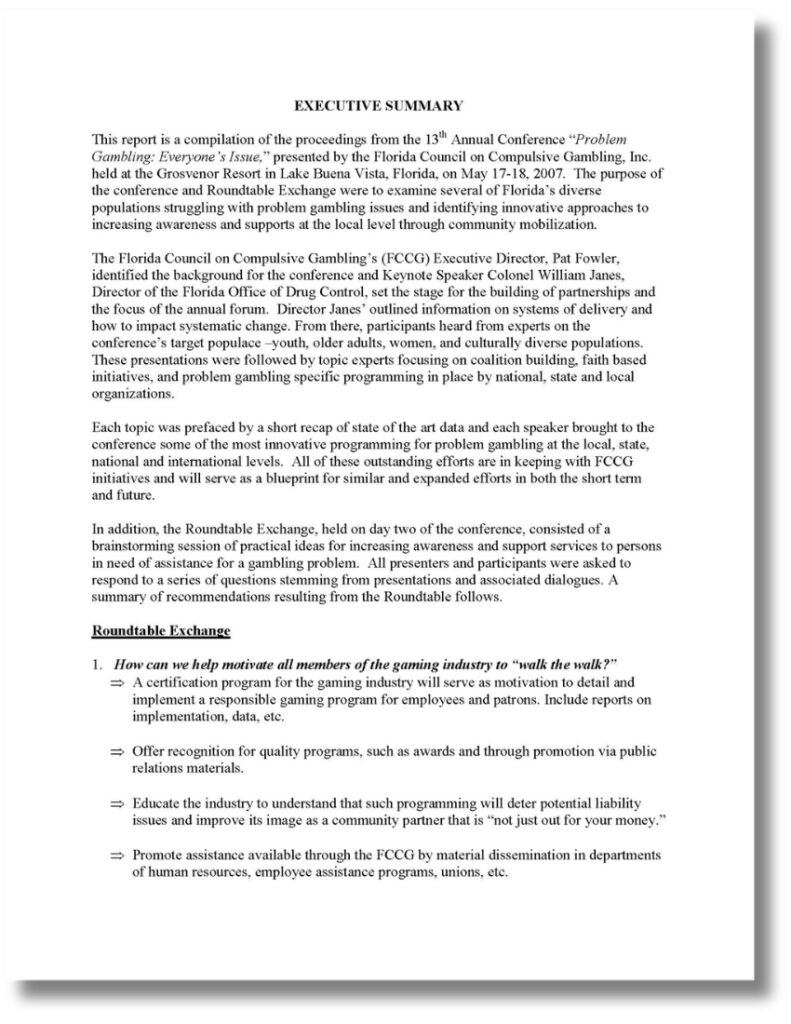
## Problem Gambling: Everyone’s Issue
*Proceedings Report, Florida Council on Compulsive Gambling, 2007.*
This report is a compilation of the proceedings from the 13th Annual Conference “*Problem Gambling: Everyone’s Issue*,” presented by the Florida Council on Compulsive Gambling, Inc. held at the Grosvenor Resort in Lake Buena Vista, Florida, on May 17-18, 2007.
[**Download**](https://gamblinghelp.org/wp-content/uploads/2023/05/Problem_Gambling_Everyones_Issue.pdf)
## Gambling among Florida Middle and High School Students
*A report to the Florida Council on Compulsive Gambling, Inc. from Lieberman and Cuadrado, 2006.*
The analysis presented in this report is based upon a secondary analysis of data collected during the school year 2005, in a survey sponsored by the Florida Department of Children & Families (DCF).
[**Download**](https://gamblinghelp.org/wp-content/uploads/2023/05/Gambling_Among_Florida_Middle_and_High_School_Students.pdf)
## Gambling on Credit: Exploring the Link Between Compulsive Gambling and Access to Credit
*A proceedings document and report by the Florida Council on Compulsive Gambling, Inc., 2006.*
This report summarizes the findings and recommendations of a national Think Tank convened in May 2006 by the Florida Council on Compulsive Gambling (FCCG), with financial support from the Florida Lottery.
[**Download**](https://gamblinghelp.org/wp-content/uploads/2023/05/Gambling_on_Credit.pdf)
## Think Tank on Problem Gambling and Crime: Impacts and Solutions
*A Report to the Florida Council on Compulsive Gambling, Inc., University of Florida Fredric G. Levin College of Law, 2005*.
This report represents the proceedings of the first nationwide *Think Tank on Problem Gambling and Crime: Impacts and Solutions*, hosted by the Florida Council on Compulsive Gambling and the University of Florida Fredric G. Levin College of Law, and held in Orlando, Florida, from May 11th through 13th, 2005.
[**Download**](https://gamblinghelp.org/wp-content/uploads/2023/05/Think_Tank_on_Gambling_and_Crime.pdf)
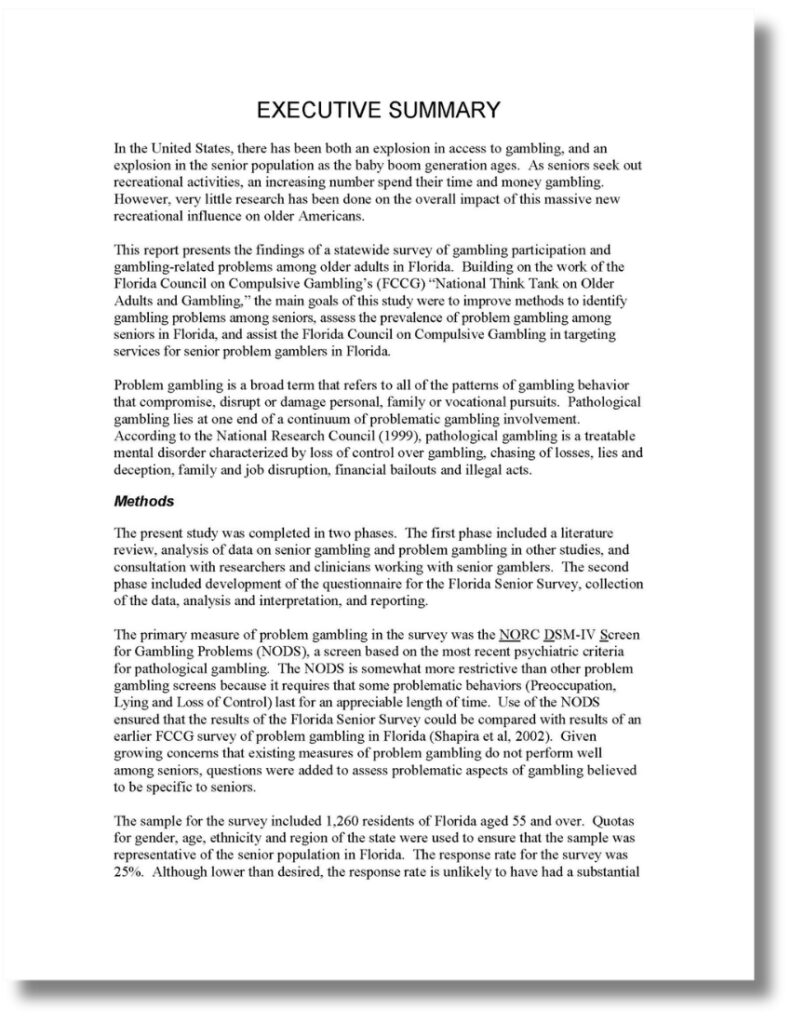
## Prevalence Among Seniors in Florida
*A Report to the Florida Council on Compulsive Gambling, Inc., Gemini Research, 2003.*
This report presents the findings of a statewide survey of gambling participation and gambling-related problems among older adults in Florida.
[**Download**](https://gamblinghelp.org/wp-content/uploads/2023/05/Gambling_and_Problem_Gambling_Prevalence_Among_Seniors_in_Florida.pdf)
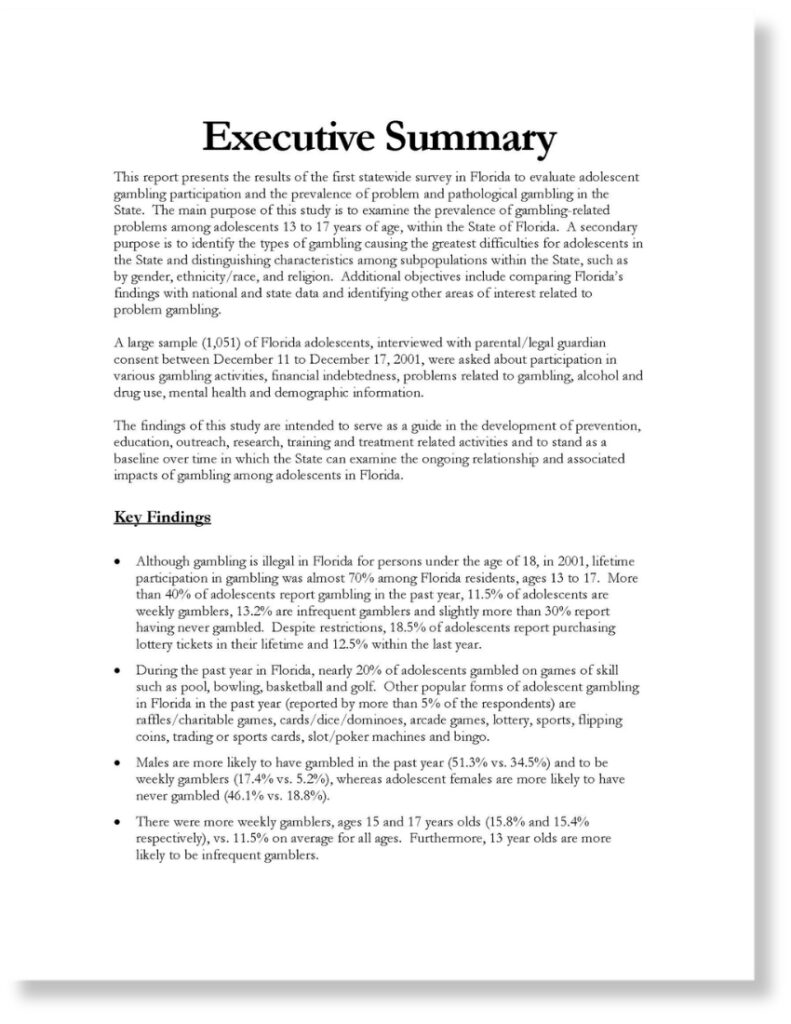
## Prevalence Among Adolescents in Florida
*A Report to the Florida Council on Compulsive Gambling, Inc., University of Florida, 2002.*
This report presents the results of the first statewide survey in Florida to evaluate adolescent gambling participation and the prevalence of problem and pathological gambling in the State.
[**Download**](https://gamblinghelp.org/wp-content/uploads/2023/05/Gambling_and_Problem_Gambling_Prevalence_Among_Adolescents_in_Florida.pdf)
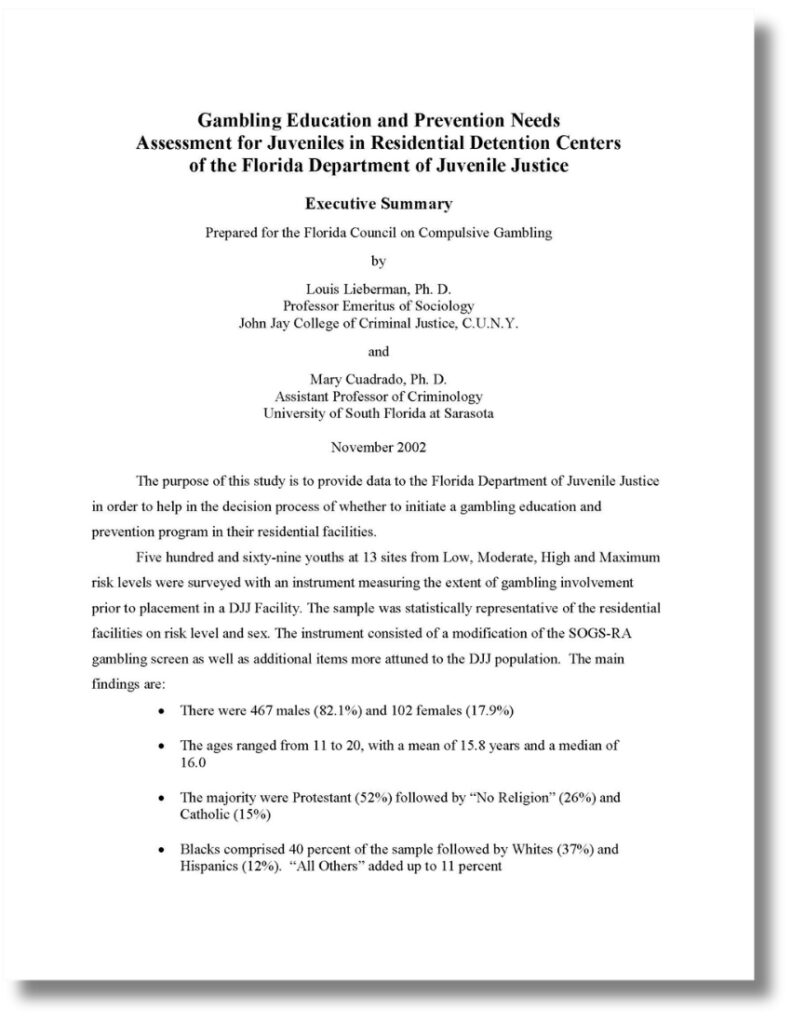
## Gambling Education and Prevention Needs Assessment for Juveniles in Residential Detention Centers
*Department of Juvenile Justice, A Report to the Florida Council on Compulsive Gambling from Lieberman and Cuadrado, 2002.*
The purpose of this study is to provide data to the Florida Department of Juvenile Justice in order to help in the decision process of whether to initiate a gambling education and prevention program in their residential facilities.
[**Download**](https://gamblinghelp.org/wp-content/uploads/2023/05/Gambling_Education_and_Prevention_Needs_Assessment_for_Juveniles_in_Residential_Detention_Center_of_the_Florida_Department_of_Juvenile_Justice.pdf)
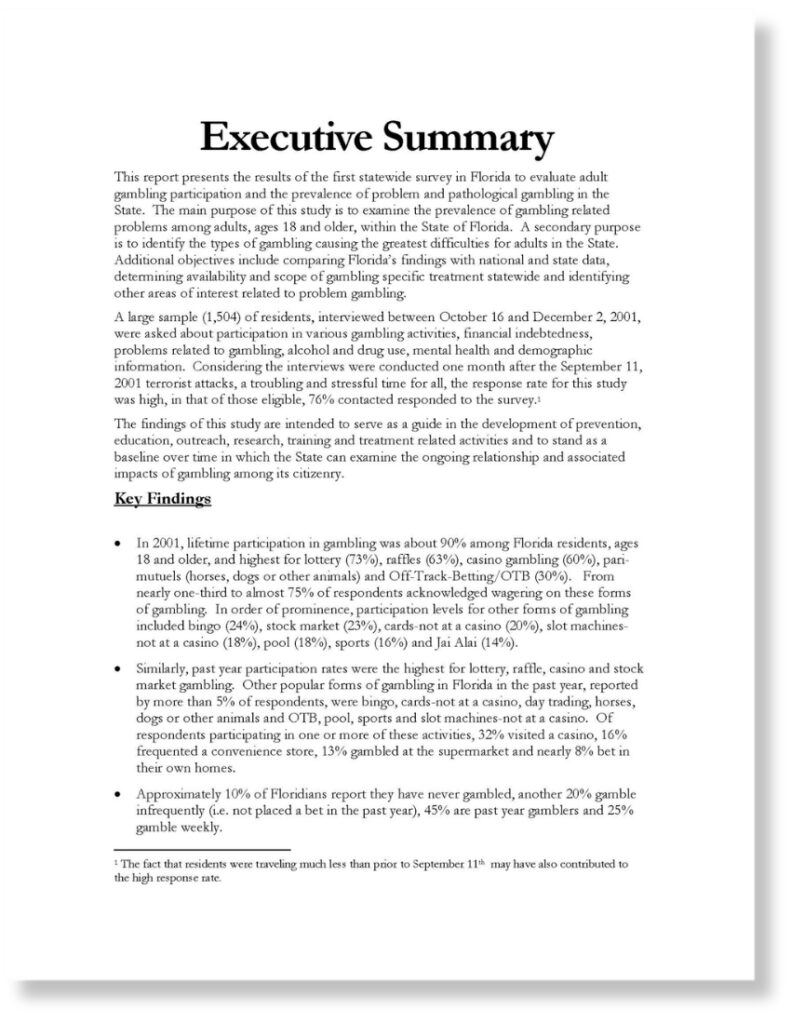
## Prevalence Among Adults in Florida
*A Report to the Florida Council on Compulsive Gambling, Inc., University of Florida, 2002.*
This report presents the results of the first statewide survey in Florida to evaluate adult gambling participation and the prevalence of problem and pathological gambling in the State.
[**Download**](https://gamblinghelp.org/wp-content/uploads/2023/05/Gambling_and_Problem_Gambling_Prevalence_Among_Adults_in_Florida.pdf)
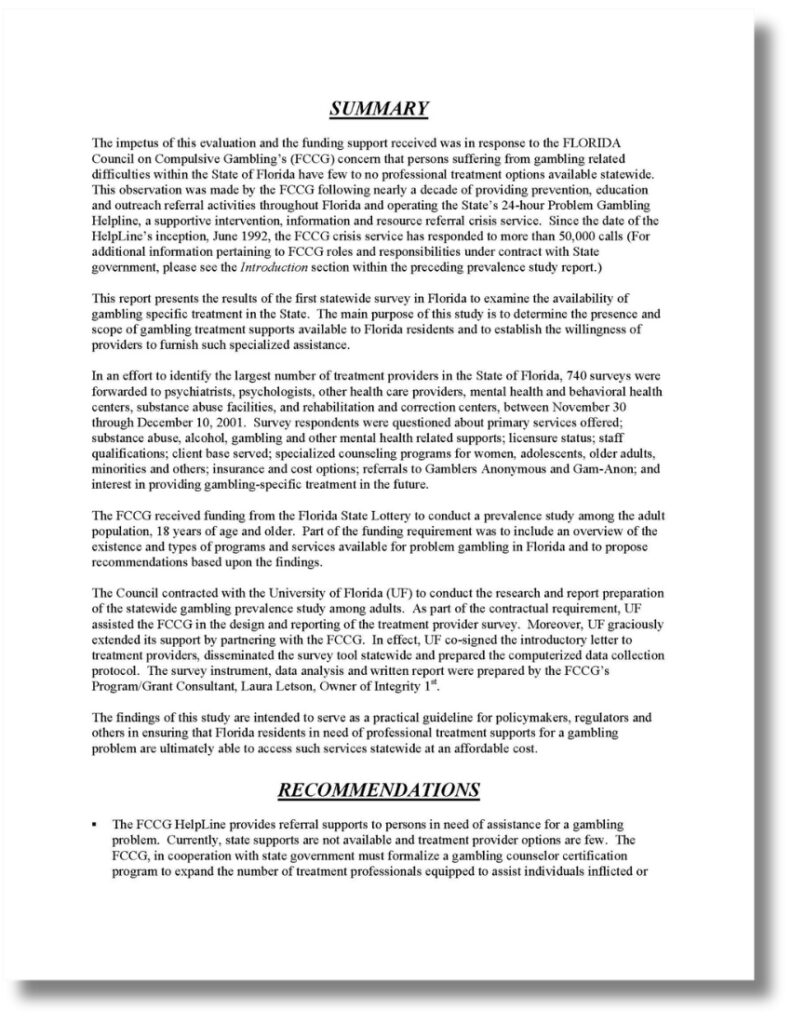
## Gambling Specific Treatment in Florida
*A Review by the Florida Council on Compulsive Gambling and the University of Florida, 2002*.
The impetus of this evaluation and the funding support received was in response to the Florida Council on Compulsive Gambling’s (FCCG) concern that persons suffering from gambling related difficulties within the State of Florida have few to no professional treatment options available statewide.
[**Download**](https://gamblinghelp.org/wp-content/uploads/2023/05/Gambling_Specific_Treatment_in_Florida.pdf)
## Think Tank on Older Adults and Gambling
*A Proceedings Document and Report by the Florida Council on Compulsive Gambling, Inc., 2002.*
This report presents the findings of the first nationwide “*Think Tank on Older Adults and Gambling*,” a forum organized and hosted by the Florida Council on Compulsive Gambling, Inc., in cooperation with the University of Florida and University of Miami.
[**Download**](https://gamblinghelp.org/wp-content/uploads/2023/05/Think_Tank_on_Older_Adults_and_Gambling.pdf)
---
### [The Importance of Gambling Addiction Certified Counselors](https://gamblinghelp.org/the-importance-of-gambling-addiction-certified-counselors/)
**Published:** November 4, 2024
**Author:** The Florida Council on Compulsive Gambling, Inc.
**Content:**
## Only Certified Counselors Understand the Dimensions of Gambling Disorder
Gambling addiction proves to be especially illusive and resilient due to its sprawling dimensions and progressive nature. True problem gambling experts and certified treatment providers possess specialized knowledge and extensive training about the unique characteristics of gambling disorder. Without understanding the underpinnings of what drives the suffering individual to choose gambling over financial stability, career, legal standing, and even family, a counselor has no hope of curtailing the downward spiral. Likewise, only certified counselors can attest to the impacts of gambling addiction and the treatment process, whether speaking with the media or educating the community.
***Did You Know?*** *The Florida Council on Compulsive Gambling (FCCG) only refers help seekers (problem gamblers and other affected individuals) to licensed, mental health treatment providers who are Certified in Gambling Addiction. Acceptable certifications include either Florida’s Certified Gambling Addiction Counselor credential, (CGAC), or the International Problem Gambling and Gaming Certification Organization’s (IPGGC; formerly International Gambling Counseling Certification Board, IGCCB) ICGC-II.*
- **Invisible Symptoms Make Problem Gambling the Hidden Addiction**
Unlike substance addictions, gambling disorder lacks visible physical symptoms, making it easier to conceal. There are no “dice eyes”, no “roulette breath”, and no “card marks on the arms.” Problem gambling is known as the hidden addiction for this reason, which delays detection and intervention as the problem worsens over time. While the individual may seek treatment for resulting mental health impacts or relationship problems, a certified counselor will know to screen for problem gambling as a root cause.
- **Financial Devastation, Relationship Difficulties, Legal Problems, and Mental Health Issues**
While many mental health issues can impact finances, gambling disorder has the potential for rapid and catastrophic financial consequences. The ability to quickly accumulate massive debts through gambling can lead to severe relationship problems, illegal activities to fund the addiction, and mental health impacts like anxiety, depression, and even suicidal ideation and attempts. A certified counselor understands how deeply the impacts of gambling addiction permeate into the lives of the gambler and his or her loved ones.
- **Cognitive Distortions Keep the Gambler Going Despite Accelerating Negative Impacts**
Gambling disorder is characterized by persistent cognitive distortions that set it apart from other addictions. Unlike substance use disorders, where individuals generally recognize the harmful nature of their behavior, those with gambling disorder often maintain the false belief that continued gambling will eventually lead to success. This “chasing losses” mentality can drive individuals deeper into addiction and financial ruin.
- **Neurobiological Similarities to Substance Abuse, Without the Substance**
Research has shown that gambling activates the brain’s reward system in ways similar to addictive drugs. However, the absence of a physical substance introduces unique challenges in treatment, requiring specialized therapeutic approaches that only a certified counselor can provide. With gambling addiction, money is the drug that fuels the addiction.
- **Comorbid Conditions Complicate the Treatment Picture**
Gambling disorder frequently co-occurs with other mental health conditions, such as depression, anxiety, and substance use disorders. This comorbidity necessitates an integrated treatment approach that addresses both the gambling addiction and any underlying mental health issues simultaneously.
- **Recognizing the Need for Financial Rehabilitation in Recovery**
Unlike many other mental health treatments, recovery from gambling disorder often necessitates extensive financial rehabilitation. This may include debt management, financial counseling, and rebuilding trust with family members affected by the gambling behavior.
- **Effective Treatment Requires Specialized Therapeutic Approaches** Effective treatment for gambling disorder requires the specific expertise of therapists certified for gambling addiction. Specialized treatment focuses on developing robust relapse prevention strategies that address the unique triggers and thought patterns associated with gambling urges.
- **Managing the High Risk of Relapse** The potential for relapse in gambling disorder is high, given the widespread availability of gambling opportunities, including online gambling, mobile betting apps and associated advertising. Gambling is deeply ingrained in social and cultural contexts, making it challenging for individuals to avoid triggers and maintain recovery. Specialized treatment must address these social factors and provide strategies for navigating high-risk situations.

## Working to Strengthen the Problem Gambling Treatment Picture in Florida with Certified Counselors
Another significant role of the FCCG is the continued training of treatment providers, mental health workers, clinical social workers and marriage and family therapists throughout the state. This has been accomplished through multiple webinars, online training modules and outreach activities to promote the FCCG’s programs and services to diverse audiences throughout the state of Florida.
As background, to better aid Floridians in need of assistance for a gambling problem, the FCCG joined forces with the Florida Certification Board in 2007 to establish a credential for compulsive gambling counselors here in the state of Florida. The Advisory Committee convened for the first time that year, and subsequently completed a Role Delineation Study, as well as a validation survey as means of determining the core competencies and requirements for field professionals. The Florida Certification Board’s process for a state credential for gambling addiction certification was completed in 2008.
Over a decade later, the Certified Gambling Addiction Counselor Credential remains an available certification for mental health providers seeking to provide problem gambling counseling services in the state of Florida.
## FCCG is an Approved Education Provider with the Florida Certification Board
The FCCG currently provides the required 60-hour certification training for licensed, mental health professionals (state and nationally approved) and furnishes fourteen (14) additional continuing education online modules for mental health and addiction professionals (credentialed by the Florida Board of Clinical Social Work, Marriage & Family Therapy and Mental Health Counseling and The Florida Certification Board, respectively), psychologists (credentialed by the Florida Board of Psychology), and medical doctors (credentialed by the Florida Board of Medicine).
In addition, the FCCG assists treatment professionals in identifying appropriate professional oversight to meet the supervisory requirements with a Board-Approved Clinical Consultant (BACC) for obtaining the Certified Compulsive Gambling Counselor credential by The Florida Certification Board.
## About Florida’s Certified Gambling Addiction Counselor (CGAC) Certification
The CGAC credential is for people who provide services to individuals and family members of individuals with problematic or pathological gambling conditions. The CGAC designates competency in the domains of Addiction Theories; Foundations of Problem and Pathological Gambling; Gambling Counseling Practice and Special Issues in Gambling; and Professional Responsibilities. Applicants must hold an active and in good standing license issued by the State of Florida under chapter 397, Florida Statutes, OR one of the following FCB credentials: MCAP or CAP.
**Required Education & Training:**
85 total clock hours of training divided as follows:
1. Addiction Theories: 10 hours
2. Basic Knowledge of Problems and Pathological Gambling: 16 hours
3. Gambling Counseling Practice: 20 hours
4. Specific Issues in Gambling: 24 hours
5. Professional Issues: 15 hours
OR If you have an active International Certified Gambling Counselor II, this will meet the 85-hour training requirement. Eligible training must be taken from an FCB Approved Education Provider within the last 10 years (no time limit on college coursework taken as part of a degree program). FCB Eligible Training Guidelines and Providers are listed online on [**FCB’s website**](http://www.flcertificationboard.org/) under Education & Training.
**Required Direct Contact Hours:**
2,000 hours (approximately 1 year of full-time work) of gambling-related counseling experience. One year of full-time employment at 40-hours per week, equals 2,080 hours. Work experience must be directly related to the core competencies of the credential and must have occurred within the last 5 years.
**Required Supervision Hours:**
50 hours of on-the-job supervision of the applicant’s performance of gambling-related counseling services. Of the 50 hours, a minimum of 5 hours of supervision must be provided and documented in each of the following categories. The remaining 25 hours may be allocated across any category.
1. Addiction Theories
2. Basic Knowledge of Problems and Pathological Gambling
3. Gambling Counseling Practices
4. Specific Issues in Gambling
5. Professional Issues
For certification purposes, the FCB benchmarks reasonable and achievable supervision at the rate of 3 hours per week/156 hours per year. Eligible clinical supervision can be individual, one-on-one supervision and/or observation of skills OR group supervision/case staffing’s. At least 50% of the hours of clinical supervision must be individual, one-on-one supervision and/or observation of skills. No more than 50% of the required hours of supervision may be in a group setting.
[**Visit Florida Certification Board Website to Learn More**](https://flcertificationboard.org/certifications/certified-gambling-addiction-counselor/)
## Minimum Requirements for 888-ADMIT-IT HELPLINE Professional Counseling Services Referrals
Interested in becoming a networked treatment provider for the 888-ADMIT-IT HelpLine? Read below to learn about the minimum requirements to be considered. To learn more about Provider Minimum Requirements or request a Provider Application, **[contact the 888-ADMIT-IT HelpLine.](https://gamblinghelp.org/#contact-the-helpline)**
### **888-ADMIT-IT HelpLine Referral’s – Networked Treatment Providers**
**Minimum Requirements:**
*Gambling treatment counselors seeking to receive referrals for problem gambling treatment services from callers to the Florida Council on Compulsive Gambling’s (FCCG’s) **888-ADMIT-IT** HelpLine, shall meet the following minimum requirements:
1. **Be licensed by the State of Florida** as a Licensed Mental Health Counselor, Licensed Marriage & Family Therapist, Licensed Clinical Social Worker, Psychologist, Psychiatrist and/or have a Certification in Addictions from the Florida Certification Board **AND** hold a valid \***International Certified Gambling Counselor-II (\*\*ICGC-II)** certification **OR \*\*Certified Gambling Addiction Counselor** certification through the Florida Certification Board.
2. **Offer an \*approved Sliding Fee Scale** for **all referrals received through the FCCG HelpLine.** Sliding scale fee schedules and associated policy should be submitted to the FCCG for approval at the time of provider application to become a HelpLine referral.
\*Sliding Fee Scales may be developed based upon the income of all HelpLine referred potential clients along with the predetermined minimum and maximum provider fees and in accordance with the U.S. Federal Poverty Guidelines, which are a simplification of the poverty thresholds used for administrative purposes in determining financial eligibility for certain federal programs. For additional information, please visit: <https://aspe.hhs.gov/poverty-guidelines>.
---
### [Certification Training & CEU Modules for Treatment Providers](https://gamblinghelp.org/treatmentproviders/)
**Published:** May 2, 2023
**Author:** The Florida Council on Compulsive Gambling, Inc.
**Content:**
An important role of the FCCG is the continued training of treatment providers, mental health workers, clinical social workers and marriage and family therapists throughout the state. This has been accomplished through multiple webinars, online training modules and outreach activities conducted to promote the FCCG’s programs and services to diverse audiences throughout the state of Florida.

**As background, to better aid Floridians in need of assistance for a gambling problem, the FCCG joined forces with the Florida Certification Board in 2007 to establish a credential package for compulsive gambling counselors in the state of Florida.** The Advisory Committee convened for the first time that year, and subsequently completed a Role Delineation Study, as well as a validation survey as means of determining the core competencies and requirements for field professionals. The Florida Certification Board’s process for state credentials for gambling addiction certification was completed in 2008. Over a decade later, the **Certified Gambling Addiction Counselor (CGAC)** Credential remains an available certification for mental health providers seeking to provide problem gambling counseling services in Florida.
**The FCCG only refers help seekers (problem gamblers and other affected individuals) to licensed, mental health treatment providers who are Certified in Gambling Addiction.** Acceptable certifications include either Florida’s Certified Gambling Addiction Counselor credential, (CGAC), or the International Problem Gambling and Gaming Certification Organization’s (IPGGC; formerly International Gambling Counseling Certification Board, IGCCB) ICGC-II. **[Learn more about certification.](https://gamblinghelp.org/the-importance-of-gambling-addiction-certified-counselors/)**
**The FCCG currently provides the required 60-hour certification training for licensed mental health professionals (state and nationally approved) and furnishes fourteen (14) additional free continuing education online modules (see details below)** for mental health and addiction professionals (credentialed by the Florida Board of Clinical Social Work, Marriage & Family Therapy and Mental Health Counseling and The Florida Certification Board, respectively), psychologists (credentialed by the Florida Board of Psychology), and medical doctors (credentialed by the Florida Board of Medicine). In addition, the FCCG assists treatment professionals in securing professional oversight to meet the supervisory requirements with a Board-Approved Clinical Consultant (BACC) for obtaining the Certified Compulsive Gambling Counselor credential by The Florida Certification Board. Want to request enrollment in one or more of these modules? **[Contact the 888-ADMIT-IT HelpLine today!](https://gamblinghelp.org/#contact-the-helpline)**
[**Contact the HelpLine**](https://gamblinghelp.org/#contact-the-helpline)
## FCCG’s Online Clinical Training & Educational Modules
1. **60-Hour Certification Training –** This module contains the foundational educational components that a mental health treatment provider must obtain to begin the process towards state or national certification to treat gambling addiction. **[Please visit the Florida Certification Board’s website](http://flcertificationboard.org/certifications/certified-gambling-addiction-counselor-cgac/)** for more information on the state’s certification.
2. **Best Practices in Managing Suicide-Risk in Patients with Gambling Disorder –** This module discusses the prevalence of suicide risk often encountered by mental health providers in working with problem gambling populations. Specific assessment tools and prevention strategies are discussed by the presenter, along with therapeutic suggestions and interventions to use during treatment.
3. **Bridging the Gap between Substance use Disorders and Gambling Addiction –** This is a training module for mental health professionals to learn more about co-morbidity and effective treatment modalities for clients dually addicted with drugs and/or alcohol and gambling disorder.
4. **Differentiating Recreational Gambling from Addiction –** This training module explains the progression of gambling from a form of casual entertainment all the way to a clinically identifiable pattern of addictive behavior. The presenter provides viewers with examples of tools for assessment and problem gambling behavior identification for use in a variety of clinical settings.
5. **Gambling Disorder: Assessment, Awareness & Application in the Criminal Justice System –** This is a training course about the link between gambling addiction and crime, geared towards treatment professionals in legal environments (i.e. jails, courts, etc.) to learn how to assess, diagnose, and refer clients that may exhibit signs of a gambling disorder.
6. **Mindfulness and Problem Gambling –** This training module explores the use of clinical mindfulness skills in effectively working with unique issues encountered in problem gambling specific treatment. Throughout this course participants are guided through a sequence of content, including theory, discussion from content experts in mindfulness research, and a guided meditation experience.
7. **Technological Impacts on Gambling ****–****** A training module for mental health and addiction service providers to learn how technology has impacted the problem gambling field (i.e. ease in access of gambling opportunities due to mobile phones, laptops, etc.) and application of resulting appropriate therapeutic strategies.
8. **Understanding Youth Gambling: The Good, the Bad, the Ugly** **–** The landscape of gambling continues to dramatically change across the U.S. With increased social acceptability, technological advances, legislative changes, and the possibility for increased sports wagering there remains a concern about young people’s gambling involvement. Traditionally viewed as an adult activity, adolescents continue to be engaged in multiple forms of regulated and unregulated forms of gambling. Is this a problem? In this training, Dr. Derevensky will provide a brief historical perspective of our knowledge of youth gambling, the risk factors associated with adolescent problem gambling, prevention strategies, and address current issues of concern.
9. **Loot Box RNG: A Case Exploration of Video Game Gambling –** This training module is designed to aid gambling addiction counselors and mental health professionals in understanding the similarities in the play experience now often found throughout online compatible video games and RNG-based gambling. The session will provide a case example, along with an explanation of concepts which are critical for explaining the experience of both gambling and video games, and will highlight elements of each, which increase the risk for an addiction-like level of engagement from the player.
10. **Understanding Military Culture and Treatment for Disordered Gambling in the Military and with Veterans –** The National Council on Problem Gambling estimates that as many as 56,000 active duty members of the Armed Forces meet criteria for gambling disorder, and studies have shown that veterans have elevated rates of gambling problems–at least twice the rate of the general adult population. This training module will assist mental health professionals understand the uniqueness of military culture to assist in treatment of active duty military, veterans or family members with problem or disordered gambling. Rates of disordered gambling are much higher for veterans and active duty military.
11. **Teaching Optimism in a Reality Based World –** Rational thought and reality testing are powerful tools of recovery for intervening on the fantasy thinking that happens with gambling disorder. Positive thinking and optimism also have a significant role in the recovery process. In this training module, participants will learn about the psychological and physiological benefits of optimism, Cognitive Behavioral Therapy (CBT) skills to improve optimistic thinking, and to integrate realism and healthy optimism interventions into treatment goals.
12. **Ethics and Finances: When to Return Control of Money to the Gambler –** Research and professional training are replete with clinical practice and gamblers relinquishing control of finances. Less attention has been given to when it is clinically appropriate for a family to return control of finances to gamblers, which this training will discuss. Many gamblers have no apparent financial management problems prior to advancement of their addiction, therefore return of financial control should be considered during recovery. There are several factors to consider and checkpoints in treatment that inform this important component of recovery. Gamblers resuming control of finances should be guided by ongoing DSM 5 diagnosis and assessment and progress in family counseling.
13. **The Relationship Between Trauma and Disordered Gambling –** This presentation describes the types of trauma and delineates the ways traumatic experience may lead to the addiction of disordered gambling. The presenter describes both adult onset trauma and developmental trauma and the relationship to problem gambling with information drawn from recent and historical studies in Australia, the United Kingdom, and United States. He further discusses treatment for trauma as integral to recovery from disordered gambling and to avoid replacement addiction. The presentation includes anecdotal descriptions of work with clients and discussion about challenges for the future.
14. **The Soul Behind the High: Finding Beauty Even in Brokenness of Grief and Loss –** Grief and loss affect every human being, including mental health professionals. Many persons experiencing problem gambling and gambling disorders also have experiences of loss, including complicated grief experiences which are often difficult to heal and this training module will discuss. Problem gamblers frequently are escaping grief and loss experiences by escaping through gambling. There is a “soul behind the high of gambling,” and mental health professionals can use this training to help gamblers and loved ones to “find the beauty, even in their brokenness of grief and loss,” as they heal and manage their gambling recovery plans.
15. **Treatment of Gambling Disorder & Common Comorbidities –** Gambling disorder is frequently associated with other co-occurring mental and physical health problems. This training module will discuss these common comorbidities, how the clinical and cognitive presentation of gambling disorder differs based on comorbidities, and treatment approaches to gambling and these common problems.
---
### [Gambling and Problem Gambling in Florida](https://gamblinghelp.org/gambling-and-problem-gambling-in-florida/)
**Published:** December 4, 2024
**Author:** The Florida Council on Compulsive Gambling, Inc.
**Content:**
## Gambling & Problem Gambling in the Sunshine State
Gambling opportunities in Florida have rapidly increased throughout the years, as has the population. **Florida currently ranks as one of the top three states in the country for both population and for consumer spending on gambling activities.** Additionally, after rapid population increases, recent U.S. Census Bureau data reflects Florida as the nation’s fastest-growing state in the Country.1 There continues to be a documented need for increased problem gambling services and supports in the State of Florida.
## Florida’s Gambling Landscape
**Florida has a long history of licensed, regulated gambling. In addition to pari-mutuel gambling, slot machine gambling is licensed in Broward and Miami-Dade counties at eligible pari-mutuel facilities.** The Florida Gaming Control Commission (FGCC) is the regulatory body that is responsible for exercising all governing and executive powers of the state with respect to gambling, including pari-mutuel wagering, cardrooms, slot machine facilities, oversight of gaming compacts, and other forms of gambling authorized by the State Constitution or law, excluding the state lottery. The Commission regulates certain legal forms of gambling in the State of Florida and enforces the state’s criminal gambling prohibitions. FGCC’s Division of Pari-mutuel Wagering regulates pari-mutuel racing and games, cardrooms, and slot machine gaming, and oversees the compact between the State of Florida and the Seminole Tribe of Florida. FGCC’s Division of Law Enforcement targets illegal gambling activities occurring throughout the state.
**In Florida, a variety of gambling activities are currently regulated and approved. These include:**
- Pari-mutuel wagering on live and intertrack horse and jai-alai activities at licensed racetracks and jai-alai frontons.
- Casino gambling, including slots and multiple table games, on certain Indian tribal lands.
- Lottery games offered by the state.
- Poker and dominoes played for money, but only in a licensed cardroom.
- Penny-ante games including poker, pinochle, bridge, rummy, canasta, hearts, dominoes, and mahjong may be played outside a cardroom if the winnings of any player in a single game do not exceed $10 in value.
- Slot machine gaming at one of the eight licensed pari-mutuel facilities located in Miami-Dade or Broward counties.
- Bingo, sweepstakes, and drawings for chance, if they comply with state law.
- Online sports wagering.

## Recent Developments Related to Gambling in Florida
- Florida Amendment 3, the Voter Approval of Casino Gambling Initiative, was on the ballot in Florida as an initiated constitutional amendment on November 6, 2018. It was approved. **This amendment confirms that Florida voters shall have the exclusive right to decide whether to authorize casino gambling by requiring that in order for casino gambling to be authorized under Florida law, it must be approved by Florida voters pursuant to Article XI, Section 3 of the Florida Constitution.** Under the measure, card games, casino games, and slot machines are considered casino gambling. Under the measure, pari-mutuel wagering on horse racing, dog racing, or jai alai exhibitions are not considered to be casino gambling. The measure did not have any impact on the ability of Native American tribes to enter into compacts with the state concerning casino gambling on tribal lands.
- **Under Amendment 13, enacted January 1, 2021, it is now prohibited to offer live dog racing or to bet on any live dog racing occurring in the State of Florida.** Pari-mutuel facilities will still have the option to accept wagers on simulcast races conducted elsewhere. The measure also stipulates that pari-mutuel facilities that no longer offer greyhound racing will still be eligible to offer other gaming activities authorized by the law.
- **In May 2021, legislation authorizing land-based and mobile sports wagering was signed into law.** The legislation ratified a new tribal-state gaming compact and created a new framework for legalizing sports wagering subject to operation by the Seminole Tribe of Florida. In addition, the House and Senate finalized their approval of a 50-page bill making several reforms to Florida gambling laws, including allowing 24-hour gaming at commercial facilities and permitting non-thoroughbred racetracks and jai alai frontons to continue offering slot machines or card games without hosting live racing or jai alai games. The 30-year historic compact also allowed for the addition of craps and roulette and the building of more tribal casinos.
- **In March, 2022, Florida’s commercial casino gaming industry entered a new regulatory era when the newly established Florida Gaming Control Commission held its first official meeting.** The independent agency was created through legislation alongside the new Seminole compact in 2021. Previously, Florida’s commercial racinos were overseen by a division within the state’s Department of Business and Professional Regulation.
- The State of Florida has just 16 total casinos – eight commercial casinos and eight tribal casinos. The economic impact from casinos in Florida was **$7.55 billion**. That ranked The Sunshine State fourth in the US and led to **$1.56 billion of tax impact** in 2023.
- **On January 12, 2023, the Seminole Tribe announced that they plan to build a new hotel-casino northwest of Lake Okeechobee at their current Seminole Brighton Casino location.** The complex will include the first hotel built on the Brighton Seminole Reservation. It will feature 100 guest rooms in a four-story building, totaling 72,000 square feet. The gaming area will include 640 slot machines and 18 tables for blackjack, craps, roulette, and other house-banked card games. Seminole Brighton Bay Hotel & Casino will replace the existing Seminole Casino Brighton and is set to open in early 2025.
- **In August of 2023, Miccosukee tribe officials broke ground on the site of a new casino, which opened its doors on February 14, 2024.** Located at the Miccosukee Service Plaza on I-75 and Snake Road in Ochopee, the new Miccosukee Little Trail Casino features an 8,500-square-foot entertainment space with 150 slot machines. As part of a multi-million- dollar expansion of the Miccosukee Tribe’s operations, the Everglades-themed facility also sells beer and wine.
- **Florida regulators also took several steps in 2023 toward allowing cashless gaming in the state’s commercial casino gaming facilities.** In September 2023, the Florida Gaming Control Commission hosted a formal workshop with stakeholders to map out specific regulations that would enable patrons at commercial gaming facilities in Miami-Dade and Broward counties to fund electronic gaming devices via digital wallets. Formal regulatory changes are expected to be adopted in the near future.
- **On November 7, 2023, online sports betting, which previously began in Florida for a brief period of time in 2021 until stopped by a Supreme Court ruling, was relaunched by the Seminole Tribe through its new Hard Rock Bet mobile sports betting app, making it the only legal online sportsbook in the state.** Everywhere else, customers have a wide variety of sports wagering options. The Seminole Compact contains exclusivity for the Tribe to offer statewide online sports betting through servers located on tribal lands. Wagers are permitted on any professional or collegiate sport available. There are no restrictions on in-state colleges. There are very few restrictions at all when it comes to Florida sports betting.
- **On December 5, 2023, Florida made history as it became the 37th – and largest – state to offer sports betting in casinos, with craps, roulette, and sports betting becoming available at three Seminole casinos in South Florida starting on December 7th. The games were live at all six of the Tribe’s casinos by December 11th.** Florida’s gaming compact, which allows for the expansion of casino games on tribal land, also legalizes online sports betting in Florida, to be controlled exclusively by the Tribe, with profit-sharing opportunities to be negotiated with pari-mutuels such as jai alai frontons, horse tracks, and cardrooms to participate in the new venture.
- **Finally, there were updates to the federal regulations on Indian gaming compacts in early 2024 that could affect Florida’s chances of adding online casinos.** The most notable change is that the Bureau of Indian Affairs will now approve gaming compacts, including online wagering outside of tribal lands. That means the federal government recognizes Florida’s hub-and-spoke model for online sports betting as an acceptable method for Class III gaming compacts. These changes went into effect on March 22, 2024.
[**Follow Our News & Outreach Timeline**](https://gamblinghelp.org/outreach/)
## Gambling Among Adults in Florida
- One way to measure the extent of gambling in Florida is to examine annual revenues generated by industry operations. However, it’s important to note that these figures do not account for money gambled through illegal, non-licensed gambling operators. During 2023, total statewide commercial casino gambling revenues from state-regulated racinos/casinos amounted to $690.883 million \[AGA, 2024\]. The Seminole Tribe of Florida, which does not have to publicize its gambling revenues, oversees 6 tribal casinos in the state and effective November 2023, operates Florida’s only legal online sportsbook, Hard Rock Bet. Hard Rock Bet’s monopoly on sports betting in Florida has helped the sportsbook become a Top 5 operator nationally. \[Play Fl, 2023\]. Hard Rock’s Florida handle and revenue numbers haven’t been made publicly available, but reports surfaced in March that Florida’s share of 2024 sports betting revenue since November 2023’s soft launch was already at $120 million. Under terms of its compact with the Seminoles, Florida receives 10% of Hard Rock Bet’s statewide revenue \[Play Fl, 2024\]. The revenues generated by the one remaining tribal facility, operated by the Miccosukee Tribe of Florida, were not available. Further, in 2023 the Florida Lottery ranked first in the country in overall ticket sales, with record sales of $9.8 billion \[Office of Program Policy Analysis and Government Accountability, 2024\].
- In 2018, the National Council on Problem Gambling (NCPG) commissioned IPSOS, one of the world’s largest public opinion companies, to conduct a U.S. national consumer study to examine gambling attitudes and gambling experiences across America (NGAGE), indicating America’s love of gambling. In 2021 a follow-up survey (NGAGE 2.0) indicated that 79% of adult Floridians reported gambling or placing a bet during the past year (compared to only 73% on a national level). Additionally, more adults in Florida were found to have gambled on every form of legalized gambling in the state than the national average. The average Florida gambler bets on 6 different activities, with almost half (49%) reporting wagering on 7 or more different gambling activities (however, please note that this survey was conducted prior to the expansion of regulated casino games and sports wagering). The lottery remains the most popular form of gambling in Florida, with almost three quarters of survey respondents (74%) reporting a past year lottery purchase. More than one-third of the sample reported spending money at a casino.
- The results of both studies revealed that Florida was among the 12 states with the highest levels of gambling reported nationwide. Past-year gambling by both males and females exceeded the national average in spite of the lack of legalized professional and collegiate sports wagering. Nevertheless, while professional and collegiate sports wagering were not readily available in the state at the time the survey was conducted, 33% of survey participants reported placing bets on traditional sports and 14% indicated wagering on fantasy sports, with a considerable number betting amongst friends, with online sportsbooks, at “brick and mortar” sportsbooks outside the state, and/or with local bookies/bookmakers. Of importance was that 57% of Floridians believed that if Florida was to legalize sports wagering, it would be important to establish dedicated revenues for increased public awareness about problem gambling.
![[IMAGE] Gambling & Problem Gambling in the Sunshine State](https://gamblinghelp.org/wp-content/uploads/2024/12/iStock-471617421.jpg "Gambling & Problem Gambling in the Sunshine State | The Florida Council on Compulsive Gambling, Inc")
## Disordered Gambling Among Adults in Florida
- Gambling Disorder is a psychiatric condition with a behavioral addiction diagnosis, introduced in the Diagnostic and Statistical Manual of Mental Disorders fifth edition (DSM-5), and recognized as a diagnosable and treatable illness by the American Psychiatric Association.
- **Per the latest prevalence study within the state of Florida,2 it is estimated that over 200,000 Floridians suffer from past-year gambling problems (i.e. problem and pathological3 gamblers) and 700,000 more are at risk of developing such difficulties, constituting 4.7% of the adult population ages 18 and older.** Florida’s at-risk population is also greater than the national at-risk prevalence rate. It is further important to note that these statistics do not account for youth, who are increasingly and deceptively exposed to gambling concepts, nor do they account for the estimated 1.5 million loved ones adversely affected (i.e. for each problem gambler, 8-10 others are adversely impacted). These results all point to the importance of the FCCG’s 888-ADMIT-IT HelpLine as an essential support for problem gamblers, their families, and the mental health community.
- **Expansion of gambling opportunities in Florida necessitates an associated increase in problem gambling programming, services, supports, and funding to lessen, to the extent possible, the resulting negative impacts caused by compulsive and addictive gambling and experienced by a percentage of the population.** We must acknowledge the increasing potential for persons in the State of Florida to develop compulsive and addictive gambling behaviors as a result of increasing participation in available gambling opportunities.
## Florida’s 24/7 Problem Gambling HelpLine – 888-ADMIT-IT
- **Annually, the FCCG receives thousands of contacts from gamblers and loved ones seeking help for problems due to excessive/problematic gambling.** The methods of contact to the HelpLine and the types of individuals seeking assistance vary widely. The 888-ADMIT-IT confidential and multilingual HelpLine is accessible via telephone call, text, live chat, email, or on social media and offers comprehensive support and resource referral services to anyone in the State of Florida experiencing the impacts of problem gambling. Contacts received regularly include persons who are unemployed, homeless, experiencing mental health issues, undergoing a divorce, facing financial devastation, and/or are struggling with legal consequences – among other impacts – resulting from their own or a loved one’s gambling problem. Yet, they all share one common theme – they are seeking immediate relief and support. Each person reaching out for help is seeking some type of information and/or guidance to help get their lives back on track, to understand how to cope with presenting impacts, and/or where to obtain professional counseling, self-help supports, or other critical services. The FCCG’s HelpLine Specialists receive ongoing training and routinely respond to these contacts, 24 hours per day, 7 days per week, 365 days per year.
- **Over the last 20 years, the number of Floridians seeking problem gambling help or information through the 888-ADMIT-IT HelpLine have exponentially increased by 583%.4** According to the National Association of Administers for Disordered Gambling Services (NAADGS) “2021 Survey of Publicly Funded Problem Gambling Services in the United States”, a report which presents the most comprehensive compilation of information on publicly funded problem gambling services in the United States, Florida ranked #1 in the Country for total number of help contacts received to the 888-ADMIT-IT Problem Gambling HelpLine (out of the 28 states reporting 2021 Helpline data).
[**Learn More: Florida’s Gambling Addiction Program**](https://gamblinghelp.org/florida-gambling-addiction-program/)
## About the Florida Council on Compulsive Gambling, Inc.
- **The Florida Council on Compulsive Gambling, Inc. (FCCG)** has a longstanding history in the state and three decades of experience in the gambling addiction field. The FCCG is a not-for-profit 501(c)(3) independent corporation whose primary mission is to:
- Increase public awareness regarding the risks and consequences associated with gambling;
- Provide referral assistance to problem gamblers, their families, and others adversely affected;
- Advocate for problem gambling programs, services, and other supports to address population-specific needs.
- **The FCCG operates the 24-hour confidential and multilingual Problem Gambling HelpLine, 888-ADMIT-IT, where problem gambling help, information, programs, literature, supportive intervention, referrals, resources, and a breadth of related supports are provided to Florida citizens in need of help with a gambling problem, 24 hours per day, 365 days of the year.**
- In addition to operating the HelpLine, the FCCG also provides expert training for gambling industry operators, mental health treatment providers, and others interested in reducing gambling-related harms. The FCCG’s outreach and awareness programs assure gamblers, their families, and others adversely impacted that the 888-ADMIT-IT HelpLine serves as the one-stop resource in Florida to obtain the help needed to recover from a gambling disorder and resume a healthier lifestyle.
- The FCCG maintains a neutral stance on the issue of legalized gambling while also seeking to assist citizens in need of problem gambling specific supports.
The FCCG is also a recipient of national recognition for its program development and achievements throughout the years in the problem gambling field. The FCCG has been awarded the **National Volunteer of the Decade Award (1990 – 2000)**, the **Herman Goldman Award (2002)**, the **Distinguished Program Award (2002 and 2008)**, and the **Msgr. Joseph Dunne Award (2013)**.
[**Learn More About FCCG**](https://gamblinghelp.org/aboutus/)
*\[1\] U.S. Census Bureau 2022 Population Report (Perry, Rogers, & Wilder 2022).
\[2\] Gambling and Problem Gambling Prevalence among Adults in Florida: A 2011 Replication, A Report for the Florida Council on Compulsive Gambling, Rotunda, R. and Schell, T., January 2012.
\[3\] Prior to 2013, disordered gambling was termed pathological gambling by the American Psychiatric Association and classified as an impulsive control disorder.
\[4\] 24-Hour 888-ADMIT-IT Problem Gambling HelpLine Annual Report (February 5, 2023).*
---
### [No Access](https://gamblinghelp.org/no-access/)
**Published:** June 17, 2024
**Author:** The Florida Council on Compulsive Gambling, Inc.
**Content:**
\[dlm\_no\_access\]
---
### [2024 Problem Gambling Awareness Month (PGAM) Supporters](https://gamblinghelp.org/pgam/2024-problem-gambling-awareness-month-pgam-supporters/)
**Published:** February 13, 2024
**Author:** The Florida Council on Compulsive Gambling, Inc.
**Content:**
## **Extending a “Thank You” to All Who Participated**
**Problem Gambling Awareness Month (PGAM)** is a grassroots campaign that depends on the participation of state Affiliates, organizational and individual members, state health agencies, gambling companies, recovery groups and a wide range of healthcare organizations and providers.
Thank you to this year’s PGAM partners for joining us in raising awareness! See the full list of 2024 PGAM supporters below. **Interested in becoming a partner for the next PGAM? Email us at [pgam@gamblinghelp.org](mailto:pgam@gamblinghelp.org?subject=Interested%20in%20Becoming%20a%20PGAM%20Partner&body=(Thank%20you%20for%20your%20interest%20in%20supporting%20Problem%20Gambling%20Awareness%20Month!%20Please%20tell%20us%20a%20little%20about%20your%20organization%20and%20be%20sure%20to%20include%20your%20full%20contact%20information.))**.
![[IMAGE] PGAM 2024 - Calder Casino - Back of House Display 4](https://gamblinghelp.org/wp-content/uploads/2024/03/PGAM-2024-Calder-Casino-Back-of-House-Display-4-scaled-1280x720.jpg "PGAM 2024 - Calder Casino - Back of House Display 4")![[IMAGE] PGAM 2024 - Calder Casino - Back of House Display 3](https://gamblinghelp.org/wp-content/uploads/2024/03/PGAM-2024-Calder-Casino-Back-of-House-Display-3-scaled-1280x720.jpg "PGAM 2024 - Calder Casino - Back of House Display 3")![[IMAGE] PGAM 2024 - Calder Casino - Back of House Display 5](https://gamblinghelp.org/wp-content/uploads/2024/03/PGAM-2024-Calder-Casino-Back-of-House-Display-5-scaled-1280x720.jpg "PGAM 2024 - Calder Casino - Back of House Display 5")![[IMAGE] Calder Casino - PGAM 2024 - Blue-Ribbon Responsible Gaming Pledge - Screenshot](https://gamblinghelp.org/wp-content/uploads/2024/03/Calder-Casino-PGAM-2024-Blue-Ribbon-Responsible-Gaming-Pledge-Screenshot-1169x658.jpg "Calder Casino - PGAM 2024 - Blue-Ribbon Responsible Gaming Pledge - Screenshot")![[IMAGE] PGAM 2024 - Calder Casino - Back of House Display 1](https://gamblinghelp.org/wp-content/uploads/2024/03/PGAM-2024-Calder-Casino-Back-of-House-Display-1-1200x675.jpg "PGAM 2024 - Calder Casino - Back of House Display 1")![[IMAGE] PGAM 2024 - Calder Casino - Back of House Display 2](https://gamblinghelp.org/wp-content/uploads/2024/03/PGAM-2024-Calder-Casino-Back-of-House-Display-2-1280x720.jpg "PGAM 2024 - Calder Casino - Back of House Display 2")
### **— GAMBLING INDUSTRY —**
Seminole Gaming
PlayersEdge
Seminole Casino Brighton
Seminole Casino Coconut Creek
Seminole Casino Hotel Immokalee
Seminole Classic Casino
Seminole Hard Rock Casino Hollywood
Seminole Hard Rock Casino Tampa
The Big Easy Casino
Calder Casino
The Casino @ Dania Beach
Casino Miami
Gulfstream Park Casino
Harrah’s Pompano Beach/Caesars Entertainment
Hialeah Park Casino
Magic City Casino
Resorts World Bimini
## *Calder Casino Creates Back-of-House Display for Team Members & Ramps Up Patron Engagement for PGAM*
*During PGAM 2024, Calder Casino set up a back-of-house display for team members to engage with PGAM messaging and materials! Throughout the month of March, Team Members were also given the chance enter Calder’s “Blue-Ribbon Responsible Gaming Pledge” picture raffle for a chance to win their share in gift card prizes.*
*In addition, Calder Casino set up a laptop and TV monitor in the back of the house hallway where Team Members will be able to play educational online games crafted by the FCCG to promote and heighten awareness for Team Members and Guests.*
*Calder Casino also worked to engage patrons with PGAM messaging by decorating its Players Club with PGAM décor, FCCG brochures, and fun giveaways. Calder also promoted PGAM on its social media platforms and in-house TVs.*
### **— MAYORAL PROCLAMATIONS —**
City of Altamonte Springs
City of Apalachicola
City of Arcadia
City of Bunnell
City of Cape Canaveral
City of Clearwater
City of Clewiston
City of Cocoa
City of Deltona
City of Edgewater
City of Fort Walton Beach
City of Freeport
City of Hallandale Beach
City of Hialeah
City of Kissimmee
City of Lakeland
City of Lake Mary
City of Longboat Key
City of Madeira Beach
City of Margate
City of Mary Esther
City of Ocala
City of Okeechobee
City of Orlando
City of Palm Beach Gardens
City of Palmetto
City of Panama City
City of Pompano Beach
City of Safety Harbor
City of Sebastian
City of Stuart
City of Valparaiso
City of West Melbourne
City of Wildwood
City of Wilton Manors
City of Winter Haven
Town of Bay Harbor Islands
Town of Beverly Beach
Town of Bronson
Town of Campbellton
Town of Davie
Town of Fort White
Town of Hilliard
Town of Juno Beach
Town of Sewall’s Point
Town of Wausau
### **— TREATMENT PROVIDERS —**
Alexandra Maples – Florida Mental Health Treatment Provider – Duval County – LCSW
Cortnie Baity, Ph.D. – Florida Mental Health Treatment Provider – Leon County – LMFT
Gulfshore Behavioral Health – Florida Mental Health Treatment Provider – Lee County – LMHC
Latisha Christensen – Florida Mental Health Treatment Provider – Hillsborough County – LCSW
[**View 2023 PGAM Supporters**](https://gamblinghelp.org/pgam/2023-problem-gambling-awareness-month-pgam-supporters/)
*This list was last updated on March 27, 2024.*
---
### [2022 Problem Gambling Awareness Month (PGAM) Supporters](https://gamblinghelp.org/pgam/2022-problem-gambling-awareness-month-pgam-supporters/)
**Published:** May 27, 2023
**Author:** The Florida Council on Compulsive Gambling, Inc.
**Content:**
## **Extending a “Thank You” to All Who Participated**
**Problem Gambling Awareness Month (PGAM)** is a grassroots campaign that depends on the participation of state Affiliates, organizational and individual members, state health agencies, gambling companies, recovery groups and a wide range of healthcare organizations and providers.
Thank you to this year’s PGAM partners for joining us in raising awareness! See the full list of 2022 PGAM supporters below. **Interested in becoming a partner for the next PGAM? Email us at [pgam@gamblinghelp.org](mailto:pgam@gamblinghelp.org?subject=Interested%20in%20Becoming%20a%20PGAM%20Partner&body=(Thank%20you%20for%20your%20interest%20in%20supporting%20Problem%20Gambling%20Awareness%20Month!%20Please%20tell%20us%20a%20little%20about%20your%20organization%20and%20be%20sure%20to%20include%20your%20full%20contact%20information.))**.
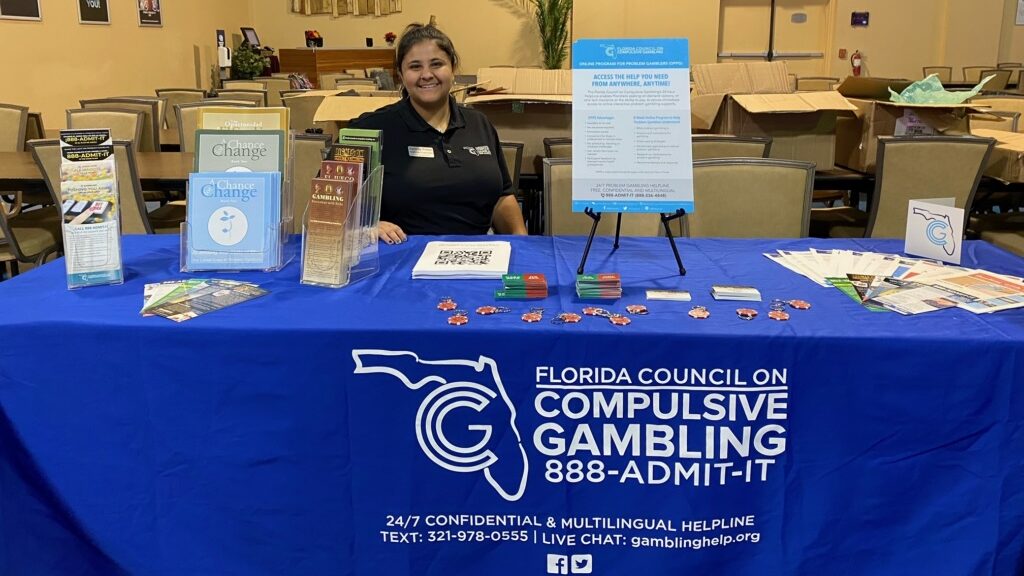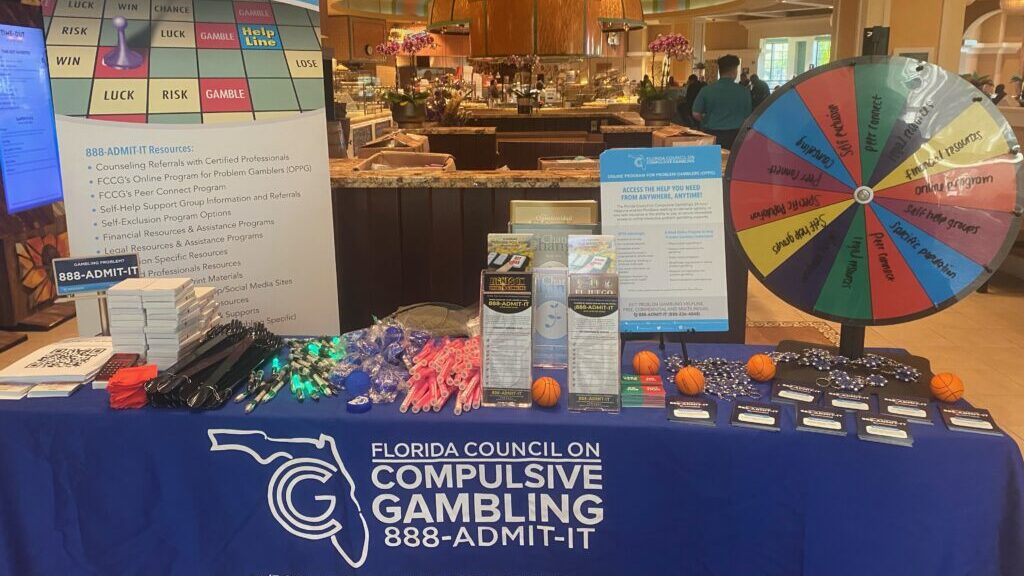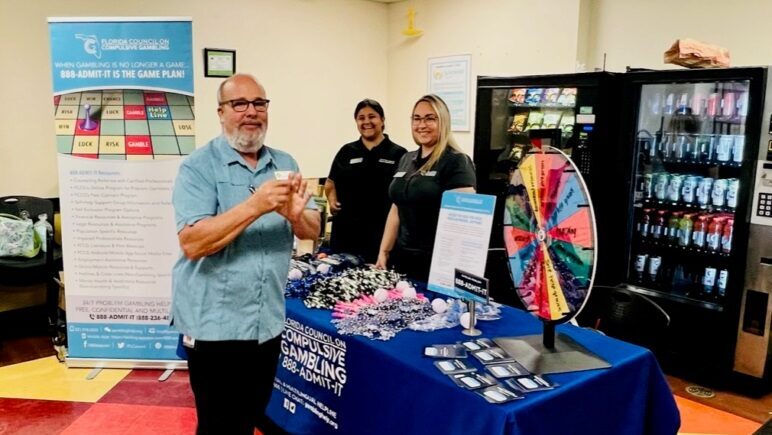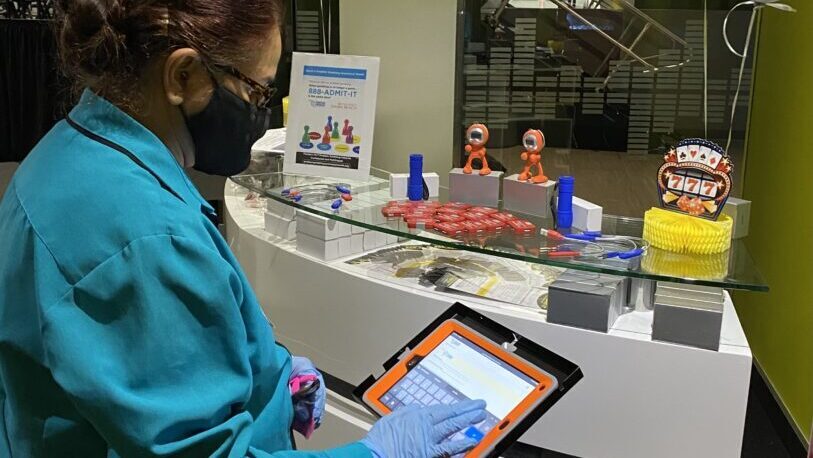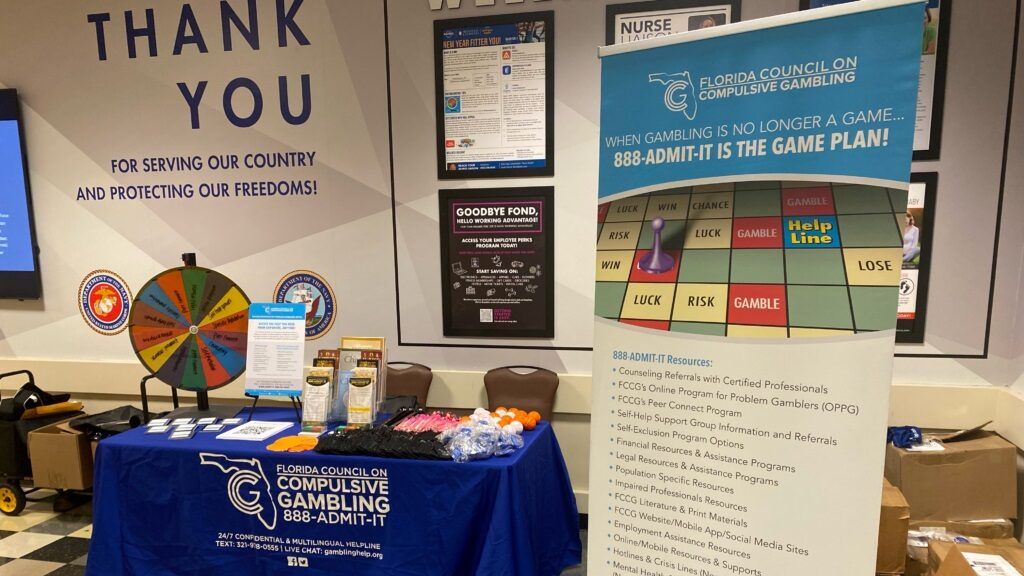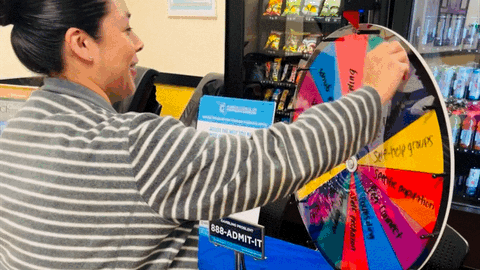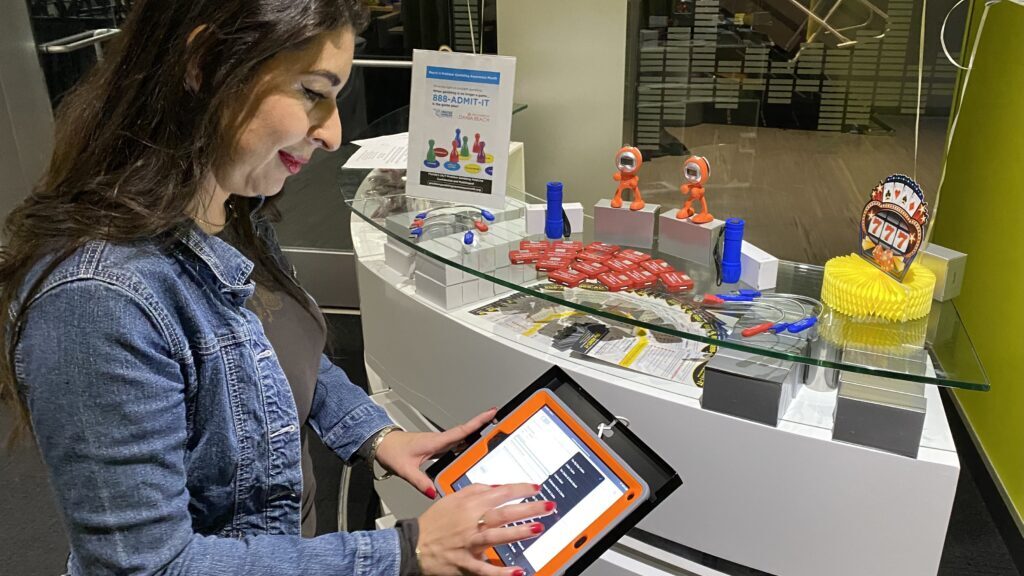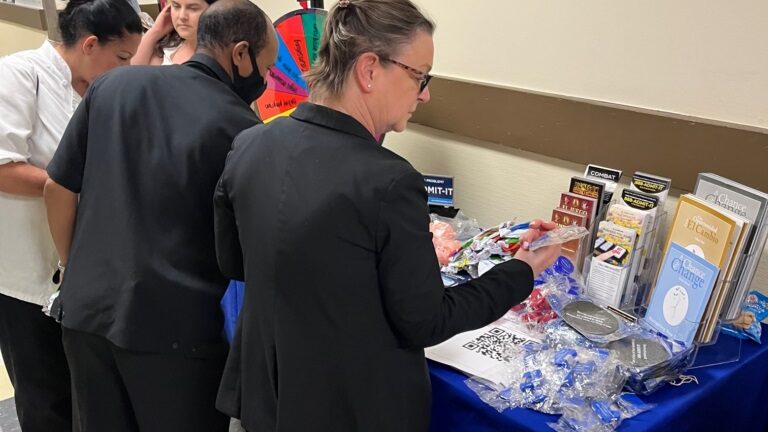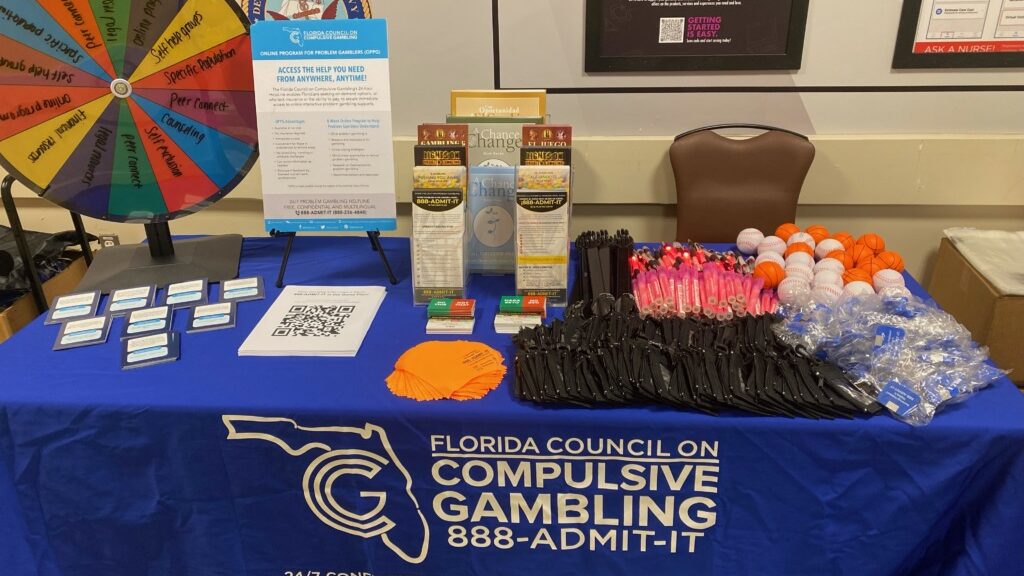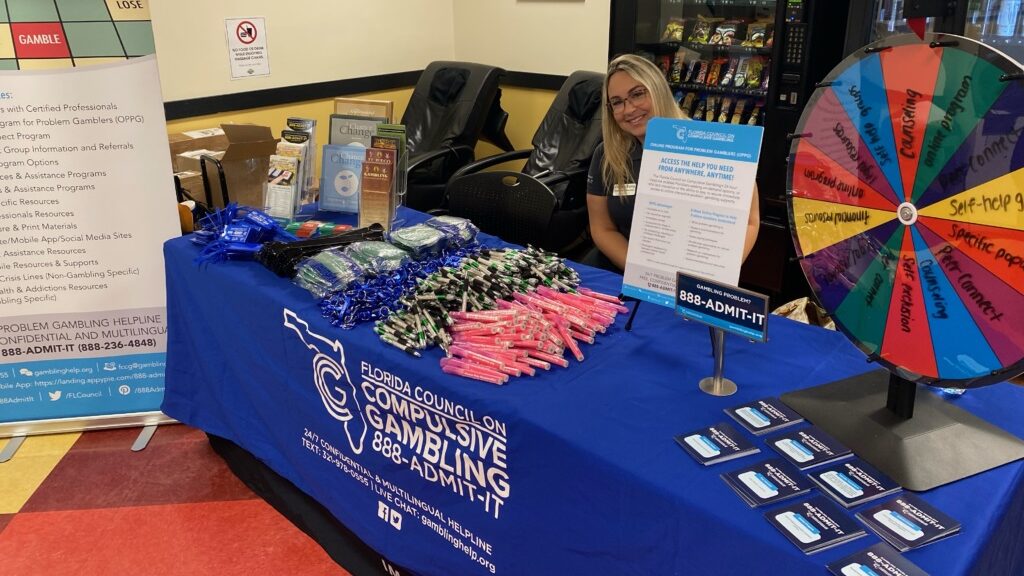
### **— GAMBLING INDUSTRY —**
Seminole Gaming
PlayersEdge
Seminole Casino Brighton
Seminole Casino Coconut Creek
Seminole Casino Hotel Immokalee
Seminole Classic Casino
Seminole Hard Rock Casino Hollywood
Seminole Hard Rock Casino Tampa
The Big Easy Casino
Calder Casino
The Casino @ Dania Beach
Casino Miami
Gulfstream Park & Casino
Hialeah Park Casino
Isle Casino Racing Pompano Park
Magic City Casino
### **— MAYORAL PROCLAMATIONS —**
City of Belleair Bluffs
City of Bradenton
City of Clearwater
City of Clewiston
City of Cocoa
City of Cooper City
City of Dade City
City of DeLand
City of Dunedin
City of Edgewater
City of Gainesville
City of Greenacres
City of Hallandale Beach
City of Hialeah
City of Key Colony Beach
City of Kissimmee
City of Lakeland
City of Lake Mary
City of Lake Wales
City of Longwood
City of Maitland
City of New Port Richey
City of Okeechobee
City of Orlando
City of Palm Bay
City of Palm Beach Gardens
City of Palmetto
City of Pembroke Pines
City of Safety Harbor
City of Sanford
City of South Daytona
City of South Pasadena
City of Springfield
City of Tamarac
Town of Campbellton
Town of Cinco Bayou
Town of Davie
Town of Fort Myers Beach
Town of Juno Beach
Town of Longboat Key
Town of Palm Shores
Town of Sewall’s Point
Town of South Palm Beach
### **— COMMUNITY EVENTS —**
11th Annual NGA Gator Classic
[**View 2023 PGAM Partners**](https://gamblinghelp.org/pgam/2023-problem-gambling-awareness-month-pgam-supporters)
*This list was last updated on April 12, 2022.*
---
### [2023 Problem Gambling Awareness Month (PGAM) Supporters](https://gamblinghelp.org/pgam/2023-problem-gambling-awareness-month-pgam-supporters/)
**Published:** May 27, 2023
**Author:** The Florida Council on Compulsive Gambling, Inc.
**Content:**
## **Extending a “Thank You” to All Who Participated**
**Problem Gambling Awareness Month (PGAM)** is a grassroots campaign that depends on the participation of state Affiliates, organizational and individual members, state health agencies, gambling companies, recovery groups and a wide range of healthcare organizations and providers.
Thank you to this year’s PGAM partners for joining us in raising awareness! See the full list of 2023 PGAM supporters below. **Interested in becoming a partner for the next PGAM? Email us at [pgam@gamblinghelp.org](mailto:pgam@gamblinghelp.org?subject=Interested%20in%20Becoming%20a%20PGAM%20Partner&body=(Thank%20you%20for%20your%20interest%20in%20supporting%20Problem%20Gambling%20Awareness%20Month!%20Please%20tell%20us%20a%20little%20about%20your%20organization%20and%20be%20sure%20to%20include%20your%20full%20contact%20information.))**.
![[IMAGE] City of Orange City - Mayoral Proclamation](https://gamblinghelp.org/wp-content/uploads/2023/05/City-of-Orange-City-Mayoral-Proclamation-03.14.23-1024x768-2-e1685367809523.jpg "City of Orange City - Mayoral Proclamation")![[IMAGE] PGAM-2023-Calder-Casino-Slot-Tech](https://gamblinghelp.org/wp-content/uploads/2023/05/PGAM-2023-Calder-Casino-Slot-Tech-e1685367209875-744x418.jpg "PGAM-2023-Calder-Casino-Slot-Tech")![[IMAGE] PGAM-2023-NGA-Amateur-Extreme-NGA-Gator-Classic-Postcards](https://gamblinghelp.org/wp-content/uploads/2023/05/PGAM-2023-NGA-Amateur-Extreme-NGA-Gator-Classic-Postcards-1-1024x576-1.jpg "PGAM-2023-NGA-Amateur-Extreme-NGA-Gator-Classic-Postcards-1-1024x576")[![[IMAGE] FCCG Executive Director Jennifer Kruse Talks about Resources, Gamblers and Support on The 1% in Recovery Podcast](https://gamblinghelp.org/wp-content/uploads/2023/05/iStock-115906642-e1685367947580-718x404.jpg "FCCG Executive Director Jennifer Kruse Talks about Resources, Gamblers and Support on The 1% in Recovery Podcast")](https://podcasts.apple.com/us/podcast/florida-director-on-compulsive-gambling-jennifer-kruse/id1580788856?i=1000609697701)
### **— GAMBLING INDUSTRY —**
Seminole Gaming
PlayersEdge
Seminole Casino Brighton
Seminole Casino Coconut Creek
Seminole Casino Hotel Immokalee
Seminole Classic Casino
Seminole Hard Rock Casino Hollywood
Seminole Hard Rock Casino Tampa
The Big Easy Casino
Caesars Entertainment
Calder Casino
The Casino @ Dania Beach
Casino Miami
Gulfstream Park Casino
Harrah’s Pompano Beach
Hialeah Park Casino
Magic City Casino
Resorts World Bimini
### **— MAYORAL PROCLAMATIONS —**
City of Belleair Bluffs
City of Cape Canaveral
City of Casselberry
City of Clewiston
City of Cooper City
City of Deland
City of Dunedin
City of Edgewood
City of Fort Myers
City of Freeport
City of Gulfport
City of Holly Hill
City of Key Colony Beach
City of Kissimmee
City of LaBelle
City of Lake Mary
City of New Port Richey
City of Orange City
City of Palm Bay
City of Palm Beach Gardens
City of Palmetto
City of Safety Harbor
City of Sanford
City of Stuart
City of Williston
City of Wilton Manors
City of Winter Haven
Town of Bronson
Town of Campbellton
Town of Davie
Town of Hillsboro Beach
Town of Indian River Shores
Town of Juno Beach
Town of Jupiter
Town of Lady Lake
Town of Longboat Key
Town of Pierson
Town of Sewall’s Point
Town of Southwest Ranches
### **— COMMUNITY EVENTS —**
2023 NGA Amateur Extreme
12th Annual NGA Gator Classic
[**View 2022 PGAM Supporters**](https://gamblinghelp.org/pgam/2022-problem-gambling-awareness-month-pgam-supporters/)
*This list was last updated on April 7, 2023.*
---
### [Programs and Materials for Military and Veteran Service Providers](https://gamblinghelp.org/programs-and-materials-for-military-and-veteran-service-providers/)
**Published:** May 15, 2023
**Author:** The Florida Council on Compulsive Gambling, Inc.
**Content:**
**Recent research reveals that as many as 56,000 active duty members of the Armed Forces meet the criteria for gambling disorder, and studies have shown that veterans have elevated rates of gambling problems, at least twice the rate of the general adult population.** Gambling disorder is an addiction similar to other substance use disorders, such as those associated with alcohol and drugs. In addition to causing financial and legal problems, it is also correlated with an increased incidence of suicide attempts, substance use disorders, and other behavioral health conditions. Prevalence of gambling disorder in the military is a serious health and financial issue, and also poses a national security concern, harming individual readiness and human performance and increasing affected service members’ susceptibility to blackmail and other malign influence.
As background, the FCCG was established in 1988 and is a non-profit educational and advocacy organization providing problem gambling resources and supports through a **[confidential HelpLine, 888-ADMIT-IT, available 24/7](https://gamblinghelp.org/#contact-the-helpline)** to anyone in need of assistance or information related to disordered gambling. While maintaining a gaming neutral stance on legalized gambling, our mission is to increase public awareness regarding risks and consequences associated with gambling, as well as to provide assistance for problem gamblers, their families, and others adversely affected. **Additionally, the FCCG provides FREE services and supports to mental health professionals and others servicing this population. [Contact the 888-ADMIT-IT HelpLine today](https://gamblinghelp.org/#contact-the-helpline) to inquire about the following available resources:**
![[IMAGE] Military Flyer - Drop Shadow](https://gamblinghelp.org/wp-content/uploads/2023/05/Military-Flyer-Drop-Shadow-1-791x1024.jpg "Military Flyer - Drop Shadow | The Florida Council on Compulsive Gambling, Inc")
## Military Flyer
This is a general information flyer (one-page) you can use as a brief, educational overview of Gambling Disorder and the military.
![[IMAGE] Military Soldiers and Veterans Brochure “Combat Gambling Addiction For Soldiers & Veterans”](https://gamblinghelp.org/wp-content/uploads/2023/05/Military-Soldiers-and-Veterans-Brochure-Combat-Gambling-Addiction-For-Soldiers-Veterans-683x1024.jpg "Military Soldiers and Veterans Brochure “Combat Gambling Addiction For Soldiers & Veterans” | The Florida Council on Compulsive Gambling, Inc")
## Military Soldiers and Veterans Brochure
The FCCG’s military program, Combat Gambling Addiction: A Toolkit for the Military, was designed to educate and provide resources for military members (both active duty and retired) and their families. This brochure is part of that toolkit and provides information and resources for military soldiers and veterans.
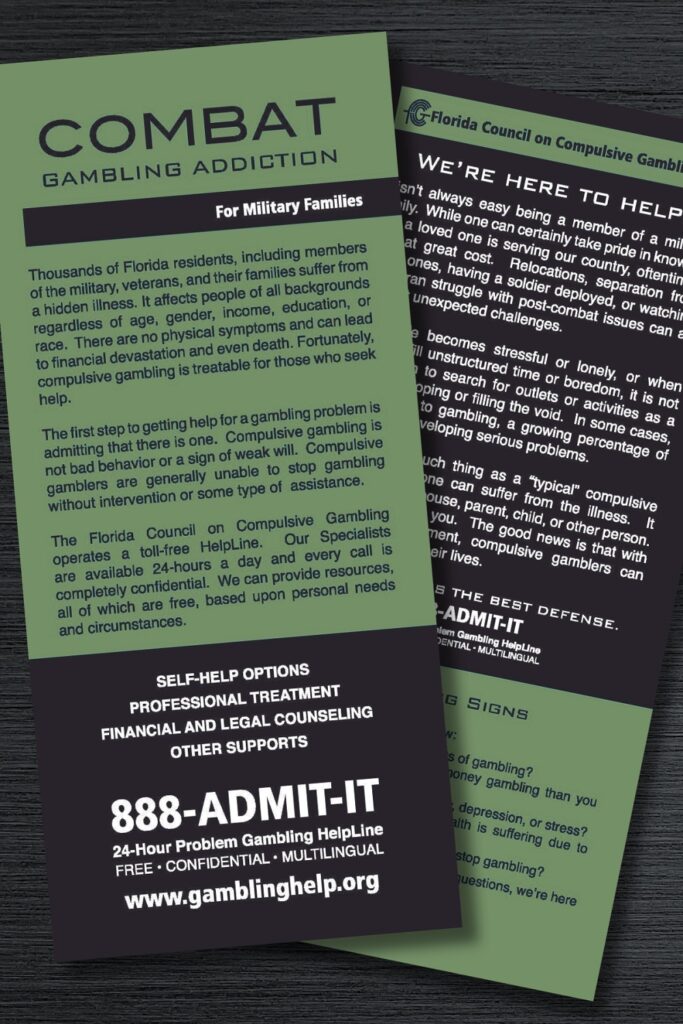
## Military Families Brochure
The FCCG’s military program, Combat Gambling Addiction: A Toolkit for the Military, was designed to educate and provide resources for military members (both active duty and retired) and their families. This brochure is part of that toolkit and provides information and resources for military family members.
![[IMAGE] Combat Gambling Addiction: A Toolkit for the Military](https://gamblinghelp.org/wp-content/uploads/2023/05/Combat-Gambling-Addiction-1-1024x683.jpg "Combat Gambling Addiction: A Toolkit for the Military | The Florida Council on Compulsive Gambling, Inc")
## Combat Gambling Addiction: A Toolkit for the Military
The FCCG’s military program, Combat Gambling Addiction: A Toolkit for the Military, was designed to educate and provide resources for military members (both active duty and retired) and their families. This is of particular significance as research has shown that the highest level of pathology was found among male veterans. This program offers awareness materials for soldiers, veterans, and their families. In addition, it contains a guide for military health care professionals, screening and assessment tools, a PowerPoint presentation for educational forums, an article for print and online publications, a poster with accompanying brochure, and more.
## Prevention is Key, and Treatment is Available
As prevention is key, the incorporation of responsible gaming programs into existing programs on substance abuse, financial management, health and wellness for active duty personnel, veterans, and family members is also a recommendation. The FCCG would be happy to provide in-service trainings designed to meet site-specific needs on these, and any other identified areas of interest.
**Through referral to the 888-ADMIT-IT HelpLine, confidential problem gambling treatment and other supports are available for veterans, members of the military, and their loved ones (independent of the gambler’s willingness to get help). [Contact the HelpLine today to learn more and request materials.](https://gamblinghelp.org/#contact-the-helpline)**
[**Contact the HelpLine**](https://gamblinghelp.org/#contact-the-helpline)
---
### [Training and Programming for Legal, Criminal Justice, and Court Professionals](https://gamblinghelp.org/legalprofessionals/)
**Published:** May 2, 2023
**Author:** The Florida Council on Compulsive Gambling, Inc.
**Content:**
**FCCG training and programming provides guidance to law enforcement, probation and police officers, judges, and attorneys regarding problem gambling impacts and solutions.** Excessive gambling places a hardship on our legal and prison systems given the frequency of theft, embezzlement, fraud, and other crimes committed. More often than not, police, probation and correction officers, as well as attorneys, public defenders, prosecutors, judges and the criminal justice system as a whole are not familiar with compulsive gambling and/or the impacts resulting from such a diagnosis that lead to crime.
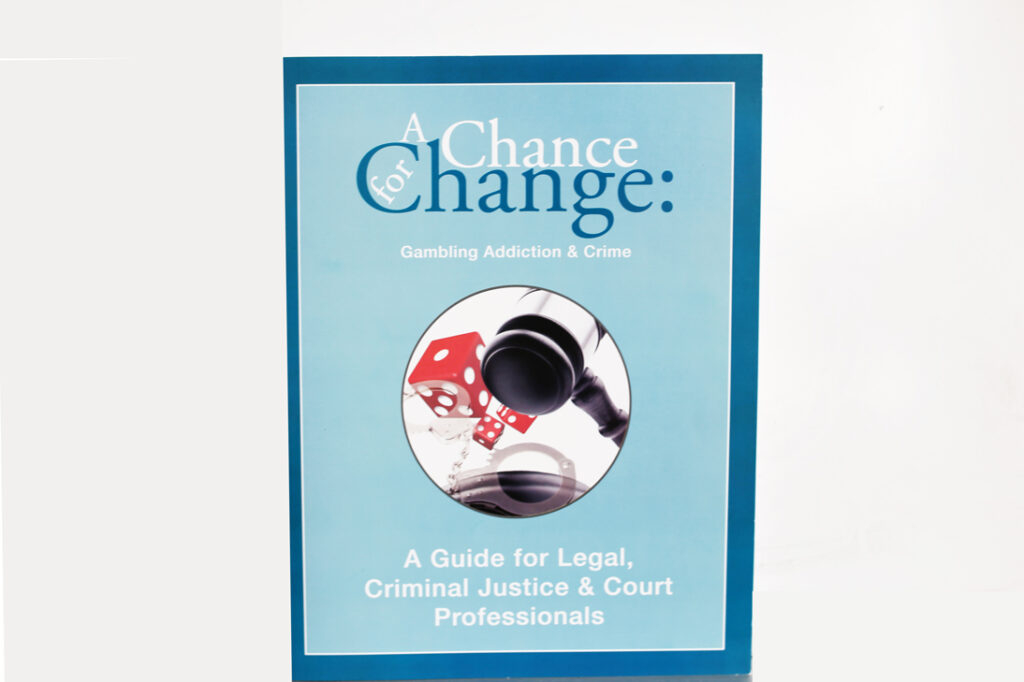
## A Guide for Legal, Criminal Justice & Court Professionals
**The FCCG’s *A Guide for Legal, Criminal Justice & Court Professionals* empowers and educates the judicial system to understand the uniqueness of compulsive gambling and offers suggestions on how to approach sentencing, probationary guidelines and other legal facets when dealing with someone who is addicted to gambling.** The primary purpose of this program is to ultimately enable the judiciary to identify and secure viable alternatives to incarceration alone and to provide the opportunity for rehabilitation to persons committing crimes as the result of a gambling addiction. This program provides free supports throughout every phase of the criminal justice process to law enforcement, legal, judicial, probation, state and federal prison authorities, or as part of a law enforcement program. **To learn more and request this program, [contact the 888-ADMIT-IT (236-4848) HelpLine.](https://new.888admitit.org/#contact-the-helpline)**
## Are You Gambling with Your Life?
An interactive CD that includes videos, this life skills training program assists Florida Department of Juvenile Justice (DJJ) personnel, educators, facilitators, counselors, psychologists, and other professionals in providing essential information about the dangers and consequences of gambling to high risk young people incarcerated in DJJ facilities or outside the DJJ system. *(Note: This FCCG/DJJ joint program is not intended for mainstream youth or the public school system. It is “Language Sensitive” and depicts scenes and scripts based upon actual focus group input within Florida ‘s DJJ detention population.)*
The Council is working to establish collaborative relationships with judges and others within the court system as a means of aiding persons falling subject to crime in order to “cope” with the increased pressures of a gambling habit. The agency has also been advocating the need for the judicial system to develop and institute a “Gambling Court” in Florida similar in philosophy to Drug Court, and is working with judges and others to bring such a program to Florida.
[**Contact the HelpLine**](https://gamblinghelp.org/#contact-the-helpline)
---
### [Responsible Gambling and Player Protection Program (RGPPP)](https://gamblinghelp.org/rgppp/)
**Published:** May 2, 2023
**Author:** The Florida Council on Compulsive Gambling, Inc.
**Content:**
Most individuals who gamble do so for pleasure and without difficulty. However, there are people who cannot gamble with control – problem gamblers. Working in the gambling industry, you will likely encounter someone with a gambling problem. **It is important to understand the issues associated with problem gambling and how it impacts upon your patrons and your business.** It is also essential to recognize that your employees can develop a gambling problem, even in instances when they may be restricted or prohibited from placing bets at your facility.
The gambling industry is in a unique position to positively impact upon a segment of the patron population who may be in need of assistance for a gambling problem. The approach is not to prohibit gambling, but to put into place programs to minimize the negative impact it will have on a percentage of gamblers who are unable to gamble with control.
![[IMAGE] Responsible Gambling and Player Protection Program (RGPPP)](https://new.888admitit.org/wp-content/uploads/2023/05/iStock-683313550-edited.jpg "Responsible Gambling and Player Protection Program (RGPPP) | The Florida Council on Compulsive Gambling, Inc")
**Providing and promoting responsible gaming through continuous employee training is good customer service and may limit liability and risk for casino employees and facility operators.** Problem gamblers cause problems for themselves AND the gaming venue. Media coverage about problem gambling related incidents, such as suicide and child neglect, serves in no one’s best interests and, at times, can present liability issues for operators. Good customer service entails responding to a customer who is in distress. There may be many reasons for their distress, but if it is a gambling problem, staff should be trained to provide specific assistance, such as providing a problem gambling brochure, notifying a supervisor, or other steps per company policy. Employees should also have access to information on problem gambling resources, responsible gambling, and an understanding of self-exclusion from venue.
![[IMAGE] Responsible Gambling and Player Protection Program (RGPPP) Employee Training](https://new.888admitit.org/wp-content/uploads/2023/05/iStock-1371095878-edited.jpg "Responsible Gambling and Player Protection Program (RGPPP) Employee Training | The Florida Council on Compulsive Gambling, Inc")
The intent of a Responsible Gambling Program is to empower casino operators to devise a plan and related protocols to address varying situations that will emerge when encountering guests who are experiencing problems because of gambling. One of the roles of the FCCG is to assist the gambling industry in establishing customer and employee based problem gambling awareness programs. **The FCCG’s Responsible Gambling and Player Protection Program (RGPPP) is a step-by-step comprehensive guide that helps the gaming industry navigate its way through conducting a self-assessment, devising an organizational philosophy, establishing an administrative and internal program structure, and developing problem and compulsive gambling policies and protocols.**
![[IMAGE] Responsible Gambling and Player Protection Program (RGPPP) Employee Training](https://new.888admitit.org/wp-content/uploads/2023/05/iStock-1124339065-edited.jpg "Responsible Gambling and Player Protection Program (RGPPP) Employee Training | The Florida Council on Compulsive Gambling, Inc")
**Responsible gaming training and ongoing employee education is mandated by Florida statute for all state slot machine licensees. The FCCG has developed new hire and annual refresher training to help facilities adhere to the necessary regulations, and in turn provide an exceptional level of support for your patrons and employees.** Casino employees are the eyes and ears of your daily operations and are often the first point of contact or first responder to guests. While employees are not counselors, they do provide liaison support to assure that patrons get the help they need while on the casino property.
Gaming industry employees are also known to be in the high risk group and are 5-10 times more likely to develop gambling problems than the general gambling population. For this reason, it is important for facility employees to have knowledge of resources for help specific for gaming industry staff available by internal and external programs/resources. **Want to talk to FCCG about your facility’s RGPPP or training needs for employees? [Click here to contact us!](https://gamblinghelp.org/#contact)**
[**Contact Us**](https://gamblinghelp.org/#contact)
---
### [Programs and Materials for Senior Service Providers](https://gamblinghelp.org/programs-and-materials-for-senior-service-providers/)
**Published:** May 16, 2023
**Author:** The Florida Council on Compulsive Gambling, Inc.
**Content:**
**Gambling in the United States has become a preferred pastime. Here in Florida, gambling opportunities have increased, as has the senior population, which has been growing more rapidly than any other age group.** For most Florida seniors, as is true for most Americans, gambling is a form of entertainment that does not present any difficulty in their lives. However, among older adults, the consequences of a gambling disorder are often more debilitating. Therefore, before gambling, it is important to know the risks involved and the warning signs of problem gambling.
While gambling is a recreational activity that does not present harm to the majority who participate, for those experiencing difficulties, gambling is even riskier with increasing age. **[A gambling disorder is often referred to as the “hidden addiction”](https://gamblinghelp.org/#about-problem-gambling)** because inflicted persons display no visual symptoms, as is typically associated with substance abuse. Also, because problem gamblers have no saturation point and cannot be assessed through traditional means, such as a blood test, the disease progresses unnoticed, even to those closest to the gambler.
**Many seniors gamble as a means of escaping everyday problems, feelings of loneliness, sadness, boredom, as well as a lack of alternative activities. They are among one of the fastest-growing groups of gamblers because they are more likely to face challenges in response to coping with major life changes or losses.** The onset of social isolation resulting from retirement and family members moving away, the increased awareness of physical limitations, and the grief that accompanies the death of a loved one are among a series of overwhelming losses and difficult life transitions that make seniors especially vulnerable. Similarly, cognitive impairments are another consideration, as many elders struggle with their ability to make sound decisions. In fact, while medical experts estimate that 15% of all Americans over age 70 are suffering from some degree of dementia, in many cases it is undiagnosed. Complicating matters further is that in some cases, while rare, individuals with Parkinson’s disease, Restless Leg Syndrome, and other neurological and movement disorders have developed gambling problems as a side effect of
their prescribed medications.
**It is essential for health care professionals and others to know that a gambling disorder is linked to a range of serious health conditions, such as heart disease, migraines, depression, insomnia, intestinal problems, obesity, high blood pressure, and a series of other medical and stress-related conditions.** It is also true that compulsive gamblers often report that the adrenaline high they experience while gambling enables them to temporarily detach and forget their emotional and physical problems, including chronic pain. These are important points, because depression and chronic pain are routinely reported by this population, yet many are reluctant to visit a therapist or a medical doctor for help with their gambling problem due to feelings of shame and social stigma.
**The FCCG has developed a variety of senior specific programs and resources offering a comprehensive approach for diverse elder service providers in recognizing the signs of a gambling problem in the population served.** FCCG senior specific programs address common situations that seniors encounter, identify age appropriate solutions, and offer viable approaches to prevention, assessment, intervention, treatment, and outreach efforts. **Here are some examples of programs and materials designed for senior service providers and available through the [888-ADMIT-IT HelpLine:](https://new.888admitit.org/#contact-the-helpline)**
![[IMAGE] A Chance for Change Guide for Senior Health and Service Professionals](https://gamblinghelp.org/wp-content/uploads/2023/05/A-Chance-for-Change-Guide-for-Senior-Health-and-Service-Professionals-Drop-Shadow-1-791x1024.jpg "A Chance for Change Guide for Senior Health and Service Professionals | The Florida Council on Compulsive Gambling, Inc")
## *A Chance for Change* Guide for Senior Health and Service Professionals
The FCCG developed a guided initiative for medical school faculty, nursing institutions, clinical geriatric environments, addiction and mental health professionals, adult day cares, assisted living and retirement facilities, elder caregiver and companion companies, home health care agencies, veteran organizations, and other senior service entities, about the adverse effects of gambling on older adults and strategies for aiding this population. **This Program offers a comprehensive approach for diverse elder service providers and addresses common situations that seniors encounter, identifies age appropriate solutions, and offers viable approaches to prevention, assessment, intervention, treatment, and outreach.** In addition, it offers recreational options, resource referrals and Program related materials.
![[IMAGE] • Senior Service Provider Online Continuing Education Unit Module “A Chance for Change”](https://gamblinghelp.org/wp-content/uploads/2023/05/iStock-1300822206-1024x683.jpg "• Senior Service Provider Online Continuing Education Unit Module “A Chance for Change” | The Florida Council on Compulsive Gambling, Inc")
## Senior Service Provider Online Continuing Education Unit Module “*A Chance for Change*”
**This training module offers a comprehensive approach for elder service providers to use to address common situations that seniors encounter.** It offers viable approaches to prevention, assessment, intervention, treatment, and outreach, as well as recreational options, resource referrals, and population specific programs. To obtain Continuing Education Credit (CEU) or Continuing Medical Education Credit (CME), an active Florida LMHC, LMFT, LCSW, or medical healthcare provider license number is required. Certificates are provided, and all CEU’s or CME’s are posted to the appropriate accreditation body during the first week of the month following completion. ***This module is currently not accepting new enrollments. [Subscribe to FCCG emails](http://fccg.informz.net/FCCG/pages/SignUptoReceiveFCCGCommunications888admititorg) for updates about this and other continuing education courses.***
![[IMAGE] Angels in Disguise – Senior Caregiver Program](https://gamblinghelp.org/wp-content/uploads/2023/05/Senior-Caregiver-Brochure-Angels-in-Disguise-CD-1-683x1024.jpg "Angels in Disguise – Senior Caregiver Program | The Florida Council on Compulsive Gambling, Inc")
## *Angels in Disguise* – Senior Caregiver Program
The 2008 Florida Statute, Title XLVI Chapter 849.04 Permitting minors and persons under guardianship to gamble clearly holds persons criminally liable of a felony of the third degree, those who own or keep gambling devices for the purpose of betting, and willfully and knowingly allow any person who is mentally incompetent or under guardianship to play at such a game or to bet on such a game of chance or whoever aids or abets or otherwise encourages such playing or betting of any money or other valuable thing upon the result of such a game of chance by any person who is mentally incompetent or under guardianship. The statute defines someone as ‘mentally incompetent’ if due to mental illness, mental retardation, senility, excessive use of drugs or alcohol, or other mental capacity is incapable of managing his or her property or caring for him or herself or both. **The FCCG’s caregiver program, *Angels in Disguise*, provides senior caregivers and caregiver organizations with the resources necessary to address problem gambling in both their client and employee populations and to invoke policy for dealing with this issue.** Program materials include warning signs of a gambling problem in both client and employee populations, resources for problem gambling policy, the *Angels in Disguise* DVD, and Seniors and Gambling Caretaker Brochure. “*Seniors and Gambling – Important Information for the Caretaker*” brochure provides basic information regarding seniors who gamble, why they may gamble, and impacts when gambling is a problem. It also provides important “Do’s and Don’ts” for the individual caretaker or caregiving organization. This brochure contains important information for anyone working or acting in the capacity of caretaking where gambling is a part of the senior’s activities.
![[IMAGE] Playing It Safe - Senior Toolkit](https://gamblinghelp.org/wp-content/uploads/2023/05/Playing-It-Safe-1024x683.jpg "Playing It Safe - Senior Toolkit | The Florida Council on Compulsive Gambling, Inc")
## *Playing it Safe* Senior Toolkit
**The *Playing it Safe* Senior Toolkit is an educational and instructional toolkit that enables senior service providers to present the topic of gambling among older adults effectively and creatively.** While there are many options and approaches one can use, the materials are designed to provide high flexibility to accommodate presentation timelines and diverse audiences. The purpose of the *Playing it Safe* toolkit is to provide all of the necessary background that elder service providers need to increase awareness among older adults. It includes an instructor’s guide; a *Dire Stakes* game, modeled after the popular televised Jeopardy game; a CD PowerPoint program and handout; videos of recovering persons, including field experts; a video docudrama; fact sheets, posters, brochures, “*Playing it Safe*” money with tips on keeping gambling recreational; collateral items; and more.
![[IMAGE] Senior Stories - General Awareness Audio CD](https://gamblinghelp.org/wp-content/uploads/2023/05/Senior-Stories-General-Awareness-Audio-CD.jpg "Senior Stories - General Awareness Audio CD | The Florida Council on Compulsive Gambling, Inc")
## Senior Stories – General Awareness Audio CD
This program provides personal stories by older adults, information about gambling addiction, and helpful and free resources (audio only).
**Are you a senior service provider?** To request any of these prevention programs and learn more about resources for older adults, **[contact the 888-ADMIT-IT HelpLine today.](https://gamblinghelp.org/#contact-the-helpline)**
[**Contact the HelpLine**](https://gamblinghelp.org/#contact-the-helpline)
---
### [Population-Specific Resources](https://gamblinghelp.org/population-specific-resources/)
**Published:** May 1, 2023
**Author:** The Florida Council on Compulsive Gambling, Inc.
**Content:**
The FCCG’s Population Specific Programs, Resources, Literature, and Materials are designed specifically for specific populations who are experiencing gambling-related problems, as well as for the professionals who serve these populations, so they are equipped to respond to individuals with gambling problems (or their loved ones) who may present for services. FCCG Population Specific Programs and Resources are developed to provide education and awareness about gambling addiction and its affects among specific segments of the population, along with providing population specific resources for help.
**The FCCG provides a wide array of population specific resources, programs, and materials for College Students, Women, Military Members, Veterans, and their Families, Seniors, Adolescents/Teens and their Parents, as well as for Service Providers for each of these populations.**
![[IMAGE] Dare 2 Know - Youth Card Game](https://gamblinghelp.org/wp-content/uploads/2023/05/Dare-2-Know-Card-Game-1-1024x668.jpg "Dare 2 Know - Youth Card Game | The Florida Council on Compulsive Gambling, Inc")
## Youth Resources
- Youth Specific Mental Health & Treatment Services – Online Gaming/Social/Video Gaming Addiction – Non-Gambling Specific
- Online/Mobile/Video & Social Casino Gaming & Gambling Self-Exclusion Programs – Internet/Video Game Controls & Web Blocking Software
- Smartphone Addiction Help Guide – Smartphone & Internet Addiction tools, resources, & support groups
- Online Websites & Forum Resources for Youth & Parents
- FCCG Website – Youth Assessment
- FCCG Literature/Materials – Youth Specific: for Youth Gamblers, their Loved ones, and Professionals (Youth Service Providers)
![[IMAGE] Students Against Gambling Addiction (SAGA) - College Toolkit](https://gamblinghelp.org/wp-content/uploads/2023/05/Students-Against-Gambling-Addiction-SAGA-Programs-and-Materials-1024x683.jpg "Students Against Gambling Addiction (SAGA) - College Toolkit | The Florida Council on Compulsive Gambling, Inc")
## College Resources
- College Student Mental Health Services (Counseling Centers at Colleges/Universities) – Non-Gambling Specific
- FCCG Website – **[College Student Online Assessment](https://gamblinghelp.org/college-students-impacted-by-problem-gambling)**
- Literature/Materials – College Specific: College Workbook & Other Brochures/Newsletters/Fact Sheets/Toolkits for College Student Gamblers, their Loved Ones, and Professionals (College Faculty/ Staff)
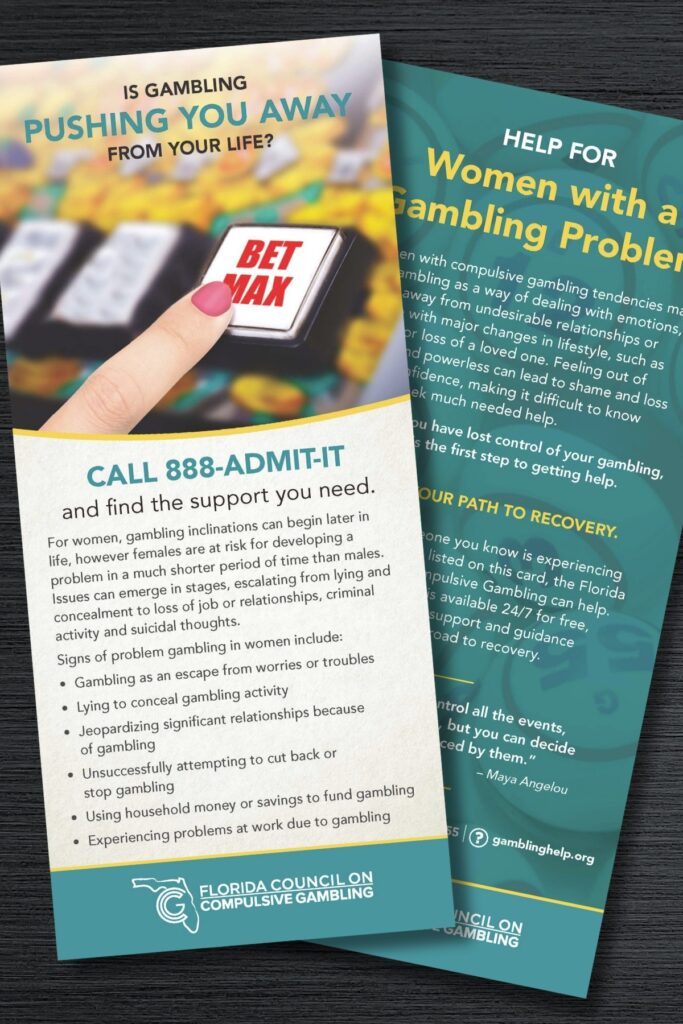
## Women’s Resources
- Women-Preferred Self-Help Support Group Meetings (Gamblers Anonymous)
- Women Specific Mental Health & Treatment Services, Domestic Violence Centers & Services – Non-Gambling Specific
- Women-Specific Gambling Specific Online Supports, Podcasts, Videos, & Motivational Mobile Apps
- Women Military/Veteran Mental Health Services & Other Supports – Non-Gambling Specific
- Literature/Materials for Women Gamblers, Senior Women Gamblers, and Loved Ones: Brochures/Newsletters/Fact Sheets
![[IMAGE] Playing It Safe - Senior Toolkit](https://gamblinghelp.org/wp-content/uploads/2023/05/Playing-It-Safe-1024x683.jpg "Playing It Safe - Senior Toolkit | The Florida Council on Compulsive Gambling, Inc")
## Senior Resources
- Senior Specific Mental Health Services Hotlines – Non-Gambling Specific
- Senior Specific Scam/Fraud Protection Resources
- Seniors First Guardianship Program
- Senior Specific Food Banks & Meal Programs
- Seniors First In-Home Care Program
- Seniors First Medical Equipment Program
- Seniors First Transportation Program
- Senior Specific Employment Assistance Resources
- Senior Specific Other Alternative Self-Help Support Groups – For Seniors & Loved Ones of Seniors
- Senior Specific Outreach Wellness Programs & Other Alternative Activities – for Seniors with Parkinson’s & Other Movement Disorders
- FCCG Website – **[Older Adult Online Assessment](https://gamblinghelp.org/seniors-impacted-by-problem-gambling)**
- FCCG Literature/Materials – Senior Specific: for Senior Gamblers, their Loved ones, and Senior Service Provider Professionals & Caregiver Organizations
![[IMAGE] Combat Gambling Addiction - Military/Veterans Toolkit](https://gamblinghelp.org/wp-content/uploads/2023/05/Combat-Gambling-Addiction-1024x683.jpg "Combat Gambling Addiction - Military/Veterans Toolkit | The Florida Council on Compulsive Gambling, Inc")
## Military / Veteran Resources
- Military/Veteran Mental Health Services & Other Supports – Non-Gambling Specific
- FCCG Website – Military Toolkit
- FCCG Literature/Materials – Military/Veteran & Family Member Specific: for Gamblers, Loved ones, and Professionals (Military and Veteran Service Providers)
![[IMAGE] Managing the Odds - Workplace Toolkit](https://gamblinghelp.org/wp-content/uploads/2023/05/Managing-the-Odds-1024x683.jpg "Managing the Odds - Workplace Toolkit | The Florida Council on Compulsive Gambling, Inc")
## Population-Specific Professionals Resources
- College Specific Problem Gambling Prevention & Awareness HelpLine Literature/Materials Requests from or for Students, Faculty and Staff at Florida Colleges and Universities
- Family Impacts & Awareness HelpLine Literature/Materials Requests from or for Domestic Violence Service Providers & Professionals
- Financial Impacts & Awareness HelpLine Literature/Materials Requests from or for Banks, Credit Counseling Organizations, Credit Card/Cashless Pay Service Providers, and Oher Financial Institutions
- Gamblers Anonymous (G.A.) & Gam-Anon HelpLine Literature/Materials Requests from or for G.A. or Gam-Anon Group Meeting Leaders
- Gambling Industry Responsible Gambling & Player Protection Program HelpLine Awareness/Literature Materials Requests or Information for or from Casino and Other Gambling Operators, Facility Patrons and Employees
- General Awareness/Information/Research Literature/Materials Requests
- Legal Impacts & Awareness Literature/Materials Requests from or for Criminal Justice, Judicial, and Other Legal Professionals
- Medical/Physical Health Impacts & Awareness HelpLine Literature/Materials Requests from or for Doctors, Nurses, Pharmacists, & Other Healthcare Providers
- Mental Health Treatment Provider Certification and Continuing Education Requests and Information provided through HelpLine Literature/Materials
- Military/Veteran & Family Impacts, Prevention & Awareness HelpLine Literature/Materials Requests from or for Military and Veteran Service Providers
- Senior Specific Problem Gambling Prevention & Awareness HelpLine Literature/Materials Requests from or for Senior Service Providers, Caregivers, and Caregiving Organizations
- Youth Specific Problem Gambling Prevention (Elementary, Middle, and High School Age) & Awareness HelpLine Literature/Materials Requests from or for Youth Service Providers (Schools, Libraries, YMCA’s, Boy’s & Girls Clubs, etc.)
- Societal Impacts & Social Costs of Problem Gambling Prevention & Awareness HelpLine Literature/Materials Requests from or for Consumers, the Gambling Industry, Policy Maker’s, Regulators, & Legislators
- Workplace Impacts & Awareness HelpLine Literature/Materials Requests from or for Human Resource/EAP Professionals
**Whether you’re a help seeker or a professional, it can be overwhelming to know where to start with population-specific problem gambling resources. [Contact the 888-ADMIT-IT HelpLine today](https://gamblinghelp.org/#contact-the-helpline), and speak to a Specialist who will connect you with the best resources for gambling addiction. Best of all, your contact to the HelpLine is completely free and confidential.**
[**Contact the HelpLine**](https://gamblinghelp.org/#contact-the-helpline)
---
### [Legal Resources](https://gamblinghelp.org/legalresources/)
**Published:** April 21, 2023
**Author:** The Florida Council on Compulsive Gambling, Inc.
**Content:**
It is not uncommon for problem gamblers to experience legal problems due to their addiction. Whether it be criminal in nature (embezzlement, theft, fraud, etc.) or civil (divorce, foreclosure, bankruptcy etc.), the FCCG provides expert assistance and resources for those faced with any type of legal action in a gambling related case, completely free of charge. Services range from providing Amicus Curiae Briefs to the court in support of the gambler’s addiction, to advocacy for treatment as an alternative or in conjunction with incarceration, to professional testimony provided on behalf of the defendant along with important information about the strong correlation between problem gambling and illegal activities for all legal, criminal justice, and court professionals involved in the case.
## Expert Assistance and Resources, Completely Free of Charge
**The FCCG’s Legal Resources & Assistance Programs** provide supports for both problem gamblers and loved ones facing legal consequences due to a gambling problem, and for legal, criminal justice, and judicial authorities, to identify and secure viable alternatives to incarceration alone, and provide the opportunity for rehabilitation to persons committing crimes as the result of a gambling addiction. **[FCCG’s *A Chance for Change* Recovery Workbook series](https://gamblinghelp.org/literature)** for Gamblers, Loved Ones and Senior Gamblers, book #5, contains legal specific information related to problem gambling.
**The FCCG’s Legal Resources & Assistance Program and Referrals** Include the following **five categories of Legal Supports**:
❖ CIVIL Legal Referral Resources
❖ CRIMINAL Legal Referral Resources
❖ GUARDIANSHIP Legal Referral Resources
❖ HELP SEEKER – LEGAL Assistance Tools & Literature/Materials Requests
❖ PROFESSIONALS – LEGAL Assistance Tools & Literature/Materials Requests
**It can be overwhelming to know where to start with Legal Resources. [Contact the 888-ADMIT-IT HelpLine today](https://gamblinghelp.org/#contact-the-helpline), and speak to a Specialist who will listen to your situation and connect you with the best Counseling Services and other resources for gambling addiction, whether you are worried about your own gambling or that of a loved one. Best of all, your contact to the HelpLine is completely free and confidential.**
[**Contact the HelpLine**](https://gamblinghelp.org/#contact-the-helpline)
---
### [Impaired Professionals Resources](https://gamblinghelp.org/impaired-professionals-resources/)
**Published:** May 1, 2023
**Author:** The Florida Council on Compulsive Gambling, Inc.
**Content:**
Problem and compulsive gambling is referred to as a “hidden disorder” because suffering persons often appear normal on the outside. Like alcohol and substance abuse, the disorder does not discriminate and affects persons from all backgrounds and walks of life. **Recent research has shown that professionals, such as lawyers, judges and doctors are among those most likely to be at-risk for developing a gambling problem.** Other professionals, including but not limited to athletes, firefighters, engineers, accountants, counselors, police officers, stockbrokers, educators and persons practicing in hundreds of additional fields, also experience gambling problems.
**Impaired Professional Programs are designed for a wide range of professionals who are among those most likely to be at risk for developing a gambling problem, including doctors, lawyers, judges, athletes, and others, and provide self-help/treatment options in non-public settings.** Since many professionals find it extremely challenging and potentially detrimental to their careers to participate in traditional self-help (e.g., Gamblers Anonymous) and professional treatment programs, the FCCG provides confidential resources and referrals from a wide range of trained experts.
To further ensure such protections, the FCCG works closely with, and provides referrals for legal and health care service professionals in need of gambling-related supports, to organizations serving individuals working in sensitive positions or fields in the legal and medical arenas.
**It can be overwhelming to know where to start with problem gambling resources. [Contact the 888-ADMIT-IT HelpLine today](https://gamblinghelp.org/#contact-the-helpline), and speak to a Specialist who will listen to your situation and connect you with the best resources for gambling addiction, whether you are worried about your own gambling or that of a loved one. Best of all, your contact to the HelpLine is completely free and confidential.**
[**Contact the HelpLine**](https://gamblinghelp.org/#contact-the-helpline)
---
### [Hotlines / Crisis Lines & Social Services / Emergency Assistance](https://gamblinghelp.org/hotlines-crisis-lines/)
**Published:** May 1, 2023
**Author:** The Florida Council on Compulsive Gambling, Inc.
**Content:**
**Very often, individuals suffering from the impacts of problem gambling will also require assistance beyond gambling supports from more than one entity due to a multitude of circumstances (e.g., domestic violence, rape, alcohol/substance abuse, etc.).** Although the FCCG specializes in gambling-related matters, the organization does refer contacts to non-gambling services when appropriate. In the event individuals are in need of assistance for a non-gambling related or other traumatic issue, the FCCG refers people to National Hotlines and Crisis Lines. These resources offer Clinical Crisis Operators who can provide additional specialized supports and resources as a wrap-around service.
The FCCG also provides access to emergency supports through a wide range of vital social services referrals. These are places where individuals in need can find immediate supports for food, housing, clothing and possible financial assistance with rent and utility payments. Although social services are not a therapeutic resource, they are sometimes necessary to address immediate needs in critical areas of life that may have been damaged by the gambling addiction.
**It can be overwhelming to know where to start with problem gambling resources. [Contact the 888-ADMIT-IT HelpLine today](https://gamblinghelp.org/#contact-the-helpline), and speak to a Specialist who will listen to your situation and connect you with the best resources for gambling addiction, whether you are worried about your own gambling or that of a loved one. Best of all, your contact to the HelpLine is completely free and confidential.**
[**Contact the HelpLine**](https://gamblinghelp.org/#contact-the-helpline)
---
### [Additional Resources](https://gamblinghelp.org/additional-resources/)
**Published:** May 1, 2023
**Author:** The Florida Council on Compulsive Gambling, Inc.
**Content:**
## Consumer Protection Services
In the event a help seeker has fallen victim to a scam or needs to report illegal gambling operations such as illegal gambling machines, lottery scams, sweepstakes scams, illegal game promotions, etc., the FCCG provides referrals to Consumer Protection Services.
## Mental Health & Addiction Services (Non-Gambling Specific)
Gambling specific self-help and professional treatment programs comprise the primary referrals furnished to HelpLine contacts. In the event a contact is in need of non-gambling specific mental health or substance abuse treatment or supports, the FCCG provides referrals to Baker Act Facilities, Psychiatric Hospitals, County and Community Mental Health Services, Anti-Drug Coalitions, and other Substance Abuse or Behavioral Health Services.
## National Council on Problem Gambling (NCPG) Affiliates
For contacts located outside of Florida who are seeking problem gambling supports for themselves or loved ones, the FCCG provides referrals to the designated National Council on Problem Gambling (NCPG) Affiliate in that particular state.
## Employment Assistance Resources
Often, individuals struggling with a gambling problem may develop work-related problems. As a result, the FCCG provides much needed Employment Assistance Resources to those in need of such supports.
## Online Supports, Videos, Podcasts and Mobile Apps
Online Supports, Videos, Podcasts and Mobile Apps can provide real-time, and ongoing motivational messaging, meditation techniques, support networks, and other self-care and stress release activities, that support behavioral change and assist individuals during their lifelong path to recovery from a gambling addiction.
## Online Gambling/Video Game Addiction Resources
For individuals experiencing issues due to an online gambling, video, or social gaming addiction, the FCCG provides population specific resource referrals to agencies and programs for both youth and adults.
**It can be overwhelming to know where to start with problem gambling resources. [Contact the 888-ADMIT-IT HelpLine today](https://gamblinghelp.org/#contact-the-helpline), and speak to a Specialist who will listen to your situation and connect you with the best resources for gambling addiction, whether you are worried about your own gambling or that of a loved one. Best of all, your contact to the HelpLine is completely free and confidential.**
[**Contact the HelpLine**](https://gamblinghelp.org/#contact-the-helpline)
---
### [Privacy Policy](https://gamblinghelp.org/privacy-policy/)
**Published:** June 20, 2023
**Author:** The Florida Council on Compulsive Gambling, Inc.
**Content:**
**PRIVACY POLICY**
The Florida Council on Problem Gambling, Inc. is committed to ensuring that your privacy is protected. This privacy policy sets out how the Florida Council on Problem Gambling, Inc. uses and protects any information that you give the organization when you use its websites, which include but are not limited to gamblinghelp.org, blog.gamblinghelp.org, problemgamblingawarenessmonth.org, and spgc2018.org.
**Regarding information collected via our websites:**
The Florida Council on Problem Gambling, Inc. adheres to the highest ethical standards in gathering, using, and safeguarding information submitted via this website and associated services used by the organization.
The Florida Council on Problem Gambling, Inc. limits access to information collected via this website and associated services to those staff members who require the information to carry out their business functions; all staff are educated about practices and policies to safeguard that information, and those policies are fully enforced. The Florida Council on Compulsive Gambling, Inc. has never sold and will never sell the contact information it collects with third parties.
**Is it safe to use my credit card online?**
The Florida Council on Problem Gambling, Inc. protects your online transaction and personal information by appropriate security safeguards. Your personal information transmissions, including your payment information, will be encrypted by SSL technology.
Third parties that support the Florida Council on Problem Gambling, Inc. must agree to safeguard information in the same manner as does the Florida Council on Problem Gambling, Inc. Only third parties that require information collected via this website in order to support the Florida Council on Problem Gambling, Inc. are provided with such information.
The Florida Council on Problem Gambling, Inc. makes all reasonable efforts to accurately and securely maintain information collected via the website and associated services. The Florida Council on Problem Gambling, Inc. monitors and adopts applicable technologies designed to aid in the accuracy and security of information gathered via this website.
Information is collected only when visitors to the site voluntarily provide it. Visitors to this site who do not wish for their personally identifiable information to be collected are asked not to provide such information.
Information submitted via this website and associated services may be stored and used by the Florida Council on Problem Gambling, Inc. to better understand the needs of visitors to the site, to inform visitors of offers that may be of interest to them, and to improve the Florida Council on Problem Gambling, Inc.
If you have provided your email address and wish to remove it from the Florida Council on Problem Gambling, Inc. mailing lists, please send an email message to <fccg@gamblinghelp.org>. The Florida Council on Problem Gambling, Inc. will make reasonable efforts to delete your email from existing files.
The Florida Council on Problem Gambling, Inc. has no intention of collecting information from children that may be personally identifiable, including names, addresses, telephone numbers, or email addresses; children are asked not to submit such information. If a child has provided the Florida Council on Problem Gambling, Inc. with personally identifiable information, the child’s parent should request that the child’s information be removed from existing files.
This website may collect information that is NOT personally identifiable from any visitor to the site, including the visitor’s operating system, browser, domain name, and the specific Web pages on the Florida Council on Problem Gambling, Inc.’s website that the visitor accesses. Such information is used to improve the Florida Council on Problem Gambling, Inc.’s website.
Visitors to the Florida Council on Problem Gambling, Inc.’s website are informed that the Florida Council on Problem Gambling, Inc. may store some information on a visitors computer in the form of a “cookie” or similar file. These files allow the Florida Council on Problem Gambling, Inc. to tailor its website to reflect the visitors listed or historical preferences. Most Web browsers notify a user when such a file is stored and allow the user to erase or block such files in his/her computer, as per the browser’s instructions.
**DISCLAIMER**
The Florida Council on Problem Gambling, Inc. does not endorse nor control the content, products or services of other sites linked to or from the Florida Council on Problem Gambling, Inc. websites, which include but are not limited to gamblinghelp.org, blog.gamblinghelp.org, problemgamblingawarenessmonth.org, and spgc2018.org. The Florida Council on Problem Gambling, Inc. websites are intended to facilitate the dissemination of information to the public about problem and compulsive gambling.
---
## Categories
### [888-ADMIT-IT](https://gamblinghelp.org/category/888-admit-it/)
---
### [Education](https://gamblinghelp.org/category/education/)
---
### [Lifestyle](https://gamblinghelp.org/category/lifestyle/)
---
### [March Madness](https://gamblinghelp.org/category/march-madness/)
---
### [Online Gambling](https://gamblinghelp.org/category/online-gambling/)
---
### [Problem Gambling Awareness](https://gamblinghelp.org/category/problem-gambling-awareness/)
---
### [Sports Betting](https://gamblinghelp.org/category/sports-betting/)
---
### [Youth](https://gamblinghelp.org/category/youth/)
---
### [Mental Health](https://gamblinghelp.org/category/mental-health/)
---
### [Press Releases](https://gamblinghelp.org/category/press-releases/)
---
### [Suicide Prevention](https://gamblinghelp.org/category/suicide-prevention/)
---
### [E-Sports](https://gamblinghelp.org/category/e-sports/)
---
### [Lottery](https://gamblinghelp.org/category/lottery/)
---
### [Personal Finance](https://gamblinghelp.org/category/personal-finance/)
---
### [Problem Gambling Awareness Month](https://gamblinghelp.org/category/problem-gambling-awareness-month/)
---
### [Video Games](https://gamblinghelp.org/category/video-games/)
---
### [Veterans and Military](https://gamblinghelp.org/category/veterans-and-military/)
---
### [COVID-19](https://gamblinghelp.org/category/covid-19/)
---
### [Substance Abuse](https://gamblinghelp.org/category/substance-abuse/)
---
### [Domestic Violence](https://gamblinghelp.org/category/domestic-violence/)
---
### [Older Adults](https://gamblinghelp.org/category/older-adults/)
---
### [Holidays](https://gamblinghelp.org/category/holidays/)
---
### [New Year's](https://gamblinghelp.org/category/new-years/)
---
### [Financial Literacy](https://gamblinghelp.org/category/financial-literacy/)
---
### [Web Letters](https://gamblinghelp.org/category/web-letters/)
---
### [Emotional Difficulties](https://gamblinghelp.org/category/emotional-difficulties/)
---
### [Problem Gamblers](https://gamblinghelp.org/category/problem-gamblers/)
---
### [Responsible Gambling](https://gamblinghelp.org/category/responsible-gambling/)
---
## Tags
### [#AddictionAwareness](https://gamblinghelp.org/tag/addictionawareness/)
---
### [#GamblingAddiction](https://gamblinghelp.org/tag/gamblingaddiction/)
---
### [#ProblemGambling](https://gamblinghelp.org/tag/problemgambling/)
---
### [#ProblemGamblingAwareness](https://gamblinghelp.org/tag/problemgamblingawareness/)
---
### [#SportsBetting](https://gamblinghelp.org/tag/sportsbetting/)
---
### [#MentalHealth](https://gamblinghelp.org/tag/mentalhealth/)
---
### [#MSW2018](https://gamblinghelp.org/tag/msw2018/)
---
### [Finance](https://gamblinghelp.org/tag/finance/)
---
### [Gambling](https://gamblinghelp.org/tag/gambling/)
---
### [Libraries](https://gamblinghelp.org/tag/libraries/)
---
### [Money](https://gamblinghelp.org/tag/money/)
---
### [Money Smart Week](https://gamblinghelp.org/tag/money-smart-week/)
---
### [Personal Finance](https://gamblinghelp.org/tag/personal-finance/)
---
### [Retirement](https://gamblinghelp.org/tag/retirement/)
---
### [addiction recovery](https://gamblinghelp.org/tag/addiction-recovery/)
---
### [awareness](https://gamblinghelp.org/tag/awareness/)
---
### [mental health](https://gamblinghelp.org/tag/mental-health/)
---
### [problem gambling](https://gamblinghelp.org/tag/problem-gambling/)
---
### [pets](https://gamblinghelp.org/tag/pets/)
---
### [#CureStigma](https://gamblinghelp.org/tag/curestigma/)
---
### [#MentalHealthAwarenessMonth](https://gamblinghelp.org/tag/mentalhealthawarenessmonth/)
---
### [#MentalHealthMonth](https://gamblinghelp.org/tag/mentalhealthmonth/)
---
### [#OlderAmericansMonth](https://gamblinghelp.org/tag/olderamericansmonth/)
---
### [#StigmaFree](https://gamblinghelp.org/tag/stigmafree/)
---
### [#888AdmitIt](https://gamblinghelp.org/tag/888admitit/)
---
### [#Addiction](https://gamblinghelp.org/tag/addiction/)
---
### [#AddictionRecovery](https://gamblinghelp.org/tag/addictionrecovery/)
---
### [#BlueMonday](https://gamblinghelp.org/tag/bluemonday/)
---
### [#GamblingDisorder](https://gamblinghelp.org/tag/gamblingdisorder/)
---
### [#Health](https://gamblinghelp.org/tag/health/)
---
### [#HealthTips](https://gamblinghelp.org/tag/healthtips/)
---
### [#MensHealth](https://gamblinghelp.org/tag/menshealth/)
---
### [#MensHealthMonth](https://gamblinghelp.org/tag/menshealthmonth/)
---
### [#MensHealthWeek](https://gamblinghelp.org/tag/menshealthweek/)
---
### [#MentalHealthAwareness](https://gamblinghelp.org/tag/mentalhealthawareness/)
---
### [cyberbullying](https://gamblinghelp.org/tag/cyberbullying/)
---
### [safety](https://gamblinghelp.org/tag/safety/)
---
### [summer](https://gamblinghelp.org/tag/summer/)
---
### [video games](https://gamblinghelp.org/tag/video-games/)
---
### [youth](https://gamblinghelp.org/tag/youth/)
---
### [#FrancevsCroatia](https://gamblinghelp.org/tag/francevscroatia/)
---
### [#WorldCup](https://gamblinghelp.org/tag/worldcup/)
---
### [#WorldCup2018](https://gamblinghelp.org/tag/worldcup2018/)
---
### [#WorldCupFinal](https://gamblinghelp.org/tag/worldcupfinal/)
---
### [Sports](https://gamblinghelp.org/tag/sports/)
---
### [Sports Betting](https://gamblinghelp.org/tag/sports-betting/)
---
### [World Cup](https://gamblinghelp.org/tag/world-cup/)
---
### [#Back2School](https://gamblinghelp.org/tag/back2school/)
---
### [#BackToSchool](https://gamblinghelp.org/tag/backtoschool/)
---
### [#GamingDisorder](https://gamblinghelp.org/tag/gamingdisorder/)
---
### [#IllegalGambling](https://gamblinghelp.org/tag/illegalgambling/)
---
### [#PeerPressure](https://gamblinghelp.org/tag/peerpressure/)
---
### [#McDonalds](https://gamblinghelp.org/tag/mcdonalds/)
---
### [#Nintendo](https://gamblinghelp.org/tag/nintendo/)
---
### [#SuperMario](https://gamblinghelp.org/tag/supermario/)
---
### [Domestic Violence Awareness](https://gamblinghelp.org/tag/domestic-violence-awareness/)
---
### [military](https://gamblinghelp.org/tag/military/)
---
### [prevention](https://gamblinghelp.org/tag/prevention/)
---
### [recovery](https://gamblinghelp.org/tag/recovery/)
---
### [veterans](https://gamblinghelp.org/tag/veterans/)
---
### [#fortnight](https://gamblinghelp.org/tag/fortnight/)
---
### [#parenting](https://gamblinghelp.org/tag/parenting/)
---
### [#VideoGames](https://gamblinghelp.org/tag/videogames/)
---
### [#Luck](https://gamblinghelp.org/tag/luck/)
---
### [#Thanksgiving](https://gamblinghelp.org/tag/thanksgiving/)
---
### [#GiftIdeas](https://gamblinghelp.org/tag/giftideas/)
---
### [#GiftIdeasForKids](https://gamblinghelp.org/tag/giftideasforkids/)
---
### [#Lottery](https://gamblinghelp.org/tag/lottery/)
---
### [#MiamiDolphins](https://gamblinghelp.org/tag/miamidolphins/)
---
### [#MiracleInMiami](https://gamblinghelp.org/tag/miracleinmiami/)
---
### [#NewEnglandPatriots](https://gamblinghelp.org/tag/newenglandpatriots/)
---
### [#NFL](https://gamblinghelp.org/tag/nfl/)
---
### [#NHL](https://gamblinghelp.org/tag/nhl/)
---
### [#Playoffs](https://gamblinghelp.org/tag/playoffs/)
---
### [#PersonalFinance](https://gamblinghelp.org/tag/personalfinance/)
---
### [#Taxes](https://gamblinghelp.org/tag/taxes/)
---
### [#TaxSeason](https://gamblinghelp.org/tag/taxseason/)
---
### [#Football](https://gamblinghelp.org/tag/football/)
---
### [#Breakup](https://gamblinghelp.org/tag/breakup/)
---
### [#Valentines](https://gamblinghelp.org/tag/valentines/)
---
### [#ValentinesDay](https://gamblinghelp.org/tag/valentinesday/)
---
### [#MarchMadness](https://gamblinghelp.org/tag/marchmadness/)
---
### [#PGAM](https://gamblinghelp.org/tag/pgam/)
---
### [#PlayItSafe](https://gamblinghelp.org/tag/playitsafe/)
---
### [#AwarenessPlusAction](https://gamblinghelp.org/tag/awarenessplusaction/)
---
### [#ProblemGamblingAwarenessMonth](https://gamblinghelp.org/tag/problemgamblingawarenessmonth/)
---
### [#Basketball](https://gamblinghelp.org/tag/basketball/)
---
### [#NCAA](https://gamblinghelp.org/tag/ncaa/)
---
### [#MoneySmartWeek](https://gamblinghelp.org/tag/moneysmartweek/)
---
### [#BelmontStakes](https://gamblinghelp.org/tag/belmontstakes/)
---
### [#HorseRacing](https://gamblinghelp.org/tag/horseracing/)
---
### [#KentuckyDerby](https://gamblinghelp.org/tag/kentuckyderby/)
---
### [#PreaknessStakes](https://gamblinghelp.org/tag/preaknessstakes/)
---
### [#TripleCrown](https://gamblinghelp.org/tag/triplecrown/)
---
### [#Dexter](https://gamblinghelp.org/tag/dexter/)
---
### [#StanleyCup](https://gamblinghelp.org/tag/stanleycup/)
---
### [#StanleyCupFinal](https://gamblinghelp.org/tag/stanleycupfinal/)
---
### [#StanleyCupFinals](https://gamblinghelp.org/tag/stanleycupfinals/)
---
### [#CokeZero400](https://gamblinghelp.org/tag/cokezero400/)
---
### [#NASCAR](https://gamblinghelp.org/tag/nascar/)
---
### [#GamingAddiction](https://gamblinghelp.org/tag/gamingaddiction/)
---
### [#LootBox](https://gamblinghelp.org/tag/lootbox/)
---
### [#ParentsDay](https://gamblinghelp.org/tag/parentsday/)
---
### [#FamilyFun](https://gamblinghelp.org/tag/familyfun/)
---
### [#FamilyFunMonth](https://gamblinghelp.org/tag/familyfunmonth/)
---
### [#Florida](https://gamblinghelp.org/tag/florida/)
---
### [#CampingWorldKickoff](https://gamblinghelp.org/tag/campingworldkickoff/)
---
### [#FantasyFootball](https://gamblinghelp.org/tag/fantasyfootball/)
---
### [#BeThe1To](https://gamblinghelp.org/tag/bethe1to/)
---
### [#SuicidePrevention](https://gamblinghelp.org/tag/suicideprevention/)
---
### [#SuicidePreventionMonth](https://gamblinghelp.org/tag/suicidepreventionmonth/)
---
### [#DomesticViolence](https://gamblinghelp.org/tag/domesticviolence/)
---
### [#NationalDomesticViolenceAwarenessMonth](https://gamblinghelp.org/tag/nationaldomesticviolenceawarenessmonth/)
---
### [#Halloween](https://gamblinghelp.org/tag/halloween/)
---
### [#NationalVeteransAndMilitaryFamiliesMonth](https://gamblinghelp.org/tag/nationalveteransandmilitaryfamiliesmonth/)
---
### [#VeteransDay](https://gamblinghelp.org/tag/veteransday/)
---
### [#HappyThanksgiving](https://gamblinghelp.org/tag/happythanksgiving/)
---
### [#ThanksgivingFootball](https://gamblinghelp.org/tag/thanksgivingfootball/)
---
### [#GivingTuesday](https://gamblinghelp.org/tag/givingtuesday/)
---
### [#HolidayGifts](https://gamblinghelp.org/tag/holidaygifts/)
---
### [#GiftsForKids](https://gamblinghelp.org/tag/giftsforkids/)
---
### [#HolidayGiftGuide](https://gamblinghelp.org/tag/holidaygiftguide/)
---
### [#responsiblegambling](https://gamblinghelp.org/tag/responsiblegambling/)
---
### [#COVID19](https://gamblinghelp.org/tag/covid19/)
---
### [#COVID_19](https://gamblinghelp.org/tag/covid_19/)
---
### [#OnlineGambling](https://gamblinghelp.org/tag/onlinegambling/)
---
### [#NationalDrugAndAlcoholFactsWeek](https://gamblinghelp.org/tag/nationaldrugandalcoholfactsweek/)
---
### [#NDAFW](https://gamblinghelp.org/tag/ndafw/)
---
### [#SubstanceAbuse](https://gamblinghelp.org/tag/substanceabuse/)
---
### [#Entertainment](https://gamblinghelp.org/tag/entertainment/)
---
### [#Stress](https://gamblinghelp.org/tag/stress/)
---
### [#Quarantine](https://gamblinghelp.org/tag/quarantine/)
---
### [#SocialDistancing](https://gamblinghelp.org/tag/socialdistancing/)
---
### [#DomesticAbuse](https://gamblinghelp.org/tag/domesticabuse/)
---
### [#OlderAdults](https://gamblinghelp.org/tag/olderadults/)
---
### [#MentalHeatlhAwareness](https://gamblinghelp.org/tag/mentalheatlhawareness/)
---
### [#MemorialDay](https://gamblinghelp.org/tag/memorialday/)
---
### [#eSports](https://gamblinghelp.org/tag/esports/)
---
### [#Reopening](https://gamblinghelp.org/tag/reopening/)
---
### [#IndependenceDay](https://gamblinghelp.org/tag/independenceday/)
---
### [#VideoGameAddiction](https://gamblinghelp.org/tag/videogameaddiction/)
---
### [#Bingo](https://gamblinghelp.org/tag/bingo/)
---
### [#Seniors](https://gamblinghelp.org/tag/seniors/)
---
### [#NationalSuicidePreventionWeek](https://gamblinghelp.org/tag/nationalsuicidepreventionweek/)
---
### [#FinancialProblems](https://gamblinghelp.org/tag/financialproblems/)
---
### [#MoneyProblems](https://gamblinghelp.org/tag/moneyproblems/)
---
### [#DomesticViolenceAwarenessMonth](https://gamblinghelp.org/tag/domesticviolenceawarenessmonth/)
---
### [#DVAM](https://gamblinghelp.org/tag/dvam/)
---
### [#FinancialPlanning](https://gamblinghelp.org/tag/financialplanning/)
---
### [#FinancialPlanningMonth](https://gamblinghelp.org/tag/financialplanningmonth/)
---
### [#MilitaryFamiliesMonth](https://gamblinghelp.org/tag/militaryfamiliesmonth/)
---
### [#SaferGamblingWeek](https://gamblinghelp.org/tag/safergamblingweek/)
---
### [#SaferGamblingWeek2020](https://gamblinghelp.org/tag/safergamblingweek2020/)
---
### [#AddictionPrevention](https://gamblinghelp.org/tag/addictionprevention/)
---
### [#ProblemGamblingPrevention](https://gamblinghelp.org/tag/problemgamblingprevention/)
---
### [#HappyHolidays](https://gamblinghelp.org/tag/happyholidays/)
---
### [#Holidays](https://gamblinghelp.org/tag/holidays/)
---
### [#FamilyConflict](https://gamblinghelp.org/tag/familyconflict/)
---
### [#NewYear](https://gamblinghelp.org/tag/newyear/)
---
### [#SuperBowl](https://gamblinghelp.org/tag/superbowl/)
---
### [#SuperBowlLV](https://gamblinghelp.org/tag/superbowllv/)
---
### [#RelationshipProblems](https://gamblinghelp.org/tag/relationshipproblems/)
---
### [#DayTrading](https://gamblinghelp.org/tag/daytrading/)
---
### [#Robinhood](https://gamblinghelp.org/tag/robinhood/)
---
### [#StockMarket](https://gamblinghelp.org/tag/stockmarket/)
---
### [#StockTrading](https://gamblinghelp.org/tag/stocktrading/)
---
### [#BlackHistory](https://gamblinghelp.org/tag/blackhistory/)
---
### [#BlackHistoryMonth](https://gamblinghelp.org/tag/blackhistorymonth/)
---
### [#PGAM2021](https://gamblinghelp.org/tag/pgam2021/)
---
### [#Bracketology](https://gamblinghelp.org/tag/bracketology/)
---
### [#WomensDay](https://gamblinghelp.org/tag/womensday/)
---
### [#WomensHistoryMonth](https://gamblinghelp.org/tag/womenshistorymonth/)
---
### [#ChildAbusePreventionMonth](https://gamblinghelp.org/tag/childabusepreventionmonth/)
---
### [#FinancialLiteracy](https://gamblinghelp.org/tag/financialliteracy/)
---
### [#NationalFinancialLiteracyMonth](https://gamblinghelp.org/tag/nationalfinancialliteracymonth/)
---
### [#GEHFM](https://gamblinghelp.org/tag/gehfm/)
---
### [#PTSD](https://gamblinghelp.org/tag/ptsd/)
---
### [#PTSDAwareness](https://gamblinghelp.org/tag/ptsdawareness/)
---
### [#PTSDAwarenessMonth](https://gamblinghelp.org/tag/ptsdawarenessmonth/)
---
### [#Relapse](https://gamblinghelp.org/tag/relapse/)
---
### [#GoBucs](https://gamblinghelp.org/tag/gobucs/)
---
### [#TampaBayBuccaneers](https://gamblinghelp.org/tag/tampabaybuccaneers/)
---
### [#TampaBayBucs](https://gamblinghelp.org/tag/tampabaybucs/)
---
### [#NationalRecoveryMonth](https://gamblinghelp.org/tag/nationalrecoverymonth/)
---
### [#RecoveryProgram](https://gamblinghelp.org/tag/recoveryprogram/)
---
### [#ProblemGamblingRecovery](https://gamblinghelp.org/tag/problemgamblingrecovery/)
---
### [#ActiveAgingWeek](https://gamblinghelp.org/tag/activeagingweek/)
---
### [#InternationalDayofOlderPersons](https://gamblinghelp.org/tag/internationaldayofolderpersons/)
---
### [#DisorderedGambling](https://gamblinghelp.org/tag/disorderedgambling/)
---
### [#NationalSubstanceAbusePreventionMonth](https://gamblinghelp.org/tag/nationalsubstanceabusepreventionmonth/)
---
### [#SubstanceAbusePreventionMonth](https://gamblinghelp.org/tag/substanceabusepreventionmonth/)
---
### [#FraudPrevention](https://gamblinghelp.org/tag/fraudprevention/)
---
### [#UnderstandingFraud](https://gamblinghelp.org/tag/understandingfraud/)
---
### [#ConcienciadelaAdicción](https://gamblinghelp.org/tag/concienciadelaadiccion/)
---
### [#entenderelfraude](https://gamblinghelp.org/tag/entenderelfraude/)
---
### [#Ludopatia](https://gamblinghelp.org/tag/ludopatia/)
---
### [#PrevencióndelFraude](https://gamblinghelp.org/tag/prevenciondelfraude/)
---
### [#problemaconeljuegoCompulsivo](https://gamblinghelp.org/tag/problemaconeljuegocompulsivo/)
---
### [#recuperación](https://gamblinghelp.org/tag/recuperacion/)
---
### [#Gratitude](https://gamblinghelp.org/tag/gratitude/)
---
### [#GRATITUD](https://gamblinghelp.org/tag/gratitud/)
---
### [#TEMPORADANAVIDEÑA](https://gamblinghelp.org/tag/temporadanavidena/)
---
### [#VETERANOS](https://gamblinghelp.org/tag/veteranos/)
---
### [#GiftResponsibly](https://gamblinghelp.org/tag/giftresponsibly/)
---
### [#ManageYourLife](https://gamblinghelp.org/tag/manageyourlife/)
---
### [#IDEASDEREGALO](https://gamblinghelp.org/tag/ideasderegalo/)
---
### [#ManejaSuVida](https://gamblinghelp.org/tag/manejasuvida/)
---
### [#RegalarResponsablemente](https://gamblinghelp.org/tag/regalarresponsablemente/)
---
### [#Boundaries](https://gamblinghelp.org/tag/boundaries/)
---
### [#ManagingConflict](https://gamblinghelp.org/tag/managingconflict/)
---
### [#RecoveryTips](https://gamblinghelp.org/tag/recoverytips/)
---
### [# GESTIÓNDECONFLICTOS](https://gamblinghelp.org/tag/gestiondeconflictos/)
---
### [# RECUPERACIÓNCONSEJOS](https://gamblinghelp.org/tag/recuperacionconsejos/)
---
### [#conflictofamiliar](https://gamblinghelp.org/tag/conflictofamiliar/)
---
### [#DÍASFESTIVOS](https://gamblinghelp.org/tag/diasfestivos/)
---
### [#límites](https://gamblinghelp.org/tag/limites/)
---
### [#2022](https://gamblinghelp.org/tag/2022/)
---
### [#GamePlan](https://gamblinghelp.org/tag/gameplan/)
---
### [#NewYearsResolutions](https://gamblinghelp.org/tag/newyearsresolutions/)
---
### [#adiccionaljuego](https://gamblinghelp.org/tag/adiccionaljuego/)
---
### [#Añonuevo](https://gamblinghelp.org/tag/anonuevo/)
---
### [#plandejuego](https://gamblinghelp.org/tag/plandejuego/)
---
### [#Recuperacióndeproblemasconeljuego](https://gamblinghelp.org/tag/recuperaciondeproblemasconeljuego/)
---
### [#resolucionesdeAñoNuevo](https://gamblinghelp.org/tag/resolucionesdeanonuevo/)
---
### [#Recovery](https://gamblinghelp.org/tag/recovery-2/)
---
### [#SettingGoals](https://gamblinghelp.org/tag/settinggoals/)
---
### [Adicción al juego compulsivo](https://gamblinghelp.org/tag/adiccion-al-juego-compulsivo/)
---
### [Año nuevo](https://gamblinghelp.org/tag/ano-nuevo/)
---
### [Consejos de recuperación](https://gamblinghelp.org/tag/consejos-de-recuperacion/)
---
### [establecer metas](https://gamblinghelp.org/tag/establecer-metas/)
---
### [Recuperación](https://gamblinghelp.org/tag/recuperacion-2/)
---
### [ApuestasDeDeportes](https://gamblinghelp.org/tag/apuestasdedeportes/)
---
### [#SelfLove](https://gamblinghelp.org/tag/selflove-2/)
---
### [Healing](https://gamblinghelp.org/tag/healing/)
---
### [Amor propio](https://gamblinghelp.org/tag/amor-propio/)
---
### [Curación](https://gamblinghelp.org/tag/curacion/)
---
### [Problema con el juego](https://gamblinghelp.org/tag/problema-con-el-juego/)
---
### [Recuperación de adiccion](https://gamblinghelp.org/tag/recuperacion-de-adiccion/)
---
### [Gambling Addiction](https://gamblinghelp.org/tag/gambling-addiction/)
---
### [March Madness](https://gamblinghelp.org/tag/march-madness/)
---
### [PGAM 2022](https://gamblinghelp.org/tag/pgam-2022/)
---
### [Problem Gambling Recovery](https://gamblinghelp.org/tag/problem-gambling-recovery/)
---
### [Problem Gambling Awareness](https://gamblinghelp.org/tag/problem-gambling-awareness/)
---
### [Adicción al juego](https://gamblinghelp.org/tag/adiccion-al-juego/)
---
### [Apuestas Deportivas](https://gamblinghelp.org/tag/apuestas-deportivas/)
---
### [PGAM2022](https://gamblinghelp.org/tag/pgam2022/)
---
### [Recuperación de problemas de juego](https://gamblinghelp.org/tag/recuperacion-de-problemas-de-juego/)
---
### [#PGAM2022](https://gamblinghelp.org/tag/pgam2022-2/)
---
### [Concienciación sobre el problema del juego](https://gamblinghelp.org/tag/concienciacion-sobre-el-problema-del-juego/)
---
### [#NationalGamblingDisorderScreeningDay'](https://gamblinghelp.org/tag/nationalgamblingdisorderscreeningday/)
---
### [#GamblingAddictionRecovery](https://gamblinghelp.org/tag/gamblingaddictionrecovery-2/)
---
### [#ThereIsHope](https://gamblinghelp.org/tag/thereishope/)
---
### [Financial Literacy](https://gamblinghelp.org/tag/financial-literacy/)
---
### [Gambling Addiction Recovery](https://gamblinghelp.org/tag/gambling-addiction-recovery/)
---
### [Smart Money](https://gamblinghelp.org/tag/smart-money/)
---
### [#Adicción al juego](https://gamblinghelp.org/tag/adiccion-al-juego-2/)
---
### [#Hay esperanza](https://gamblinghelp.org/tag/hay-esperanza/)
---
### [#problema con el juego](https://gamblinghelp.org/tag/problema-con-el-juego-2/)
---
### [#Recuperación de la adicción al juego](https://gamblinghelp.org/tag/recuperacion-de-la-adiccion-al-juego/)
---
### [#dinero inteligente](https://gamblinghelp.org/tag/dinero-inteligente/)
---
### [#Educación financiera](https://gamblinghelp.org/tag/educacion-financiera/)
---
### [#Mother'sDay](https://gamblinghelp.org/tag/mothersday/)
---
### [#BacktoBasics](https://gamblinghelp.org/tag/backtobasics/)
---
### [#GoodHabits](https://gamblinghelp.org/tag/goodhabits/)
---
### [#Día de la Madre](https://gamblinghelp.org/tag/dia-de-la-madre/)
---
### [#Problema de juego](https://gamblinghelp.org/tag/problema-de-juego/)
---
### [#Recuperación de adicciones](https://gamblinghelp.org/tag/recuperacion-de-adicciones/)
---
### [#Buenos hábitos](https://gamblinghelp.org/tag/buenos-habitos/)
---
### [#Salud mental](https://gamblinghelp.org/tag/salud-mental/)
---
### [#Volver a lo básico](https://gamblinghelp.org/tag/volver-a-lo-basico/)
---
### [Father's Day](https://gamblinghelp.org/tag/fathers-day/)
---
### [Forgiveness](https://gamblinghelp.org/tag/forgiveness/)
---
### [Healthy Habits](https://gamblinghelp.org/tag/healthy-habits/)
---
### [Healthy Living](https://gamblinghelp.org/tag/healthy-living/)
---
### [Dia del Padre](https://gamblinghelp.org/tag/dia-del-padre/)
---
### [Problemas con el juego](https://gamblinghelp.org/tag/problemas-con-el-juego/)
---
### [Actividades divertidas](https://gamblinghelp.org/tag/actividades-divertidas/)
---
### [Florida](https://gamblinghelp.org/tag/florida-2/)
---
### [National Great Outdoors Month](https://gamblinghelp.org/tag/national-great-outdoors-month/)
---
### [#InternationalFraudAwarenessWeek](https://gamblinghelp.org/tag/internationalfraudawarenessweek/)
---
### [#PGAM2024](https://gamblinghelp.org/tag/pgam2024/)
---
### [#NationalMinorityHealthMonth](https://gamblinghelp.org/tag/nationalminorityhealthmonth/)
---
### [#NationalWomensHealthWeek](https://gamblinghelp.org/tag/nationalwomenshealthweek/)
---
### [PAWS](https://gamblinghelp.org/tag/paws/)
---
### [problem gambling withdrawals](https://gamblinghelp.org/tag/problem-gambling-withdrawals/)
---
### [#Emotional Difficulties](https://gamblinghelp.org/tag/emotional-difficulties/)
---
### [#RGEM2024](https://gamblinghelp.org/tag/rgem2024/)
---
### [#PGAM2025](https://gamblinghelp.org/tag/pgam2025/)
---
### [#FinancialLiteracyMonth](https://gamblinghelp.org/tag/financialliteracymonth/)
---
### [#RGEM2025](https://gamblinghelp.org/tag/rgem2025/)
---
### [#SuperBowlLX](https://gamblinghelp.org/tag/superbowllx/)
---
### [#RGEM2026](https://gamblinghelp.org/tag/rgem2026/)
---